Results by title
1325 books match the query 'Psychology' and 90 start with c
CERTAIN OTHER COUNTRIES
Homicide, Gender, and National Identity in Late Nineteenth-Century England, Ireland, Scotland, and WalesCarolyn A. Conley
The Ohio State University Press, 2007
By combining quantitative techniques in the analysis of over seven thousand cases, as well as careful and detailed readings of individual cases, the book exposes trends and patterns that might not have been evident in works using only one method. For instance, by examining all homicide trials rather than concentrating exclusively on a few highly celebrated ones, it becomes clear that most female killers were not viewed with particular horror, but were treated much like their male counterparts.
The conclusions offer challenges and correctives to existing scholarship on gender, ethnicity, class, and violence. The book also demonstrates that the Welsh, Scots, and English remained quite distinct long after their melding as Britons was announced and celebrated. By blending a study of trends in violent behavior with ideas about national identity, Conley brings together rich and hotly debated fields of modern history. This book will be valuable both for scholars of crime and violence as well as for those studying British history.
CUT LOOSE
(Mostly) Older Women on the End of their (Mostly) Long-Term RelationshipsBauer-Maglin, Nan
Rutgers University Press, 2006
Although breakups—whether celebrity or everyday—are a constant source of fascination, surprisingly little attention has been given to women who are cut loose in their later years. This is a book about (mostly) long-term relationships that have come apart. Each woman involved, the majority of whom are over sixty, tells of her experience through journal entries, essays, poetry, or stories. Although in many senses they have been abandoned, they have also been set free, untethered, and, for some, liberated sexually, mentally, or emotionally.
The book is divided into two major sections. The pieces in the first part are personal narratives. Among the varied voices, we hear from women in both heterosexual and same-sex relationships who have been left by their partners or who have decided to leave them. In the second section, the contributors look at being left and leaving from psychological, sociological, economic, sexual, medical, anthropological, and literary perspectives. Other essays explore the shared experiences of specific classes of women, such as single women, widows, or abandoned daughters.
Cadaverland
Inventing a Pathology of Catastrophe for Holocaust Survival [The Limits of Medical Knowledge and Historical Memory in France]Michael Dorland
Brandeis University Press, 2009
Campus Whisper Networks
Knowing with Sexual Assault SurvivorsJanet Hinson Shope
Rutgers University Press, 2026
Campus Whisper Networks examines how personal knowledge about student sexual assault circulates within college campus communities. Based upon both qualitative and quantitative survey data, Janet Hinson Shope and Richard Pringle's research demonstrates that students who have been sexually assaulted tell someone—almost always a friend. Most college students know someone who has been assaulted. Simply knowing, by means of relationships, that one or more peers have been assaulted affects the knowers, and the effects reverberate unevenly across campuses.
Shope and Pringle highlight the structural properties that prohibit relational knowledge from becoming official institutional knowledge, confining it to whispers and secrecy within informal spheres of knowledge. The rules governing the circulation of such knowledge create an uneven epistemic field of sexual assault. This uneven field is consequential for the communities, affecting survivors and their confidants and shaping student views of the college community. Campus Whisper Networks demonstrates how personal and institutional avoidance, both the “need to not know” and “no need to know,” creates knowledge gaps that hide the community’s wounds and prevent personal knowledge from becoming social knowledge.
Can Music Make You Sick?
Measuring the Price of Musical AmbitionSally Anne Gross and George Musgrave
University of Westminster Press, 2020
Grant Hutchison (Frightened Rabbit):‘This book should be mandatory reading for every label, booking agent, manager and tour manager in the business of music and touring so we can all better understand what’s really involved in living the life of a professional musician and the role we all have in making that life as liveable as possible’
Tim Shiel (Double J/Triple J Radio, Australia):‘The most important book I’ve ever read about music’
‘An eye-opening must read’ ****
Shaun Ryder (Happy Mondays): ‘Holding on to your mental health in this pressured environment is so important and at times so very difficult, I know that all too well. This book lays bare what it is like to live for your music and how it can feel to be a musician today’
The Wire magazine:‘Poses uncomfortable questions…[and] sheds light on complex issues with compelling thoroughness’
‘Musicians often pay a high price for sharing their art with us. Underneath the glow of success can often lie loneliness and exhaustion, not to mention the basic struggles of paying the rent or buying food. Sally-Anne Gross and George Musgrave raise important questions – and we need to listen to what the musicians have to tell us about their working conditions and their mental health’
Crispin Hunt (Multi-Platinum Songwriter/Record Producer & Chair of the Ivor’s Academy):‘In this important book, Sally Anne Gross and George Musgrave investigate the relationship between the well-being music brings to society and the well-being of those who create. It's a much needed reality-check, deglamorising the romantic image of the tortured artist’
Adam Ficek (Psychotherapist [Music and Mind]/BabyShambles):‘A critical and timely book’
Joe Muggs (DJ, Promoter, Journalist [Guardian, Telegraph, FACT, Mixmag, The Wire]):‘The best guide to what being a musician, and what "the music industry" actually are that I can remember reading’
Andreea Magdalina (Founder of shesaid.so):‘This book is extremely important....The pandemic is forcing our industry to reinvent itself, once again, and this book is a call to ensure these new systems are fairer for everyone and that they foster a healthier lifestyle’
It is often assumed that creative people are prone to psychological instability, and that this explains apparent associations between cultural production and mental health problems. In their detailed study of recording and performing artists in the British music industry, Sally Anne Gross and George Musgrave turn this view on its head.
By listening to how musicians understand and experience their working lives, this book proposes that whilst making music is therapeutic, making a career from music can be traumatic. The authors show how careers based on an all-consuming passion have become more insecure and devalued. Artistic merit and intimate, often painful, self-disclosures are the subject of unremitting scrutiny and data metrics. Personal relationships and social support networks are increasingly bound up with calculative transactions.
Drawing on original empirical research and a wide-ranging survey of scholarship from across the social sciences, their findings will be provocative for future research on mental health, wellbeing and working conditions in the music industries and across the creative economy. Going beyond self-help strategies, they challenge the industry to make transformative structural change. Until then, the book provides an invaluable guide for anyone currently making their career in music, as well as those tasked with training and educating the next generation.
Caring and Doing for Others
Social Responsibility in the Domains of Family, Work, and CommunityEdited by Alice S. Rossi
University of Chicago Press, 2001
The book explores the extent to which adults contribute time to caregiving, social support, and financial assistance to family members; the time given to volunteer work and financial contributions to various causes, charities, and organizations; and how these contributions are affected by job obligations. A major focus is on age and gender differences, which shows midlife to be a transitional time when civic activities increase as family obligations decline. All told, the study adds a hopeful new voice to the overwhelmingly negative debate about the current state of our civic and social lives.
Case Studies for Interpreting the MMPI-A
Yossef S. Ben-Porath
University of Minnesota Press, 1996
Case Studies for Interpreting the MMPI-A-RF
Daniel L. Davis
University of Minnesota Press, 2021
A collection of illustrative adolescent case studies to aid clinicians in problem identification, diagnosis, and treatment planning—the only casebook for the MMPI-A-RF
The MMPI-A-RF is linked to current models of psychopathology and personality, and features scales relevant for use with adolescents in a variety of clinical, forensic, and school settings. It mirrors the structure of the MMPI-2-RF, resulting in the most up-to-date, empirically based personality assessment for use with adolescents. Written by the authors of the earlier Case Studies for Interpreting the MMPI-A, this book continues the goal of serving as an authentic and illustrative guide for clinicians in understanding and using the MMPI-A-RF.
Since the publication of the original Case Studies, much has changed for clinicians who assess and treat adolescents. The interpretive model described in this book demonstrates how the MMPI-A-RF can assist clinicians in assessing youth today by highlighting sixteen cases that broadly represent adolescents evaluated in clinical and forensic practice. In addition, one of the most common uses for the MMPI-A-RF is in the juvenile court setting—a landscape that has also dramatically changed since the publication of the original MMPI-A. Case Studies for Interpreting the MMPI-A-RF focuses on detailed forensic issues, including legal backgrounds, case law, and assessment methods specific to use of the MMPI-A-RF in juvenile court and related settings.
Case Studies for Interpreting the MMPI-A-RF will assist clinicians in understanding MMPI-A-RF interpretation, while also being a valuable teaching tool for courses in assessment.

Certain Language Skills in Children
Their Development and InterrelationshipsMildred Templin
University of Minnesota Press, 1957
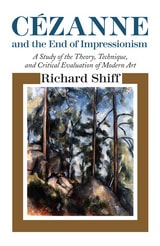
Cezanne and the End of Impressionism
A Study of the Theory, Technique, and Critical Evaluation of Modern ArtRichard Shiff
University of Chicago Press, 1984
Chaos, Creativity, Completion
New Approaches to Writing and ADHDEdited by Chloe Martinez and Lisa Van Orman Hadley
University of Chicago Press, 2026
A rising number of ADHD diagnoses, particularly among adults, is not only confirmed by medical studies and mainstream reporting but also borne out across social media and elsewhere among people who’d been privately coping with persistent, often inexpressible challenges. Many of the contributors to this collection can attest to how a later-in-life diagnosis radically demystified the patterns, impulses, and impasses that had affected their lives and their writing. The essays in Chaos, Creativity, Completion reflect the ways poets, novelists, memoirists, filmmakers, and others have come to understand and engage the relationship between their ADHD and their creative tool kits.
These essays consider how writers can embrace rather than mask their neurodifference, offering multiple ways of finding writing practices that work for ADHD brains—including techniques that often look quite different from traditional writing instruction. Some essays are analytical, some are reflective, and some are delightfully weird, employing humor, research, personal narrative, deep description, close reading, and experimental approaches to genre and form. Each essay also concludes with a writing prompt, providing readers with opportunities to expand their own creative toolkits. Finally, the book includes an interview with David Kessler, a licensed therapist and nationally recognized ADHD advocate, and an appendix with a glossary of helpful terms and a list of recommended resources, from books and organizations to apps and gadgets.
Just as the experience of ADHD varies from person to person, so, too, do the ways those experiences can be expressed. Chaos, Creativity, Completion is a kaleidoscopic, adventurous series of takes on what writing looks like today.
Character Disturbance
the phenomenon of our ageGeorge K. Simon
Parkhurst Brothers, Inc., 2011
Modern permissiveness and the new culture of entitlement allows disturbed people to reach adulthood without proper socialization. In a book meant both for the general public and for professionals, bestselling author and psychologist George Simon explains in plain English:
•How most disturbed characters think.•The habitual behaviors the disturbed use to avoid responsibility and to manipulate, deceive, and exploit others.
•Why victims in relationships with disturbed characters do not get help they need from traditional therapies.
•A straightforward guide to recognizing and understanding all relevant personality types, especially those most likely to undermine relationships.
•A new framework for making sense of the crazy world many find themselves in when there's a disturbed character in their lives.
•Concrete principles that promote responsibility and positive change when engaging disturbed characters.
•Tactics (for both lay persons and therapists) to lessen the chances for victimization and empower those who would otherwise be victims in their relationships with many types of disturbed characters.
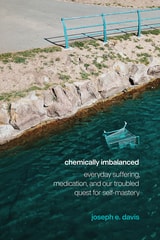
Chemically Imbalanced
Everyday Suffering, Medication, and Our Troubled Quest for Self-MasteryJoseph E. Davis
University of Chicago Press, 2020
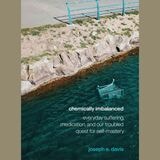
Chemically Imbalanced is a field report on how ordinary people dealing with common problems explain their suffering, how they’re increasingly turning to the thin and mechanistic language of the “body/brain,” and what these encounters might tell us. Drawing on interviews with people dealing with struggles such as underperformance in school or work, grief after the end of a relationship, or disappointment with how their life is unfolding, Joseph E. Davis reveals the profound revolution in consciousness that is underway. We now see suffering as an imbalance in the brain that needs to be fixed, usually through chemical means. This has rippled into our social and cultural conversations, and it has affected how we, as a society, imagine ourselves and envision what constitutes a good life. Davis warns that what we envision as a neurological revolution, in which suffering is a mechanistic problem, has troubling and entrapping consequences. And he makes the case that by turning away from an interpretive, meaning-making view of ourselves, we thwart our chances to enrich our souls and learn important truths about ourselves and the social conditions under which we live.
Chemically Imbalanced
Everyday Suffering, Medication, and Our Troubled Quest for Self-MasteryJoseph E. Davis
University of Chicago Press, 2020
Everyday suffering—those conditions or feelings brought on by trying circumstances that arise in everyone’s lives—is something that humans have grappled with for millennia. But the last decades have seen a drastic change in the way we approach it. In the past, a person going through a time of difficulty might keep a journal or see a therapist, but now the psychological has been replaced by the biological: instead of treating the heart, soul, and mind, we take a pill to treat the brain.
Chemically Imbalanced is a field report on how ordinary people dealing with common problems explain their suffering, how they’re increasingly turning to the thin and mechanistic language of the “body/brain,” and what these encounters might tell us. Drawing on interviews with people dealing with struggles such as underperformance in school or work, grief after the end of a relationship, or disappointment with how their life is unfolding, Joseph E. Davis reveals the profound revolution in consciousness that is underway. We now see suffering as an imbalance in the brain that needs to be fixed, usually through chemical means. This has rippled into our social and cultural conversations, and it has affected how we, as a society, imagine ourselves and envision what constitutes a good life. Davis warns that what we envision as a neurological revolution, in which suffering is a mechanistic problem, has troubling and entrapping consequences. And he makes the case that by turning away from an interpretive, meaning-making view of ourselves, we thwart our chances to enrich our souls and learn important truths about ourselves and the social conditions under which we live.

Chicana and Chicano Mental Health
Alma, Mente y CorazónYvette G. Flores
University of Arizona Press, 2013
Chicana and Chicano Mental Health offers a model to understand and to address the mental health challenges and service disparities affecting Mexican immigrants and Mexican Americans/Chicanos. Yvette G. Flores, who has more than thirty years of experience as a clinical psychologist, provides in-depth analysis of the major mental health challenges facing these groups: depression; anxiety disorders, including post-traumatic stress disorder; substance abuse; and intimate partner violence. Using a life-cycle perspective that incorporates indigenous health beliefs, Flores examines the mental health issues affecting children and adolescents, adult men and women, and elderly Mexican Americans.
Through case studies, Flores examines the importance of understanding cultural values, class position, and the gender and sexual roles and expectations Chicanas/os negotiate, as well as the legacies of migration, transculturation, and multiculturality. Chicana and Chicano Mental Health is the first book of its kind to embrace both Western and Indigenous perspectives.
Ideally suited for students in psychology, social welfare, ethnic studies, and sociology, the book also provides valuable information for mental health professionals who desire a deeper understanding of the needs and strengths of the largest ethnic minority and Hispanic population group in the United States.
Chicane Mental Health, Second Edition
Alma, Mente y CorazónYvette G. Flores
University of Arizona Press, 2026
Chicane Mental Health offers an intersectional and developmental framework for understanding and addressing the mental health needs of Chicane communities. Drawing on over four decades of clinical and academic experience, Yvette G. Flores addresses the entire lifespan from children and youth to emerging adults, adults, and elders.
Foregrounding cultural humility and an understanding of Chicane strengths and community cultural wealth, the author uses vivid vignettes and community-based insights to address how historical trauma, systemic oppression, and sociocultural dynamics shape mental well-being. Flores highlights the cultural strengths and protective factors that foster resilience.
This new edition expands on Flores’s influential work by integrating Indigenous healing practices, decolonial theory, and liberatory models of care. It challenges dominant Western paradigms and calls for culturally affirming, community-engaged approaches to mental health. With a focus on issues such as depression, substance use, intimate partner violence, and intergenerational trauma, the book provides practical tools for scholars, clinicians, and students committed to social justice and healing in Chicane and Latine communities.
Child Psychology and Pedagogy
The Sorbonne Lectures 1949-1952Maurice Merleau-Ponty
Northwestern University Press, 2010
Merleau-Ponty’s Sorbonne lectures of 1949 to 1952 are a broad investigation into child psychology, psychoanalysis, pedagogy, phenomenology, sociology, and anthropology. They argue that the subject of child psychology is critical for any philosophical attempt to understand individual and intersubjective existence. Talia Welsh’s new translation provides Merleau-Ponty’s complete lectures on the seminal engagement of phenomenology and psychology.
Child's Play
Sport in Kids' WorldsMessner, Michael A
Rutgers University Press, 2016

Children of Alcoholics
A Critical Appraisal of Theory and ResearchKenneth J. Sher
University of Chicago Press, 1991

China Marine
25th Anniversary EditionE. B. Sledge with a new foreword by John C. McManus and a new preface by John S. Sledge
University of Alabama Press, 2002
From the Pacific’s brutality to China’s uneasy peace—one Marine’s fight to reclaim himself.
In this powerful anniversary edition of China Marine, Eugene B. Sledge—acclaimed author of the classic WWII memoir With the Old Breed—offers an unforgettable portrait of a young Marine navigating the uneasy peace that followed history’s most brutal war. Already celebrated for his visceral honesty and humanity, Sledge deepened his legacy with this rare account of the U.S. occupation of North China, a period as volatile as it was transformative.
Sledge’s memoirs remain enduringly popular because they never flinch from the truth. His reflections resonate across generations, offering readers not only a veteran’s hard-won wisdom but a moving story of survival, friendship, trauma, and the long journey back to ordinary life. His life and words have become part of American cultural memory, featured prominently in both Ken Burns’s PBS series The War and the HBO production The Pacific.
This special anniversary edition honors that legacy with a new preface by his son, bestselling author John Sledge and a new foreword by the eminent military historian John McManus, who together illuminate Sledge’s continued relevance in understanding war and its aftermath.
Intimate, vivid, and deeply human, China Marine stands as a timeless testament to courage, resilience, and the costs of peace after war.
Choice Over Time
George Loewenstein
Russell Sage Foundation, 1992
Choosing Wisdom
Strategies and Inspiration for Growing through Life-Changing DifficultiesMargaret Plews-Ogan
Templeton Press, 2012
We all know the saying, “That which does not kill us makes us stronger,” but is that really true? After all, for some people, traumatic experiences ultimately lead to genuinely debilitating outcomes. For others, though, adversity does seem to lead to “post-traumatic growth,” where individuals move through suffering and find their lives changed in positive ways. Why does this growth happen for some people and not others? How exactly does it happen? Can the positive results be purposefully replicated?
Choosing an Identity
A General Model of Preference and Belief FormationSun-Ki Chai
University of Michigan Press, 2001
Chronicling Trauma
Journalists and Writers on Violence and LossDoug Underwood
University of Illinois Press, 2011
To attract readers, journalists have long trafficked in the causes of trauma--crime, violence, warfare--as well as psychological profiling of deviance and aberrational personalities. Novelists, in turn, have explored these same subjects in developing their characters and by borrowing from their own traumatic life stories to shape the themes and psychological terrain of their fiction. In this book, Doug Underwood offers a conceptual and historical framework for comprehending the impact of trauma and violence in the careers and the writings of important journalist-literary figures in the United States and British Isles from the early 1700s to today.
Grounded in the latest research in the fields of trauma studies, literary biography, and the history of journalism, this study draws upon the lively and sometimes breathtaking accounts of popular writers such as Charles Dickens, Ernest Hemingway, Dorothy Parker, Graham Greene, and Truman Capote, exploring the role that trauma has played in shaping their literary works. Underwood notes that the influence of traumatic experience upon journalistic literature is being reshaped by a number of factors, including news media trends, the advance of the Internet, the changing nature of the journalism profession, the proliferation of psychoactive drugs, and journalists' greater self-awareness of the impact of trauma in their work.
The most extensive scholarly examination of the role that trauma has played in the shaping of our journalistic and literary heritage, Chronicling Trauma: Journalists and Writers on Violence and Loss discusses more than a hundred writers whose works have won them fame, even at the price of their health, their families, and their lives.
Cicero on the Emotions
Tusculan Disputations 3 and 4Marcus Tullius Cicero
University of Chicago Press, 2002
Margaret Graver's elegant and idiomatic translation makes Cicero's work accessible not just to classicists but to anyone interested in ancient philosophy and psychotherapy or in the philosophy of emotion. The accompanying commentary explains the philosophical concepts discussed in the text and supplies many helpful parallels from Greek sources.
Cinema of Confinement
Thomas J. Connelly
Northwestern University Press, 2019
In this book, Thomas J. Connelly draws on a number of key psychoanalytic concepts from the works of Jacques Lacan, Slavoj Žižek, Joan Copjec, Michel Chion, and Todd McGowan to identify and describe a genre of cinema characterized by spatial confinement. Examining classic films such as Alfred Hitchcock's Rope and Stanley Kubrick's The Shining, as well as current films such as Room, Green Room, and 10 Cloverfield Lane, Connelly shows that the source of enjoyment of confined spaces lies in the viewer's relationship to excess.
Cinema of Confinement offers rich insights into the appeal of constricted filmic spaces at a time when one can easily traverse spatial boundaries within the virtual reality of cyberspace.

Cinephilia and the Adventure for Existential Health
Recomposing Subjectivity at the CinemaAdam Szymanski
Northwestern University Press, 2025
Exploring how art cinema cultivates existential health through the films of Olivier Assayas
This book proposes that cinephilia can facilitate existential health, which makes palpable the potential for subjectivity to be recomposed through meaningful encounters with cinema. Adam Szymanskidraws on the ethos of psychoanalyst Félix Guattari and thinks with select films from director Olivier Assayas—including Clouds of Sils Maria and Personal Shopper—to theorize how the cinema can be invested with therapeutic value. Cinephilia and the Adventure for Existential Health engages the history of psychoanalytic film theory, excavates its long-standing concern with the production of spectatorial subjectivity, and challenges pathologizing understandings of cinema spectatorship couched in identification, fetishism, and voyeurism. By embracing the indeterminacy of the cinematic experience and the adventurous disposition of cinephilia, the book allies itself to the pursuit of collective health and challenges the logic of medical power.

Claiming Individuality
The Cultural Politics of DistinctionEdited by Vered Amit and Noel Dyck
Pluto Press, 2006
Classifying Criminal Offenders with the MMPI-2
The Megargee SystemEdwin I. Megargee
University of Minnesota Press, 2001
Climate Trauma
Foreseeing the Future in Dystopian Film and FictionKaplan, E. Ann
Rutgers University Press, 2015
Drawing from recent scholarship that analyzes climate change as a form of “slow violence” that humans are inflicting on the environment, Climate Trauma theorizes that such violence is accompanied by its own psychological condition, what its author terms “Pretraumatic Stress Disorder.” Examining a variety of films that imagine a dystopian future, renowned media scholar E. Ann Kaplan considers how the increasing ubiquity of these works has exacerbated our sense of impending dread. But she also explores ways these films might help us productively engage with our anxieties, giving us a seemingly prophetic glimpse of the terrifying future selves we might still work to avoid becoming.
Examining dystopian classics like Soylent Green alongside more recent examples like The Book of Eli, Climate Trauma also stretches the limits of the genre to include features such as Blindness, The Happening, Take Shelter, and a number of documentaries on climate change. These eclectic texts allow Kaplan to outline the typical blind-spots of the genre, which rarely depicts climate catastrophe from the vantage point of women or minorities. Lucidly synthesizing cutting-edge research in media studies, psychoanalytic theory, and environmental science, Climate Trauma provides us with the tools we need to extract something useful from our nightmares of a catastrophic future.
Cochlear Implants
Evolving PerspectivesRaylene Paludneviciene
Gallaudet University Press, 2011
The cochlear implant debate has changed, as evidenced in this cogent collection that presents 13 chapters by 20 experts, including several who communicate through sign language but also utilize cochlear implants. The impetus for this change stems from recognition that both visual and aural input can enhance the education of deaf children.
Divided into four sections, Cochlear Implants: Evolving Perspectives first focuses on the impact of implants in the Deaf community. Chapters in this section examine the issues driving the cochlear implant debate, the ethics of genetic engineering, experiences of implanted adult deaf signers, reflections of deaf mothers who have had their children implanted, and the effects of implants on deaf identity. The second section delves into the mechanics of bimodal processing, including listening strategies that can benefit signing children with cochlear implants. The third section surveys combined aural/visual educational approaches, such as teaching implanted children in an ASL/English bilingual classroom, and applying auditory rehabilitation to a signed communication context.
The final section challenges readers to reframe the debate first by exploring sensory politics, then by envisioning an emerging world that requires the Deaf community to connect with it to secure its future. With this information, readers will reach their own conclusions about cochlear implants and auditory and visual approaches to the mastery of both spoken and signed languages.
Codependent Forevermore
The Invention of Self in a Twelve Step GroupLeslie Irvine
University of Chicago Press, 1999
Codependent Forevermore is thus an insider's look at the world of people "in recovery" and the society that produced them. Through extensive interviews with CoDA members, case studies, and the meetings she attended regularly, Irvine develops a galvanizing perspective on contemporary Americans' sense of self. She explores the idea that selfhood is a narrative accomplishment, achieved by people telling stories to themselves and about themselves. She shows how Alex, Paul, Liz, and many others create a sense of self by combining elements of autobiography, culture, and social structure all within the adopted language of psycho-spirituality.
By following the progress and tribulations of CoDA members, Irvine gets to the heart of widespread American conceptions of relationships, selfhood, and community. Amidst the increasingly shrill criticism of the Twelve Step ethos, her reasoned and considered analysis of these groups reveals the sources of both their power and their popularity.
Codes of Conduct
Behavioral Research into Business EthicsDavid M. Messick
Russell Sage Foundation, 1996
Coethnicity
Diversity and the Dilemmas of Collective ActionJames Habyarimana
Russell Sage Foundation, 2009
Cogito and the Unconscious
sic 2Slavoj Žižek, ed.
Duke University Press, 1998
Noting that for Lacan the Cartesian construct is the same as the Freudian "subject of the unconscious," the contributors follow Lacan's plea for a psychoanalytic return to the cogito. Along the path of this return, they examine the ethical attitude that befits modern subjectivity, the inherent sexualization of modern subjectivity, the impasse in which the Cartesian project becomes involved given the enigmatic status of the human body, and the Cartesian subject's confrontation with its modern critics, including Althusser, Bataille, and Dennett. In a style that has become familiar to Žižek's readers, these essays bring together a strict conceptual analysis and an approach to a wide range of cultural and ideological phenomena—from the sadist paradoxes of Kant's moral philosophy to the universe of Ayn Rand's novels, from the question "Which, if any, is the sex of the cogito?" to the defense of the cogito against the onslaught of cognitive sciences.
Challenging us to reconsider fundamental notions of human consciousness and modern subjectivity, this is a book whose very Lacanian orthodoxy makes it irreverently transgressive of predominant theoretical paradigms. Cogito and the Unconscious will appeal to readers interested in philosophy, psychoanalysis, cultural studies, and theories of ideology.
Contributors. Miran Bozovic, Mladen Dolar, Alain Grosrichard, Marc de Kessel, Robert Pfaller, Renata Salecl, Slavoj Žižek, Alenka Zupancic
Cognitive Behavioral Therapy for Christians with Depression
A Practical Tool-Based PrimerMichelle Pearce
Templeton Press, 2016
For anyone in the helping profession, whether as mental health professional or religious leader, this question is bound to arise. Many mental health professionals feel uncomfortable discussing religion. In contrast, many religious leaders feel uncomfortable referring their congregants to professionals who do not know their faith or intent to engage with it.
And yet Michelle Pearce, PhD, assistant professor and clinical psychologist at the Center for Integrative Medicine at the University of Maryland, argues that if religion is essential to a client, religion will be a part of psychotherapy, whether it is discussed or not. Clients cannot check their values at the door more than the professionals who treat them.
To Pearce, the question isn’t really, “does religion belong?” but rather, “how can mental health professionals help their religious clients engage with and use their faith as a healing resource in psychotherapy?”
Cognitive Behavioral Therapy for Christian Clientswith Depression is the answer to that question, as the book’s purpose is to educate mental health professionals and pastoral counselors about religion’s role in therapy, as well as equip them to discuss religious issues and use evidence-based, religiously-integrated tools with Christian clients experiencing depression.
In this book, readers will find the following resources in an easy-to-use format:
- An overview of the scientific benefits of integrating clients’ religious beliefs and practices in psychotherapy
- An organizing therapeutic approach for doing Christian CBT
- Seven tools specific to Christian CBT to treat depression
- Suggested dialogue for therapists to introduce concepts and tools
- Skill-building activity worksheets for clients
- Clinical examples of Christian CBT and the seven tools in action
Cognitive Behavioral Therapy for Christian Clients with Depression is a practical guide for mental health professionals and pastoral counselors who want to learn how to use Christian-specific CBT tools to treat depression in their Christian clients.
Cognitive Ecology II
Edited by Reuven Dukas and John M. Ratcliffe
University of Chicago Press, 2009
Merging evolutionary ecology and cognitive science, cognitive ecology investigates how animal interactions with natural habitats shape cognitive systems, and how constraints on nervous systems limit or bias animal behavior. Research in cognitive ecology has expanded rapidly in the past decade, and this second volume builds on the foundations laid out in the first, published in 1998.
Cognitive Ecology II integrates numerous scientific disciplines to analyze the ecology and evolution of animal cognition. The contributors cover the mechanisms, ecology, and evolution of learning and memory, including detailed analyses of bee neurobiology, bird song, and spatial learning. They also explore decision making, with mechanistic analyses of reproductive behavior in voles, escape hatching by frog embryos, and predation in the auditory domain of bats and eared insects. Finally, they consider social cognition, focusing on alarm calls and the factors determining social learning strategies of corvids, fish, and mammals.
With cognitive ecology ascending to its rightful place in behavioral and evolutionary research, this volume captures the promise that has been realized in the past decade and looks forward to new research prospects.

Cognitive Ecology
The Evolutionary Ecology of Information Processing and Decision MakingEdited by Reuven Dukas
University of Chicago Press, 1998
Individual chapters consider such issues as the evolution of learning and its influence on behavior; the effects of cognitive mechanisms on the evolution of signaling behavior; how neurobiological and evolutionary processes have shaped navigational activities; functional and mechanical explanations for altered behaviors in response to changing environments; how foragers make decisions and how these decisions are influenced by the risks of predation; and how cognitive mechanisms affect partner choice.
Cognitive Ecology will encourage biologists to consider how animal cognition affects behavior, and will also interest comparative psychologists and cognitive scientists.
Cognitive Science, Religion, and Theology
From Human Minds to Divine MindsJustin L. Barrett
Templeton Press, 2011
Cognitive Styles in Law Schools
By Alfred G. Smith
University of Texas Press, 1979
People differ in their cognitive styles—their ways of getting and using information to solve problems and make decisions. Alfred G. Smith and his associates studied these differences in a selected group of over 800 students at a score of law schools throughout the United States. Two major cognitive styles were identified: that of the monopath, who follows a single route of established principles and procedures, and that of the polypath, who takes many routes, as circumstances suggest.
A battery of both original and standard tests was administered to both law students and their professors to investigate differences in cognitive style and their relationships to self-image, anxiety, and academic achievement. This also revealed differences in prevailing styles at different schools.
The results will be of special interest to readers concerned with legal education, to psychologists, and to behavioral scientists. The research format developed here will serve equally well for raising significant questions about the professions of medicine, education, social work, and others in which cognitive and communication styles play a central role in determining outcomes.
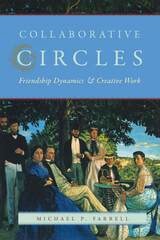
Collaborative Circles
Friendship Dynamics and Creative WorkMichael P. Farrell
University of Chicago Press, 2001
In a unique study that will become a rich source of ideas for professionals and anyone interested in fostering creative work in the arts and sciences, Michael P. Farrell looks at the group dynamics in six collaborative circles: the French Impressionists; Sigmund Freud and his friends; C. S. Lewis, J. R. R. Tolkien, and the Inklings; social reformers Elizabeth Cady Stanton and Susan B. Anthony; the Fugitive poets; and the writers Joseph Conrad and Ford Maddox Ford. He demonstrates how the unusual interactions in these collaborative circles drew out the creativity in each member. Farrell also presents vivid narrative accounts of the roles played by the members of each circle. He considers how working in such circles sustains the motivation of each member to do creative work; how collaborative circles shape the individual styles of the persons within them; how leadership roles and interpersonal relationships change as circles develop; and why some circles flourish while others flounder.
Collective Effervescence
Edited by Sébastien Tutenges and Philip Smith
Temple University Press, 2026
The editors and contributors to Collective Effervescence make a deep dive into new waters. They investigate solo experiences, virtual collectivities, low-intensity effervescence, and negative outcomes. Through studies of drug ceremonies, occupational subcultures, bookshops, online activities, and much more, each chapter discovers and theorizes something previously unknown. Collective Effervescence finds new potentials in a familiar theoretical resource.
Contributors: Sarah H. Awad, Pierre Bouchat, Randall Collins, Silvia da Costa, Scott Draper, Lisa Flower, Romulo Lelis, Heather Margrsion, Sharon Mascall-Dare, Ashley Mears, Margit Anne Petersen, José J. Pizarro, Bernard Rimé, Dario Páez, David Sausdal, Daniel Smith, Femke Vandenberg, Brady Wagoner, David Wästerfors, Brad West, and the editors
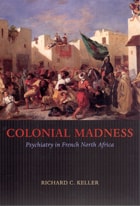
Colonial Madness
Psychiatry in French North AfricaRichard C. Keller
University of Chicago Press, 2007
Nineteenth-century French writers and travelers imagined Muslim colonies in North Africa to be realms of savage violence, lurid sexuality, and primitive madness. Colonial Madness traces the genealogy and development of this idea from the beginnings of colonial expansion to the present, revealing the ways in which psychiatry has been at once a weapon in the arsenal of colonial racism, an innovative branch of medical science, and a mechanism for negotiating the meaning of difference for republican citizenship.
Drawing from extensive archival research and fieldwork in France and North Africa, Richard Keller offers much more than a history of colonial psychology. Colonial Madness explores the notion of what French thinkers saw as an inherent mental, intellectual, and behavioral rift marked by the Mediterranean, as well as the idea of the colonies as an experimental space freed from the limitations of metropolitan society and reason. These ideas have modern relevance, Keller argues, reflected in French thought about race and debates over immigration and France’s postcolonial legacy.
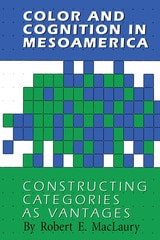
Color and Cognition in Mesoamerica
Constructing Categories as VantagesBy Robert E. MacLaury
University of Texas Press, 1996
More than 100 indigenous languages are spoken in Mexico and Central America. Each language partitions the color spectrum according to a pattern that is unique in some way. But every local system of color categories also shares characteristics with the systems of other Mesoamerican languages and of languages elsewhere in the world.
This book presents the results of the Mesoamerican Color Survey, which Robert E. MacLaury conducted in 1978-1981. Drawn from interviews with 900 speakers of some 116 Mesoamerican languages, the book provides a sweeping overview of the organization and semantics of color categorization in modern Mesoamerica.
Extensive analysis and MacLaury's use of vantage theory reveal complex and often surprising interrelationships among the ways languages categorize colors. His findings offer valuable cross-cultural data for all students of Mesoamerica. They will also be of interest to all linguists and cognitive scientists working on theories of categorization more generally.
Color of Privilege
Three Blasphemies on Race and FeminismAida Hurtado
University of Michigan Press, 1996
Communication and Development
A Study of Two Indian VillagesY.V. Lakshmana Rao
University of Minnesota Press, 1966
Communication and Development was first published in 1966. Minnesota Archive Editions uses digital technology to make long-unavailable books once again accessible, and are published unaltered from the original University of Minnesota Press editions.
What role does communication play in the economic, social, and political development of a community? The results of the study reported here, based on comprehensive field work in two small villages in India, throw considerable light on that question, one which is of fundamental importance to those concerned with rates and patterns of growth in any developing country.
In this study, the term "communication" refers to a social process—the flow of information, the circulation of knowledge and ideas in society, the propagation and internalization of thoughts. It does not refer to the media or means of communication, such as electronics, roads and railways, or vehicles.
The two villages studied, both in South India, were at contrasting stages of development. One was becoming industrialized, while the other still clung to such traditional ways as the barter system. To carry out the field work for his study, Dr. Rao lived in these villages for several months, talking at length with the people, obtaining information about their attitudes, beliefs, and opinions, and observing them and their surroundings with a trained eye. He also checked official records for pertinent information. He analyzes his findings from a psychological and sociological standpoint and, in addition, provides an intimate description of the village life.
The book will be of particular interest to communications specialists, anthropologists, sociologists, political scientists, economists, and others concerned with studies of the developing countries in Asia, Africa, and Latin America.
Community Service and Social Responsibility in Youth
James Youniss and Miranda Yates
University of Chicago Press, 1997
Using a case study from a predominantly Black, urban high school in Washington, D.C., Youniss and Yates build on the insights of Erik Erikson on the social and historical nature of identity development. They show that service at a soup kitchen as part of a course on social justice gives youth the opportunity to reflect on their status in society, on how society is organized, on how government should use its power, and on moral principles related to homelessness and poverty. Developing a sense of social responsibility and a civic commitment, youth come to see themselves as active agents in society.
The most authoritative work to date on the subject, this book challenges negative stereotypes of contemporary adolescents and illustrates how youth, when given the opportunity, can use their talents for social good. It will interest readers concerned with the development of today's youth and tomorrow's society.
Competence and Character through Life
Edited by Anne Colby, Jacquelyn Boone James, and Daniel Hart
University of Chicago Press, 1998
In this collection, leading psychologists, sociologists, and criminologists highlight the potential for positive development in different domains. By positing the possibility of multiple pathways of development rather than a single universal sequence, the contributors view the individual as potentially advancing in a wide range of interrelated and overlapping competencies. The nine essays in the book cover the years from youth to middle age, and they examine a range of social, political, and moral components of "competence and character" from teenage pregnancy and life-planning skills to voting records and educational attainment in low income households. Unlike comparable studies, this original and comprehensive volume frames issues, events, and longitudinal data through the lens of possibility rather than the pathology of defeat, stressing a positive approach to our conception of human potential.
Complex Sorrow
Reflections on Cancer and an Abbreviated LifeMarianne Paget
Temple University Press, 1993
Complexities
Beyond Nature and NurtureEdited by Susan McKinnon and Sydel Silverman
University of Chicago Press, 2005
Complexities mobilizes experts from several fields of anthropology—cultural , archaeological, linguistic, and biological—to offer a compelling challenge to the resurgence of reductive theories of human biological and social life. This book presents evidence to contest such theories and to provide a multifaceted account of the complexity and variability of the human condition. Charting a course that moves beyond any simple opposition between nature and nurture, Complexities argues that a nonreductive perspective has important implications for how we understand and develop human potential.