Results by title
935 books match the query 'Ancient' and 78 start with c
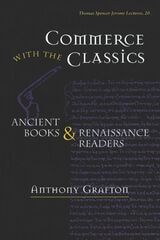
Commerce with the Classics
Ancient Books and Renaissance ReadersAnthony Grafton
University of Michigan Press, 1997
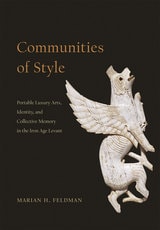
Communities of Style
Portable Luxury Arts, Identity, and Collective Memory in the Iron Age LevantMarian H. Feldman
University of Chicago Press, 2014
Marian H. Feldman brings her dual training as an art historian and an archaeologist to bear on the networks that were essential to the movement and trade of luxury goods—particularly ivories and metal works—and how they were also central to community formation. The interest in, and relationships to, these art objects, Feldman shows, led to wide-ranging interactions and transformations both within and between communities. Ultimately, she argues, the production and movement of luxury goods in the period demands a rethinking of our very geo-cultural conception of the Levant, as well as its influence beyond what have traditionally been thought of as its borders.
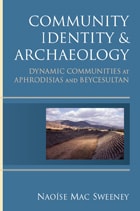
Community Identity and Archaeology
Dynamic Communities at Aphrodisias and BeycesultanNaoíse Mac Sweeney
University of Michigan Press, 2011
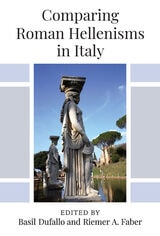
Comparing Roman Hellenisms in Italy
Edited by Basil Dufallo and Riemer A. Faber
University of Michigan Press, 2023
The story of Roman Hellenism—defined as the imitation or adoption of something Greek by those subject to or operating under Roman power—begins not with Roman incursions into the Greek mainland, but in Italy, where our most plentiful and spectacular surviving evidence is concentrated. Think of the architecture of the Roman capital, the Campanian towns of Pompeii and Herculaneum buried by Vesuvius, and the Hellenic culture of the Etruscans. Perhaps “everybody knows” that Rome adapted Greek culture in a steadily more “sophisticated” way as its prosperity and might increased. This volume, however, argues that the assumption of smooth continuity, let alone steady “improvement,” in any aspect of Roman Hellenism can blind us to important aspects of what Roman Hellenism really is and how it functions in a given context.
As the first book to focus on the comparison of Roman Hellenisms per se, Comparing Roman Hellenisms in Italy shows that such comparison is especially valuable in revealing how any singular instance of the phenomenon is situated and specific, and has its own life, trajectory, circumstances, and afterlife. Roman Hellenism is always a work in progress, is often strategic, often falls prey to being forgotten, decontextualized, or reread in later periods, and thus is in important senses contingent. Further, what we may broadly identify as a Roman Hellenism need not imply Rome as the only center of influence. Roman Hellenism is often decentralized, and depends strongly on local agents, aesthetics, and materials. With this in mind, the essays concentrate geographically on Italy to lend both focus and breadth to our topic, as well as to emphasize the complex interrelation of Hellenism at Rome with Rome’s surroundings. Because Hellenism, whether as practiced by Romans or Rome’s subjects, is in fact widely diffused across far-flung geographical regions, the final part of the collection gestures to this broader context.
Confiscation or Coexistence
Egyptian Temples in the Age of AugustusAndrew Connor
University of Michigan Press, 2022
The interpretative consensus developed after the publication of a handful of key documents—P.Tebt. 2.302 especially, alongside BGU 4.1198 and 1200, and P.Berl.Leihg. 1.5. Connor offers a fundamentally revised interpretation of these texts, building from a fresh examination of the papyri themselves. The book frames the interpretation in a wider discussion of Roman interactions with Egyptian religion, including material from inside and outside Egypt, and locates the development of an interpretative consensus in early 20th-century scholarship within the wider context of empire and colonization at the time. In doing so, Connor explores these papyri through their historical, intellectual, and linguistic contexts, alongside a number of other important texts bearing on the relationship between the temples and the Roman state.
Conflicted Antiquities
Egyptology, Egyptomania, Egyptian ModernityElliott Colla
Duke University Press, 2007
Colla draws on medieval and modern Arabic poetry, novels, and travel accounts; British and French travel writing; the history of archaeology; and the history of European and Egyptian museums and exhibits. The struggle over the ownership of Pharaonic Egypt did not simply pit Egyptian nationalists against European colonial administrators. Egyptian elites found arguments about the appreciation and preservation of ancient objects useful for exerting new forms of control over rural populations and for mobilizing new political parties. Finally, just as the political and expressive culture of Pharaonism proved critical to the formation of new concepts of nationalist identity, it also fueled Islamist opposition to the Egyptian state.
Confronting Aristotle's Ethics
Ancient and Modern MoralityEugene Garver
University of Chicago Press, 2006
What is the good life? Posing this question today would likely elicit very different answers. Some might say that the good life means doing good—improving one’s community and the lives of others. Others might respond that it means doing well—cultivating one’s own abilities in a meaningful way. But for Aristotle these two distinct ideas—doing good and doing well—were one and the same and could be realized in a single life. In Confronting Aristotle’s Ethics, Eugene Garver examines how we can draw this conclusion from Aristotle's works, while also studying how this conception of the good life relates to contemporary ideas of morality.
The key to Aristotle’s views on ethics, argues Garver, lies in the Metaphysics or, more specifically, in his thoughts on activities, actions, and capacities. For Aristotle, Garver shows, it is only possible to be truly active when acting for the common good, and it is only possible to be truly happy when active to the extent of one’s own powers. But does this mean we should aspire to Aristotle’s impossibly demanding vision of the good life? In a word, no. Garver stresses the enormous gap between life in Aristotle’s time and ours. As a result, this bookwill be a welcome rumination on not only Aristotle, but the relationship between the individual and society in everyday life.
Conspiracy Narratives in Roman History
By Victoria Emma Pagán
University of Texas Press, 2005
Conspiracy is a thread that runs throughout the tapestry of Roman history. From the earliest days of the Republic to the waning of the Empire, conspiracies and intrigues created shadow worlds that undermined the openness of Rome's representational government. To expose these dark corners and restore a sense of order and safety, Roman historians frequently wrote about famous conspiracies and about how their secret plots were detected and the perpetrators punished. These accounts reassured readers that the conspiracy was a rare exception that would not happen again—if everyone remained vigilant.
In this first book-length treatment of conspiracy in Roman history, Victoria Pagán examines the narrative strategies that five prominent historians used to disclose events that had been deliberately shrouded in secrecy and silence. She compares how Sallust, Livy, and Tacitus constructed their accounts of the betrayed Catilinarian, Bacchanalian, and Pisonian conspiracies. Her analysis reveals how a historical account of a secret event depends upon the transmittal of sensitive information from a private setting to the public sphere—and why women and slaves often proved to be ideal transmitters of secrets. Pagán then turns to Josephus's and Appian's accounts of the assassinations of Caligula and Julius Caesar to explore how the two historians maintained suspense throughout their narratives, despite readers' prior knowledge of the outcomes.
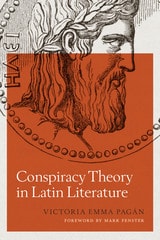
Conspiracy Theory in Latin Literature
By Victoria Emma Pagán
University of Texas Press, 2012
Conspiracy theory as a theoretical framework has emerged only in the last twenty years; commentators are finding it a productive way to explain the actions and thoughts of individuals and societies. In this compelling exploration of Latin literature, Pagán uses conspiracy theory to illuminate the ways that elite Romans invoked conspiracy as they navigated the hierarchies, divisions, and inequalities in their society. By seeming to uncover conspiracy everywhere, Romans could find the need to crush slave revolts, punish rivals with death or exile, dismiss women, denigrate foreigners, or view their emperors with deep suspicion. Expanding on her earlier Conspiracy Narratives in Roman History, Pagán here interprets the works of poets, satirists, historians, and orators—Juvenal, Tacitus, Suetonius, Terence, and Cicero, among others—to reveal how each writer gave voice to fictional or real actors who were engaged in intrigue and motivated by a calculating worldview.
Delving into multiple genres, Pagán offers a powerful critique of how conspiracy and conspiracy theory can take hold and thrive when rumor, fear, and secrecy become routine methods of interpreting (and often distorting) past and current events. In Roman society, where knowledge about others was often lacking and stereotypes dominated, conspiracy theory explained how the world worked. The persistence of conspiracy theory, from antiquity to the present day, attests to its potency as a mechanism for confronting the frailties of the human condition.
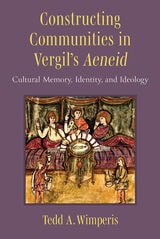
Constructing Communities in Vergil's Aeneid
Cultural Memory, Identity, and IdeologyTedd A. Wimperis
University of Michigan Press, 2024
Where previous studies of identity and memory in the Aeneid have focused on the poem’s constructions of Roman identity, Constructing Communities turns the spotlight onto the characters themselves to show how the world inside the poem is replicating, as if in miniature, real forms of contemporary political and cultural discourse, reflecting an historical milieu where appeals to Roman identity were vigorously asserted in political rhetoric. The book applies this evidence to a broad literary analysis of the Aeneid, as well as a reevaluation of its engagement with Roman imperial ideology in the Age of Augustus.
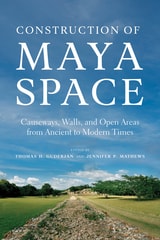
Construction of Maya Space
Causeways, Walls, and Open Areas from Ancient to Modern TimesThomas H. Guderjan
University of Arizona Press, 2023
Through fifteen engaging chapters, contributors examine the construction of spatial features by ancient, historic, and contemporary Maya elite and nonelite peoples to understand how they used spaces differently. Through cutting-edge methodologies and case studies, chapters consider how and why Maya people connected and divided the spaces they used daily in their homes, in their public centers, in their sacred places such as caves, and across their regions to inform us about the mental constructs they used to create their lives and cultures of the past.
Contributors
Elias Alcocer Puerto
Alejandra Alonso Olvera
Traci Ardren
Jaime J. Awe
Alejandra Badillo Sánchez
Nicolas C. Barth
Grace Lloyd Bascopé
Adolpho Iván Batún-Alpuche
Elizabeth Beckner
M. Kathryn Brown
Bernadette Cap
Miguel Covarrubias Reyna
Juan Fernandez Diaz
Alberto G. Flores Colin
Thomas H. Guderjan
C. Colleen Hanratty
Héctor Hernández Álvarez
Scott R. Hutson
Joshua J. Kwoka
Whitney Lytle
Aline Magnoni
Jennifer P. Mathews
Stephanie J. Miller
Shawn G. Morton
Holley Moyes
Shannon Plank
Dominique Rissolo
Patrick Rohrer
Carmen Rojas Sandoval
Justine M. Shaw
J. Gregory Smith
Travis W. Stanton
Karl A. Taube
Daniel Vallejo-Cáliz
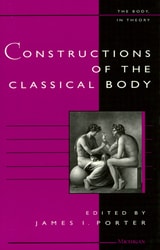
Constructions of the Classical Body
James I. Porter, Editor
University of Michigan Press, 2002
Classical scholarship has traditionally neglected the prominence of the body in antiquity. Constructions of the Classical Body theorizes that the study of antiquity is necessarily a study of the body, and that attention to this fact can lead to a much-needed shift in the way in which classical studies are approached today. This volume aims to reestablish the relevance of the problem of the body at the perimeters of several different kinds of inquiry, and, in this way, to help open up a field of possibilities for future study. The range covered by the essays in this volume is sweeping: from Corinthian vaseware to Athenian and Roman politics, poetry from Homer to Ovid, medical writers from the Hippocratic corpus to the diary of Aelius Aristides (second century c.e.), philosophy (Seneca, Porphyry), the Greek novel, Christian apocrypha, Ovid's medieval reception, and twentieth century film. This range is a consequence of the multidisciplinarity that any study of the body requires, and it attests to the particular richness of the body in classical antiquity and as an object for study today. The volume illustrates that body is located between traditional borders, not within them; the body dissolves traditional objects of study and joins areas usually kept apart. Retracing the fate of the body is thus a way of rendering antiquity truly strange again -- it allows us to see the past afresh, with open eyes. This volume includes essays by Carlin A. Barton, Anne Carson, Eric Downing, Catherine Edwards, Maud W. Gleason, John Henderson, Ralph Hexter, S. C. Humphreys, Helen King, Leslie Kurke, Robert Lamberton, David S. Potter, Amy Richlin, Giulia Sissa, Maria Wyke, and Froma I. Zeitlin, along with an introduction by James I. Porter. ". . . a superb collection, one that I know will be most welcome not only in the field of classical studies, but in the libraries of all those interested in the history and historicity of the body." --Page duBois, University of California, San Diego
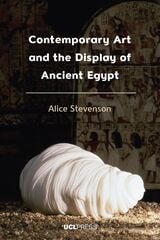
Contemporary Art and the Display of Ancient Egypt
Alice Stevenson
University College London, 2025
Contemporary art installations in Egyptian galleries are often framed as dialogues between past and present—but what if they are, instead, shaped by the museum itself? Contemporary Art and the Display of Ancient Egypt argues that both contemporary and ancient works are mediated through the structures and ideologies of the museum space. In this seminal work, Alice Stevenson examines how artists’ work influences museum discourse and public engagement with ancient artifacts.
Drawing on case studies from the British Museum, the Egyptian Museum in Turin, and the State Museum of Egyptian Art in Munich, this book assesses the motivations behind these interventions and their lasting impact. Through an evidence-based approach, Stevenson offers new insights into how curators, scholars, and artists can collaborate to create more meaningful and politically engaged museum experiences. Of particular interest to Egyptologists, museum professionals, and contemporary art scholars, this work redefines the role of artistic intervention in shaping our understanding of ancient cultures.
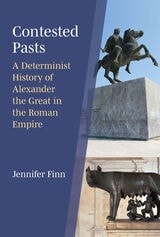
Contested Pasts
A Determinist History of Alexander the Great in the Roman EmpireJennifer Finn
University of Michigan Press, 2022
Contextualizing Israel's Sacred Writings
Ancient Literacy, Orality, and Literary ProductionBrian B. Schmidt
SBL Press, 2015
An essential resource exploring orality and literacy in the pre-Hellenistic southern Levant and the Hebrew Bible
Situated historically between the invention of the alphabet, on the one hand, and the creation of ancient Israel's sacred writings, on the other, is the emergence of literary production in the ancient Levant. In this timely collection of essays by an international cadre of scholars, the dialectic between the oral and the written, the intersection of orality with literacy, and the advent of literary composition are each explored as a prelude to the emergence of biblical writing in ancient Israel. Contributors also examine a range of relevant topics including scripturalization, the compositional dimensions of orality and textuality as they engage biblical poetry, prophecy, and narrative along with their antecedents, and the ultimate autonomy of the written in early Israel. The contributors are James M. Bos, David M. Carr, André Lemaire, Robert D. Miller II, Nadav Na'aman, Raymond F. Person Jr., Frank H. Polak, Christopher A. Rollston, Seth L. Sanders, Joachim Schaper, Brian B. Schmidt, William M. Schniedewind, Elsie Stern, and Jessica Whisenant.
Features
- Addresses questions of literacy and scribal activity in the Levant and Negev
- Articles examine memory, oral tradition, and text criticism
- Discussion of the processes of scripturalization
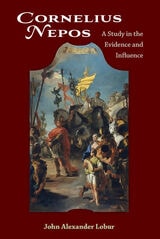
Cornelius Nepos
A Study in the Evidence and InfluenceJohn Alexander Lobur
University of Michigan Press, 2021
Cornelius Nepos: A Study in the Evidence and Influence begins by exploring the writer's ancient reception, which suggests he was in no way seen as beneath consideration by the Romans themselves. The volume then deconstructs the critical framework that cast him as an "inferior" author in the classical canon. What emerges is an author who reworked Greek historical narratives in a learned, sophisticated way, yet one still limited by the compositional logistics and limitations inherent in ancient scholarship. The study then explores his contemporary relationships and embeds his work among the crucial ideological activity at play in the late Republic and Triumviral periods. Cornelius Nepos spends considerable time on the fragmentary evidence (which highlights Nepos' interest in changes in fashion and consumption) to suggest that he was a valued cultural elder who informed a public eager to recover a sense of tradition during a period of bewilderingly fast social and cultural change. The book finishes with a thematic examination of the entire Lives of the Foreign Commanders (a set of biographies on ancient non-Roman generals) to show that despite the expression of very “Republican” sentiments, he was in fact fashioning an ideological framework for something imperial and quasi-monarchic which, though autocratic, was still antityrannical and imagined as resting on a broad and “democratic” foundation of social consent. Nepos saw that Rome would soon be ruled by one person, and his biographies show how the elites of the day both processed that reality and attempted to circumscribe it for good ends through the creation of new models of legitimacy.
Corrupting Luxury in Ancient Greek Literature
Robert J. Gorman and Vanessa B. Gorman
University of Michigan Press, 2014
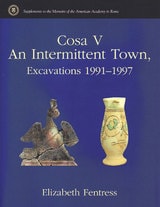
Cosa V
An Intermittent Town, Excavations 1991-1997Elizabeth Fentress
University of Michigan Press, 2003
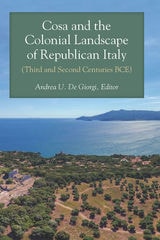
Cosa and the Colonial Landscape of Republican Italy (Third and Second Centuries BCE)
Andrea U. De Giorgi, Editor
University of Michigan Press, 2019
This important new volume examines archaeological evidence of Roman colonization of the Middle Republican period. Themes of land use, ethnic accommodation and displacement, colonial identity, and administrative schemes are also highlighted. In delving deeply into the uniqueness of select colonial contexts, these essays invite a novel discussion on the phenomenon of colonialism in the political landscape of Rome’s early expansion. Roman urbanism of the Middle Republican period brought to the Italian peninsula fundamental changes, an important example of which, highlighted by a wealth of studies, is the ebullience of a dense network of colonies, as well as a mix of senatorial tactics and individual initiatives that underpinned their foundation. Whether Latin, Roman, or Maritimae, colonies created a new mesh of communities and imposed a new topography; more subtly, they signified the mechanisms of the rising hegemony. This book brings to the fore the diversity, agendas, and overall impact of a “settlement device” that changed the Italian landscape and introduced a new idea of Roman town.
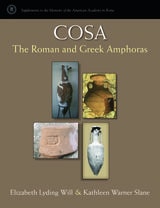
Cosa
The Roman and Greek AmphorasElizabeth Lyding Will and Kathleen Warner Slane
University of Michigan Press, 2019
At the time of Will’s death, her manuscript consisted of a typed catalogue of the amphora stamps from Cosa and an equal number of unstamped vessels, but was missing important elements. On the basis of extensive notes and photographs, Kathleen Warner Slane has reviewed and updated the manuscript, adding type descriptions and footnotes to materials that have appeared since Will’s death as well as a framing introduction and conclusions. Appendices highlight an Augustan amphora dump on the Arx and add a catalogue of the Greek amphora stamps found at Cosa.
Cosa: The Roman and Greek Amphoras will be of interest to scholars and students of Rome and its system of colonies, and also to those interested in Greek and Roman archaeology and trade in the ancient world.
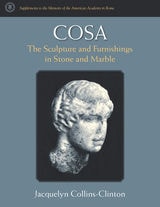
Cosa
The Sculpture and Furnishings in Stone and MarbleJacquelyn Collins-Clinton
University of Michigan Press, 2020
Courtesans and Fishcakes
The Consuming Passions of Classical AthensJames N. Davidson
University of Chicago Press, 2011
As any reader of the Symposium knows, the ancient Greek philosopher Socrates conversed over lavish banquets, kept watch on who was eating too much fish, and imbibed liberally without ever getting drunk. In other words, James Davidson writes, he reflected the culture of ancient Greece in which he lived, a culture of passions and pleasures, of food, drink, and sex before—and in concert with—politics and principles. Athenians, the richest and most powerful of the Greeks, were as skilled at consuming as their playwrights were at devising tragedies. Weaving together Greek texts, critical theory, and witty anecdotes, this compelling and accessible study teaches the reader a great deal, not only about the banquets and temptations of ancient Athens, but also about how to read Greek comedy and history.
Crime and Community in Ciceronian Rome
By Andrew M. Riggsby
University of Texas Press, 1999
In the late Roman Republic, acts of wrongdoing against individuals were prosecuted in private courts, while the iudicia publica (literally "public courts") tried cases that involved harm to the community as a whole. In this book, Andrew M. Riggsby thoroughly investigates the types of cases heard by the public courts to offer a provocative new understanding of what has been described as "crime" in the Roman Republic and to illuminate the inherently political nature of the Roman public courts.
Through the lens of Cicero's forensic oratory, Riggsby examines the four major public offenses: ambitus (bribery of the electorate), de sicariis et veneficiis (murder), vis (riot), and repetundae (extortion by provincial administrators). He persuasively argues that each of these offenses involves a violation of the proper relations between the state and the people, as interpreted by orators and juries. He concludes that in the late Roman Republic the only crimes were political crimes.
Crisis and Conversion in Apuleius' Metamorphoses
Nancy Shumate
University of Michigan Press, 1996
Shumate draws on a wide range of literary and nonliterary representations of conversion in order to establish a useful theoretical framework. The Metamorphoses is exposed as a text anticipating later narratives in its concern with world-building, with the narrator's subjective reality, and with the invocation and critique of religious experience.
Crisis and Conversion in Apuleius' "Metamorphoses" will be of interest to classicists and scholars of Silver Latin and of the increasingly popular ancient novel, as well as to students of psychology and the sociology of religious experience.
Nancy Shumate is Associate Professor of Classical Languages and Literatures, Smith College.
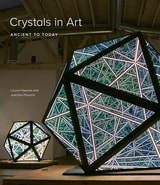
Crystals in Art
Ancient to TodayLauren Haynes
University of Arkansas Press, 2019
Taken together, all of these objects illustrate how crystal has bridged the gap between things we can see and things we can’t: science and art, fact and faith, medicine and magic—the visible and the invisible.
Published in collaboration with Crystal Bridges Museum of American Art and University of Arkansas School of Art.
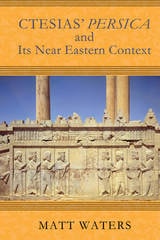
Ctesias’ Persica in Its Near Eastern Context
Matt Waters
University of Wisconsin Press, 2020
Waters, as a historian of Persia with command of Akkadian, Elamite, and Old Persian languages in addition to Latin and Greek, offers a fresh interdisciplinary analysis of the Persica. He shows in detail how Ctesias’ history, though written in a Greek literary style, was infused with two millennia of Mesopotamian and Persian motifs, legends, and traditions. This Hellenized version of Persian culture was enormously influential in antiquity, shaping Greek stereotypes of effeminate Persian monarchs, licentious and vengeful queens, and conniving eunuchs. Waters’ revealing study contributes significantly to knowledge of ancient historiography, Persian dynastic traditions and culture, and the influence of Near Eastern texts and oral tradition on Greek literature.
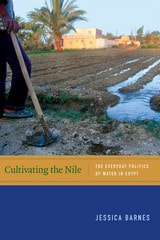
Cultivating the Nile
The Everyday Politics of Water in EgyptJessica Barnes
Duke University Press, 2014
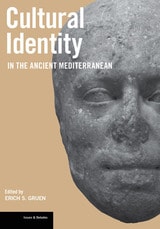
Cultural Identity in the Ancient Mediterranean
Erich S. Gruen
J. Paul Getty Trust, The, 2010
Cultural identity is a slippery and elusive concept. When applied to the collective self-consciousness among peoples or nations, it becomes all the more difficult to define or grasp. In recent decades scholars have focused on the “other”—the alien, the unfamiliar, the different, perceived or conceived as the opposite—to highlight the virtues and advantages of the self. While this influential idea continues to hold sway, the time has come for a more nuanced and complex understanding of how the various societies of the ancient Mediterranean shaped their sense of identity.
The twenty-four essays in this volume examine the subject from a variety of angles. They encompass a broad range of cultures—Greek, Persian, Jewish, Phoenician, Egyptian, Roman, Gallic, and German—and an impressive array of topics. The essays attest to a diversity of attitudes toward other peoples that underscore distinctiveness or discover connectiveness or sometimes both. They show, above all, that the twists and turns that accompanied the development of a collective consciousness found no smooth path.