Results by title
8812 books match the query 'Political Science' and 698 start with c
Capitalism and the Emergence of Civic Equality in Eighteenth-Century France
William H. Sewell Jr.
University of Chicago Press, 2021
William H. Sewell Jr. argues that the flourishing of commercial capitalism in eighteenth-century France introduced a new independence, flexibility, and anonymity to French social life. By entering the interstices of this otherwise rigidly hierarchical society, expanded commodity exchange colored everyday experience in ways that made civic equality thinkable, possible, even desirable, when the crisis of the French Revolution arrived. Sewell ties together masterful analyses of a multitude of interrelated topics: the rise of commerce, the emergence of urban publics, the careers of the philosophes, commercial publishing, patronage, political economy, trade, and state finance. Capitalism and the Emergence of Civic Equality in Eighteenth-Century France offers an original interpretation of one of history’s pivotal moments.
Capitalism from Outside?
Economic Cultures in Eastern Europe after 1989János Mátyás Kovács
Central European University Press, 2012
Capitalism in the 21st Century
Through the Prism of ValueMichael Roberts
Pluto Press, 2022
Contemporary capitalism is always evolving. From digital technologies to cryptocurrencies, current trends in political economy are much discussed, but often little understood. So where can we turn for clarity? As Michael Roberts and Guglielmo Carchedi argue, new trends don't necessarily call for a new theory.
In Capitalism in the 21st Century, the authors show how Marx's law of value explains numerous issues in our modern world. In both advanced economies and the periphery, value theory provides a piercing analytical framework through which we can approach topics as varied as labor, profitability, technology, the environment, the role of China, imperialism, and the state.
An ambitious work that will appeal to both heterodox economists and labor movement activists alike, as it demonstrates the ongoing contemporary relevance of Marxist theory to current trends in political economy.
Capitalism with a Comrade's Face
Kenneth Murphy
Central European University Press, 1998
Are nations that are journeying away from communism succeeding in becoming free-market democracies? In what ways do decades of totalitarian rule continue to distort the institutional shape of these societies? Which of communism's legacies may remain as permanent features of their landscape? In an effort to answer these questions, Roman Frydman, Kenneth Murphy, and Andrzej Rapaczynski analyze the turbulent transitions that have taken place in the post-Communist world since the revolutions of 1989-1991.
Each of the essays in this collection dissects the institutional upheaval in a particular institution in transition, such as central banking, the trade union movement, capital markets, or corporate govern-ance. In a lively and accessible style, the authors bring out the links between what was and what will be in the social fabric of Eastern Europe and the former Soviet Union. They expose the fragility of political and economic institutions that can easily threaten the region's rebirth, but they also believe that many post-Communist countries are successfully seizing the opportunity to become reunited with the West and the global economy.
With both sweeping perspective and critical depth, Frydman, Murphy, and Rapaczynski show the wide range of institutional improvisations under way. They weigh the advantages and disadvantages of different reform strategies and assess the role of politics in fostering or arresting the process of transformation. Each essay illuminates the pro-found difficulties of reconciling the needs of economic development with the special interests fighting for their survival.

Capitalism, Colonisation and the Ecocide-Genocide Nexus
Martin Crook
University of London Press, 2024
This timely publication examines the drivers of ecologically induced genocide, in particular, how environmental destruction can lead to conditions that fundamentally threaten a social group’s cultural or physical existence. Focusing on the former British colonies of Kenya and Australia, both united by a discourse of developmentalism, this book draws attention to the critical role that ecological destruction has in the genocide of Indigenous and place-based peoples. The book synthesizes radical political ecology with a political-economic approach, illuminating the chain connection between the inherent genocidal and ecocidal properties of global capitalism, and how this connection intersects with settler and post-colonial structures. In exploring the genocidal effects of climate governance, the economic market for environmental rights, and energy extraction on Indigenous peoples in Kenya and Australia, the book also draws on original interviews to prioritize the lived experiences of the groups that have suffered structural violence and social harm. Fundamentally, Crook calls forward the political economy of genocide. As such, this important book deepens and enriches our knowledge of genocide, the eco-genocidal nature of colonization, and the capitalist mode of production that underpins developmentalism.

Capitalism, Democracy, and Ecology
Departing from MarxTimothy W. Luke
University of Illinois Press, 1999
Using Marx as a touchstone, Timothy W. Luke warns that if communities are not to be overwhelmed by new class economic and political agendas, then the practice of democracy must be reconstituted on a more populist basis. However, the galvanizing force for this new, more community-centered populism will not be the proletariat, as Marx predicted, nor contemporary militant patriotic groups. Rather, Luke argues that many groups unified by a concern for ecological justice present the strongest potential opposition to capitalism.
Wide-ranging and lucid, Capitalism, Democracy, and Ecology is essential reading in the age of information.
Capitalism, Not Globalism
Capital Mobility, Central Bank Independence, and the Political Control of the EconomyWilliam Roberts Clark
University of Michigan Press, 2009
Capitalism, Slavery, and Republican Values
American Political Economists, 1819-1848By Allen Kaufman
University of Texas Press, 1982
In the troubled days before the American Civil War, both Northern protectionists and Southern free trade economists saw political economy as the key to understanding the natural laws on which every republican political order should be based. They believed that individual freedom was one such law of nature and that this freedom required a market economy in which citizens could freely pursue their particular economic interests and goals.
But Northern and Southern thinkers alike feared that the pursuit of wealth in a market economy might lead to the replacement of the independent producer by the wage laborer. A worker without property is a potential rebel, and so the freedom and commerce that give birth to such a worker would seem to be incompatible with preserving the content citizenry necessary for a stable, republican political order.
Around the resolution of this dilemma revolved the great debate on the desirability of slavery in this country. Northern protectionists argued that independent labor must be protected at the same time that capitalist development is encouraged. Southern free trade economists answered that the formation of a propertyless class is inevitable; to keep the nation from anarchy and rebellion, slavery—justified by racism—must be preserved at any cost.
Battles of the economists such as these left little room for political compromise between North and South as the antebellum United States confronted the corrosive effects of capitalist development. And slavery's retardant effect on the Southern economy ultimately created a rift within the South between those who sought to make slavery more like capitalism and those who sought to make capitalism more like slavery.

Capitalist Development and Democracy
Dietrich Rueschemeyer, Evelyne Huber Stephens, and John D. Stephens
University of Chicago Press, 1992
The authors offer a fresh and persuasive resolution to the controversy arising out of these contrasting traditions. Focusing on advanced industrial countries, Latin America, and the Caribbean, they find that the rise and persistence of democracy cannot be explained either by an overall structural correspondence between capitalism and democracy or by the role of the bourgeoisie as the agent of democratic reform. Rather, capitalist development is associated with democracy because it transforms the class structure, enlarging the working and middle classes, facilitating their self-organization, and thus making it more difficult for elites to exclude them. Simultaneously, development weakens the landed upper class, democracy's most consistent opponent.
The relationship of capitalist development to democracy, however, is not mechanical. As the authors show, it depends on a complex interplay of three clusters of power: the balance of power among social classes, power relations between the state and society, and transnational structures of economic and political power. Looking to the future, the book concludes with some reflections on current prospects for the development of stable democracy in Latin America and Eastern Europe.
Capitol Investments
The Marketability of Political SkillsGlenn R. Parker
University of Michigan Press, 2011
What would you do if, the very day you were hired, you knew you could be unemployed in as little as two years? You'd seek opportunities in your current job to develop a portfolio of skills and contacts in order to make yourself more attractive to future employers. Representatives and senators think about their jobs in Congress in this way, according to Glenn R. Parker.
While in office, members of Congress plan not merely for the next election but for the next stage of their careers. By networking, serving on committees, and championing particular legislation, they deliberately accumulate human capital---expertise, networks, and reputation---which later will give them bargaining power in the job market. Parker's study of the postelective careers of more than 200 former members of Congress, both U.S. representatives and senators, who have left office during the last half century shows that such strategic planning generally succeeds. In most cases, the human capital these politicians amassed while in office increased their occupational mobility and earning power.
Capitol Investments offers a sophisticated yet accessible analysis of the acquisition and marketability of political skills. It suggests that an awareness of the trade in human capital shapes an officeholder's actions as much as the desire to win another election.
Glenn R. Parker is Distinguished Professor in the Department of Political Science at Purdue University.

Captive Revolution
Palestinian Women's Anti-Colonial Struggle within the Israeli Prison SystemNahla Abdo
Pluto Press, 2014
Women throughout the world have always played their part in struggles against colonialism, imperialism and other forms of oppression. However, there are few books on Arab political prisoners, fewer still on the Palestinians who have been detained in their thousands for their political activism and resistance.
Nahla Abdo's Captive Revolution seeks to break the silence on Palestinian women political detainees, providing a vital contribution to research on women, revolutions, national liberation and anti-colonial resistance. Based on stories of the women themselves, as well as her own experiences as a former political prisoner, Abdo draws on a wealth of oral history and primary research in order to analyse their anti-colonial struggle, their agency and their appalling treatment as political detainees.
Making crucial comparisons with the experiences of female political detainees in other conflicts, and emphasising the vital role Palestinian political culture and memorialisation of the 'Nakba' have had on their resilience and resistance, Captive Revolution is a rich and revealing addition to our knowledge of this little-studied phenomenon.
Capture of Speech and Other Political Writings
Michel De Certeau
University of Minnesota Press, 1997

Captured Peace
Elites and Peacebuilding in El SalvadorChristine J. Wade
Ohio University Press, 2015
El Salvador is widely considered one of the most successful United Nations peacebuilding efforts, but record homicide rates, political polarization, socioeconomic exclusion, and corruption have diminished the quality of peace for many of its citizens. In Captured Peace: Elites and Peacebuilding in El Salvador, Christine J. Wade adapts the concept of elite capture to expand on the idea of “captured peace,” explaining how local elites commandeered political, social, and economic affairs before war’s end and then used the peace accords to deepen their control in these spheres.
While much scholarship has focused on the role of gangs in Salvadoran unrest, Wade draws on an exhaustive range of sources to demonstrate how day-to-day violence is inextricable from the economic and political dimensions. In this in-depth analysis of postwar politics in El Salvador, she highlights the local actors’ primary role in peacebuilding and demonstrates the political advantage an incumbent party—in this case, the Nationalist Republican Alliance (ARENA—has throughout the peace process and the consequences of this to the quality of peace that results.
Captured Societies in Southeast Europe
Networks of Trust and ControlEric Gordy
Central European University Press, 2025
This book presents findings from a collaborative, multidisciplinary research project. Over three years, a group of forty researchers examined informal practices in nine Southeast European states, adopting a mix of qualitative and quantitative methodologies.
This close look at the Balkans illuminates persistent deficits in state legitimacy and capacity. The evidence allows a critical assessment of “Europeanisation” processes that produce only superficial formal changes, and of ways that networks of mutual assistance turn into instruments of social control and closure.
Capturing Campaign Effects
Henry E. Brady and Richard Johnston, eds.
University of Michigan Press, 2006
"Capturing Campaign Effects is an accessible and penetrating account of modern scholarship on electoral politics. It draws critical insights from a range of innovative analyses."
--Arthur Lupia, University of Michigan
"What a wonderful way to usher in the new era of election studies! This book spotlights fascinating paradoxes in the literature of voting behavior, highlights many promising approaches to resolving those paradoxes, and shows how these strategies can yield important findings with terrific payoffs for our understanding of contemporary democracy. Fasten your seatbelts, folks: scholarship on elections is about to speed up thanks to this collection of great essays."
--Jon Krosnick, Stanford University
"The past decade has seen a renewed interest in understanding campaign effects. How and when do voters learn? Does the election campaign even matter at all? Capturing Campaign Effects draws on leading political scientists to address these matters. The result is a collection that will become the major reference for the study of campaigns. The lesson that emerges is that campaigns do affect voter decision making, usually for the better."
--Robert S. Erikson, Columbia University
Henry E. Brady is Class of 1941 Monroe Deutsch Professor of Political Science and Public Policy, and Director of the Survey Research Center at the University of California, Berkeley.
Richard Johnston is Professor and Head of Political Science and Distinguished University Scholar at the University of British Columbia.
Capturing the German Eye
American Visual Propaganda in Occupied GermanyCora Sol Goldstein
University of Chicago Press, 2009
Shedding new light on the American campaign to democratize Western Germany after World War II, Capturing the German Eye uncovers the importance of cultural policy and visual propaganda to the U.S. occupation.
Cora Sol Goldstein skillfully evokes Germany’s political climate between 1945 and 1949, adding an unexpected dimension to the confrontation between the United States and the USSR. During this period, the American occupiers actively vied with their Soviet counterparts for control of Germany’s visual culture, deploying film, photography, and the fine arts while censoring images that contradicted their political messages. Goldstein reveals how this U.S. cultural policy in Germany was shaped by three major factors: competition with the USSR, fear of alienating German citizens, and American domestic politics. Explaining how the Americans used images to discredit the Nazis and, later, the Communists, she illuminates the instrumental role of visual culture in the struggle to capture German hearts and minds at the advent of the cold war.
Carbon Criminals, Climate Crimes
Ronald C. Kramer
Rutgers University Press, 2020
Carbon Criminals, Climate Crimes analyzes the looming threats posed by climate change from a criminological perspective. It advances the field of green criminology through a examination of the criminal nature of catastrophic environmental harms resulting from the release of greenhouse gases. The book describes and explains what corporations in the fossil fuel industry, the U.S. government, and the international political community did, or failed to do, in relation to global warming. Carbon Criminals, Climate Crimes integrates research and theory from a wide variety of disciplines, to analyze four specific state-corporate climate crimes: continued extraction of fossil fuels and rising carbon emissions; political omission (failure) related to the mitigation of these emissions; socially organized climate change denial; and climate crimes of empire, which include militaristic forms of adaptation to climate disruption. The final chapter reviews policies that could mitigate greenhouse gas emissions, adapt to a warming world, and achieve climate justice.
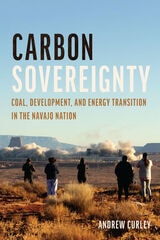
Carbon Sovereignty
Coal, Development, and Energy Transition in the Navajo NationAndrew Curley
University of Arizona Press, 2023
This comprehensive new work offers a deep dive into the complex inner workings of energy shift in the Navajo Nation. Geographer Andrew Curley, a member of the Navajo Nation, examines the history of coal development within the Navajo Nation, including why some Diné supported coal and the consequences of doing so. He explains the Navajo Nation’s strategic choices to use the coal industry to support its sovereignty as a path forward in the face of ongoing colonialism. Carbon Sovereignty demonstrates the mechanism of capitalism through colonialism and the construction of resource sovereignty, in both the Navajo Nation’s embrace and its rejection of a coal economy.
For the people of the Navajo Nation, energy sovereignty is dire and personal. Thanks to on-the-ground interviews with Diné coal workers, environmental activists, and politicians, Curley documents the real consequences of change as they happened. While some Navajo actors have doubled down for coal, others have moved toward transition. Curley argues that political struggles ultimately shape how we should understand coal, capitalism, and climate change. The rise and fall of coal magnify the nuance and complexity of change. Historical and contemporary issues intermingle in everyday life with lasting consequences.
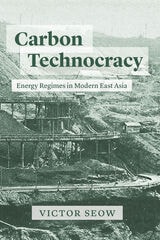
Carbon Technocracy
Energy Regimes in Modern East AsiaVictor Seow
University of Chicago Press, 2021
The coal-mining town of Fushun in China’s Northeast is home to a monstrous open pit. First excavated in the early twentieth century, this pit grew like a widening maw over the ensuing decades, as various Chinese and Japanese states endeavored to unearth Fushun’s purportedly “inexhaustible” carbon resources. Today, the depleted mine that remains is a wondrous and terrifying monument to fantasies of a fossil-fueled future and the technologies mobilized in attempts to turn those developmentalist dreams into reality.
In Carbon Technocracy, Victor Seow uses the remarkable story of the Fushun colliery to chart how the fossil fuel economy emerged in tandem with the rise of the modern technocratic state. Taking coal as an essential feedstock of national wealth and power, Chinese and Japanese bureaucrats, engineers, and industrialists deployed new technologies like open-pit mining and hydraulic stowage in pursuit of intensive energy extraction. But as much as these mine operators idealized the might of fossil fuel–driven machines, their extractive efforts nevertheless relied heavily on the human labor that those devices were expected to displace. Under the carbon energy regime, countless workers here and elsewhere would be subjected to invasive techniques of labor control, ever-escalating output targets, and the dangers of an increasingly exploited earth.
Although Fushun is no longer the coal capital it once was, the pattern of aggressive fossil-fueled development that led to its ascent endures. As we confront a planetary crisis precipitated by our extravagant consumption of carbon, it holds urgent lessons. This is a groundbreaking exploration of how the mutual production of energy and power came to define industrial modernity and the wider world that carbon made.
Carbon Technocracy
Energy Regimes in Modern East AsiaVictor Seow
University of Chicago Press, 2021
Audiobook edition
A forceful reckoning with the relationship between energy and power through the history of what was once East Asia’s largest coal mine.
The coal-mining town of Fushun in China’s Northeast is home to a monstrous open pit. First excavated in the early twentieth century, this pit grew like a widening maw over the ensuing decades, as various Chinese and Japanese states endeavored to unearth Fushun’s purportedly “inexhaustible” carbon resources. Today, the depleted mine that remains is a wondrous and terrifying monument to fantasies of a fossil-fueled future and the technologies mobilized in attempts to turn those developmentalist dreams into reality.
In Carbon Technocracy, Victor Seow uses the remarkable story of the Fushun colliery to chart how the fossil fuel economy emerged in tandem with the rise of the modern technocratic state. Taking coal as an essential feedstock of national wealth and power, Chinese and Japanese bureaucrats, engineers, and industrialists deployed new technologies like open-pit mining and hydraulic stowage in pursuit of intensive energy extraction. But as much as these mine operators idealized the might of fossil fuel–driven machines, their extractive efforts nevertheless relied heavily on the human labor that those devices were expected to displace. Under the carbon energy regime, countless workers here and elsewhere would be subjected to invasive techniques of labor control, ever-escalating output targets, and the dangers of an increasingly exploited earth.
Although Fushun is no longer the coal capital it once was, the pattern of aggressive fossil-fueled development that led to its ascent endures. As we confront a planetary crisis precipitated by our extravagant consumption of carbon, it holds urgent lessons. This is a groundbreaking exploration of how the mutual production of energy and power came to define industrial modernity and the wider world that carbon made.
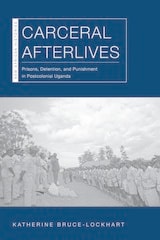
Carceral Afterlives
Prisons, Detention, and Punishment in Postcolonial UgandaKatherine Bruce-Lockhart
Ohio University Press, 2022
Carceral Humanitarianism
Logics of Refugee DetentionKelly Oliver
University of Minnesota Press, 2017
Coopted by military operations, humanitarianism has never been neutral. Rather than welcoming refugees, host countries assess the relative risks of taking them in versus turning them away, using a risk-benefit analysis that often reduces refugees to collateral damage in proxy wars fought in the war on terrorism. Carceral Humanitarianism testifies that humanitarian aid and human rights discourse are always political and partisan.
Forerunners is a thought-in-process series of breakthrough digital works. Written between fresh ideas and finished books, Forerunners draws on scholarly work initiated in notable blogs, social media, conference plenaries, journal articles, and the synergy of academic exchange. This is gray literature publishing: where intense thinking, change, and speculation take place in scholarship.
Care Activism
Migrant Domestic Workers, Movement-Building, and Communities of CareEthel Tungohan
University of Illinois Press, 2023
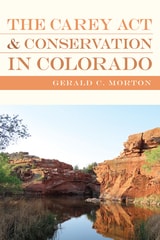
Carey Act and Conservation in Colorado
Gerald C. Morton
University Press of Colorado, 2024
Morton contextualizes the Carey Act’s significance in Colorado through a study of the Two Buttes and Muddy Creek projects in the state’s southeastern corner—tragic examples of the disconnect among developers seeking windfall profits in the face of financial rollercoasters, the challenge of reclaiming remote sagebrush country, and settlers seeking viable livelihoods that eventually led conservationists to reimagine the failures as public wildlife refuges. A collision of values between developers and settlers lay at the center of those wildlife habitat conservation efforts, forcing people to rethink their relationship with the land and ephemeral streams—an awareness that correlated with the advent of modern ecology.
The Carey Act and Conservation in Colorado is the untold story of the manipulation of nature and the reconceived use of land for public wildlife areas on the southern plains of the American West. Offering original research on arid lands policy, federal and state agency oversight, irrigation bond financing, heartbroken settlers’ grievances, individual developers’ motives, and the rise of wildlife conservation, this compelling tale of misfortune will appeal to scholars and general readers interested in conservationist and environmental history in the American West.
Caribbean Inhospitality
The Poetics of Strangers at HomeNatalie Lauren Belisle
Rutgers University Press, 2025
Caribbean Migrations
The Legacies of ColonialismAnke Birkenmaier
Rutgers University Press, 2021
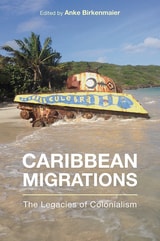
With mass migration changing the configuration of societies worldwide, we can look to the Caribbean to reflect on the long-standing, entangled relations between countries and areas as uneven in size and influence as the United States, Cuba, Hispaniola, Puerto Rico, and Jamaica. More so than other world regions, the Caribbean has been characterized as an always already colonial region. It has long been a key area for empires warring over influence spheres in the new world, and where migration waves from Africa, Europe, and Asia accompanied every political transformation over the last five centuries. In Caribbean Migrations, an interdisciplinary group of humanities and social science scholars study migration from a long-term perspective, analyzing the Caribbean's "unincorporated subjects" from a legal, historical, and cultural standpoint, and exploring how despite often fractured public spheres, Caribbean intellectuals, artists, filmmakers, and writers have been resourceful at showcasing migration as the hallmark of our modern age.
Carl Schmitt and Leo Strauss
The Hidden DialogueHeinrich Meier
University of Chicago Press, 1995
Meier contends that their exchange only ostensibly revolves around liberalism. At its heart, their “hidden dialogue” explores the fundamental conflict between political theology and political philosophy, between revelation and reasonand ultimately, the vital question of how human beings ought to live their lives.
Carlos Lacerda, Brazilian Crusader
Volume I: The Years 1914-1960By John W. F. Dulles
University of Texas Press, 1991
Playwright, journalist, and spectacularly successful governor, Carlos Lacerda was Brazil's foremost orator in the 20th century and its most controversial politician. He might have become president in the 1960s had not the military taken over. In the words of eminent historian José Honório Rodrigues, "No one person influenced the Brazilian historical process as much as Carlos Lacerda from 1945 to 1968."
In this volume, the first of a two-volume biography, Professor Dulles paints a portrait of a rebellious youth, who had the willfulness of his prominent father and who crusaded for Communism before becoming its most outspoken foe. Recalling Lacerda's rallying cry, "Brazil must be shaken up," Dulles traces the career of the journalist whose unsparing attacks on the men in power led authorities to imprison him and employ thugs who pummeled him physically. The story covers events in which Lacerda helped alter Brazil, such as the redemocratization in 1945 and his revelation of scandals in high places in the early 1950s. An unsuccessful attempt by government men to murder him in 1954 led to the suicide of President Getulio Vargas in 1954.
Lacerda's spirited oratory helped him become Brazil's most popular congressman, but it scared the rulers of Brazil and they prohibited the broadcast of his speeches after he returned from exile in 1956. Their effort to deprive him of his mandate stirred the entire nation and culminated in one of the most dramatic sessions ever held in the Chamber of Deputies.
Dulles, who knew Lacerda well and had access to his papers, sheds light on Lacerda the man, ardent in courtship and in all his undertakings, intellectually restless, and scornful of routine and mediocrity. Lacerda had a vitriolic pen that made bitter enemies, but, as disclosed in these pages, his courage and incorruptibility attracted an enthusiastic following, evident in the landslide election victories that brought him seats on Rio de Janeiro's city council and in the federal Congress.
Carlos Lacerda, Brazilian Crusader
Volume II: The Years 1960-1977By John W. F. Dulles
University of Texas Press, 1991
From reviews of Volume I:
"Brazilian Crusader is no doubt the best biography yet produced on Lacerda and the second volume . . . is certainly worth waiting for."
—Luso-Brazilian Review
Journalist and spectacularly successful governor, Carlos Lacerda was Brazil's foremost orator in the 20th century and its most controversial politician. He might have become president in the 1960s had not the military taken over.
In the first volume, John F. W. Dulles paints a portrait of a rebellious youth, who had the willfulness of his prominent father and who crusaded for Communism before becoming its most outspoken foe. Recalling Lacerda's rallying cry, "Brazil must be shaken up," Dulles traces the career of the journalist whose unsparing attacks on the men in power led authorities to imprison him and employ thugs who pummeled him physically. Lacerda's spirited oratory helped him become Brazil's most popular congressman, but it scared the rulers of Brazil, who prohibited the broadcast of his speeches after he returned from exile in 1956. Their effort to deprive him of his mandate stirred the entire nation and culminated in one of the most dramatic sessions ever held in the Chamber of Deputies.
In the second and final volume, Dulles explores the political and private life of Lacerda from 1960, when he became governor of Brazil's Guanabara state, until his death in 1977. Dulles focuses particularly on the years 1960 to 1968, in which Lacerda played a central role in some of the most drastic political changes that Brazil has experienced in this century.
Lacerda's story ranges from the headlines constantly generated by his political attacks and journalistic sensationalism to private moments of personal tragedy. In telling his story, Dulles draws on hundreds of interviews, as well as extensive research in press archives, Lacerda's public papers, and the private collections of Lacerda's family and associates. This material paints a compelling portrait of an honest administrator who alienated top figures in politics, the press, and the military.
Carrying a Secret in My Heart
Children of the Victims of the Reprisals after the Hungarian Revolution in 1956 - An Oral HistoryZsuzsanna Korösi
Central European University Press, 2003
Carter's Conversion
The Hardening of American Defense PolicyBrian J. Auten
University of Missouri Press, 2008
Cartographies of Danger
Mapping Hazards in AmericaMark Monmonier
University of Chicago Press, 1997
California, for example, takes earthquakes seriously, with a comprehensive program of seismic mapping, whereas Washington has been comparatively lax about earthquakes in Puget Sound. But as the Northridge earthquake in January 1994 demonstrated all too clearly to Californians, even reliable seismic-hazard maps can deceive anyone who misinterprets "known fault-lines" as the only places vulnerable to earthquakes.
Important as it is to predict and prepare for catastrophic natural hazards, more subtle and persistent phenomena such as pollution and crime also pose serious dangers that we have to cope with on a daily basis. Hazard-zone maps highlight these more insidious hazards and raise awareness about them among planners, local officials, and the public.
With the help of many maps illustrating examples from all corners of the United States, Monmonier demonstrates how hazard mapping reflects not just scientific understanding of hazards but also perceptions of risk and how risk can be reduced. Whether you live on a faultline or a coastline, near a toxic waste dump or an EMF-generating power line, you ignore this book's plain-language advice on geographic hazards and how to avoid them at your own peril.
Cartographies of Madrid
Contesting Urban Space at the Crossroads of the Global South and Global NorthSilvia Bermudez
Vanderbilt University Press, 2018
Scholars, investigative journalists, political activists, and a filmmaker combine to document the vast array of Madrid's grassroots movements.
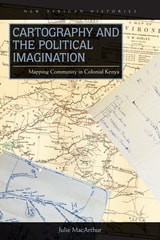
Cartography and the Political Imagination
Mapping Community in Colonial KenyaJulie MacArthur
Ohio University Press, 2016
After four decades of British rule in colonial Kenya, a previously unknown ethnic name—“Luyia”—appeared on the official census in 1948. The emergence of the Luyia represents a clear case of ethnic “invention.” At the same time, current restrictive theories privileging ethnic homogeneity fail to explain this defiantly diverse ethnic project, which now comprises the second-largest ethnic group in Kenya.
In Cartography and the Political Imagination, which encompasses social history, geography, and political science, Julie MacArthur unpacks Luyia origins. In so doing, she calls for a shift to understanding geographic imagination and mapping not only as means of enforcing imperial power and constraining colonized populations, but as tools for articulating new political communities and dissent. Through cartography, Luyia ethnic patriots crafted an identity for themselves characterized by plurality, mobility, and cosmopolitan belonging.
While other historians have focused on the official maps of imperial surveyors, MacArthur scrutinizes the ways African communities adopted and adapted mapping strategies to their own ongoing creative projects. This book marks an important reassessment of current theories of ethnogenesis, investigates the geographic imaginations of African communities, and challenges contemporary readings of community and conflict in Africa.

Carving Out the Commons
Tenant Organizing and Housing Cooperatives in Washington, D.C.Amanda Huron
University of Minnesota Press, 2018
An investigation of the practice of “commoning” in urban housing and its necessity for challenging economic injustice in our rapidly gentrifying cities
Provoked by mass evictions and the onset of gentrification in the 1970s, tenants in Washington, D.C., began forming cooperative organizations to collectively purchase and manage their apartment buildings. These tenants were creating a commons, taking a resource—housing—that had been used to extract profit from them and reshaping it as a resource that was collectively owned by them.
In Carving Out the Commons, Amanda Huron theorizes the practice of urban “commoning” through a close investigation of the city’s limited-equity housing cooperatives. Drawing on feminist and anticapitalist perspectives, Huron asks whether a commons can work in a city where land and other resources are scarce and how strangers who may not share a past or future come together to create and maintain commonly held spaces in the midst of capitalism. Arguing against the romanticization of the commons, she instead positions the urban commons as a pragmatic practice. Through the practice of commoning, she contends, we can learn to build communities to challenge capitalism’s totalizing claims over life.
Case Selection in the United States Supreme Court
Doris Marie Provine
University of Chicago Press, 1980
This concise and accessible study provides an intimate view of the Court's case-selection process through an analysis of the docket books and other papers of Justice Harold H. Burton, who kept scrupulous records of the Court's work from 1945 to 1957. In her analysis of these invaluable records—the only records of case-selection votes made public since the advent of discretionary review in 1925—Provine provides two perspectives on the problematic issue of judicial motivation in case selection. The first perspective is an institutional one in which the Court is treated as the unit of analysis: the second is personal, in which differences among decision makers are the focus of analysis. Provine suggests that judicial role perceptions go far to explain both agreement and disagreement in case selection. She also considers the impact of the process upon litigants, since the system seems to favor petitioners with litigation expertise, especially the U.S. government. Yet, she claims, the secrecy of case selection fosters the popular misperception that any worthwhile case can be appealed "all the way to the Supreme Court." The Court thus maintains its image as a forum equally available to all litigants.
Case Studies in Sport Diplomacy
Craig Esherick
FiT Publishing, 2017
The growing influence of sport has created a unique opportunity to build international relationships for a number of purposes, including cultural, economic, shared humanitarian, and increasingly, political diplomacy. Case Studies in Sport Diplomacy explores the influence and effectiveness of sport diplomacy in improving long-term relations between nations by opening a dialogue with international leaders, raising awareness of host countries and to bridging cultural differences, and in building international relationships through ambassadors that could increase trade and legislative agreements, and even bring peace to nations in conflict.
Authored by talented scholars from all over the world, many of whom served as sport diplomats, their unique perspective in each case sheds light on the ways in which sport diplomacy can succeed or falter in achieving strategic objectives between influential – and in some cases historically adversarial – countries.
A thoroughly intriguing look at sport diplomacy’s past and ongoing efforts to improve relations with countries such as Brazil, Russia, Iran and China, Case Studies in Sport Diplomacy brings to the forefront an area in which sport has been able to open up and increase opportunities to build relationships between people, communities, governments and countries.
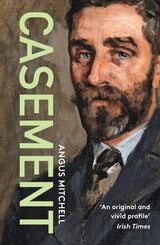
Casement
Angus Mitchell
Haus Publishing, 2026
At the time of his execution for treason in 1916, few were aware who Roger Casement was or what he represented. Since then, he has been lauded for his investigations into Belgian brutality in the Congo Free State and human rights abuses in the Peruvian rubber industry, but much else about him has remained obscured behind speculation about his sexuality and secret Irish revolutionary activity while in service of the British Empire. As such, his place in history has been ill-defined and multifarious: his involvement in the waging of war followed by the delicate negotiation of peace; his republicanism perceived variously as an eccentric enthusiasm and as a threat to the British Empire; his contemporary legacy overshadowed by the Black Diaries of disputed legitimacy, detailing alleged liaisons with young men.
In Casement, Angus Mitchell illuminates a life shrouded in mystery, which operated in the conflicting spheres of British foreign diplomacy and Irish revolutionary activity. Considering Casement’s rebellious nature, Mitchell asks if it was motivated as much by his “incorrigible” Irishness as by his exposure of the appalling crimes against humanity that he witnessed in Africa and South America. Most significantly, Casement demonstrates that his legacy cannot be ascribed to just one cause, whether as a critic of global colonialism or as a founding father of the modern Irish nation-state. Casement’s true commitment was to a universal understanding based on humanity, tolerance, and justice.
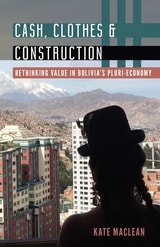
Cash, Clothes, and Construction
Rethinking Value in Bolivia's Pluri-economyKate Maclean
University of Minnesota Press, 2023
A groundbreaking feminist perspective on Movimiento al Socialismo (MAS) rule in Bolivia and the country’s radical transformation under Evo Morales
The presidency of Evo Morales in Bolivia (2006–2019) has produced considerable academic scholarship, much of it focused on indigenous social movements or extractivism, and often triumphalist about the successes of Morales’s Movimiento al Socialismo (MAS). Turning a new lens on the movement, Cash, Clothes, and Construction presents the first gender-based analysis of “pluri-economy,” a central pillar of Bolivia’s program under Morales, evaluating the potential of this vision of “an economy where all economies fit” to embrace feminist critiques of capitalism and economic diversity.
Based on more than twelve years of empirical research exploring the remarkable transformations in Bolivia since 2006, this book focuses on three sectors—finance, clothing, and construction—in which indigenous women have defied gendered expectations. Kate Maclean presents detailed case studies of women selling secondhand high street clothes from the United States in the vast, peri-urban markets of Bolivian cities; Aymaran designers of new pollera (traditional Andean dress) fashions, one of whom exhibited her collection in New York City; and the powerful and rich chola paceña, whose real estate investments have transformed the cultural maps of La Paz and El Alto.
Cash, Clothes, and Construction offers a gendered analysis of the mission of MAS to dismantle neoliberalism and decolonize politics and economy from the perspective of the Indigenous women who have radically transformed Bolivia’s economy from the ground up.
Cash, Crisis, and Corporate Governance
The Role of National Financial Systems in Industrial RestructuringVictoria Marklew
University of Michigan Press, 1995
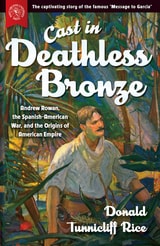
Cast in Deathless Bronze
Andrew Rowan, the Spanish-American War, and the Origins of American EmpireDonald Tunnicliff Rice
West Virginia University Press, 2016
Donald Tunnicliff Rice reveals the facts behind the story of “A Message to García” while using Rowan’s biography as a window into the history of the Spanish-American War, the Philippine War, and the Moro Rebellion. The result is a compellingly written narrative containing many details never before published in any form, and also an accessible perspective on American diplomatic and military history in the late nineteenth and early twentieth centuries.
Caste, Country, and Creed
Struggles for Social Justice in the Contemporary Indian DiasporaNisha Thapliyal
Rutgers University Press, 2026
What happens when ancient systems of oppression travel across oceans? How do Indian diaspora communities across five nations challenge centuries-old systems of oppression while building new forms of solidarity? Caste, Country, and Creed: Struggles for Social Justice in the Contemporary Indian Diaspora takes readers inside the dynamic world of contemporary social justice activism spanning Aotearoa New Zealand, Australia, Canada, the United States, and the United Kingdom.
This groundbreaking collection brings together the voices of artists, activists, and scholar-activists who are reshaping conversations about caste discrimination, Islamophobia, and Hindu nationalism beyond India's borders. Through intimate first-person accounts and critical reflections, contributors reveal how diaspora activists are creating powerful counter-narratives and mobilizing collective resistance across local and transnational networks.
The book documents the lived realities of organizing—the values, knowledge traditions, and pivotal moments that spark political protest. Caste, Country, and Creed shows how activists construct alternative knowledge to dissent, build solidarity, and inspire political participation. Contributors offer nuanced insights into the complex relationships and power dynamics that sustain collective action for social justice in the Indian diaspora.
For copyright reasons, this edition is not for sale in India.
Catastrophe
Law, Politics, and the Humanitarian ImpulseAustin Sarat
University of Massachusetts Press, 2009
At a time when societies are directing an unprecedented level of resources and ingenuity to anticipating and mitigating catastrophic events, Catastrophe: Law, Politics, and the Humanitarian Impulse examines the tests that catastrophe poses to politics and humanitarianism as well as to the law. It explores legal, political, and humanitarian responses during times when the sudden, discontinuous, and disastrous event has become, perhaps paradoxically, a structural component of our political imagination. It asks whether law, politics, and humanitarianism live up to the tests posed by disaster, and the role all of them play in creating a more resilient world.
Taken together the essays in this book ask us to see through and beyond the myths that surround catastrophe and our responses to it. They ask us to rethink our understanding of catastrophe and to imagine new legal, political, and humanitarian responses.
In addition to the editors, contributors include Thomas Birkland, Michele Landis Dauber, Kim Fortun, Edward Rackley, Peter Redfield, Peter H. Schuck, and Susan Sterett.
Catching History on the Wing
Race, Culture and GlobalisationA. Sivanandan
Pluto Press, 2008
A. Sivanandan is a highly influential thinker on race, racism, globalisation and resistance. Since 1972, he has been the director of the Institute of Race Relations and the editor of Race & Class, which set the policy agenda on ethnicity and race in the UK and worldwide. Sivanandan has been writing for over forty years and this is the definitive collection of his work.
The articles selected span his entire career and are chosen for their relevance to today's most pressing issues. Included is a complete bibliography of Sivanandan’s writings, and an introduction by Colin Prescod (chair of the IRR), which sets the writings in context.
This book is highly relevant to undergraduate politics students and anyone reading or writing on race, ethnicity and immigration.
Catching Up with the Competition
Trade Opportunities and Challenges for Arab CountriesBernard Hoekman and Jamel Zarrouk, Editors
University of Michigan Press, 2000
Catching a Case
Inequality and Fear in New York City's Child Welfare SystemLee, Tina
Rutgers University Press, 2016
Catholic Labor Movements in Europe
Paul Misner
Catholic University of America Press, 2015
Catholicism and Liberal Democracy
Forgotten Roots and Future ProspectsJames Martin Carr
Catholic University of America Press, 2022
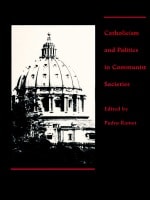
Catholicism and Politics in Communist Societies
Pedro Ramet, ed.
Duke University Press, 1990
Catholicism has, on the one hand, traditionally regarded earthly life as of secondary importance—as an instrument of spiritual transformation—and, on the other, has ascribed great value to the early institutions of the church, taking great interest in temporal matters that affects its institutional concerns. Against the backdrop of this duality, the church has changed over the centuries, adapting to local and national conditions. Catholicism and Politics in Communist Societies surveys these local and national adaptations in their historical contexts, linking the past experience of the church to its present circumstances. Organized around themes of tradition vs. modernity, hierarchy vs. lower clergy, and institutional structure vs. grass-roots organization, this comprehensive volume presents a detailed, country-by-country portrait of the political and social status of the church today in communist and socialist settings.
Contributors. Pedro Ramet, Arthur F. McGovern, Roman Solchanyk, Ivan Hvat, Robert F. Goeckel, C. Chrypinski, Milan J. Reban, Leslie Laszlo, Janice Broun, Eric O. Hanson, Stephen Denney, Thomas E. Quigley, Humberto Belli, Hansjakob Stehle, George H. Williams
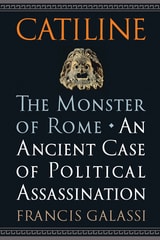
Catiline, The Monster of Rome
An Ancient Case of Political AssassinationFrancis Galassi
Westholme Publishing, 2014
In 62 BC, Roman Senator Lucius Sergius Catiline lay dead on a battlefield in Tuscany. He was slain along with his soldiers after his conspiracy to overthrow the Roman Republic had been exposed by his adversary Cicero. It was an ignominious end for a man described at the time as a perverted, insane monster who had attempted to return his family to fortune and social standing. Chroniclers were not kind to Catiline, and his name over the centuries was synonymous with treachery. Recently, scholars have been reappraising the life and influence of this ancient Roman. In Catiline, The Monster of Rome: An Ancient Case of Political Assassination, economic historian Francis Galassi provides the first book-length account of Catiline in more than a generation.
Rome first achieved a status as an empire during Catiline’s lifetime. The republic was, however, constantly at war with foreign powers and occasionally its own allies, and the disparity between the wealthy and the poor threatened to destabilize society. Catiline was from an aristocratic but impoverished family and first served as an officer with Cornelius Sulla during that general’s purges against Gaius Marius, the supposed champion of the oppressed masses. Catiline’s goal was to serve Sulla and then use that as a springboard to public office where he could recover his family’s former wealth and honor. However, the senatorial elite became suspicious if not threatened by the upstart Catiline and blocked his ambitions. Catiline was dogged by trumped-up charges, including raping a Vestal virgin and murdering his brother-in-law; he was acquitted each time, but his political life was ruined. With citizens demanding land and agrarian reform, Catiline genuinely embraced their dissatisfaction, and realizing that the elite would stop his attempt to gain status through elections, he organized a conspiracy to take control of Roman government through arms. Once his actions had been made public, many of his supporters and co-conspirators left him; but honoring the course he had chosen, he and his remaining soldiers fought a Roman army to their deaths. Rather than the “monster” as portrayed by his contemporaries, the author contends that Catiline was compelled to act for the benefit of common Romans to save Rome even if it meant overthrowing the government. As Galassi notes, Catiline’s contemporary, the slave Spartacus, has been a symbol of social reform for centuries, but it was actually Catiline, not Spartacus, who attempted to change Rome.