Results by title
3027 books match the query 'Sociology' and 240 start with c
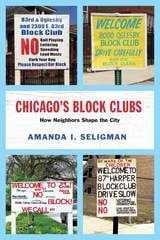
Chicago's Block Clubs
How Neighbors Shape the CityAmanda I. Seligman
University of Chicago Press, 2016
In Chicago’s Block Clubs, Amanda I. Seligman uncovers the history of the block club in Chicago—from its origins in the Urban League in the early 1900s through to the Chicago Police Department’s twenty-first-century community policing program. Recognizing that many neighborhood problems are too big for one resident to handle—but too small for the city to keep up with—city residents have for more than a century created clubs to establish and maintain their neighborhood’s particular social dynamics, quality of life, and appearance. Omnipresent yet evanescent, block clubs are sometimes the major outlets for community organizing in the city—especially in neighborhoods otherwise lacking in political strength and clout. Drawing on the stories of hundreds of these groups from across the city, Seligman vividly illustrates what neighbors can—and cannot—accomplish when they work together.
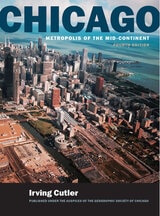
Chicago
Metropolis of the Mid-Continent, 4th EditionIrving Cutler. Foreword by James F. Marran
Southern Illinois University Press, 2006
Chicago: Metropolis of the Mid-Continent provides a comprehensive portrayal of the growth and development of Chicago from the mudhole of the prairie to today’s world-class city. This completely revised fourth edition skillfully weaves together the geography, history, economy, and culture of the city and its suburbs with a special emphasis on the role of the many ethnic and racial groups that comprise the “real Chicago” of its neighborhoods. Cutler demonstrates how the geography of “Chicagoland” and the influx of a diverse population spurred transportation, industrial technology, the economy, and sporadic planning to foster rapid urban growth, which brought both great progress and severe problems.
Through insightful analysis, Cutler also traces the demographic and societal changes to Chicago, critically examining such problems as the environment, education, racial tension, crime, welfare, housing, employment, and transportation. Richly illustrated with nearly three hundred drawings, photos, maps, and tables, the volume includes six appendices with sections dedicated to Chicago facts, population growth and income data, weather and climate, significant dates, and historic sites.

Chicago
Race, Class, and the Response to Urban DeclineGregory Squires
Temple University Press, 1989
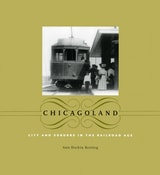
Chicagoland
City and Suburbs in the Railroad AgeAnn Durkin Keating
University of Chicago Press, 2005
Historian and coeditor of the acclaimed Encyclopedia of Chicago, Ann Durkin Keating resurrects for us here the bustling network that defined greater Chicagoland. Taking a new approach to the history of the city, Keating shifts the focus to the landscapes and built environments of the metropolitan region. Organized by four categories of settlements-farm centers, industrial towns, commuter suburbs, and recreational and institutional centers-that framed the city, Chicagoland offers the collective history of 230 neighborhoods and communities, the people who built them, and the structures they left behind that still stand today.
Keating reanimates nineteenth-century Chicagoland with more than a hundred photographs and maps; we find here the taverns, depots, and way stations that were the hubs of the region's vibrant, mobile life. Keating also includes an appendix of driving tours so readers can see this history for themselves. Chicagoland takes us into the buildings and sites that are still part of our landscape and repopulates them with the stories and characters behind their creation. The result is a wide-angle historical view of Chicago, an entirely new way to understand the region.

Child Support
The Next FrontierJ. Thomas Oldham and Marygold S. Melli, Editors
University of Michigan Press, 2000
Reforms have moved the child support system from one of minimal effort, based on the assumption that children in single parent households would be supported by their custodial parents or by government welfare, to a formula-based system for calculating child support and an aggressive enforcement program to collect that support from the noncustodial parent.
The essays range from a review of child support history, with a focus on the changing mores of parental responsibility, to empirical studies of whether increased establishment of paternity and child support enforcement results in more father-child contacts, to how child support affects fathers and whether the support obligation impoverishes noncustodial fathers. The essays explore the failure of the current child support reforms to reduce child poverty, consider the need to study how to determine what is a "fair amount" of child support, and debate proposals to follow the example of a number of other industrialized nations and provide more generous public benefits for poor children.
This book will be of interest to public policy makers and professionals--lawyers, legal scholars, social workers, and administrators--who work in and study the child support system.
Contributors are June R. Carbone, John Eekelaar, Martha A. Fineman, Irwin Garfinkel, Marsha Garrison, Paul K. Legler, Mavis Maclean, Marygold S. Melli, Daniel R. Meyer, J. Thomas Oldham, Allen M. Parkman, Judith A. Seltzer, and Andrea Warman.
J. Thomas Oldham is John H. Freeman Professor Law, University of Houston Law School. Marygold S. Melli is Voss-Bascom Professor of Law Emerita, University of Wisconsin-Madison Law School.
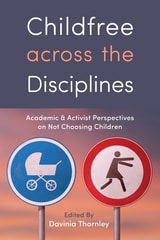
Childfree across the Disciplines
Academic and Activist Perspectives on Not Choosing ChildrenDavinia Thornley
Rutgers University Press, 2022
Recently, childfree people have been foregrounded in mainstream media. More than seven percent of Western women choose to remain childfree and this figure is increasing. Being childfree challenges the ‘procreation imperative’ residing at the center of our hetero-normative understandings, occupying an uneasy position in relation to—simultaneously—traditional academic ideologies and prevalent social norms. After all, as Adi Avivi recognizes, "if a woman is not a mother, the patriarchal social order is in danger." This collection engages with these (mis)perceptions about childfree people: in media representations, demographics, historical documents, and both psychological and philosophical models. Foundational pieces from established experts on the childfree choice--Rhonny Dam, Laurie Lisle, Christopher Clausen, and Berenice Fisher--appear alongside both activist manifestos and original scholarly work, comprehensively brought together. Academics and activists in various disciplines and movements also riff on the childfree life: its implications, its challenges, its conversations, and its agency—all in relation to its inevitability in the 21st century. Childfree across the Disciplines unequivocally takes a stance supporting the subversive potential of the childfree choice, allowing readers to understand childfreedom as a sense of continuing potential in who—or what—a person can become.

Children and the Communities
Paul Henderson
Pluto Press, 1995

Children of Katrina
By Alice Fothergill and Lori Peek
University of Texas Press, 2015
Winner, Betty and Alfred McClung Lee Book Award, Association for Humanist Sociology, 2016
Outstanding Scholarly Contribution Award of the Section on Children and Youth, American Sociological Association, 2016
Honorable Mention, Leo Goodman Award, Methodology Section, American Sociological Association, 2016
When children experience upheaval and trauma, adults often view them as either vulnerable and helpless or as resilient and able to easily “bounce back.” But the reality is far more complex for the children and youth whose lives are suddenly upended by disaster. How are children actually affected by catastrophic events and how do they cope with the damage and disruption?
Children of Katrina offers one of the only long-term, multiyear studies of young people following disaster. Sociologists Alice Fothergill and Lori Peek spent seven years after Hurricane Katrina interviewing and observing several hundred children and their family members, friends, neighbors, teachers, and other caregivers. In this book, they focus intimately on seven children between the ages of three and eighteen, selected because they exemplify the varied experiences of the larger group. They find that children followed three different post-disaster trajectories—declining, finding equilibrium, and fluctuating—as they tried to regain stability. The children’s moving stories illuminate how a devastating disaster affects individual health and well-being, family situations, housing and neighborhood contexts, schooling, peer relationships, and extracurricular activities. This work also demonstrates how outcomes were often worse for children who were vulnerable and living in crisis before the storm. Fothergill and Peek clarify what kinds of assistance children need during emergency response and recovery periods, as well as the individual, familial, social, and structural factors that aid or hinder children in getting that support.
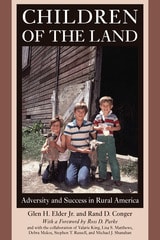
Children of the Land
Adversity and Success in Rural AmericaGlen H. Elder Jr. and Rand D. Conger
University of Chicago Press, 2000
In Children of the Land, the authors ask whether traditional observations about farm families—strong intergenerational ties, productive roles for youth in work and social leadership, dedicated parents and a network of positive engagement in church, school, and community life—apply to three hundred Iowa children who have grown up with some tie to the land. The answer, as this study shows, is a resounding yes. In spite of the hardships they faced during the agricultural crisis of the 1980s, these children, whose lives we follow from the seventh grade to after high school graduation, proved to be remarkably successful, both academically and socially.
A moving testament to the distinctly positive lifestyle of Iowa families with connections to the land, this uplifting book also suggests important routes to success for youths in other high risk settings.
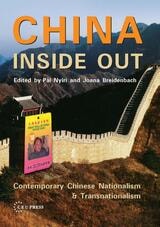
China Inside Out
Contemporary Chinese Nationalism and TransnationalismJoana Breidenbach
Central European University Press, 2005
The authors of this text believe that “areas” as assemblages of social processes requiring distinct, culture-bound explanations cannot be replaced with global theories, but that the meaning of “the area” can be different depending on the question one studies. The study of China and Chinese, in particular, is a good arena to challenge the disciplinary and geographic boundaries of conventional area studies for several reasons. First, because of the wealth of simultaneous processes of rapid political, social, and discursive change in contemporary Chinese society; second, because of the problematic relationship between state, territory, nation, and ethnicity in China; third, because China studies, perhaps more than any other area studies at the moment, is a highly competitive political and academic industry whose internal working must be critically examined. In addition, the subject of China has become one of the primary loci of contesting the meanings of globalization and the universality versus relativity of “values” and modernity.
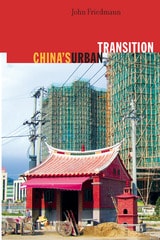
China's Urban Transition
John Friedmann
University of Minnesota Press, 2005
Chinese Marriages in Transition
From Patriarchy to New FamilismXiaoling Shu
Rutgers University Press, 2023
This book is freely available in an open access edition thanks to TOME (Toward an Open Monograph Ecosystem)— a collaboration of the Association of American Universities, the Association of University Presses, and the Association of Research Libraries—and the generous support of the University of California, Davis. Learn more at the TOME website, available at: openmonographs.org.
Download the open access book here.
Chippewa Lake
A Community in Search of an IdentityCindy L. Hull
Michigan State University Press, 2012
Chippewa Lake is an idyllic waterfront community in north-central Michigan, popular with retirees and weekenders. The lake is surrounded by a rural farming community, but the area is facing a difficult transition as local demographics shift, and as it transforms from an agriculture-based economy to one that relies on wage labor. As farms have disappeared, local residents have employed a variety of strategies to adapt to a new economic structure. The community, meanwhile, has been indelibly affected by the advent of newcomers and retirees challenging the rural cultural values. An anthropologist with a background in sociology, Cindy L. Hull deftly weaves together oral accounts, historic documents, and participant surveys compiled from her nearly thirty years of living in the area to create a textured portrait of a community in flux.
Choke Points
Logistics Workers Disrupting the Global Supply ChainEdited by Jake Alimahomed-Wilson and Immanuel Ness
Pluto Press, 2017
This is the global supply chain, and, if the chain is broken, capitalism grinds to a halt. This book looks at case studies across the world to uncover a network of resistance by these workers who, despite their importance, often face vast exploitation and economic violence.
Experiencing first hand wildcat strikes, organised blockades and boycotts, the authors explore a diverse range of case studies, from South China dockworkers to the transformation of the port of Piraeus in Greece, and from the Southern California logistics sector, to dock and logistical workers in Chile and unions in Turkey.
Choosing Ethnicity, Negotiating Race
Korean Adoptees in AmericaMia Tuan
Russell Sage Foundation, 2011
Choosing Homes, Choosing Schools
Annette Lareau
Russell Sage Foundation, 2014
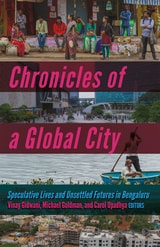
Chronicles of a Global City
Speculative Lives and Unsettled Futures in BengaluruVinay Gidwani
University of Minnesota Press, 2024
Tracking Bengaluru’s dramatic urban transformation through the entanglements of finance, land frenzy, real estate volatility, and livelihood upheavals
Over the past two decades, Bengaluru’s exploding real estate sector and massive infrastructure investments have led to land speculation targeting working-class neighborhoods and agricultural land for development. Chronicles of a Global City turns Bengaluru inside out to examine its “world-city” transformation that stimulated rapid urbanization and unbounded growth. Moving the spotlight away from the urban elites and “new middle class,” this book explores how people caught up in the whirlwinds of change in Bengaluru—from construction laborers, street vendors, domestic workers, and platform delivery workers to small-time property brokers, petty landlords, and local politicians—experience, struggle, aspire, invent, strive, and speculate to make a livable city for themselves.
Grounded in long-term ethnographic research and activist experiences, Chronicles of a Global City vividly illuminates the multifaceted entanglements of finance capital, real estate markets, livelihood struggles, and fraying ecologies in urban and peri-urban Bengaluru. Its anchoring concept, “speculative urbanism,” provides a powerful, innovative lens for understanding the risk-laden practices of leveraging land, labor, and resources for the promise of future profit.
Contributors: Hemangini Gupta, Pierre Hauser, Priyanka Krishna, Eesha Kunduri, Kaveri Medappa, Usha Rao, Shaheen Shasa, Swathi Shivanand, Vinay K. Sreenivasa.

Cinematic Prophylaxis
Globalization and Contagion in the Discourse of World HealthKirsten Ostherr
Duke University Press, 2005
Ostherr presents the first in-depth analysis of the public health films produced between World War II and the 1960s that popularized the ideals of world health and taught viewers to imagine the presence of invisible contaminants all around them. She considers not only the content of specific films but also their techniques for making invisible contaminants visible. By identifying the central aesthetic strategies in films produced by the World Health Organization, the Centers for Disease Control, and other institutions, she reveals how ideas about racial impurity and sexual degeneracy underlay messages ostensibly about world health. Situating these films in relation to those that preceded and followed them, Ostherr shows how, during the postwar era, ideas about contagion were explicitly connected to the global circulation of bodies. While postwar public health films embraced the ideals of world health, they invoked a distinct and deeply anxious mode of representing the spread of disease across national borders.
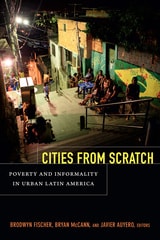
Cities From Scratch
Poverty and Informality in Urban Latin AmericaBrodwyn Fischer, Bryan McCann, Javier Auyero, eds.
Duke University Press, 2014
Contributors. Javier Auyero, Mariana Cavalcanti, Ratão Diniz, Emilio Duhau, Sujatha Fernandes, Brodwyn Fischer, Bryan McCann, Edward Murphy, Dennis Rodgers
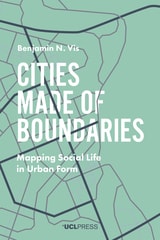
Cities Made of Boundaries
Mapping Social Life in Urban FormBenjamin N. Vis
University College London, 2018
Benjamin N. Vis gives a precise account of how BLT mapping can be applied to detailed historical, reconstructed, contemporary, and archaeological urban plans, exemplified by sixteenth to twenty-first-century Winchester and Classic Maya Chunchucmil. This account demonstrates how the functional and experiential difference between compact western and tropical dispersed cities can be explored.
The methodological development of Cities Made of Boundaries will appeal to readers interested in the comparative social analysis of built environments, and those seeking to expand the evidence-base of design options to structure urban life and development.
Cities and Citizenship
James Holston, ed.
Duke University Press, 1998
Just as relations between nations are changing in the current phase of global capitalism, so too are relations between nations and cities. Written by internationally prominent scholars, the essays in Cities and Citizenship propose that “place” remains fundamental to these changes and that cities are crucial places for the development of new alignments of local and global identity. Through case studies from Africa, Europe, Latin America, and North America, the volume shows how cities make manifest national and transnational realignments of citizenship and how they generate new possibilities for democratic politics that transform people as citizens. Previously published as a special issue of Public Culture that won the 1996 Best Single Issue of a Journal Award from the Professional/Scholarly Publishing Division of the Association of American Publishers, the collection showcases a photo essay by Cristiano Mascaro, as well as two new essays by James Holston and Thomas Bender.
Cities and Citizenship will interest students and scholars of anthropology, geography, sociology, planning, and urban studies, as well as globalization and political science.
Contributors. Arjun Appadurai, Etienne Balibar, Thomas Bender, Teresa P. R. Caldeira, Mamadou Diouf, Dilip Parameshwar Gaonkar, James Holston, Marco Jacquemet, Christopher Kamrath, Cristiano Mascaro, Saskia Sassen, Michael Watts, Michel Wieviorka
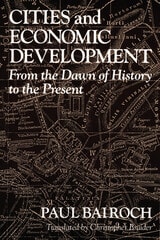
Cities and Economic Development
From the Dawn of History to the PresentPaul Bairoch
University of Chicago Press, 1988
In this revised translation of De Jéricho à Mexico, Paul Bairoch seeks the answers to these questions and provides a comprehensive study of the evolution of the city and its relation to economic life. Bairoch examines the development of cities from the dawn of urbanization (Jericho) to the explosive growth of the contemporary Third World city. In particular, he defines the roles of agriculture and industrialization in the rise of cities.
"A hefty history, from the Neolithic onward. It's ambitious in scope and rich in subject, detailing urbanization and, of course, the links between cities and economies. Scholarly, accessible, and significant."—Newsday
"This book offers a path-breaking synthesis of the vast literature on the history of urbanization."—John C. Brown, Journal of Economic Literature
"One leaves this volume with the feeling of positions intelligently argued and related to the existing state of theory and knowledge. One also has the pleasure of reading a book unusually well-written. It will long both be a standard and stimulate new thought on the central issue of urban and economic growth."—Thomas A. Reiner, Annals of the American Academy of Political and Social Science
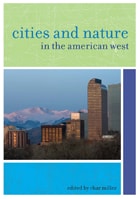
Cities and Nature in the American West
Char Miller
University of Nevada Press, 2010
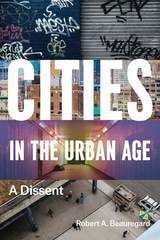
Cities in the Urban Age
A DissentRobert A. Beauregard
University of Chicago Press, 2018
For Beauregard, the city is a cauldron for four haunting contradictions. First, cities are equally defined by both their wealth and their poverty. Second, cities are simultaneously environmentally destructive and yet promise sustainability. Third, cities encourage rule by political machines and oligarchies, even as they are essentially democratic and at least nominally open to all. And fourth, city life promotes tolerance among disparate groups, even as the friction among them often erupts into violence. Beauregard offers no simple solutions or proposed remedies for these contradictions; indeed, he doesn’t necessarily hold that they need to be resolved, since they are generative of city life. Without these four tensions, cities wouldn’t be cities. Rather, Beauregard argues that only by recognizing these ambiguities and contradictions can we even begin to understand our moral obligations, as well as the clearest paths toward equality, justice, and peace in urban settings.
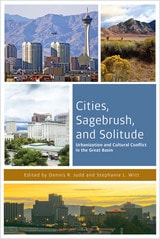
Cities, Sagebrush, and Solitude
Urbanization and Cultural Conflict in the Great BasinDennis R. Judd
University of Nevada Press, 2015
The blooming of cities in a fragile desert region poses a host of environmental challenges. The policies required to manage their impact, however, often collide with an entrenched political culture that has long resisted cooperative or governmental effort. The alchemical mixture of three ingredients--cities, aridity, and a libertarian political outlook--makes the Great Basin a compelling place to study. This book addresses a pressing question: are large cities ultimately sustainable in such a fragile environment?
Cities, Sin, and Social Reform in Imperial Germany
Andrew Lees
University of Michigan Press, 2002
Thematically and methodologically wide-ranging and innovative, this volume considers a broad spectrum of responses not only to the supposed breakdown of social cohesion but also to specific forms of deviant behavior. It draws on large numbers of writings from the period by clergymen, jurists, medical doctors, educators, social workers, and others. This literature illuminates the histories not only of urbanization and cities but also of sexuality and Christianity, crime and criminology, leisure and education, youth and women, charity and social work, and the welfare state as well as local government.
Focusing on positive instead of escapist responses to the challenges that inhered in urban society, this work can be read as part of an ongoing reassessment of the German Empire that points away from the idea that Germans were traveling an antimodernist Sonderweg, or special path, that led inevitably to National Socialism and the Third Reich. Although intended primarily for scholars and students of modern Germany, this book should speak to a variety of readers, among them anyone who cares about the history of cities, deviant behavior, or social reform.
Andrew Lees is Professor of History, Rutgers University.
Citizen Speak
The Democratic Imagination in American LifeAndrew J. Perrin
University of Chicago Press, 2006
When we think about what constitutes being a good citizen, routine activities like voting, letter writing, and paying attention to the news spring to mind. But in Citizen Speak, Andrew J. Perrin argues that these activities are only a small part of democratic citizenship—a standard of citizenship that requires creative thinking, talking, and acting.
For Citizen Speak, Perrin met with labor, church, business, and sports organizations and proposed to them four fictive scenarios: what if your senator is involved in a scandal, or your police department is engaged in racial profiling, or a local factory violates pollution laws, or your nearby airport is slated for expansion? The conversations these challenges inspire, Perrin shows, require imagination. And what people can imagine doing in response to those scenarios depends on what’s possible, what’s important, what’s right, and what’s feasible. By talking with one another, an engaged citizenry draws from a repertoire of personal and institutional resources to understand and reimagine responses to situations as they arise. Building on such political discussions, Citizen Speak shows how a rich culture of association and democratic discourse provides the infrastructure for a healthy democracy.
Citizens and Paupers
Relief, Rights, and Race, from the Freedmen's Bureau to WorkfareChad Alan Goldberg
University of Chicago Press, 2008
Citizens and Paupers explores this contentious history by analyzing and comparing three major programs: the Freedmen’s Bureau, the Works Progress Administration, and the present-day system of workfare that arose in the 1990s. Each of these overhauls of the welfare state created new groups of clients, new policies for aiding them, and new disputes over citizenship—conflicts that were entangled in racial politics and of urgent concern for social activists.
This combustible mix of racial tension and social reform continues to influence how we think about welfare, and Citizens and Paupers is an invaluable analysis of the roots of the debate.
Citizens for Decency
Antipornography Crusades as Status DefenseBy Louis A. Zurcher, Jr. and R. George Kirkpatrick
University of Texas Press, 1976
Throughout the United States, groups of individuals have been confronting the issues surrounding sexually explicit materials. Many have concurred in their perceptions of what is pornographic, have assessed pornography to be a problem our society must deal with, and have made organized efforts within their communities to stop or restrict the commercial availability of such materials. Citizens for Decency is an examination of two antipornography crusades, one in the Midwest and the other in the Southwest. It examines the evolution and impact of such crusades, the satisfaction derived from participating, and the relevant characteristics of the participants and their opponents. It is the first systematic, comprehensive, and theory-oriented study of antipornography crusades and one of the few studies that analyze movements to resist change.
The book begins with the assumption that the term pornography is a value judgment and that the labeling of sexually explicit materials as “pornographic” can be adequately understood only in the wider context of sociological and psychological structures and processes. In approaching the antipornography crusades, Louis A. Zurcher and R. George Kirkpatrick gathered data by observation and document search and by interviews with persons well informed about and central to the crusades. Their examination of the organizations that directed the two movements is particularly extensive, and their comparative analysis of the two organizations allows them to determine which features are the most important, how these characteristics interact, and what their relationship is to the symbolic crusade.
Among their important findings, the authors show that antipornography crusaders are people discontent with their status who have mobilized to protect the dominance and prestige of their traditional life styles. The participants in the crusades are shown to differ from their opponents in a number of significant ways. In the final chapters, the authors analyze their findings with reference to social movement theory and offer predictions concerning future symbolic crusades.
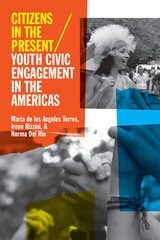
Citizens in the Present
Youth Civic Engagement in the AmericasMaria de los Angeles Torres, Irene Rizzini, and Norma Del Rio
University of Illinois Press, 2013
Citizens, Cops, and Power
Recognizing the Limits of CommunitySteve Herbert
University of Chicago Press, 2006
That strategy seems to make sense, but in Citizens, Cops, and Power, Steve Herbert reveals the reasons why it rarely, if ever, works. Drawing on data he collected in diverse Seattle neighborhoods from interviews with residents, observation of police officers, and attendance at community-police meetings, Herbert identifies the many obstacles that make effective collaboration between city dwellers and the police so unlikely to succeed. At the same time, he shows that residents’ pragmatic ideas about the role of community differ dramatically from those held by social theorists.
Surprising and provocative, Citizens, Cops, and Power provides a critical perspective not only on the future of community policing, but on the nature of state-society relations as well.
Citizenship Debates
A ReaderGershon Shafir
University of Minnesota Press, 1998
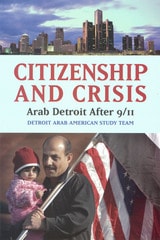
Citizenship and Crisis
Arab Detroit After 9/11Russell Sage Foundation, 2009
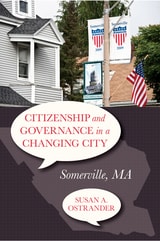
Citizenship and Governance in a Changing City
Somerville, MASusan Ostrander
Temple University Press, 2013
In Citizenship and Governance in a Changing City, Susan Ostrander shows how beneath current high levels of engagement by Somerville residents lies a struggle about who should be the city's elected leaders and how they should conduct the city's affairs. It is a struggle waged between diverse residents--relatively new immigrants and a new middle class-trying to gain a foothold in democratic participation, and the city's political "old guard."
Citizenship and Governance in a Changing City informs current debates about the place of immigrants in civic and political life, and the role of voluntary associations in local politics and government. In the process, Ostrander provides useful lessons for many midsize urban communities.
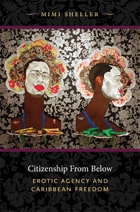
Citizenship from Below
Erotic Agency and Caribbean FreedomMimi Sheller
Duke University Press, 2012
Attending to the hidden linkages among intimate realms and the public sphere, Sheller explores specific struggles for freedom, including women's political activism in Jamaica; the role of discourses of "manhood" in the making of free subjects, soldiers, and citizens; the fiercely ethnonationalist discourses that excluded South Asian and African indentured workers; the sexual politics of the low-bass beats and "bottoms up" moves in the dancehall; and the struggle for reproductive and LGBT rights and against homophobia in the contemporary Caribbean. Through her creative use of archival sources and emphasis on the connections between intimacy, violence, and citizenship, Sheller enriches critical theories of embodied freedom, sexual citizenship, and erotic agency in all post-slavery societies.
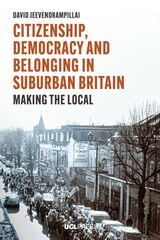
Citizenship, Democracy and Belonging in Suburban Britain
Making the LocalDavid Jeevendrampillai
University College London, 2021
An activist group in outer London’s Surbiton suburb, the Seething Villagers commemorate a fictional local history through tongue-in-cheek community festivals. These admittedly “stupid” gatherings celebrate a mythical village of Seething and its many adventures, including a run-in with a mountain-crushing giant. Citizenship, Democracy and Belonging in Suburban Britain explores how the Seething Villagers and other suburbanite fantasies fashion community in the face of neoliberal isolation. By taking the artists’ playfulness seriously, David Jeevendrampillai demonstrates how suburbanites develop fellow-feeling without access to traditional community centers.

Citrus, Strategy, And Class
Development In Southern BelizeMark Moberg
University of Iowa Press, 1992
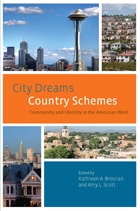
City Dreams, Country Schemes
Community and Identity in the American WestKathleen A. Brosnan
University of Nevada Press, 2011
The American West, from the beginning of Euro-American settlement, has been shaped by diverse ideas about how to utilize physical space and natural environments to create cohesive, sometimes exclusive community identities. When westerners developed their towns, they constructed spaces and cultural identities that reflected alternative understandings of modern urbanity. The essays in City Dreams, Country Schemes utilize an interdisciplinary approach to explore the ways that westerners conceptualized, built, and inhabited urban, suburban, and exurban spaces in the twentieth century.
The contributors examine such topics as the attractions of open space and rural gentrification in shaping urban development; the role of tourism in developing national parks, historical sites, and California's Napa Valley; and the roles of public art, gender, and ethnicity in shaping urban centers. City Dreams, Country Schemes reveals the values and expectations that have shaped the West and the lives of the people who inhabit it.
City Kids
Transforming Racial BaggageKromidas, Maria
Rutgers University Press, 2016
City of Extremes
The Spatial Politics of JohannesburgMartin J. Murray
Duke University Press, 2011
Combining insights from urban studies, cultural geography, and urban sociology with extensive research in South Africa, Murray reflects on the implications of Johannesburg’s dual character as a city of fortified enclaves that proudly displays the ostentatious symbols of global integration and the celebrated “enterprise culture” of neoliberal design, and as the “miasmal city” composed of residual, peripheral, and stigmatized zones characterized by signs of a new kind of marginality. He suggests that the “global cities” paradigm is inadequate to understanding the historical specificity of cities in the Global South, including the colonial mining town turned postcolonial megacity of Johannesburg.
City of Hope, City of Rage
Miami, 1968–1994Weitz, Seth A.
University of Alabama Press, 2024
Examines Miami’s turbulent transformation from a segregated vacation destination to a global, multicultural metropolis
City of Hope, City of Rage gives a fascinating account of three turbulent and transformative decades in the history of Miami. Marked by mass immigration, racially motivated uprisings, economic inequity, rising crime, and social change, Miami’s history from 1968 to 1994 saw the city evolve rapidly from a predominantly white southern city and vacation spot into a global, Hispanic-majority metropolis with an international tourist base. And yet Miami remains highly segregated today.
Exploring beyond the clichés of the Magic City as a bastion of hope for immigrants, a fantasy of beaches and art deco architecture, or a hotbed of drugs and crime, historian Seth A. Weitz reveals the social, political, and cultural shifts that transformed the city. Utilizing archival research and personal stories to reveal the diverse experiences of Miami’s Black, Latinx, Jewish, and LGBTQ+ communities, Weitz explores the struggles for social justice, the rise of the drug trade, and the ongoing fight to mold Miami’s image.
A Miami native, Weitz challenges simplistic narratives about the city, revealing a place defined by hope, rage, and struggle for identity. Illuminating the way Miami is defined and who gets to define it, City of Hope, City of Rage offers a fresh perspective on this vibrant and complex city, making it a valuable resource for anyone interested in Miami’s unique history.
City of Industry
Genealogies of Power in Southern CaliforniaValle, Victor
Rutgers University Press, 2011
Valle investigated an untapped archive of Industry's built landscape, media coverage, and public records, including sealed FBI reports, to uncover a cascading series of scandals. A kaleidoscopic view of the corruption that resulted when local land owners, media barons, and railroads converged to build the city, this suspenseful narrative explores how new governmental technologies and engineering feats propelled the rationality of privatization using their property-owning servants as tools.
Valle's tale of corporate greed begins with the city's founder James M. Stafford and ends with present day corporate heir, Edward Roski Jr., the nation's biggest industrial developerùco-owner of the L.A. Staples Arena and possible future owner of California's next NFL franchise. Not to be forgotten in Valle's captivating story are Latino working class communities living within Los Angeles's distribution corridors, who suffer wealth disparities and exposure to air pollution as a result of diesel-burning trucks, trains, and container ships that bring global trade to their very doorsteps. They are among the many victims of City of Industry.
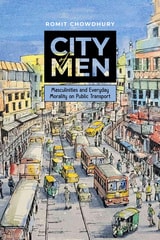
City of Men
Masculinities and Everyday Morality on Public TransportRomit Chowdhury
Rutgers University Press, 2023
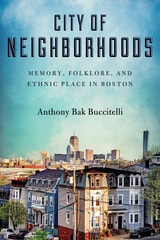
City of Neighborhoods
Memory, Folklore, and Ethnic Place in BostonAnthony Bak Buccitelli
University of Wisconsin Press, 2016
Digging into the ever-shifting terrain of American ethnicity and urban spaces, Anthony Bak Buccitelli investigates folk practices, social memory, and local histories in three Boston-area neighborhoods. He looks at the ways locals represent their neighborhoods and themselves via events, symbols, stories, and landmarks, from the shamrock to the Chinese flag, whether the St. Patrick’s Day parade in Southie or the Columbus Day parade in East Boston, from urban graffiti and websites to the Dorchester Heights Monument. City of Neighborhoods exposes the processes of selection and emphasis that produce, sustain, challenge, and change understandings of urban spaces as ethnic places.
Honorable mention, Wayland Hand Prize for Folklore and History, American Folklore Society
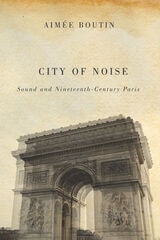
City of Noise
Sound and Nineteenth-Century ParisAimee Boutin
University of Illinois Press, 2015
Aimée Boutin tours the sonic space that orchestrated the different, often conflicting sound cultures that defined the street ambience of Paris. Mining accounts that range from guidebooks to verse, Boutin braids literary, cultural, and social history to reconstruct a lost auditory environment. Throughout, impressions of street noise shape writers' sense of place and perception of modern social relations. As Boutin shows, the din of the Cris contrasted economic abundance with the disparities of the capital, old and new traditions, and the vibrancy of street commerce with an increasing bourgeois demand for quiet. In time, peddlers who provided the soundtrack for Paris's narrow streets yielded to modernity, with its taciturn shopkeepers and wide-open boulevards, and the fading songs of the Cris became a dirge for the passing of old ways.
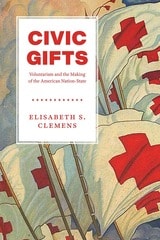
Civic Gifts
Voluntarism and the Making of the American Nation-StateElisabeth S. Clemens
University of Chicago Press, 2020
Civic Gifts
Voluntarism and the Making of the American Nation-StateElisabeth S. Clemens
University of Chicago Press, 2020
In Civic Gifts, Elisabeth S. Clemens takes a singular approach to probing the puzzle that is the United States. How, she asks, did a powerful state develop within an anti-statist political culture? How did a sense of shared nationhood develop despite the linguistic, religious, and ethnic differences among settlers and, eventually, citizens? Clemens reveals that an important piece of the answer to these questions can be found in the unexpected political uses of benevolence and philanthropy, practices of gift-giving and reciprocity that coexisted uneasily with the self-sufficient independence expected of liberal citizens Civic Gifts focuses on the power of gifts not only to mobilize communities throughout US history, but also to create new forms of solidarity among strangers. Clemens makes clear how, from the early Republic through the Second World War, reciprocity was an important tool for eliciting both the commitments and the capacities needed to face natural disasters, economic crises, and unprecedented national challenges. Encompassing a range of endeavors from the mobilized voluntarism of the Civil War, through Community Chests and the Red Cross to the FDR-driven rise of the March of Dimes, Clemens shows how voluntary efforts were repeatedly articulated with government projects. The legacy of these efforts is a state co-constituted with, as much as constrained by, civil society.
Civil Rights and Intersecting Identities
Social Movements for Equality and Justice: Groves Monographs on Marriage and Family (Volume 10)Edited by Eboni Baugh and Carol Johnston
Michigan Publishing Services, 2026
Groves Monographs on Marriage and Family is an edited book series based on the annual meetings of the Groves Conference on Marriage and Family, an interdisciplinary, interprofessional organization of limited invited membership founded in 1934. The Groves Monographs publishes work on the leading edges of theory development and empirical research in the field of family studies. Individual volumes are edited by the chairs of the annual Groves Conferences and include peer-reviewed chapters by the conference presenters and invited authors. Topics are timely and provocative with diverse themes.
Volume 10: Civil Rights and Intersecting Identities: Social Movements for Equality and Justice Society has a tumultuous history with regard to human rights and civil rights. Despite progress, the contemporary revisiting of previously held rights is placing intense pressure on families, individuals, and communities. As family scientists, it is imperative that we respond by learning, engaging, and acting with intentionality. The appropriate response is not to rescue, but to amplify voices and experiences, moving beyond mere allyship. This Monograph, inspired from presentations given at the 2024 Groves Conference on Marriage and Family, will serve to center discussions on the current landscape of social justice movements.
Civilization
Contents, Discontents, Malcontents, and Other Essays in Social TheoryStanford Lyman
University of Arkansas Press, 1990
In order to bring sociology to the recognition of a social world of contingencies and of an obdurate but protean reality that changes shapes as humans define it, Stanford Lyman re-introduces the concept of “civilization,” employing it as both an intellectual resource and a proper topic for sociological investigations.
The fifteen essays in this collection by one of America’s premier sociologists reflect Lyman’s concern with all that is meant by the term civilization. Primarily inspired by his attempts to synthesize the ideas of Erving Goffman, Émile Durkheim, Max Weber, Herbert Blumer, and other social thinkers, the essays reflect the author’s abiding interest in the structures and the processes attending race relations, minority communities, and the constitution of the social self.
1991 Mid-South Sociological Association Book Award
Claiming Neighborhood
New Ways of Understanding Urban ChangeJohn Betancur
University of Illinois Press, 2016
As the authors show, a diverse collection of people including urban policy experts, elected officials, investors, resident leaders, institutions, community-based organizations, and many others compete to control how neighborhoods change and are characterized. Betancur and Smith argue that neighborhoods have become sites of consumption and spaces to be consumed. Discourse is used to add and subtract value from them. The romanticized image of "the neighborhood" exaggerates or obscures race and class struggles while celebrating diversity and income mixing. Scholars and policy makers must reexamine what sustains this image and the power effects produced in order to explain and govern urban space more equitably.