Results by title
3576 books match the query 'American' and 225 start with c
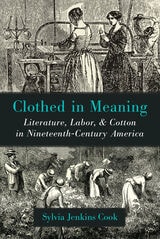
Clothed in Meaning
Literature, Labor, and Cotton in Nineteenth-Century AmericaSylvia Jenkins Cook
University of Michigan Press, 2020
Cloth and clothing provide potent tropes not only for physical but also for intellectual forms of self-expression. Drawing on sources ranging from fugitive slave narratives, newspapers, manifestos, and mill workers’ magazines to fiction, poetry, and autobiographies, Clothed in Meaning examines the significant part played by mill workers and formerly enslaved people, many of whom still worked picking cotton, in this revolution of literary self-expression. They created a new literature from their palpable daily intimacy with cotton, cloth, and clothing, as well as from their encounters with grimly innovative modes of work. In the materials of their labor they discovered vivid tropes for formulating their ideas and an exotic and expert language for articulating them. The harsh conditions of their work helped foster in their writing a trenchant irony toward the demeaning reduction of human beings to “hands” whose minds were unworthy of interest. Ultimately, Clothed in Meaning provides an essential examination of the intimate connections between oppression and luxury as recorded in the many different voices of nineteenth-century labor.
Cloud of Ink
L. S. Klatt
University of Iowa Press, 2011
Coconut Milk
Dan Taulapapa McMullin
University of Arizona Press, 2013
McMullin seamlessly flows between exposing the ironies of Tiki kitsch–inspired cultural appropriation and intimate snapshots of Samoan people and place. In doing so, he disrupts popular notions of a beautiful Polynesia available for the taking, and carves out new avenues of meaning for Pacific Islanders of Oceania. Throughout the collection, McMullin illustrates various manifestations of geopolitical, cultural, linguistic, and sexual colonialism. His work illuminates the ongoing resistance to colonialism and the remarkable resilience of Pacific Islanders and queer-identified peoples.
McMullin’s Fa’a Fafine identity—the ability to walk between and embody both the masculine and feminine—creates a grounded and dynamic voice throughout the collection. It also fosters a creative dialogue between Fa’a Fafine people and trans-Indigenous movements. Through a uniquely Samoan practice of storytelling, McMullin contributes to the growing and vibrant body of queer Indigenous literature.
Coda
Steven Seidenberg
Omnidawn, 2025
The nameless narrator of Coda attempts to trace the origins of linguistic and perceptual differentiation by experimenting with contemporary lyric and narrative forms. Moving between extravagant prosody and obsessive disquisition, Seidenberg’s poetry works to reconfigure conceptual imperatives found throughout philosophy and theology. With a focus on the structure of memory and the decadence of the body, Seidenberg describes the epistemological regress of desire, intention, knowledge, and discernment.
Seidenberg brings together the language and concerns of figures including Spinoza, Kant, Hegel, and Wittgenstein, alongside elements of raucous humor drawn from the tradition of Rabelais, Beckett, Lispector, and Sterne.

Coffin Honey
Todd Davis
Michigan State University Press, 2022
Cognitive Fictions
Joseph Tabbi
University of Minnesota Press, 2002
The first comprehensive look at the effect of new technologies on contemporary American fiction
Bringing together cognitive science and literary analysis to map a new "media ecology," Cognitive Fictions limns an evolutionary process in which literature must find its place in an artificial environment partly produced and thoroughly mediated by technological means. Joseph Tabbi provides a penetrating account of a developing consciousness emerging from the struggle between print and electronic systems of communication.
Central to Tabbi’s work is the relation between the arrangement of communicating "modules" that cognitive science uses to describe the human mind and the arrangement of visual, verbal, and aural media in our technological culture. He looks at particular literary works by Thomas Pynchon, Richard Powers, David Markson, Lynne Tillman, Paul Auster, and others as both inscriptions of thought consistent with distributed cognitive models, and as self-creations out of the media environment. The first close reading of contemporary American writing in the light of systems theory and cognitive science, Cognitive Fictions makes needed sense of how the moment-by-moment operations of human thought find narrative form in a world increasingly defined by competing and often incompatible representations.
Cold Latitudes
Rosemary McGuire
University of Alaska Press, 2021

Cold Spell
Deb Vanasse
University of Alaska Press, 2014
From the moment Ruth Sanders rips a glossy photo of a glacier from a magazine, she believes her fate is intertwined with the ice. Her unsettling fascination bewilders her daughter, sixteen-year-old Sylvie, still shaken by her father’s leaving. When Ruth uproots Sylvie and her sister from their small Midwestern town to follow her growing obsession—and a man—to Alaska, they soon find themselves entangled with an unfamiliar wilderness, a divided community, and one another. As passions cross and braid, the bond between mother and daughter threatens to erode from the pressures of icy compulsion and exposed secrets.
Inspired by her own experience arriving by bush plane to live on the Alaska tundra, Deb Vanasse vividly captures the reality of life in Alaska and the emotional impact of loving a remote and unforgiving land.
Cold Warriors
Manliness on Trial in the Rhetoric of the WestSuzanne Clark
Southern Illinois University Press, 2000
Cold Warriors: Manliness on Trial in the Rhetoric of the West returns to familiar cultural forces—the West, anticommunism, and manliness—to show how they combined to suppress dissent and dominate the unruliness of literature in the name of a national identity after World War II. Few realize how much the domination of a “white male” American literary canon was a product not of long history, but of the Cold War. Suzanne Clark describes here how the Cold War excluded women writers on several levels, together with others—African American, Native American, poor, men as well as women—who were ignored in the struggle over white male identity.
Clark first shows how defining national/individual/American identity in the Cold War involved a brand new configuration of cultural history. At the same time, it called upon the nostalgia for the old discourses of the West (the national manliness asserted by Theodore Roosevelt) to claim that there was and always had been only one real American identity.
By subverting the claims of a national identity, Clark finds, many male writers risked falling outside the boundaries not only of public rhetoric but also of the literary world: men as different from one another as the determinedly masculine Ernest Hemingway and the antiheroic storyteller of the everyday, Bernard Malamud. Equally vocal and contentious, Cold War women writers were unwilling to be silenced, as Clark demonstrates in her discussion of the work of Mari Sandoz and Ursula Le Guin.
The book concludes with a discussion of how the silencing of gender, race, and class in Cold War writing maintained its discipline until the eruptions of the sixties. By questioning the identity politics of manliness in the Cold War context of persecution and trial, Clark finds that the involvement of men in identity politics set the stage for our subsequent cultural history.

Collages
Anaïs Nin
Ohio University Press, 1964
“Collages began with an image which had haunted me. A friend, Renate, had told me about her trip to Vienna where she was born, and of her childhood relationships to statues. She told me stories of her childhood, her relationship to her father, her first love.
I begin the novel with:
Vienna was the city of statues. They were as numerous as the people who walked the streets. They stood on the top of the highest towers, law down on stone tombs, sat on horseback, kneeled, prayed, fought animals and wars, danced, drank wine and read books made of stone. They adorned cornices like the figureheads of old ships. They stood in the heart of fountains glistening with water as if they had just been born. They sat under the trees in the parks summer and winter. Some wore costumes of other periods, and some no clothes at all. Men, women, children, kings, dwarfs, gargoyles, unicorns, lions, clowns, heroes, wise men, prophets, angels, saints, and soldiers preserved for Vienna a vision of eternity.
As a child Renate could see them from her bedroom window. At night, when the white muslin curtains fluttered out like ballooning wedding dresses, she heard them whispering like figures which had been petrified by a spell during the day and came alive only at night. Their silence by day taught her to read their frozen lips as one reads the messages of deaf mutes. On rainy days their granite eye sockets shed tears mixed with soot.
Renate would never allow anyone to tell her the history of the statues, or to identify them. This would have situated them in the past. She was convinced that people did not die, they became statues. They were people under a spell and if she were watchful enough they would tell her who they were and how they lived now.
If I had been asked then what was going to follow the description of the statues, I could not have answered. I was fascinated by the image of these many statues and of the child Renate inventing stories about them and dialoguing with them. It may have been that this image expressed the feeling I often had that people appear to us as a one-dimensional statue until we go deeper into their life story. People are like mute statues under a spell of appearance, and static, until we let them whisper their secrets. And this only happens at night. That is, when we are able to dream, imagine, and explore the unconscious. We see the external self. Because Collages took its images from painting and sculpture, I liked the idea that sculpture and painting could become animated, speaking, confessing, and then in daylight returning to their previous forms as statues or paintings. They spoke only to the artist. To me it meant dramatizing our relation to art, one feeding the other, the interrelation between human beings and the artist’s conception of them. In daylight (consciousness) we catch them all only in one attitude, one form. At night, we discover their lives.”
—Anaïs Nin, “The Novel of the Future,” (Athens: Ohio University Press, 1986), 128
Collages
Anaïs Nin
Ohio University Press, 2019
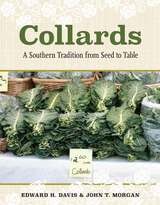
Collards
A Southern Tradition from Seed to TableEdward H. Davis and John T. Morgan
University of Alabama Press, 2015
The definitive survey of collards, an iconic southern food.
Food is essential to southern culture, and collard greens play a central role in the South’s culinary traditions. A feast to the famished, a reward to the strong, and a comfort to the weary, collards have long been held dear in the food-loving southern heart. In Collards: A Southern Tradition from Seed to Table, Edward H. Davis and John T. Morgan provide this emblematic and beloved vegetable the full-length survey its fascinating and complex history merits.
The book begins with collards’ obscure origins. Like a good detective story, the search for collards’ home country leads the authors both to Europe and West Africa, where they unravel a tale as surprising and complex as that of southern people themselves. Crossing back over the Atlantic, the authors traverse miles of American back roads, from Arkansas to Florida and from Virginia to Louisiana. They vividly recount visits to homes, gardens, grocers, farms, and restaurants where the many varieties of collards are honored, from the familiar green collards to the yellow cabbage collard and rare purple cultivars.
In uncovering the secrets of growing collards, the authors locate prize-winning patches of the plant, interview “seed savers,” and provide useful tips for kitchen gardeners. They also describe how collards made the leap from kitchen garden staple to highly valued commercial crop.
Collards captures the tastes, smells, and prize-winning recipes from the South’s premier collards festivals. They find collards at the homes of farmers, jazz musicians, governors, and steel workers. Kin to cabbage and broccoli but superior to both in nutritional value, collard greens transcend human divisions of black and white, rich and poor, sophisticated and rustic, and urban and rural.
Food trends may come and go, but collards are a tradition that southerners return to again and again. Richly illustrated in color, Collards demonstrates the abiding centrality of this green leafy vegetable to the foodways of the American South. In it, readers will rediscover an old friend.
Collected Poems 1953-1983
Lucien Stryk
Ohio University Press, 1985
Years of translating Zen poems and religious texts have helped give Stryk a special sense of the particular, a feel for those details which, because they are so much a part of our lives, seem to define us. Stryk’s poetry is neither an attempt to surpass these details nor an attempt to give them significance. It is an activity that exists among them, as ordinary — yet as important — as breath. Stryk’s poetic power rests in the sureness of plain speech and his insistence on a direct, sympathetic attention to the world we actually inhabit.
Collected Poems, a gathering of three decades of work, contains nearly all Stryk’s poems, including the best of his Zen translations and a book–length section of new poetry. This book is a revelation of the wonderful amid the familiar by a poet whose language and vision have found their maturity.
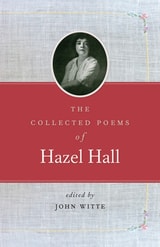
Collected Poems of Hazel Hall, The
Hazel Hall
Oregon State University Press, 2020
Confined to a wheelchair since childhood, Hall viewed life from the window of an upper room in her family’s house in Portland, Oregon. To better observe passersby on the sidewalk, she positioned a small mirror on her windowsill. Hall was an accomplished seamstress; her fine needlework helped to support the family and provided a vivid body of imagery for her precisely crafted, often gorgeously embellished poems.
Hall’s writings convey the dark undertones of the lives of working women in the early twentieth century, while bringing into focus her own private, reclusive life—her limited mobility, her isolation and loneliness, her gifts with needlework and words. In his updated introduction to this volume, John Witte examines Hall’s brief and brilliant career and highlights her remarkably modern sensibilities. In a new afterword, Anita Helle considers Hall’s work in an era when modes of literary historical recovery have been widened and expanded—and what that means in the afterlife of Hazel Hall.
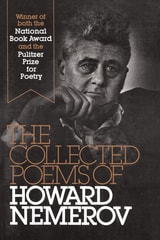
Collected Poems of Howard Nemerov
Howard Nemerov
University of Chicago Press, 1981
The Collected Poems of Howard Nemerov won both the National Book Award and the Pulitzer Prize in 1978.
"Howard Nemerov is a witty, urbane, thoughtful poet, grounded in the classics, a master of the craft. It is refreshing to read his work. . . . "—Minneapolis Tribune
"The world causes in Nemerov a mingled revulsion and love, and a hopeless hope is the most attractive quality in his poems, which slowly turn obverse to reverse, seeing the permanence of change, the vices of virtue, the evanescence of solidities and the errors of truth."—Helen Vendler, New York Times Book Review
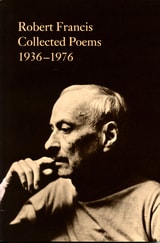
Collected Poems, 1936-1976
Robert Francis
University of Massachusetts Press, 1976
Gathered here in their entirety are the seven previous volumes of Robert Francis poetry—Stand with Me Here, Valhalla and Other Poems, The Sound I Listened For, The Face against the Glass, The Orb Weaver, Come Out into the Sun, and Like Ghosts of Eagles—together with a group of recent poems, many not previously published but “saved” to end this volume on a note of newness.
Because the original seven volumes are kept in chronological order, the reader can follow the author's journey from his quiet early work to poetry of greater color, warmth, vitality, vivacity, and sportiveness; and can note just when and where Francis' style becomes more and more diversified, with word-count, fragmented surface, and the celebration of words themselves.
The book is graced with eight wood engravings by Wang Hui-Ming.
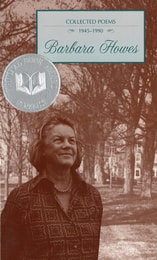
Collected Poems, 1945-1990
Barbara Howes
University of Arkansas Press, 1995
Finalist, 1995 National Book Award
This collection fills in a missing chapter in the history of American women’s poetry by bringing a significant voice back into print. Barbara Howes has perfected a personal style that had little to do with the fashionable currents of her time. Dana Gioia has said of her “[O]ne sees Howes very clearly as a woman writing in one of the oddest but most important traditions of American poetry. She stands with Marianne Moore, Elizabeth Bishop, and ultimately Emily Dickinson in a lineage of women writers passionately committed to the independence and singularity of the poetic imagination. Collected poems 1945-1990 contains the lifework of one of America’s irreplaceable poets.”
Forty years ago in The New Yorker Louise Bogan wrote: “Barbara Howes is the most accomplished women poet of the younger writing generation—one who has found her own voice, chosen her own material, and worked out her own form. Miss Howes is daring with language, but she is also accurate. Her originality stands in constant close reference to the material in hand, and although much of that material is fantastic or exotic, it is never so simply for its own sake.”
Drawing from seven previous books, this collection confirms and consolidates the reputation of Barbara Howes as a timeless poet whose fine voice and surprising insights will continue to delight all lovers of language.
Collected Prose
James Wright
University of Michigan Press, 1983
Collected Prose
Robert Hayden
University of Michigan Press, 1984
Collected Shorter Poems
John Peck
Northwestern University Press, 2004
John Peck's poems draw on both modernist and traditional resources, quarrying in the large gaps among contemporary readers of poetry. This definitive collection makes available difficult-to-find works by a remarkable, thoroughly original American poet. Peck's poems continue to attract a discerning, loyal audience of readers up to the challenge of confronting his astonishing range and ambitions.
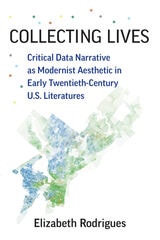
Collecting Lives
Critical Data Narrative as Modernist Aesthetic in Early Twentieth-Century U.S. LiteraturesElizabeth Rodrigues
University of Michigan Press, 2022
On a near-daily basis, data is being used to narrate our lives. Categorizing algorithms draw from amassed personal data to assign narrative destinies to individuals at crucial junctures, simultaneously predicting and shaping the paths of our lives. Data is commonly assumed to bring us closer to objectivity, but the narrative paths these algorithms assign seem, more often than not, to replicate biases about who an individual is and could become.
While the social effects of such algorithmic logics seem new and newly urgent to consider, Collecting Lives looks to the late nineteenth and early twentieth century US to provide an instructive prehistory to the underlying question of the relationship between data, life, and narrative. Rodrigues contextualizes the application of data collection to human selfhood in the late nineteenth and early twentieth century US in order to uncover a modernist aesthetic of data that offers an alternative to the algorithmic logic pervading our sense of data’s revelatory potential. Examining the work of W. E. B. Du Bois, Henry Adams, Gertrude Stein, and Ida B. Wells-Barnett, Rodrigues asks how each of these authors draw from their work in sociology, history, psychology, and journalism to formulate a critical data aesthetic as they attempt to answer questions of identity around race, gender, and nation both in their research and their life writing. These data-driven modernists not only tell different life stories with data, they tell life stories differently because of data.

College Girls
A Century in FictionShirley Marchalonis
Rutgers University Press, 1995
Since the opening of Vassar College in 1865, objections to higher education for women have ranged from charges that females were mentally and physically incapable of learning to the belief that educating women would destroy society. Underlying all arguments was the folk wisdom which declared that women could not live and work together. To counteract such beliefs, women’s colleges tried to create a special kind of space and new role models that would allow women to exist for a short time in idyllic (or, at least, idealized) conditions. The debate over women’s education, for the good or ill of society, generated a great deal of "print," including short stories and novels. Shirley Marchalonis guides us through the history of this fiction, its depiction of the complexities of the college experience, and the conflicting attitudes that teetered between fascination and fear, celebration and regret.
Using novels, short stories, and some juvenile fiction from 1865 to 1940--all of it specifically about college “girls”--she examines these ideas, the way they developed over time, and their significance in understanding women’s education and women’s history. The debate over separate colleges for women continues to this day and can be better understood in the context of this informative and entertaining look at the past.
Columbarium
Susan Stewart
University of Chicago Press, 2003
In her long-awaited fourth book of poetry, Susan Stewart gives us a series of splendid, numinous poems about truths learned with the mind but set free through the senses. Modeled on the seventeenth-century practice of century forms, or books of one hundred pages, Columbarium expresses the bond between the living and the dead in voices of parent to child, lover to beloved, and mortal to the gods. The book arrives as a meditative gift from one of our most respected poet-critics.
Stewart frames her Columbarium with four poems paying homage to the elements-to their destructive and creative aspects and to their roles in the human and more than human worlds. Both nest and crypt, the book's center holds an alphabet of "shadow georgics," poems of instruction and doubt that link knowledge and the unconscious. Questions of mortality, of goodness and suffering, and of the fragility and power of memory animate these poems. In one poem an apple calls the narrator back from the dead to savor the echoes of its varieties in myth and literature. In another, the seeds of a pear tree reveal the essential unity that makes the diversity of existence possible.
Stewart's Columbarium is both a memorial to the dead and a testament to life.
Come Again?
Alyssa N. Moore
University of Chicago Press, 2026
In this formally inventive debut collection, a speaker continuously shapeshifts through roles, forms, and characters.
Alyssa N. Moore’s Come Again? conjures a series of otherworldly scenarios in which reinvention becomes a form of resistance and a method to escape the snares of a modern existence to which we contribute but cannot control. Throughout these surreal and absurdist poems, an untethered consciousness is continuously reincarnated and dragged through various personae—including the Volunteer, the Eternal Counselor, the Streetcleaner, and the Architect—to find “what exactly to do with a willing body.” For example, in “The Volunteer,” a visual sequence, the book’s shapeshifting narrator is dropped into a formless expanse and expected to perform. As we move through the collection, the speaker’s perception morphs rapidly. From wage worker to computer programmer to sexbot to God, they collide over and over with the boundaries of the world. With each shift, the speaker guides us through a series of darkly comic set pieces that are, in turns, cinematic and slapstick as they seek a solid home base from which to “reject the emptiness that’s inherited.”
Moore’s facility with poetic form, use of image and text, and play between irony and sincerity make Come Again? a bold collection that defies the customary and conventional, instead forging new worlds of continual remaking.
Come Clean
Joshua Nguyen
University of Wisconsin Press, 2021
Joshua Nguyen's sharp, songlike, and often experimental collection compartmentalizes past trauma—sexual and generational—through the quotidian. Poems aim to confront the speaker's past by physically, and mentally, cleaning up. Here, the Asian-American masculine interrogates the domestic space through the sensual and finds healing through family and in everyday rhythms: rinsing rice until the water runs clear, folding clean shirts, and attempts at re-creating an unwritten family recipe. Yet past wounds remain present like permanent marker under layers of paint or spilled fish sauce set into car upholstery. Infused with the Shinto-inspired organizing practices of KonMari and the catchy nihilism of Mitski's songs, the poems in Come Clean unpack, organize, and tidy up life's messy joys and hurtful chaos with intimacy, grace, and vulnerability.
No matter how smattered my insides,
I am relieved that I left my room tidy—
One less ugly sight.
I always wanted to die clean & pretty
while my dreams made music in the night.
—Excerpt from "Last Words"
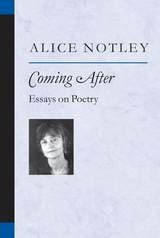
Coming After
Essays on PoetryAlice Notley
University of Michigan Press, 2005
Notley explores the work of second-generation New York School poets and their allies: Ted Berrigan, Anne Waldman, Joanne Kyger, Ron Padgett, Lorenzo Thomas, and others. These essays and reviews are among the first to deal with a generation of poets notorious for their refusal to criticize and theorize, assuming the stance that "only the poems matter." The essays are characterized by Notley's strong, compelling voice, which transfixes the reader even in the midst of professional detail. Coming After revives the possibility of the readable book of criticism.
Coming Close
Forty Essays on Philip LevineMari L'Esperance and Tomas Morin
University of Iowa Press, 2013
Coming of Age in New Jersey
College and American CultureMoffatt, Michael
Rutgers University Press, 1989
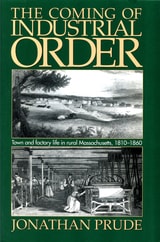
Coming of Industrial Order
Town and Factory Life in Rural Massachusetts, 1810-1860Jonathan Prude
University of Massachusetts Press, 1999
Coming to Light
American Women Poets in the Twentieth CenturyDiane Wood Middlebrook and Marilyn Yalom, Editors
University of Michigan Press, 1985
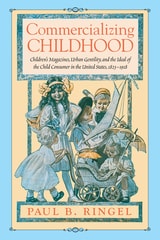
Commercializing Childhood
Children's Magazines, Urban Gentility, and the Ideal of the Child Consumer in the United States, 1823-1918Paul B. Ringel
University of Massachusetts Press, 2015
In this deeply researched and engaging book, Paul B. Ringel combines an analysis of the stories in nineteenth-century American children's magazines with the backstories of their authors, editors, and publishers to explain how this hugely successful industry trained generations of American children to become genteel consumers. Ringel demonstrates how these publications, which were read in hundreds of thousands of homes, played to two conflicting impulses within American families: to shield children from commercial influences by offering earnest and moral entertainment and to help children learn how to prosper in an increasingly market-driven society.
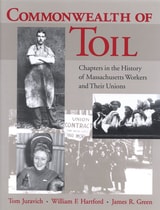
Commonwealth of Toil
Chapters in the History of Massachusetts Workers and Their UnionsThomas Juravich
University of Massachusetts Press, 1996
Over the past two centuries, Massachusetts workers have fought for many important advances that would later be enjoyed by other Americans. The right to organize, restrictions on work hours and child labor, and workers' compensation were all pioneered in the Commonwealth. From the 1825 strike of Boston carpenters for a ten-hour day to recent victories in hospitals and universities, Massachusetts workers and their unions have been in the forefront of the battle for dignity and justice.
This book tells their story. In eighteen chapters, beginning with the first industrial workers in the nation—the Lowell “mill girls”—the authors describe the struggles of working men and women to improve their lives. In the process, the book provides a valuable perspective on the development of the American labor movement.
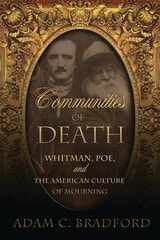
Communities of Death
Whitman, Poe, and the American Culture of MourningAdam C. Bradford
University of Missouri Press, 2014
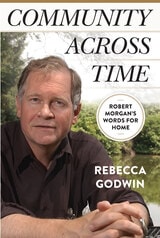
Community across Time
Robert Morgan’s Words for HomeRebecca Godwin
West Virginia University Press, 2023
One of the first book-length considerations of the Appalachian writer Robert Morgan.
One of the first book-length studies of Robert Morgan, Community across Time considers the Appalachian writer’s explorations of memory, family history, and landscape. It provides a study of all of Morgan’s fiction to date, as well as a chapter on his poetry and some reference, where appropriate, to his nonfiction. Rebecca Godwin examines the family history that informs much of this body of work, offering an extended biographical essay that ties characters and plot details to Morgan’s ancestors’ lives and to his own experiences growing up in the Blue Ridge Mountains.
Religious rifts, economic hardships, class conflicts, the place of women and Indigenous peoples, and the failure of humans to recognize the divinity of the natural world are among the motifs centering Morgan’s writing. Community across Time explores those themes as it looks to Morgan’s relationship to the Appalachian South.
Companion Grasses
Brian Teare
Omnidawn, 2013
Companionship in Grief
Love and Loss in the Memoirs of C. S. Lewis, John Bayley, Donald Hall, Joan Didion, and Calvin TrillinJeffrey Berman
University of Massachusetts Press, 2010
In Companionship in Grief, Jeffrey Berman focuses on the most life-changing event for many people—the death of a spouse. Some of the most acclaimed memoirs of the past fifty years offer insights into this profound loss: C. S. Lewis's A Grief Observed; John Bayley's three memoirs about Iris Murdoch, including Elegy for Iris; Donald Hall's The Best Day the Worst Day; Joan Didion's best-selling The Year of Magical Thinking; and Calvin Trillin's About Alice. These books explore the nature of spousal bereavement, the importance of caregiving, the role of writing in recovery, and the possibility of falling in love again after a devastating loss.
Throughout his study, Berman traces the theme of love and loss in all five memoirists' fictional and nonfictional writings as well as in those of their spouses, who were also accomplished writers. Combining literary studies, grief and bereavement theory, attachment theory, composition studies, and trauma theory, Companionship in Grief will appeal to anyone who has experienced love and loss. Berman's research casts light on five remarkable marriages, showing how autobiographical stories of love and loss can memorialize deceased spouses and offer wisdom and comfort to readers.
Company
Sam Ross
Four Way Books, 2019
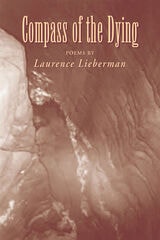
Compass of the Dying
PoemsLaurence Lieberman
University of Arkansas Press, 1998
When Laurence Lieberman writes of Guyana or islands in the Dutch West Indies, he excavates, explores, even exhumes the essence of the place. In the flora and fauna, in the rural cafes and ruins of churches and crypts, in the taste of iguana soup and the look of light through stained glass, Lieberman unfolds an exquisite atlas of the senses.
The awe of encounter, the raw impact, beauty, and sometimes the brutality of both the surroundings and the people fuel this poetry. Whether he meets an iguana hunter, a bricklayer, a witness to the United States–led Grenada invasion, or a classical composer, Lieberman gives the reader a vivid combination of his own wit and surprising observations mingled with the speech of each character.
Folk tales, legends, and island myths play a great role in his newest work. In the eddies of a river in Guyana, Lieberman dares river demons. On the island of Aruba, he hears the chants and work songs of long-dead miners in an abandoned gold mine. He briefly loses himself when he stares into the mirror of a well once frequented by slaves on Bonaire.
Coupled with natural forces—floods, volcanic eruptions, constant rains—these folk tales and the stories of the islanders’ lives create a “wedding of sun and rain,” and a map to the troves of the Caribbean hidden beneath a rich and often violent history.
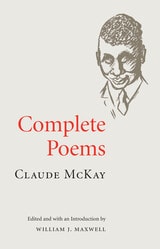
Complete Poems
Claude Mckay. Edited and with an Introduction by William J. Maxwell.
University of Illinois Press, 2003
Containing more than three hundred poems, including nearly a hundred previously unpublished works, this unique collection showcases the intellectual range of Claude McKay (1889-1948), the Jamaican-born poet and novelist whose life and work were marked by restless travel and steadfast social protest. McKay's first poems were composed in rural Jamaican creole and launched his lifelong commitment to representing everyday black culture from the bottom up. Migrating to New York, he reinvigorated the English sonnet and helped spark the Harlem Renaissance with poems such as "If We Must Die." After coming under scrutiny for his communism, he traveled throughout Europe and North Africa for twelve years and returned to Harlem in 1934, having denounced Stalin's Soviet Union. By then, McKay's pristine "violent sonnets" were giving way to confessional lyrics informed by his newfound Catholicism.
McKay's verse eludes easy definition, yet this complete anthology, vividly introduced and carefully annotated by William J. Maxwell, acquaints readers with the full transnational evolution of a major voice in twentieth-century poetry.

Complete Poems
Edgar Allan Poe
University of Illinois Press, 1969
In this exhaustive collection, Mabbott takes a fresh look at these texts, aiming "to present what [Poe] wrote, to explain why he wrote it, to tell what he meant when he wrote it (if that be in any way obscure), and to give a history of its publication." Containing the definitive poems as well as pertinent biographical background, full annotations, and a meticulous enumeration of successive texts and variants, Mabbott's edition stands as a firm foundation for Poe scholarship as well as for more general appreciation.
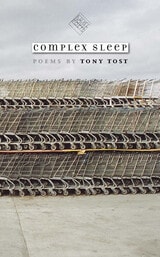
Complex Sleep
Tony Tost
University of Iowa Press, 2007
Complex Sleep, Tony Tost’s ambitious second book of poems, leaps upward with an astounding multiplicity of voices, utterances, and bursts. Each leap marks a sure and precise entry into a world of images, ideas, and sensations that is brand new—the true accomplishment of any poetic work.
The octet of poems that compose Complex Sleep comprises a complex organism, audacious in scope, swiping at meaning via language as fragmented music. Tost takes on the problem of physical shape, reorchestrates phrases according to the alphabet, and writes himself into the hypnagogic state between waking and dreaming. Informed by their own procedural constraints, these poems invent forms that tap the unconscious poetic, the very complexity embodied in sleep. All the while, Tost reforms utterance beyond the mere epistemology of much contemporary poetry.
Devising an innovative formalism rather than concerning itself with discovering the what, Complex Sleep is about discovering how to say what needs to be said. Skip the opera, this book performs.

ConFiguring America
Iconic Figures, Visuality, and the American IdentityEdited by Klaus Rieser, Michael Fuchs, and Michael Phillips
Intellect Books, 2013
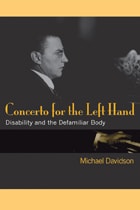
Concerto for the Left Hand
Disability and the Defamiliar BodyMichael Davidson
University of Michigan Press, 2008
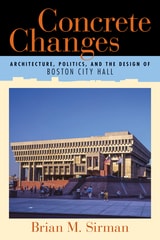
Concrete Changes
Architecture, Politics, and the Design of Boston City HallBrian M. Sirman
University of Massachusetts Press, 2018
And yet Boston City Hall frequently ranks among the country's ugliest buildings. Concrete Changes seeks to answer a common question for contemporary viewers: How did this happen? In a lively narrative filled with big personalities and newspaper accounts, Brian M. Sirman argues that this structure is more than a symbol of Boston's modernization; it acted as a catalyst for political, social, and economic change.
Confession
Susan Hahn
University of Chicago Press, 1996
"Phoenix Poets is the most distinguished university press series going."—Alfred Corn
"Compressed, controlled, circumscribed by the artist's discipline, the poems in Susan Hahn's Confession do not spill over; each is like a steadily held cup containing its pain."—Alicia Ostriker
"Hahn's voice is unique and unforgettable . . . . Hahn's self-revelation is so startling, and her details so extraordinary, that she virtually detonates her poems with energy. . . . Plath, Ai, Sexton—Hahn brings to mind those vivid, violent poets, but her voice is clearly her own, strong and without either shrillness or shame."—Patricia Monaghan, Booklist
"In her third book of poems, Confession, Susan Hahn continues to refine her amazing capacity to disquiet, disgust and fascinate. This may not sound like a recommendation, but it is. . . . The precision of Hahn's language stands out even more clearly when compared to the looser, baggier free verse that dominates so much contemporary poetry."—Maureen McLane, Chicago Tribune
Confronting AIDS through Literature
The Responsibilities of RepresentationEdited by Judith Laurence Pastore
University of Illinois Press, 1993
Congotronic
Shane Book
University of Iowa Press, 2014
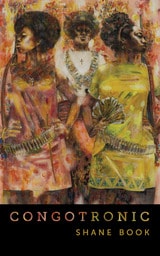
Harnessing techniques of the cinematic and audio arts, Book’s poems splice, sample, collage, and jump-cut language from an array of sources, including slave narratives, Western philosophy, hip hop lyrics, and the diaries of plantation owners. In fusing disparate texts, each poem in this collection attempts to create a community in language. Thus, at its core, the project is utopic—or more precisely, to borrow from Duke Ellington—the project is “blutopic.”
The book’s anchoring series contains an apocryphal narrative grounded in the journey of the Middle Passage and an older mythic history from the West African epic of Sundiata. Here elements of Afrofuturism coagulate with an R&B grin as social forces challenge a sense of personhood, prompting free-jazz inflected conversations between the pieces of a shattered, polyvocal self.
Here is a world poet of the Sonic Global South sheathed in a Northern Hemispheric glow suit, high “on Coltrane, on Zeus” but also on the old and new schools of Descartes, M.I.A., Cecil Taylor, Gilbert Ryle, Freud, and Jay Z, among others—or as one poem puts it, the “aural truths.”

Congress and the Nuclear Freeze
An Inside Look at the Politics of a Mass MovementDouglas Waller
University of Massachusetts Press, 1987
Conjuring the Folk
Forms of Modernity in African AmericaDavid G. Nicholls
University of Michigan Press, 2000
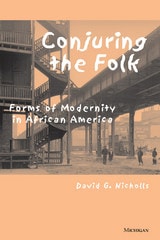
In a series of revisionary readings, Nicholls studies how the "folk" is shaped by the ideology of form. He examines the presence of a spectral "folk" in Toomer's modernist pastiche, Cane. He explores how Hurston presents folklore as a contemporary language of resistance in her ethnography, Mules and Men. In Claude McKay's naturalistic romance, Banana Bottom, Nicholls discovers the figuration of an alternative modernity in the heroine's recovery of her lost "folk" identity. He unearths the individualist ethos of Booker T. Washington in two novels by George Wylie Henderson. And he reveals how Richard Wright's photo-documentary history, 12 Million BlackVoices, places the "folk" in a Marxian narrative of modernization toward class-consciousness.
A provocative rereading of the cultural politics of the Harlem Renaissance, Conjuring the Folk offers a new way of understanding literary responses to migration, modernization, and the concept of the "folk" itself.
David G. Nicholls is a post-doctoral fellow in the Center for the Study of Race, Politics, and Culture, University of Chicago.
Conserving Walt Whitman's Fame
Selections from Horace Traubel's Conservator, 1890-1919Schmidgall, Gary
University of Iowa Press, 2006