Results by title
3388 books match the query 'Fiction' and 151 start with c
Comedy
American Style: Jessie Redmon FausetSherrard-Johnson, Cherene
Rutgers University Press, 2009
Cherene Sherrard-Johnson's introduction places this literary classic in both the new modernist and transatlantic contexts and will be embraced by those interested in earlytwentieth-century women writers, novels about passing, the Harlem Renaissance, the black/white divide, and diaspora studies. Selected essays and poems penned by Fauset are also included, among them "Yarrow Revisited" and "Oriflamme," which help highlight the full canon of her extraordinary contribution to literature and provide contextual background to the novel.
Comfort
A Novel of the Reverse Underground RailroadH.A. Maxson and Claudia H. Young
Parkhurst Brothers, Inc., 2014
Coming from an Off-Key Time
A NovelBogdan Suceava
Northwestern University Press, 2011
The fall of communism in Eastern Europe in 1989 marked, in one famous formulation, the "end of history." In his apocalyptic novel Coming from an Off-Key Time, Bogdan Suceavă satirizes the events in his native Romania since the violent end of the Ceauşescu regime that fateful year.
Suceavă uses three interrelated narratives to illustrate the destructive power of Romanian society’s most powerful mythologies. He depicts madness of all kinds but especially religious beliefs and their perversion by all manner of outrageous sects. Here horror and humor reside impossibly in the same time and place, and readers experience the vertiginous feeling of living in the middle of a violent historical upheaval.
Even as Coming from an Off-Key Time suggests the influence of such writers as Mikhail Bulgakov, the fantastic satirist of the early Soviet Union, Suceavă engages the complexities of a quickly changing country in search of its bearings and suspicious of its past. Bogdan Suceavă is an associate professor of mathematics at California State University, Fullerton. One of Romanian literature’s most promising and original young writers, he is the author of four novels, two books of short stories, and several collections of poems.
Alistair Ian Blyth’s previous translations include Filip Florian, Little Fingers (2009); Lucian Dan Teodorovici, Our Circus Presents (2009); and Catalin Avramescu’s An Intellectual History of Cannibalism (2009).
Company K
William March
University of Alabama Press, 1989
Through fragmented testimonies of Marines, the novel exposes the psychological and moral wreckage left in the wake of modern warfare.
This book was originally published in 1933. It is the first novel by William March, pen name for William Edward Campbell. Stemming directly from the author's experiences with the US Marines in France during World War I, the book consists of 113 sketches, or chapters, tracing the fictional Company K's war exploits and providing an emotional history of the men of the company that extends beyond the boundaries of the war itself.
William Edward Campbell served courageously in France as evidenced by his chestful of medals and certificates, including the Croix de Guerre, the Distinguished Service Cross, and the Navy Cross. However, without the medals and citations we would know of his bravery. For it is clear in the pages of Company K that this book was written by a man who had been to war, who had clearly seen his share of the worst of it, who had somehow survived, and who had committed himself afterward to the new bravery of sense-making embodied in the creation of major literary art. It is of that bravery that we still have the record of magnificent achievement, the brave terrible gift of Company K.
Complete Works and Other Stories
By Augusto Monterroso
University of Texas Press, 1995
Augusto Monterroso is widely known for short stories characterized by brilliant satire and wit. Yet behind scathing allusions to the weaknesses and defects of the artistic and intellectual worlds, they show his generous and expansive sense of compassion.
This book brings together for the first time in English the volumes Complete Works (and Other Stories) (Obras completas [y otros cuentos] 1959) and Perpetual Motion (Movimiento perpetuo 1972). Together, they reveal Monterroso as a foundational author of the new Latin American narrative.
Compulsory Happiness
Norman Manea
Northwestern University Press, 1994
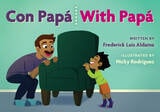
Con Papá / With Papá
Written by Frederick Luis Aldama Illustrated by Nicky Rodriguez
The Ohio State University Press, 2022
With Papá, anything is possible! With playful illustrations and rich imagery, this gentle bilingual story for ages 3–8 celebrates fathers, children, and Latinx identity as it takes readers on a childhood journey of growth and discovery. From delivery from the serpent god’s wings to Papá’s safe arms to witnessing the magical tapestry of stars, Con Papá / With Papá shows us the world through a child’s eyes, hand in hand with Papá, until they are ready to set off on their own adventures.
Conceptualisms
The Anthology of Prose, Poetry, Visual, Found, E- & Hybrid Writing as Contemporary ArtEdited by Steve Tomasula
University of Alabama Press, 2022
A wide-ranging anthology of experimental writing—prose, poetry, and hybrid—from its most significant practitioners and innovators
A variety of names have been used to describe fiction, poetry, and hybrid writing that explore new forms and challenges mainstream traditions. Those phrases include experimental, conceptual, avant-garde, hybrid, surfiction, fusion, radical, slip-stream, avant-pop, postmodern, self-conscious, innovative, L=A=N=G=U=A=G=E writing, alternative, and anti- or new literature. Conceptualisms: The Anthology of Prose, Poetry, Visual, Found, E- & Hybrid Writing as Contemporary Art is the first major anthology of writing that offers readers an overview of this other tradition as it lives in the early decades of the 21st century.
Featuring over 100 pieces from more than 90 authors, this anthology offers a plethora of aesthetics and approaches to a wide variety subjects. Editor Steve Tomasula has gathered poems, prose, and hybrid pieces that all challenge our understanding of what literature means. Intended as a collection of the most exciting and bold literary work being made today, Tomasula has put a spotlight on the many possibilities available to writers and readers wishing for a glimpse of literature’s future.
Readers will recognize authors who have shaped contemporary writing, as among them Lydia Davis, Charles Bernstein, Jonathan Safran Foer, Shelley Jackson, Nathaniel Mackey, David Foster Wallace, and Claudia Rankine. Even seasoned readers will find authors, and responses to the canon, not yet encountered. Conceptualisms is a book of ideas for writers, teachers and scholars, as well as readers who wonder how many ways literature can live.
The text features headnotes to chapters on themes such as sound writing, electronic literature, found text, and other forms, offering accessible introductions for readers new to this work. An online companion presents statements about the work and biographies of the authors in addition to audio, video, and electronic writing that can’t be presented in print. Visit www.conceptualisms.info to read more.

Concluding
Henry Green
University of Chicago Press, 1985
"[A] novel of projections, protractions, long shots, and shadows flying ahead, a slow fall. . . . The sinister world of Concluding is . . . beautiful, side-lit and colored like an undersea kingdom."—from the Foreword by Eudora Welty
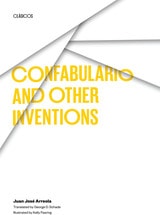
Confabulario and Other Inventions
By Juan José Arreola
University of Texas Press, 1964
This biting commentary on the follies of humankind by a noted Mexican author cuts deeply yet leaves readers laughing—at themselves as well as at others. With his surgical intelligence, Juan José Arreola exposes the shams and hypocrisies, the false values and vices, the hidden diseases of society. Confabulario total, 1941–1961, of which this book is a translation, combines three earlier books—Varia invención (1949), Confabulario (1952), Punta de plata (1958)—and numerous later pieces.
Although some of the pieces have a noticeably Mexican orientation, most of them transcend strictly regional themes to interpret the social scene in aspects common to all civilized cultures. Arreola’s view is not limited; much of his sophistication comes from his broad, deep, and varied knowledge of present and past, and from his almost casual use both of this knowledge and of his insight into its meaning for humanity. His familiarity with many little-known arts and sciences, numerous literatures, history, anthropology, and psychology, and his telling allusions to this rich lode of fact, increase the reader’s delight in his learned but witty, scalding but poetic, satire.
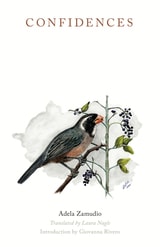
Confidences
Adela Zamudio (1854-1928)
Bucknell University Press, 2026
Juan is a Bolivian poet at the turn of the century, visiting the city of Cochabamba and writing letters to his friend Armando about the masked sensuality and hostility he feels seething beneath the placid face of this insular mining town. Antonia is a married woman living in Cochabamba, writing to her friend Gracia about the local gossip—which soon erupts into a scandal that threatens to destroy a family. Contrasting Juan’s letters home with Antonia’s private correspondence to her friend, Confidences tells a story of tragic love and explosive passions, showing how the intimacies that begin behind closed doors spill out into the public sphere.
The only novel written by acclaimed feminist poet Adela Zamudio, Confidences was harshly criticized for not following the conventions of realist literature, but it has since been hailed as a lost classic of Bolivian modernism. Now available in English for the first time, this translation captures the lyrical qualities of Zamudio’s prose as it vividly depicts how sexism, religious dogma, and prejudice prevented women from shaping their own destinies.
Laura Nagle, translator of "Confidences" by Adela Zamudio (1854-1928), reads a portion of the book. (https://www.youtube.com/watch?v=ShHc7rGuGRQ)

Considering Watchmen
Poetics, Property, PoliticsHoberek, Andrew
Rutgers University Press, 2014
Demonstrating a keen eye for historical detail, Considering Watchmen gives readers a new appreciation of just how radical Moore and Gibbons’s blend of gritty realism and formal experimentation was back in 1986. The book also considers Watchmen’s place in the history of the comics industry, reading the graphic novel’s playful critique of superhero marketing alongside Alan Moore’s public statements about the rights to the franchise. Andrew Hoberek examines how Moore and Gibbons engaged with the emerging discourses of neoconservatism and neoliberal capitalism, ideologies that have only become more prominent in subsequent years.
Watchmen’s influences on the superhero comic and graphic novel are undeniable, but Hoberek reveals how it has also had profound effects on literature as a whole. He suggests that Watchmen not only proved that superhero comics could rise to the status of literature—it also helped to inspire a generation of writers who are redefining the boundaries of the literary, from Jonathan Lethem to Junot Díaz. Hoberek delivers insight and analysis worthy of satisfying serious readers of the genre while shedding new light on Watchmen as both an artistic accomplishment and a book of ideas.
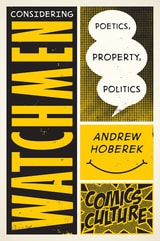
Considering Watchmen
Poetics, Property, Politics: New edition with full color illustrationsHoberek, Andrew
Rutgers University Press, 2017
Demonstrating a keen eye for historical detail, Considering Watchmen gives readers a new appreciation of just how radical Moore and Gibbons’s blend of gritty realism and formal experimentation was back in 1986. The book also considers Watchmen’s place in the history of the comics industry, reading the graphic novel’s playful critique of superhero marketing alongside Alan Moore’s public statements about the rights to the franchise. Andrew Hoberek examines how Moore and Gibbons engaged with the emerging discourses of neoconservatism and neoliberal capitalism, ideologies that have only become more prominent in subsequent years.
Watchmen’s influences on the superhero comic and graphic novel are undeniable, but Hoberek reveals how it has also had profound effects on literature as a whole. He suggests that Watchmen not only proved that superhero comics could rise to the status of literature—it also helped to inspire a generation of writers who are redefining the boundaries of the literary, from Jonathan Lethem to Junot Díaz. Hoberek delivers insight and analysis worthy of satisfying serious readers of the genre while shedding new light on Watchmen as both an artistic accomplishment and a book of ideas.
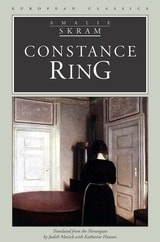
Constance Ring
Amalie Skram
Northwestern University Press, 2002
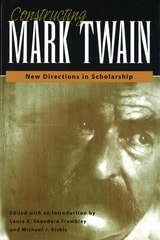
Constructing Mark Twain
New Directions in ScholarshipEdited with an introduction by Laura E. Skandera-Trombley and Michael J. Kiskis
University of Missouri Press, 2001
The thirteen essays in this collection combine to offer a complex and deeply nuanced picture of Samuel Clemens. With the purpose of straying from the usual notions of Clemens (most notably the Clemens/Twain split that has ruled Twain scholarship for over thirty years), the editors have assembled contributions from a wide range of Twain scholars. As a whole, the collection argues that it is time we approach Clemens not as a shadow behind the literary persona but as a complex and intricate creator of stories, a creator who is deeply embedded in the political events of his time and who used a mix of literary, social, and personal experience to fuel the movements of his pen.
The essays illuminate Clemens's connections with people and events not usually given the spotlight and introduce us to Clemens as a man deeply embroiled in the process of making literary gold out of everyday experiences. From Clemens's wonderings on race and identity to his looking to family and domesticity as defining experiences, from musings on the language that Clemens used so effectively to consideration of the images and processes of composition, these essays challenge long-held notions of why Clemens was so successful and so influential a writer. While that search itself is not new, the varied approaches within this collection highlight markedly inventive ways of reading the life and work of Samuel Clemens.
Contemporary Afro-Brazilian Short Fiction
Edited by Ana Cláudia Suriani da Silva, Julio Ludemir, and Maria Aparecida Andrade Salgueiro
University College London, 2024
Besides Africa, Brazil is the largest Afro-descendant country, however, literature produced by Black Brazilians is predominantly unknown in Brazil and abroad. Contemporary Afro-Brazilian Short Fiction emerges from a collaborative translation project, bringing Afro-Brazilian literature to a global audience demanding Afro-diasporic literature, as well as decolonial practices and content. This unique bilingual compilation of twenty-one short stories includes both established and emerging Afro-Brazilian voices, fostering cross-cultural understanding and affirming the legitimacy of Black Portuguese, pretoguês, as a literary language. The editors each provide introductions that contextualize the works, while also engaging in theoretical debates, shedding light on the role of literary translation in language teaching and the impact of the Literary Festival of the Peripheries in forming a new generation of Black Brazilian writers.
Contemporary Short Stories from Central America
Edited by Enrique Jaramillo Levi and Leland H. Chambers
University of Texas Press, 1993
This volume collects some of the best short fiction from the six Spanish-speaking countries of Central America—Guatemala, Honduras, El Salvador, Nicaragua, Costa Rica, and Panama. Selected from stories written between 1963 and 1988, it is a broad representation of active Central American writers.
Many of the stories are quite sophisticated and utilize elements of the absurd or techniques of magical realism. Some stories deal with war—the unending struggle against dictators and military power that engrosses Central Americans. Others explore the realm of the writer's imagination. Some of the writers included are Augusto Monterroso (Guatemala), Carmen Naranjo and Samuel Rovinski (Costa Rica), Rosa María Britton and Jaime García Saucedo (Panama), and Alfonso Quijada Urías (El Salvador).
Convergence
Jack Fuller
University of Chicago Press, 1990
"An intelligent, readable novel about two kinds of intrigue—international and bureaucratic. He succeeds admirably at both tasks."—Ross Thomas, Washington Post
"A solid, provocative first novel about the 'deadly game of espionage' . . . Thoughtfulness and human frailty take precedence over action and suspense. Irony is the prevailing mode. . . . Fuller depicts intelligence work—its technical minutiae and its vaunted goals—convincingly. And he subtly weaves various parallels into complementary layers of potential convergence."—Jeffrey Burke, Wall Street Journal
"A fast-moving, dramatic, thinking person's spy novel."—Nelson DeMille, Newsday
Conversation with Spinoza
A Cobweb NovelGoce Smilevski
Northwestern University Press, 2006
Smilevski's novel brings the thinker Spinoza and his inner life into conversation with the outer, all-too-real facts of his life and his day--from his connection to the Jewish community of Amsterdam, his excommunication in 1656, and the emergence of his philosophical system to his troubling feelings for his fourteen-year-old Latin teacher Clara Maria van den Enden and later his disciple Johannes Casearius. From this conversation there emerges a compelling and complex portrait of the life of an idea--and of a man who tries to live that idea.
Conversations with American Novelists
Edited by Kay Bonetti, Greg Michalson, Speer Morgan, Jo Sapp, & Sam Stowers
University of Missouri Press, 1997
Readers of fine novels cherish the opportunity to hear their favorite novelists speak directly, without commentary or interpretation, about how their lives and concerns drive their fiction writing. For twenty years The Missouri Review has brought these readers some of the most compelling and thought- provoking literary interviews in print. In this collection of fifteen in-depth interviews with contemporary novelists, the authors discuss the style and themes of their work, their writing habits, their cultural and social backgrounds, and larger aesthetic issues with refreshing insight about themselves and their art.
Originally conducted for the American Audio Prose Library, the interviews were then edited for publication in The Missouri Review. Here they are reproduced with an introduction and with a brief biographical and bibliographical headnote for each writer. These candid interviews with some of our favorite novelists are sure to delight all readers.
Authors Interviewed in This Volume:Robert Stone
Jamaica Kincaid
Jim Harrison
Tom McGuane
Louise Erdrich and Michael Dorris
John Edgar Wideman
Robb Forman Dew
Rosellen Brown
Peter Matthiessen
Scott Turow
Margaret Walker
Linda Hogan
Robert Olen Butler
Jessica Hagedorn
Larry Brown
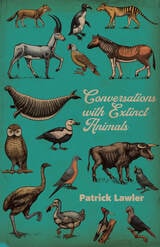
Conversations with Extinct Animals
A NovelPatrick Lawler
University of Alabama Press, 2024
An experimental narrative by eco-fiction author and poet Patrick Lawler evolves out of the interactions between twenty-four extinct animals and those characters who struggle for significance in the face of their own extinction.
Patrick Lawler’s second novel, Conversations with Extinct Animal, is a dialogue between psychology and ecology—between poetry and story. A suicide note masquerading as a love letter, the novel transcends genres and keeps kaleidoscopically shifting: sometimes it is an elegy, and sometimes it is a therapy session—but always these are the field notes for the end of the world.
As a collection of characters associated with The Facility come to terms with an individual’s death, they must confront their own losses amid the colossal absence of the twenty-four extinct animals. All the characters float between various inexplicable, mystifying “syndromes” that call into question their identities and, ultimately, call into question the elements of story itself. “Looking at pictures of the Extinct Animals, I can’t help but wonder if it is too late to save the world—especially since there are so many different worlds,” observes the narrator of the novel in his efforts to save the unsavable.
Corner of the Dead
Lynn Lurie
University of Massachusetts Press, 2008
"I use the camera to block my view," says Lisette. This is the start of her double vision—trying to forget and trying to recall—and her struggle to come to terms with the human capacity for cruelty. But the grim reality in Peru is so overpowering that she carries it with her back to New York and through the rest of her life. Having abandoned a lover along with the fight, she desperately tries to find meaning beyond that of mere survival.
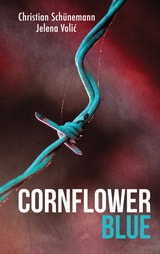
Cornflower Blue
A Case for Milena LukinChristian Schünemann and Jelena Volic
Haus Publishing, 2015
On the night of the eleventh of July, two elite Serbian soldiers are on sentry duty at the Topcider military camp. The next morning, they are found dead. A military court declares them victims of a ritual suicide, and the investigation is closed. But inconsistencies in the official tribunal draw criminologist Milena Lukin to the case. What did the two guardsmen see on that fateful night, a date marking the anniversary of the Srebrenica genocide? Up against a military complex with a history to hide, Milena soon finds herself in grave danger. Meticulously researched and rich in historical detail, Cornflower Blue is a gripping tale that bravely addresses one of the darkest hours in Europe’s recent history.
“An exciting thriller, a story about the worst depths of human nature—but also a clever, nostalgic, loving homage to Belgrade and its inhabitants.”—Der Tagesspiegel, on the German edition
Correction of Drift
A Novel in StoriesPamela Ryder
University of Alabama Press, 2008
Correspondence Across a Room
Vsevolod I. Ivanov and M.O. Gershenzon
Northwestern University Press, 1984
Day-long conversations having drawn them away from their literary tasks, the two then decided to converse in writing. Correspondence, the result, examines the condition and future of Western culture-whose values, according to the historian Gershenzon, have deteriorated into a deadly burden upon mankind, into mankind's ultimate prison. For the poet Ivanov, it is not the disavowal of a cultural heritage but the struggle to recover man's own unity with God that alone guarantees his true, his spiritual freedom.
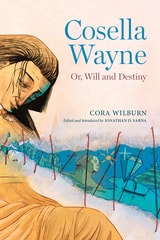
Cosella Wayne
Or, Will and DestinyCora Wilburn, edited and introduced by Jonathan D. Sarna
University of Alabama Press, 2019
Published serially in the spiritualist journal Banner of Light in 1860, Cosella Wayne: Or, Will and Destiny is the first coming-of-age novel, written and published in English by an American Jewish woman, to depict Jews in the United States and transforms what we know about the history of early American Jewish literature. The novel never appeared in book form, went unmentioned in Jewish newspapers of the day, and studies of nineteenth-century American Jewish literature ignore it completely. Yet the novel anticipates many central themes of American Jewish writing: intermarriage, generational tension, family dysfunction, Jewish-Christian relations, immigration, poverty, the place of women in Jewish life, the nature of romantic love, and the tension between destiny and free will.
The narrative recounts a relationship between an abusive Jewish father and the rebellious daughter he molested as well as that daughter’s struggle to find a place in the complex social fabric of nineteenth-century America. It is also unique in portraying such themes as an unmarried Jewish woman’s descent into poverty, her forlorn years as a starving orphaned seamstress, her apostasy and return to Judaism, and her quest to be both Jewish and a spiritualist at one and the same time.
Jonathan Sarna, who introduces the volume, discovered Cosella Wayne while pursuing research at the Israel Institute for Advanced Studies in Jerusalem. This edition is supplemented with selections from Cora Wilburn’s recently rediscovered diary, which are reprinted in the appendix. Together, these materials help to situate Cosella Wayne within the life and times of one of nineteenth-century American Jewry’s least known and yet most prolific female authors.
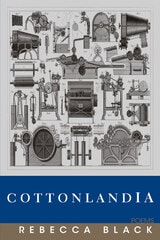
Cottonlandia
Rebecca Black
University of Massachusetts Press, 2005
The poems in Rebecca Black's first volume, Cottonlandia, move through myth and landscape, beginning in the deep South's “shimmer and tar” and ending in the “soot and orange dolor” of the California desert. Cottonlandia conjures a proto-continent where fashionable golems pose for antique photographs and nineteenth-century naturalists wander into the melee of the civil rights struggle in the South.
By turns haunting and comic, Black's poems describe the archaeology of the apocalypse. Countesses leave behind poisonous snapshots, lovers examine their shapes in the mirror, and Seminoles return for skeletons arranged illegally in exhibits, even as floods force antebellum coffins to rise.
In the title poem, reproduced on this page, the lines of a spiritual splinter and circle through a loose narrative, evoking the delirium of class and race in the author's Georgia hometown. Throughout the volume, poems quarrel with primal forces, threading the needle of historical oblivion with a dark, intelligent, and incantatory voice.
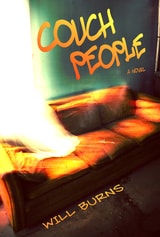
Couch People
A NovelWill Burns
University of Alabama Press, 2026
A darkly comic descent into Arkansas’s surreal criminal underworld through the eyes of a hapless, debt‑ridden hypochondriac
Couch People is a feverish, darkly comic novel that captures the anxious intensity of a world obsessed with wellness and control even as life keeps spinning into chaos. Prince, a debt-ridden drug dealer on probation, clings to vitamins and homeopathic rituals while stumbling through a surreal Arkansas underworld filled with criminal volatility and sudden violence.
As Prince fights to stay out of prison, recover his stolen money, and hold onto a fragile hope for love, he moves through a landscape populated by unforgettable misfits and bizarre dangers, including a system where snitches are cremated, turned into diamonds, and set into convicts’ teeth. Will Burns blends his satirical bite with unexpected tenderness, creating a narrative that prizes raw interiority and absurd humor over neat redemption. Couch People becomes a propulsive fever dream about love, loss, and the impossible effort to impose order on a world that refuses to make sense, inviting readers to embrace the beautiful mess of being alive without a manual, a map, or mercy.
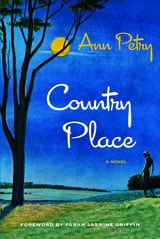
Country Place
A NovelAnn Petry, foreword by Farah Jasmine Griffin
Northwestern University Press, 1947
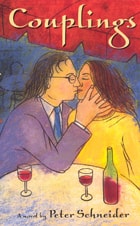
Couplings
Peter Schneider
University of Chicago Press, 1998
"A little Don Giovanni, a little café sociology, a little laboratory science, a little Berlin wit—it's a pleasant mix."—Suzanne Ruta, New York Times Book Review
"With its poignant valedictory to its protagonists' waning youth and its rueful placing of them in the firing line of history, Couplings achieves a balance of light and dark that is utterly persuasive."—Michael Upchurch, San Francisco Chronicle Book Review
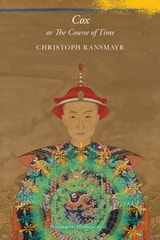
Cox
or, The Course of TimeChristoph Ransmayr
Seagull Books, 2020
The world’s most powerful man, Qiánlóng, emperor of China, invites the famous eighteenth-century clockmaker Alister Cox to his court in Beijing. There, in the heart of the Forbidden City, the Englishman and his assistants are to build machines that mark the passing of time as a child or a condemned man might experience it and that capture the many shades of happiness, suffering, love, and loss that come with that passing.
Mystified by the rituals of a rigidly hierarchical society dominated by an unimaginably wealthy, god-like ruler, Cox musters all his expertise and ingenuity to satisfy the emperor’s desires. Finally, Qiánlóng, also known by the moniker Lord of Time, requests the construction of a clock capable of measuring eternity—a perpetuum mobile. Seizing this chance to realize a long-held dream and honor the memory of his late beloved daughter, yet conscious of the impossibility of his task, Cox sets to work. As the court is suspended in a never-ending summer, festering with evil gossip about the monster these foreigners are creating, the Englishmen wonder if they will ever escape from their gilded cage. More than a meeting of two men, one isolated by power, the other by grief, this is an exploration of mortality and a virtuoso demonstration that storytelling alone can truly conquer time.
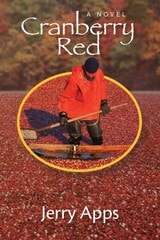
Cranberry Red
A NovelJerry Apps
University of Wisconsin Press, 2010
The fourth novel in Jerry Apps’s Ames County series, Cranberry Red brings the story into the present, portraying the challenges of agriculture in the twenty-first century.
As the novel opens, Ben Wesley has lost his job as agricultural agent for Ames County. He is soon hired as a research application specialist for Osborne University, a for-profit institution that has developed “Cranberry Red,” a new chemical that promises not only to improve cranberry crop yields but also to endow the fruits with the power to prevent heart disease, reduce brain damage from strokes, and ward off Alzheimer’s disease. Ben must promote the new product to cranberry growers in Ames County and beyond, but he worries whether the promised results are credible. Was Cranberry Red rushed to market?
When the chemical does all that the university claims it will do, Ben is relieved . . . until disturbing side effects emerge. Can he criticize Cranberry Red and safeguard farmers and consumers without losing his job, or will Ben’s honesty get him fired while his community continues to get sicker?
Finalist, General Fiction, Midwest Book Awards

Crash-Landing
A NovelPeter Spielberg
University of Alabama Press, 1985
Named after Lindbergh, his parents' hero, Charles Burg has neither the requisite head for heights nor the stomach to go it alone. Though destined for a fall, he contrives—by never looking down—to keep his marriage to Anne aloft through years of circling, of buffeting crosswinds, instrument failure and near collisions. When the crackup finally comes, the touchdown is not tragic, flaming wreck, but a nose-in-the-mud return to ground zero.
Both survive the forced landing. Anne comes through better: she manages to walk away from the wreckage. Chuck crawls off, emotionally grounded. We last see him fleeing across the Atlantic, winging toward an eighty-day crash cure at a rehabilitation camp fpr bereaved ex-husbands "some twenty kilometers south of Breat."
Or rather, that is the reader's first glimpse of this comedy's anti-hero, for events unfold in reverse order appearance - from the crackup back to the passionate beginning that led to the marriage. The story's counter-chronological movement gives the reader foresight, while Chuck, its first-person narrator, remains, happily or ironically, unaware of the laws of physics that govern the all too short duration of love's flight.
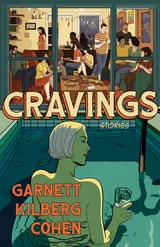
Cravings
Garnett Kilberg Cohen
University of Wisconsin Press, 2023
Kilberg Cohen’s captivating and vulnerable characters often recognize their shortcomings and past mistakes, but cannot always rise above them. One woman learns to forgive her husband’s ex; another fears her love of salty snacks caused a family tragedy. A stoic rural community drives a newcomer out of town; a young man’s entire life is colored by a traumatic childhood event at a zoo. Focusing on the specific, unforgettable moments that reveal our connections to one another, Cravings offers an expansive vision of humanity that lingers long after the final page is turned.
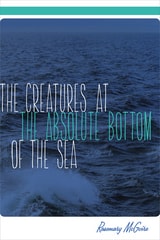
Creatures at the Absolute Bottom of the Sea
Rosemary McGuire
University of Alaska Press, 2015
These are fishing stories, told as such stories are meant to be: simple, often coarse, and tinged with the elemental beauty of the sea. They reflect rugged lives lived on the edge of the ocean’s borders, where grief and grace ride the same waves. Rosemary McGuire, a fisherman herself, captures the essential humanity at the heart of each tale. No one comes through unscathed, but all retain a sense of hope and belief in earthly miracles, however humble.
A dazzling debut, The Creatures at the Absolute Bottom of the Sea will leave readers with a sense of the fragility and beauty inherent in eroded lives spent in proximity to danger.

Creekside
An Archaeological NovelKelli Carmean
University of Alabama Press, 2010
Uncovering a frontier family’s secrets before progress wipes them away.
In Creekside, dedicated archaeologist Meg Harrington guides her students in a race against time to protect the legacy of the past before bulldozers rip it to shreds.
The setting is a Kentucky pasture slated for development—the construction of the new Creekside subdivision. Once, that same beautiful stretch of land was home to three generations who experienced love, loss, and tragedy in their log cabin beside the creek. It was here during the late 18th century that Estelle Mullins struggled to build her home on the dangerous frontier.
In Meg’s 21st-century world of archaeology we read about excavation techniques, daily experiences at a dig, tight construction deadlines, the use of heavy equipment, report writing, artifact analysis, damage from looters and collectors, and the reality of site destruction in the path of modern development. The depiction of Estelle’s frontier life includes Kentucky’s early Euro-American settlement of the Cumberland Gap, encounters with Shawnee defending their land, Protestant fragmentation, the rise of religious fundamentalism, the immigrant stampede down the Ohio River, and the persistent issue of class-based land ownership.
The two partially interwoven story lines link artifact and place, ancestors and descendants, the present and the past, and inspire us to explore the personal connections between them all in fresh and vital ways.
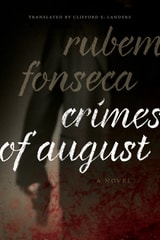
Crimes of August
A NovelRubem Fonseca
Tagus Press, 2014
Rubem Fonseca's Crimes of August offers the first serious literary treatment of the cataclysmic events of August 1954, arguably the most turbulent month in Brazilian history. A rich novel, both culturally and historically, Crimes of August tells two stories simultaneously. The first is private, involving the well-delineated character of Alberto Mattos, a police officer. The other is public, focusing on events that begin with the attempted assassination of Carlos Lacerda, a demagogic journalist and political enemy of President Getúlio Vargas, and culminate in Vargas's suicide on August 24,1954. Throughout this suspenseful novel, deceptively couched as a thriller, Fonseca interweaves fact and fiction in a complex, provocative plot. At the same time, he re-creates the atmosphere of the 1950s, when Rio de Janeiro was Brazil's capital and the nexus of political intrigue and corruption. Mattos is assigned to solve the brutal murder of a wealthy entrepreneur in the aftermath of what appears to be a homosexual liaison. An educated and introspective man, and one of the few in his precinct not on the take from the bankers of the illegal lottery, Mattos suffers from alienation and a bleeding ulcer. His investigation puts him on a dangerous collision course with the conspiracy to depose Vargas, the novel's other narrative thread. The two overlap at several points, coming to their tragic end with the aged politician's suicide and Mattos's downfall.
Cross Over Water
Richard Yañez
University of Nevada Press, 2011
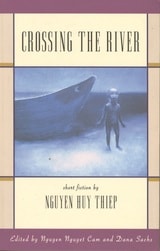
Crossing the River
Short Fiction by Nguyen Huy ThiepNguyen Huy Thiep
Northwestern University Press, 2002
Crossing the River presents a wide range of Nguyen Huy Thiep's short fiction, both realistic stories in contemporary settings and retellings of folk myths that serve as contemporary parables. When Thiep's stories first appeared in the 1980s, they set off a chain of debate, not only within intellectual and political circles, but also within the society at large. Typically, the struggles of his characters were about survival, not survival in the context of war or revolution, but survival in the context of the emotional and psychological strength it takes to live within the harsh confines of post-war Vietnamese society. Thiep captured the emotional quality of Vietnamese life in a way no other author had done, and his importance can be recognized today by his enormous influence on younger writers.
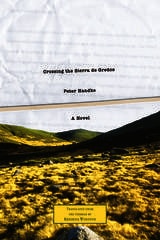
Crossing the Sierra de Gredos
A NovelPeter Handke
Northwestern University Press, 2009
On the outskirts of a European riverport city lives a powerful woman banker, a public figure admired and hated in equal measure, who has decided to turn from the worlds of high finance and modern life to embark on a quest. Having commissioned a famous writer to undertake her "authentic" biography, she journeys through the Spanish Sierra de Gredos and the region of La Mancha to meet him. As she travels by all-terrain vehicle, bus, and finally on foot, the nameless protagonist encounters five way stations that become the stuff of her biography and the biography of the modern world, a world in which genuine images and unmediated experiences have been exploited and falsified by commercialization and the voracious mass media.
In this visionary novel, Peter Handke offers descriptions of objects, relationships, and events that teach readers a renewed way of seeing; he creates a wealth of images to replace those lost to convention and conformity. Crossing the Sierra de Gredos is, as well, a very human book of yearning and the ancient search for love, peopled with memorable characters (from multiple historical periods) and imbued with Handke’s inimitable ability to portray universal, innerworldly adventures that blend past, future, present, and dreamtime.

Crossroads of Imagination
Czech Fantastic Literature 1831–1945Edited by Carleton Bulkin
Karolinum Press, 2026
The first anthology of early Czech fantastic writing in translation.
Crossroads of Imagination is a rare English-language study of modern science fiction’s precursors beyond the U.S. and Britain. Many translated for the first time, these thirty texts reflect a rich Euro-Atlantic tradition from the Romantic age to World War II. Authors include Jakub Arbes, Karel Čapek, Jiří Karásek ze Lvovic, Ladislav Klíma, Jiří Mordechai Langer, Jan Neruda, Emilie Procházková, Jan Weiss, and Julius Zeyer. The anthology highlights women’s, Jewish, and queer voices.
Prefaces to each selection uncover how new ideas and technologies shaped the European fantastic—positivism, mistrust of elites, pacifism, spiritism, and xenophobia, alongside expansions in communications, transportation, electrification, and technical education. Comparative essays and annotations look beyond “major” literatures and emphasize those of East-Central Europe. Archival images enliven this collection. General and genre readers alike will discover new stories and authors, as well as a fantastic tradition shared across Europe and North America before the advent of modern science fiction.
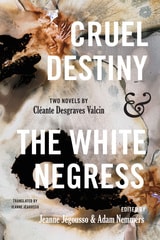
Cruel Destiny and The White Negress
Two Novels by Cléante Desgraves ValcinAdam Nemmers
Rutgers University Press, 2024
Cruel Destiny (1929) tells the tragic love story of Armand and Adeline, drawn together by a magnetic attraction, yet kept apart by a dark family secret. Depicting the heavy expectations placed upon women in Haiti’s elite society, it also explores the troubled and twisted relationships between the Haitians and their former colonial masters, the French.
In The White Negress (1934), a Frenchwoman moves to Haiti and is torn between two very different men, a Black Haitian lawyer, and a white American carpetbagger. Putting a fresh spin on the tired tragic mulatta trope, Valcin reveals the racial prejudices, class tensions, and anti-colonial resentments of an island under American occupation.
Together, these two novels expand our understanding of Caribbean literature, as well as the political struggles and artistic triumphs of Black women in the Americas.
Crum
A NovelLEE MAYNARD
West Virginia University Press, 2012
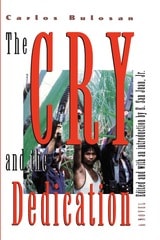
Cry And Dedication
Carlos Bulosan
Temple University Press, 1995
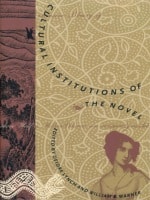
Cultural Institutions of the Novel
Deidre Lynch and William B. Warner, eds.
Duke University Press, 1996
The essays in Cultural Institutions of the Novel find new ways to analyze how a genre notorious for its aesthetic unruliness has become institutionalized—defined, legitimated, and equipped with a canon. With a particular focus on the status of novels as commodities, their mediation of national cultures, and their role in transnational exchange, these pieces range from the seventeenth century to the present and examine the forms and histories of the novel in England, Nigeria, Japan, France, New Zealand, Canada, and the United States. Works by Jane Austen, Natsume Sôseki, Gabriel García Márquez, Buchi Emecheta, and Toni Morrison are among those explored as Cultural Institutions of the Novel investigates how theories of “the” novel and disputes about which narratives count as novels shape social struggles and are implicated in contests over cultural identity and authority.
Contributors. Susan Z. Andrade, Lauren Berlant, Homer Brown, Michelle Burnham, James A. Fujii, Nancy Glazener, Dane Johnson, Lisa Lowe, Deidre Lynch, Jann Matlock, Dorothea von Mücke, Bridget Orr, Clifford Siskin, Katie Trumpener, William B. Warner
Culture, Genre, and Literary Vocation
Selected Essays on American LiteratureMichael Davitt Bell
University of Chicago Press, 2000
Throughout, Bell revisits issues of genre with an eye toward the unexpected details of authors' lives, and invites us to reconsider the hidden functions that terms such as "romanticism" and "realism" served for authors and their critics. Whether tracing the demands of the market or the expectations of readers, Bell examines the intimate relationship between literary production and culture; each essay closely links the milieu in which American writers worked with the trajectory of their storied careers.
Cumboto
By Ramón Díaz Sánchez
University of Texas Press, 1969
This richly orchestrated novel, which won a national literary prize in the author's native land, Venezuela, also earned international recognition when the William Faulkner Foundation gave it an award as the most notable novel published in Ibero America between 1945 and 1962.
Cumboto's disturbing story unfolds during the early decades of the twentieth century on a Venezuelan coconut plantation, in a turbulent Faulknerian double world of black and white. It records the lives of Don Federico, the effete survivor of a once vigorous family of landowners, and his Black servant Natividad, who since the days of their mutual childhood has been his only friend.
Young Federico, psychologically impotent and lost to human contact, lives on as a lonely recluse in the century-old main house of "Cumboto," surrounded by descendants of African slaves who still manage, despite his apathy, to keep the plantation on its feet. Natividad's heroic and selfless struggle to redeem his friend by awakening him to the stirrings of the earth and life about him sets in motion a series of events that are to shatter Federico's childlike world: a headlong love affair with a voluptuous black girl, her terrified flight in the face of the bitter condemnation of her own people, and the unexpected appearance, twenty years later, of their extraordinary son.
Throughout the novel runs a recurring theme: neither race can survive without the other. Black and white, Díaz Sánchez suggests, embody contrasting aspects of human nature, which are not inimical but complementary: the languid intellectualism of European culture must be tempered with the indestructible vitality and intuition of the African soul if humanity is ever fully to comprehend the living essence of the world.
Curious Attractions
Essays on Fiction WritingDebra Spark
University of Michigan Press, 2005
While the book will have immediate appeal for students of writing, it will also be of interest to general readers for its in-depth reading of contemporary fiction and for its take on important issues of the day: Should writers try to be more uplifting? How is emotion best conveyed in fiction? Why are serious writers in North America wedded to the realist tradition?
When she was only twenty-three, Debra Spark's best-selling anthology 20 Under 30 introduced readers to some of today's best writers, including David Leavitt, Susan Minot, Lorrie Moore, Ann Patchett, and Mona Simpson. Almost twenty years later, Spark brings this same keen critical eye to Curious Attractions, discussing a broad range of authors from multiple genres and generations.
A collection of essays in the belles-lettres tradition, Curious Attractions offers lively and instructive discussions of craft flavored with autobiographical reflections and commentary on world events. Throughout, Spark's voice is warm, articulate, and engaging as it provides valuable insights to readers and writers alike.
Curious New England
The Unconventional Traveler’s Guide to Eccentric DestinationsJoseph E. Citro and Diane E. Foulds
University Press of New England, 2004
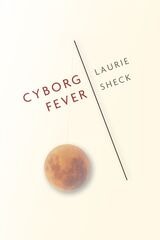
Cyborg Fever
Laurie Sheck
Tupelo Press, 2025
In Cyborg Fever, acclaimed writer Laurie Sheck brings us a probing and lyrical philosophical fiction in the spirit of Umberto Eco, Italo Calvino, and Donna Haraway’s Cyborg Manifesto that enacts an incisive and moving exploration into what it means to be human in the age of AI and increasing transhumanism.
Throughout Cyborg Fever, many strange, surprising facts appear: an artist clones a flower from his DNA and the DNA of a petunia, an astronaut plays golf on the moon, a mathematician on a rest cure rethinks the life of Shakespeare, and particles and antiparticles collide at lightning speed beneath the green hills of Switzerland and France. Threaded throughout, one question lingers: in this age of AI and genetic engineering, how can we come to know more fully what it means to love and be human among the wonders and destructions we have wrought on Earth?
At the center of the book is the narrator, Erwin, left as an hours-old infant on the steps of an orphanage where he is named after the renowned physicist Erwin Schrodinger (of the famous Schrodinger’s cat experiment). After a traumatic fall into a year-long fever dream, he experiences many visions that take him into many areas of inquiry including the nature of the universe, bioengineering, medical experimentation, cyborgs, AI, and space and time, and ultimately teaches him the nature of love. Along the way, he develops a friendship with a gentle cyborg who has escaped from a Lab involved in covert medical intervention. Guided by the cyborg and a vision of Funes (of Borges’s iconic story “Funes the Memorious”), Erwin experiences the Information Age and the promises of AI in all its beauty and, ultimately, its terror, as he watches the cyborg he has come to love devolve into an unfeeling information machine.
Throughout, issues of personhood, human attachment, and the dignity of all living beings pervade Erwin’s thinking and leave him with a larger understanding and appreciation of what it means to love.