Results by title
28167 books match the query 'History' and 1913 start with c
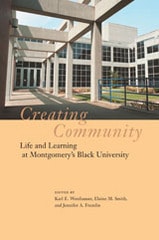
Creating Community
Life and Learning at Alabama State UniversityEdited by Karl E. Westhauser, Elaine M. Smith, and Jennifer A. Fremlin
University of Alabama Press, 2008
Creating Dairyland
How caring for cows saved our soil, created our landscape, brought prosperity to our state, and still shapes our way of life in WisconsinEdward Janus
Wisconsin Historical Society Press, 2011
The story of dairying in Wisconsin is the story of how our very landscape and way of life were created. By making cows the center of our farm life and learning how to care for them, our ancestors launched a revolution that changed much more than the way farmers earned their living — it changed us.
Creating Dairyland
How caring for cows saved our soil, created our landscape, brought prosperity to our state, and still shapes our way of life in WisconsinEdward Janus
Wisconsin Historical Society Press, 2011
The story of dairying in Wisconsin is the story of how our very landscape and way of life were created. By making cows the center of our farm life and learning how to care for them, our ancestors launched a revolution that changed much more than the way farmers earned their living — it changed us.
Creating Dairyland
How caring for cows saved our soil, created our landscape, brought prosperity to our state, and still shapes our way of life in WisconsinEdward Janus
Wisconsin Historical Society Press, 2012
The story of dairying in Wisconsin is the story of how our very landscape and way of life were created. By making cows the center of our farm life and learning how to care for them, our ancestors launched a revolution that changed much more than the way farmers earned their living — it changed us.
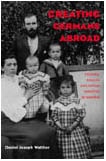
Creating Germans Abroad
Cultural Policies and National Identity in NamibiaDaniel Joseph Walther
Ohio University Press, 2002
When World War I brought an end to German colonial rule in Namibia, much of the German population stayed on. The German community, which had managed to deal with colonial administration, faced new challenges when the region became a South African mandate under the League of Nations in 1919. One of these was the issue of Germanness, which ultimately resulted in public conversations and expressions of identity.
In Creating Germans Abroad, Daniel Walther examines this discourse and provides striking new insights into the character of the German populace in both Germany and its former colony, Southwest Africa, known today as Namibia. In addition to German colonialism, Walther considers issues of race, class, and gender and the activities of minority groups. He offers new perspectives on German cultural and national identity during the Empire, the Weimar Republic, and the Third Reich.
In a larger context, Creating Germans Abroad acts as a model for investigating the strategies and motivations of groups and individuals engaged in national or ethnic engineering and demonstrates how unforeseen circumstances can affect the nature and outcome of these endeavors.
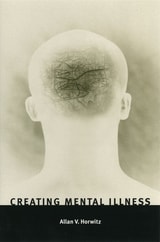
Creating Mental Illness
Allan V. Horwitz
University of Chicago Press, 2001
"Thought-provoking and important. . .Drawing on and consolidating the ideas of a range of authors, Horwitz challenges the existing use of the term mental illness and the psychiatric ideas and practices on which this usage is based. . . . Horwitz enters this controversial territory with confidence, conviction, and clarity."—Joan Busfield, American Journal of Sociology
"Horwitz properly identifies the financial incentives that urge therapists and drug companies to proliferate psychiatric diagnostic categories. He correctly identifies the stranglehold that psychiatric diagnosis has on research funding in mental health. Above all, he provides a sorely needed counterpoint to the most strident advocates of disease-model psychiatry."—Mark Sullivan, Journal of the American Medical Association
"Horwitz makes at least two major contributions to our understanding of mental disorders. First, he eloquently draws on evidence from the biological and social sciences to create a balanced, integrative approach to the study of mental disorders. Second, in accomplishing the first contribution, he provides a fascinating history of the study and treatment of mental disorders. . . from early asylum work to the rise of modern biological psychiatry."—Debra Umberson, Quarterly Review of Biology
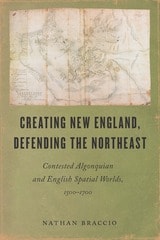
Creating New England, Defending the Northeast
Contested Algonquian and English Spatial Worlds, 1500–1700Nathan Braccio
University of Massachusetts Press, 2026
Between 1500 and 1700, Indigenous and English mapmakers across the North Atlantic depicted present-day New England in markedly distinct ways, highlighting how differently their communities understood the landscape. While English cartographers relied on new mathematics and other developing scientific knowledge from Europe, as well as an overhead perspective of the world, Algonquian mapmakers drew on deep knowledge of the landscape, derived from their communities’ long history upon it. Nathan Braccio refers to this phenomenon as “parallel landscapes.”
Creating New England, Defending the Northeast asserts that Algonquian knowledge of the landscape represented a powerful and persistent alternative to English surveying and mapmaking in the Northeast. When English colonists and explorers recognized the unsuitability of their techniques for understanding New England’s unfamiliar landscape, they attempted to appropriate Indigenous knowledge and maps. Algonquian sachems used this as an opportunity to control and benefit from their new English neighbors. Later, as the English became insecure in their dependence on Indigenous people, they began to remake and mark the landscape. Algonquians adapted, maintaining control of important spatial knowledge, even in a place no longer entirely of their making. This story complicates narratives of conquest and highlights the Indigenous spatial knowledge too often overlooked.
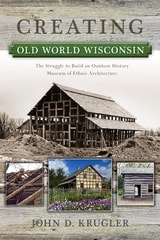
Creating Old World Wisconsin
The Struggle to Build an Outdoor History Museum of Ethnic ArchitectureJohn D. Krugler
University of Wisconsin Press, 2013
Visionaries, researchers, curators, and volunteers launched a massive preservation initiative to salvage fast-disappearing immigrant and migrant architecture. Dozens of historic buildings in the 1970s were transported from locations throughout the state to the Kettle Moraine State Forest. These buildings created a backdrop against which twenty-first-century interpreters demonstrate nineteenth- and early twentieth-century agricultural techniques and artisanal craftsmanship. The site, created and maintained by the Wisconsin Historical Society, offers visitors a unique opportunity to learn about the state’s rich and ethnically diverse past through depictions of the everyday lives of its Norwegian, Danish, Finnish, German, Polish, African American, and Yankee inhabitants.
Creating Old World Wisconsin chronicles the fascinating and complex origins of this outdoor museum, highlighting the struggles that faced its creators as they worked to achieve their vision. Even as Milwaukee architect and preservationist Richard W. E. Perrin, the Society's staff, and enthusiastic volunteers opened the museum in time for the national bicentennial in 1976, the site was plagued by limited funds, bureaucratic tangles, and problems associated with gaining public support. By documenting the engaging story of the challenges, roadblocks, false starts, and achievements of the site's founders, Krugler brings to life the history of the dedicated corps who collected and preserved Wisconsin's diverse social history and heritage.
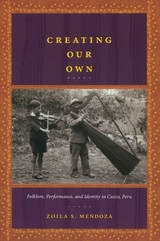
Creating Our Own
Folklore, Performance, and Identity in Cuzco, PeruZoila S. Mendoza
Duke University Press, 2007
Mendoza draws on early-twentieth-century newspapers and other archival documents as well as interviews with key artistic and intellectual figures and their descendants. She offers vivid descriptions of the Peruvian Mission of Incaic Art, a tour undertaken by a group of artists from Cuzco, at their own expense, to represent Peru to Bolivia, Argentina, and Uruguay in 1923–24, as well as of the origins in the 1920s of the Qosqo Center of Native Art, the first cultural institution dedicated to regional and national folkloric art. She highlights other landmarks, including both The Charango Hour, a radio show that contributed to the broad acceptance of rural Andean music from its debut in 1937, and the rise in that same year of another major cultural institution, the American Art Institute of Cuzco. Throughout, she emphasizes the intricate local, regional, national, and international pressures that combined to produce folkloric art, especially the growing importance of national and international tourism in Cuzco.
Please visit the Web site http://nas.ucdavis.edu/creatingbook for samples of the images and music discussed in this book.
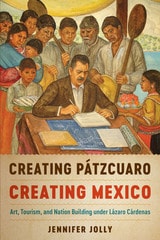
Creating Pátzcuaro, Creating Mexico
Art, Tourism, and Nation Building under Lázaro CárdenasBy Jennifer Jolly
University of Texas Press, 2018
LASA Visual Culture Studies Section Book Prize, Latin American Studies Association (LASA)
Winner, Arthur P. Whitaker Prize, Middle Atlantic Council of Latin American Studies, 2019In the 1930s, the artistic and cultural patronage of celebrated Mexican president Lázaro Cárdenas transformed a small Michoacán city, Pátzcuaro, into a popular center for national tourism. Cárdenas commissioned public monuments and archeological excavations; supported new schools, libraries, and a public theater; developed tourism sites and infrastructure, including the Museo de Artes e Industrias Populares; and hired artists to paint murals celebrating regional history, traditions, and culture. The creation of Pátzcuaro was formative for Mexico; not only did it provide an early model for regional economic and cultural development, but it also helped establish some of Mexico’s most enduring national myths, rituals, and institutions.
In Creating Pátzcuaro, Creating Mexico, Jennifer Jolly argues that Pátzcuaro became a microcosm of cultural power during the 1930s and that we find the foundations of modern Mexico in its creation. Her extensive historical and archival research reveals how Cárdenas and the artists and intellectuals who worked with him used cultural patronage as a guise for radical modernization in the region. Jolly demonstrates that the Pátzcuaro project helped define a new modern body politic for Mexico, in which the population was asked to emulate Cárdenas by touring the country and seeing and embracing its land, history, and people. Ultimately, by offering Mexicans a means to identify and engage with power and privilege, the creation of Pátzcuaro placed art and tourism at the center of Mexico’s postrevolutionary nation building project.
Creating Rosie the Riveter
Class, Gender, and Propaganda during World War IIMaureen Honey
University of Massachusetts Press, 1984
Creating Space
My Life and Work in Indigenous EducationVerna J. Kirkness
University of Manitoba Press, 2013
Creating Spaniards
Culture and National Identity in Republican SpainSandie Holguin
University of Wisconsin Press, 2002
Creating Spaniards is a cultural and intellectual history that explains the intersection of politics and culture, and the formation of a national identity, during Spain’s Second Republic and Civil War. It counters recent scholarship claiming that leaders of the Second Republic had no programs for "inventing traditions" to encourage a Spanish national identity.
Focusing on the Second Republic, 1931–1936, Sandie Holguín illustrates how various intellectuals and politicians of the Republican–Socialist coalition used theater, literature, and film to aid the construction of a unified Spanish culture and history. She uses memoirs, journals, newspapers, parliamentary debates, and archival sources in her examination of the impact that cultural reforms had on the transformation of one of Europe’s oldest states.
Creating The Countryside
edited by E. Melanie DuPuis and Peter Vandergeest
Temple University Press, 1996
What does it mean to save nature and rural life? Do people know what they are trying to save and what they mean by "save"? As the answers to these questions become more and more unclear, so, too do the concepts of "environment," "wilderness," and "country."
From the abuse of the Amazon rain forest to how Vermont has been marketed as the ideal rural place, this collection looks at what the countryside is, should be, or can be from the perspective of people who are actively involved in such debates. Each contributor examines the underlying tendencies–and subsequent policies–that separate country from city, developed land from wilderness, and human activity from natural processes. The editors argue in their introduction that these dualistic categories limit our ability to think about environmental and rural problems and hamper our ability to formulate practical, realistic, and just solutions.
This book's interpretive approach to the natural world explores why people make artificial distinctions between nature and culture, and how people can create new forms of sustainable development in terms of real problems and real places.
In the series Conflicts in Urban and Regional Development, edited by John R. Logan and Todd Swanstrom.
Creating a Perfect World
Religious and Secular Utopias in Nineteenth-Century OhioCatherine M. Rokicky
Ohio University Press, 2002
Powerful currents of religious revival and political and social reform swept nineteenth-century America. Many people expressed their radical religious and social ideals by creating or joining self-contained utopian communities. These utopianists challenged the existing social and economic order with alternative notions about religion, marriage, family, sexuality, property ownership, and wage labor.
Between 1787 and 1919, approximately 270 utopian communities existed in the United States. Due to its unique location on the young nation’s frontier, the state of Ohio was the site of much of this activity.
Creating a Perfect World examines Ohio’s utopian movements, both religious and secular. These include the United Society of Believers in Christ’s Second Coming, or Shakers; the Society of Separatists at Zoar; the Mormons, who stopped in the state for several years on their way west; and several societies based on the philosophies of European social reformers Robert Owen and Charles Fourier.
In this detailed account of a unique and fascinating chapter in Ohio’s history, Catherine M. Rokicky profiles these communities and explores their ideals, how and why they were established, their leaders, and their members’ reasons for joining and sometimes leaving. She also examines the roles men and women played, their approaches to communal living and community property, their economic activities, their relations with surrounding communities and the state, and the various reasons for their success or failure.

Creating a Physical Biology
The Three-Man Paper and Early Molecular BiologyEdited by Phillip R. Sloan and Brandon Fogel
University of Chicago Press, 2011

Creating a World on Paper
Harry Fenn's Career in ArtSue Rainey
University of Massachusetts Press, 2013
Arriving in New York from London in 1857 as a young wood engraver, Fenn soon forged a career in illustration. His tiny black-and-white wood engravings for Whittier's Snow-Bound (1868) surprised critics with their power, and his bold, innovative compositions for Picturesque America (1872–74) were enormously popular and expanded the field for illustrators and publishers. In the 1880s and '90s, his illustrations appeared in many of the finest magazines and newspapers, depicting the places and events that interested the public—from post–Civil War national reconciliation to the World's Columbian Exposition in 1893 to the beginnings of imperialism in the Spanish-American War.
This handsomely designed volume documents Fenn's prolific career from the 1860s until his death in 1911. Sue Rainey also recounts his adventurous sketching trips in the western United States, Europe, and the Middle East, which enhanced his reputation for depicting far-flung places at a time when the nation was taking a more prominent role on the world stage.
Creating the American State
The Moral Reformers and the Modern Administrative World They MadeRichard Stillman
University of Alabama Press, 1998
In this illuminating and provocative study, Stillman provides a new understanding of the foundation of the American state.
Whether renewing a driver's license, traveling on an airplane, or just watching in fascination as a robot probes Mars, we all participate in the everyday workings of the modern administrative state. As Stillman demonstrates in this study, however, we have not, until now, fully investigated or appreciated this administrative stateÕs origins or its evolution into the entity that so affects our lives today.
Stillman reveals that this modern enterprise emerged from a complex foundation of ideas and ideals rather than as a result of a simple, rational plan or cataclysmic event, as previously contended. In fact, he finds that the basis for our current administrative state lies in the lives of the seven individuals who, during the late 19th and early 20th centuries, invented its various elements.
Stillman also finds that although they lived at different times, these seven founders-George William Curtis, Charles Francis Adams, Jr., Emory Upton, Jane Addams, Frederick W. Taylor, Richard Childs, and Louis Brownlow-had much in common: all were products of intensely Protestant, small-town America, and all were motivated by strong moral idealism. Indeed, Stillman finds that state making in the United States has been a continuation of the Protestant goal to "protest and purify."
Some names are more recognizable than others, but all, through remarkable moral fervor and exceptional leadership skills, invented the administrative practices and procedures so familiar today.
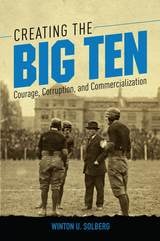
Creating the Big Ten
Courage, Corruption, and CommercializationWinton U Solberg
University of Illinois Press, 2018
Winton U. Solberg explores the relationship between higher education and collegiate football in the Big Ten's first fifty years. This formative era saw debates over eligibility and amateurism roil the sport. In particular, faculty concerned with academics clashed with coaches, university presidents, and others who played to win. Solberg follows the conference's successful early efforts to put the best interests of institutions and athletes first. Yet, as he shows, commercial concerns undid such work after World War I as sports increasingly eclipsed academics. By the 1940s, the Big Ten's impact on American sports was undeniable. It had shaped the development of intercollegiate athletics and college football nationwide while serving as a model for other athletic conferences.
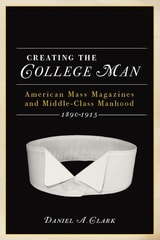
Creating the College Man
American Mass Magazines and Middle-Class Manhood, 1890–1915Daniel A. Clark
University of Wisconsin Press, 2010
In Creating the College Man Daniel A. Clark argues that the dominant mass media of the era—popular magazines such as Cosmopolitan and the Saturday Evening Post—played an integral role in shaping the immediate and long-term goals of this select group of men. In editorials, articles, fiction, and advertising, magazines depicted the college man as simultaneously cultured and scientific, genteel and athletic, polished and tough. Such depictions underscored the college experience in powerful and attractive ways that neatly united the incongruous strains of American manhood and linked a college education to corporate success.
Creating the Creole Island
Slavery in Eighteenth-Century MauritiusMegan Vaughan
Duke University Press, 2005
Combining archival research with an engaging literary style, Vaughan juxtaposes extensive analysis of court records with examinations of the logs of slave ships and of colonial correspondence and travel accounts. The result is a close reading of life on the island, power relations, colonialism, and the process of cultural creolization. Vaughan brings to light complexities of language, sexuality, and reproduction as well as the impact of the French Revolution. Illuminating a crucial period in the history of Mauritius, Creating the Creole Island is a major contribution to the historiography of slavery, colonialism, and creolization across the Indian Ocean.
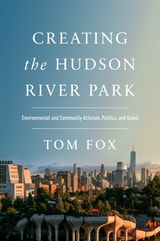
Creating the Hudson River Park
Environmental and Community Activism, Politics, and GreedTom Fox
Rutgers University Press, 2024
The 4-mile-long, 550-acre Hudson River Park is nearing completion and is the largest park built in Manhattan since Central Park opened more than 150 years ago. It has transformed a derelict waterfront, protected the Hudson River estuary, preserved commercial maritime activities, created new recreational opportunities for millions of New Yorkers, enhanced tourism, stimulated redevelopment in adjacent neighborhoods, and set a precedent for waterfront redevelopment. The Park attracts seventeen million visitors annually. Creating the Hudson River Park is a first-person story of how this park came to be. Working together over three decades, community groups, civic and environmental organizations, labor, the real estate and business community, government agencies, and elected officials won a historic victory for environmental preservation, the use and enjoyment of the Hudson River, and urban redevelopment. However, the park is also the embodiment of a troubling trend toward the commercialization of America’s public parks.
After the defeat of the $2.4 billion Westway plan to fill 234 acres of the Hudson in 1985, the stage was set for the revitalization of Manhattan’s West Side waterfront. Between 1986 and 1998 the process focused on the basics like designing an appropriate roadway, removing noncompliant municipal and commercial activities from the waterfront, implementing temporary improvements, developing the Park’s first revenue-producing commercial area at Chelsea Piers, completing the public planning and environmental review processes, and negotiating the 1998 Hudson River Park Act that officially created the Park. From 1999 to 2009 planning and construction were funded with public money and focused on creating active and passive recreation opportunities on the Tribeca, Greenwich Village, Chelsea, and Hell’s Kitchen waterfronts.
However, initial recommendations to secure long term financial support for the Park from the increase in adjacent real estate values that resulted from the Park’s creation were ignored. City and state politicians had other priorities and public funding for the Park dwindled. The recent phase of the project, from 2010 to 2021, focused on “development” both in and adjacent to the Park. Changes in leadership, and new challenges provide an opportunity to return to a transparent public planning process and complete the redevelopment of the waterfront for the remainder of the 21st-century. Fox’s first-person perspective helps to document the history of the Hudson River Park, recognizes those who made it happen and those who made it difficult, and provides lessons that may help private citizens and public servants expand and protect the public parks and natural systems that are so critical to urban well-being.
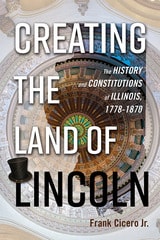
Creating the Land of Lincoln
The History and Constitutions of Illinois, 1778-1870Frank Cicero Jr.
University of Illinois Press, 2018
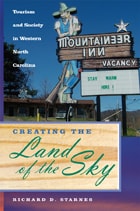
Creating the Land of the Sky
Tourism and Society in Western North CarolinaRichard D. Starnes
University of Alabama Press, 2005
A sophisticated inquiry into tourism's social and economic power across the South.
In the early 19th century, planter families from South Carolina, Georgia, and eastern North Carolina left their low-country estates during the summer to relocate their households to vacation homes in the mountains of western North Carolina. Those unable to afford the expense of a second home relaxed at the hotels that emerged to meet their needs. This early tourist activity set the stage for tourism to become the region's New South industry. After 1865, the development of railroads and the bugeoning consumer culture led to the expansion of tourism across the whole region.
Richard Starnes argues that western North Carolina benefited from the romanticized image of Appalachia in the post-Civil War American consciousness. This image transformed the southern highlands into an exotic travel destination, a place where both climate and culture offered visitors a myriad of diversions. This depiction was futher bolstered by partnerships between state and federal agencies, local boosters, and outside developers to create the atrtactions necessary to lure tourists to the region.
As tourism grew, so did the tension between leaders in the industry and local residents. The commodification of regional culture, low-wage tourism jobs, inflated land prices, and negative personal experiences bred no small degree of animosity among mountain residents toward visitors. Starnes's study provides a better understanding of the significant role that tourism played in shaping communities across the South.

Creating the Modern Man
American Magazines and Consumer Culture, 1900-1950Tom Pendergast
University of Missouri Press, 2000
In the late nineteenth century, general-interest magazines began to reach an unprecedented number of readers and conveyed to those readers diverse messages about the meaning of masculinity in America. Over the next fifty years, these messages narrated a shift from Victorian masculinity, which valued character, integrity, hard work, and duty, to modern masculinity, which valued personality, self-realization, and image. In Creating the Modern Man, Tom Pendergast studies the multifaceted ways that masculinity is represented in magazines published during this transitional period.
Pendergast focuses on the rise of mass consumer culture, demonstrating that consumerism was a key factor in reshaping American notions of masculinity as presented in popular magazines. Whereas much scholarship has decried the effects of consumerism, Pendergast treats consumer culture as an energizing force in the American magazine market. He suggests that such magazines offered men new and meaningful visions of masculine identity and argues that men actively participated in restructuring the masculine ideal. Engaging a wide range of magazines from American Magazine to Esquire to True, Pendergast demonstrates how these publications presented masculinity in ways that reflected the magazines' relationship to advertisers, contributors, and readers.
This fascinating study includes such African American magazines as the Colored American, Crisis, Opportunity, and Ebony. Pendergast reasons that the rise of modern masculinity opened the way for African American men to identify with normative masculine values. As white men reinvented the idea of the "self-made man" for a new era, black men struggled to negotiate a meaningful place for black masculinity in a culture intent on denying them access.
The first complete investigation of the representation of men in American magazines, Creating the Modern Man makes an important contribution to our understanding of these publications, both as elements of mass culture and as interesting institutions in their own right. Pendergast takes readers inside the complex world of magazine publishing, demonstrating how magazines slowly yet surely help create the cultural images that shape societal gender roles.

Creating the New Woman
The Rise of Southern Women's Progressive Culture in Texas, 1893-1918Judith N. McArthur
University of Illinois Press, 1998
Regionally distinct yet influenced by national trends, women's progressive culture in Texas offers a valuable opportunity to analyze the evolution of women's voluntary associations, their challenges to southern conventions of race and class, and their quest for social change and political power.
Judith McArthur traces how general concerns of national progressive organizations about pure food, prostitution, and education reform shaped programs at the state and local levels. Southern women differed from their Northern counterparts by devising new approaches to settlement work and taking advantage of World War I to challenge southern gender and racial norms. McArthur's original analysis details how women in Texas succeeded in securing partial voting rights before passage of the Nineteenth Amendment. She also provides valuable comparisons between North and South, among various southern states, and between black and white, and male and female, progressives.
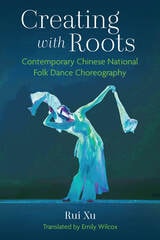
Creating with Roots
Contemporary Chinese National Folk Dance ChoreographyRui Xu
University of Michigan Press, 2025
Creating with Roots offers a detailed breakdown of key terms and concepts necessary for understanding Chinese national folk dance and analyzes 37 examples of choreography dating from the 1940s to 2000. The author situates these explanations within the longer history of cultural practice and theory in China and in relation to the international dance discourses of the former Soviet Union, Eastern Europe, Western Europe, and North America.
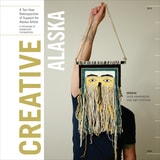
Creative Alaska
A Ten-Year Retrospective of Support for Alaska Artists, 2004-2013Edited by Sven Haakanson and Amy Steffian
University of Alaska Press, 2016
Creative Alaska profiles the award winners from 2004 to 2013 in three categories: Distinguished Artists, Fellowships, and Project Awards. Richly illustrated accounts of each of the artists and their work illuminate the challenges and opportunities of the artistic life in Alaska and the powerful impact of the Rasmuson Foundation’s support.
Creative Belonging
The Qiang and Multiethnic Imagination in Modern ChinaYanshuo Zhang
University of Michigan Press, 2026
China is a multicultural country home to fifty-five ethnic minority groups, yet due to linguistic and cultural barriers many of these groups remain understudied or unknown in the West. The Qiang, one of modern China’s officially recognized ethnic minorities, is also China’s longest-standing ethnoracial identity marker that has existed since the earliest recorded history of China. Creative Belonging investigates the formation and evolution of the Qiang as a people, a concept, and a cultural history in China. It further examines how the contemporary Qiang ethnic group interacts strategically with mainstream Chinese society, challenging the historically entrenched hierarchies between the sociocultural “centers” of China and its ethnic “peripheries.”
This book is based on years of ethnographic and textual-archival research in the Himalayan regions of southwest China, where the contemporary Qiang group resides. Drawing on a diverse range of official and local political discourses and previously unstudied literary, historiographical, and cinematic works, Yanshuo Zhang illuminates how the Qiang have carved out spaces of “creative belonging” within the parameters of multiculturalism in contemporary China. Rooted in ethnographic and textual-archival research, the book presents original materials produced by Qiang indigenous writers, scholars, artists, grassroots village cultural activists, and entrepreneurs at both the local and the global levels. Creative Belonging invites readers to rethink ethnicity and national belonging in China by centering minority groups’ efforts to expand the meanings and implications of “Chinese culture.”

Creative Dissent
Alternative Cultures during SocialismKatalin Cseh-Varga
Central European University Press, 2027
Creative Dissent argues that the region was teeming with alternative cultures: emerging practices and expressions that actively challenged the dominant social code and reshaped the reality of the people’s democracies.
The book explores how ordinary people, intellectuals, and cultural players across socialist Europe responded to state repression and comprehensive control with ingenuity and defiance. By examining how these dissenting voices circumvented or even penetrated official spaces, this collection illuminates the complex heterogeneity of life behind the Iron Curtain.
Structured around four key areas—communities, markets, media, and spaces—this work offers a necessary, nuanced understanding of cultural resistance and the limits of authoritarian control.
Creatively Undecided
Toward a History and Philosophy of Scientific AgencyMenachem Fisch
University of Chicago Press, 2017
By turning our attention to ambiguity and indecision in science, Menachem Fisch, in Creatively Undecided, offers a new way to look at how scientific understandings change. Following Kuhn, Fisch argues that scientific practice depends on the framework in which it is conducted, but he also shows that those frameworks can be understood as the possible outcomes of the rational deliberation that Popper viewed as central to theory change. How can a scientist subject her standards to rational appraisal if that very act requires the use of those standards? The way out, Fisch argues, is by looking at the incentives scientists have to create alternative frameworks in the first place. Fisch argues that while science can only be transformed from within, by people who have standing in the field, criticism from the outside is essential. We may not be able to be sufficiently self-critical on our own, but trusted criticism from outside, even if resisted, can begin to change our perspective—at which point transformative self-criticism becomes a real option.

Creativity and Academic Activism
Instituting Cultural StudiesMeaghan Morris and Mette Hjort, eds.
Duke University Press, 0
This book also investigates the impact of managerialism, marketization, and globalization on university cultures, asking what critical cultural scholarship can do in such increasingly adversarial conditions. Experiments in Asian universities are emphasized as exemplary of what can or could be achieved in other contexts of globalized university policy.
Contributors. Tony Bennett, Stephen Ching-Kiu Chan, Kuan-Hsing Chen, Douglas Crimp, Dai Jinhua, John Nguyet Erni, Mette Hjort, Josephine Ho, Koichi Iwabuchi, Meaghan Morris, Tejaswini Niranjana, Wang Xiaoming, Audrey Yue
Creativity and Academic Activism
Instituting Cultural StudiesMeaghan Morris and Mette Hjort, eds.
Duke University Press, 0
This book also investigates the impact of managerialism, marketization, and globalization on university cultures, asking what critical cultural scholarship can do in such increasingly adversarial conditions. Experiments in Asian universities are emphasized as exemplary of what can or could be achieved in other contexts of globalized university policy.
Contributors. Tony Bennett, Stephen Ching-Kiu Chan, Kuan-Hsing Chen, Douglas Crimp, Dai Jinhua, John Nguyet Erni, Mette Hjort, Josephine Ho, Koichi Iwabuchi, Meaghan Morris, Tejaswini Niranjana, Wang Xiaoming, Audrey Yue
Creativity and Its Discontents
China's Creative Industries and Intellectual Property Rights OffensesLaikwan Pang
Duke University Press, 2012
Creatures
Leonid Tishkov
Duke University Press, 0
The work in Creatures is centered on the imaginative and playful idea of the Dabloids, foot-shaped creatures of all sizes and colors who emerge magically from the Dablus, a sausage-like object that appears one misty morning in the fields of a collective farm. Tishkov’s drawings, paintings, and sculptures recount the history of the Dablus and the Dabloids. These mystical creatures are at once pets and gods, beings immensely wise and yet foolish. They are surreal manifestations of the artistic consciousness even as they are symbols of human isolation. In this sense, Tishkov’s roots in surrealism are charged with humorous social commentary often reminiscent of Hogarth, Red Grooms, and Robert Crumb.
Tishkov explores other mythological and absurdist themes in a series of elephant watercolors in which people live within an elephant trunk. The book also features a translation of the text of Tishkov’s play "Dabloids—A Fantasy," as well as brief essays that provide an introduction to the artist and his work, his mythology, and his roots in Russian folk culture.
Creatures introduces a major contemporary Russian artist to the western world. It should delight all who enter its world and should expand the horizons of all who delight in its artistic merits.

Creatures of the Air
Music, Atlantic Spirits, Breath, 1817–1913J. Q. Davies
University of Chicago Press, 2023
Often experienced as universal and incorporeal, music seems an innocent art form. The air, the very medium by which music constitutes itself, shares with music a claim to invisibility. In Creatures of the Air, J. Q. Davies interrogates these claims, tracing the history of music’s elemental media system in nineteenth-century Atlantic worlds. He posits that air is a poetic domain, and music is an art of that domain.
From West Central African ngombi harps to the European J. S. Bach revival, music expressed elemental truths in the nineteenth century. Creatures of the Air tells these truths through stories about suffocation and breathing, architecture and environmental design, climate strife, and racial turmoil. Contributing to elemental media studies, the energy humanities, and colonial histories, Davies shows how music, no longer just an innocent luxury, is implicated in the struggle for control over air as a precious natural resource. What emerges is a complex political ecology of the global nineteenth century and beyond.
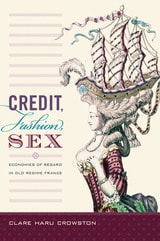
Credit, Fashion, Sex
Economies of Regard in Old Regime FranceClare Haru Crowston
Duke University Press, 2013
Credit economies constituted "economies of regard" in which reputation depended on embodied performances of credibility. Crowston explores the role of fashionable appearances and sexual desire in leveraging credit and reconstructs women's vigorous participation in its gray markets. The scandalous relationship between Queen Marie Antoinette and fashion merchant Rose Bertin epitomizes the vertical loyalties and deep social divides of the credit regime and its increasingly urgent political stakes.
Credulity
A Cultural History of US MesmerismEmily Ogden
University of Chicago Press, 2018
Credulity tells the fascinating story of mesmerism’s spread from the plantations of the French Antilles to the textile factory cities of 1830s New England. As it proliferated along the Eastern seaboard, this occult movement attracted attention from Ralph Waldo Emerson’s circle and ignited the nineteenth-century equivalent of flame wars in the major newspapers. But mesmerism was not simply the last gasp of magic in modern times. Far from being magicians themselves, mesmerists claimed to provide the first rational means of manipulating the credulous human tendencies that had underwritten past superstitions. Now, rather than propping up the powers of oracles and false gods, these tendencies served modern ends such as labor supervision, education, and mediated communication. Neither an atavistic throwback nor a radical alternative, mesmerism was part and parcel of the modern. Credulity offers us a new way of understanding the place of enchantment in secularizing America.
Creek Indian History
A Historical Narrative of the Genealogy, Traditions and Downfall of the Ispocoga or Creek Indian Tribe of Indians by One of the Tribe, George Stiggins (1788-1845)George Stiggins
University of Alabama Press, 2003
An essential narrative preserving the cultural memory, social life, and internal conflicts of the Creek people from an author within the tribe.
George Stiggins, a Creek Indian half blood living in Alabama, wrote this history more than 150 years ago. Raised in the white culture by his father, an English trader, Stiggins nevertheless lived in close contact with the Creeks because his mother was a full blood of the Natchez tribe, part of the Creek Confederacy.
Stiggins writes with firsthand knowledge of the tribes in the central southeast—the Alabamas, Natchez, Abekas, Uchees, and others. He tells of their origins, their towns and chiefs, and their way of life, he traces critical events leading to the Creek War—the battles of Burnt Corn and Fort Mims—and details the roles of the Indian leaders involved. In “Tecumseh and the Age of Prophecy,” he describes how the powerful influence of prophets, such as Josiah Francis and Jim Boy, who incited the Creeks to civil war as the confederacy split into war and peace factions. Stiggin’s account of William Weatherford’s controversial role in the Creek War has special value because Weatherford was Stiggins’s brother-in-law. His descriptions of religious and social aspects of the Creek lifeways make this work prime source material.
William Wyman’s notes and introduction put the Stiggins account into historical perspective and trace its circuitous route to publication. First issued in 1989, Creek Indian History has become an important primary document for the study of Native American history and culture.
Creole Economics
Caribbean Cunning under the French FlagBy Katherine E. Browne
University of Texas Press, 2004
What do the trickster Rabbit, slave descendants, off-the-books economies, and French citizens have to do with each other? Plenty, says Katherine Browne in her anthropological investigation of the informal economy in the Caribbean island of Martinique. She begins with a question: Why, after more than three hundred years as colonial subjects of France, did the residents of Martinique opt in 1946 to integrate fully with France, the very nation that had enslaved their ancestors? The author suggests that the choice to decline sovereignty reflects the same clear-headed opportunism that defines successful, crafty, and illicit entrepreneurs who work off the books in Martinique today.
Browne draws on a decade of ethnographic fieldwork and interview data from all socioeconomic sectors to question the common understanding of informal economies as culture-free, survival strategies of the poor. Anchoring her own insights to longer historical and literary views, the author shows how adaptations of cunning have been reinforced since the days of plantation slavery. These adaptations occur, not in spite of French economic and political control, but rather because of it. Powered by the "essential tensions" of maintaining French and Creole identities, the practice of creole economics provides both assertion of and refuge from the difficulties of being dark-skinned and French.
This powerful ethnographic study shows how local economic meanings and plural identities help explain work off the books. Like creole language and music, creole economics expresses an irreducibly complex blend of historical, contemporary, and cultural influences.
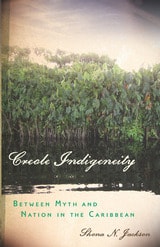
Creole Indigeneity
Between Myth and Nation in the CaribbeanShona N. Jackson
University of Minnesota Press, 2012
During the colonial period in Guyana, the country’s coastal lands were worked by enslaved Africans and indentured Indians. In Creole Indigeneity, Shona N. Jackson investigates how their descendants, collectively called Creoles, have remade themselves as Guyana’s new natives, displacing indigenous peoples in the Caribbean through an extension of colonial attitudes and policies.
Looking particularly at the nation’s politically fraught decades from the 1950s to the present, Jackson explores aboriginal and Creole identities in Guyanese society. Through government documents, interviews, and political speeches, she reveals how Creoles, though unable to usurp the place of aboriginals as First Peoples in the New World, nonetheless managed to introduce a new, more socially viable definition of belonging, through labor. The very reason for bringing enslaved and indentured workers into Caribbean labor became the organizing principle for Creoles’ new identities.
Creoles linked true belonging, and so political and material right, to having performed modern labor on the land; labor thus became the basis for their subaltern, settler modes of indigeneity—a contradiction for belonging under postcoloniality that Jackson terms “Creole indigeneity.” In doing so, her work establishes a new and productive way of understanding the relationship between national power and identity in colonial, postcolonial, and anticolonial contexts.

Creole Kingdoms in Southeast Asia
Slave-Gathering Warfare and Cultural Exchange in Burma, Siam, and ManipurBryce G. Beemer
National University of Singapore Press, 2027
Examines the cultural consequences of slave-gathering warfare.
Long-distance slave-gathering warfare reshuffled the populations of mainland Southeast Asia between the eighteenth and nineteenth centuries. In this lightly populated region, people were power, and warfare between kingdoms was dedicated to the enslavement and forced relocation of defeated peoples. In the Southeast Asian context, war slaves were often valued and exploited for native talents and knowledge. In Upper Burma, for example, captured artisans, performers, pundits, weavers, and elephant trainers were made the king’s property and incorporated into a vast and tightly organized force of coerced laborers.
The enslaved became critical agents in the transmission of artistic practices, knowledge, religious beliefs, and exotic skills and talents. Using the concept of creolization as a conceptual anchor, Creole Kingdoms offers new insights into the many ways that war slaves and their descendants creatively built, popularized, and consolidated cultural practices across the cosmopolitan kingdoms of mainland Southeast Asia.
Creole Kingdoms opens up new terrain for both future generations of Southeast Asian scholars and general readers from the mainland who want to explore the cultural history of their home.

Creole Medievalism
Colonial France and Joseph Bédier’s Middle AgesMichelle R. Warren
University of Minnesota Press, 2010
In Creole Medievalism, Michelle Warren demonstrates that Bédier's relationship to this multicultural and economically peripheral colony motivates his nationalism in complex ways. Simultaneously proud of his French heritage and nostalgic for the island, Bédier defends French sovereignty based on an ambivalent resistance to his creole culture. Warren shows that in the early twentieth century, influential intellectuals from Réunion helped define the new genre of the "colonial novel," adopting a pro-colonial spirit that shaped both medieval and Francophone studies. Probing the work of a once famous but little understood cultural figure, Creole Medievalism illustrates how postcolonial France and Réunion continue to grapple with histories too varied to meet expectations of national unity.
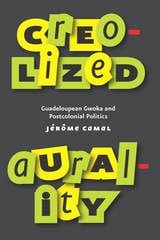
Creolized Aurality
Guadeloupean Gwoka and Postcolonial PoliticsJérôme Camal
University of Chicago Press, 2019
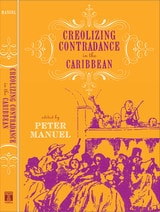
Creolizing Contradance in the Caribbean
Peter Manuel
Temple University Press, 2011
The contradance and quadrille, in their diverse forms, were the most popular, widespread, and important genres of creole caribbean music and dance in the nineteenth century. Throughout the region they constituted sites for interaction of musicians and musical elements of different racial, social, and ethnic origins, and they became crucibles for the evolution of genres like the Cuban danzón and son, the Dominican merengue, and the Haitian mereng.
Creolizing Contradance in the Caribbean is the first book to explore this phenomenon in detail and with a pan-regional perspective. Individual chapters by respected area experts discuss the Spanish, French, and English-speaking Caribbean. For each area they cover the musical and choreographic features, social dynamics, historical development and significance, and discuss them in relation to the broader Caribbean historical context. This groundbreaking text fills a significant gap in studies of Caribbean cultural history and of social dance.
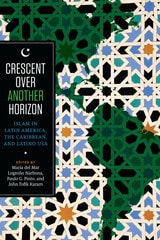
Crescent over Another Horizon
Islam in Latin America, the Caribbean, and Latino USAEdited by Maria del Mar Logroño Narbona, Paulo G. Pinto, and John Tofik Karam
University of Texas Press, 2015
Muslims have been shaping the Americas and the Caribbean for more than five hundred years, yet this interplay is frequently overlooked or misconstrued. Brimming with revelations that synthesize area and ethnic studies, Crescent over Another Horizon presents a portrait of Islam’s unity as it evolved through plural formulations of identity, power, and belonging. Offering a Latino American perspective on a wider Islamic world, the editors overturn the conventional perception of Muslim communities in the New World, arguing that their characterization as “minorities” obscures the interplay of ethnicity and religion that continues to foster transnational ties.
Bringing together studies of Iberian colonists, enslaved Africans, indentured South Asians, migrant Arabs, and Latino and Latin American converts, the volume captures the power-laden processes at work in religious conversion or resistance. Throughout each analysis—spanning times of inquisition, conquest, repressive nationalism, and anti-terror security protocols—the authors offer innovative frameworks to probe the ways in which racialized Islam has facilitated the building of new national identities while fostering a double-edged marginalization. The subjects of the essays transition from imperialism (with studies of morisco converts to Christianity, West African slave uprisings, and Muslim and Hindu South Asian indentured laborers in Dutch Suriname) to the contemporary Muslim presence in Argentina, Brazil, Mexico, and Trinidad, completed by a timely examination of the United States, including Muslim communities in “Hispanicized” South Florida and the agency of Latina conversion. The result is a fresh perspective that opens new horizons for a vibrant range of fields.
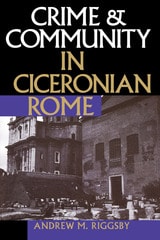
Crime and Community in Ciceronian Rome
By Andrew M. Riggsby
University of Texas Press, 1999
In the late Roman Republic, acts of wrongdoing against individuals were prosecuted in private courts, while the iudicia publica (literally "public courts") tried cases that involved harm to the community as a whole. In this book, Andrew M. Riggsby thoroughly investigates the types of cases heard by the public courts to offer a provocative new understanding of what has been described as "crime" in the Roman Republic and to illuminate the inherently political nature of the Roman public courts.
Through the lens of Cicero's forensic oratory, Riggsby examines the four major public offenses: ambitus (bribery of the electorate), de sicariis et veneficiis (murder), vis (riot), and repetundae (extortion by provincial administrators). He persuasively argues that each of these offenses involves a violation of the proper relations between the state and the people, as interpreted by orators and juries. He concludes that in the late Roman Republic the only crimes were political crimes.
Crime and Justice, Volume 42
Crime and Justice in America: 1975-2025Edited by Michael Tonry
University of Chicago Press Journals, 2012
For the American criminal justice system, 1975 was a watershed year. Offender rehabilitation and individualized sentencing fell from favor. The partisan politics of “law and order” took over. Among the results four decades later are the world’s harshest punishments and highest imprisonment rate. Policymakers’ interest in what science could tell them plummeted just when scientific work on crime, recidivism, and the justice system began to blossom. Some policy areas—sentencing, gun violence, drugs, youth violence—became evidence-free zones. In others—developmental crime prevention, policing, recidivism studies, evidence mattered. Crime and Justice in America: 1975-2025 tells how policy and knowledge did and did not interact over time and charts prospects for the future. What accounts for the timing of particular issues and research advances? What did science learn or reveal about crime and justice, and how did that knowledge influence policy? Where are we now, and, perhaps even more important, where are we going?
The contributors to this volume, the leading scholars in their fields, bring unsurpassed breadth and depth of knowledge to bear in answering these questions. They include Philip J. Cook, Francis T. Cullen, Jeffrey Fagan, David Farrington, Daniel S. Nagin, Peter Reuter, Lawrence W. Sherman, and Franklin E. Zimring.
For thirty-five years, the Crime and Justice series has provided a platform for the work of sociologists, psychologists, criminal lawyers, justice scholars, and political scientists as it explores the full range of issues concerning crime, its causes, and it remedies.
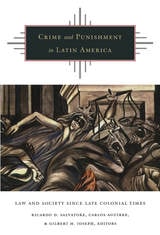
Crime and Punishment in Latin America
Law and Society Since Late Colonial TimesRicardo D. Salvatore, Carlos Aguirre, and Gilbert M. Joseph, eds.
Duke University Press, 2001
While disassociating law from a strictly legalist approach, the volume showcases a number of highly original studies on topics such as the role of law in processes of state formation and social and political conflict, the resonance between legal and cultural phenomena, and the contested nature of law-enforcing discourses and practices. Treating law as an ambiguous and malleable arena of struggle, the contributors to this volume—scholars from North and Latin America who represent the new wave in legal history that has emerged in recent years-- demonstrate that law not only produces and reformulates culture, but also shapes and is shaped by larger processes of political, social, economic, and cultural change. In addition, they offer valuable insights about the ways in which legal systems and cultures in Latin America compare to those in England, Western Europe, and the United States.
This volume will appeal to scholars in Latin American studies and to those interested in the social, cultural, and comparative history of law and legal phenomena.
Contributors. Carlos Aguirre, Dain Borges, Lila Caimari, Arlene J. Díaz, Luis A. Gonzalez, Donna J. Guy, Douglas Hay, Gilbert M. Joseph, Juan Manuel Palacio, Diana Paton, Pablo Piccato, Cristina Rivera Garza, Kristin Ruggiero, Ricardo D. Salvatore, Charles F. Walker