Results by title
28167 books match the query 'History' and 1913 start with c
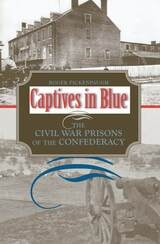
Captives in Blue
The Civil War Prisons of the ConfederacyRoger Pickenpaugh
University of Alabama Press, 2013
A gripping account of Union soldiers behind Confederate bars—where survival, sacrifice, and the unforgiving realities of Civil War imprisonment collide.
In Captives in Blue, Roger Pickenpaugh examines the ways the Confederate army contended with the growing prison population, the variations in the policies and practices of different Confederate prison camps, the effects these policies and practices had on Union prisoners, and the logistics of prisoner exchanges. He explores conditions that arose from conscious government policy decisions and conditions that were the product of local officials or unique local situations. He also considers how Confederate prisons and policies dealt with African American Union soldiers. Black soldiers held captive in Confederate prisons faced uncertain fates; many former slaves were returned to their former owners, while others faced harsh treatment in the camps. Drawing on prisoner diaries, Pickenpaugh provides compelling first-person accounts of life in prison camps often overlooked by scholars in the field.
This study of Union captives in Confederate prisons is a companion to Roger Pickenpaugh’s earlier groundbreaking book Captives in Gray: The Civil War Prisons of the Union and extends his examination of Civil War prisoner-of-war facilities into the Confederacy.
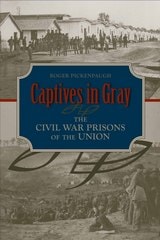
Captives in Gray
The Civil War Prisons of the UnionRoger Pickenpaugh
University of Alabama Press, 2009
“This is a vivid description of conditions and events rarely described: the imprisonment of captured Confederate soldiers during the Civil War. Its many parallels to circumstances in Andersonville are especially intriguing.” —Jimmy Carter, 39th President of the United States
Contains contemporary reports from prisoners and witnesses humanize the grim realities of the POW camps.
Captives in Gray is Civil War prison camp authority Roger Pickenpaugh’s acclaimed and definitive account of the Union’s POW camps. Combining his own extensive research into official records and a rich variety of letters and diaries with the best contemporary scholarship, Pickenpaugh covers every major northern camp.
Because the Union won few victories in 1861 and took few prisoners, the North had time to plan and build prison camps, an opportunity it largely squandered. Pickenpaugh gives illuminating accounts of the role and leadership of thrifty Lieutenant Colonel William Hoffman, the commissary general of prisoners for most of the conflict, and President Abraham Lincoln's secretaries of war, the incompetent Simon Cameron and the malignant Edwin M. Stanton.
Death came in many ways. Soldiers from the Deep South had no experience with extreme cold, and they died by the hundreds each winter. In one memorable freeze, Rock Island, Illinois, saw temperatures between twenty-eight and thirty-one degrees below zero. With insufficient fuel and inadequate shelter, clothing, and blankets, prisoners there and in other camps froze to death. Food rations varied widely. A few Confederates enjoyed better rations than they had in the CSA armies, but the majority supplemented their meager rations by eating rats, dogs, cats, and seagulls.
Poor medical care added to the death toll. Treatment was bad even by the standards of Civil War medicine, often due to Hoffman's reluctance to spend. Prisoners suffered from lice and scurvy, as well as pneumonia, measles, and a variety of fevers. As in both armies, diarrhea and dysentery were chronic. Smallpox epidemics killed many. Poor sanitation and drainage caused 385 deaths at Elmira, New York, in September 1864 alone.
During the war, over 12 percent of rebel prisoners, or 25,976 of the 214,865, died in captivity. Together with his Captives in Blue, Captives in Gray gives the fullest account of the experiences of prisoners of war in the American Civil War.
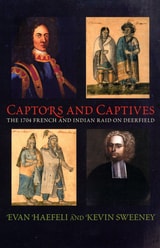
Captors and Captives
The 1704 French and Indian Raid on DeerfieldEvan Haefeli
University of Massachusetts Press, 2003
Haefeli and Sweeney reconstruct events from multiple points of view, through the stories of a variety of individuals involved. These stories begin in the Native, French, and English communities of the colonial Northeast, then converge in the February 29 raid, as a force of more than two hundred Frenchmen, Abenakis, Hurons, Kahnawake Mohawks, Pennacooks, and Iroquois of the Mountain overran the northwesternmost village of the New England frontier. Although the inhabitants put up more of a fight than earlier accounts of the so-called Deerfield Massacre have suggested, the attackers took 112 men, women, and children captive. The book follows the raiders and their prisoners on the harsh three-hundred-mile trek back to Canada and into French and Native communities. Along the way the authors examine how captives and captors negotiated cultural boundaries and responded to the claims of competing faiths and empires—all against a backdrop of continuing warfare.
By giving equal weight to all participants, Haefeli and Sweeney range across the fields of social, political, literary, religious, and military history, and reveal connections between cultures and histories usually seen as separate.
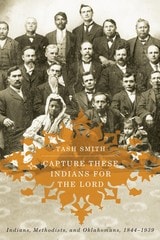
Capture These Indians for the Lord
Indians, Methodists, and Oklahomans, 1844-1939Tash Smith
University of Arizona Press, 2014
In Capture These Indians for the Lord, Tash Smith traces the trajectory of the Southern Methodist Church in Oklahoma when it was at the frontlines of the relentless push toward western expansion. Although many Native people accepted the missionaries’ religious practices, Smith shows how individuals found ways to reconcile the Methodist force with their traditional cultural practices. When the white population of Indian Territory increased and Native sovereignty came under siege during the allotment era of the 1890s, white communities marginalized Indians within the Church and exploited elements of mission work for their own benefit.
Later, with white indifference toward Indian missions peaking in the early twentieth century, Smith explains that as the remnants of the Methodist power weakened, Indian membership regained control and used the Church to regenerate their culture. Throughout, Smith explores the complex relationships between white and Indian community members and how these phenomena shaped Methodist churches in the twentieth century.

Captured Peace
Elites and Peacebuilding in El SalvadorChristine J. Wade
Ohio University Press, 2015
El Salvador is widely considered one of the most successful United Nations peacebuilding efforts, but record homicide rates, political polarization, socioeconomic exclusion, and corruption have diminished the quality of peace for many of its citizens. In Captured Peace: Elites and Peacebuilding in El Salvador, Christine J. Wade adapts the concept of elite capture to expand on the idea of “captured peace,” explaining how local elites commandeered political, social, and economic affairs before war’s end and then used the peace accords to deepen their control in these spheres.
While much scholarship has focused on the role of gangs in Salvadoran unrest, Wade draws on an exhaustive range of sources to demonstrate how day-to-day violence is inextricable from the economic and political dimensions. In this in-depth analysis of postwar politics in El Salvador, she highlights the local actors’ primary role in peacebuilding and demonstrates the political advantage an incumbent party—in this case, the Nationalist Republican Alliance (ARENA—has throughout the peace process and the consequences of this to the quality of peace that results.
Capturing Labor
A History of Unfree Work in the SouthwestEdited by Jessica R. Pliley and John Mckiernan-González
University of Texas Press, 2026
A collection of essays grappling with the many, often overlooked, forms of unfree labor in the West.
When Americans think of unfree labor—coerced, extracted from workers unable to freely enter and exit contracts—what comes to mind is Black slavery and peonage in the South. But other forms of unfree labor also built the United States. Collecting a diverse range of sharply argued historical essays, Capturing Labor shares the story of unfree labor in the Southwest, affecting mainly Indigenous people, Mexican Americans, and people of color.
In Texas and elsewhere, state agents developed various methods for directing the movement of workers, seizing their time, and controlling the products of their efforts. Case studies highlight the detention during World War I of Indigenous children and unaccompanied women, who were placed in boarding schools, fined, and obligated to work off the resulting debt. Other essays expose authorities forcing workers to break strikes and jailing Americans who supported labor uprisings in rural Mexico and the United States. Prisons and asylums supplied coerced agricultural workers and musicians who were never compensated for their labor or by the labels that took their recordings.
Editors Jessica Pliley and John Mckiernan-González contend that unfree labor continues to shape American life, and is all around us today. Understanding its history aids us in recognizing and bringing attention to the grim realities of the present.
Capturing Mariposas
Reading Cultural Schema in Gay Chicano LiteratureDoug P. Bush
The Ohio State University Press, 2019
In Capturing Mariposas: Reading Cultural Schema in Gay Chicano Literature, Doug P. Bush looks at the book as only the beginning, considering how this literature has the power to bring understanding to disparate groups, speak truth about repressed sexuality and repressive communities, and recast traditional spaces as ones of inclusion, all through the idea of the cultural schema. Integrating elements of narratology and cognitive studies of literature, the cultural schema speaks to how these authors challenge, reaffirm, and transform commonly held experiences of gay Chicanos—or potentially any audience who reads their works. Focusing on twenty-first-century writers such as Manuel Muñoz, Rigoberto González, and Alex Espinoza, Bush examines the cultural schema of their works and then moves toward a more holistic discussion of the publishing and political implications of this genre. In addition to Bush’s important scholarship, the book includes extensive interviews with the authors themselves.
Capturing Troy
The Narrative Functions of Landscape in Archaic and Early Classical Greek ArtGuy Hedreen
University of Michigan Press, 2002
Guy Michael Hedreen is Professor of Art, Williams College.
Capturing Water
Puebloan Resilience and Agricultural Sustainability in Chaco CanyonR. Gwinn Vivian and Samantha G. Fladd
University of Utah Press, 2025
The ability of the inhabitants of Chaco Canyon to sustain themselves through farming in an arid environment has long been a topic of debate among scholars. Building upon the work of his father, Gordon, R. Gwinn Vivian dedicated his lifetime of archaeological work to investigating water management and practices at Chaco. These efforts provide compelling evidence of the extensive use of canal irrigation systems and other water management techniques employed by the Ancestral Puebloan people by the ninth century and continuing through recent periods by Navajo farmers.
Rich with archaeological data, ethnographic evidence, maps, and photographs, this volume challenges long-standing assumptions about Chaco Canyon's agricultural potential. By highlighting the adaptability and ingenuity of the canyon's early inhabitants, the book offers a fresh perspective on the role of water management in the development of Chaco Canyon as a sociopolitical center in the northern Southwest.
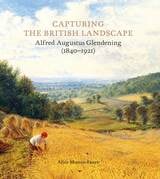
Capturing the British Landscape
Alfred Augustus Glendening (1840–1921)Alice Munro-Faure
Paul Holberton Publishing, 2022
Though critics often reviewed Alfred Augustus Glendening’s exhibitions, very little has been written about the artist himself. Here, new and extensive research removes layers of mystery and misinformation about his life, family, and career, accurately placing him amid the British art world during much of the nineteenth and into the twentieth century. Glendening was a man from humble origins, working full-time as a railway clerk when he managed to make his London exhibition debut at the age of twenty—a feat that would have been almost impossible before the Victorian era ushered in new possibilities of social mobility. Although his paintings show a tranquil and unspoiled landscape, his environment was rapidly being transformed by social, scientific, and industrial developments, while advances in transport, photography, and other technical discoveries undoubtedly influenced him and his fellow painters.
Celebrating his uniquely Victorian story, the book places Glendening within his proper historical context. Running alongside the main text is a timeline outlining significant landmarks, from political and social events to artistic and technical innovations. Thoroughly researched, the narrative explores why and for whom he painted, his artistic training, and his various inspirations. The book uncovers new information about the Victorian art world and embraces such aspects as Royal Academy prejudices, the popularity of Glendening’s work at home and abroad, his use of photography, and the sourcing of his art materials.
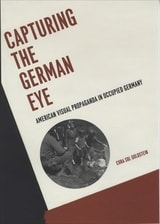
Capturing the German Eye
American Visual Propaganda in Occupied GermanyCora Sol Goldstein
University of Chicago Press, 2009
Shedding new light on the American campaign to democratize Western Germany after World War II, Capturing the German Eye uncovers the importance of cultural policy and visual propaganda to the U.S. occupation.
Cora Sol Goldstein skillfully evokes Germany’s political climate between 1945 and 1949, adding an unexpected dimension to the confrontation between the United States and the USSR. During this period, the American occupiers actively vied with their Soviet counterparts for control of Germany’s visual culture, deploying film, photography, and the fine arts while censoring images that contradicted their political messages. Goldstein reveals how this U.S. cultural policy in Germany was shaped by three major factors: competition with the USSR, fear of alienating German citizens, and American domestic politics. Explaining how the Americans used images to discredit the Nazis and, later, the Communists, she illuminates the instrumental role of visual culture in the struggle to capture German hearts and minds at the advent of the cold war.
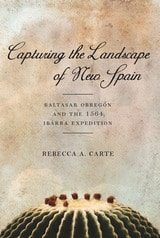
Capturing the Landscape of New Spain
Baltasar Obregón and the 1564 Ibarra ExpeditionRebecca A. Carte
University of Arizona Press, 2015
Although Obregón’s role in the Ibarra expedition was that of soldier-explorer, and despite his lacking an advanced education, he would go on to compose Historia de los descubrimientos de Nueva España twenty years later, expanding his narrative to include the years before and after his own firsthand experiences with Ibarra. Obregón depicts the storied landscape of the northern borderlands with vivid imagery, fusing setting and situation, constructing a new reality of what was, is, and should be, and presenting it as truth.
In Capturing the Landscape of New Spain, Rebecca A. Carte explains how landscape performs a primary role in Obregón’s retelling, emerging at times as protagonist and others as antagonist. Carte argues that Obregón’s textualization offers one of the first renderings of the region through the Occidental cultural lens, offering insight into Spanish cultural perceptions of landscape during a period of important social and political shifts.
By examining mapping and landscape discourse, Carte shows how history and geography, past and present, people and land, come together to fashion the landscape of northern New Spain.
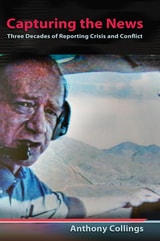
Capturing the News
Three Decades of Reporting Crisis and ConflictAnthony Collings
University of Missouri Press, 2010
Anthony Collings found himself in his share of difficult situations in his thirty-four years as a newsman. Like being captured by AK-47–toting Syrians in Lebanon in 1981 while looking for missiles that threatened a new outbreak of hostilities with Israel, or being “detained” by the KGB in Moscow in 1967 during his first foreign posting for the Associated Press filing stories about Soviet dissidents.
Brimming with entertaining stories about journalism, especially the chaotic early years at CNN when he and his colleagues established the first major cable news network, Collings’s book reveals the dangers and pressures of covering the news and the difficulties of overcoming obstacles to the truth. He recalls smuggling tapes out of Poland after the Communists had imposed martial law; flying dangerously near Libya’s “Line of Death”; interviewing world figures from Brezhnev to Kaddafi and Arafat; and winning awards for covering Iran-Contra and the Oklahoma City bombing. Collings brings fresh insights to the Oliver North affair and examines how the press was suckered in its coverage of the Jessica Lynch prisoner-of-war story in 2003. He voices his concerns regarding oversimplified reporting of complex issues and poses provocative questions about covering terrorism.
In this book, Collings presents an insider’s appraisal of the American news media’s failings and accomplishments. Easy to read, informative, and thoughtful, Capturing the News will enlighten general readers interested in how journalists cover current affairs, while offering newsmen food for thought about the craft and ethics of journalism.

Carbon County, USA
Miners for Democracy in Utah and the WestChristian Wright
University of Utah Press, 2019
Drawing on a variety of primary sources, Wright provides evidence for organized labor’s continuing significance and value while effectively illuminating its mounting frustrations during a relatively recent chapter in the history of Utah and the United States.
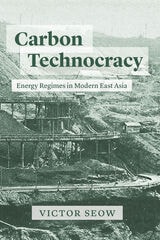
Carbon Technocracy
Energy Regimes in Modern East AsiaVictor Seow
University of Chicago Press, 2021
The coal-mining town of Fushun in China’s Northeast is home to a monstrous open pit. First excavated in the early twentieth century, this pit grew like a widening maw over the ensuing decades, as various Chinese and Japanese states endeavored to unearth Fushun’s purportedly “inexhaustible” carbon resources. Today, the depleted mine that remains is a wondrous and terrifying monument to fantasies of a fossil-fueled future and the technologies mobilized in attempts to turn those developmentalist dreams into reality.
In Carbon Technocracy, Victor Seow uses the remarkable story of the Fushun colliery to chart how the fossil fuel economy emerged in tandem with the rise of the modern technocratic state. Taking coal as an essential feedstock of national wealth and power, Chinese and Japanese bureaucrats, engineers, and industrialists deployed new technologies like open-pit mining and hydraulic stowage in pursuit of intensive energy extraction. But as much as these mine operators idealized the might of fossil fuel–driven machines, their extractive efforts nevertheless relied heavily on the human labor that those devices were expected to displace. Under the carbon energy regime, countless workers here and elsewhere would be subjected to invasive techniques of labor control, ever-escalating output targets, and the dangers of an increasingly exploited earth.
Although Fushun is no longer the coal capital it once was, the pattern of aggressive fossil-fueled development that led to its ascent endures. As we confront a planetary crisis precipitated by our extravagant consumption of carbon, it holds urgent lessons. This is a groundbreaking exploration of how the mutual production of energy and power came to define industrial modernity and the wider world that carbon made.
Carbon Technocracy
Energy Regimes in Modern East AsiaVictor Seow
University of Chicago Press, 2021
Audiobook edition
A forceful reckoning with the relationship between energy and power through the history of what was once East Asia’s largest coal mine.
The coal-mining town of Fushun in China’s Northeast is home to a monstrous open pit. First excavated in the early twentieth century, this pit grew like a widening maw over the ensuing decades, as various Chinese and Japanese states endeavored to unearth Fushun’s purportedly “inexhaustible” carbon resources. Today, the depleted mine that remains is a wondrous and terrifying monument to fantasies of a fossil-fueled future and the technologies mobilized in attempts to turn those developmentalist dreams into reality.
In Carbon Technocracy, Victor Seow uses the remarkable story of the Fushun colliery to chart how the fossil fuel economy emerged in tandem with the rise of the modern technocratic state. Taking coal as an essential feedstock of national wealth and power, Chinese and Japanese bureaucrats, engineers, and industrialists deployed new technologies like open-pit mining and hydraulic stowage in pursuit of intensive energy extraction. But as much as these mine operators idealized the might of fossil fuel–driven machines, their extractive efforts nevertheless relied heavily on the human labor that those devices were expected to displace. Under the carbon energy regime, countless workers here and elsewhere would be subjected to invasive techniques of labor control, ever-escalating output targets, and the dangers of an increasingly exploited earth.
Although Fushun is no longer the coal capital it once was, the pattern of aggressive fossil-fueled development that led to its ascent endures. As we confront a planetary crisis precipitated by our extravagant consumption of carbon, it holds urgent lessons. This is a groundbreaking exploration of how the mutual production of energy and power came to define industrial modernity and the wider world that carbon made.
Carceral Afterlives
Prisons, Detention, and Punishment in Postcolonial UgandaKatherine Bruce-Lockhart
Ohio University Press, 2022
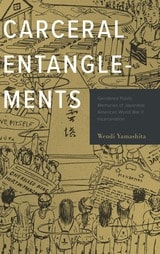
Carceral Entanglements
Gendered Public Memories of Japanese American World War II IncarcerationWendi Yamashita
Temple University Press, 2024
Carceral Entanglements features interviews, archival research, and texts to explore racial violence and patriotic masculinity and explain how Japanese American history and identity are publicly memorialized. Yamashita examines museums, digital archives, pilgrimages, and student-run and performed plays to understand how Japanese Americans occupy a “contradictory location” produced by the state. She also addresses historical erasure, race relations and the struggle for redress and reparations.
Carceral Entanglements is about the interlocking relationship Japanese American incarceration memories have to the prison industrial complex and the settler colonial logics that at times unknowingly sustain it.

Carceral Liberalism
Feminist Voices against State ViolenceEdited by Shreerekha Pillai. Foreword by Demita Frazier
University of Illinois Press, 2023
One of Ms. Magazine's Most Anticipated Books of 2023
Carceral liberalism emerges from the confluence of neoliberalism, carcerality, and patriarchy to construct a powerful ruse disguised as freedom. It waves the feminist flag while keeping most women still at the margins. It speaks of a post-race society while one in three Black men remain incarcerated. It sings the praises of capital while the dispossessed remain mired in debt.
Shreerekha Pillai edits essays on carceral liberalism that continue the trajectory of the Combahee River Collective and the many people inspired by its vision of feminist solidarity and radical liberation. Academics, activists, writers, and a formerly incarcerated social worker look at feminist resurgence and resistance within, at the threshold of, and outside state violence; observe and record direct and indirect forms of carcerality sponsored by the state and shaped by state structures, traditions, and actors; and critique carcerality. Acclaimed poets like Honorée Fanonne Jeffers and Solmaz Sharif amplify the volume’s themes in works that bookend each section.
Cutting-edge yet historically grounded, Carceral Liberalism examines an American ideological creation that advances imperialism, anti-blackness, capitalism, and patriarchy.
Contributors: Maria F. Curtis, Joanna Eleftheriou, Autumn Elizabeth and Zarinah Agnew and D Coulombe, Jeremy Eugene, Demita Frazier, Honorée Fanonne Jeffers, Alka Kurian, Cassandra D. Little, Beth Matusoff Merfish, Francisco Argüelles Paz y Puente, Shreerekha Pillai, Marta Romero-Delgado, Ravi Shankar, Solmaz Sharif, Shailza Sharma, Tria Blu Wakpa and Jennifer Musial, Javier Zamora

Cardinal Memories
Recollections from Baseball's Greatest FansEdited & Intro by Tina Wright
University of Missouri Press, 2000
Heralded by local and national media as perhaps baseball's most devoted followers, the lovers of St. Louis's legendary Redbirds have a special bond with their team. Cardinal Memories: Recollections from Baseball's Greatest Fans celebrates this relationship by focusing on the people in the stands. A collection of essays gathered from around the world, from St. Louis to Hong Kong, Cardinal Memories forms a history of the team the way it is best remembered—through the eyes and hearts of its fans.
By turns funny and poignant, these stories chronicle Cardinal teams and players from the Gashouse Gang to the Swifties, from El Birdos to Whiteyball and Big Mac. The bond between parent and child, the generosity of numerous players, and the power of a single game to unite thousands of people are only a few of the themes that run throughout this remarkable collection. Whether it's the tale of young fans clamoring at a bus stop for a glimpse of Stan the Man, a surprise gift from the "Mad Hungarian," or Mark McGwire's "71st" home run, these vignettes capture the joy, heartbreak, and passion of being a Cardinal fan.
Focusing on the game's emotional appeal, Cardinal Memories is about more than baseball—its evocative tales capture the game's deeper meanings and offer readers an affectionate slice of Americana. Transcending Cardinal country, these touching stories will appeal to baseball fans and sports enthusiasts everywhere.
Cardinal Newman in His Age
His Place in English Theology and LiteratureHarold L. Weatherby
Vanderbilt University Press, 1973

Cardinal Rafael Merry del Val
Philippe Roy-Lysencourt
Catholic University of America Press, 2021
Cardiology
The Evolution of the Science and the ArtBing, Richard J.
Rutgers University Press, 1999

Care and Capitalism in the Twentieth Century
Kirsten Swinth and Sarah Knott, editors
Duke University Press, 2027
Career Moves
Olson, Creeley, Zukofsky, Berrigan, AndLibbie Rifkin
University of Wisconsin Press, 2000
How much did "making it new" have to do with "making it"? For the four "outsider poets" considered in this book—Charles Olson, Robert Creeley, Louis Zukofsky, and Ted Berrigan—the connection was everything. At once a social history of literary ambition in America in the fifties and sixties and a uniquely collective form of literary biography, Career Moves offers an intimate account of the postwar poetry underground.
Making the controversial claim that anti-Establishment poets were at least as "careerist" as their mainstream peers, Libbie Rifkin shows how the nature of these poets’ ambition actually defined postwar avant-garde identity. In doing so, she clarifies the complicated link between the crafting of a literary career and the defining of a literary canon.
Career Patterns in the Ch’ing Dynasty
The Office of the Governor GeneralRaymond W. Chu and William G. Saywell
University of Michigan Press, 1981
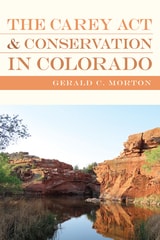
Carey Act and Conservation in Colorado
Gerald C. Morton
University Press of Colorado, 2024
Morton contextualizes the Carey Act’s significance in Colorado through a study of the Two Buttes and Muddy Creek projects in the state’s southeastern corner—tragic examples of the disconnect among developers seeking windfall profits in the face of financial rollercoasters, the challenge of reclaiming remote sagebrush country, and settlers seeking viable livelihoods that eventually led conservationists to reimagine the failures as public wildlife refuges. A collision of values between developers and settlers lay at the center of those wildlife habitat conservation efforts, forcing people to rethink their relationship with the land and ephemeral streams—an awareness that correlated with the advent of modern ecology.
The Carey Act and Conservation in Colorado is the untold story of the manipulation of nature and the reconceived use of land for public wildlife areas on the southern plains of the American West. Offering original research on arid lands policy, federal and state agency oversight, irrigation bond financing, heartbroken settlers’ grievances, individual developers’ motives, and the rise of wildlife conservation, this compelling tale of misfortune will appeal to scholars and general readers interested in conservationist and environmental history in the American West.
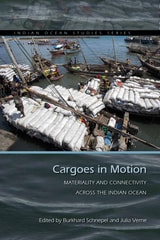
Cargoes in Motion
Materiality and Connectivity across the Indian OceanBurkhard Schnepel
Ohio University Press, 2022
An innovative collection of essays that foregrounds specific cargoes as a means to understand connectivity and mobility across the Indian Ocean world.
Scholars have long appreciated the centrality of trade and commerce in understanding the connectivity and mobility that underpin human experience in the Indian Ocean region. But studies of merchant and commercial activities have paid little attention to the role that cargoes have played in connecting the disparate parts of this vast oceanic world. Drawing from the work of anthropologists, geographers, and historians, Cargoes in Motion tells the story of how material objects have informed and continue to shape processes of exchange across the Indian Ocean.
By following selected cargoes through both space and time, this book makes an important and innovative contribution to Indian Ocean studies. The multidisciplinary approach deepens our understanding of the nature and dynamics of the Indian Ocean world by showing how transoceanic connectivity has been driven not only by economic, social, cultural, and political factors but also by the materiality of the objects themselves.
Essays by:
- Edward A. Alpers
- Fahad Ahmad Bishara
- Eva-Maria Knoll
- Karl-Heinz Kohl
- Lisa Jenny Krieg
- Pedro Machado
- Rupert Neuhöfer
- Mareike Pampus
- Hannah Pilgrim
- Burkhard Schnepel
- Hanne Schönig
- Tansen Sen
- Steven Serels
- Julia Verne
- Kunbing Xiao
Carib-Speaking Indians
Culture, Society, and LanguageEdited by Ellen B. Basso
University of Arizona Press, 1977
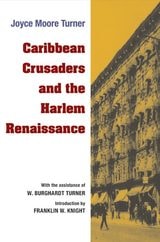
Caribbean Crusaders and the Harlem Renaissance
Joyce Moore Turner
University of Illinois Press, 2005
To explore the roots of the Caribbean emigres' radical ideology and the strategies used to extend agitation from Harlem to national and international platforms, the study draws on the papers and writings of Hermina Huiswoud, Cyril Briggs, the Reverend E. Ethelred Brown, Langston Hughes, and Richard B. Moore, as well as from interviews and biographies of related contemporary figures. It also incorporates census records, FBI files, and hundreds of documents from the recently opened Russian Archive.
Through a focus on Otto Huiswoud, the sole African American charter member of the Communist Party, and his wife, Hermina, Turner exposes the complex developments within the socialist and communist parties on the question of race. The account ranges beyond Harlem to Europe, Africa, and the Soviet Union to reveal the breadth, depth, and nearly global reach of the Afro-Caribbean activists' activities.
Caribbean Inhospitality
The Poetics of Strangers at HomeNatalie Lauren Belisle
Rutgers University Press, 2025

Caribbean Migration to Western Europe and the United States
Essays on Incorporation, Identity, and Citizenshipedited by Margarita Cervantes-Rodriguez, Ramon Grosfoguel and Eric Mielants
Temple University Press, 2009
Caribbean Migration to Western Europe and the United States features a diverse group of scholars from across academic disciplines studying the transnational paths of Caribbean migration. How has the colonial path of the Caribbean influenced migration with regard to power relations, ethnic identities and transnational processes?
Through a series of case studies, the contributors to this volume examine the experiences of Caribbean immigrants to Spain, France, the United Kingdom and the Netherlands as well as the United States. They show the demographic, socioeconomic, political and cultural impact migrants have, as well as their role in the development of transnational social fields. Caribbean Migration to Western Europe and the United States also examines how contrasting discourses of democracy and racism, xenophobia and globalization shape issues pertaining to citizenship and identity.
Contributors: Elizabeth Aranda, Mary Chamberlain, Michel Giraud, Lisa Maya Knauer, John R. Logan, Monique Milia-Marie-Luce, Laura Oso Casas, Livio Sansone, Nina Glick Schiller,Charles (Wenquan) Zhang and the editors.
Caribbean Migrations
The Legacies of ColonialismAnke Birkenmaier
Rutgers University Press, 2021
With mass migration changing the configuration of societies worldwide, we can look to the Caribbean to reflect on the long-standing, entangled relations between countries and areas as uneven in size and influence as the United States, Cuba, Hispaniola, Puerto Rico, and Jamaica. More so than other world regions, the Caribbean has been characterized as an always already colonial region. It has long been a key area for empires warring over influence spheres in the new world, and where migration waves from Africa, Europe, and Asia accompanied every political transformation over the last five centuries. In Caribbean Migrations, an interdisciplinary group of humanities and social science scholars study migration from a long-term perspective, analyzing the Caribbean's "unincorporated subjects" from a legal, historical, and cultural standpoint, and exploring how despite often fractured public spheres, Caribbean intellectuals, artists, filmmakers, and writers have been resourceful at showcasing migration as the hallmark of our modern age.
Caribbean Paleodemography
Population, Culture History, and Sociopolitical Processes in Ancient Puerto RicoL. Antonio Curet
University of Alabama Press, 2005
Unearthing the demographic past of the Caribbean to illuminate its cultural origins and transformations.
According to the European chronicles, at the time of contact, the Greater Antilles were inhabited by the Taino or Arawak Indians, who were organized in hierarchical societies. Since its inception Caribbean archaeology has used population as an important variable in explaining many social, political, and economic processes such as migration, changes in subsistence systems, and the development of institutionalized social stratification.
In Caribbean Paleodemography, L. Antonio Curet argues that population has been used casually by Caribbean archaeologists and proposes more rigorous and promising ways in which demographic factors can be incorporated in our modeling of past human behavior. He analyzes a number of demographic issues in island archaeology at various levels of analysis, including inter- and intra-island migration, carrying capacity, population structures, variables in prehistory, cultural changes, and the relationship with material culture and social development. With this work, Curet brings together the diverse theories on Greater Antilles island populations and the social and political forces governing their growth and migration.

Caribbean Spaces
Escapes from Twilight ZoneCarol Boyce Davies
University of Illinois Press, 2013
Caribbean Women Writers
Essays from the First International ConferenceSelwyn R. Cudjoe
University of Massachusetts Press, 1990
Caribbean and Atlantic Diaspora Dance
Igniting CitizenshipYvonne Daniel
University of Illinois Press, 2011

Caribbeana
An Anthology of English Literature of the West Indies, 1657-1777Edited by Thomas W. Krise
University of Chicago Press, 1999
Caribbeana offers invaluable period commentaries on slavery, colonialism, gender relations, African and European history, natural history, agriculture, and medicine. Highlights include several of the earliest protests against slavery; a superb ode by the Cambridge-educated Afro-Jamaican poet Francis Williams; James Grainger's extended georgic poem, The Sugar Cane; Frances Seymour's poignant tale of the Englishman Inkle who sells his Indian savior-lover Yarico into slavery; and several descriptions of the West Indies during the early years of settlement.

Caribou Herds of Northwest Alaska, 1850-2000
Ernest S. Burch, Jr.
University of Alaska Press, 2012
In his final, major publication Ernest S. “Tiger” Burch Jr. reconstructs the distribution of caribou herds in northwest Alaska using data and information from research conducted over the past several decades as well as sources that predate western science by more than one hundred years. Additionally, he explores human and natural factors that contributed to the demise and recovery of caribou and reindeer populations during this time. Burch provides an exhaustive list of published and unpublished literature and interviews that will intrigue laymen and experts alike. The unflinching assessment of the roles that humans and wolves played in the dynamics of caribou and reindeer herds will undoubtedly strike a nerve. Supplemental essays before and after the unfinished work add context about the author, the project of the book, and the importance of both.
Caribou Hunting in the Upper Great Lakes
Edited by Elizabeth Sonnenburg, Ashley K. Lemke and John M. O'Shea
University of Michigan Press, 2015
Caring by the Hour
Women, Work, and Organizing at Duke Medical CenterKaren Brodkin Sacks
University of Illinois Press, 1988
In addition to an analysis of the dynamics of women's activism, Caring by the Hour provides a comparative study of Duke Medical Center's treatment of both black and white female workers. Sacks links patterns of racial segregation in clerical jobs to the relationship between race, working conditions, and unequal opportunities for black and white women, and to their differing work cultures and patterns of public militance. She also discusses recent changes in service, clerical, and professional work and their effects on white and black women, placing them in the context of national changes in health funding and policies.

Caring for Red
A Daughter's MemoirMindy Fried
Vanderbilt University Press, 2016
Caring for Red is Mindy Fried's moving and colorful account of caring for her ninety-seven-year-old father, Manny--an actor, writer, and labor organizer--in the final year of his life. This memoir chronicles the actions of two sisters as they discover concentric circles of support for their father and attempt to provide him with an experience of "engaged aging" in an assisted living facility.
The story is also that of a daughter of a powerful and outspoken man who took risks throughout his life and whose political beliefs had an enduring impact on his family. (After Manny was called before the House Un-American Activities Committee, he was blacklisted and his family was shunned.)
As an actor, Manny was affiliated with Elia Kazan's Group Theatre and the Federal Theatre Project. He did Shakespeare, Chekhov, and Ibsen, and played everything from the tormented father in Arthur Miller's All My Sons to an infant in a baby carriage in Thornton Wilder's Infancy, from the Rabbi in Fiddler on the Roof to--poignantly for this book--the role of Morrie in Tuesdays with Morrie.
As she devotes herself to caring for her dying father, Mindy grapples anew with the complexity of their relationship. She questions whether she can be there for him and how to assert her own voice as her father's caregiver in his last days.
Caring for the Dead in Ancient Israel
Kerry M. Sonia
SBL Press, 2020
A new reconstruction of cultic practices surrounding death in ancient Israel
In Caring for the Dead in Ancient Israel, Kerry M. Sonia examines the commemoration and care for the dead in ancient Israel against the broader cultural backdrop of West Asia. This cult of dead kin, often referred to as ancestor cult, comprised a range of ritual practices in which the living provided food and drink offerings, constructed commemorative monuments, invoked the names of the dead, and protected their remains. This ritual care negotiated the ongoing relationships between the living and the dead and, in so doing, helped construct social, political, and religious landscapes in relationship to the past. Sonia explores the nature of this cult of dead kin in ancient Israel, focusing on its role within the family and household as well as its relationship to Israel’s national deity and the Jerusalem temple.
Features:
- A reevaluation of whether burial and necromantic rituals were part of the cult of dead kin
- A portrait of the various roles Israelite women played in the cult of dead kin
- A reassessment of biblical writers’ attitudes toward the cult of dead kin
Caring, Curing, Coping
Nurse, Physician, and Patient RelationshipsEdited by Anne H. Bishop and John R. Scudder
University of Alabama Press, 1985
The fundamental mission of medicine is caring, and curing may be only one component of that broad mission
Carnal Rhetoric
Milton’s Iconoclasm and the Poetics of DesireLana Cable
Duke University Press, 1995
Cable traces the development of Milton’s iconoclastic poetics from its roots in the antiprelatical tracts, through the divorce tracts and Areopagitica, to its fullest dramatic representation in Eikonoklastes and Samson Agonistes. Arguing that, like every creative act, metaphor is by nature a radical and self-transgressing agent of change, she explores the site where metaphoric language and imaginative desire merge. Examining the demands Milton places on metaphor, particularly his emphasis on language as a vehicle for mortal redemption, Cable demonstrates the ways in which metaphor acts for him as that creative and radical agent of change. In the process, she reveals Milton’s engagement, at the deepest levels of linguistic creativity, with the early modern commitment to an imaginative and historic remaking of the world.
An insightful and synthetic book, Carnal Rhetoric will appeal to scholars of English literature, Milton, and the Renaissance, as well as to those with an interest in the theory of affective stylistics as it pertains to reader-response criticism, semantics, epistemology, and the philosophy and psychology of language.
Carnegie Maya II
Carnegie Institution of Washington <i>Current Reports</i>, 1952-1957John M. Weeks
University Press of Colorado, 2009
The final CIW field project took place in July of 1950, in the Maya region of Mayapán, where extensive and detailed investigations were conducted for five years. To ensure the rapid dissemination of the results of the Mayapán Project, two series of papers described the work being undertaken and reported the preliminary findings. These were volumes 50 through 57 of the Year Books and numbers 1 through 41 of the Current Reports. A total of forty one Current Reports were published by the Carnegie Institution of Washington from 1952 to 1957. All forty one of these are reproduced in The Carnegie Maya II, accompanied by an introduction by John Weeks, a forward by Marilyn Masson, and a summary table of data compiled by Marilyn Masson regarding artifacts unearthed at Mayapán.
Purchase of the print book comes with free individual access to the Adobe Digital Editions Carnegie Maya Series Ebook, which contains the complete set of The Carnegie Maya, The Carnegie Maya II, The Carnegie Maya III and The Carnegie Maya IV, thus making hundreds of documents from the Carnegie Institution's Maya program available in one source.
Carnegie Maya
The Carnegie Institution of Washington Maya Research Program, 1913-1957John M. Weeks
University Press of Colorado, 2006
The Carnegie Institution of Washington sponsored archaeological, ethnographic, linguistic, and historical investigations in the Maya region of southern Mexico and northern Central America between 1914 and 1957. The institution led the field during that time, with financial support and other resources no university could match.
Dispersed and out-of-print for fifty years, more than 350 reports from the Maya program are now available in this single volume. Reports from the institution's annual Year Books and other materials collected here tell the history of Maya research through firsthand accounts by participating scholars and reveal the progression of Mesoamerican archaeology from avocational interest to scholarly pursuit. Thematic and regional organization of the reports permits readers to monitor development of research concepts. Appendixes list all Carnegie Maya publications, Carnegie personnel, and the archival holdings of Carnegie-derived material at Harvard University, Tulane University, and the University of Chicago.
Purchase of the print book comes with free individual access to the Adobe Digital Editions Carnegie Maya Series Ebook, which contains the complete set of The Carnegie Maya, The Carnegie Maya II, The Carnegie Maya III and The Carnegie Maya IV, thus making hundreds of documents from the Carnegie Institution's Maya program available in one source.
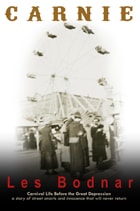
Carnie
Les Bodnar
St. Augustine's Press, 2010
Les Bodnar is a respected orthopedic surgeon and former physician for the Notre Dame football team. His memoir, however, is from an era long before that fame, when he was 12 and 13, and a part of his father’s carnival. The romance of carnival life, of escaping the 9-5 doldrums and somehow recapturing yourself, is there, but so too the hard work and trials, the difficulty of putting on a show day after day and week after week for people who both love the show and are apprehensive of the people who put it on.
The year is 1928, and the Boom is booming in our great cities, but life in the small towns in the Indiana, Illinois, and Wisconsin remains tenuous. Bodnar writes about putting the show together, handling the sometimes-unpredictable people who perform and run the games, holding on to the core that made the carnival that expectant joy for kids everywhere and of all ages. It’s a world filled with shills and cons, freak shows (some of them real) and rides galore, trust given to unlikely characters and the security of family, above all family, despite all the absences and hardships.
In the background the coming end of the Boom whispers, and soon the country will plunge into what will be called in America “the Great Depression.” It is not the innocence experienced before the Great War. Childhood had witnessed something too unspeakable and horrific to write about then; it demanded poetry. We hunkered down within our own, and did our best to forget, and only occasionally, as when Bodnar witnessed a Ku Klux Klan rally, did the ugliness that can be the world intrude on our sensibilities, and the reader finds himself or herself sharing this street-smart innocence of a never-to-return era.
Complete with period photographs, a lexicon, a bibliography, and a look at the way carnivals operate to this day, Carnie will inform, charm, and perhaps edify.
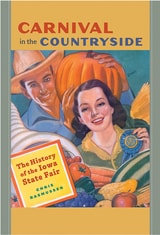
Carnival in the Countryside
The History of the Iowa State FairChris Rasmussen
University of Iowa Press, 2015
This tension between entertainment and agriculture goes back all the way to the fair’s founding in the mid-1800s, as historian Chris Rasmussen shows in this thought-provoking history. The fair’s founders had lofty aims: they sought to improve agriculture and foster a distinctively democratic American civilization. But from the start these noble intentions jostled up against people’s desire to have fun and make money, honestly or otherwise—not least because the fair had to pay for itself. In their effort to uplift rural life without going broke, the organizers of the Iowa State Fair debated the respectability of horse racing and gambling and struggled to find qualified livestock judges. Worried about the economic forces undermining rural families, they ran competitions to select the best babies and the “ideal” rural girl and boy while luring spectators with massive panoramas of earthquakes and fires, not to mention staged trainwrecks. In short, the Iowa State Fair has as much to tell us about human nature and American history as it does about growing corn.

Carolingian Chronicles
Royal Frankish Annals and Nithard's HistoriesBernhard Walter Scholz
University of Michigan Press, 1970