Results by title
8812 books match the query 'Political Science' and 698 start with c
Choosing an Identity
A General Model of Preference and Belief FormationSun-Ki Chai
University of Michigan Press, 2001
Choosing to Lead
Understanding Congressional Foreign Policy EntrepreneursRalph G. Carter and James M. Scott
Duke University Press, 2009
Carter and Scott combine extensive quantitative analysis, interviews with members of Congress and their staff, and case studies of key foreign policy entrepreneurs, including Frank Church, William Fulbright, Jesse Helms, Edward Kennedy, Pat McCarran, and Curt Weldon. Drawing on their empirical data, the authors identify the key variables in foreign policy entrepreneurship, including membership in the Senate or House, seniority and committee assignments, majority or minority party status, choice of foreign policy issues, and the means used to influence policy. By illuminating the roles and impact of individual members of Congress, Carter and Scott contribute to a more nuanced understanding of the broader U.S. foreign policy-making process.
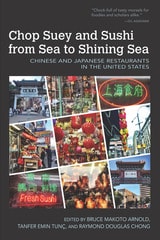
Chop Suey and Sushi from Sea to Shining Sea
Chinese and Japanese Restaurants in the United StatesBruce Makoto Arnold
University of Arkansas Press, 2018
The essays in Chop Suey and Sushi from Sea to Shining Sea fill gaps in the existing food studies by revealing and contextualizing the hidden, local histories of Chinese and Japanese restaurants in the United States.
The writer of these essays show how the taste and presentation of Chinese and Japanese dishes have evolved in sweat and hardship over generations of immigrants who became restaurant owners, chefs, and laborers in the small towns and large cities of America. These vivid, detailed, and sometimes emotional portrayals reveal the survival strategies deployed in Asian restaurant kitchens over the past 150 years and the impact these restaurants have had on the culture, politics, and foodways of the United States.
Some of these authors are family members of restaurant owners or chefs, writing with a passion and richness that can only come from personal investment, while others are academic writers who have painstakingly mined decades of archival data to reconstruct the past. Still others offer a fresh look at the amazing continuity and domination of the “evil Chinaman” stereotype in the “foreign” world of American Chinatown restaurants. The essays include insights from a variety of disciplines, including history, sociology, anthropology, ethnography, economics, phenomenology, journalism, food studies, and film and literary criticism.
Chop Suey and Sushi from Sea to Shining Sea not only complements the existing scholarship and exposes the work that still needs to be done in this field, but also underscores the unique and innovative approaches that can be taken in the field of American food studies.
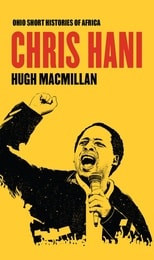
Chris Hani
Hugh Macmillan
Ohio University Press, 2021
Christian America and the Kingdom of God
Richard T. Hughes
University of Illinois Press, 2012
Christian America and the Kingdom of God
White Christian Nationalism from the Puritans through January 6, 2021Richard T. Hughes and Christina Littlefield
University of Illinois Press, 2025
A timely new edition of the acclaimed work, Christian America and the Kingdom of God spotlights how the centuries-long pursuit of a Christian America has bred an aggressive white Christian nationalism that twists faith, unleashes unchristian behavior, and threatens the nation.
Christian Cosmopolitanism
Faith Communities Talk ImmigrationFelipe Amin Filomeno
Temple University Press, 2024
Christian Cosmopolitanism shows that mutual understanding can result when people share their personal stories, feelings, and thoughts about immigration. They reflect and deliberate on collaborative action to advance common interests and shared values, which can unleash the cosmopolitan potential of the Christian community.
Including practical tools for church leaders, Christian Cosmopolitanism promotes dialogue as a cultural practice that can help diverse communities overcome segregation and become socially cohesive.
Christianity, Social Change, and Globalization in the Americas
Peterson, Anna L
Rutgers University Press, 2001
Organized around three central themes-family, youth, and community; democratization, citizenship, and political participation; and immigration and transnationalism-the book argues that, at the local level, religion helps people, especially women and youths, solidify their identities and confront the challenges of the modern world. Religious communities are seen as both peaceful venues for people to articulate their needs, and forums for building participatory democracies in the Americas. Finally, the contributors examine how religion enfranchises poor women, youths, and people displaced by war or economic change and, at the same time, drives social movements that seek to strengthen family and community bonds disrupted by migration and political violence.
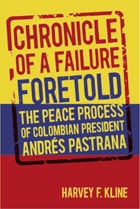
Chronicle of a Failure Foretold
The Peace Process of Colombian President Andrés PastranaHarvey Kline
University of Alabama Press, 2007
Charts the progress and failure of Colombian President Andrés Pastrana’s efforts to bring an end to sixty years of civil war.
The civil war in Colombia has waxed and waned for almost sixty years with shifting goals, programs, and tactics among the contending parties and with bursts of appalling violence punctuated by uneasy truces, cease-fires, and attempts at reconciliation. Varieties of Marxism, the economics of narco-trafficking, peasant land hunger, poverty, and oppression mix together in a toxic stew that has claimed uncounted lives of (most often) peasants, conscript soldiers, and people who just got in the way.
Hope for resolution of this conflict is usually confined to dreamers and millenialists of various persuasions, but occasionally an attempt is made at a breakthrough in the military stalemate between the government and the Marxist groups. One of the most promising such attempts was made by new Colombian President Andrés Pastrana at a time when the main rebel groups seemed receptive to serious dialogue. This book is an account of that effort at peace, accompanied at the outset by domestic and international support and hope, and yet doomed like so many others to eventual failure.
Through interviews with many of the actors in this drama, as well as an understanding of the various interest groups and economic forces at work in Colombia, Dr. Kline charts the progress and ultimate failure of this effort, and thereby hopes to increase understanding of the causes of its lack of success. The importance of the resolution of the conflict to the region and to ordinary citizens of this troubled land cannot be
overstated.
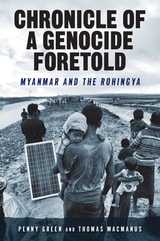
Chronicle of a Genocide Foretold
Myanmar and the RohingyaPenny Green
Rutgers University Press, 2027
Chronicle of a Genocide Foretold is a powerful account of one of the most devastating human crises of the 21st century. Drawing on firsthand research conducted in Burma (Myanmar) and neighboring countries, the book uncovers how the Rohingya Muslims have been systematically isolated, impoverished, and targeted in a state-led genocidal campaign. Through more than 150 interviews with survivors, local officials, religious leaders, and international actors, the authors reveal how discrimination, mass displacement, and organized brutality have created conditions that meet the legal, criminological, and moral definition of genocide. The book also challenges the silence and complicity of the international community. Accessible and grounded in rigorous research, this book speaks to scholars, activists, policymakers, and anyone concerned with justice, human rights, and the global failure to prevent genocide.
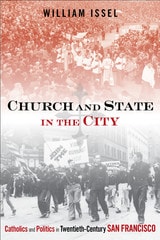
Church and State in the City
Catholics and Politics in Twentieth-Century San FranciscoWilliam Issel
Temple University Press, 2012
Church and State in the City provides the first comprehensive analysis of the city’s long debate about the public interest. Historian William Issel explores the complex ways that the San Francisco Catholic Church—and its lay men and women—developed relationships with the local businesses, unions, other community groups, and city government to shape debates about how to define and implement the common good. Issel’s deeply researched narrative also sheds new light on the city’s socialists, including Communist Party activists—the most important transnational challengers of both capitalism and Catholicism during the twentieth century.
Moreover, Church and State in the City is revisionist in challenging the notion that the history of urban politics and policy can best be understood as the unfolding of a progressive, secular modernization of urban political culture. Issel shows how tussles over the public interest in San Francisco were both distinctive to the city and shaped by its American character.
In the series Urban Life, Landscape, and Policy, edited by Zane L. Miller, David Stradling, and Larry Bennett
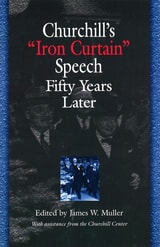
Churchill's "Iron Curtain" Speech Fifty Years Later
Edited & Intro by James W. Muller
University of Missouri Press, 1999
Winston Churchill's visit to Fulton, Missouri, on March 5, 1946, marked the first public recognition of the cold war that was to follow World War II. Churchill delivered his most famous speech, "The Sinews of Peace," which became best known by the phrase he used to describe the cold-war division of Europe, the "iron curtain."
In the United States and Britain, wartime alliances had fostered favorable feelings toward the Soviet Union. By 1946 democratic citizens on both sides of the Atlantic had begun to consider communist Russia a friend. In his speech at Fulton, Churchill exhibited breathtaking flexibility and a clear recognition of the main threat as he reminded the public that true friendship must be reserved for countries sharing a common love of liberty. The "Iron Curtain" speech defined postwar relations with the Soviet Union for citizens of Western democracies. Although it initially provoked intense controversy in the United States and Britain, criticism soon gave way to wide public agreement to oppose Soviet imperialism.
Opening with the full text of the address Churchill delivered in Fulton and concluding with Margaret Thatcher's fiftieth-anniversary address surveying the challenges facing Western democracies in this post-cold war climate, the book brings together essays that reflect on the past fifty years, recognizing Churchill's speech as a carefully conceived herald of the cold war for the Western democracies. These powerful essays offer a fresh appreciation of the speech's political, historical, diplomatic, and rhetorical significance.
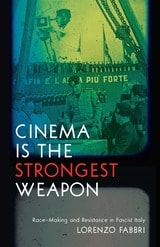
Cinema is the Strongest Weapon
Race-Making and Resistance in Fascist ItalyLorenzo Fabbri
University of Minnesota Press, 2023
A deep dive into Italian cinema under Mussolini’s regime and the filmmakers who used it as a means of antifascist resistance
Looking at Italy’s national film industry under the rule of Benito Mussolini and in the era that followed, Cinema Is the Strongest Weapon examines how cinema was harnessed as a political tool by both the reigning fascist regime and those who sought to resist it. Covering a range of canonical works alongside many of their neglected contemporaries, this book explores film’s mutable relationship to the apparatuses of state power and racial capitalism.
Exploiting realism’s aesthetic, experiential, and affective affordances, Mussolini’s biopolitical project employed cinema to advance an idealized vision of life under fascism and cultivate the basis for a homogenous racial identity. In this book, Lorenzo Fabbri crucially underscores realism’s susceptibility to manipulation from diametrically opposed political perspectives, highlighting the queer, Communist, Jewish, and feminist filmmakers who subverted Mussolini’s notion that “cinema is the regime’s strongest weapon” by developing film narratives and film forms that challenged the prevailing ethno-nationalist ideology.
Focusing on an understudied era of film history and Italian cultural production, Fabbri issues an important recontextualization of Italy’s celebrated neorealist movement and the structural ties it shares with its predecessor. Drawing incisive parallels to contemporary debates around race, whiteness, authoritarianism, and politics, he presents an urgent examination into the broader impact of visual media on culture and society.
Retail e-book files for this title are screen-reader friendly with images accompanied by short alt text and/or extended descriptions.
Cinema under National Reconstruction
State Censorship and South Korea’s Cold War Film CultureHye Seung Chung
Rutgers University Press, 2025
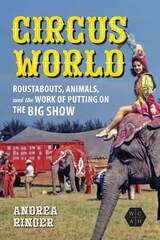
Circus World
Roustabouts, Animals, and the Work of Putting on the Big ShowAndrea Ringer
University of Illinois Press, 2024
Andrea Ringer examines the industry-wide circus world--the collection of shows that traveled by rail, wagon, steamboat, and car--and the traditional and nontraditional laborers who created it. Performers and their onstage labor played an integral part in the popularity of the circus. But behind the scenes, other laborers performed the endless menial tasks that kept the show on the road. Circus operators regulated employee behavior both inside and outside the tent even as the employees themselves blurred the line between leisure and labor until, in all parts of the show, the workers could not escape their work.
Illuminating and vivid, Circus World delves into the gender, class, and even species concerns within an extinct way of life.
Citadels of Sin
Vice Districts and the Birth of Chicago Organized CrimeRichard C. Lindberg, with a foreword by Dominic A. Pacyga
Southern Illinois University Press, 2026
Revealing Chicago’s underworld before Al Capone
Vice in Chicago did not begin—or end—with Al Capone. In this vividly written narrative, historian Richard C. Lindberg peels back the mythology of Prohibition-era gangsters to reveal a more entrenched, intricate and disturbing system of vice and corruption that took shape decades earlier. Long before the rise of organized crime syndicates, Chicago’s political leaders in league with the criminal classes deliberately created and managed politically-protected segregated vice districts known in Chicago and in other cities as “Levees,” that institutionalized prostitution, graft, and forced sex work in the name of preserving civic order by isolating the vice trade from the citizenry.
Set against the backdrop of the Gilded Age and Progressive Era, Citadels of Sin situates Chicago within a nationwide experiment in regulating prostitution. Reformers, clergy, and municipal officials across the United States believed that confining vice to designated districts would protect respectable neighborhoods and commercial centers. More than fifty such districts emerged nationwide. Instead of curbing crime, however, the Levees became engines of corruption, enriching politicians, police, lawyers, and judges while normalizing exploitation and violence. Lindberg argues that these systems laid the groundwork for modern global human trafficking.
Chicago, with its size and political complexity, supported three major Levees. On the West Side, poverty and endemic corruption devastated local communities. On the North Side, one vice district survived longest, eventually transforming into the fashionable Rush Street nightclub scene. The South Side levee proved most consequential of all, evolving into the organized crime network known as “the Outfit,” whose influence continues to endure.
Lindberg brings the levee era to life through sharp portraits and damning accountability. He exposes how media sensationalism glamorized vice while masking its human cost, and he holds powerful figures—most notably Mayors Carter Harrison Sr. and Jr.—responsible for enabling a system built on bribery, “white slavery,” and coerced sex work. The levees were not accidental byproducts of urban growth; they were carefully managed political machines.
As World War I priorities and urban redevelopment finally dismantled formal vice districts, their activities did not disappear. Instead, they dispersed into neighborhoods, suburbs, and new forms.
By walking readers through the former vice districts as they exist today, Lindberg forges a powerful connection between past and present. In tracing the rise and fall of these districts, he reveals how efforts to impose moral order produced the very exploitation they claimed to prevent—proof that reform, when compromised by politics and greed, can collapse into catastrophe.
Cities and the Health of the Public
Nicholas Freudenberg
Vanderbilt University Press, 2006
This book assesses the primary determinants of well-being in cities, including the social and physical environments, diet, and health care and social services. The book includes chapters on the history of public health in cities, the impact of urban sprawl and urban renewal on health, and the challenges facing cities in the developing world. It also examines conditions such as infectious diseases, violence and disasters, and mental illness.
Cities in the Anthropocene
New Ecology and Urban PoliticsIhnji Jon
Pluto Press, 2021
Climate change is real, and extreme weather events are its physical manifestations. These extreme events affect how we live and work in cities, and subsequently the way we design, plan, and govern them. Taking action ‘for the environment’ is not only a moral imperative; instead, it is activated by our everyday experience in the city.
Based on the author’s site visits and interviews in Darwin (Australia), Tulsa (Oklahoma), Cleveland (Ohio), and Cape Town (South Africa), this book tells the story of how cities can lead a transformative pro-environment politics.
National governments often fail to make binding agreements that bring about radical actions for the environment. This book shows how cities, as local sites of mobilizing a collective, political agenda, can be frontiers for activating the kind of environmental politics that appreciates the role of ‘nature’ in the everyday functioning of our urban life.
Cities of Farmers
Urban Agricultural Practices and ProcessesJulie C. Dawson and Alfonso Morales
University of Iowa Press, 2016
Implementing urban agriculture often requires change in the physical, political, and social-organizational landscape. Beginning with a look at how and why city people grew their own food in the early twentieth century, the contributors to Cities of Farmers examine the role of local and regional regulations and politics, especially the creation of food policy councils, in making cities into fertile ground for farming. The authors describe how food is produced and distributed in cities via institutions as diverse as commercial farms, community gardens, farmers’ markets, and regional food hubs. Growing food in vacant lots and on rooftops affects labor, capital investment, and human capital formation, and as a result urban agriculture intersects with land values and efforts to build affordable housing. It also can contribute to cultural renewal and improved health.
This book enables readers to understand and contribute to their local food system, whether they are raising vegetables in a community garden, setting up a farmers’ market, or formulating regulations for farming and composting within city limits.
CONTRIBUTORS
Catherine Brinkley, Benjamin W. Chrisinger, Nevin Cohen, Michèle Companion, Lindsey Day-Farnsworth, Janine de la Salle, Luke Drake, Sheila Golden, Randel D. Hanson, Megan Horst, Nurgul Fitzgerald, Becca B. R. Jablonski, Laura Lawson, Kara Martin, Nathan McClintock, Alfonso Morales, Jayson Otto, Anne Pfeiffer, Anne Roubal, Todd M. Schmit, Erin Silva, Michael Simpson, Lauren Suerth, Dory Thrasher, Katinka Wijsman
Citizen Brown
Race, Democracy, and Inequality in the St. Louis SuburbsColin Gordon
University of Chicago Press, 2019
Citizen Brown uncovers half a century of private practices and public policies that resulted in bitter inequality and sustained segregation in Ferguson and beyond. Gordon shows how municipal and school district boundaries were pointedly drawn to contain or exclude African Americans and how local policies and services—especially policing, education, and urban renewal—were weaponized to maintain civic separation. He also makes it clear that the outcry that arose in Ferguson was no impulsive outburst but rather an explosion of pent-up rage against long-standing systems of segregation and inequality—of which a police force that viewed citizens not as subjects to serve and protect but as sources of revenue was only the most immediate example. Worse, Citizen Brown illustrates the fact that though the greater St. Louis area provides some extraordinarily clear examples of fraught racial dynamics, in this it is hardly alone among American cities and regions.
Interactive maps and other companion resources to Citizen Brown are available at the book website.
Citizen Lawmakers
David D. Schmidt
Temple University Press, 1991
Citizen Lobbyists
Local Efforts to Influence Public PolicyBrian Adams
Temple University Press, 2006
Citizen Power
A Citizen Leadership Manual Introducing the Art of No-Blame Problem SolvingHarry S. Pozycki
Rutgers University Press, 2020
Citizen Power
A Citizen Leadership Manual, New Jersey EditionHarry S. Pozycki
Rutgers University Press, 2021
Citizen Power portal (https://thecitizenscampaign.org/register/).
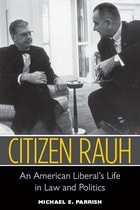
Citizen Rauh
An American Liberal's Life in Law and PoliticsMichael E. Parrish
University of Michigan Press, 2011
"Joe Rauh was the type of lawyer who comes along maybe once in a generation---talented, politically astute, effective, and stubbornly devoted to principles, the type of person who not only could but did make a difference. He deserves a biography that explores not only his persona, but the America in which he lived and worked, and how he made a difference to so many people. Michael Parrish has given us just such a book, an exceedingly fine, well-written story that will make clear to another generation not only who Joe Rauh was, but why we as a nation will always need someone like him."
---Melvin I. Urofsky, Professor of Law and Public Policy, Virginia Commonwealth University
"Michael Parrish has captured the life of this great civil libertarian in splendid fashion. His biography of this energetic New Deal liberal weaves effortlessly between public and private, friend and foe, victory and defeat. With Parrish as a sure guide, Citizen Rauh transports the reader through an American history that begins with Sacco and Vanzetti and ends as he battles CIA skullduggery in the 1980s. This biography should be on your shelf and in your heart."
---Nelson Lichtenstein, MacArthur Foundation Professor of History and Director of the Center for the Study of Work, Labor, and Democracy, University of California, Santa Barbara
"Michael Parrish has fashioned a biography filled with Rauh's spirit, achievements, his losses, and above all, the importance of his presence. This is a wonderful account of a giant of late 20th century political and legal affairs."
---Stanley Kutler, E. Gordon Fox Professor Emeritus of American Institutions, History, and Law, University of Wisconsin, Madison
Citizen Rauh tells the story of American lawyer Joseph L. Rauh Jr., who kept alive the ideals of New Deal liberalism and broadened those ideals to include a commitment to civil rights. Rauh's clients included Arthur Miller, Lillian Hellman, A. Philip Randolph, and the Mississippi Freedom Democratic Party. With good reason Freedom Rider John Lewis once called him "the blackest white man I ever knew."
No lawyer in the post-1945 era did more to protect the economic interests of working-class Americans than Rauh, who fought for the unions as they struggled for legitimacy and against them when they betrayed their own members. No lawyer stood more courageously against repressive anticommunism during the 1950s or advanced the cause of racial justice more vigorously in the 1960s and 1970s. No lawyer did more to defend the constitutional vision of the Warren Court and resist the efforts of Richard Nixon and Ronald Reagan to undo its legacy.
Throughout his life, Rauh continued to articulate a progressive vision of law and politics, ever confident that his brand of liberalism would become vital once again when the cycle of American politics took another turn.
Michael E. Parrish is Distinguished Professor of History at the University of California, San Diego, where he has taught for forty years. A specialist in the legal and constitutional history of the United States, he has also taught at Nanjing University in the People's Republic of China, the University of Edinburgh, the University of Glasgow, and the University of Helsinki, where he was the Fulbright Bicentennial Professor of American Studies.
Parrish is the author of five other books: Securities Regulation and the New Deal; Felix Frankfurter and His Times; Anxious Decades: America in Prosperity and Depression; The Hughes Court: Justices, Rulings, and Legacy; and The Supreme Court and Capital Punishment: Judging Death. His articles have appeared in the American Historical Review, the Historian, Diplomatic History, the Journal of the Supreme Court Historical Society, and the Yale Law Journal.
Jacket design by Paula Newcomb
Jacket photograph: Joseph L. Rauh Jr. with President Lyndon B. Johnson. Courtesy of the Estate of Olie W. Rauh.
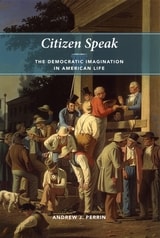
Citizen Speak
The Democratic Imagination in American LifeAndrew J. Perrin
University of Chicago Press, 2006
When we think about what constitutes being a good citizen, routine activities like voting, letter writing, and paying attention to the news spring to mind. But in Citizen Speak, Andrew J. Perrin argues that these activities are only a small part of democratic citizenship—a standard of citizenship that requires creative thinking, talking, and acting.
For Citizen Speak, Perrin met with labor, church, business, and sports organizations and proposed to them four fictive scenarios: what if your senator is involved in a scandal, or your police department is engaged in racial profiling, or a local factory violates pollution laws, or your nearby airport is slated for expansion? The conversations these challenges inspire, Perrin shows, require imagination. And what people can imagine doing in response to those scenarios depends on what’s possible, what’s important, what’s right, and what’s feasible. By talking with one another, an engaged citizenry draws from a repertoire of personal and institutional resources to understand and reimagine responses to situations as they arise. Building on such political discussions, Citizen Speak shows how a rich culture of association and democratic discourse provides the infrastructure for a healthy democracy.
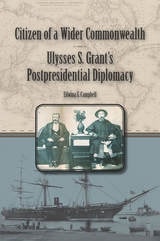
Citizen of a Wider Commonwealth
Ulysses S. Grant's Postpresidential DiplomacyEdwina S. Campbell
Southern Illinois University Press, 2012
Traveling commercially and on U.S. Navy warships, Grant visited ports of call throughout the British Empire, Europe, and Asia, including Britain, France, Egypt, the Ottoman Empire, Greece, Italy, the Netherlands, Germany, Scandinavia, Russia, Spain, Portugal, Gibraltar, Ireland, India, Singapore, Hong Kong, China, and Japan. Along the way, he met with monarchs, ministers, and average citizens, creating the model for the summitry and public diplomacy practiced by future American presidents and articulating concepts of national self-determination, international organization, and the peaceful settlement of international disputes decades before Elihu Root’s advocacy of binding international arbitration and Woodrow Wilson’s proposal for the League of Nations.
Campbell reveals Grant to be a skillful envoy who brought to his travels the deep interest in foreign policy issues he had shown during his administration. Grant confirmed the United States’ commitment to Anglo-American cooperation, demonstrated America’s interest in the territorial integrity of China, affirmed American faith in universal (male) suffrage as the basis for governmental legitimacy, and asserted the importance of an international order based on equality and justice for all states and their citizens. Grant’s efforts shaped not only John Hay’s Open Door policy in 1899–1900 but also the broader American approach to twentieth-century international relations. Throughout the trip, Julia Grant proved essential to the success of her husband’s mission, and Campbell tells how the couple impressed people around the world with an enduring image of an American president and first lady.
By illuminating the significance of Grant’s often overlooked postpresidential travels, Citizen of a Wider Commonwealth establishes the eighteenth president as a key diplomat whose work strongly influenced the direction of future U.S. foreign policy and contributes substantially to the study of American international relations.
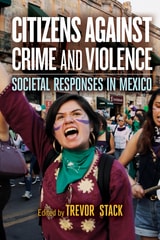
Citizens against Crime and Violence
Societal Responses in MexicoTrevor Stack
Rutgers University Press, 2022
Citizens and Groups in Contemporary China
Victor C. Falkenheim, Editor
University of Michigan Press, 1987
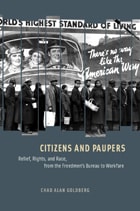
Citizens and Paupers
Relief, Rights, and Race, from the Freedmen's Bureau to WorkfareChad Alan Goldberg
University of Chicago Press, 2008
Citizens and Paupers explores this contentious history by analyzing and comparing three major programs: the Freedmen’s Bureau, the Works Progress Administration, and the present-day system of workfare that arose in the 1990s. Each of these overhauls of the welfare state created new groups of clients, new policies for aiding them, and new disputes over citizenship—conflicts that were entangled in racial politics and of urgent concern for social activists.
This combustible mix of racial tension and social reform continues to influence how we think about welfare, and Citizens and Paupers is an invaluable analysis of the roots of the debate.
Citizens in the Present
Youth Civic Engagement in the AmericasMaria de los Angeles Torres, Irene Rizzini, and Norma Del Rio
University of Illinois Press, 2013
Citizens of Everywhere
Searching for Identity in the Age of BrexitPeter Gumbel
Haus Publishing, 2020
Drawing on one family’s migration stories, Citizens of Everywhere explores the nature of belonging amid cycles of pluralism and nationalism. In an increasingly global world, nativist and diasporic impulses pull many people in contradictory directions that can be difficult to even understand. In Citizens of Everywhere, Gumbel grapples with this complexity through his own family history, revealing the personal costs of Britain’s recent isolationist retreat. Along the way, he laments the decline of British pluralism at the worst possible moment—as it rejects the European project and engages in an ill-fated struggle against an ever more interconnected world.
Citizens of Memory
Affect, Representation, and Human Rights in Postdictatorship ArgentinaSilvia R. Tandeciarz
Bucknell University Press, 2026
Published by Bucknell University Press. Distributed worldwide by Rutgers University Press.
Citizens of Photography
The Camera and the Political ImaginationEdited by Christopher Pinney with the PhotoDemos Collective (Naluwembe Binaisa, Vindhya Buthpitiya, Konstantinos Kalantzis, Christopher Pinney, Ileana L. Selejan, and Sokphea Young)
Duke University Press, 2023
Citizens on Stage
Comedy and Political Culture in the Athenian DemocracyJames F. McGlew
University of Michigan Press, 2002
Old Comedy gives Citizens on Stage its chronological backbone; the beginning and end of Aristophanes' career roughly define the period on which the book concentrates. Reading and interpreting comedy provides a model for reading Athenian politics itself. McGlew argues that the plays of Old Comedy, with their fantastic stories of common individuals triumphing over the various social and political dilemmas of democratic Athens, interpreted the relationship of private life and political activity for an Athenian audience, dramatically reaffirming the ties between citizens' personal desires and the will of the collective body. In particular, McGlew argues that comedy transforms private fantasies of personal power and pleasures--what seem most to keep the individual audience members apart--into a collective possession and touchstone of democratic citizen identity.
Citizens on Stage focuses primarily on the democratic citizen and on contemporary representations of him as a decision maker. McGlew shows that the democratic individual, sometimes idealized, sometimes despised, was a dominant concern of the literature and politics of late fifth- and early fourth-century Athens. This book will appeal to students of ancient theater and drama, Athenian politics and democracy, and the relationships between theater and politics. Social historians will also find it an invaluable resource.
James F. McGlew is Assistant Professor of Foreign Languages and Literatures and Classical Studies, Iowa State University.
Citizens, Experts, and the Environment
The Politics of Local KnowledgeFrank Fischer
Duke University Press, 2000
Where information ideologues see the modern increase in information as capable of making everyone smarter, others see the emergence of a society divided between those with and those without knowledge. Suggesting realistic strategies to bridge this divide, Fischer calls for meaningful nonexpert involvement in policymaking and shows how the deliberations of ordinary citizens can help solve complex social and environmental problems by contributing local contextual knowledge to the professionals’ expertise. While incorporating theoretical critiques of positivism and methodology, he also offers hard evidence to demonstrate that the ordinary citizen is capable of a great deal more participation than is generally recognized. Popular epidemiology in the United States, the Danish consensus conference, and participatory resource mapping in India serve as examples of the type of inquiry he proposes, showing how the local knowledge of citizens is invaluable to policy formation. In his conclusion Fischer examines the implications of the approach for participatory democracy and the democratization of contemporary deliberative structures.
This study will interest political scientists, public policy practitioners, sociologists, scientists, environmentalists, political activists, urban planners, and public administrators along with those interested in understanding the relationship between democracy and science in a modern technological society.
Citizenship and Governance in a Changing City
Somerville, MASusan Ostrander
Temple University Press, 2013
In Citizenship and Governance in a Changing City, Susan Ostrander shows how beneath current high levels of engagement by Somerville residents lies a struggle about who should be the city's elected leaders and how they should conduct the city's affairs. It is a struggle waged between diverse residents--relatively new immigrants and a new middle class-trying to gain a foothold in democratic participation, and the city's political "old guard."
Citizenship and Governance in a Changing City informs current debates about the place of immigrants in civic and political life, and the role of voluntary associations in local politics and government. In the process, Ostrander provides useful lessons for many midsize urban communities.
Citizenship and Social Class
Tom Bottomore and T. H. Marshall
Pluto Press, 1992
Citizenship in Cold War America
The National Security State and the Possibilities of DissentAndrea Friedman
University of Massachusetts Press, 2014
The stories told here capture a wide-ranging debate about the workings of the national security state and the meaning of American citizenship. Some of the participants in this debate—women like war bride Ellen Knauff and Pentagon employee Annie Lee Moss—were able to make their own experiences compelling examples of the threats posed by the national security regime. Others, such as Ruth Reynolds and Lolita Lebrón, who advocated an end to American empire in Puerto Rico, or the psychiatrist Fredric Wertham, who sought to change the very definition of national security, were less successful. Together, however, they exposed the gap between democratic ideals and government policies.
Friedman traverses immigration law and loyalty boards, popular culture and theoretical treatises, U.S. court-rooms and Puerto Rican jails, to demonstrate how Cold War repression made visible in new ways the unevenness and limitations of American citizenship. Highlighting the ways that race and gender shaped critiques and defenses of the national security regime, she offers new insight into the contradictions of Cold War political culture.
Citizenship in Question
Evidentiary Birthright and StatelessnessBenjamin N. Lawrance and Jacqueline Stevens, editors
Duke University Press, 2017
Citizenship in the American Republic
Brian L. Fife
University of Michigan Press, 2021
The Constitution has governed the United States since 1789, but many Americans are not aware of the structural rules that govern the oldest democracy in the world. Important public policy challenges require a knowledgeable, interested citizenry able to address the issues that represent the rich pageantry of American society. Issues such as climate change, national debt, poverty, pandemics, income inequality, and more can be addressed sufficiently if citizens play an active role in their own republic. Collectively, citizens are vulnerable to exploitation and manipulation if we place limits on our individual political knowledge. A more informed, engaged citizenry can best rise to the great policy challenges of contemporary society and beyond.
Brian L. Fife provides readers with essential information on all aspects of American politics, showing them how to use political knowledge to shape the future of the republic. Activist citizens are the key to making the United States a more vibrant democracy. Fife equips citizens and would-be citizens with the tools and understanding they need to engage fully in the political process. At the end of each chapter, he analyzes why citizenship matters and how citizens can use that chapter’s material in their own lives. Fife also provides readers with a citizen homework section that presents web links to further explore issues raised in each chapter.
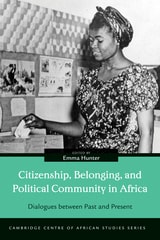
Citizenship, Belonging, and Political Community in Africa
Dialogues between Past and PresentEmma Hunter
Ohio University Press, 2016
Africa, it is often said, is suffering from a crisis of citizenship. At the heart of the contemporary debates this apparent crisis has provoked lie dynamic relations between the present and the past, between political theory and political practice, and between legal categories and lived experience. Yet studies of citizenship in Africa have often tended to foreshorten historical time and privilege the present at the expense of the deeper past.
Citizenship, Belonging, and Political Community in Africa provides a critical reflection on citizenship in Africa by bringing together scholars working with very different case studies and with very different understandings of what is meant by citizenship. By bringing historians and social scientists into dialogue within the same volume, it argues that a revised reading of the past can offer powerful new perspectives on the present, in ways that might also indicate new paths for the future.
The project collects the works of up-and-coming and established scholars from around the globe. Presenting case studies from such wide-ranging countries as Sudan, Mauritius, South Africa, Côte d’Ivoire, and Ethiopia, the essays delve into the many facets of citizenship and agency as they have been expressed in the colonial and postcolonial eras. In so doing, they engage in exciting ways with the watershed book in the field, Mahmood Mamdani’s Citizen and Subject.
Contributors: Samantha Balaton-Chrimes, Frederick Cooper, Solomon M. Gofie, V. Adefemi Isumonah, Cherry Leonardi, John Lonsdale, Eghosa E.Osaghae, Ramola Ramtohul, Aidan Russell, Nicole Ulrich, Chris Vaughan, and Henri-Michel Yéré.
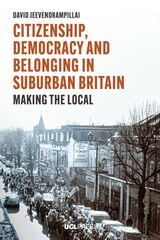
Citizenship, Democracy and Belonging in Suburban Britain
Making the LocalDavid Jeevendrampillai
University College London, 2021
An activist group in outer London’s Surbiton suburb, the Seething Villagers commemorate a fictional local history through tongue-in-cheek community festivals. These admittedly “stupid” gatherings celebrate a mythical village of Seething and its many adventures, including a run-in with a mountain-crushing giant. Citizenship, Democracy and Belonging in Suburban Britain explores how the Seething Villagers and other suburbanite fantasies fashion community in the face of neoliberal isolation. By taking the artists’ playfulness seriously, David Jeevendrampillai demonstrates how suburbanites develop fellow-feeling without access to traditional community centers.
Citizenship, Faith, and Feminism
Jewish and Muslim Women Reclaim Their RightsJan Feldman
Brandeis University Press, 2011
Citizenship
A ReaderPaul A. B. Clarke
Pluto Press, 1994
Citoyennes
Women and the Ideal of Citizenship in Eighteenth-Century FranceAnnie K. Smart
University of Delaware Press, 2012
Did women have a civic identity in eighteenth-century France? In Citoyennes: Women and the Ideal of Citizenship in Eighteenth-Century France, Annie Smart contends that they did. While previous scholarship has emphasized the ideal of domestic motherhood or the image of the republican mother, Smart argues persuasively that many pre-revolutionary and revolutionary texts created another ideal for women–the ideal of civic motherhood. Smart asserts that women were portrayed as possessing civic virtue, and as promoting the values and ideals of the public sphere.
Contemporary critics have theorized that the eighteenth-century ideal of the Republic intentionally excluded women from the public sphere. According to this perspective, a discourse of “Rousseauean” domestic motherhood stripped women of an active civic identity, and limited their role to breastfeeding and childcare. Eighteenth-century France marked thus the division between a male public sphere of political action and a female private sphere of the home.
Citoyennes challenges this position and offers an alternative model of female identity. This interdisciplinary study brings together a variety of genres to demonstrate convincingly that women were portrayed as civic individuals. Using foundational texts such as Jean-Jacques Rousseau’s Emile, or on Education (1762), revolutionary gouaches of Lesueur, and vaudeville plays of Year II of the Republic (1793/1794), this study brilliantly shows that in text and image, women were represented as devoted to both the public good and their families.
In addition, Citoyennes offers an innovative interpretation of the home. Through re-examining sphere theory, this study challenges the tendency to equate the home with private concerns, and shows that the home can function as a site for both private life and civic identity.
Citoyennes breaks new ground, for it both rectifies the ideal of domestic Rousseauean motherhood, and brings a fuller understanding to how female civic identity operated in important French texts and images.
Published by University of Delaware Press. Distributed worldwide by Rutgers University Press.
City Diplomacy
From City-States to Global CitiesRaffaele Marchetti
University of Michigan Press, 2021
While the view that only states act as global actors is conventional, significant diplomatic and cross-cultural activity is taking place in cities today. Economic growth and fiscal experiments all occur in urban contexts. Political reforms, social innovation, and protests and revolutions generate in cities. Criminal activities, terrorist actions, counterinsurgency, missile attacks (indeed, atomic bombs), and wars are centered in big cities. They are sources of global pollution as well as of environmental transformations such as urban gardening. Knowledge production, big data collection, and tech innovation all spur from intense interaction in cities. They are the meeting points between different cultures, religions, and identities.
These increasingly international cities develop twinning networks and projects, share information, sign cooperation agreements, contribute to the drafting of national and international policies, provide development aid, promote assistance to refugees, and do territorial marketing through decentralized city-city or district-district cooperation. Cities do what “municipalities” used to do many centuries ago: they cooperate but also enter into intense competitive dynamics. To understand current sociopolitical dynamics on a planetary level, we need to have two mental maps in mind: the state-centered map and the nonstate centered map. We must take into account the existence of a complex diplomatic regime based on different overlapping levels—the urban and the state.
City Kids
Transforming Racial BaggageKromidas, Maria
Rutgers University Press, 2016
City Limits
Paul E. Peterson
University of Chicago Press, 1981
"City Limits radically reinterprets urban politics by deriving its dominant forces from the logic of the American federal structure. It is thereby able to explain some pervasive tendencies of urban political outcomes that are puzzling or scarcely noticed at all when cities are viewed as autonomous units, outside the federal framework. Professor Peterson's analysis is imaginativelyfor conceived and skillfully carried through. His beautifully finished volume will lastingly alter our understanding of urban affairs in America."—from the citation by the selection committee for the Woodrow Wilson Foundation Award