Results by title
8113 books match the query 'Literary Criticism' and 522 start with c

Conflict Bodies
The Politics of Rape Representation in the Francophone ImaginaryRégine Michelle Jean-Charles
The Ohio State University Press, 2014
Confronting AIDS through Literature
The Responsibilities of RepresentationEdited by Judith Laurence Pastore
University of Illinois Press, 1993
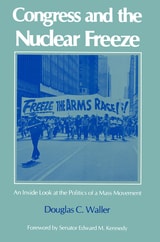
Congress and the Nuclear Freeze
An Inside Look at the Politics of a Mass MovementDouglas Waller
University of Massachusetts Press, 1987
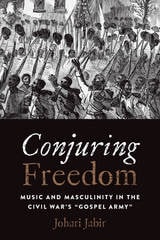
Conjuring Freedom
Music and Masculinity in the Civil War's “Gospel Army”Johari Jabir
The Ohio State University Press, 2017
Reflecting the structure of the ring shout—the counterclockwise song, dance, drum, and story in African American history and culture—Conjuring Freedom offers three new concepts to cultural studies in order to describe the practices, techniques, and implications of the troop’s performance: (1) Black Communal Conservatories, borrowing from Robert Farris Thompson’s “invisible academies” to describe the structural but spontaneous quality of black music-making, (2) Listening Hermeneutics, which accounts for the generative and material affects of sound on meaning-making, and (3) Sonic Politics, which points to the political implications of music’s use in contemporary representations of race and history.
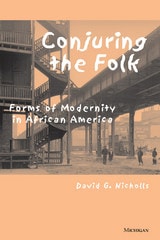
Conjuring the Folk
Forms of Modernity in African AmericaDavid G. Nicholls
University of Michigan Press, 2000
In a series of revisionary readings, Nicholls studies how the "folk" is shaped by the ideology of form. He examines the presence of a spectral "folk" in Toomer's modernist pastiche, Cane. He explores how Hurston presents folklore as a contemporary language of resistance in her ethnography, Mules and Men. In Claude McKay's naturalistic romance, Banana Bottom, Nicholls discovers the figuration of an alternative modernity in the heroine's recovery of her lost "folk" identity. He unearths the individualist ethos of Booker T. Washington in two novels by George Wylie Henderson. And he reveals how Richard Wright's photo-documentary history, 12 Million BlackVoices, places the "folk" in a Marxian narrative of modernization toward class-consciousness.
A provocative rereading of the cultural politics of the Harlem Renaissance, Conjuring the Folk offers a new way of understanding literary responses to migration, modernization, and the concept of the "folk" itself.
David G. Nicholls is a post-doctoral fellow in the Center for the Study of Race, Politics, and Culture, University of Chicago.
Connected by the Ear
The Media, Pedagogy, and Politics of the Romantic LectureSean Franzel
Northwestern University Press, 2013
In this innovative new study, Sean Franzel charts the concurrent emergence of German Romantic pedagogy, the modern research university, and modern visions of the politically engaged scholar. At the heart of the pedagogy of Immanuel Kant, Johann Gottlieb Fichte, K. P. Moritz, A. W. Schlegel, Adam Müller, and others was the lecture, with its ability to attract listeners and to model an ideal discursive community, reflecting an era of revolution, reform, and literary, philosophical, and scientific innovation.
Along with exploring the striking preoccupation of Romantic thinkers with the lecture and with its reverberations in print, Franzel argues that accounts of scholarly speech from this period have had a lasting impact on how the pedagogy, institutions, and medial manifestations of modern scholarship continue to be understood.
"Sean Franzel’s archaeology illuminates both the bourgeois public sphere and discourse network 1800 by showing the romantic lecture to be the key cultural form in a pivotal moment of German intellectual history, a history long obsessed with the mediation of oral discourse and written text."—John Durham Peters, author of Speaking into the Air
Conquest of the New Word
Experimental Fiction and Translation in the AmericasBy Johnny Payne
University of Texas Press, 1993
Latin American fiction won great acclaim in the United States during the 1960s, when many North American writers and critics felt that our national writing had reached a low ebb. In this study of experimental fiction from both Americas, Johnny Payne argues that the North American reception of the "boom" in Latin American fiction distorted the historical grounding of this writing, erroneously presenting it as mainly an exotic "magical realism." He offers new readings that detail the specific, historical relation between experimental fiction and various authors' careful, deliberate deformations and reformations of the political rhetoric of the modern state.
Payne juxtaposes writers from Argentina and Uruguay with North American authors, setting up suggestive parallels between the diverse but convergent practices of writers on both continents. He considers Nelson Marra in conjunction with Donald Barthelme and Gordon Lish; Teresa Porzecanski with Harry Mathews; Ricardo Piglia with John Barth; Silvia Schmid and Manuel Puig with Fanny Howe and Lydia Davis; and Jorge Luis Borges and Luisa Valenzuela with William Burroughs and Kathy Acker.
With this innovative, dual-continent approach, Conquest of the New Word will be of great interest to everyone working in Latin American literature, women's studies, translation studies, creative writing, and cultural theory.
Conrad and Empire
Stephen Ross
University of Missouri Press, 2004
Conrad's Shadow
Catastrophe, Mimesis, TheoryNidesh Lawtoo
Michigan State University Press, 2016
Conserving Walt Whitman's Fame
Selections from Horace Traubel's Conservator, 1890-1919Schmidgall, Gary
University of Iowa Press, 2006

Considering Watchmen
Poetics, Property, PoliticsHoberek, Andrew
Rutgers University Press, 2014
Demonstrating a keen eye for historical detail, Considering Watchmen gives readers a new appreciation of just how radical Moore and Gibbons’s blend of gritty realism and formal experimentation was back in 1986. The book also considers Watchmen’s place in the history of the comics industry, reading the graphic novel’s playful critique of superhero marketing alongside Alan Moore’s public statements about the rights to the franchise. Andrew Hoberek examines how Moore and Gibbons engaged with the emerging discourses of neoconservatism and neoliberal capitalism, ideologies that have only become more prominent in subsequent years.
Watchmen’s influences on the superhero comic and graphic novel are undeniable, but Hoberek reveals how it has also had profound effects on literature as a whole. He suggests that Watchmen not only proved that superhero comics could rise to the status of literature—it also helped to inspire a generation of writers who are redefining the boundaries of the literary, from Jonathan Lethem to Junot Díaz. Hoberek delivers insight and analysis worthy of satisfying serious readers of the genre while shedding new light on Watchmen as both an artistic accomplishment and a book of ideas.
Considering Watchmen
Poetics, Property, Politics: New edition with full color illustrationsHoberek, Andrew
Rutgers University Press, 2017
Demonstrating a keen eye for historical detail, Considering Watchmen gives readers a new appreciation of just how radical Moore and Gibbons’s blend of gritty realism and formal experimentation was back in 1986. The book also considers Watchmen’s place in the history of the comics industry, reading the graphic novel’s playful critique of superhero marketing alongside Alan Moore’s public statements about the rights to the franchise. Andrew Hoberek examines how Moore and Gibbons engaged with the emerging discourses of neoconservatism and neoliberal capitalism, ideologies that have only become more prominent in subsequent years.
Watchmen’s influences on the superhero comic and graphic novel are undeniable, but Hoberek reveals how it has also had profound effects on literature as a whole. He suggests that Watchmen not only proved that superhero comics could rise to the status of literature—it also helped to inspire a generation of writers who are redefining the boundaries of the literary, from Jonathan Lethem to Junot Díaz. Hoberek delivers insight and analysis worthy of satisfying serious readers of the genre while shedding new light on Watchmen as both an artistic accomplishment and a book of ideas.
Consolations of Humor and Other Folklore Essays
Elliott Oring
Utah State University Press, 2023
While recognizing the study of jokes and other forms of folklore as a humanistic endeavor, Oring believes in the relevance of a scientific perspective to the enterprise. He values clear definitions, tests of hypotheses and theories, empirical evidence, experiment, and the search for laws. Written in a sophisticated yet accessible style, The Consolations of Humor and Other Folklore Essays stimulates both scholars and students alike and contributes to the creation of a more robust folkloristics in the twenty-first century.
Conspicuous Bodies
Provincial Belief and the Making of Joyce and RushdieJean Kane
The Ohio State University Press, 2014
Conspicuous Bodies presents Joyce as a founder and Rushdie as an inheritor of a distinctive discourse of belief about the importance of physical bodies and knowledge in religious practice. In doing so, it moves the reception of Joyce and Rushdie away from what previous critics have emphasized—away from questions of aesthetics and from a narrow understanding of belief—and instead questions the assumption that belief should be segregated from matters of physicality and knowledge. Kane reintroduces the concept of spiritual embodiment in order to expand our understanding of what counts as spiritual agency in non-western and minority literatures.
Constancy and the Ethics of Jane Austen's 'Mansfield Park'
Joyce Kerr Tarpley
Catholic University of America Press, 2010
Constituent and Pattern in Poetry
By Archibald A. Hill
University of Texas Press, 1976
Constituent and Pattern in Poetry is a collection of essays on literature and language. It is built on the assumption that works of literature have existence in the real world and that they may be analyzed in a fashion that is not totally subjective. Using models derived from structural linguistics, Archibald A. Hill presents a number of theoretical contributions to the study of poetry, as well as new ways of looking at specific poems. The book as a whole provides an overview of the tools and ideas Hill has developed for analyzing works of literature, and it is the first time the essays have been gathered together in one volume.
The book is divided into three sections: Definition of Literature and Study of Its Patterns, Types of Meaning and Imagery, and Principles for Interpreting Meaning. Each section opens with a theoretical essay, followed by three essays that work analytically with specific poets and poems using the methods defined in the first. In his examination of such poets as Hopkins, Browning, Milton, Blake, Keats, and Dickinson, Hill uses such proposals as the law of least lexical contribution and maximal contextual contribution; the hypothesis that, when possible meanings occur together in a cluster, they support each other; and the idea that it is sometimes possible to recover underlying language sequences from which the author has departed for identifiable reasons. By applying these suppositions to the study of particular poems, Hill shows how the reader may arrive at statements about the relative artistic merit of works of literature.
Constituting Americans
Cultural Anxiety and Narrative FormPriscilla Wald
Duke University Press, 1995
From early-nineteenth-century Supreme Court cases to turn-of-the-century Jim Crow and immigration legislation, from the political speeches of Abraham Lincoln to the historical work of Woodrow Wilson, nation-builders addressed the legal, political, and historical paradoxes of American identity. Against the backdrop of their efforts, Wald shows how works such as Douglass’s autobiographical narratives, Melville’s Pierre, Wilson’s Our Nig, Du Bois’s The Souls of Black Folks, and Stein’s The Making of Americans responded, through formal innovations, to the aggressive demands for literary participation in the building of that nation. The conversation that emerges among these literary works challenges the definitions and genres that largely determine not only what works are read, but also how they are read in classrooms in the United States today.
Offering insight into the relationship of storytelling to national identity, Constituting Americans will compel the attention of those with an interest in American literature, American studies, and cultural studies.
Constituting Critique
Kant's Writing as Critical PraxisWilli Goetschel. Translated by Eric J. Schwab
Duke University Press, 1994
Constituting Critique traces the stages in Kant’s development to reveal how he redefined philosophy as a critical task. Following the philosopher through the experiments of his early essays, Goetschel demonstrates how Kant tests, challenges, and transforms the philosophical essay in his pursuit of a new self-reflective literary genre. From these experiments, critique emerges as the philosophical form for the critical project of the Enlightenment. The imperatives of its transcendental style, Goetschel contends, not only constitute and inform the critical moment of Kant’s philosophical praxis, but also have an enduring place in post-Kantian philosophy and literature.
By situating the Critiques within the context of Kant’s early essays, this work will redirect the attention of Kant scholars to the origins of their form. It will also encourage contemporary critical theorists to reconsider their own practice through an engagement with its source in Kant.
Constituting Old Age in Early Modern English Literature, from Queen Elizabeth to King Lear
Christopher Martin
University of Massachusetts Press, 2012
How did Shakespeare and his contemporaries, whose works mark the last quarter century of Elizabeth I's reign as one of the richest moments in all of English literature, regard and represent old age? Was late life seen primarily as a time of withdrawal and preparation for death, as scholars and historians have traditionally maintained? In this book, Christopher Martin examines how, contrary to received impressions, writers and thinkers of the era—working in the shadow of the kinetic, long-lived queen herself—contested such prejudicial and dismissive social attitudes.
In late Tudor England, Martin argues, competing definitions of and regard for old age established a deeply conflicted frontier between external, socially “constituted” beliefs and a developing sense of an individual's “constitution” or physical makeup, a usage that entered the language in the mid-1500s. This space was further complicated by internal divisions within the opposing camps. On one side, reverence for the elder's authority, rooted in religious and social convention, was persistently challenged by the discontents of an ambitious younger underclass. Simultaneously, the aging subject grounded an enduring social presence and dignity on a bodily integrity that time inevitably threatened. In a historical setting that saw both the extended reign of an aging monarch and a resulting climate of acute generational strife, this network of competition and accommodation uniquely shaped late Elizabethan literary imagination. Through fresh readings of signature works, genres, and figures, Martin redirects critical attention to this neglected aspect of early modern studies.
Constraining Chance
Georges Perec and the OulipoAlison Sian James
Northwestern University Press, 2008
A token of the world’s instability and of human powerlessness, chance is inevitably a crucial literary theme. It also presents formal problems: Must the artist struggle against chance in pursuit of a flawless work? Or does chance have a place in the artistic process or product? This book examines the representation and staging of chance in literature through the study of a specific case—the work of the twentieth-century French writer Georges Perec (1936–82).
In Constraining Chance, James explores the ways in which Perec’s texts exploit the possibilities of chance, by both tapping into its creative potential and controlling its operation. These works, she demonstrates, strive to capture essential aspects of human life: its "considerable energy" (Perec’s phrase), its boundless possibilities, but also the constraints and limitations that bind it. A member of the Ouvroir de littérature potentielle (known as Oulipo), Perec adopted the group’s dictum that the literary work should be "anti-chance"—a product of fully conscious creative processes. James shows how Perec gave this notion a twist, using Oulipian precepts both to explore the role of chance in human existence and to redefine the possibilities of literary form. Thus the investigation of chance links Perec’s writing methods, which harness chance for creative purposes, to the thematic exploration of causality, chance, and fate in his writings.
Constraining Chance has received early praise from scholars in the field. Warren F. Motte calls it "an erudite, engaging, intellectually intrepid reflection on the ways in which one of the most powerful authors of the twentieth century grappled with the notion of chance. [James] writes with both elegance and authority, inviting us to see Georges Perec's work through a new lens, one where chance may be viewed as a positive potential, fully enlisted in the service of ‘intentional’ literature."
Constructed Latinx(s) Identities
Racialized Bodies in Visual and Textual CultureEdited by José I. Lara
Amherst College Press, 2025
Constructing Communities in Vergil's Aeneid
Cultural Memory, Identity, and IdeologyTedd A. Wimperis
University of Michigan Press, 2024
Where previous studies of identity and memory in the Aeneid have focused on the poem’s constructions of Roman identity, Constructing Communities turns the spotlight onto the characters themselves to show how the world inside the poem is replicating, as if in miniature, real forms of contemporary political and cultural discourse, reflecting an historical milieu where appeals to Roman identity were vigorously asserted in political rhetoric. The book applies this evidence to a broad literary analysis of the Aeneid, as well as a reevaluation of its engagement with Roman imperial ideology in the Age of Augustus.
Constructing German Walt Whitman
Walter Grunzweig
University of Iowa Press, 1994
Constructing Mark Twain
New Directions in ScholarshipEdited with an introduction by Laura E. Skandera-Trombley and Michael J. Kiskis
University of Missouri Press, 2001
The thirteen essays in this collection combine to offer a complex and deeply nuanced picture of Samuel Clemens. With the purpose of straying from the usual notions of Clemens (most notably the Clemens/Twain split that has ruled Twain scholarship for over thirty years), the editors have assembled contributions from a wide range of Twain scholars. As a whole, the collection argues that it is time we approach Clemens not as a shadow behind the literary persona but as a complex and intricate creator of stories, a creator who is deeply embedded in the political events of his time and who used a mix of literary, social, and personal experience to fuel the movements of his pen.
The essays illuminate Clemens's connections with people and events not usually given the spotlight and introduce us to Clemens as a man deeply embroiled in the process of making literary gold out of everyday experiences. From Clemens's wonderings on race and identity to his looking to family and domesticity as defining experiences, from musings on the language that Clemens used so effectively to consideration of the images and processes of composition, these essays challenge long-held notions of why Clemens was so successful and so influential a writer. While that search itself is not new, the varied approaches within this collection highlight markedly inventive ways of reading the life and work of Samuel Clemens.
Constructing Nineteenth-Century Religion
Literary, Historical, and Religious Studies in DialogueEdited by Joshua King and Winter Jade Werner
The Ohio State University Press, 2019
The participle in its title—Constructing—acknowledges that any articulation of nineteenth-century religion is never just a work of the past: scholars also actively construct religion as their disciplinary assumptions (and indeed personal and lived investments) shape their research and findings. Constructing NineteenthCentury Religion newly analyzes the diverse ways in which religion was debated and deployed in a wide range of nineteenthcentury texts and contexts. While focusing primarily on nineteenthcentury Britain, the collection also contributes to the increasingly transnational and transcultural outlook of postsecular studies, drawing connections between Britain and the United States, continental Europe, and colonial India.
Constructing the Enemy
Empathy/Antipathy in U.S. Literature and LawRajini Srikanth
Temple University Press, 2011
In her engaging book, Constructing the Enemy, Rajini Srikanth probes the concept of empathy, attempting to understand its different types and how it is—or isn't—generated and maintained in specific circumstances.
Using literary texts to illuminate issues of power and discussions of law, Srikanth focuses on two case studies— the internment of Japanese citizens and Japanese Americans in World War II, after the bombing of Pearl Harbor, and the detainment of Muslim Americans and individuals from various nations in the U.S. prison at Guantanamo Bay.
Through primary documents and interviews that reveal why and how lawyers become involved in defending those who have been designated “enemies,” Srikanth explores the complex conditions under which engaged citizenship emerges. Constructing the Enemy probes the seductive promise of legal discourse and analyzes the emergence and manifestation of empathy in lawyers and other concerned citizens and the wider consequences of this empathy on the institutions that regulate our lives.
Constructing the Little House
Gender, Culture, and Laura Ingalls WilderAnn Romines
University of Massachusetts Press, 1997
Ann Romines interweaves personal observation with scholarly analysis to address these questions. Writing from a feminist perspective and drawing on resources of gender studies, cultural studies, and new historicist reading, she examines both the content of the novels and the process of their creation. She explores the relationship between mother and daughter working as collaborative authors and calls into question our assumptions about plot, juvenile fiction, and constructions of gender on the nineteenth-century frontier and in the Depression years when the Little House books were written.
This is a book that will appeal both to scholars and to general readers who might welcome an engaging and accessible companion volume to the Little House novels.
Constructions Of The Self
George Levine
Rutgers University Press, 1992
Consuming Anxieties
Alcohol, Tobacco, and Trade in British Satire, 1660-1751Dayne C. Riley
Bucknell University Press, 2024
Consuming Youth
Vampires, Cyborgs, and the Culture of ConsumptionRobert Latham
University of Chicago Press, 2002
Inspired by Marx's use of the cyborg vampire as a metaphor for the objectification of physical labor in the factory, Latham shows how contemporary images of vampires and cyborgs illuminate the contradictory processes of empowerment and exploitation that characterize the youth-consumer system. While the vampire is a voracious consumer driven by a hunger for perpetual youth, the cyborg has incorporated the machineries of consumption into its own flesh. Powerful fusions of technology and desire, these paired images symbolize the forms of labor and leisure that American society has staked out for contemporary youth.
A startling look at youth in our time, Consuming Youth will interest anyone concerned with film, television, and popular culture.
Contagious
Cultures, Carriers, and the Outbreak NarrativePriscilla Wald
Duke University Press, 2008
Wald traces how changing ideas about disease emergence and social interaction coalesced in the outbreak narrative. She returns to the early years of microbiology—to the identification of microbes and “Typhoid Mary,” the first known healthy human carrier of typhoid in the United States—to highlight the intertwined production of sociological theories of group formation (“social contagion”) and medical theories of bacteriological infection at the turn of the twentieth century. Following the evolution of these ideas, Wald shows how they were affected by—or reflected in—the advent of virology, Cold War ideas about “alien” infiltration, science-fiction stories of brainwashing and body snatchers, and the HIV/AIDS pandemic. Contagious is a cautionary tale about how the stories we tell circumscribe our thinking about global health and human interactions as the world imagines—or refuses to imagine—the next Great Plague.
Containment Culture
American Narratives, Postmodernism, and the Atomic AgeAlan Nadel
Duke University Press, 1995
Examining a broad sweep of American culture, from the work of George Kennan to Playboy Magazine, from the movies of Doris Day and Walt Disney to those of Cecil B. DeMille and Alfred Hitchcock, from James Bond to Holden Caulfield, Nadel discloses the remarkable pervasiveness of the containment narrative. Drawing subtly on insights provided by contemporary theorists, including Baudrillard, Foucault, Jameson, Sedgwick, Certeau, and Hayden White, he situates the rhetoric of the Cold War within a gendered narrative powered by the unspoken potency of the atom. He then traces the breakdown of this discourse of containment through such events as the Bay of Pigs invasion and the Free Speech Movement at Berkeley, and ties its collapse to the onset of American postmodernism, typified by works such as Catch–22 and The Man Who Shot Liberty Valence.
An important work of cultural criticism, Containment Culture links atomic power with postmodernism and postwar politics, and shows how a multifarious national policy can become part of a nation’s cultural agenda and a source of meaning for its citizenry.
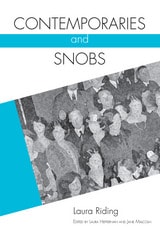
Contemporaries and Snobs
Laura Riding
University of Alabama Press, 2014
A new edition of Laura Riding's landmark 1928 poetry manifesto
Laura Riding’s Contemporaries and Snobs is one of modernism’s most audacious and overlooked manifestos, a book that drew a sharp line through the literary world of the late 1920s that is still visible today. In it, Riding dismantles the pretensions of the “snobs”—critics and poet-professionals who sought to codify modern poetry into systems—and champions the “contemporaries,” those who practiced poetry as an eccentric, individual act of creativity.
In eight incisive essays, Riding takes readers on a tour of the literary scene of her day, exposing how the institutionalization of modernism threatened to clog the wellsprings of poetic originality. With ferocious wit, she critiques the philosophical dogmas of T. S. Eliot, Allen Tate, and the critical machinery of The Criterion, while elevating Gertrude Stein as the figurehead of a radical alternative, a “barbaric” poetics rooted in linguistic freshness. Riding’s defense of the poet as person, her skepticism toward impersonality, and her insistence on poetry’s autonomy from systems of thought anticipate later feminist and avant-garde critiques, making this volume a cornerstone for rethinking modernist traditions. In an era when debates about authenticity, individuality, and the institutional pressures on art feel more urgent than ever, Contemporaries and Snobs offers a counter-history, a reminder that poetry thrives not in conformity but in idiosyncrasy. Riding’s voice, imperious yet visionary, speaks directly to contemporary concerns about creative freedom and the commodification of literature.
Nearing the centenary of its first publication, Contemporaries and Snobs will interest scholars of modernism and literary criticism, readers of Gertrude Stein and experimental poetics, feminist critics and theorists of authorship, and readers fascinated by the intellectual battles that shaped twentieth-century poetry.
Contemporary Advances in Theoretical and Applied Spanish Linguistic Variation
Juan J. Colomina-Almiñana
The Ohio State University Press, 2017
This volume makes three major contributions to Hispanic sociolinguistics. First, it covers variation in less commonly studied varieties, which are new areas of interest in a broader world where certain minorities and their languages are crucial. Second, it offers recent and innovative approaches to variation coming from formal theories in order to spark a debate about methodology that is more comprehensive of the diverse approaches to variation currently practiced in the field. Finally, it includes chapters that combine quantitative and qualitative analysis of different linguistic variables.
Contemporary African American Fiction
New Critical EssaysEdited by Dana A. Williams
The Ohio State University Press, 2009
Contemporary African Cinema
Olivier Barlet
Michigan State University Press, 2016
Drawing on more than 1,500 articles, reviews, and interviews written over the past fifteen years, Olivier Barlet identifies the critical questions brought about by the evolution of African cinema. In the process, he offers us a personal and passionate vision, making this book an indispensable sum of thought that challenges preconceived ideas and enriches an approach to cinema as a critical art.
Contemporary American Indian Literatures and the Oral Tradition
Susan Berry Brill de Ramírez
University of Arizona Press, 1999
. To demonstrate this point, she explores literary works both by established Native writers such as Sherman Alexie, N. Scott Momaday, Leslie Marmon Silko, and Luci Tapahonso and by less-well-known writers such as Anna Lee Walters, Della Frank, Lee Maracle, and Louis Owens. Through her literary engagements with many poems, novels, and short stories, she demonstrates a new way to read and understand the diverse body of American Indian literatures. Brill de Ramírez's conversive approach interweaves two interconnected processes: co-creating the stories by participating in them as listener-readers and recognizing orally informed elements in the stories such as verbal minimalism and episodic narrative structures.
Because this methodology is rooted in American Indian oral storytelling traditions, Native voices from these literary works are able to more directly inform the scholarly process than is the case in more textually based critical strategies. Through this innovative approach, Brill de Ramírez shows that literature is not a static text but an interactive and potentially transforming conversation between listener-readers, storyteller-writers, and the story characters as well. Her book furthers the discussion of how to read American Indian and other orally informed literatures with greater sensitivity to their respective cultural traditions and shows that the immediacy of the relationship between teller, story, and listener can also be experienced in the relationships between writers, literary works, and their listener-readers.
Contemporary Dickens
Edited by Eileen Gillooly and Deirdre David
The Ohio State University Press, 2008
Contemporary Feminist Fiction and a Case for Expanding Rhetorical Narratology
Katherine J. Weese
The Ohio State University Press, 2025
Examining Ali Smith’s The Accidental and Hotel World, Barbara Kingsolver’s The Poisonwood Bible, Toni Morrison’s Beloved, Kate Atkinson’s A God in Ruins and Life After Life, and Ruth Ozeki’s A Tale for the Time Being, Weese demonstrates how various narratological theories inform rather than compete with one another. Through an expanded rhetorical poetics, including a refined version of James Phelan’s MTS (mimetic, thematic, synthetic) model, she reframes post-postmodern theorists’ concerns with communicative function through a narratological lens to make the case that exploring the rhetorical function of unnatural devices challenges and extends the claims of narrow metamodern readings.
Contemporary French and Francophone Narratology
Edited by John Pier
The Ohio State University Press, 2020
The essays included in this collection seek to take the pulse of recent developments in narratological research in the French-speaking countries. Theorists in these countries heavily participated in and shaped narratology, an outgrowth of the structuralist movement during the 1960s and 1970s. While US, German, and Scandinavian theorists took the forefront in the 1990s, narratology in France faded into the background. It was not until the turn of the century that a new interest in narratological issues among French researchers emerged. Activity in the field has since intensified, spurred on, in part, by the realization that narratology cannot be summed up by its formalist and structuralist origins.
Well-versed in French narrative theory, both classical and more recent, the authors in this collection also draw on scholarship coming from other research traditions. The result is that these contributions offer a number of syntheses and perspectives representative of recent French-language scholarship in the field that readers may not be familiar with or that provide them with further insight into subjects they may have encountered in other contexts. This volume will leave readers with a greater awareness of the directions taken by present-day French-language narratology as well as new and developing themes in narrative theory generally.
Contributors
Raphaël Baroni, Denis Bertrand, Olivier Caïra, Claude Calame, Benoît Hennaut, Françoise Lavocat, Sylvie Patron, John Pier, Françoise Revaz, and Richard Saint-Gelais
Contemporary German Editorial Theory
Hans Walter Gabler, George Bornstein, and Gillian Borland Pierce, Editors
University of Michigan Press, 1995
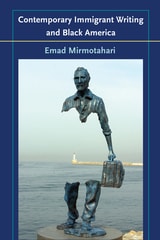
Contemporary Immigrant Writing and Black America
Mirmotahari, Emad
University of Iowa Press, 2026
Contemporary Immigrant Writing and Black America addresses how minoritized communities in the United States find each other, make sense of each other, and come together to confront the many guises of racism and racist practices. This book probes the life and writings of Korean immigrants, Indian immigrants, and various African immigrants for insights into the ways that they experience and express their new lives in the United States. More specifically, this book shows how immigrant communities come to understand their relationship with the Black American community; the relation that is key to finding their own voice about race, culture, and power in the United States.
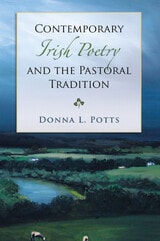
Contemporary Irish Poetry and the Pastoral Tradition
Donna L. Potts
University of Missouri Press, 2011
In Contemporary Irish Poetry and the Pastoral Tradition, Donna L. Potts closely examines the pastoral genre in the work of six Irish poets writing today. Through the exploration of the poets and their works, she reveals the wide range of purposes that pastoral has served in both Northern Ireland and the Republic: a postcolonial critique of British imperialism; a response to modernity, industrialization, and globalization; a way of uncovering political and social repercussions of gendered representations of Ireland; and, more recently, a means for conveying environmentalism’s more complex understanding of the value of nature.
In an important distinction from other studies of Irish poetry, Potts moves beyond the influence of history and politics on contemporary Irish pastoral poetry to consider the relatively recent influence of ecology. Contemporary Irish poets often rely on the motif of the pastoral retreat to highlight various environmental threats to those retreats—whether they be high-rises, motorways, global warming, or acid rain. Potts concludes by speculating on the future of pastoral in contemporary Irish poetry through her examination of more recent poets—including Moya Cannon and Paula Meehan—as well as other genres such as film, drama, and fiction.
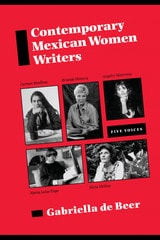
Contemporary Mexican Women Writers
Five VoicesBy Gabriella de Beer
University of Texas Press, 1996
Mexican women writers moved to the forefront of their country's literature in the twentieth century. Among those who began publishing in the 1970s and 1980s are Maria Luisa Puga, Silvia Molina, Brianda Domecq, Carmen Boullosa, and Angeles Mastretta. Sharing a range of affinities while maintaining distinctive voices and outlooks, these are the women whom Gabriella de Beer has chosen to profile in Contemporary Mexican Women Writers.
De Beer takes a three-part approach to each writer. She opens with an essay that explores the writer's apprenticeship and discusses her major works. Next, she interviews each writer to learn about her background, writing, and view of herself and others. Finally, de Beer offers selections from the writer's work that have not been previously published in English translation. Each section concludes with a complete bibliographic listing of the writer's works and their English translations.
These essays, interviews, and selections vividly recreate the experience of being with the writer and sharing her work, hearing her tell about and evaluate herself, and reading the words she has written. The book will be rewarding reading for everyone who enjoys fine writing.
Contemporary Novelists and the Aesthetics of Twenty-First Century American Life
Alexandra Kingston-Reese
University of Iowa Press, 2020
Contemporary Novelists and the Aesthetics of Twenty-First Century American Life gives us a new way to view contemporary art novels, asking the key question: How do contemporary writers imagine aesthetic experience? Examining the works of some of the most popular names in contemporary fiction and art criticism, including Zadie Smith, Teju Cole, Siri Hustvedt, Ben Lerner, Rachel Kushner, and others, Alexandra Kingston-Reese finds that contemporary art novels are seeking to reconcile the negative feelings of contemporary life through a concerted critical realignment in understanding artistic sensibility, literary form, and the function of the aesthetic.
Kingston-Reese reveals how contemporary writers refract and problematize aesthetic experience, illuminating an uneasiness with failure: firstly, about the failure of aesthetic experiences to solve and save; and secondly, the literary inability to articulate the emotional dissonance caused by aesthetic experiences now.
Contemporary Poetics
Louis Armand
Northwestern University Press, 2007
Charles Bernstein's Swiftian satire of generative poetics and the textual apparatus, together with Marjorie Perloff's critical-historical treatment of "writing after" Bernstein and other proponents of language poetry, provides an itinerary of contemporary poetics in terms of both theory and practice. The other essays consider "precursors," recognizable figures within the histories or prehistories of contemporary poetics, from Kafka and Joyce to Wallace Stevens and Kathy Acker; "conjunctions," in which more strictly theoretical and poetical texts enact a concerted engagement with rhetoric, prosody, and the vicissitudes of "intelligibility"; "cursors," which points to the open possibilities of invention, from Augusto de Campos's "concrete poetics" to the "codework" of Alan Sondheim; and "transpositions," defining the limits of poetic invention by way of technology.

Content Machines
Reading and Writing in the Platform EraSarah Brouillette
Duke University Press, 2026
Contested Pasts
A Determinist History of Alexander the Great in the Roman EmpireJennifer Finn
University of Michigan Press, 2022
Contested Records
The Turn to Documents in Contemporary North American PoetryMichael Leong
University of Iowa Press, 2020
Why have so many contemporary poets turned to source material, from newspapers to governmental records, as inspiration for their poetry? How can citational poems offer a means of social engagement? Contested Records analyzes how some of the most well-known twenty-first century North American poets work with fraught documents. Whether it’s the legal paperwork detailing the murder of 132 African captives, state transcriptions of the last words of death row inmates, or testimony from miners and rescue workers about a fatal mine disaster, author Michael Leong reveals that much of the power of contemporary poetry rests in its potential to select, adapt, evaluate, and extend public documentation.
Examining the use of documents in the works of Kenneth Goldsmith, Vanessa Place, Amiri Baraka, Claudia Rankine, M. NourbeSe Philip, and others, Leong reveals how official records can evoke a wide range of emotions—from hatred to veneration, from indifference to empathy, from desire to disgust. He looks at techniques such as collage, plagiarism, re-reporting, and textual outsourcing, and evaluates some of the most loved—and reviled—contemporary North American poems. Ultimately, Leong finds that if bureaucracy and documentation have the power to police and traumatize through the exercise of state power, then so, too, can document-based poetry function as an unofficial, counterhegemonic, and popular practice that authenticates marginalized experiences at the fringes of our cultural memory.
Contested Terrain
Suburban Fiction and U.S. Regionalism, 1945-2020Keith Wilhite
University of Iowa Press, 2022