Results by title
5159 books match the query 'Biography' and 191 start with d
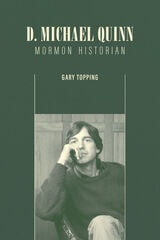
D. Michael Quinn
Mormon HistorianGary Topping
Signature Books, 2022
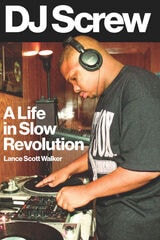
DJ Screw
A Life in Slow RevolutionLance Scott Walker
University of Texas Press, 2022
DJ Screw, a.k.a. Robert Earl Davis Jr., changed rap and hip-hop forever. In the 1990s, in a spare room of his Houston home, he developed a revolutionary mixing technique known as chopped and screwed. Spinning two copies of a record, Screw would “chop” in new rhythms, bring in local rappers to freestyle over the tracks, and slow the recording down on tape. Soon Houstonians were lining up to buy his cassettes—he could sell thousands in a single day. Fans drove around town blasting his music, a sound that came to define the city’s burgeoning and innovative rap culture. June 27 has become an unofficial city holiday, inspired by a legendary mix Screw made on that date.
Lance Scott Walker has interviewed nearly everyone who knew Screw, from childhood friends to collaborators to aficionados who evangelized Screw’s tapes—millions of which made their way around the globe—as well as the New York rap moguls who honored him. Walker brings these voices together with captivating details of Screw’s craft and his world. More than the story of one man, DJ Screw is a history of the Houston scene as it came of age, full of vibrant moments and characters. But none can top Screw himself, a pioneer whose mystique has only grown in the two decades since his death.
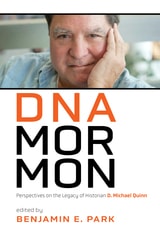
DNA Mormon
Perspectives on the Legacy of Historian D. Michael QuinnBenjamin E. Park
Signature Books, 2022
This compilation is a rigorous and riveting assessment of Quinn’s legacy. In this volume, scholars examine him as a historical figure who helps us better understand modern Mormonism. They also probe his role as a historiographical titan. These essays enable us to analyze his influence on scholarship that both preceded and followed him. More than an investigation into his life and work, DNA Mormon uncovers the world in which he lived.
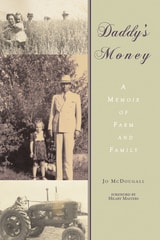
Daddy’s Money
A Memoir of Farm and FamilyJo McDougall
University of Arkansas Press, 2011

Dairylandia
Dispatches from a State of MindSteve Hannah
University of Wisconsin Press, 2022
Dairylandia recounts Steve Hannah’s burgeoning love for his adopted state through the writings of his long-lived column, “State of Mind.” He profiles the lives of the seemingly ordinary, yet quite (and quietly) extraordinary folks he met and befriended on his travels. From Norwegian farmers to rattlesnake hunters to a woman who kept her favorite dead bird in the freezer, Hannah was charmed and fascinated by practically everyone he met. These captivating vignettes are by turns humorous, tragic, and remarkable—and remind us of our shared humanity.
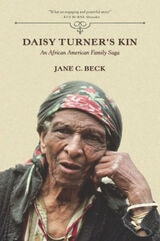
Daisy Turner's Kin
An African American Family SagaJane C. Beck
University of Illinois Press, 2015
In 1983, folklorist Jane Beck began a series of interviews with Turner, then one hundred years old and still relating four generations of oral history. Beck uses Turner's storytelling to build the Turner family saga, using at its foundation the oft-repeated touchstone stories at the heart of their experiences: the abduction into slavery of Turner's African ancestors; Daisy's father Alec Turner learning to read; his return as a soldier to his former plantation to kill his former overseer; and Daisy's childhood stand against racism. Other stories re-create enslavement and her father's life in Vermont--in short, the range of life events large and small, transmitted by means so alive as to include voice inflections. Beck, at the same time, weaves in historical research and offers a folklorist's perspective on oral history and the hazards--and uses--of memory.
Publication of this book is supported by grants from the Andrew W. Mellon Foundation and the L. J. and Mary C. Skaggs Folklore Fund.

Dale L. Morgan
Mormon and Western Histories in TransitionRichard L. Saunders
University of Utah Press, 2023
This is the first biography of Dale L. Morgan, preeminent Western historian of the fur trade, historic trails, and the Latter Day Saint movement. The book explores how, despite personal struggles, Morgan committed his life to tracking down sources and interpreting the past on the strength of documentary evidence. Connecting Morgan’s life with some of the broad cultural changes that shaped his experiences, this book engages with methodological shifts in the historical profession, the mid-twentieth-century collision of interpretations within Latter Day Saint history, and the development of a descriptive, scholarly approach to that history.
Morgan’s body of work and commitment to serious scholarship signaled the start of new ways of understanding, studying, and retelling history, and he motivated a generation of historians from the 1930s to the 1970s to transform their historical approaches. Sounding board, mentor, and close friend to Nels Anderson, Fawn Brodie, Juanita Brooks, Bernard DeVoto, Wallace Stegner, and Leonard Arrington, Dale Morgan is the common factor linking this influential generation of mid-twentieth-century historians of western America.

Dameronia
The Life and Music of Tadd DameronPaul Combs
University of Michigan Press, 2013
Dameronia is the first authoritative biography of Tadd Dameron, an important and widely influential figure in jazz history as one of the most significant composers and arrangers of jazz, swing, bebop, and big band. He arranged for names like Count Basie, Artie Shaw, Jimmie Lunceford, and Dizzy Gillespie and played with Bull Moose Jackson and Benny Golson. This book sets out to clarify Dameron's place in the development of jazz in the post–World War II era. It also attempts to shed light on the tragedy of his retreat from the center of jazz activity in the 1950s. By tracing Dameron's career, one finds that until 1958, when he was incarcerated for drug related offenses, he was at the forefront of developments in jazz, sometimes anticipating trends that would not develop fully for several years. Dameron was also an important influence on several high-profile musicians, including Miles Davis, Benny Golson, and Frank Foster. Dameron was a very private man, and while in some aspects of his life he will probably remain an enigma, this book manages to give an intimate portrait of his life at a couple of key stages: the height of his career in 1949 and the brief but productive period between his release from prison and his death.
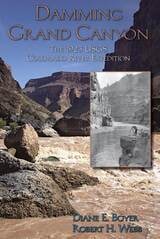
Damming Grand Canyon
The 1923 USGS Colorado River ExpeditionDiane E Boyer and Robert H. Webb
Utah State University Press, 2007
In 1923, America paid close attention, via special radio broadcasts, newspaper headlines, and cover stories in popular magazines, as a government party descended the Colorado to survey Grand Canyon. Fifty years after John Wesley Powell's journey, the canyon still had an aura of mystery and extreme danger. At one point, the party was thought lost in a flood.
Something important besides adventure was going on. Led by Claude Birdseye and including colorful characters such as early river-runner Emery Kolb, popular writer Lewis Freeman, and hydraulic engineer Eugene La Rue, the expedition not only made the first accurate survey of the river gorge but sought to decide the canyon's fate. The primary goal was to determine the best places to dam the Grand. With Boulder Dam not yet built, the USGS, especially La Rue, contested with the Bureau of Reclamation over how best to develop the Colorado River. The survey party played a major role in what was known and thought about Grand Canyon.
The authors weave a narrative from the party's firsthand accounts and frame it with a thorough history of water politics and development and the Colorado River. The recommended dams were not built, but the survey both provided base data that stood the test of time and helped define Grand Canyon in the popular imagination.
Also by Robert Webb: Lee's Ferry
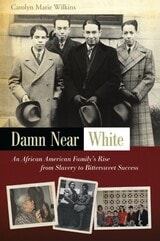
Damn Near White
An African American Family's Rise from Slavery to Bittersweet SuccessCarolyn Marie Wilkins
University of Missouri Press, 2010
Carolyn Wilkins grew up defending her racial identity. Because of her light complexion and wavy hair, she spent years struggling to convince others that she was black. Her family’s prominence set Carolyn’s experiences even further apart from those of the average African American. Her father and uncle were well-known lawyers who had graduated from Harvard Law School. Another uncle had been a child prodigy and protégé of Albert Einstein. And her grandfather had been America's first black assistant secretary of labor.
Carolyn's parents insisted she follow the color-conscious rituals of Chicago's elite black bourgeoisie—experiences Carolyn recalls as some of the most miserable of her entire life. Only in the company of her mischievous Aunt Marjory, a woman who refused to let the conventions of “proper” black society limit her, does Carolyn feel a true connection to her family's African American heritage.
When Aunt Marjory passes away, Carolyn inherits ten bulging scrapbooks filled with family history and memories. What she finds in these photo albums inspires her to discover the truth about her ancestors—a quest that will eventually involve years of research, thousands of miles of travel, and much soul-searching.
Carolyn learns that her great-grandfather John Bird Wilkins was born into slavery and went on to become a teacher, inventor, newspaperman, renegade Baptist minister, and a bigamist who abandoned five children. And when she discovers that her grandfather J. Ernest Wilkins may have been forced to resign from his labor department post by members of the Eisenhower administration, Carolyn must confront the bittersweet fruits of her family's generations-long quest for status and approval.
Damn Near White is an insider’s portrait of an unusual American family. Readers will be drawn into Carolyn’s journey as she struggles to redefine herself in light of the long-buried secrets she uncovers. Tackling issues of class, color, and caste, Wilkins reflects on the changes of African American life in U.S. history through her dedicated search to discover her family’s powerful story.

Damsels and Divas
European Stardom in Silent HollywoodAgata Frymus
Rutgers University Press, 2020
Damsels and Divas investigates the meanings of Europeanness in Hollywood during the 1920s by charting professional trajectories of three movie stars: Pola Negri, Vilma Bánky and Jetta Goudal. It combines the investigation of American fan magazines with the analysis of studio documents, and the examination of the narratives of their films, to develop a thorough understanding of the ways in which Negri, Bánky and Goudal were understood within the realm of their contemporary American culture. This discussion places their star personae in the context of whiteness, femininity and Americanization. Every age has its heroines, and they reveal a lot about prevailing attitudes towards women in their respective eras. In the United States, where the stories of rags-to-riches were especially potent, stars could offer models of successful cultural integration.
Dan de Quille
Dwayne Kling
University of Nevada Press, 1990
A biography and anthology of William Wright (1829–1898), better known by the pen name Dan DeQuille or Dan De Quille, an American author, journalist, and humorist. He was best known for his written accounts of the people, events, and silver mining operations on the Comstock Lode at Virginia City, Nevada, including his non-fiction book History of the Big Bonanza (American Publishing Company, 1876).
DeQuille was on the staff of the (Virginia City) Territorial Enterprise for over thirty years, and his writings were also printed in other publications throughout the country and abroad. Highly regarded for his knowledge of silver mining techniques and his ability to explain them in simple terms, he was also appreciated for his humor, similar in style to that of his associate and friend Mark Twain, and of a type very popular in the United States at that time, now referred to as the Sagebrush School literary genre.

Dance with the Bear
The Joe Rosenblatt StoryNorman Rosenblatt
University of Utah Press, 2013
The “Little Hoover Commission” was modeled after the 1947 initiative of President Harry Truman, who created the Commission on Organization of the Executive Branch of Government to recommend administrative changes and appointed former president Herbert Hoover to chair it. Rosenblatt, a perceptive and outspoken figure, brought a much-needed dose of urgency and pragmatism to the Utah process and formulated a number of far-reaching suggestions to the legislature—many of which were adopted and still exist to this day. His work with the commission coupled with his later role on the San Francisco Federal Reserve Board did much to modernize Utah. Rosenblatt’s legacy as a perpetual champion of the community is further exemplified by his role as cultural conduit between Salt Lake’s Jewish community and the leaders of the Church of Jesus Christ of Latter-day Saints.
This readable work will serve as an integral addition to Utah business and political history, enriching the library of anyone looking for an engaging story of a remarkable and transformative figure.

Dancing Ledge
Derek Jarman
University of Minnesota Press, 2010
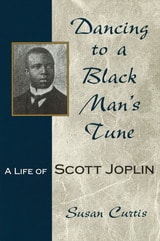
Dancing to a Black Man's Tune
A Life of Scott JoplinSusan Curtis
University of Missouri Press, 1994
By using Scott Joplin's life as a window onto American social and cultural development at the turn of the century, this biography dramatizes the role of one brilliant African American musician in defining the culture of a still-young nation.
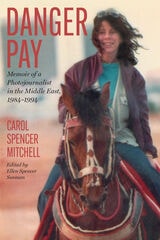
Danger Pay
Memoir of a Photojournalist in the Middle East, 1984-1994By Carol Spencer Mitchell
University of Texas Press, 2008
An engrossing memoir in which a photojournalist records both the precursors to today’s conflicts in the Middle East and her own deeply felt conviction that news coverage of the region actually increases the conflicts there.
"You're going where?" Carol Spencer Mitchell's father demanded as she set off in 1984 to cover the Middle East as a photojournalist for Newsweek and other publications. In this intensely thoughtful memoir, Spencer Mitchell probes the motivations that impelled her—a single Jewish woman—to document the turmoil roiling the Arab world in the 1980s and 1990s, as well as how her experiences as a photojournalist compelled her to set aside her cameras and reexamine the way images are created, scenes are framed, and "real life" is packaged for specific news stories.
In Danger Pay, Spencer Mitchell takes us on a harrowing journey to PLO military training camps for Palestinian children and to refugee camps in the Gaza Strip before, during, and after the first intifada. Through her eyes, we experience the media frenzy surrounding the 1985 hijackings of TWA Flight #847 and the Italian cruise liner Achille Lauro. We meet Middle Eastern leaders, in particular Yasser Arafat and King Hussein of Jordan, with whom Spencer Mitchell developed close working relationships. And we witness Spencer Mitchell's growing conviction that the Western media's portrayal of conflicts in the Middle East actually helps to fuel those conflicts—a conviction that eventually, as she says, "shattered [her] career."
Although the events that Spencer Mitchell records took place decades ago, their repercussions reverberate in the MIddle Eastern conflicts of today. Likewise, her concern about "the triumph of image over reality" takes on greater urgency as our knowledge of the world becomes ever more filtered by virtual media.
Dangerous Friendship
Stanley Levison, Martin Luther King Jr., and the Kennedy BrothersBen Kamin
Michigan State University Press, 2014
Dangerous Subjects
James D. Saules and the Rise of Black Exclusion in OregonKenneth R. Coleman
Oregon State University Press, 2017
In Oregon, Saules encountered a multiethnic population already transformed by colonialism—in particular, the fur industry and Protestant missionaries. Once the Oregon Trail emigrants began arriving in large numbers, in 1843, Saules had to adapt to a new reality in which Anglo-American settlers persistently sought to marginalize and exclude black residents from the region. Unlike Saules, who adapted and thrived in Oregon’s multiethnic milieu, the settler colonists sought to remake Oregon as a white man’s country. They used race as shorthand to determine which previous inhabitants would be included and which would be excluded. Saules inspired and later had to contend with a web of black exclusion laws designed to deny black people citizenship, mobility, and land.
In Dangerous Subjects, Kenneth Coleman sheds light on a neglected chapter in Oregon’s history. His book will be welcomed by scholars in the fields of western history and ethnic studies, as well as general readers interested in early Oregon and its history of racial exclusion.
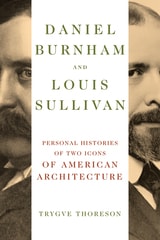
Daniel Burnham and Louis Sullivan
Personal Histories of Two Icons of American ArchitectureTrygve Thoreson
University of Illinois Press, 2026
An engaging piece of nonfiction storytelling, Daniel Burnham and Louis Sullivan reveals new facets of the architects’ personal, intellectual, and artistic lives.
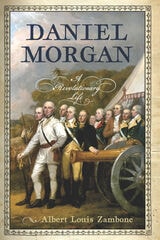
Daniel Morgan
A Revolutionary LifeAlbert Louis Zambone
Westholme Publishing, 2018
On January 17, 1781, at Cowpens, South Carolina, the notorious British cavalry officer Banastre Tarleton and his legion had been destroyed along with the cream of Lord Cornwallis’s troops. The man who planned and executed this stunning American victory was Daniel Morgan. Once a barely literate backcountry laborer, Morgan now stood at the pinnacle of American martial success. Born in New Jersey in 1736, he left home at seventeen and found himself in Virginia’s Shenandoah Valley. There he worked in mills and as a teamster, and was recruited for Braddock’s disastrous expedition to take Fort Duquesne from the French in 1755. When George Washington called for troops to join him at the siege of Boston in 1775, Morgan organized a select group of riflemen and headed north. From that moment on, Morgan’s presence made an immediate impact on the battlefield and on his superiors. Washington soon recognized Morgan’s leadership and tactical abilities. When Morgan’s troops blocked the British retreat at Saratoga in 1777, ensuring an American victory, he received accolades from across the colonies.
In Daniel Morgan: A Revolutionary Life, the first biography of this iconic figure in forty years, historian Albert Louis Zambone presents Morgan as the quintessential American everyman, who rose through his own dogged determination from poverty and obscurity to become one of the great battlefield commanders in American history. Using social history and other advances in the discipline that had not been available to earlier biographers, the author provides an engrossing portrait of this storied personality of America’s founding era—a common man in uncommon times.
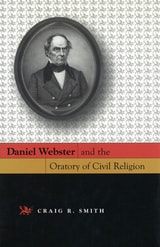
Daniel Webster and the Oratory of Civil Religion
Craig R. Smith
University of Missouri Press, 2005
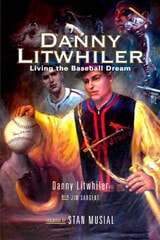
Danny Litwhiler
Living the Baseball DreamDaniel Litwhiler
Temple University Press, 2006
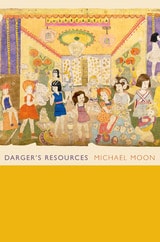
Darger's Resources
Michael Moon
Duke University Press, 2012
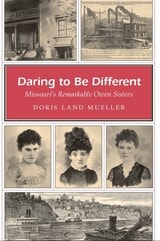
Daring to Be Different
Missouri's Remarkable Owen SistersDoris Land Mueller
University of Missouri Press, 2010
In the 1800s, American women were largely restricted to the private sphere. Most had no choice but to spend their lives in the home, marrying in their teens and living only as wives, mothers, and pillars of domesticity. Even as the women’s movement came along midcentury, it focused more on gaining legal and political rights for women than on expanding their career opportunities. So in that time period, in which the options and expectations for women’s professional lives were so limited, it is remarkable that three sisters born in the 1850s, the Owen daughters of Missouri, all achieved success and appreciation in their careers.

Daring
The Life and Art of Elisabeth Vigée Le BrunJordana Pomeroy
J. Paul Getty Trust, The, 2025
Supremely talented and strategically charming, Elisabeth Vigée Le Brun (1755–1842) overcame tragedy and broke gender barriers to reach the height of success as a portrait painter, first in Paris, and then across Europe. After losing her father at age twelve and facing financial insecurity, she fought to gain access to artistic training and opportunity. She was pressured to marry at age twenty, to an art dealer who both helped and harmed her career. Vigée Le Brun deployed her intelligence and beauty to attract powerful clients, who relied on her to style the personal identities they projected to the world.
Vigée Le Brun’s salons were the talk of Paris, and she became court painter to Marie Antoinette. Then came the French Revolution, when marginalized groups demanded change to centuries-old systems of oppression. Vigée Le Brun was forced to reexamine her alliances and run for her life, taking her young daughter but leaving her husband behind. Making her way through the countrysides and capitals of Europe and Russia—including a stay at the imperial court of Catherine the Great—the artist conquered fear and adversity to refashion her life and art.
Ages thirteen and up.
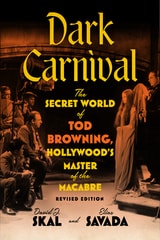
Dark Carnival
The Secret World of Tod Browning, Hollywood’s Master of the MacabreDavid J. Skal
University of Minnesota Press, 2025
The definitive biography of Hollywood horror legend Tod Browning—now revised and expanded with new material
One of the most original and unsettling filmmakers of all time, Tod Browning (1880–1962) began his career buried alive in a carnival sideshow and saw his Hollywood reputation crash with the box office disaster–turned–cult classic Freaks. Penetrating the secret world of “the Edgar Allan Poe of the cinema,” Dark Carnival excavates the story of this complicated, fiercely private man. In this newly revised and expanded edition of their biography first published in 1995, David J. Skal and Elias Savada researched Browning’s recently unearthed scrapbooks and photography archives to add further nuance and depth to their previous portrait of this enigmatic artist.
Skal and Savada chronicle Browning’s turn-of-the-century flight from an eccentric Louisville family into the realm of carnivals and vaudeville, his disastrous first marriage, his rapid climb to riches in the burgeoning silent film industry, and the alcoholism that would plague him throughout his life. They offer a close look at Browning’s legendary collaborations with Lon Chaney and Bela Lugosi as well as the studio politics that brought his remarkable run to an inglorious conclusion. With a revised prologue, epilogue, filmography, and new text and illustrations throughout, Dark Carnival is an unparalleled account of a singular filmmaker and an illuminating depiction of the evolution of horror and the early film industry.
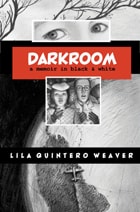
Darkroom
A Memoir in Black and WhiteLila Quintero Weaver
University of Alabama Press, 2012
A Latina girl’s journey through the shadows of the civil rights era.
Darkroom is a deeply moving graphic memoir that chronicles Lila Quintero Weaver’s experience growing up as an Argentine immigrant in 1960s Alabama during the height of the civil rights movement. Through striking black-and-white illustrations and heartfelt narrative, Weaver explores the complexities of race, identity, and belonging in a society divided by segregation. Neither Black nor White, her family occupies a unique position that offers a powerful lens on the struggles for justice and equality. This coming-of-age story blends personal history with pivotal social change, inviting readers to reflect on themes of immigration, cultural assimilation, and moral courage. Darkroom is both an intimate portrait and a universal tale of resilience, making it an essential read for those interested in civil rights, memoirs, and graphic storytelling.
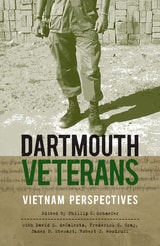
Dartmouth Veterans
Vietnam PerspectivesEdited by Phillip C. Schaefer
Brandeis University Press, 2014
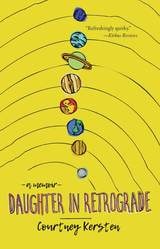
Daughter in Retrograde
A MemoirCourtney Kersten
University of Wisconsin Press, 2021
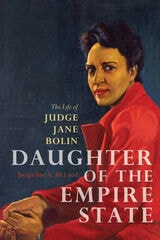
Daughter of the Empire State
The Life of Judge Jane BolinJacqueline A. McLeod
University of Illinois Press, 2016
Bolin was appointed to New York City's domestic relations court in 1939 for the first of four ten-year terms. When she retired in 1978, her career had extended well beyond the courtroom. Drawing on archival materials as well as a meeting with Bolin in 2002, historian Jacqueline A. McLeod reveals how Bolin parlayed her judicial position to impact significant reforms of the legal and social service system in New York.
Beginning with Bolin's childhood and educational experiences at Wellesley and Yale, Daughter of the Empire State chronicles Bolin's relatively quick rise through the ranks of a profession that routinely excluded both women and African Americans. Deftly situating Bolin's experiences within the history of black women lawyers and the historical context of high-achieving black New Englanders, McLeod offers a multi-layered analysis of black women's professionalization in a segregated America.
Linking Bolin's activist leanings and integrationist zeal to her involvement in the NAACP, McLeod analyzes Bolin's involvement at the local level as well as her tenure on the organization's national board of directors. An outspoken critic of the discriminatory practices of New York City's probation department and juvenile placement facilities, Bolin also co-founded, with Eleanor Roosevelt, the Wiltwyck School for boys in upstate New York and campaigned to transform the Domestic Relations Court with her judicial colleagues. McLeod's careful and highly readable account of these accomplishments inscribes Bolin onto the roster of important social reformers and early civil rights trailblazers.
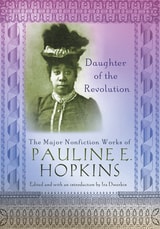
Daughter of the Revolution
The Major Nonfiction Works of Pauline HopkinsDworkin, Ira
Rutgers University Press, 2007
Pauline E. Hopkins (1859–1930) came to prominence in the early years of the twentieth century as an outspoken writer, editor, and critic. Frequently recognized for her first novel, Contending Forces, she is currently one of the most widely read and studied African American novelists from that period.
While nearly all of Hopkins’s fiction remains in print, there is very little of her nonfiction available. This reader brings together dozens of her hard-to-find essays, including longer nonfiction works such as Famous Men of the Negro Race and The Dark Races of the Twentieth Century, some of which are published here for the first time in their entirety.
Through these works, along with two juvenile essays from the 1870s, a personal letter, and two speeches, readers encounter a voice that is committed to constructing an international discourse on race, recovering the militant abolitionist tradition to combat Jim Crow, celebrating black political participation during and after the Reconstruction era, articulating the connections between race and labor, and insisting on equal rights for women. Hopkins’s writing will challenge contemporary scholars to rethink their understanding of black activism and modernity in the early twentieth century.
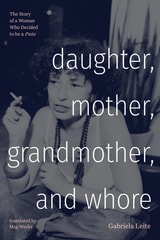
Daughter, Mother, Grandmother, and Whore
The Story of a Woman Who Decided to be a PutaGabriela Leite
Duke University Press, 2024
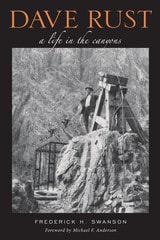
Dave Rust
A Life in the CanyonsFrederick H Swanson
University of Utah Press, 2008
In the fall of 1897, Dave Rust, a young placer miner from Caineville, Utah, looked up from his sluice box on the Colorado River and gazed at the brilliant sandstone cliffs of Glen Canyon. He wasn’t finding much gold, but he knew that this landscape abounded in scenic beauty and that people would pay good money to see it. A quarter century later, he would fulfill his dream of taking adventurous travelers through this stunning canyon in his little canvas-covered canoes. By that time he had amassed a comprehensive knowledge of the geologic wonders of the Colorado Plateau province of Utah and Arizona, and each summer he led month-long pack trips through a mind-boggling variety of cliffs, mesas, mountaintop overlooks, and hidden desert canyons.
David D. Rust (1874–1963) grew up in south-central Utah, and as a young man he worked a variety of jobs. But the canyon country always called to him, and for more than three decades he was the premier backcountry outfitter and guide in southern Utah. He felt that travel was more than a pastime—it was a chance to enrich one’s mind, and he showed the way to achieve a deep understanding of the Colorado Plateau’s fabulous landforms.
Winner of the Evans Biography Award, the Utah State History Association's Best Utah History Book Award, the Mormon History Association Turner-Bergera Best Biography Award, the Utah State Division of History Francis Armstrong Madsen Best Utah History Book Award, and the Utah Book Award in Nonfiction.
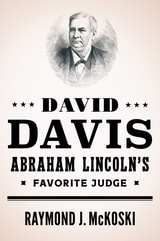
David Davis, Abraham Lincoln's Favorite Judge
Raymond J. McKoski
University of Illinois Press, 2025
One of Abraham Lincoln’s staunchest and most effective allies, Judge David Davis masterminded the floor fight that gave Lincoln the presidential nomination at the 1860 Republican National Convention. This history-changing event emerged from a long friendship between the two men. It also altered the course of Davis’s career, as Lincoln named him to the U.S. Supreme Court in 1862.
Raymond J. McKoski offers a biography of Davis’s public life, his impact on the presidency and judiciary, and his personal, professional, and political relationships with Lincoln. Davis lent his vast network of connections, organizational and leadership abilities, and personal persuasiveness to help Lincoln’s political rise. When Davis became a judge, he honed an ability to hear each case with complete impartiality, a practice that endeared him to Lincoln but one day put him at odds with the president over important Civil War–era rulings. McKoski details these cases while providing an in-depth account of Davis’s role in Lincoln’s two unsuccessful campaigns for U.S. Senate and the fateful run for the presidency.
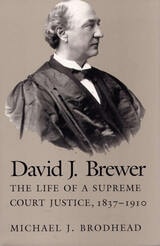
David J Brewer
The Life of a Supreme Court Justice, 1837-1910Michael J. Brodhead
Southern Illinois University Press, 1994
This is the first biography of David J. Brewer, an Associate Justice of the United States Supreme Court from 1889 to 1910.
Prior to rising to the nation’s highest tribunal, Brewer served as a county probate judge, a state district judge, a Kansas State Supreme Court justice, and a federal circuit court judge. He was known not only for his long tenure on the Supreme Court but also for his numerous off-the-bench statements as an orator and writer.
Many of Brewer’s judicial opinions and nonjudicial utterances created controversy, particularly when he confronted the reform issues of his day. The court, then presided over by Chief Justice Melville W. Fuller, has been seen as reactionary, determined to infuse the law with social Darwinism and laissez-faire ideology. Yet, contrary to this assessment of the Fuller Court as a whole, Brewer accepted most of his generation’s reform goals. He championed many forms of social legislation, the regulation of business, the rights of women and minorities, the support of charities, educational reform, and world peace.
Michael J. Brodhead contends that until recently historians have carelessly and inaccurately created a false image of Brewer, partly by citing a small sample of his opinions and public statements as representative of his alleged conservatism. They have also assumed that the disputable decisions of Brewer and his contemporaries were based on ideological predilections and that precedent and recognized legal principles played no role.
During his term, Brewer was the author of such notable court opinions as In re Debs, Muller v. Oregon, and Kansas v. Colorado. He supported property rights, admired honest entrepreneurial activity, and opposed the concentration of power in any form. Brewer favored the individual in all instances, whether that individual was the initiator of a great economic enterprise or a farmer struggling to extend agriculture into the western plains.
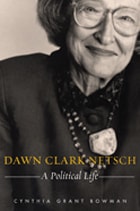
Dawn Clark Netsch
A Political LifeCynthia Grant Bowman
Northwestern University Press, 2010
Illinois Democratic politics has recently produced the most skilled and inspirational politician in memory . . . and has also reminded us of the need for further reform. It is fitting, then, that the latest installment of the Chicago Lives series turns to Dawn Clark Netsch, a leading reformer of Illinois politics since the 1950s and the first woman major party nominee for governor of Illinois.
Netsch was a pioneer, or the first of her gender, in almost every endeavor she undertook. From the very beginning of her career, when she led the move to desegregate Northwestern University's undergraduate dorms, her passion for social justice extended beyond the rights of women to rights for racial minorities and those of all sexual orientations. Bowman charts Dawn Clark Netsch's remarkable political career, from her work behind the scenes as assistant to Governor Otto Kerner and as a participant in the 1970 Constitutional Convention to her later service in elected office, first as Illinois state senator for eighteen years and later as Illinois comptroller, and culminating in her historic run for governor in 1994. Throughout, Netsch lost neither her genteel yet unpretentious demeanor, nor her passion for progressive politics as exemplified by her early mentor, Governor Adlai E. Stevenson.

Day by Day
The Chronicles of a Hard of Hearing ReporterElizabeth Thompson
Gallaudet University Press, 2008
The Seventh Volume in the Deaf Lives Series
Elizabeth Thompson’s hearing loss was detected when she was in elementary school, and her hearing continued to deteriorate until she became completely deaf. Like many other hard of hearing and late-deafened individuals, her hearing loss complicated the general challenges of life. She struggled through school, worked as a secretary, married, had a daughter, and then found herself living as a single mother. She remarried, and soon after learned that she had contracted Multiple Sclerosis (MS). Despite these hurdles, Thompson always expressed her determination to enjoy the best life had to offer. Her astonishing exuberance might have gone unnoticed if she hadn’t accepted a new position as a reporter/columnist in 1998 for the Suburban News Publications (SNP). Day by Day: The Chronicles of a Hard of Hearing Reporter presents a marvelous blend of her experiences and best SNP columns that illustrate how she crafted her remarkable outlook.
In her columns, Thompson presented how she handled her hearing loss as a personal guide for readers. She used every stratagem available to function full-throttle – hearing aids, FM systems, lights for alarms, TTYs, even training her dog Snert. She also gently counseled readers on how to treat deaf and hard of hearing people with practical consideration and respect. Her pursuit of a fully realized life enabled her to do what she loved most, to meet and write about inspiring persons, many of whom are profiled in her memoir. Thompson eventually underwent cochlear implantation that restored 95% of her hearing, an exalting moment for her. Yet, Day by Day celebrates the entire arc of her life, a wonderful testament to her joyous resilience.

Days of Twilight, Nights of Frenzy
A MemoirWerner Schroeter and Claudia Lenssen
University of Chicago Press, 2017
Written in the last years of his life, Days of Twilight, Nights of Frenzy sees Schroeter looking back at his life with the help of film critic and friend Claudia Lenssen. Born in 1945, Schroeter grew up near Heidelberg and spent just a few weeks in film school before leaving to create his earliest works. Over the years, he would work with acclaimed artists, including Marianne Hopps, Isabelle Huppert, Candy Darling, and Christine Kaufmann. In the 1970s, Schroeter also embarked on prolific parallel careers in theater and opera, where he worked in close collaboration with the legendary diva Maria Callas. His childhood; his travels in Italy, France, and Latin America; his coming out and subsequent life as an gay man in Europe; and his run-ins with Hollywood are but a few of the subjects Schroeter recalls with insights and characteristic understated humor.
A sharp, lively, even funny memoir, Days of Twilight, Nights of Frenzy captures Schroeter’s extravagant life vividly over a vast prolific career, including many stories that might have been lost were it not for this book. It is sure to fascinate cinephiles and anyone interested in the culture around film and the arts.
Days on Earth
The Dance of Doris HumphreyMarcia B. Siegel
Duke University Press, 1993
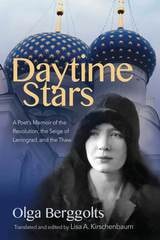
Daytime Stars
Olga Berggolts, translated by Lisa Kirschenbaum
University of Wisconsin Press, 2018
Berggolts wrote her memoir Daytime Stars in the spirit of the thaw after Stalin's death. In it, she celebrated the ideals of the revolution and the heroism of the Soviet people while also criticizing censorship of writers and recording her doubts and despair. This English translation by Lisa A. Kirschenbaum makes available a unique autobiographical work by an important author of the Soviet era. In her foreword, Katharine Hodgson comments on experiences of the Terror about which Berggolts was unable or unwilling to write.
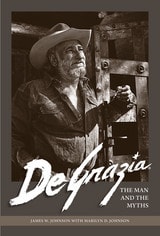
De Grazia
The Man and the MythsJames W. Johnson with Marilyn D. Johnson
University of Arizona Press, 2014
Born in Arizona Territory to Italian immigrant parents, De Grazia had a humble childhood as a copper miner’s son, which later influenced his famous persona. De Grazia often held forth at his gallery in Tucson’s Catalina foothills dressed in a pseudo-prospector’s getup of scraggly beard, jeans, flannel shirt, boots, and beat-up cowboy hat. Outrageous stories of womanizing, scores of children, and drinking binges created an eclectic image that fueled stories of mythic proportions, along with global sales of his colorful paintings inspired by the Southwest and Mexico. He made millions through his paintings and the licensing of his art for greeting cards and trinkets. Critics called his work kitsch or commercial, yet thousands of admirers continue to love it.
Calling De Grazia a complicated man doesn’t begin to explain him. He once described himself as “not saint nor devil, but both.” In this first comprehensive biography of De Grazia, authors James W. Johnson with Marilyn D. Johnson tell the story of a life remarkably lived.
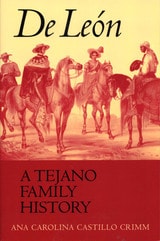
De León, a Tejano Family History
By Ana Carolina Castillo Crimm
University of Texas Press, 2003
Winner, Presidio La Bahia Award, 2004
San Antonio Conservation Society Citation, 2005
La familia de León was one of the foundation stones on which Texas was built. Martín de León and his wife Patricia de la Garza left a comfortable life in Mexico for the hardships and uncertainties of the Texas frontier in 1801. Together, they established family ranches in South Texas and, in 1824, the town of Victoria and the de León colony on the Guadalupe River (along with Stephen F. Austin's colony, the only completely successful colonization effort in Texas). They and their descendents survived and prospered under four governments, as the society in which they lived evolved from autocratic to republican and the economy from which they drew their livelihood changed from one of mercantile control to one characterized by capitalistic investments.
Combining the storytelling flair of a novelist with a scholar's concern for the facts, Ana Carolina Castillo Crimm here recounts the history of three generations of the de León family. She follows Martín and Patricia from their beginnings in Mexico through the establishment of the family ranches in Texas and the founding of the de León colony and the town of Victoria. Then she details how, after Martín's death in 1834, Patricia and her children endured the Texas Revolution, exile in New Orleans and Mexico, expropriation of their lands, and, after returning to Texas, years of legal battles to regain their property. Representative of the experiences of many Tejanos whose stories have yet to be written, the history of the de León family is the story of the Tejano settlers of Texas.
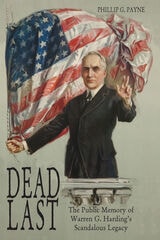
Dead Last
The Public Memory of Warren G. Harding’s Scandalous LegacyPhillip G. Payne
Ohio University Press, 2008
If George Washington and Abraham Lincoln are the saints in America’s civil religion, then the twenty-ninth president, Warren G. Harding, is our sinner. Prior to the Nixon administration, the Harding scandals were the most infamous of the twentieth century. Harding is consistently judged a failure, ranking dead last among his peers.
By examining the public memory of Harding, Phillip G. Payne offers the first significant reinterpretation of his presidency in a generation. Rather than repeating the old stories, Payne examines the contexts and continued meaning of the Harding scandals for various constituencies. Payne explores such topics as Harding’s importance as a midwestern small-town booster, his rumored black ancestry, the role of various biographers in shaping his early image, the tension between public memory and academic history, and, finally, his status as an icon of presidential failure in contemporary political debates. Harding was a popular president and was widely mourned when he died in office in 1923; but with his death began the construction of his public memory and his fall from political grace.
In Dead Last, Payne explores how Harding’s name became synonymous with corruption, cronyism, and incompetence and how it is used to this day as an example of what a president should not be.
Dead Lines
Slices of Life from the Obit BeatGeorge Hesselberg
Wisconsin Historical Society Press, 2021
In more than forty years at the Wisconsin State Journal, Hesselberg frequently found himself writing about fatal accidents, crime investigations, and the deaths of the wealthy, famous, or notorious. But he was most drawn to the curious, the unknown, and the unsung—the deaths that normally wouldn’t make much of a splash, if any mention at all, in the news columns of a daily paper.
Digging deeper, he uncovered the extraordinary among the ordinary, memorializing the lives of a sword designer, a radio villain, a pioneering female detective, a homeless woman who spoke fluent French, a beloved classroom tarantula, and many more. Their stories are alternately amusing, sad, surprising, and profound. Together they speak to a shared human experience and inspire us to see the people around us with new eyes, valuing the lives while they are still being lived.
Dead Weight
A Memoir in EssaysRandall Horton
Northwestern University Press, 2022
The memoir begins with a conversation between Horton and Ralph Ellison’s Invisible Man statue in New York City. Their imagined dialogue examines the psychological impact of racism on Black men and boys, including Horton’s separation from his mother, immediately after his birth, in a segregated Alabama hospital. From his current life as a professor and prison reformer, Horton looks back on his experiences as a drug smuggler and trafficker during the 1980s–1990s as well as the many obstacles he faced after his release. He also examines the lasting impact of his drug activity on those around him, reflecting on the allure of economic freedom and the mental escapism that cocaine provided, an allure so strong that both sellers and users were willing to risk prison. Horton shares historical context and vivid details about people caught in the war on drugs who became unsuspecting protagonists in somebody else’s melodrama.
Lyrical and gripping, Dead Weight reveals the lifelong effects of one man’s incarceration on his psyche, his memories, and his daily experience of American society.
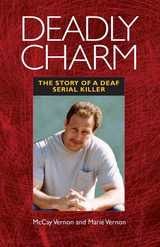
Deadly Charm
The Story of a Deaf Serial KillerMcCay Vernon
Gallaudet University Press, 2010
From the day he was born, Patrick McCullough faced hardships and reacted with untempered anger. His mother, a soon-to-be-divorced military wife, was late to realize that he was deaf and never learned how to handle his outbursts. Eventually, she abandoned him by petitioning for him to be a ward of the state. Stints in mental institutions and dismissals from several schools punctuated the rest of McCullough’s early years. Despite this severe childhood, no one could have predicted the outcome of his life described in Deadly Charm: The Story of a Deaf Serial Killer.
Authors McCay and Marie Vernon present a compelling story about McCullough, a strikingly handsome man with a winning personality. His charm was endearing, but his incendiary temper resulted in increasing aggression and abuse. Eventually, he was convicted for the murder of two men. Yet, McCullough ingratiated himself with the court and served only seven years in prison. Once free again, he resumed his pattern of sweetness and mayhem. He beguiled sympathetic women whom he then abused and stalked. Finally, his rage culminated in a crescendo of destruction. Deadly Charm depicts a deaf serial killer driven by frustration and violence and leaves much to consider. Did McCullough’s deafness exacerbate his lethally violent nature? Perhaps his vicious impulses could have been constrained if his time in mental institutions had been more productive than his time in prison.
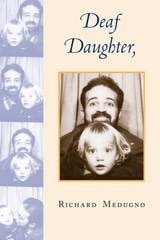
Deaf Daughter, Hearing Father
Richard Medugno
Gallaudet University Press, 2005
Medugno first researched the best communication mode for Miranda. Quickly dismissing the speech pathology model, he and his wife chose ASL alone as the best, natural language for Miranda. He surrounded his daughter with opportunities to learn ASL, by arranging to meet deaf individuals and families, and also by hiring deaf babysitters. He also determined to learn ASL himself, to ensure communication with his daughter. As Miranda neared school age, Medugno spearheaded a transcontinental search for exactly the right school for her education. So that Miranda could attend the California School for the Deaf (CSD), the Medugno family moved from Toronto, Canada to Fremont, CA.
In Deaf Daughter, Hearing Father, Medugno shares practical information on many of the common challenges faced by hearing parents. He provides a list of games that hearing and deaf children can play together, an important consideration for many families. His enthusiasm for all possibilities, from exploring the potential of video phones to helping stage CSD musicals, reveals his abiding devotion to Miranda. Such a foundation has enabled her to feel proud, confident, and happy in her pursuits. At the same time, Medugno recognizes that the rewards of having a deaf daughter are far greater than he could have hoped for or imagined.
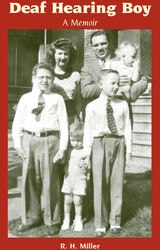
Deaf Hearing Boy
A MemoirR.H. Miller
Gallaudet University Press, 2004
Born in 1938, R. H. Miller was the oldest of four hearing boys with deaf parents in Defiance, Ohio, a small agricultural community. Deaf Hearing Boy is Miller’s compelling account of the complex dynamics at work in his family, including the inter-generational conflicts in which he found himself, the oldest child of deaf adults (CODA), caught in the middle.
In 1942, Miller’s family moved to Toledo so that his father could find work. There, they fared well during World War II because his father worked in manufacturing as a member of Roosevelt’s “civilian army.” Miller’s mother loved urban life, where she and the family could immerse themselves in the Toledo Deaf community, especially at the Toledo Silent Club. The end of the war marked the end of prosperity for the Miller family. Returning soldiers displaced all of the deaf workers, who then had to scrape for a living. The Millers, close to destitution, returned to the family farm in Defiance.
Miller depicts the return to farm life as one of tremendous hardship, both economically and psychologically. They lived off the land from hand to mouth. He also describes his grandparents’ distrust of his parents because they were deaf, and he writes candidly of his role as an unwilling agent in the misunderstandings between them. Miller also portrays the bias he endured in school and town. Parents of girlfriends would force their daughters to stop dating him for fear that his family’s deafness would be passed down.
In the early 1950s, Miller’s grandparents sold the farm and his parents returned to industrial work. Miller excelled at school, and eventually left home for college and life in academia. His later reflections reveal a deep, abiding respect for his parents, despite his early difficulties. Deaf Hearing Boy presents an intimate depiction of a changing time for hearing and deaf Americans alike, when the family farm disappeared and the isolation of Deaf people also began to fade. In witnessing this transformation of society through his family’s life, Miller adds an important chapter to the collective narrative of Deaf people, one made all the more poignant and vivid as told by their Deaf Hearing boy.

Deaf Identities in the Making
Local Lives, Transnational ConnectionsJan-Kåre Breivik
Gallaudet University Press, 2005
The ten stories in Deaf Identities in the Making reveal deaf people who would like a stronger link to the Deaf world. Each story sheds different light on the overriding, empowering master narrative that has become an integral feature of the deaf community. Like success stories from other minorities, the Deaf life story reinforces the collective empowerment process in a Deaf social milieu. Because of these revelations, Breivik’s findings easily reverberate globally in conjunction to the striking similarities of deaf lives around the world, particularly those connected with the experiences of being translocal signers who have struggled for identity in an overwhelmingly hearing context.
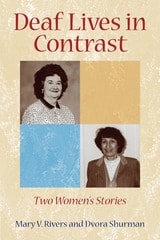
Deaf Lives in Contrast
Two Women's StoriesMary V. Rivers
Gallaudet University Press, 2008
The Eighth Volume in the Deaf Lives Series
Deaf Lives in Contrast: Two Women’s Stories might seem to bring together polar opposites in the broad range of deaf experience. Yet, as these narratives unfold, the reader will recognize that common threads run through them despite their different circumstances.
Mary V. Rivers, who came from a “dirt poor” Cajun family in Louisiana, was only 17 when she married Bruce Rivers, a member of the U.S. Air Force during World War II. She bore three children in quick succession, all boys, and traveled with them to Europe with her husband. When her third son Clay was nearly two, however, she learned that he was deaf. From that time on, she devoted her life to securing a good education for Clay.
Dvora Shurman’s parents, deaf Jewish immigrants from Russia, met in Chicago after World War I. Both were educated orally, declaring “I am not born deaf. Signing only for born-deaf.” They did sign, but they also wanted hearing children, stemming from their own sense of devaluation. Shurman lived a dual life in the deaf and hearing worlds. She saw herself as her deaf parents’ ears, their voice to the hearing world, and as sharing with her mother the task of being mother.
The resonating theme that echoes with both of these women centers on their resentment of the treatment received by their deaf loved ones. Early in her life, Shurman adopted a slogan with her sister, “‘It's Not Fair,’ to rebel against the shaming, the demeaning, our family suffered.” After years of struggling for her son, Rivers asserts that “deaf people have a right to prove themselves as first class citizens.” Their uncommon stories reveal that they share more in common, a belief in equal rights for all, deaf and hearing.