Results by title
975 books match the query 'Case studies' and 64 start with d
DOING THE RIGHT THING
Collective Action and Procedural Choice in the New Legislative ProcessLawrence Becker
The Ohio State University Press, 2005
Doing the Right Thing examines the use of extraordinary legislative procedures in four cases in the U.S. Congress to accomplish policy objectives that many political scientists would argue are impossible to achieve. It not only shows that Congress is capable of imposing parochial costs in favor of general benefits but it argues that Congress is able to do so in a variety of policy areas through the use of very different kinds of procedural mechanisms that are underappreciated.
The book opens by developing a theory of procedural choice to explain why Congress chooses to delegate in differing degrees in dealing with similar kinds of policy problems. The theory is then applied to four narrative case studies—military base closures, the Yucca Mountain Project, NAFTA, and the Tax Reform Act of 1986—that both show the variety of factors that impact procedural choice and highlight how our national legislature was able to “do the right thing.”
The book concludes by pointing to the variety of ways in which Congress will be confronted with similar policy problems in the coming years and offering some lessons from these cases about what kinds of procedures and policy outcomes we might expect. In short, Congress is remarkably adept at “doing the right thing,” even under difficult circumstances, but only when legislators are willing to manipulate procedures in all the necessary ways.

Dance for Me When I Die
Cristian Alarcón
Duke University Press, 2019

Dangerous Exits
Escaping Abusive Relationships in Rural AmericaDeKeseredy, Walter
Rutgers University Press, 2009
Strikingly, scant attention has focused on the victimization of women who want to leave their hostile partners. This groundbreaking work challenges the perception that rural communities are safe havens from the brutality of urban living. Identifying hidden crimes of economic blackmail and psychological mistreatment, and the complex relationship between patriarchy and abuse, Walter S. DeKeseredy and Martin D. Schwartz propose concrete and effective solutions, giving voice to women who have often suffered in silence.
Dangerous Frames
How Ideas about Race and Gender Shape Public OpinionNicholas J. G. Winter
University of Chicago Press, 2008

Dangerous Professors
Academic Freedom and the National Security CampusMalini Johar Schueller and Ashley Dawson, Editors
University of Michigan Press, 2009

Daniel Webster and the Oratory of Civil Religion
Craig R. Smith
University of Missouri Press, 2005
Data Literacy in the Real World
Conversations & Case StudiesEdited by Kristin Fontichiaro, Amy Lennex, Tyler Hoff, Kelly Hovinga, Jo Angela Oehrli
Michigan Publishing Services, 2017

Dead End Kids
Gang Girls and the Boys They KnowMark S. Fleisher
University of Wisconsin Press, 2000
Dead End Kids exposes both the depravity and the humanity in gang life through the eyes of a teenaged girl named Cara, a member of a Kansas City gang. In this shocking yet compassionate account, Mark Fleisher shows how gang girls’ lives are shaped by poverty, family disorganization, and parental neglect.

Deadly Landscapes
Case Studies in Prehistoric Southwestern WarfareGlen E. Rice
University of Utah Press, 2012
Deadly Landscapes presents a series of cases that advance the rigorous examination of war in the archaeological record. The studies encompass examples from the Hohokam, Sinagua, Mogollon, and Anasazi regions, plus a pan-regional study of iconography covering the Colorado Plateau and the Rio Grande Valley. All of the cases focus on the narrow time frame from AD 1200 to the early-1400s, during which evidence for warfare is most pervasive.
Contributors to this volume present varying definitions of warfare and use differing types of data to test for the presence of warfare. These detailed case studies give clear demonstration of a pattern of significant warfare in the late prehistoric period that will alter our understanding of ancient Southwestern cultures.

Deaf Adolescents
Inner Lives and Lifeworld DevelopmentMartha Sheridan
Gallaudet University Press, 2008
In her landmark book Inner Lives of Deaf Children: Interviews and Analysis, Martha A. Sheridan explored the lifeworlds — the individual and collective elements and realities that are present within the participants’ existential experiences, their relationships, and their truths — of seven deaf and hard of hearing children between the ages of seven and ten. What she discovered were deaf children with strengths, positive experiences, and positive relationships. Sheridan’s new book Deaf Adolescents: Inner Lives and Lifeworld Development returns to these seven individuals, now between the ages of 13 and 17, to see how their lives have progressed since their first interviews.
Establishing an identity is said to be a primary and necessary task of adolescence. Deaf Adolescents reveals how these young adults all have begun to deal with tasks and situations that lead them to rely more on themselves and others outside of their families. Many of them talk about the athletic challenges that they face, and how their success depends upon their own efforts. They also think about the future while biding their time, taking “a break” from the furious growth that they are experiencing and also enjoying time spent with other deaf friends.
In this volume, Sheridan examines the similarities and differences that these deaf young adults reveal in their views at two developmental points in their lives. Her renewed study has advanced the quest to determine what pathways and spaces can foster productive, healthy, satisfying, actualized deaf lives.

Deaf Lives in Contrast
Two Women's StoriesMary V. Rivers
Gallaudet University Press, 2008
The Eighth Volume in the Deaf Lives Series
Deaf Lives in Contrast: Two Women’s Stories might seem to bring together polar opposites in the broad range of deaf experience. Yet, as these narratives unfold, the reader will recognize that common threads run through them despite their different circumstances.
Mary V. Rivers, who came from a “dirt poor” Cajun family in Louisiana, was only 17 when she married Bruce Rivers, a member of the U.S. Air Force during World War II. She bore three children in quick succession, all boys, and traveled with them to Europe with her husband. When her third son Clay was nearly two, however, she learned that he was deaf. From that time on, she devoted her life to securing a good education for Clay.
Dvora Shurman’s parents, deaf Jewish immigrants from Russia, met in Chicago after World War I. Both were educated orally, declaring “I am not born deaf. Signing only for born-deaf.” They did sign, but they also wanted hearing children, stemming from their own sense of devaluation. Shurman lived a dual life in the deaf and hearing worlds. She saw herself as her deaf parents’ ears, their voice to the hearing world, and as sharing with her mother the task of being mother.
The resonating theme that echoes with both of these women centers on their resentment of the treatment received by their deaf loved ones. Early in her life, Shurman adopted a slogan with her sister, “‘It's Not Fair,’ to rebel against the shaming, the demeaning, our family suffered.” After years of struggling for her son, Rivers asserts that “deaf people have a right to prove themselves as first class citizens.” Their uncommon stories reveal that they share more in common, a belief in equal rights for all, deaf and hearing.

Deception and Abuse at the Fed
Henry B. Gonzalez Battles Alan Greenspan's BankBy Robert D. Auerbach
University of Texas Press, 2008
The Federal Reserve—the central bank of the United States—is the most powerful peacetime bureaucracy in the federal government. Under the chairmanship of Alan Greenspan (1987-2006), the Fed achieved near mythical status for its part in managing the economy, and Greenspan was lauded as a genius. Few seemed to notice or care that Fed officials operated secretly with almost no public accountability. There was a courageous exception to this lack of oversight, however: Henry B. Gonzalez (D-TX)—chairman of the U.S. House of Representatives Financial Services (banking) Committee.
In Deception and Abuse at the Fed, Robert Auerbach, a former banking committee investigator, recounts major instances of Fed mismanagement and abuse of power that were exposed by Rep. Gonzalez, including:
- Blocking Congress and the public from holding powerful Fed officials accountable by falsely declaring—for 17 years—it had no transcripts of its meetings;
- Manipulating the stock and bond markets in 1994 under cover of a preemptive strike against inflation;
- Allowing $5.5 billion to be sent to Saddam Hussein from a small Atlanta branch of a foreign bank—the result of faulty bank examination practices by the Fed;
- Stonewalling Congressional investigations and misleading the Washington Post about the $6,300 found on the Watergate burglars.
Auerbach provides documentation of these and other abuses at the Fed, which confirms Rep. Gonzalez's belief that no government agency should be allowed to operate with the secrecy and independence in which the Federal Reserve has shrouded itself. Auerbach concludes with recommendations for specific, broad-ranging reforms that will make the Fed accountable to the government and the people of the United States.
Decolonizing Employment
Aboriginal Inclusion in Canada's Labour MarketShauna MacKinnon
University of Manitoba Press, 2015

Deep Travel
In Thoreau's Wake on the Concord and MerrimackDavid K. Leff
University of Iowa Press, 2009
How we see depends on where we are in our lives and with whom we travel. Leff chose his companions wisely. In consecutive journeys his neighbor and friend Alan, a veteran city planner; his son Josh, an energetic eleven-year-old; and his sweetheart Pamela, a compassionate professional caregiver, added their perspectives to Leff’s own experiences as a government official in natural resources policy. Not so much sight seeing as sight seeking, together they explored a geography of the imagination as well as the rich natural and human histories of the rivers and their communities.
The heightened awareness of deep travel demands that we immerse ourselves fully in places and realize that they exist in time as well as space. Its mindfulness enriches the experience and makes the voyager worthy of the journey. Leff’s intriguing, contemplative deep travel along these historic rivers presents a methodology for exploration that will enrich any trip.

Deficit and Debt in Transition
The Political Economy of Public Finances in Central and Eastern EuropeIstvan Benczes
Central European University Press, 2014
Defining Student Success
The Role of School and CultureLisa M. Nunn
Rutgers University Press, 2014
The key to success, our culture tells us, is a combination of talent and hard work. Why then, do high schools that supposedly subscribe to this view send students to college at such dramatically different rates? Why do students from one school succeed while students from another struggle? To the usual answer—an imbalance in resources—this book adds a far more subtle and complicated explanation. Defining Student Success shows how different schools foster dissimilar and sometimes conflicting ideas about what it takes to succeed—ideas that do more to preserve the status quo than to promote upward mobility.
Lisa Nunn’s study of three public high schools reveals how students’ beliefs about their own success are shaped by their particular school environment and reinforced by curriculum and teaching practices. While American culture broadly defines success as a product of hard work or talent (at school, intelligence is the talent that matters most), Nunn shows that each school refines and adapts this American cultural wisdom in its own distinct way—reflecting the sensibilities and concerns of the people who inhabit each school. While one school fosters the belief that effort is all it takes to succeed, another fosters the belief that hard work will only get you so far because you have to be smart enough to master course concepts. Ultimately, Nunn argues that these school-level adaptations of cultural ideas about success become invisible advantages and disadvantages for students’ college-going futures. Some schools’ definitions of success match seamlessly with elite college admissions’ definition of the ideal college applicant, while others more closely align with the expectations of middle or low-tier institutions of higher education.
With its insights into the transmission of ideas of success from society to school to student, this provocative work should prompt a reevaluation of the culture of secondary education. Only with a thorough understanding of this process will we ever find more consistent means of inculcating success, by any measure.
Defining the National Interest
Conflict and Change in American Foreign PolicyPeter Trubowitz
University of Chicago Press, 1998
Peter Trubowitz offers a new and compelling conception of American foreign policy and the domestic geopolitical forces that shape and animate it. Foreign policy conflict, he argues, is grounded in America's regional diversity. The uneven nature of America's integration into the world economy has made regionalism a potent force shaping fights over the national interest. As Trubowitz shows, politicians from different parts of the country have consistently sought to equate their region's interests with that of the nation. Domestic conflict over how to define the "national interest" is the result. Challenging dominant accounts of American foreign policy-making, Defining the National Interest exemplifies how interdisciplinary scholarship can yield a deeper understanding of the connections between domestic and international change in an era of globalization.

Del Otro Lado
Literacy and Migration across the U.S.-Mexico BorderSusan V. Meyers
Southern Illinois University Press, 2014
In Del OtroLado: Literacy and Migration across the U.S.-Mexico Border, author Susan V. Meyers draws on her year-long ethnographic study in Mexico and the United States to analyze the literacy practices of Mexican-origin students on both sides of the border.
Meyers begins by taking readers through the historical development of the rural Mexican town of Villachuato. Through a series of case studies spanning the decades between the Mexican Revolution and the modern-day village, Meyers explores the ever-widening gulf between the priorities of students and the ideals of the public education system. As more and more of Villachuato’s families migrate in an effort to find work in the wake of shifting transnational economic policies like NAFTA, the town’s public school teachers find themselves frustrated by spiraling drop-out rates. Meyers discovers that students often consider the current curriculum irrelevant and reject the established value systems of Mexico’s public schools. Meyers debunks the longstanding myth that literacy is tied to economic development, arguing that a “literacy contract” model, in which students participate in public education in exchange for access to increased earning potential, better illustrates the situation in rural Mexico.
Meyers next explores literacy on the other side of the border, traveling to Marshalltown, Iowa, where many former citizens of Villachuato have come to reside because of the availability of jobs for unskilled workers at the huge Swift meat-packing plant there. Here she discovers that Mexican-origin families in the United States often consider education a desirable end in itself rather than a means to an end. She argues that migration has a catalyzing effect on literacy, particularly as Mexican migrant families tend to view education as a desirable form of prestige.
Meyers reveals the history and policies that have shaped the literacy practices of Mexican-origin students, and she raises important questions about not only the obligation of the United States to educate migrant students, but also those students’ educational struggles and ways in which these difficulties can be overcome. This transnational study is essential reading for scholars, students, educators and lawmakers interested in shaping the future of educational policy.

Delinquency in a Birth Cohort
Marvin E. Wolfgang, Robert M. Figlio, and Thorsten Sellin
University of Chicago Press, 1972
This study of a birth cohort was not originally meant to be etiological or predictive. Yet the data bearing on this cohort of nearly ten thousand boys born in 1945 and living in Philadelphia gave rise to a model for prediction of delinquency, and thus to the possibility for more efficient planning of programs for intervention. It is expert research yielding significant applications and, though largely statistical, the analysis is accessible to readers without mathematical training.
"No serious scholar of the methods of preventing and treating juvenile delinquency can properly ignore this book."—LeRoy L. Lamborn, Law Library Journal
"The magnitude of [this] study is awesome. . . . It should be a useful guide for anyone interested in the intricacies of cohort analysis."—Gary F. Jensen, American Journal of Sociology
"A book the student of juvenile delinquency will find invaluable."—Criminologist

Delivering on Promises
The Domestic Politics of Compliance in International CourtsLauren J. Peritz
University of Chicago Press, 2022
When do international institutions effectively promote economic cooperation among countries and help them resolve conflict? Although the international system lacks any central governing authority, states have created rules, particularly around international economic relations, and empowered international tribunals to enforce those rules. Just how successful are these institutions? In Delivering on Promises Lauren J. Peritz demonstrates that these international courts do indeed deliver results—but they are only effective under certain conditions.
As Peritz shows, states are less likely to comply with international rules and international court decisions when domestic industries have the political ability to obstruct compliance in particular cases. The author evaluates the argument with an extensive empirical analysis that traces the domestic politics of compliance with the decisions of two international economic courts: the World Trade Organization’s dispute settlement mechanism and the Court of Justice of the European Union. At a time when international agreements are under attack, this book sheds light on the complex relationship between domestic politics and international economic cooperation, offering detailed evidence that international economic courts are effective at promoting interstate cooperation.

Demilitarization in the Contemporary World
Edited by Peter N. Stearns
University of Illinois Press, 2013
In nine insightful chapters, this volume's contributors outline each nation's demilitarization choices and how they were made. They investigate factors such as military defeat, border security risks, economic pressures, and the development of strong peace cultures among citizenry. Also at center stage is the influence of the United States, which fills a paradoxical role as both an enabler of demilitarization and a leader in steadily accelerating militarization.
Bookended by Peter N. Stearns' thought-provoking historical introduction and forward-looking conclusion, the chapters in this volume explore what true demilitarization means and how it impacts a society at all levels, military and civilian, political and private. The examples chosen reveal that successful demilitarization must go beyond mere troop demobilization or arms reduction to generate significant political and even psychological shifts in the culture at large. Exemplifying the political difficulties of demilitarization in both its failures and successes, Demilitarization in the Contemporary World provides a possible roadmap for future policies and practices.

Democracy Fatigue
An East European EpidemyCarlos García-Rivero
Central European University Press, 2023
Over the early 21st century, democracy worldwide has deteriorated significantly. At the same time, new populist forces have appeared that challenge democracies through legal reforms. The stark contrast between Eastern and Western Europe in this respect is the focus of this collection of essays.
The authors consider the 2008-2012 economic crisis to be at the root of the success of the populist parties and the rise of cultural backlash against liberal values. In turn, European governments’ responses to the crisis—mainly austerity measures demanded by IMF and the EU— help explain desenchantment with the European Union. These policies made the wider public feel that they were being left out of politics, and populist parties promised to return power to them.
The contributors argue that polarization of the electorate can set in motion a radicalization that strengthens authoritarians at the expense of democrats. They also demonstrate that Eastern and Western Europe differ in their attitudes to the decline in quality of democracy. The studies consider how satisfied people are with the political changes they witness, and argue that seemingly more authoritarian attitudes in the East explain why people feel more satisfied with a defective democracy that empowers the populist-authoritarian political actors that they support.
Democracy's Hidden Heroes
Fitting Policy to People and PlaceDavid C. Campbell
Temple University Press, 2024
David Campbell recounts compelling stories of the workarounds, sidesteps, informal agreements, and grantor–grantee negotiations that help policy initiatives succeed as intended. The settings include schools, human services departments, workforce development agencies, and community-based organizations. He explains why it is difficult, though necessary, to translate locally attuned implementation dynamics into accountability metrics for distant funders.
Drawing on 2,000 interviews, Democracy’s Hidden Heroes is the culmination of decades spent talking to people who must reconcile bureaucratic and community cultures. Campbell’s grounded approach and balanced perspective bring fresh insights to the analysis of policy implementation, public management, and results accountability, while offering both cautionary advice and a hopeful prognosis.
Democracy's Lot
Rhetoric, Publics, and the Places of InventionCandice Rai
University of Alabama Press, 2016
Candice Rai’s Democracy’s Lot is an incisive exploration of the limitations and possibilities of democratic discourse for resolving conflicts in urban communities. Rai roots her study of democratic politics and publics in a range of urban case studies focused on public art, community policing, and urban development. These studies examine the issues that erupted within an ethnically and economically diverse Chicago neighborhood over conflicting visions for a vacant lot called Wilson Yard. Tracing how residents with disparate agendas organized factions and deployed language, symbols, and other rhetorical devices in the struggle over Wilson Yard’s redevelopment and other contested public spaces, Rai demonstrates that rhetoric is not solely a tool of elite communicators, but rather a framework for understanding the agile communication strategies that are improvised in the rough-and-tumble work of democratic life.
Wilson Yard, a lot eight blocks north of Wrigley Field in Chicago’s gentrifying Uptown neighborhood, is a diverse enclave of residents enlivened by recent immigrants from Guatemala, Mexico, Vietnam, Ethiopia, and elsewhere. The neighborhood’s North Broadway Street witnesses a daily multilingual hubbub of people from a wide spectrum of income levels, religions, sexual identifications, and interest groups. When a fire left the lot vacant, this divided community projected on Wilson Yard disparate and conflicting aspirations, the resolution of which not only determined the fate of this particular urban space, but also revealed the lot of democracy itself as a process of complex problem-solving. Rai’s detailed study of one block in an iconic American city brings into vivid focus the remarkable challenges that beset democratic urban populations anywhere on the globe—and how rhetoric supplies a framework to understand and resolve those challenges.
Based on exhaustive field work, Rai uses rhetorical ethnography to study competing publics, citizenship, and rhetoric in action, exploring “rhetorical invention,” the discovery or development by individuals of the resources or methods of engaging with and persuading others. She builds a case for democratic processes and behaviors based not on reflexive idealism but rather on the hard work and practice of democracy, which must address apathy, passion, conflict, and ambivalence.

Democracy, Dictatorship, and Term Limits
Alexander Baturo
University of Michigan Press, 2014
A national constitution or other statute typically specifies restrictions on executive power, often including a limit to the number of terms the chief executive may hold office. In recent decades, however, some presidents of newly established democracies have extended their tenure by various semilegal means, thereby raising the specter—and in some cases creating the reality—of dictatorship.
Alexander Baturo tracks adherence to and defiance of presidential term limits in all types of regimes (not only democratic regimes) around the world since 1960. Drawing on original data collection and fieldwork to investigate the factors that encourage playing by or manipulating the rules, he asks what is at stake for the chief executive if he relinquishes office. Baturo finds that the income-generating capacity of political office in states where rent-seeking is prevalent, as well as concerns over future immunity and status, determines whether or not an executive attempts to retain power beyond the mandated period. Democracy, Dictatorship, and Term Limitswill appeal to scholars of democratization and executive power and also to political theorists.

Deprived of Sense and Intellect
Insanity, Possession, and Diagnosis in Medieval EuropeLeigh Ann Craig
University of Michigan Press, 2026
While medieval communities assigned these tensions to a malfunction of consciousness in a single person, medieval miracle texts also reveal how the function and malfunction of consciousness was named and classified. In studying these texts, Leigh Ann Craig explores the terminology and rhetoric used to diagnose a loss of mind as either from natural causes or as an effect of demonic predation, tracing the use of Latin vocabulary in medical compendia, law, and theology. Deprived of Sense and Intellect finds that since diagnoses were difficult and frequently subject to doubt, they varied based on regional cultures of disability in northern and southern Europe, the influences on the development of community consensus in Latin Europe in the Middle Ages, and assumptions based on gender, material evidence, and self-diagnosis.

Deregulation and Interdependence in the Asia-Pacific Region
Edited by Takatoshi Ito and Anne O. Krueger
University of Chicago Press, 2000

Desegregating Texas Schools
Eisenhower, Shivers, and the Crisis at Mansfield HighBy Robyn Duff Ladino
University of Texas Press, 1996
In the famous Brown v. the Board of Education decisions of 1954 and 1955, the United States Supreme Court ruled that "separate but equal" schools for black and white students were unconstitutional. Yet history records that it took more than a decade of legal battles, civil rights protests, and, tragically, violent confrontations before black students gained full access to previously white schools.
Mansfield, Texas, a small community southeast of Fort Worth, was the scene of an early school integration attempt. In this book, Robyn Duff Ladino draws on interviews with surviving participants, media reports, and archival research to provide the first full account of the Mansfield school integration crisis of 1956.
Ladino explores how power politics at the local, state, and federal levels ultimately prevented the integration of Mansfield High School in 1956. Her research sheds new light on the actions of Governor Allan Shivers—who, in the eyes of the segregationists, actually validated their cause by his political actions—and it underscores President Dwight Eisenhower's public passivity toward civil rights during his first term of office.
Despite the short-term failure, however, the Mansfield school integration crisis helped pave the way for the successful integration of Central High School in Little Rock, Arkansas, in 1957. Thus, it deserves a permanent place in the history of the civil rights movement, which this book amply provides.
Designing Multilingual Experiences in Technical Communication
Laura Gonzales
Utah State University Press, 2022
Through grounded case studies of multilingual technical communication projects in the US, Mexico, and Nepal, Laura Gonzales illustrates the multiple tensions at play in transnational research and demonstrates how technical communicators can leverage contemporary translation practices and methodologies to engage in research with multilingual communities that is justice-driven, participatory, and reciprocal.
Designing Multilingual Experiences in Technical Communication is of value to researchers and students across fields who are interested in designing projects alongside multilingual communities from historically marginalized backgrounds.

Determined Survivors
Janice A. Smithers
Rutgers University Press, 1985
Community Life Among the Urban Elderly

Detroit Remains
Archaeology and Community Histories of Six Legendary PlacesKrysta Ryzewski
University of Alabama Press, 2021
WINNER OF THE UNIVERSITY OF MARY WASHINGTON CENTER FOR HISTORIC PRESERVATION BOOK PRIZE, THE JAMES DEETZ BOOK AWARD, AND THE JOAN GERO BOOK AWARD
An interdisciplinary study of urban archaeology, community heritage, and social justice in modern Detroit.
The city of Detroit has endured periods of unprecedented industrial growth, decline, and revitalization between the late nineteenth century and the present. In Detroit Remains: Archaeology and Community Histories of Six Legendary Places, Krysta Ryzewski presents six archaeological case studies of legendary Detroit institutions—Little Harry speakeasy, the Ransom Gillis house, the Blue Bird Inn, Gordon Park, the Grande Ballroom, and the Halleck Street log cabin—that trace the contours of the city’s underrepresented communities and their relationship to local currents of capitalism and social justice. Through a combination of rigorous historical archaeological research and narrative storytelling, Ryzewski deftly contextualizes the cases within the city’s current struggles, including recovery from bankruptcy, and future-oriented recovery efforts.
This is the first historical archaeology book focused on Detroit and one of the few to foreground the archaeology of the Great Migration era (ca. 1915–1970). The archaeological scholarship is rooted in collaborative, community-involved, and public-facing initiatives. The case studies examine how power is and has been exercised in Detroit’s communities over the past century: how it was stripped from the city’s twentieth- and twenty-first-century residents, but also how they acquired alternative sources of agency by establishing creative and illicit economies, most of which still operated within the city’s capitalist framework.
Throughout this book, connections run deep between archaeology, heritage, politics, historic preservation, and storytelling. Detroit Remains demonstrates how the city’s past, present, and future lie not in ruins but in the tangible archaeological traces of the everyday lives of Detroiters and their legacies.
Differences and Changes in Wage Structures
Edited by Richard B. Freeman and Lawrence F. Katz
University of Chicago Press, 1995
Focusing on labor market institutions and the supply and demand forces that affect wages, the papers compare patterns of earnings inequality and pay differentials in the United States, Australia, Korea, Japan, Western Europe, and the changing economies of Eastern Europe. Cross-country studies examine issues such as managerial compensation, gender differences in earnings, and the relationship of pay to regional unemployment.
From this rich store of data, the contributors attribute changes in relative wages and unemployment among countries both to differences in labor market institutions and training and education systems, and to long-term shifts in supply and demand for skilled workers. These shifts are driven in part by skill-biased technological change and the growing internationalization of advanced industrial economies.

Difficult Decisions Closing An D Merging Academic Libraries
Sara Holder
Assoc of College & Research Libraries, 2015
Difficult Decisions
Closing and Merging Academic LibrariesSara Holder
Assoc of College & Research Libraries, 2015
Digital Divisions
How Schools Create Inequality in the Tech EraMatthew H. Rafalow
University of Chicago Press, 2020
While teachers praise affluent White students for being “innovative” when they bring preexisting and sometimes disruptive tech skills into their classrooms, less affluent students of color do not receive such recognition for the same behavior. Digital skills exhibited by middle class, Asian American students render them “hackers,” while the creative digital skills of working-class, Latinx students are either ignored or earn them labels troublemakers. Rafalow finds in his study of three California middle schools that students of all backgrounds use digital technology with sophistication and creativity, but only the teachers in the school serving predominantly White, affluent students help translate the digital skills students develop through their digital play into educational capital. Digital Divisions provides an in-depth look at how teachers operate as gatekeepers for students’ potential, reacting differently according to the race and class of their student body. As a result, Rafalow shows us that the digital divide is much more than a matter of access: it’s about how schools perceive the value of digital technology and then use them day-to-day.

Digital Magazine Design
With Case StudiesDaniel Carpenter and Paul Honeywill
Intellect Books, 2000
Digital Magazine Design provides detailed descriptions of all the necessary rules of design, and uses these rules to cast a critical eye over a selection of contemporary high-street magazines.
The second part of this volume, written by publishing students, demonstrates how the tools of design can be applied to the analysis and practice of contemporary magazine design.
Through an understanding of the relationship between text, image and design, and the ability to make informed judgements, the student is able to critically evaluate all publishable material.

Digitizing Your Collection
Public Library Success StoriesSusanne Caro
American Library Association, 2015
Dignity
Lower Income Women Tell of Their Lives and StrugglesFran Leeper Buss
University of Michigan Press, 1985

Disability in Twentieth-Century German Culture
Carol Poore
University of Michigan Press, 2010
"Comprehensively researched, abundantly illustrated and written in accessible and engaging prose . . . With great skill, Poore weaves diverse types of evidence, including historical sources, art, literature, journalism, film, philosophy, and personal narratives into a tapestry which illuminates the cultural, political, and economic processes responsible for the marginalization, stigmatization, even elimination, of disabled people---as well as their recent emancipation."
---Disability Studies Quarterly
"A major, long-awaited book. The chapter on Nazi images is brilliant---certainly the best that has been written in this arena by any scholar."
---Sander L. Gilman, Emory University
"An important and pathbreaking book . . . immensely interesting, it will appeal not only to students of twentieth-century Germany but to all those interested in the growing field of disability studies."
---Robert C. Holub, University of Tennessee
Disability in Twentieth-Century German Culture covers the entire scope of Germany's most tragic and tumultuous century---from the Weimar Republic to the current administration---revealing how central the notion of disability is to modern German cultural history. By examining a wide range of literary and visual depictions of disability, Carol Poore explores the contradictions of a nation renowned for its social services programs yet notorious for its history of compulsory sterilization and eugenic dogma. This comprehensive volume focuses particular attention on the horrors of the Nazi era, when those with disabilities were considered "unworthy of life," but also investigates other previously overlooked topics including the exile community's response to disability, socialism and disability in East Germany, current bioethical debates, and the rise and gains of Germany's disability rights movement.
Richly illustrated, wide-ranging, and accessible, Disability in Twentieth-Century German Culture gives all those interested in disability studies, German studies, visual culture, Nazi history, and bioethics the opportunity to explore controversial questions of individuality, normalcy, citizenship, and morality. The book concludes with a memoir of the author's experiences in Germany as a person with a disability.
Carol Poore is Professor of German Studies at Brown University.
Illustration: "Monument to the Unknown Prostheses" by Heinrich Hoerle © 2007 Artists Rights Society (ARS), New York / VG Bild-Kunst, Bonn
A volume in the series Corporealities: Discourses of Disability
"Insightful and meticulously researched . . . Using disability as a concept, symbol, and lived experience, the author offers valuable new insights into Germany's political, economic, social, and cultural character . . . Demonstrating the significant ‘cultural phenomena' of disability prior to and long after Hitler's reign achieves several important theoretical and practical aims . . . Highly recommended."
---Choice
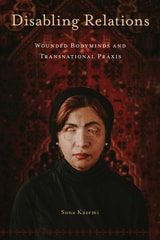
Disabling Relations
Wounded Bodyminds and Transnational PraxisSona Kazemi
Temple University Press, 2026
Kazemi focuses on the disabled dissidents who were incarcerated and tortured by the Islamic regime in the aftermath of the 1979 revolution in Iran, the disabled veterans and civilians wounded during and after the Iran–Iraq War, the disabled survivors of state-sanctioned punitive limb amputation, and the disabled women survivors of acid attacks as a form of gender-based violence. Disabling Relations explains how disabled bodyminds are produced and sustained through the violence of patriarchal, capitalist-imperialist, nationalist, and theocratic social relations. Kazemi uses the theoretical concept of “wounding” as a historical process of becoming and remaining disabled mediated by unequal power relations and “disability consciousness” to show how these survivors come to terms with their disability.
Thinking about critical disability theory in a new way, Kazemi investigates how disability is produced transnationally and the impact that this new theorization can make globally.
In the series Dis/color

Disarmed Democracies
Domestic Institutions and the Use of ForceDavid P. Auerswald
University of Michigan Press, 2000
Disarming Manhood
Roots of Ethical ResistanceDavid A.J. Richards
Ohio University Press, 2005

Discerning Experts
The Practices of Scientific Assessment for Environmental PolicyMichael Oppenheimer, Naomi Oreskes, Dale Jamieson, Keynyn Brysse, Jessica O’Reilly, Matthew Shindell, and Milena Wazeck
University of Chicago Press, 2019
Discerning Experts uncovers factors that can generate systematic bias and error, and recommends how the process can be improved. As the first study of the internal workings of large environmental assessments, this book reveals their strengths and weaknesses, and explains what assessments can—and cannot—be expected to contribute to public policy and the common good.

Disciplining Gender
Rhetorics of Sex Identity in Contemporary U.S. CultureJohn M. Sloop
University of Massachusetts Press, 2004
An expert on the rhetoric of the mass media, John M. Sloop has written several books on how the spoken and written word can influence political and cultural debate. In Disciplining Gender, he turns his attention to a topic that has attracted widespread public discussion—the treatment of gender ambiguity in American culture. He offers critical readings of five cases, showing the extent to which, in each instance, public discourse and media representations have served to reinforce dominant norms and constrain or “discipline” any behavior that blurs or subverts conventional gender boundaries.
The five cases include John/Joan or David Reimer, Brandon Teena, k.d. lang, Janet Reno, and Barry Winchell/Calpernia Addams. Sloop draws on queer theory and research in the field of critical rhetoric to examine representations of “gender trouble” in these much-publicized stories. In each case, he provides a comprehensive analysis of the public discussions of their significance. In short, rather than simply study the people and circumstances involved in each case, he examines the public meanings attached to them and the implications of those meanings for how contemporary culture comes to understand what “man” and “woman” mean and which sexual behaviors are appropriate and inappropriate.
In highlighting the ideological constraints imposed by our society, Sloop also suggests the ways that these constraints might be loosened and understandings of gender and sexuality diversified.

Discrimination in Modern Japan
Case Studies in Identity PoliticsJ. Mark Ramseyer
University of Chicago Press, 2023
In this book, J. Mark Ramseyer, a noted authority on Japan looks at discrimination against groups in Japanese society, focusing on the Korean, Okinawan, and Burakumin groups. Ramseyer asks why they experience discrimination in Japan, an unusually homogeneous society. Is it because of some prejudice on the part of the majority that prevents their integration into mainstream Japanese society? Or is it because some of the dynamics within the group create incentives for the group to stay together and to be on the fringes of society?
Ramseyer argues that the real explanation is the latter, and each of these three groups has been victimized by its own leadership. Precisely because the groups are dysfunctional, members of the group cannot control members who would appoint themselves group leaders. The result has been the capture of leadership positions by people who manipulate the group to their own private advantage and to the detriment of the group as a whole.
Disneyland Politics
How a Medium-Size City and Corporate Giant CoexistPeter F. Burns, Matthew O. Thomas, and Max R. Bieganski
Temple University Press, 2026
Disneyland Politics is a cogent examination of this urban power struggle, which has been playing out for 70 years. The authors show how the city was initially bound to the Disneyland Imperative, which placed the theme park above everything else in the city, including other economic development projects. However, starting in the 1990s, citizens pushed back against the corporation and its supporters, wanting a more balanced public policy agenda and ultimately loosening the stranglehold Disneyland had over the city’s political order.
Recounting the history of Disney’s power in action and the tension between democratic governance and reliance on private investment, Disneyland Politics illustrates how those who pursue alternative agendas attempt to get their way, and how the fight for a more balanced public policy agenda has changed local power dynamics to be less favorable to Disneyland over time.
In the series Urban Life, Landscape, and Policy

Displacement, Diaspora, and Geographies of Identity
Smadar Lavie and Ted Swedenburg, eds.
Duke University Press, 1996
This volume exemplifies a cross-disciplinary cultural studies and a concept of culture rooted in lived experience as well as textual readings. Anthropologists and scholars from related fields deploy a range of methodologies and styles of writing to blur and complicate conventional dualisms between authors and subjects of research, home and away, center and periphery, and first and third world. Essays discuss topics such as Rai, a North African pop music viewed as westernized in Algeria and as Arab music in France; the place of Sephardic and Palestinian writers within Israel’s Ashkenazic-dominated arts community; and the use and misuse of the concept “postcolonial” as it is applied in various regional contexts.
In exploring histories of displacement and geographies of identity, these essays call for the reconceptualization of theoretical binarisms such as modern and postmodern, colonial and postcolonial. It will be of interest to a broad spectrum of scholars and students concerned with postmodern and postcolonial theory, ethnography, anthropology, and cultural studies.
Contributors. Norma Alarcón, Edward M. Bruner, Nahum D. Chandler, Ruth Frankenberg, Joan Gross, Dorinne Kondo, Kristin Koptiuch, Smadar Lavie, Lata Mani, David McMurray, Kirin Narayan, Greg Sarris, Ted Swedenburg
Diverse by Design
Literacy Education within Multicultural InstitutionsChristopher Schroeder
Utah State University Press, 2011
Diversity, despite what we say, disturbs us. In the U.S., we debate linguistic rights, the need for an official language, and educational policies for language minority students. On the one hand, we believe in the rights of individuals, including (at least in the academy) the right to one’s own language. On the other hand, we sponsor a single common language, monolingual and standard, for full participation and communication in both the academy and in U.S. society.
In Diverse by Design, Christopher Schroeder reports on an institutional case study conducted at an officially designated Hispanic-Serving Institution. He gives particular attention to a cohort of Latino students in a special admissions program, to document their experience of a program designed to help students surmount the “obstacle” that ethnolinguistic diversity is perceived to be.
Ultimately, Schroeder argues for reframing multilingualism and multiculturalism, not as obstacles, but as intellectual resources to exploit. While diversity might disturb us, we can overcome its challenges by a more expansive sense of social identity. In an increasingly globalized society, literacy ideologies are ever more critical to educational equity, and to human lives.

Diversity in Open-Air Site Structure across the Pleistocene/Holocene Boundary
Kristen A. Carlson
University Press of Colorado, 2021
Open-air sites are difficult for researchers to locate and, because of depositional processes, often more difficult to interpret; they contain many superimposed events but often show evidence of only the most recent. Working to overcome the limitations of data and poor preservation, using decades of prior research and new analytical tools, and diverging from a one-size-fits-all mode of interpretation, the contributors to this volume offer fresh insight into the formation and taphonomy of open-air sites.
Contributors: Douglas B. Bamforth, Ian Buvit, Brian J. Carter, Robin Cordero, Robert Dello-Russo, George C. Frison, Kelly E. Graf, Bruce B. Huckell, Michael A. Jochim, Joshua D. Kapp, Robert L. Kelly, Aleksander V. Konstantinov, Banks Leonard, Madeline E. Mackie, Christopher W. Merriman, Matthew J. O’Brien, Spencer Pelton, Neil N. Puckett, Beth Shapiro, Todd A. Surovell, Karisa Terry, Steve Teteak, Robert Yohe
Diversity, Equity, and Inclusion in Action
Planning, Leadership, and ProgrammingChristine Bombaro
American Library Association, 2020
All too often, in a hurried attempt to “catch up,” diversity training can create division among staff or place undue burdens on a handful of employees. Instead, academic libraries need approaches to diversity, equity, and inclusion (DEI) that position these priorities as ongoing institutional and professional goals. This book’s model programs will help academic libraries do exactly that, sharing a variety of initiatives that possess clear goals, demonstrable outcomes, and reproducible strategies. Librarians, administrators, and directors will all benefit from the programs detailed inside, which include such topics as
- a university library’s community of practice for interactions and learning around DEI;
- cultural competency training to create more welcoming instruction spaces;
- student workshops on literature searches that mitigate bias;
- overcoming the historic tendency to marginalize LGBTQ+ representation in archives;
- a curriculum and design workshop that moved from discussing social values to embedding them in actions;
- the founding of a library-led LGBT club for students at a rural community college;
- a liberal arts college’s retention-boosting program for first-generation students;
- tailoring a collection and library services to the unique needs of student veterans; and
- a framework for moving from diversity to equity and inclusion, toward a goal of social justice.