Results by title
1668 books match the query 'Popular culture' and 70 start with d
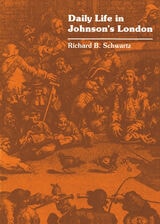
Daily Life in Johnson's London
Richard B. Schwartz
University of Wisconsin Press, 1983
"Outstanding. . . . The author packs a remarkable quantity of detail into a small space, even including a discussion of price and wage figures that will be intelligible to Americans [today]. . . . His prose is lucid, graceful, lively. Generously illustrated, the book also includes an extensive bibliography."—Choice
"An excellent source for English Literature and history students studying this period or Samuel Johnson."—Booklist
Dan de Quille
Dwayne Kling
University of Nevada Press, 1990
A biography and anthology of William Wright (1829–1898), better known by the pen name Dan DeQuille or Dan De Quille, an American author, journalist, and humorist. He was best known for his written accounts of the people, events, and silver mining operations on the Comstock Lode at Virginia City, Nevada, including his non-fiction book History of the Big Bonanza (American Publishing Company, 1876).
DeQuille was on the staff of the (Virginia City) Territorial Enterprise for over thirty years, and his writings were also printed in other publications throughout the country and abroad. Highly regarded for his knowledge of silver mining techniques and his ability to explain them in simple terms, he was also appreciated for his humor, similar in style to that of his associate and friend Mark Twain, and of a type very popular in the United States at that time, now referred to as the Sagebrush School literary genre.
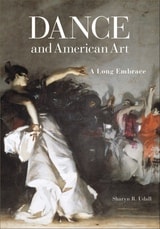
Dance and American Art
A Long EmbraceSharyn R. Udall
University of Wisconsin Press, 2012
From ballet to burlesque, from the frontier jig to the jitterbug, Americans have always loved watching dance, whether in grand ballrooms, on Mississippi riverboats, or in the streets. Dance and American Art is an innovative look at the elusive, evocative nature of dance and the American visual artists who captured it through their paintings, sculpture, photography, and prints from the early nineteenth century through the mid-twentieth century. The scores of artists discussed include many icons of American art: Winslow Homer, George Caleb Bingham, Mary Cassatt, James McNeill Whistler, Alexander Calder, Joseph Cornell, Edward Steichen, David Smith, and others.
As a subject for visual artists, dance has given new meaning to America’s perennial myths, cherished identities, and most powerful dreams. Their portrayals of dance and dancers, from the anonymous to the famous—Anna Pavlova, Isadora Duncan, Loïe Fuller, Josephine Baker, Martha Graham—have testified to the enduring importance of spatial organization, physical pattern, and rhythmic motion in creating aesthetic form.
Through extensive research, sparkling prose, and beautiful color reproductions, art historian Sharyn R. Udall draws attention to the ways that artists’ portrayals of dance have defined the visual character of the modern world and have embodied culturally specific ideas about order and meaning, about the human body, and about the diverse fusions that comprise American culture.

Dance of the Sleepwalkers
The Dance Marathon FadFrank M. Calabria
University of Wisconsin Press, 1993
Dancing Ghosts
Native American And Christian Syncretism In Mary Austin's WorkMark T. Hoyer
University of Nevada Press, 1998
A significant and innovative contribution to Austin studies. How did an Illinois Methodist homesteader in the West come to create one of the most significant cosmological syntheses in American literature? In this study, Hoyer draws on his own knowledge of biblical religion and Native American cultures to explore Austin's creation of the "mythology of the American continent" she so valued. Austin lived in and wrote about "the land of little rain," semiarid and arid parts of California and Nevada that were home to the Northern Paiute, Shoshone, Interior Chumash, and Yokut peoples. Hoyer makes new and provocative connections between Austin and spiritual figures like Wovoka, the prophet of the Ghost Dance religion, and writers like Zitkala-sa and Mourning Dove, and he provides a particularly fine reading of Cogowea.
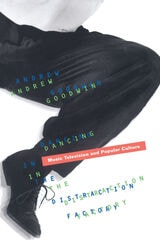
Dancing In The Distraction Factory
Music Television and Popular CultureAndrew Goodwin
University of Minnesota Press, 1992
Cultural Studies
“Entertaining proof that good sense means good theory, this book is the first to treat music TV as vision and sound. Academically, I had most fun applauding Andrew Goodwin’s elegant skewering of postmodernists; as a rock fan I was constantly startled by Goodwin’s exposes of my most deeply held prejudices. I’m now convinced; there’s much more to MTV than meets the eye.”Simon FrithThe John Logie Baird Centre“Dancing in the Distraction Factory is the best study of MTV I have read. At a time when many critics dismiss music videos either as advertisements for interchangeable commodities or as tiny, soundless movies, Goodwin manages both to analyze the business components of this new medium and also to take videos seriously as complex cultural texts involving music, visuals, stars, and much else. Dancing in the Distraction Factory is a smart book; it will have an impact on the debates surrounding popular culture, and also offers a great deal that will interest the pop music fan.”Susan McClaryMcGill University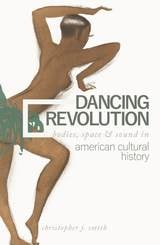
Dancing Revolution
Bodies, Space, and Sound in American Cultural HistoryChristopher J. Smith
University of Illinois Press, 2019
Dancing Revolution presents richly diverse case studies to illuminate these patterns of movement and influence in movement and sound in the history of American public life. Christopher J. Smith spans centuries, geographies, and cultural identities as he delves into a wide range of historical moments. These include the God-intoxicated public demonstrations of Shakers and Ghost Dancers in the First and Second Great Awakenings; creolized antebellum dance in cities from New Orleans to Bristol; the modernism and racial integration that imbued twentieth-century African American popular dance; the revolutionary connotations behind images of dance from Josephine Baker to the Marx Brothers; and public movement's contributions to hip hop, antihegemonic protest, and other contemporary transgressive communities’ physical expressions of dissent and solidarity.
Multidisciplinary and wide-ranging, Dancing Revolution examines how Americans turned the rhythms of history into the movement behind the movements.
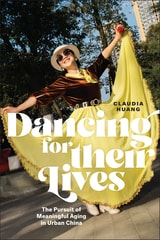
Dancing for Their Lives
The Pursuit of Meaningful Aging in Urban ChinaClaudia Huang
Rutgers University Press, 2025
Dancing in Spite of Myself
Essays on Popular CultureLawrence Grossberg
Duke University Press, 1997
In the course of conducting this exploration into the meaning of "popularity," he investigates the nature of fandom, the social effects of rock music and youth culture, and the possibilities for understanding the history of popular texts and practices. Describing what he calls "the postmodernity of everyday life," Grossberg offers important insights into the relation of pop music to issues of postmodernity and inton the growing power of the new cultural conservatism and its relationship to "the popular." Exploring the limits of existing theories of hegemony in cultural studies, Grossberg reveals the ways in which popular culture is being mobilized in the service of economic and political struggles. In articulating his own critical practice, Grossberg surveys and challenges some of the major assumptions of popular culture studies, including notions of domination and resistance, mainstream and marginality, and authenticity and incorporation.
Dancing in Spite of Myself provides an introduction to contemporary theories of popular culture and a clear statement of relationships among theories of the nature of rock music, postmodernity, and conservative hegemony.

Danger, Man Working
Writing from the Heart, the Gut, and the Poison Ivy PatchArenas
Wisconsin Historical Society Press, 2017
"Every writer has advice for aspiring writers. Mine is predicated on formative years spent cleaning my father’s calf pens: Just keep shoveling until you’ve got a pile so big, someone has to notice. The fact that I cast my life’s work as slung manure simply proves that I recognize an apt metaphor when I accidentally stick it with a pitchfork. . . . Poetry was my first love, my gateway drug—still the poets are my favorites—but I quickly realized I lacked the chops or insights to survive on verse alone. But I wanted to write. Every day. And so I read everything I could about freelancing, and started shoveling."
The pieces gathered within this book draw on fifteen years of what Michael Perry calls "shovel time"—a writer going to work as the work is offered. The range of subjects is wide, from musky fishing, puking, and mountain-climbing Iraq War veterans to the frozen head of Ted Williams. Some assignments lead to self-examination of an alarming magnitude (as Perry notes, "It quickly becomes obvious that I am a self-absorbed hypochondriac forever resolving to do better nutritionally and fitness-wise but my follow-through is laughable.") But his favorites are those that allow him to turn the lens outward: "My greatest privilege," he says, "lies not in telling my own story; it lies in being trusted to tell the story of another."
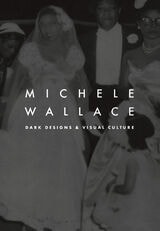
Dark Designs and Visual Culture
Michele Wallace
Duke University Press, 2004
Beginning with a new introduction in which Wallace reflects on her life and career, this volume includes other autobiographical essays; articles focused on popular culture, the arts, and literary theory; and explorations of issues in black visual culture. Wallace discusses growing up in Harlem; how she dealt with the media attention and criticism she received for Black Macho and the Myth of the Superwoman, which was published when she was just twenty-seven years old; and her relationship with her family, especially her mother, the well-known artist Faith Ringgold. The many articles devoted to black visual culture range from the historical tragedy of the Hottentot Venus, an African woman displayed as a curiosity in nineteenth-century Europe, to films that sexualize the black body—such as Watermelon Woman, Gone with the Wind, and Paris Is Burning. Whether writing about the Anita Hill–Clarence Thomas hearings, rap music, the Million Man March, Toshi Reagon, multiculturalism, Marlon Riggs, or a nativity play in Bedford Stuyvesant, Wallace is a bold, incisive critic. Dark Designs and Visual Culture brings the scope of her career and thought into sharp focus.
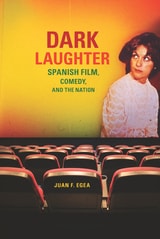
Dark Laughter
Spanish Film, Comedy, and the NationJuan F. Egea
University of Wisconsin Press, 2013
Egea begins his analysis with General Franco's dictatorship in the 1960s—a regime that opened the country to new economic forces while maintaining its repressive nature—exploring key works by Luis García Berlanga, Marco Ferreri, Fernando Fernán-Gómez, and Luis Buñuel. Dark Laughter then moves to the first films of Pedro Almodóvar in the early 1980s during the Spanish political transition to democracy before examining Alex de la Iglesia and the new dark comedies of the 1990s. Analyzing this younger generation of filmmakers, Egea traces dark comedy to Spain's displays of ultramodernity such as the Universal Exposition in Seville and the Barcelona Olympic Games.
At its core, Dark Laughter is a substantial inquiry into the epistemology of comedy, the intricacies of visual modernity, and the relationship between cinema and a wider framework of representational practices.
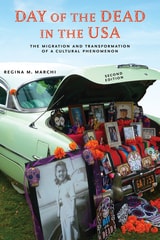
Day of the Dead in the USA, Second Edition
The Migration and Transformation of a Cultural PhenomenonRegina M Marchi
Rutgers University Press, 2022
Focusing on the power of public ritual to serve as a communication medium, this revised and updated edition combines a mix of ethnography, historical research, oral history, and critical cultural analysis to explore the manifold and unexpected transformations that occur when the tradition is embraced by the mainstream. A testament to the complex role of media and commercial forces in constructions of ethnic identity, Day of the Dead in the USA provides insight into the power of art and ritual to create community, transmit oppositional messages, and advance educational, political, and economic goals.
Today Chicano-style Day of the Dead events take place in all fifty states. This revised edition provides new information about:
- The increase in events across the US, incorporating media coverage and financial aspects,
- Recent political movements expressed in contemporary Day of the Dead celebrations, including #BlackLivesMatter and #MeToo
- Greater media coverage and online presence of the celebration in blogs, websites, and streaming video
- Día de los Muertos themes and iconography in video games and films
- The proliferation of commercialized merchandise such as home goods, apparel, face paints and jewelry at mainstream big box and web retailers, as well as the widespread proliferation of calavera-themed decorations and costumes for Halloween
- 24 new full color illustrations
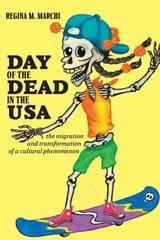
Day of the Dead in the USA
The Migration and Transformation of a Cultural PhenomenonMarchi, Regina M
Rutgers University Press, 2009
Focusing on the power of ritual to serve as a communication medium, Regina M. Marchi combines a mix of ethnography, historical research, oral history, and critical cultural analysis to explore the manifold and unexpected transformations that occur when the tradition is embraced by the mainstream. A testament to the complex nature of ethnic identity, Day of the Dead in the USA provides insight into the power of ritual to create community, transmit oppositional messages, and advance educational, political, and economic goals.
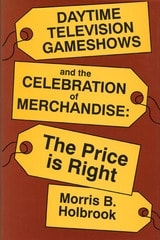
Daytime Television Gameshows and the Celebration of Merchandise
The Price Is RightMorris B. Holbrook
University of Wisconsin Press, 1993
A neglected genre that promises to shed light on the culture of consumption appears in the form of the daytime television game shows whose hegemonic message seems to convey and to justify a widespread obeisance to the mandate of materialism. A close analysis of the longest running game show, The Price Is Right, suggests that all facets of this program combine to reinforce its central meaning as a ritualistic validation of consumption-oriented greed.
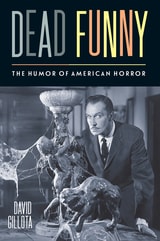
Dead Funny
The Humor of American HorrorDavid Gillota
Rutgers University Press, 2023
Dead Funny locates humor as a key element in the American horror film, one that is not merely used for extraneous “comic relief” moments but often serves to underscore major themes, intensify suspense, and disorient viewers. Each chapter focuses on a different comic style or device, from the use of funny monsters and scary clowns in movies like A Nightmare on Elm Street to the physical humor and slapstick in movies ranging from The Evil Dead to Final Destination. Along the way, humor scholar David Gillota explores how horror films employ parody, satire, and camp to comment on gender, sexuality, and racial politics. Covering everything from the grotesque body in Freaks to the comedy of awkwardness in Midsommar, this book shows how integral humor has been to the development of the American horror film over the past century.
Deadly Excitements
Shadows PhantomsRobert Sampson
University of Wisconsin Press, 1989

Dear World
Contemporary Uses of the DiaryKylie Cardell
University of Wisconsin Press, 2014
In Dear World, Kylie Cardell is sensitive to how changes to our notions of privacy and the personal—spurred by the central presence the Internet has come to occupy in our daily lives—impact how and why diaries are written, and for whom. She considers what these new uses of the diary tell us about the cultural politics of self-representation in a time of mass attention to (and anxiety about) the personal. Cardell sees the twenty-first-century diary as a vibrant and popular cultural practice as much as a literary form, one that plays a key role in mass-mediated notions of authenticity, subjectivity, and truth. Dear World provides much-needed new attention to the innovation, evolution, and persistence of a familiar yet complex autobiographical mode.
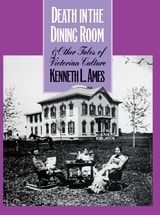
Death in the Dining Room and Other Tales of Victorian Culture
Kenneth Ames
Temple University Press, 1995

Decolonizing Science in Latin American Art
Joanna Page
University College London, 2021
Projects that bring the sciences into art are increasingly being exhibited in galleries and museums across the world. In a surge of publications on the subject, few have focused on regions beyond the Global North. This book assembles a new corpus of art-science projects by Latin American artists, ranging from big-budget collaborations with NASA and MIT to homegrown experiments in artists’ kitchens. Page shows how these artworks also “decolonize” science by resisting the exploitation of the natural world that has attended the creation of knowledge in western contexts. Instead, the artists featured in this volume emphasize the subjectivity and intelligence of other species, staging new forms of collaboration and co-creativity beyond the human. Establishing critical dialogues between Western science and indigenous thought, this book interrogates how artistic practices may communicate, extend, supplement, and challenge scientific ideas.
Dehexing Sex
Russian Womanhood During and After GlasnostHelena Goscilo
University of Michigan Press, 1996
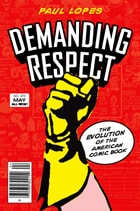
Demanding Respect
The Evolution of the American Comic BookPaul Lopes
Temple University Press, 2009
How is it that comic books—the once-reviled form of lowbrow popular culture—are now the rage for Hollywood blockbusters, the basis for bestselling video games, and the inspiration for literary graphic novels? In Demanding Respect, Paul Lopes immerses himself in the discourse and practices of this art and subculture to provide a social history of the American comic book over the last 75 years.
Lopes analyzes the cultural production, reception, and consumption of American comic books throughout history. He charts the rise of superheroes, the proliferation of serials, and the emergence of graphic novels. Demanding Respect explores how comic books born in the 1930s were perceived as a "menace" in the 1950s, only to later become collectors’ items and eventually "hip" fiction in the 1980s through today.
Using a theoretical framework to examine the construction of comic book culture—the artists, publishers, readers and fans— Lopes explains how and why comic books have captured the public's imagination and gained a fanatic cult following.
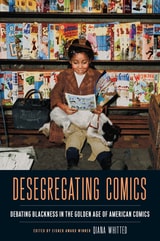
Desegregating Comics
Debating Blackness in the Golden Age of American ComicsQiana Whitted
Rutgers University Press, 2023
Shortlisted for the Best Academic / Scholarly Work Eisner Award
Honorable Mention for the Harry Shaw and Katrina Hazzard-Donald Award for Outstanding Work in African-American Popular Culture Studies from the Popular Culture Association
Some comics fans view the industry’s Golden Age (1930s-1950s) as a challenging time when it comes to representations of race, an era when the few Black characters appeared as brutal savages, devious witch doctors, or unintelligible minstrels. Yet the true portrait is more complex and reveals that even as caricatures predominated, some Golden Age comics creators offered more progressive and nuanced depictions of Black people.
Desegregating Comics assembles a team of leading scholars to explore how debates about the representation of Blackness shaped both the production and reception of Golden Age comics. Some essays showcase rare titles like Negro Romance and consider the formal innovations introduced by Black comics creators like Matt Baker and Alvin Hollingsworth, while others examine the treatment of race in the work of such canonical cartoonists as George Herriman and Will Eisner. The collection also investigates how Black fans read and loved comics, but implored publishers to stop including hurtful stereotypes. As this book shows, Golden Age comics artists, writers, editors, distributors, and readers engaged in heated negotiations over how Blackness should be portrayed, and the outcomes of those debates continue to shape popular culture today.
Designing the Teenage Girl
The Debut of a Popular CharacterMary Celeste Kearney
University of Texas Press, 2026
Explores the forgotten first wave of American teen-girl entertainment from the late 1920s through the early 1950s.
During the mid-twentieth century, American entertainment featuring teenage girls blossomed. From short stories to plays, films, comics, radio programs, and television shows, writers and other creative professionals developed a new character type that helped to define midcentury girlhood and teen culture. Designing the Teenage Girl uncovers the largely forgotten first wave of US teen-girl entertainment, tracing its emergence in the 1920s through a thirty-year production cycle that spanned all sectors of American popular culture.
Beginning with short stories such as Sally Benson’s Junior Miss and following their adaptations, Kearney reveals how teen-girl narratives circulated across industries. Drawing on archival research and analysis of visual, narrative, and sound design, Kearney situates these texts within the identity politics of the period. While midcentury teen-girl entertainment privileged white, middle-class femininity, it also contained alternative visions of girlhood that complicated heteronormative and patriarchal expectations. This study reframes the origins of teen-girl entertainment and demonstrates how its aesthetic strategies and industrial practices continue to shape representations of girlhood today.
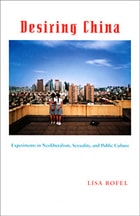
Desiring China
Experiments in Neoliberalism, Sexuality, and Public CultureLisa Rofel
Duke University Press, 2007
Drawing on her research over the past two decades among urban residents and rural migrants in Hangzhou and Beijing, Rofel analyzes the meanings that individuals attach to various public cultural phenomena and what their interpretations say about their understandings of post-socialist China and their roles within it. She locates the first broad-based public debate about post-Mao social changes in the passionate dialogues about the popular 1991 television soap opera Yearnings. She describes how the emergence of gay identities and practices in China reveals connections to a transnational network of lesbians and gay men at the same time that it brings urban/rural and class divisions to the fore. The 1999–2001 negotiations over China’s entry into the World Trade Organization; a controversial women’s museum; the ways that young single women portray their longings in relation to the privations they imagine their mothers experienced; adjudications of the limits of self-interest in court cases related to homoerotic desire, intellectual property, and consumer fraud—Rofel reveals all of these as sites where desiring subjects come into being.
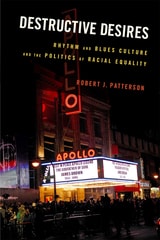
Destructive Desires
Rhythm and Blues Culture and the Politics of Racial EqualityRobert J. Patterson
Rutgers University Press, 2019

Dethroning the Deceitful Pork Chop
Rethinking African American Foodways from Slavery to ObamaJennifer Jensen Wallach
University of Arkansas Press, 2015
2017 Association for the Study of Food and Society Award, best edited collection.
The fifteen essays collected in Dethroning the Deceitful Pork Chop utilize a wide variety of methodological perspectives to explore African American food expressions from slavery up through the present. The volume offers fresh insights into a growing field beginning to reach maturity. The contributors demonstrate that throughout time black people have used food practices as a means of overtly resisting white oppression—through techniques like poison, theft, deception, and magic—or more subtly as a way of asserting humanity and ingenuity, revealing both cultural continuity and improvisational finesse. Collectively, the authors complicate generalizations that conflate African American food culture with southern-derived soul food and challenge the tenacious hold that stereotypical black cooks like Aunt Jemima and the depersonalized Mammy have on the American imagination. They survey the abundant but still understudied archives of black food history and establish an ongoing research agenda that should animate American food culture scholarship for years to come.

Developing Dialogues
Indigenous and Ethnic Community Broadcasting in AustraliaSusan Forde, Kerrie Foxwell, and Michael Meadows
Intellect Books, 2009
The traditional audience/producer boundary has collapsed in indigenous and ethnic community broadcasting, and this is the first comprehensive study of this homegrown media sector. Based on firsthand research of radio and television audiences in Australia, the authors argue that community radio and television worldwide performs an essential service for indigenous and ethnic audiences, empowering them at various levels, fostering active citizenry, and enhancing democracy. Developing Dialogues offers international researchers a new perspective on Australian community broadcasting and presents evidence of global trends in the media industry.
Devouring Cultures
Perspectives on Food, Power, and Identity from the Zombie Apocalypse to Downton AbbeyCammie M. Sublette
University of Arkansas Press, 2016
Devouring Cultures brings together contributors from a wide range of disciplines including media studies, rhetoric, gender studies, philosophy, anthropology, literary criticism, film criticism, race theory, history, and linguistics to examine the ways food signifies both culture and identity.
These scholars look for answers to intriguing questions: What does our choice of dining house say about our social class? Can restaurants teach us about a culture? How does food operate in Downton Abbey? How does food consumption in zombie apocalypse films and apocalyptic literature relate to contemporary food-chain crises and food nostalgia? What aspects of racial conflict, assimilation, and empowerment may be represented in restaurant culture and food choice?
Restaurants, from their historical development to their modern role as surrogate kitchen, are studied as markers of gender, race, and social class, and also as forums for the exhibition of tensions or spaces where culture is learned through the language of food. Food, as it is portrayed in literature, movies, and television, is illuminated as a platform for cultural assimilation, a way for the oppressed to find agency, or even a marker for the end of a civilization.
The essays in Devouring Cultures show how our choices about what we eat, where we eat, and with whom we eat are linked to identity and meaning and how the seemingly simple act of consumption has implications that extend far beyond sustenance.
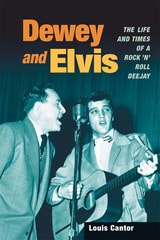
Dewey and Elvis
The Life and Times of a Rock 'n' Roll DeejayLouis Cantor
University of Illinois Press, 2010
Louis Cantor illuminates Phillips's role in turning a huge white audience on to previously forbidden race music. Phillips's zeal for rhythm and blues legitimized the sound and set the stage for both Elvis's subsequent success and the rock 'n' roll revolution of the 1950s. Using personal interviews, documentary sources, and oral history collections, Cantor presents a personal view of the disc jockey while restoring Phillips's place as an essential figure in rock 'n' roll history.
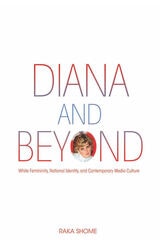
Diana and Beyond
White Femininity, National Identity, and Contemporary Media CultureRaka Shome
University of Illinois Press, 2014
Raka Shome investigates the factors that led to this defining cultural/political moment and unravels just what the Diana phenomenon represented for comprehending the relation between white femininity and the nation in postcolonial Britain and its connection to other white female celebrity figures in the millennium. Digging into the media and cultural artifacts that circulated in the wake of Diana's death, Shome investigates a range of theoretical issues surrounding motherhood and the production of national masculinities, global humanitarianism, transnational masculinities, the intersection of fashion and white femininity, and spirituality and national modernity. Her analysis explores how images of white femininity in popular culture intersect with issues of race, gender, class, sexuality, and transnationality in the performance of Anglo national modernities.
Moving from ideas on the positioning of privileged white women in global neoliberalism to the emergence of new formations of white femininity in the millennium , Diana and Beyond fearlessly explains the late princess's never-ending renaissance and ongoing cultural relevance.
Diasporas in the New Media Age
Identity, Politics, and CommunityAndoni Alonso
University of Nevada Press, 2010
The explosion of digital information and communication technologies has influenced almost every aspect of contemporary life. Diasporas in the New Media Age is the first book-length examination of the social use of these technologies by emigrants and diasporas around the world. The eighteen original essays in the book explore the personal, familial, and social impact of modern communication technology on populations of European, Asian, African, Caribbean, Middle Eastern, and Latin American emigrants. It also looks at the role and transformation of such concepts as identity, nation, culture, and community in the era of information technology and economic globalization. The contributors, who represent a number of disciplines and national origins, also take a range of approaches—empirical, theoretical, and rhetorical—and combine case studies with thoughtful analysis. Diasporas in the New Media Age is both a discussion of the use of communication technologies by various emigrant groups and an engaging account of the immigrant experience in the contemporary world. It offers important insights into the ways that dispersed populations are using digital media to maintain ties with their families and homeland, and to create new communities that preserve their culture and reinforce their sense of identity. In addition, the book is a significant contribution to our understanding of the impact of technology on society in general.
Difficult Reputations
Collective Memories of the Evil, Inept, and ControversialGary Alan Fine
University of Chicago Press, 2001
Presenting essays on America's most reviled traitor, its worst president, and its most controversial literary ingénue (Benedict Arnold, Warren G. Harding, and Lolita), among others, sociologist Gary Alan Fine analyzes negative, contested, and subcultural reputations. Difficult Reputations offers eight compelling historical case studies as well as a theoretical introduction situating the complex roles in culture and history that negative reputations play.
Arguing the need for understanding real conditions that lead to proposed interpretations, as well as how reputations are given meaning over time, this book marks an important contribution to the sociologies of culture and knowledge.
Digging into Popular Culture
Theories and Methodologies in Archeology, Anthropology, and Other FieldsPat Browne
University of Wisconsin Press, 1991
This volume presents archeological studies in conjunction with cultural anthropological studies as a means to enhance popular culture studies. Scholar Malcolm K. Shuman points out that the study of archeology must be careful to chart the total human content of an artifact, because archeology “is a profoundly human (and humanizing) endeavor that cannot be divorced from the matrix of human life.” The other ten essays cover aspects of archeology and cultural anthropology, and the authors are meticulous in studying their subject in context.
Digital Cinema
Stephen Prince
Rutgers University Press, 2019
Stephen Prince offers a clear, concise account of how digital cinema both extends longstanding traditions of filmmaking and challenges some fundamental assumptions about film. It is essential reading for anyone interested in understanding how movies are shot, produced, distributed, and consumed in the twenty-first century.
Digital Music Videos
Shaviro, Steven
Rutgers University Press, 2017
As these videos have proliferated online, they have become more widely accessible than ever before. In Digital Music Videos, Steven Shaviro examines the ways that music videos interact with and change older media like movies and gallery art; the use of technologies like compositing, motion control, morphing software, and other digital special effects in order to create a new organization of time and space; how artists use music videos to project their personas; and how less well known musicians use music videos to extend their range and attract attention.
Surveying a wide range of music videos, Shaviro highlights some of their most striking innovations while illustrating how these videos are creating a whole new digital world for the music industry.
Dignity
Lower Income Women Tell of Their Lives and StrugglesFran Leeper Buss
University of Michigan Press, 1985
Dime Novel Roundup
Annotated Index, 1931–1981Michael L. Cook
University of Wisconsin Press, 1983
This book includes a chronological listing of issues of the Dime Novel Roundup, which was published for over fifty years. It also features an index to the contents of the Dime Novel Roundup.
Dinner in Camelot
The Night America's Greatest Scientists, Writers, and Scholars Partied at the Kennedy White HouseJoseph A. Esposito
University Press of New England, 2018

Dionysus in Literature
Essays on Literary MadnessEdited by Branimir M. Rieger
University of Wisconsin Press, 1994
In this anthology, outstanding authorities present their assessments of literary madness in a variety of topics and approaches. The entire collection of essays presents intriguing aspects of the Dionysian element in literature.

Diplomas and Thatch Houses
Asserting Tradition in a Changing MicronesiaJuliana Flinn
University of Michigan Press, 1992

Disability and Fandom
Katherine Anderson Howell
University of Iowa Press, 2024
Anderson Howell examines how key fandom platforms—including cons, Tumblr, Archive of Our Own, Instagram, Reddit, and TikTok—set up user interfaces that may mask their true values, potentially decreasing access and creating a system by which disability remains stigmatized. Readers will find case studies of fan fiction, disability influencers, anti-fans, trolls, and celebrities. The argument is made for incorporating disability into the analytical tools of fandom so that we may begin with better tools and better questions.
Disconnect
Facebook's Affective BondsTero Karppi
University of Minnesota Press, 2018
An urgent examination of the threat posed to social media by user disconnection, and the measures websites will take to prevent it
No matter how pervasive and powerful social media websites become, users always have the option of disconnecting—right? Not exactly, as Tero Karppi reveals in this disquieting book. Pointing out that platforms like Facebook see disconnection as an existential threat—and have undertaken wide-ranging efforts to eliminate it—Karppi argues that users’ ability to control their digital lives is gradually dissipating.
Taking a nonhumancentric approach, Karppi explores how modern social media platforms produce and position users within a system of coded relations and mechanisms of power. For Facebook, disconnection is an intense affective force. It is a problem of how to keep users engaged with the platform, but also one of keeping value, attention, and desires within the system. Karppi uses Facebook’s financial documents as a map to navigate how the platform sees its users. Facebook’s plans to connect the entire globe through satellites and drones illustrates the material webs woven to keep us connected. Karppi analyzes how Facebook’s interface limits the opportunity to opt-out—even continuing to engage users after their physical death. Showing how users have fought to take back their digital lives, Karppi chronicles responses like Web2.0 Suicide Machine, an art project dedicated to committing digital suicide.
For Karppi, understanding social media connectivity comes from unbinding the bonds that stop people from leaving these platforms. Disconnection brings us to the limit of user policies, algorithmic control, and platform politics. Ultimately, Karppi’s focus on the difficulty of disconnection, rather than the ease of connection, reveals how social media has come to dominate human relations.
Discourses of Sexuality
From Aristotle to AIDSDonna C. Stanton, Editor
University of Michigan Press, 1993
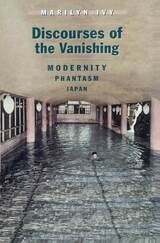
Discourses of the Vanishing
Modernity, Phantasm, JapanMarilyn Ivy
University of Chicago Press, 1995
Ivy shows how a fascination with cultural margins accompanied the emergence of Japan as a modern nation-state. This fascination culminated in the early twentieth-century establishment of Japanese folklore studies and its attempts to record the spectral, sometimes violent, narratives of those margins. She then traces the obsession with the vanishing through a range of contemporary reconfigurations: efforts by remote communities to promote themselves as nostalgic sites of authenticity, storytelling practices as signs of premodern presence, mass travel campaigns, recallings of the dead by blind mediums, and itinerant, kabuki-inspired populist theater.
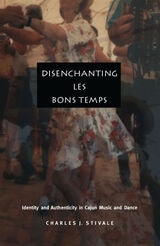
Disenchanting Les Bons Temps
Identity and Authenticity in Cajun Music and DanceCharles J. Stivale
Duke University Press, 2003
Stivale combines his personal knowledge and love of Cajun music and dance with the theoretical insights of Gilles Deleuze and Félix Guattari to consider representations of things Cajun. He examines the themes expressed within the lyrics of the Cajun musical repertoire and reflects on the ways Cajun cultural practices are portrayed in different genres including feature films, documentaries, and instructional dance videos. He analyzes the dynamic exchanges between musicians, dancers, and spectators at such venues as bars and music festivals. He also considers a number of thorny socio-political issues underlying Cajun culture, including racial tensions and linguistic isolation. At the same time, he describes various efforts by contemporary musicians and their fans to transcend the limitations of cultural stereotypes and social exclusion.
Disenchanting Les Bons Temps will appeal to those interested inCajun culture, issues of race and ethnicity, music and dance, and the intersection of French and Francophone studies with Anglo and American cultural studies.
Dislocalism
The Crisis of Globalization and the Remobilizing of AmericanismSarika Chandra
The Ohio State University Press, 2011
Notwithstanding its now extensive, trans-disciplinary bibliography, the full reality of globalization remains less well understood than commonly thought. As an objective, secular phenomenon, globalization has continued to be obscured by ideological and rhetorical strategies that travel under the same name but posit it as simply the abstract-universal other of the local. Dislocalism: The Crisis of Globalization and the Remobilizing of Americanism makes such strategies and the global/local binary they reinforce into objects of critical analysis.
Disney Culture
Wills, John
Rutgers University Press, 2017
Disney Culture proposes that there is still a unifying Disney ethos, one that can be traced back to the corporate philosophy that Walt Disney himself developed back in the 1920s. Yet, as cultural historian John Wills demonstrates, Disney’s values have also adapted to changing social climates. At the same time, the world of Disney has profoundly shaped how Americans view the world.
Wills offers a nuanced take on the corporate ideologies running through animated and live-action Disney movies from Frozen to Fantasia, from Mary Poppins to Star Wars: The Force Awakens. But Disney Culture encompasses much more than just movies as it explores the intersections between Disney’s business practices and its cultural mythmaking. Welcome to “the Disney Way.”
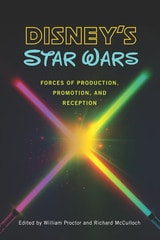
Disney's Star Wars
Forces of Production, Promotion, and ReceptionWilliam Proctor and Richard McCulloch
University of Iowa Press, 2019
Covering the period from Disney’s purchase through the release of The Force Awakens, the book reveals how fans anticipated, interpreted, and responded to the steady stream of production stories, gossip, marketing materials, merchandise, and other sources in the build-up to the movie’s release. From fears that Princess Leia would be turned into a “Disney princess” to collaborative brand management, the authors explore the shifting relationship between fans, texts, and media industries in the context of a crucial rebranding campaign. The result is a fascinating examination of a critical moment in the iconic series’ history.

Dissecting Stephen King
From the Gothic to Literary NaturalismHeidi Strengell
University of Wisconsin Press, 2005
Ultimately, Strengell shows how King shatters our illusions of safety and control: "King places his decent and basically good characters at the mercy of indifferent forces, survival depending on their moral strength and the responsibility they may take for their fellow men."