Results by title
28164 books match the query 'History' and 908 start with d
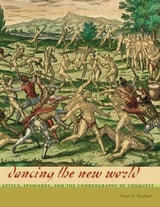
Dancing the New World
Aztecs, Spaniards, and the Choreography of ConquestBy Paul A. Scolieri
University of Texas Press, 2013
Winner, Oscar G. Brockett Book Prize in Dance Research, 2014
Honorable Mention, Sally Banes Publication Prize, American Society for Theatre Research, 2014
de la Torre Bueno® Special Citation, Society of Dance History Scholars, 2013
From Christopher Columbus to “first anthropologist” Friar Bernardino de Sahagún, fifteenth- and sixteenth-century explorers, conquistadors, clerics, scientists, and travelers wrote about the “Indian” dances they encountered throughout the New World. This was especially true of Spanish missionaries who intensively studied and documented native dances in an attempt to identify and eradicate the “idolatrous” behaviors of the Aztec, the largest indigenous empire in Mesoamerica at the time of its European discovery.
Dancing the New World traces the transformation of the Aztec empire into a Spanish colony through written and visual representations of dance in colonial discourse—the vast constellation of chronicles, histories, letters, and travel books by Europeans in and about the New World. Scolieri analyzes how the chroniclers used the Indian dancing body to represent their own experiences of wonder and terror in the New World, as well as to justify, lament, and/or deny their role in its political, spiritual, and physical conquest. He also reveals that Spaniards and Aztecs shared an understanding that dance played an important role in the formation, maintenance, and representation of imperial power, and describes how Spaniards compelled Indians to perform dances that dramatized their own conquest, thereby transforming them into colonial subjects. Scolieri’s pathfinding analysis of the vast colonial “dance archive” conclusively demonstrates that dance played a crucial role in one of the defining moments in modern history—the European colonization of the Americas.
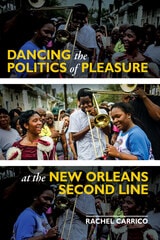
Dancing the Politics of Pleasure at the New Orleans Second Line
Rachel Carrico
University of Illinois Press, 2024
On many Sundays, Black New Orleanians dance through city streets in Second Lines. These processions invite would-be spectators to join in, grooving to an ambulatory brass band for several hours. Though an increasingly popular attraction for tourists, parading provides the second liners themselves with a potent public expression of Black resistance.
Rachel Carrico examines the parading bodies in motion as a form of negotiating and understanding power. Seeing pleasure as a bodily experience, Carrico reveals how second liners’ moves link joy and liberation, self and communal identities, play and dissent, and reclamations of place. As she shows, dancers’ choices allow them to access the pleasure of reclaiming self and city through motion and rhythm while expanding a sense of the possible in the present and for the future.
In-depth and empathetic, Dancing the Politics of Pleasure at the New Orleans Second Line blends analysis with a chorus of Black voices to reveal an indelible facet of Black culture in the Crescent City.
Dancing with the Dead
Memory, Performance, and Everyday Life in Postwar OkinawaChristopher T. Nelson
Duke University Press, 2008
Nelson analyzes the practices of specific performers, showing how memories are recalled, bodies remade, and actions rethought as Okinawans work through fragments of the past in order to reconstruct the fabric of everyday life. Artists such as the popular Okinawan actor and storyteller Fujiki Hayato weave together genres including Japanese stand-up comedy, Okinawan celebratory rituals, and ethnographic studies of war memory, encouraging their audiences to imagine other ways to live in the modern world. Nelson looks at the efforts of performers and activists to wrest the Okinawan past from romantic representations of idyllic rural life in the Japanese media and reactionary appropriations of traditional values by conservative politicians. In his consideration of eisā, the traditional dance for the dead, Nelson finds a practice that reaches beyond the expected boundaries of mourning and commemoration, as the living and the dead come together to create a moment in which a new world might be built from the ruins of the old.
Dancing with the Modernist City
Metropolitan Dance Texts around 1900Wesley Lim
University of Michigan Press, 2024
Drawing on cultural, literary, dance, performance, and queer studies, Dancing with the Modernist City analyzes an array of material from 1896 to 1914—essays, novels, short stories, poetry, newspaper articles, photographs, posters, drawings, and early film. It argues that these writers and artists created a genre called the metropolitan dance text, which depicts dancing figures not on a traditional stage, but with the streets, advertising pillars, theaters, cafes, squares, and even hospitals of an urban setting. Breaking away from the historically male, heteronormative view, this posthumanist mode of writing highlights the visual and episodic unexpectedness of urban encounters. These literary depictions question traditional conceptualizations of space and performance by making the protagonist and the reader feel like they embody the dancer and the movement. In doing so, they upset the conventional depictions of performance and urban spaces in ways paralleling modern dance.
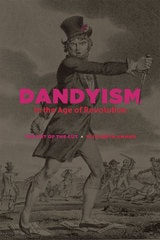
Dandyism in the Age of Revolution
The Art of the CutElizabeth Amann
University of Chicago Press, 2014
In Dandyism in the Age of Revolution, Elizabeth Amann shows that in France, England, and Spain, daring dress became a way of taking a stance toward the social and political upheaval of the period. France is the centerpiece of the story, not just because of the significance of the Revolution but also because of the speed with which its politics and fashions shifted. Dandyism in France represented an attempt to recover a political center after the extremism of the Terror, while in England and Spain it offered a way to reflect upon the turmoil across the Channel and Pyrenees. From the Hair Powder Act, which required users of the product to purchase a permit, to the political implications of the feather in Yankee Doodle’s hat, Amann aims to revise our understanding of the origins of modern dandyism and to recover the political context from which it emerged.
Dane County Place-Names
Frederic G. Cassidy; New introduction by Tracy Will; New foreword by David Medaris
University of Wisconsin Press, 2009
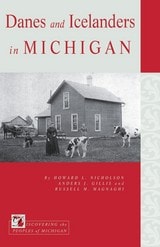
Danes and Icelanders in Michigan
Howard L. Nicholson
Michigan State University Press, 2013
Immigration of Danes and Icelanders to Michigan began in the 1850s and continued well into the twentieth century. Beginning with their origins, this book takes a detailed look at their arrival and settlement in Michigan, answering some key questions: What brought Danes and Icelanders to Michigan? What challenges did they face? How did they adjust and survive here? Where did they settle? What kind of lasting impact have they had on Michigan’s economic and cultural landscape? Extensively researched, this book examines the public and private lives of Danish and Icelandic immigrants in Michigan, drawing from both individual and institutional histories. Shedding new light on the livelihood, traditions, religion, social life, civic organizations, and mutual benefit societies, this thorough, insightful book highlights a small but important population within Michigan’s borders.
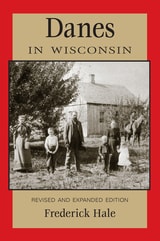
Danes in Wisconsin
Revised and Expanded EditionFrederick Hale
Wisconsin Historical Society Press, 2005
Wisconsin Territory's first Dane arrived in 1829, and by 1860 the state's Danish-born population had reached 1,150. Yet these newcomers remained only a small segment of Wisconsin's increasingly complex cultural mosaic, and the challenges of adapting to life in this new land shaped the Danish experience in the state. In this popular book, now revised and expanded with additional historical photos and documents, Frederick Hale offers a concise introduction to Wisconsin's Danish settlers, exploring their reasons for leaving their homeland, describing their difficult journeys, and examining their adjustments to life on Wisconsin soil.
New to this edition are the selected letters of Danish immigrant Andrew Frederickson. These compelling documents, written over a 40-year span, capture the personal observations of one Dane as he made a new life in Wisconsin.
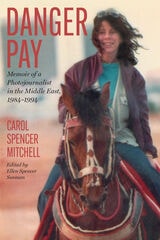
Danger Pay
Memoir of a Photojournalist in the Middle East, 1984-1994By Carol Spencer Mitchell
University of Texas Press, 2008
An engrossing memoir in which a photojournalist records both the precursors to today’s conflicts in the Middle East and her own deeply felt conviction that news coverage of the region actually increases the conflicts there.
"You're going where?" Carol Spencer Mitchell's father demanded as she set off in 1984 to cover the Middle East as a photojournalist for Newsweek and other publications. In this intensely thoughtful memoir, Spencer Mitchell probes the motivations that impelled her—a single Jewish woman—to document the turmoil roiling the Arab world in the 1980s and 1990s, as well as how her experiences as a photojournalist compelled her to set aside her cameras and reexamine the way images are created, scenes are framed, and "real life" is packaged for specific news stories.
In Danger Pay, Spencer Mitchell takes us on a harrowing journey to PLO military training camps for Palestinian children and to refugee camps in the Gaza Strip before, during, and after the first intifada. Through her eyes, we experience the media frenzy surrounding the 1985 hijackings of TWA Flight #847 and the Italian cruise liner Achille Lauro. We meet Middle Eastern leaders, in particular Yasser Arafat and King Hussein of Jordan, with whom Spencer Mitchell developed close working relationships. And we witness Spencer Mitchell's growing conviction that the Western media's portrayal of conflicts in the Middle East actually helps to fuel those conflicts—a conviction that eventually, as she says, "shattered [her] career."
Although the events that Spencer Mitchell records took place decades ago, their repercussions reverberate in the MIddle Eastern conflicts of today. Likewise, her concern about "the triumph of image over reality" takes on greater urgency as our knowledge of the world becomes ever more filtered by virtual media.
Dangerous Counsel
Accountability and Advice in Ancient GreeceMatthew Landauer
University of Chicago Press, 2019
With Dangerous Counsel, Matthew Landauer analyzes the sometimes ferocious and unpredictable politics of accountability in ancient Greece and offers novel readings of ancient history, philosophy, rhetoric, and drama. In comparing the demos to a tyrant, thinkers such as Herodotus, Plato, Isocrates, and Aristophanes were attempting to work out a theory of the badness of unaccountable power; to understand the basic logic of accountability and why it is difficult to get right; and to explore the ways in which political discourse is profoundly shaped by institutions and power relationships. In the process they created strikingly portable theories of counsel and accountability that traveled across political regime types and remain relevant to our contemporary political dilemmas.

Dangerous Donations
Northern Philanthropy and Southern Black Education, 1902-1930Eric Anderson & Alfred A. Moss, Jr.
University of Missouri Press, 1999
Eric Anderson and Alfred A. Moss, Jr., offer a new examination of the impact of northern philanthropy on southern black education, giving special attention to the "Ogden movement," the General Education Board, the Rosenwald Fund, and the Episcopal American Church Institute for Negroes. Anderson and Moss present significant reinterpretations of key figures in African American education, including Booker T. Washington, William H. Baldwin, Jr., George Foster Peabody, and Thomas Jesse Jones.
Dangerous Donations explores both the great influence of the philanthropic foundations and the important limitations on their power. White racial radicals were suspicious that the northern agencies sought to undermine the southern system of race relations, "training negroes in the vain hope of social equality with whites." This criticism forced the philanthropists and their agents to move cautiously, seeking white southern cooperation whenever possible. Despite repeated compromises, northern philanthropists maintained a vision of race relations and black potential significantly different from that held by the South’s white majority.
Blacks challenged the foundations, expressing their own educational agendas in a variety of ways, including demands for black teachers, resistance to any distinctive racial curricula, and, in some cases, support for independent black schools. The millions of dollars in self-help philanthropy contributed by African Americans also indicated their refusal to give complete control of their schools to either the white South or distant philanthropists in the North.
No other scholars, according to Louis R. Harlan, "have examined the controversial role of philanthropy with the same coolness, analytical skill, and persistent search for the truth as Eric Anderson and Alfred Moss... [they] have made an outstanding contribution to the history of education for both races in the segregated South of 1900 to 1930."
Dangerous Friendship
Stanley Levison, Martin Luther King Jr., and the Kennedy BrothersBen Kamin
Michigan State University Press, 2014

Dangerous Gifts
Gender and Exchange in Ancient GreeceBy Deborah Lyons
University of Texas Press, 2012
Deianeira sends her husband Herakles a poisoned robe. Eriphyle trades the life of her husband Amphiaraos for a golden necklace. Atreus’s wife Aerope gives away the token of his sovereignty, a lamb with a golden fleece, to his brother Thyestes, who has seduced her. Gifts and exchanges always involve a certain risk in any culture, but in the ancient Greek imagination, women and gifts appear to be a particularly deadly combination.
This book explores the role of gender in exchange as represented in ancient Greek culture, including Homeric epic and tragedy, non-literary texts, and iconographic and historical evidence of various kinds. Using extensive insights from anthropological work on marriage, kinship, and exchange, as well as ethnographic parallels from other traditional societies, Deborah Lyons probes the gendered division of labor among both gods and mortals, the role of marriage (and its failure) in transforming women from objects to agents of exchange, the equivocal nature of women as exchange-partners, and the importance of the sister-brother bond in understanding the economic and social place of women in ancient Greece. Her findings not only enlarge our understanding of social attitudes and practices in Greek antiquity but also demonstrate the applicability of ethnographic techniques and anthropological theory to the study of ancient societies.
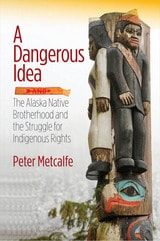
Dangerous Idea
The Alaska Native Brotherhood and the Struggle for Indigenous RightsPeter Metcalfe
University of Alaska Press, 2014
A Dangerous Idea tells an overlooked but powerful story of Alaska Natives fighting for their rights under American law and details one of the rare successes for Native Americans in their nearly two-hundred-year effort to define and protect their rights.
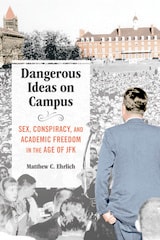
Dangerous Ideas on Campus
Sex, Conspiracy, and Academic Freedom in the Age of JFKMatthew C. Ehrlich
University of Illinois Press, 2021
In 1960, University of Illinois professor Leo Koch wrote a public letter condoning premarital sex. He was fired. Four years later, a professor named Revilo Oliver made white supremacist remarks and claimed there was a massive communist conspiracy. He kept his job.
Matthew Ehrlich revisits the Koch and Oliver cases to look at free speech, the legacy of the 1960s, and debates over sex and politics on campus. The different treatment of the two men marked a fundamental shift in the understanding of academic freedom. Their cases also embodied the stark divide over beliefs and values--a divide that remains today. Ehrlich delves into the issues behind these academic controversies and places the events in the context of a time rarely associated with dissent, but in fact a harbinger of the social and political upheavals to come.
An enlightening and entertaining history, Dangerous Ideas on Campus illuminates how the university became a battleground for debating America's hot-button issues.

Dangerous Intimacies
Toward a Sapphic History of the British NovelLisa L. Moore
Duke University Press, 1997
Moore demonstrates that intimacy between women was vividly imagined in the British eighteenth century as not only chaste and virtuous, but also insistently and inevitably sexual. She looks at instances of sapphism in such novels as Millenium Hall, Memoirs of a Woman of Pleasure, Belinda, and Emma and analyzes how the new literary form of the novel made the bourgeois heroine’s successful negotiation of female friendship central to the establishment of her virtue. Moore also examines representations of sapphism through the sweeping economic and political changes of the period and claims that middle-class readers’ identifications with the heroine’s virtue helped the novel’s bourgeois audience justify the violent bases of their new prosperity, including slavery, colonialism, and bloody national rivalry.
In revealing the struggle over sapphism at the heart of these novels of female friendship—and at the heart of England’s national identity—Moore shows how feminine sexual agency emerged as an important cultural force in post-Enlightenment England
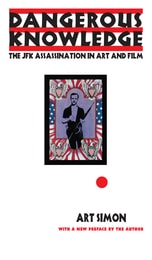
Dangerous Knowledge
The JFK Assassination in Art and FilmArt Simon
Temple University Press, 2013
In his new Preface to this edition of Dangerous Knowledge, Art Simon discusses public fascination with celebrity deaths and recent assassination-related media-from documentaries to scholarly books to the scandalous video game JFK Reloaded-to show that the assassination continues to inspire writers, artists, and filmmakers.
Dangerous Knowledge examines the seminal works of art associated with the assassination, including Andy Warhol's silk screens, the underground films of Bruce Conner, and provocative Hollywood films like The Parallax View and JFK. Simon's investigation places assassination art and images within a historical context-one that helps us understand what the assassination has meant to American culture.
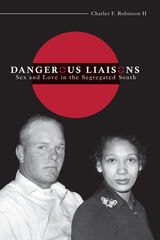
Dangerous Liaisons
Sex and Love in the Segregated SouthCharles F. Robinson II
University of Arkansas Press, 2003
In the tumultuous decades after the Civil War, as the southern white elite reclaimed power, “racial mixing” was the central concern of segregationists who strove to maintain “racial purity.” Segregation—and race itself—was based on the idea that interracial sex posed a biological threat to the white race. In this groundbreaking study, Charles Robinson examines how white southerners enforced anti-miscegenation laws. His findings challenge conventional wisdom, documenting a pattern of selective prosecution under which interracial domestic relationships were punished even more harshly than transient sexual encounters. Robinson shows that the real crime was to suggest that black and white individuals might be equals, a notion which undermined the legitimacy of the economic, political, and social structure of white male supremacy.
Robinson examines legal cases from across the South, considering both criminal prosecutions brought by states and civil disputes over marital and family assets. He also looks at U.S. Supreme Court decisions, debates in state legislatures, comments in the U.S. Congressional Record, and newspaper editorials. He not only shows the hardening of racial categories but assesses the attitudes of African Americans about anti-miscegenation laws and intermarriage. The epilogue concerns “The Demise of Anti-miscegenation Law” including the case of Richard and Mildred Loving.
Dangerous Liaisons vividly documents the regulation of intimacy and its fundamental role in the construction of race.

Dangerous Migration
Mexican Labor and the Fight for Immigrant RightsEladio B. Bobadilla
University of Illinois Press, 2026
Beginning with Mexican American opposition to the Bracero Program, Eladio Bobadilla traces the movement’s fault lines that formed around the issue of undocumented workers. Bobadilla reveals how internationalist and human rights discourse influenced the rise of the Chicano movement and its defense of Mexican undocumented immigrants. As time passed, anti-Mexican social, political, and legislative forces produced a nativist backlash that put immigration at the center of the United States’ culture wars and created the fantasy of undocumented workers as an existential threat.
Engaging and vivid, Dangerous Migration illuminates the history of debates over Mexican labor, the emergence of the immigrant rights activism, and the nativist movements that united Latinos with right-wing white Americans.
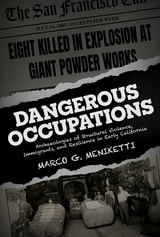
Dangerous Occupations
Archaeologies of Structural Violence, Immigrants, and Resilience in Early CaliforniaMarco G. Meniketti
University of Alabama Press, 2026
Addresses structural violence through history and archaeology of immigrant workers
Dangerous Occupations: Archaeologies of Structural Violence, Immigrants, and Resilience in Early California is an impactful work of historical archaeology combined with social history that addresses structural violence in key California industries from the Gold Rush in 1849 until 1920. Monopolistic industries, such as railroading, mining, timbering, explosive manufacturing, lime production, meatpacking, textile milling, and fishing/whaling, relied on immigrant laborers who were recruited and perceived as expendable. Restrictive laws and lack of employment opportunities based on bigotry often forced immigrants into the most dangerous occupations. In the days before workmen’s compensation insurance and strict labor safety laws, laborers often risked their health and even their lives for employment.
Marco G. Meniketti’s analysis comes from examining excavation of labor camps and housing, landscape studies, bioarchaeological data, architectural footprints, and archival sources. Each chapter offers a case study of industries to exemplify structural violence and its broader consequences among various immigrant labor groups, such as Chinese, Scandinavian, Irish, Italian, Chilean, Cornish, and Portuguese. The narrative includes a historical overview of the industries, identifies who the immigrant laborers were and how they came to be there, examines the dangers and health risks of their jobs, and details their living conditions and daily life, including foodways, leisure, and efforts to treat their job-inflicted maladies. Dangerous Occupations introduces a new generation of readers to how immigrants built the West Coast and at what great cost.

Dangerous Speech
A Social History of Blasphemy in Colonial MexicoJavier Villa-Flores
University of Arizona Press, 2006
Why then, asks Villa-Flores, did Spaniards dare to blaspheme? Having mined the period’s moral literature—philosophical works as well as royal decrees and Inquisition treatises and trial records in Spanish, Mexican, and U.S. archives and research libraries—Villa-Flores deftly interweaves images of daily life in colonial Mexico with vivid descriptions of human interactions to illustrate the complexity of a culture profoundly influenced by the Catholic Church. In entertaining and sometimes horrifying vignettes, the reader comes face to face with individuals who used language to assert or manipulate their identities within that repressive society.
Villa-Flores offers an innovative interpretation of the social uses of blasphemous speech by focusing on specific groups—conquistadors, Spanish settlers, Spanish women, and slaves of both genders—as a lens to examine race, class, and gender relations in colonial Mexico. He finds that multiple motivations led people to resort to blasphemy through a gamut of practices ranging from catharsis and gender self-fashioning to religious rejection and active resistance.
Dangerous Speech is a valuable resource for students and scholars of colonialism, the social history of language, Mexican history, and the changing relations of gender, class, and ethnicity in colonial Latin America.
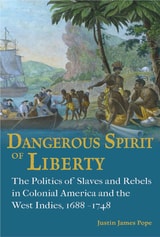
Dangerous Spirit of Liberty
The Politics of Slaves and Rebels in Early America and the West Indies, 1688-1748Justin James Pope
University of Missouri Press, 2024
Dangerous Spirit of Liberty's distinguishing feature is its focus on the role of communication in the development of a rebellious early eighteenth-century Atlantic. Most historians of slavery have presupposed that slave unrest was confined to small locales in the first half of the eighteenth century. In fact, slaves found ways to share news across provinces to great effect. Benefiting from research in the archives of Great Britain, Spain, Barbados, Bermuda, Jamaica, Antigua, the U.S. Virgin Islands, and the mainland United States, the book reveals new evidence of slave communication networks and shows how people of African ancestry shared rumors of emancipation and rebellion in this period. Slaves laboring in colonial commerce and working aboard ships helped foster an increasingly restive Black community. Banished slaves, convicted conspirators accused of plotting insurrection, carried their experiences with them in exile to neighboring colonies. By reconstructing the path of news, the book reveals rumors and reports that particularly resonated among slaves in the early eighteenth century.
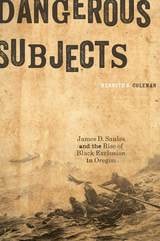
Dangerous Subjects
James D. Saules and the Rise of Black Exclusion in OregonKenneth R. Coleman
Oregon State University Press, 2017
In Oregon, Saules encountered a multiethnic population already transformed by colonialism—in particular, the fur industry and Protestant missionaries. Once the Oregon Trail emigrants began arriving in large numbers, in 1843, Saules had to adapt to a new reality in which Anglo-American settlers persistently sought to marginalize and exclude black residents from the region. Unlike Saules, who adapted and thrived in Oregon’s multiethnic milieu, the settler colonists sought to remake Oregon as a white man’s country. They used race as shorthand to determine which previous inhabitants would be included and which would be excluded. Saules inspired and later had to contend with a web of black exclusion laws designed to deny black people citizenship, mobility, and land.
In Dangerous Subjects, Kenneth Coleman sheds light on a neglected chapter in Oregon’s history. His book will be welcomed by scholars in the fields of western history and ethnic studies, as well as general readers interested in early Oregon and its history of racial exclusion.
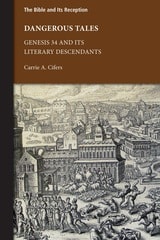
Dangerous Tales
Genesis 34 and Its Literary DescendantsCarrie A. Cifers
SBL Press, 2025
The biblical narrative of Israel’s only daughter Dinah is steeped in deception and violence, vengeance and destruction, and a silence that has posed interpretive problems for readers for more than two millennia. Carrie A. Cifers takes up the retellings of Genesis 34 in Josephus’s Jewish Antiquities, the book of Jubilees, and Joseph and Aseneth to explore how later authors tried to clarify the assumedly implicit ethical message of Dinah’s story. Through narrative ethics and socionarratology, Cifers demonstrates that biblical stories are a space of encounter where texts make claims on readers and where readers have an ethical responsibility as witnesses to the text. Dangerous Tales is a call for contemporary readers to engage biblical narratives in ways that mitigate interpretive violence and maximize each text’s ethical potential.

Dangerous Trade
Histories of Industrial Hazard across a Globalizing WorldChristopher Sellers
Temple University Press, 2011
From anthrax to asbestos to pesticides, industrial toxins and pollutants have troubled the world for the past century and longer. Environmental hazards from industry remain one of the world's foremost killers.Dangerous Trade establishes historical groundwork for a better understanding of how and why these hazards continue to threaten our shrinking world.
In this timely collection, an international group of scholars casts a rigorous eye towards efforts to combat these ailments. Dangerous Trade contains a wide range of case studies that illuminate transnational movements of risk—from the colonial plantations of Indonesia to compensation laws in late 19th century Britain, and from the occupational medicine clinics of 1960s New York City to the burning of electronic waste in early twenty-first century Uruguay.
The essays in Dangerous Trade provide an unprecedented broad perspective of the dangers stirred up by industrial activity across the globe, as well as the voices rasied to remedy them.

Dangerous Work
Diary of an Arctic AdventureArthur Conan Doyle
University of Chicago Press, 2012
In 1880 a young medical student named Arthur Conan Doyle embarked upon the “first real outstanding adventure” of his life, taking a berth as ship’s surgeon on an Arctic whaler, the Hope. The voyage took him to unknown regions, showered him with dramatic and unexpected experiences, and plunged him into dangerous work on the ice floes of the Arctic seas. He tested himself, overcame the hardships, and, as he wrote later, “came of age at 80 degrees north latitude.”
A special limited, numbered edition of the clothbound book is also available. In addition, a text-only e-book edition is published as Dangerous Work: Diary of an Arctic Adventure, Text-only Edition.

Dangerous Work
Diary of an Arctic Adventure, Text-only EditionArthur Conan Doyle
University of Chicago Press, 2012
This e-book features the complete text found in the print edition of Dangerous Work, without the illustrations or the facsimile reproductions of Conan Doyle's notebook pages.
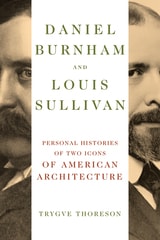
Daniel Burnham and Louis Sullivan
Personal Histories of Two Icons of American ArchitectureTrygve Thoreson
University of Illinois Press, 2026
An engaging piece of nonfiction storytelling, Daniel Burnham and Louis Sullivan reveals new facets of the architects’ personal, intellectual, and artistic lives.
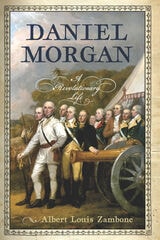
Daniel Morgan
A Revolutionary LifeAlbert Louis Zambone
Westholme Publishing, 2018
On January 17, 1781, at Cowpens, South Carolina, the notorious British cavalry officer Banastre Tarleton and his legion had been destroyed along with the cream of Lord Cornwallis’s troops. The man who planned and executed this stunning American victory was Daniel Morgan. Once a barely literate backcountry laborer, Morgan now stood at the pinnacle of American martial success. Born in New Jersey in 1736, he left home at seventeen and found himself in Virginia’s Shenandoah Valley. There he worked in mills and as a teamster, and was recruited for Braddock’s disastrous expedition to take Fort Duquesne from the French in 1755. When George Washington called for troops to join him at the siege of Boston in 1775, Morgan organized a select group of riflemen and headed north. From that moment on, Morgan’s presence made an immediate impact on the battlefield and on his superiors. Washington soon recognized Morgan’s leadership and tactical abilities. When Morgan’s troops blocked the British retreat at Saratoga in 1777, ensuring an American victory, he received accolades from across the colonies.
In Daniel Morgan: A Revolutionary Life, the first biography of this iconic figure in forty years, historian Albert Louis Zambone presents Morgan as the quintessential American everyman, who rose through his own dogged determination from poverty and obscurity to become one of the great battlefield commanders in American history. Using social history and other advances in the discipline that had not been available to earlier biographers, the author provides an engrossing portrait of this storied personality of America’s founding era—a common man in uncommon times.
Daniel Shays's Honorable Rebellion
An American StoryDaniel Bullen
Westholme Publishing, 2024
Daniel Shays’s Honorable Rebellion: An American Story by Daniel Bullen tells the history of the crisis from the protesters’ perspective. Through five months of nonviolent protests, the farmers kept courts throughout Massachusetts from hearing foreclosures, facing down threats from the government, which escalated to the point that Governor James Bowdoin ultimately sent an army to arrest them. Even so, the people won reforms in an electoral landslide.
Thomas Jefferson called these protests an honorable rebellion, and hoped that Americans would never let twenty years pass without such a campaign, to rein in powerful interests. This riveting and meticulously researched narrative shows that Shays and his fellow protesters were hardly a dangerous rabble, but rather a proud people who banded together peaceably, risking their lives for justice in a quintessentially American story.
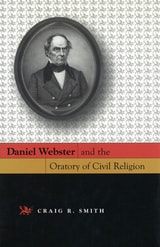
Daniel Webster and the Oratory of Civil Religion
Craig R. Smith
University of Missouri Press, 2005

Daniel Webster, “The Completest Man”
Documents from The Papers of Daniel WebsterEdited by Kenneth E. Shewmaker and Daniel Webster
Brandeis University Press, 1993
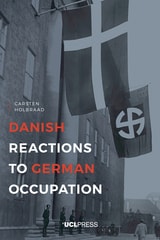
Danish Reactions to German Occupation
History and HistoriographyCarsten Holbraad
University College London, 2017
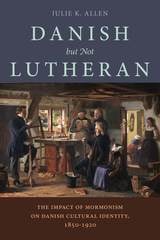
Danish, But Not Lutheran
The Impact of Mormonism on Danish Cultural Identity, 1850–1920Julie K. Allen
University of Utah Press, 2017
The Danish-Mormon migration to Utah in the nineteenth century was, relative to population size, one of the largest European religious out-migrations in history. Hundreds of thousands of Americans can trace their ancestry to Danish Mormons, but few know about the social and cultural ramifications of their ancestors’ conversion to Mormonism. This book tells that exciting and complex story for the first time.
In 1849, after nearly a thousand years of state- controlled religion, Denmark’s first democratic constitution granted religious freedom. One year later, the arrival of three Mormon missionaries in Denmark and their rapid success at winning converts to their faith caused a crisis in Danish society over the existential question: "How could someone be Danish but not Lutheran?" Over the next half-century nearly thirty thousand Danes joined the LDS Church, more than eighteen thousand of whom emigrated to join their fellow Mormons in Utah. This volume explores the range of Danish public reactions to Mormonism over a seventy-year period—from theological concerns articulated by Søren and Peter Christian Kierkegaard in the 1850s to fear-mongering about polygamy and white slavery in silent films of the 1910s and 1920s—and looks at the personal histories of converts.
Honorable Mention for Best International Book from the Mormon History Association.
Dante's Aesthetics of Being
Warren Ginsberg
University of Michigan Press, 1999
Despite the absence of tracts about beauty and art, aesthetic issues did command the attention of people in the Middle Ages. Whenever poets or philosophers turned their thoughts to the order of the heavens, whenever they delighted in music or art, they contemplated how the pleasure they took in the artistry of the universe was related to the God who created it. For Dante, aesthetics was the discourse of being and could not be narrowly defined. The aesthetic became the domain in which he considered not only form and proportion, but questions of love, identity, and perfection of the self.
Warren Ginsberg expertly guides us through Dante's work. He distinguishes between early texts such as the Vita Nuova, in which the aesthetic offers only a form of knowledge between sensation and reason, and the Comedy, in which the aesthetic is transformed into a language of existence. Among other subjects, Dante's Aesthetics of Being treats poeticism, literary history, language theory, the relation of philosophy to poetry, and of course, aesthetics. Its readers will include not only experts in Dante and medievalists in general, but literary critics of all periods. Indeed, anyone interested in poetic theory, the philosophy of beauty, or interdisciplinary studies will profit from reading Ginsberg's thoughtful offering.
Warren Ginsberg is Professor of English, University at Albany, State University of New York. He is author of The Cast of Character: The Representation of Personality in Ancient and Medieval Literature and editor of two Middle English poems, Wynnere and Wastoure and The Parlement of the Thre Ages.
Dante's Epistle to Cangrande
Robert Hollander
University of Michigan Press, 1994
In Dante's Epistle to Cangrande Robert Hollander commandingly marshals new evidence to demonstrate that the epistle should be considered authentically Dantean. He further provides enlightening discussion of the nature of tragedy and comedy in the Divine Comedy. The author draws authoritatively on the extensive array of medieval and modern commentaries stored in electronic form by the Dartmouth Dante Project, of which he is the director.
Dante's Epistle to Cangrande makes a signal contribution to Dante studies. Naturally of interest to students of Dante's work, it will also be important reading for those concerned with literary critical questions such as authorial intent, programmatic statements, and allegorical interpretations of literature.
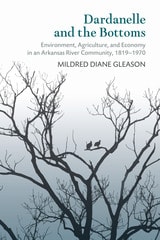
Dardanelle and the Bottoms
Environment, Agriculture, and Economy in an Arkansas River Community, 1819-1970Mildred D. Gleason
University of Arkansas Press, 2017
A reciprocal relationship between the town and the Bottoms formed the economic backbone on which the area’s well-being was balanced. The country people came to town on Saturdays to buy their groceries and supplies, to shop and take in a movie or visit the pool halls or barbershops. Merchants relied heavily on this country trade and had a long history of extending credit, keeping prices reasonable, and offering respect and appreciation to their customers.
This interdependence, stable for decades, began to unravel in the late 1940s with changes in farming, particularly the cotton industry. In Dardanelle and the Bottoms, Mildred Diane Gleason explores this complex rural/town dichotomy, revealing and analyzing key components of each area, including aspects of race, education, the cotton economy and its demise, the devastation of floods and droughts, leisure, crime, and the impact of the Great Depression.
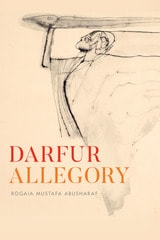
Darfur Allegory
Rogaia Mustafa Abusharaf
University of Chicago Press, 2021
Elaborated in colonial times and enshrined in policy afterwards, such binary categories have been adopted by the media to explain the civil war in Darfur. The narratives that circulate internationally are thus highly fraught and cover over—to counterproductive effect—forms of Darfurian activism that have emerged in the conflict’s wake. Darfur Allegory marries the analytical precision of a committed anthropologist with an insider’s view of Sudanese politics at home and in the diaspora, laying bare the power of words to heal or perpetuate civil conflict.
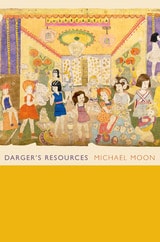
Darger's Resources
Michael Moon
Duke University Press, 2012
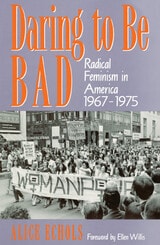
Daring To Be Bad
Radical Feminism in America 1967-1975Alice Echols
University of Minnesota Press, 1989
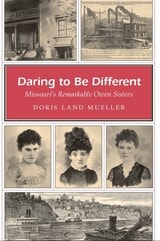
Daring to Be Different
Missouri's Remarkable Owen SistersDoris Land Mueller
University of Missouri Press, 2010
In the 1800s, American women were largely restricted to the private sphere. Most had no choice but to spend their lives in the home, marrying in their teens and living only as wives, mothers, and pillars of domesticity. Even as the women’s movement came along midcentury, it focused more on gaining legal and political rights for women than on expanding their career opportunities. So in that time period, in which the options and expectations for women’s professional lives were so limited, it is remarkable that three sisters born in the 1850s, the Owen daughters of Missouri, all achieved success and appreciation in their careers.
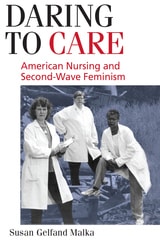
Daring to Care
American Nursing and Second-Wave FeminismSusan Gelfand Malka
University of Illinois Press, 2007
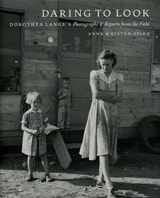
Daring to Look
Dorothea Lange's Photographs and Reports from the FieldAnne Whiston Spirn
University of Chicago Press, 2009
Daring to Look presents never-before-published photos and captions from Dorothea Lange’s fieldwork in California, the Pacific Northwest, and North Carolina during 1939. Lange’s images of squatter camps, benighted farmers, and stark landscapes are stunning, and her captions—which range from simple explanations of settings to historical notes and biographical sketches—add unexpected depth, bringing her subjects and their struggles unforgettably to life, often in their own words.
When Lange was dismissed from the Farm Security Administration at the end of 1939, these photos and field notes were consigned to archives, where they languished, rarely seen. With Daring to Look, Anne Whiston Spirn not only returns them to the public eye, but sets them in the context of Lange’s pioneering life, work, and struggle for critical recognition—firmly placing Lange in her rightful position at the forefront of American photography.
“A thoughtful and meticulously researched account of Lange’s career. . . . Spirn, a photographer herself, traces Lange’s path, visiting her locations and subjects in a fascinating series of ‘then and now’ shots.”—Publishers Weekly
“Dorothea Lange has long been regarded as one of the most brilliant photographic witnesses we have ever had to the peoples and landscapes of America, but until now no one has fully appreciated the richness with which she wove images together with words to convey her insights about this nation. We are lucky indeed that Anne Whiston Spirn, herself a gifted photographer and writer, has now recovered Lange’s field notes and woven them into a rich tapestry of texts and images to help us reflect anew on Lange’s extraordinary body of work.”—William Cronon, author of Nature’s Metropolis
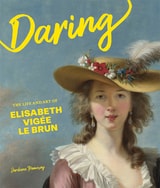
Daring
The Life and Art of Elisabeth Vigée Le BrunJordana Pomeroy
J. Paul Getty Trust, The, 2025
Supremely talented and strategically charming, Elisabeth Vigée Le Brun (1755–1842) overcame tragedy and broke gender barriers to reach the height of success as a portrait painter, first in Paris, and then across Europe. After losing her father at age twelve and facing financial insecurity, she fought to gain access to artistic training and opportunity. She was pressured to marry at age twenty, to an art dealer who both helped and harmed her career. Vigée Le Brun deployed her intelligence and beauty to attract powerful clients, who relied on her to style the personal identities they projected to the world.
Vigée Le Brun’s salons were the talk of Paris, and she became court painter to Marie Antoinette. Then came the French Revolution, when marginalized groups demanded change to centuries-old systems of oppression. Vigée Le Brun was forced to reexamine her alliances and run for her life, taking her young daughter but leaving her husband behind. Making her way through the countrysides and capitals of Europe and Russia—including a stay at the imperial court of Catherine the Great—the artist conquered fear and adversity to refashion her life and art.
Ages thirteen and up.

Dario Fo
Stage, Text, and TraditionEdited by Joseph Farrell and Antonio Scuderi
Southern Illinois University Press, 2000
Joseph Farrell and Antonio Scuderi present an international collection of essays reevaluating the multifaceted performance art of Nobel laureate Dario Fo.
The contributors, all of whom either have previously published on Fo or have worked with him, are the major Dario Fo scholars of three continents. Going beyond the Marxist criticism of the 1970s and 1980s, the editors and contributors try to establish an appropriate language in which to debate Fo’s theater. They seek to identify the core of Fo’s work, the material that will be of lasting value. This involves locating Fo in history, examining the nature of his development through successive phases, incorporating his politics into a wider framework of radical dissent, and setting his theatrical achievements in a context and a tradition.
The essays cover every aspect of Dario Fo: as actor, playwright, performer, and songwriter. They also provide the historical background of Fo’s theater, as well as an in-depth analyses of specific works and the contribution of Franca Rame.

Dark Academia
How Universities DiePeter Fleming
Pluto Press, 2021
“Fleming's books are sparklingly sardonic and hilariously angry”—Guardian
“An excellent and important book''—Journal of Education, Innovation, and Communication
To Professor Peter Fleming, there is a strong link between the neo-liberalization of higher education over the last 20 years and the psychological hell now endured by its staff and students. He believes that impersonal and unforgiving management hierarchies have supplanted academic judgement, collegiality, and professional common sense. He bemoans the modern system of higher education and shines a spotlight on what’s gone wrong and why.
While academia was once thought of as the best job in the world, one that fosters autonomy, craft, intrinsic job satisfaction, and vocational zeal, you would be hard-pressed to find a lecturer who believes that now.
Fleming delves into this new metrics-obsessed, overly hierarchical world to bring out the hidden underbelly of what he terms the 'zombie university'. He examines:
*Commercialization
*Mental illness and self-harm
*The rise of managerialism
*Students as consumers and evaluators
*The competitive individualism which casts a dark sheen of alienation over departments
*And much more!
Arguing that time has almost run out to reverse this decline, this book shows how academics and students need to act now if they are to begin to fix this broken system.

Dark Borders
Film Noir and American CitizenshipJonathan Auerbach
Duke University Press, 2011
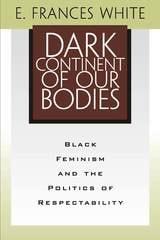
Dark Continent Of Our Bodies
Black Feminism & Politics Of RespectabilityE. Frances White
Temple University Press, 2001
White's powerful introduction draws on oral narratives from her own family history to illuminate the nature of narrative, both what is said and what is left unsaid. She then sets the historical stage with a helpful history of the inception and development of black feminism and a critique of major black feminist writings. In the three chapters that follow, she addresses the obstacles black feminism has already surmounted and must continue to traverse. Confronting what White calls "the politics of respectability," these chapters move the reader from simplistic views of race and gender in the nineteenth century through black nationalism and the radical movements of the sixties, and their relationship to feminist thought, to the linkages between race, gender, and sexuality in the works of such giants as Toni Morrison and James Baldwin. No one who finishes Dark Continent of Our Bodies will look at race and gender in the same way again.
Dark Continents
Psychoanalysis and ColonialismRanjana Khanna
Duke University Press, 2003
bringing psychoanalysis, colonialism, and women together can become the starting point of a postcolonial feminist theory. Psychoanalysis brings to light, Khanna argues, how nation-statehood for the former colonies of Europe institutes the violence of European imperialist history. Far from rejecting psychoanalysis, Dark Continents reveals its importance as a reading practice that makes visible the psychical strife of colonial and
postcolonial modernity. Assessing the merits of various models of nationalism, psychoanalysis, and colonialism, it refashions colonial melancholy as a transnational feminist ethics.
Khanna traces the colonial backgrounds of psychoanalysis from its beginnings in the late nineteenth century up to the present. Illuminating Freud’s debt to the languages of archaeology and anthropology throughout his career, Khanna describes how Freud altered his theories of the ego as his own political status shifted from Habsburg loyalist to Nazi victim. Dark Continents explores how psychoanalytic theory was taken up in Europe and its colonies in the period of decolonization following World War II, focusing on its use by a range of writers including Jean-Paul Sartre, Simone de Beauvoir, Octave Mannoni, Aimé and Suzanne Césaire, René Ménil, Frantz Fanon, Albert Memmi, Wulf Sachs, and Ellen Hellman. Given the multiple gendered and colonial contexts of many of these writings, Khanna argues for the necessity of a postcolonial, feminist critique of
decolonization and postcoloniality.
Dark Days in the Newsroom
McCarthyism Aimed at the PressEdward Alwood
Temple University Press, 2007
Dark Days in the Newsroom traces how journalists became radicalized during the Depression era, only to become targets of Senator Joseph McCarthy and like-minded anti-Communist crusaders during the 1950s. Edward Alwood, a former news correspondent describes this remarkable story of conflict, principle, and personal sacrifice with noticeable élan. He shows how McCarthy's minions pried inside newsrooms thought to be sacrosanct under the First Amendment, and details how journalists mounted a heroic defense of freedom of the press while others secretly enlisted in the government's anti-communist crusade.
Relying on previously undisclosed documents from FBI files, along with personal interviews, Alwood provides a richly informed commentary on one of the most significant moments in the history of American journalism. Arguing that the experiences of the McCarthy years profoundly influenced the practice of journalism, he shows how many of the issues faced by journalists in the 1950s prefigure today's conflicts over the right of journalists to protect their sources.