Results by title
5159 books match the query 'Biography' and 191 start with d
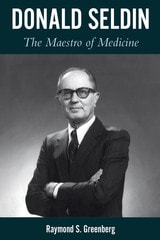
Donald Seldin
The Maestro of MedicineBy Raymond S. Greenberg
University of Texas Press, 2020
No one would have blamed Donald Seldin for running away. When he arrived at Southwestern Medical College in 1951, it was a collection of hastily repurposed military shacks creaking in the wind. On practically day one he became chair of the department of medicine—when the only other full-time professors departed.
By the time he stepped down thirty-six years later, Seldin had transformed a sleepy medical college into the University of Texas Southwestern Medical Center—a powerhouse of research and patient care and an anchor of the city of Dallas. Raymond Greenberg, a physician-scholar, tells Seldin's story of perseverance and intellectual triumph. Drawing on interviews with Seldin's trainees and colleagues—and on Seldin's own words—Greenberg chronicles the life of the Brooklyn boy who became one of Texas's foremost citizens and taught decades of men and women to heal. A pioneering nephrologist, Seldin devoted his career to developing the specialty; educating students, residents, and fellows; caring for patients; and nurturing basic research.
Seldin was a wildcatter in the best sense. He declined the comfortable prestige of Harvard and Yale and instead embraced a worthy challenge with an unflagging sense of mission. Graceful and richly detailed, The Maestro of Medicine captures an inspiring life of achievement and service.
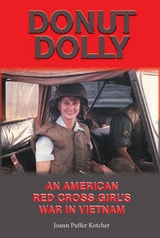
Donut Dolly
An American Red Cross Girl's War in VietnamJoann Puffer Kotcher
University of North Texas Press, 2011
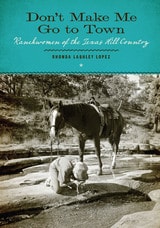
Don’t Make Me Go to Town
Ranchwomen of the Texas Hill CountryBy Rhonda Lashley Lopez
University of Texas Press, 2011
Many people dream of "someday buying a small quaint place in the country, to own two cows and watch the birds," in the words of Texas ranchwoman Amanda Spenrath Geistweidt. But only a few are cut out for the unrelenting work that makes a family ranching operation successful. Don't Make Me Go to Town presents an eloquent photo-documentary of eight women who have chosen to make ranching in the Texas Hill Country their way of life. Ranging from young mothers to elderly grandmothers, these women offer vivid accounts of raising livestock in a rugged land, cut off from amenities and amusements that most people take for granted, and loving the hard lives they've chosen.
Rhonda Lashley Lopez began making photographic portraits of Texas Hill Country ranchwomen in 1993 and has followed their lives through the intervening years. She presents their stories through her images and the women's own words, listening in as the ranchwomen describe the pleasures and difficulties of raising sheep, Angora goats, and cattle on the Edwards Plateau west of Austin and north of San Antonio. Their stories record the struggles that all ranchers face—vagaries of weather and livestock markets, among them—as well as the extra challenges of being women raising families and keeping things going on the home front while also riding the range. Yet, to a woman, they all passionately embrace family ranching as a way of life and describe their efforts to pass it on to future generations.
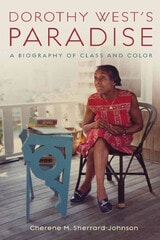
Dorothy West's Paradise
A Biography of Class and ColorSherrard-Johnson, Cherene
Rutgers University Press, 2012
Dorothy West is best known as one of the youngest writers involved in the Harlem Renaissance. Subsequently, her work is read as a product of the urban aesthetics of this artistic movement. But West was also intimately rooted in a very different milieu—Oak Bluffs, an exclusive retreat for African Americans on Martha’s Vineyard. She played an integral role in the development and preservation of that community. In the years between publishing her two novels, 1948’s The Living is Easy and the 1995 bestseller The Wedding, she worked as a columnist for the Vineyard Gazette.
Dorothy West’s Paradise captures the scope of the author’s long life and career, reading it alongside the unique cultural geography of Oak Bluffs and its history as an elite African American enclave—a place that West envisioned both as a separatist refuge and as a space for interracial contact. An essential book for both fans of West’s fiction and students of race, class, and American women’s lives, Dorothy West’s Paradise offers an intimate biography of an important author and a privileged glimpse into the society that shaped her work.
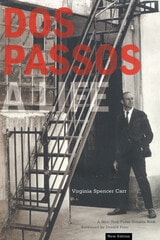
Dos Passos
A LifeVirginia Spencer Carr
Northwestern University Press, 2004
An intimate biography of a great American writer.
He rose from a childhood as the illegitimate son of a financial titan to become the man Sartre called "the greatest writer of our time." A progressive writer who turned his passions into the groundbreaking U.S.A. trilogy, John Dos Passos later embraced conservative causes. At the height of his career he was considered a peer of Hemingway and Fitzgerald, yet he died in obscurity in 1970.
Award-winning biographer Virginia Spencer Carr examines the contradictions of Dos Passos's life with an in-depth study of the man. Using the writer's letters and journals, and with assistance from the Dos Passos family, Carr reconstructs an epic life, one of literary acclaim and bitter obscurity, restless wandering and happy marriage, friendship with Edmund Wilson and feuds with Hemingway. First published to acclaim in 1984, Dos Passos remains the definitive personal portrait of the author.
Douglas Home
David Dutton
Haus Publishing, 2006
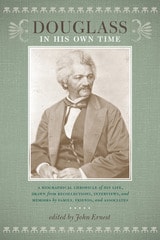
Douglass in His Own Time
A Biographical Chronicle of His Life, Drawn from Recollections, Interviews, and Memoirs by Family, Friends, and AssociatesJohn Ernest
University of Iowa Press, 2014
As valuable as these writings are in illuminating the man, the story Douglass told in 1845 has become rather too easy to tell, obscuring as much as it reveals. Less a living presence than an inspiring tale, Frederick Douglass remains relatively unknown even to many of those who celebrate his achievements. Douglass in His Own Time offers an introduction to Douglass the man by those who knew him. The book includes a broad range of writings, some intended for public viewing and some private correspondence, all of which contend with the force of Douglass’s tremendous power over the written and spoken word, his amazing presence before crowds, his ability to improvise, to entertain, to instruct, to inspire—indeed, to change lives through his eloquent appeals to righteous self-awareness and social justice. In approaching Douglass through the biographical sketches, memoirs, letters, editorials, and other articles about him, readers will encounter the complexity of a life lived on a very public stage, the story of an extraordinary black man in an insistently white world.
Down Syndrome Culture
Life Writing, Documentary, and Fiction Film in Iberian and Latin American ContextsBenjamin Fraser
University of Michigan Press, 2024
Down Syndrome Culture also pushes the traditionally Anglophone borders of disability studies by examining examples in Spanish, Catalan, and Portuguese-language texts, and incorporating the work of thinkers in Iberian and Latin American studies. Through a close analysis of life writing, documentaries, and fiction films, the book emphasizes the central role of people with Down syndrome in contemporary cultural production. Chapters discuss the autobiography of Andy Trias Trueta, the social actors of the documentary Los niños [The Grown-Ups] (2016), dancers from Danza Mobile, and a variety of fiction films, challenging ableist understandings of disability in nuanced ways. Ultimately, this book reveals the lives, cultural work, and representations of people with trisomy 21 in an international context.

Down and Dirty Down South
Politics and the Art of RevengeRoger Glasgow
Butler Center for Arkansas Studies, 2016
While pursuing a race for district prosecutor in the 1970s, Glasgow had run afoul of the local political machine. The machine later decided to teach Glasgow a lesson even though he’d lost the race. Down and Dirty Down South is Glasgow’s story of how he attempted to clear his name and also track down the people who had set him up for charges of smuggling illegal drugs into the United States.
Down from the Mountaintop
From Belief to BelongingJoshua Dolezal
University of Iowa Press, 2014
For more than a decade, Doležal taught in the Midwest throughout the school year but returned to Montana and Idaho in the summers to work as a firefighter and wilderness ranger. He reveled in the life of the body and the purifying effects of isolation and nature, believing he had found transcendence. Yet his summers tied him even more to the mountain landscape, fueling his sense of exile on the plains.
It took falling in love, marrying, and starting a family in Iowa to allow Doležal to fully examine his desire for a spiritual mountaintop from which to view the world. In doing so, he undergoes a fundamental redefinition of the nature of home and belonging. He learns to accept the plains on their own terms, moving from condemnation to acceptance and from isolation to community. Coming down from the mountaintop means opening himself to relationships, grounding himself as a husband, father, and gardener who learns that where things grow, the grower also takes root.
Dr. America
The Lives of Thomas A. Dooley, 1927-1961James T. Fisher
University of Massachusetts Press, 1997
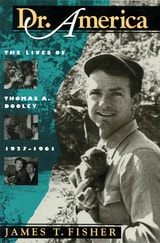
This book chronicles the life of Tom Dooley, the American doctor whose much-publicized exploits in Vietnam and Laos during the 1950s helped lay the ideological groundwork for the U.S. military intervention a decade later. The scion of an upper-middle-class St. Louis family, Dooley was an enormously complex and fascinating individual. He was a devoutly religious Roman Catholic as well as a self-styled playboy socialite, a devoted physician to the poor and a tireless propagandist for the “Vietnam Lobby,” a shameless self-promoter and a closeted homosexual, a victim of Navy persecution and a beneficiary of CIA support. Dooley first gained notoriety as a young Navy doctor charged with overseeing the evacuation of Catholic refugees from North Vietnam in the wake of the 1954 Geneva Accords. His celebrity grew after his book Deliver Us from Evil, a fervently anticommunist account of his experiences, was serialized in Reader's Digest. By the end of the decade, as his name became associated (albeit mistakenly) with a ballad popularized by the Kingston Trio, he had achieved the status of “America's first pop star saint.” In addition to exposing the roots of the Vietnam War, Dooley's story illuminates a broad range of developments in post-World War II United States culture—from the “Americanization” of Catholicism to the rise of the mass media.

Dr. Benjamin Church, Spy
A Case of Espionage on the Eve of the American RevolutionJohn A. Nagy
Westholme Publishing, 2013
Dr. Charles David Spivak
A Jewish Immigrant and the American Tuberculosis MovementJeanne Abrams
University Press of Colorado, 2009
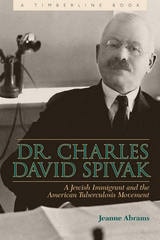
Born in Russia in 1861, Spivak immigrated to the United States in 1882 and received his medical degree from Philadelphia's Jefferson Medical College by 1890. In 1896, his wife's poor health brought them to Colorado. Determined to find a cure, Spivak became one of the most charismatic and well-known leaders in the American Tuberculosis Movement. His role as director of Denver's Jewish Consumptives' Relief Society sanatorium allowed his personal philosophies to strongly influence policies. His unique blend of Yiddishkeit, socialism, and secularism - along with his belief in treating the "whole" patient - became a model for integrating medical, social, and rehabilitation services that was copied across the country.
Not only a national leader in the crusade against tuberculosis but also a luminary in the American Jewish community, Dr. Charles Spivak was a physician, humanitarian, writer, linguist, journalist, administrator, social worker, ethnic broker, and medical, public health, and social crusader. Abrams's biography will be a welcome addition to anyone interested in the history of medicine, Jewish life in America, or Colorado history.
Dr. David Murray
Superintendent of Education in the Empire of Japan, 1873-1879Duke, Benjamin
Rutgers University Press, 2018
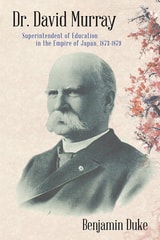
Benjamin Duke has compiled this comprehensive biography of David Murray to showcase Murray’s work, both in assisting around 100 samurai students in their studies at Rutgers, and in his unprecedented role in early Japanese-American relations. This fascinating story uncovers a little-known link between Rutgers University and Japan, and it is the only book to conclude that Rutgers made a greater contribution to the development of modern education in the early Meiji Era than any other non-Japanese college or university in the world.
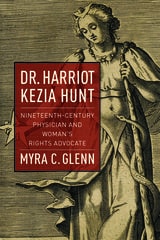
Dr. Harriot Kezia Hunt
Nineteenth-Century Physician and Woman’s Rights AdvocateMyra C. Glenn
University of Massachusetts Press, 2018
Harriot Kezia Hunt was a pioneer in a number of ways. The first woman to establish a successful medical practice in the United States, she began seeing patients in Boston in 1835 and promoted a new method of treatment by listening to women's troubles or their “heart histories.” Her unsuccessful efforts to attend lectures at Harvard's Medical School galvanized her activism in the woman's rights movement. During the 1850s she played a prominent role in the annual woman's rights conventions and was the first woman in Massachusetts to publicly protest the injustice of taxing propertied women while denying them the franchise.
In this first comprehensive, full-length biography of Hunt, Myra C. Glenn shows how this single woman from a working-class Boston home became a successful physician and noted reformer, illuminating the struggle for woman's rights and the fractious and gendered nature of medicine in antebellum America.
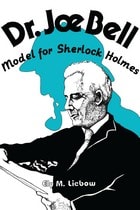
Dr. Joe Bell
Model for Sherlock HolmesEly M. Liebow
University of Wisconsin Press, 1982
A distinguished physician and professor of medicine at Edinburgh University, and a forensic expert for the British Crown, Joseph Bell was well known for his remarkable powers of observation and deduction. In what would become true Sherlockian fashion, he had the ability to deduce facts about his patients from otherwise unremarkable details. In one instance recounted by Arthur Conan Doyle himself—and similar to Sherlock Holmes's own observations in "The Greek Interpreter"—Bell took little time to determine that one of his patients had recently served in the army, a non-commissioned officer discharged from his Highland regiment stationed in Barbados:
“The man was a respectful man, but did not remove his hat. They do not in the army, but he would have learned civilian ways had he been long discharged. He has an air of authority and he is obviously Scottish. As to Barbados, his complaint is elephantitis, which is West Indian and not British.”
Based on extensive research into the life of Bell and including tantalizing accounts of the connections between Bell and Conan Doyle, this biography is required reading for anyone interested in Victorian medicine, in the history of detective fiction, and in Sherlock Holmes and Dr. Watson.

Dr. Kate
Angel on SnowshoesRebecca Hogue Wojahn
Wisconsin Historical Society Press, 2009
Pioneering North Woods doctor Kate Pelham Newcomb comes to life in this addition to the Badger Biographies series for young readers. Born in 1885, Kate Pelham was suppose to grow up to be a proper young lady in Boston, but despite her father's wishes she was determined to be a doctor. After medical school, her husband's health brought them to the clean air of northern Wisconsin and before long Kate knew every back road and cabin in the North Woods. She visited patients by snowmobile, by canoe, and by snowshoe and never sent a bill. Instead she was paid in firewood and vegtables.
But what Kate dreamed of more than anything for her patients was a hospital. And that's when the kids of the community got involved. They set out to collect a million pennies - $10,000 - to help Dr. Kate build a hospital. As the news spread, coins poured in from countries across the globe. Students carted bushels of pennies, and Dr. Kate read thousands of letters cheering on her effort. Her dream came true in 1954 when the Lakeland Memorial Hospital opened its doors. Young readers will warm to Kate's spirit of compassion and never-say-never attitude.
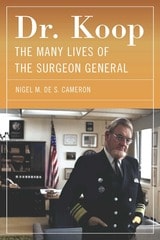
Dr. Koop
The Many Lives of the Surgeon GeneralNigel M. de S. Cameron
University of Massachusetts Press, 2025
The first full biography of Reagan's famous Surgeon General, who put science before politics—cutting smoking by 25%, leading the fight against AIDS, and shocking both liberals and conservatives on abortion.
When Ronald Reagan chose C. Everett Koop to be Surgeon General of the United States in 1981, liberal politicians, women's groups, and even the public health community opposed the nomination because of his conservative social views and strong anti-abortion beliefs. By the time he left office in 1989, the same people who had vilified him as “Dr. Kook” were singing his praises, and many conservative politicians and activists who had championed his nomination were criticizing him as a traitor. He had also become “the only surgeon general [who was] a household name,” according to the Associated Press, because of his ubiquitous media exposure around the HIV/AIDS crisis, his unique look, and his savvy with the press. How had Koop remade himself and this once major government office, which sounded grand but in the 1960s had been stripped to a minor advisory role?
As Nigel M. de S. Cameron shows, Koop was, above all, guided in his decisions by his unwavering physician’s commitment to saving lives. Even in the face of political pressures and what many expected to be his personal beliefs, he focused on science and public health. On smoking, abortion, and AIDS he openly defied Republican politicians and alienated New Right conservatives because his reading of the science did not support their ideologies. It was this adherence to science, health, and office that led him to refuse to campaign on abortion, seek compromise on the disabled “Baby Doe” case, relentlessly go after Big Tobacco, and finally reach out to the gay community as AIDS and fear of AIDS exploded. Both supporters and detractors consistently misjudged him.
This first full biography of Koop draws on thousands of documents and hundreds of interviews with family, friends, and colleagues to tell the story of the precocious boy from Brooklyn who was already the world’s most celebrated pediatric surgeon when he became Surgeon General and one of the most recognizable public figures in late-20th century America. Koop remains a sterling example—to both left and right—of how public officials should conduct themselves.
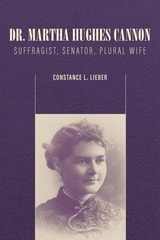
Dr. Martha Hughes Cannon
Suffragist, Senator, Plural WifeConstance L. Lieber
Signature Books, 2022
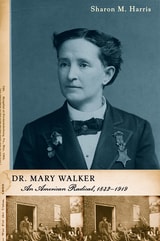
Dr. Mary Walker
An American Radical, 1832-1919Harris, Sharon M
Rutgers University Press, 2009
Perhaps more telling about her life are the words of an 1866 London Anglo-American Times reporter, "Her strange adventures, thrilling experiences, important services and marvelous achievements exceed anything that modern romance or fiction has produced. . . . She has been one of the greatest benefactors of her sex and of the human race."
In this biography Sharon M. Harris steers away from a simplistic view and showcases Walker as a Medal of Honor recipient, examining her work as an activist, author, and Civil War surgeon, along with the many nineteenth-century issues she championed:political, social, medical, and legal reforms, abolition, temperance, gender equality, U.S. imperialism, and the New Woman.
Rich in research and keyed to a new generation, Dr. Mary Walker captures its subject's articulate political voice, public self, and the realities of an individual whose ardent beliefs in justice helped shape the radical politics of her time.
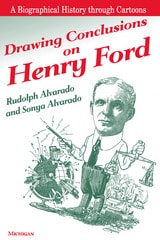
Drawing Conclusions on Henry Ford
Rudolph Alvarado and Sonya Alvarado
University of Michigan Press, 2001
For years political cartoons have shaped the often unflattering popular view of public figures. One of the most-often-portrayed figures of the twentieth century was the automobile manufacturer Henry Ford. Through editorial drawings, a vivid picture of Ford was presented that became the source of myths that surrounded him and continue even to this day.
Drawing Conclusions on Henry Ford is the first and only collection that brings together in one volume these editorial cartoons. They date back as far as the time Ford introduced the Model T in 1908 and extend forward to the introduction of the Model A and subsequent V8 engines in the 1930s. They illustrate the emergence of many of the popular myths surrounding Henry Ford, as seen and understood by the average citizen during the opening decades of the twentieth century. With 150 illustrations, the reader is able to trace the evolving images of Ford from a time period when caricature images of public figures were a primary source of information about those persons. Sometimes funny, sometimes sharp and critical, these cartoons are entertaining in themselves. Viewed as a whole, they create anew view of the Henry Ford story.
Rudolph V. Alvarado is a freelance writer and museum consultant, as well as the former programs leader for the Henry Ford Museum and Greenfield Village. Sonya Y. Alvarado is an instructor of English, at Eastern Michigan University and a former adjunct faculty member, Wayne State University.

Dream Song
The Life of John BerrymanMariani Paul
University of Massachusetts Press, 1996
Dream of Justice
The Story of Keyes v. Denver Public Schoolsby Pat Pascoe
University Press of Colorado, 2023
Pascoe details Denver’s desegregation battle, beginning with the citizen studies that exposed the inequities of segregated schools and Rachel Noel’s resolution to integrate the system, followed by the momentous pro-integration Benton-Pascoe campaign of Ed Benton and Monte Pascoe for the school board in 1969. When segregationists won that election and reversed the integration plan for northeast Denver, Black, white, and Latino parents filed Keyes v. School District No. 1. This book follows the arguments in the case through briefs, transcripts, and decisions from district court to the Supreme Court of the United States and back, to its ultimate order to desegregate all Denver schools “root and branch.” It was the first northern city desegregation suit to be brought before the Supreme Court. However, with the end of court-ordered busing in 1995, schools quickly resegregated and are now more segregated than before Keyes was filed.
Pascoe asserts that school integration is a necessary step toward eliminating systemic racism in our country and should be the objective of every school board. A Dream of Justice will appeal to students, scholars, and readers interested in the history of civil rights in America, Denver history, and the history of US education.
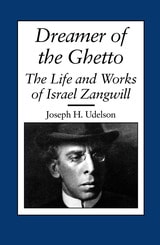
Dreamer of the Ghetto
The Life and Works of Israel ZangwillJoseph H. Udelson
University of Alabama Press, 1990
"An impressive achievement. . . . Udelson provides a trenchant analysis of Zangwill's works set within a historical context, i.e., Jewish emancipation and the dilemma of how one might remain fully Jewish while becoming fully modern, that helps to illuminate Zangwill's life as well as his writings."
—Jewish Book News
"By carefully following the threads of Zangwill's own divided self through the labyrinths of his life and writings, Udelson convinces us not only of the author's startling political prescience, but that he embodies attitudes now shared by almost all secular Jews as a result of events Zangwill did not witness—Nazism and the founding of Israel."
—Shofar
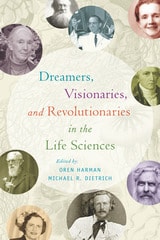
Dreamers, Visionaries, and Revolutionaries in the Life Sciences
Edited by Oren Harman and Michael R. Dietrich
University of Chicago Press, 2018
From the Frenchman Jean-Baptiste Lamarck, who coined the word “biology” in the early nineteenth century, to the American James Lovelock, for whom the Earth is a living, breathing organism, these dreamers innovated in ways that forced their contemporaries to reexamine comfortable truths. With this collection readers will follow Jane Goodall into the hidden world of apes in African jungles and Francis Crick as he attacks the problem of consciousness. Join Mary Lasker on her campaign to conquer cancer and follow geneticist George Church as he dreams of bringing back woolly mammoths and Neanderthals. In these lives and the many others featured in these pages, we discover visions that were sometimes fantastical, quixotic, and even threatening and destabilizing, but always a challenge to the status quo.
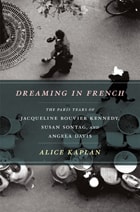
Dreaming in French
The Paris Years of Jacqueline Bouvier Kennedy, Susan Sontag, and Angela DavisAlice Kaplan
University of Chicago Press, 2012
All three women would go on to become icons, key figures in American cultural, intellectual, and political life, but when they embarked for France, they were young, little-known, uncertain about their future, and drawn to the culture, sophistication, and drama that only Paris could offer. Yet their backgrounds and their dreams couldn’t have been more different. Jacqueline Bouvier was a twenty-year-old debutante, a Catholic girl from a wealthy East Coast family. Susan Sontag was twenty-four, a precocious Jewish intellectual from a North Hollywood family of modest means, and Paris was a refuge from motherhood, a failing marriage, and graduate work in philosophy at Oxford. Angela Davis, a French major at Brandeis from a prominent African American family in Birmingham, Alabama, found herself the only black student in her year abroad program—in a summer when all the news from Birmingham was of unprecedented racial violence.
Kaplan takes readers into the lives, hopes, and ambitions of these young women, tracing their paths to Paris and tracking the discoveries, intellectual adventures, friendships, and loves that they found there. For all three women, France was far from a passing fancy; rather, Kaplan shows, the year abroad continued to influence them, a significant part of their intellectual and cultural makeup, for the rest of their lives. Jackie Kennedy carried her love of France to the White House and to her later career as a book editor, bringing her cultural and linguistic fluency to everything from art and diplomacy to fashion and historic restoration—to the extent that many, including Jackie herself, worried that she might seem “too French.” Sontag found in France a model for the life of the mind that she was determined to lead; the intellectual world she observed from afar during that first year in Paris inspired her most important work and remained a key influence—to be grappled with, explored, and transcended—the rest of her life. Davis, meanwhile, found that her Parisian vantage strengthened her sense of political exile from racism at home and brought a sense of solidarity with Algerian independence. For her, Paris was a city of political commitment, activism, and militancy, qualities that would deeply inform her own revolutionary agenda and soon make her a hero to the French writers she had once studied.
Kaplan, whose own junior year abroad played a prominent role in her classic memoir, French Lessons, spins these three quite different stories into one evocative biography, brimming with the ferment and yearnings of youth and shot through with the knowledge of how a single year—and a magical city—can change a whole life. No one who has ever dreamed of Paris should miss it.
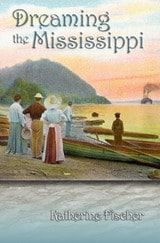
Dreaming the Mississippi
Katherine Fischer
University of Missouri Press, 2006
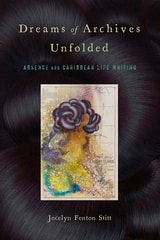
Dreams of Archives Unfolded
Absence and Caribbean Life WritingJocelyn Fenton Stitt
Rutgers University Press, 2021
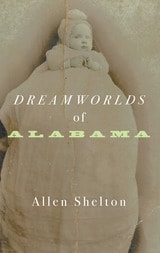
Dreamworlds of Alabama
Allen Shelton
University of Minnesota Press, 2007
“I speak in what others often hear as a strange accent. My past can’t be located. I live in Buffalo, New York, an exile from the South. But these aren’t Yankee dreams, even though my past seems like a fabrication, a dreamworld in which I’m a paper character and not a historical participant, with scars from barbed wire ripping under the pressure and flying through the air like a swarm of bees, or a horse rearing up and banging its head into mine from within, exploding my forehead.” —from the Preface
Wisteria draped on a soldier’s coffin, sent home to Alabama from a Virginia battlefield. The oldest standing house in the county, painted gray and flanked by a pecan orchard. A black steel fence tool, now perched atop a pile of books like a prehistoric bird of prey. In Dreamworlds of Alabama, Allen Shelton explores physical, historical, and social landscapes of northeastern Alabama. His homeplace near the Appalachian foothills provides the setting for a rich examination of cultural practices, a place where the language of place and things resonates with as much vitality and emotional urgency as the language of humans.
Throughout the book, Shelton demonstrates how deeply culture is inscribed in the land and in the most intimate spaces of the person—places of belonging and loss, insight and memory.
Born and raised in Jacksonville, Alabama, Allen Shelton is associate professor of sociology at Buffalo State College.
Drifting West
V Simmons
University Press of Colorado, 2007
Driven toward Madness
The Fugitive Slave Margaret Garner and Tragedy on the OhioNikki M. Taylor
Ohio University Press, 2016
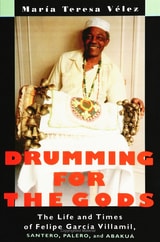
Drumming For The Gods
Maria Velez
Temple University Press, 2000
This book focuses on three periods of Felipe's life, each marked by changes in his personal life and by important historical events. The first period covers his formative years during which he received his initial training. Through Felipe's story, we explore the legacy of slavery in Cuba, the nature of Afro-Cuban religions and their musical traditions, and the history of bata drums. The second period covers the critical years of the Cuban Revolution. Here we see the effect of social turmoil both n music and religious practice (santero, palero, and abakua). The third period covers Felipe's life in New York as a refugee/immigrant, and the role of music in rebuilding his identity. Felipe's story illuminates his cultural practices and beliefs as well as the ways in which an individual musician selects and modifies the elements of his cultural heritage to create a voice that is personal and unique. Felipe not only lives through history but also makes history, shaping an identity that cannot be described as "Cuban immigrant," "Afro-Cuban," "religious drummer," or "santeria initiate," but is composed of all of them.
Through Felipe's experiences, Maria Teresa Velez reveals the interaction between social, political, economic, and cultural forces and an individual's own actions. The professionalization of musicians in Cuba following the Revolution and the plight of Afro-Cuban immigrants in New York are seen as large historical and social problems to which Felipe must personally respond. A noted ethnomusicologist, Velez provides the most insightful and comprehensive English-language study of an individual Cuban religious drummer available.
Drumming for the Gods is a must-read for those interested in ethnomusicology, Caribbean studies, and Afro-Cuban religions and culture.
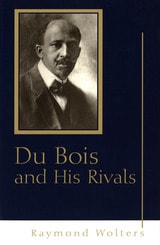
Du Bois and His Rivals
Raymond Wolters
University of Missouri Press, 2002
In Du Bois and His Rivals, Raymond Wolters provides a distinctive biography of this great pioneer of the American civil rights movement. Readers are able to follow the outline of Du Bois’s life, but the book’s main emphasis is on discrete scenes in his life, especially the controversies that pitted Du Bois against his principal black rivals. He challenged Booker T. Washington because he could not abide Washington’s conciliatory approach toward powerful whites. At the same time, Du Bois’s pluralism led him to oppose the leading separatists and integrationists of his day. He berated Marcus Garvey for giving up on America and urging blacks to pursue a separate destiny. He also rejected Walter White’s insistence that integration was the best way to promote the advancement of black people.
Du Bois felt that American blacks should be full-fledged Americans, with all the rights of other American citizens. However, he believed that they should also preserve and develop enough racial distinctiveness to enable them to maintain and foster a sense of racial identity, community, and pride. Du Bois and His Rivals shows that Du Bois stood for much more than protest against racial oppression. He was also committed to pluralism, and his pluralism emphasized the importance of traditional standards and of internal cooperation within the black community. Anyone interested in the civil rights movement, black history, or the history of the United States during the early twentieth century will find this book valuable.
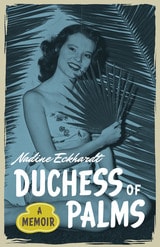
Duchess of Palms
A MemoirBy Nadine Eckhardt
University of Texas Press, 2009
A “fifties girl” tells the fascinating story of her marriages to novelist Billy Lee Brammer and Congressman Bob Eckhardt, and how these relationships propelled her into the multifaceted life she led on her own terms.
Child of the Great Depression, teenage "Duchess of Palms" beauty queen, wife of an acclaimed novelist and later of a brilliant U.S. congressman, and ultimately a successful single working woman and mother, Nadine Eckhardt has lived a fascinating life. In this unique, funny, and honest memoir, she recounts her journey from being a "fifties girl" who lived through the men in her life to becoming a woman in her own right, working toward her own goals.
Eckhardt's first marriage to writer Billy Lee Brammer gave her entrée to liberal political and literary circles in Austin and Washington, where she and Brammer both worked for Senator Lyndon B. Johnson. She describes the heady excitement of LBJ's world—a milieu that Brammer vividly captured in his novel The Gay Place. She next recalls her second marriage to Bob Eckhardt, whom she helped get elected to the U.S. House of Representatives, as well as her growing involvement with the counterculture of social protest, sexual revolution, and drug use. Eckhardt honestly recounts how the changing times changed her perception of herself, recalling that "I didn't know how to achieve for myself, only for others, and I felt ripped off and empty." This painful realization opened the door to a new life for Eckhardt. Her memoir concludes with a joyful description of her multifaceted later life as a restaurateur, assistant to Molly Ivins, writer, and center of a wide circle of friends.

Duffy Daugherty
A Man Ahead of His TimeDavid Claerbaut
Michigan State University Press, 2018
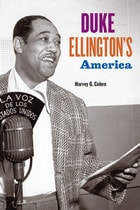
Duke Ellington's America
Harvey G. Cohen
University of Chicago Press, 2010
Few American artists in any medium have enjoyed the international and lasting cultural impact of Duke Ellington. From jazz standards such as “Mood Indigo” and “Don’t Get Around Much Anymore,” to his longer, more orchestral suites, to his leadership of the stellar big band he toured and performed with for decades after most big bands folded, Ellington represented a singular, pathbreaking force in music over the course of a half-century. At the same time, as one of the most prominent black public figures in history, Ellington demonstrated leadership on questions of civil rights, equality, and America’s role in the world.
With Duke Ellington’s America, Harvey G. Cohen paints a vivid picture of Ellington’s life and times, taking him from his youth in the black middle class enclave of Washington, D.C., to the heights of worldwide acclaim. Mining extensive archives, many never before available, plus new interviews with Ellington’s friends, family, band members, and business associates, Cohen illuminates his constantly evolving approach to composition, performance, and the music business—as well as issues of race, equality and religion. Ellington’s own voice, meanwhile, animates the book throughout, giving Duke Ellington’s America an intimacy and immediacy unmatched by any previous account.
By far the most thorough and nuanced portrait yet of this towering figure, Duke Ellington’s America highlights Ellington’s importance as a figure in American history as well as in American music.

During Wind and Rain
The Jones Family Farm in the Arkansas Delta 1848-2006Margaret Jones Bolsterli
University of Arkansas Press, 2008

Duty to Serve, Duty to Conscience
The Story of Two Conscientious Objector Combat Medics during the Vietnam WarJames C. Kearney
University of North Texas Press, 2023
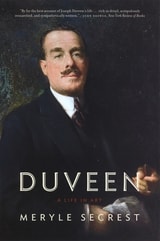
Duveen
A Life in ArtMeryle Secrest
University of Chicago Press, 2005
The first major biography of Duveen in more than fifty years and the first to make use of his enormous archive—only recently opened to the public—Meryle Secrest's Duveen traces the rapid ascent of the tirelessly enterprising dealer, from his humble beginnings running his father's business to knighthood and eventually apeerage. The eldest of eight sons of Jewish-Dutch immigrants, Duveen inherited an uncanny ability to spot a hidden treasure from his father, proprietor of a prosperous antiques business. After his father's death, Duveen moved the company into the riskier but lucrative market of paintings and quickly became one of the world's leading art dealers. The key to Duveen's success was his simple observation that while Europe had the art, America had the money; Duveen made his fortune by buying art from declining European aristocrats and selling them to the "squillionaires" in the United States.
"By far the best account of Joseph Duveen's life in a biography that is rich in detail, scrupulously researched, and sympathetically written. [Secrest's] inquiries into early-twentieth-century collecting whet our appetite for a more general history of the art market in the first half of the twentieth century."—John Brewer, New York Review of Books
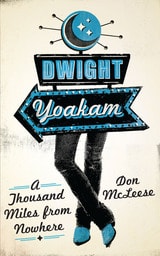
Dwight Yoakam
A Thousand Miles from NowhereBy Don McLeese
University of Texas Press, 2012
From his formative years playing pure, hardcore honky-tonk for mid-’80s Los Angeles punk rockers through his subsequent surge to the top of the country charts, Dwight Yoakam has enjoyed a singular career. An electrifying live performer, superb writer, and virtuosic vocalist, he has successfully bridged two musical worlds that usually have little use for each other—commercial country and its alternative/Americana/roots-rocking counterpart. Defying the label “too country for rock, too rock for country,” Yoakam has triumphed while many of his peers have had to settle for cult acceptance. Four decades into his career, he has sold more than 25 million records and continues to tour regularly, with an extremely loyal fan base.
In Dwight Yoakam, award-winning music journalist Don McLeese offers the first musical biography of this acclaimed artist. Tracing the seemingly disparate influences in Yoakam’s music, McLeese shows how he has combined rock and roll, rockabilly, country, blues, and gospel into a seamless whole. In particular, McLeese explores the essential issue of “authenticity” and how it applies to Yoakam, as well as to country music and popular culture in general. Drawing on wide-ranging interviews with Yoakam and his management, while also benefitting from the perspectives of others closely associated with his musical success (including producer-guitarist Pete Anderson, Yoakam’s partner throughout his most popular and creative decades), Dwight Yoakam pays tribute to the musician who has established himself as a visionary beyond time, an artist who could title an album Tomorrow’s Sounds Today and deliver it.
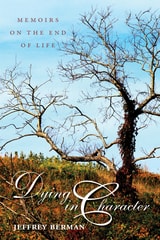
Dying in Character
Memoirs on the End of LifeJeffrey Berman
University of Massachusetts Press, 2012
Examining the works cited above, as well as memoirs by Mitch Albom, Roland Barthes, Jean-Dominique Bauby, Art Buchwald, Randy Pausch, David Rieff, Philip Roth, and Morrie Schwartz, Jeffrey Berman's analysis of this growing genre yields some surprising insights. While the authors have much to say about the loneliness and pain of dying, many also convey joy, fulfillment, and gratitude. Harold Brodkey is willing to die as long as his writings survive. Art Buchwald and Randy Pausch both use the word fun to describe their dying experiences. Dying was not fun for Morrie Schwartz and Tony Judt, but they reveal courage, satisfaction, and fearlessness during the final stage of their lives, when they are nearly paralyzed by their illnesses.
It is hard to imagine that these writers could feel so upbeat in their situations, but their memoirs are authentically affirmative. They see death coming, yet they remain stalwart and focused on their writing. Berman concludes that the contemporary end-of-life memoir can thus be understood as a new form of death ritual, "a secular example of the long tradition of ars moriendi, the art of dying."