Results by title
5159 books match the query 'Biography' and 142 start with e
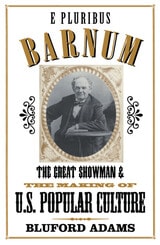
E Pluribus Barnum
The Great Showman and the Making of U.S. Popular CultureBluford Adams
University of Minnesota Press, 1997
The first book to consider the career of P. T. Barnum from a cultural studies perspective.
Phineas Taylor Barnum lived from 1810 until 1891, and in the eighty-one years of his life he created show business as we know it. In E Pluribus Barnum, Bluford Adams investigates the influence Barnum had on American popular culture of the nineteenth century, and expands our understanding of the ways he continues to influence us today.
Beginning with a discussion of Barnum’s early shows, Adams demonstrates the dynamic interplay between Barnum’s increasingly “respectable” aspirations for his entertainments and his active cultivation of middle-class sensibilities in his audiences. In his discussion of the 1850-51 concert tour of the “Swedish Nightingale” Jenny Lind, Adams explores the role played by women’s rights and class issues in Barnum’s management of these concerts. Barnum’s American Museum and the “moral dramas” presented in its theater (which included a play of Uncle Tom’s Cabin) are examined in the context of debates about slavery and temperance. The later circuses are discussed in terms of their international pageants and their staging of orientalism through racial exhibitions. Adams relates the rise of Barnum to the emergence of a new U.S. society, one riven by conflicts over slavery, feminism, immigration, and capitalism. He documents Barnum’s efforts to negotiate those conflicts by steadily remaking his amusements and his public image. E Pluribus Barnum examines Barnum’s shifting political allegiances for what they tell us about American culture at the time, examines the audiences he created, and considers his career as a crucial moment in the ongoing struggle over the politics of U.S. commercial entertainments.
E. Franklin Frazier Reconsidered
Platt, Anthony M
Rutgers University Press, 1991
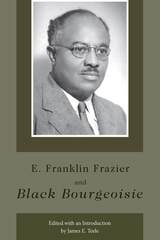
E. Franklin Frazier and Black Bourgeoisie
E. Franklin Frazier
University of Missouri Press, 2002
When E. Franklin Frazier was elected the first black president of the American Sociological Association in 1948, he was established as the leading American scholar on the black family and was also recognized as a leading theorist on the dynamics of social change and race relations. By 1948 his lengthy list of publications included over fifty articles and four major books, including the acclaimed Negro Family in the United States. Frazier was known for his thorough scholarship and his mastery of skills in both history and sociology.
With the publication of Bourgeoisie Noire in 1955 (translated in 1957 as Black Bourgeoisie), Frazier apparently set out on a different track, one in which he employed his skills in a critical analysis of the black middle class. The book met with mixed reviews and harsh criticism from the black middle and professional class. Yet Frazier stood solidly by his argument that the black middle class was marked by conspicuous consumption, wish fulfillment, and a world of make-believe. While Frazier published four additional books after 1948, Black Bourgeoisie remained by far his most controversial.
Given his status in American sociology, there has been surprisingly little study of Frazier's work. In E. Franklin Frazier and Black Bourgeoisie, a group of distinguished scholars remedies that lack, focusing on his often-scorned Black Bourgeoisie.
This in-depth look at Frazier's controversial publication is relevant to the growing concerns about racism, problems in our cities, the limitations of affirmative action, and the promise of self-help.

E. W. Scripps and the Business of Newspapers
Gerald Baldasty
University of Illinois Press, 1999
Edward Willis Scripps revolutionized the newspaper industry by applying modern business practices. His press empire grew to more than forty newspapers supported by a telegraphic news service and an illustrated news features syndicate. Convinced that big business was corrupting the American press, Scripps resisted supporting his newspapers through advertising. He also aimed them at the working class, an audience virtually ignored by most newspaper publishers of his era.
Drawing on Scripps's business correspondence, Gerald Baldasty provides a portrait of a long-neglected entrepreneurial giant. Maintaining that the press should support the democratic endeavor by informing its largest constituency, Scripps succeeded in creating a string of small, one-penny newspapers that advocated for the common people by crusading for lower streetcar fares, free textbooks for public school children, municipal ownership of utilities, and pure food legislation, among many other causes.

EMBASSY GIRLS
JULIA DAVIS
West Virginia University Press, 1992
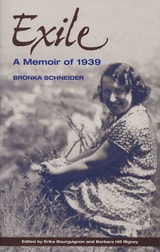
EXILE
A MEMOIR OF 1939Bronka Schneider Edited with forewords by Erika Bourguignon and Barbara Hill Rigney
The Ohio State University Press, 1998
Bronka Schneider and her husband, Joseph, were two of the thirty thousand Austrian Jews admitted as refugees to Great Britain between March 1938 and 2 September 1939. It was not until 1960, however, that Schneider wrote her memoir about the year she spent as a housekeeper, with Joseph as a butler, in a Scottish castle.
Schneider tells of daily encounters—with her employers, the English lady and her husband, a retired British civil servant who had spent many years in India; the village locals; other refugees; and a family of evacuees from the slums of Glasgow.
The editors have divided this memoir into chapters, adding headlines from the London Times as epigraphs. These headlines, reporting the escalating events of World War II, are in stark contrast to daily activities of the residents of this isolated region of Scotland. A commentary by Erika Bourguignon provides historical, political, and cultural background of this period.
Each One Teach One
Up and Out of Poverty, Memoirs of a Street ActivistRon Casanova and Stephen Blackburn
Northwestern University Press, 2010
Underlying Each One Teach One, with its vivid cast of characters and intimate descriptions of Harlem and other urban areas, is the profound sense that no matter what your circumstance, you can use your past experience to help others. Ultimately, Casanova's story is a message of hope for the future and for the possibility of self-sufficiency and self-empowerment for each individual.
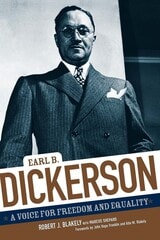
Earl B. Dickerson
A Voice for Freedom and EqualityRobert J. Blakely
Northwestern University Press, 2006
At fifteen, Earl Burrus Dickerson stowed away on a train in Canton, Mississippi, fleeing the racial oppression of his native South. But Chicago, the boy's destination, was no haven of racial fairness and equality. His flight north was in fact the beginning of a journey that would last a lifetime--and would forever pit Dickerson against the forces of racial injustice. Earl B. Dickerson's story, told here for the first time, is one of courage and character, of remarkable accomplishment in the face of terrible odds; it is also emblematic of the twentieth-century struggle for civil rights--a crucial chapter of African American history as it was lived by one uncompromising individual.
In this book, Robert J. Blakely tells how Dickerson (1891-1986) worked his way through preparatory schools and college, a segregated officer's training school, and law school at the University of Chicago. The story follows Dickerson's career as general counsel to the first insurance company owned and operated by African Americans; the first African American Democratic alderman elected to the Chicago City Council; a member of FDR's first Fair Employment Practices Committee; leader of the movement that broke the color barrier to membership in the Illinois Bar Association; and, perhaps most famously, the power behind Hansberry v. Lee, the U.S. Supreme Court case that marked the beginning of the end of restrictive real estate covenants--one of the most pernicious legal tools of segregation in the North. Blakely gives us a sense of the man behind the achievements, the life that defied conventions and statistics, and the world in which "the dean of Chicago's black lawyers" became a pioneering architect for equal opportunity in American life.
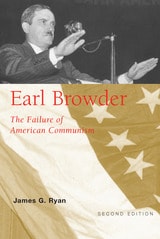
Earl Browder
The Failure of American CommunismJames G. Ryan
University of Alabama Press, 2005
Earl Browder, the preeminent 20th-century Communist party leader in the United States, steered the CPUSA through the critical years of the Great Depression and World War II. A Kansas native and veteran of numerous radical movements, he was peculiarly fitted by circumstance and temperament to head the cause during its heyday.
Serving as a bridge between American Communism’s secret and public worlds, Browder did more than anyone to attempt to explain the Soviet Union’s shifting policies to the American people in a way that would serve the interests of the CPUSA. A proud and loyal follower of Joseph Stalin, Browder nevertheless sought to move the party into the U.S. political mainstream. He used his knowledge of domestic politics to persuade the Communist International to modify Popular Front (1935-1939) tactics for the United States.
Despite his rise in the hierarchy, he possessed an independent streak that ultimately proved his undoing. Imprisonment as he neared age 50 left permanent psychological damage. After being released with the approval of President Franklin D. Roosevelt, Browder lost his perspective and began entertaining delusions of grandeur about his status in American politics and in the world Communist movement. Still, he could never quite bring legitimacy to the CPUSA because he lacked the vision and moral courage to separate himself totally from the Soviet Union. Ryan concludes that Browder was not so much insincere as deluded. His failure contributed to the demise of the popularity of the Communist party in the United States.
In preparation for this book, the author consulted the Browder Papers at Syracuse University and U.S. Government documents, particularly the F.B.I. files. In addition, he traveled to Russia for research in the Soviet Archives when recently opened to Western scholars, including the records of the former Communist International and a collection of American Communist party files, 1919-1944, shipped secretly to Moscow long ago. Indeed, until 1992, the existence of the CPUSA collection was only rumored.

Earl Campbell
Yards after ContactBy Asher Price
University of Texas Press, 2019
Earl Campbell was a force in American football, winning a state championship in high school, rushing his way to a Heisman trophy for the University of Texas, and earning MVP as he took the Houston Oilers to the brink of the Super Bowl. An exhilarating blend of biography and history, Earl Campbell chronicles the challenges and sacrifices one supremely gifted athlete faced in his journey to the Hall of Fame. The story begins in Tyler, Texas, and features his indomitable mother, a crusading judge, and a newly integrated high school, then moves to Austin, home of the University of Texas (infamously, the last all-white national champion in college football), where legendary coach Darrell Royal stakes his legacy on recruiting Campbell. Later, in booming, Luv-Ya-Blue Houston, Campbell reaches his peak with beloved coach Bum Phillips, who celebrates his star runner’s bruising style even as it takes its toll on Campbell’s body.
Drawing on new interviews and research, Asher Price reveals how a naturally reticent kid from the country who never sought the spotlight struggled with complex issues of race and health. In an age when concussion revelations and player protest against racial injustice rock the NFL, Campbell’s life is a timely story of hard-earned success—and heart-wrenching sacrifice.
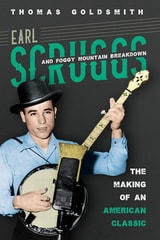
Earl Scruggs and Foggy Mountain Breakdown
The Making of an American ClassicThomas Goldsmith
University of Illinois Press, 2019

Earline's Pink Party
The Social Rituals and Domestic Relics of a Southern WomanElizabeth Findley Shores
University of Alabama Press, 2017
A compelling, genre-bending page-turner, Earline’s Pink Party: The Social Rituals and Domestic Relics of a Southern Woman analyzes the life of a small-city matron in the Deep South. A combination of biography, material culture analysis, social history, and memoir, this volume offers a new way of thinking about white racism through Shores’s conclusion that Earline’s earliest childhood experiences determined her worldview.
Set against a fully drawn background of geography and culture and studded with detailed investigations of social rituals (such as women’s parties) and objects (such as books, handwritten recipes, and fabric scraps), Earline’s Pink Party tells the story of an ordinary woman, the grandmother Shores never knew. Looking for more than the details and drama of bourgeois Southern life, however, the author digs into generations of family history to understand how Earline viewed the racial terror that surrounded her during the Jim Crow years in this fairly typical southern town.
Shores seeks to narrow a gap in the scholarship of the American South, which has tended to marginalize and stereotype well-to-do white women who lived after Emancipation. Exploring her grandmother’s home and its contents within the context of Tuscaloosa society and historical events, Shores evaluates the belief that women like Earline consciously engaged in performative rituals in order to sustain the “fantastical” view of the white nobility and the contented black underclass. With its engaging narrative, illustrations, and structure, this fascinating book should interest scholars of memory, class identity, and regional history, as well as sophisticated lay readers who enjoy Southern history, foodways, genealogy, and material culture.
Early Art and Artists in West Virginia
An Introduction and Biographical DirectoryJOHN A. CUTHBERT
West Virginia University Press, 2000
Early Art and Artists in West Virginia is copiously illustrated with 136 plates accompanying the essays on portraiture and landscape painting, which form the first half of the book. A similar number of smaller illustrations in full color bring life to a biographical directory in the second part of the book, which contains nearly one thousand known painters who worked in West Virginia. Many West Virginians will find their family names in this directory, and some will doubtless locate the information here that they have long sought in order to learn more about a painting in their family's possession. The book is supported by an extensive bibliography on the state's artistic heritage and a full index to both the directory and the essays.
2001 American Graphic Design Awards Winner
Ears, Eyes, and Hands
Reflections on Language, Literacy, and LinguisticsDeborah L. Wolter
Gallaudet University Press, 2018
Wolter reveals and rectifies the impact of deficit mindsets in the educational system regarding race, ethnicity, economic status, gender, and disability. As a literacy specialist, she works with students who fall through the cracks in a system that strives to embrace the diverse backgrounds and abilities found in the classroom. Her passion for engaging students and cultivating literacy shines in the stories she tells, which serve as parables that allow readers to evaluate their own attitudes and assumptions. Educators, parents, and community members will benefit from Wolter’s examination of sociolinguistics and language privilege as she identifies how ethnocentrism and ableism are contributing to negative educational outcomes for some students. With humor and warmth, she offers a path toward approaching language and listening as a gateway to connection and understanding, both inside the classroom and beyond.
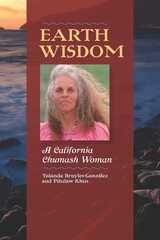
Earth Wisdom
A California Chumash WomanYolanda Broyles-González and Pilulaw Khus
University of Arizona Press, 2011
The 1978 Point Conception Occupation was a turning point in Pilulaw Khus’s life. In that year excavation began for a new natural gas facility at Point Conception, near Santa Barbara, California. To the Chumash tribal people of the central California coast, this was desecration of sacred land. In the Chumash cosmology, it was the site of the Western Gate, a passageway for spirits to enter the next world. Frustrated by unfavorable court hearings, the Chumash and their allies mobilized a year-long occupation of the disputed site, eventually forcing the energy company to abandon its plan. The Point Conception Occupation was a landmark event in the cultural revitalization of the Chumash people and a turning point in the life of Pilulaw Khus, the Chumash activist and medicine woman whose firsthand narrations comprise this volume.
Scholar Yolanda Broyles-González provides an extensive introductory analysis of Khus’s narrative. Her analysis explores “re-Indianization” and highlights the newly emergent Chumash research of the last decade.
In the world of book publishing, this volume from a traditional Chumash woman elder is a first. It puts a 20th (and 21st) century face, name, identity, humanity, personality, and living voice on the term Chumash.
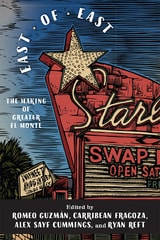
East of East
The Making of Greater El MonteRomeo Guzmán
Rutgers University Press, 2020
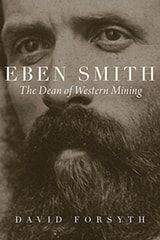
Eben Smith
The Dean of Western MiningDavid Forsyth
University Press of Colorado, 2021
The mining teams Smith formed with Chaffee and with industrialist David Moffat were among the most successful and respected in Colorado, and many in the state held Smith in high regard. Yet despite the credit he received during his lifetime for establishing Colorado’s mining industry, Smith has not received much attention from historians, perhaps because he was content to leave public-facing duties to his partners while he concerned himself with managing mine operations.
From Smith’s early years and his labor in the mines to his rise to prominence as an investor and developer, Forsyth shows how Smith used the mining and milling knowledge he acquired in California to become a leader in technological innovation in Colorado’s mining industry.
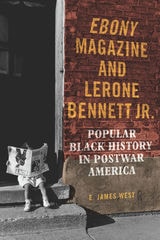
Ebony Magazine and Lerone Bennett Jr.
Popular Black History in Postwar AmericaE. James West
University of Illinois Press, 2020
E. James West's fresh and fascinating exploration of Ebony’s political, social, and historical content illuminates the intellectual role of the iconic magazine and its contribution to African American scholarship. He also uncovers a paradox. Though Ebony provided Bennett with space to promote a militant reading of black history and protest, the magazine’s status as a consumer publication helped to mediate its representation of African American identity in both past and present.
Mixing biography, cultural history, and popular memory, West restores Ebony and Bennett to their rightful place in African American intellectual, commercial, and political history.
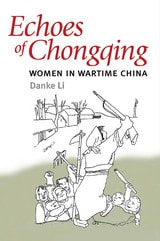
Echoes of Chongqing
Women in Wartime ChinaDanke Li
University of Illinois Press, 2010
This collection of annotated oral histories records the personal stories of twenty Chinese women who lived in the wartime capital of Chongqing during China's War of Resistance against Japan during World War II. By presenting women's remembrances of the war, this study examines the interplay between oral history and traditional historical narrative, public discourse, and private memories. The women interviewed came from differing social, economic, and educational backgrounds and experienced the war in a variety of ways, some of them active in the communist resistance and others trying to support families or pursue educations in the face of wartime upheaval. Their stories demonstrate that the War of Resistance had two faces: one presented by official propaganda and characterized by an upbeat unified front against Japan, the other a record of invisible private stories and a sobering national experience of death and suffering. The accounts of how women coped, worked, and lived during the war years in the Chongqing region recast historical understanding of the roles played by ordinary people in wartime and give women a public voice and face that, until now, have been missing from scholarship on the war.
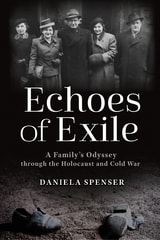
Echoes of Exile
A Family’s Odyssey through the Holocaust and Cold WarDaniela Spenser
University of Alabama Press, 2025
A sweeping exploration of survival, resilience, and the fate of one family amid Europe’s most turbulent century.
Echoes of Exile reveals the seismic disruptions of twentieth-century European history through the intimate lens of one family’s struggle to survive. Setting out to record the life of her mother, Ruth, Daniela Spenser unearthed personal facts and stories that additionally illuminate the shared traumas and experiences of millions of Czech, Polish, and German Jews who died in the Holocaust, as well as the stories of those who survived and lived under Communism and the Cold War. Her resulting work is a fascinating hybrid that combines family letters and interviews with deeply researched political history spanning from the collapse of the Austro-Hungarian Empire to the fall of the Berlin Wall.
Spenser’s fascinating work reveals the difficult choices her mother and family faced, the tests to their loves and loyalties, and the lingering scars of exile. More than a family history, it weaves personal and historical narratives with mundane and momentous threads to create a fresh, distinctive fabric. Spenser recovers fragments of the past that contribute to a map of the present and possibilities for the future. An engrossing account of survival, resilience, and the enduring human spirit amid the maelstrom of Europe’s savage twentieth century, Echoes of Exile will interest readers who value firsthand accounts of significant events and who seek to understand the complexities of survival, identity, and political change through intimate, lived experiences.

Eckhardt
There Once Was a Congressman from TexasBy Gary A. Keith
University of Texas Press, 2007
Runner-up, Violet Crown Award, Writer's League of Texas, 2008
Renowned for his "brilliant legislative mind" and political oratory—as well as for bicycling to Congress in a rumpled white linen suit and bow tie—U.S. Congressman Bob Eckhardt was a force to reckon with in Texas and national politics from the 1940s until 1980. A liberal Democrat who successfully championed progressive causes, from workers' rights to consumer protection to environmental preservation and energy conservation, Eckhardt won the respect of opponents as well as allies. Columnist Jack Anderson praised him as one of the most effective members of Congress, where Eckhardt was a national leader and mentor to younger congressmen such as Al Gore.
In this biography of Robert Christian Eckhardt (1913-2001), Gary A. Keith tells the story of Eckhardt's colorful life and career within the context of the changing political landscape of Texas and the rise of the New Right and the two-party state. He begins with Eckhardt's German-American family heritage and then traces his progression from labor lawyer, political organizer, and cofounder of the progressive Texas Observer magazine to Texas state legislator and U.S. congressman. Keith describes many of Eckhardt's legislative battles and victories, including the passage of the Open Beaches Act and the creation of the Big Thicket National Preserve, the struggle to limit presidential war-making ability through the War Powers Act, and the hard fight to shape President Carter's energy policy, as well as Eckhardt's work in Texas to tax the oil and gas industry.
The only thorough recounting of the life of a memorable, important, and flamboyant man, Eckhardt also recalls the last great era of progressive politics in the twentieth century and the key players who strove to make Texas and the United States a more just, inclusive society.
Eco Soma
Pain and Joy in Speculative Performance EncountersPetra Kuppers
University of Minnesota Press, 2022
Modeling a disability culture perspective on performance practice toward socially just futures
In Eco Soma, Petra Kuppers asks readers to be alert to their own embodied responses to art practice and to pay attention to themselves as active participants in a shared sociocultural world. Reading contemporary performance encounters and artful engagements, this book models a disability culture sensitivity to living in a shared world, oriented toward more socially just futures.
Eco soma methods mix and merge realities on the edges of lived experience and site-specific performance. Kuppers invites us to become moths, sprout gills, listen to our heart’s drum, and take starships into crip time. And fantasy is central to these engagements: feeling/sensing monsters, catastrophes, golden lines, heartbeats, injured sharks, dotted salamanders, kissing mammoths, and more. Kuppers illuminates ecopoetic disability culture perspectives, contending that disabled people and their co-conspirators make art to live in a changing world, in contact with feminist, queer, trans, racialized, and Indigenous art projects. By offering new ways to think, frame, and feel “environments,” Kuppers focuses on art-based methods of envisioning change and argues that disability can offer imaginative ways toward living well and with agency in change, unrest, and challenge.
Traditional somatics teach us how to fine-tune our introspective senses and to open up the world of our own bodies, while eco soma methods extend that attention toward the creative possibilities of the reach between self, others, and the land. Eco Soma proposes an art/life method of sensory tuning to the inside and the outside simultaneously, a method that allows for a wider opening toward ethical cohabitation with human and more-than-human others.
Economists Lives
Biography and Autobiography in the History of Economics, Volume 39E. Roy Weintraub and Evelyn L. Forget, eds.
Duke University Press, 0
Contributors to this collection question whether biography is essential to understanding the history of economic ideas and consider how autobiographical materials should be read and interpreted by historians. Articles consider the treatment of autobiographical materials such as conversations and testimonies, the construction of heroes and villains, the relationship between scientific biography and literary biography, and concerns related to living subjects. Several essays address the role of biography and autobiography in the study of economists such as F. A. Hayek, Harry Johnson, Alfred Marshall, John Maynard Keynes, Oskar Morgenstern, and François Quesnay, concluding with several accounts of the interconnection of the historians’ projects with their own autobiographies.
All 2007 subscribers to History of Political Economy will receive a copy of “Economists’ Lives: Biography and Autobiography in the History of Economics” as part of their subscription.
Contributors
Roger E. Backhouse
Bruce Caldwell
Loïc Charles
William Coleman
Robert W. Dimand
Paul John Eakin
Ross B. Emmett
Evelyn L. Forget
Craufurd D. Goodwin
Peter Groenewegen
Malachi Haim Hacohen
Jan-Otmar Hesse
Patricia Laurence
Frederic S. Lee
Robert Leonard
Tiago Mata
D. E. Moggridge
Jeremy D. Popkin
Mike Reay
Christine Théré
E. Roy Weintraub
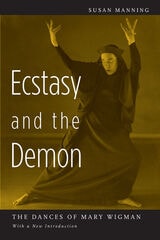
Ecstasy and the Demon
The Dances of Mary WigmanSusan Manning
University of Minnesota Press, 2006
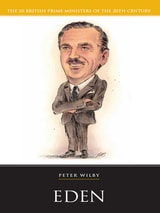
Eden
Peter Wilby
Haus Publishing, 2006
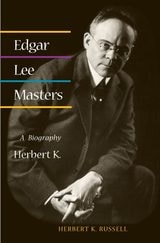
Edgar Lee Masters
A BIOGRAPHYHerbert K. Russell
University of Illinois Press, 2001
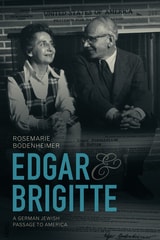
Edgar and Brigitte
A German Jewish Passage to AmericaRosemarie Bodenheimer
University of Alabama Press, 2016
The couple’s encounters with the strange new dynamics of race, religion, and the workplace in their new American home offer a compelling account of the struggles that faced many immigrants with deep German roots. It is also an intimate portrait of a now-vanished German Jewish culture as it played out in the lives of Bodenheimer’s parents and her grandparents from the 1920s to the late 1960s, a story of emigration, assimilation, and the private struggles that accompany those forced shifts in orientation.
The Bodenheimers’ letters and journals offer engaging perspectives into their personal lives that retrospective memories cannot match. Braiding intimate biography together with history and memoir, Edgar and Brigitte will appeal both to historians of the European Jewish diaspora and to readers interested in the struggles and resilience of people whose lives were upended by Hitler.
Edison's Electric Light
Friedel, Robert
Rutgers University Press, 1986
Edison
Inventing the CenturyNeil Baldwin
University of Chicago Press, 2001
Edith Stein
Philosopher and MysticJosephine Koeppel O.C.D.
University of Scranton Press, 2007
The twentieth anniversary of the beatification of Edith Stein (1891–1942), the accomplished Jewish philosopher who made a spiritual journey from atheism to agnosticism before eventually converting to Catholicism, will be celebrated in 2007. In Edith Stein: Philosopher and Mystic, Josephine Koeppel chronicles the life of this influential saint from her secular youth and entrance into a German monastery to her tragic death at Auschwitz. This accessible work will reward readers of all faiths interested in the life of a remarkable woman who changed the modern conception of sainthood.
Edith Wharton's Inner Circle
By Susan Goodman
University of Texas Press, 1994
When Edith Wharton became friends with Henry James, she joined a group of men who became her "inner circle." This group included both well-known figures, such as James, Percy Lubbock, and Bernard Berenson, and several now forgotten, including John Hugh Smith, Walter Berry, Gaillard Lapsley, Robert Norton, and Howard Sturgis.
Drawing on unpublished archival material by and about members of the circle, Susan Goodman here presents an intimate view of this American expatriate community, as well as the larger transatlantic culture it mirrored. She explores how the group, which began forming around 1904 and lasted until Wharton's death in 1937, defined itself against the society its founders had left in the United States, while simultaneously criticizing and accommodating the one it found in Europe. Tracing Wharton's individual relationships with these men and their relationships with one another, she examines literary kinships and movements in the biographical and feminist context of gender, exile, and aesthetics. She also relates the group to other literary circles, such as the Bloomsbury group and Gertrude Stein's salon.

Edith and Winnifred Eaton
Chinatown Missions and Japanese RomancesDominika Ferens
University of Illinois Press, 2002
Arguing that Edith as much as Winnifred constructed her persona along with her pen name, Ferens considers the fiction of both Eaton sisters as ethnography. Edith and Winnifred Eaton suggests that both authors wrote through the filter of contemporary ethnographic discourse on the Far East and also wrote for readers hungry for "authentic" insight into the morals, manners, and mentality of an exotic other.
Ferens traces two distinct discursive traditions–-missionary and travel writing–-that shaped the meanings of "China" and "Japan" in the nineteenth century. She shows how these traditions intersected with the unconventional literary careers of the Eaton sisters, informing the sober, moralistic tone of Edith's stories as well as Winnifred's exotic narrative style, plots, settings, and characterizations.
Bringing to the Eatons' writings a contemporary understanding of the racial and textual politics of ethnographic writing, this important account shows how these two very different writers claimed ethnographic authority, how they used that authority to explore ideas of difference, race, class and gender, and how their depictions of nonwhites worked to disrupt the process of whites' self-definition.
Edith
The Rogue Rockefeller McCormickAndrea Friederici Ross
Southern Illinois University Press, 2021
WINNER, 2021 Chicago Writers Association Book of the Year in Traditional Nonfiction!
Chicago’s quirky patron saint
This thrilling story of a daughter of America’s foremost industrialist, John D. Rockefeller, is complete with sex, money, mental illness, and opera divas—and a woman who strove for the independence to make her own choices. Rejecting the limited gender role carved out for her by her father and society, Edith Rockefeller McCormick forged her own path, despite pushback from her family and ultimate financial ruin.
Young Edith and her siblings had access to the best educators in the world, but the girls were not taught how to handle the family money; that responsibility was reserved for their younger brother. A parsimonious upbringing did little to prepare Edith for life after marriage to Harold McCormick, son of the Reaper King Cyrus McCormick. The rich young couple spent lavishly. They purchased treasures like the jewels of Catherine the Great, entertained in grand style in a Chicago mansion, and contributed to the city’s cultural uplift, founding the Chicago Grand Opera. They supported free health care for the poor, founding and supporting the John R. McCormick Memorial Institute for Infectious Diseases. Later, Edith donated land for what would become Brookfield Zoo.
Though she lived a seemingly enviable life, Edith’s disposition was ill-suited for the mores of the time. Societal and personal issues—not least of which were the deaths of two of her five children—caused Edith to experience phobias and panic attacks. Dissatisfied with rest cures, she ignored her father’s expectations, moved her family to Zurich, and embarked on a journey of education and self-examination. Edith pursued analysis with then-unknown Carl Jung. Her generosity of spirit led Edith to become Jung’s leading patron. She also supported up-and-coming musicians, artists, and writers, including James Joyce as he wrote Ulysses.
While Edith became a Jungian analyst, her husband, Harold, pursued an affair with an opera star. After returning to Chicago and divorcing Harold, Edith continued to deplete her fortune. She hoped to create something of lasting value, such as a utopian community and affordable homes for the middle class. Edith’s goals caused further difficulties in her relationship with her father and are why he and her brother cut her off from the family funds even after the 1929 stock market crash ruined her. Edith’s death from breast cancer three years later was mourned by thousands of Chicagoans.
Respectful and truthful, Andrea Friederici Ross presents the full arc of this amazing woman’s life and expertly helps readers understand Edith’s generosity, intelligence, and fierce determination to change the world
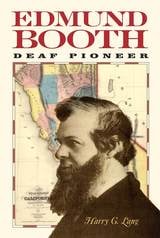
Edmund Booth
Deaf PioneerHarry G. Lang
Gallaudet University Press, 2004
Edmund Booth was born in 1810 and died in 1905, and during the 94 years of his life, he epitomized virtually everything that characterized an American legend of that century. In his prime, Booth stood 6 feet, 3 inches tall, weighed in at 210 pounds, and wore a long, full beard. He taught school in Hartford, CT, then followed his wife-to-be Mary Ann Walworth west to Anamosa, Iowa, where in 1840, he built the area’s first frame house. He pulled up stakes nine years later to travel the Overland Trail on his way to join the California Gold Rush. After he returned to Iowa in 1854, he became the editor of the Anamosa Eureka, the local newspaper. Edmund Booth fit perfectly the mold of the ingenious pioneer of 19th-century America, except for one unusual difference — he was deaf.
Edmund Booth: Deaf Pioneer follows the amazing career of this American original and his equally amazing wife in fascinating detail. Author Harry G. Lang vividly portrays Booth and his wife by drawing from a remarkable array of original material. A prolific writer, Booth corresponded with his fiancé from the American School for the Deaf in Hartford, and he kept a journal during his days on the California trail, parts of which have been reproduced here. He also wrote an autobiographical essay when he was 75, and his many newspaper articles through the years bore first-hand witness to the history of his times, from the Civil War to the advent of the 20th century.
Edmund Booth depicts a larger-than-life man in larger-than-life times, but perhaps its greatest contribution derives from its narrative about pioneer days as seen through Deaf eyes. Booth became a respected senior statesman of the American Deaf community, and blended with his stories of the era’s events are anecdotes and issues vital to Deaf people and their families. His story proves again that extraordinary people vary in many ways, but they often possess a common motive in acting to enhance their own communities.
Edmund J. James and the Making of the Modern University of Illinois, 1904-1920
Winton U. Solberg and J. David Hoeveler
University of Illinois Press, 2024
In 1904, Edmund J. James inherited the leadership of an educational institution in search of an identity. His sixteen-year tenure transformed the University of Illinois from an industrial college to a major state university that fulfilled his vision of a center for scientific investigation.
Winton U. Solberg and J. David Hoeveler provide an account of a pivotal time in the university’s evolution. A gifted intellectual and dedicated academic reformer, James began his tenure facing budget battles and antagonists on the Board of Trustees. But as time passed, he successfully campaigned to address the problems faced by women students, expand graduate programs, solidify finances, create a university press, reshape the library and faculty, and unify the colleges of liberal arts and sciences. Combining narrative force with exhaustive research, the authors illuminate the political milieu and personalities around James to draw a vivid portrait of his life and times.
The authoritative conclusion to a four-part history, Edmund J. James and the Making of the Modern University of Illinois, 1904–1920 tells the story of one man’s mission to create a university worthy of the state of Illinois.
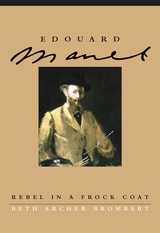
Edouard Manet
Rebel in a Frock CoatBeth Archer Brombert
University of Chicago Press, 1997
"One of the pleasures of reading her is to follow the way she weaves life, art and history into a smooth tapestry. The art emerges from the life, and in the broadest possible context: in terms of its creator's life and concerns and in terns of its historical and cultural setting."—Eric Gibson, The Washington Times Books
"Richly detailed and informative . . . [this biography] exposes the character of an artist who maintained a sharply defined duality between his public and private personas."—Edward J. Sozanski, Philadelphia Inquirer
"Brombert's reading of important canvasses . . . shine, as do her accounts of the changing social and political environment in which Manet worked. . . . Well researched, complexly conceived, and clearly written."—Kirkus Reviews
"Brilliant . . . [this book] grants us a far deeper understanding of why [Manet's] paintings outraged so many of his peers, and why these same masterpieces resonate so richly in our psyches a century later."—Booklist, starred review
Eduardo Balderas
Father of Church Translation, 1907-1989Ignacio M. Garcia
Signature Books, 2024
Educating Women
Cultural Conflict and Victorian LiteratureLaura Morgan Green
Ohio University Press, 2001
In 1837, when Queen Victoria came to the throne, no institution of higher education in Britain was open to women. By the end of the century, a quiet revolution had occurred: women had penetrated even the venerable walls of Oxford and Cambridge and could earn degrees at the many new universities founded during Victoria's reign. During the same period, novelists increasingly put intellectually ambitious heroines students, teachers, and frustrated scholars—at the center of their books. Educating Women analyzes the conflict between the higher education movement's emphasis on intellectual and professional achievement and the Victorian novel's continuing dedication to a narrative in which women's success is measured by the achievement of emotional rather than intellectual goals and by the forging of social rather than institutional ties.
Focusing on works by Charlotte Brontë, George Eliot, Anna Leonowens, and Thomas Hardy, Laura Morgan Green demonstrates that those texts are shaped by the need to mediate the conflict between the professionalism and publicity increasingly associated with education, on the one hand, and the Victorian celebration of women as emblems of domesticity, on the other. Educating Women shows that the nineteenth-century “heroines” of both history and fiction were in fact as indebted to domestic ideology as they were eager to transform it.
Education Of A Public Man
My Life and PoliticsHubert Humphrey
University of Minnesota Press, 1991
A candid look into the private and political life of Minnesota's native son.
Education Of A University President
Marvin Wachman, foreword by James W. Hilty
Temple University Press, 2005
Education and Democracy
The Meaning of Alexander Meiklejohn, 1872–1964Adam R. Nelson
University of Wisconsin Press, 2001
This definitive biography of the charismatic Alexander Meiklejohn tracks his turbulent career as an educational innovator at Brown University, Amherst College, and Wisconsin’s “Experimental College” in the early twentieth century and his later work as a civil libertarian in the Joe McCarthy era. The central question Meiklejohn asked throughout his life’s work remains essential today: How can education teach citizens to be free?
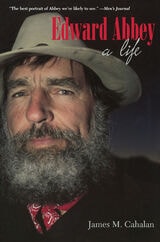
Edward Abbey
A LifeJames M. Cahalan
University of Arizona Press, 2001
It separates fact from fiction, showing that much of the myth surrounding Abbey—such as his birth in Home, Pennsylvania, and later residence in Oracle, Arizona—was self-created and self-perpetuated. It also shows that Abbey cultivated a persona both in his books and as a public speaker that contradicted his true nature: publicly racy and sardonic, he was privately reserved and somber. Author James Cahalan studied all of Abbey’s works and private papers and interviewed many people who knew him—including the models for characters in The Brave Cowboy and The Monkey Wrench Gang—to create a complete picture of the writer’s life. He examines Abbey’s childhood roots in the East and his love affair with the West, his personal relationships and tempestuous marriages, and his myriad jobs in continually shifting locations—including sixteen national parks and forests.
He also explores Abbey’s writing process, his broad intellectual interests, and the philosophical roots of his politics. For Abbey fans who assume that his “honest novel,” The Fool’s Progress, was factual or that his public statements were entirely off the cuff, Cahalan’s evenhanded treatment will be an eye-opener.
More than a biography, Edward Abbey: A Life is a corrective that stands the test of time, showing that Abbey was neither simply a countercultural cowboy hero nor an unprincipled troublemaker, but instead a complex and multifaceted person whose legacy continues to be appreciated. The book contains thirty photographs, capturing scenes ranging from Abbey’s childhood to his burial site.
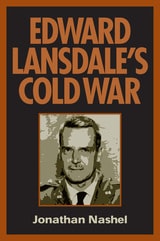
Edward Lansdale's Cold War
Jonathan Nashel
University of Massachusetts Press, 2005
The man widely believed to have been the model for Alden Pyle in Graham Greene's The Quiet American, Edward G. Lansdale (1908–1987) was a Cold War celebrity. A former advertising executive turned undercover CIA agent, he was credited during the 1950s with almost single-handedly preventing a communist takeover of the Philippines and with helping to install Ngo Dinh Diem as president of the American-backed government of South Vietnam. Adding to his notoriety, during the Kennedy administration Lansdale was put in charge of Operation Mongoose, the covert plot to overthrow the government of Cuba's Fidel Castro by assassination or other means.
In this book, Jonathan Nashel reexamines Lansdale's role as an agent of American Cold War foreign policy and takes into account both his actual activities and the myths that grew to surround him. In contrast to previous portraits, which tend to depict Lansdale either as the incarnation of U.S. imperialist ambitions or as a farsighted patriot dedicated to the spread of democracy abroad, Nashel offers a more complex and nuanced interpretation. At times we see Lansdale as the arrogant “ugly American,” full of confidence that he has every right to make the world in his own image and utterly blind to his own cultural condescension. This is the Lansdale who would use any conceivable gimmick to serve U.S. aims, from rigging elections to sugaring communist gas tanks. Elsewhere, however, he seems genuinely respectful of the cultures he encounters, open to differences and new possibilities, and willing to tailor American interests to Third World needs.
Rather than attempting to reconcile these apparently contradictory images of Lansdale, Nashel explores the ways in which they reflected a broader tension within the culture of Cold War America. The result is less a conventional biography than an analysis of the world in which Lansdale operated and the particular historical forces that shaped him—from the imperatives of anticommunist ideology and the assumptions of modernization theory to the techniques of advertising and the insights of anthropology.
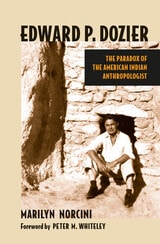
Edward P. Dozier
The Paradox of the American Indian AnthropologistMarilyn Norcini
University of Arizona Press, 2007
Based on archival research, ethnographic fieldwork at Santa Clara Pueblo, and extensive interviews, this intellectual biography traces Dozier’s education from a Bureau of Indian Affairs day school through the University of New Mexico on federal reimbursable loans and graduate school on the GI Bill. Dozier was the first graduate of the new post–World War II doctoral program in anthropology at the University of California at Los Angeles in 1952. Beginning with his multicultural and linguistic heritage, the book interprets pivotal moments in his career, including the impact of Pueblo kinship on his indigenous research at Tewa Village (Hano); his rising academic standing and Indian advocacy at Northwestern University; his achievement of full academic status after he conducted non-indigenous fieldwork with the Kalinga in the Philippines; and his leadership in establishing American Indian Studies at the University of Arizona. Norcini interprets Dozier’s career within the contexts of the history of American anthropology and Pueblo Indian culture. In the final analysis, Dozier is positioned as a transitional figure who helped transform the historical paradox of an American Indian anthropologist into the contemporary paradigm of indigenous scholarship in the academy.
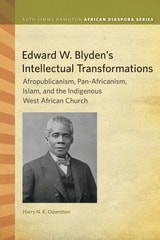
Edward W. Blyden's Intellectual Transformations
Afropublicanism, Pan-Africanism, Islam, and the Indigenous West African ChurchHarry N. K. Odamtten
Michigan State University Press, 2019

Edwin Hubble
Mariner of the NebulaeGale E. Christianson
University of Chicago Press, 1996
end of the decade, he proved that the universe is expanding, thus laying
the very cornerstone of the big bang theory. A revealing portrait of a
scientific genius at work, this book also offers an incisive narrative
of the history of astronomy, and an evocation of what we see when gazing
at the stars.
"Highly entertaining. . . . Hubble may have been the most important
astronomer since Galileo. Perhaps since Copernicus."—Dick Teresi,
New York Times Book Review
"Hubble's own story has not been adequately told until now. . . . A
riveting portrait of a great scientist and a haunted man, and the best
look we are likely to have of the real Hubble."—Dennis Overby, Los
Angeles Times Book Review
"Displays remarkable strength in its steadfast balance and scrupulous
honesty. The greatness of the discoveries is set off against the
contrasting pettiness of the man."—Hans Christian von Baeyer,
Boston Sunday Globe
"Fascinating. . . . This is one of the most impressive scientific
biographies of recent years."—Kirkus Review, starred review
— "Notable Books for the Year 1995" selection, New York Times Book
Review
—"Best Books of 1995" selection, Library Journal
—Selected as one of the five best science books in 1995 by Carl Sagen,
Washington Post
Eight Months in Illinois
With Information to ImmigrantsWilliam Oliver. Foreword by James E. Davis
Southern Illinois University Press, 2002
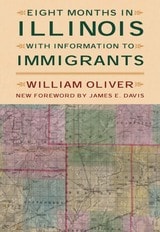
The Illinois frontier offered abundant opportunity, noted English traveler William Oliver after his journey to America in 1841–42, but life there was hard. Accordingly, Oliver advised the wealthy and comfortable to remain in England and counseled the unprosperous to seek their fortunes in America. Written for the poor who would migrate and published in 1843, his Eight Months in Illinois: With Information to Immigrants sought only to provide pertinent, valid, and practical information about what people might encounter in the frontier state. What Oliver actually accomplished, however, was much more: he imparted invaluable insights into and analyses of American life during an era of sweeping social, economic, and political change.
In his new foreword to this edition, James E. Davis stresses Oliver’s sincere desire to help British immigrants succeed in America. Oliver, Davis notes, “devoted dozens of pages of advice on numerous matters: various routes to Illinois and their advantages and disadvantages, processes of settling, qualities of western houses, costs of obtaining a new farm.” Oliver discussed other practical matters, such as the importance of having sons. He also assured his intended readership that “in the West, distinction of classes is little known and seldom recognized.”
As a document covering the middle west in the 1840s, Eight Months in Illinois: With Information to Immigrants has few equals. Its portrayal of farming and trade in relatively primitive times is historically accurate. It paints a plain picture, laying out the essential facts and presenting the typical incidents that enable us to trace the course of a settler’s simple, diligent, laborious day-to-day life. According to Davis, Oliver depicted “accurate and balanced slices of life in Illinois and America, including nasty insects, crude conditions, and the necessity of work.” And he did so without a trace of anti-American bias.
Eight Months in Illinois with Information to Immigrants was reprinted with emendations in 1924 by Walter Hill.

Eight Prison Camps
A Dutch Family in Japanese JavaDieuwke Wendelaar Bonga
Ohio University Press, 1996
Eldest daughter of eight children, the author grew up in Surakarta, Java, in what is now Indonesia. In the months following the bombing of Pearl Harbor, however, Dutch nationals were rounded up by Japanese soldiers and put in internment camps. Her father and brother were sent to separate men’s camps, leaving the author, her mother, and the five younger children in the women’s camp. In this and later seven other prison camps in central Java, their lives gradually deteriorated from early days of fear and crowding to near starvation, forced labor, beatings, and seeing others disappear or die. On the family’s return to Holland after the war, they found a nation recovering from German occupation and largely ignorant of the horror of the Far East experience.
Elaine Black Yoneda
Jewish Immigration, Labor Activism, and Japanese American Exclusion and IncarcerationRachel Schreiber
Temple University Press, 2022
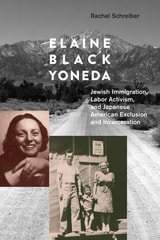
During World War II, Elaine Black Yoneda, the daughter of Russian Jewish immigrants, spent eight months in a concentration camp—not in Europe, but in California. She did this voluntarily and in solidarity, insisting on accompanying her husband, Karl, and their son, Tommy, when they were incarcerated at the Manzanar Relocation Center. Surprisingly, while in the camp, Elaine and Karl publicly supported the United States’ decision to exclude Japanese Americans from the coast.
Elaine Black Yoneda is the first critical biography of this pioneering feminist and activist. Rachel Schreiber deftly traces Yoneda’s life as she became invested in radical politics and interracial and interethnic activism. In her work for the International Labor Defense of the Communist Party, Yoneda rose to the rank of vice president. After their incarceration, Elaine and Karl became active in the campaigns to designate Manzanar a federally recognized memorial site, for redress and reparations to Japanese Americans, and in opposition to nuclear weapons.
Schreiber illuminates the ways Yoneda’s work challenged dominant discourses and how she reconciled the contradictory political and social forces that shaped both her life and her family’s. Highlighting the dangers of anti-immigrant and anti-Asian xenophobia, Elaine Black Yoneda recounts an extraordinary life.
Eleanor Baldwin and the Woman's Point of View
New Thought Radicalism in Portland’s Progressive EraLawrence M. Lipin
Oregon State University Press, 2017
A century before the Occupy movement and the Women’s March, Baldwin spoke truth to power. Imbued with a New Thought spirituality that presumed progressive thought could directly affect material reality, she wrote to move history forward. And yet, the trajectory of history proved as hard to forecast then as now. While her personal story seems to embody a modern progressivism, blending abolition with labor reform and anti-banker activism—positions from which she never wavered—her path grew more complicated as times changed in the aftermath of World War I, when she would advocate on behalf of both the Bolsheviks and the Ku Klux Klan.
In this deeply researched and nuanced account of Eleanor Baldwin’s intellectual journey, historian Larry Lipin reveals how even the most dedicated radical can be overcome by unforeseen events. Eleanor Baldwin and the Woman’s Point of View restores a missing chapter in Portland’s Progressive Era history and rescues this passionate, intriguing, and quixotic character from undeserved obscurity.