Results by title
3388 books match the query 'Fiction' and 74 start with e

Each in a Place Apart
James McMichael
University of Chicago Press, 1994

Eadfrith
Scribe of LindisfarneMichelle Treeve
Arizona Center for Medieval and Renaissance Studies, 2014
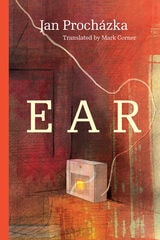
Ear
Jan Procházka
Karolinum Press, 2022
A deputy minister in the Communist Party of Czechoslovakia, Ludvík enjoys all the luxuries that success in the party affords him, but he must be careful: he’s under no illusions about the secret police bugging his apartment. Luckily, he and his wife, Anna, know where the bug is and where they can safely converse. However, any comfort they feel disappears the evening they attend an official party, where they learn that Ludvík’s boss has just been arrested after presenting a report written by Ludvík himself. Is Ludvík next? Back home after the party, the couple must get past unresolved marital tensions to get rid of absolutely anything that could incriminate them—all while contending with the strange men outside their apartment and the bug inside.
Penned under the oppressive watch of Soviet authorities in 1960s Czechoslovakia—but touching on still-current themes of surveillance and paranoia—this cinematic thriller is as tense and timely as ever. A promising Party member who became persona non grata after the Soviet occupation of Czechoslovakia, author Jan Procházka knew firsthand the gnawing terror of life in a surveillance state: after his death in 1971, the new tenants of his apartment discovered twelve hidden listening devices. As Ear makes terrifyingly clear, the most frightening horror stories are the ones closest to everyday reality.
Early Stories by Tennessee Williams
Tennessee Williams
University of Iowa Press, 2025
In notes for each story, additional context is provided regarding locations, occupations, and individuals. All of this enriches a critical understanding of Tennessee Williams’s major works such as The Glass Menagerie, A Streetcar Named Desire, Cat on a Hot Tin Roof, Night of the Iguana, and Suddenly Last Summer.
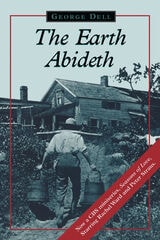
Earth Abideth
George Dell
The Ohio State University Press, 1999

East Lynne
Mitchell, Sally
Rutgers University Press, 1984
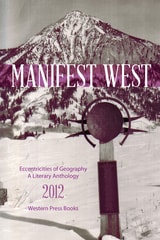
Eccentricities of Geography
Teresa Milbrodt
University Press of Colorado, 2012
These writers reveal that the land is a character: sometimes a mother, sometimes a joker, never an enemy, though one must take care. The space can be refreshing or oppressive, as the paradox of openness is that it tends to control and confine as much as free us. The weather plans your day. Snowstorms don't negotiate.
The West makes people acutely aware of the absurdity of their smallness, and this feeling is the source of much of the humor in the anthology. The sensation of being tiny, that crazed adrenalin rush and the feeling of your heart beating in your throat, has to make you laugh out loud like a roller coaster. The twenty authors in this collection will take you for an interesting ride.
Contributors to the anthology include: Kirstin Abraham, Genevieve Betts, Shirley Brewer, David Coy, Elizabeth Creely, Mary Christine Delea, Jen Edwards, Thea Gavin, John Haggerty, Brad Johnson, Neal Lewing, Robert McBrearty, Margaret Ozemet, Francis Raven, Greg Robillard, Heather Sappenfield, Sam Smith, Laura Snyder, Caroline Sposto, and Scott Starbuck.
Echo of Ice Letting Go
Julie LeMay
University of Alaska Press, 2017
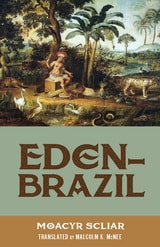
Eden-Brazil
Moacyr Scliar, Translated by Malcolm K. McNee
Tagus Press, 2019
Adamastor is a freshly divorced, frustrated bureaucrat trying to reinvent his life. Richie is a young, struggling actor. Together with Ernesto, a rakish, expat Argentine showman, they create Eden-Brazil, an ecotourism destination in a stunning swath of coastal rainforest. Inspired to provide visitors with the ultimate return to nature, they decide to stage the biblical story of the Garden of Eden, complete with Adam, Eve, snake, apple, the works. But recreating an earthly paradise as something more than another roadside attraction is no easy feat. In this charming, tragicomic tale, Moacyr Scliar employs his signature humor and talent for crisp storytelling, weaving together a playfully serious parable of environmentalist ideals clashing with the realities of local politics, global consumer culture, and competing visions of authentic nature.
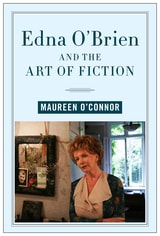
Edna O'Brien and the Art of Fiction
Maureen O'Connor
Bucknell University Press, 2022

Eight Mile High
Jim Ray Daniels
Michigan State University Press, 2014
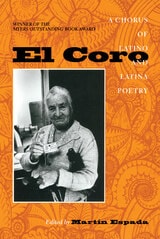
El Coro
A Chorus of Latino and Latina PoetryMartin Espada
University of Massachusetts Press, 1997
Here we find the open expression of anger and grief, self-mocking humor, the music of protest, the quiet assertion of dignity, and the raucous celebration of survival. There are poems about stoop labor and welfare offices and housing projects, but also poems about the Four Horsemen of the Apocalypse and the Minotaur.
Among the poets are former farm workers and gang members, a practicing physician, an ex-tenant lawyer, two professional chefs, and a Vietnam veteran. One poet was a political prisoner for six years; another staged a famous hunger strike; still another was indicted for her work with Central American refugees. In many ways this collection of poets comprises a chorus. Their song humanizes in the face of dehumanization.
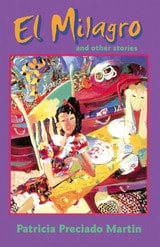
El Milagro and Other Stories
Patricia Preciado Martin
University of Arizona Press, 1996
Reminiscent of Like Water for Chocolate, the book is a rich mix of the simplest ingredients—food, family, tradition. We see Silviana striding to her chicken coop, triggering the "feathered pandemonium" of chickens who smell death in the air. We meet Elena, standing before the mirror in her wedding dress, and Teodoro Sánchez, who sleeps under the sky and smells of “chaparral and mesquite pollen and the stream bottom and the bone dust of generations. There’s the monsignor sitting on the edge of a sofa, sipping Nescafé from a china cup, and here is Sister Francisca "with her warm, minty breath" warning us away from impure thoughts. Be on your best behavior, too, in Tía Petra’s Edwardian parlor—la Doña Petrita, descended from conquistadores, might just deliver a tap on your head with her silver-handled walking stick. Then, with Mamacita, spend a summer afternoon bent over your embroidery with trembling hand and sweaty upper lip, and all the while wondering what in the world it feels like to be kissed.
Intermingled with the author’s stories are collective memories of the barrio, tales halfway between heaven and earth that seem to connect barrio residents to each other and to their past. These cuentos are mystical and dreamy, peopled with ghosts and miracles and Aztec princesses dressed in feathers and gold. Come, sit down and have some salsa and a tortilla—fresh and homemade, it goes without saying; people who buy tortillas at the market "might as well move to Los Angeles, for they have already lost their souls." Then open the pages of this book. Help yourself to another feast of food and flowers, music and dancing, sunshine and moonlight—everything glorious and mundane, serious and humorous, earthly and spiritual, poignant and joyful, in la vida mexicoamericana.
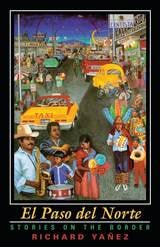
El Paso Del Norte
Stories On The BorderRichard Yañez
University of Nevada Press, 2003
Eleni, or Nobody
Rhea Galanaki
Northwestern University Press, 2003
Rather than consent to spinsterhood at age twenty-seven, Eleni Altamura sets sail with her seafaring father to Italy, where she is to study painting at the famed School of the Nazarenes. Once in Naples, Eleni flees her female identity and, disguised as a young man, walks with her father to Rome. Along the way she falls in love with her would-be husband while learning to navigate life in a man's world--as a man. But when love reveals her femininity, Eleni marries the father of her children, the first of the many tragedies she will have to endure. She continues to question her identity as her life choices spark rumors she may be a powerful, mad magician, or just another crazy old woman.
Elephants Never Forget
Abel Coelho
Tagus Press, 2017
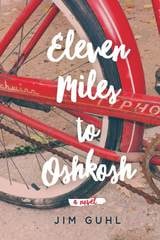
Eleven Miles to Oshkosh
Jim Guhl
University of Wisconsin Press, 2018
Minnow finds support in the company of his roguish grandfather, his loyal pal Mark, and beautiful Opal Parsons, who has her own worries as the first African American student in their school. When the sheriff seems in no hurry to solve the murder, Minnow must seek justice by partnering with unlikely allies and discovering his own courage.

Eleven Miles to Oshkosh
Jim Guhl
University of Wisconsin Press, 2020
Minnow finds support in the company of his roguish grandfather, his loyal pal Mark, and beautiful Opal Parsons, who has her own worries as the first African American student in their school. When the sheriff seems in no hurry to solve the murder, Minnow must seek justice by partnering with unlikely allies and discovering his own courage.
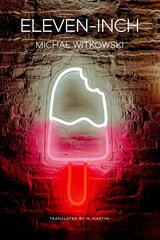
Eleven-Inch
Michal Witkowski
Seagull Books, 2021
Western Europe, shortly after the fall of the Berlin Wall: Two queer teens from Eastern Europe journey to Vienna, then Zurich, in search of a better life as sex workers. They couldn’t be more different from each other. Milan, aka Dianka, a dreamy, passive naïf from Slovakia, drifts haplessly from one abusive sugar daddy to the next, whereas Michał, a sanguine pleasure-seeker from Poland, quickly masters the selfishness and ruthlessness that allow him to succeed in the wild, capitalist West—all the while taking advantage of the physical endowment for which he is dubbed “Eleven-Inch.” By turns impoverished and flush with their earnings, the two traverse a precarious new world of hustler bars, public toilets, and nights spent sleeping in train stations and parks or in the opulent homes of their wealthy clients. With campy wit and sensuous humor, Michał Witkowski explores in Eleven-Inch the transition from Soviet-style communism to neoliberal capitalism in Europe through the experiences of the most marginalized: destitute queers.
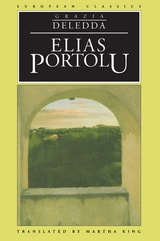
Elias Portolu
Grazia Deledda
Northwestern University Press, 1995
Winner of the 1926 Nobel Prize for Literature
After serving time in mainland Italy for a minor theft, Elias Portolu returns home to Nuoro, in rural Sardinia. Lonely and vulnerable after his prison exile, he falls in love with his brother's fiancée. But he finds himself trapped by social and religious strictures, his passion and guilt winding into a spiral of anguish and paralyzing indecision. For guidance he turns first to the village priest, who advises him to resist temptation; then he turns to the pagan "father of the woods," who recognizes the weakness of human will and urges him to declare his love before it is too late.
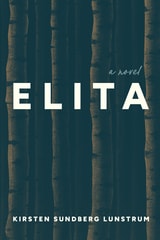
Elita
A NovelKirsten Sundberg Lunstrum
Northwestern University Press, 2025
An American literary take on the Nordic noir genre
Unfolding during the moody Pacific Northwest winter of 1951, we follow Bernadette Baston, scholar of child development and language acquisition, as she travels to a penitentiary on the remote island Elita in the Puget Sound to consult on a curious case: two guards have discovered an animal-like adolescent girl living alone in the cold woods beyond the prison’s walls. There are few answers, but many people who know more than they are saying. According to official reports, the girl, dubbed Atalanta, does not speak. Is her silence protecting someone? The prison warden, court-appointed guardian, and police detective embroil Bernadette in resolving a secret that the tight-knit island community has long held, and her investment in the girl’s case soon becomes more personal than professional. As a mother, wife, and woman bound by mid-twentieth-century expectations, Bernadette strategizes to retain the fragile control she has over her own freedom, identity, and future, which becomes inextricably tied to solving Atalanta’s case.
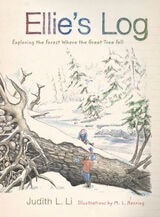
Ellie's Log
Exploring the Forest Where the Great Tree FellJudith L. Li
Oregon State University Press, 2013
After a huge tree crashes to the ground during a winter storm, ten-year-old Ellie and her new friend, Ricky, explore the forest where Ellie lives. Together, they learn how trees provide habitat for plants and animals high in the forest canopy, down among mossy old logs, and deep in the pools of a stream. The plants, insects, birds, and mammals they discover come to life in colored pen-and-ink drawings.
An engaging blend of science and storytelling, Ellie’s Log also features:
• Pages from Ellie’s own field notebook, which provide a model for recording observations in nature
• Ellie’s advice to readers for keeping a field notebook
• Ellie’s book recommendations Online resources for readers and teachers—including a Teacher’s Guide—are available at ellieslog.org.
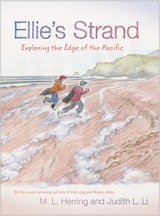
Ellie's Strand
Exploring the Edge of the PacificM. L. Herring
Oregon State University Press, 2018
Green Earth Book Award, Honor Book
There are days in late winter when the Pacific coast enjoys a brief spell of clear, warm weather. Most of the winter storms have passed and the summer fog has not yet settled in. This is when some coastal communities plan their annual beach clean-ups.
In this sequel to Ellie’s Log and Ricky’s Atlas, Ellie and Ricky travel to the Oregon coast from their home in the Cascade Mountains to help with a one-day beach clean-up. Hoping to find a prized Japanese glass float, they instead find more important natural treasures, and evidence of an ocean that needs its own global-scale clean-up.
Ellie and Ricky are amazed by their discoveries at the edge of the world’s largest ocean. Together, they realize the power of volunteering and grapple with the challenges of ocean conservation. In her journal Ellie records her observations of their adventures in her own words and pictures.
With charming pen-and-ink drawings and a compelling story, Ellie's Strand makes coastal science exciting for upper elementary school students. It will be a treasured companion for young beach explorers everywhere.
Elsewhere
Doron Rabinovici
Haus Publishing, 2010
A complex and moving novel about modern Jewish identity, Elsewhere takes aim at a number of sensitive issues, including nationalism, Zionism, collective guilt, the Holocaust, and Israel itself. As heartfelt and surprising as it is hilarious, it pokes fun at the things we care about in order to get at what really matters.
Emerald City Blues
A NovelH. Lee Barnes
University of Nevada Press, 2025
But it’s the quiet, captivating dockworker and blues singer Hard Times (H.T.) who truly upends her life. As Eve grows closer to H.T., she finds herself drawn into his world, one filled with music, longing, and the ever-present shadows of prejudice. Their connection forces Eve to confront realities she’d never imagined, challenging the boundaries of her own perceptions and the risks of crossing societal lines. When Eve becomes a witness to a violent crime at a blues club, her life takes a dangerous turn. As she navigates the escalating threats, she leans on the strength of her newfound friends and the fragile, complex bond she shares with H.T.
Set against the vibrant yet turbulent backdrop of World War II–era California, Emerald City Blues is a heartfelt coming-of-age story. It explores the complexities of love, the power of friendship, and the courage it takes to forge your own path in an uncertain world. Eve’s journey is one of discovery—not just of the world beyond her hometown, but of the resilience and strength she never knew she possessed.
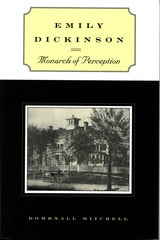
Emily Dickinson
Monarch of PerceptionDomhnall Mitchell
University of Massachusetts Press, 2000
Emily Dickinson has often been pictured as a sensitive but isolated poet—someone who published very little in her lifetime and limited herself to lyrics, considered to be the kind of poems most removed from social and political life. In recent years, scholars have challenged that view, and this book extends the discussion in valuable new directions.
Domhnall Mitchell begins by focusing on three historical phenomena—the railroad, the Dickinson homestead, and horticulture—and argues that poems about trains, home, and flowers engage with their meanings in ways that extend beyond the confines of the aesthetic. He shows how Dickinson's poems and letters reveal the full complexity of her position as a woman situated within a larger social and economic class.
In the second half of the book, Mitchell considers the ideological, textual, and editorial implications of Dickinson's strategic privatization of her art. He relates the particular forms of her manuscripts' appearance, distribution, and collation to aspects of her social as well as her literary consciousness. In a chapter that is certain to provoke debate, he explores what it means to read individual poems and letters in manuscript versions rather than in printed editions. By paying close attention to textual evidence, he makes the case that various features of the manuscripts are actually matters of accident or immediate convenience rather than the visual markers of a new aesthetic principle.
Mitchell closes by using the theories of Mikhail Bakhtin to explore the contradictions of a “private” poetry that engages verbally in multiple areas of nineteenth-century life and discourse. By attending to the contemporaneous particularities of recurrent words and images, he demonstrates that Dickinson could stay at home and still be at home in history, too.
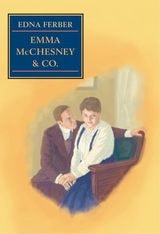
Emma McChesney and Co.
Edna Ferber
University of Illinois Press, 2002
In this final of three volumes chronicling the travels and trials of Emma McChesney, first published in 1915, Emma's son, Jock, has moved to Chicago with his new wife. Struggling with a newly emptied nest, Emma dives into a whirlwind South American sales tour to prove she hasn't lost her touch.
Back in New York, Emma and her business partner, T. A. Buck Jr., try to disguise their budding romance from colleagues. After months of acting like a "captain of finance when he feels like a Romeo," T. A. convinces Emma they should marry. Emma tries to "be what the yellow novels call a doll-wife" but trades in her fancy dressing gowns for more sensible business suits and heads back to the office.
With one hand writing advertising copy and the other wrapped around a pair of shears, Emma saves the company from financial peril amid the arrival of some flustering, if exciting, news from Jock. By turns sales pro, newlywed, fashion maven, and anxious grandmother, Emma symbolizes the ideal woman at the dawn of the twentieth century: sharp, capable, charming, and progressive. Emma McChesney and Co. is enhanced by the illustrations of James Montgomery Flagg, one of the most highly regarded book illustrators of the period.
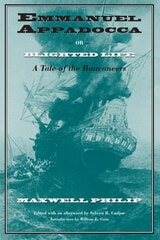
Emmanuel Appadocca; or, Blighted Life
A Tale of the BoucaneersMaxwell Philip
University of Massachusetts Press, 1997
This 1854 novel traces a mulatto son's quest for vengeance against his white father, a sugar planter who abandoned him and his mother. Intent on redeeming his mother's honor and outraged by the cruelty and greed that slavery has engendered Appadocca sails the seas with a band of ruthless pirates on a ship named the Black Schooner. The novel, written by the important activist and intellectual Michel Maxwell Philip (1829–1888) deals with themes, symbols, and literary techniques that are reminiscent of other major authors such as Melville, Douglass, and Stowe. This new edition with scholarly commentaries and annotations will reorient our understanding of the development of Caribbean literature in relation to English and American literary production.
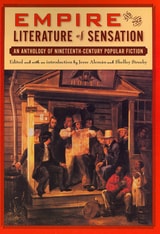
Empire and The Literature of Sensation
An Anthology of Nineteenth-Century Popular FictionAlemán, Jesse
Rutgers University Press, 2007
Most of the accounts, although widely distributed in nineteenth-century newspapers, pamphlets, or dime store novels, have long been out of print. Reprinted here for the first time are novelettes by two superstars of the cheap fiction industry, Ned Buntline and George Lippard. Also included are selections from one of the first dime novels as well as the narratives of Leonora Siddons and Sophia Delaplain, both who claim in their autobiographical pamphlets to have cross-dressed as men and participated in the Texas rebellion and Cuban filibustering.
Originally written for entertainment and enormously popular in their day, these sensational thrillers reveal for today's audiences how the rhetoric of empire was circulated for mass consumption and how imperialism generated domestic and cultural instability during the period of the American literary renaissance.
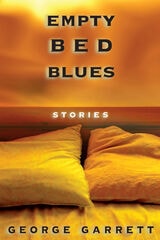
Empty Bed Blues
StoriesStories by George Garrett
University of Missouri Press, 2006
The fifteen stories of George Garrett’s Empty Bed Blues (his eighth book-length collection) are vintage Garrett—no two alike—with each moving, one way and another, in new and daring directions. His stories are deeply concerned with the old verities of love and death and filled with the joys and woes of characters who come to life and command our attention.
Diversity is the key word for Garrett’s short fiction. He works in every known form and invents a few himself. In “A Story Goes with It,” Garrett fondly remembers an old friend while retelling a story the man once told him. Most of it is probably not accurate, as Garrett is quick to admit, but the mixture of fact with fiction makes for an entertaining read. His stories turn like the sharp curves of a mountain road, abruptly changing from a fond trip down memory lane to a sleazy reporter’s quest along the backroads for the ultimate crime story in “Pornographers.”He tops off his collection with “A Short History of the Civil War,” a series of poems written by two participants: one a Confederate, the other a Yankee.
In the marriage of fact and fiction, of comedy and pathos, and the music of many voices, the stories of Empty Bed Blues reconfirm the judgment of novelist and story writer Richard Bausch, who said in 1998: “There is no writer on the American scene with a more versatile, more eclectic, or more restless talent than George Garrett.”

Empty Names, Fiction and the Puzzles of Non-Existence
Edited by Anthony Everett and Thomas Hofweber
CSLI, 2000
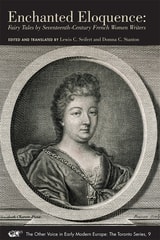
Enchanted Eloquence
Fairy Tales by Seventeenth–Century French Women WritersEdited and Translated by Lewis C. Seifert and Domna C. Stanton
Iter Press, 2010
—Jack Zipes
Professor of German, Emeritus, University of Minnesota

Enchantment Lake
A Northwoods MysteryMargi Preus
University of Minnesota Press, 2017
Midwest Book Award Winner — Young Adult Fiction
A disturbing call from her great aunts Astrid and Jeannette sends seventeen-year-old Francie far from her new home in New York into a tangle of mysteries. Ditching an audition in a Manhattan theater, Francie travels to a remote lake in the northwoods where her aunts’ neighbors are “dropping like flies” from strange accidents. But are they accidents?
On the shores of Enchantment Lake in the woods of northern Minnesota, something ominous is afoot, and as Francie begins to investigate, the mysteries multiply: a poisoned hotdish, a puzzling confession, eerie noises in the bog, and a legendary treasure said to be under enchantment—or is that under Enchantment, as in under the lake? At the center of everything is a suddenly booming business in cabin sales and a road not everyone wants built.
To a somewhat reluctant northwoods Nancy Drew, the intrigue proves irresistible, especially when it draws her closer to the mysteries at the heart of her own life. What happened to her father? Who and where is her mother? Who is she, and where does her heart lie—in the bustle of New York City or the deep woods of Minnesota? With its gripping story, romantic spirit, and a sly dash of modern-day trouble (including evil realtors and other invasive species), Enchantment Lake will fascinate readers, providing precisely the charm that Margi Preus’s fans have come to expect.
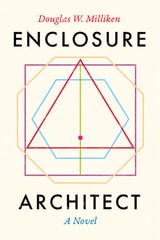
Enclosure Architect
A NovelDouglas W. Milliken
West Virginia University Press, 2024
Set in a semi-fictional, post-industrial American warzone, this novel explores multiple facets related to the recent nonfictional decades of constant civil unrest, with a particular focus on the complicated nature of holding a personal creative life amidst a time of constant violence and change. Despite its heavy themes, the narrative is threaded throughout with veins of absurdist humor that invite and welcome us into the familial warmth of the narrator’s memories of friendship.
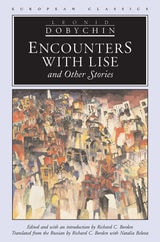
Encounters with Lise and Other Stories
Leonid Dobychin
Northwestern University Press, 2005
For Dobychin early Soviet society was an absurdist wonderland. He was not anti-Soviet but trans-Soviet, practicing realism but looking at reality from jarring angles. A typical day for a Dobychin hero includes participation in character-building sports, witnessing a parade, attending a funeral, and memorial to fallen communists-and finally reflecting at the end of the day that he almost met a pretty young sick-nurse. Dobychin's stories reveal a Brave New World where idealism rubs shoulders with heartless ambition and political denunciation, and ubiquitous acronyms and revolutionary cliché maul the language. But he also describes the absurdities of a place where office girls pray for the arrest of disliked co-workers and prisoner work gangs are made to spell out beautiful but empty platitudes in beds of sand. This collection includes all of the stories published in Dobychin's lifetime, plus two stories that remained unpublished until the late 1980s.
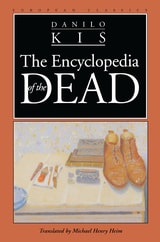
Encyclopedia of the Dead
Danilo Kis
Northwestern University Press, 1997

English Language Criticism on the Foreign Novel, 1965–1975
1965-1975Harriet Semmes Alexander
Ohio University Press, 1989
Critical interest in foreign novels, especially the Latin American and African novel, has burgeoned in the past two decades. The purpose of this reference bibliography is to provide easier access to the criticism produced from 1965 to 1975 on novels published in Africa, Latin America, Europe, Asia, Canada, Australia, and the middle East. A second volume will cover criticism between 1976 and 1985.
Throughout this work, the term “foreign novel” includes novels and other longer works of fiction produced in all countries other than the United States and the United Kingdom. Coverage ranges in time of writing from Apuleius’ Metamorphosis (first century, A.D.) and Murasaki’s Tale of Genji (11th century) to Garcia Marquez’s 100 Years of Solitude (1967) and Margaret Atwood’s Surfacing (1972). The 277 journals—chosen primarily because of their wide circulation—and 584 books indexed for relevant material contribute to the 13,000 bibliographic citations on 1,500 authors. This is a reference tool which is surely essential for any library or world literature scholar.
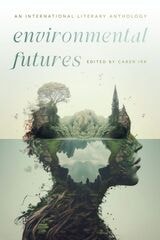
Environmental Futures
An International Literary AnthologyEdited by Caren Irr, et al.
Brandeis University Press, 2024
Featuring short stories, poetry, drama, and creative nonfiction from around the world, this anthology showcases contemporary literature to envision the future of the environment. While environmental literature written in English has been dominated by English and American men who make solo explorations into an unspoiled natural world, Environmental Futures emphasizes local and indigenous writers contending with global landscapes that are far from pristine. Their work opens up decolonial perspectives from Anglophone Africa, South Asia, India, China, South America, the peripheries of Europe, and BIPoC North America. Introducing many writers who will be unfamiliar to English-speaking readers, this collection explores resistance to the oil economy, the impact of storms and natural disasters, extinction, and relations between humans and animals, among other themes.
The pieces are organized by geographical area in five sections: Africa, Asia, Europe, Latin America, and North America. Expert scholars and translators—Kurt Cavender, Roberto Forns-Broggi, Cajetan Iheka, Upamanyu (Pablo) Mukherjee, Irina Sadovina, and Shaobo Xie—selected the works and provided critical introductions for each section.
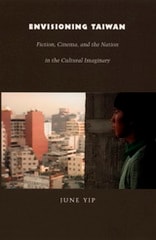
Envisioning Taiwan
Fiction, Cinema, and the Nation in the Cultural ImaginaryJune Yip
Duke University Press, 2004
Yip traces a distinctly Taiwanese sense of self vis-à-vis China, Japan, and the West through two of the island’s most important cultural movements: the hsiang-t’u (or “nativist”) literature of the 1960s and 1970s, and the Taiwanese New Cinema of the 1980s and 1990s. At the heart of the book are close readings of the work of the hsiang-t’u writer Hwang Chun-ming and the New Cinema filmmaker Hou Hsiao-hsien. Key figures in Taiwan’s assertion of a national identity separate and distinct from China, both artists portray in vibrant detail daily life on the island. Through Hwang’s and Hou’s work and their respective artistic movements, Yip explores “the imagining of a nation” on the local, national, and global levels. In the process, she exposes a perceptible shift away from traditional models of cultural authenticity toward a more fluid, postmodern hybridity—an evolution that reflects both Taiwan’s peculiar multicultural reality and broader trends in global culture.
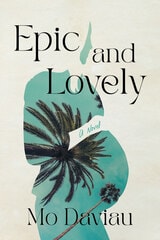
Epic and Lovely
A NovelMo Daviau
West Virginia University Press, 2025
Written as a deathbed letter to the UCLA physician who has tracked Nina and the other Good Thumbs throughout their lives, Nina recounts her final days with the group and with Cole, the charismatic, sadistic fellow A12er with whom she has fallen madly in love, who charms and harms her in equal measures. An unlikely alliance with a tech billionaire, the return of her estranged mother, and the birth of the baby she never thought she’d have force Nina to reckon with the triumphs and mistakes of her life and to fight to leave her child in good hands.

Escape Velocity
A Charles Portis MiscellanyJay Jennings
Butler Center for Arkansas Studies, 2012
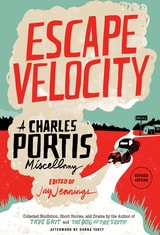
Escape Velocity
A Charles Portis MiscellanyCharles Portis
Butler Center for Arkansas Studies, 2021
For those who care about literature or simply love a good laugh (or both), Charles Portis has long been one of America’s most admired novelists. His 1968 novel True Grit is fixed in the contemporary canon, and four more have been hailed as comic masterpieces. For the first time, his other writings—journalism, travel stories, short fiction, memoir, and even a play—were brought together in Escape Velocity: A Charles Portis Miscellany, published in 2012 as his first new book in more than twenty years. This revised edition includes a new afterword by best-selling author Donna Tartt, who first published her remembrance in the New York Times following Portis’s death in 2020.
All the familiar Portis elements are in this collection: picaresque adventures, deadpan humor, an expert eye for detail and keen ear for the spoken word, and encounters with oddball characters both real and imagined. The collection encompasses the breadth of his fifty-year writing career, from his gripping reportage of the civil rights movement for the New York Herald Tribune to a comic short story about the demise of journalism in the twenty-first century. His three-act play, Delray’s New Moon, was performed onstage in 1996 and published in Escape Velocity for the first time.
Whether this is your first journey to the world of Portis or a long-awaited return to it, you’ll agree with critic Ron Rosenbaum—whose essay appears here alongside tributes by other writers—that Portis “will come to be regarded as the author of classics on the order of a twentieth-century Mark Twain, a writer who captures the soul of America.”
Essential Turgenev
Ivan Sergeevich Turgenev
Northwestern University Press, 1994
Readers will find complete, exemplary translations of Turgenev's finest novels, Rudin, A Nest of Gentry, and Fathers and Sons, along with the lapidary novella First Love. The volume also includes selections from Sportsman's Sketches, seven of Turgenev's most compelling short stories, and fifteen prose poems. It also contains samples of the author's nonfiction drawn from autobiographical sketches, memoirs, public speeches, plus the influential essay "Hamlet and Don Quixote" and correspondence with Dostoevsky, Tolstoy, and others.
Essentials of the Theory of Fiction
Michael J. Hoffman and Patrick D. Murphy, eds.
Duke University Press, 2005
Contributors. M. M. Bakhtin, John Barth, Roland Barthes, Wayne Booth, John Brenkman, Peter Brooks, Catherine Burgass, Seymour Chatman, J. Yellowlees Douglas, Rachel Blau DuPlessis, Wendy B. Faris, Barbara Foley, E. M. Forster, Joseph Frank, Joanne S. Frye, William H. Gass, Henry Louis Gates Jr., Gérard Genette, Ursula K. Heise, Michael J. Hoffman, Linda Hutcheon, Henry James, Susan S. Lanser, Helen Lock, Georg Lukács, Patrick D. Murphy, Ruth Ronen, Joseph Tabbi, Jon Thiem, Tzvetan Todorov, Virginia Woolf

Essentials of the Theory of Fiction, 2nd ed.
Michael J. Hoffman and Patrick D. Murphy, eds.
Duke University Press, 1996
Selections from: M. M. Bakhtin, John Barth, Roland Barthes, Wayne Booth, Peter Brooks, Seymour Chatman, Rachel Blau DuPlessis, Suzanne C. Ferguson, Barbara Foley, E. M. Forster, Joseph Frank, William Freedman, Norman Friedman, Joanne S. Frye, William H. Gass, Henry Louis Gates Jr., Gérard Genette, J. Arthur Honeywell, Linda Hutcheon, Henry James, Susan S. Lanser, Mitchell A. Leaska, George Levine, David Lodge, Georg Lukács, Gerald Prince, Patrocinio P. Schweickart, Tzvetan Todorov, Lionel Trilling, and Virginia Woolf
Estonian Short Stories
Kajar Pruul and Darlene Reddaway
Northwestern University Press, 1996
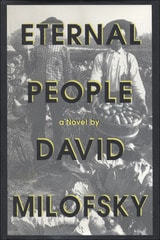
Eternal People
A NovelDavid Milofsky
University Press of Colorado, 1998
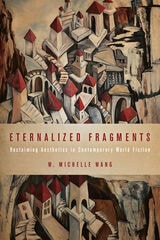
Eternalized Fragments
Reclaiming Aesthetics in Contemporary World FictionW. Michelle Wang
The Ohio State University Press, 2020
Since postmodern and contemporary fiction tend to be dominated by disjunctures, paradoxes, and incongruities, this book offers an account of how and why readers choose to engage regardless, articulating the cognitive rewards such difficulties offer. By putting narrative and philosophical approaches in conversation with evolutionary psychology and contemporary neuroscience, W. Michelle Wang examines the value of attending to aesthetic experiences when we read literature and effectively demonstrates that despite the aesthetic’s stumble in time, our ongoing love affair with fiction is grounded in our cognitive engagements with the text’s aesthetic dimensions.
Drawing on a diverse range of works by Gabriel García Márquez, Kazuo Ishiguro, Arundhati Roy,Cormac McCarthy, Jeanette Winterson, Jennifer Egan, Italo Calvino, Flann O’Brien, and Alasdair Gray, Eternalized Fragments lucidly renders the aesthetic energies at work in the novels’ rich potentialities of play, the sublime’s invitation to affective renegotiations, and beauty’s polysemy in shaping readerly capacities for nuance.
Ethiopia Unbound
A Critical EditionJ. E. Casely Hayford
Michigan State University Press, 2024
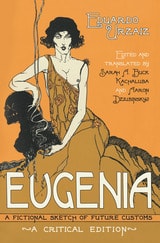
Eugenia
A Fictional Sketch of Future CustomsEduardo Urzaiz, Edited and translated by Sarah A. Buck Kachaluba and Aaron Dziubinskyj
University of Wisconsin Press, 2016
the story of a eugenically engineered society of the future.
It is the year 2218. In "Villautopia," the capital of a Central American nation, the
state selects young, biologically desirable citizens to act as breeders. Embryos
are implanted in males to increase a flagging population rate, and the offspring
are raised in state facilities until old enough to choose their own, nonnuclear
families. Sterilization of children with mental or physical abnormalities further
ensures the purity of the gene pool.
Written two years before Yevgeny Zamyatin's We and twelve years before
Aldous Huxley's Brave New World, Eugenia recounts the story of Ernesto, who at age twenty-three is selected as a breeder. Celiana, his thirty-eight-year-old lover
and an accomplished scholar, is deemed unfit for reproduction. To cope with
her feelings of guilt and hopelessness, she increasingly turns to marijuana, and
her scholarly productivity declines. Meanwhile Ernesto falls in love with a fellow
breeder, a young woman named Eugenia—but the life they ultimately choose is
not quite what the state had envisioned.
Taking up important challenges of modern society—population growth,
reproductive behavior and technologies, experimentation with gender roles,
and changes in family dynamics—Eugenia is published here in English for the
first time. Sarah A. Buck Kachaluba and Aaron Dziubinskyj provide a critical
apparatus helping readers to understand the novel's literary genesis and genealogy
as well as its historical context. Arising from its twentieth-century origins, yet
remarkably contemporary, Eugenia is a treasure of speculative fiction.