Results by title
668 books match the query 'History & Surveys' and 17 start with e
Early Greek Philosophy
Joe McCoy
Catholic University of America Press, 2013
Early Postmodernism
Foundational EssaysPaul A. Bové
Duke University Press, 1995
Essays by noted cultural and literary theorists join with Bové’s contemporary preface to represent the important and unique moment in recent intellectual history when postmodernism was no longer seen primarily as an architectural term, had not yet come to describe the wide range of culture it does now, but was finding power and place in the literary realm. These essays show that the history of postmodernism and its attendant critical theories are both more complex and more deeply bound with literary criticism than often is acknowledged today. Early Postmodernism demonstrates not only the significance of these literary studies, but also the role played by literary critical postmodernism in making possible newer forms of critical and cultural studies.
Contributors. Barry Alpert, Charles Altieri, David Antin, Harold Bloom, Paul A. Bové, Hélène Cixous, Gerald Gillespie, Ihab Hassan, Joseph N. Riddel, William, V. Spanos, Catharine R. Stimpson, Cornel West
Edmund Husserl and the Phenomenological Tradition
Robert Sokolowski
Catholic University of America Press, 2018
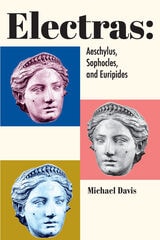
Electras
Aeschylus, Sophocles, and EuripidesMichael Davis
St. Augustine's Press, 2023
Davis accomplishes much more than an exegetical bridge as he connects us with ancient memory and wisdom. "When we cannot resist the temptation to recoil morally from their terminology, we risk the tragedy of losing their profound thoughts about our humanity––their philosophical anthropology." Davis has remarkably made of a niche study a stunning source material for more universal questions. This is a book that is as timely as it is ageless.
Elemental Powers
Ernst Jünger, Critical Theory, and the Idea of Natural HistoryAndrew McCann
Northwestern University Press, 2027
Examining the conflicted legacy of Ernst Jünger’s thought and its relationship to critical theory
In the 1920s, Ernst Jünger’s journalistic advocacy of a militaristic, antidemocratic nationalism played a central role in the rise of German fascism. At the same time, Jünger developed an increasingly acute account of how the mobilizing force of industrial technology embodied a will to power that, on the one hand, anticipated an authoritarian state but, on the other, assumed a planetary perspective that made national identifications redundant. What he called the Gestalt of the worker expresses the “elemental powers” that, he believed, mark the limits of Enlightenment conceptions of historical progress.
Today, Jünger appears in intellectual history primarily as a representative of protofascist decisionism, reactionary modernism, or the so-called conservative revolution. Andrew McCann puts these aspects of Jünger’s early work into dialogue with the posthistorical orientation that he developed after the Second World War, in order to offer a fresh reading that demonstrates how Jünger’s obsession with the transience of cultural and historical forms displays deep structural affinities with the idea of natural history developed by Walter Benjamin and Theodor Adorno. By tracing this thread in intellectual history, McCann charts the currents of influence and confluence between what are usually understood as sharply polarized political positions and the conceptual postures that accompany them: immanence and transcendence, reason and myth, class and nation, relations of production and the forces of nature.

Emerging Trends in Continental Philosophy
Edited by Todd May
University of Chicago Press, 2010
From Kant to Kierkegaard, from Hegel to Heidegger, continental philosophers have indelibly shaped the trajectory of Western thought since the eighteenth century. Although much has been written about these monumental thinkers, students and scholars lack a definitive guide to the entire scope of the continental tradition. The most comprehensive reference work to date, this eight-volume History of Continental Philosophy will both encapsulate the subject and reorient our understanding of it. Beginning with an overview of Kant’s philosophy and its initial reception, the History traces the evolution of continental philosophy through major figures as well as movements such as existentialism, phenomenology, hermeneutics, and poststructuralism. The final volume outlines the current state of the field, bringing the work of both historical and modern thinkers to bear on such contemporary topics as feminism, globalization, and the environment. Throughout, the volumes examine important philosophical figures and developments in their historical, political, and cultural contexts.
The first reference of its kind, A History of Continental Philosophy has been written and edited by internationally recognized experts with a commitment to explaining complex thinkers, texts, and movements in rigorous yet jargon-free essays suitable for both undergraduates and seasoned specialists. These volumes also elucidate ongoing debates about the nature of continental and analytic philosophy, surveying the distinctive, sometimes overlapping characteristics and approaches of each tradition. Featuring helpful overviews of major topics and plotting road maps to their underlying contexts, A History of Continental Philosophy is destined to be the resource of first and last resort for students and scholars alike.
Empire Of Meaning
The Humanization Of The Social SciencesFrancois Dosse
University of Minnesota Press, 1998
Endings
Questions of Memory in Hegel and HeideggerEdited by Rebecca Comay and John McCumber
Northwestern University Press, 1999
Beginning at the point where Heidegger encountered Hegel, this volume of provocative essays addresses the respective philosophies of the two men. Leading scholars provide a variety of models from which to view the unique relationship between the bodies of thought of Heidegger and Hegel: bodies of thought that cannot be taken as two objects to be compared, contrasted, and finally evaluated but that must be viewed in dynamic terms, as a relationship in which self-transformations lead to mutual transformations and vice versa.
Enthusiasm And Divine Madness
Josef Pieper
St. Augustine's Press, 1999
Pieper gives interpretation of the dialogue. Leaving the more recondite scholarly preoccupations aside, he concentrates on the content, bringing the actual situation in the dialogue – Athens and its intellectuals engaged in spirited debate – alive. Equally alive is the discussion of ideas, which are brought to bear on contemporary experience and made to prove the perennial validity of Socratic wisdom, and its power to excite the mind. The main thesis – that in poetry and in love man is "beside himself," that is, divinely inspired - is discussed with reference to modern poets, novelists, and modern psychology.
Eros, Wisdom, and Silence
Plato's Erotic DialoguesJames M. Rhodes
University of Missouri Press, 2003
Essays Critical And Clinical
Gilles Deleuze
University of Minnesota Press, 1997
The final work of this essential thinker.
Essays Critical and Clinical is the final work of the late Gilles Deleuze, one of the most important and vital figures in contemporary philosophy. It includes essays, all newly revised or published here for the first time, on such diverse literary figures as Herman Melville, Walt Whitman, D. H. Lawrence, T. E. Lawrence, Samuel Beckett, Leopold von Sacher-Masoch, Alfred Jarry, and Lewis Carroll, as well as philosophers such as Plato, Spinoza, Kant, Nietzsche, and Heidegger.
For Deleuze, every literary work implies a way of living, a form of life, and must be evaluated not only critically but also clinically. As Proust said, great writers invent a new language within language, but in such a way that language in its entirety is pushed to its limit or its own “outside.” This outside of language is made up of affects and precepts that are not linguistic, but which language alone nonetheless makes possible. In Essays Critical and Clinical, Deleuze is concerned with the delirium-the process of Life-that lies behind this invention, as well as the loss that occurs, the silence that follows, when this delirium becomes a clinical state. Taken together, these eighteen essays present a profoundly new approach to literature by one of the greatest twentieth-century philosophers.
Essays on Sex Equality
John Stuart Mill and Harriet Taylor Mill
University of Chicago Press, 1970
Also contained in this volume is a major interpretative essay by Alice S. Rossi on Mill and Harriet Taylor which describes and analyzes their long personal and intellectual relationship.
Ethica Thomistica
The Moral Philosophy of Thomas AquinasRalph McInerny
Catholic University of America Press, 1997
Chapters: Morality and Human Life; The Good for Man; Ultimate End and Moral Principles; The Structure of the Human Act; Good and Evil Action; Character and Decision; Prudence and Conscience; Religion and Morality ABOUT THE AUTHOR:
Ralph McInerny is Michael P. Grace Professor of Medieval Studies and director of the Jacques Maritain Center at the University of Notre Dame, where he has taught since 1955. He is founder and publisher of Catholic Dossier magazine; cofounder of Crisis magazine; and author of several books published by CUA Press, including Aquinas on Human Action (1992), The Question of Christian Ethics (1993), and Aquinas and Analogy (1996).
PRAISE FOR THE BOOK:
"Remarkable for its moderation and common sense. . . . [McInerny] rapidly sketches selected themes from Thomistic moral thinking: what distinguishes the moral activities of man, what is distinctive of moral goodness (in Aristotle and in Aquinas), an analysis of practical reason in relation to natural law, the bases for judging good and evil moral actions, the roles of intellect and will in voluntary activity, the work of virtues as components of moral character, the functions of prudence and conscience, and finally the relation of ethics to religious belief. . . . For the person who desires a quick and understandable introduction to this subject, this little book can be recommended as readable and reliable."—Vernon J. Bourke, Speculum "An important contribution both to moral philosophy and to its teaching. . . . [McInerny] has put us all in his debt by writing it."—Alasdair MacIntyre, Teaching Philosophy "A clear, thorough and readable introduction to the thought of one of the intellectual giants of the Catholic moral tradition."—National Catholic Register
Ethical Excellence
Philosophers, Psychologists, and Real-Life Exemplars Show Us How to Achieve ItHeidi M. Giebel
Catholic University of America Press, 2021
Europe's Indians
Producing Racial Difference, 1500–1900Vanita Seth
Duke University Press, 2010
Exiling the Poets
The Production of Censorship in Plato's RepublicRamona A. Naddaff
University of Chicago Press, 2002
Censorship, Nadaff argues, is not merely a mechanism of silencing but also provokes new ways of speaking about controversial and crucial cultural and artistic events. It functions philosophically in the Republic to subvert Plato's most crucial arguments about politics, epistemology, metaphysics, and ethics. Naddaff develops this stunning argument through an extraordinary reading of Plato's work. In books 2 and 3, the first censorship of poetry, she finds that Plato constitutes the poet as a rival with whom the philosopher must vie agonistically. In other words, philosophy does not replace poetry, as most commentators have suggested; rather, the philosopher becomes a worthy and ultimately victorious poetic competitor. In book 10's second censorship, Plato exiles the poets as a mode of self-subversion, rethinking and revising his theory of mimesis, of the immortality of the soul, and, most important, the first censorship of poetry. Finally, in a subtle and sophisticated analysis of the myth of Er, Naddaff explains how Plato himself censors his own censorships of poetry, thus producing the unexpected result of a poetically animated and open-ended dialectical philosophy.
Exploring the Scientific Method
Cases and QuestionsEdited by Steven Gimbel
University of Chicago Press, 2011
From their grade school classrooms forward, students of science are encouraged to memorize and adhere to the “scientific method”—a model of inquiry consisting of five to seven neatly laid-out steps, often in the form of a flowchart. But walk into the office of a theoretical physicist or the laboratory of a biochemist and ask “Which step are you on?” and you will likely receive a blank stare. This is not how science works. But science does work, and here award-winning teacher and scholar Steven Gimbel provides students the tools to answer for themselves this question: What actually is the scientific method?
Exploring the Scientific Method pairs classic and contemporary readings in the philosophy of science with milestones in scientific discovery to illustrate the foundational issues underlying scientific methodology. Students are asked to select one of nine possible fields—astronomy, physics, chemistry, genetics, evolutionary biology, psychology, sociology, economics, or geology—and through carefully crafted case studies trace its historical progression, all while evaluating whether scientific practice in each case reflects the methodological claims of the philosophers. This approach allows students to see the philosophy of science in action and to determine for themselves what scientists do and how they ought to do it.
Exploring the Scientific Method will be a welcome resource to introductory science courses and all courses in the history and philosophy of science.