Results by title
763 books match the query 'Immigration & Emigration' and 22 start with e
E Pluribus Unum?
Contemporary and Historical Perspectives on Immigrant Political IncorporationGary Gerstle
Russell Sage Foundation, 2001
Educating Across Borders
The Case of a Dual Language Program on the U.S.-Mexico BorderMaría Teresa de la Piedra, Blanca Araujo, and Alberto Esquinca; Foreword by Concha Delgado Gaitan
University of Arizona Press, 2018
The authors, who themselves live and work on the border, question artificially created cultural and linguistic borders. To explore this issue, they employed participant-observation, focus groups, and individual interviews with teachers, administrators, and staff members to construct rich understandings of the experiences of transfronterizx students. These ethnographic accounts of their daily lives counter entrenched deficit perspectives about transnational learners.
Drawing on border theory, immigration and border studies, funds of knowledge, and multimodal literacies, Educating Across Borders is a critical contribution toward the formation of a theory of physical and metaphorical border crossings that ethnic minoritized students in U.S. schools must make as they traverse the educational system.
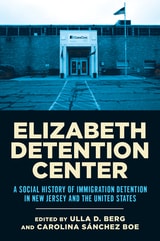
Elizabeth Detention Center
A Social History of Immigration Detention in New Jersey and the United StatesUlla D. Berg
Rutgers University Press, 2026
The United States detains and deports several hundred thousand migrants every year. Many spend significant amounts of time in immigration detention as they await adjudication of their immigration cases. The Elizabeth Detention Center in New Jersey is located in a converted warehouse, managed by a private, for-profit prison company. Over three decades, migrants and asylum seekers have been brought to EDC directly from Newark Airport or have been transferred to the site from elsewhere in the United States, including from the US-Mexico border region.
Through a longitudinal, site-specific study unique in its kind, this volume unites the voices and perspectives of formerly detained migrants, scholars, journalists, lawyers, and social and faith movement leaders, who share their experiences of Elizabeth Detention Center and reconstruct its social history and its location in New Jersey's political economy and in the changing legal landscapes of immigration detention in the United States.
Elusive Histories
Mozambican Migrant Laborers in Rhodesia, ca. 1900-1980Allen F. Isaacman, Joy M. Chadya, and Barbara S. Isaacman
Ohio University Press, 2025
At the heart of Elusive Histories is a long-neglected story of the clandestine journeys of Mozambican migrant laborers and their families to Rhodesia. Drawing from oral histories, court records, archives, newspapers, and popular magazines, the authors chronicle Mozambican migration, work experiences, and settlement in Rhodesia. Thousands of men, women, and children traveled long distances, often on foot, to reach Rhodesia. Starting with a trickle of workers seeking to avoid chibharo, a Mozambican agricultural forced-labor system, the number of migrants peaked in the 1950s.
In 1958, the Rhodesian government passed legislation to bar new Mozambican migrants from entering large cities, redirecting them toward agriculture and mining. When Black Rhodesian laborers began to complain about losing jobs to Mozambicans, the restrictions became an outright ban to prevent further migrants from entering the country.
Contrary to previous assumptions, Mozambican labor in Rhodesia was not contract labor derived from bilateral negotiations between the Mozambican colonial and Rhodesian governments. In fact, many Mozambicans who came to work and live in Rhodesia arrived as illegal migrants. The book also demystifies the widely held notion that all foreign migrant workers in Rhodesia who spoke Nyanja were Nyasalanders. Because Nyanja is widely spoken at the confluence of Malawi, Zambia, and Mozambique, many Mozambicans who came to work in Rhodesia were fluent. Despite the national, racial, and cultural differences and the discrimination in job placement, promotion, and housing, Mozambican migrant laborers creatively adapted and made Rhodesia home for the duration of their lives.
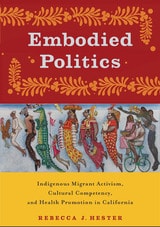
Embodied Politics
Indigenous Migrant Activism, Cultural Competency, and Health Promotion in CaliforniaRebecca J. Hester
Rutgers University Press, 2022
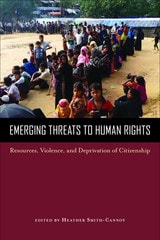
Emerging Threats to Human Rights
Resources, Violence, and Deprivation of CitizenshipHeather Smith-Cannoy
Temple University Press, 2019
As widespread environmental degradation threatens the basic human rights of a large proportion of the world’s population, we are also confronting the worst migration crisis in the modern era. Emerging Threats to Human Rights searches among the interrelated causes of these overlapping crises. The editor and contributors to this timely anthology assess how environmental resources, state violence, and the deprivation of nationality/citizenship are linked to gain a better understanding of how human rights abuses intersect with patterns of migration.
As some refugees flee violence at home, they arrive in an asylum country only to experience violence at the hands of the native population. Likewise, those denied citizenship rights in their country become vulnerable to human traffickers and other rights violations when they flee.
Bringing together scholars of resource dilemmas, violence, and citizenship as well as lawyers and human rights practitioners, Emerging Threats to Human Rights begins by identifying the core causes of human rights violations confronting our world today. Chapters also consider whether and to what extent these emerging threats to human rights serve as drivers of displacement.

Emotional Landscapes
Love, Gender, and MigrationEdited by Marcelo J. Borges, Sonia Cancian, and Linda Reeder
University of Illinois Press, 2020
Affecting and perceptive, Emotional Landscapes moves from war and transnational families to gender and citizenship to explore the crossroads of migration and the history of emotion.
Contributors: María Bjerg, Marcelo J. Borges, Sonia Cancian, Tyler Carrington, Margarita Dounia, Alexander Freund, Donna R. Gabaccia, A. James Hammerton, Mirjam Milharčič Hladnik, Emily Pope-Obeda, Linda Reeder, Roberta Ricucci, Suzanne M. Sinke, and Elizabeth Zanoni
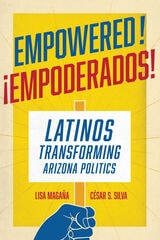
Empowered!
Latinos Transforming Arizona PoliticsLisa Magaña
University of Arizona Press, 2021
Empowered!examines Arizona’s recent political history and how it has been shaped and propelled by Latinos. It also provides a distilled reflection of U.S. politics more broadly, where the politics of exclusion and the desire for inclusion are forces of change.
Lisa Magaña and César S. Silva argue that the state of Arizona is more inclusive and progressive then it has ever been. Following in the footsteps of grassroots organizers in California and the southeastern states, Latinos in Arizona have struggled and succeeded to alter the anti-immigrant and racist policies that have been affecting Latinos in the state for many years. Draconian immigration policies have plagued Arizona’s political history. Empowered! shows innovative ways that Latinos have fought these policies.
Empowered! focuses on the legacy of Latino activism within politics. It raises important arguments about those who stand to profit financially and politically by stoking fear of immigrants and how resilient politicians and grassroots organizers have worked to counteract that fear mongering. Recognizing the long history of disenfranchisement and injustice surrounding minority communities in the United States, this book outlines the struggle to make Arizona a more just and equal place for Latinos to live.
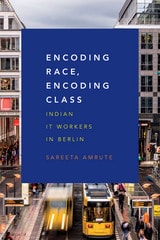
Encoding Race, Encoding Class
Indian IT Workers in BerlinSareeta Amrute
Duke University Press, 2016
Encountering American Faultlines
Race, Class, and the Dominican Experience in ProvidenceJose Itzigsohn
Russell Sage Foundation, 2009

Entry Denied
Controlling Sexuality At The BorderEithne Luibheid
University of Minnesota Press, 2002
A revelatory examination of 150 years of sexuality-based discrimination against immigrants to the United States.
Lesbians, prostitutes, women likely to have sex across racial lines, "brought to the United States for immoral purposes," or "arriving in a state of pregnancy"—national threats, one and all. Since the late nineteenth century, immigrant women’s sexuality has been viewed as a threat to national security, to be contained through strict border-monitoring practices. By scrutinizing this policy, its origins, and its application, Eithne Luibhéid shows how the U.S. border became a site not just for controlling female sexuality but also for contesting, constructing, and renegotiating sexual identity.
Initially targeting Chinese women, immigration control based on sexuality rapidly expanded to encompass every woman who sought entry to the United States. The particular cases Luibhéid examines-efforts to differentiate Chinese prostitutes from wives, the 1920s exclusion of Japanese wives to reduce the Japanese-American birthrate, the deportation of a Mexican woman on charges of lesbianism, the role of rape in mediating women’s border crossings today—challenge conventional accounts that attribute exclusion solely to prejudice or lack of information. This innovative work clearly links sexuality-based immigration exclusion to a dominant nationalism premised on sexual, gender, racial, and class hierarchies.
Escape to Manila
From Nazi Tyranny to Japanese TerrorFrank Ephraim. Foreword by Stanley A. Karnow
University of Illinois Press, 2002
A harrowing account of Jewish refugees in the Philippines
With the rise of Nazism in the 1930s more than a thousand European Jews sought refuge in the Philippines, joining the small Jewish population of Manila. When the Japanese invaded the islands in 1941, the peaceful existence of the barely settled Jews filled with the kinds of uncertainties and oppression they thought they had left behind.
In this book Frank Ephraim, who fled to Manila with his parents, gathers the testimonies of thirty-six refugees, who describe the difficult journey to Manila, the lives they built there upon their arrival, and the events surrounding the Japanese invasion. Combining these accounts with historical and archival records, Manila newspapers, and U.S. government documents, Ephraim constructs a detailed account of this little-known chapter of world history.

Ethical Borders
NAFTA, Globalization, and Mexican MigrationAuthored by Bill Ong Hing
Temple University Press, 2010
In his topical new book, Ethical Borders, Bill Ong Hing asks, why do undocumented immigrants from Mexico continue to enter the United States and, what would discourage this surreptitious traffic? An expert on immigration law and policy, Hing examines the relationship between NAFTA, globalization, and undocumented migration, and he considers the policy options for controlling immigration. He develops an ethical rationale for opening up the U.S./Mexican border, as well as improving conditions in Mexico so that its citizens would have little incentive to migrate.
In Ethical Borders Hing insists that reforming NAFTA is vital to ameliorating much of the poverty that drives undocumented immigration and he points to the European Union's immigration and economic development policies as a model for North America. Hing considers the world-wide economic crisis and the social problems that attend labor migration into homogenous countries, arguing for a spectrum of changes, including stricter border enforcement and more effective barriers; a path to citizenship for undocumented migrants; or a guest worker program.
Hing also situates NAFTA and its effects in the larger, and rapidly shifting, context of globalization—particularly the recent rise of China as the world's economic giant. Showing how NAFTA’s unforeseen consequences have been detrimental to Mexico, Hing passionately argues that the United States is ethically bound to address the problems in a way that puts prosperity within the grasp of all North Americans.
Ethnic Dissent and Empowerment
Economic Migration between Vietnam and MalaysiaAngie Ngoc Tran
University of Illinois Press, 2022
A rare study of labor migration in the Global South, Ethnic Dissent and Empowerment answers essential questions about why nations export and import migrant workers and how the workers protect themselves not only within the system, but by circumventing it altogether.
Ethnic Entrepreneurs, Crony Capitalism, and the Making of the Franco-Mexican Elite
José Galindo
University of Alabama Press, 2021
A groundbreaking historical narrative of corruption and economic success in Mexico.
Ethnic Entrepreneurs, Crony Capitalism, and the Making of the Franco-Mexican Elite provides a new way to understand the scope and impact of crony capitalism on institutional development in Mexico. Beginning with the Porfiriato, the period between 1876 and 1911 named for the rule of President Porfirio Díaz, José Galindo identifies how certain behavioral patterns of the Mexican political and economic elite have repeated over the years, and analyzes aspects of the political economy that have persisted, shaping and at times curtailing Mexico’s economic development.
Strong links between entrepreneurs and politicians have allowed elite businessmen to receive privileged support, such as cheap credit, tax breaks, and tariff protection, from different governments and to run their companies as monopolies. In turn, successive governments have obtained support from businesses to implement public policies, and, on occasion, public officials have received monetary restitution. Galindo notes that Mexico’s early twentieth-century institutional framework was weak and unequal to the task of reining in these systematic abuses. The cost to society was high and resulted in a lack of fair market competition, unequal income distribution, and stunted social mobility.
The most important investors in the banking, commerce, and manufacturing sectors at the beginning of the twentieth century in Mexico were of French origin, and Galindo explains the formation of the Franco-Mexican elite. This Franco-Mexican narrative unfolds largely through the story of one of the richest families in Mexico, the Jeans, and their cotton textile empire. This family has maintained power and wealth through the current day as Emilio Azcárraga Jean, a great-grandson of one of the members of the first generation of the Jean family to arrive in Mexico, owns Televisa, a major mass media company with one of the largest audiences for Spanish-language content in the world.
Ethnic Los Angeles
Roger Waldinger
Russell Sage Foundation, 1996
Ethnic Origins
The Adaptation of Cambodian and Hmong Refugees in Four American CitiesJeremy Hein
Russell Sage Foundation, 2006
Evaluating Anti-Trafficking Interventions
Critical Reflections and Lessons from the FieldEdited by Ella Cockbain, Aiden Sidebottom, and Sheldon X. Zhang
University College London, 2025
Despite vast investment in anti-trafficking measures worldwide, there is a stark lack of evidence of effective interventions. It is unethical and ineffective to keep throwing money at anti-trafficking efforts without a more nuanced understanding of how they can help and harm. After all, advances in crime prevention and harm reduction both rely heavily on evaluation science. Bringing together contributors from across different perspectives, disciplines, backgrounds, and geographies, Evaluating Anti-Trafficking Interventions focuses on the sharp end of criminal abuses. It offers both practical guidance and critical reflections on the promises and pitfalls of evaluation for anti-trafficking interventions. The book also introduces foundational theory and practice around evaluations (including both qualitative and quantitative evidence), highlights innovative new directions, and draws lessons from real-world case studies. It is designed to function both as a practical companion guide and to stimulate reflection on the tensions and constraints of funding, doing, and assessing evaluations in this domain.
Everyday Ruptures
Children, Youth, and Migration in Global PerspectiveCati Coe
Vanderbilt University Press, 2011
The book is organized around four themes:
• how children's agency is affected by institutions, families, and beliefs
• how families and individuals create and maintain kin ties in conditions of rupture
• how emotion and affect are linked to global divisions and flows
• how the actions of states create ruptures and continuities

Exile and Creativity
Signposts, Travelers, Outsiders, Backward GlancesSusan Rubin Suleiman, ed.
Duke University Press, 1998
In essays that range chronologically from the Renaissance to the 1990s, geographically from the Danube to the Andes, and historically from the Inquisition to the Holocaust, the complexities and tensions of exile and the diversity of its experiences are examined. Recognizing exile as an interior experience as much as a physical displacement, this collection discusses such varied topics as intellectual exile and seventeenth-century French literature; different versions of home and of the novel in the writings of Bakhtin and Lukács; the displacement of James Joyce and Clarice Lispector; a young journalist’s meeting with James Baldwin in the south of France; Jean Renoir’s Hollywood years; and reflections by the descendents of European emigrés. Strikingly, many of the essays are themselves the work of exiles, bearing out once more the power of the personal voice in scholarship.
With the exception of the contribution by Henry Louis Gates Jr., these essays were originally published in a special double issue of Poetics Today in 1996. Exile and Creativity will engage a range of readers from those whose specific interests include the problems of displacement and diaspora and the European Holocaust to those whose broad interests include art, literary and cultural studies, history, film, and the nature of human creativity.
Contributors. Zygmunt Bauman, Janet Bergstrom, Christine Brooke-Rose, Hélène Cixous, Tibor Dessewffy, Marianne Hirsch, Denis Hollier, Henry Louis Gates Jr., Linda Nochlin, Leo Spitzer, Susan Rubin Suleiman, Thomas Pavel, Doris Sommer, Nancy Huston, John Neubauer, Ernst van Alphen, Alicia Borinsky, Svetlana Boym, Jacqueline Chénieux-Gendron
Exiled Home
Salvadoran Transnational Youth in the Aftermath of ViolenceSusan Bibler Coutin
Duke University Press, 2016

Exporting Japan
Politics of Emigration to Latin AmericaToake Endoh
University of Illinois Press, 2008
Exporting Japan examines the domestic origins of the Japanese government's policies to promote the emigration of approximately three hundred thousand native Japanese citizens to Latin America between the 1890s and the 1960s. This imperialist policy, spanning two world wars and encompassing both the pre-World War II authoritarian government and the postwar conservative regime, reveals strategic efforts by the Japanese state to control its populace while building an expansive nation beyond its territorial borders.
Toake Endoh compellingly argues that Japan's emigration policy embodied the state's anxieties over domestic political stability and its intention to remove marginalized and radicalized social groups by relocating them abroad. Documenting the disproportionate focus of the southwest region of Japan as a source of emigrants, Endoh considers the state's motivations in formulating emigration policies that selected certain elements of the Japanese population for "export." She also recounts the situations migrants encountered once they reached Latin America, where they were often met with distrust and violence in the "yellow scare" of the pre-World War II period.