Results by title
22279 books match the query 'Social Science' and 684 start with e
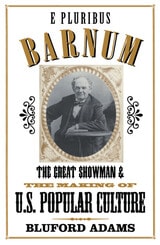
E Pluribus Barnum
The Great Showman and the Making of U.S. Popular CultureBluford Adams
University of Minnesota Press, 1997
The first book to consider the career of P. T. Barnum from a cultural studies perspective.
Phineas Taylor Barnum lived from 1810 until 1891, and in the eighty-one years of his life he created show business as we know it. In E Pluribus Barnum, Bluford Adams investigates the influence Barnum had on American popular culture of the nineteenth century, and expands our understanding of the ways he continues to influence us today.
Beginning with a discussion of Barnum’s early shows, Adams demonstrates the dynamic interplay between Barnum’s increasingly “respectable” aspirations for his entertainments and his active cultivation of middle-class sensibilities in his audiences. In his discussion of the 1850-51 concert tour of the “Swedish Nightingale” Jenny Lind, Adams explores the role played by women’s rights and class issues in Barnum’s management of these concerts. Barnum’s American Museum and the “moral dramas” presented in its theater (which included a play of Uncle Tom’s Cabin) are examined in the context of debates about slavery and temperance. The later circuses are discussed in terms of their international pageants and their staging of orientalism through racial exhibitions. Adams relates the rise of Barnum to the emergence of a new U.S. society, one riven by conflicts over slavery, feminism, immigration, and capitalism. He documents Barnum’s efforts to negotiate those conflicts by steadily remaking his amusements and his public image. E Pluribus Barnum examines Barnum’s shifting political allegiances for what they tell us about American culture at the time, examines the audiences he created, and considers his career as a crucial moment in the ongoing struggle over the politics of U.S. commercial entertainments.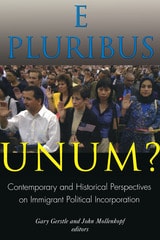
E Pluribus Unum?
Contemporary and Historical Perspectives on Immigrant Political IncorporationGary Gerstle
Russell Sage Foundation, 2001
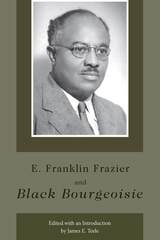
E. Franklin Frazier and Black Bourgeoisie
E. Franklin Frazier
University of Missouri Press, 2002
When E. Franklin Frazier was elected the first black president of the American Sociological Association in 1948, he was established as the leading American scholar on the black family and was also recognized as a leading theorist on the dynamics of social change and race relations. By 1948 his lengthy list of publications included over fifty articles and four major books, including the acclaimed Negro Family in the United States. Frazier was known for his thorough scholarship and his mastery of skills in both history and sociology.
With the publication of Bourgeoisie Noire in 1955 (translated in 1957 as Black Bourgeoisie), Frazier apparently set out on a different track, one in which he employed his skills in a critical analysis of the black middle class. The book met with mixed reviews and harsh criticism from the black middle and professional class. Yet Frazier stood solidly by his argument that the black middle class was marked by conspicuous consumption, wish fulfillment, and a world of make-believe. While Frazier published four additional books after 1948, Black Bourgeoisie remained by far his most controversial.
Given his status in American sociology, there has been surprisingly little study of Frazier's work. In E. Franklin Frazier and Black Bourgeoisie, a group of distinguished scholars remedies that lack, focusing on his often-scorned Black Bourgeoisie.
This in-depth look at Frazier's controversial publication is relevant to the growing concerns about racism, problems in our cities, the limitations of affirmative action, and the promise of self-help.
E.T. Culture
Anthropology in OuterspacesDebbora Battaglia, ed.
Duke University Press, 2005
Drawing on social science, science studies, linguistics, popular and expressive culture, and social and intellectual history, the writers of E.T. Culture unsettle the boundaries of science, magic, and religion as well as those of technological and human agency. They consider the ways that sufferers of “unmarked” diseases such as Chronic Fatigue Syndrome come to feel alien to both the “healthy” world and the medical community incapable of treating them; the development of alien languages like Klingon; attempts to formulate a communications technology—such as that created for the spaceship Voyager—that will reach alien beings; the pilgrimage spirit of UFO seekers; the out-of-time experiences of Nobel scientists; the embrace of the alien within Japanese animation and fan culture; and the physical spirituality of the Raëlian religious network.
Contributors. Debbora Battaglia, Richard Doyle, Joseph Dumit, Mizuko Ito, Susan Lepselter, Christopher Roth, David Samuels
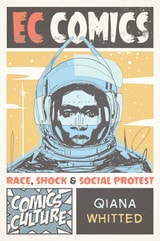
EC Comics
Race, Shock, and Social ProtestQiana Whitted
Rutgers University Press, 2019
Entertaining Comics Group (EC Comics) is perhaps best-known today for lurid horror comics like Tales from the Crypt and for a publication that long outlived the company’s other titles, Mad magazine. But during its heyday in the early 1950s, EC was also an early innovator in another genre of comics: the so-called “preachies,” socially conscious stories that boldly challenged the conservatism and conformity of Eisenhower-era America.
EC Comics examines a selection of these works—sensationally-titled comics such as “Hate!,” “The Guilty!,” and “Judgment Day!”—and explores how they grappled with the civil rights struggle, antisemitism, and other forms of prejudice in America. Putting these socially aware stories into conversation with EC’s better-known horror stories, Qiana Whitted discovers surprising similarities between their narrative, aesthetic, and marketing strategies. She also recounts the controversy that these stories inspired and the central role they played in congressional hearings about offensive content in comics.
The first serious critical study of EC’s social issues comics, this book will give readers a greater appreciation of their legacy. They not only served to inspire future comics creators, but also introduced a generation of young readers to provocative ideas and progressive ideals that pointed the way to a better America.
ENACTing Change
A Handbook for Teaching Advocacy and Civic EngagementKathleen Cole, Robert W. Glover, Richard J. Meagher, and Katharine A. Owens
Brandeis University Press, 2025
ENACT: The Educational Network for Active Civic Transformation aims to teach college students about democracy through engagement with the state legislative process. Built on the values of knowledge, cooperation, justice, and integrity, ENACT is a national, intercollegiate nonpartisan network. The program empowers students to be active participants in democratic processes by connecting with policymakers and community organizations, conducting research and analysis, and informing public policy with evidence and expertise.
ENACTing Change introduces teachers to the philosophy and practice of the ENACT model—which includes workshops, courses, an online network, as well as pilot projects and other initiatives—while providing detailed guidance on how to incorporate the model into their courses, regardless of discipline or educational settings. The book offers instructors recommendations for developing and teaching courses that engage in state-level policy advocacy with a focus on learning outcomes. ENACTing Change takes instructors through each step of the course design process, from how to build the relationships needed to teach the class to the next steps for students to work in the community after ENACT.

ESPN
The Making of a Sports Media EmpireTravis Vogan
University of Illinois Press, 2015
Travis Vogan teams archival research and interviews with an all-star cast to pen the definitive account of how ESPN turned X's and O's into billions of $$$. Vogan's institutional and cultural history focuses on the network since 1998, the year it launched a high-motor effort to craft its brand and grow audiences across media platforms. As he shows, innovative properties like SportsCentury, ESPN The Magazine, and 30 for 30 built the network's cultural caché. This credibility, in turn, propelled ESPN's transformation into an entity that lapped its run-of-the-mill competitors and helped fulfill its self-proclaimed status as the "Worldwide Leader in Sports."
Ambitious and long overdue, ESPN: The Making of a Sports Media Empire offers an inside look at how the network changed an industry and reshaped the very way we live as sports fans.
Each Hour Redeem
Time and Justice in African American LiteratureDaylanne K. English
University of Minnesota Press, 2013
Each Hour Redeem advances a major reinterpretation of African American literature from the late eighteenth century to the present by demonstrating how its authors are centrally concerned with racially different experiences of time. Daylanne K. English argues that, from Phillis Wheatley to Suzan-Lori Parks, African American writers have depicted distinctive forms of temporality to challenge racial injustices supported by dominant ideas of time. The first book to explore the representation of time throughout the African American literary canon, Each Hour Redeem illuminates how the pervasive and potent tropes of timekeeping provide the basis for an overarching new understanding of the tradition.
Combing literary, historical, legal, and philosophical approaches, Each Hour Redeem examines a wide range of genres, including poetry, fiction, drama, slave narratives, and other forms of nonfiction. English shows that much of African American literature is characterized by “strategic anachronism,” the use of prior literary forms to investigate contemporary political realities, as seen in Walter Mosley’s recent turn to hard-boiled detective fiction. By contrast, “strategic presentism” is exemplified in the Black Arts Movement and the Harlem Renaissance and their investment in contemporary political potentialities, for example, in Langston Hughes and Amiri Baraka’s adaptation of the jazz of their eras for poetic form and content. Overall, the book effectively demonstrates how African American writers have employed multiple and complex conceptions of time not only to trace racial injustice but also to help construct a powerful literary tradition across the centuries.

Eagles on Their Buttons
A Black Infantry Regiment in the Civil WarVersalle F. Washington
University of Missouri Press, 1999
Eagles on Their Buttons is a fascinating examination of the Fifth Regiment of Infantry, United States Colored Troops—the Union Army's first black regiment from Ohio. Although the Fifth USCT was one of more than 150 regiments of black troops making up more than 10 percent of the Union Army at the end of the war, it was unique. The majority of USCT regiments were made up of freed men who viewed the army as an escape from slavery and a chance to take up arms against their former masters. The men serving in the 5th USCT, however, were freemen who were raised in a northern state and saw serving in the army both as a way to gain equal rights under the law and as an opportunity to prove their worth as men.
Because historians have written little on this subject, many Americans believe that African Americans simply received their freedom with the Emancipation Proclamation. They know nothing about the struggles these courageous people endured to gain their independence. Now, by incorporating personal documents, letters, diaries, and official records, Eagles on Their Buttons sheds important new light on this unfamiliar aspect of the Civil War. Versalle Washington shows what caused the soldiers in the Fifth USCT to join their regiment, what sort of men they were, and how they fought and lived as African American soldiers under white officers. He discusses the regiment's service, addressing its role in the siege of Petersburg, the battle of Chapin's Farm, and the capture of Fort Fisher and the port of Wilmington. Washington also looks at what effects the soldiers' service had in terms of societal changes following the Civil War.
Eagles on Their Buttons is a fresh contribution to Civil War scholarship and will be welcomed by professional historians and amateur Civil War buffs alike.
This book is part of the University of Missouri Press' Shades of Blue and Gray series.
Earline's Pink Party
The Social Rituals and Domestic Relics of a Southern WomanElizabeth Findley Shores
University of Alabama Press, 2017
A compelling, genre-bending page-turner, Earline’s Pink Party: The Social Rituals and Domestic Relics of a Southern Woman analyzes the life of a small-city matron in the Deep South. A combination of biography, material culture analysis, social history, and memoir, this volume offers a new way of thinking about white racism through Shores’s conclusion that Earline’s earliest childhood experiences determined her worldview.
Set against a fully drawn background of geography and culture and studded with detailed investigations of social rituals (such as women’s parties) and objects (such as books, handwritten recipes, and fabric scraps), Earline’s Pink Party tells the story of an ordinary woman, the grandmother Shores never knew. Looking for more than the details and drama of bourgeois Southern life, however, the author digs into generations of family history to understand how Earline viewed the racial terror that surrounded her during the Jim Crow years in this fairly typical southern town.
Shores seeks to narrow a gap in the scholarship of the American South, which has tended to marginalize and stereotype well-to-do white women who lived after Emancipation. Exploring her grandmother’s home and its contents within the context of Tuscaloosa society and historical events, Shores evaluates the belief that women like Earline consciously engaged in performative rituals in order to sustain the “fantastical” view of the white nobility and the contented black underclass. With its engaging narrative, illustrations, and structure, this fascinating book should interest scholars of memory, class identity, and regional history, as well as sophisticated lay readers who enjoy Southern history, foodways, genealogy, and material culture.
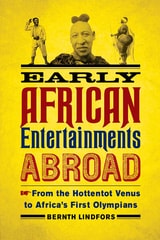
Early African Entertainments Abroad
From the Hottentot Venus to Africa's First OlympiansBernth Lindfors
University of Wisconsin Press, 2014
Using period illustrations and texts, Early African Entertainments Abroad illuminates the mindset of the era's largely white audiences as they viewed wax models of Africans with tails and watched athletic competitions showcasing hungry cannibals. White spectators were thus assured of their racial superiority. And blacks were made to appear less than fully human precisely at the time when abolitionists were fighting to end slavery and establish equality.
Early Antiquity
Edited by I. M. Diakonoff
University of Chicago Press, 1991
M. Diakonoff has gathered the work of Soviet historians in
this survey of the earliest history of the ancient Near East,
Central Asia, India, and China. Diakonoff and his
colleagues, nearly all working within the general Marxist
historiographic tradition, offer a comprehensive, accessible
synthesis of historical knowledge from the beginnings of
agriculture through the advent of the Iron Age and the Greek
colonization in the Mediterranean and the Black Sea areas.
Besides discussing features of Soviet historical
scholarship of the ancient world, the essays treat the
history of early Mesopotamia and the course of Pharaonic
Egyptian civilization and developments in ancient India and
China from the Bronze Age into the first millennium B.C.
Additional chapters are concerned with the early history of
Syria, Phoenicia, and Palestine, the Hittite civilization,
the Creto-Mycenaean world, Homeric Greece, and the Phoenician
and Greek colonization.
This volume offers a unified perspective on early
antiquity, focusing on the economic and social relations of
production. Of immense value to specialists, the book will
also appeal to general readers.
I. M. Diakonoff is a senior research scholar of ancient
history at the Institute of Oriental Studies, Leningrad
Academy of Sciences. Philip L. Kohl is professor of
anthropology at Wellesley College.
Early Communist China
Two StudiesRonald Suleski and Daniel Bays
University of Michigan Press, 1969
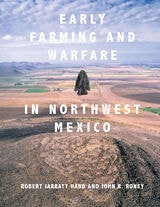
Early Farming and Warfare in Northwest Mexico
Robert J. Hard and John R. Roney
University of Utah Press, 2019
The authors place their work in a regional and theoretical context, providing detailed analyses of radiocarbon dates, structures, features, and artifacts. Authors Hard and Roney, and their contributors, present innovative analyses of plant and animal remains, ground stone, chipped stone, and landscape evolution. Through comparisons with a global cross-cultural probe of hilltop sites and a detailed examination of the features and artifacts of Cerro Juanaqueña, Hard and Roney argue that these cerros de trincheras sites are the earliest fortified defensive sites in the region. Readers with interests in ancient agriculture, warfare, village formation, and material culture will find this to be a foundational volume.
Early Formative Pottery of the Valley of Oaxaca
Kent V. Flannery and Joyce Marcus with technical ceramic analysis by William O. Payne
University of Michigan Press, 1994
Early French Cookery
Sources, History, Original Recipes and Modern AdaptationsD. Eleanor Scully and Terence Scully
University of Michigan Press, 2002
Chapters include an overview of early French culinary traditions, foodstuffs that were used, and methods of preparation. Early French Cookery also discusses the equipment of the kitchens and dining rooms that were used, and characterizes those who prepared the food and those who consumed it.
The recipes are set out in a modern format, with quantities given in both metric and standard U.S. measurements. Recipes are grouped by category: appetizers, vegetables, fish dishes, desserts, and so forth.
Early French Cookery concludes with a fascinating look at a day in the life of a contemporary master chef at a duke's court. We watch Master Chiquart organize the purchase, storage, preparation, and serving of the food consumed by a duke and his dozens of family members, courtiers, staff and servants--and all done without benefit of grocery stores, refrigeration, labor-saving electric appliances, or running water.
Early French Cookery will be of interest to a wide variety of people, from those who like to hold unusual parties to those who are interested in the economics of the middle ages.
D. Eleanor Scully is an occasional lecturer at the Stratford Chef School and advisor to Wilfrid Laurier University on Medieval and Renaissance cooking and customs. Terence Scully is Professor of French Language and Literature, Wilfrid Laurier University, Waterloo, Ontario.
Early Hominin Paleoecology
Matt Sponhiemer, Julia A Lee-Thorp, Kaye E. Reed, Peter Ungar
University Press of Colorado, 2013
Recent advances in the field and the laboratory are not only improving our understanding of human evolution but are also transforming it. Given the increasing specialization of the individual fields of study in hominin paleontology, communicating research results and data is difficult, especially to a broad audience of graduate students, advanced undergraduates, and the interested public. Early Hominin Paleoecology provides a good working knowledge of the subject while also presenting a solid grounding in the sundry ways this knowledge has been constructed. The book is divided into three sections—climate and environment (with a particular focus on the latter), adaptation and behavior, and modern analogs and models—and features contributors from various fields of study, including archaeology, primatology, paleoclimatology, sedimentology, and geochemistry.
Early Hominin Paleoecology is an accessible introduction into this fascinating and ever-evolving field and will be essential to any student interested in pursuing research in human paleoecology.
Additional Contributors:
David Braun
Beth Christensen
David J. Daegling
Crag Feibel
Fred E. Grine
Clifford Jolly
Naomi E. Levin
Mark A. Maslin
John Mitani
Jay Quade
Amy L. Rector
Jeanne Sept
Lillian M. Spencer
Mark Teaford
Carol V. Ward
Katy E. Wilson
Early Images of the Americas
Transfer and InventionEdited by Jerry M. Williams and Robert E. Lewis
University of Arizona Press, 1993

Early Jewish Cookbooks
Essays on Hungarian Jewish Gastronomical HistoryAndrás Koerner
Central European University Press, 2022
Winner of the Association of Jewish Libraries' 2022 Judaica Bibliography Award.
The seven essays in this volume focus such previously unexplored subjects as the world’s first cookbook printed in Hebrew letters, published in 1854, and a wonderful 19th-century Jewish cookbook, which in addition to its Hungarian edition was also published in Dutch in Rotterdam. The author entertainingly reconstructs the history of bólesz, a legendary yeast pastry that was the specialty of a famous, but long defunct Jewish coffeehouse in Pest, and includes the modernized recipe of this distant relative of cinnamon rolls. Koerner also tells the history of the first Jewish bookstore in Hungary (founded as early as in 1765!) and examines the influence of Jewish cuisine on non-Jewish food.
In this volume András Koerner explores key issues of Hungarian Jewish culinary culture in greater detail and more scholarly manner than what space restrictions permitted in his previous work Jewish Cuisine in Hungary: A Cultural History, also published by CEU Press, which received the prestigious National Jewish Book Award in 2020. The current essays confirm the extent to which Hungarian Jewry was part of the Jewish life and culture of the Central European region before their almost total language shift by the turn of the 20th century.
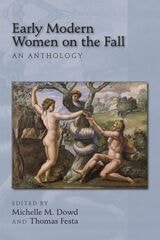
Early Modern Women on the Fall
An AnthologyMichelle M. Dowd
Arizona Center for Medieval and Renaissance Studies, 2012
Early Neolithic Settlement and Society at Olszanica
Sarunas Milisauskas
University of Michigan Press, 1986
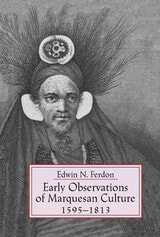
Early Observations of Marquesan Culture, 1595–1813
Edwin N. Ferdon
University of Arizona Press, 1993
Early Pottery
Technology, Function, Style, and Interaction in the Lower SoutheastEdited by Rebecca Saunders and Christopher T. Hays
University of Alabama Press, 2004
A synthesis of research on earthenware technologies of the Late Archaic Period in the southeastern U.S.
Information on social groups and boundaries, and on interaction between groups, burgeons when pottery appears on the social landscape of the Southeast in the Late Archaic period (ca. 5000-3000 years ago). This volume provides a broad, comparative review of current data from "first potteries" of the Atlantic and Gulf coastal plains and in the lower Mississippi River Valley, and it presents research that expands our understanding of how pottery functioned in its earliest manifestations in this region.
Included are discussions of Orange pottery in peninsular Florida, Stallings pottery in Georgia, Elliot's Point fiber-tempered pottery in the Florida panhandle, and the various pottery types found in excavations over the years at the Poverty Point site in northeastern Louisiana. The data and discussions demonstrate that there was much more interaction, and at an earlier date, than is often credited to Late Archaic societies. Indeed, extensive trade in pottery throughout the region occurs as early as 1500 B.C.
These and other findings make this book indispensable to those involved in research into the origin and development of pottery in general and its unique history in the Southeast in particular.
Early Puebloan Occupations at Tesuque By-Pass and in the Upper Rio Grande Valley
Charles H. McNutt
University of Michigan Press, 1969
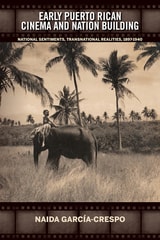
Early Puerto Rican Cinema and Nation Building
National Sentiments, Transnational Realities, 1897-1940Naida García-Crespo
Bucknell University Press, 2019
Published by Bucknell University Press. Distributed worldwide by Rutgers University Press.
Early Settlement and Irrigation on the Deh Luran Plain
Village and Early State Societies in Southwestern IranJames A. Neely and Henry T. Wright with a foreword by Kent V. Flannery and contributions by Robert E. Dewar and Pierre de Miroschedji
University of Michigan Press, 1994
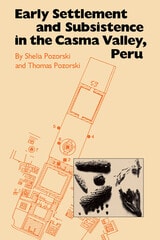
Early Settlement and Subsistence in the Casma Valley, Peru
Shelia Pozorski
University of Iowa Press, 1987
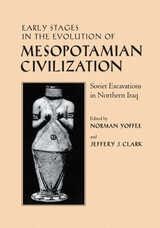
Early Stages in the Evolution of Mesopotamian Civilization
Soviet Excavations in Northern IraqEdited by Norman Yoffee and Jeffery J. Clark
University of Arizona Press, 1993
Early State Formation in Central Madagascar
An Archaeological Survey of Western AvaradranoEdited by Henry T. Wright
University of Michigan Press, 2007
Early Tahiti As the Explorers Saw It, 1767–1797
Edwin N. Ferdon
University of Arizona Press, 1981
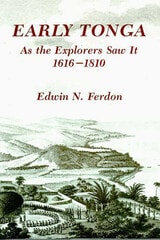
Early Tonga As the Explorers Saw It, 1616–1810
Edwin N. Ferdon
University of Arizona Press, 1987
The ethnohistorical approach to early Tongan culture offers not only a fascinating glimpse into a world long past but also a basis for the comparative study of European acculturation throughout Polynesia.
Edwin N. Ferdon first became interested in early Polynesia while serving as an archaeologist with Thor Heyerdahl’s 1955 expedition to Easter Island. He is also the author of Early Tahiti As the Explorers Saw It, 1767–1797.
Early Women Stars, Volume 16
Jennifer M. Bean and Diane Negra, eds.
Duke University Press, 0
Essays focus on figures across the wide international lexicon of stardom, including stunt star Pearl White, iconic French performer Musidora, imported European vamp Pola Negri, pixie heroine Colleen Moore, and Chinese star Xuan Jinglin. Other articles revisit figures, such as Mary Pickford and Greta Garbo, whose stardom appears to be self-evident but proves more complex than previous accounts have suggested. In this collection, early female stars function as a medium through which authors reconceptualize feminist film history and historiography.
Contributors. Jennifer M. Bean, Vicki Callahan, Lucy Fischer, Amelie Hastie, Diane Negra, Gaylyn Studlar, Zhen Zhang
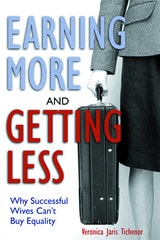
Earning More and Getting Less
Why Successful Wives Can't Buy EqualityVeronica Jaris Tichenor
Rutgers University Press, 2005
In Earning More and Getting Less, sociologist Veronica Jaris Tichenor shows how, historically, men have derived a great deal of power over financial and household decisions by bringing home all (or most) of the family's income. Yet, financial superiority has not been a similar source of power for women. Tichenor demonstrates how wives, instead of using their substantial incomes to negotiate more egalitarian relationships, enable their husbands to perpetuate male dominance within the family.
Weaving personal accounts, in-depth interviews, and compelling narrative, this important study reveals disturbing evidence that the conventional power relations defined by gender are powerful enough to undermine hierarchies defined by money. Earning More and Getting Less is essential reading in sociology, psychology, and family and gender studies.
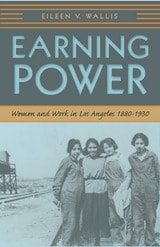
Earning Power
Women and Work in Los Angeles, 1880-1930Eileen Wallis
University of Nevada Press, 2010
The half-century between 1880 and 1930 saw rampant growth in many American cities and an equally rapid movement of women into the work force. In Los Angeles, the city not only grew from a dusty cow town to a major American metropolis but also offered its residents myriad new opportunities and challenges.Earning Power examines the role that women played in this growth as they attempted to make their financial way in a rapidly changing world. Los Angeles during these years was one of the most ethnically diverse and gender-balanced American cities. Moreover, its accelerated urban growth generated a great deal of economic, social, and political instability. In Earning Power, author Eileen V. Wallis examines how women negotiated issues of gender, race, ethnicity, and class to gain access to professions and skilled work in Los Angeles. She also discusses the contributions they made to the region’s history as political and social players, employers and employees, and as members of families. Wallis reveals how the lives of women in the urban West differed in many ways from those of their sisters in more established eastern cities. She finds that the experiences of women workers force us to reconsider many assumptions about the nature of Los Angeles’s economy, as well as about the ways women participated in it. The book also considers how Angelenos responded to the larger national social debate about women’s work and the ways that American society would have to change in order to accommodate working women. Earning Power is a major contribution to our understanding of labor in the urban West during this transformative period and of the crucial role that women played in shaping western cities, economies, society, and politics.
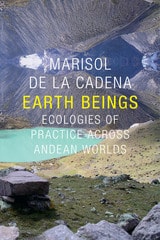
Earth Beings
Ecologies of Practice across Andean WorldsMarisol de la Cadena
Duke University Press, 2015
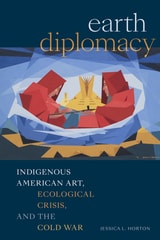
Earth Diplomacy
Indigenous American Art, Ecological Crisis, and the Cold WarJessica L. Horton
Duke University Press, 2024
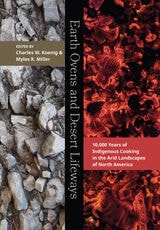
Earth Ovens and Desert Lifeways
10,000 Years of Indigenous Cooking in the Arid Landscapes of North AmericaEdited by Charles W. Koenig and Myles R. Miller
University of Utah Press, 2023
For over 10,000 years, earth ovens (semi-subterranean, layered arrangements of heated rocks, packing material, and food stuffs capped by earth) have played important economic and social roles for Indigenous peoples living across the arid landscapes of western North America. From hunter-gatherers to formative horticulturalists, sedentary farmers, and contemporary Indigenous groups, earth ovens have been used to convert inedible plants into digestible food, fiber, and beverages.
The remains of earth ovens range from tight, circular clusters of burned rocks, generally labeled “hearths” by archaeologists, to the massive accumulations of fire-cracked rock referred to as earth oven facilities, roasting pits, or burned rock middens. Remnants of these oven forms are common across the arid and semi-arid landscapes that stretch from Texas to California and south into Mexico. Despite the ubiquity of earth ovens from late Paleoindian times until today, and their broad spatial and cultural distribution, these features remain an under-studied aspect of Indigenous lifeways.
This edited volume explores the longevity and diversity of earth oven baking and examines the subsistence strategies, technological paradigms, and social contexts within which earth ovens functioned. It is the first study to cover such a broad geographic area, reflecting an array of promising research that highlights ongoing efforts to understand the archaeological record of earth ovens.
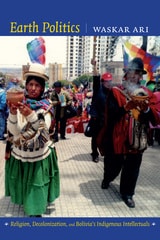
Earth Politics
Religion, Decolonization, and Bolivia's Indigenous IntellectualsWaskar Ari
Duke University Press, 2014
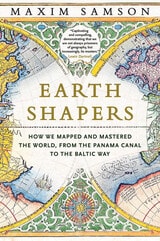
Earth Shapers
How We Mapped and Mastered the World, from the Panama Canal to the Baltic WayMaxim Samson
University of Chicago Press, 2025
Mountains, meridians, rivers, and borders—these are some of the features that divide the world on our maps and in our minds. But geography is far less set in stone than we might believe, and, as Maxim Samson’s Earth Shapers contends, in our relatively short time on this planet, humans have become experts at fundamentally reshaping our surroundings.
From the Qhapaq Ñan, the Inca’s “great road,” and Mozambique’s colonial railways to a Saudi Arabian smart city, and from Korea’s sacred Baekdu-daegan mountain range and the Great Green Wall in Africa to the streets of Chicago, Samson explores how we mold the world around us. And how, as we etch our needs onto the natural landscape, we alter the course of history. These fascinating stories of connectivity show that in our desire to make geographical connections, humans have broken through boundaries of all kinds, conquered treacherous terrain, and carved up landscapes. We crave linkages, and though we do not always pay attention to the in-between, these pathways—these ways of “earth shaping,” in Samson’s words—are key to understanding our relationship with the planet we call home.
An immense work of cultural geography touching on ecology, sociology, history, and politics, Earth Shapers argues that, far from being constrained by geography, we are instead its creators.
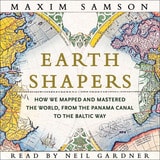
Earth Shapers
How We Mapped and Mastered the World, from the Panama Canal to the Baltic WayMaxim Samson
University of Chicago Press, 2025
The globetrotting story of how humans have harnessed the geographical landscape and written ourselves onto our surroundings.
Mountains, meridians, rivers, and borders—these are some of the features that divide the world on our maps and in our minds. But geography is far less set in stone than we might believe, and, as Maxim Samson’s Earth Shapers contends, in our relatively short time on this planet, humans have become experts at fundamentally reshaping our surroundings.
From the Qhapaq Ñan, the Inca’s “great road,” and Mozambique’s colonial railways to a Saudi Arabian smart city, and from Korea’s sacred Baekdu-daegan mountain range and the Great Green Wall in Africa to the streets of Chicago, Samson explores how we mold the world around us. And how, as we etch our needs onto the natural landscape, we alter the course of history. These fascinating stories of connectivity show that in our desire to make geographical connections, humans have broken through boundaries of all kinds, conquered treacherous terrain, and carved up landscapes. We crave linkages, and though we do not always pay attention to the in-between, these pathways—these ways of “earth shaping,” in Samson’s words—are key to understanding our relationship with the planet we call home.
An immense work of cultural geography touching on ecology, sociology, history, and politics, Earth Shapers argues that, far from being constrained by geography, we are instead its creators.
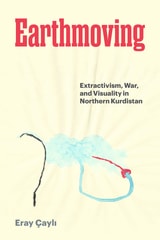
Earthmoving
Extractivism, War, and Visuality in Northern KurdistanEray Çayli
University of Texas Press, 2025
Focuses on contemporary art and media to examine the role of visuals in environmental violence and war in Northern Kurdistan.
Extractivism—exploiting the earth for resources—has long driven racial capitalism and colonialism. And yet, how does extractivism operate in a world where ecological and humanitarian sensibilities are unprecedentedly widespread? Eray Çaylı argues it does so by mobilizing these sensibilities in new ways. Extractivism is no longer only about moving the earth—displacing peoples, fossils, minerals, and waters—but also leaving those who witness this violent displacement sentimentally moved.
Earthmoving conceptualizes this duality. Derived from Çaylı’s years-long work in Northern Kurdistan, home to the world’s largest stateless nation—rendered stateless by colonial policies since the nineteenth century—Earthmoving focuses on the 2010s, a decade that began with peace talks between Turkey and the Kurdish liberation movement but ended with war. The decade saw extractivism intensify in the region and images of its harm proliferate across art and media. Together with contemporary artists, Çaylı shows that images challenge extractivism both by making its harm visible and by fostering self-reflexive and reciprocal collaboration that breaks with its valuation of the colonized and the racialized only in quantifiable and marketable terms.
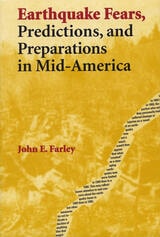
Earthquake Fears, Predictions, and Preparations in Mid-America
John E. Farley
Southern Illinois University Press, 1998
The New Madrid Seismic Zone (NMSZ) generated the strongest earthquakes ever observed in the lower forty-eight states in 1811 and 1812. And the region is overdue for another damaging quake. When self-proclaimed climatologist lben Browning predicted that a major earthquake would shatter the Heartland on 2 or 3 December 1990, many living within reach of the New Madrid fault zone reacted with varying combinations of preparation and panic.
John Farley’s study reports the results of four surveys conducted in the NMSZ both before and after the quake prediction. Thus, Farley notes the level of awareness and preparation at the height of the Browning-induced scare and shows to what extent earthquake awareness and preparedness were sustained in this region after the most widely publicized prediction in recent history proved baseless. All four surveys offer important insights into what people believe about earthquake risk in the NMSZ, what they know about earthquakes, what specific actions they have—and have not—taken in preparation for earthquakes, and what they think a severe quake would do to their neighborhoods.
Farley is the first researcher to study the response to an earthquake prediction while the prediction remained in effect and to continue the inquiry after the date covered by the prediction had passed. He is also the first researcher to look at earthquake awareness and preparedness in the NMSZ over an extended period of time.
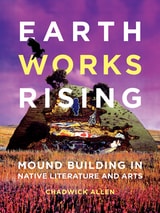
Earthworks Rising
Mound Building in Native Literature and ArtsChadwick Allen
University of Minnesota Press, 2022
A necessary reexamination of Indigenous mounds, demonstrating their sustained vitality and vibrant futurity by centering Native voices
Typically represented as unsolved mysteries or ruins of a tragic past, Indigenous mounds have long been marginalized and misunderstood. In Earthworks Rising, Chadwick Allen issues a compelling corrective, revealing a countertradition based in Indigenous worldviews. Alongside twentieth- and twenty-first-century Native writers, artists, and intellectuals, Allen rebuts colonial discourses and examines the multiple ways these remarkable structures continue to hold ancient knowledge and make new meaning—in the present and for the future.
Earthworks Rising is organized to align with key functional categories for mounds (effigies, platforms, and burials) and with key concepts within mound-building cultures. From the Great Serpent Mound in Ohio to the mound metropolis Cahokia in Illinois to the generative Mother Mound in Mississippi, Allen takes readers deep into some of the most renowned earthworks. He draws on the insights of poets Allison Hedge Coke and Margaret Noodin, novelists LeAnne Howe and Phillip Carroll Morgan, and artists Monique Mojica and Alyssa Hinton, weaving in a personal history of earthwork encounters and productive conversation with fellow researchers.
Spanning literature, art, performance, and built environments, Earthworks Rising engages Indigenous mounds as forms of “land-writing” and as conduits for connections across worlds and generations. Clear and compelling, it provokes greater understanding of the remarkable accomplishments of North America’s diverse mound-building cultures over thousands of years and brings attention to new earthworks rising in the twenty-first century.
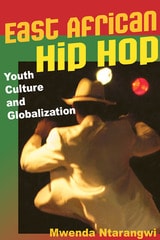
East African Hip Hop
Youth Culture and GlobalizationMwenda Ntarangwi
University of Illinois Press, 2008
In this book, Mwenda Ntarangwi analyzes how young hip hop artists in the East African nations of Kenya, Uganda, and Tanzania showcase the opportunities and challenges brought by the globalization of music. Combining local popular music traditions with American and Jamaican styles of rap, East African hip hop culture reflects the difficulty of creating commercially accessible music while honoring tradition and East African culture. Ntarangwi pays special attention to growing cross-border exchanges within East African hip hop, collaborations in recording music and performances, and themes and messages that transcend local geographic boundaries.
In using hip hop as a medium for discussing changes in East African political, economic, and social conditions, artists vocalize their concerns about economic policies, African identity, and political establishments, as well as important issues of health (such as HIV/AIDS), education, and poverty. Through three years of fieldwork, rich interviews with artists, and analysis of live performances and more than 140 songs, Ntarangwi finds that hip hop provides youth an important platform for social commentary and cultural critique and calls attention to the liberating youth music culture in East Africa.
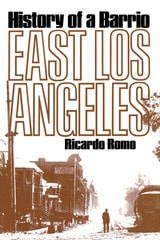
East Los Angeles
History of a BarrioBy Ricardo Romo
University of Texas Press, 1983
This is the story of the largest Mexican-American community in the United States, the city within a city known as "East Los Angeles." How did this barrio of over one million men and women—occupying an area greater than Manhattan or Washington D.C.—come to be?
Although promoted early in this century as a workers' paradise, Los Angeles fared poorly in attracting European immigrants and American blue-collar workers. Wages were low, and these workers were understandably reluctant to come to a city which was also troubled by labor strife. Mexicans made up the difference, arriving in the city in massive numbers.
Who these Mexicans were and the conditions that caused them to leave their own country are revealed in East Los Angeles. The author examines how they adjusted to life in one of the fastest-growing cities in the United States, how they fared in this country's labor market, and the problems of segregation and prejudice they confronted.
East is West and West is East
Gender, Culture, and Interwar Encounters between Asia and AmericaKaren Kuo
Temple University Press, 2012
Between 1919-1938, contact between Asia and America forced a reassessment of the normative boundaries of race, sex, gender, class, home, and nation. Karen Kuo’s provocative East Is West and West Is East looks closely at these global shifts to modernity.
In her analysis of five forgotten texts—the 1930 film East Is West, Frank Capra’s 1937 version of Lost Horizon and its 1973 remake, Younghill Kang's novel East Goes West, and Baroness Ishimoto’s memoir/manifesto, Facing Both Ways—Kuo elucidates how “Asia” played a role in shaping American gender and racial identities and how Asian authors understood modern America and its social, political, and cultural influence on Asia.
Kuo asserts that while notions of white and Asian racial difference remain salient, sexual and gendered constructions of Asians and whites were at times about similarity and intersections as much as they were about establishing differences.
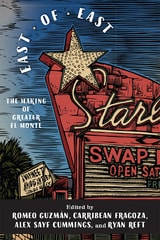
East of East
The Making of Greater El MonteRomeo Guzmán
Rutgers University Press, 2020
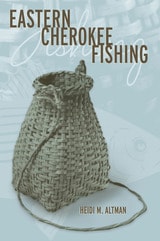
Eastern Cherokee Fishing
Heidi M. Altman
University of Alabama Press, 2006
Interviewees include a great range of informants, from native speakers of Cherokee with extensive knowledge of traditional fishing methods to Euro-American English speakers whose families have lived in North Carolina for many generations and know about contemporary fishing practices in the area. The topic of fishing thus offers perspective on the Cherokee language, the vigor of the Cherokee system of native knowledge, and the history of the relationship between Cherokee people and the local environment. Heidi Altman also examines the role of fishing as a tourist enterprise and how fishing practices affect tribal waters.

Easy Living
The Rise of the Home OfficeElizabeth A Patton
Rutgers University Press, 2020

Easy
A Hard Look at Soft RockTimothy Gray
University of Iowa Press, 2026