Results by title
28164 books match the query 'History' and 842 start with e
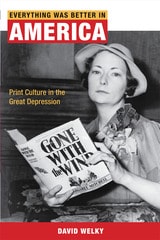
Everything Was Better in America
Print Culture in the Great DepressionDavid Welky
University of Illinois Press, 2007
Everywhere and Nowhere
Anonymity and Mediation in Eighteenth-Century BritainMark Vareschi
University of Minnesota Press, 2018
A fascinating analysis of anonymous publication centuries before the digital age
Everywhere and Nowhere considers the ubiquity of anonymity and mediation in the publication and circulation of eighteenth-century British literature—before the Romantic creation of the “author”—and what this means for literary criticism. Anonymous authorship was typical of the time, yet literary scholars and historians have been generally unable to account for it as anything more than a footnote or curiosity.
Mark Vareschi shows the entangled relationship between mediation and anonymity, revealing the nonhuman agency of the printed text. Drawing richly on quantitative analysis and robust archival work, Vareschi brings together philosophy, literary theory, and media theory in a trenchant analysis, uncovering a history of textual engagement and interpretation that does not hinge on the known authorial subject.
In discussing anonymous poetry, drama, and the novel along with anonymously published writers such as Daniel Defoe, Frances Burney, and Walter Scott, he unveils a theory of mediation that renews broader questions about agency and intention. Vareschi argues that textual intentionality is a property of nonhuman, material media rather than human subjects alone, allowing the anonymous literature of the eighteenth century to speak to contemporary questions of meaning in the philosophy of language. Vareschi closes by exploring dubious claims about the death of anonymity and the reexplosion of anonymity with the coming of the digital. Ultimately, Everywhere and Nowhere reveals the long history of print anonymity so central to the risks and benefits of the digital culture.
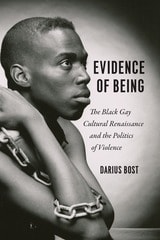
Evidence of Being
The Black Gay Cultural Renaissance and the Politics of ViolenceDarius Bost
University of Chicago Press, 2018

Evil Arabs in American Popular Film
Orientalist FearBy Tim Jon Semmerling
University of Texas Press, 2006
2006 — Runner-up, Arab American National Museum Book Awards
The "evil" Arab has become a stock character in American popular films, playing the villain opposite American "good guys" who fight for "the American way." It's not surprising that this stereotype has entered American popular culture, given the real-world conflicts between the United States and Middle Eastern countries, particularly since the oil embargo of the 1970s and continuing through the Iranian hostage crisis, the first and second Gulf Wars, and the ongoing struggle against al-Qaeda. But when one compares the "evil" Arab of popular culture to real Arab people, the stereotype falls apart. In this thought-provoking book, Tim Jon Semmerling further dismantles the "evil" Arab stereotype by showing how American cultural fears, which stem from challenges to our national ideologies and myths, have driven us to create the "evil" Arab Other.
Semmerling bases his argument on close readings of six films (The Exorcist, Rollover, Black Sunday, Three Kings, Rules of Engagement, and South Park: Bigger, Longer & Uncut), as well as CNN's 9/11 documentary America Remembers. Looking at their narrative structures and visual tropes, he analyzes how the films portray Arabs as threatening to subvert American "truths" and mythic tales—and how the insecurity this engenders causes Americans to project evil character and intentions on Arab peoples, landscapes, and cultures. Semmerling also demonstrates how the "evil" Arab narrative has even crept into the documentary coverage of 9/11. Overall, Semmerling's probing analysis of America's Orientalist fears exposes how the "evil" Arab of American popular film is actually an illusion that reveals more about Americans than Arabs.
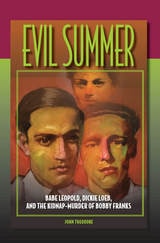
Evil Summer
Babe Leopold, Dickie Loeb, and the Kidnap-Murder of Bobby FranksJohn Theodore
Southern Illinois University Press, 2007
In 1924, fourteen-year-old Bobby Franks was abducted while walking home from school, killed by a chisel blow to his head, and later found stuffed in a culvert in a marshy wasteland at the Illinois-Indiana state line. Acid had been poured over his naked body. Evil Summer examines the shocking kidnapping and murder of Franks by two University of Chicago students, Nathan “Babe” Leopold and Richard “Dickie” Loeb, both from families of privilege.
In this new examination of the crime, author John Theodore takes readers into the minds of the two criminals as he focuses on three months in 1924. Theodore covers the killing, the confessions, the defense, and the sentencing surrounding the horrific murder, placing the killers’ actions and Clarence Darrow’s historic defense into the context of 1920s Chicago.
Theodore deftly investigates the psychological dimensions of the crime, revealing the murderers’ fantasies, relationships, sexuality, and motives. The author examines the killers’ past, outlining Loeb’s obsession with detective fiction and crime and his editorial on random killing—written at age nine—and Leopold’s nightly master-slave fantasies and fascination with Nietzsche.
Evil Summer, which includes twenty-three illustrations, meticulously traces the murder from inception to confession, including such details as the special-delivery ransom letter sent to Jacob Franks and the discovery of Leopold’s horn-rimmed eyeglasses lying on a railroad embankment near Bobby’s dead body. Theodore re-creates such scenes as the convergence of hundreds of people in front of the Franks home, Bobby’s body lying in a small white casket in the library, and Loeb being voyeuristically drawn to the home while Bobby’s classmates carry the casket to the hearse.
Worldwide press coverage reflected the public fascination with the case in what was then called “the trial of the century.” The story became a media circus: Chicago’s six daily newspapers battled vigorously for readers, two Daily News cub reporters became part of the story, and the Chicago Tribune carried a voting ballot asking readers whether radio station WGN should broadcast the courtroom spectacle. The changing drama was delivered to Chicagoans every morning and evening, and the public feasted on every press run.
More than a crime story, Evil Summer illuminates the dark side of American life in the 1920s, including the excesses of privileged youth, the troubled childhoods, the random victimization, the anti-Semitism, and the sexuality.

Evil by Design
The Creation and Marketing of the Femme FataleElizabeth K. Menon
University of Illinois Press, 2000
Evil by Design documents the search for the origins of the iconic “femme fatale.” Depicted as a dangerous, depraved, and deadly woman, this image was found frequently in Salon paintings from 1885 to 1910.
Elizabeth K. Menon’s study is the first to use popular sources to make the critical link between the femme fatale and the rise of feminism. In addition to the Salon paintings, Menon sifts through a variety of popular sources, including French illustrated journals, literature, posters, and decorative arts. Over 120 images depict women with serpents, evil flowers, and even miniature men having their hearts cooked. She argues that the evolution of the femme fatale, with both literary and visual links to the biblical Eve figure, came as a response to increasing feminism and the desire by men to halt its spread.

Evo Morales and the Movimiento Al Socialismo in Bolivia
The First Term in Context, 2005-2009Edited by Adrian Pearce
University of London Press, 2011
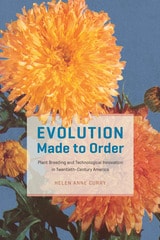
Evolution Made to Order
Plant Breeding and Technological Innovation in Twentieth-Century AmericaHelen Anne Curry
University of Chicago Press, 2016
In Evolution Made to Order, Helen Anne Curry traces the history of America’s pursuit of tools that could intervene in evolution. An immersive journey through the scientific and social worlds of midcentury genetics and plant breeding and a compelling exploration of American cultures of innovation, Evolution Made to Order provides vital historical context for current worldwide ethical and policy debates over genetic engineering.
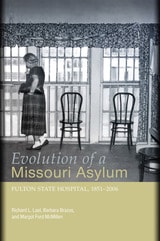
Evolution of a Missouri Asylum
Fulton State Hospital, 1851-2006Richard L. Lael, Barbara Brazos, and Margot Ford McMillen
University of Missouri Press, 2007
This institutional history of the hospital traces the debates surrounding its creation (as the State Lunatic Asylum) in a time when mental illness was barely understood. Although the Fulton hospital was initially conceived as a treatment facility, it quickly transformed into a primarily custodial institution. It existed as a self-sufficient establishment until the mid-twentieth century, dependent on patient labor and even producing its own food. But for the most socially disadvantaged and for the severely delusional, life at Fulton was anything but therapeutic.
The book describes not only the lofty goals of professionals dedicated to treating the mentally ill but also an institution once clouded by overcrowding, financial mismanagement, political cronyism, and wrongful confinement. It considers segregation within the hospital, where the first black doctor was hired in 1960 and where racism nevertheless continued to flourish, and it describes how, even after the 1921 Eleemosynary Act, the patronage system continued to plague Fulton for two more decades.
The authors reveal changing attitudes toward new treatments in the mid-twentieth century as psychotherapy and drugs became common, and decisions at Fulton regarding patient care are described within the context of progress in Europe and the eastern United States. The book addresses the complexities facing the physician-superintendents who supervised both medical therapies and administrative matters, depicting ongoing tension between hospital finances and state support and showing the difficulties state institutions faced in a “low tax/low public service” environment.
As Fulton State Hospital enters the twenty-first century, clients have become active in the development of institutional policies—a far cry from the warehousing of patients a hundred years ago. In tracing these seismic shifts in mental health care, this book offers an eye-opening exploration of how one state has sought to care for its citizens.
Evolutionary Restraints
The Contentious History of Group SelectionMark E. Borrello
University of Chicago Press, 2010
Evolutionary Rhetoric
Sex, Science, and Free Love in Nineteenth-Century FeminismWendy Hayden
Southern Illinois University Press, 2013
In Evolutionary Rhetoric, scholar Wendy Hayden provides a comprehensive examination of the relationship between scientific and feminist rhetorics in free-love feminism, studying the movement from its inception in the 1850s to its dark turn toward eugenics in the early 1900s. Hayden organizes her provocative study by scientific discipline—evolution, physiology, bacteriology, embryology, and heredity. Each chapter explores how free-love feminists adopted the evidence of that discipline in their arguments for increased sex education, women’s sexual rights, reproductive freedom, and the abolition of a marriage system that repressed the rights and the sexuality of women.
Hayden takes our conventional understanding of the relationship between nineteenth-century feminism and science and expands it. The author provides examples of the powerful words of free-love feminists to show exactly how these exceptional women used science as a rhetorical platform to promote feminist, and often radical, social reforms.
Considering why the free-love movement has not yet been studied, Hayden also discusses how the recovery of this movement may impact larger goals in the recovery of women’s rhetoric. This important and timely study of a long-forgotten movement adds to our understanding of the complexities of the history of feminism.
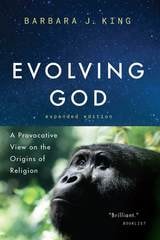
Evolving God
A Provocative View on the Origins of Religion, Expanded EditionBarbara J. King
University of Chicago Press, 2017
Religion has been a central part of human experience since at least the dawn of recorded history. The gods change, as do the rituals, but the underlying desire remains—a desire to belong to something larger, greater, most lasting than our mortal, finite selves.
But where did that desire come from? Can we explain its emergence through evolution? Yes, says biological anthropologist Barbara J. King—and doing so not only helps us to understand the religious imagination, but also reveals fascinating links to the lives and minds of our primate cousins. Evolving God draws on King’s own fieldwork among primates in Africa and paleoanthropology of our extinct ancestors to offer a new way of thinking about the origins of religion, one that situates it in a deep need for emotional connection with others, a need we share with apes and monkeys. Though her thesis is provocative, and she’s not above thoughtful speculation, King’s argument is strongly rooted in close observation and analysis. She traces an evolutionary path that connects us to other primates, who, like us, display empathy, make meanings through interaction, create social rules, and display imagination—the basic building blocks of the religious imagination. With fresh insights, she responds to recent suggestions that chimpanzees are spiritual—or even religious—beings, and that our ancient humanlike cousins carefully disposed of their dead well before the time of Neandertals.
King writes with a scientist’s appreciation for evidence and argument, leavened with a deep empathy and admiration for the powerful desire to belong, a desire that not only brings us together with other humans, but with our closest animal relations as well.
Evolving Images
Jewish Latin American CinemaEdited by Nora Glickman and Ariana Huberman
University of Texas Press, 2017
Jews have always played an important role in the generation of culture in Latin America, despite their relatively small numbers in the overall population. In the early days of cinema, they served as directors, producers, screenwriters, composers, and broadcasters. As Latin American societies became more religiously open in the later twentieth century, Jewish characters and themes began appearing in Latin American films and eventually achieved full inclusion. Landmark films by Jewish directors in Argentina, Mexico, and Brazil, which are home to the largest and most influential Jewish communities in Latin America, have enjoyed critical and popular acclaim.
Evolving Images is the first volume devoted to Jewish Latin American cinema, with fifteen critical essays by leading scholars from Latin America, the United States, Europe, and Israel. The contributors address transnational and transcultural issues of Jewish life in Latin America, such as assimilation, integration, identity, and other aspects of life in the Diaspora. Their discussions of films with Jewish themes and characters show the rich diversity of Jewish cultures in Latin America, as well as how Jews, both real and fictional, interact among themselves and with other groups, raising the question of how much their ethnicity may be adulterated when adopting a combined identity as Jewish and Latin American. The book closes with a groundbreaking section on the affinities between Jewish themes in Hollywood and Latin American films, as well as a comprehensive filmography.
Ex Voto
Votive Giving Across CulturesEdited by Ittai Weinryb
Bard Graduate Center, 2015
The contributors to this comparative study examine ex votos across a range of locations and time periods, including the classical Mediterranean world, medieval Europe, the period of the Catholic Reform, and on to Mexico, Shinto and Buddhist Japan, and Muslim Iran. Voluminous and diverse, Ex Voto will appeal in a wide range of fields, including history, religion, and anthropology.
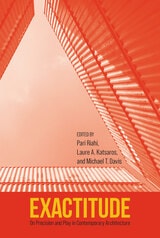
Exactitude
On Precision and Play in Contemporary ArchitectureEdited by Pari Riahi, Laure Katsaros, and Michael T. Davis
University of Massachusetts Press, 2022
Precision is necessary in the field of architecture, and new technologies have increased demands for accuracy, particularly when the smallest errors can have outsized consequences. However, the importance of precision, or exactitude, has not received the consideration it merits. While themes of sustainability, performance, and formal innovation have been at the forefront of architectural scholarship for the past twenty years, this book moves beyond these concerns to explore the theoretical and practical demands exactitude makes on architecture as a field.
The eleven essays collected here investigate the possibilities and shortcomings of exactitude and delve into current debates about the state of contemporary architecture as both a technological craft and artistic creation. Featuring new work by leading theorists, historians, editors, architects, and scholars, this volume brings theory and practice into insightful and productive conversations. In addition to the editors, contributors include Mark Wigley, Alejandro Zaera-Polo, Eric Höweler, Christopher Benfey, Sunil Bald, Ada Tolla and Giuseppe Lignano with Thomas de Monchaux, Alicia Imperiale, Francesca Hughes, Teresa Stoppani, and Cynthia Davidson.
Excavating Asian History
Interdisciplinary Studies in Archaeology and HistoryNorman Yoffee
University of Arizona Press, 2006
Excavating Asian History contains case studies and theoretical articles that show how archaeologists have been investigating historical, social, and economic organizations and that explore the relationship between history and archaeology in the study of pre-modern Asia. These contributions consider biases in both historical and archaeological data that have occasioned rival claims to knowledge in the two disciplines. Ranging widely across the region from the Levant to China and from the third millennium BC to the second millennium AD, they demonstrate that archaeological and historical studies can complement each other and should be used in tandem.
The contributors are leading historians and archaeologists of Asia who present data, issues, and debates revolving around the most recent research on the ancient Near East, early Islam, India, China, and Southeast Asian states. Their chapters illustrate the benefits of interdisciplinary investigations and show in particular how archaeology is changing our understanding of history. Commentary chapters by Miriam Stark and Philip Kohl add new perspectives to the findings.
By showing the evolving relationship between those who study archaeological material and those who investigate textual data, Excavating Asian History offers practical demonstrations of how research has been and must continue to be structured.
Excavating the Memory Palace
Arts of Visualization from the Agora to the ComputerSeth Long
University of Chicago Press, 2020
In Excavating the Memory Palace, Seth David Long mines the history of Europe’s arts of memory to find the origins of today’s data visualizations, unearthing how ancient constructions of cognitive pathways paved the way for modern technological interfaces. Looking to techniques like the memory palace, he finds the ways that information has been tied to sensory and visual experience, turning raw data into lucid knowledge. From the icons of smart phone screens to massive network graphs, Long shows us the ancestry of the cyberscape and unveils the history of memory as a creative act.
Excavations at Cerro Tilcajete
A Monte Albán II Administrative Center in the Valley of OaxacaChristina Elson
University of Michigan Press, 2007
Excavations at Quachilco
A Report on the 1977 Season of the Palo Blanco Project in the Tehuacan ValleyRobert D. Drennan
University of Michigan Press, 1978
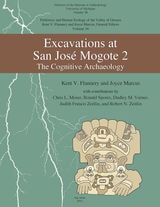
Excavations at San José Mogote 2
The Cognitive ArchaeologyKent V. Flannery and Joyce Marcus with contributions by Chris L. Moser, Ronald Spores, Dudley M. Varner, Judith Francis Zeitlin, and Robert N. Zeitlin
University of Michigan Press, 2005

Excavations at Santo Domingo Tomaltepec
Evolution of a Formative Community in the Valley of Oaxaca, MexicoMichael E. Whalon
University of Michigan Press, 1981
Excavations at Snaketown
Material CultureHarold S. Gladwin, Emil W. Haury, E. B. Sayles, and Nora Gladwin
University of Arizona Press, 1965
"The reprint will come as a blessing to many archaeologists who have sought in vain to obtain a copy of the original volume. It now stands as a body of data easily accessible to all workers, and we look forward to a new phase of synthesis of Hohokam archaeology."—American Antiquity

Excavations at Tel Nebi Mend, Syria Volume I
Peter J. Parr
Council for British Research in the Levant, 2015
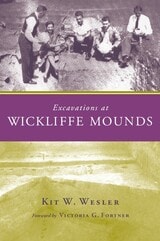
Excavations at Wickliffe Mounds
Kit W. Wesler, with a foreword by Victoria G. Fortner
University of Alabama Press, 2001
Wesler provides an impressive and definitive compilation of more than 70 years of archaeological excavations at one of the most important
archaeological sites in Kentucky.
The Wickliffe Mounds site is located on a bluff overlooking the Mississippi River in Ballard County, Kentucky, about three miles south of the mouth of the Ohio River. Around A.D. 1100, Mississippian people--farmers and traders with a culture closely related to the historic cultures of the Southeast (Chickasaw, Choctaw, Creek, and others)—created a settlement there on which they lived for approximately 250 years before moving on.
In 1930 road construction cut a channel through the site, revealing archaeological deposits and bringing the area to the attention of Fain King, a local lumberman and entrepreneur. King bought the site in hopes of turning it into an attraction for the education and entertainment of the public, and not incidentally for his own profit. For more than 50 years the area was subjected to excavations ranging from looting to professional research efforts. In 1983, the site was finally turned over to Murray State University to be developed into an academic facility dedicated to research, student training, public education, and preservation of the site and its collections. Fortunately, the Wickliffe collections include all the early excavation records as well as more than 85,000 artifacts, 90% of which had been catalogued. Between 1984 and 1996 excavations were conducted specifically to affirm questionable data and/or fill in gaps in the Wickliffe archaeological record.
In this volume, Wesler and his colleagues have compiled data from almost seven decades of excavations at Wickliffe Mounds, providing the first comprehensive study of this important site. The paperback version of the book is accompanied by a CD-ROM that contains contributions from a wide range of archaeological specialists and includes archaeological data, site maps, database files, plats of excavations, artifact descriptions, and photographs, compiling in one place the entire archaeological record for this very important eastern North American site.
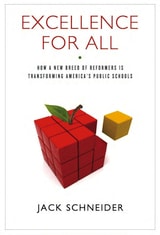
Excellence for All
How a New Breed of Reformers Is Transforming America's Public SchoolsJack Schneider
Vanderbilt University Press, 2011
"Excellence for all" might, at first glance, appear to be nothing more than a rhetorical flourish. Who, after all, would oppose the idea of a great education for every student? Yet it is hardly a throwaway phrase. Rather, it represents a surprising fusion of educational policy approaches that had been in tense opposition throughout the twentieth centurythose on the right favoring social efficiency, and those on the left supporting social justice.
This book seeks to understand why the "excellence for all" vision took hold at the time it did, unpacks the particular beliefs and assumptions embedded in it, and details the often informal coalition building that produced this period of consensus. Examining the nation's largest urban school districts (Los Angeles, Chicago, and New York), the author details three major reform efforts in chapters titled "The Right Space: The Small Schools Movement"; "The Right Teachers: Teach for America"; and "The Right Curriculum: Expanding Advanced Placement."
Excellent Things in Women
A Memoir of Postcolonial PakistanSara Suleri Goodyear
University of Chicago Press, 1989
Sometimes, only the most heartbreaking memories possess the capacity—in their elegiac immediacy—to take our breath away. With Excellent Things in Women, Sara Suleri offers the reader a delicately wrought memoir of life in postcolonial Pakistan. Suleri intertwines the violent history of Pakistan's independence with her own intimate experiences—relating the tumult of growing up female during a time of fierce change in the Middle East in the 1960s and ’70s. In the two selections presented here, “Excellent Things in Women” and “Meatless Days,” we watch as Suleri re-encounters the relationships that inform her voyage from adolescence to womanhood—with her Welsh mother; her Pakistani father, prominent political journalist Z. A. Suleri; and her tenacious grandmother, Dadi, along with her five siblings—as she comes to terms with the difficulties of growing up and her own complicated passage to the West.
Exceptional Violence
Embodied Citizenship in Transnational JamaicaDeborah A. Thomas
Duke University Press, 2011
Exceptionally Queer
Mormon Peculiarity and U.S. NationalismK. Mohrman
University of Minnesota Press, 2022
How perceptions of Mormonism from 1830 to the present reveal the exclusionary, racialized practices of the U.S. nation-state
Are Mormons really so weird? Are they potentially queer? These questions occupy the heart of this powerful rethinking of Mormonism and its place in U.S. history, culture, and politics. K. Mohrman argues that Mormon peculiarity is not inherent to the Latter-day Saint faith tradition, as is often assumed, but rather a potent expression of U.S. exceptionalism.
Exceptionally Queer scrutinizes the history of Mormonism starting with its inception in the early 1830s and continuing to the present. Drawing on a wide range of historical texts and moments—from nineteenth-century battles over Mormon plural marriage; to the LDS Church’s emphases on “individual responsibility” and “family values”; to mainstream media’s coverage of the LDS Church’s racist exclusion of Black priesthood holders, its Native assimilation programs, and vehement opposition to the Equal Rights Amendment; and to much more recent legal and cultural battles over same-sex marriage and on-screen Mormon polygamy—Exceptionally Queer evaluates how Mormonism has been used to motivate and rationalize the biased, exclusionary, and colonialist policies and practices of the U.S. nation-state.
Mohrman explains that debates over Mormonism both drew on and shaped racial discourses and, in so doing, delineated the boundaries of whiteness and national belonging, largely through the consolidation of (hetero)normative ideas of sex, marriage, family, and economy. Ultimately, the author shows how discussions of Mormonism in this country have been and continue to be central to ideas of what it means to be American.
Exchange of Ideas
The Economy of Higher Education in Early AmericaAdam R. Nelson
University of Chicago Press, 2023
Exchange of Ideas launches a breathtakingly ambitious new economic history of American higher education. In this volume, Adam R. Nelson focuses on the early republic, explaining how knowledge itself became a commodity, as useful ideas became salable goods and American colleges were drawn into transatlantic commercial relations. American scholars might once have imagined that higher education could sit beyond the sphere of market activity—that intellectual exchange could transcend vulgar consumerism—but already by the end of the eighteenth century, they saw how ideas could be factored into the nation’s balance of trade. Moreover, they concluded that it was the function of colleges to oversee the complex process whereby knowledge could be priced and purchased. The history of capitalism and the history of higher education, Nelson reveals, are intimately intertwined—which raises a host of important and strikingly urgent questions. How do we understand knowledge and education as commercial goods? Who should pay for them? And, fundamentally, what is the optimal system of higher education in a capitalist democracy?
Excluded Ancestors, Inventible Traditions
Essays Toward a More Inclusive History of AnthropologyEdited by Richard Handler
University of Wisconsin Press, 2015
Excluded Ancestors, Inventible Traditions focuses on little-known scholars who contributed to the anthropological work of their time, such as John William Jackson, the members of the Hampton Folk-Lore Society, Charlotte Gower Chapman, and Lucie Varga. In addition, essays on Marius Barbeau and Sol Tax present figures who were centrally located in the anthropologies of their day. A final essay analyzes notions of "the canon" and considers the place of a classic ethnographic area, highland New Guinea, in anthropological canon-formation.
Exclusionary Violence
Antisemitic Riots in Modern German HistoryChristhard Hoffmann, Werner Bergmann, and Helmut Walser Smith, Editors
University of Michigan Press, 2002

Exclusive Revolutionaries
Liberal Politics, Social Experience, and National Identity in the Austrian Empire, 1848-1914Pieter M. Judson
University of Michigan Press, 1996
In the mid-1800s, Judson argues, German liberal activists built an effective political movement whose ideology was rooted in its members' social experience in voluntary associations. The liberals were committed to the creation of a market economy based on personal property rights, to a society based on the values of individual self-improvement and personal respectability, and to a fundamental distinction between active and passive citizenship. They were determined to achieve a harmonious community of free peoples, in which personal enlightenment would bring an end to the divisive influence of localism, ethnicity, religion, and feudal social hierarchy.
Yet after 1880, as newer, more radical mass political movements threatened their political fortunes, the liberals forged a German nationalist politics based increasingly on ethnic identity. Their emphasis on national identity became a way for former liberals to hold together an increasingly diverse coalition of German speakers who had little in common outside of their shared language. Only "Germanness" bridged the dangerous gulf between social classes. This nationalism helped the liberals to compete for power in the multinational, multicultural Austrian Empire down to 1914, but it left a legacy of nationalist extremism and tolerance of anti-Semitism that continues to influence political cultures in the former lands of the Habsburg Monarchy today.
Excursions
Michael Jackson
Duke University Press, 2007
Focusing on the struggles and quandaries of everyday life, Jackson touches on matters at the core of anthropology—the state, violence, exile and belonging, labor, indigenous rights, narrative, power, home, and history. He is particularly interested in the gaps that characterize human existence, such as those between insularity and openness, between the things over which we have some control and the things over which we have none, and between ourselves and others as we talk past each other, missing each others’ meanings. Urging a recognition of the limits to which human existence can be explained in terms of cause and effect, he suggests that knowing why things happen may ultimately be less important than trying to understand how people endure in the face of hardship.
Executing Democracy
Volume One: Capital Punishment & the Making of America, 1683-1807Stephen J. Hartnett
Michigan State University Press, 2010
Executing Democracy: Capital Punishment & the Making of America, 1683-1807 is the first volume of a rhetorical history of public debates about crime, violence, and capital punishment in America. This examination begins in 1683, when William Penn first struggled to govern the rowdy indentured servants of Philadelphia, and continues up until 1807, when the Federalists sought to impose law-and-order upon the New Republic.
This volume offers a lively historical overview of how crime, violence, and capital punishment influenced the settling of the New World, the American Revolution, and the frantic post-war political scrambling to establish norms that would govern the new republic.
By presenting a macro-historical overview, and by filling the arguments with voices from different political camps and communicative genres, Hartnett provides readers with fresh perspectives for understanding the centrality of public debates about capital punishment to the history of American democracy.
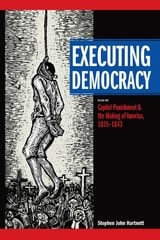
Executing Democracy
Volume Two: Capital Punishment and the Making of America, 1835-1843Stephen Hartnett
Michigan State University Press, 2024
This eye-opening and well-researched companion to the first volume of Executing Democracy enters the death-penalty discussion during the debates of 1835 and 1843, when pro-death penalty Calvinist minister George Barrell Cheever faced off against abolitionist magazine editor John O’Sullivan. In contrast to the macro-historical overview presented in volume 1, volume 2 provides micro-historical case studies, using these debates as springboards into the discussion of the death penalty in America at large. Incorporating a wide range of sources, including political poems, newspaper editorials, and warring manifestos, this second volume highlights a variety of perspectives, thus demonstrating the centrality of public debates about crime, violence, and punishment to the history of American democracy. Hartnett’s insightful assessment bears witness to a complex national discussion about the political, metaphysical, and cultural significance of the death penalty.
Executing Freedom
The Cultural Life of Capital Punishment in the United StatesDaniel LaChance
University of Chicago Press, 2016
That question is at the heart of Executing Freedom, a powerful, wide-ranging examination of the place of the death penalty in American culture and how it has changed over the years. Drawing on an array of sources, including congressional hearings and campaign speeches, true crime classics like In Cold Blood, and films like Dead Man Walking, Daniel LaChance shows how attitudes toward the death penalty have reflected broader shifts in Americans’ thinking about the relationship between the individual and the state. Emerging from the height of 1970s disillusion, the simplicity and moral power of the death penalty became a potent symbol for many Americans of what government could do—and LaChance argues, fascinatingly, that it’s the very failure of capital punishment to live up to that mythology that could prove its eventual undoing in the United States.
Exegetical Epistles
Thomas P. Jerome
Catholic University of America Press, 2023

Exegetical Epistles, Volume 2
Thomas P. St. Jerome
Catholic University of America Press, 2024
Exemplary Tales of Love and Tales of Disillusion
María de Zayas y Sotomayor
University of Chicago Press, 2009
Exemplary Violence
Rewriting History in Colonial ColombiaAlberto Villate-Isaza
Bucknell University Press, 2021
Exhibiting Atrocity
Memorial Museums and the Politics of Past ViolenceSodaro, Amy
Rutgers University Press, 2018
Today, nearly any group or nation with violence in its past has constructed or is planning a memorial museum as a mechanism for confronting past trauma, often together with truth commissions, trials, and/or other symbolic or material reparations. Exhibiting Atrocity documents the emergence of the memorial museum as a new cultural form of commemoration, and analyzes its use in efforts to come to terms with past political violence and to promote democracy and human rights.
Through a global comparative approach, Amy Sodaro uses in-depth case studies of five exemplary memorial museums that commemorate a range of violent pasts and allow for a chronological and global examination of the trend: the U.S. Holocaust Memorial Museum in Washington, DC; the House of Terror in Budapest, Hungary; the Kigali Genocide Memorial Centre in Rwanda; the Museum of Memory and Human Rights in Santiago, Chile; and the National September 11 Memorial Museum in New York. Together, these case studies illustrate the historical emergence and global spread of the memorial museum and show how this new cultural form of commemoration is intended to be used in contemporary societies around the world.
Download open access ebook.
Exhibiting Blackness
African Americans and the American Art MuseumBridget R. Cooks
University of Massachusetts Press, 2011
In Exhibiting Blackness, art historian Bridget R. Cooks analyzes the curatorial strategies, challenges, and critical receptions of the most significant museum exhibitions of African American art. Tracing two dominant methodologies used to exhibit art by African Americans—an ethnographic approach that focuses more on artists than their art, and a recovery narrative aimed at correcting past omissions—Cooks exposes the issues involved in exhibiting cultural difference that continue to challenge art history, historiography, and American museum exhibition practices. By further examining the unequal and often contested relationship between African American artists, curators, and visitors, she provides insight into the complex role of art museums and their accountability to the cultures they represent.

Exhibiting Electricity
K.G. Beauchamp
The Institution of Engineering and Technology, 1997
Exhibiting Evangelicalism
Commemoration and Religion’s Presence of the PastDevin C. Manzullo-Thomas
University of Massachusetts Press, 2022
Religion is a subject often overlooked or ignored by public historians. Whether they are worried about inadvertent proselytizing or fearful of contributing to America’s ongoing culture wars, many heritage professionals steer clear of discussing religion’s formative role in the past when they build collections, mount exhibits, and develop educational programming. Yet religious communities have long been active contributors to the nation’s commemorative landscape.
Exhibiting Evangelicalism provides the first account of the growth and development of historical museums created by white evangelical Christians in the United States over the twentieth and twenty-first centuries. Exploring the histories of the Museum of the Bible, the Billy Graham Center Museum, the Billy Sunday Home, and Park Street Church, Devin C. Manzullo-Thomas illustrates how these sites enabled religious leaders to develop a coherent identity for their fractious religious movement and to claim the centrality of evangelicalism to American history. In their zeal to craft a particular vision of the national past, evangelicals engaged with a variety of public history practices and techniques that made them major players in the field—including becoming early adopters of public history’s experiential turn.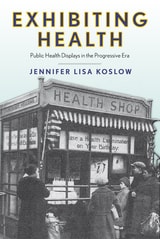
Exhibiting Health
Public Health Displays in the Progressive EraJennifer Lisa Koslow
Rutgers University Press, 2020
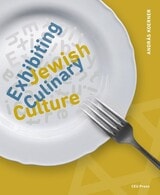
Exhibiting Jewish Culinary Culture
András Koerner
Central European University Press, 2024
András Koerner is the author of a number of critically acclaimed, award-winning CEU Press titles on the cultural history of Hungarian Jews and Jewish cuisine. This volume continues that tradition by discussing the phenomenon of exhibits on Jewish culinary culture in museums and galleries around the world.
The first part of the book provides an overview of the cultural history of "foodism" and the proliferation of Jewish museums. In addition, it examines the role of cuisine in Jewish identity. It offers an analysis of the history and recent examples of exhibitions on Jewish culinary culture, a subject that has not received scholarly attention until now.
The second part complements this by offering a detailed case study of the book’s subject. It showcases a 2022 exhibition in Budapest on the History of Hungarian Jewish Culinary Culture. András Koerner was the co-curator of the show, thus he is able to offer an insider’s account of its implementation – concept, scope, goals, audience, and design. He also openly discusses the compromises made and mistakes committed in the exhibition’s preparatory work.
This subjective account, quite different from the dry objectivity of catalogues, offers an unusual, behind-the-scenes look at how a complex exhibition like this is prepared. At the same time, the book’s appendix includes images of the display boards and some of the exhibited objects – thus it can also stand for a valuable ex-post catalogue.
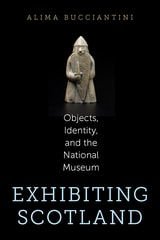
Exhibiting Scotland
Objects, Identity, and the National MuseumAlima Bucciantini
University of Massachusetts Press, 2018
In Exhibiting Scotland, Alima Bucciantini traces how these collections have helped tell the changing stories of this country for centuries and how the museum reflects the Scots' continuing negotiation of their place within modern Britain.
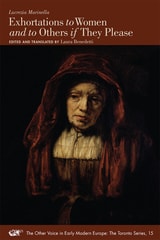
Exhortations to Women and to Others If They Please
Lucrezia Marinella
Iter Press, 2012
—Maria Galli Stampino
Associate Professor of French and Italian
University of Miami
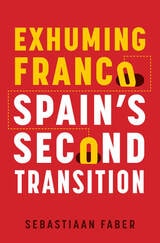
Exhuming Franco
Spain's Second Transition, Second EditionSebastiaan Faber
Vanderbilt University Press, 2023
This new edition, with additional interviews and a new introduction, illuminates the dangers of the rise of right-wing nationalist revisionism by using Spain as a case study for how nations face, or don't face, difficult questions about their past.
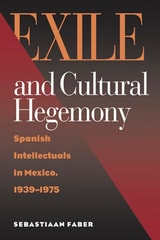
Exile and Cultural Hegemony
Spanish Intellectuals in Mexico, 1939-1975Sebastiaan Faber
Vanderbilt University Press, 2002
The first study of its kind to place the exiles' ideological evolution in a broad historical context, Exile and Cultural Hegemony takes into account developments in both Spanish and Mexican politics from the early 1930s through the 1970s. Faber pays particular attention to the intellectuals' persistent nationalism and misplaced illusions of pan-Hispanist grandeur, which included awkward and ironic overlaps with the rhetoric employed by their enemies on the Francoist right. This embrace of nationalism, together with the intellectuals' dependence on the increasingly authoritarian Mexican regime and the international climate of the Cold War, eventually caused them to abandon the Gramscian ideal of the intellectual as political activist in favor of a more liberal, apolitical stance preferred by, among others, the Spanish philosopher Jose Ortega y Gasset.
With its comprehensive approach to topics integral to Spanish culture, both students of and those with a general interest in twentieth-century Spanish literature, history, or culture will find Exile and Cultural Hegemony a fascinating and groundbreaking work.