Results by title
18293 books match the query 'United States' and 472 start with e
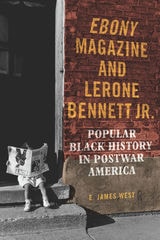
Ebony Magazine and Lerone Bennett Jr.
Popular Black History in Postwar AmericaE. James West
University of Illinois Press, 2020
E. James West's fresh and fascinating exploration of Ebony’s political, social, and historical content illuminates the intellectual role of the iconic magazine and its contribution to African American scholarship. He also uncovers a paradox. Though Ebony provided Bennett with space to promote a militant reading of black history and protest, the magazine’s status as a consumer publication helped to mediate its representation of African American identity in both past and present.
Mixing biography, cultural history, and popular memory, West restores Ebony and Bennett to their rightful place in African American intellectual, commercial, and political history.
Echo Chambers
How Partisan Communication Took Over CongressSoRelle W. Gaynor
University of Chicago Press, 2027
An incisive analysis of how congressional communication with constituents has changed and what this means for representation and polarization.
Members of Congress have a duty to talk to their constituents back home about what’s going on in Washington. But today, the average politician lacks the time, resources, and knowledge necessary to coherently explain the bills and legislative actions up for debate. Therefore, they turn to those who hold the keys to the chamber: party leaders.
Consequently, Congress is now more reliant than ever on its leaders’ partisan talking points, and constituents hear more about nationalized political battles rather than the local issues affecting their districts. Drawing on large-scale text analysis, campaign expenditures, and congressional district data, as well as in-depth interviews, Echo Chambers examines how partisan communication took over Congress, the key differences in that messaging across parties and chambers, and what these combined forces mean for US citizens today.

Eckhardt
There Once Was a Congressman from TexasBy Gary A. Keith
University of Texas Press, 2007
Runner-up, Violet Crown Award, Writer's League of Texas, 2008
Renowned for his "brilliant legislative mind" and political oratory—as well as for bicycling to Congress in a rumpled white linen suit and bow tie—U.S. Congressman Bob Eckhardt was a force to reckon with in Texas and national politics from the 1940s until 1980. A liberal Democrat who successfully championed progressive causes, from workers' rights to consumer protection to environmental preservation and energy conservation, Eckhardt won the respect of opponents as well as allies. Columnist Jack Anderson praised him as one of the most effective members of Congress, where Eckhardt was a national leader and mentor to younger congressmen such as Al Gore.
In this biography of Robert Christian Eckhardt (1913-2001), Gary A. Keith tells the story of Eckhardt's colorful life and career within the context of the changing political landscape of Texas and the rise of the New Right and the two-party state. He begins with Eckhardt's German-American family heritage and then traces his progression from labor lawyer, political organizer, and cofounder of the progressive Texas Observer magazine to Texas state legislator and U.S. congressman. Keith describes many of Eckhardt's legislative battles and victories, including the passage of the Open Beaches Act and the creation of the Big Thicket National Preserve, the struggle to limit presidential war-making ability through the War Powers Act, and the hard fight to shape President Carter's energy policy, as well as Eckhardt's work in Texas to tax the oil and gas industry.
The only thorough recounting of the life of a memorable, important, and flamboyant man, Eckhardt also recalls the last great era of progressive politics in the twentieth century and the key players who strove to make Texas and the United States a more just, inclusive society.
Eclipse of Empires
World History in Nineteenth-Century U.S. Literature and CulturePatricia Jane Roylance
University of Alabama Press, 2013
Patricia Jane Roylance’s central claim in Eclipse of Empires is that historical episodes of imperial eclipse, for example Incan Peru yielding to Spain or the Ojibway to the French, heightened the concerns of many American writers about specific intranational social problems plaguing the nation at the time—race, class, gender, religion, economics. Given the eventual dissolution of great civilizations previously plagued by these very same problems, many writers, unlike those who confidently emphasized U.S. exceptionalism, exhibited both an anxiety about the stability of American society and a consistent practice of self-scrutiny in identifying the national defects that they felt could precipitate America’s decline.
Roylance studies, among other texts, James Fenimore Cooper’s The Water-Witch (1830) and The Bravo (1831), which address the eclipse of Venice by New York City as a maritime power in the eighteenth century; William Hickling Prescott’s Conquest of Peru (1847), which responds to widespread anxiety about communist and abolitionist threats to the U.S. system of personal property by depicting Incan culture as a protocommunist society doomed to failure; and Henry Wadsworth Longfellow’s The Song of Hiawatha (1855), which resists the total eclipse of Ojibwa culture by incorporating Ojibway terms and stories into his poem and by depicting the land as permanently marked by their occupation.
Eclipse of the Assassins
The CIA, Imperial Politics, and the Slaying of Mexican Journalist Manuel BuendíaRussell H. Bartley and Sylvia Erickson Bartley
University of Wisconsin Press, 2015
Authors Russell and Sylvia Bartley shed new light on the U.S.-instigated “dirty wars” that ravaged all of Latin America in the 1960s, ’70s, and ’80s and reveal—for the first time—how Mexican officials colluded with Washington in its proxy contra war against the Sandinista government of Nicaragua. They draw together the strands of a clandestine web linking:
- the assassination of prominent Mexican journalist Manuel Buendía
- the torture and murder of U.S. Drug Enforcement Administration agent Enrique Camarena
- the Iran-Contra scandal
- a major DEA sting against key CIA-linked Bolivian, Panamanian, and Mexican drug traffickers
- CIA-orchestrated suppression of investigative journalists
- criminal collusion of successive U.S. and Mexican administrations that has resulted in the unprecedented power of drug kingpins like “El Chapo” Guzmán.
Best books for public & secondary school libraries from university presses, American Library Association

Eco Soma
Pain and Joy in Speculative Performance EncountersPetra Kuppers
University of Minnesota Press, 2022
Modeling a disability culture perspective on performance practice toward socially just futures
In Eco Soma, Petra Kuppers asks readers to be alert to their own embodied responses to art practice and to pay attention to themselves as active participants in a shared sociocultural world. Reading contemporary performance encounters and artful engagements, this book models a disability culture sensitivity to living in a shared world, oriented toward more socially just futures.
Eco soma methods mix and merge realities on the edges of lived experience and site-specific performance. Kuppers invites us to become moths, sprout gills, listen to our heart’s drum, and take starships into crip time. And fantasy is central to these engagements: feeling/sensing monsters, catastrophes, golden lines, heartbeats, injured sharks, dotted salamanders, kissing mammoths, and more. Kuppers illuminates ecopoetic disability culture perspectives, contending that disabled people and their co-conspirators make art to live in a changing world, in contact with feminist, queer, trans, racialized, and Indigenous art projects. By offering new ways to think, frame, and feel “environments,” Kuppers focuses on art-based methods of envisioning change and argues that disability can offer imaginative ways toward living well and with agency in change, unrest, and challenge.
Traditional somatics teach us how to fine-tune our introspective senses and to open up the world of our own bodies, while eco soma methods extend that attention toward the creative possibilities of the reach between self, others, and the land. Eco Soma proposes an art/life method of sensory tuning to the inside and the outside simultaneously, a method that allows for a wider opening toward ethical cohabitation with human and more-than-human others.

Ecofeminist Literary Criticism
Theory, Interpretation, PedagogyEdited by Greta Gaard and Patrick D. Murphy
University of Illinois Press, 1998
Ecofeminism is a practical movement for social change that discerns interconnections among all forms of oppression: the exploitation of nature, the oppression of women, class exploitation, racism, colonialism. Against binary divisions such as self/other, culture/nature, man/woman, humans/animals, and white/non-white, ecofeminist theory asserts that human identity is shaped by more fluid relationships and by an acknowledgment of both connection and difference.
Once considered the province of philosophy and women's studies, ecofeminism in recent years has been incorporated into a broader spectrum of academic discourse. Ecofeminist Literary Criticism assembles some of the most insightful advocates of this perspective to illuminate ecofeminism as a valuable component of literary criticism.

Ecological Politics
Greta Gaard
Temple University Press, 1998
A member of both movements, Greta Gaard bases her analysis on her personal experience as well as extensive secondary sources and interviews with key theorists, activists, and speakers across the United States. By allowing each movement's members to speak for themselves, she traces the separate origins and development of each movement, explains their connections, and reveals the light that each can cast upon the other and on the difficulties facing social action in general.
Beginning with the ecofeminists, Gaard describes the paths -- environmental causes, the feminist peace movement, the feminist spirituality movement, the animal liberation movement, and the anti-toxics movements, as well as experiences of interconnectedness -- that have led women (and a few men) to articulate an ecofeminist perspective. Tracing the movement from the 1980s to the present, she defines its present strands as liberal ecofeminism, radical ecofeminism, socialist ecofeminism, and social ecofeminism.
Gaard illustrates the development of the U.S. Greens from a national movement into a political party. She defines the various factions -- the Left Greens, the Youth Greens, and the Green Politics Network -- that influenced the movement's direction and underlay the debates during Ralph Nadar's 1996 presidential campaign. She shows how the history of these three groups can be seen as stages in the transition from a leftist and sometimes anarchist action that places the Green movement squarely within the pattern of other social movements around the world.
Despite the significant influence that ecofeminists have had in shaping the Greens as a national movement, many have chosen to withdraw from the Greens. Gaard looks at the reasons for member disaffection and draws disturbing conclusions about the compatibility between liberal feminism and cultural ecofeminism and patriarchal politics. She also presents the divisions within the Greens as ongoing battles within the new left, the radical ecology movement, and various social justice movements. She focuses on three general areas -- conflicts over philosophy, conflicts over representation, and conflicts over strategy -- to make suggestions for how to bring about the kind of social transformation envisioned by both the Greens and the ecofeminists. Arguing that the Concord Principles represent a populist form of liberal democracy that fundamentally betrays both ecofeminism and Green philosophy, she uses the 1996 Nadar campaign as a departure point to developing an ecofeminist theory of radical democracy and to speculate on future directions for Green politics and for ecofeminism. Her analysis illuminates the nature and direction of each of these important movements and the pressures and conflicts experienced by all social movements at the end of the twentieth century.

Ecologies of Harm
Rhetorics of Violence in the United StatesMegan Eatman
The Ohio State University Press, 2020
While Eatman looks to examples of violent spectacles to make her case (lynching, capital punishment, and torture in the War on Terror), it is in her analysis of more mundane responses to these forms of violence (congressional debates, court documents, visual art, and memorial performance) where the key to her argument lies—as she shows how circulating violence in these ways produces violent rhetorical ecologies that facilitate some modes of being while foreclosing others. Through this ecological approach, Ecologies of Harm offers a new understanding of the debates surrounding legacies of violence, examines how rhetoric and violence function together, and explores implications of their entanglement for antiviolence work.

Economic Analysis and Infrastructure Investment
Edited by Edward L. Glaeser and James M. Poterba
University of Chicago Press, 2021
Economic Analysis and Infrastructure Investment explores the links between infrastructure investment and economic outcomes, analyzing key economic issues in the funding and management of infrastructure projects. It includes new research on the short-run stimulus effects of infrastructure spending, develops new estimates of the stock of US infrastructure capital, and explores incentive aspects of public-private partnerships with particular attention to their allocation of risk. The volume provides a reference for researchers seeking to study infrastructure issues and for policymakers tasked with determining the appropriate level and allocation of infrastructure spending.
Economic Challenges in Higher Education
Charles T. Clotfelter, Ronald G. Ehrenberg, Malcolm Getz, and John J. Siegfried
University of Chicago Press, 1991
Drawing on the authors' experience as economists and educators, this book offers an accessible analysis of three crucial economic issues: the growth and composition of undergraduate enrollments, the supply of faculty in the academic labor market, and the cost of operating colleges and universities. The study provides valuable insights for administrators and scholars of education.
Economic Citizens
A Narrative of Asian American VisibilityChristine So
Temple University Press, 2009
In the past fifty years, according to Christine So, the narratives of many popular Asian American books have been dominated by economic questions-what money can buy, how money is lost, how money is circulated, and what labor or objects are worth. Focusing on books that have achieved mainstream popularity, Economic Citizens unveils the logic of economic exchange that determined Asian Americans’ transnational migrations and national belonging.
With penetrating insight, So examines literary works that have been successful in the U.S. marketplace but have been read previously by critics largely as narratives of alienation or assimilation, including Fifth Chinese Daughter, Flower Drum Song, Falling Leaves and Turning Japanese. In contrast to other studies that have focused on the marginalization of Asian Americans, Economic Citizens examines how Asian Americans have entered into the public sphere.

Economic Dimensions of Personalized and Precision Medicine
Edited by Ernst R. Berndt, Dana P. Goldman, and John Rowe
University of Chicago Press, 2019
This volume explores the intersection of the scientific, clinical, and economic factors affecting the development of PPM, including its effects on the drug pipeline, on reimbursement of PPM diagnostics and treatments, and on funding of the requisite underlying research; and it examines recent empirical applications of PPM.
Economic Factors in the Growth of Corporate Giving
Ralph Lowell Nelson
Russell Sage Foundation, 1970
Economic Inequality and Higher Education
Access, Persistence, and SuccessStacy Dickert-Conlin
Russell Sage Foundation, 2007

Economic Knowledge in Socialism, 1945–1989
Till Düppe and Ivan Boldyrev, issue editors
Duke University Press, 0
Contributors. Oleg Ananyin, Johanna Bockman, Ivan Boldyrev, Till Düppe, Richard Ericson, Yakov Feygin, Olessia Kirtchik, Martha Lampland, Adam Leeds, Denis Melnik, Chris Miller, György Peteri, Eglė Rindzevičiūtė, Vítězslav Sommer, Joachim Zweynert

Economic Organizations and Social Systems
Robert A. Solo
University of Michigan Press, 2000
Economic Policy Beyond the Headlines
George P. Shultz and Kenneth W. Dam
University of Chicago Press, 1998
"A model of brevity and lucidity . . . [Economic Policy Beyond the Headlines] incorporates a unique and rewarding blend of economic reasoning with a high level of political awareness . . . enriched by the wide personal experience in government of the authors."—Albert T. Sommers, Across the Board
"[Shultz and Dam] help foreign readers to understand why the world looks so different from Washington. . . . This book should provide the model."—The Economist
"A wise and valuable book showing great insight into the realities of economic policy making."—Henry A. Kissinger
Economic Regulation and Its Reform
What Have We Learned?Edited by Nancy L. Rose
University of Chicago Press, 2014
Economic Regulation and Its Reform collects research by a group of distinguished scholars who explore these and other issues surrounding government economic intervention. Determining the consequences of such intervention requires a careful assessment of the costs and benefits of imperfect regulation. Moreover, government interventions may take a variety of forms, from relatively nonintrusive performance-based regulations to more aggressive antitrust and competition policies and barriers to entry. This volume introduces the key issues surrounding economic regulation, provides an assessment of the economic effects of regulatory reforms over the past three decades, and examines how these insights bear on some of today’s most significant concerns in regulatory policy.
Economic Transfers in the United States
Edited by Marilyn Moon
University of Chicago Press, 1984
Social security, private pension benefits, housing, and health care are traditional kinds of transfers. Accurate measurements of the degree and effect of these and of other, newly interpreted transfers are vital to economic policy making. Though this volume is not directly concerned with policy-making issues, it does impinge on many areas of current public concern; methods of transfer valuation, for example, may affect how we view the status of the aged.
Researchers, policy analysts, and those who compile statistics on which social programs are based on will value the diverse approaches of these ten papers and their accompanying comments. Taken together the essays give great insight into the complexities of defining transfers and provide a wealth of new analytic methods. They were developed from material presented at the Income and Wealth Conference on Social Accounting for Transfers held at Madison, Wisconsin, in 1982.
Economic Turbulence
Is a Volatile Economy Good for America?Clair Brown, John Haltiwanger, and Julia Lane
University of Chicago Press, 2006
Every day, in every sector of our economy, a business shuts down while another starts up, jobs are created while others are cut, and workers are hired while others are laid off. This constant flux, or turbulence, is a defining characteristic of our free market system, yet it mostly inspires angst about unemployment, loss of earnings, and the overall competitiveness of corporations. But is this endless cycle of fluctuation really so bad for America? Might something positive be going on in the economy as a result of it?
In this penetrating work, three esteemed economists seek to answer these questions by exploring the real impact of volatility on American workers and businesses alike. According to the authors, while any number of events--shifts in consumer demand, changes in technology, mergers and acquisitions, or increased competition--can contribute to economic turbulence, our economy as a whole is, by and large, stronger for it, because these processes of creation and destruction make it more flexible and adaptable. The authors also acknowledge and document the adverse consequences of this turbulence on different groups of workers and firms and discuss the resulting policy challenges. Basing their argument on an up-close look into the dealings and practices of five key industries—financial services, retail food services, trucking, semiconductors, and software—the authors demonstrate the positive effects of turbulence on career paths, employee earnings, and firm performance.
The first substantial attempt to disentangle and make clear the complexities of this phenomenon in the United States, Economic Turbulence will be viewed as a major achievement and the centerpiece of any discussion on the subject for years to come.

Economic and Societal Impacts of Tornadoes
Kevin M. Simmons and Daniel Sutter
American Meteorological Society, 2011
For almost a decade, economists Kevin M. Simmons and Daniel Sutter have been studying the economic impacts and social consequences of the approximately 1,200 tornadoes that touch down across the United States annually. During this time, Simmons and Sutter have been compiling information from sources such as the National Oceanic and Atmospheric Administration and the U.S. Census in order to examine the casualties caused by tornadoes and to evaluate the National Weather Service’s efforts to reduce these casualties. In Economic and Societal Impacts of Tornadoes, Simmons and Sutter present their findings. This analysis will be extremely useful to anyone studying meteorology and imperative for anyone working in emergency disaster management.
Economics and Elections
The Major Western DemocraciesMichael S. Lewis-Beck
University of Michigan Press, 1990
Economics of Child Care
David M. Blau
Russell Sage Foundation, 1991

Economics of Means-Tested Transfer Programs in the United States, Volume I
Edited by Robert A. Moffitt
University of Chicago Press, 2016
These two volumes update the earlier Means-Tested Transfer Programs in the United States with a discussion of the many changes in means-tested government programs and the results of new research over the past decade. While some programs that experienced falling outlays in the years prior to the previous volume have remained at low levels of expenditure, many others have grown, including Medicaid, the Earned Income Tax Credit, the Supplemental Nutrition Assistance Program, and subsidized housing programs. For each program, the contributors describe its origins and goals, summarize its history and current rules, and discuss recipients’ characteristics and the types of benefits they receive.
This is an invaluable reference for researchers and policy makers that features detailed analyses of many of the most important transfer programs in the United States.

Economics of Means-Tested Transfer Programs in the United States, Volume II
Edited by Robert A. Moffitt
University of Chicago Press, 2016
These two volumes update the earlier Means-Tested Transfer Programs in the United States with a discussion of the many changes in means-tested government programs and the results of new research over the past decade. While some programs that experienced falling outlays in the years prior to the previous volume have remained at low levels of expenditure, many others have grown, including Medicaid, the Earned Income Tax Credit, the Supplemental Nutrition Assistance Program, and subsidized housing programs. For each program, the contributors describe its origins and goals, summarize its history and current rules, and discuss recipients’ characteristics and the types of benefits they receive.
This is an invaluable reference for researchers and policy makers that features detailed analyses of many of the most important transfer programs in the United States.

Economics of Research and Innovation in Agriculture
Edited by Petra Moser
University of Chicago Press, 2021

Economies of Abandonment
Social Belonging and Endurance in Late LiberalismElizabeth A. Povinelli
Duke University Press, 2011
Ecospeak
Rhetoric and Environmental Politics in AmericaM. Jimmie Killingsworth and Jacqueline S. Palmer
Southern Illinois University Press, 1992
In this book, M. Jimmie Killingsworth and Jacqueline S. Palmer have a twofold purpose: to analyze the patterns of rhetoric used in written discourse about environmental politics and to make a practical contribution to the art of rhetorical criticism through the study of rhetoric in use.
The language, professional objectivity, and research programs of scientists insulate these best-informed citizens in enclaves of specialization, limiting access to crucial information and hindering effective reformative action. Science, the authors stress, is not merely a database to rely upon but a view of the world that must be broadened in order to affect social morality. Science-based activism must arise to ensure the care and future of the environment.
Killingsworth and Palmer argue that for grassroots activism to be tied to this globally conscious philosophy, a rhetoric of sustainability must be cultivated.
Ecosublime
Environmental Awe and Terror from New World to OddworldLee Rozelle
University of Alabama Press, 2006
Explores 19th-century, modern, postmodern, and millennial texts as they portray the changing ecological face of America
Lee Rozelle probes the metaphor of environmental catastrophe in American literature of the last 150 years. In each instance, Rozelle finds evidence that the ecosublime--nature experienced as an instance of wonder and fear--profoundly reflects spiritual and political responses to the natural world, America’s increasingly anti-ecological trajectory, and the ascendance of a post-natural landscape.
In the 19th century, Rozelle argues, Isabella Bird and Edgar Allan Poe represented the western wilderness as culturally constructed and idealized landscapes. Gardens, forests, and frontiers are conceptual frameworks that either misrepresent or uphold ecological space. Modernists like Nathanael West and William Carlos Williams, on the other hand, portray urban space as either wastelands or mythical urban gardens. A chapter on Charles W. Chesnutt and Rebecca Harding Davis analyzes a new breed of literary eco-advocate, educating and shocking mainstream readers through depictions of ecological disaster. A later chapter probes the writings of Edward Abbey and the Unabomber Manifesto to delve into the sublime dimensions of environmental activism, monkey-wrenching, and eco-terrorism.
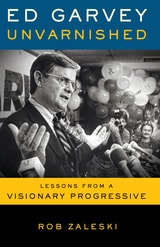
Ed Garvey Unvarnished
Lessons from a Visionary ProgressiveRob Zaleski
University of Wisconsin Press, 2019
Shortly before he died, Garvey expressed his views on everything in a series of detailed, no-holds-barred interviews with journalist Rob Zaleski. In his trademark witty, blunt, and often abrasive style, he offered his impressions of the political climate, worries about the environment, and Act 10 protests on Capitol Square. Garvey's candor during these conversations provides deeper insight into the personal highs and lows he experienced over his rich life. Diehard followers will fondly remember his energetic campaigns, but they may be surprised to learn of his long-simmering disappointment after those losses. Ever timely and meaningful, Garvey's words offer a path for how the Democratic Party, both within Wisconsin and nationally, can regain its soul.

Ed School
A Brief for Professional EducationGeraldine Jonçich Clifford and James W. Guthrie
University of Chicago Press, 1988
Drawing on case studies of leading schools of education, the authors offer a bold, controversial agenda for reform: ed schools must reorient themselves toward teachers and away from the quest for prestige in academe; they must also adhere to national professional standards, abandon the undergraduate education major, and reject the Ph.D. in education in favor of the Ed.D.

Eden Within Eden
Oregon's Utopian HeritageJames J. Kopp
Oregon State University Press, 2009

Edgar and Brigitte
A German Jewish Passage to AmericaRosemarie Bodenheimer
University of Alabama Press, 2016
The couple’s encounters with the strange new dynamics of race, religion, and the workplace in their new American home offer a compelling account of the struggles that faced many immigrants with deep German roots. It is also an intimate portrait of a now-vanished German Jewish culture as it played out in the lives of Bodenheimer’s parents and her grandparents from the 1920s to the late 1960s, a story of emigration, assimilation, and the private struggles that accompany those forced shifts in orientation.
The Bodenheimers’ letters and journals offer engaging perspectives into their personal lives that retrospective memories cannot match. Braiding intimate biography together with history and memoir, Edgar and Brigitte will appeal both to historians of the European Jewish diaspora and to readers interested in the struggles and resilience of people whose lives were upended by Hitler.
Edge of Campus
A Journal of the Black Experience at the University of ArkansasGordon Morgan
University of Arkansas Press, 1990

Edge of Empire
Documents of Michilimackinac, 1671-1716Joseph L. Peyser
Michigan State University Press, 2008
Few places were as important in the seventeenth-century European colonial New World as the pays d’en haut. This term means "upper country" and refers to the western Great Lakes (Huron, Michigan, and Superior) and the areas immediately north, south, and west of them. The region was significant because of its large Native American population, because it had an extensive riverine system needed for beaver populations—essential to the fur trade—and because it held the transportation key to westward expansion.
It was vital to the French, who controlled the region, to be on good terms with its peoples. To maintain good relations through trade and diplomacy with the nations in the pays d’en haut, the French built a number of posts, including one at Michilimackinac and one on the St. Joseph River (near Niles, Michigan). These posts were garrisoned by French troops and run by French commanders who contracted with merchants to manage business matters.
Edge of Empire provides both an overview and an intensely detailed look at Michilimackinac at a very specific period of history. While the introduction offers an overview of the French fur trade, of the place of Michilimackinac in that network, and of what Michilimackinac was like in the years up to 1716, the body of the book is comprised of over sixty French-language documents, now translated into English. Collected from archives in France, Canada, and the United States, the documents identify many of the people involved in the trade and reveal a great deal about the personal and professional relations among people who traded. They also reveal clearly the process by which trade was carried out, including the roles of both Native Americans and women. At the same time, the documents open a window into French colonial society in New France.

Edible Mushrooms
Clyde M. Christensen
University of Minnesota Press, 1981
Edible Mushrooms was first published in 1981. Minnesota Archive Editions uses digital technology to make long-unavailable books once again accessible, and are published unaltered from the original University of Minnesota Press editions.
The choicest varieties of mushrooms cannot be cultivated or commercially grown but are available in abundance to those who take the trouble to find them. With this book in hand, anyone can, with confidence, gather and enjoy delicious wild mushrooms without fear of the poisonous varieties.
Edible Mushrooms,a new edition of the 1943 classic guide, Common Edible Mushrooms,describes in detail more than 60 of the most abundant and most easily recognized species. Photographs, many in color, show each species in its natural habitat for easy identification. Clyde M. Christensen warns against the poisonous varieties and advises amateur mushroom hunters to become thoroughly familiar with the most common edible mushrooms and to avoid all others.
This edition contains new full-color photographs, and new material on how mushrooms grow and how to identify and collect them. Christensen has updated the classification to bring scientific names into agreement with internationally approved nomenclature but retains the older technical names in parentheses for easy comparison with other guides. An enlarged section of recipes provides good ideas for making the most of a mushroom harvest.

Edible Wild Mushrooms of Illinois and Surrounding States
A Field-to-Kitchen Guide, Second EditionJoe McFarland, Gregory M. Mueller, Michael Kuo, and Patrick R. Leacock
University of Illinois Press, 2027
* Fifty-two entries packed with information on edible species;
* Almost 400 color photographs;
* Tips on where and when to look for mushrooms, how to pick them, and identification and note-taking;
* Photographs of lookalikes for safely identifying and avoiding poisonous species;
* An extensive new section on truffles;
* Advice on preparing, storing, drying, and cooking with wild mushrooms, plus an expanded recipe section that invites cooks to serve up wild turkey and morels, toss an oyster mushroom salad, and add mushroom powder to everything.
Reader friendly and detailed, the second edition of Edible Wild Mushrooms of Illinois and Surrounding States is an invaluable morels-to-puffballs resource for Midwestern mushroom hunters.

Edison's Electric Light
Friedel, Robert
Rutgers University Press, 1986
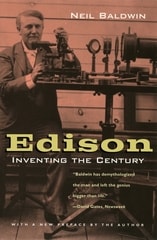
Edison
Inventing the CenturyNeil Baldwin
University of Chicago Press, 2001
Edited Clean Version
Technology and the Culture of ControlRaiford Guins
University of Minnesota Press, 2009
Where is censorship in the age of digital technology?
Not long ago it would have been an absurd idea to purchase a television, CD or MP3 or DVD player, computer software, or game console with the intention of limiting its capabilities. However, as Raiford Guins demonstrates in Edited Clean Version, today’s media technology is marketed and sold for what it does not contain and what it will not deliver.
TVs equipped with V-chips, Internet filters, editing DVD players, clean-version CDs and MP3s, and game consoles with parental control features can block out, monitor, disable, and filter information. As Guins argues in this provocative book, consumers now find themselves in new relationships with their everyday media in which they inscribe their viewing, listening, and playing experiences with self-prescribed and technologically enabled values and morals. Censorial practices are not so much enacted on media by regulatory bodies today as they are in our media technology.According to Guins, these new “control technologies” are designed to embody an ethos of neoliberal governance—through the very media that have been previously presumed to warrant management, legislation, and policing. Repositioned within a discourse of empowerment, security, and choice, the action of regulation, he reveals, has been relocated into the hands of users.
Edith Wharton and the Visual Arts
Emily J. Orlando
University of Alabama Press, 2008
An insightful look at representations of women’s bodies and female authority.
This work explores Edith Wharton's career-long concern with a 19th-century visual culture that limited female artistic agency and expression. Wharton repeatedly invoked the visual arts--especially painting—as a medium for revealing the ways that women's bodies have been represented (as passive, sexualized, infantalized, sickly, dead). Well-versed in the Italian masters, Wharton made special use of the art of the Pre-Raphaelite Brotherhood, particularly its penchant for producing not portraits of individual women but instead icons onto whose bodies male desire is superimposed.
Emily Orlando contends that while Wharton's early work presents women enshrined by men through art, the middle and later fiction shifts the seat of power to women. From Lily Bart in The House of Mirth to Undine Spragg in The Custom of the Country and Ellen Olenska in The Age of Innocence, women evolve from victims to vital agents, securing for themselves a more empowering and satisfying relationship to art and to their own identities.
Orlando also studies the lesser-known short stories and novels, revealing Wharton’s re-workings of texts by Browning, Poe, Balzac, George Eliot, Sir Joshua Reynolds, and, most significantly, Dante Gabriel Rossetti. Edith Wharton and the Visual Arts is the first extended study to examine the presence in Wharton's fiction of the Pre-Raphaelite poetry and painting of Rossetti and his muses, notably Elizabeth Siddall and Jane Morris. Wharton emerges as one of American literature's most gifted inter-textual realists, providing a vivid lens through which to view issues of power, resistance, and social change as they surface in American literature and culture.

Edith Wharton in Context
Essays on IntertextualityAdeline R. Tintner
University of Alabama Press, 1999
Tintner provides a detailed analysis of the complex interplay between Wharton and James—how they influenced each other and how some of their writings operate as homages or personal jokes. So deeply was James in Wharton’s confidence, Tintner argues, that he provided her with source models for a number of her characters. In addition, Wharton found in his fiction structures for her own, especially for The Age of Innocence.
Tintner also brings her considerable knowledge of art history to bear in her study of art allusions in Wharton’s work. Wharton’s response both to the Italian painters active before Raphael and to the English Pre-Raphaelites of a generation before her own is analyzed here in three essays. These pieces demonstrate Wharton’s sensibility to changes in art tastes and collecting, the inheritance of Rossetti’s revolutionary paintings in the unfinished novel, The Buccaneers, and the importance of home in The Glimpses of the Moon, as demonstrated by Wharton’s use of Tiepolo’s fresco in the church of Scalzi.
Tintner concludes by considering Wharton’s literary legacy and who Wharton has figured in the imaginations of recent writers, including Richard Howard, Louis Auchincloss, and Cathleen Schine. Tintner finds some part of Wharton’s personality or work evoked in a number of contemporary works and argues that this presence signals the beginning of an increasing influence.

Edith Wharton's Inner Circle
By Susan Goodman
University of Texas Press, 1994
When Edith Wharton became friends with Henry James, she joined a group of men who became her "inner circle." This group included both well-known figures, such as James, Percy Lubbock, and Bernard Berenson, and several now forgotten, including John Hugh Smith, Walter Berry, Gaillard Lapsley, Robert Norton, and Howard Sturgis.
Drawing on unpublished archival material by and about members of the circle, Susan Goodman here presents an intimate view of this American expatriate community, as well as the larger transatlantic culture it mirrored. She explores how the group, which began forming around 1904 and lasted until Wharton's death in 1937, defined itself against the society its founders had left in the United States, while simultaneously criticizing and accommodating the one it found in Europe. Tracing Wharton's individual relationships with these men and their relationships with one another, she examines literary kinships and movements in the biographical and feminist context of gender, exile, and aesthetics. She also relates the group to other literary circles, such as the Bloomsbury group and Gertrude Stein's salon.

Edith and Winnifred Eaton
Chinatown Missions and Japanese RomancesDominika Ferens
University of Illinois Press, 2002
Arguing that Edith as much as Winnifred constructed her persona along with her pen name, Ferens considers the fiction of both Eaton sisters as ethnography. Edith and Winnifred Eaton suggests that both authors wrote through the filter of contemporary ethnographic discourse on the Far East and also wrote for readers hungry for "authentic" insight into the morals, manners, and mentality of an exotic other.
Ferens traces two distinct discursive traditions–-missionary and travel writing–-that shaped the meanings of "China" and "Japan" in the nineteenth century. She shows how these traditions intersected with the unconventional literary careers of the Eaton sisters, informing the sober, moralistic tone of Edith's stories as well as Winnifred's exotic narrative style, plots, settings, and characterizations.
Bringing to the Eatons' writings a contemporary understanding of the racial and textual politics of ethnographic writing, this important account shows how these two very different writers claimed ethnographic authority, how they used that authority to explore ideas of difference, race, class and gender, and how their depictions of nonwhites worked to disrupt the process of whites' self-definition.
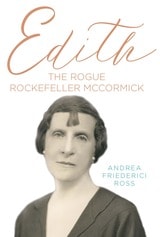
Edith
The Rogue Rockefeller McCormickAndrea Friederici Ross
Southern Illinois University Press, 2021
WINNER, 2021 Chicago Writers Association Book of the Year in Traditional Nonfiction!
Chicago’s quirky patron saint
This thrilling story of a daughter of America’s foremost industrialist, John D. Rockefeller, is complete with sex, money, mental illness, and opera divas—and a woman who strove for the independence to make her own choices. Rejecting the limited gender role carved out for her by her father and society, Edith Rockefeller McCormick forged her own path, despite pushback from her family and ultimate financial ruin.
Young Edith and her siblings had access to the best educators in the world, but the girls were not taught how to handle the family money; that responsibility was reserved for their younger brother. A parsimonious upbringing did little to prepare Edith for life after marriage to Harold McCormick, son of the Reaper King Cyrus McCormick. The rich young couple spent lavishly. They purchased treasures like the jewels of Catherine the Great, entertained in grand style in a Chicago mansion, and contributed to the city’s cultural uplift, founding the Chicago Grand Opera. They supported free health care for the poor, founding and supporting the John R. McCormick Memorial Institute for Infectious Diseases. Later, Edith donated land for what would become Brookfield Zoo.
Though she lived a seemingly enviable life, Edith’s disposition was ill-suited for the mores of the time. Societal and personal issues—not least of which were the deaths of two of her five children—caused Edith to experience phobias and panic attacks. Dissatisfied with rest cures, she ignored her father’s expectations, moved her family to Zurich, and embarked on a journey of education and self-examination. Edith pursued analysis with then-unknown Carl Jung. Her generosity of spirit led Edith to become Jung’s leading patron. She also supported up-and-coming musicians, artists, and writers, including James Joyce as he wrote Ulysses.
While Edith became a Jungian analyst, her husband, Harold, pursued an affair with an opera star. After returning to Chicago and divorcing Harold, Edith continued to deplete her fortune. She hoped to create something of lasting value, such as a utopian community and affordable homes for the middle class. Edith’s goals caused further difficulties in her relationship with her father and are why he and her brother cut her off from the family funds even after the 1929 stock market crash ruined her. Edith’s death from breast cancer three years later was mourned by thousands of Chicagoans.
Respectful and truthful, Andrea Friederici Ross presents the full arc of this amazing woman’s life and expertly helps readers understand Edith’s generosity, intelligence, and fierce determination to change the world
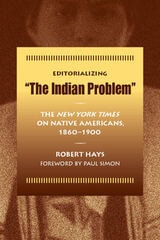
Editorializing "The Indian Problem"
The New York Times on Native Americans, 1860-1900Robert Hays. Foreword by: Paul Simon
Southern Illinois University Press, 2007
American history demonstrates time and again the price of Manifest Destiny.
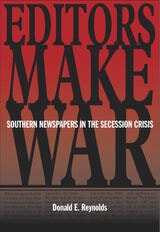
Editors Make War
Donald E. Reynolds
Southern Illinois University Press, 2006
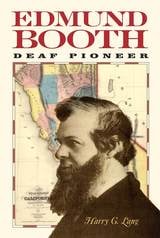
Edmund Booth
Deaf PioneerHarry G. Lang
Gallaudet University Press, 2004
Edmund Booth was born in 1810 and died in 1905, and during the 94 years of his life, he epitomized virtually everything that characterized an American legend of that century. In his prime, Booth stood 6 feet, 3 inches tall, weighed in at 210 pounds, and wore a long, full beard. He taught school in Hartford, CT, then followed his wife-to-be Mary Ann Walworth west to Anamosa, Iowa, where in 1840, he built the area’s first frame house. He pulled up stakes nine years later to travel the Overland Trail on his way to join the California Gold Rush. After he returned to Iowa in 1854, he became the editor of the Anamosa Eureka, the local newspaper. Edmund Booth fit perfectly the mold of the ingenious pioneer of 19th-century America, except for one unusual difference — he was deaf.
Edmund Booth: Deaf Pioneer follows the amazing career of this American original and his equally amazing wife in fascinating detail. Author Harry G. Lang vividly portrays Booth and his wife by drawing from a remarkable array of original material. A prolific writer, Booth corresponded with his fiancé from the American School for the Deaf in Hartford, and he kept a journal during his days on the California trail, parts of which have been reproduced here. He also wrote an autobiographical essay when he was 75, and his many newspaper articles through the years bore first-hand witness to the history of his times, from the Civil War to the advent of the 20th century.
Edmund Booth depicts a larger-than-life man in larger-than-life times, but perhaps its greatest contribution derives from its narrative about pioneer days as seen through Deaf eyes. Booth became a respected senior statesman of the American Deaf community, and blended with his stories of the era’s events are anecdotes and issues vital to Deaf people and their families. His story proves again that extraordinary people vary in many ways, but they often possess a common motive in acting to enhance their own communities.

Edmund J. James and the Making of the Modern University of Illinois, 1904-1920
Winton U. Solberg and J. David Hoeveler
University of Illinois Press, 2024
In 1904, Edmund J. James inherited the leadership of an educational institution in search of an identity. His sixteen-year tenure transformed the University of Illinois from an industrial college to a major state university that fulfilled his vision of a center for scientific investigation.
Winton U. Solberg and J. David Hoeveler provide an account of a pivotal time in the university’s evolution. A gifted intellectual and dedicated academic reformer, James began his tenure facing budget battles and antagonists on the Board of Trustees. But as time passed, he successfully campaigned to address the problems faced by women students, expand graduate programs, solidify finances, create a university press, reshape the library and faculty, and unify the colleges of liberal arts and sciences. Combining narrative force with exhaustive research, the authors illuminate the political milieu and personalities around James to draw a vivid portrait of his life and times.
The authoritative conclusion to a four-part history, Edmund J. James and the Making of the Modern University of Illinois, 1904–1920 tells the story of one man’s mission to create a university worthy of the state of Illinois.