Results by title
5159 books match the query 'Biography' and 245 start with f

F. Scott Fitzgerald
A Composite BiographyNiklas Salmose
University of Minnesota Press, 2023
A comprehensive study of the life of F. Scott Fitzgerald, related in two-year chapters by twenty-three leading writers on the Jazz Age author
“There never was a good biography of a novelist,” F. Scott Fitzgerald wrote in The Crack-Up. “There couldn’t be. He is too many people, if he’s any good.” Fitzgerald, a good novelist by any measure, has tested this challenge to the biographer’s art. A new star illuminating the literary scene; a chronicler of the Jazz Age in all its brilliance and tarnish; a romantic symbol of the American century; an acute observer of society’s best and worst, and of his own star-crossed career; a midlife burnout at forty-four, leaving an unfinished masterpiece in his wake—he was a man of many aspects, a writer whose complexity and multitudes this composite biography finally aptly portrays.
Bringing together twenty-three leading writers and scholars on Fitzgerald, each focusing on two years of his life, this volume takes its cue from Henry James’s remark, cited by preeminent Fitzgerald biographer Scott Donaldson: “The whole of anything is never told; you can only take what groups together.” F. Scott Fitzgerald: A Composite Biography presents a new way of “grouping together” biographical material and perspectives, considering from various angles the author's best-known works as well as understudied writings, including neglected stories and forays into autobiography such as “What I Think and Feel at 25” and “How to Live on $36,000 a Year.” The glamor and fame that made F. Scott and Zelda mythic figures of their time appear here alongside the personal experiences that he occasionally included in his writing: the beginnings as well as the poignant end; the literary relationships that informed and framed his work, set against solitary effort, fame, and failures. This remarkable study of F. Scott Fitzgerald reflects the multifaceted whole of a “life in many parts” in new and revelatory ways.
Contributors: Jade Broughton Adams; Ronald Berman; William Blazek, Liverpool Hope U; Elisabeth Bouzonviller, Jean Monnet U; Jackson Bryer, U of Maryland; Kirk Curnutt, Troy U; Catherine Delesalle-Nancey, U Jean Moulin Lyon 3; Scott Donaldson; Kayla Forrest; Marie-Agnès Gay, U Jean Moulin Lyon 3; Joel Kabot, U of Maryland, Baltimore; Sara Kosiba; Arne Lunde, U of California, Los Angeles; Bryant Mangum, Virginia Commonwealth U; Martina Mastandrea; Philip McGowan, Queen’s U Belfast; David Page; Walter Raubicheck, Pace U; Ross Tangedal, U of Wisconsin–Stevens Point; Helen Turner, Linnaeus U; James L. W. West III, Pennsylvania State U.

FANNY WRIGHT
REBEL IN AMERICACelia Morris
University of Illinois Press, 1992
-- New York Times Book Review

FOR THE UNION
OHIO LEADERS IN THE CIVIL WARKENNETH W. WHEELER
The Ohio State University Press, 1998
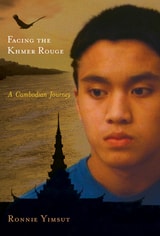
Facing the Khmer Rouge
A Cambodian JourneyRonnie Yimsut
Rutgers University Press, 2011
As a child growing up in Cambodia, Ronnie Yimsut played among the ruins of the Angkor Wat temples, surrounded by a close-knit community. As the Khmer Rouge gained power and began its genocidal reign of terror, his life became a nightmare. In this stunning memoir, Yimsut describes how, in the wake of death and destruction, he decides to live.
Escaping the turmoil of Cambodia, he makes a perilous journey through the jungle into Thailand, only to be sent to a notorious Thai prison. Fortunately, he is able to reach a refugee camp and ultimately migrate to the United States, where he attended the University of Oregon and became an influential leader in the community of Cambodian immigrants. Facing the Khmer Rouge shows Ronnie Yimsut’s personal quest to rehabilitate himself, make a new life in America, and then return to Cambodia to help rebuild the land of his birth.
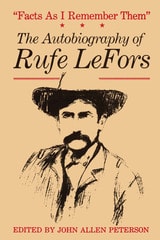
Facts as I Remember Them
The Autobiography of Rufe LeForsEdited by John Allen Peterson
University of Texas Press, 1986
The rivers of the Texas Panhandle, the Canadian, and the forks of the Red break through the Cap Rock at the eastern edge of the Staked Plains. It’s rough, bleak country, with few trees and a great expanse of sky. Storms that form on the Great Plains and in the Rocky Mountains sweep through with nothing much to slow them down. And the small dusty towns that serve this vast ranchland cling to the waterways as they have for over a hundred years, since their early settlement. Their names aren’t well known now, but they were once focal points in a rugged country where buffalo hunters, trail drivers, outlaws, and ordinary folks alike passed through.
Rufe LeFors was one such "ordinary" man. With his father and older brothers, he was among the first to settle this country, drawn to West Texas by tales of open land and good grass. His life story, set down near the end of his long and adventurous life, is the best sort of insider's history, the chronicle of a life lived fully amid the exciting events and rough landscape of the frontier's final years.
Rufe LeFors recorded his story over the course of a decade, finishing up in 1941 in his eighty-first year. His memoirs span the period from the War between the States to the early twentieth century, when the Panhandle was still scarcely settled, a true frontier. In his time LeFors was trail driver, pony express rider, and rancher. He traveled for a year with Arrington's Texas Rangers, and he wore the badge of deputy sheriff in the wild west town of Old Mobeetie. He rode a fast horse after claims in the Cherokee Strip, spent time as a horse trader, and finally settled in Lawton, Oklahoma, where, after some twenty years as a deputy, he was elected to the office of sheriff.
LeFors knew how to tell a story. Whether it is an account of an outlaw's capture or the rescue of a white girl from prairie fire by a Comanche brave, he weaves into his narrative all the color, drama, and character of the event. His version of the death of Billy the Kid adds another perspective to that much celebrated episode in western history. His encounters with Temple Houston, the governor's flamboyant son, rancher Charles Goodnight, and Ranger Captain Arrington add to our fund of knowledge about those legendary frontier figures. LeFors wanted to get the facts—as he remembered them—straight. With his sharp eye for texture and detail and keen ear for language and timing, he created a narrative that wonderfully captures the flavor of his life and exciting times.
Faculty Brat
A Memoir of AbuseDominic Bucca
University of Iowa Press, 2020
At the most prestigious preparatory schools in the United States, the children of educators are referred to as “faculty brats.” Though generally lacking the privilege of the institution’s wealthy students, faculty brats enjoy access to the school’s extensive grounds and facilities and are part of everyday campus life.
Dominic Bucca’s art teacher mother married his music teacher stepfather twice, and the young boy wondered if the union might be twice as strong as a result. Instead, this faculty brat quickly discovered that the marriage was twice as flawed. When Dominic was nine years old, his stepfather began sexually abusing him in the faculty housing attached to the boys’ dorm his parents oversaw. Years later, he found escape by reaching out to his biological father, and learned to split his life between two realities.
For nearly twenty-five years, Bucca hid the secret of his stepfather’s abuse from his mother and sisters. When he decided to tell, hoping to prevent his stepfather from continuing to teach young boys, Bucca discovered the limits of both his family and the legal system.
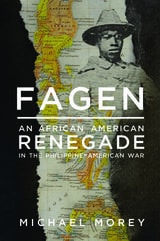
Fagen
An African American Renegade in the Philippine-American WarMichael Morey
University of Wisconsin Press, 2019
The outlines of Fagen's legend have been known for more than a century, but the details of his military achievements, his personal history, and his ultimate fate have remained a mystery—until now. Michael Morey tracks Fagen's life from his youth in Tampa as a laborer in a phosphate camp through his troubled sixteen months in the army, and, most importantly, over his long-obscured career as a guerrilla officer. Morey places this history in its larger military, political, and social context to tell the story of the young renegade whose courage and defiance challenged the supremacist assumptions of the time.
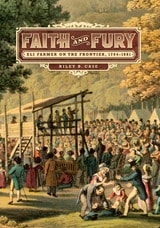
Faith and Fury
Eli Farmer on the Frontier, 1794–1881Riley B. Case
Indiana Historical Society Press, 2018

Faith and Intellect
The Lives and Contributions of Latter-day Saint ThinkersLeonard J Arrington
Signature Books, 2019
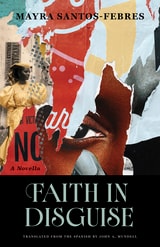
Faith in Disguise
A NovellaMayra Santos-Febres; Translated from the Spanish by John A. Mundell
Vanderbilt University Press, 2026
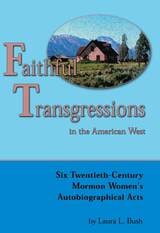
Faithful Transgressions In The American West
Six Twentieth-Century Mormon Women's Autobiographical ActsLaura L. Bush
Utah State University Press, 2004
The central issue Bush finds in these works is how their authors have dealt with the authority of Mormon Church leaders. As she puts it in her preface, "I use the phrase 'faithful transgression' to describe moments in the texts when each writer, explicitly or implicitly, commits herself in writing to trust her own ideas and authority over official religious authority while also conceiving of and depicting herself to be a 'faithful' member of the Church." Bush recognizes her book as her own act of faithful transgression. Writing it involved wrestling, she states, "with my own deeply ingrained religious beliefs and my equally compelling education in feminist theories that mean to liberate and empower women."
Faithful Transgressions examines a remarkable group of authors and their highly readable and entertaining books. In producing the first significant book-length study of Mormon women's autobiographical writing, Bush rides a wave of memoir publishing and academic interest in autobiography and other life narratives. As she elucidates these works in relation to the religious tradition that played a major role in shaping them, she not only positions them in relation to feminist theory and current work on women's life writings but ties them to the long literary tradition of spiritual autobiography.
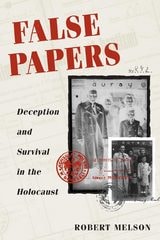
False Papers
DECEPTION AND SURVIVAL IN THE HOLOCAUSTRobert Melson
University of Illinois Press, 2000
Armed with their new lives and their new pasts, the Count and Countess Zamojski and their son, Count Bobi, took shelter in the very shadow of the Nazi machine, hiding day after day in plain sight behind a façade of elegant good manners and cultivated self-assurance, even arrogance: "you had to shout [the Gestapo] down or they would kill you." Melson's father took advantage of his flawless German to build a lucrative business career while working for a German businessman of the Schindler type. The Zamojskis acquired beautiful homes in the German quarter of Krakow and in Prague, where they had maids and entertained Nazi officials. Their masquerade enabled them to save not only themselves and their son but also an uncle and three Jewish women, one of whom became part of the family.
False Papers is a candid, sometimes funny account of a stylish couple who dazzled the Nazis with flamboyant theatrics then gradually, tragically fell apart after the war. Particularly arresting is Melson himself, who was just a child when his family embarked on their grand charade. A resilient boy who had to negotiate bewildering shifts of identify–-now Catholic, now Jewish; now European aristocrat, now penniless refugee who becomes an American college student--Melson closes each chapter of his parents' recollections with his childhood perceptions of the same events.
Against the totalizing, flattening, unrelenting Nazi behemoth, Melson says, "I wished to pit our very bodies, our quirky, sexy, funny, wicked, frail, ordinary selves." By balancing the adults' maneuvering with the perspective of a child, Melson crafts an account of the Holocaust that is at once poignant, entertaining, and troubling.
Fame, Money, and Power
The Rise of Peisistratos and "Democratic" Tyranny at AthensB. M. Lavelle
University of Michigan Press, 2005
--David Tandy, University of Tennessee
"Well researched and engaging, [Fame, Money, and Power] painstakingly builds [its] case for how the various phases of Peisistratos's career developed."
--Tony Podlecki, University of British Columbia
The Athenian "golden age" occurred in the fifth century B.C.E. and was attributed to their great achievements in art, literature, science, and philosophy. However, the most important achievement of the time was the political movement from tyranny to democracy. Though tyranny is thought to be democracy's opposite and deadly enemy, that is not always the case. In Fame, Money, and Power, Brian Lavelle states that the perceived polarity between tyranny and democracy does not reflect the truth in this instance.
The career of the tyrant Peisistratos resembles the careers and successes of early democratic soldier-politicians. As with any democratic political system, Peisistratos' governance depended upon the willingness of the Athenians who conceded governance to him. This book attempts to show how the rise of Peisistratos fits into an essentially democratic system already entrenched at Athens in the earlier sixth century B.C.E.
Emerging from the apparent backwater of eastern Attika, Peisistratos led the Athenians to victory over their neighbors, the Megarians, in a long, drawn out war. That victory earned him great popularity from the Athenians and propelled him along the road to monarchy. Yet, political success at Athens, even as Solon implies in his poems, depended upon the enrichment of the Athenian d?mos, not just fame and popularity. Peisistratos tried and failed two times to "root" his tyranny, his failures owing to a lack of sufficient money with which to appease the demos. Exiled from Athens, he spent the next ten years amassing money to enrich the Athenians and power to overcome his enemies. He then sustained his rule by grasping the realities of Athenian politics. Peisistratos' tyrannies were partnerships with the d?mos, the first two of which failed. His final formula for success, securing more money than his opponents possessed and then more resources for enriching the d?mos, provided the model for future democratic politicians of Athens who wanted to obtain and keep power in fifth-century Athens.
Familiar Stranger
A Life Between Two IslandsStuart Hall
Duke University Press, 2017
Growing up in a middle-class family in 1930s Kingston, Jamaica, still then a British colony, the young Stuart Hall found himself uncomfortable in his own home. He lived among Kingston's stiflingly respectable brown middle class, who, in their habits and ambitions, measured themselves against the white elite. As colonial rule was challenged, things began to change in Kingston and across the world. In 1951 a Rhodes scholarship took Hall across the Atlantic to Oxford University, where he met young Jamaicans from all walks of life, as well as writers and thinkers from across the Caribbean, including V. S. Naipaul and George Lamming. While at Oxford he met Raymond Williams, Charles Taylor, and other leading intellectuals, with whom he helped found the intellectual and political movement known as the New Left. With the emotional aftershock of colonialism still pulsing through him, Hall faced a new struggle: that of building a home, a life, and an identity in a postwar England so rife with racism that it could barely recognize his humanity.
With great insight, compassion, and wit, Hall tells the story of his early life, taking readers on a journey through the sights, smells, and streets of 1930s Kingston while reflecting on the thorny politics of 1950s and 1960s Britain. Full of passion and wisdom, Familiar Stranger is the intellectual memoir of one of our greatest minds.

Family Bible
Melissa J. Delbridge
University of Iowa Press, 2008
"Swimming and sex seemed a lot alike to me when I was growing up. You took off most of your clothes to do them and you only did them with people who were the same color as you. As your daddy got richer, you got to do them in fancier places." Starting with her father, who never met a whitetail buck he couldn't shoot, a whiskey bottle he couldn't empty, or a woman he couldn't charm, and her mother, who "invented road rage before 1960," Melissa Delbridge introduces us to the people in her own family bible. Readers will find elements of Southern Gothic and familiar vernacular characters, but Delbridge endows each with her startling and original interpretation. In this disarmingly unguarded and unapologetic memoir, she shows us what really happened in the "stew of religion and sex" that was 1960s Tuscaloosa.

Family Practice Stories
Memories, Reflections, and Stories of Hoosier Family Doctors of the Mid-Twentieth CenturyRichard Feldman
Indiana Historical Society Press, 2013
Famous Long Ago
My Life and Hard Times with Liberation News ServiceRaymond Mungo
University of Massachusetts Press, 2012
Originally published in 1970, Raymond Mungo's picaresque account of his adventures with Liberation News Service in the wild years of 1967 and 1968 has been variously described as youthful, passionate, lyrical, demented, and an iconic symbol of the sixties counterculture. A review in The Nation described it as “hip Huck Finn.”
A college editor at the height of the Vietnam War, Mungo found himself smack in the middle of a mad swirl of activism and dissent, vigorously protesting everything from the draft to abortion laws to the university itself. Then he connected with Marshall Bloom to cofound LNS in Washington, D.C., as a news service catering to the burgeoning underground press. One thing led to another, until LNS, like so many other radical organizations, eventually disintegrated into violently warring factions. Mungo's memoir tracks its development and destruction with wicked humor and literary panache.
In an introduction to this new edition, John McMillian discusses the enduring appeal of Famous Long Ago and situates it within its broader historical context, while the author provides his own retrospective take in a new afterword.

Fannie Barrier Williams
Crossing the Borders of Region and RaceWanda A. Hendricks
University of Illinois Press, 2014

Fannie Bloomfield-Zeisler
The Life and Times of a Piano VirtuosoBeth Abelson Macleod
University of Illinois Press, 2015
In this new biography, Beth Abelson Macleod reintroduces a figure long, and unjustly, overlooked by music history. Trained in Vienna, Bloomfield-Zeisler significantly advanced the development of classical music in the United States. Her powerful and sensitive performances, both in recital and with major orchestras, won her followers across the United States and Europe and often provided her American audiences with their first exposure to the pieces she played. The European-style salon in her Chicago home welcomed musicians, scientists, authors, artists, and politicians, while her marriage to attorney Sigmund Zeisler placed her at the center of a historical moment when Sigmund defended the anarchists in the 1886 Haymarket trial.
In its re-creation of a musical and social milieu, Fannie Bloomfield-Zeisler paints a vivid portrait of a dynamic artistic life.
Fanny & Joshua
The Enigmatic Lives of Frances Caroline Adams and Joshua Lawrence ChamberlainDiane Monroe Smith
University Press of New England, 2013

Fanny Fern
An Independent WomanWarren, Joyce W
Rutgers University Press, 1992
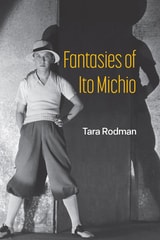
Fantasies of Ito Michio
Tara Rodman
University of Michigan Press, 2024
Winner of the 2025 Dance Studies Association Oscar Brockett Book Prize
Born in Japan and trained in Germany, dancer and choreographer Ito Michio (1893–1961) achieved prominence in London before moving to the U.S. in 1916 and building a career as an internationally acclaimed artist. During World War II, Ito was interned for two years, and then repatriated to Japan, where he contributed to imperial war efforts by creating propaganda performances and performing revues for the occupying Allied Forces in Tokyo. Throughout, Ito continually invented stories of voyages made, artists befriended, performances seen, and political activities carried out—stories later dismissed as false.
Fantasies of Ito Michio argues that these invented stories, unrealized projects, and questionable political affiliations are as fundamental to Ito’s career as his ‘real’ activities, helping us understand how he sustained himself across experiences of racialization, imperialism, war, and internment. Tara Rodman reveals a narrative of Ito’s life that foregrounds the fabricated and overlooked to highlight his involvement with Japanese artists, such as Yamada Kosaku and Ishii Baku, and global modernist movements. Rodman offers “fantasy” as a rubric for understanding how individuals such as Ito sustain themselves in periods of violent disruption and as a scholarly methodology for engaging the past.

Fantasies of Nina Simone
Jordan Alexander Stein
Duke University Press, 2024

Far Flung
Improvisations on National Parks, Driving to Russia, Not Marrying a Ranger, the Language of Heartbreak, and Other Natural DisastersCassandra Kircher
West Virginia University Press, 2019
Cassandra Kircher was in her twenties when she was hired by the National Park Service, landing a life that allowed her to reinvent herself. For four years she collected entrance fees and worked in the dispatch office before being assigned as the first woman to patrol an isolated backcountry district of Colorado’s Rocky Mountain National Park. There, Kircher encountered wonder and beauty, accidents and death. Although she always suspected the mountains might captivate her, she didn’t realize that her adopted landscape would give her strength to confront where she was from—both the Midwest that Willa Cather fans will recognize, and a childhood filled with problems and secrets.
Divided and defined by geographic and psychological space, Far Flung begins in the Rockies but broadens its focus as Kircher negotiates places as distant as Alaska’s Kenai Peninsula, Russia’s Siberian valleys, and Wisconsin’s lake country, always with Colorado as a heartfelt pivot. These thirteen essays depict a woman coming to terms with her adoration for the wilds of the West and will resonate with all of us longing to better understand ourselves and our relationships to the places and people we love most.
Far From Respectable
Dave Hickey and His ArtDaniel Oppenheimer
University of Texas Press, 2021
Finalist, 2021 Writers’ League of Texas Book Award
Regarded as both a legend and a villain, the critic Dave Hickey has inspired generations of artists, art critics, musicians, and writers. His 1993 book The Invisible Dragon became a cult hit for its potent and provocative critique of the art establishment and its call to reconsider the role of beauty in art. His next book, 1997’s Air Guitar, introduced a new kind of cultural criticism—simultaneously insightful, complicated, vulnerable, and down-to-earth—that propelled Hickey to fame as an iconoclastic thinker, loved and loathed in equal measure, whose influence extended beyond the art world.
Far from Respectable is a focused, evocative exploration of Hickey’s work, his impact on the field of art criticism, and the man himself, from his Huck Finn childhood to his drug-fueled periods as both a New York gallerist and Nashville songwriter to, finally, his anointment as a tenured professor and MacArthur Fellow. Drawing on in-person interviews with Hickey, his friends and family, and art world comrades and critics, Daniel Oppenheimer examines the controversial writer’s distinctive takes on a broad range of subjects, including Norman Rockwell, Robert Mapplethorpe, academia, Las Vegas, basketball, country music, and considers how Hickey and his vision of an “ethical, cosmopolitan paganism” built around a generous definition of art is more urgently needed than ever before.
Far from Home
Memories of World War II and AfterwardMary Herring Wright
Gallaudet University Press, 2005
“She’s got no more business there than a pig has with a Bible.” That’s what her father said when Mary Herring announced that she would be moving to Washington, DC, in late 1942. Recently graduated from the North Carolina School for Black Deaf and Blind Students, Mary had been invited to the nation’s capital by a cousin to see a specialist about her hearing loss. Though nothing could be done about her deafness, Mary quickly proved her father wrong by passing the civil service examination with high marks. Far from Home: Memories of World War II and Afterward, the second installment of her autobiography, describes her life from her move to Washington to the present.
Mary soon became a valued employee for the Navy, maintaining rosters for the many servicemen in war theaters worldwide. Her remarkable gift for detail depicts Washington in meticulous layers, a sleepy Southern town force-grown into a dynamic geopolitical hub. Life as a young woman amid the capital’s Black middle class could be warm and fun, filled with visits from family and friends, and trips home to Iron Mine for tearful, joyous reunions. But the reality of the times was never far off. On many an idyllic afternoon, she and her friends found somber peace in Arlington Cemetery, next to the grave of the sole Unknown Soldier at that time. During an evening spent at the U.S.O., one hearing woman asked how people like her could dance, and Mary answered, “With our feet.” She became a pen pal to several young servicemen, but did not want to know why some of them suddenly stopped writing.
Despite the close friends and good job that she had in Washington, the emotional toll caused Mary to return to her family home in Iron Mine, NC. There, she rejoined her family and resumed her country life. She married and raised four daughters, and recounts the joys and sorrows she experienced through the years, particularly the loss of her parents. Her blend of the gradual transformation of Southern rural life with momentous events such as Hurricane Hazel creates an extraordinary narrative history. The constant in Far from Home remains the steady confidence that Mary Herring Wright has in herself, making her new memoir a perfect companion to her first.
Farm Girl
A Wisconsin MemoirBeuna Coburn Carlson
University of Wisconsin Press, 2020
Farm Girl is Beuna "Bunny" Coburn Carlson's loving tribute to the gently rolling hills of western Wisconsin. With an inviting and fluid voice, she shares intimate moments of happinesses from her childhood: collecting butternuts for homemade maple candy, watching her father read by the flickering light of a kerosene lamp, and the joy of finding a juicy orange at the bottom of a Christmas stocking. Underlying each vignette is the courage of a strong family surviving adversity and finding comfort in one another. Hers is a memoir that readers can dip in and out of with pleasure.
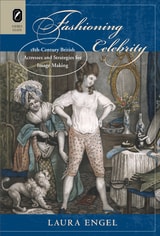
Fashioning Celebrity
Eighteenth-Century British Actresses and Strategies for Image MakingLaura Engel
The Ohio State University Press, 2011
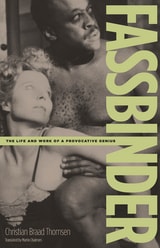
Fassbinder
The Life And Work Of A Provocative GeniusChristian Braad Thomsen
University of Minnesota Press, 2004
The revealing biography of this highly productive and radical film director
Rainer Werner Fassbinder was the most innovative practitioner of New German Cinema. He worked at breakneck speed and in fourteen years made forty-four films, including Ali: Fear Eats the Soul (1973) and The Marriage of Maria Braun (1978). Fassbinder ruthlessly attacked both German bourgeois society and the larger limitations of humanity, and his films detail the desperate yearning for love and freedom and the many ways in which society defeats that desire.
In Fassbinder, Christian Thomsen, a close friend of the director, illuminates Fassbinder’s body of work while revealing his insider views of a man who, despite a furious temper, manic working habits, and rampant drug addiction, supported an extended family—including his mother, a string of male lovers, lovelorn women, and even a pair of frustrated wives—with his intoxicating and prolific imagination. This book, like Fassbinder’s often-used image of the mirror, brilliantly reflects the sexual, political, and overwhelmingly human contradictions inherent in the life of this intensely creative man and the remarkable films he directed.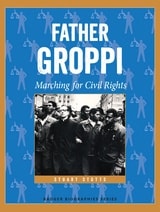
Father Groppi
Marching for Civil RightsStuart Stotts
Wisconsin Historical Society Press, 2013
Father Groppi Marched to Change Milwaukee
"Father Groppi: Marching for Civil Rights" tells the story of Father James Groppi, a Catholic priest from Milwaukee, Wis., who stood up for civil rights in the 1960s and 1970s.
This important new addition to the Badger Biographies series for young readers also tells about a turbulent time in Wisconsin history and sheds light on the civil rights movement and its place in the North.
Growing up on the south side of Milwaukee as the son of Italian immigrants, young James Groppi learned early on what it felt like to be made fun of just because of who you are, and he learned to respect people from other races and ethnic groups. Later, while studying to become a priest, he saw the discrimination African Americans faced. It made him angry, and he vowed to do whatever he could to fight racism.
Father Groppi marched with Dr. Martin Luther King Jr. and other leaders of the civil rights movement. But he knew there was work to be done in his own city. In Milwaukee, he teamed up with the NAACP and other organizations, protesting discrimination and segregation wherever they saw it. It wasn't always easy, and Father Groppi and the other civil rights workers faced great challenges.

Fatherless
A MemoirKeith Maillard
West Virginia University Press, 2019
This story begins with a phone call out of the blue: a lawyer tells a writer that his ninety-six-year-old father, with whom he has had no contact since the age of three and whom he has twice tried to find without success, has just died, leaving him nothing. Half-reluctant, half-fascinated, both angry and curious, Keith Maillard begins to research his father’s life. The result is a suspenseful work of historical reconstruction—a social history often reading like a detective story—as well as a psychologically acute portrait of the impact of a father’s absence. Walking a tightrope between the known and the unknown, and following a trail that takes him from Vancouver to Montreal to his native Wheeling, West Virginia, Keith Maillard has pulled off a book that only a novelist of his stature could write.
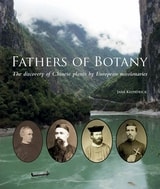
Fathers of Botany
The Discovery of Chinese Plants by European MissionariesJane Kilpatrick
Royal Botanic Gardens, Kew, 2014
But as Jane Kilpatrick shows in Fathers of Botany, the first Westerners to come upon and document this bounty were in fact cut from a different cloth: the clergy. Following the Opium Wars, European missionaries were the first explorers to dig further into the Chinese interior and send home evidence of one of the richest and most varied floras ever seen, and it was their discoveries that caused a sensation among Western plantsmen. Both men of faith and talented botanists alike, these missionaries lent their names to many of the plants they discovered, but their own stories disappeared into the leaf litter of history. Drawing on their letters and contemporary accounts, Kilpatrick focuses on the lives of four great French missionary botanists—Pères Armand David (of Davidia involucrata—the dove tree—and discoverer of the giant panda), Jean Marie Delavay, Paul Guillaume Farges, and Jean André Soulié—as well as a group of other French priests, Franciscan missionaries, and a single German Protestant pastor who all amassed significant plant collections, as she unearths a lost chapter of botanical history. In so doing, she reminds today’s gardeners and botanists—and any of us who stop to smell the roses—of the enormous debt owed to these obscure fathers of botany.
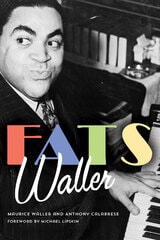
Fats Waller
Maurice Waller
University of Minnesota Press, 2018
Thomas “Fats” Waller was a legendary stride pianist, a wildly entertaining comedic singer, and the composer of such classic melodies as “Honeysuckle Rose,” “Ain’t Misbehavin’,” and hundreds more. This is the intimate, behind-the-scenes story of his exuberant life, as told by his son, Maurice Waller. The public knew him as a charming, rascally, and effervescent showman. Friends like Duke Ellington, Count Basie, Louis Armstrong, Irving Berlin, and George Gershwin knew him as a serious piano stylist and composer. Maurice Waller reveals the rarely seen side of Fats as a family man, struggling to juggle domestic affairs with the demands of being one of the era’s busiest jazz men. From his earliest days as a child prodigy to his wild nights playing Harlem rent parties to his appearances on stages around the world and his eventual commercial success, it’s all here. Few stories capture the frenetic energy of the age quite as well as the life story of this rollicking, hard living jazz icon.
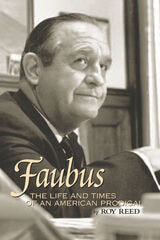
Faubus
The Life and Times of an American ProdigalRoy Reed
University of Arkansas Press, 1999
New York Times Book Review Notable Book for 1997
1998 Certificate of Commendation, American Association for State and Local History
Faulkner and Hemingway
Biography of a Literary RivalryJoseph Fruscione
The Ohio State University Press, 2012
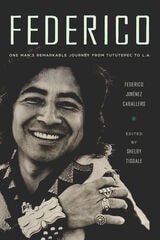
Federico
One Man’s Remarkable Journey from Tututepec to L.A.Federico Jiménez Caballero, Edited by Shelby Tisdale
University of Arizona Press, 2021
From the day he was born, Federico Jiménez Caballero was predicted to be a successful man. So, how exactly did a young boy from Tututepec, Oaxaca, become a famous Indigenous jewelry artist and philanthropist in Los Angeles? Federico tells the remarkable story of willpower, curiosity, hard work, and passion coming together to change one man’s life forever.
As a child growing up in a small rural town in southern Mexico, Federico Jiménez Caballero faced challenges that most of us cannot imagine, let alone overcome. From a young age, Federico worked tirelessly to contribute to his large family, yet his restless spirit often got him into trouble. Finding himself in the middle of a village-wide catastrophe, he was exiled to a boarding school in Oaxaca City where he was forced to become independent, resilient, and razor-sharp in order to stay afloat. Through his incredible people skills, bravery, and a few nudges from his bold mother, Federico found himself excelling in his studies and climbing the ranks in Oaxaca City. He always held a deep love and respect for his Mixtec Indigenous roots and began to collect Indigenous jewelry and textiles. Through a series of well-timed connections, Federico met his wife Ellen, and, shortly afterward, he came to the United States as a researcher at the University of California, Los Angeles, in the late 1960s.
Carrying his passion for Indigenous jewelry with him from Oaxaca, Federico owned a series of shops in Los Angeles and sold jewelry at flea markets to well-known Hollywood stars. Over the years, he cultivated relationships and became a philanthropist as well as the owner of a museum in Oaxaca City. This book is the inspiring first-person account of eighty years in the life of a man who moved from humble beginnings to the bright lights of Hollywood, following his passion and creating long-lasting relationships as he climbed the ladder of success.
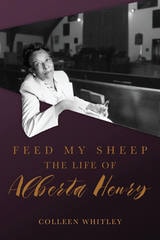
Feed My Sheep
The Life of Alberta HenryColleen Whitley
University of Utah Press, 2019
Henry endured intolerance by leaning on her faith and her commitment to a cause that she believed God had called her to follow. When she came to Utah in 1949 she thought it would be a brief stay, but she ended up making it her home for more than fifty years. In Utah, Henry committed herself to helping all races, religions, and ethnic groups coexist in appreciation of each other. While Martin Luther King Jr., Medgar Evers, and Malcolm X led the struggle for civil rights at a national level, Alberta Henry campaigned tirelessly for equality at a local level, talking at school board meetings, before city councils, and in the homes of her neighbors.
Henry was a member or officer of more than forty civic organizations and served for twelve years as president of the Salt Lake City branch of the NAACP, where she lobbied for civil rights, education, and justice. The dozens of awards and commendations she received speak to her accomplishments. While much of Henry’s story is told in her own words, Colleen Whitley provides expert and personal context to her speeches, writing, and interviews. The result is an exceptional first-person account of an African American woman leader and her role in the Civil Rights Movement in Utah.
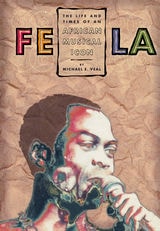
Fela
Life And Times Of An AfricanMichael Veal
Temple University Press, 2000
Although harassed, beaten, and jailed by Nigerian authorities, he continued his outspoken and derisive criticism of political corruption at home and economic exploitation from abroad. A volatile mixture of personal characteristics -- charisma, musical talent, maverick lifestyle, populist ideology, and persistence in the face of persecution -- made him a legend throughout Africa and the world. Celebrated during the 1970s as a musical innovator and spokesman for the continent's oppressed masses, he enjoyed worldwide celebrity during the 1980s and was recognized in the 1990s as a major pioneer and elder statesman of African music. By the time of his death in 1997 from AIDS-related complications, Fela had become something of a Nigerian institution.
In Africa, the idea of transnational alliance, once thought to be outmoded, has gained new currency. In African America, during a period of increasing social conservatism and ethnic polarization, Africa has re-emerged as a symbol of cultural affirmation. At such an historical moment, Fela's music offers a perspective on race, class, and nation on both sides of the Atlantic. As Professor Veal demonstrates, over three decades Fela synthesized a unique musical language while also clearing -- if only temporarily -- a space for popular political dissent and a type of counter-cultural expression rarely seen in West Africa. In the midst of political turmoil in Africa, as well as renewal of pro-African cultural nationalism throughout the diaspora, Fela's political music functions as a post-colonial art form that uses cross-cultural exchange to voice a unique and powerful African essentialism.
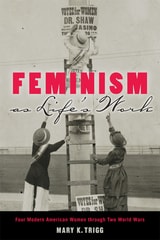
Feminism as Life's Work
Four Modern American Women through Two World WarsTrigg, Mary K
Rutgers University Press, 2014
Through these women’s intertwined stories, Mary Trigg traces the changing nature of the women’s movement across turbulent decades rent by world war, revolution, global depression, and the rise of fascism. Criticizing the standard division of feminist activism as a series of historical waves, Trigg exposes how Irwin, Beard, Stevens, and Pruette helped push the U.S. feminist movement to victory and continued to propel it forward from the 1920s to the 1960s, decades not included in the “wave” model. At a time widely viewed as the “doldrums” of feminism, the women in this book were in fact taking the cause to new sites: the National Women’s Party; sexuality and relations with men; marriage; and work and financial independence. In their utopian efforts to reshape work, sexual relations, and marriage, modern feminists ran headlong into the harsh realities of male power, the sexual double standard, the demands of motherhood, and gendered social structures.
In Feminism as Life’s Work, Irwin, Beard, Stevens, and Pruette emerge as the heirs of the suffrage movement, guardians of a long feminist tradition, and catalysts of the belief in equality and difference. Theirs is a story of courage, application, and perseverance—a story that revisits the “bleak and lonely years” of the U.S. women’s movement and emerges with a fresh perspective of the history of this pivotal era.

Feminist Accused of Sexual Harassment
Jane Gallop
Duke University Press, 1997
Comparing “still new” feminism—as she first encountered it in the early 1970s—with the more established academic discipline that women’s studies has become, Gallop makes a case for the intertwining of learning and pleasure. Refusing to acquiesce to an imperative of silence that surrounds such issues, Gallop acknowledges—and describes—her experiences with the eroticism of learning and teaching. She argues that antiharassment activism has turned away from the feminism that created it and suggests that accusations of harassment are taking aim at the inherent sexuality of professional and pedagogic activity rather than indicting discrimination based on gender—that antiharassment has been transformed into a sensationalist campaign against sexuality itself.
Feminist Accused of Sexual Harassment offers a direct and challenging perspective on the complex and charged issues surrounding the intersection of politics, sexuality, feminism, and power. Gallop’s story and her characteristically bold way of telling it will be compelling reading for anyone interested in these issues and particularly to anyone interested in the ways they pertain to the university.

Feminist Comedy
Women Playwrights of LondonWillow White
University of Delaware Press, 2024
Feminist Sociology
Life Histories of a MovementEdited by Barbara Laslett and Barrie Thorne
Rutgers University Press, 1997

Feminists Who Changed America, 1963-1975
Edited by Barbara J. Love: Foreword by Nancy F. Cott
University of Illinois Press, 2006
Documenting key feminists who ignited the second wave women's movement
Barbara J. Love’s Feminists Who Changed America, 1963-1975 will be the first comprehensive directory to document many of the founders and leaders (including both well-known and grassroots organizers) of the second wave women's movement. It tells the stories of more than two thousand individual women and a few notable men who together reignited the women's movement and made permanent changes to entrenched customs and laws.
The biographical entries on these pioneering feminists represent their many factions, all parts of the country, all races and ethnic groups, and all political ideologies. Nancy Cott's foreword discusses the movement in relation to the earlier first wave and presents a brief overview of the second wave in the context of other contemporaneous social movements.
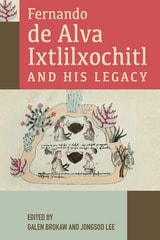
Fernando de Alva Ixtlilxochitl and His Legacy
Edited by Galen Brokaw and Jongsoo Lee
University of Arizona Press, 2016
His seventeenth-century writings have had a lasting effect on the understanding of Mexican culture and history from the colonial period to the present. But because Alva Ixtlilxochitl frequently used Tetzcocan oral traditions and pictorial codices of his ancestors’ heroic achievements, scholars have long said that his writings exhibit a Tetzcocan bias that distorts representations and understandings of Prehispanic Mexican history and culture.
Fernando de Alva Ixtlilxochitl and His Legacy is a collection of essays providing deeper perspective on the life, work, and legacy of Alva Ixtlilxochitl. The contributors revise and broaden previous understandings of Alva Ixtlilxochitl’s racial and cultural identity, including his method of transcribing pictorial texts, his treatment of gender, and his influence on Mexican nationalism. Chapter authors coming from the fields of anthropology, history, linguistics, and literature offer valuable new perspectives on the complexities of Alva Ixtlilxochitl’s life and his contributions to the history and scholarship of Mexico.
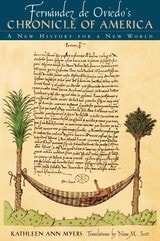
Fernández de Oviedo's Chronicle of America
A New History for a New WorldBy Kathleen Ann Myers
University of Texas Press, 2007
Gonzalo Fernández de Oviedo (1478-1557) wrote the first comprehensive history of Spanish America, the Historia general y natural de las Indias, a sprawling, constantly revised work in which Oviedo attempted nothing less than a complete account of the Spanish discovery, conquest, and colonization of the Americas from 1492 to 1547, along with descriptions of the land's flora, fauna, and indigenous peoples. His Historia, which grew to an astounding fifty volumes, includes numerous interviews with the Spanish and indigenous leaders who were literally making history, the first extensive field drawings of America rendered by a European, reports of exotic creatures, ethnographic descriptions of indigenous groups, and detailed reports about the conquest and colonization process.
Fernández de Oviedo's Chronicle of America explores how, in writing his Historia, Oviedo created a new historiographical model that reflected the vastness of the Americas and Spain's enterprise there. Kathleen Myers uses a series of case studies—focusing on Oviedo's self-portraits, drawings of American phenomena, approaches to myth, process of revision, and depictions of Native Americans—to analyze Oviedo's narrative and rhetorical strategies and show how they relate to the politics, history, and discursive practices of his time. Accompanying the case studies are all of Oviedo's extant field drawings and a wide selection of his text in English translation.
The first study to examine the entire Historia and its evolving rhetorical and historical context, this book confirms Oviedo's assertion that "the New World required a different kind of history" as it helps modern readers understand how the discovery of the Americas became a catalyst for European historiographical change.

Ferraro
My StoryGeraldine Ferraro with Linda Bird Francke and with a foreword by Marie Wilson
Northwestern University Press, 2004
Ferraro's run for vice-president was an important moment in American history. The time is right for telling a new generation this story of women's collective political power and the difference women office holders can and do make to public policy.
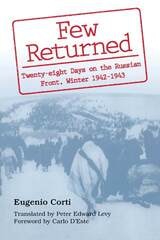
Few Returned
Twenty-eight Days on the Russian Front, Winter 1942-1943Eugenio Corti, Translated by Peter Edward Levy, & Foreword by Carlo D'Este
University of Missouri Press, 1997
After World War II more than one hundred books appeared that dealt with the experience of the Italian army in Russia, and particularly the terrible winter retreat of 1942-1943. Few Returned (I piu' non ritornano) is the only one of these that is still regularly reissued in Italy.
Eugenio Corti, who was a twenty-one-year-old second lieutenant at the time, found himself, together with 30,000 Italians and a smaller contingent of Germans, encircled on the banks of the River Don by enemy forces who far outnumbered them. To break out of this encirclement, these men undertook a desperate march across the snow, with constant engagements and in temperatures ranging from -20 to -30 degrees Fahrenheit. Whereas supplies were air-dropped to the Germans, the predicament of the Italians was far more difficult: lacking gasoline, they were compelled to abandon their vehicles and to proceed without heavy arms, equipment, ammunition, or provisions. Even the wounded had to be abandoned, though it was well known that the soldiers of the Red Army"enraged by the brutality of the German invasion"killed all the enemy wounded who fell into their hands. After twenty-eight days of encirclement, only 4,000 of the 30,000 Italians made it out of the pocket.
Why is it that Corti's book, which was first published in 1947, continues after fifty years to be reprinted in Italy? Because, as Mario Apollonio of the University of Milan said, when the book first appeared: "It is a chronicle . . . but it is much more than that: behind the physical reality, there is the truth" about man at his most tragic hour. Apollonio adds: "The power of the writing immediately transforms the document into drama"; the result is a "novel-poem-drama-history." The philosopher Benedetto Croce found in Corti's book "the not infrequent gleam of human goodness and nobility." Few Returned is a classic of war literature that succeeds in bringing home the full hatefulness of war.
Eugenio Corti began writing his diary at a military hospital immediately after being repatriated from the Russian front. When in September 1943 Italy found itself cut in two by the Armistice, Corti, loyal to his officer's oath, joined up with what remained of the Italian army in the south and with those few troops participated in driving the Germans off Italian soil, fighting at the side of the British Eighth and the American Fifth Armies.
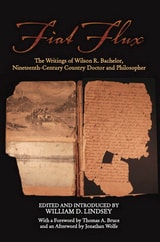
Fiat Flux
The Writings of Wilson R. Bachelor, Nineteenth-Century Country Doctor and PhilosopherWilliam D. Lindsey
University of Arkansas Press, 2013

Fictions of Certitude
Science, Faith, and the Search for Meaning, 1840–1920John S. Haller Jr.
University of Alabama Press, 2020
The search for belief and meaning among nineteenth-century intellectuals
The nineteenth century’s explosion of scientific theories and new technologies undermined many deep-seated beliefs that had long formed the basis of Western society, making it impossible for many to retain the unconditional faith of their forebears. A myriad of discoveries—including Faraday’s electromagnetic induction, Joule’s law of conservation of energy, Pasteur’s germ theory, Darwin’s and Wallace’s theories of evolution by natural selection, and Planck’s work on quantum theory—shattered conventional understandings of the world that had been dictated by traditional religious teachings and philosophical systems for centuries.
Fictions of Certitude: Science, Faith, and the Search for Meaning, 1840–1920 investigates the fin de siècle search for truth and meaning in a world that had been radically transformed. John S. Haller Jr. examines the moral and philosophical journeys of nine European and American intellectuals who sought deeper understanding amid such paradigmatic upheaval. Auguste Comte, John Henry Newman, Herbert Spencer, Alfred Russel Wallace, Thomas Henry Huxley, John Fiske, William James, Lester Frank Ward, and Paul Carus all belonged to an age in which one world was passing while another world that was both astounding and threatening was rising to take its place.
For Haller, what makes the work of these nine thinkers worthy of examination is how they strove in different ways to find certitude and belief in the face of an epochal sea change. Some found ways to reconceptualize a world in which God and nature coexist. For others, the challenge was to discern meaning in a world in which no higher power or purpose can be found. As explained by D. H. Meyer, “The later Victorians were perhaps the last generation among English-speaking intellectuals able to believe that man was capable of understanding his universe, just as they were the first generation collectively to suspect that he never would.”
Fictions of Consciousness
Mill, Newman, and the Reading of Victorian ProseJonathan Loesberg
Rutgers University Press, 1986