Results by title
1917 books match the query 'Law' and 55 start with f
Facing the Future
The Indian Child Welfare Act at 30Matthew L.M. Fletcher
Michigan State University Press, 2009
The U.S. Congress is charged with responsibility for the protection and preservation of American Indian tribes, including Indian children. In 1978, Congress enacted the Indian Child Welfare Act (ICWA), with the intent to "protect the best interests of Indian children and to promote the stability and security of Indian tribes and families." ICWA sets federal requirements that apply to state child custody proceedings involving an Indian child who is a member of or eligible for membership in a federally recognized tribe. ICWA also sets out federal requirements regarding removal of Indian children and their placement in foster or adoptive homes, and it allows the child's tribe to intervene in the case.
The history of the Act is a tangle of legal, social, and emotional complications. Some state courts have found unusual legal arguments to avoid applying the law, while some states have gone beyond the terms of the Act to provide greater protections for Indian people. This collection brings together for the first time a multidisciplinary assessment of the law—with scholars, practitioners, lawyers, and social workers all offering perspectives on the value and importance of the Indian Child Welfare Act.
Fact and Fancy in Television Regulation
An Economic Study of Policy AlternativesHarvey J. Levin
Russell Sage Foundation, 1980
Failing Law Schools
Brian Z. Tamanaha
University of Chicago Press, 2012
On the surface, law schools today are thriving. Enrollments are on the rise, and their resources are often the envy of every other university department. Law professors are among the highest paid and play key roles as public intellectuals, advisers, and government officials. Yet behind the flourishing facade, law schools are failing abjectly. Recent front-page stories have detailed widespread dubious practices, including false reporting of LSAT and GPA scores, misleading placement reports, and the fundamental failure to prepare graduates to enter the profession.
Addressing all these problems and more in a ringing critique is renowned legal scholar Brian Z. Tamanaha. Piece by piece, Tamanaha lays out the how and why of the crisis and the likely consequences if the current trend continues. The out-of-pocket cost of obtaining a law degree at many schools now approaches $200,000. The average law school graduate’s debt is around $100,000—the highest it has ever been—while the legal job market is the worst in decades, with the scarce jobs offering starting salaries well below what is needed to handle such a debt load. At the heart of the problem, Tamanaha argues, are the economic demands and competitive pressures on law schools—driven by competition over U.S. News and World Report ranking. When paired with a lack of regulatory oversight, the work environment of professors, the limited information available to prospective students, and loan-based tuition financing, the result is a system that is fundamentally unsustainable.
Growing concern with the crisis in legal education has led to high-profile coverage in the Wall Street Journal and the New York Times, and many observers expect it soon will be the focus of congressional scrutiny. Bringing to the table his years of experience from within the legal academy, Tamanaha has provided the perfect resource for assessing what’s wrong with law schools and figuring out how to fix them.
Faith in Paper
The Ethnohistory and Litigation of Upper Great Lakes Indian TreatiesCharles E. Cleland
University of Michigan Press, 2011
Faking Liberties
Religious Freedom in American-Occupied JapanJolyon Baraka Thomas
University of Chicago Press, 2019
Through a fresh analysis of pre-war Japanese law, Jolyon Baraka Thomas demonstrates that the occupiers’ triumphant narrative obscured salient Japanese political debates about religious freedom. Indeed, Thomas reveals that American occupiers also vehemently disagreed about the topic. By reconstructing these vibrant debates, Faking Liberties unsettles any notion of American authorship and imposition of religious freedom. Instead, Thomas shows that, during the Occupation, a dialogue about freedom of religion ensued that constructed a new global set of political norms that continue to form policies today.
Fall Guys
False Confessions and the Politics of MurderJim Fisher
Southern Illinois University Press, 1996
Jim Fisher, criminal justice professor and former FBI agent, reveals how he uncovered the framing of two boys in a pair of unrelated murders committed in 1956 and 1958.
In the first of the cases, eleven-year-old Charlie Zubryd confessed that at the age of eight, he had murdered his widowed mother by driving a hatchet into her skull. The crime was committed in the basement of the modest Zubryd home in a rural section of Sewickley Township in western Pennsylvania, an area not far from Pittsburgh. Following intense police questioning, young Zubryd confessed to the crime in March 1959, a full twenty-eight months after the bloody murder of his mother.
Too young to prosecute, Charlie Zubryd was adopted after his confession and a brief stay in a mental ward. A childless couple gave Zubryd a new name and identity. It would be twenty years before Charlie Zubryd—now going by the name Chuck Duffy—would have any contact with his biological family.
When Zubryd/Duffy made an effort to get his real family back, he was rejected because his relatives still believed he had murdered his mother. In fact, until Fisher began to investigate the case in 1989, Chuck Duffy himself was not sure he had not killed his mother during some kind of mental blackout.
The second murder occurred in 1958, two years after the Zubryd case. Thirteen-year-old Jerry Pacek endured forty-one hours of police grilling before he confessed to raping and killing fifty-year-old Lillian Steveck as she walked home one evening from a bus stop in Breckenridge, Pennsylvania. Pacek told the same Allegheny County homicide detective who had framed Charlie Zubryd that he had killed the woman with a variety of blunt objects, none of which were ever found. The thirteen-year-old boy was tried and convicted of the murder the following spring. He was sent to Camp Hill Prison, where he remained incarcerated for ten years.
Fisher’s investigation cleared the names of both the wrongfully accused boys. Because of his investigation, the Zubryd case was reopened, which led to the identification of a vicious killer. In 1991, Fisher’s investigative efforts convinced the governor of Pennsylvania to grant a full pardon to Jerry Pacek, who as a teenager had served ten years in an adult prison for a murder he had not committed.
Jim Fisher and the Zubryd and Pacek stories have been featured on a number of nationally broadcast television programs.
Fallout
Nuclear Diplomacy in an Age of Global FractureGrégoire Mallard
University of Chicago Press, 2014
In Fallout, Grégoire Mallard seeks to understand why some nations agreed to these limitations of their sovereign will—and why others decidedly did not. He builds his investigation around the 1968 signing of the Nuclear Nonproliferation Treaty (NPT), which, though binding in nature, wasn’t adhered to consistently by all signatory nations. Mallard looks at Europe’s observance of treaty rules in contrast to the three holdouts in the global nonproliferation regime: Israel, India, and Pakistan. He seeks to find reasons for these discrepancies, and makes the compelling case that who wrote the treaty and how the rules were written—whether transparently, ambiguously, or opaquely—had major significance in how the rules were interpreted and whether they were then followed or dismissed as regimes changed. In honing in on this important piece of the story, Mallard not only provides a new perspective on our diplomatic history, but, more significantly, draws important conclusions about potential conditions that could facilitate the inclusion of the remaining NPT holdouts. Fallout is an important and timely book sure to be of interest to policy makers, activists, and concerned citizens alike.

Family Law Matters
Katherine O'Donovan
Pluto Press, 1993
Family and Disability Activism
Beyond Allies and ObstaclesEdited by Pamela Block, Allison C. Carey, and Richard K. Scotch
Temple University Press, 2025
Family and Disability Activism reveals how families and disabled people who identify as BIPOC and/or LGBTQIA2S+ understand issues of rights versus justice. Contributions by Deaf and disabled activists emphasize the frequent need for either care or independence. Other chapters show how members of the disabled community and their families must navigate systemic issues of segregation, institutionalization, and access to special education services differently depending on their ethnic and racial identities.
Expanding the conversation about disability, kinship, biological and chosen families, and activism, this volume amplifies important voices in the fight for disability rights.
Contributors: Erin Compton, Diane Compton, Jaclyn Ellis, Laura LeBrun Hatcher, Elena Hung, Bridget Liang, Jenelle Rouse, Cheryl Najarian Souza, Jeneva Stone, Roger A. Stone, Lisette E. Torres, Grace Tsao, and the editors
Family, Law, and Community
Supporting the CovenantMargaret F. Brinig
University of Chicago Press, 2010
In the wake of vast social and economic changes, the nuclear family has lost its dominance, both as an ideal and in practice. Some welcome this shift, while others see civilization itself in peril—but few move beyond ideology to develop a nuanced understanding of how families function in society. In this provocative book, Margaret F. Brinig draws on research from a variety of disciplines to offer a distinctive study of family dynamics and social policy.
Concentrating on legal reform, Brinig examines a range of subjects, including cohabitation, custody, grandparent visitation, and domestic violence. She concludes that conventional legal reforms and the social programs they engender ignore social capital: the trust and support given to families by a community. Traditional families generate much more social capital than nontraditional ones, Brinig concludes, which leads to clear rewards for the children. Firmly grounded in empirical research, Family, Law, and Community argues that family policy can only be effective if it is guided by an understanding of the importance of social capital and the advantages held by families that accrue it.
Fathers Under Fire
The Revolution in Child Support EnforcementIrwin Garfinkel
Russell Sage Foundation, 1998
Fear and the First Amendment
Controversial Cases of the Roberts CourtKevin A. Johnson and Craig R. Smith
University of Alabama Press, 2024
DISTINGUISHED PUBLICATION AWARD FOR THE NATIONAL COMMUNICATION ASSOCIATION'S COMMUNICATION AND LAW DIVISION
The First Amendment: protected by law, threatened by fear in the Roberts Supreme Court.
In Fear and the First Amendment: Controversial Cases of the Roberts Court, Kevin A. Johnson and Craig R. Smith offer a deeply considered examination of the ways fear figures in First Amendment questions. Bringing together literature on theories of fear in rhetorical and philosophical traditions, Johnson and Smith focus on the rulings from the Roberts Court, which form a pivotal era of dramatic precedents. Each chapter analyzes one or more First Amendment cases and a variety of related fears—whether evidentiary or not—that pertain to a given case.
These cases include Morse v. Frederick, which takes up the competing fears of school administrators’ loss of authority and students’ loss of free speech rights. The authors touch on corporate funding of elections in Citizens United v. Federal Elections Commission, from the fear of corporate influence on electoral politics to corporate fears of alienating their consumers by backing political candidates. They explore religious freedom and fears of homosexuality in Christian Legal Society v. Martinez. Similarly, in Snyder v. Phelps, the authors delve further into fears of God, death, emotional distress, failing as a parent, and losing one’s reputation. Next, they investigate parents’ anxieties about violence in video games in Brown v. Entertainment Merchants Association. Finally, Johnson and Smith examine the role of fear in indecent, obscene, and graphic communication in three cases: FCC v. Fox Television Stations, Ashcroft v. American Civil Liberties Union, and United States v. Stevens.
Together these cases reveal fear to be an endemic factor in the rhetoric of First Amendment cases. This fascinating and original work will appeal to current legal practitioners and students of law, rhetoric, philosophy, and the First Amendment.
Fear of Judging
Sentencing Guidelines in the Federal CourtsKate Stith and José A. Cabranes
University of Chicago Press, 1998
Fear of Judging is the first full-scale history, analysis, and critique of the new sentencing regime. The authors show that the present system has burdened the courts, dehumanized the sentencing process, and, by repressing judicial discretion, eroded the constitutional balance of powers. Eschewing ideological or politically oriented critiques of the Guidelines and offering alternatives to the current system, Stith and Cabranes defend a vision of justice that requires judges to perform what has traditionally been considered their central task—exercising judgment.

Federal Courts in the International Human Rights Paradigm
Kenneth C. Randall
Duke University Press, 1990
Federal Criminal Law Doctrines
The Forgotten Influence of National ProhibitionKenneth M. Murchison
Duke University Press, 1994
In this detailed examination, Murchison considers a portion of the Supreme Court’s work prior to the New Deal crisis, a period insufficiently considered until now. Among the developments he discusses are those relating to the defense of entrapment, the Fourth Amendment’s protection against unreasonable search and seizure, the Fifth Amendment’s prohibition against double jeopardy, property forfeitures, and the jury trial guarantees for criminal proceedings. His analysis reveals a court less rigid, less consistently divided along modern ideological lines, and more tolerant of governmental authority than traditional wisdom would suggest. Thus, Murchison offers a framework for a revisionist view of the Supreme Court’s activities during this period.
Exploring an important connection between the Eighteenth Amendment, the Volstead Act, and the development of federal criminal law, this book documents what was arguably the nation’s first criminal law revolution at the federal level. Explaining the modern origins of doctrines that still inform federal criminal law, Murchison also provides a case study of how legal doctrine responds to changing social conditions. Federal Criminal Law Doctrines will add immeasurably to the work of historians and legal scholars alike.

Federal Judges
The Appointing ProcessHarold W. Chase
University of Minnesota Press, 1972
Federal Judges was first published in 1972. Minnesota Archive Editions uses digital technology to make long-unavailable books once again accessible, and are published unaltered from the original University of Minnesota Press editions.
Despite the importance of federal judges in the system of American government, relatively little scholarly attention has been directed toward the process of appointing these judges -- how it operates and what types of individuals become judges. Professor Chase analyzes and evaluates the appointing system and makes some provocative proposals for changes which he believes would improve and strengthen the federal judicial system.
The study is concerned with the appointing process as it applies to federal judges below the level of the Supreme Court who receive lifetime appointments. These are the judges who serve in what are known as Article III courts, the courts constituted by Congress in accordance with Article III of the Constitution. They include courts of appeals, district courts, the court of claims, the court of customs and patent appeals, and the customs court.
For this study the author had access to Department of Justice records, and he observed for several months the negotiations and discussions in the department involving the selection of judges by President Kennedy's administration. He conducted extensive interviews with officials in the Kennedy administration as well as with officials in the Eisenhower and Johnson administrations who played leading roles in the appointment of judges. In addition, he interviewed many judges, lawyers, newsmen, and political leaders, as well as a sampling of U.S. senators and most of the recent chairmen of the American Bar Association's Committee on Federal Judiciary.
Federal Judiciary and Institutional Change
Deborah J. Barrow, Gary Zuk, and Gerard S. Gryski
University of Michigan Press, 1996
Federalism
A DialogueDavid L. Shapiro
Northwestern University Press, 1995
Feedback Loops
How to Give and Receive High-Quality FeedbackPatrick Barry
Michigan Publishing Services, 2023
Learning how to give and receive feedback is fundamental to the development of every student and professional. Yet few of us are ever taught anything like “feedback skills.”
This book, which is the first in the Feedback Loops series, is designed to change that. Here is what students who have taken the University of Michigan Law School course on which the series is based have said about it:
-
“One of the most memorable and useful classes I have taken in law school!”
-
“Excellent, full stop.”
-
“This class was always a fun highlight of my week.”
Feeling Like a State
Desire, Denial, and the Recasting of AuthorityDavina Cooper
Duke University Press, 2019

Female Gladiators
Gender, Law, and Contact Sport in AmericaSarah K. Fields
University of Illinois Press, 2004
Female Gladiators is the first book to examine legal and social battles over the right of women to participate with men in contact sports. The impetus to begin legal proceedings was the 1972 enactment of Title IX, which prohibited discrimination in educational settings, but it was the Equal Protection Clause of the U.S. Constitution and the equal rights amendments of state constitutions that ultimately opened doors. Despite court rulings, however, many in American society resisted—and continue to resist—allowing girls in dugouts and other spaces traditionally defined as male territories.
Inspired, women and girls began to demand access to the contact sports which society had previously deemed too strenuous or violent for them to play. When the leagues continued to bar girls simply because they were not boys, the girls went to court. Sarah K. Fields's Female Gladiators is the only book to examine the legal and social battles over gender and contact sport that continue to rage today.
Feminist Post-Liberalism
Judith A. Baer
Temple University Press, 2020
Feminism and liberalism need each other, argues Judith Baer. Her provocative book, Feminist Post-Liberalism, refutes both conservative and radical critiques. To make her case, she rejects classical liberalism in favor of a welfare—and possibly socialist—post-liberalism that will prevent capitalism and a concentration of power that reinforces male supremacy. Together, feminism and liberalism can better elucidate controversies in American politics, law, and society.
Baer emphasizes that tolerance and self-examination are virtues, but within both feminist and liberal thought these virtues have been carried to extremes. Feminist theory needs liberalism's respect for reason, while liberal theory needs to incorporate emotion. Liberalism focuses too narrowly on the individual, while feminism needs a dose of individualism.
Feminist Post-Liberalism includes anthropological foundations of male dominance to explore topics ranging from crime to cultural appropriation. Baer develops a theory that is true to the principles of both feminist and liberal ideologies.

Fifty-Eight Lonely Men
Southern Federal Judges and School DesegregationJ. W. Peltason
University of Illinois Press, 1971
Fighting for Their Lives
Inside the Experience of Capital Defense AttorneysSusannah Sheffer
Vanderbilt University Press, 2013
Through vivid interviews amplified by the author's responses and commentary, these attorneys reveal aspects of their internal experience that they have never talked about until now. How do capital defenders manage the weight of the responsibility they carry? To what extent do they experience symptoms of trauma in the aftermath of losing a client to execution or as a result of the cumulative effects of engaging in capital defense work? What motivates them, and what do they draw upon, in order to keep engaging in such emotionally demanding work? Have they considered practicing other types of law? What can we learn from capital defenders not only about the deep and long-term effects of the death penalty but also about broader human questions of hope, effectiveness, success, failure, strength, fragility, and perseverance?
Fighting the Death Penalty
A Fifty-Year Journey of Argument and PersuasionEugene G. Wanger
Michigan State University Press, 2019
Finding the Answers to Legal Questions
Virginia M. Tucker
American Library Association, 2017

Finding the Answers to Legal Questions
A How-To-Do-It ManualAmerican Library Association, 2011

Finding the Public Domain
Copyright Review Management System ToolkitMelissa Levine, Kristina Eden, Justin Bonfiglio, and Richard Adler
Michigan Publishing Services, 2016
How can I tell if something is in the public domain? This is the central question addressed daily by the Copyright Review Management System (CRMS) project. It is a special question and one essential to the social bargain that society has struck with authors and rights holders.
It is also a deceptively simple question. There should be a straightforward answer, especially for books. It should be easy to know when something is—or is not—subject to copyright. And yet, in an age of absolute fluidity of media and medium, even plain old books can be highly complex embodiments of copyright. We need to make it easier to ascertain whether a work is in the public domain. If the rights of copyright holders are to be respected and valued as part of the social bargain, the public domain as a matter of copyright law should be ascertainable and enjoyed
.
Given this complexity, consider the determination of the copyright status of a given creative work as a design problem. How do we move the copyright status of works in the collections of our libraries, museums, and archives from confusion and uncertainty to clarity and opportunity? Working over a span of nearly eight years, the University of Michigan Library received three grants from the Institute of Museum and Library Services (IMLS) to generously fund CRMS, a cooperative effort by partner research libraries to identify books in the public domain in HathiTrust. The Toolkit is a resource that aims to allow others to understand and replicate the work done by CRMS.
First Amendment Studies in Arkansas
The Richard S. Arnold Prize EssaysStephen Smith
University of Arkansas Press, 2016
This collection of fourteen essays written by young communication scholars at the University of Arkansas presents unique insights into how First Amendment issues have played out in the state. Rather than exploring the particular legal issues and the constitutional principles enunciated by the courts, First Amendment Studies tells the stories of actual people expressing challenged or unpopular points of view and reveals the ways that constitutional controversies arise from the actions of local officials and individual citizens.
Drawing on public documents as well as extensive interviews with participants, these essays demonstrate the dynamics of democratic dissent—on college campuses, in public schools, in churches, on the streets, in the forests and on the farms, and in legislative chambers and courtrooms.
Each essay was selected for the Richard S. Arnold Prize in First Amendment Studies, an endowed fund established in 1999 to encourage University of Arkansas graduate students in communication and the liberal arts to explore and examine questions about freedom of speech and freedom of religion.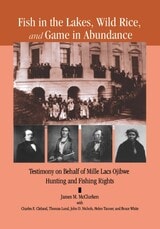
Fish in the Lakes, Wild Rice, and Game in Abundance
Testimony on Behalf of Mille Lacs Ojibwe Hunting and Fishing RightsEdited by James M. McClurken
Michigan State University Press, 2000
On 13 August 1990 members of the Mille Lacs Band of Ojibwe filed a lawsuit against the State of Minnesota for interfering with the hunting, fishing, and gathering rights that had been guaranteed to them in an 1837 treaty with the United States. In order to interpret the treaty the courts had to consider historical circumstances, the intentions of the parties, and the treaty's implementation. The Mille Lacs Band faced a mammoth challenge. How does one argue the Native side of the case when all historical documentation was written by non- Natives? The Mille Lacs selected six scholars to testify for them. Published here for the first time, Charles Cleland, James McClurken, Helen Tanner, John Nichols, Thomas Lund, and Bruce White discuss the circumstances under which the treaty was written, the personalities involved in the negotiations and the legal rhetoric of the times, as well as analyze related legal conflicts between Natives and non- Natives. Justice Sandra Day O'Connor delivered the 1999 Opinion of the [United States Supreme] Court.
Fitting the Facts of Crime
An Invitation to Biopsychosocial CriminologyChad Posick, Michael Rocque, and J.C. Barnes
Temple University Press, 2022
Biosocial criminology—and biosocial criminologists—focuses on both the environmental and biological factors that contribute to antisocial behavior. Importantly, these two domains are not separate parts of an equation but pieces of the same puzzle that fit together for a complete picture of the causes of crime/antisocial behavior.
Fitting the Facts of Crime applies a biopsychosocial lens to the “13 facts of crime” identified by John Braithwaite in his classic book, Crime, Shame and Reintegration. The authors unpack established facts—about gender and sex, age, environment, education, class, social bonds and associations, stress, and other influences—providing both empirical research and evidence from biopsychosocial criminology to address the etiology behind these facts and exactly how they are related to deviant behavior.
With their approach, the authors show how biopsychosocial criminology can be a unifying framework to enrich our understanding of the most robust and well-established topics in the field. In so doing, they demonstrate how biological and psychological findings can be responsibly combined with social theories to lend new insight into existing inquiries and solutions. Designed to become a standard text for criminology in general, Fitting the Facts of Crime introduces key concepts and applies them to real-world situations.
Flunking Democracy
Schools, Courts, and Civic ParticipationMichael A. Rebell
University of Chicago Press, 2018
In Flunking Democracy, Michael A. Rebell makes the case that this is not a recent problem, but rather that for generations now, America’s schools have systematically failed to prepare students to be capable citizens. Rebell analyzes the causes of this failure, provides a detailed analysis of what we know about how to prepare students for productive citizenship, and considers examples of best practices. Rebell further argues that this civic decline is also a legal failure—a gross violation of both federal and state constitutions that can only be addressed by the courts. Flunking Democracy concludes with specific recommendations for how the courts can and should address this deficiency, and is essential reading for anyone interested in education, the law, and democratic society.
Foreign in a Domestic Sense
Puerto Rico, American Expansion, and the ConstitutionChristina Duffy Burnett and Burke Marshall, eds.
Duke University Press, 2001
More than four million U.S. citizens currently live in five “unincorporated” U.S. territories. The inhabitants of these vestiges of an American empire are denied full representation in Congress and cannot vote in presidential elections. Focusing on Puerto Rico, the largest and most populous of the territories, Foreign in a Domestic Sense sheds much-needed light on the United States’ unfinished colonial experiment and its legacy of racially rooted imperialism, while insisting on the centrality of these “marginal” regions in any serious treatment of American constitutional history. For one hundred years, Puerto Ricans have struggled to define their place in a nation that neither wants them nor wants to let them go. They are caught in a debate too politicized to yield meaningful answers. Meanwhile, doubts concerning the constitutionality of keeping colonies have languished on the margins of mainstream scholarship, overlooked by scholars outside the island and ignored by the nation at large.
This book does more than simply fill a glaring omission in the study of race, cultural identity, and the Constitution; it also makes a crucial contribution to the study of American federalism, serves as a foundation for substantive debate on Puerto Rico’s status, and meets an urgent need for dialogue on territorial status between the mainland and the territories.
Contributors. José Julián Álvarez González, Roberto Aponte Toro, Christina Duffy Burnett, José A. Cabranes, Sanford Levinson, Burke Marshall, Gerald L. Neuman, Angel R. Oquendo, Juan Perea, Efrén Rivera Ramos, Rogers M. Smith, E. Robert Statham Jr., Brook Thomas, Richard Thornburgh, Juan R. Torruella, José Trías Monge, Mark Tushnet, Mark Weiner
Forensic Epidemiology
A Comprehensive Guide for Legal and Epidemiology ProfessionalsSana Loue
Southern Illinois University Press, 1999
Sana Loue explores the concepts of legal and epidemiological causation, the use of epidemiological data based on populations to determine causation in an individual case, and the use of epidemiological evidence in litigation, including the reliance on experts and expert witnesses.
Loue provides a guide for the attorney with little or no background in epidemiological theory and for the epidemiologist contemplating a new role as an expert witness. She assumes of her readers a working knowledge of the Federal Rules of Civil Procedure and the Federal Rules of Evidence.
Discussing the epidemiologist as expert witness, Loue covers the nature of that testimony, the purpose of the testimony, and the qualifications necessary to be regarded as an expert witness. She examines various legal theories of causation, primarily in the context of product liability and toxic tort, and addresses epidemiological principles and methods used in the process of causal inference.
Loue also focuses on legal mechanisms used to assess causation. Her concern here is with depositions and testimony and the preparation of epidemiology experts. She concludes her study by comparing the legal and epidemiological concepts of causation, using actual legal cases as examples.
Throughout the text, Loue incorporates excerpts from depositions, interrogatories, and trial testimony to provide concrete examples. She also sets up an appendix to provide nonattorney readers with an overview of the legal system. Ultimately, her goal is to foster a greater understanding between law and epidemiology.
Forensics Under Fire
Are Bad Science and Dueling Experts Corrupting Criminal Justice?Jim Fisher
Rutgers University Press, 2008
Television shows like CSI, Forensic Files, and The New Detectives make it look so easy. A crime-scene photographer snaps photographs, a fingerprint technician examines a gun, uniformed officers seal off a house while detectives gather hair and blood samples, placing them carefully into separate evidence containers. In a crime laboratory, a suspect's hands are meticulously examined for gunshot residue. An autopsy is performed in order to determine range and angle of the gunshot and time-of-death evidence. Dozens of tests and analyses are performed and cross-referenced. A conviction is made. Another crime is solved. The credits roll.
The American public has become captivated by success stories like this one with their satisfyingly definitive conclusions, all made possible because of the wonders of forensic science. Unfortunately, however, popular television dramas do not represent the way most homicide cases in the United States are actually handled. Crime scenes are not always protected from contamination; physical evidence is often packaged improperly, lost, or left unaccounted for; forensic experts are not always consulted; and mistakes and omissions on the autopsy table frequently cut investigations short or send detectives down the wrong investigative path.
In Forensics Under Fire, Jim Fisher makes a compelling case that these and other problems in the practice of forensic science allow offenders to escape justice and can also lead to the imprisonment of innocent people. Bringing together examples from a host of high-profile criminal cases and familiar figures, such as the JonBenet Ramsey case and Dr. Henry Lee who presented physical evidence in the O. J. Simpson trial, along with many lesser known but fascinating stories, Fisher presents daunting evidence that forensic science has a long way to go before it lives up to its potential and the public's expectations.
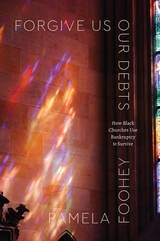
Forgive Us Our Debts
How Black Churches Use Bankruptcy to SurvivePamela Foohey
University of Chicago Press, 2026
A revelatory study of how Black churches turn the financial system back against predatory lenders.
When American churches face financial difficulties, a disproportionately high number of Black churches reorganize under chapter 11 bankruptcy. There are no easy explanations for this distinction: not location, denomination, leadership structure, or the reasons for the loans. In Forgive Us Our Debts, legal scholar Pamela Foohey asks why, then, Black churches account for two-thirds of all congregations that file for chapter 11 bankruptcy every year.
Drawing on case studies of six Black churches and one white church, and 150 interviews with church leaders, members, and attorneys, Foohey finds answers in a long history of predatory lending. Unable to negotiate with recalcitrant loan officers, Black churches turn to the legal system to force reasonable concessions from lenders to prevent the stripping of their wealth and the destruction of their communities. While the structural discrimination remains, these churches have found in the bankruptcy system a refuge and some power to fight back.
Foucault and Law
Towards a Sociology of Law As GovernanceAlan Hunt and Gary Wickham
Pluto Press, 1994
Foundations of Information Law
Paul T. Jaeger, Jonathan Lazar, Ursula Gorham, and Natalie Greene Taylor
American Library Association, 2023
- discusses information law as part of a continuum of interrelated issues rather than an assortment of discrete topics;
- examines information law in the context of different types of libraries;
- delves into the manifold legal issues raised when interacting with patrons and communities, from intellectual freedom topics like censorship and public activities in the library to the legal issues surrounding materials and information access;
- elucidates operational and management legal issues, including library security, interacting with law enforcement, advocacy, lobbying, funding, human resources, and liability;
- promotes literacy of the law, its structures, and its terminology as a professional skill;
- gives readers the tools to find and understand different sources of legal authority and demonstrates how to interpret them when they conflict; and
- explores information law as a national and cross-national issue.
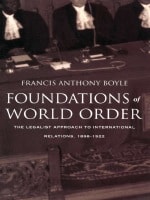
Foundations of World Order
The Legalist Approach to International Relations, 1898–1922Francis Anthony Boyle
Duke University Press, 1999
Although both the League of Nations and the Permanent Court of International Justice were rejected by the U.S. Senate, Boyle shows how the early governance of these institutions—precursors, respectively, to the United Nations and the International Court of Justice—informed later efforts to reduce and regulate transnational threats and the use of military force. Delving into such topics as the United States and its initial stance of neutrality in World War I and its imperial policy toward Latin America and the Caribbean, Boyle offers detailed readings of the relevant treaties, tribunals, and conferences, and assesses the political actors involved. Taking up the legalist point of view, he discusses the codification of customary international law, the obligatory arbitration of international disputes, and the creation of a new regime for the settlement of such disputes.
Boyle has provided in Foundations of World Order a compelling portrait of the relationship between political power and law, and of the impact of these forces on U.S. diplomacy. This volume will serve as a valuable resource to students, scholars, and practitioners of international law; it will also be of great interest to historians and political scientists engaged with issues of U.S. foreign policy and diplomatic history.
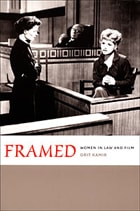
Framed
Women in Law and FilmOrit Kamir
Duke University Press, 2006
Through innovative readings of a dozen movies made between 1928 and 2001 in Europe, Japan, and the United States, Orit Kamir shows that in representing “gender crimes,” feature films have constructed a cinematic jurisprudence, training audiences worldwide in patterns of judgment of women (and men) in such situations. Offering a novel formulation of the emerging field of law and film, Kamir combines basic legal concepts—murder, rape, provocation, insanity, and self-defense—with narratology, social science methodologies, and film studies.
Framed not only offers a unique study of law and film but also points toward new directions in feminist thought. Shedding light on central feminist themes such as victimization and agency, multiculturalism, and postmodernism, Kamir outlines a feminist cinematic legal critique, a perspective from which to evaluate the “cinematic legalism” that indoctrinates and disciplines audiences around the world. Bringing an original perspective to feminist analysis, she demonstrates that the distinction between honor and dignity has crucial implications for how societies construct women, their social status, and their legal rights. In Framed, she outlines a dignity-oriented, honor-sensitive feminist approach to law and film.
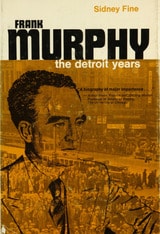
Frank Murphy
The Detroit YearsSidney Fine
University of Michigan Press, 1975
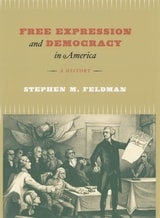
Free Expression and Democracy in America
A HistoryStephen M. Feldman
University of Chicago Press, 2008
Charting the course of free expression alongside the nation’s political evolution, from the birth of the Constitution to the quagmire of the Vietnam War, Stephen M. Feldman argues that our level of freedom is determined not only by the Supreme Court, but also by cultural, social, and economic forces. Along the way, he pinpoints the struggles of excluded groups—women, African Americans, and laborers—to participate in democratic government as pivotal to the development of free expression. In an age when our freedom of speech is once again at risk, this momentous book will be essential reading for legal historians, political scientists, and history buffs alike.
Free Speech, The People's Darling Privilege
Struggles for Freedom of Expression in American HistoryMichael Kent Curtis
Duke University Press, 2000
Curtis analyzes three crucial political struggles: the controversy that surrounded the 1798 Sedition Act, which raised the question of whether criticism of elected officials would be protected speech; the battle against slavery, which raised the question of whether Americans would be free to criticize a great moral, social, and political evil; and the controversy over anti-war speech during the Civil War. Many speech issues raised by these controversies were ultimately decided outside the judicial arena—in Congress, in state legislatures, and, perhaps most importantly, in public discussion and debate. Curtis maintains that modern proposals for changing free speech doctrine can usefully be examined in the light of this often ignored history. This broader history shows the crucial effect that politicians, activists, ordinary citizens—and later the courts—have had on the American understanding of free speech.
Filling a gap in legal history, this enlightening, richly researched historical investigation will be valuable for students and scholars of law, U.S. history, and political science, as well as for general readers interested in civil liberties and free speech.
Freedom and Tenure in the Academy
William W. Van Alstyne, ed.
Duke University Press, 1993
The original 1940 Statement of Principles on Academic Freedom and Tenure, which has been influential in determining institutional practices for the last half century, has required continual redefinition since its initial declaration. The volume begins with two overview articles: the most complete examination of the 1940 Statement ever provided (shedding light on some of its most troublesome clauses) and a historical review of the extent to which academic freedom has been accepted into domestic constitutional law. Subsequent articles address a range of issues related to academic freedom: the relationship between tenure and academic freedom; tenure and labor law; ideology and faculty selection; freedom of expression and the arts on campus; the boundaries defining hate speech and offensive expression; the clash between institutional and individual claims of academic freedom; and the practices of religious colleges in the United States.
Contributors. Ralph S. Brown, Matthew W. Finkin, Jordan E. Kurland, Michael W. McConnell, Walter P. Metzger, Robert M. O'Neil, David M. Rabban, Rodney A, Smolla, Janet Sinder, Judith Jarvis Thomson, William W. Van Alstyne

Friendship as Social Justice Activism
Critical Solidarities in a Global PerspectiveEdited by Niharika Banerjea, Debanuj DasGupta, Rohit K. Dasgupta, and Jaime M. Grant
Seagull Books, 0
Recent scholarship in different disciplinary fields as well as activist literature have brought attention to the political possibilities within friendship. The essays, memoirs, poems, and artwork in Friendship as Social Justice Activism address these political possibilities within the context of gender, sexuality, and economic justice movements.
From Chinese Exclusion to Guantánamo Bay
Plenary Power and the Prerogative StateNatsu Taylor Saito
University Press of Colorado, 2007
From Chinese Exclusion to Guantánamo Bay also provides a larger context for understanding problems resulting from the exercise of plenary power. Saito explains how the rights of individuals and groups deemed Other by virtue of race or national origin have been violated under both the Constitution and international law. The differing treatment of José Padilla and John Walker Lindh - both Americans accused of terrorism - provides an example of such disparate approaches. Such executive actions and their sanction by Congress and the judiciary, Saito argues, undermine not just individual rights but the very foundations of our national security - democracy and the rule of law.
From Chinese Exclusion to Guantánamo Bay will interest readers concerned with the historical background of constitutional protection in times of war and peace and will provide fascinating new material for scholars, teachers, and students of law, history, and ethnic studies
From Coexistence to Conquest
International Law and the Origins of the Arab-Israeli Conflict, 1891-1949Victor Kattan
Pluto Press, 2009
From Coexistence to Conquest seeks to explain how the Arab-Israeli conflict developed by looking beyond strict legalism to the men behind the policies adopted by the Great Powers at the dawn of the twentieth century. It controversially argues that Zionism was adopted by the British Government in its 1917 Balfour Declaration primarily as an immigration device and that it can be traced back to the 1903 Royal Commission on Alien Immigration and the Alien’s Act 1905.
The book places the violent reaction of the Palestine Arabs to mass Jewish immigration in the context of Zionism, highlighting the findings of several British commissions of inquiry which recommended that Britain abandon its policy. The book also revisits the controversies over the question of self-determination, and the partition of Palestine.
The Chapter on the 1948 conflict seeks to update international lawyers on the scholarship of Israel’s ‘new’ historians and reproduces some of the horrific accounts of the atrocities that took place. The penultimate chapter argues that Israel was created through an act of conquest or subjugation. The book concludes with a sobering analysis of the conflict arguing that neither Jews nor Arabs were to blame for starting it.
From Expectation to Experience
Essays on Law and Legal EducationJames Boyd White
University of Michigan Press, 2000
The essays here are united by two basic themes. First, the essays suggest that law can usefully be regarded not only as a set of rules designed to produce results in the material world, as it usually is regarded, but also as an imaginative and intellectual activity that has as its end the claim of meaning for human experience, both individual and collective. Second, they argue that education, including in the law, works by the constant modification of expectation by experience.
White claims that as we grow, whether as individuals or as a community, we constantly shape our expectations to our experiences. This happens with particular force and clarity in the law, which seeks to create both a certain set of expectations--this is how it works as a system of regulation--and a series of occasions and methods for their revision. White's interest is in the way these understandings can affect legal teaching, practice, and criticism.
The essays in this book examine such topics as the nature of legal education; the possibilities for writing in the law for both judges and lawyers; the relation between the practice of making and claiming meaning as it works in the law and in literatures more usually though of as imaginative, such as poetry or drama; the ways in which the law talks, and ought to talk, about business corporations, religion, and individual judgments; and the ethical possibilities of the practice of law when it is conceived of as a field for the making of meaning.
From Expectation to Experience will be of interest to lawyers, legal scholars, as well as students of law, law and literature, and ethics and literature.
James Boyd White is Hart Wright Professor of Law, Professor of English, and Adjunct Professor of Classical Studies, University of Michigan.
From Human Dignity to Natural Law
An IntroductionRichard Berquist
Catholic University of America Press, 2019