Results by title
28167 books match the query 'History' and 1092 start with f

Folklore Fights the Nazis
Humor in Occupied Norway, 1940–1945Kathleen Stokker
University of Wisconsin Press, 1997
In relating this dramatic story, Kathleen Stokker draws upon her many interviews with survivors of the Occupation and upon the archives of the Norwegian Resistance Museum and the University of Oslo. Central to the book are four “joke notebooks” kept by women ranging in age from eleven to thirty, who found sufficient meaning in this humor to risk recording and preserving it. Stokker also cites details from wartime diaries of three other women from East, West, and North Norway. Placing the joking in historical, cultural, and psychological context, Stokker demonstrates how this seemingly frivolous humor in fact contributed to the development of a resistance mentality among an initially confused, paralyzed, and dispirited population, stunned by the German invasion of their neutral country.
For this paperback edition, Stokker has added a new preface offering a comparative view of resistance through humor in neighboring Denmark.

Folklore by the Fireside
Text and Context of the Tuscan VegliaBy Alessandro Falassi
University of Texas Press, 1980
For centuries, social life in rural Tuscany has centered around the veglia, an evening gathering of family and friends at the hearth. Folklore by the Fireside is a thorough and insightful study of this custom—from the tales, riddles, lullabies, and folk prayers performed as the small children are put to bed to the courtship songs and dances later in the evening to the anti-veglia male gossip, card games, and protest songs originating in the tavern.
Alessandro Falassi skillfully correlates the veglia to the rites of passage and family values of an agrarian society. Although the impact of mass media and other factors has tended to weaken the tradition, even today Tuscan children are taught to behave and adolescents are guided along the conventional path to adulthood, courtship, and marriage through veglia folklore.
This is the first work to deal systematically with Tuscan folklore from a semiotic and structural viewpoint and to examine the veglia as a means of handing down traditional values. It is important not only for its careful, detailed description but also for its rigorous methodology and theoretical richness.

Folklore in New World Black Fiction
Writing and the Oral Traditional AestheticsChiji Akoma
The Ohio State University Press, 2007

Folklore in Utah
A History and Guide to ResourcesDavid Stanley
Utah State University Press, 2004
Over thirty scholars examine the development of folklore studies through the lens of over one hundred years of significant activity in a state that has provided grist for the mills of many prominent folklorists. In the past the Folklore Society of Utah has examined the work of such scholars in biographical and other essays published in its newsletters. This book incorporates those essays and goes well beyond them to include many other topices, offering a thorough history of folklore studies and a guide to resources for those pursuing research in Utah now and in the future.
The essays survey the development and contributions of folklore studies in Utah from 1892 to 2004 but also represent developments in both academic and public-sector folklore throughout the United States. Following a thorough historical introduction, part I profiles the first folklorists working in the state, including Hector Lee, Thomas Cheney, Austin and Alta Fife, Wayland Hand, and Lester Hubbard. Part II looks at the careers of prominent Utah folklorists Jan Harold Brunvand, Barre Toelken, and William B. Wilson, as well as the works of the next, current generation of folklorists. Part III covers studies in major folklore genres, with essays on the study of material culture, vernacular architecture, and Mormon, ethnic, Native American, and Latino folklore. Part IV examines public folklore programs including organizations, conferences, and tourism. Back matter describes academic programs at Utah institutions of higher education, summarizes the holdings of the various folklore archives in the state, and provides a complete cross-indexed bibliography of articles, books, and recordings of Utah folklore.

Folklore in the Nordic World
Thomas A. DuBois
University of Wisconsin Press, 2024
From methods of preparing suovabiergu (smoked reindeer meat) in Sápmi, to celebrating graduation by “running the falls” at Uppsala University in Sweden, to massive folk music festivals in Finland and tales of supernatural visitors bestowing baby names in Iceland, folklore offers unique insights into the everyday life of Nordic society. The study of Nordic folklore began in the nineteenth century, when early folklorists imagined that the true character of a nation could be found among the tales of the peasantry. Today, the theories, tools, and institutions developed by influential folklorists in the Nordic region continue to lead the way in documentation, preservation, and analysis of folklore.

Folksongs of Another America
Field Recordings from the Upper Midwest, 1937–1946James P. Leary
University of Wisconsin Press, 2018
America's Upper Midwest is a distinctive region where many indigenous and immigrant peoples have maintained, merged, and modified their folk song traditions for more than two centuries. In the 1930s and 40s, Sidney Robertson, Alan Lomax, and Helene Stratman-Thomas—with support from the Library of Congress and armed with bulky microphones, blank disks, spare needles, and cumbersome disk-cutting machines—recorded roughly 2000 songs and tunes throughout Michigan, Minnesota, and Wisconsin. Spanning dance tunes, ballads, lyric songs, hymns, laments, versified taunts, political anthems, street cries, and recitations, these field recordings—made by people born before or shortly after 1900—were captured at a transformative moment when America was in the throes of the Great Depression, World War II was erupting, and market-driven mass entertainment media were expanding rapidly. Yet, except for a handful of Anglo-American performances, these remarkable field recordings in more than twenty-five languages have remained largely unknown, along with the lives of their mostly immigrant, indigenous, rural, and working class performers.
Since the 1970s, folklorist James P. Leary has worked steadily to bring the folk music of the Upper Midwest to a larger public. Folksongs of Another America presents 187 representative performances by more than 200 singers and musicians, carefully restored in digital form from deteriorating original formats. The accompanying book provides an introduction, full texts of all lyrics in the original languages and in English translation, extensive notes about each song and tune, biographical sketches and photographs of many of the performers, and details about Robertson, Lomax, and Stratman-Thomas and their fieldwork efforts as song collectors. These restored performances reveal with clarity and power a nearly lost sonic portrait of another America.
Available here for the first time is the remarkably diverse folk music of America's Upper Midwest, captured in field recordings by collectors for the Library of Congress from 1937 to 1946. This landmark multimedia work challenges and considerably broadens popular and scholarly understanding of folk music in American culture. Although Eastern, Southern, and Western musical traditions are familiar to fans of American roots music, the restored images and performances of Folksongs of Another America weave the songs and spirit of the Upper Midwest's peoples into the nation's folksong fabric.
187 songs and tunes, digitally restored
Songs in more than 25 languages, with full original lyrics and English translations
More than 200 performers, with biographical notes and many photographs
BOXED SET INCLUDES
Illustrated book Folksongs of Another America
300 pp. (est.), 94 black and white photographs and illustrations
CDs & DVD
CD 1 Pigtown Fling: The Sidney Robertson Recordings
Recordings of lumberjack, Finnish, Scots Gaelic, and Serbian performers captured by fieldworker Sidney Robertson in Wisconsin and Minnesota in 1937.
CD 2 The River in the Pines: The Wisconsin Lumberjacks Recordings
Performances of the acclaimed Wisconsin Lumberjacks band of Rice Lake, Wisconsin, recorded by both Sidney Robertson and Alan Lomax during National Folk Festivals in Chicago and Washington, D.C., in 1937 and 1938.
CD 3 Harps and Accordions: The Alan Lomax Recordings Alan Lomax's 1938 Michigan field recordings of lumberjack, Finnish, French Canadian, German, Irish, Lithuanian, Ojibwe, Polish, and Swedish performers.
CD 4 When the Dance is Over: Helene Stratman-Thomas Recordings, Part 1 CD 5 My Father Was a Dutchman: Helene Stratman-Thomas Recordings, Part 2 Recordings made throughout Wisconsin in 1940, 1941, and 1946, encompassing not only Finns, French Canadians, Germans, Irish, Lithuanians, Ojibwe, Poles, Scots, Serbs, and Swedes, but also African American, Austrian, Belgian, Cornish, Croatian, Czech, Danish, Dutch, Ho-Chunk, Icelandic, Italian, Luxemburger, Norwegian, Oneida, Swiss, and Welsh performers.
DVD Alan Lomax Goes North The new documentary film combines digitally restored silent color film footage, related field recordings, voice-over readings from Lomax's correspondence and field notes, and onscreen text to create an audiovisual narrative featuring the performers and scenes that captivated Alan Lomax during his 1938 Upper Midwestern foray.
Funding for this project was provided by the National Endowment for the Humanities, the Brittingham Trust, the University of Wisconsin–Madison Graduate School with funding from the Wisconsin Alumni Research Foundation, the University of Wisconsin–Madison Department of Scandinavian Studies' Birgit Baldwin professorship, and the Finlandia Foundation.

Folktales from the Helotes Settlement
John Igo
University of North Texas Press, 2014

Folktales of England
Edited by Katharine M. Briggs and Ruth L. Tongue
University of Chicago Press, 1968
"This is a fine, homely feast, immediately intelligble. . . ."—Times Educational Supplement
". . . should be of special concern to Americans since many of the tales are parallel to or the source of our own folk stories."—Choice
"This is entertainment, to be sure, but is also part of man's attempts to comprehend his world."—Quartet
"Folktales of England is by all odds the most satisfactory general collection of folktales to come out of England since the advent of modern collection and classification techniques."—Ernest W. Baughman, Journal of American Folklore
Folktales of Ireland
Edited by Sean O'Sullivan
University of Chicago Press, 1966
Folktales of Ireland
Edited by Sean O'Sullivan
University of Chicago Press, 1966

Folktales of Norway
Edited by Reidar Christiansen
University of Chicago Press, 1964
"The translation is excellent, retaining the traditional Norwegian style . . . the tales themselves will also appeal to the interested layman."—Library Journal

Follow Your Conscience
The Catholic Church and the Spirit of the SixtiesPeter Cajka
University of Chicago Press, 2021
Peter Cajka’s erudite book shows how even staunch Catholics were transformed by the maelstrom of the American Sixties, turning away from powerful and corrupt institutions and toward the inner moral compass provided by their own consciences.
What is your conscience? Is it, as Peter Cajka asks in this provocative book, “A small, still voice? A cricket perched on your shoulder? An angel and devil who compete for your attention?” Going back at least to the thirteenth century, Catholics viewed their personal conscience as a powerful and meaningful guide to align their conduct with worldly laws. But, as Cajka shows in Follow Your Conscience, during the national cultural tumult of the 1960s, the divide between the demands of conscience and the demands of the law, society, and even the church itself grew increasingly perilous. As growing numbers of Catholics started to consider formerly stout institutions to be morally hollow—especially in light of the Vietnam War and the church’s refusal to sanction birth control—they increasingly turned to their own consciences as guides for action and belief. This abandonment of higher authority had radical effects on American society, influencing not only the broader world of Christianity, but also such disparate arenas as government, law, health care, and the very vocabulary of American culture. As this book astutely reveals, today’s debates over political power, religious freedom, gay rights, and more are all deeply infused by the language and concepts outlined by these pioneers of personal conscience.

Follow the Blue Blazes
A Guide To Hiking Ohio's Buckeye TrailRobert J. Pond
Ohio University Press, 2003
Unique among hiking trails is the one that forms a complete loop around the state of Ohio. That 1,200-mile trail is called the Buckeye Trail. Showing the way on tree trunks, rocks, and other natural signposts are the blue painted markings called “the blue blazes.” In Follow the Blue Blazes, the reader embarks on a journey to discover a part of Ohio largely unseen except along this great path.
Beginning with the startling rock formations and graceful waterfalls of Old Man’s Cave in southern Ohio, and leading clockwise around the state to visit expansive forests, lovely parks, ancient mounds, historic canals and battlefields, and scenic river trails, experienced trailsman Robert J. Pond provides a captivating look at each section of the trail.
Each chapter features an overview of a 100-mile section of the trail and three self-guided featured hikes. The overviews, with accompanying maps, may be read consecutively to acquaint the reader with the entire course of the blue blazes. But most readers will best enjoy the Buckeye Trail by taking the guide along on featured hikes. Each hike is supported by a detailed but easy-to-follow map and includes explicit directions to trailheads and approximate hiking times.
In addition to many outlying areas, the extensive Buckeye Trail is accessible in or near Cincinnati, Dayton, Toledo, Cleveland, and Akron. Robert Pond has supplemented each description with interesting details about the geology and the diverse habitats of flora and fauna. Readers, too, can enjoy the beauty and wonders of Ohio if they Follow the Blue Blazes.

Following Chaucer
Offices of the Active LifeLynn Staley
University of Michigan Press, 2020
Following Chaucer: Offices of the Active Life explores three representative figures—the royal woman, the poet, and the merchant—in relation to the concept of “office,” which Cicero linked to the health of the republic, but Chaucer to that of the common good. Not usually conjoined to the term “office,” these three figures, situated in the active life, were not firmly mapped onto the body politic, which was used to figure a relational and ordered social body ruled by the king, the head. These figures are points of entry into a set of questions rooted in Chaucer’s understanding of his cultural and historical past and in his keen appraisal of the social dynamics of his own time that also reverberate in the centuries after Chaucer’s death.
Following Chaucer does not trace influence but uses Chaucer’s likely reading, circumstances, and literary and social affiliations as guides to understanding his poetry, within the context of late medieval English culture and the reshaping of the concept of these particular offices that suited the needs of a future whose dynamics he anticipated. His understanding of the importance of the Ciceronian concept of office within the active life, his profound cultural awareness, and his probing of the foundations of social change provide him with a keen sense of the persistent tensions and inconsistencies that are fundamental to his poetry.

Following Father Chiniquy
Immigration, Religious Schism, and Social Change in Nineteenth-Century IllinoisCaroline B. Brettell
Southern Illinois University Press, 2015
Winner, ISHS Certificate of Excellence, 2016
In the late 1850s and early 1860s, the attention of the Catholic and Protestant religious communities around the world focused on a few small settlements of French Canadian immigrants in northeastern Illinois. Soon after arriving in their new home, a large number of these immigrants, led by Father Charles Chiniquy, the charismatic Catholic priest who had brought them there, converted to Protestantism. In this anthropological history, Caroline B. Brettell explores how Father Chiniquy took on both the sacred and the secular authority of the Catholic Church to engineer the religious schism and how the legacy of this rift affected the lives of the immigrants and their descendants for generations. This intriguing study of a nineteenth-century migration of French Canadians to the American Midwest offers an innovative perspective on the immigrant experience in America.
Brettell chronicles how Chiniquy came to lead approximately one thousand French Canadian families to St. Anne, Illinois, in the early 1850s and how his conflict with the Catholic hierarchy over the ownership and administration of church property, delivery of the mass in French instead of Latin, and access to the Bible by laymen led to his excommunication. Drawing on the concept of social drama—a situation of intensely lived conflict that emerges within social groups—Brettell explains the religious schism in terms of larger ethnic and religious disagreements that were happening elsewhere in the United States and in Canada. Brettell also explores legal disputes, analyzes the reemergence of Catholicism in St. Anne in the first decade of the twentieth century, addresses the legacy of Chiniquy in both the United States and Quebec, and closely examines the French Canadian immigrant communities, focusing on the differences between the people who converted to Protestantism and those who remained Catholic.
Occurring when nativism was pervasive and the anti-immigrant Know-Nothing Party was at its height, Chiniquy’s religious schism offers an opportunity to examine a range of important historical and anthropological issues, including immigration, ethnicity, and religion; changes in household and family structure; the ways social identities are constructed and reconstructed through time; and the significance of charismatic leadership in processes of social and religious change. Through its multidisciplinary approach, Brettell’s enlightening study provides a pioneering assessment of larger national tensions and social processes, some of which are still evident in modern immigration to the United States.

Following the Ball
The Migration of African Soccer Players across the Portuguese Colonial Empire, 1949–1975Todd Cleveland
Ohio University Press, 2017
With Following the Ball, Todd Cleveland incorporates labor, sport, diasporic, and imperial history to examine the extraordinary experiences of African football players from Portugal’s African colonies as they relocated to the metropole from 1949 until the conclusion of the colonial era in 1975. The backdrop was Portugal’s increasingly embattled Estado Novo regime, and its attendant use of the players as propaganda to communicate the supposed unity of the metropole and the colonies.
Cleveland zeroes in on the ways that players, such as the great Eusébio, creatively exploited opportunities generated by shifts in the political and occupational landscapes in the waning decades of Portugal’s empire. Drawing on interviews with the players themselves, he shows how they often assumed roles as social and cultural intermediaries and counters reductive histories that have depicted footballers as mere colonial pawns.
To reconstruct these players’ transnational histories, the narrative traces their lives from the informal soccer spaces in colonial Africa to the manicured pitches of Europe, while simultaneously focusing on their off-the-field challenges and successes. By examining this multi-continental space in a single analytical field, the book unearths structural and experiential consistencies and contrasts, and illuminates the components and processes of empire.

Fonthill Recovered
A Cultural HistoryEdited by Caroline Dakers
University College London, 2018
Fonthill Recovered draws on new research to explore the rich cultural history of this place where little remains today—a tower, a stable block, the ruins of what was once a kitchen, and an indentation in a field. The first half of the book traces the occupation of Fonthill from the Bronze Age to the twenty-first century. Some of the owners surpassed Beckford in terms of their wealth and political power—and even, in one case, their sexual proclivities. They include Charles I’s Chancellor of the Exchequer and the richest British commoner of the nineteenth century. The second half of the book consists of essays on specific topics, examining such crucial areas as the complex history of the designed landscape, the sources of the Beckfords’ wealth and their extensive art collection, and the recent appearance of the Abbey in a video game.

Food Across Borders
Garcia, Matt
Rutgers University Press, 2017
The stories told in Food Across Borders highlight the contiguity between the intimate decisions we make as individuals concerning what we eat and the social and geopolitical processes we enact to secure nourishment, territory, and belonging.
Published in cooperation with the William P. Clements Center for Southwest Studies, Southern Methodist University.

Food Provisioning in Complex Societies
Zooarchaeological PerspectivesLevent Atici
University Press of Colorado, 2022
Through creative combinations of ethnohistoric evidence, iconography, and contextual analysis of faunal remains, this work offers new insight into the mechanisms involved in food provisioning for complex societies. Contributors combine zooarchaeological and historical data from global case studies to analyze patterns in centralization and bureaucratic control, asymmetrical access and inequalities, and production-distribution-consumption dynamics of urban food provisioning and animal management.
Taking a global perspective and including both prehistoric and historic case studies, the chapters in the volume reflect some of the current best practices in the zooarchaeology of complex societies. Embedding faunal evidence within a broader anthropological explanatory framework and integrating archaeological contexts, historic texts, iconography, and ethnohistorical sources, the book discerns myriad ways that animals are key contributors to, and cocreators of, complex societies in all periods and all places. Chapters cover the diverse sociopolitical and economic roles wild animals played in Bronze Age Turkey; the production and consumption of animal products in medieval Ireland; the importance of belief systems, politics, and cosmologies in Shang Dynasty animal provisioning in the Yellow River Valley; the significance of external trade routes in the kingdom of Aksum (modern Sudan); hunting and animal husbandry at El Zotz; animal economies from two Mississippian period sites; and more.
Food Provisioning in Complex Societies provides an optimistic roadmap and heuristic tools to explore the diverse, resilient, and contingent processes involved in food provisioning. The book represents a novel and productive way forward for understanding the unique, yet predictably structured, provisioning systems that emerged in the context of complex societies in all parts of the world. It will be of interest to zooarchaeologists and archaeologists alike.
Contributors: Joaquin Arroyo-Cabrales, Fiona Beglane, Roderick Campbell, Kathryn Grossman, Patricia Martinez-Lira, Jacqueline S. Meier, Sarah E. Newman, Terry O'Connor, Tanya M. Peres, Gypsy C. Price, Elizabeth J. Reitz, Kim Shelton, Marcus Winter, Helina S. Woldekiros

Food Storage in Michigan's Late Woodland
The Work of Indigenous WomenKathryn M. Frederick
University of Alabama Press, 2026
Incorporates experimental archaeology to understand the food-caching strategies led by Indigenous women in Late Woodland Michigan.
This experimental archaeology book centers on the decision of Indigenous women in Michigan’s Late Woodland to store food in cache pits for later use, to ensure a stable food supply. These food storage techniques were efforts to increase communal chances of survival in direct responses to sociopolitical changes. Kathryn M. Frederick highlights the importance of food storage in these communities and the decision-making and behaviors behind it.
To discover why food storage became a popular practice at that period, Frederick considered the efficacy of subterranean food storage and constructed experiments to understand the timing and use of cache pits and to test their reliability and efficiency. She also compiled ethnographic data on location, environmental conditions, movement strategies, and types of foodstuffs stored for dozens of hunter-gatherer groups. Two distinct patterns of food storage emerged: “reliant” and “redundant.” Frederick argues that the Indigenous women utilized a system of reliant storage during times of abundance but could switch to a redundant system as the socioeconomic climate shifted. This book will interest a wide swath of archaeologists and others interested in Indigenous foodways and women’s key roles.

Food and France
What Food Studies Can Teach Us about HistoryErica J. Peters and Bertram M. Gordon, editors
Duke University Press, 0
This special issue offers a broad range of social and cultural insights into the history of French gastronomy. At a moment when French cuisine no longer dominates the world of fine dining, the history of French food has drawn increasing attention in the academic world. The contributors address topics spanning the seventeenth to the twentieth centuries, such as coffee’s relationship to slavery and exoticism; the promotion of terroir to an aspiring middle class; the contrast between the romanticized images of Parisian shop girls and their efforts to survive on street food in the early twentieth century; the "standard meal" imagined by nineteenth-century nutritionists and the divergent reality of meager lunches for the working class; and the inequitable experience of wartime deprivation. The articles in this issue both model how the study of the culture of food can ground our understanding of France’s place in the world and illuminate questions of nationalism, global networks, gender, race, ethnicity, and class.
Contributors: Martin Bruegel, Bertram M. Gordon, Julia Landweber, Philippe Meyzie, Kenneth Mouré, Erica J. Peters, Patricia A. Tilburg
Food for Dissent
Natural Foods and the Consumer Counterculture since the 1960sMaria McGrath
University of Massachusetts Press, 2019
In the 1960s and early 1970s, countercultural rebels decided that, rather than confront the system, they would create the world they wanted. The natural foods movement grew out of this contrarian spirit. Through a politics of principled shopping, eating, and entrepreneurship, food revolutionaries dissented from corporate capitalism and mainstream America.
In Food for Dissent, Maria McGrath traces the growth of the natural foods movement from its countercultural fringe beginning to its twenty-first-century “food revolution” ascendance, focusing on popular natural foods touchstones—vegetarian cookbooks, food co-ops, and health advocates. Guided by an ideology of ethical consumption, these institutions and actors spread the movement's oppositionality and transformed America's foodscape, at least for some. Yet this strategy proved an uncertain instrument for the advancement of social justice, environmental defense, and anti-corporatism. The case studies explored in Food for Dissent indicate the limits of using conscientious eating, shopping, and selling as tools for civic activism.
Food for the Few
Neoliberal Globalism and Biotechnology in Latin AmericaEdited by Gerardo Otero
University of Texas Press, 2008
Recent decades have seen tremendous changes in Latin America's agricultural sector, resulting from a broad program of liberalization instigated under pressure from the United States, the IMF, and the World Bank. Tariffs have been lifted, agricultural markets have been opened and privatized, land reform policies have been restricted or eliminated, and the perspective has shifted radically toward exportation rather than toward the goal of feeding local citizens. Examining the impact of these transformations, the contributors to Food for the Few: Neoliberal Globalism and Biotechnology in Latin America paint a somber portrait, describing local peasant farmers who have been made responsible for protecting impossibly vast areas of biodiversity, or are forced to specialize in one genetically modified crop, or who become low-wage workers within a capitalized farm complex. Using dozens of examples such as these, the deleterious consequences are surveyed from the perspectives of experts in diverse fields, including anthropology, economics, geography, political science, and sociology.
From Kathy McAfee's "Exporting Crop Biotechnology: The Myth of Molecular Miracles," to Liz Fitting's "Importing Corn, Exporting Labor: The Neoliberal Corn Regime, GMOs, and the Erosion of Mexican Biodiversity," Food for the Few balances disturbing findings with hopeful assessments of emerging grassroots alternatives. Surveying not only the Latin American conditions that led to bankruptcy for countless farmers but also the North's practices, such as the heavy subsidies implemented to protect North American farmers, these essays represent a comprehensive, keenly informed response to a pivotal global crisis.
Food in Missouri
A Cultural StewMadeline Matson
University of Missouri Press, 1994
Corn, squash, and beans from the Native Americans; barbecue sauces from the Spanish; potatoes and sausages from the Germans: Missouri's foods include a bountiful variety of ingredients. In Food in Missouri: A Cultural Stew, Madeline Matson takes readers on an enticing journey through the history of this state's food, from the hunting and farming methods of the area's earliest inhabitants, through the contributions of the state's substantial African American population, to the fast-food purveyors of the microwave age.
Tracing the history of food preparation, preservation, and marketing, while highlighting the cultural traditions that engendered each change, Matson shows how advances in farming methods, the invention of the electric range, the development of cookbooks, and three waves of immigration have profoundly influenced what Missourians eat today. Along the way, she highlights some of the key people, places, and institutions in Missouri's food history: Irma S. Rombauer, author of Joy of Cooking; Stark Bro's Nurseries and Orchards in Louisiana, Missouri, the largest family-owned fruit-tree nursery in the world and the home of Delicious, Golden Delicious, and Gala apples; St. Louis's Soulard Market, established in 1779 and said to be the oldest public market west of the Mississippi; and Stone Hill Winery, a leader in Hermann's nationally recognized wine- making industry.
By bringing to life the traditions behind the foods we eat every day, Food in Missouri provides a unique perspective on the people who explored and settled the state, showing that Missouri's rich heritage truly is a cultural stew.

Food in the American Gilded Age
Helen Zoe Veit
Michigan State University Press, 2017
Food in the Civil War Era
The NorthHelen Zoe Veit
Michigan State University Press, 2014
Food in the Civil War Era
The SouthHelen Zoe Veit
Michigan State University Press, 2015

Food, Diaspora, and Memory
Edited by Zoë Antoinette Eddy
Lever Press, 2027
Across diasporic communities, food serves as a repository of memory, a marker of identity, and a powerful means of creating and sustaining belonging in the face of displacement. Food, Diaspora, and Memory brings together an international collection of contributors to explore how food mediates the complex relationships among migration, culture, family, and place. The essays explore how recipes, meals, culinary traditions, and food narratives function as living archives through which individuals and communities maintain connections to ancestral homelands while simultaneously creating new forms of belonging in their adopted homes. Together, the contributors reveal food as both a deeply personal and profoundly social medium through which diasporic communities navigate questions of identity, memory, and cultural negotiation.
By bringing together global perspectives on food, diaspora, and cultural resilience, Food, Diaspora, and Memory offers a timely contribution to some of the most pressing social and cultural questions of our time and demonstrates the continuing power of food to sustain communities across borders, generations, and histories.
Food, Farms, and Solidarity
French Farmers Challenge Industrial Agriculture and Genetically Modified CropsChaia Heller
Duke University Press, 2012
Food, Texts, and Cultures in Latin America and Spain
Rafael Climent-Espino
Vanderbilt University Press, 2020
The studies span from the Middle Ages to the twenty-first century, and the contributing scholars occupy diverse fields within Latin American and Hispanic Studies. As such, their essays showcase eclectic critical and theoretical approaches to the subject of Latin American and Iberian food.
Food, Texts, and Cultures in Latin America and Spain also introduces the first English-language publication of works from such award-winning scholars as Adolfo Castañón of the Mexican Academy of Language; Sergio Ramírez, winner of the 2017 Miguel de Cervantes Prize in Literature; and Carmen Simón Palmer, winner of the 2015 Julián Marías Prize for Research.
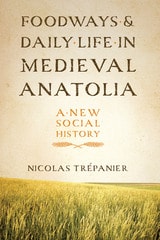
Foodways and Daily Life in Medieval Anatolia
A New Social HistoryBy Nicolas Trépanier
University of Texas Press, 2014
Byzantine rule over Anatolia ended in the eleventh century, leaving the population and its Turkish rulers to build social and economic institutions throughout the region. The emerging Anatolian society comprised a highly heterogeneous population of Christians and Muslims whose literati produced legal documents in Arabic, literary texts in Persian, and some of the earliest written works in the Turkish language. Yet the cultural landscape that emerged as a result has received very little attention—until now.
Investigating daily life in Anatolia during the fourteenth century, Foodways and Daily Life in Medieval Anatolia draws on a creative array of sources, including hagiographies, archaeological evidence, Sufi poetry, and endowment deeds, to present an accessible portrait of a severely under-documented period. Grounded in the many ways food enters the human experience, Nicolas Trépanier’s comprehensive study delves into the Anatolian preparation of meals and the social interactions that mealtime entails—from a villager’s family supper to an elaborately arranged banquet—as well as the production activities of peasants and gardeners; the marketplace exchanges of food between commoners, merchants, and political rulers; and the religious landscape that unfolded around food-related beliefs and practices. Brimming with enlightening details on such diverse topics as agriculture, nomadism, pastoralism, medicine, hospitality, and festival rituals, Foodways and Daily Life in Medieval Anatolia presents a new understanding of communities that lived at a key juncture of world history.
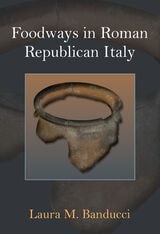
Foodways in Roman Republican Italy
Laura M. Banducci
University of Michigan Press, 2021
Foodways in Roman Republican Italy explores the production, preparation, and consumption of food and drink in Republican Italy to illuminate the nature of cultural change during this period. Traditionally, studies of the cultural effects of Roman contact and conquest have focused on observing changes in the public realm: that is, changing urban organization and landscape, and monumental construction. Foodways studies reach into the domestic realm: How do the daily behaviors of individuals express their personal identity, and How does this relate to changes and expressions of identity in broader society? Laura M. Banducci tracks through time the foodways of three sites in Etruria from about the third century BCE to the first century CE: Populonia, Musarna, and Cetamura del Chianti. All were established Etruscan sites that came under Roman political control over the course of the third and second centuries BCE. The book examines the morphology and use wear of ceramics used for cooking, preparing, and serving food in order to deduce cooking methods and the types of foods being prepared and consumed. Change in domestic behaviors was gradual and regionally varied, depending on local social and environmental conditions, shaping rather than responding to an explicitly “Roman” presence.
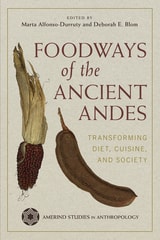
Foodways of the Ancient Andes
Transforming Diet, Cuisine, and SocietyMarta P Alfonso-Durruty
University of Arizona Press, 2023
Exploring the multiple social, ecological, cultural, and ontological dimensions of food in the Andean past, the contributors of Foodways of the Ancient Andes offer diverse theoretical perspectives and methodological approaches that reveal the richness, sophistication, and ingenuity of Andean peoples. The volume spans time periods and localities in the Andean region to reveal how food is intertwined with multiple aspects of the human experience, from production and consumption to ideology and sociopolitical organization. It illustrates the Andean peoples’ resilience in the face of challenges brought about by food scarcity and environmental change. Chapters dissect the intersection of food, power, and status in early states and empires; examine the impact of food during times of conflict and instability; and illuminate how sacred and high-status foods contributed to the building of the Inka Empire.
Featuring forty-six contributors from ten countries, the chapters employ new analytical methods, integrating different food data and interdisciplinary research to show that food can provide not only simple nutrition but also a multitude of strategies, social and political relationships, and ontologies that are otherwise invisible in the archaeological record.
Contributors
Aleksa K. Alaica
Sonia Alconini
Marta Alfonso-Durruty
Sarah I. Baitzel
Véronique Bélisle
Carolina Belmar
Carrie Anne Berryman
Matthew E. Biwer
Deborah E. Blom
Tamara L. Bray
Matthew T. Brown
Maria C. Bruno
José M. Capriles
Katherine L. Chiou
Susan D. deFrance
Lucia M. Diaz
Richard P. Evershed
Maureen E. Folk
Alexandra Greenwald
Chris Harrod
Christine A. Hastorf
Iain Kendall
Kelly J. Knudson
BrieAnna S. Langlie
Cecilia Lemp
Petrus le Roux
Marcos Martinez
Anahí Maturana-Fernández
Weston C. McCool
Melanie J. Miller
Nicole Misarti
Flavia Morello
Patricia Quiñonez Cuzcano
Omar Reyes
Arturo F. Rivera Infante
Manuel San Román
Francisca Santana-Sagredo
Beth K. Scaffidi
Augusto Tessone
Andrés Troncoso
Tiffiny A. Tung
Mauricio Uribe
Natasha P. Vang
Sadie L. Weber
Kurt M. Wilson
Michelle E. Young

Fools Are Everywhere
The Court Jester Around the WorldBeatrice K. Otto
University of Chicago Press, 2001
Most of the work on the court jester has concentrated on Europe; Otto draws on previously untranslated classical Chinese writings and other sources to correct this bias and also looks at jesters in literature, mythology, and drama. Written with wit and humor, Fools Are Everywhere is the most comprehensive look at these roguish characters who risked their necks not only to mock and entertain but also to fulfill a deep and widespread human and social need.

Fools, Martyrs, Traitors
The Story of Martyrdom in the Western WorldLacey Baldwin Smith
Northwestern University Press, 1999

Football Town
The Rough and Tumble Gridiron History of St. LouisMark Pierce
University of Missouri Press, 2027
For 49 years St. Louis was home to two NFL football franchises comprising many colorful and even great players, but ever since the Rams moved back to Los Angeles in 2016, the Gateway City has secured a solid reputation as an NFL ghost town. In Football Town:The Rough and Tumble Gridiron History of St. Louis, the first scholarly treatment of the history of all professional football in St. Louis, Mark Pierce challenges the standard narrative, chronicling the city’s rich yet largely forgotten history of pro football, celebrating its more successful moments on the gridiron, and proving that St. Louis has long been and still is far more than a “Baseball Town.”
Pierce begins with St. Louis’s efforts to compete in the burgeoning NFL in 1923 and 1934-1936, yet the city’s pro football history begins in earnest with the arrival of the Cardinals from Chicago in 1960. The author chronicles the team’s entire 28-season stay in St. Louis, including its most successful period under head coach Don Coryell, from 1973 to 1977, and the inconsistency that prevailed after his tenure. Eventually, revenue concerns, failed stadium negotiations, and other issues culminated in the owner of the franchise’s decision to move the team to Phoenix after the 1987 season, despite offers of better terms at Busch Stadium and the promise of the construction of a new downtown stadium by city and state government leaders.
Even after the loss of the Cardinals, a craving for pro football persisted in St. Louis, and the search for a new team commenced almost immediately thereafter. Pierce documents the tumultuous process of securing the Rams’ 1995 move from their native Los Angeles to St. Louis, a deal concluded through high-stakes negotiations despite efforts by NFL insiders to prevent the move entirely. Nevertheless, by April that year, St. Louis fans could once again emotionally invest in the NFL—and they did so in earnest. In addition to detailing the ups and downs of the Ram’s subsequent twenty years in the city, Pierce closely examines the “poison pill” made in its original lease agreement with the St. Louis Convention and Visitors Commission, which would ultimately lead to disaster.
Football Town is built on a foundation of 25 interviews the author personally conducted with former players, coaches, and broadcasters, including Pro Football Hall of Famers Dick Vermeil and Jackie Smith; Baseball Hall of Fame broadcaster Joe Buck; Cardinals greats Jim Hart, Mel Gray, O.J. Anderson, and Roy Green; and Rams’ Super Bowl champions Mike Martz, Trent Green, Adam Timmerman, Keith Lyle, and Adam Timmerman.
Accompanied by dozens of photos not seen in decades, Football Town allows those who played the game in St. Louis to tell their stories and share their thoughts on the city’s rich and colorful football history.

Football and Colonialism
Body and Popular Culture in Urban MozambiqueNuno Domingos
Ohio University Press, 2017
In articles for the newspaper O Brado Africano in the mid-1950s, poet and journalist José Craveirinha described the ways in which the Mozambican football players in the suburbs of Lourenço Marques (now Maputo) adapted the European sport to their own expressive ends. Through gesture, footwork, and patois, they used what Craveirinha termed “malice”—or cunning—to negotiate their places in the colonial state. “These manifestations demand a vast study,” Craveirinha wrote, “which would lead to a greater knowledge of the black man, of his problems, of his clashes with European civilization, in short, to a thorough treatise of useful and instructive ethnography.”
In Football and Colonialism, Nuno Domingos accomplishes that study. Ambitious and meticulously researched, the work draws upon an array of primary sources, including newspapers, national archives, poetry and songs, and interviews with former footballers. Domingos shows how local performances and popular culture practices became sites of an embodied history of Mozambique. The work will break new ground for scholars of African history and politics, urban studies, popular culture, and gendered forms of domination and resistance.
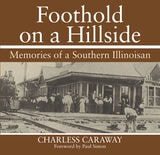
Foothold on a Hillside
Memories of a Southern IllinoisanCharless Caraway. Foreword by Paul Simon
Southern Illinois University Press, 1986
In a style reminiscent of the master storytellers of yore, Charless Caraway recounts the story of his life, as a man and a boy, on small farms in Saline and Jackson counties, particularly around Eldorado, Makanda, and Etherton Switch. He makes no bones about the hardships of those "old days," first helping his father eke out a living from the land, then scrambling for a living as a sharecropper and fruit picker, as he scrimped and saved for the day when he and his young wife, Bessie Mae Rowan Caraway, could buy a piece of land of their own.
The one-room school, the general store, the trips by wagon over roads that choked you in summer and swallowed you in winter, the home that burned: all are described in a matter-of-fact yet moving way. Many of the locations, buildings, and people are represented in equally unromanticized photographs from the family’s collection. Some of the stories and photos recall the common disasters of the frontier: drought, flood, and the tornado of 1925.
It is clear from these stories that each aspect of life exacted a price, but the Caraways paid that price without regret and rallied to go on their way. Charless and his family and friends fill this book with courage, strength, and an unshakable faith in the value of human endeavor.

Footloose in Farm Service
Autobiographical Recollections of John DickieMarjory Harper
Aberdeen University Press, 2013
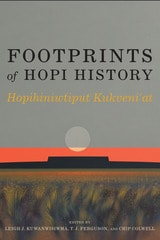
Footprints of Hopi History
Hopihiniwtiput Kukveni'atEdited by Leigh J. Kuwanwisiwma, T. J. Ferguson, and Chip Colwell
University of Arizona Press, 2018
The fourteen chapters in Footprints of Hopi History: Hopihiniwtiput Kukveni’at focus on these Hopi footprints as they are understood through a variety of research techniques, including archaeology, ethnography, documentary history, plant genetics, and educational outreach. The editors and contributors offer fresh and innovative perspectives on Hopi archaeology and history, and demonstrate how one tribe has significantly advanced knowledge about its past through collaboration with archaeologists and cultural anthropologists.
The book features managerial uses of research, cultural landscape theory, use of GIS in research, archaeological interpretations of social identity and immigration, analysis of corn genetics, heritage education of youth, and research of oral traditions and documentary history. Footprints of Hopi History highlights the Hopi tribe’s leadership in sustained efforts to create bridges between tribal goals and anthropology, forging a path for others to follow.
Contributors
E. Charles Adams
Wesley Bernardini
Joëlle Clark
Chip Colwell
T. J. Ferguson
Dennis Gilpin
Kelley Hays-Gilpin
George Gumerman IV
Saul L. Hedquist
Maren P. Hopkins
Stewart B. Koyiyumptewa
Leigh J. Kuwanwisiwma
Lee Wayne Lomayestewa
Patrick D. Lyons
Shirley Powell
Gregson Schachner
Thomas E. Sheridan
Mark D. Varien
Laurie D. Webster
Peter M. Whiteley
Michael Yeatts

Footsteps on the Ice
The Antarctic Diaries of Stuart D. Paine, Second Byrd ExpeditionStuart D. Paine, Edited & Intro by M. L. Paine
University of Missouri Press, 2007
In 1933 Antarctica was essentially unexplored. Admiral Richard Byrd launched his Second Expedition to chart the southernmost continent, primarily relying on the muscle power of dog teams and their drivers who skied or ran beside the loaded sledges as they traveled. The life-threatening challenges of moving glaciers, invisible crevasses, and horrific storms compounded the difficulties of isolation, darkness, and the unimaginable cold that defined the men’s lives.
Stuart Paine was a dog driver, radio operator, and navigator on the fifty-six-man expedition, the bold and complex venture that is now famous for Byrd’s dramatic rescue from Bolling Advance Weather Base located 115 miles inland. Paine’s diaries represent the only published contemporary account written by a member of the Second Expedition. They reveal a behind-the-scenes look at the contentiousness surrounding the planned winter rescue of Byrd and offer unprecedented insights into the expedition’s internal dynamics.
Equally riveting is Paine’s breathtaking narrative of the fall and summer field operations as the field parties depended on their own resources in the face of interminable uncertainty and peril. Undertaking the longest and most hazardous sledging journey of the expedition, Paine guided the first American party from the edge of the Ross Sea more than seven hundred miles up the Ross Ice Shelf and the massive Thorne (Scott) Glacier to approach the South Pole. He and two other men skied more than fourteen hundred miles in eighty-eight days to explore and map part of Antarctica for the first time.
Footsteps on the Ice reveals the daily struggles, extreme personalities, and the matter-of-fact bravery of early explorers who are now fading into history. Detailing the men’s frustrations, annoyances, and questioning of their leader, Paine’s entries provide rare insight into how Byrd conducted his expeditions. Paine exposes the stresses of living under the snow in Little America during the four-month-long winter night, trapped in dim, crowded huts and black tunnels, while the men uneasily mulled over their leader’s isolation at Advance Base. The fates of Paine’s dogs, which provided some of his most difficult and rewarding experiences, are also described—his relationship with Jack, his lead dog, is an entrancing story in itself.
Featuring previously unpublished photographs and illustrations, Footsteps on the Ice documents the period in Antarctic exploration that bridged the “heroic era” and the modern age of mechanized travel. Depicting almost incomprehensible mental and physical duress and unhesitating courage, Paine’s tale is one of the most compelling stories in polar history, surpassing other accounts with its immediacy and adventure as it captures the majesty and mystery of the untouched Antarctic.

For All We Have and Are
Regina and the Experience of the Great WarJames M. Pitsula
University of Manitoba Press, 2008

For All White-Collar Workers
The Possibilities of Radicalism in New York City's Department Store Unions, 1934–1953Daniel J. Opler
The Ohio State University Press, 2007

For All of Humanity
Mesoamerican and Colonial Medicine in Enlightenment GuatemalaMartha Few
University of Arizona Press, 2015
For All of Humanity examines the first public health campaigns in Guatemala, southern Mexico, and Central America in the eighteenth and early nineteenth centuries. Martha Few pays close attention to Indigenous Mesoamerican medical cultures, which not only influenced the shape and scope of those regional campaigns but also affected the broader New World medical cultures. The author reconstructs a rich and complex picture of the ways colonial doctors, surgeons, Indigenous healers, midwives, priests, government officials, and ordinary people engaged in efforts to prevent and control epidemic disease.
Few’s analysis weaves medical history and ethnohistory with social, cultural, and intellectual history. She uses prescriptive texts, medical correspondence, and legal documents to provide rich ethnographic descriptions of Mesoamerican medical cultures, their practitioners, and regional pharmacopeia that came into contact with colonial medicine, at times violently, during public health campaigns.

For Both Cross and Flag
Catholic Action, Anti-Catholicism, and National Security Politics in World War II San FranciscoAuthored by William Issel
Temple University Press, 2010
In this fascinating, detailed history, William Issel recounts the civil rights abuses suffered by Sylvester Andriano, an Italian American Catholic civil leader whose religious and political activism in San Francisco provoked an Anti-Catholic campaign against him. A leading figure in the Catholic Action movement, Andriano was falsely accused in state and federal Un-American Activities Committee hearings of having Fascist sympathies prior to and during World War II. As his ordeal began, Andriano was subjected to a hostile investigation by the FBI, whose confidential informants were his political rivals. Furthermore, the U.S. Army ordered him to be relocated on the grounds that he was a security risk.
For Both Cross and Flag provides a dramatic illustration of what can happen when parties to urban political rivalries, rooted in religious and ideological differences, seize the opportunity provided by a wartime national security emergency to demonize their enemy as “a potentially dangerous person.”
Issel presents a cast of characters that includes archbishops, radicals, the Kremlin, and J. Edgar Hoover, to examine the significant role faith-based political activism played in the political culture that violated Andriano’s constitutional rights. Exploring the ramifications of this story, For Both Cross and Flag presents interesting implications for contemporary events and issues relating to urban politics, ethnic groups, and religion in a time of war.

For Customers Only
Public Bathrooms and the Making of American InequalityBryant Simon
University of Chicago Press, 2026
Public toilets determine who gets everyday dignity, freedom of movement, and civic belonging—and who doesn’t.
Americans have nowhere to go. Nationwide, countless public spaces lack one crucial thing: bathrooms, never mind ones that are safe and functional. Yet in the past, political leaders celebrated the opening of public bathrooms with boisterous press conferences and showy ribbon-cutting ceremonies.
For Customers Only is the first book to tell the larger history of public bathrooms in the United States, a fascinating story characterized by persistent discrimination, squeamishness about unknown bodies, and disinvestment in public amenities. Acclaimed writer and historian Bryant Simon argues that restrooms aren’t only an architectural feature, but an emblem of control and inequality. In the late nineteenth century, cities vied for the newest and biggest comfort stations to meet the demands of their bustling economies and accommodate a broad and growing public. They built restrooms with gold-domed entrances and ornamented stall doors to inspire cleanliness and order.
But officials soon grew anxious about who might take advantage of this privacy: gay men, the unhoused, and eventually drug users. And as the civil rights movement challenged segregation, officials in the north and south closed public toilets rather than integrate them. By the end of the twentieth century, only people with means could use private bathrooms while out and about—provided they made a purchase at a business. Today, as the fights over trans rights reveal, bathroom access remains a flash point across the country. Meanwhile, some municipalities are again calling for widely available public toilets, but as a tool for economic revitalization, not a public necessity.
The political and cultural history of a squirm-inducing subject, For Customers Only reveals the real and symbolic power of the most ordinary of things. Bathrooms, Simon shows, have always reflected our fragmented national values. Whether these spaces will ever become more accessible and inclusive is ultimately up to us.
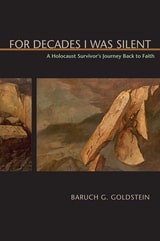
For Decades I Was Silent
A Holocaust Survivor's Journey Back to FaithBaruch G. Goldstein
University of Alabama Press, 2008
A survivor's powerful testament to faith, memory, and the triumph of the human spirit.
A fascinating memoir about a Holocaust survivor's loss of and journey back to faith. In 1939, Baruch Goldstein was a religiously observant adolescent resident of the Jewish community in Mlawa, a town that was then in East Prussia. After war broke out, the Jewish community there was relatively sheltered, as that region was incorporated into the German Reich rather than into the General Government (the German run-fragment of pre-war Poland, where conditions were harsh for everyone). However in 1942, Goldstein was sent to Auschwitz, where he stayed two-and-a-half years. His family was scattered all to their deaths, but he survived the war--barely. For Decades I Was Silent is an account of life in a small Polish-German town and provides information on the religious life of the Jewish citizens. This book creates a direct sense of the random, mystifying personal violence individuals felt at the hands of Germans--not the anonymous industrial death machine, but immediate, face-to-face violence.
After the war, Goldstein drifted as a refugee to UNRR camps in Italy. Over time, young Goldstein had to face the fact that all of his extended family was lost and he had only the possibilities of Palestine or help from distant relatives in the United States as a future. His American relatives urged him to enter the United States as a yeshiva student, and eventually he became a rabbi and started a family. As a young rabbinical student, and then as a rabbi, Goldstein was forced to confront the events of the Holocaust and the damage done to his faith.

For Dignity, Justice, and Revolution
An Anthology of Japanese Proletarian LiteratureEdited by Heather Bowen-Struyk and Norma Field
University of Chicago Press, 2015
Contextualized by introductory essays, forty expertly translated stories touch on topics like perilous factories, predatory bosses, ethnic discrimination, and the myriad indignities of poverty. Together, they show how even intensely personal issues form a pattern of oppression. Fostering labor consciousness as part of an international leftist arts movement, these writers, lovers of literature, were also challenging the institution of modern literature itself. This anthology demonstrates the vitality of the “red decade” long buried in modern Japanese literary history.

For Duty and Destiny
The Life and Civil War Diary of William Taylor Stott, Hoosier Soldier and EducatorLloyd A. Hunter
Indiana Historical Society Press, 2011

For Faith and Fortune
The Education of Catholic Immigrants in Detroit, 1805-1925JoEllen McNergney Vinyard
University of Illinois Press, 1998
JoEllen McNergney Vinyard's comprehensive examination of parochial education in Detroit within the broader context of that city's urbanization patterns yields a richly detailed addition to our understanding of the European immigrant experience.
For Faith and Fortune will be of interest to historians and scholars of urban studies, particularly immigration, schooling, and the Catholic experience.