Results by title
5448 books match the query 'History and criticism' and 217 start with f
Finding a Common Thread
Reading Great Texts from Homer to O'ConnorRobert C. Roberts
St. Augustine's Press, 2013
In this book, a group of prominent scholar-teachers meditate on how to read, in the context of a specifically Christian university or college education, some of the greatest texts of the Western tradition. Each author devotes himself or herself to a single text. In many cases, the authors have been reading, rereading, marking, ruminating, inwardly digesting, teaching, and discussing their text for several decades, so that they offer here a distillation of years of familiarity and reflection.
The texts span nearly 3,000 years. They are pre-Christian, Christian, and post-Christian. Each kind of text – indeed, each individual text – offers its own special opportunities and challenges for Christian interpretation. From these diverse readings emerges a sense that these texts all belong to a single great tradition, one to which Christianity made and continues to make enormous contributions. Medieval Christian writers exploit and transform pagan texts, and post-Christian writers like Nietzsche and Joyce are often preoccupied with Christian themes. In one way or another all the texts are about what it is to be a human being and what a good human life might look like. Thus “common threads” bind one text to the next, creating countless resonances among them.
The authors of the essays in this book all address the question, “How shall we read these texts from the vantage point of faith in God and Jesus Christ? Moreover, how shall we read them as members of a community with a common vision of the human good, aiming to nurture our students in that vision by reading with them some of the profoundest and most delightful things the human hand has penned?” As the Introduction suggests, the volume hopes to contribute to a renewal of the original intention of university education: to cultivate minds and hearts formed and informed by wisdom, the highest of intellectual goods.
Finding the Middle Ground
Krestovskii, Tur, and the Power of Ambivalence in Nineteenth-Century Russian Women's ProseJehanne Gheith
Northwestern University Press, 2004

Fire on the Water
Sailors, Slaves, and Insurrection in Early American Literature, 1789-1886Warren, Lenora
Bucknell University Press, 2019
Published by Bucknell University Press. Distributed worldwide by Rutgers University Press.
First Books
The Printed Word and Cultural Formation in Early AlabamaPhilip D. Beidler
University of Alabama Press, 1999
Early 19th-century Alabama was a society still in the making. Now Philip Beidler tells how the first books written and published in the state influenced the formation of Alabama's literary and political culture. As Beidler shows, virtually overnight early Alabama found itself in possession of the social, political, and economic conditions required to jump start a traditional literary culture in the old Anglo-European model: property-based class relationships, large concentrations of personal wealth, and professional and merchant classes of similar social, political, educational, and literary views.
First Contact
Speculative Visions of the Conquest of the AmericasZac Zimmer
Northwestern University Press, 2025
Examining the power of speculative fiction to reimagine historical accounts of the conquest of the Americas
The historical conquest of the Americas resides at the core of all first-contact narratives, which stage colonization and resistance in the generic guise of speculative fiction. Starting from this axiom, First Contact: Speculative Visions of the Conquest of the Americas moves through a corpus of Mexican novels, Andean visual arts practices, and other cultural artifacts that have dramatized counterfactual narratives. Reimagining the early colonial period’s historiography from a south-to-north directionality while inventing parallel realities, these texts, which are concerned with limit cases, alterities, and alternative temporalities, refuse any reliance on the imperial ontologies of European expansion. Zac Zimmer examines these works to explore the slippage that exists between science fiction as the exemplary genre of the modern, colonial reality and literary speculation as an aesthetic tool that can be used to imagine other possible worlds. First Contact thus poses a foundational question: Can we understand the conquest as an originary world-historical event without eclipsing the other cosmologies that existed, and continue to exist, within the contact zone? Can we decolonize the speculative imagination itself?

First Love
The Affections of Modern FictionMaria DiBattista
University of Chicago Press, 1991
DiBattista argues that modernity reinvented First Love as a myth of creative initiative, as its characteristic response to a pervasive sense of historical belatedness. Anxious that its own creations can never be more than diminished forms of mightier originals, modernity idolizes First Love as the beginning that can never be repeated. First Love hence epitomizes the dream of a new self-incarnation. From Turgenev's First Love to the formative works of Virginia Woolf, Gertrude Stein, E. M. Forster, and Vladimir Nabokov, First Love confirms the birth of an artistic vocation. For modern men and women intent on becoming the original authors of their own lives, First Love becomes paradigmatic of those life-altering moments that transform the undifferentiated sequence of days into a fateful narrative.
DiBattista focuses on the enunciation of First Love in the fiction of Thomas Hardy, D. H. Lawrence, James Joyce, and Samuel Beckett. In reading their works, DiBattista dramatically revises the accepted view of irony as the dominant tone of modernism. First Love constitutes, she shows, a new apprehension of the world characterized not by the frigid distances of irony but by a belief in the creative individual who may begin the world anew, as if for the first time.

First Person Jewish
Alisa S. Lebow
University of Minnesota Press, 2008
Documentaries have increasingly used the first person, with a number of prominent filmmakers finding critical and commercial success with this intimate approach. Jewish filmmakers have particularly thrived in this genre, using it to explore disparate definitions of the self in relation to the larger groups of family and community.
In First Person Jewish, Alisa S. Lebow examines more than a dozen films from Jewish artists to reveal how the postmodern impulse to turn the lens inward intersects provocatively (and at times unwittingly) with historical tropes and stereotypes of the Jew. Focusing her efforts on Jewish filmmakers working on the margins, Lebow analyzes the work of Jonathan Caouette, Chantal Akerman, and Alan Berliner, among others, also including a discussion of her own first person film Treyf (1998), made with Cynthia Madansky. The filmmakers in this study, Lebow argues, are confronting a desire to both define and reimagine contemporary Jewishness.
Using a multidisciplinary approach to first person films, Lebow shows how this form of self-expression is challenging both autobiography and documentary and, in the process, changing the art of cinema and recording the cultural shifts of our time.
Alisa S. Lebow is a filmmaker and lecturer in film and TV studies at Brunel University.
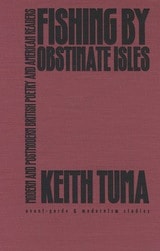
Fishing by Obstinate Isles
Modern and Postmodern British Poetry and American ReadersKeith Tuma
Northwestern University Press, 1998

Fitzgerald's Mentors
Edmund Wilson, H. L. Mencken, and Gerald MurphyRonald Berman
University of Alabama Press, 2012
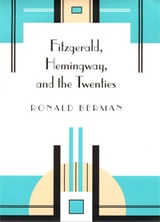
Fitzgerald, Hemingway, and the Twenties
Ronald Berman
University of Alabama Press, 2002
A noted scholar offers fresh ways of looking at two legendary American authors.
Both F. Scott Fitzgerald and Ernest Hemingway came into their own in the 1920s and did some of their best writing during that decade. In a series of interrelated essays, Ronald Berman considers an array of novels and short stories by both authors within the context of the decade's popular culture, philosophy, and intellectual history. As Berman shows, the thought of Fitzgerald and Hemingway went considerably past the limits of such labels as the Jazz Age or the Lost Generation.
Both Fitzgerald and Hemingway were avid readers, alive to the intellectual currents of their day, especially the contradictions and clashes of ideas and ideologies. Both writers, for example, were very much concerned with the problem of untenable belief—and also with the need to believe. In this light, Berman offers fresh readings of such works as Fitzgerald's The Great Gatsby, "Bernice Bobs Her Hair," and "The Diamond as Big as the Ritz" and Hemingway's "The Killers," A Farewell to Arms, and The Sun Also Rises. Berman invokes the thinking of a wide range of writers in his considerations of these texts, including William James, Alfred North Whitehead, Walter Lippman, and Edmund Wilson.
Berman's essays are driven and connected by a focused line of inquiry into Fitzgerald's and Hemingway's concerns with dogma both religious and secular, with new and old ideas of selfhood,and, particularly in the case of Hemingway, with the way we understand, explain, and transmit experience.
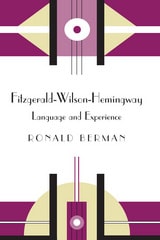
Fitzgerald-Wilson-Hemingway
Language and ExperienceRonald Berman
University of Alabama Press, 2003
In this study, Ronald Berman examines the work of the critic/novelist Edmund Wilson and the art of F. Scott Fitzgerald and Ernest Hemingway as they wrestled with the problems of language, experience, perception and reality in the "age of jazz." By focusing specifically on aesthetics—the ways these writers translated everyday reality into language—Berman challenges and redefines many routinely accepted ideas concerning the legacy of these authors.
Fitzgerald is generally thought of as a romantic, but Berman shows that we need to expand the idea of Romanticism to include its philosophy. Hemingway, widely viewed as a stylist who captured experience by simplifying language, is revealed as consciously demonstrating reality's resistance to language. Between these two renowned writers stands Wilson, who is critically influenced by Alfred North Whitehead, as well as Dewey, James, Santayana, and Freud.
By patiently mapping the correctness of these philosophers, historians, literary critics and writers, Berman aims to open a gateway into the era. This work should be of interest to scholars of American literature, philosophy and aesthetics; to academic libraries; to students of intellectual history; and to general readers interested in Fitzgerald, Hemingway and Wilson.
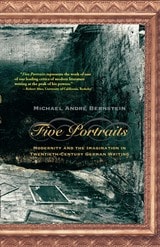
Five Portraits
Modernity and the Imagination in Twentieth-Century German WritingMichael Bernstein
Northwestern University Press, 2000
Five Strands of Fictionality
The Institutional Construction of Contemporary American FictionDaniel Punday
The Ohio State University Press, 2010
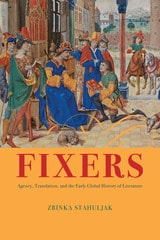
Fixers
Agency, Translation, and the Early Global History of LiteratureZrinka Stahuljak
University of Chicago Press, 2024
In this book, Zrinka Stahuljak challenges scholars in both medieval and translation studies to rethink how ideas and texts circulated in the medieval world. Whereas many view translators as mere conduits of authorial intention, Stahuljak proposes a new perspective rooted in a term from journalism: the fixer. With this language, Stahuljak captures the diverse, active roles medieval translators and interpreters played as mediators of entire cultures—insider informants, local guides, knowledge brokers, art distributors, and political players. Fixers offers nothing less than a new history of literature, art, translation, and social exchange from the perspective not of the author or state but of the fixer.
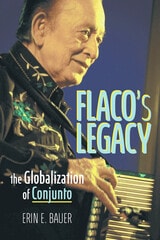
Flaco’s Legacy
The Globalization of ConjuntoErin E. Bauer
University of Illinois Press, 2023
A combination of button accordion and bajo sexto, conjunto originated in the Texas-Mexico borderlands as a popular dance music and became a powerful form of regional identity. Today, listeners and musicians around the world have embraced the genre and the work of conjunto masters like Flaco Jiménez and Mingo Saldívar.
Erin E. Bauer follows conjunto from its local origins through three processes of globalization--migration via media, hybridization, and appropriation--that boosted the music’s reach. As Bauer shows, conjunto’s encounter with globalizing forces raises fundamental questions. What is conjunto stylistically and socioculturally? Does context change how we categorize it? Do we consider the music to be conjunto based on its musical characteristics or due to its performance by Jiménez and other regional players? How do similar local genres like Tejano and norteño relate to ideas of categorization?
A rare look at a fascinating musical phenomenon, Flaco’s Legacy reveals how conjunto came to encompass new people, places, and styles.
Flamboyant Fictions
The Failed Art of PassingIan Fleishman
Northwestern University Press, 2025
Exposes a stylistic tradition of flamboyantly failed passing in queer literature and film
This book posits formal experimentation as an index for evolving expressions of male homosexuality from literary modernism to the German New Wave and the present day. Ian Fleishman exposes a tradition of flamingly failed passing that is itself a surreptitious mode of passing: the flaunting of queer style as an intentionally unconvincing cover for queer content. Exploring a corpus of films and novels by André Gide, Jean Genet, Rainer Werner Fassbinder, Werner Schroeter, François Ozon, and Xavier Dolan, among others, Flamboyant Fictions: The Failed Art of Passing intervenes in trenchant debates about queer agency, visibility, negativity, and disidentification. Mapping queer strategies of storytelling onto queer practices of self-invention, Flamboyant Fictions wagers that it is precisely in instances of conflict between these auteurs and their inventions that narrative becomes a laboratory for testing the sovereignty and self-determination of queer identity.
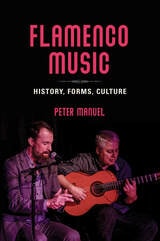
Flamenco Music
History, Forms, CulturePeter Manuel
University of Illinois Press, 2023
An iconic symbol of Spain, flamenco has become a global phenomenon. Peter Manuel offers English-language readers a rare portrait of the music’s history, styles, and cultural impact. Beginning with flamenco’s Moorish and Roma influences, Manuel follows the music’s evolution through its consolidation in the mid-1800s and on to the vibrant contemporary scene. An investigation of flamenco’s major song-types looks at rhythm and compás, guitar technique, and many other aspects of the music while Manuel’s description and analysis of the repertoire range from soleares and bulerías to tangos. His overview of contemporary flamenco culture provides insight into issues that surround the music, including globalization, gender dynamics, notions of ownership, and the ongoing debates on purity versus innovation and the relative roles played by Gitanos and non-Gitanos.
Multifaceted and entertaining, Flamenco Music is an in-depth study of the indelible art form that inspires enthusiasts and practitioners around the world.
Flannery O'Connor, Walker Percy, and the Aesthetic of Revelation
John D. Sykes, Jr.
University of Missouri Press, 2007
With his mastery of modernist technique and his depictions of characters obsessed with the past, Nobel laureate William Faulkner raised the bar for southern fiction writers. But the work of two later authors shows that the aesthetic of memory is not enough: Confederate thunder fades as they turn to an explicitly religious source of meaning.
According to John Sykes, the fiction of Flannery O’Connor and Walker Percy provides occasions for divine revelation. He traces their work from its common roots in midcentury southern and Catholic intellectual life to show how the two adopted different theological emphases and rhetorical strategies—O’Connor building to climactic images, Percy striving for dialogue with the reader—as a means of uncovering the sacramental foundation of the created order.
Sykes sets O’Connor and Percy against the background of the Southern Renaissance from which they emerged, showing not only how they shared a distinctly Christian notion of art that led them to see fiction as revelatory but also how their methods of revelation took them in different directions. Yet, despite their differences in strategy and emphasis, he argues that the two are united in their conception of the artist as “God’s sharp-eyed witness,” and he connects them with the philosophers and critics, both Christian and non-Christian, who had a meaningful influence on their work.
Through sustained readings of key texts—particularly such O’Connor stories as “The Artificial Nigger” and “The Geranium” and Percy’s novels Love in the Ruins and The Second Coming—Sykes focuses on the intertwined themes of revelation, sacrament, and community. He views their work in relation to the theological difficulties that they were not able to overcome concerning community. For both writers, the question of community is further complicated by the changing nature of the South as the Lost Cause and segregation lose their holds and a new form of prosperity arises.
By disclosing how O’Connor and Percy made aesthetic choices based on their Catholicism and their belief that fiction by its very nature is revelatory, Sykes demonstrates that their work cannot be seen as merely a continuation of the historical aesthetic that dominated southern literature for so long. Flannery O’Connor, Walker Percy, and the Aesthetic of Revelation is theoretically sophisticated without being esoteric and is accessible to any reader with a serious interest in these writers, brimming with fresh insights about both that clarify their approaches to art and enrich our understanding of their work.

Flawed Texts and Verbal Icons
Literary Authority and American FictionHershel Parker
Northwestern University Press, 1984
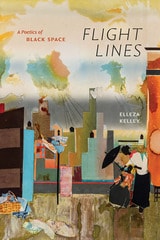
Flight Lines
A Poetics of Black SpaceElleza Kelley
Duke University Press, 2026
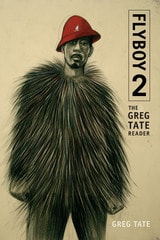
Flyboy 2
The Greg Tate ReaderGreg Tate
Duke University Press, 2016
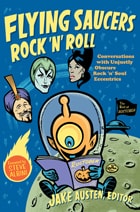
Flying Saucers Rock 'n' Roll
Conversations with Unjustly Obscure Rock 'n' Soul EccentricsJake Austen, ed.
Duke University Press, 2011
Contributors
Steve Albini
Ben Austen
Jake Austen
John Battles
Bosco
Ken Burke
Mike Maltese
King Merinuk
Ken Mottet
Jonathan Poletti
James Porter
"Colonel" Dan Sorenson
Jacqueline Stewart
Folded Selves
Colonial New England Writing in the World SystemMichelle Burnham
Dartmouth College Press, 2014
Folklore Genres
Edited by Dan Ben-Amos
University of Texas Press, 1976
The essays in Folklore Genres represent development in folklore genre studies, diverging into literary, ethnographic, and taxonomic questions. The study as a whole is concerned with the concept of genre and with the history of genre theory. A selective bibliography provides a guide to analytical and theoretical works on the topic.
The literary-oriented articles conceive of folklore forms, not as the antecedents of literary genres, but as complex, symbolically rich expressions. The ethnographically oriented articles, as well as those dealing with classification problems, reveal dimensions of folklore that are often obscured from the student reading the folklore text alone. It has long been known that the written page is but a pale reproduction of the spoken word, that a tale hardly reflects the telling. The essays in this collection lead to an understanding of the forms of oral literature as multidimensional symbols of communication and to an understanding of folklore genres as systematically related conceptual categories in culture. What kinship terms are to social structure, genre terms are to folklore. Since genres constitute recognized modes of folklore speaking, their terminology and taxonomy can play a major role in the study of culture and society.
The essays were originally published in Genre (1969–1971); introduction, bibliography, and index have been added to this edition.

Folklore and Culture on the Texas-Mexican Border
By Américo Paredes
University of Texas Press, 1995
In an illustrious career spanning over forty years, Américo Paredes has often set the standard for scholarship and writing in folklore and Chicano studies. In folklore, he has been in the vanguard of important theoretical and methodological movements. In Chicano studies, he stands as one of the premier exponents.
Paredes's books are widely known and easily available, but his scholarly articles are not so familiar or accessible. To bring them to a wider readership, Richard Bauman has selected eleven essays that eloquently represent the range and excellence of Paredes's work. The hardcover edition of Folklore and Culture was published in 1993. This paperback edition will make the book more accessible to the general public and more practical for classroom use.
Folklore in New World Black Fiction
Writing and the Oral Traditional AestheticsChiji Akoma
The Ohio State University Press, 2007
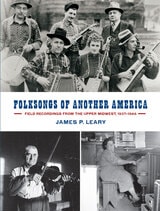
Folksongs of Another America
Field Recordings from the Upper Midwest, 1937–1946James P. Leary
University of Wisconsin Press, 2018
America's Upper Midwest is a distinctive region where many indigenous and immigrant peoples have maintained, merged, and modified their folk song traditions for more than two centuries. In the 1930s and 40s, Sidney Robertson, Alan Lomax, and Helene Stratman-Thomas—with support from the Library of Congress and armed with bulky microphones, blank disks, spare needles, and cumbersome disk-cutting machines—recorded roughly 2000 songs and tunes throughout Michigan, Minnesota, and Wisconsin. Spanning dance tunes, ballads, lyric songs, hymns, laments, versified taunts, political anthems, street cries, and recitations, these field recordings—made by people born before or shortly after 1900—were captured at a transformative moment when America was in the throes of the Great Depression, World War II was erupting, and market-driven mass entertainment media were expanding rapidly. Yet, except for a handful of Anglo-American performances, these remarkable field recordings in more than twenty-five languages have remained largely unknown, along with the lives of their mostly immigrant, indigenous, rural, and working class performers.
Since the 1970s, folklorist James P. Leary has worked steadily to bring the folk music of the Upper Midwest to a larger public. Folksongs of Another America presents 187 representative performances by more than 200 singers and musicians, carefully restored in digital form from deteriorating original formats. The accompanying book provides an introduction, full texts of all lyrics in the original languages and in English translation, extensive notes about each song and tune, biographical sketches and photographs of many of the performers, and details about Robertson, Lomax, and Stratman-Thomas and their fieldwork efforts as song collectors. These restored performances reveal with clarity and power a nearly lost sonic portrait of another America.
Available here for the first time is the remarkably diverse folk music of America's Upper Midwest, captured in field recordings by collectors for the Library of Congress from 1937 to 1946. This landmark multimedia work challenges and considerably broadens popular and scholarly understanding of folk music in American culture. Although Eastern, Southern, and Western musical traditions are familiar to fans of American roots music, the restored images and performances of Folksongs of Another America weave the songs and spirit of the Upper Midwest's peoples into the nation's folksong fabric.
187 songs and tunes, digitally restored
Songs in more than 25 languages, with full original lyrics and English translations
More than 200 performers, with biographical notes and many photographs
BOXED SET INCLUDES
Illustrated book Folksongs of Another America
300 pp. (est.), 94 black and white photographs and illustrations
CDs & DVD
CD 1 Pigtown Fling: The Sidney Robertson Recordings
Recordings of lumberjack, Finnish, Scots Gaelic, and Serbian performers captured by fieldworker Sidney Robertson in Wisconsin and Minnesota in 1937.
CD 2 The River in the Pines: The Wisconsin Lumberjacks Recordings
Performances of the acclaimed Wisconsin Lumberjacks band of Rice Lake, Wisconsin, recorded by both Sidney Robertson and Alan Lomax during National Folk Festivals in Chicago and Washington, D.C., in 1937 and 1938.
CD 3 Harps and Accordions: The Alan Lomax Recordings Alan Lomax's 1938 Michigan field recordings of lumberjack, Finnish, French Canadian, German, Irish, Lithuanian, Ojibwe, Polish, and Swedish performers.
CD 4 When the Dance is Over: Helene Stratman-Thomas Recordings, Part 1 CD 5 My Father Was a Dutchman: Helene Stratman-Thomas Recordings, Part 2 Recordings made throughout Wisconsin in 1940, 1941, and 1946, encompassing not only Finns, French Canadians, Germans, Irish, Lithuanians, Ojibwe, Poles, Scots, Serbs, and Swedes, but also African American, Austrian, Belgian, Cornish, Croatian, Czech, Danish, Dutch, Ho-Chunk, Icelandic, Italian, Luxemburger, Norwegian, Oneida, Swiss, and Welsh performers.
DVD Alan Lomax Goes North The new documentary film combines digitally restored silent color film footage, related field recordings, voice-over readings from Lomax's correspondence and field notes, and onscreen text to create an audiovisual narrative featuring the performers and scenes that captivated Alan Lomax during his 1938 Upper Midwestern foray.
Funding for this project was provided by the National Endowment for the Humanities, the Brittingham Trust, the University of Wisconsin–Madison Graduate School with funding from the Wisconsin Alumni Research Foundation, the University of Wisconsin–Madison Department of Scandinavian Studies' Birgit Baldwin professorship, and the Finlandia Foundation.
Folktales of Egypt
Hasan M. El-Shamy
University of Chicago Press, 1982
Following Chaucer
Offices of the Active LifeLynn Staley
University of Michigan Press, 2020
Following Chaucer: Offices of the Active Life explores three representative figures—the royal woman, the poet, and the merchant—in relation to the concept of “office,” which Cicero linked to the health of the republic, but Chaucer to that of the common good. Not usually conjoined to the term “office,” these three figures, situated in the active life, were not firmly mapped onto the body politic, which was used to figure a relational and ordered social body ruled by the king, the head. These figures are points of entry into a set of questions rooted in Chaucer’s understanding of his cultural and historical past and in his keen appraisal of the social dynamics of his own time that also reverberate in the centuries after Chaucer’s death.
Following Chaucer does not trace influence but uses Chaucer’s likely reading, circumstances, and literary and social affiliations as guides to understanding his poetry, within the context of late medieval English culture and the reshaping of the concept of these particular offices that suited the needs of a future whose dynamics he anticipated. His understanding of the importance of the Ciceronian concept of office within the active life, his profound cultural awareness, and his probing of the foundations of social change provide him with a keen sense of the persistent tensions and inconsistencies that are fundamental to his poetry.
Food Studies in Latin American Literature
Perspectives on the GastronarrativeRocío del Aguila
University of Arkansas Press, 2021
Food Studies in Latin American Literature presents a timely collection of essays analyzing a wide array of Latin American narratives through the lens of food studies. Topics explored include potato and maize in colonial and contemporary global narratives; the role of cooking in Sor Juana Inés de la Cruz’s poetics; the centrality of desire in twentieth-century cooking writing by women; the relationship among food, recipes, and national identity; the role of food in travel narratives; and the impact of advertisements on domestic roles.
The contributors included here—experts in Latin American history, literature, and cultural studies—bring a novel, interdisciplinary approach to these explorations, presenting new perspectives on Latin American literature and culture.
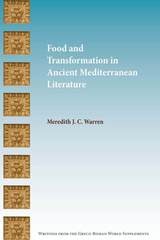
Food and Transformation in Ancient Mediterranean Literature
Meredith J. C. Warren
SBL Press, 2019
New research that transforms how to understand food and eating in literature
Meredith J. C. Warren identifies and defines a new genre in ancient texts that she terms hierophagy, a specific type of transformational eating where otherworldly things are consumed. Multiple ancient Mediterranean, Jewish, and Christian texts represent the ramifications of consuming otherworldly food, ramifications that were understood across religious boundaries. Reading ancient texts through the lens of hierophagy helps scholars and students interpret difficult passages in Joseph and Aseneth, 4 Ezra, Revelation 10, and the Persephone myths, among others.
Features:
- Exploration of how ancient literature relies on bending, challenging, inverting, and parodying cultural norms in order to make meaning out of genres
- Analysis of hierophagy as social action that articulates how patterns of communication across texts and cultures emerge and diverge
- A new understanding of previously confounding scenes of literary eating
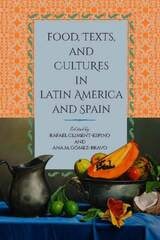
Food, Texts, and Cultures in Latin America and Spain
Rafael Climent-Espino
Vanderbilt University Press, 2020
The studies span from the Middle Ages to the twenty-first century, and the contributing scholars occupy diverse fields within Latin American and Hispanic Studies. As such, their essays showcase eclectic critical and theoretical approaches to the subject of Latin American and Iberian food.
Food, Texts, and Cultures in Latin America and Spain also introduces the first English-language publication of works from such award-winning scholars as Adolfo Castañón of the Mexican Academy of Language; Sergio Ramírez, winner of the 2017 Miguel de Cervantes Prize in Literature; and Carmen Simón Palmer, winner of the 2015 Julián Marías Prize for Research.
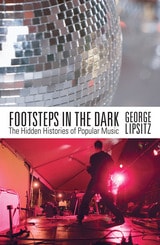
Footsteps in the Dark
The Hidden Histories of Popular MusicGeorge Lipsitz
University of Minnesota Press, 2007
Most pop songs are short-lived. They appear suddenly and, if they catch on, seem to be everywhere at once before disappearing again into obscurity. Yet some songs resonate more deeply—often in ways that reflect broader historical and cultural changes.
In Footsteps in the Dark, George Lipsitz illuminates these secret meanings, offering imaginative interpretations of a wide range of popular music genres from jazz to salsa to rock. Sweeping changes that only remotely register in official narratives, Lipsitz argues, can appear in vivid relief within popular music, especially when these changes occur outside mainstream white culture. Using a wealth of revealing examples, he discusses such topics as the emergence of an African American techno music subculture in Detroit as a contradictory case of digital capitalism and the prominence of banda, merengue, and salsa music in the 1990s as an expression of changing Mexican, Dominican, and Puerto Rican nationalisms. Approaching race and popular music from another direction, he analyzes the Ken Burns PBS series Jazz as a largely uncritical celebration of American nationalism that obscures the civil rights era’s challenge to racial inequality, and he takes on the infamous campaigns to censor hip-hop and the radical black voice in the early 1990s.
Teeming with astute observations and brilliant insights about race and racism, deindustrialization, and urban renewal and their connections to music, Footsteps in the Dark puts forth an alternate history of post–cold war America and shows why in an era given to easy answers and clichéd versions of history, pop songs matter more than ever.
George Lipsitz is professor of black studies and sociology at the University of California, Santa Barbara. Among his many books are Life in the Struggle, Dangerous Crossroads, and American Studies in a Moment of Danger (Minnesota, 2001).
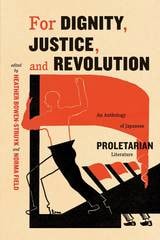
For Dignity, Justice, and Revolution
An Anthology of Japanese Proletarian LiteratureEdited by Heather Bowen-Struyk and Norma Field
University of Chicago Press, 2015
Contextualized by introductory essays, forty expertly translated stories touch on topics like perilous factories, predatory bosses, ethnic discrimination, and the myriad indignities of poverty. Together, they show how even intensely personal issues form a pattern of oppression. Fostering labor consciousness as part of an international leftist arts movement, these writers, lovers of literature, were also challenging the institution of modern literature itself. This anthology demonstrates the vitality of the “red decade” long buried in modern Japanese literary history.

For Love of the World
Essays on Nature WritersSherman Paul
University of Iowa Press, 1992

For the Sake of the Song
Essays on Townes Van ZandtAnn Norton Holbrook
University of North Texas Press, 2022
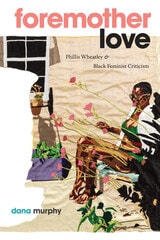
Foremother Love
Phillis Wheatley and Black Feminist CriticismDana Murphy
Duke University Press, 2025
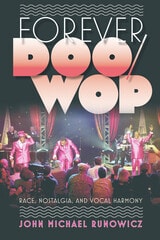
Forever Doo-Wop
Race, Nostalgia, and Vocal HarmonyJohn Michael Runowicz
University of Massachusetts Press, 2010
Music can be a storehouse for emotional, social, and cultural experiences that deepen and acquire greater value over time. This is a book about a particular genre of vocal harmony music called doo-wop that has accrued deep meaning and affective power among Americans since its inception in the aftermath of World War II. Although the first doo-wop singers were primarily young black males in major American cities, it wasn't long before white working-class teenagers began emulating their rhythm-and-blues harmonies. The racial exchange of this distinctive genre and the social bonding it engendered have had a significant and lasting impact on American musical culture.
In Forever Doo-Wop, John Runowicz traces the history of this music from its origins in nineteenth-century barbershop quartets through its emergence in the postwar era to its nostalgic adulthood from the mid-1960s to today. The book is based on interviews he has conducted and observations he has made over the last twenty-two years working as guitarist, musical director, and second tenor with one of the legendary doo-wop groups, the Cadillacs, on what is popularly known as the “oldies circuit.” As a graduate student, he broadened his research to include the wider doo-wop community.
Forever Doo-Wop invites readers to gaze through a window on our society and culture where certain truths are revealed about how white and black Americans coexist and interact, about how popular music functions as a vehicle for nostalgia, and about the role of music making over a long lifetime.
Forgotten Futures, Colonized Pasts
Transnational Collaboration in Nineteenth-Century Greater MexicoCara Anne Kinnally
Bucknell University Press, 2019
Published by Bucknell University Press. Distributed worldwide by Rutgers University Press.
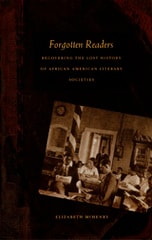
Forgotten Readers
Recovering the Lost History of African American Literary SocietiesElizabeth McHenry
Duke University Press, 2002
Forgotten Readers expands our definition of literacy and urges us to think of literature as broadly as it was conceived of in the nineteenth century. Elizabeth McHenry delves into archival sources, including the records of past literary societies and the unpublished writings of their members. She examines particular literary associations, including the Saturday Nighters of Washington, D.C., whose members included Jean Toomer and Georgia Douglas Johnson. She shows how black literary societies developed, their relationship to the black press, and the ways that African American women’s clubs—which flourished during the 1890s—encouraged literary activity. In an epilogue, McHenry connects this rich tradition of African American interest in books, reading, and literary conversation to contemporary literary phenomena such as Oprah Winfrey’s book club.
Form and Instability
Eastern Europe, Literature, Postimperial DifferenceAnita Starosta
Northwestern University Press, 2015
Located at the intersection of comparative literature, area studies, and literary theory, this interdisciplinary study has a twofold commitment: to Eastern Europe on the one hand and to literature on the other. It aims to intervene in the way we conceive of Eastern Europe by seeking to develop a more equitable way of thinking, one that avoids subordinating it to Eurocentric narratives of progress. At the same time, it marshals literature as both object and method of this rethinking, in order to extend existing conceptions of the usefulness and of the proper organization of literary studies. The three terms in the title of this book mark a passage—via literature—from “Eastern Europe” as an inadequate and obsolescent category to “post-imperial difference” as a more accurate, if provisional, account of the region. By way of original readings of particular texts, and by attending to literature as a critical
Form and Reform
Reading across the Fifteenth CenturyShannon Gayk and Kathleen Tonry
The Ohio State University Press, 2011
Form and Reform: Reading across the Fifteenth Century challenges the idea of any definitive late medieval moment and explores instead the provocatively diverse, notably untidy, and very rich literary culture of the age. These essays from leading medievalists, edited by Shannon Gayk and Kathleen Tonry, both celebrate and complicate the reemergence of the fifteenth century in literary studies. Moreover, this is the first collection to concentrate on the period between 1450 and 1500—the crucial five decades, this volume argues, that must be understood to comprehend the entire century’s engagement with literary form in shifting historical contexts.
Forming Humanity
Redeeming the German Bildung TraditionJennifer A. Herdt
University of Chicago Press, 2019
Kant’s proclamation of humankind’s emergence from “self-incurred immaturity” left his contemporaries with a puzzle: What models should we use to sculpt ourselves if we no longer look to divine grace or received authorities? Deftly uncovering the roots of this question in Rhineland mysticism, Pietist introspection, and the rise of the bildungsroman, Jennifer A. Herdt reveals bildung, or ethical formation, as the key to post-Kantian thought. This was no simple process of secularization, in which human beings took responsibility for something they had earlier left in the hands of God. Rather, theorists of bildung, from Herder through Goethe to Hegel, championed human agency in self-determination while working out the social and political implications of our creation in the image of God. While bildung was invoked to justify racism and colonialism by stigmatizing those deemed resistant to self-cultivation, it also nourished ideals of dialogical encounter and mutual recognition. Herdt reveals how the project of forming humanity lives on in our ongoing efforts to grapple with this complicated legacy.
Forms of Association
Making Publics in Early Modern EuropePaul Yachnin
University of Massachusetts Press, 2015
In today's connected and interactive world, it is hard to imagine a time when cultural and intellectual interests did not lead people to associate with others who shared similar views and preoccupations. In this volume of essays, fifteen scholars explore how these kinds of relationships began to transform early modern European culture.
Forms of Association grows out of the “Making Publics: Media, Markets, and Association in Early Modern Europe” (MaPs) project, funded by the Social Sciences and Humanities Research Council of Canada. This scholarly initiative convened an interdisciplinary research team to consider how “publics”—new forms of association built on the shared interests of individuals—developed in Europe from 1500 to 1700. Drawing on a wide array of texts and histories, including the plays of Shakespeare, the legend of Robin Hood, paintings, and music as well as English gossip about France, the contributors develop a historical account of what publics were in early modern Europe. This collaborative study provides a dynamic way of understanding the political dimensions of artistic and intellectual works and opens the way toward a new history of early modernity.
Until his death in 2008, the great Renaissance scholar Richard Helgerson was a key participant in the MaPs project. The scholars featured in this volume originally met in Montreal to engage in a critical, commemorative conversation about Helgerson's work, the issues and questions coming out of the MaPs project, and how Helgerson's thinking advanced and could in turn be advanced by MaPs. This collection represents the fruits of that conversation.
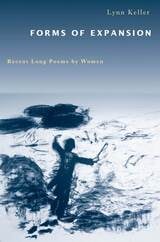
Forms of Expansion
Recent Long Poems by WomenLynn Keller
University of Chicago Press, 1997
Arguing that women poets no longer feel intimidated by the traditional associations of long poems with the heroic, public realm or with great artistic ambition, Keller shows how the long poem's openness to sociological, anthropological, and historical material makes it an ideal mode for exploring women's roles in history and culture. In addition, the varied forms of long poems—from sprawling free verse epics to regular sonnet sequences to highly disjunctive experimental collages—make this hybrid genre easily adaptable to diverse visions of feminism and of contemporary poetics.
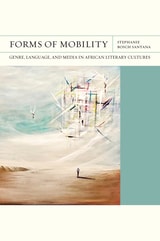
Forms of Mobility
Genre, Language, and Media in African Literary CulturesStephanie Bosch Santana
Northwestern University Press, 2025
Presents alternative categories of fiction through which to examine how contemporary writers have envisaged Africa’s changing literary terrains
Stephanie Bosch Santana analyzes southern African writers’ experimentations with literary form in periodical print and digital media since the mid-twentieth century in order to offer an alternative account of contemporary African imaginations of mobility. Based on an understudied archive of texts in English and Chichewa/Nyanja from Malawi, South Africa, Zimbabwe, and Zambia, Forms of Mobility: Genre, Language, and Media in African Literary Cultures examines new, noncanonical categories of fiction, including migrant forms, township tales, weekend stories, and digital diaries. These generically, linguistically, and geographically mobile forms map changing ideas of interconnection and belonging. By reading them “in motion,” as they travel across space, time, genre, and language and between publications and platforms, Bosch Santana limns multiple centers of literary influence and relation across southern African and Black diasporas, revealing forms of literary mobility and space making that are occluded by current models of world literature.
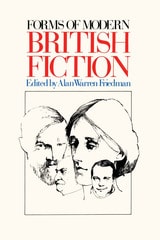
Forms of Modern British Fiction
Edited by Alan Warren Friedman
University of Texas Press, 1975
In Forms of Modern British Fiction six individualistic and strongminded critics delineate the "age of modernism" in British fiction. Dating the age and the movement from later Hardy works through the deaths of Joyce and Woolf, they present British fiction as a cohesive, self-contained unit of literary history.
Hardy appears as the first of the modern British novelists, Lawrence as the central, and Joyce and Woolf as the last. The writers and the modern movement are framed by precursors, such as Galsworthy, and by successors, Durrell, Beckett, and Henry Green—the postmoderns. The pattern of the essays suggests a growing self-consciousness on the part of twentieth-century writers as they seek not only to refine their predecessors but also to deny (and sometimes obliterate) them. The moderns thus deny the novel itself, a genre once firmly rooted in history and forms of social life. Their works do not assume that comfortable mimetic relationship between the fictive realities of art and life.
Consequently, there has now evolved a poetics of the novel that is virtually identifiable with modern fiction, a poetics still highly problematical in its attempt to denote a medium in whose name eclectic innovativeness and incessant revitalizing are proclaimed. Forms of Modern British Fiction refines and advances the discussion of the modern novel and the world it and we inhabit.
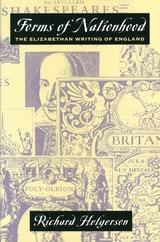
Forms of Nationhood
The Elizabethan Writing of EnglandRichard Helgerson
University of Chicago Press, 1992
Forty-Nine Steps
Roberto Calasso
University of Minnesota Press, 2001
Foucault and the Kamasutra
The Courtesan, the Dandy, and the Birth of Ars Erotica as Theater in IndiaSanjay K. Gautam
University of Chicago Press, 2016
Gautam shows how closely intertwined the history of erotics in Indian culture is with the history of theater-aesthetics grounded in the discourse of love, and Foucault provides the framework for opening up an intellectual horizon of Indian thought. To do this, Gautam looks to the history of three inglorious characters in classical India: the courtesan and her two closest male companions—her patron, the dandy consort; and her teacher and advisor, the dandy guru. Foucault’s distinction between erotic arts and the science of sexuality drives Gautam’s exploration of the courtesan as a symbol of both sexual-erotic and aesthetic pleasure. In the end, by entwining together Foucault’s works on the history of sexuality in the West and the classical Indian texts on eros, Gautam transforms our understanding of both, even as he opens up new ways of investigating erotics, aesthetics, gender relations, and subjectivity.