Results by title
22279 books match the query 'Social Science' and 955 start with f

Fat Activism (Second Edition)
A Radical Social MovementCharlotte Cooper
Intellect Books, 2021
Combining rigorous scholarship with personal, accessible writing, Fat Activism: A Radical Social Movement is not only an invaluable contribution to the burgeoning field of fat studies, but also a vehicle for much-needed social change.
Fat Activism
A Radical Social MovementCharlotte Cooper
Intellect Books, 2016
Charlotte Cooper, a fat activist with around 30 years experience, answers this question by lifting the lid on a previously unexplored social movement and offering a fresh perspective on one of the major problems of our times.
In her expansive grassroots study she:
Reveals details of fat activist methods and approaches and explodes myths
Charts extensive accounts of international fat activist historical roots going back over four decades
Explores controversies and tensions in the movement
Shows that fat activism is an undeniably feminist and queer phenomenon
Explains why fat activism presents exciting possibilities for anyone interested in social justice
Fat Activism: A Radical Social Movement is a rare insider’s view of fat people speaking about their lives and politics on their own terms. It is part of a new wave of accessible, accountable and rigorous work emerging through Research Justice and the Para-Academy.
This is the book you have been waiting for.

Fatal Advice
How Safe-Sex Education Went WrongCindy Patton
Duke University Press, 1996
There is the official story, and then there is another, involving local groups and AIDS activists. Going back to early government and activist attempts to spread information, Patton traces a slow separation between official advice and that provided by those on the front lines in the battle against AIDS. She shows how American anxieties about teen sex played into the nation’s inadequate education and protection of its young people, and chronicles the media’s attempts to encourage compassion without broaching the touchy subject of sex or disrupting the notion that AIDS was a disease of social and sexual outcasts. Her overview of the relationship between shifting medical perceptions and safe-sex advice reveals why radical safe-sex educators eventually turned to sexually explicit, including pornographic, representations to spread their message—and why even these extreme tactics could not overcome the misguided national teaching on AIDS.
Patton closes with a stirring manifesto, an urgent call to action for all those who do not want to see the hard lessons of AIDS education and activism wasted, or, with these lessons, the loss of so many more lives.

Fatal Isolation
The Devastating Paris Heat Wave of 2003Richard C. Keller
University of Chicago Press, 2015
Fatal Isolation tells the stories of these victims and the catastrophe that took their lives. It explores the multiple narratives of disaster--the official story of the crisis and its aftermath, as presented by the media and the state; the life stories of the individual victims, which both illuminate and challenge the ways we typically perceive natural disasters; and the scientific understandings of disaster and its management. Fatal Isolation is both a social history of risk and vulnerability in the urban landscape and a story of how a city copes with emerging threats and sudden, dramatic change.

Fate and Honor, Family and Village
Demographic and Cultural Change in Rural Italy Since 1800Rudolph M. Bell
University of Chicago Press, 1979
Fortuna is the cultural wellspring of Italian peasant society, the world view from which all social life flows. The concept of fortuna does not refer to philosophical questions, predestination, or value judgments. Rather, fortuna is the sum total of all explanations of outcomes perceived to be beyond human control. Thus, in Bell's view, high mortality does not lead peasants to a resigned acceptance of their fate; instead, they rely on honor, reciprocal exchanges of favors, and marriage to forge new links in their familial and social networks. With thorough documentation in graphs and tables, the author evaluates peasant reactions to time, work, family, space, migration, and protest to portray rural Italians as active, flexible, and shrewd, participating fully in shaping their destinies.
Bell asserts that the real problem of the Mezzogiorno is not one of resistance to technology, of high birth rates, or even of illiteracy. It is one of solving technical questions in ways that foster dependency. The historical and sociological practice of treating peasant culture as backward, secondary, and circumscribed only encourages disruption and ultimately blocks the road to economic and political justice in a postmodern world.

Fate in My Hands
The Death Penalty in the Soviet UnionYana Skorobogatov
University of Chicago Press, 2026
A striking examination of the death penalty in the Soviet Union that documents in heart-rending detail how its citizens, hopeful for a new life post-Stalin, lost faith that their transgressions could be forgiven.
From 1954 to 1991 in the Soviet Union, nearly forty thousand citizens were executed after the death penalty was reinstated as a punishment for homicide. Fate in My Hands introduces readers to the many citizens in this period—women and men of all ages and backgrounds—who found themselves on death row and tried to escape it in the only way available to them: asking for forgiveness.
Examining the letters and objects the dead left behind, Skorobogatov recovers their voices and allows them to speak anew. She offers a striking portrait of life in the Soviet Union and the citizens who dreamed of new possibilities even as they faced their tragic end. Using a corpus of never-before-accessed criminal court records, Fate in My Hands brings readers not just into the police interrogation rooms, courthouses, and cells where the condemned awaited their fates, but into the homes, workplaces, and psychiatric hospitals where families and friends alike came together to pursue an elusive, bitter justice in the wake of violent tragedy.
Fatefully, Faithfully Feminist
A Critical History of Women, Patriarchy, and Mexican National DiscourseCarlos Monsiváis, edited by Norma Kahn and Ilana Luna
Vanderbilt University Press, 2024

Father Mathew's Crusade
Temperance in Nineteenth-Century Ireland and Irish AmericaJohn F. Quinn
University of Massachusetts Press, 2002
For centuries, the Irish have been famed, and often derided, for their attachment to alcohol. Yet in the 1830s and 1840s, Ireland became a temperance stronghold. The man almost singlehandedly responsible for this surprising transformation was Father Theobald Mathew (1790–1856), a popular Franciscan friar. Over a ten-year period, five million Irish men, women, and children took the pledge at his hands, while hundreds of public houses were forced to shut their doors or switch to selling coffee and tea.
By the end of the 1840s, however, Mathew's “miracle” was already coming undone. The Great Famine was ravaging Ireland and Mathew's years of nonstop campaigning had left him sick, exhausted, and bankrupt. Undeterred, he traveled to the United States in 1849 to generate support and administer the pledge to as many new immigrants as he could find. Failing health forced him to return to Ireland where he died in 1856, leaving behind a weak and fragmented movement.
In the late nineteenth century, several Irish priests revived Mathew's crusade. In the United States, Irish American bishops supported the Catholic Total Abstinence Union (CTAU) and joined hands with the Women's Christian Temperance Union in their war against liquor. In Ireland, Father James Cullen formed the Pioneers, a total abstinence association for devout Catholics. While the CTAU languished after the United States Congress passed the Prohibition Amendment in 1919, the Pioneers continued to thrive in Ireland into the 1960s. Although the group's membership has declined in recent years, there are still today a large number of Irish teetotalers.

Fatherhood Arrested
Parenting from Within the Juvenile Justice SystemAnne M. Nurse
Vanderbilt University Press, 2002
By taking us inside the prison system, Nurse shows how its structure actively shapes an inmate's relationship with his children. For example, visitation is sometimes restricted to blood relatives and wives. Because relationships between unmarried men and the mothers of their children are often strained, some mothers are unwilling to allow their children to go to the prison with the inmate's family. Or the father may be allowed to receive visits from only one "girlfriend," which forces a man with multiple relationships, or with children by different women, to make impossible choices. Special attention is paid to the gendered nature of prison, its patriarchal and punitive structure, and its high-stress environment. The book then follows newly paroled men as they are released and return to their children.
The author spent four years doing research at the California Youth Authority, during which time she surveyed 258 paroled fathers. The group included young white, black, and Latino men, ages sixteen to twenty-five. She conducted in-depth interviews with men selected from this group, participated in forty parenting class sessions, and observed visiting hours at three different institutions. The data provide fascinating information about the characteristics of the men, their attitudes toward fatherhood, and the ways they are involved with their children. The diversity of the fathers allows for an analysis of racial and ethnic variation in their attitudes and involvement. The study concludes with a series of policy suggestions, especially important in light of the large number of fathers now living under the care and control of the juvenile justice system.

Fatherhood Politics in the United States
Masculinity, Sexuality, Race, and MarriageAnna Gavanas
University of Illinois Press, 2004
Unlike previous investigations that rely on literary or other secondary sources, Fatherhood Politics works from primary ethnographic material to represent a wider range of voices and actors. Interacting with and interviewing members of the most powerful and well-known national fatherhood organizations, Gavanas observed Promise Keeper rallies, men's workshops, and conferences on masculinity, fatherhood, and marriage.
Providing a detailed overview of the different organizations involved and their various rhetorical strategies, Gavanas breaks down the FRM into two major wings. The "pro-marriage" wing sees marriage as the key to solving all social problems, while the "fragile family" organizations worry about unemployment, racism, and discrimination. Gavanas uses her extensive anthropological fieldwork as the basis for discussions of gender, sexuality, and race in her analysis of these competing voices.
Taking us inside the internal struggles, tensions, and political machinations of the FRM, Gavanas offers a behind-the-scenes look at a movement having real impact on current social policy. Fatherhood Politics is an essential work for anyone interested in the politics of masculinity, parenthood, marriage, race, and sexuality.

Fatherhood in the Borderlands
A Daughter's Slow ApproachDomino Renee Perez
University of Texas Press, 2022
2026 Best Book Award, Association for Borderlands Studies
2023 Finalist, Best Academic Themed Book, College Level – English, International Latino Book Awards
A contemplative exploration of cultural representations of Mexican American fathers in contemporary media.
As a young girl growing up in Houston, Texas, in the 1980s, Domino Perez spent her free time either devouring books or watching films—and thinking, always thinking, about the media she consumed. The meaningful connections between these media and how we learn form the basis of Perez’s “slow” research approach to race, class, and gender in the borderlands. Part cultural history, part literary criticism, part memoir, Fatherhood in the Borderlands takes an incisive look at the value of creative inquiry while it examines the nuanced portrayal of Mexican American fathers in literature and film.
Perez reveals a shifting tension in the literal and figurative borderlands of popular narratives and shows how form, genre, and subject work to determine the roles Mexican American fathers are allowed to occupy. She also calls our attention to the cultural landscape that has allowed such a racialized representation of Mexican American fathers to continue, unopposed, for so many years. Fatherhood in the Borderlands brings readers right to the intersection of the white cultural mainstream in the United States and Mexican American cultural productions, carefully considering the legibility and illegibility of Brown fathers in contemporary media.

Fathers Under Fire
The Revolution in Child Support EnforcementIrwin Garfinkel
Russell Sage Foundation, 1998

Fathers' Fair Share
Helping Poor Men Manage Child Support and FatherhoodEarl S. Johnson
Russell Sage Foundation, 1999

Fathers, Preachers, Rebels, Men
Black Masculinity in U.S. History and Literature, 1820–1945Timothy R. Buckner
The Ohio State University Press, 2011
Fathers, Preachers, Rebels, Men: Black Masculinity in U.S. History and Literature, 1820–1945,edited by Timothy R. Buckner and Peter Caster, brings together scholars of history and literature focused on the lives and writing of black men during the nineteenth and twentieth centuries in the United States. The interdisciplinary study demonstrates the masculine character of cultural practices developed from slavery through segregation. Black masculinity embodies a set of contradictions, including an often mistaken threat of violence, the belief in its legitimacy, and the rhetorical union of truth and fiction surrounding slavery, segregation, resistance, and self-determination. The attention to history and literature is necessary because so many historical depictions of black men are rooted in fiction. The essays of this collection balance historical and literary accounts, and they join new descriptions of familiar figures such as Charles W. Chesnutt and W. E. B. Du Bois with the less familiar but critically important William Johnson and Nat Love.

Fatwas and Court Judgments
A Genre Analysis of Arabic Legal OpinionAhmed Fakhri
The Ohio State University Press, 2014
The differences between the two genres stem from elements of their socio-cultural context, such as the role relations of the participants and the characteristics of the institutions to which the genres belong. Moving beyond these contexts, Fatwas and Court Judgments reveals generic practices that have broad implications for understanding various aspects of wider Arab culture, including the tension between modern secular ideologies and traditional religious beliefs, the male-dominated access to discourse, and the prevalence of utilitarian attitudes exhibited in “fatwa shopping.”
Fault Lines of Care
Gender, HIV, and Global Health in BoliviaHeckert, Carina
Rutgers University Press, 2018
The HIV epidemic in Bolivia has received little attention on a global scale in light of the country’s low HIV prevalence rate. However, by profiling the largest city in this land-locked Latin American country, Carina Heckert shows how global health-funded HIV care programs at times clash with local realities, which can have catastrophic effects for people living with HIV who must rely on global health resources to survive. These ethnographic insights, as a result, can be applied to AIDS programs across the globe.
In Fault Lines of Care, Heckert provides a detailed examination of the effects of global health and governmental policy decisions on the everyday lives of people living with HIV in Santa Cruz. She focuses on the gendered dynamics that play a role in the development and implementation of HIV care programs and shows how decisions made from above impact what happens on the ground.

Favored Flowers
Culture and Economy in a Global SystemCatherine Ziegler
Duke University Press, 2007
Ziegler interviewed more than 250 people as she followed flowers along the full length of the commodity chain, from cuttings in Europe and Latin America to vases in and around New York. She examines the daily experiences of flower growers in the Netherlands and Ecuador, two leading exporters of flowers to the United States. Primary focus, though, is on others in the commodity chain: exporters, importers, wholesalers, and retailers. She follows their activities as they respond to changing competition, supply, and consumer behavior in a market characterized by risk, volatility, and imperfect knowledge. By tracing changes in the wholesale and retail systems, she shows the recent development of two complementary commodity chains in New York and the United States generally. One leads to a high-end luxury market served by specialty florists and designers, and the other to a lower-priced mass market served by chain groceries, corner delis, and retail superstores.
Fear Of A Queer Planet
Queer Politics and Social TheoryMichael Warner
University of Minnesota Press, 1993

Fear Reverence Terror
Carlo Ginzburg
Seagull Books, 2017
Fear, Reverence, Terror invites us to look at images slowly, with the help of a few examples: Picasso’s Guernica, the “Lord Kitchener Wants You” World War I recruitment poster, Jacques-Louis David’s Marat, the frontispiece of Thomas Hobbes’s Leviathan, and a cup of gilded silver with scenes from the conquest of the New World. Are these political images, Carlo Ginzburg asks? Yes, because every image is, in a sense, political—an instrument of power. Tacitus once wrote, unforgettably, that we are enslaved by lies of which we ourselves are the authors. Is it possible to break this bond? Fear, Reverence, Terror will answer this question.

Fear Your Future
How the Deck Is Stacked against Millennials and Why Socialism Would Make It WorsePhilip Klein
Templeton Press, 2019
The aftershocks of the Great Recession, the skyrocketing cost of living, and the titanic weight of student loan debt have made the American Dream seem to be forever retreating toward the horizon. As if that weren’t enough, millennials will face the largest federal debt in history as boomers retire and extract trillions of dollars from Social Security and Medicare—far more than they contributed.
In this concise, data-driven book, Klein begins the work of brightening the future for millennials by analyzing the problem compassionately yet objectively. There are real reasons to worry about what lies ahead if nothing changes. But the facts laid out in Klein’s book can steer the conversation to realistic solutions.

Fear and Conventionality
Elsie Clews Parsons
University of Chicago Press, 1997
A modern mind at the turn of the century, Parsons challenged social conventions at a time when it was less than popular to do so. Witty, graceful, and impassioned, this book will be of interest to social and cultural historians and anyone interested in early twentieth-century America.
Elsie Clews Parsons (1874-1941) is the author of many books, including The Family, The Old-Fashioned Woman, Pueblo Indian Religion, and Mitla. Available from the University of Chicago Press is Elsie Clews Parsons: Constructing Sex and Culture in Modernist America, a biography by Desley Deacon.

Fear of Small Numbers
An Essay on the Geography of AngerArjun Appadurai
Duke University Press, 2006
Fear of Small Numbers is Arjun Appadurai’s answer to that question. A leading theorist of globalization, Appadurai turns his attention to the complex dynamics fueling large-scale, culturally motivated violence, from the genocides that racked Eastern Europe, Rwanda, and India in the early 1990s to the contemporary “war on terror.” Providing a conceptually innovative framework for understanding sources of global violence, he describes how the nation-state has grown ambivalent about minorities at the same time that minorities, because of global communication technologies and migration flows, increasingly see themselves as parts of powerful global majorities. By exacerbating the inequalities produced by globalization, the volatile, slippery relationship between majorities and minorities foments the desire to eradicate cultural difference.
Appadurai analyzes the darker side of globalization: suicide bombings; anti-Americanism; the surplus of rage manifest in televised beheadings; the clash of global ideologies; and the difficulties that flexible, cellular organizations such as Al-Qaeda present to centralized, “vertebrate” structures such as national governments. Powerful, provocative, and timely, Fear of Small Numbers is a thoughtful invitation to rethink what violence is in an age of globalization.
Fear of a Black Republic
Haiti and the Birth of Black Internationalism in the United StatesLeslie M. Alexander
University of Illinois Press, 2023
A bold exploration of Black internationalism’s origins, Fear of a Black Republic links the Haitian revolution to the global Black pursuit of liberation, justice, and social equality.

Fear of a Dead White Planet
More Worlds Collective. Joseph Masco, Tim Choy, Jake Kosek, M. Murphy
Duke University Press, 2025

Fear, Anxiety, and National Identity
Immigration and Belonging in North America and Western Europesimon
Russell Sage Foundation, 2015
Fifty years of large-scale immigration has brought significant ethnic, racial, and religious diversity to North America and Western Europe, but has also prompted hostile backlashes. In Fear, Anxiety, and National Identity, a distinguished multidisciplinary group of scholars examine whether and how immigrants and their offspring have been included in the prevailing national identity in the societies where they now live and to what extent they remain perpetual foreigners in the eyes of the long-established native-born. What specific social forces in each country account for the barriers immigrants and their children face, and how do anxieties about immigrant integration and national identity differ on the two sides of the Atlantic?
Western European countries such as Germany, the Netherlands, and the United Kingdom have witnessed a significant increase in Muslim immigrants, which has given rise to nativist groups that question their belonging. Contributors Thomas Faist and Christian Ulbricht discuss how German politicians have implicitly compared the purported “backward” values of Muslim immigrants with the German idea of Leitkultur, or a society that values civil liberties and human rights, reinforcing the symbolic exclusion of Muslim immigrants. Similarly, Marieke Slootman and Jan Willem Duyvendak find that in the Netherlands, the conception of citizenship has shifted to focus less on political rights and duties and more on cultural norms and values. In this context, Turkish and Moroccan Muslim immigrants face increasing pressure to adopt “Dutch” culture, yet are simultaneously portrayed as having regressive views on gender and sexuality that make them unable to assimilate.
Religion is less of a barrier to immigrants’ inclusion in the United States, where instead undocumented status drives much of the political and social marginalization of immigrants. As Mary C. Waters and Philip Kasinitz note, undocumented immigrants in the United States. are ineligible for the services and freedoms that citizens take for granted and often live in fear of detention and deportation. Yet, as Irene Bloemraad points out, Americans’ conception of national identity expanded to be more inclusive of immigrants and their children with political mobilization and changes in law, institutions, and culture in the wake of the Civil Rights Movement. Canadians’ views also dramatically expanded in recent decades, with multiculturalism now an important part of their national identity, in contrast to Europeans’ fear that diversity undermines national solidarity.
With immigration to North America and Western Europe a continuing reality, each region will have to confront anti-immigrant sentiments that create barriers for and threaten the inclusion of newcomers. Fear, Anxiety, and National Identity investigates the multifaceted connections among immigration, belonging, and citizenship, and provides new ways of thinking about national identity.
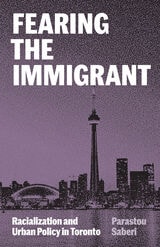
Fearing the Immigrant
Racialization and Urban Policy in TorontoParastou Saberi
University of Minnesota Press, 2022
A fascinating deep dive into one city’s urban policy—and the anxiety over immigrants that informs it
The city of Toronto is often held up as a leader in diversity and inclusion. In Fearing the Immigrant, however, Parastou Saberi argues that Toronto’s urban policies are influenced by a territorialized and racialized security agenda—one that parallels the “War on Terror.” Focusing on the figure of the immigrant and so-called immigrant neighborhoods as the targets of urban policy, Saberi offers an innovative, multidisciplinary approach to the politics of racialization and the governing of alterity through space in contemporary cities.
A comprehensive study of urban policymaking in Canada’s largest city from the 1990s to the late 2010s, Fearing the Immigrant uses Toronto as a jumping-off point to understand how the nexus of development, racialization, and security works at the urban and international levels. Saberi situates urban policymaking in Toronto in relation to the dominant policies of international development and public health, counterinsurgency, and humanitarian intervention. Engaging with the genealogies and contemporary developments of major policy techniques involving mapping and policy concepts such as poverty, security, policing, development, empowerment, as well as social determinants of health, equity, and prevention, she scrutinizes the parallel ways these techniques and concepts operate in urban policy and international relations.
Fearing the Immigrant ultimately asserts that the geopolitical fear of the immigrant is central to the formation of urban policy in Toronto. Rather than addressing the root causes of poverty, urban policy as it has been practiced aims to pacify the specter of urban unrest and to secure the production of a neocolonial urban order. As such, this book is an urgent call to reimagine urban policy in the name of equality and social justice.

Fearless Wives and Frightened Shrews
The Construction of the Witch in Early Modern GermanyReinharde Brauner
University of Massachusetts Press, 1995
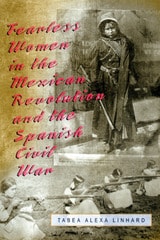
Fearless Women in the Mexican Revolution and the Spanish Civil War
Tabea Alexa Linhard
University of Missouri Press, 2005

Fears and Symbols
An Introduction to the Study of Western CivilizationElemér Hankiss
Central European University Press, 2001
This is a serious scholarly work that is, at the same time, somewhat unorthodox. On the one hand, it elaborates a systematic theory of civilization. It surveys the major theories of civilization and develops a new hypothesis, according to which existential fear has been a major factor in the generation of human culture. The author argues that in order to mitigate this fear and anxiety, human beings and communities have surrounded themselves not only with the walls of their houses and cities, with tools and weapons, laws and institutions, but also with protective spheres of symbols: myths and religions, values and belief systems, ideas and scientific theories, moral and practical rules of behavior, and a multitude of everyday rituals and trivialities. In a word, with the brilliant construct: civilization.
It is, on the other hand, an unorthodox book in that it studies an unusually wide range of examples and shows that the struggle for safety and freedom, for a meaningful life and human dignity, is present not only in the great symbolic systems of humankind but also in the most trivial of everyday activities and aspects of human existence; in tragedies as well as jokes, in the sacred as well as the profane, in the symbolism of medieval cathedrals as well as in that of contemporary shopping malls, in the great drama of Sin and Salvation as well as in the trivial mythology of perfumes. Ultimately, our trivialities are not trivial at all.
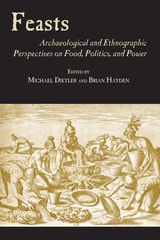
Feasts
Archaeological and Ethnographic Pespectives on Food, Politics, and PowerMichael Dietler
University of Alabama Press, 2010
From the ancient Near East to modern-day North America, communal consumption of food and drink punctuates the rhythms of human societies. Feasts serve many social purposes, establishing alliances for war and marriage, mobilizing labor, creating political power and economic advantages, and redistributing wealth. In this collection of fifteen essays, archaeologists and ethnographers explore the material record of food and its consumption as social practice. They examine the locations of roasting pits, hearths, and refuse deposits, or the presence of special decorative ceramics, and infer ways in which feasting traditions reveal social structures of lineage, clan, moiety, and polity.

Federico
One Man’s Remarkable Journey from Tututepec to L.A.Federico Jiménez Caballero, Edited by Shelby Tisdale
University of Arizona Press, 2021
From the day he was born, Federico Jiménez Caballero was predicted to be a successful man. So, how exactly did a young boy from Tututepec, Oaxaca, become a famous Indigenous jewelry artist and philanthropist in Los Angeles? Federico tells the remarkable story of willpower, curiosity, hard work, and passion coming together to change one man’s life forever.
As a child growing up in a small rural town in southern Mexico, Federico Jiménez Caballero faced challenges that most of us cannot imagine, let alone overcome. From a young age, Federico worked tirelessly to contribute to his large family, yet his restless spirit often got him into trouble. Finding himself in the middle of a village-wide catastrophe, he was exiled to a boarding school in Oaxaca City where he was forced to become independent, resilient, and razor-sharp in order to stay afloat. Through his incredible people skills, bravery, and a few nudges from his bold mother, Federico found himself excelling in his studies and climbing the ranks in Oaxaca City. He always held a deep love and respect for his Mixtec Indigenous roots and began to collect Indigenous jewelry and textiles. Through a series of well-timed connections, Federico met his wife Ellen, and, shortly afterward, he came to the United States as a researcher at the University of California, Los Angeles, in the late 1960s.
Carrying his passion for Indigenous jewelry with him from Oaxaca, Federico owned a series of shops in Los Angeles and sold jewelry at flea markets to well-known Hollywood stars. Over the years, he cultivated relationships and became a philanthropist as well as the owner of a museum in Oaxaca City. This book is the inspiring first-person account of eighty years in the life of a man who moved from humble beginnings to the bright lights of Hollywood, following his passion and creating long-lasting relationships as he climbed the ladder of success.
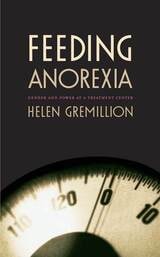
Feeding Anorexia
Gender and Power at a Treatment CenterHelen Gremillion
Duke University Press, 2003
Feeding Anorexia is based on fourteen months of ethnographic research in a small inpatient unit located in a major teaching and research hospital in the western United States. Gremillion attended group, family, and individual therapy sessions and medical staff meetings; ate meals with patients; and took part in outings and recreational activities. She also conducted over one hundred interviews-with patients, parents, staff, and clinicians. Among the issues she explores are the relationship between calorie-counting and the management of consumer desire; why the "typical" anorexic patient is middle-class and white; the extent to which power differentials among clinicians, staff, and patients model "anorexic families"; and the potential of narrative therapy to constructively reframe some of the problematic assumptions underlying more mainstream treatments.

Feeding Cahokia
Early Agriculture in the North American HeartlandGayle J. Fritz
University of Alabama Press, 2019
WINNER OF THE 2020 SOCIETY FOR ECONOMIC BOTANY'S MARY W. KLINGER BOOK AWARD
An authoritative and thoroughly accessible overview of farming and food practices at Cahokia
Agriculture is rightly emphasized as the center of the economy in most studies of Cahokian society, but the focus is often predominantly on corn. This farming economy is typically framed in terms of ruling elites living in mound centers who demanded tribute and a mass surplus to be hoarded or distributed as they saw fit. Farmers are cast as commoners who grew enough surplus corn to provide for the elites.
Feeding Cahokia: Early Agriculture in the North American Heartland presents evidence to demonstrate that the emphasis on corn has created a distorted picture of Cahokia’s agricultural practices. Farming at Cahokia was biologically diverse and, as such, less prone to risk than was maize-dominated agriculture. Gayle J. Fritz shows that the division between the so-called elites and commoners simplifies and misrepresents the statuses of farmers—a workforce consisting of adult women and their daughters who belonged to kin groups crosscutting all levels of the Cahokian social order. Many farmers had considerable influence and decision-making authority, and they were valued for their economic contributions, their skills, and their expertise in all matters relating to soils and crops. Fritz examines the possible roles played by farmers in the processes of producing and preparing food and in maintaining cosmological balance.
This highly accessible narrative by an internationally known paleoethnobotanist highlights the biologically diverse agricultural system by focusing on plants, such as erect knotweed, chenopod, and maygrass, which were domesticated in the midcontinent and grown by generations of farmers before Cahokia Mounds grew to be the largest Native American population center north of Mexico. Fritz also looks at traditional farming systems to apply strategies that would be helpful to modern agriculture, including reviving wild and weedy descendants of these lost crops for redomestication. With a wealth of detail on specific sites, traditional foods, artifacts such as famous figurines, and color photos of significant plants, Feeding Cahokia will satisfy both scholars and interested readers.
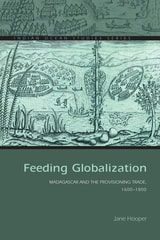
Feeding Globalization
Madagascar and the Provisioning Trade, 1600–1800Jane Hooper
Ohio University Press, 2017
Between 1600 and 1800, the promise of fresh food attracted more than seven hundred English, French, and Dutch vessels to Madagascar. Throughout this period, European ships spent months at sea in the Atlantic and Indian Oceans, but until now scholars have not fully examined how crews were fed during these long voyages. Without sustenance from Madagascar, European traders would have struggled to transport silver to Asia and spices back to Europe. Colonies in Mozambique, Mauritius, and at the Cape relied upon frequent imports from Madagascar to feed settlers and slaves.
In Feeding Globalization, Jane Hooper draws on challenging and previously untapped sources to analyze Madagascar’s role in provisioning European trading networks within and ultimately beyond the Indian Ocean. The sale of food from the island not only shaped trade routes and colonial efforts but also encouraged political centralization and the slave trade in Madagascar. Malagasy people played an essential role in supporting European global commerce, with far-reaching effects on their communities.
Feeding Globalization reshapes our understanding of Indian Ocean and global history by insisting historians should pay attention to the role that food played in supporting other exchanges.
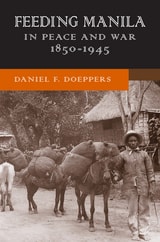
Feeding Manila in Peace and War, 1850–1945
Daniel F. Doeppers
University of Wisconsin Press, 2019
Doeppers follows key commodities for the city—rice, produce, fish, fowl, meat, milk, flour, coffee—and their complex interconnections. In the process he considers the changing ecology of the surrounding region as well as the social fabric that weaves together farmers, merchants, transporters, storekeepers, and door-to-door vendors.
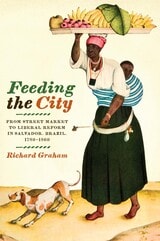
Feeding the City
From Street Market to Liberal Reform in Salvador, Brazil, 1780–1860By Richard Graham
University of Texas Press, 2010
Winner, Bolton-Johnson Prize, Conference on Latin American History, 2011
Murdo J. McLeod Book Prize, 2011
On the eastern coast of Brazil, facing westward across a wide magnificent bay, lies Salvador, a major city in the Americas at the end of the eighteenth century. Those who distributed and sold food, from the poorest street vendors to the most prosperous traders—black and white, male and female, slave and free, Brazilian, Portuguese, and African—were connected in tangled ways to each other and to practically everyone else in the city, and are the subjects of this book. Food traders formed the city's most dynamic social component during the late eighteenth and early nineteenth centuries, constantly negotiating their social place. The boatmen who brought food to the city from across the bay decisively influenced the outcome of the war for Brazilian independence from Portugal by supplying the insurgents and not the colonial army. Richard Graham here shows for the first time that, far from being a city sharply and principally divided into two groups—the rich and powerful or the hapless poor or enslaved—Salvador had a population that included a great many who lived in between and moved up and down.
The day-to-day behavior of those engaged in food marketing leads to questions about the government's role in regulating the economy and thus to notions of justice and equity, questions that directly affected both food traders and the wider consuming public. Their voices significantly shaped the debate still going on between those who support economic liberalization and those who resist it.
Feeding the Family
The Social Organization of Caring as Gendered WorkMarjorie L. DeVault
University of Chicago Press, 1991
Drawing from interviews conducted in 1982-83 in a diverse group of American households, DeVault reveals the effort and skill behind the "invisible" work of shopping, cooking, and serving meals. She then shows how this work can become oppressive for women, drawing them into social relations that construct and maintain their subordinate position in household life.

Feeding the Future
School Lunch Programs as Global Social PolicyRutledge, Jennifer Geist
Rutgers University Press, 2016
Feeding the World as if People Mattered
How Small Farms Produce Value Beyond YieldsAndrew Flachs
University of Arizona Press, 2026
The dominant view of agriculture has focused only on what we produce. It sees value in terms of capital gains or yield efficiency, masking how our global food system produces tremendous amounts of food commodities while failing to feed people, support rural communities, or enhance ecological well-being. Feeding the World as if People Mattered asks us to look more deeply and more humanely at what we perceive to be most valuable in our agricultural systems.
This book draws on fifteen years of anthropological research, taking readers to fields in South India, Eastern Europe, and North America, where people are already feeding the future amid global change. From these fields, Flachs shows us how a radical rethinking of the value of small farms and farmers is already happening. Bringing together conversations in agriculture, economics, anthropology, and the environmental humanities, Flachs deftly shows how small farms reproduce social and ecological relationships that are the only sustainable path forward.
For anyone who is curious about the food on their plate and the people who helped to get it there, Feeding the World as if People Mattered will offer a new way to find value in the food we grow and the people who grow it.
Feelin
Creative Practice, Pleasure, and Black Feminist ThoughtBettina Judd
Northwestern University Press, 2023
How creativity makes its way through feeling—and what we can know and feel through the artistic work of Black women
Feeling is not feelin. As the poet, artist, and scholar Bettina Judd argues, feelin, in African American Vernacular English, is how Black women artists approach and produce knowledge as sensation: internal and complex, entangled with pleasure, pain, anger, and joy, and manifesting artistic production itself as the meaning of the work. Through interviews, close readings, and archival research, Judd draws on the fields of affect studies and Black studies to analyze the creative processes and contributions of Black women—from poet Lucille Clifton and musician Avery*Sunshine to visual artists Betye Saar, Joyce J. Scott, and Deana Lawson.
Feelin: Creative Practice, Pleasure, and Black Feminist Thought makes a bold and vital intervention in critical theory’s trend toward disembodying feeling as knowledge. Instead, Judd revitalizes current debates in Black studies about the concept of the human and about Black life by considering how discourses on emotion as they are explored by Black women artists offer alternatives to the concept of the human. Judd expands the notions of Black women’s pleasure politics in Black feminist studies that include the erotic, the sexual, the painful, the joyful, the shameful, and the sensations and emotions that yet have no name. In its richly multidisciplinary approach, Feelin calls for the development of research methods that acknowledge creative and emotionally rigorous work as productive by incorporating visual art, narrative, and poetry.
Feeling Asian American
Racial Flexibility Between Assimilation and OppressionWen Liu
University of Illinois Press, 2024
Asian Americans have become the love-hate subject of the American psyche: at times celebrated as the model minority, at other times hated as foreigners. Wen Liu examines contemporary Asian American identity formation while placing it within a historical and ongoing narrative of racial injury. The flexible racial status of Asian Americans oscillates between oppression by the white majority and offers to assimilate into its ranks. Identity emerges from the tensions produced between those two poles. Liu dismisses the idea of Asian Americans as a coherent racial population. Instead, she examines them as a raced, gendered, classed, and sexualized group producing varying physical and imaginary boundaries of nation, geography, and citizenship. Her analysis reveals repeated norms and acts that capture Asian Americanness as part of a racial imagination that buttresses capitalism, white supremacy, neoliberalism, and the US empire.
An innovative challenge to persistent myths, Feeling Asian American ranges from the wartime origins of Asian American psychology to anti-Asian attacks to present Asian Americanness as a complex political assemblage.
Feeling Democracy
Emotional Politics in the New MillenniumSarah Tobias
Rutgers University Press, 2024
The essays in Feeling Democracy examine how both reactionary and progressive politics are driven largely by emotional appeals to the public. The contributors in this collection cover everything from immigrants’ rights movements to white nationalist rallies to show how solidarities forged around gender, race, and sexuality become catalysts for a passionate democratic politics. Some essays draw parallels between today’s activist strategies and the use of emotion in women-led radical movements from the 1960s and 1970s, while others expand the geographic scope of the collection by considering Asian decolonial politics and Egyptian pro-democracy protests.
Incorporating scholarship from fields as varied as law, political science, philosophy, psychoanalysis, and history, Feeling Democracy considers how emotional rhetoric in politics can be a double-edged sword—often wielded by authoritarian populists who seek to undermine democracy but sometimes helping to bring about a genuine renewal of participatory democracy.

Feeling Like a State
Desire, Denial, and the Recasting of AuthorityDavina Cooper
Duke University Press, 2019
Feeling Media
Potentiality and the Afterlife of ArtMiryam Sas
Duke University Press, 2022

Feeling Photography
Elspeth H. Brown and Thy Phu, eds.
Duke University Press, 2014
Contributors. Elizabeth Abel, Elspeth H. Brown, Kimberly Juanita Brown, Lisa Cartwright, Lily Cho, Ann Cvetkovich, David L. Eng, Marianne Hirsch, Thy Phu, Christopher Pinney, Marlis Schweitzer, Dana Seitler, Tanya Sheehan, Shawn Michelle Smith, Leo Spitzer, Diana Taylor
Feeling Women's Liberation
Victoria Hesford
Duke University Press, 2013

Feeling Yellow
Asian Americans and Yellowface in Twenty-First-Century Musical TheatreDonatella Galella
University of Michigan Press, 2026
Feeling Yellow examines how yellowface has persisted on the contemporary musical stage and how Asian Americans have contested yellowface, as they stake their own claim to the theatrical stage and nation state. Donatella Galella boldly argues that the pleasures of musical theatre and the disavowal of systemic anti-Asian racism enable the ongoing portrayal of Asian and Asian American characters by non-Asian actors. Galella offers two concepts to understand these phenomena: feeling yellow and yellowface without yellowed faces. Feeling yellow encapsulates the racialized anger, despair, and alienation of Asian American artists and audiences. Yellowface without yellowed faces denotes subtle ways of conveying Asianness, such as performing Asianness with exaggerated irony, using racialized costumes rather than yellow skin and slanted eye makeup, and setting musicals in fantasy Asian lands populated by multiracial casts.
Galella utilizes musicals such as Thoroughly Modern Millie, Anything Goes, The Mikado, and Soft Power, to understand how Asian and Asian American representation is connected to larger questions: How does racial identity shape emotional reactions to musical theatre? Why does yellowface and anti-Asian racism persist? What are the terms for Asian Americans belonging in the United States? Using a range of approaches from dramaturgy to auto-ethnography and materials from interviews to Reddit posts, Feeling Yellow spotlights Asian American affect, artistry, and activism.

Feelings at the Margins
Dealing with Violence, Stigma and Isolation in IndonesiaEdited by Birgitt Röttger-Rössler and Thomas Stodulka
Campus Verlag, 2014
Feels Right
Black Queer Women and the Politics of Partying in ChicagoKemi Adeyemi
Duke University Press, 2022
Duke University Press Scholars of Color First Book Award recipient

Feenin
R&B Music and the Materiality of BlackFem Voices and TechnologyAlexander Ghedi Weheliye
Duke University Press, 2023