Results by title
8128 books match the query 'Literary Criticism' and 298 start with f

From Jane Austen to Joseph Conrad
Robert C. Rathburn and Martin Steinmann Jr., Editors
University of Minnesota Press, 1967
From Jane Austen to Joseph Conrad was first published in 1967. Minnesota Archive Editions uses digital technology to make long-unavailable books once again accessible, and are published unaltered from the original University of Minnesota Press editions.
David Daisches, Douglas Bush, Robert B. Heilman, Arthur Mizener, and William Van O'Connor are among the contributors to this volume of essays on the nineteenth-century British novel. Each of the selections has been written expressly for this book and is published here for the first time.
There are a total of 20 essays, each by a different contributor. In addition, Rathburn, in an introductory essay, relates the nineteenth-century novel to that of the eighteenth century and Steinmann, in the concluding essay, discusses the nineteenth-century novel in relation to that of the present century.
The contributors, in addition to the two editors of the volume, and the novelists they discuss are the following: Charles Murrah, Jane Austen; Alan D Mckillop, Jane Austen; David Dasches, Walter Scott; Curtis Dahl, Edward Bulwer-Lytton; J. Y T. Greig, William Makepeace Thackeray; Douglas Bush, Charles Dickens; George H. Ford, Dickens; Melvin; R. Watson, the Brontes; Robert B. Heilman, Charlotte Bronte; Yvonne French, Elizabeth Gaskell; Bradford A. Booth, Anthony Trollope; Arthur Mizener, Anthony Trollope; Gordon S. Haight, George Eliot; Sumner J. Ferris, George Eliot; Wayne Burns, Charles Reade; Fabian Gudas, George Meredith; John Holloway, Thomas Hardy; Jacob Korg, George Gissing; William Van O'Connor, Samuel Burlter; W. Y. Tindall, Joseph Conrad. Although each essay is focused on a single novel or on one aspect of the novelist, all of them are written to give the reader sense of the novelist's whole achievement.
From Klein to Kristeva
Psychoanalytic Feminism and the Search for the "Good Enough" MotherJanice Doane and Devon Hodges
University of Michigan Press, 1993
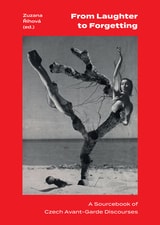
From Laughter to Forgetting
A Sourcebook of Czech Avant-Garde DiscoursesEdited by Zuzana Ríhová
Karolinum Press, 2023
In recent years a prominent trend in the study of European modernism and the avant-garde has been increased attention to texts and traditions that have long stood in the shadow of the French, German, and British traditions that dominate the canon. Yet this more expansive view of European modernism and the avant-garde has been hindered by the limited range of texts available outside the original languages. This book addresses that problem by offering a wide-ranging selection of literary, theoretical, and documentary sources from one of the most dynamic and original European avant-garde traditions: that of the first Czechoslovak Republic and of the Bohemian lands. The Czech avant-garde is in many respects the ideal “alternative” avant-garde to present in detail to a wider readership: it tracks Central European developments and was often influential internationally while being deeply embedded in particular cultural dynamics that produced original forms. This volume returns interwar Czech avant-garde writings to their place as a firmly embedded component of the European avant-garde.
From Little Houses to Little Women
Revisiting a Literary ChildhoodNancy McCabe
University of Missouri Press, 2018
McCabe, who grew up in Kansas just a few hours from the Ingalls family’s home in Little House on the Prairie, always felt a deep connection with Laura Ingalls Wilder, author of the Little House series. McCabe read Little House on the Prairie during her childhood and visited Wilder sites around the Midwest with her aunt when she was thirteen. But then she didn’t read the series again until she decided to revisit in adulthood the books that had so influenced her childhood. It was this decision that ultimately sparked her desire to visit the places that inspired many of her childhood favorites, taking her on a journey that included stops in the Missouri of Laura Ingalls Wilder, the Minnesota of Maud Hart Lovelace, the Massachusetts of Louisa May Alcott, and even the Canada of Lucy Maud Montgomery.
From Little Houses to Little Women reveals McCabe’s powerful connection to the characters and authors who inspired many generations of readers. Traveling with McCabe as she rediscovers the books that shaped her and ultimately helped her to forge her own path, readers will enjoy revisiting their own childhood favorites as well.
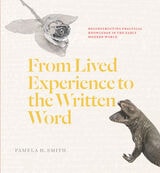
From Lived Experience to the Written Word
Reconstructing Practical Knowledge in the Early Modern WorldPamela H. Smith
University of Chicago Press, 2022
In From Lived Experience to the Written Word, Pamela H. Smith considers how and why, beginning in 1400 CE, European craftspeople began to write down their making practices. Rather than simply passing along knowledge in the workshop, these literate artisans chose to publish handbooks, guides, treatises, tip sheets, graphs, and recipe books, sparking early technical writing and laying the groundwork for how we think about scientific knowledge today.
Focusing on metalworking from 1400–1800 CE, Smith looks at the nature of craft knowledge and skill, studying present-day and historical practices, objects, recipes, and artisanal manuals. From these sources, she considers how we can reconstruct centuries of largely lost knowledge. In doing so, she aims not only to unearth the techniques, material processes, and embodied experience of the past but also to gain insight into the lifeworld of artisans and their understandings of matter.

From Mammies to Militants
Domestics in Black American Literature from Charles Chesnutt to Toni MorrisonTrudier Harris
University of Alabama Press, 2023
From Charles Chesnutt’s The Marrow of Tradition to Toni Morrison’s The Bluest Eye, Black writers, some of whom worked as maids themselves, have manipulated the stereotype in a strategic way as a figure to comment on Black-white relations or to dramatize the conflicts of the Black protagonists. In fact, the characters themselves, like real-life maids, often use the stereotype to their advantage or to trick their oppressors.
Harris combines folkloristic, sociological, historical, and psychological analyses with literary ones, drawing on her own interviews with Black women who worked as domestics. She explores the differences between Northern and Southern maids and between “mammy” and “militant.” Her invaluable book provides a sweeping exploration of Black American writers of the twentieth century, with extended discussion of works by Charles Chesnutt, Kristin Hunter, Toni Morrison, Richard Wright, Ann Petry, William Melvin Kelley, Alice Childress, John A. Williams, Douglas Turner Ward, Barbara Woods, Ted Shine, and Ed Bullins. Often privileging political statements over realistic characterization in the design of their texts, the authors in Harris’s study urged Black Americans to take action to change their powerless conditions, politely if possible, violently if necessary. Through their commitment to improving the conditions of Black people in America, these writers demonstrate the connectedness of art and politics.
In her new afterword, “From Militants to Movie Stars,” Harris looks at domestic workers in African American literature after the original publication of her book in 1982. Exploring five subsequent literary treatments of Black domestic workers from Ernest J. Gaines’s A Lesson Before Dying to Lynn Nottage’s By the Way, Meet Vera Stark, Harris tracks how the landscape of representation of domestic workers has broken with tradition and continues to transform into something entirely new.
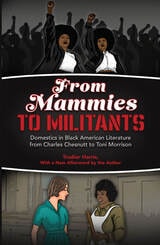
From Mammies to Militants
Domestics in Black American Literature from Charles Chesnutt to Toni MorrisonTrudier Harris
University of Alabama Press, 2023
Unmasking stereotypes and reclaiming identity of Black Womanhood in American Culture.
Welfare queen, hot momma, unwed mother: these stereotypes of Black women share their historical conception in the image of the Black woman as domestic. Focusing on the issue of stereotypes, the new edition of Trudier Harris’s classic 1982 study From Mammies to Militants examines the position of the domestic in Black American literature with a new afterword bringing her analysis into the present.
From Charles Chesnutt’s The Marrow of Tradition to Toni Morrison’s The Bluest Eye, Black writers, some of whom worked as maids themselves, have manipulated the stereotype in a strategic way as a figure to comment on Black-white relations or to dramatize the conflicts of the Black protagonists. In fact, the characters themselves, like real-life maids, often use the stereotype to their advantage or to trick their oppressors.
Harris combines folkloristic, sociological, historical, and psychological analyses with literary ones, drawing on her own interviews with Black women who worked as domestics. She explores the differences between Northern and Southern maids and between “mammy” and “militant.” Her invaluable book provides a sweeping exploration of Black American writers of the twentieth century, with extended discussion of works by Charles Chesnutt, Kristin Hunter, Toni Morrison, Richard Wright, Ann Petry, William Melvin Kelley, Alice Childress, John A. Williams, Douglas Turner Ward, Barbara Woods, Ted Shine, and Ed Bullins. Often privileging political statements over realistic characterization in the design of their texts, the authors in Harris’s study urged Black Americans to take action to change their powerless conditions, politely if possible, violently if necessary. Through their commitment to improving the conditions of Black people in America, these writers demonstrate the connectedness of art and politics.
In her new afterword, “From Militants to Movie Stars,” Harris looks at domestic workers in African American literature after the original publication of her book in 1982. Exploring five subsequent literary treatments of Black domestic workers from Ernest J. Gaines’s A Lesson Before Dying to Lynn Nottage’s By the Way, Meet Vera Stark, Harris tracks how the landscape of representation of domestic workers has broken with tradition and continues to transform into something entirely new.
From Many Gods to One
Divine Action in Renaissance EpicTobias Gregory
University of Chicago Press, 2006
Epic poets of the Renaissance looked to emulate the poems of Greco-Roman antiquity, but doing so presented a dilemma: what to do about the gods? Divine intervention plays a major part in the epics of Homer and Virgil—indeed, quarrels within the family of Olympian gods are essential to the narrative structure of those poems—yet poets of the Renaissance recognized that the cantankerous Olympians could not be imitated too closely. The divine action of their classical models had to be transformed to accord with contemporary tastes and Christian belief.
From Many Gods to One offers the first comparative study of poetic approaches to the problem of epic divine action. Through readings of Petrarch, Vida, Ariosto, Tasso, and Milton, Tobias Gregorydescribes the narrative and ideological consequences of the epic’s turn from pagan to Christian. Drawing on scholarship in several disciplines—religious studies, classics, history, and philosophy, as well as literature—From Many Gods to One sheds new light on two subjects of enduring importance in Renaissance studies: the precarious balance between classical literary models and Christian religious norms and the role of religion in drawing lines between allies and others.
From Misa to Mise en Scène
Fra Francesc Moner’s Prototype of the Spanish Sacramental Theater of the Fifteenth CenturyPeter Cocozzella
Arizona Center for Medieval and Renaissance Studies, 2020
From Mother and Daughter
Poems, Dialogues, and Letters of Les Dames des RochesMadeleine and Catherine des Roches
University of Chicago Press, 2006
Madeleine and Catherine spent their entire lives in civil war–torn Poitiers, where a siege of the city, vandalism, and desecration of churches fueled their political and religious commentary. Members of an elite literary circle that would inspire salon culture during the next century, the Dames des Roches addressed the issues of the day, including the ravages of religious civil wars, the weak monarchy, education for women, marriage and the family, violence against women, and the status of women intellectuals. Through their collaborative engagement in shared public discourse, both mother and daughter were models of moral, political, and literary agency.
From Outlaw to Classic
Canons in American PoetryAlan Golding
University of Wisconsin Press, 1995
From Outlaw to Classic presents a sweeping history of the forces that have shaped, and continue to shape, the American poetry canon. Students, scholars, critics, and poets will welcome this enlightening and impressively documented book.
Recent writings by critics and theorists on literary canons have dealt almost exclusively with prose; Alan Golding shows that, like all canons, those of American poetry are characterized by conflict. Choosing a series of varied but representative instances, he analyzes battles and contentions among poets, anthologists, poetry magazine editors, and schools of thought in university English departments. The chapters:
• present a history of American poetry anthologies
• compare competing models of canon-formation, the aesthetic (poet-centered) and the institutional (critic-centered)
• discuss the influence of the New Critics, emphasizing their status as practicing poets, their anti-nationalist reading of American poetry, and the landmark textbook, Understanding Poetry by Cleanth Brooks and Robert Penn Warren
• examine the canonizing effects of an experimental “little magazine,” Origin
• trace how the Language poets address, in both their theory and their method, the canonizing institutions and canonical assumptions of the age.
From Page to Place
American Literary Tourism and the Afterlives of AuthorsJennifer Harris
University of Massachusetts Press, 2017
Literary tourism has existed in the United States since at least the early nineteenth century, and now includes sites in almost every corner of the country. From Page to Place examines how Americans have taken up this form of tourism, offering an investigation of the places and practices of literary tourism from literary scholars, historians, tour guides, and collectors. The essays here begin to trace for the first time the histories of some of these sites, the rituals associated with literary tourism, and the ways readers and visitors consume popular literature through touristic endeavors.
In addition to the editors, contributors include Rebecca Rego Barry, Susann Bishop, Ben de Bruyn, Erin Hazard, Caroline Hellman, Michelle McClellan, Mara Scanlon, and Klara-Stephanie Szlezák.
From Papyrus to Hypertext
Toward the Universal Digital LibraryChristian Vandendorpe. Translated by Phyllis Aronoff & Howard Scott.
University of Illinois Press, 2008
Surveying the conventions of reading and writing that have appeared and disappeared in the Internet's wake, Vandendorpe considers various forms of organization, textual design, the use (and distrust) of illustrations, and styles of reference and annotation. He also examines the novel components of digital texts, including hyperlinks and emoticons, and looks at emergent, collaborative genres such as blogs and wikis, which blur the distinction between author and reader. Looking to the future, reading and writing will continue to evolve based on the current, contested trends of universal digitization and accessibility.
From Renaissance to Baroque
Essays on Literature and ArtLouis L. Martz
University of Missouri Press, 1991
Distinguished critic and scholar Louis L. Martz refreshingly addresses some of the central concerns in current studies of English poetry from the sixteenth and seventeenth centuries, exploring the context of religious controversy within which this poetry developed and the relationship of poetry to the visual arts.
From Shakespeare to Autofiction
Approaches to Authorship after Barthes and FoucaultEdited by Martin Procházka
University College London, 2024
From Shakespeare to Autofiction focuses on salient features of authorship throughout modernity, ranging from transformations of oral tradition and the roles of empirical authors, through collaborative authorship and authorship as cultural capital, to the shifting roles of authors in recent autobiographical and biographical fiction. In response to Roland Barthes’s “removal of the Author” and its substitution by Michel Foucault’s “author function,” different historical forms of modern authorship are approached as multiplicities integrated by agency, performativity, and intensity in the theories of Pierre Bourdieu, Wolfgang Iser, Gilles Deleuze, and Félix Guattari.
The book offers a critical reassessment of recent debates on authorship in European and Latin American literature. It demonstrates that the outcomes of these debates need wider theoretical and methodological reflections, ones that take into account the historical development of authorship and shifting understandings of fiction, performativity, and new media. Individual chapters trace significant moments in the history of authorship from early modernity to the present (from Shakespeare’s First Folio to Latin American experimental autobiographical fiction), and discuss the methodologies that reinstate the author and authorship as the irreducible aspects of the literary process. It is essential reading for scholars and enthusiasts of literature seeking a deeper understanding of how authorship has evolved and continues to shape literary landscapes.
From Slave Cabins to the White House
Homemade Citizenship in African American CultureKoritha Mitchell
University of Illinois Press, 2021
Koritha Mitchell analyzes canonical texts by and about African American women to lay bare the hostility these women face as they invest in traditional domesticity. Instead of the respectability and safety granted white homemakers, black women endure pejorative labels, racist governmental policies, attacks on their citizenship, and aggression meant to keep them in "their place."
Tracing how African Americans define and redefine success in a nation determined to deprive them of it, Mitchell plumbs the works of Frances Harper, Zora Neale Hurston, Lorraine Hansberry, Toni Morrison, Michelle Obama, and others. These artists honor black homes from slavery and post-emancipation through the Civil Rights era to "post-racial" America. Mitchell follows black families asserting their citizenship in domestic settings while the larger society and culture marginalize and attack them, not because they are deviants or failures but because they meet American standards.
Powerful and provocative, From Slave Cabins to the White House illuminates the links between African American women's homemaking and citizenship in history and across literature.
From Slave Ship to Supermax
Mass Incarceration, Prisoner Abuse, and the New Neo-Slave NovelPatrick Elliot Alexander
Temple University Press, 2017
In his cogent and groundbreaking book, From Slave Ship to Supermax, Patrick Elliot Alexander argues that the disciplinary logic and violence of slavery haunt depictions of the contemporary U.S. prison in late twentieth-century Black fiction. Alexander links representations of prison life in James Baldwin’s novel If Beale Street Could Talk to his engagements with imprisoned intellectuals like George Jackson, who exposed historical continuities between slavery and mass incarceration. Likewise, Alexander reveals how Toni Morrison’s Beloved was informed by Angela Y. Davis’s jail writings on slavery-reminiscent practices in contemporary women’s facilities. Alexander also examines recurring associations between slave ships and prisons in Charles Johnson’s Middle Passage, and connects slavery’s logic of racialized premature death to scenes of death row imprisonment in Ernest Gaines’ A Lesson Before Dying.
Alexander ultimately makes the case that contemporary Black novelists depict racial terror as a centuries-spanning social control practice that structured carceral life on slave ships and slave plantations—and that mass-produces prisoners and prisoner abuse in post–Civil Rights America. These authors expand free society’s view of torment confronted and combated in the prison industrial complex, where discriminatory laws and the institutionalization of secrecy have reinstated slavery’s system of dehumanization.
From Sorrow's Well
The Poetry of Hayden CarruthShaun T. Griffin
University of Michigan Press, 2015
Hayden Carruth survived isolation, mental health problems, and long struggle with drink and smoke to produce a vision of modern poetry rooted in the New England tradition but entirely his own. Many feel his best poems emerged from the isolation of rural Vermont, and his poems often are concerned with rural images and metaphors reflecting the land and hardscrabble people around him. Together with his second love, jazz, Carruth’s rural experiences infuse his poems with engaging and provocative ideas even as they present sometimes stark topics.
This volume collects essays and poems from such notable contributors as Donald Hall, Marilyn Hacker, Adrienne Rich, Philip Booth, Matthew Miller, and Sascha Feinstein, among many others. The book’s sections concern the kinds of writings, and the values expressed in his writings, for which Carruth was most famous, including what editor Shaun T. Griffin calls “social utility,” jazz, his impoverished rural environment, and “innovation” in poetic form.

From Utopia to Apocalypse
Science Fiction and the Politics of CatastrophePeter Y. Paik
University of Minnesota Press, 2010
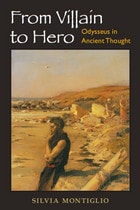
From Villain to Hero
Odysseus in Ancient ThoughtSilvia Montiglio
University of Michigan Press, 2011
Praise for Silvia Montiglio
"[A] brilliant and important book. . . . "
---Journal of Religion, on Silence in the Land of Logos
"[A]n invigorating reevaluation of both the ancient symbolic landscape and our preconceptions of it."
---American Journal of Philology, on Wandering in Ancient Greek Culture
Best known for his adventures during his homeward journey as narrated in Homer's Odyssey, Odysseus remained a major figure and a source of inspiration in later literature, from Greek tragedy to Dante's Inferno to Joyce's Ulysses. Less commonly known, but equally interesting, are Odysseus' "wanderings" in ancient philosophy: Odysseus becomes a model of wisdom for Socrates and his followers, Cynics and Stoics, as well as for later Platonic thinkers. From Villain to Hero: Odysseus in Ancient Thought follows these wanderings in the world of ancient Greek and Roman philosophy, retracing the steps that led the cunning hero of Homeric epic and the villain of Attic tragedy to become a paradigm of the wise man.
From Villain to Hero explores the reception of Odysseus in philosophy, a subject that so far has been treated only in tangential or limited ways. Diverging from previous studies, Montiglio outlines the philosophers' Odysseus across the spectrum, from the Socratics to the Middle Platonists. By the early centuries CE, Odysseus' credentials as a wise man are firmly established, and the start of Odysseus' rehabilitation by philosophers challenges current perceptions of him as a villain. More than merely a study in ancient philosophy, From Villain to Hero seeks to understand the articulations between philosophical readings of Odysseus and nonphilosophical ones, with an eye to the larger cultural contexts of both. While this book is the work of a classicist, it will also be of interest to students of philosophy, comparative literature, and reception studies.
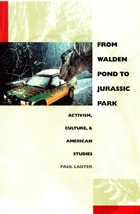
From Walden Pond to Jurassic Park
Activism, Culture, and American StudiesPaul Lauter
Duke University Press, 2001
With anecdote peppered discussions ranging from specific literary texts and movies to the future of higher education and the efficacy of unions, From Walden Pond to Jurassic Park entertains even as it offers a twenty-first century account of how and why Americanists at home and abroad now do what they do. Drawing on his forty-five years of teaching and research as well as his experience as a political activist and a cultural radical, Lauter shows how a multifaceted increase in the United States’ global dominion has infused a particular political urgency into American Studies. With its military and economic influence, its cultural and linguistic reach, the United States is—for better or for worse—too formidable and potent not to be understood clearly and critically.
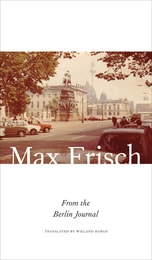
From the Berlin Journal
Max Frisch
Seagull Books, 2017
Max Frisch (1911–91) was a giant of twentieth-century German literature. When Frisch moved into a new apartment in Berlin’s Sarrazinstrasse, he began keeping a journal, which he came to call the Berlin Journal. A few years later, he emphasized in an interview that this was by no means a “scribbling book,” but rather a book “fully composed.” The journal is one of the great treasures of Frisch’s literary estate, but the author imposed a retention period of twenty years from the date of his death because of the “private things” he noted in it. From the Berlin Journal now marks the first publication of excerpts from Frisch’s journal. Here, the unmistakable Frisch is back, full of doubt, with no illusions, and with a playfully sharp eye for the world.
From the Berlin Journal pulls from the years 1946–49 and 1966–71. Observations about the writer’s everyday life stand alongside narrative and essayistic texts, as well as finely-drawn portraits of colleagues like Günter Grass, Uwe Johnson, Wolf Biermann, and Christa Wolf, among others. Its foremost quality, though, is the extraordinary acuity with which Frisch observed political and social conditions in East Germany while living in West Berlin.
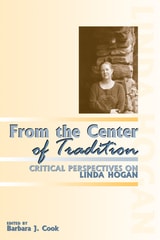
From the Center of Tradition
Critical Perspective on Linda HoganBarbara J. Cook
University Press of Colorado, 2003
From the Civil War to the Apocalypse
Postmodern History and American FictionTimothy Parrish
University of Massachusetts Press, 2008
In addressing the postmodernist claim that history works no differently than fiction, Timothy Parrish rejects the implication that history is dead or hopelessly relativistic. Rather, he shows how the best postmodern novelists compel their readers to accept their narratives as true in the same way that historians expect their readers to accept their narratives as true. These novelists write history as a form of fiction.
If the great pre-modernist American historians are Francis Parkman, George Bancroft, and Henry Adams, who are the great modernist or postmodernist historians? In the twentieth century, Parrish argues, the most powerful works of American history were written by William Faulkner, Toni Morrison, Thomas Pynchon, Don DeLillo, Joan Didion, and Cormac McCarthy. What survives a reading of these novels is the sense that writers otherwise identified as multicultural or postmodern share the view that nothing matters more than history and what one believes its possibilities to be. In other words, Parrish concludes, history, not identity, is the ground of postmodern American fiction.
From the Dance Hall to Facebook
Teen Girls, Mass Media, and Moral Panic in the United States, 1905-2010Shayla Thiel-Stern
University of Massachusetts Press, 2014
In From the Dance Hall to Facebook, Shayla Thiel-Stern takes a close look at several historical snapshots, including working-class girls in dance halls of the early 1900s; girls' track and field teams in the 1920s to 1940s; Elvis Presley fans in the mid-1950s; punk rockers in the late 1970s and early 1980s; and girls using the Internet in the early twenty-first century. In each case, issues of gender, socioeconomic status, and race are explored within their historical context. The book argues that by marginalizing and stereotyping teen girls over the past century, mass media have perpetuated a pattern of gendered crisis that ultimately limits the cultural and political power of the young women it covers.

From the Edge
Chicana/o Border Literature and the Politics of PrintFagan, Allison E
Rutgers University Press, 2016
From the Modernist Annex
American Women Writers in Museums and LibrariesKarin Roffman
University of Alabama Press, 2010

From the New Criticism to Deconstruction
The Reception of Structuralism and Post-StructuralismArt Berman
University of Illinois Press, 1988
traces the transitions in American critical theory and practice from the 1950s
to the 1980s. It focuses on the influence of French structuralism and post-structuralism
on American deconstruction within a wide-ranging context that includes literary
criticism, philosophy, psychology, technology, and politics.
From the Shadow of Empire
Defining the Russian Nation through Cultural Mythology, 1855–1870Olga Maiorova
University of Wisconsin Press, 2010
From the Shadow of Empire traces how these nationalist writers refashioned key historical myths—the legend of the nation’s spiritual birth, the tale of the founding of Russia, stories of Cossack independence—to portray the Russian people as the ruling nationality, whose character would define the empire. In an effort to press the government to alter its traditional imperial policies, writers from across the political spectrum made the cult of military victories into the dominant form of national myth-making: in the absence of popular political participation, wars allowed for the people’s involvement in public affairs and conjured an image of unity between ruler and nation. With their increasing reliance on the war metaphor, Reform-era thinkers prepared the ground for the brutal Russification policies of the late nineteenth century and contributed to the aggressive character of twentieth-century Russian nationalism.
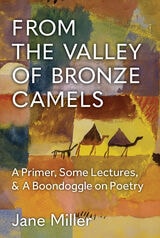
From the Valley of Bronze Camels
A Primer, Some Lectures, & A Boondoggle on PoetryJane Miller
University of Michigan Press, 2022
Jane Miller loves poetry. In these provocative and deeply insightful essays, she unpacks the work of giants like Adrienne Rich, Paul Celan, Marina Tsvetaeva, Osip Mandelstam, and Federico García Lorca alongside painters such as Caravaggio and Paul Klee, as well as ancient Chinese music and techniques of the contemporary poem. Miller explores the use of the question mark in the history of poetry and its function as a revelation of poetic voice. She considers the positive and negative aspects of surrealism on the contemporary poem, its anti-feminist origins in France, its contemporary usage, and the benefits of super-real images. Miller examines how identity politics might affect the imagination. She describes ancient Chinese musical instruments to show how their sounds resonate off/in American poems and on the aural integrity of the lyric poem. She interrogates the political implications of language and the degeneration and regeneration of words. Finally, in an essay about what she dares not say about poetry, she comes out against forms of surrealism, narrative, jargon, rhetoric, irony, and appropriation. This masterful work can be read as advice to a young writer, but it also invites us into the mind of a writer who has developed her craft through the course of a lifetime of writing, reading, and exploring the world, showing not only the ideas that influenced her—feminist, lesbian, and international works—but also how Miller has, in turn, influenced ideas.
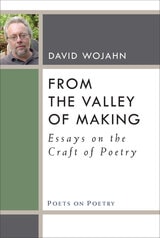
From the Valley of Making
Essays on the Craft of PoetryDavid Wojahn
University of Michigan Press, 2015
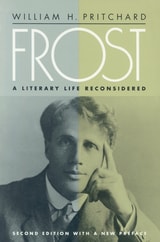
Frost
A Literary Life ReconsideredWilliam H. Pritchard
University of Massachusetts Press, 1993
Although this book does not attempt to revive the image of Frost as a benign, white-haired sage, it does present him in a strikingly different light than did Lawrence Thompson’s controversial three-volume biography. William H. Pritchard sees Frost whole, demonstrating the complex interaction between the poet’s life and work. Based not only on the poetry, but on letters, notebooks, recorded interviews, and public appearances as well, Frost: A Literary Life Reconsidered examines the most interesting and significant aspects of Frost’s life and poetry and offers an attentive, sensitive portrait of an artist whose critical reputation continues to grow.
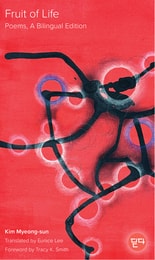
Fruit of Life
Poems, A Bilingual EditionKim Myeong-sun
Rutgers University Press, 2026
Kim Myeong-sun is Korea's first published woman writer. Fruit of Life: Poems (생명의 과실: 김명순 시선) is the first book-length, Korean-to-English translation of her poetry. Kim’s poems offer a raw portrait of 1920s–30s Korea, driven by her personal experiences of sexual assault, misogynistic journalism and criticism, displacement, and poverty during the Japanese colonial occupation (1910–1945). Alongside feminist critique, Kim also writes about sapphic desire, familial affection, and nature, in styles that range from the traditional to the experimental. While Kim’s work was erased from the canon by Korea’s misogynistic literary establishment, Fruit of Life celebrates the legacy of Kim’s radical, versatile poetry, which paved the way for contemporary Korean women writers.
English-Korean Bilingual Edition
영-한 이중언어판
This book is published with the support of the Literature Translation Institute of Korea (LTI Korea).
‘한국 여성 최초 등단 작가’ 김명순의 시가 영문 완역본 『생명의 과실: 김명순 시선』으로 영어권 독자들을 만난다. 1920–30년대 조선 사회의 민낯을 강렬하고 가감 없는 언어로 담아낸 김명순의 시는, 일제강점기 아래 성폭력과 여성혐오적 언론 및 비평, 이주와 빈곤을 직접 겪어낸 작가의 여성주의적·반식민주의적 저항 정신을 생생히 드러낸다. 또한 전통과 실험을 넘나드는 다채로운 형식과 기법으로 여성 간 연대와 사랑, 가족애, 자연에 대하여 노래한다. 『생명의 과실: 김명순 시선』은 여성혐오적 문단으로부터 소외당한 김명순의 작품을 재조명하며, 한국 여성문학의 새로운 지평을 연 그의 업적을 기념한다.
Fuentes, Terra Nostra, and the Reconfiguration of Latin American Culture
Michael Abeyta
University of Missouri Press, 2006
Fugitive Dreams
An Anthology of Dutch Colonial LiteratureE. M. Beekman
University of Massachusetts Press, 1988
Fugitive Objects
Sculpture and Literature in the German Nineteenth CenturyCatriona MacLeod
Northwestern University Press, 2014
Winner of the 2014 Jean-Pierre Barricelli Prize for Best Book on Romanticism
In Fugitive Objects, Catriona MacLeod examines the question of why sculpture is both intensively discussed and yet rendered immaterial in German literature. She focuses on three forms of disappearance: sculpture’s vanishing as a legitimate art form at the beginning of the nineteenth century in German aesthetics, statues’ migration from the domain of high art into mass reproduction and popular culture, and sculpture’s dislodging and relocation into literary discourse. Through original readings of Clemens Brentano, Achim von Arnim, Adalbert Stifter, Leopold von Sacher-Masoch, and others, MacLeod reveals that if sculpture has disappeared from much of nineteenth-century German literature and aesthetics, it is a vanishing act that paradoxically relocates the statue back onto another cultural pedestal, attesting to the powerful force of the medium.
Fugitive Texts
Slave Narratives in Antebellum Print CultureMichaël Roy, translated by Susan Pickford
University of Wisconsin Press, 2024
In Fugitive Texts, Michaël Roy offers the first book-length study of the slave narrative as a material artifact. Drawing on a wide range of sources, he reconstructs the publication histories of a number of famous and lesser-known narratives, placing them against the changing backdrop of antebellum print culture. Slave narratives, he shows, were produced through a variety of print networks. Remarkably few were published under the full control of white-led antislavery societies; most were self-published and distributed by the authors, while some were issued by commercial publishers who hoped to capitalize on the success of Harriet Beecher Stowe’s Uncle Tom’s Cabin. The material lives of these texts, Roy argues, did not end within the pages. Antebellum slave narratives were “fugitive texts” apt to be embodied in various written, oral, and visual forms.
Published to rave reviews in French, Fugitive Texts illuminates the heterogeneous nature of a genre often described in monolithic terms and ultimately paves the way for a redefinition of the literary form we have come to recognize as “the slave narrative.”
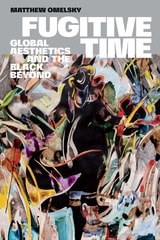
Fugitive Time
Global Aesthetics and the Black BeyondMatthew Omelsky
Duke University Press, 2023
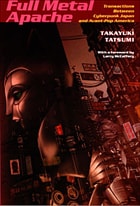
Full Metal Apache
Transactions Between Cyberpunk Japan and Avant-Pop AmericaTakayuki Tatsumi
Duke University Press, 2006
Full Metal Apache introduces English-language readers to a vast array of Japanese writers and performers and considers their work in relation to the output of William Gibson, Thomas Pynchon, H. G. Wells, Jack London, J. G. Ballard, and other Westerners. Tatsumi moves from the poetics of metafiction to the complex career of Madame Butterfly stories and from the role of the Anglo-American Lafcadio Hearn in promoting Japanese folklore within Japan during the nineteenth century to the Japanese monster Godzilla as an embodiment of both Japanese and Western ideas about the Other. Along the way, Tatsumi develops original arguments about the self-fashioning of “Japanoids” in the globalist age, the philosophy of “creative masochism” inherent within postwar Japanese culture, and the psychology of “Mikadophilia” indispensable for the construction of a cyborg identity. Tatsumi’s exploration of the interplay between Japanese and American cultural productions is as electric, ebullient, and provocative as the texts and performances he analyzes.
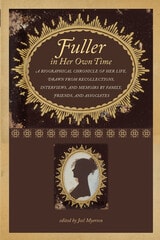
Fuller in Her Own Time
A Biographical Chronicle of Her Life, Drawn from Recollections, Interviews, and Memoirs by Family, Friends, and AssociatesJoel Myerson
University of Iowa Press, 2008
The forty-one remembrances from Nathaniel Hawthorne, Oliver Wendell Holmes, Ralph Waldo Emerson, Thomas Carlyle, Harriet Martineau, Henry James, and twenty-four others chart Fuller’s expanding influence from schooldays in Boston, meetings at the Transcendental Club, teaching in Providence and Boston, work on the New York Tribune, publications and conversations, travels in the British Isles, and life and love in Italy before her tragic early death. Joel Myerson’s perceptive introduction assesses the pre- and postmortem building of Fuller’s reputation as well as her relationship to the prominent Transcendentalists, reformers, literati, and other personalities of her time, and his headnotes to each selection present valuable connecting contexts.
The woman who admitted that “at nineteen she was the most intolerable girl that ever took a seat in a drawing-room,” whose Woman in the Nineteenth Century is considered the first major book-length feminist call to action in America, never conformed to nineteenth-century expectations of self-effacing womanhood. The fascinating contradictions revealed by these narratives create a lively, lifelike biography of Fuller’s “rare gifts and solid acquirements . . . and unfailing intellectual sympathy.”
Function Of Criticism
Problems and ExercisesYvor Winters
Ohio University Press, 1957
The Function of Criticism: Problems and Exercises brings together five essays by Yvor Winters: “Problems for the Modern Critic of Literature,” “The Audible Reading of Poetry,” “The Poetry of Gerard Manley Hopkins,” “Robert Frost, Or the Spiritual Drifter as Poet,” and “English Literature in the Sixteenth Century.”
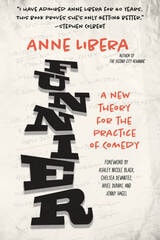
Funnier
A New Theory for the Practice of ComedyAnne Libera
Northwestern University Press, 2026
A roadmap for understanding and creating comedy from the visionary Second City comedy director
Great comedy can feel ineffable—and unlearnable. Debunking the myth that “either you are funny, or you aren’t,” Libera breaks the magic of comedy down into an innovative theory and practical toolkit. Developed over the course of thirty years as a director for The Second City and professor of comedy studies in their training center, Libera’s approach is effective across stand-up, sketch, film, and television comedy, as evidenced by her powerhouse students: Amy Poehler, Kristen Schaal, Steven Yeun, and many more of your favorites.
This book starts with a way to think about comedy and then guides you through concrete strategies for making your work smarter, richer, funnier. Libera covers everything from generating material to revising and performing to fostering social connection through comedy. In the book’s final section, Libera draws from her personal life to make a profound case for why future comedy writers should consider the ethics of their art and their responsibility to their fellow human beings in the audience. Readers won’t just be funnier because of this book—they’ll be better people.
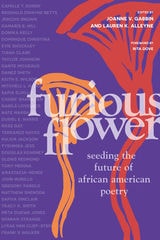
Furious Flower
Seeding the Future of African American PoetryEdited by Joanne V. Gabbin and Lauren K. Alleyne; Foreword by Rita Dove
Northwestern University Press, 2020
Further on, Nothing
Tadeusz Kantor’s TheatreMichal Kobialka
University of Minnesota Press, 2009
A new encounter with the work of a master of avant-garde theatre
Tadeusz Kantor (1915–1990) was one of the twentieth century’s most innovative visual artists, stage directors, and theoreticians. His theatre productions and manifestos challenged the conventions of creating art in post–World War II culture and expanded the boundaries of Dada, surrealist, Constructivist, and happening theatre forms. Kantor’s most widely known productions—The Dead Class (1975), Wielopole, Wielopole (1980), Let the Artists Die (1985), and Today Is My Birthday (1990)—have had a profound impact on playwrights and artists who continue today to engage with his radical theatre.
In Further on, Nothing, Michal Kobialka explores Kantor’s theatre practice from the critical perspective of current debates about representation, memory, and history. He pursues the intriguing proposition that Kantor gave material form to a theatre practice that defined the very mode of postmodern operation and that many of its theoretical notions are still in circulation. According to Kobialka, Kantor’s theatre still offers an answer to reality rather than a portrayal of a utopian alternative. Further on, Nothing includes new translations of Kantor’s work, presented in conversation with Kobialka’s own theoretical analyses, to show us a Kantor who continues to offer—and deliver on—the promise of the avant-garde.
Future of Modernism
Hugh Witemeyer, Editor
University of Michigan Press, 1997
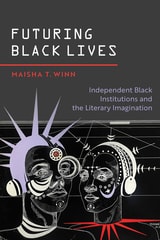
Futuring Black Lives
Independent Black Institutions and the Literary ImaginationMaisha T. Winn
Vanderbilt University Press, 2025
The rationale for establishing and valuing IBIs remains highly relevant, given the sociopolitical landscape of education today. In addition to persistent racial disparities in academic achievement and Black students’ highly disproportionate experiences of punishment and “discipline,” friction and legislation against critical examination of race, racism, and racist ideas in school settings are front and center, and children’s and young adult literature are under attack through censorship and outright book bans. Yet Black institution builders left useful maps of and for the educational future/s of Black children that remain available in journals, newspapers, pamphlets, and other ephemera. Author Maisha T. Winn demonstrates how and why the historiography-grounded futuring of Black education can and should inform current pursuits of equity, justice, and liberation through education.
Futurity
Contemporary Literature and the Quest for the PastAmir Eshel
University of Chicago Press, 2012
Fyodor Dostoevsky, Walker Percy, and the Age of Suicide
John F. Desmond
Catholic University of America Press, 2019