Results by title
681 books match the query 'English language' and 23 start with g
Gender Influences
Reading Student TextsDonnalee Rubin. Foreword by Nan Johnson
Southern Illinois University Press, 1993
Donnalee Rubin examines the responses of thirty-one freshman composition teachers to student writing and shows the negative effects of gender bias on assessment to prove that gender perceptions and expectations can influence assessment decisions that seem neutral on the surface. Arguing that certain pedagogies are more likely to minimize gender bias than others, Rubin believes that teachers are more likely to overcome the influence of gender bias on their teaching if they adopt a process-based method and work intimately with their students through nondirective, supportive conferences.
Rubin characterizes the conference/process-centered class as the type of environment in which maternal teaching can be cultivated. She stresses that maternal can describe any teacher, male or female, who exhibits the nurturing and supportive qualities that the conference/process approach embodies. With a primary focus on the student’s well-being and development as a person and a writer, the maternal teacher is in a better position to overcome gender bias that could distort the interpretation of student texts. In order for writing instructors to increase their sensitivity to gender issues in assessment, Rubin recommends that they self-consciously engage in what she calls "responsive reading." Responsive reading occurs when the teacher reads with an eye toward providing the sorts of supportive feedback and dialectic exchange that will encourage student writers to think for themselves and to revise effectively. Rubin argues that when teachers commit to a responsive-reading pedagogy, they are more likely to question their reactions to student writing along the lines of gender influence and to strive for self-conscious awareness of how their own inner male-female voices may distort their reading of student texts. She challenges all writing teachers to become more aware of the inevitable challenge gender influence presents.
Gender Roles and Faculty Lives in Rhetoric and Composition
Theresa Enos
Southern Illinois University Press, 1997
Combining anecdotal evidence (the personal stories of rhetoric and composition teachers) with hard data, Theresa Enos offers documentation for what many have long suspected to be true: lower-division writing courses in colleges and universities are staffed primarily by women who receive minimal pay, little prestige, and lessened job security in comparison to their male counterparts. Male writing faculty, however, also are affected by factors such as low salaries because of the undervaluation of a field considered feminized. As Enos notes in her preface: "The rhetoric of our institutional lives is connected especially to the negotiations of gender roles in rhetoric and composition."
Enos describes and classifies narratives gathered from surveys, interviews, and campus visits and interweaves these narratives with statistical data gathered from national surveys that show gendered experiences in the profession. Enos discusses the ways in which these experiences affect the working conditions of writing teachers and administrators in various programs at different types of institutions.
Enos points out that fields in which women excel—and are acknowledged—receive less prestige than other fields. On the university level, those genres in which women have demonstrated competence are not taken as seriously as those dominated by men. In practical terms, academia affords more glory for teaching literature than for teaching rhetoric and composition.
Within the field of rhetoric and composition, however, Enos finds it difficult to determine why the accomplishments of women receive less credit than those of men. She speculates as to whether it is part of the larger pattern in society—and in academia—to value men more than women or something in the field itself that keeps women from real power, even though women make up the majority of composition and rhetoric teachers.
Enos provides fascinating personal histories of composition and rhetoric teachers whose work has been largely disregarded. She also provides information about writing programs, teaching, administrative responsibilities, ranks among teachers, ages, salary, tenure status, distribution of research, service responsibilities, records of publication, and promotion and tenure guidelines.
Gender and Rhetorical Space in American Life, 1866-1910
Nan Johnson
Southern Illinois University Press, 2002
Nan Johnson demonstrates that after the Civil War, nonacademic or “parlor” traditions of rhetorical performance helped to sustain the icon of the white middle class woman as queen of her domestic sphere by promoting a code of rhetorical behavior for women that required the performance of conventional femininity. Through a lucid examination of the boundaries of that gendered rhetorical space—and the debate about who should occupy that space—Johnson explores the codes governing and challenging the American woman’s proper rhetorical sphere in the postbellum years.
While men were learning to preach, practice law, and set political policies, women were reading elocution manuals, letter-writing handbooks, and other conduct literature. These texts reinforced the conservative message that women’s words mattered, but mattered mostly in the home. Postbellum pedagogical materials were designed to educate Americans in rhetorical skills, but they also persistently directed the American woman to the domestic sphere as her proper rhetorical space. Even though these materials appeared to urge the white middle class women to become effective speakers and writers, convention dictated that a woman’s place was at the hearthside where her rhetorical talents were to be used in counseling and instructing as a mother and wife.
Aided by twenty-one illustrations, Johnson has meticulously compiled materials from historical texts no longer readily available to the general public and, in so doing, has illuminated this intersection of rhetoric and feminism in the nineteenth century. The rhetorical pedagogies designed for a postbellum popular audience represent the cultural sites where a rethinking of women’s roles becomes open controversy about how to value their words. Johnson argues this era of uneasiness about shifting gender roles and the icon of the “quiet woman” must be considered as evidence of the need for a more complete revaluing of women’s space in historical discourse.
Generation Vet
Composition, Student Veterans, and the Post-9/11 UniversitySue Doe
Utah State University Press, 2014
Institutions of higher education are experiencing the largest influx of enrolled veterans since World War II, and these student veterans are transforming post-secondary classroom dynamics. While many campus divisions like admissions and student services are actively moving to accommodate the rise in this demographic, little research about this population and their educational needs is available, and academic departments have been slower to adjust. In Generation Vet, fifteen chapters offer well-researched, pedagogically savvy recommendations for curricular and programmatic responses to student veterans for English and writing studies departments.
In work with veterans in writing-intensive courses and community contexts, questions of citizenship, disability, activism, community-campus relationships, and retention come to the fore. Moreover, writing-intensive courses can be sites of significant cultural exchanges—even clashes—as veterans bring military values, rhetorical traditions, and communication styles that may challenge the values, beliefs, and assumptions of traditional college students and faculty.
This classroom-oriented text addresses a wide range of issues concerning veterans, pedagogy, rhetoric, and writing program administration. Written by diverse scholar-teachers and written in diverse genres, the essays in this collection promise to enhance our understanding of student veterans, composition pedagogy and administration, and the post-9/11 university.
Genre Across The Curriculum
edited by Anne Herrington and Charles Moran
Utah State University Press, 2005
Genre across the Curriculum will function as a "good" textbook, one not for the student, but for the teacher, and one with an eye on the context of writing. Here you will find models of practice, descriptions written by teachers who have integrated the teaching of genre into their pedagogy in ways that both support and empower the student writer.
While authors here look at courses across disciplines and across a range of genres, they are similar in presenting genre as situated within specific classrooms, disciplines, and institutions. Their assignments embody the pedagogy of a particular teacher, and student responses here embody students' prior experiences with writing. In each chapter, the authors define a particular genre, define the learning goals implicit in assigning that genre, explain how they help their students work through the assignment, and, finally, discuss how they evaluate the writing their students do in response to their teaching.
Genre And The Invention Of The Writer
Reconsidering the Place of Invention in CompositionAnis Bawarshi
Utah State University Press, 2003
Instead of mastering notions of "good" writing, Bawarshi feels that students gain more from learning how to adapt socially and rhetorically as they move from one "genred" site of action to the next.
Gente Decente
A Borderlands Response to the Rhetoric of DominanceBy Leticia Magda Garza-Falcón
University of Texas Press, 1998
In his books The Great Plains, The Great Frontier, and The Texas Rangers, historian Walter Prescott Webb created an enduring image of fearless, white, Anglo male settlers and lawmen bringing civilization to an American Southwest plagued with "savage" Indians and Mexicans. So popular was Webb's vision that it influenced generations of historians and artists in all media and effectively silenced the counter-narratives that Mexican American writers and historians were concurrently producing to claim their standing as "gente decente," people of worth.
These counter-narratives form the subject of Leticia M. Garza-Falcón's study. She explores how prominent writers of Mexican descent-such as Jovita González, Américo Paredes, María Cristina Mena, Fermina Guerra, Beatriz de la Garza, and Helena María Viramontes -have used literature to respond to the dominative history of the United States, which offered retrospective justification for expansionist policies in the Southwest and South Texas. Garza-Falcón shows how these counter-narratives capture a body of knowledge and experience excluded from "official" histories, whose "facts" often emerged more from literary techniques than from objective analysis of historical data.
Geographies of Writing
Inhabiting Places and Encountering DifferenceNedra Reynolds
Southern Illinois University Press, 2004
Twenty-first-century technological innovations have revolutionized the way we experience space, causing an increased sense of fragmentation, danger, and placelessness. In Geographies of Writing: Inhabiting Places and Encountering Difference, Nedra Reynolds addresses these problems in the context of higher education, arguing that theories of writing and rhetoric must engage the metaphorical implications of place without ignoring materiality.
Geographies of Writing makes three closely related contributions: one theoretical, to reimagine composing as spatial, material, and visual; one political, to understand the sociospatial construction of difference; and one pedagogical, to teach writing as a set of spatial practices. Aided by seven maps and illustrations that reinforce the book’s visual rhetoric, Geographies of Writing shows how composition tasks and electronic space function as conduits for navigating reality.
George Campbell
Rhetoric in the Age of EnlightenmentArthur E. Walzer
Southern Illinois University Press, 2003
Gestural Listening In and Beyond the Classroom
Laura Feibush
Utah State University Press, 2026
Attuned to the subtle choreographies of the classroom, Gestural Listening In and Beyond the Classroom investigates how students and instructors show that they are listening to each other—and, sometimes, that they are not. While rhetorical scholarship traditionally focuses on speaking and writing, listening can also be understood as a rhetorical force that makes things happen. Listening has the power to move, bring about, cause, and catalyze. This conductive aspect of listening is its embodied manifestation—termed “gestural listening.”
Laura Feibush first traces the roots of embodied listening through cultural and rhetorical history and then uses findings from a classroom study to inform an insightful discussion of respect, resistance, and self-regulation as the key dynamics that characterize listening in contemporary educational spaces. She reveals how the gestures of listening refract across identity categories in ways that have surprising effects on how classroom participants respond to one another. This accessibly written book attends to hands and faces, nodding and note-taking, and the presence of phones and laptops, as well as other forms of nonverbal backchanneling, such as where people sit, when they interrupt, and when they engage in impactful quietness.
The power of gestural listening is not limited to the classroom. Its quiet yet profound influence can elucidate many sites of interaction: in-person and virtual academic settings as well as those far beyond the educational space, such as scenes of protest, worship, and performance. Gestural Listening In and Beyond the Classroom shows how, when understood as possessing its own repertoire of impressive and expressive capacities, listening emerges as a fascinating site of study and offers exercises, activities, and other materials to help educators, counselors, and all those engaging in communicative work enact a new awareness of gestural listening as a rhetorical force.
Giving Academic Presentations
Susan M. Reinhart
University of Michigan Press, 2002
This textbook provides:
*helpful analyses of speeches
*examination of major speech types, accompanying organizational strategies, and related language use
*tips for improving nonverbal behavior
*suggestions for speaker-listener interaction
*an analysis of ways to qualify claims and strategies for improving them
*opportunities for evaluating one's work and the work of others.
Giving Academic Presentations, Second Edition
Susan M. Reinhart
University of Michigan Press, 2013
Giving Academic Presentations provides guidance on academic-style presentations for university students. A goal of the text is to make presenters aware that giving an effective academic presentation requires mastery of a broad range of skills.
The presentation genres addressed in the book are: making introductions, describing and comparing objects, explaining a process, defining a concept, and giving a problem-solution speech. Among the many academic skills and concepts addressed in the book are:
- Examination of major speech types and the accompanying organizational strategies
- Discussion of speech overviews and suggestions for designing them and creating visuals to accompany them
- Suggestions for speaker-listener interaction including checking for understanding, soliciting questions from the audience, preparing for and responding to questions, and interrupting the speaker to ask questions or request clarification
- Discussion of the importance of using evidence in academic speaking and the advantages of using certain types of evidence
- Suggestions of ways to qualify claims and strategies for making weaker or stronger claims
- Strategies and practice to improve pausing, stress, and intonation
- Practical advice about preparing and practicing speeches
- Opportunities for presenters to evaluate their own and others’ work
The Second Edition includes many new tasks and additional speeches; more attention to working with and using visuals; information about computer projection and using PowerPoint; and new sections on presenting biographical information, referring to handouts, and giving research presentations.
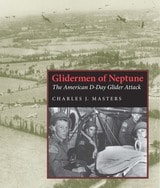
Glidermen of Neptune
The American D-Day Glider AttackCharles J. Masters
Southern Illinois University Press, 1995
Although the word gliderman does not appear in the dictionary, a brave group of World War II soldiers known as glidermen flew into combat inside unarmed and unarmored canvas-covered gliders known as "flying coffins."
Charles J. Masters points out that because World War II was the first truly mechanized and armored global conflict, the role of the glidermen and their combat gliders was at best anachronistic. Fighter planes exceeded speeds of 400 miles per hour and were heavily armed with multiple machine guns. Dogfights had taken on new dimensions, eclipsing the tactics, speed, and firepower first evidenced by the fragile biplanes of World War I. Tanks achieved a lethal efficiency barely dreamed of even five years before the war. An array of weaponry never seen in any previous military engagement confronted the combat soldier during World War II.And yet there were gliders. And glidermen.
Masters tells of these men and of their fragile aircraft in a war of mechanized chaos. In copious detail, he describes the gliders and the Americans who boarded them during the American D-Day glider attack, a mission that was part of the overall cross-channel plan code-named "Operation Neptune." The son of a gliderman with the 82nd Airborne Division, Masters had unique access to the surviving glidermen and comrades of his father. During the course of his research, he located and interviewed 106 of the men who had flown the D-Day mission in gliders. As an insider—in a sense almost a member of the family and fraternity of glider-men—Masters was cordially received by the members of the American airborne divisions that participated in D-Day, many of whom told him stories they had seldom told their own friends and families. Often harrowing and always riveting, the stories these men told an eager listener and researcher are very much a part of this narrative.
Masters has also assembled the finest existing collection of photographs of the American D-Day glider attack. These photographs—many of which have never before been published—provide a spectacular photographic record of a little-known aspect of this war. In fact, because of the short military history of the American combat glider, most readers, including veterans of World War II, will not have seen one of these "flying coffins," even at a distance. These photographs afford the opportunity to actually examine the inside of the combat gliders used on D-Day, to observe the glidermen in action, and to witness the often tragic consequences of the glider attack.
Goal-Driven Lesson Planning for Teaching English to Speakers of Other Languages
Marnie Reed and Christina Michaud
University of Michigan Press, 2010
This book is more than a collection of activities or ready-made lesson plans to add to a teaching repertoire. Instead, Goal-Driven Lesson Planning is intended to empower teachers and help them create a principled framework for their teaching—a framework that will shape the varied activities of the ESL classroom into a coherent teaching and learning partnership. After reading this book, teachers and prospective teachers will be able to articulate their individual teaching philosophies.
Goal-Driven Lesson Planning shows readers how to take any piece from English language materials—an assigned text, a random newspaper article, an ESL activity from a website, etc.—and use it to teach students something about language. Readers are walked through the process of reflecting on their role in diagnosing what that “something” is—what students really need—and planning how to get them there and how to know when they got there in a goal-driven principled manner.
This book has chapters on the theory of setting specific language goals for students; how to analyze learner needs (including an initial diagnostic and needs-analysis); templates to use when planning goal-driven English language lessons; explicit instruction on giving corrective feedback; how to recognize and assess student progress; and the mechanics and logistics that facilitate the goal-driven language classroom.
Going North Thinking West
The Intersections of Social Class, Critical Thinking, and Politicized Writing InstructionIrvin Peckham
Utah State University Press, 2010
Going Public
What Writing Programs Learn from EngagementShirley Rose
Utah State University Press, 2010
In Going Public, Rose and Weiser locate their discussion in the context of three current conversations in higher education: 1) the engagement movement, particularly as this movement serves to address and respond to calls for greater accountability to broader publics; 2) recent interest in public discourse/civic rhetoric among scholars of rhetorical history and contemporary rhetorical theory; 3) the service learning movement in higher education, especially the ways in which college and university writing programs have contributed to this movement.
While there have been a number of publications describing service-learning and community leadership programs, most of these focus on curricular elements and address administrative issues, if at all, primarily from a curricular perspective. The emphasis of the current book is on the ways that engagement-focused programs change conceptions of WPA identity. Going Public, then, is not only a significant contribution to the scholarly literature, but also supplies an important new resource for WPA preparation courses in rhetoric and composition PhD programs.

Going to the Tigers
Essays and ExhortationsRobert Cohen
University of Michigan Press, 2022
In this funny and perceptive collection, novelist and essayist Robert Cohen shares his thoughts on the writing process and then puts these prescriptions into practice—from how to rant effectively as an essayist and novelist (“The Piano Has Been Drinking”), how to achieve your own style, naming characters (and creating them), how one manages one’s own identity with being “a writer” in time and space, to the use of reference and allusion in one’s work. Cohen is a deft weaver of allusion himself. In lieu of telling the reader how to master the elements of writing fiction, he shows them through the work of the writers who most influenced his own development, including Roth, Ellison, Kafka, and Robinson. Rooted in his own experiences, this collection of essays shows readers how to use their influences and experiences to create bold, personal, and individual work. While the first part of the book teaches writing, the essays in the second part show how these elements come together.
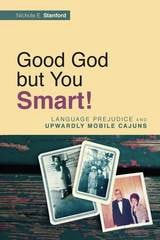
Good God but You Smart!
Language Prejudice and Upwardly Mobile CajunsNichole E. Stanford
Utah State University Press, 2016
The study investigates the complicated motivations and cultural concessions of upwardly mobile Cajuns who “choose” to self-censor—to speak Standardized English over the Cajun English that carries their cultural identity. Drawing on surveys of English teachers in four Louisiana colleges, previously unpublished archival data, and Pierre Bourdieu’s theory of the legitimate language, author Nichole Stanford explores how socioeconomic and political pressures rooted in language prejudice make code switching, or self-censoring in public, seem a responsible decision. Yet teaching students to skirt others’ prejudice toward certain dialects only puts off actually dealing with the prejudice. Focusing on what goes on outside classrooms, Stanford critiques code switching and cautions users of code meshing that pedagogical responses within the educational system are limited by the reproductive function of schools. Each theory section includes parallel memoir sections in the Cajun tradition of storytelling to open an experiential window to the study without technical language.
Through its explication of language legitimacy and its grounding in lived experience, Good God but You Smart! is an essential addition to the pedagogical canon of language minority studies like those of Villanueva, Gilyard, Smitherman, and Rose.
Graduate Writing Across the Disciplines
Identifying, Teaching, and SupportingMarilee Brooks-Gillies
University Press of Colorado, 2020
Grammar Crammer
How to Write Perfect SentencesJudi Kesselman-Turkel and Franklynn Peterson
University of Wisconsin Press, 2003
The Grammar Crammer is a concise, sensible grammar handbook that explains lucidly how to remember correct word forms and sentence structures. Useful as a reference tool for high school and beyond, it packs an entire grammar encyclopedia into just over a hundred pages.
Great Debates
Language and Culture Skills for ESL StudentsMeredith Westfall and John McCarthy
University of Michigan Press, 2004
This book provides vocabulary, conversation tips, language learning tips, and discussion activities to help students debate on a wide variety of fairly non-controversial topics, from dining in or eating out, using the phone or e-mail, type A or type B, fiction or non-fiction, love at first sight or love over time, to diet or exercise.
Along with the discussion activities, the book contains some reading, writing, and vocabulary activities.
Each of the 30 units includes:
pre-debate discussion questions
new vocabulary words
a reading that outlines both sides of the debate
comprehension questions
discussion activities that include expressions used in debate-related speech acts and those pertaining to language learning
writing assignments
idiom and vocabulary review.

Grounded Literacies in a Transnational WAC/WID Ecology
A Korean-U.S. StudyJay Jordan
University Press of Colorado, 2022
Guide to College Writing Assessment
Peggy O'Neill, Cindy Moore, and Brian Huot
Utah State University Press, 2009
A Guide to College Writing Assessment is designed as an introduction and source book for WPAs, department chairs, teachers, and administrators. Always cognizant of the critical components of particular teaching contexts, O’Neill, Moore, and Huot have written sophisticated but accessible chapters on the history, theory, application and background of writing assessment, and they offer a dozen appendices of practical samples and models for a range of common assessment needs.
Because there are numerous resources available to assist faculty in assessing the writing of individual students in particular classrooms, A Guide to College Writing Assessment focuses on approaches to the kinds of assessment that typically happen outside of individual classrooms: placement evaluation, exit examination, programmatic assessment, and faculty evaluation. Most of all, the argument of this book is that creating the conditions for meaningful college writing assessment hinges not only on understanding the history and theories informing assessment practice, but also on composition programs availing themselves of the full range of available assessment practices.