Results by title
2284 books match the query 'Women' and 72 start with g

GENDER AND PETTY VIOLENCE IN LONDON, 1680-1720
JENNINE HURL-EAMON
The Ohio State University Press, 2005
Looking at a heretofore overlooked set of archival records of London in the late 17th and early 18th centuries, Hurl-Eamon reassesses the impact of gender on petty crime and its prosecution during the period. This book offers a new approach to the growing body of work on the history of violence in past societies. By focusing upon low-cost prosecutions in minor courts, Hurl-Eamon uncovers thousands of assaults on the streets of early modern London. Previous histories stressing the masculine nature of past violence are questioned here: women perpetrated one-third of all assaults. In looking at more mundane altercations rather than the homicidal attacks studied in previous histories, the book investigates violence as a physical language, with some forms that were subject to gender constraints, but many of which were available to both men and women. Quantitative analyses of various circumstances surrounding the assaults—including initial causes, weapons used, and injuries sustained—outline the patterns of violence as a language.
Hurl-Eamon also stresses the importance of focusing on the prosecutorial voice. In bringing the court’s attention to petty attacks, thousands of early modern men and women should be seen as agents rather than victims. This view is especially interesting in the context of domestic violence, where hundreds of wives and servants prosecuted patriarchs for assault, and in the Mohock Scare of 1712, where London’s populace rose up in opposition to aristocratic violence. The discussion is informed by a detailed knowledge of assault laws and the rules governing justices of the peace.
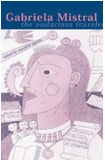
Gabriela Mistral
The Audacious TravelerMarjorie Agosín
Ohio University Press, 2003
Gabriela Mistral is the only Latin American woman writer to be awarded the Nobel Prize in Literature. Even so, her extraordinary achievements in poetry, narrative, and political essays remain largely untold. Gabriela Mistral: The Audacious Traveler explores boldly and thoughtfully the complex legacy of Mistral and the way in which her work continues to define Latin America.
Edited by Professor Marjorie Agosín, Gabriela Mistral: The Audacious Traveler addresses for the first time the vision that Mistral conveyed as a representative of Chile during the drafting of the United Nations Human Rights Declaration. It depicts Mistral as a courageous social activist whose art and writings against fascism reveal a passionate voice for freedom and justice.
The book also explores Mistral’s Pan-American vision and her desire to be part of a unified American hemisphere as well as her concern for the Caribbean and Brazil. Readers will learn of her sojourn in Brazil, her turbulent years as consul in Madrid, and, finally, her last days on Long Island.
Students of her poetry, as well as general readers, will find Gabriela Mistral: The Audacious Traveler an insightful collection dedicated to the life and work of an inspiring and original artist.
The contributors are Jonathan Cohen, Joseph R. Slaughter, Verónica Darer, Patricia Varas, Eugenia Muñoz, Darrell B. Lockhart, Ivonne Gordon Vailakis, Santiago Daydí-Tolson, Diana Anhalt, Ana Pizarro, Randall Couch, Patricia Rubio, Elizabeth Horan, Emma Sepúlveda, Luis Vargas Saavedra, and Marie-Lise Gazarian-Gautier.

Gay as a Grig
Memories of a North Texas GirlhoodBy Ellen Bowie Holland
University of Texas Press, 1963
Ellen Bowie Holland grew up in a house at Weatherford, Texas, that had the "motherly look of a large and gallant hen hovering over too many chicks" and that was inhabited by a "lively, warm-hearted family." This book is her record of the "whole world of little things which enriched young lives" in her small town.
Blessed with a discerning and sympathetic eye, she had much happiness to remember and record, and she employs a charming combination of nostalgia and comedy as she brings to life again these bygone days. Her childhood experiences are illuminated by the wisdom of maturity, and the whole is infused with a deft humor, developed through her skilled use of fantasy and through her ability to laugh at the pretensions of the Victorian life she saw.
Holland's book also is memorable as a record of her unforgettable parents:
"Mother was born on Columbus Day, and she and Columbus had a lot in common. She liked to discover things for herself and nothing pleased her more than to nicely finish off a job that she had been told could not be done" . . . "She wasn't geared for solitary musing. Like a salmon at spawning time she liked to swim upstream against rushing waters and bash into boulders" . . . "Mother's pattern of neatness reached out in all directions" . . . "Mother, sheathed like an armadillo" . . .
"Father, silk-hatted, or swallow-tailed, distinguished almost beyond belief" . . . "I never heard him raise his voice or laugh aloud" . . . "Father was not witty but he had an absolutely delightful sense of nonsense. His humor came smoothly upon the scene" . . .
Throughout the book the reader shares the author's consciousness of the vast distance between her own childhood and that of the grandchildren to whom the book is dedicated—a distance created by rapid technological change.
"From my window I look over an air-conditioned city and I see jets streaking across the sky and occasionally I hear one of them breaking the sound barrier" . . . "When I really want to awe myself I think about the fact that only one generation ago Mother saw friendly or marauding Indians roaming these same acres" . . . "Those of my age have come into a span of years where living conditions of all kinds have changed so abruptly, where obsolescence sets in so rapidly, that there is little in common between our infancy and our present."
Gender Equity in Education
An Annotated BibliographyBeverly Stitt
Southern Illinois University Press, 1994
Recent studies show that, either consciously or unconsciously, teachers are not practicing gender equity in the classroom. Boys are called on more in class than girls and are encouraged to pursue careers from which girls are excluded because they are thought to be less capable.
Serious questions arise for educators and counselors in this time of increasing awareness of the implications of gender bias, such as what comprises a gender-fair education and how can gender equity become part of the classroom curriculum? Guidance counselors and teachers share an important responsibility in seeking answers to these questions in order to avoid limiting students’ potential because of gender.
To achieve this end, Beverly A. Stitt has compiled an annotated bibliography of hundreds of books, articles, videos, classroom activities, and curriculum and workshop guides to help provide the tools needed for educators to become more gender conscious and to develop a gender–fair educational system.
The bibliography is divided into twenty-three categories under the headings of Agriculture and Industry, Business, Career Guidance, Communications, Computers, Discrimination, Displaced Homemakers/Reentry Women, Elementary Education, Family and Work Issues, Gender Role Stereotyping, History, Home Economics, In-service Training, Legislation, Male Focus, Math and Science, Nontraditional Careers, Pregnant and Parenting Teens, Recruitment, Special Needs, Teaching, Vocational Education, and Women’s Studies.
Each entry’s annotation provides a short description of the content, the age group to which the resource applies, and ordering information. The book concludes with an index in which entries are cross-referenced under various categories to further aid the reader’s research.

Gender Is a Weapon
Liberalism, Difference, and US CounterinsurgencyElizabeth Mesok
University of Michigan Press, 2026
Following the end of the draft in 1973, the US military increasingly offered women the opportunity to transform their lives—to obtain an education, receive healthcare, provide for their families, and prove their worth to the nation. By the time the US invaded Iraq and Afghanistan at the turn of the twenty-first century, the labor of women—and Black women in particular—was critical to the military’s ability to simultaneously wage two wars. Within the context of counterinsurgencies fought amid civilian populations, the US military discovered the value of women’s gender difference as a weapon of war.
Through ethnographic and archival research with women soldiers and Marines, as well as military and government officials, Gender Is a Weapon contextualizes women’s service in Iraq and Afghanistan against the promises of liberal inclusion unfolding throughout the late twentieth and early twenty-first century. Centered on narratives of Black and Indigenous women, women of color, immigrant women, and queer women, the book analyzes the transformations of martial citizenship; the racialized language of cultural difference in the US’s revitalized counterinsurgency doctrine; the gendered performances of women in combat and civilian engagement missions; and ultimately, the irreparable injuries of body and mind with which these women returned home. The epilogue discusses the recent dismantling of DEI in the military and US government more broadly, reflecting on what we can learn from the violent history of military liberal inclusion to help us better understand our contemporary moment. By carefully attending to both the discursive construction and performative enactment of gender in militarized and securitized contexts, the book advances theoretical frames for studying gender in state militaries, militarism, and late liberalism.
Gender Power, Leadership, and Governance
Georgia Duerst-Lahti and Rita Mae Kelly, Editors
University of Michigan Press, 1995

Gender Violence and the Press
The St. Kizito StoryH. Leslie Steeves
Ohio University Press, 1997
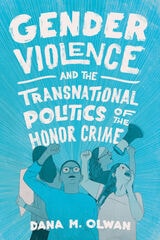
Gender Violence and the Transnational Politics of the Honor Crime
Dana M. Olwan
The Ohio State University Press, 2021
More specifically, Olwan traces the term’s appearance in public and popular works that allow for its continued mass acceptance and circulation—from media depictions in Canada and beyond, to how it is taken up in national registers about migration and belonging in the US, to activism in Palestine that reveal the fault lines between activist and academic critiques of the honor crime, and finally to feminist efforts in Jordan and the wider Middle East to confront legal codes used to sanction gender-related violence. Through these cases, Olwan demonstrates how the honor crime functions as a signifier that governs and manages populations and how its meanings travel and circulate across and between separate and interconnected circuits of power and knowledge.
Gender Violence at the U.S.–Mexico Border
Media Representation and Public ResponseEdited by Héctor Domínguez-Ruvalcaba and Ignacio Corona
University of Arizona Press, 2012
Gender Violence in Peace and War
States of ComplicitySanford, Victoria
Rutgers University Press, 2016

Gender and Animals in History
Yearbook of Women’s History 42 (2023)Sandra Swart
Amsterdam University Press, 2024
Gender and Difference in the Middle Ages
Sharon Farmer
University of Minnesota Press, 2002
Exposes complex intersections between genders and other identities in medieval cultures.
Nothing less than a rethinking of what we mean when we talk about "men" and "women" of the medieval period, this volume demonstrates how the idea of gender-in the Middle Ages no less than now-intersected in subtle and complex ways with other categories of difference. Responding to the insights of postcolonial and feminist theory, the authors show that medieval identities emerged through shifting paradigms-that fluidity, conflict, and contingency characterized not only gender, but also sexuality, social status, and religion. This view emerges through essays that delve into a wide variety of cultures and draw on a broad range of disciplinary and theoretical approaches. Scholars in the fields of history as well as literary and religious studies consider gendered hierarchies in western Christian, Jewish, Byzantine, and Islamic areas of the medieval world.
Contributors: Daniel Boyarin, U of California, Berkeley; Ruth Mazo Karras, U of Minnesota; Mathew Kuefler, San Diego State U; Martha Newman, U of Texas; Kathryn M. Ringrose, U of California, San Diego; Elizabeth Robertson, U of Colorado; Everett Rowson, U of Pennsylvania; Michael Uebel, U of Kentucky; Ulrike Wiethaus, Wake Forest U.
Gender and Heroism in Early Modern English Literature
Mary Beth Rose
University of Chicago Press, 2001
Interweaving discourses of gender, Rose explores ways in which this heroics of endurance became the dominant model. She examines the glamorous, failed destinies of heroes in plays by Shakespeare, Jonson, and Marlowe; Elizabeth I's creation of a heroic identity in her public speeches; the autobiographies of four ordinary women thrust into the public sphere by civil war; and the seduction of heroes into slavery in works by Milton, Aphra Behn, and Mary Astell. Ultimately, her study demonstrates the importance of the female in the creation of modern heroism, while offering a critique of both idealized action and suffering.
Gender and Justice in Family Law Disputes
Women, Mediation, and Religious ArbitrationEdited by Samia Bano
Brandeis University Press, 2017
Gender and Planning
A ReaderServon, Lisa J
Rutgers University Press, 2005
Increasingly, experts recognize that gender has affected urban planning and the design of the spaces where we live and work. Too often, urban and suburban spaces support stereotypically male activities and planning methodologies reflect a male-dominated society.
To document and analyze the connection between gender and planning, the editors of this volume have assembled an interdisciplinary collection of influential essays by leading scholars. Contributors point to the ubiquitous single-family home, which prevents women from sharing tasks or pooling services. Similarly, they argue that public transportation routes are usually designed for the (male) worker's commute from home to the central city, and do not help the suburban dweller running errands. In addition to these practical considerations, many contributors offer theoretical perspectives on issues such as planning discourse and the construction of concepts of rationality.
While the essays call for an awareness of gender in matters of planning, they do not over-simplify the issue by moving toward a single feminist solution. Contributors realize that not all women gravitate toward communal opportunities, that many women now share the supposedly male commute, and that considerations of race and class need to influence planning as well. Among various recommendations, contributors urge urban planners to provide opportunities that facilitate women's needs, such as childcare on the way to work and jobs that are decentralized so that women can be close to their children.
Bringing together the most important writings of the last twenty-five years, this book is essential reading for students and scholars of planning theory as well as anyone concerned with gender and diversity.

Gender and Sexuality in Modern Ireland
Anthony Bradley
University of Massachusetts Press, 1997
Gender and Violence against Political Actors
Edited by Elin Bjarnegård and Pär Zetterberg
Temple University Press, 2023
Chapters focus on theoretical approaches demonstrating how different disciplinary starting points—e.g., politics, violence and gender—give rise to different lenses. Essays examine violence carried out during conflict and peacetime, and relate to the continuum of violence—physical, sexual, psychological, and online. In addition, six country case studies reveal how different types of political actors have been targets of violence.
Gender and Violence against Political Actors ends by providing various approaches to responding to the problem of gendered violence in politics while also evaluating policy responses.
Contributors: Kerryn Baker, Julie Ballington, Gabrielle Bardall, Gabriella Borovsky, Cheryl N. Collier, Sofia Collignon, Maria Eriksson Baaz, Eleonora Esposito, Nicole Haley, Rebekah Herrick, Sandra Håkansson, Roudabeh Kishi, Anne-Kathrin Kreft, Mona Lena Krook, Rebecca Kuperberg, Robert U. Nagel, Louise Olsson, Jennifer M. Piscopo, Tracey Raney, Juliana Restrepo Sanín, Paige Schneider, Maria Stern, Sue Thomas, and the editors

Gender and Violence in Haiti
Women’s Path from Victims to AgentsBenedetta Faedi Duramy
Rutgers University Press, 2014
Gender and Violence in Haiti is the product of more than a year of extensive firsthand observations and interviews with the women who have been caught up in the widespread violence plaguing Haiti. Drawing from the experiences of a diverse group of Haitian women, Faedi Duramy finds that both the victims and perpetrators of violence share a common sense of anger and desperation. Untangling the many factors that cause these women to commit violence, from self-defense to revenge, she identifies concrete measures that can lead them to feel vindicated and protected by their communities.
Faedi Duramy vividly conveys the horrifying conditions pervading Haiti, even before the 2010 earthquake. But Gender and Violence in Haiti also carries a message of hope—and shows what local authorities and international relief agencies can do to help the women of Haiti.
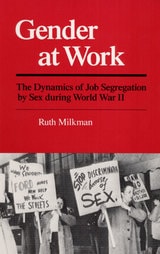
Gender at Work
The Dynamics of Job Segregation by Sex during World War IIRuth Milkman
University of Illinois Press, 1987
Women's entry into so-called men's work during World War II sparked conflicts at the time and when men returned at war's end. Ruth Milkman delves into the issues in play and the prewar origins of traditional patterns of gender segregation in the workplace. Ranging from the dynamics on the shop floor to hiring patterns, Milkman pays particular attention to automobile and electrical manufacturing. She analyzes a number of persistent questions, including management's decision to re-embrace gender segregation after the war; women's lack of protest; the failure of unions to protect women; and how related employer strategies helped control labor by maintaining women's place as workers paid less than men.
Gender in Campaigns for the U.S. House of Representatives
Barbara Burrell
University of Michigan Press, 2014

Gender in Play on the Shakespearean Stage
Boy Heroines and Female PagesMichael Shapiro
University of Michigan Press, 1996
Shapiro's study centers on the five plays in which Shakespeare employed the figure of the "female page": The Two Gentlemen of Verona, The Merchant of Venice, As You Like It, Twelfth Night, and Cymbeline. Combining theater and social history, Shapiro locates Shakespeare's work in relation to controversies over gender roles and cross-dressing in Elizabethan England.
The popularity of the "female page" is examined as a playful literary and theatrical way of confronting, avoiding, or merely exploiting issues such as the place of women in a patriarchal culture and the representation of women on stage. Looking beyond and behind the stage for the cultural anxieties that found their way into Shakespearean drama, Shapiro considers such cases as cross-dressing women in London being punished as prostitutes and the alleged homoerotic practices of the apprentices who played female roles in adult companies. Shapiro also traces other Elizabethan dramatists' varied uses of the cross-dressing motif, especially as they were influenced by Shakespeare's innovations.
"Shapiro's engaging study is distinguished by the scope of interrelated topics it draws together and the balance of critical perspectives it brings to bear on them." --Choice
Michael Shapiro is Professor of English, University of Illinois, Urbana.
Gender, Separatist Politics, and Embodied Nationalism in Cameroon
Jacqueline-Bethel Tchouta Mougoué
University of Michigan Press, 2019
Gender, Separatist Politics, and Embodied Nationalism in Cameroon illuminates how issues of ideal womanhood shaped the Anglophone Cameroonian nationalist movement in the first decade of independence in Cameroon, a west-central African country. Drawing upon history, political science, gender studies, and feminist epistemologies, the book examines how formally educated women sought to protect the cultural values and the self-determination of the Anglophone Cameroonian state as Francophone Cameroon prepared to dismantle the federal republic. The book defines and uses the concept of embodied nationalism to illustrate the political importance of women’s everyday behavior—the clothes they wore, the foods they cooked, whether they gossiped, and their deference to their husbands. The result, in this fascinating approach, reveals that West Cameroon, which included English-speaking areas, was a progressive and autonomous nation. The author’s sources include oral interviews and archival records such as women’s newspaper advice columns, Cameroon’s first cooking book, and the first novel published by an Anglophone Cameroonian woman.
Gendered Agents
Women and Institutional KnowledgeSilvestra Mariniello and Paul A. Bové, eds.
Duke University Press, 1998
Gathered from various issues of the journal boundary 2, the essays in Gendered Agents seek to transform the model of Western academic knowledge by restructuring its priorities and values. In the introduction, Mariniello urges feminists to begin anew but take as their starting place the achievements of feminism and feminist theory: an understanding of language that considers the implications of silence, the motivation to decompartmentalize experience, and the acknowledgement that everything is political. Challenging both a canonical organization of knowledge and the persistently self-referential "ghettoization" of feminism, contributors subsequently tackle subjects as diverse as pre-Marxist France, the American fetus, black intellectuals, queer nationality, and the art of literary interpretation.
Contributors. Lauren Berlant, Karen Brennan, Margaret Cohen, Nancy Fraser, Elizabeth Freeman, Carol Jacobs, Silvestra Mariniello, Larysa Mykyta, Laura Rice, Ivy Schweitzer, Doris Sommer, Hortense J. Spillers, Gayatri Chakravorty Spivak, Judith Wilt
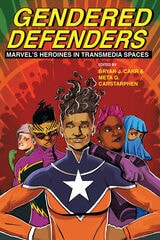
Gendered Defenders
Marvel's Heroines in Transmedia SpacesEdited by Bryan J. Carr and Meta G. Carstarphen
The Ohio State University Press, 2022
Gendered Defenders: Marvel’s Heroines in Transmedia Spaces delivers dynamic and original analyses of how women perform in super heroic spaces. Contributors from a range of disciplinary perspectives—communications, international relations, cultural and media studies, English, history, and public policy—take on Marvel’s representations of women and gender to examine how relations of power are (re)produced, understood, and challenged. Through vivid retellings of character-based scenarios, these essays examine Carol Danvers, Jessica Jones, Ms. Marvel, Shuri, Pepper Potts, Black Widow, and Squirrel Girl across media forms to characterize and critique contemporary understandings of identity, feminism, power, and gender. Collectively, Gendered Defenders challenges notions about female identity while illuminating the multidimensional portrayals that are enabled by the form of speculative fiction. Making explicit the connections between women’s lived experiences and the imagined exploits of superheroines, contributors explore how these pop culture narratives can help us understand real-world gender dynamics and prepare pedagogical, political, and social strategies for dealing with them. Contributors: Bryan J. Carr, Meta G. Carstarphen, Julie A. Davis, Rachel Grant, Annika Hagley, Amanda K. Kerhberg, Gregory P. Perreault, Mildred F. Perreault, CarrieLynn D. Reinhard, Maryanne A. Rhett, Stephanie L. Sanders, J. Richard Stevens, Anna C. Turner, Kathleen M. Turner-Ledgerwood, Robert Westerfelhaus
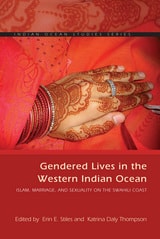
Gendered Lives in the Western Indian Ocean
Islam, Marriage, and Sexuality on the Swahili CoastErin E. Stiles
Ohio University Press, 2015
Muslim communities throughout the Indian Ocean have long questioned what it means to be a “good Muslim.” Much recent scholarship on Islam in the Indian Ocean considers debates among Muslims about authenticity, authority, and propriety. Despite the centrality of this topic within studies of Indian Ocean, African, and other Muslim communities, little of the existing scholarship has addressed such debates in relation to women, gender, or sexuality. Yet women are deeply involved with ideas about what it means to be a “good Muslim.”
In Gendered Lives in the Western Indian Ocean, anthropologists, historians, linguists, and gender studies scholars examine Islam, sexuality, gender, and marriage on the Swahili coast and elsewhere in the Indian Ocean. The book examines diverse sites of empowerment, contradiction, and resistance affecting cultural norms, Islam and ideas of Islamic authenticity, gender expectations, ideologies of modernity, and British education. The book’s attention to both masculinity and femininity, broad examination of the transnational space of the Swahili coast, and inclusion of research on non-Swahili groups on the East African coast makes it a unique and indispensable resource.
Contributors: Nadine Beckmann, Pat Caplan, Corrie Decker, Rebecca Gearhart, Linda Giles, Meghan Halley, Susan Hirsch, Susi Keefe, Kjersti Larsen, Elisabeth McMahon, Erin Stiles, and Katrina Daly Thompson
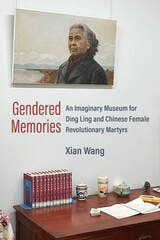
Gendered Memories
An Imaginary Museum for Ding Ling and Chinese Female Revolutionary MartyrsXian Wang
University of Michigan Press, 2025
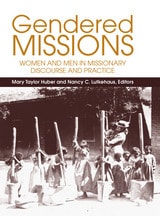
Gendered Missions
Women and Men in Missionary Discourse and PracticeMary Taylor Huber and Nancy C. Lutkehaus, Editors
University of Michigan Press, 1999
Missionary groups thus faced more immediately the destabilizing challenges that colonial experience posed to their own ways of organizing relations between women and men. Examining the changing prospects for professional women in the missions, the contributors to Gendered Missions ask how these shaped, and were shaped by, crucial practical, political, and religious developments at home and abroad. While the focus is on the tumultuous period that historian Eric Hobsbawm calls "The Age of Empire" (1875-1914), attention also is paid to how gender has been debated in later colonial and post-colonial missions.
Scholars from any field concerned with colonial and postcolonial societies or with gender and women's history should find this book of special interest. In addition, Gendered Missions should appeal to readers in church history, mission studies, and the sociology of religion.
Mary Taylor Huber is Senior Scholar, The Carnegie Foundation for the Advancement of Teaching. Nancy C. Lutkehaus is Associate Professor of Anthropology, University of Southern California.
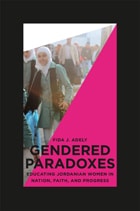
Gendered Paradoxes
Educating Jordanian Women in Nation, Faith, and ProgressFida Adely
University of Chicago Press, 2012
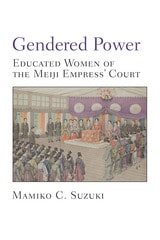
Gendered Power
Educated Women of the Meiji Empress' CourtMamiko C. Suzuki
University of Michigan Press, 2019
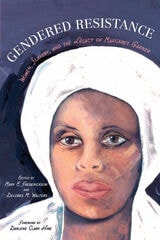
Gendered Resistance
Women, Slavery, and the Legacy of Margaret GarnerEdited by Mary E. Frederickson and Delores M. Walters
University of Illinois Press, 2013
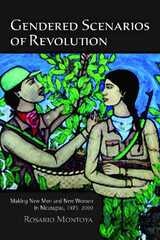
Gendered Scenarios of Revolution
Making New Men and New Women in Nicaragua, 1975–2000Rosario Montoya
University of Arizona Press, 2012
In 1979, toward the end of the Cold War era, Nicaragua's Sandinista movement emerged on the world stage claiming to represent a new form of socialism. Gendered Scenarios of Revolution is a historical ethnography of Sandinista state formation from the perspective of El Tule-a peasant village that was itself thrust onto a national and international stage as a "model" Sandinista community. This book follows the villagers´ story as they joined the Sandinista movement, performed revolution before a world audience, and grappled with the lessons of this experience in the neoliberal aftermath.
Employing an approach that combines political economy and cultural analysis, Montoya argues that the Sandinistas collapsed gender contradictions into class ones, and that as the Contra War exacerbated political and economic crises in the country, the Sandinistas increasingly ruled by mandate as vanguard party instead of creating the participatory democracy that they professed to work toward. In El Tule this meant that even though the Sandinistas created new roles and possibilities for women and men, over time they upheld pre-revolutionary patriarchal social structures. Yet in showing how the revolution created opportunities for Tuleños to assert their agency and advance their interests, even against the Sandinistas´ own interests, this book offers a reinterpretation of the revolution´s supposed failure.
Examining this community’s experience in the Sandinista and post-Sandinista periods offers perspective on both processes of revolutionary transformation and their legacies in the neoliberal era. Gendered Scenarios of Revolution will engage graduate and undergraduate students and scholars in anthropology, sociology, history, and women’s and gender studies, and appeal to anyone interested in modern revolution and its aftermath.

Gendered Strife and Confusion
The Political Culture of ReconstructionLaura F. Edwards
University of Illinois Press, 1997

Gendered Tradeoffs
Women, Family, and Workplace Inequality in Twenty-One CountriesBecky Pettit
Russell Sage Foundation, 2009

Gendered Vulnerability
How Women Work Harder to Stay in OfficeJeffrey Lazarus and Amy Steigerwalt
University of Michigan Press, 2018
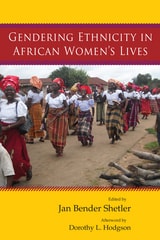
Gendering Ethnicity in African Women’s Lives
Edited by Jan Bender Shetler
University of Wisconsin Press, 2015
Drawing on extensive field research in many different regions of Africa, the contributors demonstrate in their essays that women do make choices about the forms of ethnicity they embrace, creating alternatives to male-centered definitions—in some cases rejecting a specific ethnic identity in favor of an interethnic alliance, in others reinterpreting the meaning of ethnicity within gendered domains, and in others performing ethnic power in gendered ways. Their analysis helps explain why African women may be more likely to champion interethnic political movements while men often promote an ethnicity based on martial masculinity. Bringing together anthropologists, historians, linguists, and political scientists, Gendering Ethnicity in African Women’s Lives offers a diverse and timely look at a neglected but important topic.

Gendering Historiography
Beyond National CanonsEdited by Angelika Epple and Angelika Schaser
Campus Verlag, 2009
Comparing various European and American historiographies from the past two hundred years, Gendering Historiography provides insights into the establishment and cultivation of gendered power relations in different societies and outlines the devastating effects that exclusionary practices can have on each national canon. This detailed and revealing book will change the face of history writing, bringing overlooked and previously excluded histories back into modern historiography.
Gendering Labor History
Alice Kessler-Harris
University of Illinois Press, 2006
This collection represents the thirty-year intellectual trajectory of one of today’s leading historians of gender and labor in the United States. The seventeen essays are divided into four sections, narrating the evolution and refinement of Alice Kessler-Harris's central project: showing gender’s fundamental importance in the shaping of United States history and working class culture.
The first section considers women and organized labor while the second pushes this analysis toward a gendered labor history as the essays consider the gendering of male as well as female workers and how gender operates with and within the social category of class. Subsequent sections broaden this framework to examine U.S. social policy as a whole, the question of economic citizenship, and wage labor from a global perspective. While each essay represents an important intervention in American historiography in itself, the collection taken as a whole shows Kessler-Harris continuing to push the field of American history to greater levels of inclusion and analysis.
Gendering Politics
Women in IsraelHanna Herzog
University of Michigan Press, 1999

Gendering the Fair
Histories of Women and Gender at World's FairsEdited by TJ Boisseau and Abigail M. Markwyn
University of Illinois Press, 2010
Gendering the Recession
Media and Culture in an Age of AusterityDiane Negra and Yvonne Tasker, eds.
Duke University Press, 2014
Contributors. Sarah Banet-Weiser, Hamilton Carroll, Hannah Hamad, Anikó Imre, Suzanne Leonard, Isabel Molina-Guzmán, Sinéad Molony, Elizabeth Nathanson, Diane Negra, Tim Snelson, Yvonne Tasker, Pamela Thoma
Gendering the Renaissance
Text and Context in Early Modern ItalyMeredith K. Ray
University of Delaware Press, 2023
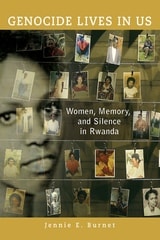
Genocide Lives in Us
Women, Memory, and Silence in RwandaJennie E. Burnet
University of Wisconsin Press, 2012
In the aftermath of the 1994 genocide, Rwandan women faced the impossible—resurrecting their lives amidst unthinkable devastation. Haunted by memories of lost loved ones and of their own experiences of violence, women rebuilt their lives from “less than nothing.” Neither passive victims nor innate peacemakers, they traversed dangerous emotional and political terrain to emerge as leaders in Rwanda today. This clear and engaging ethnography of survival tackles three interrelated phenomena—memory, silence, and justice—and probes the contradictory roles women played in postgenocide reconciliation.
Based on more than a decade of intensive fieldwork, Genocide Lives in Us provides a unique grassroots perspective on a postconflict society. Anthropologist Jennie E. Burnet relates with sensitivity the heart-wrenching survival stories of ordinary Rwandan women and uncovers political and historical themes in their personal narratives. She shows that women’s leading role in Rwanda’s renaissance resulted from several factors: the dire postgenocide situation that forced women into new roles; advocacy by the Rwandan women’s movement; and the inclusion of women in the postgenocide government.
Honorable Mention, Aidoo-Snyder Book Prize, Women’s Caucus of the African Studies Association

Gerald Gray's Wife and Lily
A NovelSusan Petigru King. Edited by William H. Pease and Jane H. Pease.
Duke University Press, 1993
Lily, King's best known novel, was originally published by Harper and Brothers in 1855. In this work, King skewers the rituals of courtship that propel its wealthy young heroine toward marriage and a melodramatic death. Gerald Gray's Wife, King's last novel, plays out the ironies of a plain woman who survives—but barely—the revelations that destroy her seemingly perfect marriage and acquired beauty. In both novels, women's jealousies and men's deceptions are the forces that propel King's often satirical pen. Largely lacking the moral instruction so common among nineteenth-century domestic novelists, King's novels are differentiated by their critical perspective on women's position, their exploration of themes of failure and frustration, and their focus on the drawing room and ballroom rather than the kitchen and nursery.
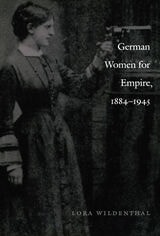
German Women for Empire, 1884-1945
Lora Wildenthal
Duke University Press, 2001
In confrontation and sometimes cooperation with men over their place in the colonial project, German women launched nationalist and colonialist campaigns for increased settlement and new state policies. Wildenthal analyzes recently accessible Colonial Office archives as well as mission society records, periodicals, women’s memoirs, and fiction to show how these women created niches for themselves in the colonies. They emphasized their unique importance for white racial “purity” and the inculcation of German culture in the family. While pressing for career opportunities for themselves, these women also campaigned against interracial marriage and circulated an image of African and Pacific women as sexually promiscuous and inferior. As Wildenthal discusses, the German colonial imaginary persisted even after the German colonial empire was no longer a reality. The women’s colonial movement continued into the Nazi era, combining with other movements to help turn the racialist thought of the late-nineteenth and early-twentieth centuries into the hierarchical evaluation of German citizens as well as colonial subjects.
Students and scholars of women’s history, modern German history, colonial politics and culture, postcolonial theory, race/ethnicity, and gender will welcome this groundbreaking study.

German Writing, American Reading
Women and the Import of Fiction, 1866–1917Lynne Tatlock
The Ohio State University Press, 2012

Gestating Judaism
The Corporeal Technologies of American Jewish ReligionCara Rock-Singer
University of Chicago Press, 2026
An ethnography of how people use reproductive practices to transmit and reinvent American Judaism.
In Gestating Judaism, Cara Rock-Singer develops a new analytic technique called ethnodrashy (a combination of rabbinical midrash and sociological ethnography) to explore the centrality of reproductive bodies to the intellectual, political, and spiritual life of American Judaism. She considers how, in reproduction, religious practices like the mikveh combine with secular practices like fertility treatments in ways that challenge the popular idea that religion occupies a separate sphere of life from politics or science. In fact, Rock-Singer shows how Jewish feminists have leveraged the work of reproduction to intervene in important conversations about both politics and theology. Drawing together religious studies, gender studies, and science and technology studies, Gestating Judaism shows how Jewish tradition is transmitted and reinvented through the ongoing labor of reproduction.

Giant Steps
Suffragettes and SoldiersMary Blair Immel
Indiana Historical Society Press, 2017

Girls of Liberty
The Struggle for Suffrage in Mandatory PalestineMargalit Shilo
Brandeis University Press, 2016

Give Them Stones
Mary Beckett
Catholic University of America Press, 2024

Global Cinderellas
Migrant Domestics and Newly Rich Employers in TaiwanPei-Chia Lan
Duke University Press, 2006
Lan demonstrates how economic disparities, immigration policies, race, ethnicity, and gender intersect in the relationship between the migrant workers and their Taiwanese employers. The employers are eager to flex their recently acquired financial muscle; many are first-generation career women as well as first-generation employers. The domestics are recruited from abroad as contract and “guest” workers; restrictive immigration policies prohibit them from seeking permanent residence or transferring from one employer to another. They care for Taiwanese families’ children, often having left their own behind. Throughout Global Cinderellas, Lan pays particular attention to how the women she studied identify themselves in relation to “others”—whether they be of different classes, nationalities, ethnicities, or education levels. In so doing, she offers a framework for thinking about how migrant workers and their employers understand themselves in the midst of dynamic transnational labor flows.