Results by title
4743 books match the query 'Religion' and 138 start with g
Gesture and Power
Religion, Nationalism, and Everyday Performance in CongoYolanda Covington-Ward
Duke University Press, 2016
Get Shown the Light
Improvisation and Transcendence in the Music of the Grateful DeadMichael Kaler
Duke University Press, 2023
Getting Right With God
Southern Baptists and Desegregation, 1945-1995Mark Newman
University of Alabama Press, 2001
This groundbreaking study finds Southern Baptists more diverse in their attitudes toward segregation than previously assumed
Focusing on the eleven states of the old Confederacy, Getting Right with God examines the evolution of Southern Baptists’ attitudes toward African Americans during a tumultuous period of change in the United States. Mark Newman not only offers an in-depth analysis of Baptist institutions from the Southern Baptist Convention (SBC) and state conventions to colleges and churches but also probes beyond these by examining the response of pastors and lay people to changing race relations.The SBC long held that legal segregation was in line with biblical teachings, but after the Supreme Court's 1954 Brown vs. Board of Education decision in favor of desegregating public institutions, some Southern Baptists found an inconsistency in their basic beliefs. Newman identifies three major blocs of Baptist opinion about race relations: a hard-line segregationist minority that believed God had ordained slavery in the Bible; a more moderate majority that accepted the prevailing social order of racial segregation; and a progressive group of lay people, pastors, and denominational leaders who criticized and ultimately rejected discrimination as contrary to biblical teachings.
According to Newman, the efforts of the progressives to appeal to Baptists’ primary commitments and the demise of de jure segregation caused many moderate and then hard-line segregationists to gradually relinquish their views, leading to the 1995 apology by the SBC for its complicity in slavery and racism. Comparing Southern Baptists with other major white denominations, Newman concludes that lay Baptists differed little from other white southerners in their response to segregation.

Ghostbodies
Towards a New Theory of InvalidismMaia Dolphin-Krute
Intellect Books, 2017
Ghostly Past, Capitalist Presence
A Social History of Fear in Colonial BengalTithi Bhattacharya
Duke University Press, 2024
Ghosts in the Middle Ages
The Living and the Dead in Medieval SocietyJean-Claude Schmitt
University of Chicago Press, 1998
"Valuable and highly readable. . . . [Ghosts in the Middle Ages] will be of interest to many students of medieval thought and culture, but especially to those seeking a general overview of this particularly conspicuous aspect of the medieval remembrance of the dead."—Hans Peter Broedel, Medieval Review
"A fascinating study of the growing prevalence of ghost imagery in ecclesiastical and popular writing from the fifth to the fifteenth century."—Choice
Gift and Communion
Jaroslaw Kupczak
Catholic University of America Press, 2014
Gifts of Power
The Writings of Rebecca Jackson, Black Visionary, Shaker EldressJean M. Humez
University of Massachusetts Press, 1981
A free black woman in antebellum America, Rebecca Cox Jackson (1795–1871) was an independent itinerant preacher and religious visionary who founded a Shaker community in Philadelphia that survived her death by twenty-five years. Gifts of Power contains her complete extant writings, covering the period 1830 to 1864.
Gilgamesh Epic and Old Testament Parallels
Alexander Heidel
University of Chicago Press, 1963
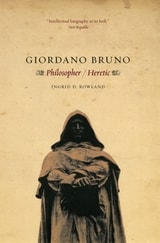
Giordano Bruno
Philosopher / HereticIngrid D. Rowland
University of Chicago Press, 2009
Giordano Bruno (1548–1600) is one of the great figures of early modern Europe, and one of the least understood. Ingrid D. Rowland’s biography establishes him once and for all as a peer of Erasmus, Shakespeare, and Galileo—a thinker whose vision of the world prefigures ours.
Writing with great verve and erudition, Rowland traces Bruno’s wanderings through a sixteenth-century Europe where every certainty of religion and philosophy has been called into question, and reveals how he valiantly defended his ideas to the very end, when he was burned at the stake as a heretic on Rome’s Campo de’ Fiori.
“A loving and thoughtful account of [Bruno’s] life and thought, satires and sonnets, dialogues and lesson plans, vagabond days and star-spangled nights. . . . Ingrid D. Rowland has her reasons for preferring Bruno to Copernicus, Tycho Brahe, Johannes Kepler, even Galileo and Leonardo, and they’re good ones.”—John Leonard, Harper’s
“Whatever else Bruno was, he was wild-minded and extreme, and Rowland communicates this, together with a sense of the excitement that his ideas gave him. . . . It’s that feeling for the explosiveness of the period, and [Rowland’s] admiration of Bruno for participating in it—indeed, dying for it—that is the central and most cherishable quality of the biography.”—Joan Acocella, New Yorker
“Rowland tells this great story in moving, vivid prose, concentrating as much on Bruno’s thought as on his life. . . . His restless mind, as she makes clear, not only explored but transformed the heavens.”—Anthony Grafton, New York Review of Books
“[Bruno] seems to have been an unclassifiable mixture of foul-mouthed Neapolitan mountebank, loquacious poet, religious reformer, scholastic philosopher, and slightly wacky astronomer.”—Anthony Gottlieb, New York Times Book Review
“A marvelous feat of scholarship. . . . This is intellectual biography at its best.”—Peter N. Miller, New Republic
“An excellent starting point for anyone who wants to rediscover the historical figure concealed beneath the cowl on Campo de’ Fiori.”—Paula Findlen, Nation
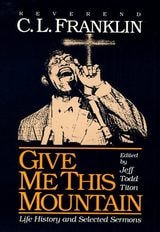
Give Me This Mountain
LIFE HISTORY AND SELECTED SERMONSReverend C. L. Franklin
University of Illinois Press, 1989
Few black preachers have been better known that the Reverend C. L. Franklin; none has been considered a better preacher. This collection of twenty of Franklin's best sermons shows the development of his style. A learned man, Franklin had attended both seminary and college, yet in his sermons used the old-fashioned, extemporaneous style of preaching, "whooping" or chanting, combining oratory and intoned poetry to reach both head and heart.
Dozens of Franklin's sermons were released on record albums, and he went on preaching tours with gospel groups that included his daughter, Aretha Franklin, reaching virtually every corner of the United States.
This volume begins with Franklin's life history, told in his own words.
In an afterword, Jeff Titon reviews the African-American sermon tradition
and Franklin's place in it.
Given Up for You
A Memoir of Love, Belonging, and BeliefErin O. White
University of Wisconsin Press, 2018
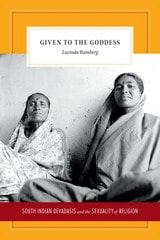
Given to the Goddess
South Indian Devadasis and the Sexuality of ReligionLucinda Ramberg
Duke University Press, 2014
Giving One's Word
Interpersonal Love, Knowledge, and Self-Giving in Aquinas's Psychological Analogy for the TrinityMichael Joseph Higgins
Catholic University of America Press, 2025
Glaphyra on the Pentateuch, Volume 1
Nicholas P. St. Cyril of Alexandria
Catholic University of America Press, 2019
Glaphyra on the Pentateuch, Volume 2
St. Cyril of Alexandria
Catholic University of America Press, 2019
Global Dynamics of Shi'a Marriages
Religion, Gender, and BelongingYafa Shanneik
Rutgers University Press, 2022
Global Hermeneutics. Reflections and Consequences
Knut Holter
SBL Press, 2010
A collection of essays from the International Cooperation Initiative of the Society of Biblical Literature
This first volume in the International Voices in Biblical Studies series stimulates and facilitates a global hermeneutic in which centers and margins fade. The collection explores the global context within which biblical studies and interpretation take place, includes three case studies from different regions, and reflections on the consequences of global hermeneutics on biblical interpretation and on translation.Features
Global Perspectives on Science and Religion
Pranab Das
Templeton Press, 2009
Gathering thinkers from ten countries and various scientific and spiritual backgrounds, Global Perspectives on Science and Spirituality leads readers on a fascinating tour of distinctly non-Western approaches to topics in these two fields. These voices add fresh and invigorating input to a dialogue that has thus far been predominantly guided by scholars from the United States or Western Europe.
The award-winning researchers in this volume were selected from a pool of over one hundred and fifty applications. They offer the very best scholarship from underrepresented regions around the globe. The essays cover a broad spectrum of scientific fields, spanning mathematical physics, robotics, biosemiotics and other new schools of theoretical biology, embryonic stem cells, cognitive science, and the concept of opening the human mind to broader ideas of reality. Hailing from some of the top research institutions in India, Japan, Russia, Korea, China, and a variety of Eastern European nations, contributors offer unique insights into their cultures' spiritual and philosophical traditions. At the same time, they deftly engage concepts from the ongoing Western dialogue in its terms, delving deeply, at times, into schools of thought like phenomenology or process thought.
Scholars, students, researchers, and anyone seeking new ways of understanding the interplay of spirituality and science will discover a multitude of windows into previously underexplored research areas in these truly interdisciplinary essays. Indeed, any of these pieces could serve as the basis for entirely new long-term study programs.
Global Sceptical Publics
From Nonreligious Print Media to ‘Digital Atheism'Edited by Jacob Copeman and Mascha Schulz
University College London, 2022
Diverse media ranging from print publications and TV series to social media platforms are crucial for producing and participating in the secular public sphere, setting the stage for debates, controversies, and activism related both specifically and non-specifically to atheistic discourse. Global Sceptical Publics brings together contributions that analyze the diverse ways in which a variety of religious skeptics, doubters, and atheists engage with different forms of media as the framework for understanding contemporary communication and the formation of nonreligious publics. With authors from diverse backgrounds and disciplines, the book contributes new insights to the growing field of nonreligion studies, in particular, by demonstrating how skeptical groups can unsettle preconceived expectations of the public sphere.
Global Visions of Violence
Agency and Persecution in World ChristianityJason Bruner
Rutgers University Press, 2023
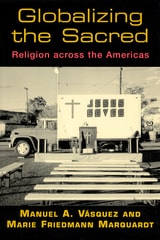
Globalizing the Sacred
Religion Across the AmericasVásquez, Manuel A
Rutgers University Press, 2003
French and German tourists join Mexican migrant workers to venerate the image of the Virgin Mary at a strip mall in Florida; Latino gang members, deported from the United States to home countries they barely know, find Jesus in transnational churches; U.S. evangelicals use electronic media to preach a “neo liberal” gospel of wealth and health to landless peasants in remote indigenous villages in Guatemala. These are just some examples of how religion in the Americas today intersects in complex ways with the economic, political, and cultural dimensions of globalization.
Drawing on case studies in the United States and Latin America, Manuel A. Vásquez and Marie Friedmann Marquardt explore the evolving roles of religion in the Americas in the face of globalization, transnational migration, the rapid growth of culture industries, the rise of computer mediated technologies, and the crisis of modernity. Combining ethnographic research in local congregations, studies of material culture and sacred space, textual analyses, and approaches to mass and electronic media, the authors challenge dominant paradigms in sociology of religion, such as the secularization and rational choice models. Further, the book offers alternative theoretical and methodological tools to understand the increasing complexity of religious life in the Americas.
By illustratingthe challenges that scholars and students must confront in order to understand the complexity of today’s religious landscape, Globalizing the Sacred makes both important theoretical and methodological contributions to the study of religion’s role in social change.

Glorious Battle
The Cultural Politics of Victorian Anglo-CatholicismJohn Shelton Reed
Vanderbilt University Press, 1970
A thorough, compelling, and often amusing account of how the Anglo-Catholic movement in the Victorian Church of England overcame vehement opposition to establish itself as a legitimate form of Anglicanism.
From working class tenements to the pages of Punch to the very Houses of Parliament, the Victorian Anglo-Catholic movement provoked bitter debate and even violence throughout Victorian times. Rotten vegetables were thrown at priests as they spoke from their pulpits, and fistfights broke out among families over whether dear departed ones would be buried "High Church" or "Low Church." In this innovative critical study, John Shelton Reed provides the first comprehensive treatment of the rise, growth, and eventual consolidation of this controversial movement within the Victorian Church of England.
Reed identifies Anglo-Catholicism as a countercultural movement, in some ways not unlike the counterculture of the 1960s, one that championed practices that were symbolic affronts to some of the central values of the dominant middle-class culture of its time. He identifies certain members of the clergy (including John Henry Newman and his circle), the urban poor, women, and youth of both sexes, expecially those who were put off by "muscular Christianity," as those most attracted both to what the movement had to offer and to the shock value it gave to the institutions, classes, and individuals whom they despised. Each of these component groups can be seen as culturally subordinate or in decline--threatened, oppressed, or at least bored by the Victorian values that the movement challenged--and thus ready to hear subversive messages.
A distinguished sociologist, best known as a major interpreter of the American South, Reed here explores new ground with characteristic scholarly acumen, thorough and meticulous research, fresh perspective and insight, and a remarkably engaging literary style. He has uncovered and taken full advantage of a wealth of largely untapped archival material, from the library of Pusey House, Oxford, as well as the Bodleian Library and the British Library, and has fashioned this into a cogent analysis that will enhance understanding of the subject for both scholars and general readers. His conclusions will shed light on many aspects of Victorian studies and the related disciplines of history (social, cultural, political, intellectual, and ecclesiastical), literary studies, women's studies, and the study of social movements. All future work on Anglo-Catholicism and related subjects will be indebted to Reed's Glorious Battle.
This book has been supported by a grant from the National Endowment for the Humanities.
Glossolalia and the Problem of Language
Nicholas Harkness
University of Chicago Press, 2021
Glossolalia and the Problem of Language investigates speaking in tongues in South Korea, where it is practiced widely across denominations and congregations. Nicholas Harkness shows how the popularity of glossolalia in Korea lies at the intersection of numerous, often competing social forces, interwoven religious legacies, and spiritual desires that have been amplified by Christianity’s massive institutionalization. As evangelicalism continues to spread worldwide, Glossolalia and the Problem of Language analyzes one of its most enigmatic practices while marking a major advancement in our understanding of the power of language and its limits.
God Being Nothing
Toward a TheogonyRay L. Hart
University of Chicago Press, 2016
Drawing on a lifetime of reading in philosophy and religious thought, Hart unfolds a vision of God perpetually in process: an unfinished God being self-created from nothingness. Breaking away from the traditional focus on divine persons, Hart reimagines the Trinity in terms of theogony, cosmogony, and anthropogony in order to reveal an ever-emerging Godhead who encompasses all of temporal creation and, within it, human existence. The book’s ultimate implication is that Being and Nonbeing mutually participate in an ongoing process of divine coming-to-birth and dying that implicates all things, existent and nonexistent, temporal and eternal. God’s continual generation from nothing manifests the full actualization of freedom: the freedom to create ex nihilo.
God For The 21St Century
Russell Stannard
Templeton Press, 2000
Just as modern science has revolutionized our understanding of the natural world, so can it expand our understanding of the Divine. In topics as varied as astronomy and cosmology, evolution, genetic engineering, extraterrestrial life, psychology and religious experience, spirituality and medicine, and artificial intelligence, fifty key thinkers discuss the interrelationship between science and religion.
Contributors include Robert Jastrow, first chairman of NASA's Lunar Exploration Committee and currently director of the Mount Wilson Institute; Rod Davies, former director of the Jodrell Bank Radio Astronomy Laboratories, U.K.; Owen Gingerich, senior astronomer, Smithsonian Astrophysical Observatory; Paul Davies, recipient of the Templeton Prize for Progress in Religion; Sir John Haughton, former director general of the United Kingdom Meteorological Office; Lord Habgood, former archbishop of York; and science writers Kitty Ferguson and Gregg Easterbrook.
The writers are drawn from eight countries and represent the Christian, Jewish, Islamic, and Hindu traditions. Most are scientists by profession, but also included are philosophers, theologians, and psychologists. Each chapter of this innovative, accessible book helps to expand our thinking in light of what is known at the dawn of the twenty-first century. Taken as a whole, this book presents a challenging understanding of God and of God's interaction with the world and with ourselves.
Topics covered include:
•Creation and evolution•Life on other planets
•Genetic engineering
•Faith and medicine
•The mind and the soul
•Quantum physics
God Gave Us The Right
Conservative Catholic, Evangelical Protestant, and Orthodox Jewish Women Grapple with FeminismManning, Christel
Rutgers University Press, 1999
God Is Love
Thomas Aquinas on the Being and Action of the Holy SpiritMichael D. Torre
Catholic University of America Press, 2026
God Owes Us Nothing
A Brief Remark on Pascal's Religion and on the Spirit of JansenismLeszek Kolakowski
University of Chicago Press, 1995
"Several books a year wrestle with that hoary conundrum, but few so dazzlingly as the Polish philosopher's latest."—Carlin Romano, Washington Post Book World
"Kolakowski's fascinating book and its debatable thesis raise intriguing historical and theological questions well worth pursuing."—Stephen J. Duffy, Theological Studies
"Kolakowski's elegant meditation is a masterpiece of cultural and religious criticism."—Henry Carrigan, Cleveland Plain Dealer
God Talk
Experimenting With the Religious Causes of Public OpinionPaul Djupe
Temple University Press, 2013
In the series The Social Logic of Politics, edited by Scott McClurg
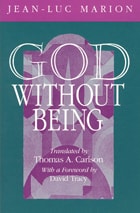
God Without Being
Hors-TexteJean-Luc Marion
University of Chicago Press, 1991
This volume, the first translation into English of the work of this leading Catholic philosopher, offers a contemporary perspective on the nature of God.
"An immensely thoughtful book. . . . It promises a rich harvest. Marion's highly original treatment of the idol and the icon, the Eucharist, boredom and vanity, conversion and prayer takes theological and philosophical discussions to a new level."—Norman Wirzba, Christian Century
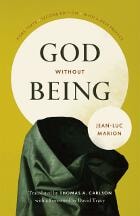
God Without Being
Hors-Texte, Second EditionJean-Luc Marion
University of Chicago Press, 2012
Jean-Luc Marion is one of the world’s foremost philosophers of religion as well as one of the leading Catholic thinkers of modern times. In God Without Being, Marion challenges a fundamental premise of traditional philosophy, theology, and metaphysics: that God, before all else, must be. Taking a characteristically postmodern stance and engaging in passionate dialogue with Heidegger, he locates a “God without Being” in the realm of agape, or Christian charity and love. If God is love, Marion contends, then God loves before he actually is.
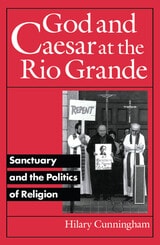
God and Caesar at the Rio Grande
Sanctuary and the Politics of ReligionHilary Cunningham
University of Minnesota Press, 1995
God and Caesar
Selected Essays on Religion, Politics, & SocietyGeorge Pell
Catholic University of America Press, 2007
God and Government in the Ghetto
The Politics of Church-State Collaboration in Black AmericaMichael Leo Owens
University of Chicago Press, 2007
But as Michael Leo Owens demonstrates in God and Government in the Ghetto, this alliance also serves as a means for black clergy to reaffirm their political leadership and reposition moral authority in black civil society. Drawing on both survey data and fieldwork in New York City, Owens reveals that African American churches can use these newly forged connections with public agencies to influence policy and government responsiveness in a way that reaches beyond traditional electoral or protest politics. The churches and neighborhoods, Owens argues, can see a real benefit from that influence—but it may come at the expense of less involvement at the grassroots.
Anyone with a stake in the changing strategies employed by churches as they fight for social justice will find God and Government in the Ghetto compelling reading.
God and War
American Civil Religion since 1945Haberski, Jr., Raymond
Rutgers University Press, 2012
Americans have long considered their country to be good—a nation "under God" with a profound role to play in the world. Yet nothing tests that proposition like war. Raymond Haberski argues that since 1945 the common moral assumptions expressed in an American civil religion have become increasingly defined by the nation's experience with war.
God and War traces how three great postwar “trials”—the Cold War, the Vietnam War, and the War on Terror—have revealed the promise and perils of an American civil religion. Throughout the Cold War, Americans combined faith in God and faith in the nation to struggle against not only communism but their own internal demons. The Vietnam War tested whether America remained a nation "under God," inspiring, somewhat ironically, an awakening among a group of religious, intellectual and political leaders to save the nation's soul. With the tenth anniversary of 9/11 behind us and the subsequent wars in Iraq and Afghanistan winding down, Americans might now explore whether civil religion can exist apart from the power of war to affirm the value of the nation to its people and the world.
God is Change
Religious Practices and Ideologies in the Works of Octavia ButlerEdited by Aparajita Nanda and Shelby L. Crosby
Temple University Press, 2021
Throughout her work, Octavia E. Butler explored, critiqued, and created religious ideology. Her prescient thoughts on the synergy between politics and religion in America are evident in her 1993 dystopian novel, Parable of the Sower, and its 1998 sequel, Parable of the Talents. They explored, respectively, what happens during a divisive “cultural war” that unjustly impacts the disenfranchised, and the rise of a fascistic president, allied with white fundamentalist Christianity, who chants the slogan, “Make America Great Again.”
But religion, for Butler, need not be a restricting force. The editors of and contributors to God Is Change heighten our appreciation for the range and depth of Butler’s thinking about spirituality and religion, as well as how Butler’s work—especially the Parable and Xenogenesis series—offers resources for healing and community building. Essays consider the role of spirituality in Butler’s canon and the themes of confronting trauma as well as experiencing transformation and freedom. God Is Change meditates on alternate religious possibilities that open different political and cultural futures to illustrate humanity’s ability to endure change and thrive.
God's Businessmen
Entrepreneurial Evangelicals in Depression and WarSarah Ruth Hammond
University of Chicago Press, 2017
The evangelical embrace of conservatism is a familiar feature of the contemporary political landscape. What’s less well-known, however, is that the connection predates the Reagan revolution, going all the way back to the Depression and World War II. Evangelical businessmen at the time were quite active in opposing the New Deal—on both theological and economic grounds—and in doing so claimed a place alongside other conservatives in the public sphere. Like previous generations of devout laymen, they self-consciously merged their religious and business lives, financing and organizing evangelical causes with the kind of visionary pragmatism that they practiced in the boardroom.
In God’s Businessmen, Sarah Ruth Hammond explores not only these men’s personal trajectories but also those of the service clubs and other institutions that, like them, believed that businessmen were God’s instrument for the Christianization of the world. Hammond presents a capacious portrait of the relationship between the evangelical business community and the New Deal—and in doing so makes important contributions to American religious history, business history, and the history of the American state.

God's Choice
The Total World of a Fundamentalist Christian SchoolAlan Peshkin
University of Chicago Press, 1988
In God's Choice, Alan Peshkin offers readers the opportunity to consider this question in depth. Given the outsider's rare chance to observe such a school firsthand, Peshkin spent eighteen months studying Bethany's high school—interviewing students, parents, and educators, living in the home of Bethany Baptist Church members, and participating fully in the church's activities. From this intimate research he has fashioned a rich account of Christian schooling and an informed analysis of a clear alternative to public education.

God's Country, Uncle Sam's Land
Faith and Conflict in the American WestTodd M. Kerstetter
University of Illinois Press, 2005
God's Country, Uncle Sam's Land analyzes Mormon history from the Utah Expedition and Mountain Meadows Massacre of 1857 through subsequent decades of federal legislative and judicial actions aimed at ending polygamy and limiting church power. It also focuses on the Lakota Ghost Dancers and the Wounded Knee Massacre in South Dakota (1890), and the Branch Davidians in Waco, Texas (1993). In sharp contrast to the mythic image of the West as the "Land of the Free," these three tragic episodes reveal the West as a cultural battleground--in the words of one reporter, "a collision of guns, God, and government." Asking important questions about what happens when groups with a deep trust in their differing inner truths meet, Kerstetter exposes the religious motivations behind government policies that worked to alter Mormonism and extinguish Native American beliefs.
God's Economy
Faith-Based Initiatives and the Caring StateLew Daly
University of Chicago Press, 2009
President Obama has signaled a sharp break from many Bush Administration policies, but he remains committed to federal support for religious social service providers. Like George W. Bush’s faith-based initiative, though, Obama’s version of the policy has generated loud criticism—from both sides of the aisle—even as the communities that stand to benefit suffer through an ailing economy. God’s Economy reveals that virtually all of the critics, as well as many supporters, have long misunderstood both the true implications of faith-based partnerships and their unique potential for advancing social justice.
Unearthing the intellectual history of the faith-based initiative, Lew Daly locates its roots in the pluralist tradition of Europe’s Christian democracies, in which the state shares sovereignty with social institutions. He argues that Catholic and Dutch Calvinist ideas played a crucial role in the evolution of this tradition, as churches across nineteenth-century Europe developed philosophical and legal defenses to protect their education and social programs against ascendant governments. Tracing the influence of this heritageon the past three decades of American social policy and church-state law, Daly finally untangles the radical beginnings of the faith-based initiative. In the process, he frees it from the narrow culture-war framework that has limited debate on the subject since Bush opened the White House Office for Faith-Based and Community Initiatives in 2001.
A major contribution from an important new voice at the intersection of religion and politics, God’s Economy points the way toward policymaking that combines strong social support with a new moral focus on the protection of families and communities.
God's Gift of the Universe
An Introduction to Creation TheologyPaul O'Callaghan
Catholic University of America Press, 2021
God's Love through the Spirit
Kenneth M. Loyer
Catholic University of America Press, 2014
God's Own Scientists
Creationists in a Secular WorldToumey, Christopher P.
Rutgers University Press, 1994
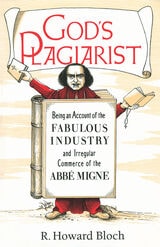
God's Plagiarist
Being an Account of the Fabulous Industry and Irregular Commerce of the Abbe MigneR. Howard Bloch
University of Chicago Press, 1994
How did he do it?
Migne harnessed a deep well of personal energy and a will of iron to the latest innovations in print technology, advertising, and merchandising. His assembly-line production and innovative marketing of the massive editions of the Church Fathers placed him at the forefront of France's new commerce. Characterized by the police as one of the great "schemers" of the century, this priest-entrepreneur put the most questionable of business practices in the service of his devotion to Catholicism.
Part detective novel, part morality tale, Bloch's narrative not only will interest scholars of nineteenth-century French intellectual history but will appeal also to general readers interested in the history of publishing or just a good historical yarn.
"An unforgettable, Daumier-like portrait, sharp and satirical, of this enterprising, austere and somewhat crazed merchandiser of sacred learning. . . . Bloch deserves great credit for the wit and style of his effort to explore the Pedantic Park of nineteenth-century learning, that island of monsters which scholars have found, as yet, no escape."—Anthony Grafton, New Republic
"Bloch is an exhilarating guide to the methods which made Migne the Napoleon of the Prospectus, a publicist of genius, Buffalo Bill and P.T. Barnum rolled into one."—David Coward, Times Literary Supplement
"Mercifully, Bloch's sense of humour has none of that condescending mock-bewilderment commonly applied to the foreign or ancient. . . . It enables Bloch to promote Migne as a forerunner of the department store and to place him on a continuum running from St. Paul to the Tupperware party: the quality of the merchandise is increasingly irrelevant, still more the nature of its contents."—Graham Robb, London Review of Books
God's Providence and Randomness in Nature
Scientific and Theological PerspectivesRobert John Russell
Templeton Press, 2019
In October 2014, a group of mathematicians, physicists, ecologists, philosophers, and theologians gathered at a special conference in Berkeley, California, to present the results of a two-year research program dubbed “Project SATURN.” This program explored many rich avenues of thought at the intersection of modern science and Christian theology. Chief among them is the possibility that specific processes might be so complex that they do not have sufficient physical causes. Known as “ontological indeterminism,” this idea has profound implications for theology. Specifically, it allows God to be thought of as acting providentially within nature without violating the laws and processes of nature.
Such a momentous insight could influence how we understand free will, natural evil, suffering in nature, and the relation between divine providence and human evolution. The essays collected here discussed these topics and were initially presented at the 2014 conference. Part I establishes the scientific basis for conceptualizing specific processes in the universe as inherently random and possibly indeterministic. Part II discusses the philosophical and theological issues that spring from this understanding. Together they represent the cutting edge of thought in the increasingly productive dialogue between science and theology.
Short for the “Scientific and Theological Understandings of Randomness in Nature,” Project SATURN was created by the Center for Theology and the Natural Sciences, a Program of the Graduate Theological Union, Berkeley. It was funded with a grant administered by Calvin College and provided by the John Templeton Foundation.

God, He Who Is
De Deo ut unoSerge-Thomas Bonino
Catholic University of America Press, 2026
God, Science, Sex, Gender
An Interdisciplinary Approach to Christian EthicsEdited by Patricia Beattie Jung and Aana Marie Vigen with John Anderson
University of Illinois Press, 2010
God, Sex, Science, Gender: An Interdisciplinary Approach to Christian Ethics is a timely, wide-ranging attempt to rescue dialogues on human sexuality, sexual diversity, and gender from insular exchanges based primarily on biblical scholarship and denominational ideology. Too often, dialogues on sexuality and gender devolve into the repetition of party lines and defensive postures, without considering the interdisciplinary body of scholarly research on this complex subject. This volume expands beyond the usual parameters, opening the discussion to scholars in the humanities, social sciences, and natural sciences to foster the development of Christian sexual ethics for contemporary times.
Essays by prominent and emerging scholars in the fields of anthropology, sociology, psychology, philosophy, literary studies, theology, and ethics reveal how faith and reason can illuminate our understanding of human sexual and gender diversity. Focusing on the intersection of theology and science and incorporating feminist theory, God, Science, Sex, Gender is a much-needed call for Christian ethicists to map the origins and full range of human sexual experience and gender identity. Essays delve into why human sexuality and gender can be so controversial in Christian contexts, investigate the complexity of sexuality in humans and other species, and reveal the implications of diversity for Christian moral theology.
Contributors are Joel Brown, James Calcagno, Francis J. Catania, Pamela L. Caughie, Robin Colburn, Robert Di Vito, Terry Grande, Frank Fennell, Anne E. Figert, Patricia Beattie Jung, Fred Kniss, John McCarthy, Jon Nilson, Stephen J. Pope, Susan A. Ross, Joan Roughgarden, and Aana Marie Vigen.
God, Science, and Humility
Ten Scientists Consider Humility TheologyRobert Hermann
Templeton Press, 2000
Editor Robert Herrmann has collected the opinions of ten scientists, all leaders in their fields, who have considered the relevance of their science to theology. The contributors bring a variety of religious experiences to the consideration of humility theology, a humble approach to our truth-seeking about God.
As a physicist, Russell Stannard provides an overview of humility theology in which truth is approached in an experimental, hypothetical mode, as is done in the sciences. Physicist and theologian Robert Russell focuses on the interaction between cosmology and theology. Charles Harper writes of the opportunity for a tremendous flowering of planetary science through a joint partnership between science and religion.
Owen Gingerich, historian of science, looks at the other side of humility theology—the possibility that we can actually arrive at unreasonable expectations— about the existence and nature of extraterrestrial intelligence. Francisco Ayala begins with the surprising contrast between the very brief period of human evolution and its remarkable and utterly unique end-product, homo sapiens. Psychologist David Myers points out that intuition can be a powerful faculty, but there are many limitations to this “inner knowing.”
Chemist Giuseppe Del Re writes an interesting view of the history of the development of chemistry as a discipline. Herbert Benson and Patricia Myers analyze the components of mind-body medicine that relate to the rubric of self-care, including relaxation procedures, nutrition, exercise, stress management, and faith. David and Susan Larson introduce the reader to a new field of medical science that focuses on the impact of spiritual values on patients' health. Fraser Watts looks at artificial intelligence research.
The discussion included in this book will significantly aid scholars and general readers in the search for greater understanding of the relationship between science and religion.
Contributors include Russell Stannard, Robert John Russell, Charles L. Harper Jr., Owen Gingerich, Francisco J. Ayala, David G. Myers, Giuseppe Del Re, Herbert Benson, Patricia Myers, David B. Larson, Susan S. Larson, and Fraser Watts.
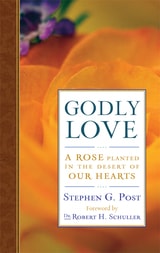
Godly Love
A Rose Planted in the Desert of Our HeartsStephen G. Post
Templeton Press, 2008
In this uplifting new book, author Stephen G. Post explores the mysteries and the wonder of Godly love. This all-important love is personal, unconditional, unlimited, generative, and omnipresent. The title alludes to Isaiah 35, how Godly love is said to plant a rose in our hearts precisely when we feel like a desert with no more love to give.
Post draws on his life experiences and works at the Institute for Research on Unlimited Love as he intersperses personal anecdotes with spiritual truths and research on human happiness. In the process, he defines the concept of Godly love and illustrates how important it can be in our lives—not only emotionally and spiritually but physically as well. "Godly love," he writes, "is the only foundation in the universe that we can really lean on."
We all have deserts in life, so we all need Godly love. Without it, the downward slide to cynicism, hostility, and cool indifference can be too easy. These meditations on the subject will nurture our confidence in the power of a love greater than our own when we need it most.