Results by title
18284 books match the query 'United States' and 433 start with g
Going Public
Civic and Community EngagementHiram E. Fitzgerald
Michigan State University Press, 2013
The terms “civic engagement” and “community engagement” have various definitions, but they are united by the sense that individuals who are civically engaged not only are concerned about the quality of life in their communities but also take action to improve conditions for the common good. In the United States, to be civically engaged means to actively participate in a civil democratic society. Going Public examines programs related to civic engagement and the ways in which faculty and students participate in communities in order to improve them. Engagement scholarship is a scholarship of action, a scholarship of practice that takes place both in and with the community. Within the framework of this new scholarship, the mission of the academy does not begin and end with intellectual discovery and fact-finding. Rather, the academy joins forces with the community, and together they use their knowledge and resources to address pressing social, civic, economic, and moral problems. Each chapter in this book tells a unique story of community engagement and the scholarship of practice in a diverse range of settings, documenting successes and failures, the unintended consequences, and the questions yet to be answered.
Going Public
What Writing Programs Learn from EngagementShirley Rose
Utah State University Press, 2010
In Going Public, Rose and Weiser locate their discussion in the context of three current conversations in higher education: 1) the engagement movement, particularly as this movement serves to address and respond to calls for greater accountability to broader publics; 2) recent interest in public discourse/civic rhetoric among scholars of rhetorical history and contemporary rhetorical theory; 3) the service learning movement in higher education, especially the ways in which college and university writing programs have contributed to this movement.
While there have been a number of publications describing service-learning and community leadership programs, most of these focus on curricular elements and address administrative issues, if at all, primarily from a curricular perspective. The emphasis of the current book is on the ways that engagement-focused programs change conceptions of WPA identity. Going Public, then, is not only a significant contribution to the scholarly literature, but also supplies an important new resource for WPA preparation courses in rhetoric and composition PhD programs.

Going Rackless
Chicago’s Amateur Pool Players and the Quest for Glory in the Biggest Tournament in the WorldDylan Taylor-Lehman
University of Illinois Press, 2025
Going Stealth
Transgender Politics and U.S. Surveillance PracticesToby Beauchamp
Duke University Press, 2018
Going Underground
Race, Space, and the Subterranean in the Nineteenth-Century United StatesLara Langer Cohen
Duke University Press, 2023
Going Up the Country
When the Hippies, Dreamers, Freaks, and Radicals Moved to VermontYvonne Daley
University Press of New England, 2018

Going Viral
Zombies, Viruses, and the End of the WorldSchweitzer, Dahlia
Rutgers University Press, 2018
In Going Viral, Dahlia Schweitzer probes outbreak narratives in film, television, and a variety of other media, putting them in conversation with rhetoric from government authorities and news organizations that have capitalized on public fears about our changing world. She identifies three distinct types of outbreak narrative, each corresponding to a specific contemporary anxiety: globalization, terrorism, and the end of civilization. Schweitzer considers how these fears, stoked by both fictional outbreak narratives and official sources, have influenced the ways Americans relate to their neighbors, perceive foreigners, and regard social institutions.
Looking at everything from I Am Legend to The X Files to World War Z, this book examines how outbreak narratives both excite and horrify us, conjuring our nightmares while letting us indulge in fantasies about fighting infected Others. Going Viral thus raises provocative questions about the cost of public paranoia and the power brokers who profit from it.
Supplemental Study Materials for "Going Viral": https://www.rutgersuniversitypress.org/going-viral-dahlia-schweitzer
Dahlia Schweitzer- Going Viral: https://www.youtube.com/watch?v=5xF0V7WL9ow
Going Virtual
Programs and Insights from a Time of CrisisSarah Ostman
American Library Association, 2021
- COVID-19 Misinformation Challenge, featuring an email quiz, to encourage participants to separate fact from fiction;
- weekly virtual storytimes;
- community cooking demonstrations via Zoom;
- an online grocery store tour, complete with tips about shopping healthy on a budget;
- a virtual beer tasting that boasted 80 attendees;
- socially distanced "creativity crates" for summer reading;
- an online Minecraft club for kids ages 6 and up;
- a Zoom presentation about grieving and funerals during COVID, featuring the director of a local funeral home;
- Art Talk Tuesday, a one-hour, docent-led program;
- a virtual lecture on the history of witchcraft, presented by a public library in partnership with a university rare book room, that drew thousands of viewers;
- "knitting for knewbies" kits for curbside pickup;
- Songs from the Stacks, an ongoing virtual concert series in the style of NPR’s “Tiny Desk”;
- a pink supermoon viewing party that included people howling at the moon together from their homes on Facebook Live;
- and many others
Going for Gold
The History of Newmont Mining CorporationJack H. Morris
University of Alabama Press, 2016
Jack H. Morris asserts that Newmont is the link between early gold mining and today’s technology-driven industry. We learn how the company’s founder and several early leaders grew up in gold camps and how, in 1917, the company helped finance South Africa’s largest gold company and later owned famous gold mines in California and Colorado. In the 1960s the company developed the process to capture “invisible gold” from small distributions of the metal in large quantities of rock, thereby opening up the rich gold field at Carlin, Nevada.
Modern gold mining has all the excitement and historic significance of the metal’s colorful past. Instead of panning for ready nuggets, today’s corporate miners must face heavy odds by extracting value from ores containing as little as one-hundredth of an ounce per ton. In often-remote locations, where the capital cost of a new mine can top $2 billion, 250-ton trucks crawl from half mile deep pits and ascend, beetle-like, loaded with ore for extraction of the minute quantities of gold locked inside.
Morris had unique access to company records and the cooperation of more than 80 executives and employees of the firm, but the company exercised no control over content. The author tells a story of discovery and scientific breakthrough; strong-willed, flamboyant leaders like founder Boyce Thompson; corporate raiders such as T. Boone Pickens and Jimmy Goldsmith; shakedowns by the Indonesian government and monumental battles with the French over the richest mine in Peru; and learning to operate in the present environmental regulatory climate. This is a fascinating story of the metal that has ignited passions for centuries and now sells for over $1,000 an ounce.
Going for Jazz
Musical Practices and American IdeologyNicholas Gebhardt
University of Chicago Press, 2001
Weaving together a range of seemingly disparate topics, from Frederick Jackson Turner's frontier thesis to the invention of bebop, from Jean Baudrillard's Seduction to the Cold War atomic regime, Gebhardt addresses the meaning and value of jazz in the political economy of American society. In Going for Jazz, jazz musicians assume dynamic and dramatic social positions that demand a more conspicuous place for music in our understanding of the social world.
Going for Wisconsin Gold
Stories of Our State OlympiansJessie Garcia
Wisconsin Historical Society Press, 2016
U-S-A , U-S-A is a familiar refrain heard in every Olympics, but truly it could be Wis-con-sin! Since pioneering hurdler Alvin Kraenzlein got his start here in the 1890s, the Badger State has nurtured, trained, or schooled more than 400 Olympic athletes in a vast array of sports. Wisconsin’s varied landscape and climate accommodate serious athletes whether they compete on ice, on snow, in the water, or on terra firma. We tend to bring a Midwestern work ethic to our endeavors, and our Olympians have often been hailed in the press and in public as being among the most humble and down-to-earth people around. Our state boasts a thriving youth sports culture where many homegrown athletes get their start; others are drawn here by our world-class universities, athletic facilities, and coaching talent. No matter how an athlete comes to Wisconsin, the state becomes part of his or her Olympic story. In Going for Wisconsin Gold, author Jessie Garcia provides insights into the lives of athletes who grew up or spent time in Wisconsin on their journey to the Olympic Games. She shares some of our competitors most captivating tales—from those that have become legend, like Dan Jansen’s heartbreaking falls and subsequent magical gold, to unlikely brushes with glory (do you know which Green Bay Packer was almost an Olympic high jumper?). Featuring the athletes’ personal stories, many of them told here in detail for the first time, plus pictures from their private collections, Going for Wisconsin Gold provides a new and deeper understanding of the sacrifices, joy, pain, heartbreak, and complete dedication it takes to reach the world’s grandest sporting competition.
Going to War in Iraq
When Citizens and the Press MatterStanley Feldman, Leonie Huddy, and George E. Marcus
University of Chicago Press, 2015
Drawing on the most comprehensive survey of public reactions to the war, Stanley Feldman, Leonie Huddy, and George E. Marcus revisit this critical period and come back with a very different story. Polling data from that critical period shows that the Bush administration’s carefully orchestrated campaign not only failed to raise Republican support for the war but, surprisingly, led Democrats and political independents to increasingly oppose the war at odds with most prominent Democratic leaders. More importantly, the research shows that what constitutes the news matters. People who read the newspaper were more likely to reject the claims coming out of Washington because they were exposed to the sort of high-quality investigative journalism still being written at traditional newspapers. That was not the case for those who got their news from television. Making a case for the crucial role of a press that lives up to the best norms and practices of print journalism, the book lays bare what is at stake for the functioning of democracy—especially in times of crisis—as newspapers increasingly become an endangered species.
Gold Dust on the Air
Television Anthology Drama and Midcentury American CultureMolly A. Schneider
University of Texas Press, 2024
2025 Broadcast Historian Award, Library of American Broadcasting Foundation
How mid-century television anthologies reflected and shaped US values and identities.
From the late 1940s to the early 1960s, anthology dramas presented “quality” television programming in weekly stand-alone television plays meant to entertain and provide cultural uplift to American society. Programs such as Playhouse 90, Studio One, and The Twilight Zone became important emblems of American creative potential on television. But their propensity for addressing matters of major social concern also meant that they often courted controversy. Although the anthology’s tenure would be brief, its importance in the television landscape would be great, and the ways the format negotiated ideas about “Americanness” at midcentury would be a crucial facet of its significance.
In Gold Dust on the Air, Molly Schneider traces a cultural history of the “Golden Age” anthology, addressing topics such as the format’s association with Method acting and debates about “authentic” American experience, its engagement with ideas about “conformity” in the context of Cold War pressures, and its depictions of war in a medium sponsored by defense contractors. Drawing on archival research, deep textual examination, and scholarship on both television history and broader American culture, Schneider posits the anthology series as a site of struggle over national meaning.
Golden Rule
The Investment Theory of Party Competition and the Logic of Money-Driven Political SystemsThomas Ferguson
University of Chicago Press, 1995
Thomas Ferguson breaks completely with traditional voter centered accounts of party politics. In its place he outlines an "investment approach," in which powerful investors, not unorganized voters, dominate campaigns and elections. Because businesses "invest" in political parties and their candidates, changes in industrial structures—between large firms and sectors—can alter the agenda of party politics and the shape of public policy.
Golden Rule presents revised versions of widely read essays in which Ferguson advanced and tested his theory, including his seminal study of the role played by capital intensive multinationals and international financiers in the New Deal. The chapter "Studies in Money Driven Politics" brings this aspect of American politics into better focus, along with other studies of Federal Reserve policy making and campaign finance in the 1936 election. Ferguson analyzes how a changing world economy and other social developments broke up the New Deal system in our own time, through careful studies of the 1988 and 1992 elections. The essay on 1992 contains an extended analysis of the emergence of the Clinton coalition and Ross Perot's dramatic independent insurgency. A postscript on the 1994 elections demonstrates the controlling impact of money on several key campaigns.
This controversial work by a theorist of money and politics in the U.S. relates to issues in campaign finance reform, PACs, policymaking, public financing, and how today's elections work.
Golden Rules
The Origins of California Water Law in the Gold RushMark Kanazawa
University of Chicago Press, 2015
For Golden Rules, Mark Kanazawa draws on previously untapped historical sources to trace the emergence of the current framework for resolving water-rights issues to California in the 1850s, when Gold Rush miners flooded the newly formed state. The need to circumscribe water use on private property in support of broader societal objectives brought to light a number of fundamental issues about how water rights ought to be defined and enforced through a system of laws. Many of these issues reverberate in today’s contentious debates about the relative merits of government and market regulation. By understanding how these laws developed across California’s mining camps and common-law courts, we can also gain a better sense of the challenges associated with adopting new property-rights regimes in the twenty-first century.

Golden Treasures of the San Juan
Temple H. Cornelius
Ohio University Press, 1961
Golden Treasures of the San Juan contains fabulous stories of lost mines, bullion, and valuable prospects of one of the most beautiful mountain areas of the United States. Many of the stories are based on the personal adventures of author Cornelius.
When the Indian Mountain Lands (the San Juan) were ceded in 1874, the wild region was thrown open to prospectors seeking its gold and silver riches. Many prospects were valuable discoveries, yet were lost and became legendary mines. Further, the Spanish explorers had been through this area much earlier with their bullion, and their caches added to the legends of gold discovered or to be discovered. The authors of this book trace complete stories about these long-lost hoards.
Golden Years?
Social Inequality in Later LifeDeborah Carr
Russell Sage Foundation, 2019
Carr connects research in sociology, psychology, epidemiology, gerontology, and other fields to explore the well-being of older adults. On many indicators of physical health, such as propensity for heart disease or cancer, black seniors fare worse than whites due to lifetimes of exposure to stressors such as economic hardships and racial discrimination and diminished access to health care. In terms of mental health, Carr finds that older women are at higher risk of depression and anxiety than men, yet older men are especially vulnerable to suicide, a result of complex factors including the rigid masculinity expectations placed on this generation of men. Carr finds that older adults’ physical and mental health are also closely associated with their social networks and the neighborhoods in which they live. Even though strong relationships with spouses, families, and friends can moderate some of the health declines associated with aging, women—and especially women of color—are more likely than men to live alone and often cannot afford home health care services, a combination that can be isolating and even fatal. Finally, social inequalities affect the process of dying itself, with white and affluent seniors in a better position to convey their end-of-life preferences and use hospice or palliative care than their disadvantaged peers.
Carr cautions that rising economic inequality, the lingering impact of the Great Recession, and escalating rates of obesity and opioid addiction, among other factors, may contribute to even greater disparities between the haves and the have-nots in future cohorts of older adults. She concludes that policies, such as income supplements for the poorest older adults, expanded paid family leave, and universal health care could ameliorate or even reverse some disparities.
A comprehensive analysis of the causes and consequences of later-life inequalities, Golden Years? demonstrates the importance of increased awareness, strong public initiatives, and creative community-based programs in ensuring that all Americans have an opportunity to age well.

Golf and the American Country Club
Richard J. Moss
University of Illinois Press, 2001
Often seen as anti-egalitarian and elitist, the country club has provoked strong responses since its initial appearance in the late 1800s. Golf, another elitist identifier, was commonly dismissed as a pseudo-sport or even unmanly. Where and how had the country club and the game of golf taken root in the United States? How had the manicured order of the golf course become a cultural site that elicited both strong loyalties and harsh criticism?
Richard J. Moss's cultural history explores the establishment of the country club as an American social institution and its inextricable connection to the ancient, imported game of golf. Moss traces the evolution of country clubs from informal groups of golf-playing friends to “country estates” in the suburbs and, eventually, into public and private daily fee courses, corporate country clubs, and gated golfing communities. As he shows, the development of these institutions reveals profound shifts in social dynamics, core American values, and attitudes toward health and sport.

Golf in America
George B. Kirsch
University of Illinois Press, 2008
In this concise social history of golf in the United States from the 1880s to the present, George B. Kirsch tracks the surprising growth of golf as a popular, mainstream sport, in contrast to the stereotype of golf as a pastime enjoyed only by the rich elite. In addition to classic heroes such as Francis Ouiment, Gene Sarazen, Sam Snead, and Ben Hogan, the annals of golf's early history also include African American players--John Shippen Jr., Ted Rhodes, and Charlie Sifford--as well as both white and black female players such as Mildred "Babe" Didrikson Zaharias, Louise Suggs, Betsy Rawls, Ann Gregory, and former tennis champ Althea Gibson. Golf in America tells the stories of these and many other players from different social classes, ethnic backgrounds, races, and genders.
Examining golf's recent history, Golf in America looks at the impact of television and the rivalry between Arnold Palmer and Jack Nicklaus, both of whom in 1996 were impressed by an upstart named Eldrick "Tiger" Woods. Kirsch also highlights the history of public golf courses in the United States, from Van Cortlandt Park in the Bronx to Boston's Franklin Park, Chicago's Jackson Park, and other municipal and semiprivate courses that have gone relatively unnoticed in the sport's history. Illustrated with nearly two dozen photographs, this book shows that golf in America has always reflected a democratic spirit, evolving into a sport that now rivals baseball for the honor of being acclaimed "America's national pastime."
Gone to Another Meeting
The National Council of Jewish Women, 1893-1993Faith Rogow
University of Alabama Press, 1993
The first comprehensive history of the oldest national religious Jewish women's organization in the United States
Gone to Another Meeting charts the development of the National Council of Jewish Women (NCJW) and its impact on both the Jewish Community in the United States and American Society in general.
Founded in 1893 by Hannah Greenebaum Solomon, NCJW provided a conduit through which Jewish women’s voices could be heard and brought a Jewish voice to America’s women’s rights movement. NCJW would come to represent both the modernization and renewal of traditional Jewish womanhood. Through its emphasis on motherhood, its adoption of domestic feminism, and its efforts to carve a distinct Jewish niche in the late 19th-century Progressive social reform movement in the largely Christian world of women’s clubs, NCJW was instrumental in defining a uniquely American version of Jewish womanhood.
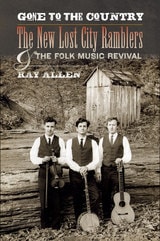
Gone to the Country
The New Lost City Ramblers and the Folk Music RevivalRay Allen
University of Illinois Press, 2010
Ray Allen interweaves biography, history, and music criticism to follow the band from its New York roots to their involvement with the commercial folk music boom. Allen details their struggle to establish themselves amid critical debates about traditionalism brought on by their brand of folk revivalism. He explores how the Ramblers ascribed notions of cultural authenticity to certain musical practices and performers and how the trio served as a link between southern folk music and northern urban audiences who had little previous exposure to rural roots styles. Highlighting the role of tradition in the social upheaval of mid-century America, Gone to the Country draws on extensive interviews and personal correspondence with band members and digs deep into the Ramblers' rich trove of recordings.
Good Boys, Bad Hombres
The Racial Politics of Mentoring Latino Boys in SchoolsMichael V Singh
University of Minnesota Press, 2024
The unintended consequences of youth empowerment programs for Latino boys
Educational research has long documented the politics of punishment for boys and young men of color in schools—but what about the politics of empowerment and inclusion? In Good Boys, Bad Hombres, Michael V. Singh focuses on this aspect of youth control in schools, asking on whose terms a positive Latino manhood gets to be envisioned.
Based on two years of ethnographic research in an urban school district in California, Good Boys, Bad Hombres examines Latino Male Success, a school-based mentorship program for Latino boys. Instead of attempting to shape these boys’ lives through the threat of punishment, the program aims to provide an “invitation to a respectable and productive masculinity” framed as being rooted in traditional Latinx signifiers of manhood. Singh argues, however, that the promotion of this aspirational form of Latino masculinity is rooted in neoliberal multiculturalism, heteropatriarchy, and anti-Blackness, and that even such empowerment programs can unintentionally reproduce attitudes that paint Latino boys as problematic and in need of control and containment.
An insightful gender analysis, Good Boys, Bad Hombres sheds light on how mentorship is a reaction to the alleged crisis of Latino boys and is governed by the perceived remedies of the neoliberal state. Documenting the ways Latino men and boys resist the politics of neoliberal empowerment for new visions of justice, Singh works to deconstruct male empowerment, arguing that new narratives and practices—beyond patriarchal redemption—are necessary for a reimagining of Latino manhood in schools and beyond.
Good Days, Bad Days
The Self and Chronic Illness in TimeKathy C Charmaz
Rutgers University Press, 1993
Illness provides a mirror that allows sufferers to see themselves and to become more introspective. As they struggle for control over illness and control over time, they also struggle to control the central images of the self. For example, the chronically ill may situate their self-concepts in the past, present, or future. Charmaz examines under what conditions they situate their self-concepts in each of those timeframes. People may say they live one day at a time. They may bracket certain experiences, such as a heart attack, as timemarkers or turning points in the past. Or they may look ahead to recovering their health. Or ahead to death.
Charmaz artfully combines near jargon-free analysis with moving stories about how people have experienced illness, usually told in the sufferers' own words. She enters the world of the chronically ill, and brings us into it.
Good Enough for Government Work
The Public Reputation Crisis in America (And What We Can Do to Fix It)Amy E. Lerman
University of Chicago Press, 2019
With Good Enough for Government Work, Lerman uses surveys, experiments, and public opinion data to argue persuasively that the reputation of government is itself an impediment to government’s ability to achieve the common good. In addition to improving its efficiency and effectiveness, government therefore has an equally critical task: countering the belief that the public sector is mired in incompetence. Lerman takes readers through the main challenges. Negative perceptions are highly resistant to change, she shows, because we tend to perceive the world in a way that confirms our negative stereotypes of government—even in the face of new information. Those who hold particularly negative perceptions also begin to “opt out” in favor of private alternatives, such as sending their children to private schools, living in gated communities, and refusing to participate in public health insurance programs. When sufficient numbers of people opt out of public services, the result can be a decline in the objective quality of public provision. In this way, citizens’ beliefs about government can quickly become a self-fulfilling prophecy, with consequences for all. Lerman concludes with practical solutions for how the government might improve its reputation and roll back current efforts to eliminate or privatize even some of the most critical public services.
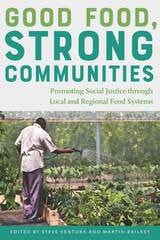
Good Food, Strong Communities
Promoting Social Justice through Local and Regional Food SystemsSteve Ventura and Martin Bailkey
University of Iowa Press, 2017
The approach begins by laying out the basic principles of food security and food justice in light of the diversity of food system practices and innovations in America’s cities. The contributing authors address land access for urban agriculture, debates over city farming, new possibilities in food processing, and the marketing of healthy food. They put these basic elements—land, production, processing, and marketing—in the context of municipal policy, education, and food justice and sovereignty, particularly for people of color. While the path of a food product from its producer to its consumer may seem straightforward on the surface, the apparent simplicity hides the complex logistical—and value-laden—factors that create and maintain a food system. This book helps readers understand how a food system functions and how individual and community initiatives can lessen the problems associated with an industrialized food system.
Good Jobs America
Paul Osterman
Russell Sage Foundation, 2012
Good Jobs, Bad Jobs
The Rise of Polarized and Precarious Employment Systems in the United States, 1970s-2000sArne L. Kalleberg
Russell Sage Foundation, 2011
Good Medicine, Hard Times
Memoir of a Combat Physician in IraqEdward P. Horvath, MD
The Ohio State University Press, 2022
Good Morning Blues
The Autobiography of Count BasieCount Basie
University of Minnesota Press, 2016
Count Basie was one of America’s pre-eminent and influential jazz pianists, bandleaders, and composers, known for such classics as “Jumpin’ at the Woodside,” “Goin’ to Chicago Blues,” “Sent for You Yesterday and Here You Come Today,” and “One O’Clock Jump.” In Good Morning Blues, Basie recounts his life story to Albert Murray, from his childhood years playing ragtime with his own pickup band at dances and pig roasts, to his years in New York City in search of opportunity, to rollicking anecdotes of Basie’s encounters with Fats Waller, Frank Sinatra, Fred Astaire, Sammy Davis Jr., Quincy Jones, Billie Holliday, and Tony Bennett. In this classic of jazz autobiography that was ten years in the making, Albert Murray brings the voice of Count Basie to the printed page in what is both testimony and tribute to an incredibly rich life.
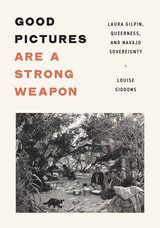
Good Pictures Are a Strong Weapon
Laura Gilpin, Queerness, and Navajo SovereigntyLouise Siddons
University of Minnesota Press, 2024
What are the limits of political solidarity, and how can visual culture contribute to social change?
A fundamental dilemma exists in documentary photography: can white artists successfully portray Indigenous lives and communities in a manner that neither appropriates nor romanticizes them? With an attentive and sensitive eye, Louise Siddons examines lesbian photographer Laura Gilpin’s classic 1968 book The Enduring Navaho to illuminate the intersectional politics of photography, Navajo sovereignty, and queerness over the course of the twentieth century.
Gilpin was a New York–trained fine arts photographer who started working with Navajo people when her partner accepted a job as a nurse in Arizona. She spent more than three decades documenting Navajo life and creating her book in collaboration with Navajo friends and colleagues. Framing her lesbian identity and her long relationship with the Navajo people around questions of allyship, Good Pictures Are a Strong Weapon addresses the long and problematic history of White photographers capturing images of Native life. Simultaneously, Siddons uses Gilpin’s work to explore the limitations of White advocacy in a political moment that emphasized the need for Indigenous visibility and voices.
Good Pictures Are a Strong Weapon introduces contemporary Diné (Navajo) artists as interlocutors, critics, and activists whose work embodies and extends the cultural sovereignty politics of earlier generations and makes visible the queerness often left implicit in Gilpin’s photographs. Siddons puts their work in conversation with Gilpin’s, taking up her mandate to viewers and readers of The Enduring Navajo to address Navajo aesthetics, traditions, politics, and people on their own terms.
Retail e-book files for this title are screen-reader friendly with images accompanied by short alt text and/or extended descriptions.
Good Reasons to Run
Women and Political CandidacyEdited by Shauna L. Shames, Rachel I. Bernhard, Mirya R. Holman, and Dawn Langan Teele
Temple University Press, 2020
After the 2016 U.S. Presidential election, a large cohort of women emerged to run for office. Their efforts changed the landscape of candidates and representation. However, women are still far less likely than men to seek elective office, and face biases and obstacles in campaigns. (Women running for Congress make twice as many phone calls as men to raise the same contributions.)
The editors and contributors to Good Reasons to Run, a mix of scholars and practitioners, examine the reasons why women run—and do not run—for political office. They focus on the opportunities, policies, and structures that promote women’s candidacies. How do nonprofits help recruit and finance women as candidates? And what role does money play in women’s campaigns?
The essays in Good Reasons to Run ask not just who wants to run, but how to activate and encourage such ambition among a larger population of potential female candidates while also increasing the diversity of women running for office.
Good Teaching
A Guide for StudentsRichard A. Watson
Southern Illinois University Press, 1997
From junior college to Ivy League university, the level of teaching ranges from "great to awful," according to Richard A. Watson, who explains not only how to survive but how to profit from and enjoy your college experience.
To help students make important personal choices—what school? what major? what classes?—Watson explains such broad areas as administrative structure, institutional goals, and faculty aspirations.
Charging the student with the ultimate responsibility for learning, Watson presents certain academic facts of life: teaching is not the primary concern of either the faculty or the administration in most institutions; few professors on the university level have had any training in teaching, and even fewer started out with teaching as their goal; senior professors do not teach much (the higher the rank and salary, the less time in the classroom), and those seeking tenure must emphasize research to survive; and almost certainly, the bad teacher who is a good researcher will get paid more than the good teacher who does not publish.
This is a book about good teaching and how to find it. Rejecting the conventional wisdom that a professor devoted to research will not be effective in the classroom, Watson advises that you take classes from the professor you may have been cautioned to avoid.
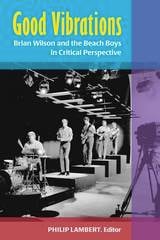
Good Vibrations
Brian Wilson and the Beach Boys in Critical PerspectivePhilip Lambert, Editor
University of Michigan Press, 2016
The book joins a growing body of literature on the popular music of the 1960s, in general, and on Brian Wilson and the Beach Boys in particular. But Good Vibrations extends the investigation further and deeper than it has gone before, not only offering new understanding and insights into individual songs and albums, but also providing close examination of compositional techniques and reflections on the group’s place in American popular culture.

Good Water
Kevin Holdsworth
University Press of Colorado, 2016
In essays that combine memoir with biography of place, Kevin Holdsworth creates a public history of the land he calls home: Good Water, Utah. The high desert of south-central Utah is at the heart of the stories he tells here—about the people, the “survivors and casualties” of the small, remote town—and is at the heart of his own story.
Holdsworth also explores history at a personal level: how Native American history is preserved by local park officials; how Mormon settlers adapted to remote, rugged places; how small communities attract and retain those less likely to thrive closer to population centers; and how he became involved in local politics. He confronts the issues of land use and misuse in the West, from the lack of water to greed and corruption over natural resources, but also considers life’s simple pleasures like the value of scenery and the importance of occasionally tossing a horseshoe.
Good Water’s depiction of modern-day Utah and exploration of friendships and bonding on the Western landscape will fascinate and entice readers in the West and beyond.
Good-Bye to Old Peking
The Wartime Letters Of U.S. Marine Captain John Seymour Letcher, 1937-1939John Seymour Letcher
Ohio University Press, 1998
Captain Letcher describes the flavor of life in pre-Communist China — the food, servants, cold Peking winters and torrid summers, hunting, and excursions to the major tourist sites.
But his letters also tell of the Japanese slaughter of Chinese troops in the opening days of the Sino-Japanese War. He wrote about life in a city under Japanese occupation and the stirring story of the Chinese guerrillas rebounding from devastating defeat.
These letters and accompanying introduction, preface, and notes, draw attention to the Western experience in a place and time largely overlooked by military historians and modern China specialists.

Good-bye, Piccadilly
BRITISH WAR BRIDES IN AMERICAJenel Virden
University of Illinois Press, 1996
Though the women came to the U.S. from all parts of the British Isles, they were an unusually homogeneous group, averaging 23 years of age, from working- or lower-middle-class families and having completed mandatory schooling to the age of fourteen. For the most part they emigrated alone and didn't move into an existing immigrant population.
Jenel Virden draws on records in the National Archives in Washington, D.C., and the Public Record Office in London, as well as questionnaires and personal interviews, in relating the women's story. Virden finds that the marriages actually took place in spite of, rather than because of, the war.
And, while the women benefited from special nonrestrictive immigration legislation--and found public welcomes and a good deal of favorable publicity when they arrived--they also had much in common with other immigrant groups, including a strong sense of ethnic identity.

Goodbye, My Tribe
An Evangelical ExodusVic Sizemore
University of Alabama Press, 2020
Sizemore began writing these essays with the aim of exploring and understanding what happened when the mythology of his “tribe” crumbled from beneath his feet. He draws heavily on his upbringing and his family history as a framework for how his “tribe” of white evangelicals have found ways to reconcile Christianity with what the author finds to be troubling stances on many social issues, among them race, gender, sexuality, materialism, anti-intellectualism, and white supremacy.
In a clear-eyed and eloquent voice, Sizemore grapples movingly with his own bewilderment and chagrin as he struggles to reconcile the essential philosophical and moral decay that he believes many evangelicals have come to embrace. His insights, arranged topically and thematically and told through graceful and accessible prose, toggle between memoir and literary journalism, along a spectrum that touches on history, philosophy, theology, and personal reflections.
.
Gorbachev and Bush
The Last Superpower Summits. Conversations that Ended the Cold WarThe National Security Archive Savranskaya
Central European University Press, 2020
Gorbachev and Reagan
The Last Superpower Summits. Conversations that Ended the Cold WarThe National Security Archive Savranskaya
Central European University Press, 2020
Gordon MacQuarrie
The Story of an Old Duck HunterKeith Crowley
Wisconsin Historical Society Press, 2003
Gossip Men
J. Edgar Hoover, Joe McCarthy, Roy Cohn, and the Politics of InsinuationChristopher M. Elias
University of Chicago Press, 2021
By using gossip as a lens to examine profound issues of state security and institutional power, Elias thoroughly transforms our understanding of the development of modern American political culture.
Gossip Men
J. Edgar Hoover, Joe McCarthy, Roy Cohn, and the Politics of InsinuationChristopher M. Elias
University of Chicago Press, 2021
This is an auto-narrated audiobook edition of this book.
J. Edgar Hoover, Joseph McCarthy, and Roy Cohn were titanic figures in midcentury America, wielding national power in government and the legal system through intimidation and insinuation. Hoover’s FBI thrived on secrecy, threats, and illegal surveillance, while McCarthy and Cohn will forever be associated with the infamous anticommunist smear campaign of the early 1950s, which culminated in McCarthy’s public disgrace during televised Senate hearings. In Gossip Men, Christopher M. Elias takes a probing look at these tarnished figures to reveal a host of startling new connections among gender, sexuality, and national security in twentieth-century American politics. Elias illustrates how these three men solidified their power through the skillful use of deliberately misleading techniques like implication, hyperbole, and photographic manipulation. Just as provocatively, he shows that the American people of the 1950s were particularly primed to accept these coded threats because they were already familiar with such tactics from widely popular gossip magazines.
By using gossip as a lens to examine profound issues of state security and institutional power, Elias thoroughly transforms our understanding of the development of modern American political culture.

Got Religion?
How Churches, Mosques, and Synagogues Can Bring Young People BackNaomi Schaefer Riley
Templeton Press, 2014
The traditional markers of growing up are getting married and becoming financially independent. But young adults are delaying these milestones, sometimes for a full decade longer than their parents and grandparents. This new phase of “emerging adulthood” is diminishing the involvement of young people in religious institutions, sapping the strength and vitality of faith communities, and creating a more barren religious landscape for the young adults who do eventually decide to return to it. Yet, clearly there are some churches, synagogues, and mosques that are making strides in bringing young people back to religion.
Got Religion? offers in-depth, on-the-ground reporting about the most successful of these institutions and shows how many of the structural solutions for one religious group can be adapted to work for another.
The faith communities young people attach themselves to are not necessarily the biggest or the most flashy. They are not the wealthiest or the ones employing the latest technology. Rather, they are the ones that create stability for young people, that give them real responsibility in a community and that help them form the habits of believers that will last a lifetime.

Gothic Passages
Racial Ambiguity and the American GothicJustin D. Edwards
University of Iowa Press, 2003
This groundbreaking study analyzes the development of American gothic literature alongside nineteenth-century discourses of passing and racial ambiguity.
By bringing together these areas of analysis, Justin Edwards considers the following questions. How are the categories of “race” and the rhetoric of racial difference tied to the language of gothicism? What can these discursive ties tell us about a range of social boundaries—gender, sexuality, class, race, etc.—during the nineteenth century? What can the construction and destabilization of these social boundaries tell us about the development of the U.S. gothic?
The sources used to address these questions are diverse, often literary and historical, fluidly moving between “representation” and “reality.” Works of gothic literature by Edgar Allan Poe, Herman Melville, Frances Harper, and Charles Chesnutt, among others, are placed in the contexts of nineteenth-century racial “science” and contemporary discourses about the formation of identity. Edwards then examines how nineteenth-century writers gothicized biracial and passing figures in order to frame them within the rubric of a “demonization of difference.” By charting such depictions in literature and popular science, he focuses on an obsession in antebellum and postbellum America over the threat of collapsing racial identities—threats that resonated strongly with fears of the transgression of the boundaries of sexuality and the social anxiety concerning the instabilities of gender, class, ethnicity, and nationality.
Gothic Passages not only builds upon the work of Americanists who uncover an underlying racial element in U.S. gothic literature but also sheds new light on the pervasiveness of gothic discourse in nineteenth-century representations of passing from both sides of the color line. This fascinating book will be of interest to scholars of American literature, cultural studies, and African American studies.
Governing American Cities
Inter-Ethnic Coalitions, Competition, and ConflictMichael Jones-Correa
Russell Sage Foundation, 2001

Governing Fortune
Casino Gambling in AmericaEdward A. Morse and Ernest P. Goss
University of Michigan Press, 2009
"Goss and Morse provide an outstandingly sound economic understanding of the function and place of casinos in American society, including essential heretofore unavailable grounding in the legal issues that the book accomplishes remarkably effectively. Moreover, this wealth of economic and legal information is transmitted in an engaging and readable manner. Scholarly, thoughtfully collected and authoritative, the book is of interest to any learner of the gambling industry, including students, civic activists, legislators, and scholars."
— Earl Grinols, Baylor University
"In this book, Morse and Goss make important contributions to our understanding of the negative outcomes of the expansion of gambling in America."
— Jon Bruning, Nebraska Attorney General
Edward A. Morse is Professor of Law and holder of the McGrath North Mullin & Kratz Endowed Chair in Business Law at Creighton University School of Law. Ernest P. Goss is Professor of Economics and MacAllister Chair at Creighton University and was a 2004 scholar-in-residence with the Congressional Budget Office.
Governing With the News, Second Edition
The News Media as a Political InstitutionTimothy E. Cook
University of Chicago Press, 2005
"Provocative and often wise. . . . Cook, who has a complex understanding of the relationship between governing and the news, provides a fascinating account of the origins of this complicity."—James Bennet, Washington Monthly
"[Governing with the News] addresses central issues of media impact and power in fresh, illuminating ways. . . . Cook mines a wealth of historical and organizational literature to assert that the news media are a distinct political institution in our democratic system."—Robert Schmuhl, Commonweal
Governing the Twin Cities Region
The Metropolitan Council in Comparative PerspectiveJohn Harrigan
University of Minnesota Press, 1978

Governing with the News
The News Media as a Political InstitutionTimothy E. Cook
University of Chicago Press, 1998
The formation of the press as a political institution began in the early days of the republic when newspapers were sponsored by political parties; the relationship is now so central that press offices are found wherever one turns. Cook demonstrates not only how the media are structured as an institution that exercises collective power but also how the role of the media has become institutionalized within the political process, affecting policy and instigating, rather than merely reflecting, political actions. Cook's analysis is a powerful and fascinating guide to our age when newsmaking and governing are inseparable.
"This is a wonderful analysis of a highly important topic. Tim Cook is resoundingly right that we need to look at the media as political institutions and their operatives as political actors."—David R. Mayhew, author of Divided We Govern
"This meticulously researched and well reasoned work proposes to take seriously a thesis which flies in the face of both journalistic lore and political myth. Governing with the News is an innovative contribution to our understanding of media."—W. Lance Bennett, author of News: The Politics of Illusion
"This book should be read by journalists . . . by mass communication faculty teaching courses in media structure or effects and journalism faculty as a supplemental text to courses in media history and media management."—Benjamin J. Burns, Journalism & Mass Communication Quarterly
Government Information Essentials
Susanne Caro
American Library Association, 2017