Results by title
28164 books match the query 'History' and 628 start with g
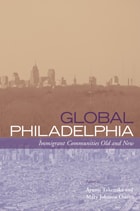
Global Philadelphia
Immigrant Communities Old and NewEdited by Ayumi Takenaka and Mary Johnson Osirim
Temple University Press, 2010
The racial and ethnic composition of Philadelphia continues to diversify as a new wave of immigrants—largely from Asia and Latin America—reshape the city’s demographic landscape. Moreover, in a globalized economy, immigration is the key to a city’s survival and competitiveness. The contributors to Global Philadelphia examine how Philadelphia has affected its immigrants’ lives, and how these immigrants, in turn, have shaped Philadelphia.
Providing a detailed historical, ethnographic, and sociological look at Philadelphia’s immigrant communities, this volume examines the social and economic dynamics of various ethnic populations. Significantly, the contributors make comparisons to and connections between the traditional immigrant groups—Germans, Italians, the Irish, Jews, Puerto Ricans, and Chinese—and newer arrivals, such as Cambodians, Haitians, Indians, Mexicans, and African immigrants of various nationalities.
While their experiences vary, Global Philadelphia focuses on some of the critical features that face all immigrant groups—intra-group diversity, the role of institutions, and ties to the homeland. Taken together, these essays provide a richer understanding of the processes and implications of contemporary immigration to the area.
Global Russian Cultures
Edited by Kevin M. F. Platt
University of Wisconsin Press, 2020
The volume's internationally renowned contributors treat the many different global Russian cultures not as "displaced" elements of Russian cultural life but rather as independent entities in their own right. They describe diverse forms of literature, music, film, and everyday life that transcend and defy political, geographic, and even linguistic borders. Arguing that Russian cultures today are many, this volume contends that no state or society can lay claim to be the single or authentic representative of Russianness. In so doing, it contests the conceptions of culture and identity at the root of nation-building projects in and around Russia.

Global Trade and Visual Arts in Federal New England
Patricia Johnston
University of New Hampshire Press, 2014
This book will appeal to a broad audience of historians and students of American visual art, as well as scholars and students of fine and decorative arts.
Hardcover is un-jacketed.
Global Visions of Violence
Agency and Persecution in World ChristianityJason Bruner
Rutgers University Press, 2023

Globalization and Nationalism
The Cases of Georgia and the Basque CountryNatalie Sabanadze
Central European University Press, 2010
This book argues for an original, unorthodox conception about the relationship between globalization and contemporary nationalism. While the prevailing view holds that nationalism and globalization are forces of clashing opposition, Sabanadze establishes that these tend to become allied forces. It acknowledges that nationalism does react against the rising globalization and represents a form of resistance against globalizing influences, but the Basque and Georgian cases prove that globalization and nationalism can be complementary rather than contradictory tendencies.
Nationalists have often served as promoters of globalization, seeking out globalizing influences and engaging with global actors out of their very nationalist interests. In the case of both Georgia and the Basque Country, there is little evidence suggesting the existence of strong, politically organized nationalist opposition to globalization.
Globalization and Nationalism discusses why, on a broader scale, different forms of nationalism develop differing attitudes towards globalization and engage in different relationships.

Globalization, Nationalism, and Imperialism
A New History of Eastern EuropeJames W. Peterson
Central European University Press, 2023
The authors of this book retell the political and economic history of East-Central Europe, the post-communist Balkans, and the Baltic states and speculate about their future from the vantage point of three competing forces operating in the region: territorial imperialism, globalization, and nationalism.
Exposed to imperial aspirations, the geographic area from the Baltic Sea to the Black Sea has in the past 150 years been subject to alternating waves of globalization and nationalism. The nineteenth century Eastern European empires were open to forces of economic globalization, but all collapsed at the end of World War One. Emerging nation-states embraced the logic of Western-led globalization but were subjugated by Nazi and Soviet empires, which pursued policies of economic autarchy. The demise of the Soviet empire marked the revival of pre-1939 nation-states and the re-entry of forces of liberalism and globalization into the region, with multiple crises of economic transition, ethnic militancy, new forms of authoritarianism, and external security threats. By 2010 negative, nationalist-populist reactions against crises that globalization brought to Eastern Europe became the dominant political trend. The analysis involves the consideration about the very contemporary factors of Brexit and COVID, as well as Russia’s and China’s influences, and their effects on Eastern Europe.
Globalizations and Social Movements
Culture, Power, and the Transnational Public SphereJohn A. Guidry, Michael D. Kennedy, and Mayer N. Zald, Editors
University of Michigan Press, 2000
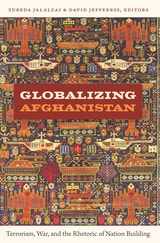
Globalizing Afghanistan
Terrorism, War, and the Rhetoric of Nation BuildingZubeda Jalalzai and David Jefferess, eds.
Duke University Press, 2011
Contributors. Gwen Bergner, Maliha Chishti, Cheshmak Farhoumand-Sims, Nigel C. Gibson, Zubeda Jalalzai, David Jefferess, Altaf Ullah Khan, Kamran Rastegar, Rodney J. Steward, Imre Szeman
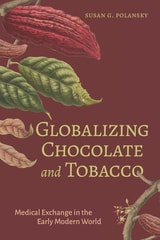
Globalizing Chocolate and Tobacco
Medical Exchange in the Early Modern WorldSusan G. Polansky
Bucknell University Press, 2026
This groundbreaking volume explores two early and opposing Spanish medical perspectives on chocolate and other New World substances. In the early 1600s, doctors Bartolomé Marradón and Antonio Colmenero de Ledesma returned from travels to the Americas with starkly different views: Marradón cautioned against tobacco and offered only limited approval of chocolate, while Colmenero vigorously defended chocolate’s health benefits. Their writings, translated and circulated across Europe, helped transform chocolate from a medicinal drink into a global commodity. Featuring the first bilingual edition of Marradón’s Dialogue (1618)—in full Spanish and English—and a new bilingual presentation of Colmenero’s influential Curious Treatise (1631), this book provides rare insight into early modern medical thought, cultural exchange, and the globalization of taste. Essential for readers of food history, early modern medicine, and transatlantic interchange, it uniquely reveals how debates over health, culture, and commerce brewed in a cup of chocolate.
Published by Bucknell University Press. Distributed worldwide by Rutgers University Press.

Globalizing Family Values
The Christian Right In International PoliticsDoris Buss
University of Minnesota Press, 2003
A timely exposé of the efforts of the religious right to influence global policy
With little fanfare and profound effect, “family values” have gone global, and the influence of the Christian Right is increasingly felt internationally. This is the first comprehensive study of the Christian Right’s global reach and its impact on international law and politics.
Doris Buss and Didi Herman explore tensions, contradictions, victories, and defeats for the Christian Right’s global project, particularly in the United Nations. The authors consult Christian Right materials, from pamphlets to novels; conduct interviews with people in the movement; and provide a firsthand account of the World Congress of Families II in 1999, a key event in formulating Christian Right global policy and strategy. The result is a detailed look at a new global player—its campaigns against women’s rights, population policy, and gay and lesbian rights; its efforts to build an alliance of orthodox faiths with non-Christians; and the tensions and strains as it seeks to negotiate a role for conservative Christianity in a changing global order.
Globalizing Race
Antisemitism and Empire in French and European CultureDorian Bell
Northwestern University Press, 2018
Globalizing Race explores how intersections between French antisemitism and imperialism shaped the development of European racial thought. Ranging from the African misadventures of the antisemitic Marquis de Morès to the Parisian novels and newspapers of late nineteenth-century professional antisemites, Dorian Bell argues that France’s colonial expansion helped antisemitism take its modern, racializing form—and that, conversely, antisemitism influenced the elaboration of the imperial project itself.
Globalizing Race radiates from France to place authors like Guy de Maupassant and Émile Zola into sustained relation with thinkers from across the ideological spectrum, including Hannah Arendt, Friedrich Nietzsche, Frantz Fanon, Karl Marx, Max Horkheimer, and Theodor Adorno. Engaging with what has been called the “spatial turn” in social theory, the book offers new tools for thinking about how racisms interact across space and time. Among these is what Bell calls racial scalarity. Race, Bell argues, did not just become globalized when European racism and antisemitism accompanied imperial penetration into the farthest reaches of the world. Rather, race became most thoroughly global as a method for constructing and negotiating the different scales (national, global, etc.) necessary for the development of imperial capitalism.
As France, Europe, and the world confront a rising tide of Islamophobia, Globalizing Race also brings into fascinating focus how present-day French responses to Muslim antisemitism hark back to older, problematic modes of representing the European colonial periphery.

Globalizing the Lower Rio Grande
European Entrepreneurs in the Borderlands, 1749-1881Kyle Carpenter
University of North Texas Press, 2024

Globes
400 Years of Exploration, Navigation, and PowerSylvia Sumira
University of Chicago Press, 2014
Showcasing the impressive collection of globes held by the British Library, Sumira traces the inception and progression of globes during the period in which they were most widely used—from the late fifteenth century to the late nineteenth century—shedding light on their purpose, function, influence, and manufacture, as well as the cartographers, printers, and instrument makers who created them. She takes readers on a chronological journey around the world to examine a wide variety of globes, from those of the Renaissance that demonstrated a renewed interest in classical thinkers; to those of James Wilson, the first successful commercial globe maker in America; to those mass-produced in Boston and New York beginning in the 1800s. Along the way, Sumira not only details the historical significance of each globe, but also pays special attention to their materials and methods of manufacture and how these evolved over the centuries.
A stunning and accessible guide to one of the great tools of human exploration, Globes will appeal to historians, collectors, and anyone who has ever examined this classroom accessory and wondered when, why, and how they came to be made.

Globetrotting
African American Athletes and Cold War PoliticsDamion L. Thomas
University of Illinois Press, 2012
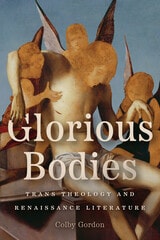
Glorious Bodies
Trans Theology and Renaissance LiteratureColby Gordon
University of Chicago Press, 2024
In this striking contribution to trans history, Colby Gordon challenges the prevailing assumption that trans life is a byproduct of recent medical innovation by locating a cultural imaginary of transition in the religious writing of the English Renaissance. Marking a major intervention in early modern gender studies, Glorious Bodies insists that transition happened, both socially and surgically, hundreds of years before the nineteenth-century advent of sexology. Pairing literary texts by Shakespeare, Webster, Donne, and Milton with a broad range of primary sources, Gordon examines the religious tropes available to early modern subjects for imagining how gender could change. From George Herbert’s invaginated Jesus and Milton’s gestational Adam to the ungendered “glorious body” of the resurrection, early modern theology offers a rich conceptual reservoir of trans imagery.
In uncovering early modern trans theology, Glorious Bodies mounts a critique of the broad consensus that secularism is a necessary precondition for trans life, while also combating contemporary transphobia and the right-wing Christian culture war seeking to criminalize transition. Developing a rehabilitative account of theology’s value for positing trans lifeworlds, this book leverages premodern religion to imagine a postsecular transness in the present.
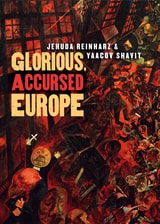
Glorious, Accursed Europe
Jehuda Reinharz and Yaacov Shavit
Brandeis University Press, 2010
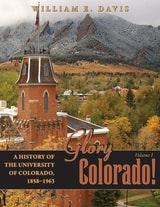
Glory Colorado!
A History of the University of Colorado, 1858-1963William E. Davis
University Press of Colorado, 1965
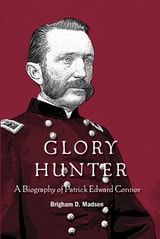
Glory Hunter
A Biography of Patric Edward ConnorBrigham Madsen
University of Utah Press, 1990
The life of Patrick Edward Connor serves as a half-century slice of western American history. After leaving New York City, where he had arrived at the age of twelve as a poor Irish immigrant, the nineteen-year-old youth joined the U.S. Army in 1839. He fought in the war with Mexico and then joined the gold rush in California until marrying and settling down in Stockton in 1854.
The Civil War found him volunteering again, this time as colonel of California troops sent to the Utah Territory to protect the mail lines from Indian attacks. Bitterly anti-Mormon, Connor spent the war years alternately engaging in a war of words with Brigham Young or in fighting Indians in northern Utah and present-day Wyoming. After the Civil War, ex-Major General Connor began mining operations in Utah and Nevada, ventures that went from boom to bust. He spent his final years in straitened financial circumstances.
Patrick Edward Connor was a “Man of the West,” possessing both its prejudices and its democratic, independent spirit. His greatest success lay as a military leader, and he would have agreed that he was made for war, not peace. He left an imprint on the history of the American West, remembered as the founder of Fort Douglas, as the “first gentile in Utah,” the “father of Utah mining,” and the “father of the Liberal Party in Utah.”
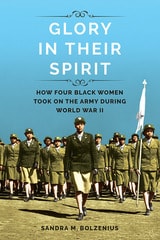
Glory in Their Spirit
How Four Black Women Took On the Army during World War IISandra M Bolzenius
University of Illinois Press, 2018
Glorying in Tribulation
The Lifework of Sojourner TruthErlene Stetson
Michigan State University Press, 1994
In Glorying in Tribulation, Stetson presents a new dimension of Sojourner Truth's character. Much of the information regarding this oft-quoted African American woman is either the stuff of legend or is in dispute. This important new biography takes both legend and fact and sets them into a larger historical context. The authors utilize archival sources, and other forms of direct and indirect evidence to create a better understanding of Truth. We see her victories as well as her defeats--we see her as a real person. Truth comes alive in the pages of this book through her poignant, prophetic words and we realize that what she spoke of in the nineteenth century is just as relevant to us today.
Glorying in Tribulation offers students, scholars, and teachers of American history and culture studies a comprehensive look and a new perspective on Truth's contribution to American history. It is a long-overdue, exciting interpretation of the meaning of Sojourner Truth's life.
Go Down, Old Hannah
The Living History of African American TexansBy Naomi Mitchell Carrier
University of Texas Press, 2010
Living history is a style of instructive and entertaining performance that seeks to bring history to life with the use of costumes, tools, and reenactments appropriate to a specific time period. Done well, living history performances illuminate human experience in powerful, unforgettable ways.
The fifteen living history plays in this collection were commissioned by museums and historic sites in Texas to show the interdependence of African American experiences and contributions to the living history of Texas. The plays cover subject matter ranging from slave celebrations, family breakups, and running away, to the Civil War, emancipation, and Reconstruction. Each play is research based and performed by Talking Back Living History Theatre as a festival production. These scripts are easily performed, and author Naomi Mitchell Carrier has included production notes in the overviews that precede each play. Lesson plans are also included, which add to the collection's appeal as a classroom tool.
Carrier's talent for bringing historical figures to life is exceptional. The names of most primary characters in these plays are real. By giving them faces, feelings, intelligence, and dignity, Carrier aims to give them new life.
Go East, Young Man
Imagining the American West as the OrientRichard Francaviglia
Utah State University Press, 2011
Transference of orientalist images and identities to the American landscape and its inhabitants, especially in the West—in other words, portrayal of the West as the “Orient”—has been a common aspect of American cultural history. Place names, such as the Jordan River or Pyramid Lake, offer notable examples, but the imagery and its varied meanings are more widespread and significant. Understanding that range and significance, especially to the western part of the continent, means coming to terms with the complicated, nuanced ideas of the Orient and of the North American continent that European Americans brought to the West. Such complexity is what historical geographer Richard Francaviglia unravels in this book.
Since the publication of Edward Said’s book, Orientalism, the term has come to signify something one-dimensionally negative. In essence, the orientalist vision was an ethnocentric characterization of the peoples of Asia (and Africa and the “Near East”) as exotic, primitive “others” subject to conquest by the nations of Europe. That now well-established point, which expresses a postcolonial perspective, is critical, but Francaviglia suggest that it overlooks much variation and complexity in the views of historical actors and writers, many of whom thought of western places in terms of an idealized and romanticized Orient. It likewise neglects positive images and interpretations to focus on those of a decadent and ostensibly inferior East.
We cannot understand well or fully what the pervasive orientalism found in western cultural history meant, says Francaviglia, if we focus only on its role as an intellectual engine for European imperialism. It did play that role as well in the American West. One only need think about characterizations of American Indians as Bedouins of the Plains destined for displacement by a settled frontier. Other roles for orientalism, though, from romantic to commercial ones, were also widely in play. In Go East, Young Man, Francaviglia explores a broad range of orientalist images deployed in the context of European settlement of the American West, and he unfolds their multiple significances.

Go! Fight! Win!
Cheerleading in American CultureMary Ellen Hanson
University of Wisconsin Press, 1995
Cheerleading has become a staple in American culture. The cheerleader straddles two contradictory symbolic poles. This individual is an instantly recognized figure representing youthful attractiveness, leadership, and popularity. Yet, for many, the cheerleader is seen as epitomizing mindless enthusiasm, shallow boosterism, and objectified sexuality. This contradictory view is explored in this extensively documented book.
Go-betweens and the Colonization of Brazil
1500–1600By Alida C. Metcalf
University of Texas Press, 2006
Doña Marina (La Malinche) ...Pocahontas ...Sacagawea—their names live on in historical memory because these women bridged the indigenous American and European worlds, opening the way for the cultural encounters, collisions, and fusions that shaped the social and even physical landscape of the modern Americas. But these famous individuals were only a few of the many thousands of people who, intentionally or otherwise, served as "go-betweens" as Europeans explored and colonized the New World.
In this innovative history, Alida Metcalf thoroughly investigates the many roles played by go-betweens in the colonization of sixteenth-century Brazil. She finds that many individuals created physical links among Europe, Africa, and Brazil—explorers, traders, settlers, and slaves circulated goods, plants, animals, and diseases. Intercultural liaisons produced mixed-race children. At the cultural level, Jesuit priests and African slaves infused native Brazilian traditions with their own religious practices, while translators became influential go-betweens, negotiating the terms of trade, interaction, and exchange. Most powerful of all, as Metcalf shows, were those go-betweens who interpreted or represented new lands and peoples through writings, maps, religion, and the oral tradition. Metcalf's convincing demonstration that colonization is always mediated by third parties has relevance far beyond the Brazilian case, even as it opens a revealing new window on the first century of Brazilian history.
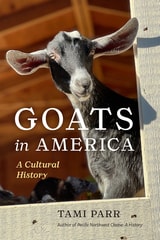
Goats in America
A Cultural HistoryTami Parr
Oregon State University Press, 2025
Since arriving in North America with cattle and other domesticated livestock in the sixteenth century, goats have provided people sustenance and valuable products, including milk, meat, and mohair. But humans did not appreciate the animals, and as a result, throughout much of American history goats were persecuted as public nuisances and symbols of degenerate behavior. Nevertheless, over the centuries the tenacious goat has overcome many of these stereotypes and secured a spot in the hearts and minds of modern Americans, who love goat cheese and embrace goats as social media stars.
Examining key moments and notable developments in goat history and culture, Goats in America outlines the history and evolving role of goats in communities across the country, from San Francisco and New York City to rural Wisconsin and the Navajo Nation. Parr shows that the evolving reputation of goats in American society ultimately reveals more about humans than it does about goats themselves. So, the next time you are enjoying your favorite goat cheese, take a moment to consider the history and role of goats within American culture.
God Owes Us Nothing
A Brief Remark on Pascal's Religion and on the Spirit of JansenismLeszek Kolakowski
University of Chicago Press, 1995
"Several books a year wrestle with that hoary conundrum, but few so dazzlingly as the Polish philosopher's latest."—Carlin Romano, Washington Post Book World
"Kolakowski's fascinating book and its debatable thesis raise intriguing historical and theological questions well worth pursuing."—Stephen J. Duffy, Theological Studies
"Kolakowski's elegant meditation is a masterpiece of cultural and religious criticism."—Henry Carrigan, Cleveland Plain Dealer
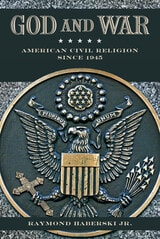
God and War
American Civil Religion since 1945Haberski, Jr., Raymond
Rutgers University Press, 2012
Americans have long considered their country to be good—a nation "under God" with a profound role to play in the world. Yet nothing tests that proposition like war. Raymond Haberski argues that since 1945 the common moral assumptions expressed in an American civil religion have become increasingly defined by the nation's experience with war.
God and War traces how three great postwar “trials”—the Cold War, the Vietnam War, and the War on Terror—have revealed the promise and perils of an American civil religion. Throughout the Cold War, Americans combined faith in God and faith in the nation to struggle against not only communism but their own internal demons. The Vietnam War tested whether America remained a nation "under God," inspiring, somewhat ironically, an awakening among a group of religious, intellectual and political leaders to save the nation's soul. With the tenth anniversary of 9/11 behind us and the subsequent wars in Iraq and Afghanistan winding down, Americans might now explore whether civil religion can exist apart from the power of war to affirm the value of the nation to its people and the world.

God of Many Names
Play, Poetry and Power in Hellenic Thought, From Homer to AristotleMihai I. Spariosu
Duke University Press, 1991
Building upon the scholarship of an earlier volume, Dionysus Reborn, Spariosu her continues to draw on Dionysus—the “God of many names,” of both poetic play and sacred power—as a mythical embodiment of the two sides of the classical Greek mentality. Combining philosophical reflection with close textual analysis, the author examines the divided nature of the Hellenic mentality in such primary canonic texts as the Iliad, the Odyssey, the Theogony, Works and Days, the most well-known of the Presocratic fragments, Euripides’ Bacchae, Aristophanes’ The Frogs, Plato’s Republic and Laws, and Aristotle’s Poetics and Politics.
Spariosu’s model illuminates the many of the most enduring questions in contemporary humanistic study and addresses modern questions about the nature of the interrelation of poetry, ethics, and politics.
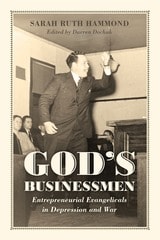
God's Businessmen
Entrepreneurial Evangelicals in Depression and WarSarah Ruth Hammond
University of Chicago Press, 2017
The evangelical embrace of conservatism is a familiar feature of the contemporary political landscape. What’s less well-known, however, is that the connection predates the Reagan revolution, going all the way back to the Depression and World War II. Evangelical businessmen at the time were quite active in opposing the New Deal—on both theological and economic grounds—and in doing so claimed a place alongside other conservatives in the public sphere. Like previous generations of devout laymen, they self-consciously merged their religious and business lives, financing and organizing evangelical causes with the kind of visionary pragmatism that they practiced in the boardroom.
In God’s Businessmen, Sarah Ruth Hammond explores not only these men’s personal trajectories but also those of the service clubs and other institutions that, like them, believed that businessmen were God’s instrument for the Christianization of the world. Hammond presents a capacious portrait of the relationship between the evangelical business community and the New Deal—and in doing so makes important contributions to American religious history, business history, and the history of the American state.

God's Country, Uncle Sam's Land
Faith and Conflict in the American WestTodd M. Kerstetter
University of Illinois Press, 2005
God's Country, Uncle Sam's Land analyzes Mormon history from the Utah Expedition and Mountain Meadows Massacre of 1857 through subsequent decades of federal legislative and judicial actions aimed at ending polygamy and limiting church power. It also focuses on the Lakota Ghost Dancers and the Wounded Knee Massacre in South Dakota (1890), and the Branch Davidians in Waco, Texas (1993). In sharp contrast to the mythic image of the West as the "Land of the Free," these three tragic episodes reveal the West as a cultural battleground--in the words of one reporter, "a collision of guns, God, and government." Asking important questions about what happens when groups with a deep trust in their differing inner truths meet, Kerstetter exposes the religious motivations behind government policies that worked to alter Mormonism and extinguish Native American beliefs.
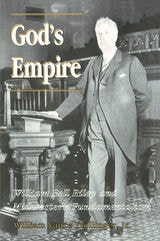
God's Empire
William Bell Riley and Midwestern FundamentalismWilliam V., Jr. Trollinger
University of Wisconsin Press, 1991
More than any other individual, William Bell Riley, pastor of the First Baptist Church of Minneapolis, inspired the resurgence of Protestant fundamentalism in 1930s America. Trollinger explores the development of Riley’s theology and social thought, examining in detail the rise of the Northwestern Bible and Missionary Training School and other similar institutions. He sheds light upon the nature, successes, and failures of fundamentalist crusades and makes it clear that, to understand fundamentalist religion in America, one must focus upon its regional and local roots.
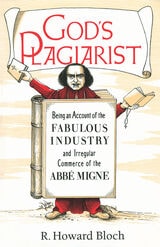
God's Plagiarist
Being an Account of the Fabulous Industry and Irregular Commerce of the Abbe MigneR. Howard Bloch
University of Chicago Press, 1994
How did he do it?
Migne harnessed a deep well of personal energy and a will of iron to the latest innovations in print technology, advertising, and merchandising. His assembly-line production and innovative marketing of the massive editions of the Church Fathers placed him at the forefront of France's new commerce. Characterized by the police as one of the great "schemers" of the century, this priest-entrepreneur put the most questionable of business practices in the service of his devotion to Catholicism.
Part detective novel, part morality tale, Bloch's narrative not only will interest scholars of nineteenth-century French intellectual history but will appeal also to general readers interested in the history of publishing or just a good historical yarn.
"An unforgettable, Daumier-like portrait, sharp and satirical, of this enterprising, austere and somewhat crazed merchandiser of sacred learning. . . . Bloch deserves great credit for the wit and style of his effort to explore the Pedantic Park of nineteenth-century learning, that island of monsters which scholars have found, as yet, no escape."—Anthony Grafton, New Republic
"Bloch is an exhilarating guide to the methods which made Migne the Napoleon of the Prospectus, a publicist of genius, Buffalo Bill and P.T. Barnum rolled into one."—David Coward, Times Literary Supplement
"Mercifully, Bloch's sense of humour has none of that condescending mock-bewilderment commonly applied to the foreign or ancient. . . . It enables Bloch to promote Migne as a forerunner of the department store and to place him on a continuum running from St. Paul to the Tupperware party: the quality of the merchandise is increasingly irrelevant, still more the nature of its contents."—Graham Robb, London Review of Books
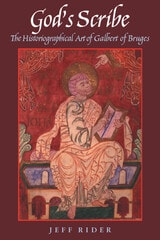
God's Scribe
The Historiographical Art of Galbert of BrugesJeff Rider
Catholic University of America Press, 2001

God, He Who Is
De Deo ut unoSerge-Thomas Bonino
Catholic University of America Press, 2026
God, the Flesh, and the Other
From Irenaeus to Duns ScotusEmmanuel Falque Translated from the French by William Christian Hackett
Northwestern University Press, 2015
In God, the Flesh, and the Other, the philosopher Emmanuel Falque joins the ongoing debate about the role of theology in phenomenology. An important voice in the second generation of French philosophy’s “theological turn,” Falque examines philosophically the fathers of the Church and the medieval theologians on the nature of theology and the objects comprising it. Falque works phenomenology itself into the corpus of theology. Theological concepts thus translate into philosophical terms that phenomenology should legitimately question: concepts from contemporary phenomenology such as onto-theology, appearance, reduction, body/flesh, inter-corporeity, the genesis of community, intersubjectivity, and the singularity of the other find penetrating analogues in patristic and medieval thought forged through millennia of Christological and Trinitarian debate, mystical discourses, and speculative reflection. Through Falque’s wide-ranging interpretive path, phenomenology finds itself interrogated—and renewed.
Godliness and Governance in Tudor Colchester
Laquita M. Higgs
University of Michigan Press, 1999
In Godliness and Governance in Tudor Colchester Laquita M. Higgs traces the governance and the religion of that town. Though traditional piety held sway early in the Tudor era, there was a strong undercurrent of hereticism, even among town leaders. Such sympathy helps explain Colchester's embrace of Henry VIII's religious reforms. Town governors also found it advantageous to cooperate with the local nobleman, the earl of Oxford, and with their own Thomas Audley, who helped the King shape the reformation. Queen Mary's attempts to root out Protestantism strengthened Colchester's commitment to reform. Under Elizabeth, reformers gradually took over governance of the borough.
Colchester provides one of the earliest illustrations of the workings and tensions of Puritan town governance. Higgs examines the connections between governance and religion with special emphasis on the Elizabethan period. The town's development toward religious radicalism is shown by a comparison of the aldermen of 1530, 1560, and 1590. Higgs explores the camaraderie of the reformers, the attempt of town leaders to correct immoral behavior, and the resultant tensions that produced deep divisions between moderate reformers and radical Puritans. An analysis of extant wills shows the extent to which Puritan governors achieved some degree of success.
Godliness and Governance in Tudor Colchester will be of interest to historians of the Tudor period, Catholicism, Lollardy, and the English Protestant Reformation.
Laquita M. Higgs is Adjunct Lecturer in History, University of Michigan, Dearborn.
Gods and Demons, Priests and Scholars
Critical Explorations in the History of ReligionsBruce Lincoln
University of Chicago Press, 2012
Bruce Lincoln is one of the most prominent advocates within religious studies for an uncompromisingly critical approach to the phenomenon of religion—historians of religions, he believes, should resist the preferred narratives and self-understanding of religions themselves, especially when their stories are endowed with sacred origins and authority. In Gods and Demons, Priests and Scholars, Lincoln assembles a collection of essays that both illustrates and reveals the benefits of his methodology, making a case for a critical religious studies that starts with skepticism but is neither cynical nor crude.
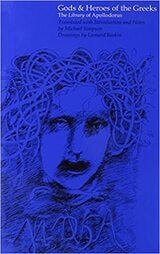
Gods and Heroes of the Greeks
The "Library" of ApollodorusMichael Simpson
University of Massachusetts Press, 1976
The immortal characters of Greek mythology enact their dramas, conflicts, and passions in the Library of Apollodorus. Probably composed in the first century A.D., it is the only Greek handbook of mythology to survive antiquity, and is a major source of our knowledge of Greek myths.
Beginning with the birth of the gods and ending with the death of Odysseus, the Library traces the destinies of such great mythic figures as Prometheus, Oedipus, Heracles, Daedalus, and the heroes of the Trojan War. Sir James G. Frazer called the Library “an accurate record of what the Greeks in general believed about the origin an early history of the world and their race.”
Michael Simpson’s new translation captures the fine simplicity and straightforwardness of the original. Leonard Baskin’s drawings throw a unique contemporary light on this ancient world.

Gods and Vampires
Return to ChipayaNathan Wachtel
University of Chicago Press, 1994
Wachtel discovered that a series of recent deaths and misfortunes in Chipaya had been attributed to the evil powers of the Urus, a group usually regarded with suspicion by the other ethnic groups. Those incarcerated were believed to be the chief sorcerers and vampires whose paganistic practices had brought death to Chipaya by upsetting the social order. Wachtel's investigation, told in Gods and Vampires: Back to Chipaya, reveals much about relations between the Urus and the region's dominant ethnic groups and confronts some of the most trenchant issues in contemporary anthropology. His analysis shows that the Urus had become victims of the same set of ideals the Spanish had used, centuries before, to establish their hegemony in the region.
Presented as a personal detective story, Gods and Vampires is Wachtel's latest work in a series studying the ongoing impact of the Spanish conquest on the Andean consciousness and social system. Its insight into Bolivian society and the legacy of hegemony confronts some of the most trenchant issues in contemporary anthropologyand will be of great interest to scholars of anthropology, Latin American studies, and Native American studies.
Gods in Dwellings
Temples and Divine Presence in the Ancient Near EastMichael B. Hundley
SBL Press, 2013
In this book devoted exclusively to temples and perceptions of the divine presences that inhabit them, Michael B. Hundley focuses on the official religions of the ancient Near East and explores the interface between the human and the divine within temple environs.
Hundley identifies common ancient Near Eastern temple systems and examines issues that include what temple structures communicate, how temples were understood to function, temple ideology, the installation of divine presence in a temple, the connection between presence and physical representation, and human service to the deity.
Drawing on architectural and spatial theory, ritual theory, theories of language, art history, archaeology, sociocultural anthropology, and comparative studies, Hundley offers a single interpretive lens through which to view temple worship.
Features:
- A close examination of temples in Egypt, Mesopotamia, Hittite Anatolia, and Syria-Palestine
- An interdisciplinary treatment of architecture, language, ritual, and art
- A dual focus on how a deity's divine presence connects to space and art and how human service to the deity maintains the deity's active presence
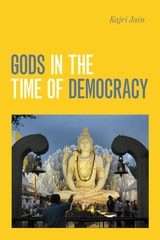
Gods in the Time of Democracy
Kajri Jain
Duke University Press, 2021
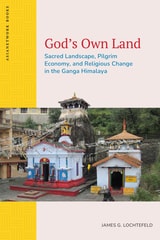
God’s Own Land
Sacred Landscape, Pilgrim Economy, and Religious Change in the Ganga HimalayaJames G. Lochtefeld
Lever Press, 2026
God’s Own Land follows the tectonic shift from traditional religious pilgrimage in the early twentieth-century to contemporary pilgrim tourism, in which ever-burgeoning visitor numbers have brought both benefits and challenges to the Garhwal region of India—the source of Hindu India’s sacred river, the Ganges. Despite Hinduism’s regional and sectarian variation, India’s Garhwal Himalaya region is one the most sacred places to Hindus, drawing pilgrims across sectarian lines from throughout the subcontinent and the world. This sacred land—dev bhumi or “land of the gods”—appears in foundational Hindu stories describing the presence and activity of gods, goddesses, saints, and cultural heroes.
This study from James G. Lochtefeld draws out Hindu convictions regarding the Garhwal’s eternal and continuing sanctity as a holy region, based on the premise of an “imagined landscape.” This region is strongly associated with divine activity and yet this landscape is also a real place with a real history inhabited by real people, who have historically been poor because of the challenges created by the region’s geography. Juxtaposing the history of the region with its construction in the Hindu imaginary, this multidisciplinary study unpacks the nuanced image of the region, its religious significance, and the impacts of pilgrimages on the community through textual, historical, and ethnographic methods.
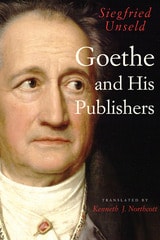
Goethe and His Publishers
Siegfried Unseld
University of Chicago Press, 1996
Goethe and His Publishers organizes for the first time the myriad details of Goethe's career in print. Director of the German publishing company Suhrkamp Verlag, Siegfried Unseld brings a singular perspective to this biography, focusing our attention on an essential component of Goethe's literary endeavors: his relationship to his publishers. Carefully examining each work, Unseld covers the range of Goethe's oeuvre, from first anonymous publications to eventual monumental editions brought out by Johann Friedrich Cotta, the most renowned publisher of his day.
Unseld sifts through the rich correspondence between Goethe and his publishers, as well as letters to and from friends, colleagues, and contemporaries. Analyzing publishing contracts, draft contracts, and historical documents, Unseld reveals the tremendous energy Goethe exerted on behalf of his manuscripts. During negotiations he was sometimes circumspect and reserved, other times demanding and assertive. These exchanges not only shed new light on Goethe's complex character but also show how he changed the author's role in the publishing process. Thus, this work offers a penetrating study on the intricate and many-tiered relations between author and publisher, then and today.
Goethe and His Publishers celebrates Goethe's works, his life, and his times, from the viewpoint of a publisher today. Written by an individual who has devoted much of his life to the study of the poet whom he reveres, such a personal approach not only forms an excellent introduction to Goethe's work but helps restore Goethe to his rightful place in the world of letters.
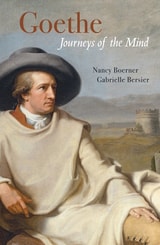
Goethe
Journeys of the MindGabrielle Bersier, Nancy Boerner, and Peter Boerner
Haus Publishing, 2018
While Goethe’s Italian Journey is a classic piece of travel writing, it was the product of his only extended physical journey. The majority, rather, were of the mind, taken amid the pages of books by others. In his reading, Goethe was the prototypical eighteenth-century armchair traveler, developing knowledge of places both near and far through the words and eyewitness accounts of others. In Goethe: Journeys of the Mind, Nancy Boerner and Gabrielle Bersier explore what it was that made the great writer distinct from his peers and offer insight into the ways that Goethe was able to explore the cultures and environments of places he never saw with his own eyes.

Gogo Breeze
Zambia’s Radio Elder and the Voices of Free SpeechHarri Englund
University of Chicago Press, 2018
Harri Englund provides a masterfully detailed study of this popular radio personality that addresses broad questions of free speech in Zambia and beyond. By drawing on ethnographic insights into political communication, Englund presents multivocal morality as an alternative to dominant Euro-American perspectives, displacing the simplistic notion of voice as individual personal property—an idea common in both policy and activist rhetoric. Instead, Englund focuses on the creativity and polyphony of Zambian radio while raising important questions about hierarchy, elderhood, and ethics in the public sphere.
A lively, engaging portrait of an extraordinary personality, Gogo Breeze will interest Africanists, scholars of radio and mass media, and anyone interested in the history and future of free speech.

Goin' Railroading
Two Generations of Colorado StoriesMargaret Coel
University Press of Colorado, 1998
Goin' Railroading is the story of two generations of such men, four members of the Speas family who, from the open cabs of narrow-gauge steam engines, watched Colorado grow.
Sam Speas tells the story of his father, Sam Speas Sr., who left Missouri in 1883 to become an engineer in Colorado, and recounts his own experiences and those of his brothers and fellow railroaders on the Colorado and Southern Railway, from the golden era of the narrow-gauge lines in South Park to the final days of steam power on the Front Range and the coming of the diesel engine.
His stories are a profound document of a vanished way of life, a testament to the courage and tenacity of the early citizens of Colorado, and a tribute to the rough-hewn, often gallant men who took the trains through incredible, almost unbelievable, hazards. Funny, tragic, bittersweet, and poignant, Goin' Railroading is a remarkable book that brings a portion of the history and people of an earlier Colorado to vibrant life.
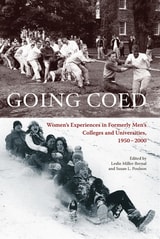
Going Coed
Women's Experiences in Formerly Men's Colleges and Universities, 1950-2000Leslie Miller-Bernal
Vanderbilt University Press, 2004
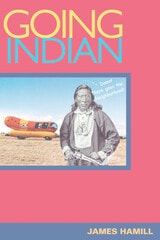
Going Indian
James Hamill
University of Illinois Press, 2006
Going Indian explores Indian (as opposed to tribal) ethnic identity among Native American people in Oklahoma through their telling, in their own words, of how they became Indian and what being Indian means to them today. Divided into four parts, the book features Oklahoma Indians' constructions of their histories and their view of today's native populations, their experiences with forced removals and Indian educational institutions, the meaning they place on blood quantum and ancestry in relation to Indian identity, and their practice of religion in Native churches.
James Hamill makes extensive use of the Indian Pioneer and Doris Duke material at the University of Oklahoma's Western History Library to assemble these narratives, using interviews collected between 1937-38 and 1967-70, as well as interviews he conducted from 2000 to 2001. While most books on Native American people in Oklahoma focus on tribes and their histories, Hamill instead explores the use of Indian symbolism across a wide field of experience to reveal what they thought and what they think about these various issues, and how these have influenced and affected their self-perceptions over time.
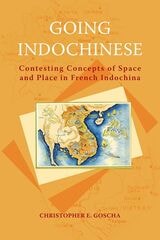
Going Indochinese
Christopher E. Goscha
National University of Singapore Press, 2012

Going Rackless
Chicago’s Amateur Pool Players and the Quest for Glory in the Biggest Tournament in the WorldDylan Taylor-Lehman
University of Illinois Press, 2025