Results by title
3576 books match the query 'American' and 120 start with h
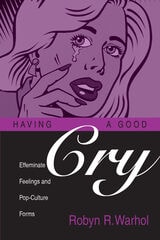
HAVING A GOOD CRY
Effeminate Feelings and Pop-Culture FormsRobyn R. Warhol
The Ohio State University Press, 2003
Robyn R. Warhol’s goal is to investigate the effects of readers’ emotional responses to formulaic fiction of the nineteenth and twentieth centuries on gendered subjectivity. She argues that modern literary and cultural studies have ignored nonsexual affectivity in their inquiries. The book elaborates on Warhol’s theory of affect and then focuses on sentimental stories, marriage plots, serialized novels, and soap operas as distinct genres producing specific feelings among fans.
Popular narrative forms use formulas to bring up familiar patterns of feelings in the audiences who love them. This book looks at the patterns of feelings that some nineteenth- and twentieth-century popular genres evoke, and asks how those patterns are related to gender. Soap operas and sentimentalism are generally derided as “effeminate” forms because their emotional range is seen as hyperfeminine. Having a Good Cry presents a celebration of effeminate feelings and works toward promoting more flexible, less pejorative concepts of gender. Using a psychophysiological rather than a psychoanalytic approach to reading and emotion, Warhol seeks to make readers more conscious of what is happening to the gendered body when we read.
HAWTHORNE AND THE REAL
BICENTENNIAL ESSAYSMILLICENT BELL
The Ohio State University Press, 2005
Contributors:
- Millicent Bell
- Nina Baym
- Michael T. Gilmore
- Leland S. Person
- David Leverenz
- Larry J. Reynolds
- Lawrence Buell
- Rita K. Gollin
- John Carlos Row
- Brenda Wineapple

HOUSE OF POURED OUT WATERS
POEMSJane Mead
University of Illinois Press, 2001
More than anything, it is her spiritual dimension that offers Mead a way into the future--but that way must be paved, image by image, with the world before her. Simultaneously conversational and lyrical, these fearless poems extend the possibilities of narrative verse.

Habitat Threshold
Craig Santos Perez
Omnidawn, 2019
Through experimental forms, free verse, prose, haiku, sonnets, satire, and a method he calls “recycling,” Perez has created a diverse collection filled with passion. Habitat Threshold invites us to reflect on the damage done to our world and to look forward, with urgency and imagination, to the possibility of a better future.
Haints
American Ghosts, Millennial Passions, and Contemporary Gothic FictionsArthur Redding
University of Alabama Press, 2011
In Haints: American Ghosts, Millennial Passions, and Contemporary Gothic Fictions, Arthur Redding argues that ghosts serve as lasting witnesses to the legacies of slaves and indigenous peoples whose stories were lost in the remembrance or mistranslation of history.
Authors such as Toni Morrison and Leslie Marmon Silko deploy the ghost as a means of reconciling their own violently repressed heritage with their identity as modern Americans. And just as our ancestors were haunted by ghosts of the past, today their descendants are haunted by ghosts of contemporary crises: urban violence, racial hatred, and even terrorism. In other cases that Redding studies—such as James Baldwin’s The Evidence of Things Not Seen and Toni Cade Bambara’s Those Bones Are Not My Child—gothic writers address similar crises to challenge traditional American claims of innocence and justice.
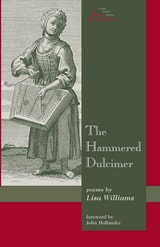
Hammered Dulcimer
Lisa Williams
Utah State University Press, 2000
Lisa William's poems are infused with what John Hollander calls "a guarded wonder." A poet of unique vision, she seems always to be "looking at," with special attention to the experience of the senses. Moreover, Williams is equally concerned with epistemology—the how of seeing. And it is perhaps this quality of attention that informs her interest in the formulations of poetry itself, in its constructed dimension. Her control of the line, of rhythmic possibilities, of structures both formal and free, is evident in every poem. Together, William's original voice and her poetic finesse allow her to create those harmonies of wonder evoked by the very instrument, the hammered dulcimer, that gives her collection its name. Judge for the 1998 May Swenson Poetry Award was John Hollander, poet, critic, professor. Long a major figure in American letters, Hollander was a personal friend to May Swenson, and has influenced the work of many of our best emerging poetic voices.
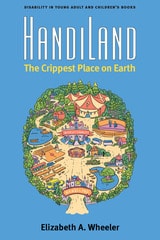
HandiLand
The Crippest Place on EarthElizabeth A. Wheeler
University of Michigan Press, 2019
HandiLand looks at young adult novels, fantasy series, graphic memoirs, and picture books of the last 25 years in which characters with disabilities take center stage for the first time. These books take what others regard as weaknesses—for instance, Harry Potter’s headaches or Hazel Lancaster’s oxygen tank—and redefine them as part of the hero’s journey. HandiLand places this movement from sidekick to hero in the political contexts of disability rights movements in the United States, the United Kingdom, and Ghana.
Elizabeth A. Wheeler invokes the fantasy of HandiLand, an ideal society ready for young people with disabilities before they get there, as a yardstick to measure how far we’ve come and how far we still need to go toward the goal of total inclusion. The book moves through the public spaces young people with disabilities have entered, including schools, nature, and online communities. As a disabled person and parent of children with disabilities, Wheeler offers an inside look into families who collude with their kids in shaping a better world. Moving, funny, and beautifully written, HandiLand: The Crippest Place on Earth is the definitive study of disability in contemporary literature for young readers.
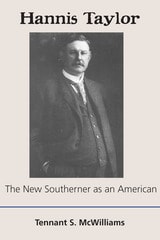
Hannis Taylor
The New Southerner as an AmericanTennant McWilliams
University of Alabama Press, 1978
During the late nineteenth and early twentieth centuries, American life took on contradictions that were later to surface with considerable poignancy. While many publicists and politicians foresaw an America of harmony and great opportunity, they also clung tenaciously to such doctrines as Anglo-Saxon racial superiority and the righteousness of liberal capitalism-notions that worked to defeat the progress they espoused. Here is a study of one of those persons, Hannis Taylor.
For a number of reasons Taylor’s life is uniquely useful for the historian interested in the paradoxes of American life at the turn of the century. Unlike many others of the era who have been examined through biography, Taylor pursued the multifaceted career of practicing attorney, constitutional historian, journalist, diplomat, and ever-aspiring politician. Hence he had occasion to write and speak on almost every intellectual and popular issue of the period. His record serves as a microcosm of many of the contradictions spanning American thought during that time. Further, Taylor was a Southerner. Before moving to Washington, D.C. in 1902, Taylor had grown up in a North Carolina torn by the Civil War and had taken an active role in Alabama affairs during the three decades following Reconstruction. His life shows how a proponent of the New South creed could move easily to advocate the nationalistic foreign and domestic policies often associated with Theodore Roosevelt. Finally, from a humanistic standpoint Taylor's life permits a study in human strivings for achievement. American historiography gravitates to the successful; here is an account of a more common stereotype, the man who worked relentlessly at becoming a noted American by supporting popular causes and who failed tragically.
Hansberry's Drama
COMMITMENT AMID COMPLEXITYSteven R. Carter
University of Illinois Press, 1991
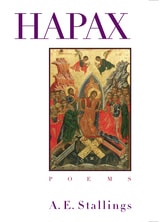
Hapax
PoemsA.E. Stallings
Northwestern University Press, 2006
Recipient of the 2008 Benjamin H. Danks Award
Hapax is ancient Greek for "once, once only, once and for all," and "onceness" pervades this second book of poems by American expatriate poet A. E. Stallings. Opening with the jolt of "Aftershocks," this book explores what does and does not survive its "gone moment"-childhood ("The Dollhouse"), ancient artifacts ("Implements from the Grave of the Poet"), a marriage's lost moments of happiness ("Lovejoy Street"). The poems also often compare the ancient world with the modern Greece where Stallings has lived for several years. Her musical lyrics cover a range of subjects from love and family to characters and themes derived from classical Greek sources ("Actaeon" and "Sisyphus").
Employing sonnets, couplets, blank verse, haiku, Sapphics, even a sequence of limericks, Stallings displays a seemingly effortless mastery of form. She makes these diverse forms seem new and relevant as modes for expressing intelligent thought as well as charged emotions and a sense of humor. The unique sensibility and linguistic freshness of her work has already marked her as an important, young poet coming into her own.
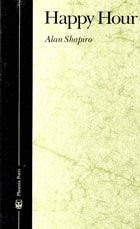
Happy Hour
Alan Shapiro
University of Chicago Press, 1987
"Happy Hour is one of the best collections I have recently read. Mr. Shapiro writes with apparently equal ease in free verse and more nearly traditional forms, and he brings his formidable technical skills to bear upon matters of great urgency: our need to love and be loved, and the often perverse ways in which we maintain our connections to those closest to us."—Henry Taylor, Washington Times
"This is a haunting, mature collection that should attract a larger audience for Shapiro's fine poems."—Thomas Swiss, Chicago Tribune
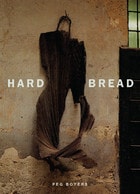
Hard Bread
Peg Boyers
University of Chicago Press, 2002

Hard Choices
An "Iowa Review" ReaderDAVID HAMILTON
University of Iowa Press, 1996
For twenty-five years, the Iowa Review has published many of America's finest writers, often helping them become established in their careers. From Tillie Olsen and William Stafford in the first volume to James Galvin and Pattiann Rogers in the twenty-fourth, the names and voices are recognizable and respected or soon will be. As editor David Hamilton notes in his introduction to this eclectic anniversary volume of nearly eighty poems and stories, "To a considerable extent we have defined ourselves by them; thus Hard Choices, a generous sampling of the best and most interesting writing from the Iowa Review's first years, defines the past and the future of American literature."
The Iowa Review is one of a small group of dedicated literary magazines that have defined American literary culture in the past quarter century. The adventurous, stimulating pieces in Hard Choices will encourage readers to look forward to the next quarter century.
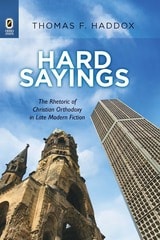
Hard Sayings
The Rhetoric of Christian Orthodoxy in Late Modern FictionThomas F. Haddox
The Ohio State University Press, 2013
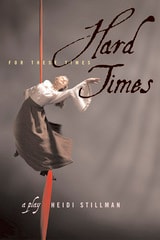
Hard Times
For These TimesHeidi Stillman
Northwestern University Press, 2003
The citizens of Charles Dickens's Coketown have moved readers for over a century. Now, Heidi Stillman's stunning adaptation brings these iconic characters to life on the stage, revealing the universality of their hopes and suffering in their times and in ours. The world premiere of Hard Times was presented by the Lookingglass Theatre Company of Chicago in 2001. The Play won five Joseph Jefferson Awards, for best production of a play, best director, best adaptation, best choreography, and best lighting design.
Hard-Boiled Crime Fiction and the Decline of Moral Authority
Susanna Lee
The Ohio State University Press, 2016
Lee traces the history of the hard-boiled detective through the twentieth century and on both sides of the Atlantic (France and the United States), tying the idea of morality to the character model in nuanced, multifaceted ways. When the heroic model devolves, the very conceptual validity of individual moral authority can seem to devolve as well. Hard-Boiled Crime Fiction and the Decline of Moral Authority charts the evolution of that character model of the hard-boiled hero, the mid-century deterioration of his exemplarity, and twenty-first-century endeavors to resuscitate the accountable hero. The history of hard-boiled crime fiction tells nothing less than the story of individual autonomy and accountability in modern Western culture.
Harm
Hillary Gravendyk
Omnidawn, 2012
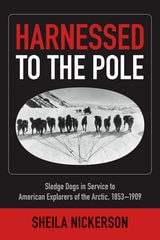
Harnessed to the Pole
Sledge Dogs in Service to American Explorers of the Arctic 1853-1909Sheila Nickerson
University of Alaska Press, 2014
Harnessed to the Pole follows the adventures of eight American explorers and their dog teams, starting with Elisha Kent Kane and ending with Robert Peary, controversial claimant of the title of first to reach the North Pole. While history has long forgotten these “little camels of the north,” Sheila Nickerson reveals how critical dogs were to the Arctic conquest. Besides providing transportation in extreme conditions, sledge dogs protected against wolves and polar bears, helped in hunting, found their way through storms, and provided warmth in extreme cold. They also faced rough handling, starvation, and the possibility of being left behind as expeditions plunged ahead. Harnessed to the Pole is an extraordinary—and unflinching—look at the dogs that raced to the top of the world.
Harpo Before the Opus
Logan Fry
Omnidawn, 2019
In spiraling explorations of rhetoric, these poems allow language to break from its prescribed structures, and instead, it becomes a gestural embrace of feeling and being. Fry utilizes a Marxist lens to scrutinize and reinvent the use of language. In Fry’s hands, language is rendered a visceral and sensual material, forming poems that are both deeply felt philosophical inquiries and wildly playful exercises of wit.
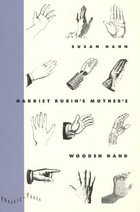
Harriet Rubin's Mother's Wooden Hand
Susan Hahn
University of Chicago Press, 1991
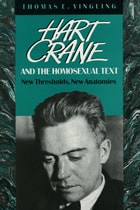
Hart Crane and the Homosexual Text
New Thresholds, New AnatomiesThomas E. Yingling
University of Chicago Press, 1990
"A brilliant critical model for understanding how textuality and sexuality can produce pervasive effects on each other in the writing of a figure like Crane."—Michael Moon, Duke University
Hatch
PoemsJenny Irish
Northwestern University Press, 2024
The prose poems in Jenny Irish’s newest collection, Hatch, trace the consciousness of an artificial womb that must confront the role she has played in the continuation of the dying of the human species. This apocalyptic vision engages with the most pressing concerns of this contemporary sociopolitical moment: reproductive rights, climate crises, and mass extinction; gender and racial bias in healthcare and technology; disinformation, conspiracy theories, and pseudoscience; and the possibilities and dangers of artificial intelligence. More intimately, Hatch considers questions about how motherhood and its cultural expectations shape female identity. Working with avant strategies, Irish crafts a speculative feminist narrative, excavating and reexamining the aspects of the American experience that should have served as a call to action but have not. Part elegy and part prophecy, Hatch warns of a possible future while speaking to the present moment.
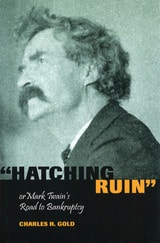
Hatching Ruin
Or Mark Twain's Road to BankruptcyCharles H. Gold
University of Missouri Press, 2003
In “Hatching Ruin,” Charles H. Gold provides a complete description of Samuel L. Clemens’s business relationships with Charles L. Webster and James W. Paige during the 1880s. Gold analyzes how these relationships affected Clemens as a person and an artist, most notably in A Connecticut Yankee in King Arthur’s Court.
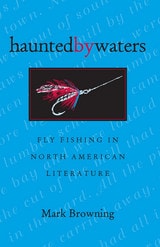
Haunted By Waters
Fly Fishing In North American LiteratureMark Browning
Ohio University Press, 1998
As his own story unfolds, Mark Browning analyzes angling literature from the Bible to Norman Maclean, always bringing his inquiry back to the same source: the enigma of this sport.
Haunted by Waters is an exploration of the apparent compulsion of those who fish not only to read about the sport, but to write about it as well. Mark Browning's personal account as a fly fisherman and his perspective as a critic make him uniquely qualified to navigate these waters.
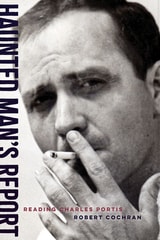
Haunted Man's Report
Reading Charles PortisRobert Cochran
University of Arkansas Press, 2024
Haunted Man’s Report, a deeply insightful literary exploration of Portis’s singular and underexamined oeuvre, celebrates this novelist’s great achievement and is certain to prove a valuable guide for readers new to Portis as well as aficionados.
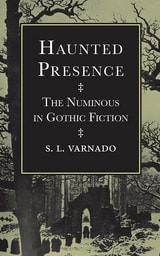
Haunted Presence
The Numinous in Gothic FictionS. L. Varnado
University of Alabama Press, 1987
Varnado offers a fresh and audacious analysis of the literature of the supernatural by employing insights derived from the philosophy of religious experience. Ranging from the Gothic novel of the eighteenth century to ghostly tales from the nineteenth and twentieth centuries, Varnado frames ghost stories as ontological challenge to the reader. The challenge is not in the form of philosophical proposition, however. Rather it is in the form of feelings and emotions that maintain a connection with the sense of reality. It is this area of reality that Rudolph Otto called the numinous—the feeling of the supernatural—that stands at the center of Gothic literature.
An understanding of this unique category of experience, aligned with its associated concept of “the sacred and the profane,” exposes the purpose of ghostly literature and demonstrates the enduring relevance of this mesmerizing genre.
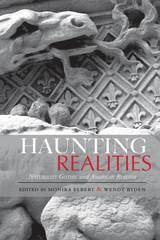
Haunting Realities
Naturalist Gothic and American RealismEdited by Monika Elbert and Wendy Ryden
University of Alabama Press, 2017
An innovative collection of essays examining the sometimes paradoxical alignment of Realism and Naturalism with the Gothic in American literature to highlight their shared qualities
Following the golden age of British Gothic in the late eighteenth century, the American Gothic’s pinnacle is often recognized as having taken place during the decades of American Romanticism. However, Haunting Realities explores the period of American Realism—the end of the nineteenth century—to discover evidence of fertile ground for another age of Gothic proliferation.
At first glance, “Naturalist Gothic” seems to be a contradiction in terms. While the Gothic is known for its sensational effects, with its emphasis on horror and the supernatural, the doctrines of late nineteenth-century Naturalism attempted to move away from the aesthetics of sentimentality and stressed sobering, mechanistic views of reality steeped in scientific thought and the determinism of market values and biology. Nonetheless, what binds Gothicism and Naturalism together is a vision of shared pessimism and the perception of a fearful, lingering presence that ominously haunts an impending modernity. Indeed, it seems that in many Naturalist works reality is so horrific that it can only be depicted through Gothic tropes that prefigure the alienation and despair of modernism.
In recent years, research on the Gothic has flourished, yet there has been no extensive study of the links between the Gothic and Naturalism, particularly those which stem from the early American Realist tradition. Haunting Realities is a timely volume that addresses this gap and is an important addition to scholarly work on both the Gothic and Naturalism in the American literary tradition.
Have I Reasons
Work and Writings, 1993–2007Robert Morris
Duke University Press, 2008
The writings are arranged chronologically, beginning with “Indiana Street,” a vivid autobiographical account of the artist’s early years in Kansas City, Missouri. Have I Reasons includes reflections on Morris’s own site-specific installations; transcripts of seminars he conducted in conjunction with exhibitions; and the textual element of The Birthday Boy, the two-screen video-and-sound piece he installed at the Galleria dell’Accademia in Florence, Italy, on the occasion of the five hundredth anniversary of Michelangelo’s David. Essays range from original interpretations of Cézanne’s Mont Sainte-Victoire paintings and Jasper Johns’ early work to engagements with one of Morris’s most significant interlocutors, the philosopher Donald Davidson. Have I Reasons conveys not only Morris’s enduring deep interest in philosophy and issues of resemblance and representation but also his more recent turn toward directly addressing contemporary social and political issues such as corporate excess and preemptive belligerence.
Hawthorne and Women
Engendering and Expanding the Hawthorne TraditionJohn L. Idol
University of Massachusetts Press, 1999
This collection of original essays presents a more complex and positive view of Hawthorne's attitudes toward women, demonstrating his recognition of the crucial role that women played--as critics, reviewers, readers, and authors--in building a national readership that made his writing career so successful.
The book begins with an examination of the influence exerted by the women in Hawthorne's immediate family. It goes on to explore his links to a broad range of women writers, as well as his attitudes toward the female characters he created. Among the authors discussed are Margaret Fuller, Harriet Beecher Stowe, Louisa May Alcott, Emily Dickinson, Sarah Orne Jewett, Willa Cather, Charlotte Perkins Gilman, George Eliot, Virginia Woolf, Flannery O'Connor, and Toni Morrison.
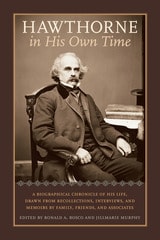
Hawthorne in His Own Time
A Biographical Chronicle of His Life,Drawn from Recollections,Interviews, and Memoirs by Family,FrieRonald A Bosco
University of Iowa Press, 2007
At his death, Nathaniel Hawthorne (1804–1864) was universally acknowledged in America and England as "the Great Romancer." Novels such as The Scarlet Letter and The House of the Seven Gables and stories published in such collections as Twice-Told Tales continue to capture the minds and imaginations of readers and critics to this day. Harder to capture, however, were the character and personality of the man himself. So few of the essays that appeared in the two years after his death offered new insights into his life, art, and reputation that Hawthorne seemed fated to premature obscurity or, at least, permanent misrepresentation. This first collection of personal reminiscences by those who knew Hawthorne intimately or knew about him through reliable secondary sources rescues him from these confusions and provides the real human history behind the successful writer.
Remembrances from Elizabeth Peabody, Sophia Hawthorne, Oliver Wendell Holmes, Ralph Waldo Emerson, Bronson Alcott, Rebecca Harding Davis, and twenty others printed in Hawthorne in His Own Time follow him from his childhood in Salem, through his years of initial literary obscurity, his days in the Boston and Salem Custom Houses, his service as U.S. Consul to Liverpool and Manchester and his life in the Anglo-American communities at Rome and Florence, to his late years as the "Great Romancer."
In their enlightening introduction, editors Ronald Bosco and Jillmarie Murphy assess the postmortem building of Hawthorne's reputation as well as his relationship to the prominent Transcendentalists, spiritualists, Swedenborgians, and other personalities of his time. By clarifying the sentimental associations between Hawthorne's writings and his actual personality and moving away from the critical review to the personal narrative, these artful and perceptive reminiscences tell the private and public story of a remarkable life.
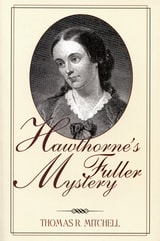
Hawthorne's Fuller Mystery
Thomas R. Mitchell
University of Massachusetts Press, 2009
Drawing on recently published letters and journals, Thomas R. Mitchell describes how Julian Hawthorne's misrepresentation of his father's relationship with Fuller destroyed her literary reputation, promoted Hawthorne as a defender of conservative values, and continues to obscure the depth of Hawthorne's personal and intellectual involvement with her. Mitchell concludes that far from being repulsed by Fuller and her assertiveness--as many scholars have claimed--Hawthorne experienced with her perhaps the most intimate relationship that he ever had with a woman, his wife alone excepted.
Blending biography, cultural history, and literary and psychological analysis, Hawthorne's Fuller Mystery raises provocative questions about the origins and intent of Hawthorne's greatest works and offers compelling new readings of "Rapaccini's Daughter," The Scarlet Letter, The Blithedale Romance, and The Marble Faun.
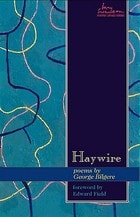
Haywire
PoemsGeorge Bilgere
Utah State University Press, 2006
Haywire was chosen for the Swenson Award by poet Edward Field, winner of numerous awards and a personal friend of the late May Swenson. Field describes the book this way. "This poet, you knew from his very first lines, didn’t fall for anything phony—his own language is irresistibly no-bullshit down to earth, even sassy."
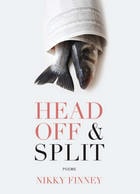
Head Off & Split
PoemsNikky Finney
Northwestern University Press, 2011
Winner, 2011 National Book Award for Poetry
Winner, 2012 GCLS Award for Poetry
Winner, 2012 SIBA Book Award for Poetry
Nominee, 2012 NAACP Image Award for Outstanding Literary Work in Poetry
The poems in Nikky Finney's breathtaking new collection Head Off & Split sustain a sensitive and intense dialogue with emblematic figures and events in African American life: from civil rights matriarch Rosa Parks to former secretary of state Condoleezza Rice, from a brazen girl strung out on lightning to a terrified woman abandoned on a rooftop during Hurricane Katrina. Finney's poetic voice is defined by an intimacy that holds a soft yet exacting eye on the erotic, on uncanny political and family events, like her mother's wedding waltz with South Carolina senator Strom Thurmond, and then again on the heartbreaking hilarity of an American president's final State of the Union address.
Artful and intense, Finney's poems ask us to be mindful of what we fraction, fragment, cut off, dice, dishonor, or throw away, powerfully evoking both the lawless and the sublime.
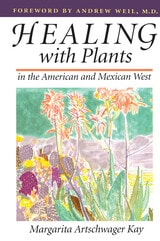
Healing with Plants in the American and Mexican West
Margarita Artschwager Kay
University of Arizona Press, 1996
Acacia (Cassie, Acacia)
Achillea (Yarrow)
Agastache (Giant Hyssop)
Agave (Century Plant)
Allium (Garlic, Onion)
Aloe (Aloe)
Ambrosia (Ragweed)
Anemopsis (Yerba Mansa)
Arctostaphylos (Bearberry, Uva Ursi)
Argemone (Prickly Poppy)
Aristolochia (Bithwort, Snakeroot)
Arracacia (Arracacha)
Artemisia (Wormwood, Mugwort, Western Mugwort, Sagebrush)
Asclepias (Milkweed)
Baccharis (Desert Broom, Seep Willow)
Bocconia (Tree Celandine)
Buddleia (Butterfly Bush)
Bursera (Elephant Tree)
Caesalpinia (Mexican Bird-of-Paradise)
Cannabis (Marijuana)
Capsicum (Chili)
Carnegiea (Saguaro)
Casimiroa (Zapote)
Cassia (Senna)
Cereus (Cactus)
Chenopodium (Goosefoot, Wormseed)
Citrus (Lemon, Lime, Orange)
Datura (Jimson Weed)
Ephedra (Mormon Tea)
Equisetum (Horsetail)
Eryngium (Eryngo, Button Snakeroot)
Eucalyptus (Eucalyptus)
Euphorbia (Spurge)
Eysenhardtia (Kidneywood)
Gnaphalium (Everlasting, Cudweed)
Guaiacum (Lignum Vitae)
Guazuma (Guazuma)
Gutierrezia (Turpentine Bush)
Haematoxylon (Logwood)
Haplopappus (Jimmyweed)
Heterotheca (Telegraph Plant, Falso Arnica)
Hintonia (Copalqu¡n)
Ibervillea (Coyote Melon)
Jacquinia (Jacquinia)
Jatropha (Limberbush)
Juniperus (Juniper)
Karwinskia (Coffeeberry)
Kohleria (Tree Gloxinia)
Krameria (Ratany)
Lantana (Lantana)
Larrea (Creosote Bush, Greasewood)
Ligusticum (Lovage)
Lippia (Oregano)
Lysiloma (Featherbush)
Malva (Mallow)
Mammillaria (Pincushion Cactus)
Mascagnia (Mascagnia)
Matricaria (Chamomile)
Mentha (Mint)
Nicotiana (Tobacco)
Ocimum (Basil)
Opuntia (Cholla, Prickly Pear)
Perezia (Perezia)
Persea (Avocado)
Phaseolus (Bean)
Phoradendron, Stru
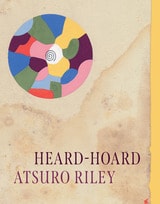
Heard-Hoard
Atsuro Riley
University of Chicago Press, 2021
Recognized for his “wildly original” poetry and his “uncanny and unparalleled ability to blend lyric and narrative,” Atsuro Riley deepens here his uncommon mastery and tang. In Heard-Hoard, Riley has “razor-exacted” and “raw-wired” an absorbing new sequence of poems, a vivid weavework rendering an American place and its people.
At once an album of tales, a portrait gallery, and a soundscape; an “inscritched” dirt-mural and hymnbook, Heard-Hoard encompasses a chorus of voices shot through with (mostly human) histories and mysteries, their “old appetites as chronic as tides.” From the crackling story-man calling us together in the primal circle to Tammy figuring “time and time that yonder oak,” this collection is a profound evocation of lives and loss and lore.

Heartless Architecture
Aris Kian
University of Arkansas Press, 2027
Winner, 2027 Miller Williams Poetry Prize
Rich with Black spirituality and familial memory, Heartless Architecture traverses Houston to interrogate how citizens can care for each other in a city that perpetually does them harm. As a third-generation Texan, former mutual aid organizer, and wavering church kid, Aris Kian renders a Southern pastoral underpinned by the heartbreak of historical violence, gentrification, and systemic indifference: “The day S was buried, another bridge / was built over 59 almost overnight. . . . / When G bit a prayer / into the blacktop, downtown erected a skyline / unrecognizable to a practiced eye. . . . A midtown park springs out of the grass / as two rounds are fired into A’s chest. / Sometimes, growth is mistaken / for healing.”
A keen observer of the contested landscapes that comprise both self and home, and eager to elicit new meanings from myths that are “the residue of a history interrupted,” Kian is at her most triumphant when she unites with her fellow citizens to combat state harm: “I do know our resistance is stronger / than any brick or barricade / they could tear down and toss out. / I do know our commitment to principle / cannot be cut through.”
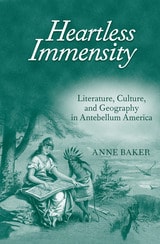
Heartless Immensity
Literature, Culture, and Geography in Antebellum AmericaAnne Baker
University of Michigan Press, 2010
Building on extensive archival research as well as insights from cultural geographers and theorists of nationhood, Heartless Immensity demonstrates that national expansion had a far more complicated, multifaceted impact on antebellum American culture than has previously been recognized. Baker shows that Americans developed a variety of linguistic strategies for imagining the form of the United States and its position in relation to other geopolitical entities. Comparisons
to European empires, biblical allusions, body politic metaphors, and metaphors derived from science all reflected—and often attempted to assuage—fears that the nation was becoming either monstrously large or else misshapen in ways that threatened cherished beliefs and national self-images.
Heartless Immensity argues that, in order to understand the nation’s shift from republic to empire and to understand American culture in a global context, it is first necessary to pay close attention to the processes by which the physical entity known as the United States came into being. This impressively thorough study will make a valuable contribution to the fields of American studies and literary studies.
Anne Baker is Assistant Professor of English at North Carolina State University.
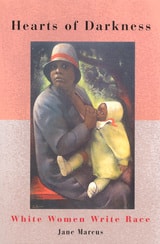
Hearts of Darkness
White Women Write RaceMarcus, Jane
Rutgers University Press, 2004
The centerpiece of the book is Marcus's dialogue with one of her best-known essays, "Britannia Rules The Waves." In that piece, she argues that The Waves makes a strong anti-imperialist statement. Although many already support that argument, she now goes further in order to question the moral value of such a buried critique on Woolf's part. In "A Very Fine Negress" she analyzes the painful subject of Virginia Woolf's racism in A Room of One's Own. Other chapters traverse the connected issues of modernism, race, and imperialism. In two of them, we follow Nancy Cunard through the making of the Negro anthology and her appearance in a popular novel of the freewheeling Jazz Age. Elsewhere, Marcus delivers a complex analysis of A Passage to India, in a reading that interrogates E. M. Forster's displacement of his fear of white Englishwomen struggling for the vote.
Marcus, as always, brings considerable gifts as both researcher and writer to this collection of new and reprinted essays, a combination resulting in a powerful interpretation of many of modernism's most cherished figures.
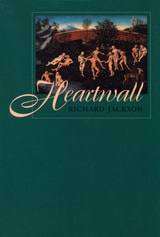
Heartwall
Richard Jackson
University of Massachusetts Press, 2000
Taking its title from a poem by Paul Celan that is both elegiac and hopeful, but also playing off the notion of the “hart” walls erected to corral deer for a medieval hunt that was more a slaughter, and evoking the very physiology of the heart itself, this collection of poems explores the possibilities for love and feeling in a world besieged by tragedies in Bosnia, Kosovo, Rwanda, and elsewhere. At times lyrical, at times satirical, and written in a surrealistic style that ranges from the formal to the aphoristic, Heartwall explores the complex and sometimes confounding relationship between the personal and the political, between our individual perceptions and the larger vision they suggest. These are poems that ask forgiveness, offer praise, and carry enough irony never to seek redemption. They are, at heart, love poems. According to the late William Matthews, Jackson's poems tell us “what it means to belong in history. . . . The wonderful amplitude . . . testifies that we can live with such chaos and not lie about it or ignore it: indeed the poems are a demonstration of how we might do such a thing.”
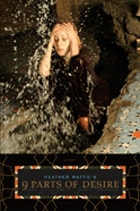
Heather Raffo's 9 Parts of Desire
A PlayHeather Raffo
Northwestern University Press, 2006
As topical as today's newspaper headlines, these rich monologues bring to life nine distinct Iraqi women whose very different stories convey the complex and harrowing reality of being female in modern-day Iraq. Their monologues quickly become a series of overlapping conversations leading to a breakdown in communication as the chaos of Iraq intensifies. Layal is a sexy and impulsive painter favored by Saddam's regime, breezily bohemian one minute and defensive the next; another woman mourns the death of her family in a 1991 bunker, and another--a blond American of Iraqi descent--painfully recalls a telephone conversation with Baghdad relatives on the eve of the U. S. invasion. Other characters decry the savagery of Saddam Hussein in terrifying detail and express an ambivalent relief at the American presence; still others--like a Bedouin woman searching for love--transcend politics.
The title comes from the teachings of the seventh-century imam Ali ibn Abu Talib: "God created sexual desire in ten parts; then he gave nine parts to women and one part to men." Heather Raffo's monologues weave these nine parts into a finely textured, brilliantly colorful tapestry of feminine longing in dire times. This compassionate and heart-breaking work will forever change your view of Iraqi women and the people of the Middle East.
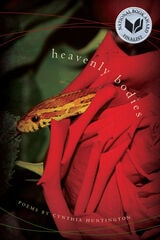
Heavenly Bodies
Cynthia Huntington
Southern Illinois University Press, 2011
In this blistering collection of lyric poems, Cynthia Huntington gives an intimate view of the sexual revolution and rebellion in a time before the rise of feminism. Heavenly Bodies is a testament to the duality of sex, the twin seductiveness and horror of drug addiction, and the social, political, and personal dramas of America in the 1960s.
From the sweetness of purloined blackberries to the bitter taste of pills, the ginger perfume of the Hawaiian Islands to the scream of the winter wind, Huntington’s fearless and candid poems offer a feast for the senses that is at once mystical and earthy, cynical and surreal. Echoing throughout are some of the most famous—and infamous—voices of the times: Joan Baez and Charles Manson, Frank Zappa and Betty Friedan. Jinns and aliens beckon while cities burn and revolutionaries thunder for change. At the center is the semiautobiographical Suzy Creamcheese, sensual and rebellious, both almighty and powerless in her sexuality.
Achingly tender yet brutally honest, Heavenly Bodies is an unflinching reflection on the most personal of physical and emotional journeys.
Univeristy Press Books for Public and Secondary Schools 2013 edition
Finalist for the National Book Award in Poetry, 2012
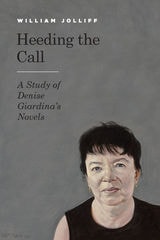
Heeding the Call
A Study of Denise Giardina's NovelsWilliam Jolliff
West Virginia University Press, 2020
In chapters devoted to each of Giardina’s novels, Jolliff attends to her uses of history, her formal techniques, and the central themes that make each work significant. What becomes clear is that while the author’s religious beliefs inform her fiction, she never offers easy answers. Her narratives consistently push her characters—and her readers—into more challenging and meaningful questions. Jolliff concludes by arguing that although Giardina’s initial fame has been tied to her significance as an Appalachian novelist, future studies must look beyond the regional to the deeply human questions her novels so persistently engage.

Heiress of All the Ages
Sex and Sentiment in the Genteel TraditionWilliam Wasserstrom
University of Minnesota Press, 1959
Heiress of All the Ages was first published in 1959. Minnesota Archive Editions uses digital technology to make long-unavailable books once again accessible, and are published unaltered from the original University of Minnesota Press editions.
In a provocative study of American literature, Professor Wasserstrom reappraises the genteel tradition and its place in social and intellectual history. He shows that our image of this tradition has been inadequate, that most of our writers and critics have failed to recognize its profound effects.
Basing his discussion primarily on a study of the major novelists of the period from 1830 to the present, the author examines the role of women in fiction and defines some of our national attitudes toward love. He discusses especially the world of Henry James (from whose phrase "heir of all the ages" the title of this book is derived), William Dean Howells, Nathaniel Hawthorne, James Fenimore Cooper, Edith Wharton, and Robert Penn Warren. He also considers such well known novelists of their day as Bret Harte, Edgar Fawcett, Robert Herrick, Henry B. Fuller, Hamlin Garland, and Gertrude Atherton. In addition, his study is based on source material of the period: diaries, recipe books, family magazines, early issues of sociology and psychology journals, and travel books.
This book will interest not only students of literature and history but also those in the general field of American civilization and sociologists and psychologists concerned with the relation of American literature to our mores.
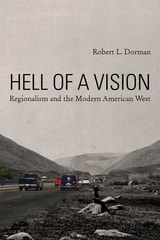
Hell of a Vision
Regionalism and the Modern American WestRobert L. Dorman
University of Arizona Press, 2012
The American West has taken on a rich and evocative array of regional identities since the late nineteenth century. Wilderness wonderland, Hispanic borderland, homesteader’s frontier, cattle kingdom, urban dynamo, Native American homeland. Hell of a Vision explores the evolution of these diverse identities during the twentieth century, revealing how Western regionalism has been defined by generations of people seeking to understand the West’s vast landscapes and varied cultures.
Focusing on the American West from the 1890s up to the present, Dorman provides us with a wide-ranging view of the impact of regionalist ideas in pop culture and diverse fields such as geography, land-use planning, anthropology, journalism, and environmental policy-making.
Going well beyond the realm of literature, Dorman broadens the discussion by examining a unique mix of texts. He looks at major novelists such as Cather, Steinbeck, and Stegner, as well as leading Native American writers. But he also analyzes a variety of nonliterary sources in his book, such as government reports, planning documents, and environmental impact studies.
Hell of a Vision is a compelling journey through the modern history of the American West—a key region in the nation of regions known as the United States.
Help Is on the Way
John Brehm
University of Wisconsin Press, 2012
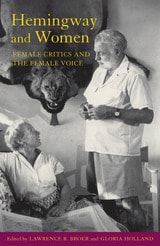
Hemingway and Women
Female Critics and the Female VoiceLawrence R. Broer
University of Alabama Press, 2003
Ernest Hemingway has often been criticized as a misogynist because of his portrayal of women. But some of the most exciting Hemingway scholarship of recent years has come from women scholars who challenge traditional views of Hemingway and women. The essays in this collection range from discussions of Hemingway’s famous heroines Brett Ashley and Catherine Barkley to examinations of the central role of gender in his short stories and in the novel The Garden of Eden. Other essays address the real women in Hemingway’s life—those who cared for him, competed with him, and, ultimately, helped to shape his art. While Hemingway was certainly influenced by traditional perceptions of women, these essays show that he was also aware of the struggle of the emerging new woman of his time. Making this gender struggle a primary concern of his fiction, these critics argue, Hemingway created women with strength, depth, and a complexity that readers are only beginning to appreciate.
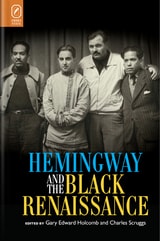
Hemingway and the Black Renaissance
Edited by Gary Edward Holcomb and Charles Scruggs
The Ohio State University Press, 2012
Hemingway and the Black Renaissance, edited by Gary Edward Holcomb and Charles Scruggs, explores a conspicuously overlooked topic: Hemingway’s wide-ranging influence on writers from the Harlem Renaissance to the present day. An observable who’s who of black writers—Ralph Ellison, James Baldwin, Langston Hughes, Claude McKay, Wallace Thurman, Chester Himes, Alex la Guma, Derek Walcott, Gayl Jones, and more—cite Hemingway as a vital influence. This inspiration extends from style, Hemingway’s minimalist art, to themes of isolation and loneliness, the dilemma of the expatriate, and the terrifying experience of living in a time of war. The relationship, nevertheless, was not unilateral, as in the case of Jean Toomer’s 1923 hybrid, short-story cycle Cane, which influenced Hemingway’s collage-like 1925 In Our Time.
Hemingway on Love
By Robert W. Lewis, Jr.
University of Texas Press, 1965
Love was a central theme of Ernest Hemingway’s major works. And although his passages on sexual love and on romantic love may be widely remembered and frequently quoted, says Robert W. Lewis in this scholarly and detailed consideration, Hemingway’s later work revealed his ultimate belief that brotherly love was the supreme love of mankind. Eros, Hemingway concluded, was a neutral value, neither good nor bad in itself, but yet capable of complementing agape in giving man pleasure.
By examining the forms and essences of the various kinds of love, Hemingway worked out an explanation and tentative solution to the troubles of the human condition. The tradition of romantic love that had prevailed in Western literature had challenged sexual love and brotherly love and had been confused with them since the Middle Ages. Hemingway’s early work was destructive of romantic love, says Lewis; the work of his middle career was crucial in his exploration for the supreme love and the means to whatever peace and happiness man may achieve. By the time he wrote The Old Man and the Sea, his ethic was formulated and he could write conclusively of the trial and lesson of love in Western civilization in a way that reflected his discovery that true love must be a reciprocal blend of eros and agape between man and woman, man and man, and man and his world.

Hemingway's Laboratory
The Paris in our timeMilton A. Cohen
University of Alabama Press, 2005
In 1924 Ernest Hemingway published a small book of eighteen vignettes, each little more than one page long, with a small press in Paris. Titled in our time, the volume was later absorbed into Hemingway’s story collection In Our Time. Those vignettes, as Milton Cohen demonstrates in Hemingway’s Laboratory, reveal a range of voices, narrative strategies, and fictional interests more wide-ranging and experimental than any other extant work of Hemingway’s. Further, they provide a vivid view of his earliest tendencies and influences, first manifestations of the style that would become his hallmark, and daring departures into narrative forms that he would forever leave behind.
Many of the chapters are pointillistic glimpses of violence--bullfights, a botched execution, the fleeting thoughts of the wounded on the battlefield. Others reach back into childhood. Still others adopt the wry, mannered voice of English aristocracy. Though critics have often read these chapters as secondary asides to the longer stories that constitute the commercial collection, Cohen argues that not only do the vignettes merit consideration as a unit unto themselves, but that they exhibit a plethora of styles and narrative gambits that show Hemingway at his most versatile.
The final section examines in detail the individual chapters of in our time, their historical origins, their drafts, themes, and styles. The result is an account of what is arguably Hemingway’s most crucial formative period.
Hemingway's Neglected Short Fiction
New PerspectivesSusan F. Beegel
University of Alabama Press, 1991
“This critical anthology is the result of a brilliant idea….A volume which not only will lead most readers to place more value on a number of stories previously passed over but that will likely extend the reader’s sense of Hemingway’s artistry.” —Studies in American Fiction
Hemingway’s Neglected Short Fiction is a groundbreaking exploration of Ernest Hemingway’s least‑examined stories, works long overshadowed by the towering fame of his novels. The collection reveals how many of Hemingway’s short stories have been cursorily summarized, misread, or simply ignored. Through twenty‑five original essays, leading scholars illuminate the breadth, experimentation, irony, and emotional range found in over thirty stories—tales that challenge the conventional “code hero” paradigm and expose a richer, more complex Hemingway. What emerges is a vivid portrait of an artist whose most overlooked pieces frequently contain his sharpest innovations and deepest moral provocations.
Structured with historical awareness and critical freshness, the volume ranges from Hemingway’s earliest apprentice fiction (“The Mercenaries,” “Up in Michigan,” “My Old Man”) to his experimental, metafictional, or posthumously published works (“A Natural History of the Dead,” “Get a Seeing‑Eyed Dog,” “A Man of the World”). Contributors draw from an impressive range of approaches—rhetorical theory, linguistics, psychoanalysis, semiotics, religious studies, Bakhtinian dialogism, and close textual analysis. Along the way, they revisit stories distorted by biography (“Out of Season,” “Mr. and Mrs. Elliot”), reconsider stories dismissed as trivial (“A Pursuit Race,” “A Day’s Wait”), and restore neglected gems such as “Wine of Wyoming,” “The Sea Change,” and “Homage to Switzerland.”
This book will captivate scholars of modernism, Hemingway specialists, teachers seeking fresh classroom material, and general readers who want to discover the Hemingway hidden between the lines. It is essential reading for anyone interested in the evolution of a major American writer and the vibrant life of the short story form.