Results by title
808 books match the query 'Drama' and 22 start with h

Habib Tanvir and His Legacy in Theatre
A Centennial ReappraisalEdited by Anjum Katyal and Javed Malick
Seagull Books, 2024
This collection of essays delves into the profound legacy of Habib Tanvir (1923–2009), a luminary in the post-Independence Indian theater scene. Tanvir's decades-long contributions as a director, poet, playwright, and actor are explored by a diverse group of scholars, practitioners, and peers. The book examines his pivotal role in founding the Naya Theatre in 1959, a pioneering group blending rural traditions with contemporary theatre, challenging conventional norms.
Against the backdrop of contemporary societal and political shifts, the essays reflect on Tanvir's fearless resistance against the right wing in his later years, particularly his challenges to religious dogma and caste discrimination in works like Ponga Pandit. The collection also emphasizes the enduring impact of Tanvir's seminal work, Charandas Chor, highlighting its adaptability across varied cultural landscapes.
With international contributors, the book expands beyond national borders, showcasing Tanvir's impact on global theatre and cross-cultural collaborations. The essays in this volume assert Tanvir's continued relevance, positioning his ideals as a guiding force for India amid evolving cultural and political landscapes.
Hamlet
William Shakespeare
Arizona Center for Medieval and Renaissance Studies, 2021
Lovers of Shakespeare’s language take heart: Lisa Peterson’s translation of Hamlet into contemporary American English was guided by the principle of “First, do no harm.” Leaving the most famous parts of Hamlet untouched, Peterson untied the language knots that can make the rest of the play difficult to understand in a single theatrical viewing. Peterson’s translation makes Hamlet accessible to new audiences, drawing out its timeless themes while helping to contextualize "To be, or not to be: that is the question," and “Something is rotten in the state of Denmark,” so that contemporary audiences can feel their full weight.
This translation of Hamlet was written as part of the Oregon Shakespeare Festival’s Play On! project, which commissioned new translations of thirty-nine Shakespeare plays. These translations present work from "The Bard" in language accessible to modern audiences while never losing the beauty of Shakespeare’s verse. Enlisting the talents of a diverse group of contemporary playwrights, screenwriters, and dramaturges from diverse backgrounds, this project reenvisions Shakespeare for the twenty-first century. These volumes make these works available for the first time in print—a new First Folio for a new era.

Hamlet
shakespeare
St. Augustine's Press, 2024
This edition is the first that treats Hamlet as the work of a philosophical poet concerned with knowing the nature of the world, particularly the human world. Where conventional editions lift the play out of its specific setting and analyze it in the light of the social, cultural, and political circumstances of Elizabethan England, Jan Blits takes the play’s dramatic setting of early Renaissance Denmark as indispensable to understanding its rich meaning. In providing notations and commentary on Hamlet, Blits sets aside the historicist principle or prejudice, pervasive throughout literary studies today. Blits, by contrast, strives to understand the play entirely on its own terms. He inflicts no literary or philosophic theory—no parochial professional preconceptions—upon the play. Instead, he aims to be fully receptive to what Shakespeare wrote and try to draw out of the play the substance that he deliberately put into it. His treatment of Horatio is particularly stunning in this regard.
Though they differ from each other, there are two generally trustworthy texts of Hamlet—namely, the Second Quarto (1604–5) and the Folio (1623). Blits does not consult the First Quarto (1603), which contains a much different dialogue, some different character names, and omits some famous passages. Blits points out important variations and refrains from pronouncing which are clearly right or wrong. He omits references to secondary works (including his own) as distractions from the play itself. The Bibliography lists many primary and secondary readings that readers will find helpful. He follows the line-numbering of the New Cambridge Shakespeare Edition, edited by Philips Edwards.
Teachers and students of Shakespeare will find a valuable resource in Blits' new edition of Hamlet, which brings readers as close to the mind and heart of the real Shakespeare as possible and remains untouched by the fingerprints of literary theory and other mechanisms unknown and inconsequential to Shakespeare. This is also an indispensable tool in helping teachers in one of the greatest challenges of the classical classroom––namely, how to teach Shakespeare?
Hard Times
For These TimesHeidi Stillman
Northwestern University Press, 2003
The citizens of Charles Dickens's Coketown have moved readers for over a century. Now, Heidi Stillman's stunning adaptation brings these iconic characters to life on the stage, revealing the universality of their hopes and suffering in their times and in ours. The world premiere of Hard Times was presented by the Lookingglass Theatre Company of Chicago in 2001. The Play won five Joseph Jefferson Awards, for best production of a play, best director, best adaptation, best choreography, and best lighting design.

Hard-Boiled
Erin A. Smith
Temple University Press, 2000
Relying on pulp magazine advertising, the memoirs of writers and publishers, Depression-era studies of adult reading habits, social and labor history, Smith offers an innovative account of how these popular stories were generated and read. She shows that although the work of pulp fiction authors like Dashiell Hammett, Raymond Chandler, and Erle Stanley Gardner have become “classics” of popular culture, the hard-boiled genre was dominated by hack writers paid by the word, not self-styled artists. Pulp magazine editors and writers emphasized a gritty realism in the new genre. Unlike the highly rational and respectable British protagonists (Miss Marple and Hercule Poirot, for instance), tough-talking American private eyes relied as much on their fists as their brains as they made their way through tangled plotlines.
Casting working-class readers of pulp fiction as “poachers,” Smith argues that they understood these stories as parables about Taylorism, work, and manhood; as guides to navigating consumer culture; as sites for managing anxieties about working women. Engaged in re-creating white, male privilege for the modern, heterosocial world, pulp detective fiction shaped readers into consumers by selling them what they wanted to hear – stories about manly artisan-heroes who resisted encroaching commodity culture and the female consumers who came with it. Commenting on the genre’s staying power, Smith considers contemporary detective fiction by women, minority, and gay and lesbian writers.
Harriet Jacobs
A PlayLydia R. Diamond
Northwestern University Press, 2010
Jacobs’ book—which was published in 1861 and only partially serialized in Horace Greely’s New York Tribune before it was deemed too graphic—chillingly exposed the sexual harassment and abuse of slave girls and women at the hands of their masters. Harriet Jabobs: A Play organically incorporates theatrical elements that extend the book’s enormous power. Through active scenes, piercing direct address, and slave narratives, Diamond is able to give new expression to the horrors and legacies of slavery. Diamond presents African American culture in all its richness—with slavery as a part of it, but not its defining aspect. Though harrowing, Harriet Jacobs addresses the necessary task of reenvisioning a difficult chapter in American history.

Heather Raffo's 9 Parts of Desire
A PlayHeather Raffo
Northwestern University Press, 2006
As topical as today's newspaper headlines, these rich monologues bring to life nine distinct Iraqi women whose very different stories convey the complex and harrowing reality of being female in modern-day Iraq. Their monologues quickly become a series of overlapping conversations leading to a breakdown in communication as the chaos of Iraq intensifies. Layal is a sexy and impulsive painter favored by Saddam's regime, breezily bohemian one minute and defensive the next; another woman mourns the death of her family in a 1991 bunker, and another--a blond American of Iraqi descent--painfully recalls a telephone conversation with Baghdad relatives on the eve of the U. S. invasion. Other characters decry the savagery of Saddam Hussein in terrifying detail and express an ambivalent relief at the American presence; still others--like a Bedouin woman searching for love--transcend politics.
The title comes from the teachings of the seventh-century imam Ali ibn Abu Talib: "God created sexual desire in ten parts; then he gave nine parts to women and one part to men." Heather Raffo's monologues weave these nine parts into a finely textured, brilliantly colorful tapestry of feminine longing in dire times. This compassionate and heart-breaking work will forever change your view of Iraqi women and the people of the Middle East.

Hemispheric Waves
Havana's Avant-Garde Theatre, 1965-2000Eric Mayer-García
University of Iowa Press, 2027
Henry IV Part 1
William Shakespeare
Arizona Center for Medieval and Renaissance Studies, 2021
Shakespeare’s two Henry IV plays follow the exploits of King Henry IV after usurping the crown from his cousin Richard II. Featuring some of Shakespeare’s most recognizable characters such as Prince Hal and the roguish Sir John Falstaff, Henry IV, Part 1 delves into complicated questions of loyalty and kingship on and off the battlefield. Henry IV, Part 2 follows Prince Hal as he grapples with his eventual ascent to the throne and his increasingly strained relationship with Falstaff. As the king falls sick and Hal’s ascent appears imminent, Hal’s decisions hold significant implications for all those around him. Modernizing the language of the two plays, Yvette Nolan’s translation carefully works at the seeds sown by Shakespeare—bringing to new life the characters and dramatic arcs of the original.
These translations of Henry IV were written as part of the Oregon Shakespeare Festival’s Play On! project, which commissioned new translations of thirty-nine Shakespeare plays. These translations present work from “The Bard” in language accessible to modern audiences while never losing the beauty of Shakespeare’s verse. Enlisting the talents of a diverse group of contemporary playwrights, screenwriters, and dramaturges from diverse backgrounds, this project reenvisions Shakespeare for the twenty-first century. These volumes make these works available for the first time in print—a new First Folio for a new era.
Henry IV Part 2
William Shakespeare
Arizona Center for Medieval and Renaissance Studies, 2021
Shakespeare’s two Henry IV plays follow the exploits of King Henry IV after usurping the crown from his cousin Richard II. Featuring some of Shakespeare’s most recognizable characters such as Prince Hal and the roguish Sir John Falstaff, Henry IV, Part 1 delves into complicated questions of loyalty and kingship on and off the battlefield. Henry IV, Part 2 follows Prince Hal as he grapples with his eventual ascent to the throne and his increasingly strained relationship with Falstaff. As the king falls sick and Hal’s ascent appears imminent, Hal’s decisions hold significant implications for all those around him. Modernizing the language of the two plays, Yvette Nolan’s translation carefully works at the seeds sown by Shakespeare—bringing to new life the characters and dramatic arcs of the original.
These translations of Henry IV were written as part of the Oregon Shakespeare Festival’s Play On! project, which commissioned new translations of thirty-nine Shakespeare plays. These translations present work from “The Bard” in language accessible to modern audiences while never losing the beauty of Shakespeare’s verse. Enlisting the talents of a diverse group of contemporary playwrights, screenwriters, and dramaturges from diverse backgrounds, this project reenvisions Shakespeare for the twenty-first century. These volumes make these works available for the first time in print—a new First Folio for a new era.

Henry V
William Shakespeare
Arizona Center for Medieval and Renaissance Studies, 2021
Shakespeare’s Henry V is a play about nationalism, war, and how we remember history. Known for its rousing speeches and miraculous outcomes, the play has long had a life beyond the stage and page, its themes and rhetoric common points of reference in politics. In this modern translation of Henry V, Lloyd Suh has created a new interpretation that is distinctly his own while protecting the mystery of Shakespeare’s drama. Suh’s translation focuses on the actors and the staging, channeling the theatrical nature of Shakespeare’s play for a new audience.
This translation of Henry V was written as part of the Oregon Shakespeare Festival’s Play On! project, which commissioned new translations of thirty-nine Shakespeare plays. These translations present the Bard’s work in language accessible to modern audiences while never losing the beauty of Shakespeare’s verse. Enlisting the talents of a diverse group of contemporary playwrights, screenwriters, and dramaturges from diverse backgrounds, this project reenvisions Shakespeare for the twenty-first century. These volumes make these works available for the first time in print—a new First Folio for a new era.
Henry VI, Part 1
William Shakespeare
Arizona Center for Medieval and Renaissance Studies, 2021
In his three Henry VI plays, Shakespeare tackles the infamous Wars of the Roses and the fall of the House of Lancaster. In this translation of Henry VI, Part 1, Douglas Langworthy explores the initial unrest as a young Henry VI becomes king. Langworthy’s translation takes a deep dive into the language of Shakespeare. With a fine-tooth comb, he updates passages that are archaic and difficult to the modern ear and matches them with the syntax and lyricism of the rest of the play, essentially translating archaic Shakespeare to match contemporary Shakespeare.
This translation of Henry VI, Part 1 was written as part of the Oregon Shakespeare Festival’s Play On! project, which commissioned new translations of thirty-nine Shakespeare plays. These translations present the work of "The Bard" in language accessible to modern audiences while never losing the beauty of Shakespeare’s verse. Enlisting the talents of a diverse group of contemporary playwrights, screenwriters, and dramaturges from diverse backgrounds, this project reenvisions Shakespeare for the twenty-first century. These volumes make these works available for the first time in print—a new First Folio for a new era.
Henry VI, Part 2
William Shakespeare
Arizona Center for Medieval and Renaissance Studies, 2021
In his three Henry VI plays, Shakespeare tackles the infamous Wars of the Roses and the fall of the House of Lancaster. In this translation of Henry VI, Part 2, Douglas Langworthy follows the increasing tensions as the Duke of York foments rebellion against the crown. Langworthy’s translation takes a deep dive into the language of Shakespeare. With a fine-tooth comb, he updates passages that are archaic and difficult to the modern ear, and matches them with the syntax and lyricism of the rest of the play, essentially translating archaic Shakespeare to match contemporary Shakespeare.
This translation of Henry VI, Part 2 was written as part of the Oregon Shakespeare Festival’s Play On! project, which commissioned new translations of thirty-nine Shakespeare plays. These translations present the work of "The Bard" in language accessible to modern audiences while never losing the beauty of Shakespeare’s verse. Enlisting the talents of a diverse group of contemporary playwrights, screenwriters, and dramaturges from diverse backgrounds, this project reenvisions Shakespeare for the twenty-first century. These volumes make these works available for the first time in print—a new First Folio for a new era.
Henry VI, Part 3
William Shakespeare
Arizona Center for Medieval and Renaissance Studies, 2021
In his three Henry VI plays, Shakespeare tackles the infamous Wars of the Roses and the fall of the House of Lancaster. In this translation of Henry VI, Part 3, Douglas Langworthy concludes the trilogy, tracking the final downfall of Henry VI and the rise of the House of York. Langworthy’s translation takes a deep dive into the language of Shakespeare. With a fine-tooth comb, he updates passages that are archaic and difficult to the modern ear, and matches them with the syntax and lyricism of the rest of the play, essentially translating archaic Shakespeare to match contemporary Shakespeare.
This translation of Henry VI, Part 3 was written as part of the Oregon Shakespeare Festival’s Play On! project, which commissioned new translations of thirty-nine Shakespeare plays. These translations present the work of "The Bard" in language accessible to modern audiences while never losing the beauty of Shakespeare’s verse. Enlisting the talents of a diverse group of contemporary playwrights, screenwriters, and dramaturges from diverse backgrounds, this project reenvisions Shakespeare for the twenty-first century. These volumes make these works available for the first time in print—a new First Folio for a new era.
Henry VIII
William Shakespeare
Arizona Center for Medieval and Renaissance Studies, 2022
Shakespeare’s Henry VIII is a story of a brazen race to power and the desire for an heir. Advised by Cardinal Wolsey, Henry VIII is caught between church and state as he meets Anne Boleyn and seeks to annul his marriage to Queen Katherine. This episodic and plot-driven play examines the machinations of royal power. Shakespeare’s Henry VIII, in this new translation by Caridad Svich, is a swift-moving, complex tale of intrigue.
This translation of Henry VIII was written as part of the Oregon Shakespeare Festival’s Play On! project, which commissioned new translations of thirty-nine Shakespeare plays. These translations present work from “The Bard” in language accessible to modern audiences while never losing the beauty of Shakespeare’s verse. Enlisting the talents of a diverse group of contemporary playwrights, screenwriters, and dramaturges from diverse backgrounds, this project reenvisions Shakespeare for the twenty-first century. These volumes make these works available for the first time in print—a new First Folio for a new era.
Hideous Characters and Beautiful Pagans
Performing Jewish Identity on the Antebellum American StageHeather S. Nathans
University of Michigan Press, 2017
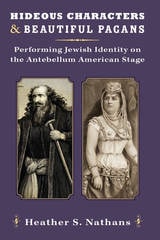
Using an eclectic range of sources including theatrical reviews, diaries, letters, cartoons, portraiture, tax records, rumors flying around the tavern, and more, Heather S. Nathans has listened for the echoes of vanished audiences who witnessed and responded to these stereotypes onstage, from the earliest appearance of Shylock on an American stage in 1752 to Jewish theater artists on the eve of the Civil War. The book integrates social, political, and cultural histories, with an examination of those texts (both dramatic and literary) that shaped the stage Jew.

Hir
A PlayTaylor Mac
Northwestern University Press, 2015
Finalist, 2015 Lambda Literary Award for LGBT Drama
Discharged from the Marines under suspicious circumstances, Isaac comes home from the wars, only to find the life he remembers upended. Isaac’s father, who once ruled the family with an iron fist, has had a debilitating stroke; his younger sister, Maxine, is now his brother, Max; and their mother, Paige, is committed to revolution at any cost. Determined to be free of any responsibility toward her formerly abusive husband—or the home he created—Paige fervently believes she can lead the way to a "new world order." Hir, Taylor Mac’s subversive comedy, leaves many of our so-called normative and progressive ideas about gender, families, the middle class—and cleaning—in hilarious and ultimately tragic disarray.

Histrionics
Three PlaysThomas Bernhard
University of Chicago Press, 1990

Honouring the Strength of Indian Women
Plays, Stories, PoetryVera Manuel
University of Manitoba Press, 2019
How to Stage Greek Tragedy Today
Simon Goldhill
University of Chicago Press, 2007
In crisp and spirited prose, Goldhill explains how Aeschylus, Euripides, and Sophocles conceived their works in performance and then summarizes everything we know about how their tragedies were actually staged. The heart of his book tackles the six major problems facing any company performing these works today: the staging space and concept of the play; the use of the chorus; the actor’s role in an unfamiliar style of performance; the place of politics in tragedy; the question of translation; and the treatment of gods, monsters, and other strange characters of the ancient world. Outlining exactly what makes each of these issues such a pressing difficulty for modern companies, Goldhill provides insightful solutions drawn from his nimble analyses of some of the best recent productions in the United States, Britain, and Continental Europe.
One of the few experts on both Greek tragedy and contemporary performance, Goldhill uses his unique background and prodigious literary skill to illuminate brilliantly what makes tragedy at once so exciting and so tricky to get right. The result will inspire and enlighten all directors and performers—not to mention the growing audiences—of ancient Greek theater.
Humoring the Body
Emotions and the Shakespearean StageGail Kern Paster
University of Chicago Press, 2004
Using notions drawn from humoral medical theory to untangle passages from important moral treatises, medical texts, natural histories, and major plays of Shakespeare and his contemporaries, Paster identifies a historical phenomenology in the language of affect by reconciling the significance of the four humors as the language of embodied emotion. She urges modern readers to resist the influence of post-Cartesian abstraction and the disembodiment of human psychology lest they miss the body-mind connection that still existed for Shakespeare and his contemporaries and constrained them to think differently about how their emotions were embodied in a premodern world.
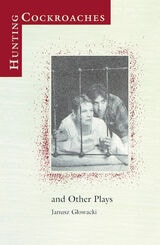
Hunting Cockroaches and Other Plays
Janusz Glowacki
Northwestern University Press, 1990