Results by title
4743 books match the query 'Religion' and 176 start with h
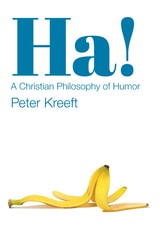
Ha!
A Christian Philosophy of HumorPeter Kreeft
St. Augustine's Press, 2022
I started thinking: Western civilization is neither healthy, happy, nor holy. Humor is all three. Humor is not only holy, it's Heavenly. And if you are surprised to be told that humor is Heavenly, you need to read this book because you reveal your misunderstanding of both humor and Heaven. If you ask, 'Is there laughter in Heaven?' my answer is: 'You can't be serious!'"
Habits and Holiness
Ethics, Theology, and BiopsychologyEzra, OP Sullivan
Catholic University of America Press, 2021
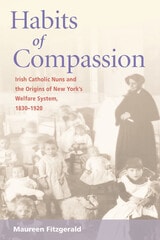
Habits of Compassion
Irish Catholic Nuns and the Origins of New York's Welfare System, 1830-1920Maureen Fitzgerald
University of Illinois Press, 2006
The Irish-Catholic Sisters accomplished tremendously successful work in founding charitable organizations in New York City from the Irish famine through the early twentieth century. Maureen Fitzgerald argues that their championing of the rights of the poor—especially poor women—resulted in an explosion of state-supported services and programs.
Parting from Protestant belief in meager and means-tested aid, Irish Catholic nuns argued for an approach based on compassion for the poor. Fitzgerald positions the nuns' activism as resistance to Protestantism's cultural hegemony. As she shows, Roman Catholic nuns offered strong and unequivocal moral leadership in condemning those who punished the poor for their poverty and unmarried women for sexual transgression. Fitzgerald also delves into the nuns' own communities, from the class-based hierarchies within the convents to the political power they wielded within the city. That power, amplified by an alliance with the local Irish Catholic political machine, allowed the women to expand public charities in the city on an unprecedented scale.
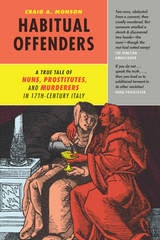
Habitual Offenders
A True Tale of Nuns, Prostitutes, and Murderers in Seventeenth-Century ItalyCraig A. Monson
University of Chicago Press, 2016
Drawing on over four thousand pages of primary sources, the intrepid Craig A. Monson reconstructs this fascinating history of crime and punishment in seventeenth-century Italy. Along the way, he explores Italy’s back streets and back stairs, giving us access to voices we rarely encounter in conventional histories: prostitutes and maidservants, mercenaries and bandits, along with other “dubious” figures negotiating the boundaries of polite society. Painstakingly researched and breathlessly told, Habitual Offenders will delight historians and true-crime fans alike.
Hagar's Vocation
L. James Long
Catholic University of America Press, 2015
Hagiography in Marguerite de Navarre’s Heptaméron
Saints and Debates in Renaissance FranceLeanna Bridge Rezvani
University of Delaware Press, 2026

Hamas
A Beginner's GuideKhaled Hroub
Pluto Press, 2010
This beginner's guide to Hamas has been fully revised and updated. It now covers all the major events since the January 2006 elections, including the conflict with Fatah and Israel's brutal offensive in Gaza at the end of 2008.
Explaining the reasons for Hamas's popularity, leading Al-Jazeera journalist and Cambridge academic Khaled Hroub provides the key facts that are so often missing from conventional news reports. It's a one-stop guide that gives a clear overview of Hamas's history, key beliefs, and its political agenda.
This unique book provides a refreshing perspective that gets to the heart of Hamas.
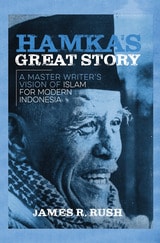
Hamka’s Great Story
A Master Writer’s Vision of Islam for Modern IndonesiaJames R. Rush
University of Wisconsin Press, 2016
Hamka (Haji Abdul Malik Karim Amrullah) was born when Indonesia was still a Dutch colony and came of age as the nation itself was emerging through tumultuous periods of Japanese occupation, revolution, and early independence. He became a prominent author and controversial public figure. In his lifetime of prodigious writing, Hamka advanced Islam as a liberating, enlightened, and hopeful body of beliefs around which the new nation could form and prosper. He embraced science, human agency, social justice, and democracy, arguing that these modern concepts comported with Islam’s true teachings. Hamka unfolded this big idea—his Great Story—decade by decade in a vast outpouring of writing that included novels and poems and chatty newspaper columns, biographies, memoirs, and histories, and lengthy studies of theology including a thirty-volume commentary on the Holy Qur’an. In introducing this influential figure and his ideas to a wider audience, this sweeping biography also illustrates a profound global process: how public debates about religion are shaping national societies in the postcolonial world.
Handbook for Curates
A Late Medieval Manual on Pastoral MinistryCatholic University of America Press, 2011
Handbook of Catholic Social Teaching
A Guide for Christians in the World TodayMartin Schlag
Catholic University of America Press, 2017

Handbook of Patristic Exegesis
Charles Kannengiesser
SBL Press, 2016
Now in paperback!
This essential volume presents a balanced and cohesive picture of the Early Church. It gives an overall view of the reception, transmission, and interpretation of the Bible in the life and thought of the Church during the first five centuries of Christianity, the so-called patristic era. The handbook offers the context and presuppositions necessary for understanding the development of the interpretative traditions of the Early Church, in its catechesis, its liturgy and as a foundation of its systems of theology. The handbook presents a comprehensive overview of the history of patristic exegesis.
Features:

Haneirot Halalu
These Lights Are HolyElyse D. Frishman
Central Conference of American Rabbis, 1989
Happiness and Wisdom
Augustine's Early Theology of EducationRyan N. S. Topping
Catholic University of America Press, 2012
Harbingers of Hope
William E. Hull
University of Alabama Press, 2007
The journey to which this book beckons has five stages. At the outset we meet a restless God of surprises who is never satisfied with things as they are. This encounter discloses the necessity of making transforming changes in our lives if we are to keep pace with the divine dynamic. Our reorientation toward an attitude of expectancy is not an end itself but provides the impetus for a lifelong process of growth toward maturity. Because this quest takes place in a world resistant to changes that challenge the status quo, there will be opposition, setbacks, even defeats that God endures with us as the cost of building a new tomorrow. In that struggle our task is not to flee or to fight but to bear a winsome witness in the confidence that God’s purposes will finally prevail over the human predicament.
Just as the crowing cock is a harbinger of dawn and the robin on the lawn is a harbinger of spring, these 27 messages become harbingers of a steadfast hope, as they help us to anticipate the new future that God is seeking to create for his weary world and as they invite us to actualize that future in the here and now.
Hard Sayings
The Rhetoric of Christian Orthodoxy in Late Modern FictionThomas F. Haddox
The Ohio State University Press, 2013
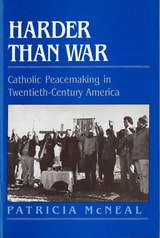
Harder than War
Catholic Peacemaking in Twentieth-Century AmericaMcNeal, Patricia F.
Rutgers University Press, 1992
During the Viet Nam War, Catholic Workers burned their draft cards and turned from nonviolence to resistance by practicing civil disobedience. Daniel and Philip Berrigan escalated that resistance when they destroyed draft files, and symbolically poured blood over and hammered nuclear weapons to awaken the national conscience to the life-ending effects of nuclear warfare.
Hare Krishna In America
Rochford, E. Burke
Rutgers University Press, 1985
Sociologist E. Burke Rochford, Jr., began his study of the Hare Krishna movement in America in the mid-1970s, only to find himself increasingly drawn into the movement even as he struggled to maintain a critical distance. Convinced to wear beads, chant, and take part in religious ceremonies, as well as to move in for occasional stays, Rochford found his new form of devotion a cause of concern for his family, friends, and colleagues. Participation in the movement's activities, however, enabled him to experience from within the forces at play between a society often intolerant of religious deviation and a religion dedicated to the continual recruitment of new followers.
Rochford uses several different sociological approaches--the life history of a single devotee, analysis of male-female recruitment patterns, surveys of members, and extensive field notes--to present he reader with a vivid portrait of the Hare Krishna movement as it has developed and changed in the first twenty years of its existence.
Hare Krishna In America
Rochford, E. Burke
Rutgers University Press, 1985
Hare Krishna
(Studies in Contemporary Religion)Federico Squarcini
Signature Books, 2004
When Bhaktivedanta arrived in America, it was a bold step because historically a guru who ventured outside of India was stripped of his Brahman status. However, the effort bore fruit—not the least of which was the type of intercultural understanding promoted by the current authors through their study of ISKCON’s place within the religion and culture of India.
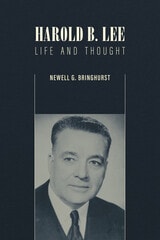
Harold B. Lee
Life and ThoughtNewell G. Bringhurst
Signature Books, 2021
Hasidism
Writings on Devotion, Community, and Life in the Modern WorldEdited by Ariel Evan Mayse Editor and Sam Berrin Shonkoff
Brandeis University Press, 2020
While this volume focuses on Hasidism, it wrestles with a core set of questions that permeate modern Jewish thought and religious thought more generally: What is the relationship between God and the world? What is the relationship between God and the human being? But Hasidic thought is cast with mystical, psychological, and even magical accents, and offers radically different answers to core issues of modern concern. The editors draw selections from an array of genres including women’s supplications; sermons and homilies; personal diaries and memoirs; correspondence; stories; polemics; legal codes; and rabbinic response. These selections consciously move between everyday lived experience and the most ineffable mystical secrets, reflecting the multidimensional nature of this unusual religious and social movement. The editors include canonical texts from the first generation of Hasidic leaders up through present-day ultra-orthodox, as well as neo-Hasidic voices and, in so doing, demonstrate the unfolding of a rich and complex phenomenon that continues to evolve today.
Hasmonean Realities behind Ezra, Nehemiah, and Chronicles
Archaeological and Historical PerspectivesIsrael Finkelstein
SBL Press, 2018
A thorough case for a later date for of Ezra, Nehemiah, and Chronicles
In this collection of essays, Israel Finkelstein deals with key topics in Ezra, Nehemiah, and 1 and 2 Chronicles, such as the list of returnees, the construction of the city wall of Jerusalem, the adversaries of Nehemiah, the tribal genealogies, and the territorial expansion of Judah in 2 Chronicles. Finkelstein argues that the geographical and historical realities cached behind at least parts of these books fit the Hasmonean period in the late second century BCE. Seven previously published essays are supplemented by maps, updates to the archaeological material, and references to recent publications on the topics.
Features:
- Analysis of geographical chapters of Ezra, Nehemiah, and Chronicles
- Study of the Hasmonean period in the late second century BCE
- Unique arguments regarding chronology and historical background
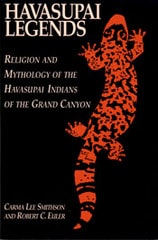
Havasupai Legends
Religion and Mythology of the Havasupai Indians of the Grand CanyonRobert C Euler
University of Utah Press, 1994
Written in consultation with some of the last Havasupai shamans, this book details their religious beliefs, customs, and healing practices. A second section presents legends of the Havasupai origin, the first people, and tales of Coyote, Gila Monster, Bear, and others.
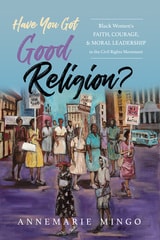
Have You Got Good Religion?
Black Women's Faith, Courage, and Moral Leadership in the Civil Rights MovementAnneMarie Mingo
University of Illinois Press, 2024
A depiction of moral imagination that resonates today, Have You Got Good Religion? reveals how Black Churchwomen’s understanding of God became action and transformed a nation.
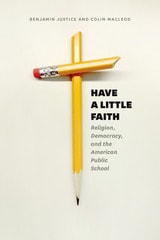
Have a Little Faith
Religion, Democracy, and the American Public SchoolBenjamin Justice and Colin Macleod
University of Chicago Press, 2016
From Bible readings and school prayer to teaching evolution and cultivating religious tolerance, Justice and Macleod consider the key issues and colorful characters that have shaped the way American schools have attempted to negotiate religious pluralism in a politically legitimate fashion. While schools and educational policies have not always advanced tolerance and understanding, Justice and Macleod point to the many efforts Americans have made to find a place for religion in public schools that both acknowledges the importance of faith to so many citizens and respects democratic ideals that insist upon a reasonable separation of church and state. Finally, they apply the lessons of history and political philosophy to an analysis of three critical areas of religious controversy in public education today: student-led religious observances in extracurricular activities, the tensions between freedom of expression and the need for inclusive environments, and the shift from democratic control of schools to loosely regulated charter and voucher programs.
Altogether Justice and Macleod show how the interpretation of educational history through the lens of contemporary democratic theory offers both a richer understanding of past disputes and new ways of addressing contemporary challenges.
Having Once Paused
Poems of Zen Master Ikkyu (1394-1481)Ikkyu Sojun
University of Michigan Press, 2015
Head and Heart
Perspectives from Religion and PsychologyFraser Watts
Templeton Press, 2013
The fact that this distinction has been so persistent makes it an important area of study. Head and Heart: Perspectives from Religion and Psychology takes an inter-disciplinary approach, linking the thinking of theologians and philosophers with theory and research in present-day psychology. The tradition of using framing questions that have been developed in theology and philosophy can now be brought into dialogue with scientific approaches developed within cognitive psychology and neuroscience. Though these scientific approaches have not generally used the terms “head” and “heart,” they have arrived at a similar distinction in other ways. There is a notable convergence upon the realization that humans have two modes of cognition at their disposal that correspond to “head” and “heart.” The time is therefore ripe to bring the approaches of theology and science in to dialogue—an important dialogue that has been heretofore neglected.
Head, Heart, and Hand
John Brown University and Modern Evangelical Higher EducationRick Ostrander
University of Arkansas Press, 2018
Healing Ableism
Stories About Disability and Religious LifeDarla Schumm
Rutgers University Press, 2026
Healing Connection
Story Of Physicians Search For Link Between Faith & HeaHarold Koenig
Templeton Press, 2004
"It is inspiring to see a physician who is unafraid to stand up for his religious beliefs and who understands how those beliefs can resonate with good science." —Larry Dossey, MD, author of Reinventing Medicine and Healing Words
The name Harold G. Koenig is well known in the fast-growing field of spirituality and health. Founder and director of the widely respected Duke University Center for Theology, Spirituality, and Health, Dr. Koenig is recognized worldwide for his groundbreaking work in medical science and religious faith. In this book—now available in paperback—he shares his remarkable personal story and shows how personal trials became the catalyst for his pioneering research.
In part one, he describes his turbulent youth: growing up on a California vineyard, college days of experimentation during the 1970s, adventures as a student researcher in Africa with Jane Goodall, an emotional breakdown, expulsion from medical school for disruptive behavior, battling mental illness as a street person in San Francisco. He refers to his ongoing battle with a chronic and debilitating physical disease in terms of the insights it gives him for his work, and he recounts the striking realization of God's call, the people and events that helped him refine a vision into a mission, and the subsequent professional opposition that resided alongside his success.
Part two draws on the real-life examples of former patients and summarizes Koenig's most important findings concerning the impact of Christian faith on mental and physical health, encapsulated by the statement: religious faith and practice are connected to mental and physical health.
In part three he challenges individuals and the American church to consider the implications of the research and to develop constructive ways of implementing the healing connection that can be found in faith.
Healing Souls
Psychotherapy in the Latter-day Saint CommunityEric G. Swedin
University of Illinois Press, 2003
The psychological professions pervasive in twentieth-century American society were viewed as dangerous by some religious communities. Healing Souls describes the LDS community's mixed feelings about science and modernity: while valuing knowledge, Mormons feared a challenge to faith. Nonetheless, psychology courses were introduced at Brigham Young University, and LDS psychotherapists began to introduce new ideas and practices to the community.
Swedin portrays the rise of professional organizations such as the Association of Mormon Counselors and Psychotherapists, as well as the importance of Allen E. Bergin, first director of the BYU Institute for Studies in Values and Human Behavior. Bergin and others paved the way for the LDS adoption of professional psychotherapy as an essential element of their "cure of souls."
Important chapters take up LDS psychopathology, feminist dissent, LDS philosophies of sexuality, and the LDS rejection of mainstream psychotherapy's selfist psychology on the basis of theological doctrines of family salvation, eternalism, and the natural man.
Healing Souls contributes to a more complete historical picture of the mental health professions in North America and a better understanding of how religious traditions and psychology have influenced each other.
Healing to All Their Flesh
Jewish and Christian Perspectives on Spirituality, Theology, and HealthJeff Levin
Templeton Press, 2012
The editors of this collection, Drs. Jeff Levin and Keith G. Meador, have gathered together the writings of leading Jewish and Christian theological, pastoral, ethical, and religious scholars to answer these important questions. Contributors include Richard Address, William Cutter, Elliot N. Dorff, Dayle A. Friedman, Stanley Hauerwas, Warren Kinghorn, M. Therese Lysaught, Stephen G. Post, John Swinton, and Simkha Y. Weintraub, with a foreword by Samuel E. Karff.
Health, Ritual, and Community in Ancient Greece
Calloway Scott
University of Wisconsin Press, 2027
At the heart of this book is a deceptively simple question: What does “health” mean? The answer, historian Calloway B. Scott shows, is culturally contingent, and in ancient Greece the concept went well beyond the proper functioning of an individual’s body. Rather, “health” (Greek hygieia) furnished a key discursive and ritual tool for civic cohesion, religious praxis, and even cultural identity. The all-important polis, central to ancient Greek social and political life, fundamentally depended on this conception of good health as a communal and religious phenomenon, and its ritualization informed relationships not just between individuals but also between communities of humans and between the human and divine realms.
Scott employs an impressive array of sources, from technical medical treatises to poetry to material remains and sanctuary sites, to explore the “body politic” of the ancient Greek world—and to query exactly what keeping that body healthy meant. Health, political identity, social relationships, and religious praxis were all deeply entwined; thus rites, rituals, and healing spaces were public, bringing people together in cohesive, coherent, and, ideally, healthy communities.
Heart Petals
The Personal Correspondence of David Oman McKay to Emma Ray McKayMary Jane Woodger
University of Utah Press, 2005
Love feeds and grows on love, and while it grows, it increases the capacity of the soul for loving. So our love was perfect when I kissed you at the altar; it is perfect to-day; it will be perfect when the century strikes ‘half-past;’ it will be perfect eternally. - from the book
David O. McKay served as president of the Church of Jesus Christ of Latter-day Saints from 1951 until his death in 1970. A devout and devoted leader, he was no less devoted to his beloved wife, Emma Ray McKay. In this collection of letters from the David Oman McKay Papers at the J. Willard Marriott Library of the University of Utah, McKay’s courtship of Emma Ray Riggs and the early days of the couple’s marriage are revealed in his own words.
The McKays were married in the Salt Lake Latter-day Saints Temple on January 2, 1901, the first “sealing” of the twentieth century. They became known as the church’s happiest couple. One of the things that cultivated that happiness were the poems and expressions of endearment McKay presented his wife, offerings he referred to as 'heart petals'. The letters collected here are replete with touching examples of those gifts of love.
Throughout this correspondence, McKay reveals his innermost feelings, joys, heartaches, and determinations, imparting a wealth of insights into his personal, caring nature and documenting his growth from a young, inexperienced missionary to a mature leader within the LDS Church. But most striking of all in these letters is the blossoming of a true, devoted love that lasted over seventy years.
Heartwood
The First Generation of Theravada Buddhism in AmericaWendy Cadge
University of Chicago Press, 2004
Wendy Cadge first provides a historical overview of Theravada Buddhism and considers its specific origins here in the United States. She then brings her findings to bear on issues of personal identity, immigration, cultural assimilation, and the nature of religion in everyday life. Her work is the first systematic comparison of the ways in which immigrant and convert Buddhists understand, practice, and adapt the Buddhist tradition in America. The men and women whom Cadge meets and observes speak directly to us in this work, both in their personal testimonials and as they meditate, pray, and practice Buddhism.
Creative and insightful, Heartwood will be of enormous value to sociologists of religion and anyone wishing to understand the rise of Buddhism in the Western world.
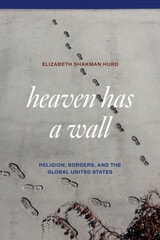
Heaven Has a Wall
Religion, Borders, and the Global United StatesElizabeth Shakman Hurd
University of Chicago Press, 2025
Our national conversation about the border has taken a religious turn. When televangelists declare, “Heaven has a wall,” activists shout back, “Jesus was a refugee.” For Elizabeth Shakman Hurd, the standoff makes explicit a longstanding truth: borders are religious as well as political objects.
In this book, Hurd argues that Americans share a bipartisan border religion, complete with an array of beliefs and practices, including a reverence for national security, a liturgy for immigration, and an eschatological foreign policy. Through an analysis of the many ways the United States creates, enforces, and ignores borders at home and abroad, Hurd offers a bold new perspective on the ties that bind American religion, politics, and public life.
Heaven's Kitchen
Living Religion at God's Love We DeliverCourtney Bender
University of Chicago Press, 2003
Heaven, Hell, and Everything in Between
Murals of the Colonial AndesBy Ananda Cohen-Aponte
University of Texas Press, 2016
Examining the vivid, often apocalyptic church murals of Peru from the early colonial period through the nineteenth century, Heaven, Hell, and Everything in Between explores the sociopolitical situation represented by the artists who generated these murals for rural parishes. Arguing that the murals were embedded in complex networks of trade, commerce, and the exchange of ideas between the Andes and Europe, Ananda Cohen-Aponte also considers the ways in which artists and viewers worked through difficult questions of envisioning sacredness.
This study brings to light the fact that, unlike the murals of New Spain, the murals of the Andes possess few direct visual connections to a pre-Columbian painting tradition; the Incas’ preference for abstracted motifs created a problem for visually translating Catholic doctrine to indigenous congregations, as the Spaniards were unable to read Inca visual culture. Nevertheless, as Cohen Suarez demonstrates, colonial murals of the Andes can be seen as a reformulation of a long-standing artistic practice of adorning architectural spaces with images that command power and contemplation. Drawing on extensive secondary and archival sources, including account books from the churches, as well as on colonial Spanish texts, Cohen Suarez urges us to see the murals not merely as decoration or as tools of missionaries but as visual archives of the complex negotiations among empire, communities, and individuals.

Heavenly Supper
The Story of Maria JanisFulvio Tomizza
University of Chicago Press, 1991
So begins Fulvio Tomizza's absorbing account of the true story of Maria Janis, a devout peasant woman from the mountains north of Bergamo. Too poor to enter a convent, Maria had set out to serve God by relinquishing the little she had, through renunciation of all food but the bread and wine of communion. Encouraged by the restless village priest Pietro Morali, Maria claimed to have existed in this sanctified state for five years. During this time, she, Morali, and the weaver Pietro Palazzi travel from a little village in the Alps to Rome and then to Venice, where their alleged sacrilege is discovered and they are brought to trial. Both revered as a saint and reviled as a fraud, Maria with her "privilege" inspires and threatens believers within the Church. Combining the historian's precision with the novelist's imagination, Tomizza painstakingly reconstructs her story, crafting a fascinating portrait of sublimated love, ambition, and jealousy.
Heavenly Supper alternates a chronological account of the trial with analyses of each protagonist's life history. Along the way, Tomizza gives voice to the minds and hearts of his characters, allowing them to speak for themselves in their own words. The world he recreates resonates with the fervor of the Counter Reformation when faith and its consequences were rigidly controlled by the Church. As suspenseful as a detective novel, Tomizza's story goes beyond the trial to evoke a panoramic view of seventeenth-century Italian culture.
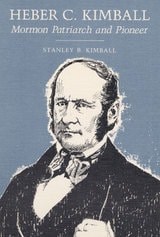
Heber C. Kimball
MORMON PATRIARCH AND PIONEERStanley B. Kimball
University of Illinois Press, 1981
"Superb! This is a superior biography, based almost entirely on manuscript sources, few of which have been used or even examined by other scholars. It is new, it is fresh, it is fast-moving, it has the ring of truth, there is little editorializing, and it is written with economy, clarity, and balance." -- Leonard J. Arrington, author of Brigham Young: American Moses
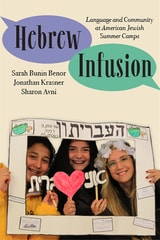
Hebrew Infusion
Language and Community at American Jewish Summer CampsSarah Bunin Benor, Jonathan B. Krasner, and Sharon Avni
Rutgers University Press, 2019
Each summer, tens of thousands of American Jews attend residential camps, where they may see Hebrew signs, sing and dance to Hebrew songs, and hear a camp-specific hybrid language register called Camp Hebraized English, as in: “Let’s hear some ruach (spirit) in this chadar ochel (dining hall)!” Using historical and sociolinguistic methods, this book explains how camp directors and staff came to infuse Hebrew in creative ways and how their rationales and practices have evolved from the early 20th century to today. Some Jewish leaders worry that Camp Hebraized English impedes Hebrew acquisition, while others recognize its power to strengthen campers’ bonds with Israel, Judaism, and the Jewish people. Hebrew Infusion explores these conflicting ideologies, showing how hybrid language can serve a formative role in fostering religious, diasporic communities. The insightful analysis and engaging descriptions of camp life will appeal to anyone interested in language, education, or American Jewish culture.
Hebrew for Biblical Interpretation
Arthur W. Walker-Jones
SBL Press, 2003

Hedstroms and the Bethel Ship Saga
Methodist Influence on Swedish Religious LifeHenry C. Whyman. Foreword by Kenneth E. Rowe
Southern Illinois University Press, 1992
The first book-length biographical treatment of Olof Gustaf Hedstrom and his brother Jonas documents their work in spreading Methodism among Swedish immigrants to America. Henry C. Whyman discusses the Bethel Ship Saga, a ministry unique in American immigrant history, and examines the larger picture of the role of religion in nineteenth-century European immigration to the United States.
The Bethel Ship, a floating chapel in New York Harbor, was the vehicle and headquarters for an effective ministry to immigrants arriving in America. Olof Hedstrom, a Methodist minister serving in the Catskill Mountain area, was called to New York to organize and lead this endeavor.
Hegemony and Culture
Politics and Religious Change among the YorubaDavid D. Laitin
University of Chicago Press, 1986
Heidegger's Confessions
The Remains of Saint Augustine in "Being and Time" and BeyondRyan Coyne
University of Chicago Press, 2015
Coyne first examines the role of Augustine in Heidegger’s early period and the development of his magnum opus, Being and Time. He then goes on to show that Heidegger owed an abiding debt to Augustine even following his own rise as a secular philosopher, tracing his early encounters with theological texts through to his late thoughts and writings. Bringing a fresh and unexpected perspective to bear on Heidegger’s profoundly influential critique of modern metaphysics, Coyne traces a larger lineage between religious and theological discourse and continental philosophy.
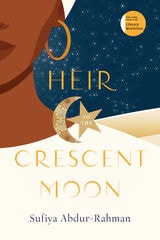
Heir to the Crescent Moon
Abdur-Rahman, Sufiya
University of Iowa Press, 2021
In Heir to the Crescent Moon, Abdur-Rahman’s longing to comprehend her father’s complicated relationship with Islam leads her first to recount her own history, and then delves into her father’s past. She journeys from the Christian righteousness of Adam Clayton Powell Jr.’s 1950s Harlem, through the Malcolm X–inspired college activism of the late 1960s, to the unfulfilled potential of the early 1970s Black American Muslim movement. Told at times with lighthearted humor or heartbreaking candor, Abdur-Rahman’s story of adolescent Arabic lessons, fasting, and Muslim mosque, funeral, and Eid services speaks to the challenges of bridging generational and cultural divides and what it takes to maintain family amidst personal and societal upheaval. She weaves a vital tale about a family: Black, Muslim, and distinctly American.
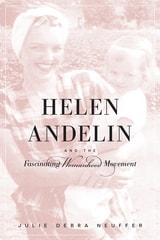
Helen Andelin and the Fascinating Womanhood Movement
Julie Debra Neuffer
University of Utah Press, 2014
Countering second-wave feminists in the 1960s, Andelin preached family values and urged women not to have careers, but to become good wives, mothers, and homemakers instead. A woman’s true happiness, taught Andelin, could only be realized if she admired, cared for, and obeyed her husband. As Andelin’s notoriety grew, so did the backlash from her critics. Undeterred, she became a national celebrity, who was interviewed extensively and appeared in sold-out speaking engagements.
Andelin’s message calling for the return to traditional roles appealed to many in a time of uncertainty and radical social change. This study provides an evenhanded and important look at a crucial, but often overlooked cross section of American women as they navigated their way through the turbulent decades following the post-war calm of the 1950s.
Winner of the Mormon History Association's Best Biography Award.

Heloise and Abelard
Etienne Gilson
University of Michigan Press, 1960
Helping Groups Heal
Leading Groups in the Process of TransformationJan Paul Hook
Templeton Press, 2017
Helping Groups Heal presents “The Healing Cycle,” a grace-based model that facilitates healing and growth in groups. It has been tested with a variety of settings, and can be adapted to nearly any small group, from sex addiction therapy to marriage therapy to Bible studies.
The basic components of “The Healing Cycle” are grace, safety, vulnerability, truth, ownership, and confession. Helping Groups Heal guides the reader through these elements, offering case studies and practical advice from the voices of researchers and practitioners. Each chapter shows how “The Healing Cycle” moves its members to share their truth, own it, and make positive change in their lives. Each step of the process allows participants to move past surface issues and find depth in their understanding of their pain.
Whether you have been leading small groups for years or are about to lead your first session, Helping Groups Heal is an accessible, easy-to-follow guide through “The Healing Cycle” that will give each group member what’s needed to grow, relate, and heal.
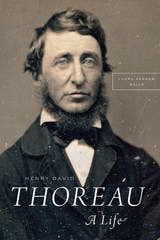
Henry David Thoreau
A LifeLaura Dassow Walls
University of Chicago Press, 2017
But there was much more to Thoreau than his brief experiment in living at Walden Pond. A member of the vibrant intellectual circle centered on his neighbor Ralph Waldo Emerson, he was also an ardent naturalist, a manual laborer and inventor, a radical political activist, and more. Many books have taken up various aspects of Thoreau’s character and achievements, but, as Laura Dassow Walls writes, “Thoreau has never been captured between covers; he was too quixotic, mischievous, many-sided.” Two hundred years after his birth, and two generations after the last full-scale biography, Walls restores Henry David Thoreau to us in all his profound, inspiring complexity.
Walls traces the full arc of Thoreau’s life, from his early days in the intellectual hothouse of Concord, when the American experiment still felt fresh and precarious, and “America was a family affair, earned by one generation and about to pass to the next.” By the time he died in 1862, at only forty-four years of age, Thoreau had witnessed the transformation of his world from a community of farmers and artisans into a bustling, interconnected commercial nation. What did that portend for the contemplative individual and abundant, wild nature that Thoreau celebrated?
Drawing on Thoreau’s copious writings, published and unpublished, Walls presents a Thoreau vigorously alive in all his quirks and contradictions: the young man shattered by the sudden death of his brother; the ambitious Harvard College student; the ecstatic visionary who closed Walden with an account of the regenerative power of the Cosmos. We meet the man whose belief in human freedom and the value of labor made him an uncompromising abolitionist; the solitary walker who found society in nature, but also found his own nature in the society of which he was a deeply interwoven part. And, running through it all, Thoreau the passionate naturalist, who, long before the age of environmentalism, saw tragedy for future generations in the human heedlessness around him.
“The Thoreau I sought was not in any book, so I wrote this one,” says Walls. The result is a Thoreau unlike any seen since he walked the streets of Concord, a Thoreau for our time and all time.