Results by title
2284 books match the query 'Women' and 72 start with h
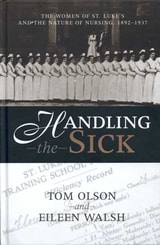
HANDLING THE SICK
Women of St Luke’s and the Nature of Nursing, 1892–1937Tom Olson and Eileen Walsh
The Ohio State University Press, 2004
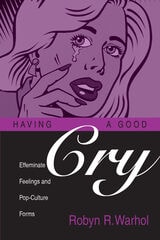
HAVING A GOOD CRY
Effeminate Feelings and Pop-Culture FormsRobyn R. Warhol
The Ohio State University Press, 2003
Robyn R. Warhol’s goal is to investigate the effects of readers’ emotional responses to formulaic fiction of the nineteenth and twentieth centuries on gendered subjectivity. She argues that modern literary and cultural studies have ignored nonsexual affectivity in their inquiries. The book elaborates on Warhol’s theory of affect and then focuses on sentimental stories, marriage plots, serialized novels, and soap operas as distinct genres producing specific feelings among fans.
Popular narrative forms use formulas to bring up familiar patterns of feelings in the audiences who love them. This book looks at the patterns of feelings that some nineteenth- and twentieth-century popular genres evoke, and asks how those patterns are related to gender. Soap operas and sentimentalism are generally derided as “effeminate” forms because their emotional range is seen as hyperfeminine. Having a Good Cry presents a celebration of effeminate feelings and works toward promoting more flexible, less pejorative concepts of gender. Using a psychophysiological rather than a psychoanalytic approach to reading and emotion, Warhol seeks to make readers more conscious of what is happening to the gendered body when we read.
Half Humankind
Contexts and Texts of the Controversy about Women in England, 1540-1640Katherine Usher Henderson and Barbara F. McManus
University of Illinois Press, 1985
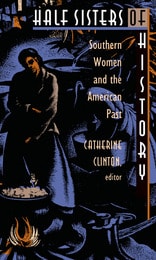
Half Sisters of History
Southern Women and the American PastCatherine Clinton
Duke University Press, 1994
This collection of essays by pioneering scholars surveys the roots and development of southern women’s history and examines the roles of white women and women of color across the boundaries of class and social status from the founding of the nation to the present. Authors including Anne Firor Scott, Elizabeth Fox-Genovese, Jacquelyn Dowd Hall, and Nell Irwin Painter, among others, analyze women’s participation in prewar slavery, their representation in popular fiction, and their involvement in social movements. In no way restricted to views of the plantation South, other essays examine the role of women during the American Revolution, the social status of Native American women, the involvement of Appalachian women in labor struggles, and the significance of women in the battle for civil rights. Because of their indelible impact on gender relations, issues of class, race, and sexuality figure centrally in these analyses.
Half Sisters of History will be important not only to women’s historians, but also to southern historians and women’s studies scholars. It will prove invaluable to anyone in search of a full understanding of the history of women, the South, or the nation itself.
Contributors. Catherine Clinton, Sara Evans, Elizabeth Fox-Genovese, Jacquelyn Dowd Hall, Jacqueline Jones, Suzanne D. Lebsock, Nell Irwin Painter, Theda Perdue, Anne Firor Scott, Deborah Gray White
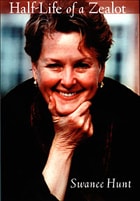
Half-Life of a Zealot
Swanee Hunt
Duke University Press, 2006
Half-Life of a Zealot tells how the girl who spoke against “Reds” alongside her father became a fierce advocate for progressive change in America and abroad, an innovative philanthropist, and Bill Clinton’s Ambassador to Austria. In captivating prose, Hunt describes the warmth and wear of Southern Baptist culture, which instilled in her a calling to help those who are vulnerable. The reader is drawn into her full-throttle professional life as it competes with critical family needs.
Hunt gives a remarkably frank account of her triumphs and shortcomings; her sorrows, including a miscarriage and the failure of a marriage; the joys and struggles of her second marriage; and her angst over the life-threatening illness of one of her three children. She is candid about the opportunities her fortune has created, as well as the challenge of life as an heiress.
Much of Swanee Hunt’s professional life is devoted to expanding women’s roles in making and shaping public policy. She is the founding director of Harvard’s Women and Public Policy Program at the Kennedy School of Government, chair of the Initiative for Inclusive Security, and president of the Hunt Alternatives Fund.
Swanee Hunt’s autobiography brims over with strong women: her mother, whose religious faith and optimism were an inspiration; her daughter, who fights the social stigma of mental disorders; the women of war-torn Bosnia, who transformed their grief into action; and friends like Hillary Clinton, who used her position as First Lady to strengthen the voices of others.
Hunt is one more strong woman. Half-Life of a Zealot is her story—so far.

Hannah Arendt
A Critical IntroductionFinn Bowring
Pluto Press, 2011
Hannah Arendt is one of the most famous political theorists of the twentieth century, yet in the social sciences her work has rarely been given the attention it deserves. This careful and comprehensive study introduces Arendt to a wider audience.
Finn Bowring shows how Arendt's writings have engaged with and influenced prominent figures in the sociological canon, and how her ideas may shed light on some of the most pressing social and political problems of today. He explores her critique of Marx, her relationship to Weber, the influence of her work on Habermas and the parallels and discrepancies between her and Foucault. This is a clearly written and scholarly text which surveys the leading debates over Arendt’s work, including discussions of totalitarianism, the public sphere and the nature of political responsibility.
This book will bring new perspectives to students and lecturers in sociology and politics.

Har Mar
StoriesHilal Isler
Northwestern University Press, 2026
Journeying through the emotional migrations of women living in the in-between
In Hilal Isler’s gripping debut story collection, Har Mar, women in the early twenty-first century navigate the complex spaces between countries, families, languages, and selves. Isler’s characters are all on the verge of something—success, rebellion, revelation—and they want to disappear as much as they want to be seen. Moving back and forth between Turkey and the United States, these stories trace migrations both physical and emotional: a nanny plots to flee the wealthy family she cares for in the Grand Bazaar of Istanbul; in Har Mar, a quiet mall tucked in the suburbs of Minneapolis, a bookseller escapes her grief in a complicated relationship with a wig retailer; an actress is hired by a famous American novelist to portray her at public events.
The women in Har Mar don’t always make sound decisions, and they’re not trying to be heroes. But they are reaching—imperfectly, but fiercely—for connection, truth, and home. With moving prose and a deep sense of longing, this collection explores what it means to grow up in the margins, to live in translation, and to build a life at the edge of belonging.
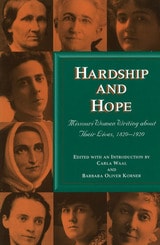
Hardship and Hope
Missouri Women Writing about Their Lives, 1820-1920Carla Waal and Barbara Oliver Korner, eds.
University of Missouri Press, 1997
Over the years Missouri women have endured many hardships: Civil War troops in their homes, the harshness of westward travel, the loneliness of the Gold Rush, and slavery. They have also greatly influenced the state's history. Marie Watkins Oliver made the state flag; Margaret Nelson Stephens was a gifted politician; Carry A. Nation fought for prohibition; and Mary Ezit Bulkley was active in the woman suffrage movement.
Hardship and Hope brings to life these and other known and unknown Missouri women through their own writings in journals, letters, diaries, and memoirs. Most of these pieces have never been published or have long been out of print. Carla Waal and Barbara Oliver Korner have skillfully crafted this anthology to represent myriad Missouri women. There are pieces representing the experiences of Jewish, Irish, and German immigrants, African Americans, well-educated women, and deeply religious women. Preceding each entry is a useful introduction that provides history and background on the woman and her work.
Readers will meet women like Phoebe Wilson Couzins, who was the first woman law graduate in Missouri. She went on to work with Susan B. Anthony for the suffrage movement but died in poverty, physically handicapped and emotionally unstable. Emma J. Ray was born a slave just before the Civil War. She and her husband did missionary work in jails and on the streets of Kansas City. Other women represented are Laura Ingalls Wilder, Kate Chopin, Fannie Hurst, and Henriette Geisberg Bruns.
Hardship and Hope began as a series of performances around the state of Missouri through which the book's editors demonstrated the roles women played in that state's past. Because of the enthusiastic response to their performances, Waal and Korner continued searching for documents by Missouri women and now share their discoveries in book form. Covering a little more than a century, from just before Missouri's admission to the Union in 1821 to the ratification of the Nineteenth Amendment that gave women the right to vote in 1920, the excerpts here both captivate and inform.
This anthology will appeal to those interested in women's studies, Missouri and midwestern history, and oral interpretation.
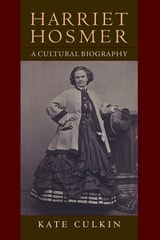
Harriet Hosmer
A Cultural BiographyKate Culkin
University of Massachusetts Press, 2010
In 1852 Hosmer moved from Boston to Rome, where she shared a house with actress Charlotte Cushman and soon formed close friendships with such prominent expatriates as Robert and Elizabeth Barrett Browning and fellow sculptors John Gibson, Emma Stebbins, and William Wetmore Story. References to Hosmer or characters inspired by her appear in the work of Nathaniel Hawthorne, Louisa May Alcott, and Kate Field among others. Culkin argues that Hosmer's success was made possible by her extensive network of supporters, including her famous friends, boosters of American gentility, and women's rights advocates. This unlikely coalition, along with her talent, ambition, and careful maintenance of her public profile, ultimately brought her great acclaim. Culkin also addresses Hosmer's critique of women's position in nineteenth-century culture through her sculpture, women's rights advocates' use of high art to promote their cause, the role Hosmer's relationships with women played in her life and success, and the complex position a female artist occupied within a country increasingly interested in proving its gentility.
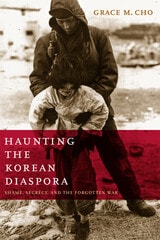
Haunting the Korean Diaspora
Shame, Secrecy, and the Forgotten WarGrace M. Cho
University of Minnesota Press, 2008
Grace M. Cho exposes how Koreans in the United States have been profoundly affected by the forgotten war and uncovers the silences and secrets that still surround it, arguing that trauma memories have been passed unconsciously through a process psychoanalysts call “transgenerational haunting.” Tracing how such secrets have turned into “ghosts,” Cho investigates the mythic figure of the yanggongju, literally the “Western princess,” who provides sexual favors to American military personnel. She reveals how this figure haunts both the intimate realm of memory and public discourse, in which narratives of U.S. benevolence abroad and assimilation of immigrants at home go unchallenged. Memories of U.S. violence, Cho writes, threaten to undo these narratives—and so they have been rendered unspeakable.
At once political and deeply personal, Cho’s wide-ranging and innovative analysis of U.S. neocolonialism and militarism under contemporary globalization brings forth a new way of understanding—and remembering—the impact of the Korean War.
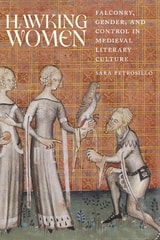
Hawking Women
Falconry, Gender, and Control in Medieval Literary CultureSara Petrosillo
The Ohio State University Press, 2023
Hawthorne and Women
Engendering and Expanding the Hawthorne TraditionJohn L. Idol
University of Massachusetts Press, 1999
This collection of original essays presents a more complex and positive view of Hawthorne's attitudes toward women, demonstrating his recognition of the crucial role that women played--as critics, reviewers, readers, and authors--in building a national readership that made his writing career so successful.
The book begins with an examination of the influence exerted by the women in Hawthorne's immediate family. It goes on to explore his links to a broad range of women writers, as well as his attitudes toward the female characters he created. Among the authors discussed are Margaret Fuller, Harriet Beecher Stowe, Louisa May Alcott, Emily Dickinson, Sarah Orne Jewett, Willa Cather, Charlotte Perkins Gilman, George Eliot, Virginia Woolf, Flannery O'Connor, and Toni Morrison.
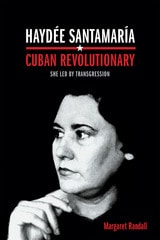
Haydée Santamaría, Cuban Revolutionary
She Led by TransgressionMargaret Randall
Duke University Press, 2015

He Knew She Was Right
The Independent Woman in the Novels of Anthony TrollopeJane Nardin
Southern Illinois University Press, 1989
Trollope’s mother, wife, and a friend he loved platonically most of his life provided him three very different views of the Victorian woman. And, according to Jane Nardin, they were responsible for the dramatic shift in his treatment of women in his novels.
This is the first book in Sandra Gilbert’s Ad Feminam series to examine a male author. Nardin initially analyzes the novels Trollope wrote from 1855 to 1861, in which male concerns are central to the plot and women are angelic heroines, submissive and self-sacrificing. Even the titles of his novels written during this period are totally male oriented. The Three Clerks, Doctor Thorne, and The Bertrams all refer to men. Shortly after meeting Kate Field, Trollope wrote Orley Farm, which refers to the estate an angry woman steals from her husband and which marks a change in the attitudes toward women evident in his novels.
His next four books, The Small House at Allington, Rachel Ray, Can You Forgive Her?, and Miss Mackenzie, prove that women’s concerns had become central in his writing. Nardin examines specific novels written from 1861 to 1865 in which Trollope, with increasing vigor, subverts the conventional notions of gender that his earlier novels had endorsed.
Nardin argues that his novels written after 1865 and often recognized as feminist are not really departures but merely refinements of attitudes Trollope exhibited in earlier works.
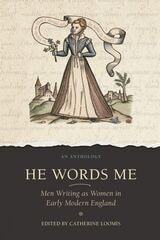
He Words Me
Men Writing as Women in Early Modern EnglandCatherine Loomis
Arizona Center for Medieval and Renaissance Studies, 2026
This anthology gives students and scholars access to a body of texts that provide a clearer understanding of what life was like for early modern women by presenting hundreds of little-known primary texts that contain details about early modern women’s work, relationships, emotional and intellectual development, friendships, and daily struggles. He Words Me brings together work from a variety of genres in which male authors adopt the voice of a female narrator and use that voice to provide intimate details about the lives of women.
These works introduce modern readers to less familiar genres, complement or contradict portrayals of women in canonical texts, and raise compelling questions about who speaks for women and when women can speak for themselves. Through these women’s voices, readers can encounter characters and experiences that will broaden their understanding of early modern English literature and culture, and of the history of women in the late sixteenth and early seventeenth centuries.
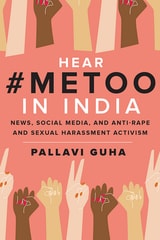
Hear #MeToo in India
News, Social Media, and Anti-Rape and Sexual Harassment ActivismPallavi Guha
Rutgers University Press, 2021

Heather Raffo's 9 Parts of Desire
A PlayHeather Raffo
Northwestern University Press, 2006
As topical as today's newspaper headlines, these rich monologues bring to life nine distinct Iraqi women whose very different stories convey the complex and harrowing reality of being female in modern-day Iraq. Their monologues quickly become a series of overlapping conversations leading to a breakdown in communication as the chaos of Iraq intensifies. Layal is a sexy and impulsive painter favored by Saddam's regime, breezily bohemian one minute and defensive the next; another woman mourns the death of her family in a 1991 bunker, and another--a blond American of Iraqi descent--painfully recalls a telephone conversation with Baghdad relatives on the eve of the U. S. invasion. Other characters decry the savagery of Saddam Hussein in terrifying detail and express an ambivalent relief at the American presence; still others--like a Bedouin woman searching for love--transcend politics.
The title comes from the teachings of the seventh-century imam Ali ibn Abu Talib: "God created sexual desire in ten parts; then he gave nine parts to women and one part to men." Heather Raffo's monologues weave these nine parts into a finely textured, brilliantly colorful tapestry of feminine longing in dire times. This compassionate and heart-breaking work will forever change your view of Iraqi women and the people of the Middle East.
Held by Form
Feminism, Poetics, Critical PracticeAnna Moser
University of Chicago Press, 2026
How contemporary poetry illuminates the workings—and struggles—of commitment in feminism.
In this lucid and vigorous defense of poetics for feminism, Anna Moser situates the practice of contemporary poetry in an exploratory dialogue with the work of philosophical, critical, and historical thinkers—placing Denise Riley in conversation with Judith Butler, Lyn Hejinian with Hannah Arendt, m. nourbeSe philip with Saidiya Hartman, and Susan Howe with Emily Dickinson.
Moser’s central theme is these poets’ questioning, agonistic commitment to feminism. What, the book asks, does it mean to be committed? How does such a commitment materialize? What are its consequences? What does it mean not to take for granted an affiliation like “feminist” (or even “woman”), but rather to involve one’s art in probing its historical formations, present conditions, and future trajectories? Moser explores both the risks and possibilities of making art in this equivocal condition. She reveals that the poetry of certain contemporary writers not only unfolds within this space of agonistic commitment, but that, in doing so, it offers an important contribution to feminist thinking. Moser’s book also shows that while form is a constraint that limits these poets’ freedom, it also holds them in a more sustaining sense, allowing something belatedly and imperfectly to be said.
In dialogue with feminist political theory, philosophy, historiography, and aesthetics, Held by Form reveals poetics as a unique mode of critical practice: one that models relations of care and collectivity, refigures inherited forms in ways that contest their hierarchies of value, and responds with generosity and openness to the complexities of living in gender.
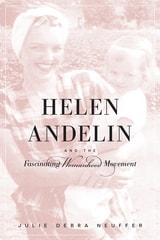
Helen Andelin and the Fascinating Womanhood Movement
Julie Debra Neuffer
University of Utah Press, 2014
Countering second-wave feminists in the 1960s, Andelin preached family values and urged women not to have careers, but to become good wives, mothers, and homemakers instead. A woman’s true happiness, taught Andelin, could only be realized if she admired, cared for, and obeyed her husband. As Andelin’s notoriety grew, so did the backlash from her critics. Undeterred, she became a national celebrity, who was interviewed extensively and appeared in sold-out speaking engagements.
Andelin’s message calling for the return to traditional roles appealed to many in a time of uncertainty and radical social change. This study provides an evenhanded and important look at a crucial, but often overlooked cross section of American women as they navigated their way through the turbulent decades following the post-war calm of the 1950s.
Winner of the Mormon History Association's Best Biography Award.
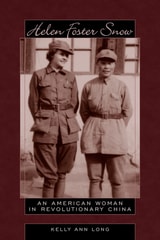
Helen Foster Snow
An American Woman in Revolutionary ChinaKelly Ann Long
University Press of Colorado, 2006
As Kelly Ann Long recounts in this engaging biography, Helen Foster Snow immersed herself in the social and political currents of a nation in turmoil. After marrying renowned journalist Edgar Snow, she developed her own writing talents and offered an important perspective on emerging events in China as that nation was wracked by Japanese invasion, the outbreak of World War II, and a continuing civil war. She supported the December Ninth Movement of 1935, broke boundaries to enter communist Yenan in 1937, and helped initiate the "gung ho" Chinese Industrial Cooperative movement.
Helen Foster Snow wrote about the people and events in China's remote communist territories during an important era. She relayed detailed portraits of female communist leaders and famous figures such as Mao Zedong and Zhu De, as well as common people struggling to survive in a period of increasing turmoil. Her informed, compassionate depictions built a bridge linking American interest to the welfare of the Chinese.
Long's account recovers the story of a controversial and important commentator on a critical period in U.S.-China relations and in Chinese history
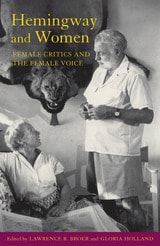
Hemingway and Women
Female Critics and the Female VoiceLawrence R. Broer
University of Alabama Press, 2003
Ernest Hemingway has often been criticized as a misogynist because of his portrayal of women. But some of the most exciting Hemingway scholarship of recent years has come from women scholars who challenge traditional views of Hemingway and women. The essays in this collection range from discussions of Hemingway’s famous heroines Brett Ashley and Catherine Barkley to examinations of the central role of gender in his short stories and in the novel The Garden of Eden. Other essays address the real women in Hemingway’s life—those who cared for him, competed with him, and, ultimately, helped to shape his art. While Hemingway was certainly influenced by traditional perceptions of women, these essays show that he was also aware of the struggle of the emerging new woman of his time. Making this gender struggle a primary concern of his fiction, these critics argue, Hemingway created women with strength, depth, and a complexity that readers are only beginning to appreciate.
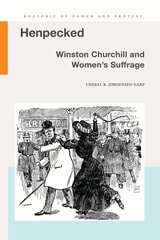
Henpecked
Winston Churchill and Women's SuffrageCheryl R. Jorgensen-Earp
Michigan State University Press, 2027
Henpecked: Winston Churchill and Women’s Suffrage explores the recurrent interactions between Winston Churchill and the women’s suffrage movement in Britain. Churchill purposely concealed, under a discursive veil, his complex and shifting perceptions of women’s competency to use the franchise. In balancing a public stance that vaguely favored the “principle” of women’s suffrage with his, often private, opposition to the movement’s legislative efforts, he employed every available rhetorical tool. This book presents a new understanding of his early Parliamentary career, his ability to manipulate public and private discourse, and his complicated stance on women’s right to vote. This rhetorical history challenges the view that Winston Churchill was only dissuaded in his support of women’s suffrage by the militancy of suffrage activists.
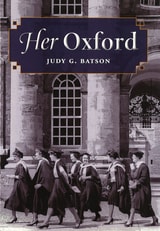
Her Oxford
Judy G. Batson
Vanderbilt University Press, 2008
Her Oxford looks at the people and the political and social forces that produced this dramatic transformation. Drawing on a vast array of biographies, histories, obituaries, and archives, Batson traces not only the institutional struggles over privileges and disciplinary rules for women, but also the rich texture of everyday life-women's amateur theatricals, debating societies, sports, and college escapades (Dorothy Sayers is the subject of quite a few). She tells the stories of women's active roles in two war efforts and in the suffrage movement.
An unusual feature of the book is the set of 120 biographical profiles of women who attended Oxford between 1879 and 1960. They constitute a Who's Who of women scientists, anthropologists, psychotherapists, educators, novelists, and social reformers in the English-speaking world.
Herlands
Inside Societies Where Women Make the RulesMegha Mohan
Michigan State University Press, 2027
In this vital and groundbreaking book, Megha Mohan introduces readers to a range of fascinating, women-led societies. Inspired by her great-grandmother’s matrilineal community in South India, Mohan explores communities around the globe—from controversial feminist online troll networks in South Korea to older women co-housing in Paris and North London to the Rain Queens of South Africa. The result is a vivid, global portrait of women’s communities.
Through extensive research and exclusive first-hand reporting, Mohan goes in search of the roots of women-led societies, revealing a vibrant global history brought together for the first time. She also takes us into modern spaces where women live on their own terms, showing us how we can rethink society for new ways of living, working, and collaborating.
For anyone interested in our collective histories, cultures, economics, and governance, Herlands shows the power and possibility of new ways of living—and leading—for us all. It’s an important landmark exploration for our times that not only explores fascinating ways of living but also addresses broader questions about new ways to think and govern and why it matters.
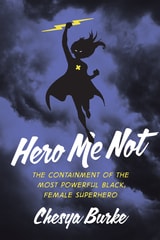
Hero Me Not
The Containment of the Most Powerful Black, Female SuperheroChesya Burke
Rutgers University Press, 2023
First introduced in the pages of X-Men, Storm is probably the most recognized Black female superhero. She is also one of the most powerful characters in the Marvel Universe, with abilities that allow her to control the weather itself. Yet that power is almost always deployed in the service of White characters, and Storm is rarely treated as an authority figure.
Hero Me Not offers an in-depth look at this fascinating yet often frustrating character through all her manifestations in comics, animation, and films. Chesya Burke examines the coding of Storm as racially “exotic,” an African woman who nonetheless has bright white hair and blue eyes and was portrayed onscreen by biracial actresses Halle Berry and Alexandra Shipp. She shows how Storm, created by White writers and artists, was an amalgam of various Black stereotypes, from the Mammy and the Jezebel to the Magical Negro, resulting in a new stereotype she terms the Negro Spiritual Woman.
With chapters focusing on the history, transmedia representation, and racial politics of Storm, Burke offers a very personal account of what it means to be a Black female comics fan searching popular culture for positive images of powerful women who look like you.
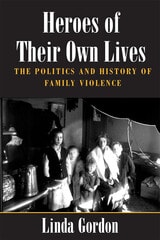
Heroes of Their Own Lives
The Politics and History of Family Violence--Boston, 1880-1960Linda Gordon
University of Illinois Press, 2002
Powerful and moving, Heroes of Their Own Lives offers an honest understanding of a persistent problem and a realistic view of the difficulties in stopping it.
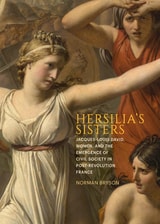
Hersilia's Sisters
Jacques-Louis David, Women, and the Emergence of Civil Society in Post-Revolution FranceNorman Bryson
J. Paul Getty Trust, The, 0
In 1799, when the French artist Jacques-Louis David (1748–1825) exhibited his Intervention of the Sabines, a history painting featuring the ancient heroine Hersilia, he added portraits of two contemporary women on either side of her—Henriette de Verninac, daughter of Charles-François Delacroix, minister of foreign affairs, and Juliette Récamier, a well-known and admired socialite. Drawing on many disciplines, Norman Bryson explains how such a combination of paintings could reveal the underlying nature of the Directoire, the period between the vicious and near-dictatorial Reign of Terror (1793–94) and the coup in 1799 that brought Napoleon to power.
Hersilia’s Sisters illuminates ways that cultural life and civil society were rebuilt during these years through an extraordinary efflorescence of women pioneers in every cultural domain—literature, the stage, opera, moral philosophy, political theory, painting, popular journalism, and fashion. Through a close examination of David’s work between The Intervention of the Sabines (begun in 1796) and Bonaparte Crossing the Alps (begun in 1800), Bryson explores how the flowering of women’s culture under the Directoire became a decisive influence on David’s art. With more than 150 illustrations, this book provides new and brilliant insight into this period that will captivate readers.

Heterosyncrasies
Female Sexuality When Normal Wasn’tKarma Lochrie
University of Minnesota Press, 2005
Hidden Hands
Working-Class Women and Victorian Social-Problem FictionPatricia E. Johnson
Ohio University Press, 2001
Tracing the Victorian crisis over the representation of working-class women to the 1842 Parliamentary bluebook on mines, with its controversial images of women at work, Hidden Hands argues that the female industrial worker became even more dangerous to represent than the prostitute or the male radical because she exposed crucial contradictions between the class and gender ideologies of the period and its economic realities.
Drawing on the recent work of feminist historians, Patricia Johnson lays the groundwork for a reinterpretation of Victorian social-problem fiction that highlights its treatment of issues that particularly affected working-class women: sexual harassment; the interconnections between domestic ideology and domestic violence; their relationships to male-dominated working-class movements such as Luddism, Chartism, and unionism; and their troubled connection to middle-class feminism.
Uncovering a series of images in Victorian fiction ranging from hot-tempered servants and sexually harassed factory girls to working-class homemakers pictured as beaten dogs, Hidden Hands demonstrates that representations of working-class women, however marginalized or incoherent, reveal the very contradictions they are constructed to hide and that the dynamics of these representations have broad implications both for other groups, such as middle-class women, and for the emergence of working-class women as writers themselves.
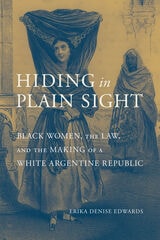
Hiding in Plain Sight
Black Women, the Law, and the Making of a White Argentine RepublicErika Denise Edwards
University of Alabama Press, 2020
WINNER OF THE ASSOCIATION OF BLACK WOMEN HISTORIANS 2020 LETITIA WOODS-BROWN AWARD FOR THE BEST BOOK IN AFRICAN AMERICAN WOMEN'S HISTORY
WINNER OF THE WESTERN ASSOCIATION OF WOMEN HISTORIAN'S BARBARA “PENNY” KANNER AWARD
2021 FINALIST FOR THE HARRIET TUBMAN BOOK PRIZE
2020 FINALIST BERSHIRE CONFERENCE OF WOMEN HISTORIANS BOOK PRIZE
Uncovering the Afro-Argentine women behind the myth of a white nation.
Argentina promotes itself as a country of European immigrants. This makes it an exception to other Latin American countries, which embrace a more mixed—African, Indian, European—heritage. Hiding in Plain Sight: Black Women, the Law, and the Making of a White Argentine Republic traces the origins of what some white Argentines mischaracterize as a “black disappearance” by delving into the intimate lives of black women and explaining how they contributed to the making of a “white” Argentina. Erika Denise Edwards has produced the first comprehensive study in English of the history of African descendants outside of Buenos Aires in the late colonial and early republican periods, with a focus on how these women sought whiteness to better their lives and that of their children.
Edwards argues that attempts by black women to escape the stigma of blackness by recategorizing themselves and their descendants as white began as early as the late eighteenth century, challenging scholars who assert that the black population drastically declined at the end of the nineteenth century because of the whitening or modernization process. She further contends that in Córdoba, Argentina, women of African descent (such as wives, mothers, daughters, and concubines) were instrumental in shaping their own racial reclassifications and destinies.
This volume makes use of a wealth of sources to relate these women’s choices. The sources consulted include city censuses and notarial and probate records that deal with free and enslaved African descendants; criminal, ecclesiastical, and civil court cases; marriages and baptisms records and newsletters. These varied sources provide information about the day-to-day activities of cordobés society and how women of African descent lived, formed relationships, thrived, and partook in the transformation of racial identities in Argentina.
High Tech and High Heels in the Global Economy
Women, Work, and Pink-Collar Identities in the CaribbeanCarla Freeman
Duke University Press, 2000
Freeman examines the expansion of the global assembly line into the realm of computer-based work, and focuses specifically on the incorporation of young Barbadian women into these high-tech informatics jobs. As such, Caribbean women are seen as integral not simply to the workings of globalization but as helping to shape its very form. Through the enactment of “professionalism” in both appearances and labor practices, and by insisting that motherhood and work go hand in hand, they re-define the companies’ profile of “ideal” workers and create their own “pink-collar” identities. Through new modes of dress and imagemaking, the informatics workers seek to distinguish themselves from factory workers, and to achieve these new modes of consumption, they engage in a wide array of extra income earning activities. Freeman argues that for the new Barbadian pink-collar workers, the globalization of production cannot be viewed apart from the globalization of consumption. In doing so, she shows the connections between formal and informal economies, and challenges long-standing oppositions between first world consumers and third world producers, as well as white-collar and blue-collar labor.
Written in a style that allows the voices of the pink-collar workers to demonstrate the simultaneous burdens and pleasures of their work, High Tech and High Heels in the Global Economy will appeal to scholars and students in a wide range of disciplines, including anthropology, cultural studies, sociology, women’s studies, political economy, and Caribbean studies, as well as labor and postcolonial studies.
High, Wide, and Frightened
Louise Thaden
University of Arkansas Press, 2004
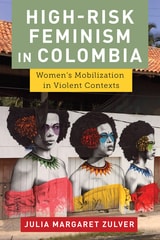
High-Risk Feminism in Colombia
Women's Mobilization in Violent ContextsJulia Margaret Zulver
Rutgers University Press, 2022

Hillbilly Maidens, Okies, and Cowgirls
Women's Country Music, 1930-1960Stephanie Vander Wel
University of Illinois Press, 2020
From the 1930s to the 1960s, the booming popularity of country music threw a spotlight on a new generation of innovative women artists. These individuals blazed trails as singers, musicians, and performers even as the industry hemmed in their potential popularity with labels like woman hillbilly, singing cowgirl, and honky-tonk angel.
Stephanie Vander Wel looks at the careers of artists like Patsy Montana, Rose Maddox, and Kitty Wells against the backdrop of country music's golden age. Analyzing recordings and appearances on radio, film, and television, she connects performances to real and imagined places and examines how the music sparked new ways for women listeners to imagine the open range, the honky-tonk, and the home. The music also captured the tensions felt by women facing geographic disruption and economic uncertainty. While classic songs and heartfelt performances might ease anxieties, the subject matter underlined women's ambivalent relationships to industrialism, middle-class security, and established notions of femininity.
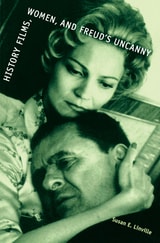
History Films, Women, and Freud's Uncanny
By Susan E. Linville
University of Texas Press, 2004
History films were a highly popular genre in the 1990s, as Hollywood looked back at significant and troubling episodes from World War II, the Cold War era, and the techno-war in the Persian Gulf. As filmmakers attempted to confront and manage intractable elements of the American past, such as the trauma of war and the legacy of racism, Susan Linville argues that a surprising casualty occurred—the erasure of relevant facets of contemporary women's history.
In this book, Linville offers a sustained critique of the history film and its reduction of women to figures of ambivalence or absence. Historicizing and adapting Freud's concept of the uncanny and its relationship to the maternal body as the first home, she offers theoretically sophisticated readings of the films Midnight Clear, Saving Private Ryan, The Thin Red Line, Nixon, Courage Under Fire, Lone Star, and Limbo. She also demonstrates that the uncanny is not only a source of anxiety but also potentially a progressive force for eroding nostalgic ideals of nation and gender. Linville concludes with a close reading of a recent 9/11 documentary, showing how the patterns and motifs of 1990s history films informed it and what that means for our future.
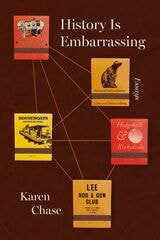
History Is Embarrassing
Karen Chase
CavanKerry Press, 2024
Filled with profound reflections and snapshots from the past, Karen Chase’s History is Embarrassing weaves together threads from one single life—a girl suffering from polio, a poet, a Jewish woman, a writer, and a painter. Like Chase, the characters who populate these essays are outsiders—undercover cops, a gay couple in 1500s India, bear poachers, psychiatric patients, and even a president—each a meaningful part of history. Divided into three parts—histories, pleasures, and horrors—History is Embarrassing is an assortment of thought-provoking essays that are sure to resonate with many readers.

History and Theory
Feminist Research, Debates, ContestationsEdited by Barbara Laslett, Ruth-Ellen Boetcher Joeres, Mary Jo Maynes, Evelyn Brooks Higginbotham
University of Chicago Press, 1997
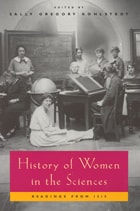
History of Women in the Sciences
Readings from IsisEdited by Sally Gregory Kohlstedt
University of Chicago Press, 2000
This book features some of the most influential and pioneering studies of women in the sciences, with a special focus on patterns of education, access, barriers, and opportunities for women's work in science. Spanning the 17th through the 20th centuries, the book demonstrates the meaning and power of gender experienced by women in the sciences.
Individual chapters focus on exceptional women whose unusual initiativee and particular circumstance led them to engage in science: Laura Bassi, Nettie Stevens, Maria Winkelmann, and others. Chapters on women's access to science discuss collaboration with family members in the domestic sphere, the impact of primers and popular science writing, and formal education in public schools and advanced research institutions. There are examinations of the reasons for clusters of women working in "female friendly" sciences such as botany and physiology in the 19th century and astronomy in the U.S. during the early 20th century.
This important and useful book provides a thoughtful and detailed overview for scholars and students in the history of science, as well as for feminist historians, scientists, and others who who want a comparative and historical analysis of women in the sciences.
Contributors include Janet Browne, Paula Findlen, Peggy Aldrich Kidwell, Ann Hibner Koblitz, M. Susan Lindee, Carolyn Merchant, Margaret W. Rossiter, Londa Schiebinger, Nancy Leys Stepan, and Deborah Jean Warner.
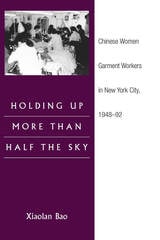
Holding Up More Than Half the Sky
Chinese Women Garment Workers in New York City, 1948-92Xiaolan Bao
University of Illinois Press, 2001
In 1982, 20,000 Chinese-American garment workers—most of them women—went on strike in New York City. Every Chinese garment industry employer in the city soon signed a union contract. The successful action reflected the ways women's changing positions within their families and within the workplace galvanized them to stand up for themselves.
Xiaolan Bao's now-classic study penetrates to the heart of Chinese American society to explain how this militancy and organized protest, seemingly so at odds with traditional Chinese female behavior, came about. Drawing on more than one hundred interviews, Bao blends the poignant personal stories of Chinese immigrant workers with the interwoven history of the garment industry and the city's Chinese community. Bao shows how the high rate of married women employed outside the home profoundly transformed family culture and with it the image and empowerment of Chinese American women. At the same time, she offers a complex and subtle discussion of the interplay of ethnic and class factors within New York's garment industry.
Passionately told and prodigiously documented, Holding Up More Than Half the Sky examines the journey of a community's women through an era of change in the home, on the shop floor, and walking the picket line.
Holding the World Together
African Women in Changing PerspectiveEdited by Nwando Achebe and Claire Robertson
University of Wisconsin Press, 2021
Contributors: Nwando Achebe, Ousseina Alidou, Signe Arnfred, Andrea L. Arrington-Sirois, Henryatta Ballah, Teresa Barnes, Josephine Beoku-Betts, Emily Burril, Abena P. A. Busia, Gracia Clark, Alicia Decker, Karen Flint, December Green, Cajetan Iheka, Rachel Jean-Baptiste, Elizabeth M. Perego, Claire Robertson, Kathleen Sheldon, Aili Mari Tripp, Cassandra Veney

Hollywood Notebook
EssaysWendy C. Ortiz
Northwestern University Press, 2025
A daylight traipse through early-aughts Los Angeles, Hollywood Notebook encapsulates the powerful feelings and hopeful futures of twentysomething Wendy C. Ortiz. In this boundary-defying sister memoir to Bruja, Ortiz navigates internal maps as she traverses external palm-treed streets, moving through her youthful twenties and into the pensiveness of her thirties. Peering at what lies ahead while dipping her toes into the past, Ortiz shows us that there is no place like Hollywood to unearth the joys of success and the blows of mistakes—both realized and denied. An innovative and bold examination of the daytime roaming mind, Hollywood Notebook is a cartography of love, loss, and transformation in the face of a brilliant psyche in a vibrant city.
Holocaust Mothers and Daughters
Family, History, and TraumaFederica K. Clementi
Brandeis University Press, 2013
Holy Anorexia
Rudolph M. Bell
University of Chicago Press, 1985
"Everyone interested in anorexia nervosa . . . should skim this book or study it. It will make you realize how dependent upon culture the definition of disease is. I will never look at an anorexic patient in the same way again."—Howard Spiro, M.D., Gastroenterology
"[This] book is a first-class social history and is well-documented both in its historical and scientific portions."—Vern L. Bullough, American Historical Review
"A significant contribution to revisionist history, which re-examines events in light of feminist thought. . . . Bell is particularly skillful in describing behavior within its time and culture, which would be bizarre by today's norms, without reducing it to the pathological."—Mary Lassance Parthun, Toronto Globe and Mail
"Bell is both enlightened and convincing. His book is impressively researched, easy to read, and utterly fascinating."—Sheila MacLeod, New Statesman

Home Safe Home
Housing Solutions for Survivors of Intimate Partner ViolenceBotein, Hilary
Rutgers University Press, 2016
Home Work
Gender, Child Labor, and Education for Girls in Urban America, 1870–1930Ruby Oram
University of Chicago Press, 2025
In Home Work, historian Ruby Oram tells the story of how middle-class, white women reformers lobbied the state to implement various public education reforms to shape the lives of girls and women in industrial cities between 1870 and 1930. Women such as Jane Addams and Florence Kelley used education reform to target working-class communities and advocate for their middle-class ideals of girlhood and femininity, which could vary depending on the racial or socio-economic backgrounds of the girls. For example, reformers generally encouraged white girls to care for their future families, while pushing Black girls toward becoming domestic workers in others’ homes. Using Chicago as a case study, Oram also explores how many of the reforms sought by white women were in response to evolving anxieties about immigration, health, and sexual delinquency.
An illuminating addition to the history of urban education in America, Home Work enriches our understanding of educational inequality in twentieth-century schools.
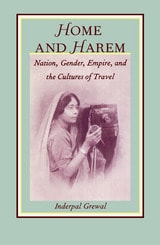
Home and Harem
Nation, Gender, Empire and the Cultures of TravelInderpal Grewal
Duke University Press, 1996
In her look at England, Grewal draws on nineteenth-century aesthetics, landscape art, and debates about women’s suffrage and working-class education to show how all social classes, not only the privileged, were educated and influenced by imperialist travel narratives. By examining diverse forms of Indian travel to the West and its colonies and focusing on forms of modernity offered by colonial notions of travel, she explores how Indian men and women adopted and appropriated aspects of European travel discourse, particularly the set of oppositions between self and other, East and West, home and abroad.
Rather than being simply comparative, Home and Harem is a transnational cultural study of the interaction of ideas between two cultures. Addressing theoretical and methodological developments across a wide range of fields, this highly interdisciplinary work will interest scholars in the fields of postcolonial and cultural studies, feminist studies, English literature, South Asian studies, and comparative literature.
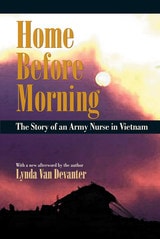
Home before Morning
The Story of an Army Nurse in VietnamLynda Van Devanter
University of Massachusetts Press, 2001
Lynda Van Devanter was the girl next door, the cheerleader who went to Catholic schools, enjoyed sports, and got along well with her four sisters and parents. After high school she attended nursing school and then did something that would shatter her secure world for the rest of her life: in 1969, she joined the army and was shipped to Vietnam. When she arrived in Vietnam her idealistic view of the war vanished quickly. She worked long and arduous hours in cramped, ill-equipped, understaffed operating rooms. She saw friends die. Witnessing a war close-up, operating on soldiers and civilians whose injuries were catastrophic, she found the very foundations of her thinking changing daily.
After one traumatic year, she came home, a Vietnam veteran. Coming home was nearly as devastating as the time she spent in Asia. Nothing was the same -- including Lynda herself. Viewed by many as a murderer instead of a healer, she felt isolated and angry. The anger turned to depression; like many other Vietnam veterans she suffered from delayed stress syndrome. Working in hospitals brought back chilling scenes of hopelessly wounded soldiers. A marriage ended in divorce. The war that was fought physically halfway around the world had become a personal, internal battle.
Home before Morning is the story of a woman whose courage, stamina, and personal history make this a compelling autobiography. It is also the saga of others who went to war to aid the wounded and came back wounded -- physically and emotionally -- themselves. And, it is the true story of one person's triumphs: her understanding of, and coming to terms with, her destiny.
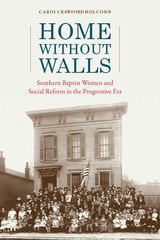
Home without Walls
Southern Baptist Women and Social Reform in the Progressive EraCarol Crawford Holcomb
University of Alabama Press, 2020
The Woman’s Missionary Union (WMU), founded in 1888, carved out a uniquely feminine space within the Southern Baptist Convention during the tumultuous years of the Progressive Era when American theologians were formulating the social gospel. These women represented the Southern Baptist elite and as such had the time to read, write, and discuss ideas with other Southern progressives. They rubbed shoulders with more progressive Methodist and Presbyterian women in clubs and ecumenical missionary meetings. Baptist women studied the missionary publications of these other denominations and adopted ideas for a Southern Baptist audience.
Home without Walls: Southern Baptist Women and Social Reform in the Progressive Era shows how the social attitudes of women were shaped at the time. By studying primary documents—including personal letters, official exchanges and memoranda, magazine publications, newsletters, and editorials—Carol Crawford Holcomb uncovers ample evidence that WMU leaders, aware of the social gospel and sympathetic to social reform, appropriated the tools of social work and social service to carry out their missionary work.
Southern Baptist women united to build a financial empire that would sustain the Southern Baptists through the Great Depression and beyond. Their social attitudes represented a kaleidoscope of contrasting opinions. By no stretch of the imagination could WMU leaders be characterized as liberal social gospel advocates. However, it would also be wrong to depict them as uniformly hostile to progressivism or ignorant of contemporary theological ideas. In the end, they were practical feminists in their determination to provide a platform for women’s views and a space for women to do meaningful work.
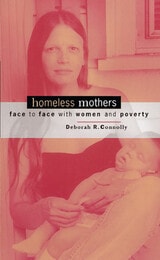
Homeless Mothers
Face to Face with Women and PovertyDeborah R. Connolly
University of Minnesota Press, 2001
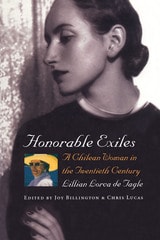
Honorable Exiles
A Chilean Woman in the Twentieth CenturyBy Lillian Lorca de Tagle
University of Texas Press, 2000
Lillian Lorca de Tagle is living proof of women's progress in the twentieth century. Born into a privileged, yet circumscribed world in 1914 as the daughter of a wealthy Chilean diplomat, she became a translator and journalist at a time when few women of her class held jobs. Ordered into exile in the United States by her disapproving mother, she became a successful reporter, translator, and editor, while raising two daughters as a single working mother.
In this beautifully written memoir, de Tagle looks back over a fascinating, cosmopolitan life. She describes how her upbringing in various European capitals prepared her for a life of continual change. She remembers the restrictions that upper class Chilean society placed on women and how these ultimately propelled her to a career in the United States that included an editorship at Américas magazine and work for the State Department, as well as a series of posts with the USIA/Voice of America.
Woven throughout her memoir are vivid glimpses of family, friends, husbands, and lovers, including the artist Roberto Matta. This spicy blend of personalities, work, and culture tells a quintessential coming-of-age story of a thoroughly modern woman.