Results by title
395 books match the query 'How' and 153 start with h
How to Make Art at the End of the World
A Manifesto for Research-CreationNatalie Loveless
Duke University Press, 2019
How to Make Dances in an Epidemic
Tracking Choreography in the Age of AIDSDavid Gere
University of Wisconsin Press, 2004
David Gere, who came of age as a dance critic at the height of the AIDS epidemic, offers the first book to examine in depth the interplay of AIDS and choreography in the United States, specifically in relation to gay men. The time he writes about is one of extremes. A life-threatening medical syndrome is spreading, its transmission linked to sex. Blame is settling on gay men. What is possible in such a highly charged moment, when art and politics coincide?
Gere expands the definition of choreography to analyze not only theatrical dances but also the protests conceived by ACT-UP and the NAMES Project AIDS quilt. These exist on a continuum in which dance, protest, and wrenching emotional expression have become essentially indistinguishable. Gere offers a portrait of gay male choreographers struggling to cope with AIDS and its meanings.
How to Make It as a Woman
Collective Biographical History from Victoria to the PresentAlison Booth
University of Chicago Press, 2004
Beginning in the fifteenth century with Christine de Pizan, Alison Booth traces the long tradition of this genre, investigating the varied types and stories most often grouped together in illustrated books designed for entertainment and instruction. She claims that these group biographies have been instrumental in constructing modern subjectivities as well as relations among classes, races, and nations.
From Joan of Arc to Virginia Woolf, Booth examines a host of models of womanhood—both bad and good. Incorporating a bibliography that includes more than 900 all-female collections published in English between 1830 and 1940, Booth uses collective biographies to decode the varied advice on how to make it as a woman.
How to Make Your Mother Cry
FictionsSejal Shah
West Virginia University Press, 2024
2024/25 Story Prize Longlist
2024 Foreword Indies Finalist, Multicultural Adult Fiction
In the eleven linked short stories of How to Make Your Mother Cry, Sejal Shah builds a shrine gleaming with memory and myth. Keys, rocks, photographs, fairy tales, fables, and relics all add texture and meaning to an exploration of growing up and living as a diasporic Gujarati woman in a culture that excuses the behavior of men. Throughout, girls and women contend with the expectations, limitations, and challenges of becoming the heroine of one’s own life.
How to Make Your Mother Cry—Shah’s follow-up to her award-winning essay collection This Is One Way to Dance—continues the rich tradition of innovative feminist work by Claudia Rankine, Leslie Marmon Silko, and Maxine Hong Kingston. By braiding stories and images with fictional letters to a beloved English teacher, the collection defies traditional autofiction, epistolary, and short story conventions. These astonishing stories about friendship and love, resilience and survival establish Shah as an exciting new voice in contemporary fiction.
How to Make a Life
A Tibetan Refugee Family and the Midwestern Woman They AdoptedMadeline Uraneck
Wisconsin Historical Society Press, 2018
When Madeline Uraneck said hello to the Tibetan woman cleaning her office cubicle, she never imagined the moment would change her life. After learning that Tenzin Kalsang had left her husband and four children behind in a Tibetan refugee settlement in India to try to forge a better life for them, Madeline took on the task of helping her apply for US visas. When the family reunited in their new Midwestern home, Madeline became swept up in their lives, from homework and soccer games to family dinners and shared holiday traditions. By reaching out, she found more than she bargained for—a family who welcomed her as their own and taught her more than she offered them.
An evocative blend of immersion journalism and memoir, How to Make a Life shares the immigration story of a Tibetan refugee family who crossed real and cultural bridges to make a life in Madison, Wisconsin, with the assistance of the Midwestern woman they befriended. From tales of escaping Tibet over the Himalayas, to striking a balance between old traditions with new, to bridging divides one friendly gesture at a time, readers will expand their understanding of family, culture, and belonging.
How to Make a Revolution
Raymond Postgate
Westholme Publishing, 2018
The first third of the twentieth century saw a seismic upheaval in global politics and society that still reverberates today. Communism and fascism toppled both traditional monarchies and representative democracies, while trade unions and other factions effectively challenged existing governments to adopt reforms or face crippling economic or social upheaval. Given these extraordinary events, Raymond Postgate set forth in How to Make a Revolution to objectively discuss revolutionary methods, and which tactics or strategies are the most effective. Drawing on his own idealistic experience as a young labor agitator and editor of a communist newspaper and more than fifteen years of close study of past revolutionary history and theories, the author dispassionately discusses Marxism, fascism, anarchism, and Blanquism (a doctrine within socialism), as well as syndicalism and industrial unionism. He then reviews revolutionary practice, including general strikes, financial pressure, armed revolution, and communist tactics, and ends with a prescient and frightening conclusion: without general consensus and determination, a peaceful revolution is impossible, and “if no action is taken, action of another kind will be taken for us. . . . The continuance of uncertainty will mean that the disillusioned will drift steadily across to a Fascist organization. Fascism means war; the character of a Fascist State is fairly well known. Once it is established, those who read, who write, who publish or who print, books like this are likely to be dead or in concentration camps.” Originally published in 1934, Postgate’s book was heralded for its clarity and scholarship.
How to Make a Slave and Other Essays
Jerald Walker
The Ohio State University Press, 2020
Winner, 2021 Massachusetts Book Award, Nonfiction Category
A Book of the Year pick from Kirkus, BuzzFeed, and Literary Hub
“The essays in this collection are restless, brilliant and short. . . . The brevity suits not just Walker’s style but his worldview, too.…Keeping things quick gives him the freedom to move; he can alight on a truth without pinning it into place.” —Jennifer Szalai, the New York Times
For the black community, Jerald Walker asserts in How to Make a Slave, “anger is often a prelude to a joke, as there is broad understanding that the triumph over this destructive emotion lay in finding its punchline.” It is on the knife’s edge between fury and farce that the essays in this exquisite collection balance. Whether confronting the medical profession’s racial biases, considering the complicated legacy of Michael Jackson, paying homage to his writing mentor James Alan McPherson, or attempting to break free of personal and societal stereotypes, Walker elegantly blends personal revelation and cultural critique. The result is a bracing and often humorous examination by one of America’s most acclaimed essayists of what it is to grow, parent, write, and exist as a black American male. Walker refuses to lull his readers; instead his missives urge them to do better as they consider, through his eyes, how to be a good citizen, how to be a good father, how to live, and how to love.
How to Make a Soul
The Wisdom of John KeatsEric G. Wilson
Northwestern University Press, 2015
In this innovative hybrid of biography, memoir, and criticism, Eric G. Wilson describes how John Keats gave him solace during a bout of mental illness in spring 2012. While on a tour of the principal sites in Keats’s life—ranging from his London medical school to the small room in Rome where he died—Wilson discovered analogies between the poet’s troubles and his own. He was most struck by Keats’s enlivening vision of the soul.
For Keats, we don’t possess but rather make a soul. We do this by imaginatively transforming our suffering into empathy toward humans and nature alike. Tracking this idea in Keats’s tumultuous yet exhilarating life and work, Wilson struggles to envision his depression anew, desperate to overcome the apathy alienating him from his family.
How to Make a Soul offers fresh perspectives on Keats’s pragmatism, irony, comedy, ethics, and aesthetics, but is above all a lyrical celebration of those galvanizing instances when life springs into art.

How to Make a Vaccine
An Essential Guide for COVID-19 and BeyondJohn Rhodes
University of Chicago Press, 2021
As the COVID-19 pandemic has affected every corner of the world, changing our relationship to our communities, to our jobs, and to each other, the most pressing question has been—when will it end? Researchers around the globe are urgently trying to answer this question by racing to test and distribute a vaccine that could end the greatest public health threat of our time. In How to Make a Vaccine, an expert who has firsthand experience developing vaccines tells an optimistic story of how three hundred years of vaccine discovery and a century and a half of immunology research have come together at this powerful moment—and will lead to multiple COVID-19 vaccines.
Dr. John Rhodes draws on his experience as an immunologist, including working alongside a young Anthony Fauci, to unravel the mystery of how vaccines are designed, tested, and produced at scale for global deployment. Concise and accessible, this book describes in everyday language how the immune system evolved to combat infection, how viruses responded by evolving ways to evade our defenses, and how vaccines do their work. That history, and the pace of current research developments, make Rhodes hopeful that multiple vaccines will protect us. Today the complex workings of the immune system are well understood. The tools needed by biomedical scientists stand ready to be used, and more than 160 vaccine candidates have already been produced. But defeating COVID-19 won’t be the end of the story: Rhodes describes how discoveries today are also empowering scientists to combat future threats to global health, including a recent breakthrough in the development of genetic vaccines, which have never before been used in humans.
As the world prepares for a vaccine, Rhodes offers a current and informative look at the science and strategies that deliver solutions to the crisis.
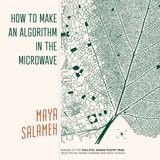
How to Make an Algorithm in the Microwave
Maya Salameh
University of Arkansas Press, 2022
“We need a new poetry lexicon—a new way of moleculing the poem on the page, even—and Maya Salameh brings it. We need all the strange Arabic-diasporic ways we can find for being in this terrible and joyful and often frighteningly banalizing world, and Salameh’s poems are a generous find. Her writing is an unexpected cousin in the colonized and capitalism-razed city, bewildering and divining things you’ve never heard but want to learn. . . . Prepare to be stretched and delighted.”
—Mohja Kahf, from the Foreword
The divine and the digital achieve a distinct corporality in Maya Salameh’s HOW TO MAKE AN ALGORITHM IN THE MICROWAVE, winner of the 2022 Etel Adnan Poetry Prize. Layering prayer with code, Salameh brings supposedly unassailable technological constructs like algorithm, recursion, and loop into conversation with the technologies of womanhood, whether liner, lipstick, or blood. Exploring the relationships we have with our devices, she speaks back to the algorithm (“a computer’s admission to blood”), which acts simultaneously as warden, confidant, and data thief.
Here Salameh boldly examines how an Arab woman survives the digitization of her body—experimenting with form to create an intimate collage of personal and neocolonial histories, fearlessly insinuating herself into the scripts that would otherwise erase her, and giving voice to the full mess of ritual.
How to Manage Processing in Archives and Special Collections
Pam Hackbart-Dean
Society of American Archivists, 2012

How to Manage Processing in Archives and Special Collections
An IntroductionPam Hackbart-Dean
American Library Association, 2013
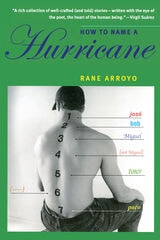
How to Name a Hurricane
Rane Arroyo
University of Arizona Press, 2005
How to Name a Hurricane collects short stories and other fictions depicting Latino drag queens and leather men, religious sinners and happy atheists, working class heroes and cyberspace vaqueros—a parade of characters that invites readers to consider whether one is more authentic a gay Latino than another. Whereas actual hurricanes are given names, the gays given voice in this collection must name themselves—and these narratives in turn reveal something of the "I" of Hurricane Rane. Whether portraying a family gathering as Brideshead Revisited with a mambo soundtrack, recounting the relationship of transvestite Louie/Lois and her bisexual Superman, or bemoaning "feeling as unsexy as an old bean burrito in a 7-11 microwave," Arroyo tracks the heartbeat of his characters through a shimmering palette of styles. Here are monologues, a story in verse, and other experimental forms appropriate to experimental lives—all affirming the basic human rights to dignity, equality, love, and even silliness.
When the AIDS epidemic first hit, many Latino families destroyed any remembrances of their gay and bisexual sons that might betray their pasts to la familia or el pueblo. Arroyo’s writings return the ghosts of those sons to the families, bars, dance clubs, and neighborhoods where they belong. By penetrating to the I’s of narrative hurricanes, these stories honor the survivors of our ongoing cultural storms.
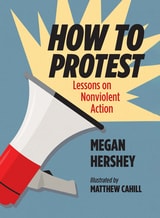
How to Protest
Lessons on Nonviolent ActionMegan Hershey, Illustrations by Matthew Cahill
University of Wisconsin Press, 2026
Many people around the world are frustrated with their governments yet do not know what actions to take. Protest may feel out of reach, like something only seasoned activists can do. This accessible guide explores the creativity, joy, and accessibility of peaceful protest. Megan Hershey introduces readers to twenty-five specific and inspiring nonviolent protest methods through real-life examples from the past fifty years. Each chapter includes a short, vivid description of a bold nonviolent action taken by everyday people who demanded that their leaders listen to them. From patriotic choir concerts in Estonia to live painted pigs at the Ugandan parliament, these unique protest strategies will inspire those looking to effect change and offer encouragement from past successes.
How to Quiet a Vampire
A SotieBorislav Pekic
Northwestern University Press, 2005
Delving far deeper than mere intellect, however, Borislav Pekic was himself a frequent political agitator and occasional prisoner, and he drew on his first hand knowledge of police methods and life under totalitarianism to paint a chilling portrait of a supposedly free-thinking intellectual acting in the service of repression. At the same time he questions whether Rutkowski's ideology puts him outside the philosophical tradition he so admires—or if the line separating European thought from totalitarianism is not as clear as we like to think.

How to Read Barthes' Image-Music-Text
Ed White
Pluto Press, 2012
Roland Barthes remains one of the most influential cultural theorists of the postwar period and Image-Music-Text collects his most influential essays. Ed White provides students with a clear guide to this essential but difficult text.
As students are increasingly expected to write across a range of media, Barthes' work can be understood as an early mapping of what we now call interdisciplinary or multidisciplinary study. The book's detailed section-by-section readings makes Barthes' most important writings accessible to undergraduate readers.
This book is a perfect companion for teaching and learning Barthes' ideas in cultural studies and literary theory.
How to Read Donald Duck
Imperialist Ideology in the Disney ComicAriel Dorfman
Pluto Press, 2020
First published in 1971, How to Read Donald Duck shocked readers by revealing how capitalist ideology operates in our most beloved cartoons. Having survived bonfires, impounding and being dumped into the ocean by the Chilean army, this controversial book is once again back on our shelves.
Written and published during the blossoming of Salvador Allende's revolutionary socialism in Chile, the book examines how Disney products reflect capitalist ideology, and are active agents working in this ideology’s favor. Focusing on the hapless mice and ducks of Disney, curiously parentless, marginalized and always short of cash, Ariel Dorfman and Armand Mattelart expose how these characters established hegemonic ideas about capital, race, gender and the relationship between developed countries and the Third World.
A devastating indictment of a media giant, a document of twentieth-century political upheaval, and a reminder of the dark undercurrent of pop culture, How to Read Donald Duck is once again available, together with a new introduction by Ariel Dorfman in which he writes.
"It is that joy in liberation, that alegria, that spirit of resistance, that I wish to share with America, as the book that Pinochet’s soldiers could not liquidate or Disney’s lawyers stop from entering the United States finally finds its way to its new home, deep into the land that invented Donald Duck and Donald Trump. Is the same country that gave me such a warm welcome as a child, and perhaps may now equally greet with open arms this critique of oppression and it certainty that we don’t have to leave the world as it was when we first encountered it."
How to Read Donald Duck
Imperialist Ideology in the Disney ComicPluto Press, 2019
How to Read Foucault's Discipline and Punish
Stephen Shapiro and Anne Schwan
Pluto Press, 2011
Michel Foucault’s Discipline and Punish is one of the best-selling works of critical theory and a key text on many undergraduate courses. However, it is a long, difficult text which makes Anne Schwan and Stephen Shapiro's excellent step-by-step reading guide a welcome addition to the How to Read Theory series.
Undergraduates across a wide range of disciplines are expected to have a solid understanding of Foucault's key terms, which have become commonplace in critical thinking today. While there are many texts that survey Foucault's thought, these are often more general overviews or biographical précis that give little in the way of robust explanation and discussion. In contrast, Schwan and Shapiro take a plain-speaking, yet detailed, approach, specifically designed to give students a thorough understanding of one of the most influential texts in contemporary cultural theory.
How to Read Hegel Now
Shannon Hoff
University of Chicago Press, 2026
One might be forgiven for feeling that the philosophical tradition, notoriously replete with seemingly aloof and problematic men like Hegel, has little to offer contemporary conversations about justice. Yet for Shannon Hoff, Hegel’s ideas about freedom in particular contain vital resources for efforts to redress racism, sexism, colonialism, ableism, and capitalism today.
In How to Read Hegel Now, Hoff rereads the German philosopher alongside our most compelling thinkers about how oppression disavows our common humanity, including Frantz Fanon, Jessica Benjamin, Saba Mahmood, la paperson, Jean-Paul Sartre, Georges Canguilhem, and Rosemarie Garland-Thomson. Along the way, Hoff recovers in Hegel a new vision for human freedom that challenges the heritage of modern liberalism he helped to construct.
How to Read Marx's Capital
Stephen Shapiro
Pluto Press, 2008
Students are urged to think for themselves and engage with Marx's powerful methods of argument and explanation. Shapiro shows that Capital is key to understanding critical theory and cultural production.
This highly focused book will prove invaluable to students of politics, cultural studies, and literary theory.
How to Read a Moment
The American Novel and the Crisis of the PresentMathias Nilges
Northwestern University Press, 2021
“Time is a thing that grows scarcer every day,” observes one of Don DeLillo’s characters. “The future is gone,” The Baffler argues. “Where’s my hoverboard!?” a meme demands. Contemporary capitalism, a system that insists that everything happen at once, creates problems for social thought and narrative alike. After all, how does one tell the time of instantaneity? In this moment of on-demand service and instant trading, it has become difficult to imagine the future.
The novel emerged as the art form of a rapidly changing modern world, a way of telling time in its progress. Nilges argues that this historical mission is renewed today through works that understand contemporaneity as a form of time shaping that props up our material world and cultural imagination. But the contemporary American novel does not simply associate our present with a crisis of futurity. Through analyses of works by authors such as DeLillo, Jennifer Egan, Charles Yu, and Colson Whitehead, Nilges illustrates that the novel presents ways to make sense of the temporality that controls our purportedly fully contemporary world. In so doing, the novel recovers a sense of possibility and hope, forwarding a dazzling argument for its own importance today.
How to Read an Oral Poem
John Miles Foley
University of Illinois Press, 2002
Using dozens of examples, including a North American slam poet, a Tibetan paper-singer, a South African praise-poet, and an ancient Greek bard, John Miles Foley shows that although oral poetry long predates the invention of writing, it continues to be a vital culture-making and communications tool in societies all over the world. Based on fieldwork and archival research on epics, folktales, lyrics, laments, charms, and other oral traditions, How to Read an Oral Poem answers the questions, What is oral poetry? How does it work? What is reading, literally and figuratively?
This accessible and engaging work is enhanced by audio and video examples of oral poetry, which are available at http://www.oraltradition.org. The book can also be used as companion volume to Foley's Teaching Oral Traditions.
How to Respond Better to the Next Pandemic
Remedying Institutional FailuresAllen Buchanan, with contributions by Cécile Fabre and Sir Paul Tucker
University of Utah Press, 2024
In How to Respond Better to the Next Pandemic Allen Buchanan argues that, contrary to widespread opinion, the primary cause of flawed COVID-19 policy was not defective leadership, but rather institutional failure. Decisions were made through processes that lacked the most basic safeguards against the large-institution “yes-man” and group-think phenomena and included virtually no provisions for holding decision makers accountable. More fundamentally, policy makers did not fulfill the crucial duty to provide plausible public justifications for their decisions. They disguised the fact that scientific opinion was divided on the appropriateness of the policies they endorsed and labeled those who disagreed with them as anti-scientific. In some cases, they responded to criticism, not by engaging it on the issues, but by branding their critics as quacks.
How to Revise a True War Story
Tim O'Brien's Process of Textual ProductionJohn K. Young
University of Iowa Press, 2017
How to Revise a True War Story is the first book-length study of O’Brien’s archival papers at the University of Texas’s Harry Ransom Center. Drawing on extensive study of drafts and other prepublication materials, as well as the multiple published versions of O’Brien’s works, John K. Young tells the untold stories behind the production of such key texts as Going After Cacciato, The Things They Carried, and In the Lake of the Woods. By reading not just the texts that have been published, but also the versions they could have been, Young demonstrates the important choices O’Brien and his editors have made about how to represent the traumas of the war in Viet Nam. The result is a series of texts that refuse to settle into a finished or stable form, just as the stories they present insist on being told and retold in new and changing ways. In their lack of textual stability, these variants across different versions enact for O’Brien’s readers the kinds of narrative volatility that is key to the American literature emerging from the war in Viet Nam. Perhaps in this case, you can tell a true war story if you just keep on revising it.
How to Save a Constitutional Democracy
Tom Ginsburg and Aziz Z. Huq
University of Chicago Press, 2018
How to Save a Constitutional Democracy mounts an urgent argument that we can no longer afford to be complacent. Drawing on a rich array of other countries’ experiences with democratic backsliding, Tom Ginsburg and Aziz Z. Huq show how constitutional rules can both hinder and hasten the decline of democratic institutions. The checks and balances of the federal government, a robust civil society and media, and individual rights—such as those enshrined in the First Amendment—often fail as bulwarks against democratic decline. The sobering reality for the United States, Ginsburg and Huq contend, is that the Constitution’s design makes democratic erosion more, not less, likely. Its structural rigidity has had unforeseen consequence—leaving the presidency weakly regulated and empowering the Supreme Court conjure up doctrines that ultimately facilitate rather than inhibit rights violations. Even the bright spots in the Constitution—the First Amendment, for example—may have perverse consequences in the hands of a deft communicator who can degrade the public sphere by wielding hateful language banned in many other democracies. We—and the rest of the world—can do better. The authors conclude by laying out practical steps for how laws and constitutional design can play a more positive role in managing the risk of democratic decline.
How to Save a Constitutional Democracy
Tom Ginsburg and Aziz Z. Huq
University of Chicago Press, 2018
Democracies are in danger. Around the world, a rising wave of populist leaders threatens to erode the core structures of democratic self-rule. In the United States, the tenure of Donald Trump has seemed decisive turning point for many. What kind of president intimidates jurors, calls the news media the “enemy of the American people,” and seeks foreign assistance investigating domestic political rivals? Whatever one thinks of President Trump, many think the Constitution will safeguard us from lasting damage. But is that assumption justified?
How to Save a Constitutional Democracy mounts an urgent argument that we can no longer afford to be complacent. Drawing on a rich array of other countries’ experiences with democratic backsliding, Tom Ginsburg and Aziz Z. Huq show how constitutional rules can both hinder and hasten the decline of democratic institutions. The checks and balances of the federal government, a robust civil society and media, and individual rights—such as those enshrined in the First Amendment—often fail as bulwarks against democratic decline. The sobering reality for the United States, Ginsburg and Huq contend, is that the Constitution’s design makes democratic erosion more, not less, likely. Its structural rigidity has had unforeseen consequence—leaving the presidency weakly regulated and empowering the Supreme Court conjure up doctrines that ultimately facilitate rather than inhibit rights violations. Even the bright spots in the Constitution—the First Amendment, for example—may have perverse consequences in the hands of a deft communicator who can degrade the public sphere by wielding hateful language banned in many other democracies. We—and the rest of the world—can do better. The authors conclude by laying out practical steps for how laws and constitutional design can play a more positive role in managing the risk of democratic decline.
How to Save a Constitutional Democracy
A New Edition for a Damaged PoliticsTom Ginsburg and Aziz Z. Huq
University of Chicago Press, 2026
Updated to take stock of recent developments, Tom Ginsburg and Aziz Z. Huq’s prescient and insightful book shows how constitutional rules both hinder and hasten democratic decline.
Around the world, autocratic leaders threaten the core structures of democratic self-rule. But democratic constitutions are not fail-proof safeguards. By looking at how such leaders exploit legal mechanisms to advance their aims, we can see how democratic constitutions can sometimes abet—and even accelerate—democratic decline. In this new edition of How to Save a Constitutional Democracy, constitutional law experts Tom Ginsburg and Aziz Z. Huq offer a powerful analysis of today’s challenges while arguing that the time has come for meaningful, actionable change.
This new edition takes up the torch of its predecessor, canvasing developments in the United States and other countries that have transpired since 2018. Drawing lessons from countries around the world and reflecting on the prospects for American democracy, the authors show how constitutional design can, in fact, either undermine or support democratic institutions. The sobering reality for the United States is that the Constitution’s design makes democratic erosion eminently feasible. But Ginsburg and Huq do not stop there. They suggest practical ways that law and constitutional design can better manage these mounting threats, analyzing constitutional and legal questions that are consequential yet poorly understood, all while cautioning against an overreliance on technocratic fixes.
Even more urgent and salient in its new edition, How to Save a Constitutional Democracy reflects on why autocrats tend to pose even greater danger the second time they come to power and asks how we can begin to repair a democracy that has failed.
How to Shoot the Longbow
A Guide from Historical and Applied SourcesHugh D. H. Soar
Westholme Publishing, 2015
“Soar’s book [The Crooked Stick] is indispensible.”—Bernard Cornwell, New York Times bestselling author
Relying on more than fifty years’ experience in archery, historian Hugh D. H. Soar reflects on how the longbow was drawn and shot across the centuries through examining the design of the bow and early literature about the bow, combined with his and his colleagues’ applied knowledge using replica bows. No complete medieval longbow has survived, but those found aboard the Tudor warship Mary Rose provide the best archaeological evidence to the possible construction of the medieval bow. Contemporary treatises written about the proper manner of shooting the bow, together with the resurgence in interest and construction of replica bows beginning in the late sixteenth century that form part of the author’s collection provide the basis for this work. How to Shoot the Longbow: A Guide from Historical and Applied Sources is a fascinating and practical look at the use of a legendary invention.
How to Stage Greek Tragedy Today
Simon Goldhill
University of Chicago Press, 2007
In crisp and spirited prose, Goldhill explains how Aeschylus, Euripides, and Sophocles conceived their works in performance and then summarizes everything we know about how their tragedies were actually staged. The heart of his book tackles the six major problems facing any company performing these works today: the staging space and concept of the play; the use of the chorus; the actor’s role in an unfamiliar style of performance; the place of politics in tragedy; the question of translation; and the treatment of gods, monsters, and other strange characters of the ancient world. Outlining exactly what makes each of these issues such a pressing difficulty for modern companies, Goldhill provides insightful solutions drawn from his nimble analyses of some of the best recent productions in the United States, Britain, and Continental Europe.
One of the few experts on both Greek tragedy and contemporary performance, Goldhill uses his unique background and prodigious literary skill to illuminate brilliantly what makes tragedy at once so exciting and so tricky to get right. The result will inspire and enlighten all directors and performers—not to mention the growing audiences—of ancient Greek theater.
How to Start a Farm Stop
A Pattern Language for Local Food SystemsKathryn Barr
Michigan Publishing Services, 2023
How to Stay Afloat in the Academic Library Job Pool
Teresa Y. Neely
American Library Association, 2011
How to Study
Suggestions for High-School and College StudentsArthur W. Kornhauser
University of Chicago Press, 1993
*Mastering rather than just memorizing material
*Learning the secrets of mental preparation before tackling difficult assignments or exams
*Strengthening skills for better reading, note taking, and listening
*Improving use of time in the classroom, the library, and at home
It offers a wealth of advice, from the commonsensical ("Never begin study immediately after eating" and "Check every tendency to daydream") to the more psychological ("Use your knowledge by thinking, talking, and writing about the things you are learning").
Thoroughly revised and updated, this powerful little book can help any motivated and capable student work smarter, not just harder, from high school through college.
When he wrote How to Study Arthur W. Kornhauser (1896-1990) was associate professor of business psychology at the University of Chicago.
How to Succeed in College (While Really Trying)
A Professor's Inside AdviceJon B. Gould
University of Chicago Press, 2010
After years of preparation and anticipation, many students arrive at college without any real knowledge of the ins and outs of college life. They’ve been focused on finding the right school and have been carefully guided through the nuances of the admissions process, but too often they have little knowledge about how college will be different from high school or what will be expected of them during that crucial first year and beyond. Written by an award-winning teacher, How to Succeed in College (While Really Trying) provides much-needed help to students, offering practical tips and specific study strategies that will equip them to excel in their new environment.
Drawing on years of experience teaching at a variety of campuses, from large research universities to small liberal arts colleges, Jon B. Gould gives readers the lay of the land and demystifies the college experience. In the course of the book, students will learn how to identify the best instructors, how to choose classes and settle on a major, how to develop effective strategies for reading and note taking, and how to write good papers and successfully complete exams.
Because much of the college experience takes place outside of the classroom, Gould also advises students on how to effectively manage their cocurricular activities, work obligations, and free time, as well as how to take advantage of the typically untapped resources on every campus. With candid advice and insights from a seasoned insider, this guide will leave students better prepared not only to succeed in college but to enjoy it as well.
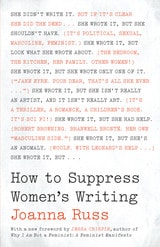
How to Suppress Women's Writing
By Joanna Russ; foreword by Jessa Crispin
University of Texas Press, 2018
Are women able to achieve anything they set their minds to? In How to Suppress Women’s Writing, award-winning novelist and scholar Joanna Russ lays bare the subtle—and not so subtle—strategies that society uses to ignore, condemn, or belittle women who produce literature. As relevant today as when it was first published in 1983, this book has motivated generations of readers with its powerful feminist critique.
“What is it going to take to break apart these rigidities? Russ’s book is a formidable attempt. It is angry without being self-righteous, it is thorough without being exhausting, and it is serious without being devoid of a sense of humor. But it was published over thirty years ago, in 1983, and there’s not an enormous difference between the world she describes and the world we inhabit.”
—Jessa Crispin, from the foreword
“A book of the most profound and original clarity. Like all clear-sighted people who look and see what has been much mystified and much lied about, Russ is quite excitingly subversive. The study of literature should never be the same again.”
—Marge Piercy
“Joanna Russ is a brilliant writer, a writer of real moral passion and high wit.”
—Adrienne Rich
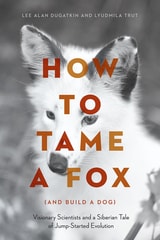
How to Tame a Fox (and Build a Dog)
Visionary Scientists and a Siberian Tale of Jump-Started EvolutionLee Alan Dugatkin and Lyudmila Trut
University of Chicago Press, 2017
Most accounts of the natural evolution of wolves place it over a span of about 15,000 years, but within a decade, Belyaev and Trut’s fox breeding experiments had resulted in puppy-like foxes with floppy ears, piebald spots, and curly tails. Along with these physical changes came genetic and behavioral changes, as well. The foxes were bred using selection criteria for tameness, and with each generation, they became increasingly interested in human companionship. Trut has been there the whole time, and has been the lead scientist on this work since Belyaev’s death in 1985, and with Lee Dugatkin, biologist and science writer, she tells the story of the adventure, science, politics, and love behind it all. In How to Tame a Fox, Dugatkin and Trut take us inside this path-breaking experiment in the midst of the brutal winters of Siberia to reveal how scientific history is made and continues to be made today.
To date, fifty-six generations of foxes have been domesticated, and we continue to learn significant lessons from them about the genetic and behavioral evolution of domesticated animals. How to Tame a Fox offers an incredible tale of scientists at work, while also celebrating the deep attachments that have brought humans and animals together throughout time.
How to Teach Art?
Wiktoria Furrer, Carla Gabrí, Nastasia Louveau, Maria Ordoñez, and Artur Zmijewski
Diaphanes, 2021
How should art be taught? What kind of knowledge should artists absorb? How might an ordinary person become a creature addicted to the creative process? In other words, how can a non-artist become an artist? Such programmatic questions articulated by acclaimed Polish artist Artur Żmijewski were at the heart of the workshop “How to Teach Art?” Żmijewski invited a group of graduate and doctoral students from three Zurich universities—the Swiss Federal Institute of Technology, the University of Zurich, and the Zurich University of the Arts—to collectively reflect on their artistic practices. Over the course of four months, the group met several times a week for hourlong sessions, following individual and collective exercises induced by Żmijewski himself.
This book retraces the workshop and its process by showing inconclusive, fragmentary results between theory and practice. How to Teach Art? presents drawings, videos, photographs, 16mm films, and accompanying reflections on the central premise, “How to teach art?”
How to Think About Catastrophe
Toward a Theory of Enlightened DoomsayingJean-Pierre Dupuy
Michigan State University Press, 2022
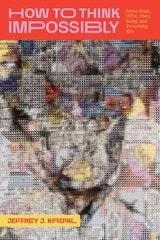
How to Think Impossibly
About Souls, UFOs, Time, Belief, and Everything ElseJeffrey J. Kripal
University of Chicago Press, 2024
Now in paperback, a mind-bending invitation to experience the impossible as fundamentally human.
From precognitive dreams and telepathic visions to near-death experiences, UFO encounters, and beyond, so-called impossible phenomena are not supposed to happen. But they do happen—all the time. Jeffrey J. Kripal asserts that the impossible is a function not of reality but of our everchanging assumptions about what is real. How to Think Impossibly invites us to think about these fantastic (yet commonplace) experiences as an essential part of being human, expressive of a deeply shared reality that is neither mental nor material but gives rise to both. Thinking with specific individuals and their extraordinary experiences in vulnerable, open, and often humorous ways, Kripal interweaves humanistic and scientific inquiry to foster an awareness that the fantastic is real, the supernatural is super natural, and the impossible is possible.
How to Think about Information
Dan Schiller
University of Illinois Press, 2006
It is common wisdom that the U.S. economy has adapted to losses in its manufacturing base because of the booming information sector, with high-paying jobs for everything from wireless networks to video games. We are told we live in the Information Age, in which communications networks and media and information services drive the larger economy. While the Information Age may have looked sunny in the beginning, as it has developed it looks increasingly ominous: its economy and benefits grow more and more centralized--and in the United States, it has become less and less subject to democratic oversight.
Corporations around the world have identified the value of information and are now seeking to control its production, transmission, and consumption. In How to Think about Information, Dan Schiller explores the ways information has been increasingly commodified as a result and how it both resembles and differs from other commodities. Through a linked series of theoretical, historical, and contemporary studies, Schiller reveals this commodification as both dynamic and expansionary, but also deeply conflicted and uncertain. He examines the transformative political and economic changes occurring throughout the informational realm and analyzes key dimensions of the process, including the buildup of new technological platforms, the growth of a transnationalizing culture industry, and the role played by China as it reinserts itself into an informationalized capitalism.
How to Think like a Philosopher
Twelve Key Principles for More Humane, Balanced, and Rational ThinkingJulian Baggini
University of Chicago Press, 2023
By now, it should be clear: in the face of disinformation and disaster, we cannot hot take, life hack, or meme our way to a better future. But how should we respond instead? In How to Think like a Philosopher, Julian Baggini turns to the study of reason itself for practical solutions to this question, inspired by our most eminent philosophers, past and present.
Baggini offers twelve key principles for a more humane, balanced, and rational approach to thinking: pay attention; question everything (including your questions); watch your steps; follow the facts; watch your language; be eclectic; be a psychologist; know what matters; lose your ego; think for yourself, not by yourself; only connect; and don’t give up. Each chapter is chockful of real-world examples showing these principles at work—from the discovery of penicillin to the fight for trans rights—and how they lead to more thoughtful conclusions. More than a book of tips and tricks (or ways to be insufferably clever at parties), How to Think like a Philosopher is an invitation to develop the habits of good reasoning that our world desperately needs.
How to Win a Culture War
LGBTQ+ Social Change Through Pop CultureLisa M. Stulberg
University of Chicago Press, 2026
How elite athletes and entertainment industry movers and shakers work to win the culture war for LGBTQ+ social justice.
The unquestionable runaway television hit of late 2025 was Crave/HBO Max’s Heated Rivalry, a show that tells the love story of two queer ice hockey players. This show—and the wider social context around it—would have been unthinkable without the courageous writing, art, and advocacy of previous generations of LGBTQ+ people and their allies in the entertainment industry. In How to Win a Culture War, sociologist Lisa M. Stulberg argues that, despite substantial barriers, past and current creatives and athletes are changing American culture through their contributions to arts, sports, and politics.
Stulberg conducted in-depth interviews with 170 culture workers—including television, film, and theater actors and creators; musicians; elite athletes; and activists over the span of 14 years. These include stars such as Will & Grace's Eric McCormack, Orange Is the New Black’s Lea DeLaria, Olympic diver Greg Louganis, and several former NFL players, as well as the TV and movie writers, producers, and directors behind some of pop culture’s boldest moves. These culture makers take six primary steps toward LGBTQ+ social change: they become visible, use available platforms, change their workplaces, overachieve, become normal, and stay queer. In this work, they are opening up the culture, changing hearts and minds, and building community, even amid a fresh round of ruthless political attacks on LGBTQ+ people.
Providing rich behind-the-scenes insight and cultural material, Stulberg outlines an urgently needed playbook for how to win a culture war.
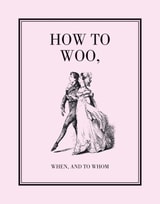
How to Woo, When, and to Whom
W. H. Collingridge
Bodleian Library Publishing, 2006
The book addresses every step in navigating the perilous territory of love, from instructions on writing love letters to the rules of public displays of affection to gracefully dealing with rejection. Also included are the most important characteristics to keep in mind when choosing The One, such as age, health, fortune, morals, and social position. On marriage, Collingridge wisely advises: “Both men and women vary greatly as to the age at which they arrive at maturity; marriage should never be undertaken before that age, and generally never after.” Even so, Collingridge lauds marriage as an institution of virtues, noting how young men’s “intellects become sharpened, their morals improved, and their energy, by certain necessity, enlarged.” (He does not, interestingly enough, note what marriage does for women.) Passages of verse by such famed literary figures as Shakespeare, Boswell, Dr. Johnson, and Lady Mary Wortley Montagu accompany the sensible advice, providing an array of poetic passages that capture the tumultuous and timeless emotions of love and rejection.
Even though today’s social scene is more analogous to Sex and the City than Emma, much of the counsel in How to Woo is surprisingly applicable to contemporary daters. An invaluable resource for both lovers and the lovelorn, How to Woo is a delightful handbook on the age-old art of courting.
How to Write Well
50 Pointers on Process, Usage, and StyleBryan A. Garner
University of Chicago Press, 2027
Stop worshipping Strunk and White. Start writing well, with 50 tips and techniques from language expert Bryan A. Garner.
For decades, people looking for a concise guide to English-language writing turned to The Elements of Style by William Strunk Jr. and E. B. White. That slim book has been used by everyone from high school and college students to professionals seeking quick advice on usage, grammar, and form. But The Elements of Style hasn’t been updated in more than a quarter century, and it no longer reflects the way good writers work or what they most need to know, especially in the age of generative AI.
How to Write Well: 50 Pointers on Process, Usage, and Style is the modern, evidence-based alternative. Leading language and writing expert Bryan A. Gamer distills a lifetime of teaching and research into 50 compact pointers for modern writers seeking to produce clear, accurate, and lively prose. You’ll learn how strong writers think, how they turn ideas into blueprints, and how they draft, revise, and tighten with ruthless selectivity. You’ll also encounter lucid guidance on grammar and punctuation that corrects Strunk & White’s famous blunders, including shaky treatment of passive voice and a fixation on trivia over substance.
How to Write Well presents a start-to-finish method: mindset, habits, process, and the concrete techniques that produce clean, forceful writing. Unlike The Elements of Style, this book doesn’t pretend your draft magically appears on the page. It shows you how to generate ideas, structure them, and build a repeatable process for everything you write—from emails and memos to articles, briefs, and books. And while emphasizing the mind and the voice of the writer, it also offers advice on working intelligently with AI while keeping full editorial control.
If you’re serious about writing, Garner’s How to Write Well is the indispensable style book you need now.
How to Write a BA Thesis, Second Edition
A Practical Guide from Your First Ideas to Your Finished PaperCharles Lipson
University of Chicago Press, 2018
How to Write a BA Thesis
A Practical Guide from Your First Ideas to Your Finished PaperCharles Lipson
University of Chicago Press, 2005
This book offers step-by-step advice on how to turn a vague idea into a clearly defined proposal, then a draft paper, and, ultimately, a polished thesis. Lipson also tackles issues beyond the classroom-from good work habits to coping with personal problems that interfere with research and writing.
Filled with examples and easy-to-use highlighted tips, the book also includes handy time schedules that show when to begin various tasks and how much time to spend on each. Convenient checklists remind students which steps need special attention, and a detailed appendix, filled with examples, shows how to use the three main citation systems in the humanities and social sciences: MLA, APA, and Chicago.
How to Write a BA Thesis will help students work more comfortably and effectively-on their own and with their advisers. Its clear guidelines and sensible advice make it the perfect text for thesis workshops. Students and their advisers will refer again and again to this invaluable resource. From choosing a topic to preparing the final paper, How to Write a BA Thesis helps students turn a daunting prospect into a remarkable achievement.
How to be Human*
*Though an EconomistDeirdre N. McCloskey
University of Michigan Press, 2000
Anyone can learn about the field of economics from How to Be Human. She can learn how economics works as a discipline and as a piece of sociology, who the heroes are and the villains, how a career in economics relates to matters of ethics and epistemology. She can learn what it is like to be a new woman in a boys' subject, a subject that avoids at all costs the word "love."
During the 1990s Deirdre McCloskey established herself as the main internal critic of the economic mainstream. Her quarterly columns in the Eastern Economic Journal, many of which are collected here, have become a handbook for reform. Trained in economics herself, she knows the normal science of the field from the inside: she has done it as a distinguished economic historian; and has watched it work from the faculties of Chicago (for twelve years) and Iowa (for nineteen), and now at the University of Illinois at Chicago.
Her criticism from the inside is that the two methods on which economics has depended since the 1940s--existence-theorem mathematics and significance-testing statistics--are nonsense. They have, she claims, nothing to do with economic science, and have massively diverted economists from finding out how the economy works.
McCloskey's book is written for anyone interested in economics, whether trained in it or not--anyone who cares about the economy but is not taken in by the boys' game.
Deirdre McCloskey is University Professor of the Human Sciences, University of Illinois at Chicago.
How to be a Good Lover
Edited by the Bodleian Library
Bodleian Library Publishing, 2012
Across the centuries, few experiences in life rival the excitement and emotional intensity of falling in love. Yet from the moment we set eyes on a special someone, the path to their heart seems strewn with devastating pitfalls. What if the object of our affection hates the way we wear our hair, finds our kisses lacking, or resents our talk of former loves?How does one go about successfully wooing a future husband or wife? Fortunately, there are time-honored strategies to avoid these pitfalls and help us attract and keep the paramour of our dreams.
How to be a Good Mother-in-Law
Edited by the Bodleian Library
Bodleian Library Publishing, 2013
Originally published in the 1930s, How to be a Good Mother-in-Law offers advice that ranges from the amusingly old-fashioned to the surprisingly still relevant today. Among the topics discussed are how not to behave on your son or daughter’s wedding day, how to visit the couple in their new home, how to interact with the grandchildren, and what degree of independence should be granted to married sons. For mothers-in-law considering living with the married couple, a chapter presents suggestions for how to negotiate this famously fraught situation. In another chapter called “Are They as Bad as They are Painted?,” the book reproduces a selection of tabloid tragedies, including the story of a mother-in-law that surprised a hapless couple by accompanying them on their honeymoon.
Whether you’re a new mother-in-law, a veteran to this much-maligned role, or a long-suffering spouse whose partner’s parent seems impossible to please—the pithy advice on-hand in How to be a Good Mother-in-Law will be warmly welcomed.
How to be a Good Motorist
Edited by the Bodleian Library
Bodleian Library Publishing, 2013
Among the practical and unusual guidelines offered are what precautions one should take when another car approaches and which parts of a car’s engine can be fixed in a pinch with emery paper, copper wire, and insulating tape. Some of the observations, like the cautionary note that, when driving, one ought to “look on all other drivers as fools” are sure to strike a chord with many motorists today. Others, like the suggestion that “a good chauffeur will save his employer a great deal of expense” evoke the style of a glamorous bygone era. The book covers such topics as unscrupulous secondhand car dealers, simple maintenance, women drivers, and “dashboard delights.” (Spoiler: For a well-equipped dashboard, don’t forget the speedometer.) For those planning a longer journey, the book also advises on how to choose the most pleasant picnic site when on the road.
How to be a Good Motorist is the perfect gift for the new driver or anyone who longs for a simpler time before rush-hour traffic reports and roundabouts.