Results by title
4743 books match the query 'Religion' and 176 start with h
History of Religious Ideas, Volume 2
From Gautama Buddha to the Triumph of ChristianityMircea Eliade
University of Chicago Press, 1982
History of Religious Ideas, Volume 3
From Muhammad to the Age of ReformsMircea Eliade
University of Chicago Press, 1985
As in his previous work, Eliade pays particular attention to heresies, folk beliefs, and cults of secret wisdom, such as alchemy and sorcery, and continues the discussion, begun in earlier volumes, of pre-Christian shamanistic practices in northern Europe and the syncretistic tradition of Tibetan Buddhism. These subcultures, he maintains, are as important as the better-known orthodoxies to a full understanding of Judaism, Christianity, and Islam.
History of a Tragedy
THE EXPULSION OF THE JEWS FROM SPAINJoseph Perez
University of Illinois Press, 2006
Few events in the history of Spain have provoked as much controversy as the expulsion of the Jews in 1492. Conflicts within the Catholic Church, suspicions within the newly unified Spain, and the claims of Spanish merchants combined to make the Spain of Ferdinand and Isabella intolerant and inquisitorial. Yet the roots of Spanish anti-Semitism went deeper. In this concise survey of the expulsion of the Sephardic Jews, Joseph Pérez studies the evolution of the Jewish community in Spain from the time of the Visigoths to the reign of the Catholic kings. He explores the Jewish community’s role in creating and sustaining the vibrant cultural, political, and economic world of medieval Spain, and how growing religious intolerance, a pervasive resentment of the “others,” and a string of escalating encroachments culminated in expulsion.
History of the Bishops of Salona and Split
Thomas Spalatensis
Central European University Press, 2006
History of the Church
Phillip R. Rufinus of Aquileia
Catholic University of America Press, 2017
History's Erratics
Irish Catholic Dissidents and the Transformation of American Capitalism, 1870-1930David M. Emmons
University of Illinois Press, 2024
As Ice Age glaciers left behind erratics, so the external forces of history tumbled the Irish into America. Existing both out of time and out of space, a diverse range of these Roman-Catholic immigrants saw their new country in a much different way than did the Protestants who settled and claimed it. These erratics chose backward looking tradition and independence over assimilation and embraced a quintessentially Irish form of subversiveness that arose from their culture, faith, and working-class outlook. David M. Emmons draws on decades of research and thought to plumb the mismatch of values between Protestant Americans hostile to Roman Catholicism and the Catholic Irish strangers among them. Joining ethnicity and faith to social class, Emmons explores the unique form of dissidence that arose when Catholic Irish workers and their sympathizers rejected the beliefs and symbols of American capitalism.
A vibrant and original tour de force, History’s Erratics explores the ancestral roots of Irish nonconformity and defiance in America.
Hittite Local Cults
Michele Cammarosano
SBL Press, 2018
An innovative translation and analysis of Hittite local festivals and of their economic and social dimensions for students and scholars
This English translation of the Hittite cult inventories provides a vivid portrait of the religion, economy, and administration of Bronze Age provincial towns and villages of the Hittite Empire. These texts report the state of local shrines and festivals and document the interplay between the central power and provincial communities on religious affairs. Brief introductions to each text make the volume accessible to students and scholars alike.
Features:
- Critical editions of Hittite cult inventories, some of which are edited for the first time, with substantial improvements in readings and interpretations
- The first systematic study of the linguistic aspects of Hittite administrative jargon
- An up-to-date study of Hittite cult images and iconography of the gods
Michele Cammarosano currently leads a Deutsche Forschungsgemeinschaft-funded project on Hittite cultic administration at Julius-Maximilians-Universität Würzburg. His research interests focus on cuneiform palaeography and Hittite religion.
Hittite Myths, Second Edition
Harry A. Hoffner
SBL Press, 1998

Hizbu'llah
Politics and ReligionAmal Saad-Ghorayeb
Pluto Press, 2001
Hizbu’llah is the largest and most prominent political party in Lebanon, and one of the most renowned Islamist movements in the world. In this book, Amal Saad-Ghorayeb examines the organisation’s understanding of jihad and how this, together with its belief in martyrdom, brought about the withdrawal of Israeli occupation forces from Lebanon in May 2000.
Saad-Ghorayeb explores the nature of the party’s struggle against the West by studying its views on the use of violence against Westerners. Crucially, she also addresses the question of whether Hizbu’llah depicts this struggle in purely political or civilisational terms. The existential nature of the movement’s conflict with Israel is analysed and the Islamic roots of its anti-Judaism is unearthed.
The author explores the mechanics and rationale behind the party’s integration into the Lebanese political system, and sheds light on how it has reconciled its national idenitity with its solidarity with the Muslim umma.
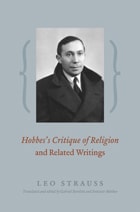
Hobbes's Critique of Religion and Related Writings
Leo Strauss
University of Chicago Press, 2011
Leo Strauss’s The Political Philosophy of Hobbes deservedly ranks among his most widely acclaimed works. In it Strauss argues that the basis for Hobbes’s natural and political science is his interest in “self-knowledge of man as he really is.” The writings collected in this book, each written prior to that classic volume, complement that account. Thus at long last, this book allows us to have a complete picture of Strauss’s interpretation of Hobbes, the thinker pivotal to the fundamental theme of his life’s work: the conflicting demands of philosophy and revelation, or as he termed it, “the theologico-political problem.”
It is no exaggeration to say that Strauss’s work on Hobbes’s critique of religion is essential to his analysis of Hobbes’s political philosophy, and vice versa. This volume will spark new interest in Hobbes’s explication of the Bible and in his understanding of religion by revealing previously neglected dimensions and motives of Hobbes’s “theology.” At the same time, scholars interested in the intellectual development of Leo Strauss will find in these writings the missing link, as it were, between his two early books,Spinoza’s Critique of Religion and The Political Philosophy of Hobbes.
In addition, this volume makes available for the first time in English a letter, a book outline, an extended review, an engagement with legal positivism, and an account of Strauss’s work on Hobbes by Heinrich Meier, all of which shed light on Strauss’s concerns and his approach to Hobbes in particular, as well as to modern political thought and life.
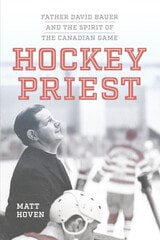
Hockey Priest
Father David Bauer and the Spirit of the Canadian GameMatt Hoven
Catholic University of America Press, 2024
Holiness through Work
Commemorating the Encyclical Laborem ExercensMartin Schlag
St. Augustine's Press, 2022
This book is a timely contribution to the field of scholarship that focuses on Catholic Social Thought and is ideally suited for graduate studies and the reader interested in more serious questions in Christian theology.
Giulio Maspero, "The Bible and the Fathers of the Church on Work"
Patricia Ranft, "Work Theology in the High Middle Ages"
Angela Franks, "John Paul II's Metaphysics of Labor"
Deborah Savage, "Confronting a Technocratic Future: Women's Work and the Church's Social Vision"
Martin Schlag, "Contemplation at Work: A Theological Conversation Between John Paul II and Josemaría Escrivá"
Richard Turnbull, "Laborem Exercens: A Protestant Appreciation"
Michael Naughton, "Good Work: Insights from the Subjective Dimension of Work"
Christopher Michaelson, "Subjects and Objects in Meaningful Work"
Javier Ignacio Pinto Garay and Alvaro Pezoa Bissieres, "The Worker and the Transistor: The Dignity of Work and Business Ethics in Global Corporate Practices"
Gonzalo Flores-Castro Lingán, "The Real Work: Making the Encyclical Laborem Exercens Operational"
Geoffrey C. Friesen, "Laborem Exercens and the Subjective Dimension of Work in Economics and Finance"
Hollywood Faith
Holiness, Prosperity, and Ambition in a Los Angeles ChurchMarti, Gerardo
Rutgers University Press, 2008
In Hollywood Faith, Gerardo Marti shows how a multiracial evangelical congregation of 2,000 people accommodates itself to the entertainment industry and draws in many striving to succeed in this harsh and irreverent business. Oasis strategically sanctifies ambition and negotiates social change by promoting a new religious identity as "champion of life"-an identity that provides people who face difficult career choices and failed opportunities a sense of empowerment and endurance.
The first book to provide an in-depth look at religion among the "creative class," Hollywood Faith will fascinate those interested in the modern evangelical movement and anyone who wants to understand how religion adapts to social change.
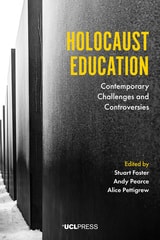
Holocaust Education
Contemporary Challenges and ControversiesEdited by Stuart Foster, Andy Pearce, and Alice Pettigrew
University College London, 2020
Teaching and learning about the Holocaust is central to school curriculums across the globe. But the history of the Holocaust remains controversial and can render teaching it daunting, even to the most experienced instructors. Drawing on landmark research into teaching practices and students’ knowledge, Holocaust Education provides unique insights about classroom learning. It sheds light on key challenges in Holocaust education, including the impact of misconceptions and misinformation, the dilemma posed by images of atrocity, and how to approach teaching in ethnically diverse environments. Overviews of the most significant debates in Holocaust education provide wider context for the classroom evidence. Holocaust Education offers a vital guide, leading readers through some of the most vexed areas of Holocaust challenges and controversies for teachers, researchers, and policymakers.
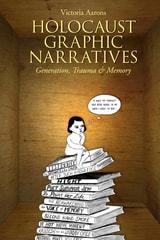
Holocaust Graphic Narratives
Generation, Trauma, and MemoryVictoria Aarons
Rutgers University Press, 2020
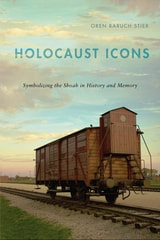
Holocaust Icons
Symbolizing the Shoah in History and MemoryOren Baruch Stier
Rutgers University Press, 2015
Jewish studies scholar Oren Stier offers in this volume new insight into symbols and the symbol-making process, as he traces the lives and afterlives of certain remnants of the Holocaust and their ongoing impact. Stier focuses in particular on four icons: the railway cars that carried Jews to their deaths, symbolizing the mechanics of murder; the Arbeit Macht Frei (“work makes you free”) sign over the entrance to Auschwitz, pointing to the insidious logic of the camp system; the number six million that represents an approximation of the number of Jews killed as well as mass murder more generally; and the persona of Anne Frank, associated with victimization. Stier shows how and why these icons—an object, a phrase, a number, and a person—have come to stand in for the Holocaust: where they came from and how they have been used and reproduced; how they are presently at risk from a variety of threats such as commodification; and what the future holds for the memory of the Shoah.
In illuminating these icons of the Holocaust, Stier offers valuable new perspective on one of the defining events of the twentieth century. He helps readers understand not only the Holocaust but also the profound nature of historical memory itself.
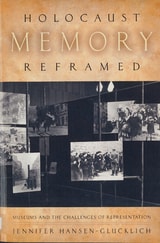
Holocaust Memory Reframed
Museums and the Challenges of RepresentationHansen-Glucklich, Jennifer
Rutgers University Press, 2014
In Holocaust Memory Reframed, Jennifer Hansen-Glucklich examines representations in three museums: Israel’s Yad Vashem in Jerusalem, Germany’s Jewish Museum in Berlin, and the United States Holocaust Memorial Museum in Washington, D.C. She describes a variety of visually striking media, including architecture, photography exhibits, artifact displays, and video installations in order to explain the aesthetic techniques that the museums employ. As she interprets the exhibits, Hansen-Glucklich clarifies how museums communicate Holocaust narratives within the historical and cultural contexts specific to Germany, Israel, and the United States. In Yad Vashem, architect Moshe Safdie developed a narrative suited for Israel, rooted in a redemptive, Zionist story of homecoming to a place of mythic geography and renewal, in contrast to death and suffering in exile. In the Jewish Museum in Berlin, Daniel Libeskind’s architecture, broken lines, and voids emphasize absence. Here exhibits communicate a conflicted ideology, torn between the loss of a Jewish past and the country’s current multicultural ethos. The United States Holocaust Memorial Museum presents yet another lens, conveying through its exhibits a sense of sacrifice that is part of the civil values of American democracy, and trying to overcome geographic and temporal distance. One well-know example, the pile of thousands of shoes plundered from concentration camp victims encourages the visitor to bridge the gap between viewer and victim.
Hansen-Glucklich explores how each museum’s concept of the sacred shapes the design and choreography of visitors’ experiences within museum spaces. These spaces are sites of pilgrimage that can in turn lead to rites of passage.
Holocaust
An American UnderstandingLipstadt, Deborah E
Rutgers University Press, 2016
Holy Anorexia
Rudolph M. Bell
University of Chicago Press, 1985
"Everyone interested in anorexia nervosa . . . should skim this book or study it. It will make you realize how dependent upon culture the definition of disease is. I will never look at an anorexic patient in the same way again."—Howard Spiro, M.D., Gastroenterology
"[This] book is a first-class social history and is well-documented both in its historical and scientific portions."—Vern L. Bullough, American Historical Review
"A significant contribution to revisionist history, which re-examines events in light of feminist thought. . . . Bell is particularly skillful in describing behavior within its time and culture, which would be bizarre by today's norms, without reducing it to the pathological."—Mary Lassance Parthun, Toronto Globe and Mail
"Bell is both enlightened and convincing. His book is impressively researched, easy to read, and utterly fascinating."—Sheila MacLeod, New Statesman
Holy Leisure
Recreation and Religion in God's Square MileTroy Messenger
Temple University Press, 2000
Holy Nation
The Transatlantic Quaker Ministry in an Age of RevolutionSarah Crabtree
University of Chicago Press, 2015
Holy Nation convincingly shows that ideals and actions were inseparable for the Society of Friends, yielding an account of Quakerism that is simultaneously a history of the faith and its adherents and a history of its confrontations with the wider world. Ultimately, Crabtree argues, the conflicts experienced between obligations of church and state that Quakers faced can illuminate similar contemporary struggles.
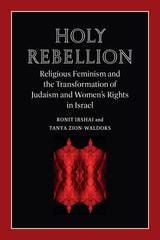
Holy Rebellion
Religious Feminism and the Transformation of Judaism and Women's Rights in IsraelRonit Irshai and Tanya Zion-Waldoks
Brandeis University Press, 2024
In Holy Rebellion, Ronit Irshai and Tanya Zion-Waldoks examine social change in Israel through a rigorous analysis of the shifting entanglements of religion, gender, and law in times of cultural transformation. They explore theological, halakhic, political, and sociological processes and show how they interact with one another in ways that advance women’s rights, as well as how they are met with a conservative backlash in the discourses and actions of the rabbinic establishment. Irshai and Zion-Waldoks build on legal philosopher Robert Cover’s 1982 paper “Nomos and Narrative,” which explained how cultural narratives and legal norms are reciprocally enforced or transformed. Expanding on this notion, Irshai and Zion-Waldoks propose a “narrative ripeness test,” an analytic tool that evaluates the relationship between culture and law to assess how and when change within a minority cultural community may be accelerated or hindered by state intervention.
Religious feminisms are emerging around the world, not solely in Israel, and this book helps elucidate how they create enduring and radical change. Many liberal states are also confronting an illiberal backlash and question the multicultural framework’s ability to serve the needs of minorities within minorities. Therefore, the theoretical framework offered by Irshai and Zion-Waldoks is applicable beyond the Israeli case, even as it offers deeper insights into an Israeli society in turmoil.
Holy Terrors, Second Edition
Thinking About Religion After September 11Bruce Lincoln
University of Chicago Press, 2006
Holy Terrors begins with a gripping dissection of the instruction manual given to each of the 9/11 hijackers. In their evocation of passages from the Quran, we learn how the terrorists justified acts of destruction and mass murder “in the name of God, the most merciful, the most compassionate.” Lincoln then offers a provocative comparison of President Bush’s October 7, 2001 speech announcing U.S. military action in Afghanistan alongside the videotaped speech released by Osama bin Laden just a few hours later. As Lincoln authoritatively demonstrates, a close analysis of the rhetoric used by leaders as different as George W. Bush and Osama bin Laden—as well as Mohamed Atta and even Jerry Falwell—betrays startling similarities. These commonalities have considerable implications for our understanding of religion and its interrelationships with politics and culture in a postcolonial world, implications that Lincoln draws out with skill and sensitivity.
With a chapter new to this edition, “Theses on Religion and Violence,” Holy Terrors remains one of the essential books on September 11 and a classic study on the character of religion.
“From time to time there appears a work . . . that serves to focus the wide-ranging, often contentious discussion of religion’s significance within broader cultural dynamics. Bruce Lincoln’s Holy Terrors is one such text. . . . Anyone still struggling toward a more nuanced comprehension of 9/11 would do well to spend time with this book.”—Theodore Pulcini, Middle East Journal
Holy Terrors
Thinking about Religion after September 11Bruce Lincoln
University of Chicago Press, 2002
Lincoln begins with a gripping dissection of the instruction manual given to each of the hijackers. In their evocation of passages from the Quran, we learn how the terrorists justified acts of destruction and mass murder "in the name of God, the most merciful, the most compassionate." Lincoln then offers a provocative comparison of President Bush's October 7 speech announcing U.S. military action in Afghanistan and Osama bin Laden's videotape released hours later. Each speech, he argues, betrays telling contradictions. Bin Laden, for instance, conceded implicitly that Islam is not unitary, as his religious rhetoric would have it, but is torn by deep political divisions. And Bush, steering clear of religious rhetoric for the sake of political unity, still reassured his constituents through coded allusions that American policy is firmly rooted in faith.
Lincoln ultimately broadens his discussion further to consider the role of religion since September 11 and how it came to be involved with such fervent acts of political revolt. In the postcolonial world, he argues, religion is widely considered the most viable and effective instrument of rebellion against economic and social injustices. It is the institution through which unified communities ensure the integrity and continuity of their culture in the wake of globalization. Brimming with insights such as these, Holy Terrors will become one of the essential books on September 11 and a classic study on the character of religion.

Holy Waters
Gender Segregation and the Rise of Haredi Politics in IsraelShayna Weiss
Rutgers University Press, 2027
Examining the politics of pools and beaches, Holy Waters reveals a surprising history about Haredi Jews and Israel. By looking at the battles to establish gender segregating swimming in Israel, which required a partnership between the Israeli government and its Haredi population to reshape public space, the book argues that the establishment of Israel created a new Haredi pragmatic politics. Unlike some Ultra-Orthodox Jews, who rejected the Jewish state entirely, these radical moderates worked with the state to make it feel more Jewish, and to improve life for its Haredi population, without embracing Zionist ideology. Holy Waters examines three cases: a failure to prevent mixed swimming in Jerusalem, the successful establishment of a separate beach in Tel Aviv, and the mixed results of a Diaspora awareness campaign. Connecting historical controversies to today’s debates of gender segregation, the book demonstrates how these radical moderates still influence Israel today.
This book is published with the support of the Jordan Schnitzer First Book Publication Award, administered by the Association for Jewish Studies.
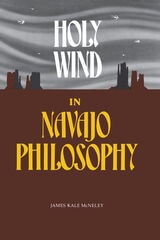
Holy Wind in Navajo Philosophy
James Kale McNeley
University of Arizona Press, 1981
"An admirable volume . . . it illustrates how much we can learn about the importance of poetry as a fundamental activity by investigating the traditions of what should be acknowledged as the New World's unique classical past." —New Scholar
"This book is a fascinating analysis of what obviously is a central dimension in the traditional Navajo awareness of life." —New Mexico Historical Review
Home without Walls
Southern Baptist Women and Social Reform in the Progressive EraCarol Crawford Holcomb
University of Alabama Press, 2020
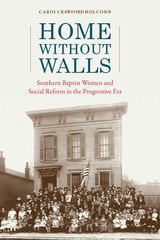
The Woman’s Missionary Union (WMU), founded in 1888, carved out a uniquely feminine space within the Southern Baptist Convention during the tumultuous years of the Progressive Era when American theologians were formulating the social gospel. These women represented the Southern Baptist elite and as such had the time to read, write, and discuss ideas with other Southern progressives. They rubbed shoulders with more progressive Methodist and Presbyterian women in clubs and ecumenical missionary meetings. Baptist women studied the missionary publications of these other denominations and adopted ideas for a Southern Baptist audience.
Home without Walls: Southern Baptist Women and Social Reform in the Progressive Era shows how the social attitudes of women were shaped at the time. By studying primary documents—including personal letters, official exchanges and memoranda, magazine publications, newsletters, and editorials—Carol Crawford Holcomb uncovers ample evidence that WMU leaders, aware of the social gospel and sympathetic to social reform, appropriated the tools of social work and social service to carry out their missionary work.
Southern Baptist women united to build a financial empire that would sustain the Southern Baptists through the Great Depression and beyond. Their social attitudes represented a kaleidoscope of contrasting opinions. By no stretch of the imagination could WMU leaders be characterized as liberal social gospel advocates. However, it would also be wrong to depict them as uniformly hostile to progressivism or ignorant of contemporary theological ideas. In the end, they were practical feminists in their determination to provide a platform for women’s views and a space for women to do meaningful work.
Homecourt
The True Story of the Best Basketball Team You've Never Heard OfLarry Needle
Temple University Press, 2012
Homeland Insecurity
The Arab American and Muslim American Experience After 9/11Louis A. Cainkar
Russell Sage Foundation, 2009
Homelands
Southern Jewish Identity in Durham-Chapel Hill and North CarolinaLeonard Rogoff
University of Alabama Press, 2001
Exploring how Southern Jews forged identity, community, and belonging in the evolving landscape of the New South.
Homelands is a case study of a unique ethnic group in North America—small-town southern Jews. Both Jews and southerners, Leonard Rogoff points out, have long struggled with questions of identity and whether to retain their differences or try to assimilate into the national culture. Rogoff shows how, as immigrant Jews became small-town southerners, they constantly renegotiated their identities and reinvented their histories.
The Durham-Chapel Hill Jewish community was formed during the 1880s and 1890s, when the South was recovering from the Reconstruction era and Jews were experiencing ever-growing immigration as well as challenging the religious traditionalism of the previous 4,000 years. Durham and Chapel Hill Jews, recent arrivals from the traditional societies of eastern Europe, assimilated and secularized as they lessened their differences with other Americans. Some Jews assimilated through intermarriage and conversion, but the trajectory of the community as a whole was toward retaining their religious and ethnic differences while attempting to integrate with their neighbors.
The Durham-Chapel Hill area is uniquely suited to the study of the southern Jewish experience, Rogoff maintains, because the region is exemplary of two major trends: the national population movement southward and the rise of Jews into the professions. The Jewish peddler and storekeeper of the 1880s and the doctor and professor of the 1990s, Rogoff says, are representative figures of both Jewish upward mobility and southern progress.
Homilies on Genesis 18–45
Saint John Chrysostom
Catholic University of America Press, 1990
Homilies on Genesis 46–67
Saint John Chrysostom
Catholic University of America Press, 1992
Homilies on Genesis and Exodus
Catholic University of America Press, 1982
Homilies on Genesis, 1–17
Saint John Chrysostom
Catholic University of America Press, 1986
Homilies on Isaiah
Elizabeth Ann Dively Origen
Catholic University of America Press, 2021
Homilies on Jeremiah and 1 Kings 28
Catholic University of America Press, 1998
Homilies on Joshua
Catholic University of America Press, 2002
Homilies on Judges
Catholic University of America Press, 2010
Homilies on Leviticus, 1-16
Catholic University of America Press, 1990
Homilies on Luke
Catholic University of America Press, 1996
Homilies on Psalms, 36-38
Michael Origen
Catholic University of America Press, 2023
Homilies on the Psalms
Codex Monacensis Graecus 314Joseph W. Origen
Catholic University of America Press, 2021

Hommes, encore un effort…
Anthropogenèse, christianisme, sexuationThierry de Duve
Diaphanes, 2023
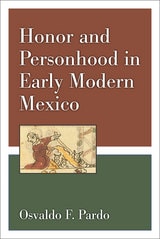
Honor and Personhood in Early Modern Mexico
Osvaldo F. Pardo
University of Michigan Press, 2015
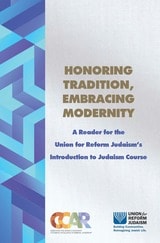
Honoring Tradition, Embracing Modernity
A Reader for the Union for Reform Judaism's Introduction to Judaism CourseRabbi Beth Lieberman and Rabbi Hara E. Person
Central Conference of American Rabbis, 2017
This is a PDF electronic download. Once you've purchased the PDF, you can download your file by logging into ccarpress.org and clicking on "My Account."
Honoring Tradition, Embracing Modernity, created in partnership between the Central Conference of American Rabbis and the Union for Reform Judaism, is for readers who seek to deepen their knowledge of Judaism--its wisdom, its practices, its beliefs, its customs, its people, and our story. This sourcebook includes selections from Judaism's rich library of wisdom literature, classic and contemporary, in a format designed for use with the URJ's Introduction to Judaism classes.
Honoring Tradition, Embracing Modernity includes five units, as listed below:
- Beginnings: What is Judaism? What are the ethics and values of the Jewish People? How can we understand humanity and human potential through our relationship to God?
- Creating a Jewish Life in Time: An exploration of the Jewish calendar of celebration and sanctity, as well as how life in the community connects and intertwines with life at home.
- The Cycle of Jewish Life: Relationship and marriage traditions, raising a family, growing into later adulthood, and the central role of learning for all generations.
- Creating a Jewish Theology: Different understandings of God, and the diverse roles that synagogue, prayer, and sacred texts play in our lives.
- The Jewish Story and Creating a Jewish Journey: The historical journey of the Jewish People, and the many identities that have emerged from it.
[Note: This is the PDF version, and is for individual use only. It is not to be copied, distributed, or sold without express written permission from CCAR Press.
For bulk orders of 10 or more, contact info@ccarpress.org. Orders consisting of 10 or more will receive a special bulk discount of $23 per PDF.]

Hope Draped in Black
Race, Melancholy, and the Agony of ProgressJoseph R. Winters
Duke University Press, 2016
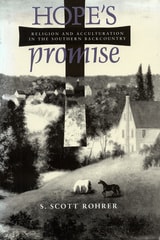
Hope's Promise
Religion and Acculturation in the Southern BackcountryS. Scott Rohrer
University of Alabama Press, 2013
In Hope's Promise, Scott Rohrer dissects the internal workings of the ecumenical Moravian movement at Wachovia—how this disparate group of pilgrims hailing from many countries (Germany, Ireland, Scandinavia, England) and different denominations (Lutheran, Reformed, Methodist, Anglican) yielded their ethnicities as they became, above all, a people of faith. By examining the "open" farm congregations of Hope, Friedberg, and Friedland, Rohrer offers a sensitive portrayal of their evangelical life and the momentous cultural changes it wrought: the organization of tight-knit congregations bound by "heart religion;" the theology of the new birth; the shape of religious discipline; the sacrament of communion; and the role of music. Drawing on courthouse documents and church records, Rohrer carefully demonstrates how various groups began to take on traits of the others. He also illustrates how evangelical values propelled interaction with the outside world—at the meetinghouse and the frontier store, for example—and fostered even more collective and accelerated change.
As the Moravians became ever more "American" and "southern," the polyglot of ethnicities that was Wachovia would, under the unifying banner of evangelicalism, meld into one of the most sophisticated religious communities in early America.
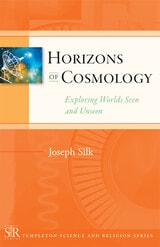
Horizons of Cosmology
Joseph Silk
Templeton Press, 2009
Hosea’s God
A Metaphorical TheologyMason D. Lancaster
SBL Press, 2023
The book of Hosea is a labyrinth of juxtaposed images for God and God’s people, with such disparate metaphors as God the devouring lion and God the reviving dew. In Hosea’s God: A Metaphorical Theology, Mason D. Lancaster demonstrates that recent advances in metaphor theory help untangle these divergent portrayals of God. He analyzes fifteen metaphor clusters in Hosea 4–14 individually, then discerns patterns and reversals between the clusters. Finally, respecting the ancient value for emphasizing individual aspects of a depiction over a homogenized picture of the whole, the book identifies five characteristics of God prominent among the metaphors of Hosea. Based on this analysis, Lancaster asserts that Hosea’s metaphorical depiction of Yahweh ultimately derives from the primacy of Yahweh’s fidelity to Israel.
Houses of God
Region, Religion, and Architecture in the United StatesPeter W. Williams
University of Illinois Press, 1997