Results by title
4155 books match the query 'State & Local' and 131 start with h
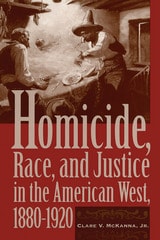
Homicide, Race, and Justice in the American West, 1880-1920
Clare V. McKanna
University of Arizona Press, 1997
This scenario dramatically brings home to the viewer what historians have long debated and hundreds of other films and books suggest: the turn-of-the-century West was a violent time and place. Ranchers, miners, deputy sheriffs, teenagers and old men, occasionally even housewives and mothers found themselves at the business end of a shotgun or a .38 revolver. Yet, since western historians tend to portray violence as essentially episodic--frontier gunfights, range wars, vigilante movements, and the like--solid data has been hard to come by.
As a beginning point for actually measuring lethal violence and assessing the administration of justice, here at last is a detailed and well-documented study of homicide in the American West. Comparing data from representative areas--Douglas County, Nebraska; Las Animas County, Colorado; and Gila County, Arizona--this book reveals a level of violence far greater than many historians have believed, even surpassing eastern cities like New York and Boston.
Clashing cultures and transient populations, a boomtown mentality, easy availability of alcohol and firearms: these and many other factors come under scrutiny as catalysts in the violence that permeated the region. By comparing homicide data, including coroner's inquests, indictments, plea bargains, and sentences across both racial and regional lines, the book also offers persuasive evidence that criminal justice systems of the Old West were weighted heavily in favor of defendants who were white and against those who were African American, Native American, or Mexican.
Packed with information, this is a book for students and scholars of western history, social history, criminology, and justice studies. Western history buffs will be captivated by colorful anecdotes about the real West, where guns could and did blaze over anything from love trysts to vendettas to too much foam on the beer. From whatever perspective, all readers are sure to find here a well-constructed framework for understanding the West as it was and for interpreting the region as it moves into the future.
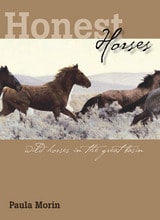
Honest Horses
Wild Horses In The Great BasinPaula Morin
University of Nevada Press, 2006
Horses have been part of the American West since the first Spanish explorers brought their European-bred steeds onto the new continent. Soon thereafter, some of these animals, lost or abandoned by their owners or captured by indigenous peoples, became the foundation of the great herds of mustangs (from the Spanish mesteño, stray) that still roam the West. These feral horses are inextricably intertwined with the culture, economy, and mythology of the West. The current situation of the mustangs as vigorous competitors for the scanty resources of the West’s drought-parched rangelands has put them at the center of passionate controversies about their purpose, place, and future on the open range. Photographer/oral historian Paula Morin has interviewed sixty-two people who know these horses best: ranchers, horse breeders and trainers, Native Americans, veterinarians, wild horse advocates, mustangers, range scientists, cowboy poets, western historians, wildlife experts, animal behaviorists, and agents of the federal Bureau of Land Management. The result is the most comprehensive, impartial examination yet of the history and impact of wild mustangs in the Great Basin. Morin elicits from her interviewees a range of expertise, insight, and candid opinion about the nature of horses, ranching, and the western environment. Honest Horses brings us the voices of authentic westerners, people who live intimately with horses and the land, who share their experiences and love of the mustangs, and who understand how precariously all life exists in Great Basin.
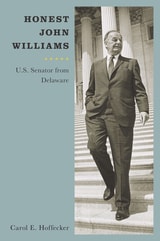
Honest John Williams
U.S. Senator from DelawareCarol E. Hoffecker
University of Delaware Press, 2024
Hoosiers and the American Story
James H. Madison and Lee Ann Sandweiss
Indiana Historical Society Press, 2014
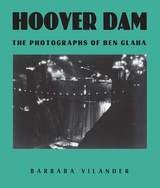
Hoover Dam
The Photographs of Ben GlahaBarbara Vilander
University of Arizona Press, 1999
Hoover Dam: The Photographs of Ben Glaha is the first detailed examination of Glaha's images of the project, some of which have never before been published. Glaha photographed every aspect of the construction process—from details of how the dam was assembled to the overall progress as the dam rose from the bottom of the dry riverbed. Glaha not only provided the Bureau with the photographs it required, he also employed his own artistic abilities to produce images of the dam that were exhibited in museums and galleries as works of art. Because Glaha was able to create a selection of Hoover Dam photographs worthy of exhibition, he was unique among government documentary photographers.
Art historian Barbara Vilander's text places Glaha's efforts within the historical context of western landscape exploration and development and reveals how his particular qualifications led to his selection as the project photographer. Vilander then examines the many publications and venues in which the Bureau used Glaha's photographs to create support for the project. She also discusses how Glaha was recognized in his own era as an influential artist and teacher, and compares his work with that of other contemporary landscape photographers addressing western water management.
Glaha's Hoover Dam images were widely published, although in accordance with Bureau policy he was not usually given personal credit and therefore his name remains largely unknown. Vilander's book corrects that oversight by giving Glaha the technical and artistic credit he is due within the context of one of the most ambitious projects in American history.
Hope And Dread In Montana Literature
Ken Egan
University of Nevada Press, 2003
This literary survey from a third-generation Montanan includes a thoughtful discussion on the now infamous events of the mid- to late-nineties. The rich literary tradition of Montana, contends author Ken Egan Jr., reflects a catastrophic vision of the West that shows the "horrors of domination" and "the foolish and destructive habits of the imperial heart." Since the 1860s, Montana’s writers have depicted struggles for survival in the state’s dramatic landscape, and for decency in a region characterized by the headlong exploitation of both natural and human resources.

Hope and Hard Truth
A Life in Texas PoliticsMary Beth Rogers
University of Texas Press, 2022
Mary Beth Rogers has led an eventful life rooted in the weeds of Texas politics, occasionally savoring a few victories—particularly the 1990 governor’s race when, as campaign manager for Ann Richards, she did the impossible and put a Democratic woman in office. She also learned to absorb her losses—after all, she was a liberal feminist in America’s most aggressively conservative state.
Rogers’s road to a political life was complex. Candidly and vulnerably, she shares both public and private memories of how she tried to maintain a rich family life with growing children and a husband with a debilitating illness. She goes on to provide an insider’s account of her experiences as Richards’s first chief of staff while weaving her way through the highs and lows of political intrigue and legislative maneuvering.
Reflecting on her family heritage and nascent spiritual quest, Rogers discovers a reality at once sobering and invigorating: nothing is ever completely lost or completely won. It is a constant struggle to create humane public policies built on a foundation of fairness and justice—particularly in her beloved Texas.

Hope in the Heartlands
Rebuilding Economies to Save DemocracyJohn Austin
Michigan State University Press, 2027
Why did the American heartland, once the engine of the world’s most dynamic economy, become the seedbed of its angriest politics? For more than twenty years, John Austin has pursued that question in Flint, Detroit, Milwaukee, and Pittsburgh—and now in Europe’s industrial regions, where many communities face the same reckoning. In Hope in the Heartlands he traces his journey from a minister’s son raised in West Virginia coal country to the man who made Flint and the industrial Midwest his adopted home. He shows how he came to see economic abandonment as the root of democratic decay—and what he and a network of like-minded leaders did about it. From coining the “Blue Economy” to championing “ally-shoring”—rebuilding supply chains across allied democracies—Austin offers a field-tested agenda for renewing left-behind regions. The stakes, he argues, could not be higher.

Hope is the Thing
Wisconsinites on Perseverance in a PandemicB. J. Hollars
Wisconsin Historical Society Press, 2021
As the one hundred essays and poems gathered here demonstrate, hope comes in many forms: a dad dance, a birth plan, an unblemished banana, a visit from a neighborhood dog, the revival of an old tradition, empathy. The contributors are racially, geographically, and culturally diverse, representing a rough cross section of Wisconsin voices, from truck driver to poet laureate, from middle school student to octogenarian, from small business owner to seasoned writer. The result is a book-length exploration of the depth and range of hope experienced in times of crisis, as well as an important record of what Wisconsinites were facing and feeling through these historic times.
Hope's Promise
Religion and Acculturation in the Southern BackcountryS. Scott Rohrer
University of Alabama Press, 2013
In Hope's Promise, Scott Rohrer dissects the internal workings of the ecumenical Moravian movement at Wachovia—how this disparate group of pilgrims hailing from many countries (Germany, Ireland, Scandinavia, England) and different denominations (Lutheran, Reformed, Methodist, Anglican) yielded their ethnicities as they became, above all, a people of faith. By examining the "open" farm congregations of Hope, Friedberg, and Friedland, Rohrer offers a sensitive portrayal of their evangelical life and the momentous cultural changes it wrought: the organization of tight-knit congregations bound by "heart religion;" the theology of the new birth; the shape of religious discipline; the sacrament of communion; and the role of music. Drawing on courthouse documents and church records, Rohrer carefully demonstrates how various groups began to take on traits of the others. He also illustrates how evangelical values propelled interaction with the outside world—at the meetinghouse and the frontier store, for example—and fostered even more collective and accelerated change.
As the Moravians became ever more "American" and "southern," the polyglot of ethnicities that was Wachovia would, under the unifying banner of evangelicalism, meld into one of the most sophisticated religious communities in early America.
Hopi Cookery
Juanita Tiger Kavena
University of Arizona Press, 1980

Horse Girl
How Velma Bronn Johnston Became Wild Horse Annie and Outsmarted the Mustang Killers of the WestTerri Farley
University of Nevada Press, 2026
The American mustang—wild, wind-tossed, and thundering across the open West—might have vanished into myth if not for Velma Bronn Johnston. A shy woman who was left with physical effects from a childhood battle with polio, Johnston was living a quiet life on a struggling ranch near Reno, Nevada, when she discovered wild horses being brutally transported to slaughter. Outraged, she reported it—only to be offered a permit allowing her to do the same horrific deed. But instead of backing down, Johnston took a stand.
Her refusal to profit from cruelty launched her into a firestorm of activism, upending her life. Laughed at, threatened, and dismissed, she pressed on. When a rival mocked her as “Wild Horse Annie,” she seized the name as a badge of honor and purpose. Embracing her new identity, she began to raid illegal holding pens under the cover of darkness, captivated the media, and became the voice of a movement. Her biggest allies? Schoolchildren across America, whose letter-writing campaign swept the country.
Johnston’s commitment to these majestic animals was finally recognized in 1971 when Congress unanimously passed legislation to protect the nation’s wild horses—an enduring victory for one determined woman and the animals she refused to abandon.
Award-winning author Terri Farley presents the captivating story of Horse Girl, revealing Velma Bronn Johnston in a new light through family photos and journal entries never before published. Farley’s storytelling brings Johnston’s unwavering courage into the spotlight, revealing a woman determined to protect the wild mustang—no matter the cost.
Horse-Drawn Days
A Century of Farming with HorsesJerry Apps
Wisconsin Historical Society Press, 2010
Hosea Stout
Lawman, Legislator, Mormon DefenderStephen L. Prince
Utah State University Press, 2016
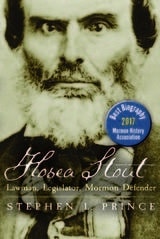
Stout joined the Mormons in Missouri in 1838 and followed them to Nauvoo, where he rose quickly to become a top leader in the Nauvoo Legion and chief of police, a position he also held at Winter Quarters. He became the first attorney general for the Territory of Utah, was elected to the Utah Territorial Legislature, and served as regent for the University of Deseret (which later became the University of Utah) and as judge advocate of the Nauvoo Legion in Utah. In 1862, Stout was appointed US attorney for the Territory of Utah by President Abraham Lincoln. In 1867, he became city attorney of Salt Lake City and he was elected to the Utah House of Representatives in 1881.
But Stout’s history also had its troubled moments. Known as a violent man and aggressive enforcer, he was often at the center of controversy during his days on the police force and was accused of having a connection with deaths in Nauvoo and Utah. Ultimately, however, none of these allegations ever found traction, and the leaders of the LDS community, especially Brigham Young, saw to it that Stout was promoted to roles of increasing responsibility throughout his life. When he died in 1889, Hosea Stout left a complicated legacy of service to his state, his church, and the members of his faith community.
Hot Springs
Past and PresentRay Hanley
University of Arkansas Press, 2014
Hot, Hot Chicken
A Nashville StoryRachel Louise Martin
Vanderbilt University Press, 2021
But for almost seventy years, hot chicken was made and sold primarily in Nashville’s Black neighborhoods—and the story of hot chicken says something powerful about race relations in Nashville, especially as the city tries to figure out what it will be in the future.
Hot, Hot Chicken recounts the history of Nashville’s Black communities through the story of its hot chicken scene from the Civil War, when Nashville became a segregated city, through the tornado that ripped through North Nashville in March 2020.
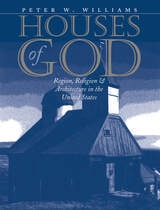
Houses of God
Region, Religion, and Architecture in the United StatesPeter W. Williams
University of Illinois Press, 1997

Houston Rap Tapes
An Oral History of Bayou City Hip-HopBy Lance Scott Walker, Foreword by Willie D
University of Texas Press, 2018
The neighborhoods of Fifth Ward, Fourth Ward, Third Ward, and the Southside of Houston, Texas, gave birth to Houston rap, a vibrant music scene that has produced globally recognized artists such as Geto Boys, DJ Screw, Pimp C and Bun B of UGK, Fat Pat, Big Moe, Z-Ro, Lil’ Troy, and Paul Wall. Lance Scott Walker and photographer Peter Beste spent a decade documenting Houston’s scene, interviewing and photographing the people—rappers, DJs, producers, promoters, record label owners—and places that give rap music from the Bayou City its distinctive character. Their collaboration produced the books Houston Rap and Houston Rap Tapes.
This second edition of Houston Rap Tapes amplifies the city’s hip-hop history through new interviews with Scarface, Slim Thug, Lez Moné, B L A C K I E, Lil’ Keke, and Sire Jukebox of the original Ghetto Boys. Walker groups the interviews into sections that track the different eras and movements in Houston rap, with new photographs and album art that reveal the evolution of the scene from the 1970s to today’s hip-hop generation. The interviews range from the specifics of making music to the passions, regrets, memories, and hopes that give it life. While offering a view from some of Houston’s most marginalized areas, these intimate conversations lay out universal struggles and feelings. As Willie D of Geto Boys writes in the foreword, “Houston Rap Tapes flows more like a bunch of fellows who haven’t seen each other for ages, hanging out on the block reminiscing, rather than a calculated literary guide to Houston’s history.”
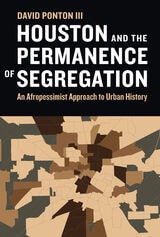
Houston and the Permanence of Segregation
An Afropessimist Approach to Urban HistoryDavid Ponton
University of Texas Press, 2024
2025 Most Significant Scholarly Book, Texas Institute of Letters
A history of racism and segregation in twentieth-century Houston and beyond.
Through the 1950s and beyond, the Supreme Court issued decisions that appeared to provide immediate civil rights protections to racial minorities as it relegated Jim Crow to the past. For black Houstonians who had been hoping and actively fighting for what they called a “raceless democracy,” these postwar decades were often seen as decades of promise. In Houston and the Permanence of Segregation, David Ponton argues that these were instead “decades of capture”: times in which people were captured and constrained by gender and race, by faith in the law, by antiblack violence, and even by the narrative structures of conventional histories. Bringing the insights of Black studies and Afropessimism to the field of urban history, Ponton explores how gender roles constrained thought in black freedom movements, how the “rule of law” compelled black Houstonians to view injustice as a sign of progress, and how antiblack terror undermined Houston’s narrative of itself as a “heavenly” place.
Today, Houston is one of the most racially diverse cities in the United States, and at the same time it remains one of the most starkly segregated. Ponton’s study demonstrates how and why segregation has become a permanent feature in our cities and offers powerful tools for imagining the world otherwise.
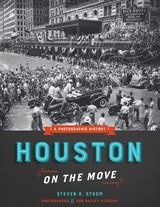
Houston on the Move
A Photographic HistoryBy Steven R. Strom, Photographs by Bob Bailey Studios
University of Texas Press, 2016
Houston completely transformed itself during the twentieth century, burgeoning from a regional hub into a world-class international powerhouse. This remarkable metamorphosis is captured in the Bob Bailey Studios Photographic Archive, an unparalleled visual record of Houston life from the 1930s to the early 1990s. Founded by the commercial photographer Bob Bailey in 1929, the Bailey Studios produced more than 500,000 photographs and fifty-two 16 mm films, making its archive the largest and most comprehensive collection of images ever taken in and around Houston. The Bob Bailey Studios Archive is now owned by the Dolph Briscoe Center for American History at the University of Texas at Austin.
Houston on the Move presents over two hundred of the Bailey archive’s most memorable and important photographs with extended captions that detail the photos’ subjects and the reasons for their significance. These images, most never before published, document everything from key events in Houston’s modern history—World War II; the Texas City Disaster; the building of the Astrodome; and the development of the Ship Channel, Medical Center, and Johnson Space Center—to nostalgic scenes of daily life. Bob Bailey’s expertly composed photographs reveal a great city in the making: a downtown striving to be the best, biggest, and tallest; birthday parties, snow days, celebrations, and rodeos; opulent department stores; Hollywood stars and political leaders; rapid industrial and commercial growth; and the inexorable march of the suburbs. An irresistible “remember that?” book for long-time Houstonians, Houston on the Move will also be an essential reference for historians, photographers, designers, and city planners.
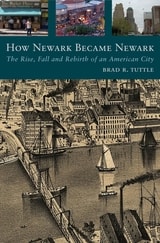
How Newark Became Newark
The Rise, Fall, and Rebirth of an American CityBrad R. Tuttle
Rutgers University Press, 2009
How Newark Became Newark is a fresh, unflinching popular history that spans the city's epic transformation from a tiny Puritan village into a manufacturing powerhouse, on to its desperate struggles in the twentieth century and beyond. After World War II, unrest mounted as the minority community was increasingly marginalized, leading to the wrenching civic disturbances of the 1960s. Though much of the city was crippled for years, How Newark Became Newark is also a story of survival and hope. Today, a real estate revival and growing population are signs that Newark is once again in ascendance.
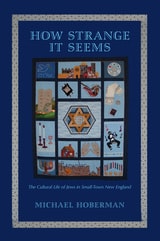
How Strange It Seems
The Cultural Life of Jews in Small-Town New EnglandMichael Hoberman
University of Massachusetts Press, 2008
Jews have lived in small-town New England since the colonial era, but during the last hundred years they have been especially active contributors to the region's cultural life. Part oral history, part ethnography, and part literary portrait, How Strange It Seems tells the story of this often overlooked group, tracing its patterns of settlement, economic activity, civic involvement, and religious life since the late 1800s.
Based on more than fifty interviews with men and women of all ages from Maine, New Hampshire, Vermont, Massachusetts, and Connecticut, it seeks to understand what is distinctive—and not so distinctive—about contemporary Jewish communities outside the larger urban centers of the Northeast. Michael Hoberman weaves the personal stories of these individuals and families into a collective narrative that offers as much folklore as history and is equal parts Jewish and Yankee. He introduces us to Hiram Adelman, a Russian immigrant peddler and potato farmer who settled in northernmost Maine because its climate was comparable to his native Siberia, and to Shmuel Simenowitz, an urban transplant who produces kosher maple syrup in southern Vermont. We also meet Suzie Laskin, who moved to the White Mountains region of New Hampshire in the 1900s and soon established a local havurah, and Bob August of Whately, Massachusetts, who once ran what may have been the world's only Christmas tree farm owned by a Jewish family.
Each section of the book explores how small-town New England Jews have both departed from and mimicked the broader patterns of Jewish American experience, while also illustrating how they have acclimated themselves to local practices without relinquishing a strong sense of Jewish identity. Accompanying the text are photographs by Janice Sorensen that include portraits of many of the interviewees and lively glimpses of the region's present-day Jewish revival.

How to Be a Texan
The ManualBy Andrea Valdez
University of Texas Press, 2016
There are certain things every Texan should know how to do and say, whether your Lone Star roots reach all the way back to the 1836 Republic or you were just transplanted here yesterday. Some of these may be second nature to you, but others . . . well, maybe it wouldn’t hurt to have a few handy hints if, say, branding the herd or hosting a tamalada aren’t your usual pastimes. That’s where How to Be a Texan can help.
In a friendly, lighthearted style, Andrea Valdez offers illustrated, easy-to-follow steps for dozens of authentic Texas activities and sayings. In no time, you’ll be talking like a Texan and dressing the part; hunting, fishing, and ranching; cooking your favorite Texas dishes; and dancing cumbia and two-step. You’ll learn how to take a proper bluebonnet photo and build a Día de los Muertos altar, and you’ll have a bucket list of all the places Texans should visit in their lifetime. Not only will you know how to do all these things, you’ll finish the book with a whole new appreciation for what it means to be a Texan and even more pride in saying “I’m from Texas” anywhere you wander in the world.

Howard Stansbury's Survey of the Great Salt Lake, 1850
Brigham D. Madsen
University of Utah Press, 2027
Hugh Davis and His Alabama Plantation
Weymouth T. Jordan
University of Alabama Press, 1948
Scholars and readers continue to illuminate the complex financial arrangements of the Antebellum South, many regions of which lacked basic banking services. Following the life of Davis traces his early years of apprenticeship and debt, the use of rotating credit, and the relationship of slaves to finances. The book is also full of fascinating details of his life, such as the setting out in one month of 750 yards of roses. This account also recounts the how this financial system and lifestyle were swept away by the Civil War.
Scholars and general readers interested in Southern history as illuminated not in macroeconomic theories but in the quotidian life and choices of one man will find much of interest in Davis's life.
Hugo Black
The Alabama YearsVirginia Van Der Veer Hamilton
University of Alabama Press, 1982
The making of a Supreme Court justice in the crucible of Alabama politics.
Hugo Black: The Alabama Years by Virginia Van der Veer Hamilton is a richly researched political biography that explores the formative experiences of Hugo L. Black, one of the most influential justices in the history of the United States Supreme Court. Focusing on his early life and career in Alabama, Hamilton traces Black's journey from his rural upbringing and legal training to his emergence as a prominent attorney, politician, and United States senator. Through careful analysis of Alabama's social, economic, and political landscape, the book reveals the forces that shaped Black's ideas about government, democracy, and constitutional rights.
Hamilton examines Black's rise during a period of profound change in the South, highlighting the alliances, controversies, and challenges that defined his political career. The study places Black within the broader context of Progressive Era reform, the transformation of Southern politics, and the expanding role of the federal government in American life. At the same time, it provides a nuanced portrait of a complex public figure whose beliefs and actions continue to inspire debate among historians and legal scholars.
Essential reading for students of legal history, political science, Southern studies, and American government, this volume offers valuable insight into the Alabama roots of a justice who would profoundly influence modern constitutional interpretation and civil liberties jurisprudence.

Hungry Hill
A MemoirCarole O'Malley Gaunt
University of Massachusetts Press, 2007
On a sweltering June night in 1959, Betty O'Malley died from lymphatic cancer, leaving behind an alcoholic husband and eight shell-shocked children—seven sons and one daughter, ranging in age from two to fifteen years. The daughter, Carole, was thirteen at the time. In this poignant memoir, she recalls in vivid detail the chaotic course of her family life over the next four years.
The setting for the story is Hungry Hill, an Irish-Catholic working-class neighborhood in Springfield, Massachusetts. The author recounts her sad and turbulent story with remarkable clarity, humor, and insight, punctuating the narrative with occasional fictional scenes that allow the adult Carole to comment on her teenage experiences and to probe the impact of her mother's death and her father's alcoholism.

Hungry Hill
A MemoirCarole O'Malley Gaunt
University of Massachusetts Press, 2007
On a sweltering June night in 1959, Betty O'Malley died from lymphatic cancer, leaving behind an alcoholic husband and eight shell-shocked children—seven sons and one daughter, ranging in age from two to fifteen years. The daughter, Carole, was thirteen at the time. In this poignant memoir, she recalls in vivid detail the chaotic course of her family life over the next four years.
The setting for the story is Hungry Hill, an Irish-Catholic working-class neighborhood in Springfield, Massachusetts. The author recounts her sad and turbulent story with remarkable clarity, humor, and insight, punctuating the narrative with occasional fictional scenes that allow the adult Carole to comment on her teenage experiences and to probe the impact of her mother's death and her father's alcoholism.
Hunting Camp 52
Tales from a North Woods Deer CampJohn Marvin Hanson
Wisconsin Historical Society Press, 2016
Meet the Jolly Boys—five men from northern Wisconsin who built a deer hunting shack in 1955 and established a tradition that has now lasted over six decades. Hunting Camp 52, affectionately known as Blue Heaven, is a place where every trail, rock, and ravine has its own nickname; every kill is recorded by hand on a window shade; every hunter happily croons along during evening songfests; and every rowdy poker game lasts late into the night. The outhouse is always cold, the porcupines are always a problem, and the vehicles are always getting stuck in the mud, but there’s nowhere else these men would rather be.
In Hunting Camp 52: Tales from a North Woods Deer Camp, John Marvin Hanson—the son of one of the original Jolly Boys—recounts the sidesplitting antics, the memorable hunts, and the profound camaraderie that has developed over almost sixty seasons at Blue Heaven. Hanson also includes more than twenty recipes for gourmet comfort foods prepared each year at camp, from pickled venison hearts to Norwegian meatballs to the treasured recipe for Reali Spaghetti. As the Jolly Boys age and younger generations take up the mantle of Blue Heaven, Hanson comes to appreciate that hunting camp is not about bagging a trophy buck as much as it is about spending time with the friends and family members who matter most.

Hurt, Baby, Hurt
William Walter Scott, III
University of Michigan Press, 2025
This memoir recounts Scott’s life from his birth up through the Rebellion. It tells the story of how the Rebellion started and provides an on-the-ground account of the Rebellion and its immediate aftermath, including the police detainment of the people involved. Now with a new foreword by Austin McCoy that considers the lasting impact of the rebellion, Hurt, Baby, Hurt offers valuable insight into an important part of Detroit history.