Results by title
22279 books match the query 'Social Science' and 635 start with h
Histories of the Transgender Child
Jules Gill-Peterson
University of Minnesota Press, 2018
A groundbreaking twentieth-century history of transgender children
With transgender rights front and center in American politics, media, and culture, the pervasive myth still exists that today’s transgender children are a brand new generation—pioneers in a field of new obstacles and hurdles. Histories of the Transgender Child shatters this myth, uncovering a previously unknown twentieth-century history when transgender children not only existed but preexisted the term transgender and its predecessors, playing a central role in the medicalization of trans people, and all sex and gender.
Beginning with the early 1900s when children with “ambiguous” sex first sought medical attention, to the 1930s when transgender people began to seek out doctors involved in altering children’s sex, to the invention of the category gender, and finally the 1960s and ’70s when, as the field institutionalized, transgender children began to take hormones, change their names, and even access gender confirmation, Julian Gill-Peterson reconstructs the medicalization and racialization of children’s bodies. Throughout, they foreground the racial history of medicine that excludes black and trans of color children through the concept of gender’s plasticity, placing race at the center of their analysis and at the center of transgender studies.
Until now, little has been known about early transgender history and life and its relevance to children. Using a wealth of archival research from hospitals and clinics, including incredible personal letters from children to doctors, as well as scientific and medical literature, this book reaches back to the first half of the twentieth century—a time when the category transgender was not available but surely existed, in the lives of children and parents.
History Is in the Land
Multivocal Tribal Traditions in Arizona's San Pedro ValleyT. J. Ferguson and Chip Colwell-Chanthaphonh
University of Arizona Press, 2006
Previous research in the San Pedro Valley has focused on scientific archaeology and documentary history, with a conspicuous absence of indigenous voices, yet Native Americans maintain oral traditions that provide an anthropological context for interpreting the history and archaeology of the valley. The San Pedro Ethnohistory Project was designed to redress this situation by visiting archaeological sites, studying museum collections, and interviewing tribal members to collect traditional histories. The information it gathered is arrayed in this book along with archaeological and documentary data to interpret the histories of Native American occupation of the San Pedro Valley.
This work provides an example of the kind of interdisciplinary and politically conscious work made possible when Native Americans and archaeologists collaborate to study the past. As a methodological case study, it clearly articulates how scholars can work with Native American stakeholders to move beyond confrontations over who “owns” the past, yielding a more nuanced, multilayered, and relevant archaeology.
History Repeating Itself
The Republication of Children's Historical Literature and the Christian RightGregory M. Pfitzer
University of Massachusetts Press, 2014
Recently publishers on the Christian Right have been reprinting nineteenth-century children's history books and marketing them to parents as “anchor texts” for homeschool instruction. Why, Gregory M. Pfitzer asks, would books written more than 150 years ago be presumed suitable for educating twenty-first-century children? The answer, he proposes, is that promoters of these recycled works believe that history as a discipline took a wrong turn in the early twentieth century, when progressive educators introduced social studies methodologies into public school history classrooms, foisting upon unsuspecting and vulnerable children ideologically distorted history books.
In History Repeating Itself, Pfitzer tests these assertions by scrutinizing and contextualizing the original nineteenth-century texts on which these republications are based. He focuses on how the writers borrowed from one another to produce works that were similar in many ways yet differed markedly in terms of pedagogical strategy and philosophy of history. Pfitzer demonstrates that far from being non-ideological, these works were rooted in intense contemporary debates over changing conceptions of childhood.
Pfitzer argues that the repurposing of antiquated texts reveals a misplaced resistance to the idea of a contested past. He also raises essential philosophical questions about how and why curricular decisions are shaped by the “past we choose to remember” on behalf of our children.
History and Hope in the Heart of Dixie
Scholarship, Activism, and Wayne Flynt in the Modern SouthEdited by Gordon E. Harvey, Richard D. Starnes and Glenn Feldman
University of Alabama Press, 2006
Exploring the history, challenges, and promise of a changing South through the legacy of Wayne Flynt.
This collection of essays on the social and political history of the modern South consider the region’s poor, racial mores and race relations, economic opportunity, Protestant activism, political coalitions and interest groups, social justice, and progressive reform. History and Hope in the Heart of Dixie illuminates the dual role of historian and public advocate in modern America. In a time when the nation’s eyes have been focused by Hurricanes Katrina and Rita onto the vulnerability and dire condition of poor people in the South, the applicability of research, teaching, and activism for this voiceless element seems all the more relevant.
Responding to the example of Wayne Flynt, whose fierce devotion to his state of Alabama and its region has not blinded his recognition of the inequities and despair that define southern life for so many, the scholars assembled in this work present contributions to the themes Flynt so passionately explored in his own work.Two seasoned observers of southern history and culture—John Shelton Reed and Dan T. Carter—offer assessments of Flynt’s influence on the history profession as a whole and on the region of the South in particular.
History and Legend
Ideas and Images in the Ming Historical NovelsShelley Hsueh-lun Chang
University of Michigan Press, 1990
This combination of influences in the historical novels was especially significant during the Ming dynasty because of the rise of both urban culture of great refinement and diversity and a popularizing vernacular designed to promote learning among all people. These two exuberant movements came together in the historical novel to propagate the difficult and complex Official Histories of the governing elite, as well as to adapt unofficial histories and fictitious narratives, thus opening the way to the influence of the common people in literature.
This book is the first study of the novels from a historical standpoint. Combining traditional historical research with new source material of the historical novels and with analytical strategies, Chang creates a three-dimensional picture of the “historical world” of the Ming people. Chang compares issues of the dynastic cycle and political legitimacy of a regime, human ambitions and immortality, ethics in the relations between historical personages and legendary heroes, ideals of government and grandiose imperial institutions, and supernatural power and the justice of history that emerged from the historical novels with those in the Official Histories and Confucian canon.

History and Theory
Feminist Research, Debates, ContestationsEdited by Barbara Laslett, Ruth-Ellen Boetcher Joeres, Mary Jo Maynes, Evelyn Brooks Higginbotham
University of Chicago Press, 1997
History as They Lived It
A Social History of Prairie du Rocher, IllinoisMargaret Kimball Brown, Foreword by Carl J. Ekberg
Southern Illinois University Press, 2005
“History as They Lived It deserves to be placed within the rich context of Illinois Country historiography going back more than a century. . . . It brings together the fully ripened thoughts of a mature scholar at the very moment that students of the Illinois Country need such a book.”—from the foreword by Carl J. Ekberg
Settled in 1722, Prairie du Rocher was at the geographic center of a French colony in the Mississippi Valley, which also included other villages in what is now Illinois and Missouri: Cahokia, Kaskaskia, Fort de Chartres, St. Philippe, Ste. Genevieve, and St. Louis. Located in an alluvial valley near towering limestone bluffs, which inspired the village’s name—French for “prairie of the rock”— Prairie du Rocher is the only one of the seven French colonial villages that still exists today as a small compact community.
The village of Prairie du Rocher endured governance by France, Great Britain, Virginia, and the Illinois territory before Illinois became a state in 1818. Despite these changes, the villagers persisted in maintaining the community and its values. Margaret Kimball Brown looks at one of the oldest towns in the region through the lenses of history and anthropology, utilizing extensive research in archives and public records to give historians, anthropologists, and general readers a lively depiction of this small community and its people.
History of Old Age
From Antiquity to the RenaissanceGeorges Minois
University of Chicago Press, 1990
Minois shows how, in ancient Greece, the cult of youth and beauty on the one hand, and the reverence for the figure of the Homeric sage, on the other, created an ambivalent attitude toward the aged. This ambiguity appears again in the contrast between the active role that older citizens played in Roman politics and their depiction in satirical literature of the period. Christian literature in the Middle Ages also played a large part in defining society's perception of the old, both in the image of the revered holy sage and in the total condemnation of the aged sinner.
Drawing on literary texts throughout, Minois considers the interrelation of literary, religious, medical, and political factors in determining the social fate of the elderly and their relationship to society. This book will be of great interest to social and cultural historians, as well as to general readers interested in the subject of the aged in society today.
History of Public Health in New York City, 1625-1866
Volume 1John Duffy
Russell Sage Foundation, 1968
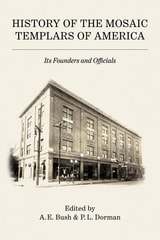
History of the Mosaic Templars of America
Its Founders and OfficialsA.E. Bush
University of Arkansas Press, 2008
Originally published in 1924 and long out of print, this book tells the story of the Mosaic Templars of America (MTA), a famous Black fraternal organization that was founded by John E. Bush and Chester W. Keatts (both former slaves) in Little Rock, Arkansas, in the late-nineteenth century. The organization originally provided illness, death, and burial insurance during an era of segregation when few basic services were available to Black people, and grew to include an insurance company, a building and loan association, a publishing company, a business college, a nursing school, and a hospital.
By 1905 it had a number of lodges across the state of Arkansas with thousands of members. In 1913 a handsome new headquarters building opened and Booker T. Washington delivered the dedication speech. In the 1920s they claimed chapters in twenty-six states and six foreign countries, making it one of the largest Black organizations in the world.
However, in the 1930s the MTA began to feel the effects of the Great Depression and eventually ceased operations except for a single chapter in Barbados. Tragically, the original Little Rock headquarters building burned down in 2005.
This replica edition of History of the Mosaic Templars of America, with a new introduction by John William Graves, was published to coincide with the grand opening in 2008 of a completely rebuilt structure that houses the new Mosaic Templars Cultural Center.
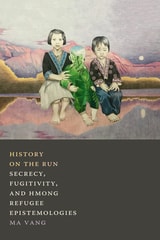
History on the Run
Secrecy, Fugitivity, and Hmong Refugee EpistemologiesMa Vang
Duke University Press, 2021
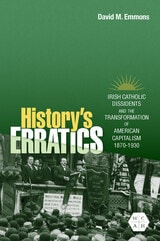
History's Erratics
Irish Catholic Dissidents and the Transformation of American Capitalism, 1870-1930David M. Emmons
University of Illinois Press, 2024
As Ice Age glaciers left behind erratics, so the external forces of history tumbled the Irish into America. Existing both out of time and out of space, a diverse range of these Roman-Catholic immigrants saw their new country in a much different way than did the Protestants who settled and claimed it. These erratics chose backward looking tradition and independence over assimilation and embraced a quintessentially Irish form of subversiveness that arose from their culture, faith, and working-class outlook. David M. Emmons draws on decades of research and thought to plumb the mismatch of values between Protestant Americans hostile to Roman Catholicism and the Catholic Irish strangers among them. Joining ethnicity and faith to social class, Emmons explores the unique form of dissidence that arose when Catholic Irish workers and their sympathizers rejected the beliefs and symbols of American capitalism.
A vibrant and original tour de force, History’s Erratics explores the ancestral roots of Irish nonconformity and defiance in America.
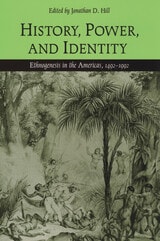
History, Power, and Identity
Ethnogenesis in the Americas, 1492-1992Jonathan D. Hill
University of Iowa Press, 1996
For the past five centuries, indigenous and African American communities throughout the Americas have sought to maintain and recreate enduring identities under conditions of radical change and discontinuity. The essays in this groundbreaking volume document this cultural activity—this ethnogenesis—within and against the broader contexts of domination; the authors simultaneously encompass the entanglements of local communities in the webs of national and global power relations as well as people's unique abilities to gain control over their history and identity.
By defining ethnogenesis as the synthesis of people's cultural and political struggles, History, Power, and Identity breaks out of the implicit contrast between isolated local cultures and dynamic global history. From the northeastern plains of North America to Amazonia, colonial and independent states in the Americas interacted with vast multilingual and multicultural networks, resulting in the historical emergence of new ethnic identities and the disappearance of many earlier ones. The importance of African, indigenous American, and European religions, myths, and symbols, as historical cornerstones in the building of new ethnic identities, emerges as one of the central themes of this convincing collection.
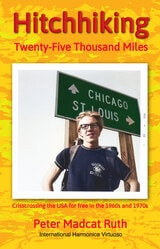
Hitchhiking Hitchhiking Twenty-Five Thousand Miles
Crisscrossing the USA for free in the 1960s and 1970sPeter Madcat Ruth
Parkhurst Brothers, Inc., 2026
Personal Travelogue with dates, ride lists, and commentary about the hitchhiking culture of the era.

Hiv and Aids in Africa
Douglas Webb
Pluto Press, 1997
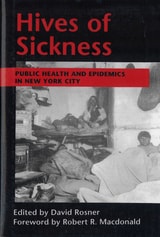
Hives of Sickness
Public Health and Epidemics in New York CityRosner, David
Rutgers University Press, 1995
An 1865 report on public health in New York painted a grim picture of "high brick blocks and closely-packed houses . . . literally hives of sickness" propagating epidemics of cholera, smallpox, typhoid, typhus, and yellow fever, which swept through the whole city. In this stimulating collection of essays, nine historians of American medicine explore New York's responses to its public health crises from colonial times to the present. The essays illustrate the relationship between the disease environment of New York and changes in housing, population, social conditions, and the success of medical science, linking such factors to New York's experiences with smallpox, polio, and AIDS.
The volume is essential reading for anyone interested in American public health and the social history of New York.
The contributors are Ronald Bayer, Elizabeth Blackmar, Gretchen A. Condran, Elizabeth Fee, Daniel M. Fox, Evelynn M. Hammonds, Alan M. Kraut, Judith Walzer Leavitt, and Naomi Rogers. David Rosner is a professor of history at Baruch College and The Graduate School of the City University of New York. Robert R. Macdonald is the director of the Museum of the City of New York.
A publication of the Museum of the City of New York
Choice Reviews 1995 November
This is one of a series of books focusing on the impact of disease intended to enhance the understanding of both past and present regarding reactions to periodic epidemics. Robert B. Macdonald, director of the Museum of the City of New York, which supports this series, states: "The individual and collective responses to widespread sickness are mirrors to the cultural, religious, economic, political, and social histories of cities and nations." Rosner selected eight renowned and respected individuals to describe the reactions and responses to smallpox, polio, and AIDS epidemics in New York City since 1860, and the efforts of officials and professionals to deal with the impact of disease. Essayists present disease broadly from economic, social, political, and health perspectives. Causes of epidemics include the expected and usual: thousands of immigrants pouring into the city, inadequate water and food supplies, lack of sewage disposal, unemployment leading to poverty. An unexpected cause was the avarice of real estate investors, inexorably driving up housing costs.
Highly recommended for all students of history, public health, health policy, and sociology. Upper-division undergraduate through professional. Copyright 1999 American Library Association
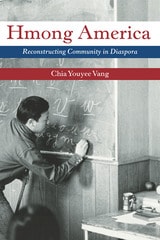
Hmong America
Reconstructing Community in DiasporaChia Youyee Vang
University of Illinois Press, 2010
Vang depicts Hmong experiences in Asia and examines aspects of community building in America to reveal how new Hmong identities have been formed and how they have challenged popular assumptions about race and ethnicity in multicultural America. Combining participant observation and archival research with personal experience, Vang constructs a nuanced and complex portrait of the more than 130,000 Hmong people who came to the United States as political refugees beginning in the mid-1970s. Her critique of previous representations of the Hmong community provides the sociological underpinnings for a bold reassessment of Hmong history in the greater context of globalization. This new understanding redefines concepts of Hmong homogeneity and characterizes ordinary Hmong migrants not as passive victims but as dynamic actors who have exercised much power over their political and social destinies.
Hmong Americans in Michigan
Martha Aladjem Bloomfield
Michigan State University Press, 2014
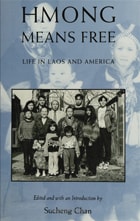
Hmong Means Free
Life in Laos and AmericaSucheng Chan
Temple University Press, 1994
This collection of evocative personal testimonies by three generations of Hmong refugees is the first to describe their lives in Laos as slash-and-burn farmers, as refugees after a Communist government came to power in 1975, and as immigrants in the United States. Reflecting on the homes left behind, their narratives chronicle the difficulties of forging a new identity.
From Jou Yee Xiong's Life Story:
"I stopped teaching my sons many of the Hmong ways because I felt my ancestors and I had suffered enough already. I thought that teaching my children the old ways would only place a burden on them."
From Ka Pao Xiong's (Jou Yee Xiong's son) Life Story:
"It has been very difficult for us to adapt because we had no professions or trades and we suffered from culture shock. Here in America, both the husband and wife must work simultaneously to earn enough money to live on. Many of our children are ignorant of the Hmong way of life…. Even the old people are forgetting about their life in Laos, as they enjoy the prosperity and good life in America."
From Xang Mao Xiong's Life Story:
"When the Communists took over Laos and General Vang Pao fled with his family, we, too, decided to leave. Not only my family, but thousands of Hmong tried to flee. I rented a car for thirty thousand Laotian dollars, and it took us to Nasu…. We felt compelled to leave because many of us had been connected to the CIA…. Thousands of Hmong were traveling on foot. Along the way, many of them were shot and killed by Communist soldiers. We witnessed a bloody massacre of civilians."
From Vue Vang's Life Story:
"Life was so hard in the [Thai refugee] camp that when we found out we could go to the United States, we did not hesitate to grasp the chance. We knew that were we to remain in the camp, there would be no hope for a better future. We would not be able to offer our children anything better than a life of perpetual poverty and anguish."
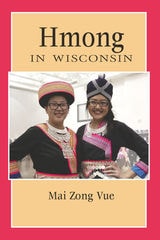
Hmong in Wisconsin
Mai Zong Vue
Wisconsin Historical Society Press, 2020
Many of these families found homes in Wisconsin, which now has the third largest Hmong population in the country, following California and Minnesota. As one of the most recent cultural groups to arrive in the Badger State, the Hmong have worked hard to establish a new life here, building support systems to preserve traditions and to help one another as they enrolled in schools, started businesses, and strived for independence.
Told with a mixture of scholarly research, interviews, and personal experience of the author, this latest addition to the popular People of Wisconsin series shares the Hmong’s varied stories of survival and hope as they have become an important part of Wisconsin communities.
Hobomok and Other Writings on Indians
Karcher, Carolyn L
Rutgers University Press, 1986
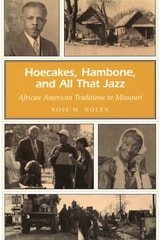
Hoecakes, Hambone, and All That Jazz
African American Traditions in MissouriRose M. Nolen
University of Missouri Press, 2003
Nolen writes, “Instead of the bond of common ancestors and a common language, which families had shared in Africa, the enslaved in the United States were bound together by skin color, hair texture, and condition of bondage. Out of this experience a strong sense of community was born.” Nolen traces the cultural traditions shaped by African Americans in Missouri from the early colonial period through the Civil War and Reconstruction and shows how those traditions were reshaped through the struggles of the civil rights movement and integration. Nolen demonstrates how the strong sense of community built on these traditions has sustained African Americans throughout their history.
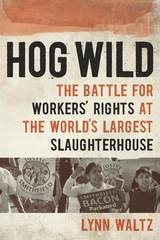
Hog Wild
The Battle for Workers' Rights at the World's Largest SlaughterhouseLynn Waltz
University of Iowa Press, 2018
Author and journalist Lynn Waltz reveals how these aggressive tactics went unchecked for years until Sherri Buffkin, a higher-up manager at Smithfield, blew the lid off the company’s corrupt practices. Through meticulous reporting, in-depth interviews with key players, and a mind for labor and environmental histories, Waltz weaves a fascinating tale of the nearly two-decade struggle that eventually brought justice to the workers and accountability to the food giant, pitting the world’s largest slaughterhouse against the world’s largest meatpacking union.
Following in a long tradition of books that expose the horrors of the meatpacking industry—from Upton Sinclair’s The Jungle to Eric Schlosser’s Fast Food Nation—Hog Wild uncovers rampant corporate environmental hooliganism, labor exploitation, and union-busting by one of the nation’s largest meat producers. Waltz’s eye-opening examination sheds new light on the challenges workers face not just in meatpacking, but everywhere workers have lost their power to collectively bargain with powerful corporations.
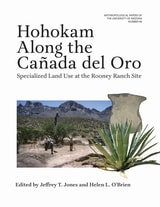
Hohokam Along the Cañada del Oro
Specialized Land Use at the Rooney Ranch SiteEdited by Jeffrey T. Jones and Helen L. O’Brien
University of Arizona Press, 2026
This work presents the results of more than a decade of archaeological fieldwork at the Rooney Ranch site in Oro Valley, Arizona—an upland Hohokam village that played a key role in regional agave production. Edited by Jeffrey T. Jones and Helen L. O’Brien, this volume synthesizes extensive data collected by the Pima Community College Centre for Archaeological Field Training, offering a rare and richly detailed look at how small peripheral settlements contributed to the sustainability of larger Hohokam communities in the Sonoran Desert. Through GIS-based mapping and the analysis of ceramics, lithics, and faunal and botanical remains, the book reveals how specialized land use shaped the economic and social fabric of the region for centuries.
This legacy project stands out not only for its depth but also for its educational significance. As one of the few long-term, community-college-led excavations in the Southwest, the Rooney Ranch project highlights the vital role of student training and local collaboration in archaeological research. With more than seventy data-rich tables and contributions from leading specialists, this volume is an essential resource for archaeologists, historians, and anyone interested in Indigenous land use, desert adaptation, and the enduring legacy of the Hohokam in southern Arizona.
Contributors
Jon Boyd
Chance Copperstone
Michael W. Diehl
Linda M. Gregonis
Lea Mason-Kohlmeyer
Christine H. Virden-Lange
Hold It Against Me
Difficulty and Emotion in Contemporary ArtJennifer Doyle
Duke University Press, 2013
Doyle explores ideologies of emotion and how emotion circulates in and around art. Throughout, she gives readers welcoming points of entry into artworks that they may at first find off-putting or confrontational. Doyle offers new insight into how the discourse of controversy serves to shut down discussion about this side of contemporary art practice, and counters with a critical language that allows the reader to accept emotional intensity in order to learn from it.
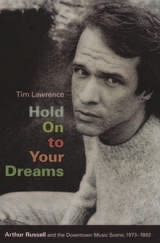
Hold On to Your Dreams
Arthur Russell and the Downtown Music Scene, 1973-1992Tim Lawrence
Duke University Press, 2009
Tim Lawrence traces Russell's odyssey from his hometown of Oskaloosa, Iowa, to countercultural San Francisco, and eventually to New York, where he lived from 1973 until his death from AIDS-related complications in 1992. Resisting definition while dreaming of commercial success, Russell wrote and performed new wave and disco as well as quirky rock, twisted folk, voice-cello dub, and hip-hop-inflected pop. “He was way ahead of other people in understanding that the walls between concert music and popular music and avant-garde music were illusory,” comments the composer Philip Glass. "He lived in a world in which those walls weren't there." Lawrence follows Russell across musical genres and through such vital downtown music spaces as the Kitchen, the Loft, the Gallery, the Paradise Garage, and the Experimental Intermedia Foundation. Along the way, he captures Russell's openness to sound, his commitment to collaboration, and his uncompromising idealism.
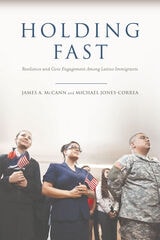
Holding Fast
Resilience and Civic Engagement Among Latino ImmigrantsJames A. McCann
Russell Sage Foundation, 2020
Holding Fast draws largely from a yearlong survey of Latino immigrants, including both citizens and noncitizens, conducted before and after the 2016 election. The survey gauges immigrants’ attitudes about the direction of the country and the emotional underpinnings of their political involvement. While survey respondents expressed pessimism about the direction of the United States following the 2016 election, there was no evidence of their withdrawal from civic life. Instead, immigrants demonstrated remarkable resilience in their political engagement, and their ties to America remained robust.
McCann and Jones-Correa examine Latino immigrants’ trust in government as well as their economic concerns and fears surrounding possible deportations of family members and friends. They find that Latino immigrants who were concerned about the likelihood of deportation were more likely to express a lack of trust in government. Concerns about personal finances were less salient. Disenchantment with the U.S. government did not differ based on citizenship status, length of stay in America, or residence in immigrant-friendly states. Foreign-born Latinos who are naturalized citizens shared similar sentiments to those with fewer political rights, and immigrants in California, for example, express views similar to those in Texas.
Addressing the potential influence immigrant voters may wield in in the coming election, the authors point to signs that the turnout rate for naturalized Latino immigrant may be higher than that for Latinos born in the United States. The authors further underscore the importance of the parties' platforms and policies, noting the still-tenuous nature of Latino immigrants’ affiliations with the Democratic Party.
Holding Fast outlines the complex political situation in which Latino immigrants find themselves today. Despite well-founded feelings of anger, fear, and skepticism, in general they maintain an abiding faith in the promise of American democracy. This book provides a comprehensive account of Latino immigrants’ political opinions and a nuanced, thoughtful outlook on the future of Latino civic participation. It will be an important contribution to scholarly work on civic engagement and immigrant integration.
Holding Up More Than Half the Sky
Chinese Women Garment Workers in New York City, 1948-92Xiaolan Bao
University of Illinois Press, 2001
In 1982, 20,000 Chinese-American garment workers—most of them women—went on strike in New York City. Every Chinese garment industry employer in the city soon signed a union contract. The successful action reflected the ways women's changing positions within their families and within the workplace galvanized them to stand up for themselves.
Xiaolan Bao's now-classic study penetrates to the heart of Chinese American society to explain how this militancy and organized protest, seemingly so at odds with traditional Chinese female behavior, came about. Drawing on more than one hundred interviews, Bao blends the poignant personal stories of Chinese immigrant workers with the interwoven history of the garment industry and the city's Chinese community. Bao shows how the high rate of married women employed outside the home profoundly transformed family culture and with it the image and empowerment of Chinese American women. At the same time, she offers a complex and subtle discussion of the interplay of ethnic and class factors within New York's garment industry.
Passionately told and prodigiously documented, Holding Up More Than Half the Sky examines the journey of a community's women through an era of change in the home, on the shop floor, and walking the picket line.
Holding the World Together
African Women in Changing PerspectiveEdited by Nwando Achebe and Claire Robertson
University of Wisconsin Press, 2021
Contributors: Nwando Achebe, Ousseina Alidou, Signe Arnfred, Andrea L. Arrington-Sirois, Henryatta Ballah, Teresa Barnes, Josephine Beoku-Betts, Emily Burril, Abena P. A. Busia, Gracia Clark, Alicia Decker, Karen Flint, December Green, Cajetan Iheka, Rachel Jean-Baptiste, Elizabeth M. Perego, Claire Robertson, Kathleen Sheldon, Aili Mari Tripp, Cassandra Veney
Holes in Our Moccasins, Holes in Our Stories
Apachean Origins and the Promontory, Franktown, and Dismal River Archaeological RecordsEdited by John W. Ives and Joel C. Janetski
University of Utah Press, 2022
This volume connects Steward’s work with results from new excavations in Promontory Caves 1 and 2 and illustrates that the early Promontory Phase resulted from an intrusive large-game hunting population very different from nearby late Fremont communities. Lingering for just one or two human generations, the cave occupants began to accept people as well as material and symbolic culture from surrounding thirteenth-century neighbors. Volume contributors employ a transdisciplinary approach to evaluate the possibility that the Promontory Phase materials reflect the presence of Apachean ancestors. In these records lies the seeds for the intensive Plains-Puebloan interactions of the centuries that followed.
Holidays in the Danger Zone
Entanglements of War and TourismDebbie Lisle
University of Minnesota Press, 2016
Holidays in the Danger Zone exposes the mundane and everyday interactions between two seemingly opposed worlds: warfare and tourism. Debbie Lisle shows how a tourist sensibility shapes the behavior of soldiers in war—especially the experiences of Western military forces in “exotic” settings. This includes not only R&R but also how battlefields become landscapes of leisure and tourism. She further explores how a military sensibility shapes the development of tourism in the postwar context, from “Dark Tourism” (engaging with displays of conflict and atrocity) to exhibitions of conflict in museums and at memorial sites, as well as advertising, film, journals, guidebooks, blogs, and photography.
Focused on how war and tourism reinforce prevailing modes of domination, Holidays in the Danger Zone critically examines the long historical arc of the war–tourism nexus—from nineteenth-century imperialism to World War I and World War II, from the Cold War to globalization and the War on Terror.
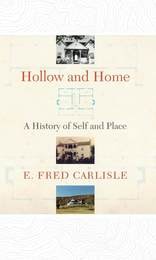
Hollow and Home
A History of Self and PlaceE. Fred Carlisle
West Virginia University Press, 2017
Carlisle incorporates perspectives from writers like Edward S. Casey, Christian Norberg-Schulz, Yi-Fu Tuan, and Witold Rybczynski, but he applies theory with a light touch. Placing this literature in dialog with personal experience, he concentrates on two places that profoundly influenced him and enabled him to overcome a lifelong sense of always leaving his pasts behind. The first is Clover Hollow in Appalachian Virginia, where the author lived for ten years among fifth-, sixth-, and seventh-generation residents. The people and places there enabled him to value his own past and primary places in a new way. The story then turns to Carlisle’s life growing up in Delaware, Ohio. He describes in rich detail the ways the town shaped him in both enabling and disabling ways. In the end, after years of moving from place to place, Carlisle’s experience in Appalachia helped him rediscover his hometown—both the Old Delaware, where he grew up, and the New Delaware, a larger, thriving small city—as his true home.
The themes of the book transcend specific localities and speak to the relationship of self and place everywhere.
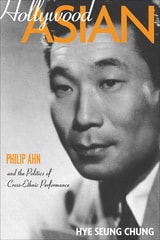
Hollywood Asian
Philip Ahn and the Politics of Cross-Ethnic PerformanceHye Seung Chung
Temple University Press, 2006
Hollywood Diplomacy
Film Regulation, Foreign Relations, and East Asian RepresentationsHye Seung Chung
Rutgers University Press, 2020
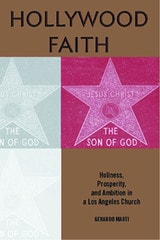
Hollywood Faith
Holiness, Prosperity, and Ambition in a Los Angeles ChurchMarti, Gerardo
Rutgers University Press, 2008
In Hollywood Faith, Gerardo Marti shows how a multiracial evangelical congregation of 2,000 people accommodates itself to the entertainment industry and draws in many striving to succeed in this harsh and irreverent business. Oasis strategically sanctifies ambition and negotiates social change by promoting a new religious identity as "champion of life"-an identity that provides people who face difficult career choices and failed opportunities a sense of empowerment and endurance.
The first book to provide an in-depth look at religion among the "creative class," Hollywood Faith will fascinate those interested in the modern evangelical movement and anyone who wants to understand how religion adapts to social change.
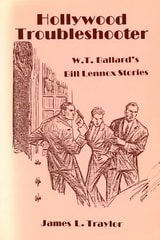
Hollywood Troubleshooter
W. T. Ballard's Bill Lennox StoriesJames L. Traylor
University of Wisconsin Press, 1985
This is the first collection of short stories by W.T. Ballard. This volume is just a sampling of Ballard's most famous character Bill Lennox, a selection for both the connoisseur of crime and the lover of good, fast-moving crime/adventure stories.
Hollywood Unions
Kate Fortmueller
Rutgers University Press, 2025
Hollywood at the Intersection of Race and Identity
Delia Malia Caparoso Konzett
Rutgers University Press, 2020
Hollywood on Location
An Industry HistoryGleich, Joshua
Rutgers University Press, 2019
Hollywood's African American Films
The Transition to SoundRyan Friedman
Rutgers University Press, 2011
Hollywood's Cold War
Tony Shaw
University of Massachusetts Press, 2007
At a moment when American film reflects a deepening preoccupation with the Bush administration's War on Terror, this authoritative and timely book offers the first comprehensive account of Hollywood's propaganda role during the defining ideological conflict of the twentieth century: the Cold War. In an analysis of films dating from America's first Red Scare in the wake of the 1917 Bolshevik Revolution to the collapse of the Berlin Wall in 1989, Tony Shaw examines the complex relationship between filmmakers, censors, politicians, and government propagandists.
Movies, Shaw demonstrates, were at the center of the Cold War's battle for hearts and minds. Hollywood's comedies, love stories, musicals, thrillers, documentaries, and science fiction shockers played a critical dual role: on the one hand teaching millions of Americans why communism represented the greatest threat their country had ever faced, and on the other selling America's liberal-capitalist ideas around the globe. Drawing on declassified government documents, studio archives, and filmmakers' private papers, Shaw reveals the different ways in which cinematic propaganda was produced, disseminated, and received by audiences during the Cold War. In the process, he addresses subjects as diverse as women's fashions, McCarthyism, drug smuggling, Christianity, and American cultural diplomacy in India. Anyone seeking to understand wartime propaganda today will find striking contemporary resonance in his conclusions about Hollywood's versatility and power.
Hollywood's Hawaii
Race, Nation, and WarDelia Malia Caparoso Konzett
Rutgers University Press, 2017
Delia Malia Caparoso Konzett highlights films that mirror the cultural and political climate of the country over more than a century—from the era of U.S. imperialism on through Jim Crow racial segregation, the attack on Pearl Harbor and WWII, the civil rights movement, the contemporary articulation of consumer and leisure culture, as well as the buildup of the modern military industrial complex. Focusing on important cultural questions pertaining to race, nationhood, and war, Konzett offers a unique view of Hollywood film history produced about the national periphery for mainland U.S. audiences. Hollywood’s Hawaii presents a history of cinema that examines Hawaii and the Pacific and its representations in film in the context of colonialism, war, Orientalism, occupation, military buildup, and entertainment.
Hollywood's Italian American Filmmakers
Capra, Scorsese, Savoca, Coppola, and TarantinoJonathan J. Cavallero
University of Illinois Press, 2011

Hollywood's Unofficial Film Corps
American Jewish Moviemakers and the War EffortMichael Berkowitz
University of Wisconsin Press, 2025
Hollywood’s Unofficial Film Corps shows that Rosten, Schulberg, and others—including Garson Kanin, George Cukor, Stanley Kramer, and Jules Buck—created movies that were both entertaining and politically expeditious for US war aims. At the same time, in an effort to unify the American public, they avoided focusing on the fate of European Jews, even while addressing racism and antisemitism in the United States. Jewish themes were often downplayed, and Jewish directors, writers, and other contributors frequently went uncredited. As Berkowitz writes, “Rosten’s cohort changed feature films forever.” Thanks to his research, we now have a better understanding of how and why.
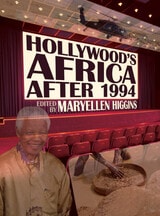
Hollywood’s Africa after 1994
MaryEllen Higgins
Ohio University Press, 2012
Hollywood’s Africa after 1994 investigates Hollywood’s colonial film legacy in the postapartheid era, and contemplates what has changed in the West’s representations of Africa. How do we read twenty-first-century projections of human rights issues—child soldiers, genocide, the exploitation of the poor by multinational corporations, dictatorial rule, truth and reconciliation—within the contexts of celebrity humanitarianism, “new” military humanitarianism, and Western support for regime change in Africa and beyond? A number of films after 1994, such as Black Hawk Down, Hotel Rwanda, Blood Diamond, The Last King of Scotland, The Constant Gardener, Shake Hands with the Devil, Tears of the Sun, and District 9, construct explicit and implicit arguments about the effects of Western intervention in Africa. Do the emphases on human rights in the films offer a poignant expression of our shared humanity? Do they echo the colonial tropes of former “civilizing missions?” Or do human rights violations operate as yet another mine of sensational images for Hollywood’s spectacular storytelling?
The volume provides analyses by academics and activists in the fields of African studies, English, film and media studies, international relations, and sociology across continents. This thoughtful and highly engaging book is a valuable resource for those who seek new and varied approaches to films about Africa.
Contributors
Harry Garuba and Natasha Himmelman
Margaret R. Higonnet, with Ethel R. Higgonet
Joyce B. Ashuntantang
Kenneth W. Harrow
Christopher Odhiambo
Ricardo Guthrie
Clifford T. Manlove
Earl Conteh-Morgan
Bennetta Jules-Rosette, J. R. Osborn, and Lea Marie Ruiz-Ade
Christopher Garland
Kimberly Nichele Brown
Jane Bryce
Iyunolu Osagie
Dayna Oscherwitz

Holocaust And Memory In The Global Age
Daniel Levy
Temple University Press, 2005
Originally published in Germany, The Holocaust and Memory in the Global Age examines the nature of collective memory in a globalized world, and how the memory of one particular event—the Holocaust—helped give rise to an emerging global consensus on human rights.
Daniel Levy and Natan Sznaider show how memories of the Holocaust have been de-contextualized from the original event and offer a framework for interpreting contemporary acts of injustice such as ethnic cleansing and genocide. Representations of mass atrocities in Bosnia and Kosovo during the 1990s resonated with iconographies of the Holocaust and played a significant role in the political and military interventions in the Balkans. Subsequently, these representations have had a crucial impact on the consolidation of international human rights and related issues of transitional justice, reparations, and restitution.
Holocaust Education
Contemporary Challenges and ControversiesEdited by Stuart Foster, Andy Pearce, and Alice Pettigrew
University College London, 2020
Teaching and learning about the Holocaust is central to school curriculums across the globe. But the history of the Holocaust remains controversial and can render teaching it daunting, even to the most experienced instructors. Drawing on landmark research into teaching practices and students’ knowledge, Holocaust Education provides unique insights about classroom learning. It sheds light on key challenges in Holocaust education, including the impact of misconceptions and misinformation, the dilemma posed by images of atrocity, and how to approach teaching in ethnically diverse environments. Overviews of the most significant debates in Holocaust education provide wider context for the classroom evidence. Holocaust Education offers a vital guide, leading readers through some of the most vexed areas of Holocaust challenges and controversies for teachers, researchers, and policymakers.
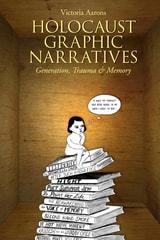
Holocaust Graphic Narratives
Generation, Trauma, and MemoryVictoria Aarons
Rutgers University Press, 2020
Holocaust Mothers and Daughters
Family, History, and TraumaFederica K. Clementi
Brandeis University Press, 2013
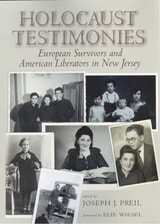
Holocaust Testimonies
European Survivors and American Liberators in New JerseyPreil, Joseph J
Rutgers University Press, 2001
A project of the Holocaust Resource Center of Kean University, New Jersey, this book is a reference tool for teaching the Holocaust, for Holocaust survivors and their families, and for the general reader. Drawing on the center’s central missions is to produce and preserve a series of oral-history videotapes based on the personal experiences of Holocaust survivors who reside in New Jersey. Joseph J. Preil brings together the most compelling testimonies of 153 Holocaust survivors as well as twenty concentration-camp liberators. Through these riveting accounts, the book traces the mass murder of the Jews across Europe in a geographical as well as chronological order. The testimonies in each chapter are grouped by the witnesses’ country or region of origin, preceded by a brief introduction of the history of events in a particular area. In the last part of the book, American soldiers recount their impressions of being present at the liberation of the camps.
“If you can imagine that the Jew to the German was like a cockroach. In the United States, if you step on a cockroach . . . it doesn’t mean anything to you. The same thing, exactly the same thing, the Jew was to the German—a cockroach. . . . One particular Shabbos (Sabbath), they shot twelve or thirteen people in my area. In other words, the German had the right, if he saw me, any Jew that he saw in the street, he could go over to you calmly, take out his revolver, and put it to your head, and shoot you down like a . . . roach. . . . It was a free-for-all.”—Testimony of Sol Einhorn, cited in Holocaust Testimonies: European Survivors and American Liberators in New Jersey