1566 books match the query 'Christianity' and 40 start with i
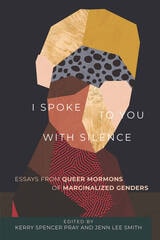
cover of I Spoke to You with Silence: Essays from Queer Mormons of Marginalized Genders

I Spoke to You with Silence

Essays from Queer Mormons of Marginalized Genders

Edited by Kerry Spencer Pray and Jenn Lee Smith

University of Utah Press, 2022

Nobody knows what to do about queer Mormons. The institutional Church of Jesus Christ of Latter-day Saints prefers to pretend they don’t exist, that they can choose their way out of who they are, leave, or at least stay quiet in a community that has no place for them. Even queer Mormons don’t know what to do about queer Mormons. Their lived experience is shrouded by a doctrine in which heteronormative marriage is non-negotiable and gender is unchangeable. For women, trans Mormons, and Mormons of other marginalized genders, this invisibility is compounded by social norms which elevate (implicitly white) cisgender male voices above those of everyone else. 

This collection of essays gives voice to queer Mormons. The authors who share their stories—many speaking for the first time from the closet—do so here in simple narrative prose. They talk about their identities, their experiences, their relationships, their heartbreaks, their beliefs, and the challenges they face. Some stay in the church, some do not, some are in constant battles with themselves and the people around them as they make agonizing decisions about love and faith and community. Their stories bravely convey what it means to be queer, Mormon, and marginalized—what it means to have no voice and yet to speak anyway.
 
[more]
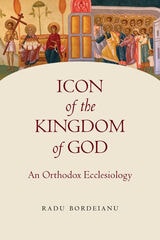
cover of Icon of the Kingdom of God: An Orthodox Ecclesiology

Icon of the Kingdom of God

An Orthodox Ecclesiology

Radu Bordeianu

Catholic University of America Press, 2023
What is the Church? Some would answer this question by studying the Scriptures, the history of the Church, and contemporary theologians, thus addressing the theological nature of the Church. Others would answer based on statistics, interviews, and personal observation, thus focusing on the experience of the Church. These theological and experiential perspectives are in tension, or at times even opposed. Whereas the first might speak about the local church as the diocese gathered in the Liturgy presided over by its bishop, the latter would describe the local church as the parish community celebrating the Liturgy together with the parish priest, never experiencing a sole liturgy that gathers an entire diocese around its bishop. Whereas a theologian might abstractly describe the Church as a reflection of the Trinity, a regular church-member might concretely experience the Church as a community that manifests the Kingdom of God in its outreach ministries. Radu Bordeianu attempts to bring these two perspectives together, starting from the concrete experience of the Church, engaging this experience with the theological tradition of the Church, extracting ecclesiological principles from this combined approach, and then highlighting concrete situations that reflect those standards or proposing correctives, when necessary. Without pretending to be a complete Orthodox ecclesiology, Icon of the Kingdom of God addresses the most important topics related to the Church. It progresses according to one’s experience of the Church from baptism, to the family, parish, Liturgy, and priesthood, followed by analyses of synodality and nationality. Arguing that the Church is an icon of the Kingdom of God, this volume brings together the past theological heritage and the present experience of the Church while having three methodological characteristics: experiential, Kingdom-centered, and ecumenical.
[more]
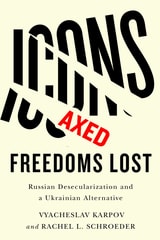
cover of Icons Axed, Freedoms Lost: Russian Desecularization and a Ukrainian Alternative

Icons Axed, Freedoms Lost

Russian Desecularization and a Ukrainian Alternative

Vyacheslav Karpov

Rutgers University Press, 2025
In Icons Axed, Freedoms Lost, Vyacheslav Karpov and Rachel L. Schroeder demonstrate how Russia went from persecuting believers to jailing critics of religion and why, in contrast, religious pluralism and tolerance have solidified in Ukraine. Offering a richly documented history of cultural and political struggles that surrounded desecularization—the resurgence of religion’s societal role—from the end of the USSR to the Russo-Ukrainian war, they show Russian critics of desecularization adhered to artistic provocations, from axing icons to “punk-prayers” in cathedrals, and how Orthodox activists, in turn, responded by vandalizing controversial exhibits and calling on the state to crush “the enemies of the Church.” Putin’s solidifying tyranny heard their calls and criminalized insults to religious feelings. Meanwhile, Ukraine adhered to its pluralistic legacies. Its churches refused to engage in Russian-style culture wars, sticking instead to forgiveness and forbearance. Icons Axed, Freedoms Lost offers original theoretical and methodological perspectives on desecularization applicable far beyond the cases of Russia and Ukraine.
 
[more]
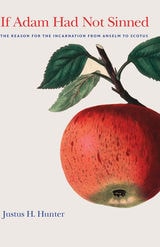
cover of If Adam Had Not Sinned: The Reason for the Incarnation from Anselm to Scotus

If Adam Had Not Sinned

The Reason for the Incarnation from Anselm to Scotus

Justus H. Hunter

Catholic University of America Press, 2020

Since the twelfth century, theologians have found a counterfactual question irresistible: “If Adam had not sinned, would the Son have become incarnate?” In the latter half of the twentieth century, Hans Urs von Balthasar, Hans Küng, Gerhard Ludwig Müller, Karl Rahner, Karl Barth, Wolfhart Pannenburg, Jürgen Moltmann, and Robert Jenson all considered this question on the reason, or motive, for the incarnation. Nearly every case refers to the classic disagreement between those who follow Thomas Aquinas and those who follow John Duns Scotus. Though it is common to claim Thomas or Scotus as one’s authority, the theological debates among which Thomas and Scotus developed their own positions remain largely neglected. This study fills that gap. If Adam Had Not Sinned is a study of the medieval debates over the motive for the incarnation from Anselm of Canterbury to John Duns Scotus. While the volume is primarily focused on thirteenth-century debates at the University of Paris, it also supplies necessary historical background to those debates. As a result, the larger context within which Thomas Aquinas and John Duns Scotus developed their influential responses is detailed. This larger context permits an analysis that leads to the surprising claim, against widespread assumptions, that the responses given by Thomas and Scotus are substantially reconcilable.
[more]
cover of If You Love That Lady Don't Marry Her: The Courtship Letters of Sally Mcdowell and John Miller, 1854-1856

If You Love That Lady Don't Marry Her

The Courtship Letters of Sally Mcdowell and John Miller, 1854-1856

Edited by Thomas E. Buckley

University of Missouri Press, 2000

"Could you love me so much that if the whole world turned against us, & we were obliged to live alone, given up by society you could live entirely in me? Could I ever become all the world to you?" --John Miller to Sally McDowell, February 21, 1855

"At last I come to tell you that I am yours. And I pray God to bless us not only in each other but to each other, and to grant us His favor and protection in the important step we are about to take.

If even to this hour I have fears and misgivings, and am disturbed by doubts and anxieties you must forgive me. They grow out of a condition of things as painful as it is unalterable, and out of an anxious temper which is, I think, like dear little Allie's ticklishness "constitutional." They are entirely without justification in anything I know or believe of you for I have the very fullest trust in your affection, and every confidence in your high and honorable character. But the cloud that rests upon the past with me does obscure the present to us both and looks portentous for the future. Yet you must take me with it all. Perhaps I may by and by prove to be something else than a burden to you; and at any rate, my affection is of some value to you, isn't it?" --Sally McDowell to John Miller, April 30, 1855

"If You Love That Lady Don't Marry Her" is a fascinating collection of almost five hundred letters between John Miller (1819-1895) and Sally Campbell Preston McDowell (1821-1895). Their correspondence began in early August 1854 and continued until their marriage in November 1856. The oldest daughter of the late Governor James McDowell of Virginia, Sally McDowell owned and managed Colalto, the family plantation. She was considered part of the South's social and political elite. John Miller, a widower with two young children, was a Presbyterian minister in Philadelphia. Son of Samuel Miller, a founder of Princeton Theological Seminary, he was one of the North's most prominent clergymen.

McDowell and Miller literally fell in love by mail, but one major obstacle blocked their marriage: Sally McDowell was a divorced woman. She had been wed to Governor Francis Thomas of Maryland, but his jealousy and cruelty soon drove her from Annapolis. Although an 1846 legislative divorce freed her to remarry legally, it was not socially acceptable to do so, especially not to "a man of the cloth." So when Miller and McDowell announced their plan to marry, social pressure cost him his pulpit and made her the object of extreme criticism from family members and friends. Although Miller was initially determined to wed despite any opposition, he eventually settled for a long-term engagement to preserve McDowell's social position.

Apart from a few brief visits, Miller and McDowell's relationship depended entirely upon letters. Begun in carefully guarded terms, these letters soon evolved into intimate explorations of their deepening love, their respective gender roles, the problems created by divorce, and religious and familial obligations. McDowell provides the unusual feminist perspective of a divorced woman in mid-nineteenth-century America. As she probes her own inner world, her correspondence with Miller becomes a healing experience through which she gradually surmounts the limitations she experiences as a woman, her depression and the fears resulting from her first marriage, and the stigma of divorce. Ultimately her self- revelations lead to their marriage in November 1856, which lasted until their deaths a week apart almost forty years later.

Because of their unique situation, Miller and McDowell committed to paper the private thoughts and feelings that most couples would have expressed in person. Although their personal relationship forms the principal subject of these letters, the couple also discussed such issues as the growing sectional tensions, national and state politics and politicians, literary figures, church meetings and personages, slave management and behavior, and family and community values and attitudes. Eloquently written, these letters offer a unique window on American society on the eve of the Civil War. They also reveal important information about gender roles and relationship in nineteenth-century America. Because no other book like this exists in print, readers everywhere will welcome "If You Love That Lady Don't Marry Her."
[more]
cover of Ignatius of Loyola and Thomas Aquinas: A Jesuit Ressourcement

Ignatius of Loyola and Thomas Aquinas

A Jesuit Ressourcement

Justin M. Anderson

Catholic University of America Press, 2023
Though the relationship between Jesuits and Dominicans has historically been marked by theological controversy, Ignatius of Loyola, the founder of the Jesuits, shows remarkable affinity for the Thomistic tradition, the tradition advanced above all by the Dominican order. When writing the Jesuit Constitutions, in fact, Ignatius made Thomas Aquinas’s Summa Theologiae the primary textbook for Jesuit theological formation. The contributions to this volume—originating from Jesuits, Dominicans, and lay scholars alike—explore different aspects of the complex yet illuminating relationship between Ignatius and Thomas. The themes range from the general relationship between the early Jesuits and scholastic theology to the attempts by Francisco de Toledo, the first Jesuit cardinal, to apply Thomistic reasoning to the religious and legal status of Jewish converts to Christianity. Other contributions compare Ignatius and Thomas on topics of significant interest for dogmatic, sacramental, and spiritual theology: spiritual experience, the ordering of the passions, the use of the imagination, prudence and discernment of spirits, frequent communion, Mariology, the “hierarchical church,” and the limits of obedience. Students of Ignatius of Loyola, Thomas Aquinas, second scholasticism, Christian-Jewish relations, and spiritual theology in general will find this volume an invaluable contribution.
[more]
cover of Imagining Judeo-Christian America: Religion, Secularism, and the Redefinition of Democracy

Imagining Judeo-Christian America

Religion, Secularism, and the Redefinition of Democracy

K. Healan Gaston

University of Chicago Press, 2019
“Judeo-Christian” is a remarkably easy term to look right through. Judaism and Christianity obviously share tenets, texts, and beliefs that have strongly influenced American democracy. In this ambitious book, however, K. Healan Gaston challenges the myth of a monolithic Judeo-Christian America. She demonstrates that the idea is not only a recent and deliberate construct, but also a potentially dangerous one. From the time of its widespread adoption in the 1930s, the ostensible inclusiveness of Judeo-Christian terminology concealed efforts to promote particular conceptions of religion, secularism, and politics. Gaston also shows that this new language, originally rooted in arguments over the nature of democracy that intensified in the early Cold War years, later became a marker in the culture wars that continue today. She argues that the debate on what constituted Judeo-Christian—and American—identity has shaped the country’s religious and political culture much more extensively than previously recognized.
[more]
cover of Imagining Religion: From Babylon to Jonestown

Imagining Religion

From Babylon to Jonestown

Jonathan Z. Smith

University of Chicago Press, 1982

With this influential book of essays, Jonathan Z. Smith has pointed the academic study of religion in a new theoretical direction, one neither theological nor willfully ideological.

Making use of examples as apparently diverse and exotic as the Maori cults in nineteenth-century New Zealand and the events of Jonestown, Smith shows that religion must be construed as conventional, anthropological, historical, and as an exercise of imagination. In his analyses, religion emerges as the product of historically and geographically situated human ingenuity, cognition, and curiosity—simply put, as the result of human labor, one of the decisive but wholly ordinary ways human beings create the worlds in which they live and make sense of them.

"These seven essays . . . display the critical intelligence, creativity, and sheer common sense that make Smith one of the most methodologically sophisticated and suggestive historians of religion writing today. . . . Smith scrutinizes the fundamental problems of taxonomy and comparison in religious studies, suggestively redescribes such basic categories as canon and ritual, and shows how frequently studied myths may more likely reflect situational incongruities than vaunted mimetic congruities. His final essay, on Jonestown, demonstrates the interpretive power of the historian of religion to render intelligible that in our own day which seems most bizarre."—Richard S. Sarason, Religious Studies Review
[more]
cover of Imago Dei

Imago Dei

Thomas Albert Howard

Catholic University of America Press, 2013

Imago Dei will serve as an indispensable resource for those wishing to deepen their grasp of the theological bases for Christian views of human dignity, as well as for those who believe that Christ's words "that they be one" (John 17:21) remain a theological imperative today
[more]
cover of Imperial Bibles, Domestic Bodies: Women, Sexuality, and Religion in the Victorian Market

Imperial Bibles, Domestic Bodies

Women, Sexuality, and Religion in the Victorian Market

Mary Wilson Carpenter

Ohio University Press, 2003

Of the many literary phenomena that sprang up in eighteenth-century England and later became a staple of Victorian culture, one that has received little attention until now is the “Family Bible with Notes.” Published in serial parts to make it affordable, the Family Bible was designed to enhance the family’s status and sense of national and imperial identity.

Imperial Bibles, Domestic Bodies reveals in its study of the production and consumption of British commercial Family Bibles startling changes in “family values.” Advertised in the eighteenth century as providing the family with access to “universal knowledge,” these Bibles suddenly shifted in the early nineteenth century to Bibles with bracketed sections marked “to be omitted from family reading” and reserved for reading “in the closet” by the “Master of the family.” These disciplinary Bibles were paralleled by Family Bibles designed to appeal to the newly important female consumer. Illustrations featured saintly women and charming children, and “family registers” with vignettes of family life emphasized the prominent role of the “angel in the house.”

As Mary Wilson Carpenter documents in Imperial Bibles, Domestic Bodies, the elaborate notes and “elegant engravings” in these Bibles bring to light a wealth of detail about the English commonsense view of such taboo subjects as same-sex relations, masturbation, menstruation, and circumcision. Her reading of literary texts by Charlotte Brontë, George Eliot, and Elizabeth Barrett Browning in the context of these commercial representations of the “Authorized Version” or King James translation of the Bible indicates that when the Victorians spoke about religion, they were also frequently speaking about sex.
[more]
cover of Importing Care, Faithful Service: Filipino and Indian American Nurses at a Veterans Hospital

Importing Care, Faithful Service

Filipino and Indian American Nurses at a Veterans Hospital

Stephen M. Cherry

Rutgers University Press, 2022
Every year thousands of foreign-born Filipino and Indian nurses immigrate to the United States. Despite being well trained and desperately needed, they enter the country at a time, not unlike the past, when the American social and political climate is once again increasingly unwelcoming to them as immigrants. Drawing on rich ethnographic and survey data, collected over a four-year period, this study explores the role Catholicism plays in shaping the professional and community lives of foreign-born Filipino and Indian American nurses in the face of these challenges, while working at a Veterans hospital. Their stories provide unique insights into the often-unseen roles race, religion and gender play in the daily lives of new immigrants employed in American healthcare. In many ways, these nurses find themselves foreign in more ways than just their nativity. Seeing nursing as a religious calling, they care for their patients, both at the hospital and in the wider community, with a sense of divine purpose but must also confront the cultural tensions and disconnects between how they were raised and trained in another country and the legal separation of church and state. How they cope with and engage these tensions and disconnects plays an important role in not only shaping how they see themselves as Catholic nurses but their place in the new American story.
 
[more]
cover of Imposing Harmony: Music and Society in Colonial Cuzco

Imposing Harmony

Music and Society in Colonial Cuzco

Geoffrey Baker

Duke University Press, 2008

Imposing Harmony is a groundbreaking analysis of the role of music and musicians in the social and political life of colonial Cuzco. Challenging musicology’s cathedral-centered approach to the history of music in colonial Latin America, Geoffrey Baker demonstrates that rather than being dominated by the cathedral, Cuzco’s musical culture was remarkably decentralized. He shows that institutions such as parish churches and monasteries employed indigenous professional musicians, rivaling Cuzco Cathedral in the scale and frequency of the musical performances they staged.

Building on recent scholarship by social historians and urban musicologists and drawing on extensive archival research, Baker highlights European music as a significant vehicle for reproducing and contesting power relations in Cuzco. He examines how Andean communities embraced European music, creating an extraordinary cultural florescence, at the same time that Spanish missionaries used the music as a mechanism of colonialization and control. Uncovering a musical life of considerable and unexpected richness throughout the diocese of Cuzco, Baker describes a musical culture sustained by both Hispanic institutional patrons and the upper strata of indigenous society. Mastery of European music enabled elite Andeans to consolidate their position within the colonial social hierarchy. Indigenous professional musicians distinguished themselves by fulfilling important functions in colonial society, acting as educators, religious leaders, and mediators between the Catholic Church and indigenous communities.
[more]
cover of Impurity and Purification in Early Judaism and the Jesus Tradition

Impurity and Purification in Early Judaism and the Jesus Tradition

Thomas Kazen

SBL Press, 2021
This collection of essays by Thomas Kazen focuses on issues of purity and purification in early Judaism and the Jesus tradition. During the late Second Temple period, Jewish purity practices became more prominent than before and underwent substantial developments. These essays advance the ongoing conversation and debate about a number of key issues in the field, such as the relationship between ritual and morality, the role and function of metaphor, and the use of evolutionary and embodied perspectives. Kazen's research stands in constant dialogue with the major currents and main figures in purity research, including both historical (origin, development, practice) and cognitive (evolutionary, emotional, conceptual) approaches.
[more]
cover of In Her Own Voice: Childbirth Stories from Mennonite Women

In Her Own Voice

Childbirth Stories from Mennonite Women

Katherine Martens

University of Manitoba Press, 1997
Winnipeg writer Katherine Martens interviewed 26 women from the Mennonite community in southern Manitoba, ranging in age from 22 to 88 years old. They had many different backgrounds, but they all had one important characteristic: all were mothers.In the course of these interviews, Martens was searching for answers to questions that affected her both as a Mennonite and as a woman. How did they feel when they learned of the pregnancy? How did they choose home or hospital birth? How did the traditions of the Mennonite culture affect them as wives and mothers? As they talked, many spoke about the joys and trials of giving birth, and they also told Martens stories about other parts of their lives. Some had escaped the Russian Revolution to emigrate to Canada; others spent their entire lives in rural Manitoba, part of the close-knit Mennonite community, running farms and bearing as many as 15 children. Younger women who had formally left the Mennonite church were still conscious of the impact of the beliefs and customs on their lives.Many women were surprised to be approached for an interview, insisting that they had "no stories to tell." One was visited in a dream by her dead husband, who told her to "leave that alone." Yet, in the privacy of their kitchens and parlours, over sociable cups of tea, many did share with Martens their private fears and joys about what was often seen as a rite of passage into responsible adulthood, and they recalled that childbirth could be a difficult and, at times, traumatic event, but it could also be a radiant and spiritual experience.
[more]
cover of In Sacred Loneliness: The Documents

In Sacred Loneliness

The Documents

Todd Compton

Signature Books, 2022

Plural marriage in the Nauvoo era of LDS Church history has long been a fascinating subject. To understand it fully requires one to look at it from the perspective of the man who introduced it, but just as crucial is a dive into the lives of the women he married, all who have their stories to tell. In his 1997 award-winning study, In Sacred Loneliness: The Plural Wives of Joseph Smith, Todd Compton focused on the thirty-three women who he could demonstrate that Smith married, providing life stories of many who were well-known and others who have been largely forgotten. In his new work, In Sacred Loneliness: The Documents, Compton returns to his subject and provides the raw materials that helped him create his original study, writings composed by the women themselves. 

This volume includes many autobiographical writings, diaries, and letters, with Compton providing annotations and introductory material that illuminates these crucial primary sources. This allows readers to take their understanding of this unique group of women to a new level and to drive home that fact that their lives go far beyond the Nauvoo experiment that forever links them to Mormonism’s founding prophet. 
[more]
cover of In Sacred Loneliness: The Plural Wives of Joseph Smith

In Sacred Loneliness

The Plural Wives of Joseph Smith

Todd Compton

Signature Books, 1997

Beginning in the 1830s, at least thirty-three women married Joseph Smith, the founder of Mormonism. These were passionate relationships which also had some longevity, except in cases such as that of two young sisters, one of whom was discovered by Joseph’s first wife, Emma, in a locked bedroom with the prophet. Emma remained a steadfast opponent of polygamy throughout her life. 

The majority of Smith’s wives were younger than he, and one-third were between fourteen and twenty years of age. Another third were already married, and some of the husbands served as witnesses at their own wife’s polyandrous wedding. In addition, some of the wives hinted that they bore Smith children—most notably Sylvia Sessions’s daughter Josephine—although the children carried their stepfather’s surname. 

For all of Smith’s wives, the experience of being secretly married was socially isolating, emotionally draining, and sexually frustrating. Despite the spiritual and temporal benefits, which they acknowledged, they found their faith tested to the limit of its endurance. After Smith’s death in 1844, their lives became even more “lonely and desolate.” One even joined a convent. The majority were appropriated by Smith’s successors, based on the Old Testament law of the Levirate, and had children by them, though they considered these guardianships unsatisfying. Others stayed in the Midwest and remarried, while one moved to California. But all considered their lives unhappy, except for the joy they found in their children and grandchildren.  
[more]
cover of In quibus visitabit nobis, oriens ex alto: Studies Offered in Honor of Father Robert J. Kaslyn, SJ (1956-2019)

In quibus visitabit nobis, oriens ex alto

Studies Offered in Honor of Father Robert J. Kaslyn, SJ (1956-2019)

Kurt Martens

Catholic University of America Press, 2025
On March 13, 2019, five years ago, Fr. Robert Kaslyn S.J., passed away. He was a dear friend, colleague, mentor and so much more to many. In honor of him, his colleagues, former students, and friends from the academy and beyond honor him and his legacy with a festschrift dedicated to him. Because his outreach went beyond the field of canon law, the contributions in this volume go also beyond the strict canon law and include contributions from other fields, such as law and social work. Each of the contributors have written an academic article on a topic of their choice in honor of their friend. The contributors are, in alphabetical order: Nancy Bauer, John Beal, Philip Brown, William Daniel, Zabrina Decker, Eileen Dombo, Sarah Duggin, Robert Geisinger, Eduard Giurgi, Mary Graw Leary, William King, John Chrysostom Kozlowski, Jeannine Marino, Kurt Martens, Rose McDermott, Robert Oliver, Ladislas Orsy, Roch Pagé, Kenneth Pennington, Sean Sheridan, Patrick Valdrini.
[more]
cover of In the Company of Demons: Unnatural Beings, Love, and Identity in the Italian Renaissance

In the Company of Demons

Unnatural Beings, Love, and Identity in the Italian Renaissance

Armando Maggi

University of Chicago Press, 2006

Who are the familiar spirits of classical culture and what is their relationship to Christian demons? In its interpretation of Latin and Greek culture, Christianity contends that Satan is behind all classical deities, semi-gods, and spiritual creatures, including the gods of the household, the lares and penates.But with In the Company of Demons, the world’s leading demonologist Armando Maggi argues that the great thinkers of the Italian Renaissance had a more nuanced and perhaps less sinister interpretation of these creatures or spiritual bodies.

Maggi leads us straight to the heart of what Italian Renaissance culture thought familiar spirits were. Through close readings of Giovan Francesco Pico della Mirandola, Strozzi Cigogna, Pompeo della Barba, Ludovico Sinistrari, and others, we find that these spirits or demons speak through their sudden and striking appearances—their very bodies seen as metaphors to be interpreted. The form of the body, Maggi explains, relies on the spirits’ knowledge of their human interlocutors’ pasts. But their core trait is compassion, and sometimes their odd, eerie arrivals are seen as harbingers or warnings to protect us. It comes as no surprise then that when spiritual beings distort the natural world to communicate, it is vital that we begin to listen.
[more]
cover of In the Eyes of God: A Study on the Culture of Suffering

In the Eyes of God

A Study on the Culture of Suffering

By Fernando Escalante Gonzalbo

University of Texas Press, 2006

"Every culture needs to appropriate the universal truth of human suffering," says Fernando Escalante, ". . . to give its own meaning to this suffering, so that human existence is bearable." Originally published in Spanish as La mirada de Dios: Estudios sobre la cultura del sufrimiento, this book is a remarkable study of the evolution of the culture of suffering and the different elements that constitute it, beginning with a reading of Rousseau and ending with the appearance of the Shoah in the Western consciousness—"The memory endures, and this constitutes a fundamental transition for the Western conscience: we have witnessed."

Drawing on writings from the Greeks to Cervantes, Voltaire to Nietzsche, and Freud to William James, Escalante combines his considerable knowledge of politics and political theory with a vast array of literary examples to arrive at an intellectual understanding of the history and meaning of suffering. His investigation encompasses the rise of popular politics, the role of messianism in modern nationalism, and the contemporary implications of the Shoah.

This book will appeal to a wide audience: students of political theory, humanism, and philosophy, as well as the general reader interested in a glimpse into the mind of a highly original Latin American thinker.

[more]
cover of In the Name of the Father: The Rhetoric of the New Southern Baptist Convention

In the Name of the Father

The Rhetoric of the New Southern Baptist Convention

Carl L. Kell and L. Raymond Camp. Foreword by Kenneth Chafin

Southern Illinois University Press, 1999

In the Name of the Father: The Rhetoric of the New Southern Baptist Conventionbegins with an analysis of the 1979 Southern Baptist Convention, the watershed convention where moderate forces fell before the powerful oratory of the ultraconservative faction, which has remained in power ever since. Communication professors Carl L. Kell and L. Raymond Camp investigate the rhetorical shift from moderate to ultraconservative in the Southern Baptist Convention, the largest denomination in the South and the largest Protestant denomination in the United States. 


Drawing on sermons delivered at national conventions from 1979 to the present, Kell and Camp outline the discourses of fundamentalism, inerrancy, and exclusion. These discourses, the authors assert, point to the SBC leaders’ call for a return to times before feminism and tolerance of varying sexual orientations allegedly brought chaos to society and shook believers from their theological foundations.  
 

[more]
cover of In the Work of Their Hands Is Their Prayer: Cultural Narrative and Redemption on the American Frontiers, 1830-1930

In the Work of Their Hands Is Their Prayer

Cultural Narrative and Redemption on the American Frontiers, 1830-1930

Joel Daehnke

Ohio University Press, 2003

Westward expansion on the North American continent by European settlers generated a flurry of writings on the frontier experience over the course of a hundred years. Asserting that the dominant ideology of America’s Manifest Destiny embodied a tense, often contradictory union of Christian and secular republican views of social progress, In the Work of Their Hands Is Their Prayer investigates the ambivalence of the frontier as it was inscribed with redemptive, historical significance by a host of frontier writers.

Enlisting canonical and noncanonical sources, Joel Daehnke examines the manner in which the imagery of the human figure at work and play in the frontier landscape participated in the nationalist, “civilizing” project of westward expansion. While he acknowledges the growing secularization of American life, Professor Daehnke surveys the continuing claims of the Christian redemptive scheme as a powerful symbolic domain for these writers’ meditations on social progress and the potential for human perfectibility in the landscapes of the West.

Whether discussing the Edenic imagery of women’s gardens, the advocacy of an ethics of land use, or the affairs of fortune in the mining districts of Nevada, In the Work of Their Hands Is Their Prayer presents an enlightening reexamination of an American ideology of progress and its enduring fascination with mission, Manifest Destiny, and the ends of history.

In the Work of Their Hands Is Their Prayer is a welcome addition to the extended library of critical attention to the ideology, history, and literary traditions of the American frontier.

[more]
cover of Incarnate Meaning: Lonergan on Newman

Incarnate Meaning

Lonergan on Newman

Richard M. Liddy

Catholic University of America Press, 2027
How is our fundamental vision of the world rooted in our own self-knowledge? Excellent answers to this question can be found in these two great writers – John Henry Newman (1801-1890) and Bernard Lonergan (1904-1984). To a great extent Lonergan found the answer to his question in Newman’s 1870 Grammar of Assent – the most philosophical and psychologically oriented of Newman’s writings. He went on from Newman to subsequently study Plato, Augustine and especially Aquinas, and then the modern sciences in preparation for his 1957 Insight: A Study of Human Understanding. He subsequently went on to study modern historical consciousness in preparation his 1971 Method in Theology. Through it all, he called Newman “my fundamental mentor and guide.” Incarnate Meaning traces Newman’s influence throughout Lonergan’s life and suggests how that influence can be discerned in the general orientation of Lonergan’s thought as well as in specific areas. Lonergan’s concern for the basic structure of our knowing as well as its historical unfolding mirrored Newman’s interests in his Grammar of Assent and in his other writings. Lonergan’s concern for concrete history as distinct from abstract classsicist tendencies mirrored Newman’s interest in the concrete history of early Christianity. Eventually Lonergan would root the various concerns of the Second Vatican Council in Newman’s thought: a concern for preaching the Good News to the poor, a willingness to dialogue with all peoples and religions and even with atheism. In all of this he repeatedly calls attention to Newman’s brilliance in communication. He called him “a terrific rhetorician” and would often repeat Newman’s motto when made a Cardinal, cor ad cor loquitur – “heart speaks to heart.” All this provided much of the background for Lonergan’s own methodological and theological achievements in the twentieth century. Both writers together constitute a wonderful background for Christian and Catholic thought facing the future. In a world in which humanity is tempted to seek answers in AI, Newman and Lonergan represent humanity’s openness to the divine and what Lonergan called “the spark in our clod, our native orientation to the divine.”
[more]
cover of Incarnation: A Philosophy of Flesh

Incarnation

A Philosophy of Flesh

Michel Henry; Translated from the French by Karl Hefty

Northwestern University Press, 2015

In his book Incarnation: A Philosophy of the Flesh, Michel Henry starts with the opposition of the sensible and living flesh, as we experience it permanently from the inside, to our inert and material body, as we can see it from the outside, similar to the other objects we can find in the world. The flesh doesn’t fit at all in his terminology with the soft part of our material and objective body, by opposition to the bones for example, but to what he called in his previous books our subjective body. For Michel Henry, an object doesn’t possess interiority, it is not living, it doesn’t feel itself and doesn’t feel that it is touched; it doesn’t do the subjective experience of being touched.

After having placed the difficult problem of the incarnation in an historical perspective going back to the thought of the Fathers of the Church, he makes in this book a critical review of the phenomenological tradition that leads to the reversal of phenomenology. He then proposes to elaborate a phenomenology of the flesh which leads to the notion of a not constituted original flesh given in the "Arch-revelation" of Life, as well as a phenomenology of Incarnation.

Although the flesh is traditionally understood as the place of sin, it is also in Christianity the place of salvation, which consists in the deification of man, that’s to say in the fact of becoming Son of God, to come back to the eternal and absolute Life we had forgotten getting lost in the world, caring only about things and ourselves. In the fault, we make the tragic experience of our powerlessness to do the good we would like to do and of our inability to avoid the evil. In this way in front of the magic body of the other, that’s the anguished desire to meet the life in it that leads to the fault. In the night of the lovers, the sexual act couples two impulsive movements, but the erotic desire fails to reach the pleasure of the other where it is experienced, in a total loving fusion. The erotic relation is however doubled by a pure affective relation, foreign to the carnal coupling, a relation made of mutual gratitude or of love. That’s this affective dimension that is denied in this way of violence that is pornography, which extracts the erotic relation from the pathos of life to abandon it to the world, and which consists in a real profanation of life.
[more]
cover of Indian Pilgrims: Indigenous Journeys of Activism and Healing with Saint Kateri Tekakwitha

Indian Pilgrims

Indigenous Journeys of Activism and Healing with Saint Kateri Tekakwitha

Michelle M. Jacob

University of Arizona Press, 2016

In 2012 Kateri Tekakwitha became the first North American Indian to be canonized as a saint by the Roman Catholic Church, an event that American Indian Catholics have awaited for generations. Saint Kateri, known as the patroness of the environment, was born in 1656 near present-day Albany, New York, to an Algonquin mother and a Mohawk father. Tekakwitha converted to Christianity at age nineteen and took a vow of perpetual virginity. Her devotees have advocated for her sainthood since her death in 1680. Within historical Catholic writings, Tekakwitha is portrayed as a model of pious, submissive femininity. Indian Pilgrims moves beyond mainstream narratives and shows that Saint Kateri is a powerful feminine figure who inspires decolonizing activism in contemporary Indigenous peoples’ lives.

Author Michelle M. Jacob examines Saint Kateri’s influence on and relation to three important themes—caring for the environment, building community, and reclaiming the Native feminine as sacred—and brings a Native feminist perspective to the story of Saint Kateri. The book demonstrates the power and potential of Indigenous decolonizing activism, as Saint Kateri’s devotees claim the space of the Catholic Church to revitalize traditional cultural practices, teach and learn Indigenous languages, and address critical issues such as protecting Indigenous homelands from environmental degradation. The book is based on ethnographic research at multiple sites, including Saint Kateri’s 2012 canonization festivities in Vatican City and Italy, the Akwesasne Mohawk Reservation (New York and Canada), the Yakama Reservation (Washington), and the National Tekakwitha Conferences in Texas, North Dakota, and Louisiana. Through narratives from these events, Jacob addresses issues of gender justice—such as respecting the autonomy of women while encouraging collectivist thinking and strategizing—and seeks collective remedies that challenge colonial and capitalist filters.
 
[more]
cover of Indiscretion: Finitude and the Naming of God

Indiscretion

Finitude and the Naming of God

Thomas A. Carlson

University of Chicago Press, 1998

How can one think and name an inconceivable and ineffable God? Christian mystics have approached the problem by speaking of God using "negative" language—devices such as grammatical negation and the rhetoric of "darkness" or "unknowing"—and their efforts have fascinated contemporary scholars. In this strikingly original work, Thomas A. Carlson reinterprets premodern approaches to God's ineffability and postmodern approaches to the mystery of the human subject in light of one another. The recent interest in mystical theological traditions, Carlson argues, is best understood in relation to contemporary philosophy's emphasis on the idea of human finitude and mortality.

Combining both historical research in theology (from Pseudo-Dionysius to Aquinas to Eckhart) and contemporary philosophical analysis (from Hegel and Nietzsche to Heidegger, Derrida, and Marion), Indiscretion will interest philosophers, theologians, and other scholars concerned with the possibilities and limits of language surrounding both God and human subjectivity.
[more]
cover of Inka Bodies and the Body of Christ: Corpus Christi in Colonial Cuzco, Peru

Inka Bodies and the Body of Christ

Corpus Christi in Colonial Cuzco, Peru

Carolyn Dean

Duke University Press, 1999

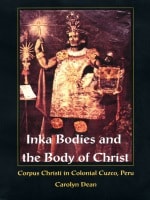
In Inka Bodies and the Body of Christ Carolyn Dean investigates the multiple meanings of the Roman Catholic feast of Corpus Christi as it was performed in the Andean city of Cuzco after the Spanish conquest. By concentrating on the era’s paintings and its historical archives, Dean explores how the festival celebrated the victory of the Christian God over sin and death, the triumph of Christian orthodoxy over the imperial Inka patron (the Sun), and Spain’s conquest of Peruvian society.
As Dean clearly illustrates, the central rite of the festival—the taking of the Eucharist—symbolized both the acceptance of Christ and the power of the colonizers over the colonized. The most remarkable of Andean celebrants were those who appeared costumed as the vanquished Inka kings of Peru’s pagan past. Despite the subjugation of the indigenous population, Dean shows how these and other Andean nobles used the occasion of Corpus Christi as an opportunity to construct new identities through tinkuy, a native term used to describe the conjoining of opposites. By mediating the chasms between the Andean region and Europe, pagans and Christians, and the past and the present, these Andean elites negotiated a new sense of themselves. Dean moves beyond the colonial period to examine how these hybrid forms of Inka identity are still evident in the festive life of modern Cuzco.
Inka Bodies and the Body of Christ offers the first in-depth analysis of the culture and paintings of colonial Cuzco. This volume will be welcomed by historians of Peruvian culture, art, and politics. It will also interest those engaged in performance studies, religion, and postcolonial and Latin American studies.
[more]
cover of Inquiry about the Monks in Egypt

Inquiry about the Monks in Egypt

Catholic University of America Press, 2020
From September 394 to early January 395, seven monks from Rufinus of Aquileia’s monastery on the Mount of Olives made a pilgrimage to Egypt to visit locally renowned monks and monastic communities. Shortly after their return to Jerusalem, one of the party, whose identity remains a mystery, wrote an engaging account of this trip. Although he cast it in the form of a first-person travelogue, it reads more like a book of miracles that depicts the great fourth-century Egyptian monks as prophets and apostles similar to those in the Bible. This work was composed in Greek, yet it is best known today as Historia monachorum in Aegypto (Inquiry about the Monks in Egypt), the title of the Latin translation of this work made by Rufinus, the pilgrim-monks’ abbot. The Historia monachorum is one of the most fascinating, fantastical, and enigmatic pieces of literature to survive from the patristic period. In both its Greek original and Rufinus’s Latin translation it was one of the most popular and widely disseminated works of monastic hagiography during Late Antiquity and the Middle Ages. Modern scholars value it not only for its intrinsic literary merits but also for its status, alongside Athanasius’s Life of Antony, the Pachomian dossier, and other texts of this ilk, as one of the most important primary sources for monasticism in fourth-century Egypt. Rufinus’s Historia monachorum is presented here in English translation in its entirety. The introduction and annotations situate the work in its literary, historical, religious, and theological contexts.
[more]
cover of Intellectual Appetite: A Theological Grammar

Intellectual Appetite

A Theological Grammar

Paul J. Griffiths

Catholic University of America Press, 2009

The appetite for knowledge--wanting to know things--is very strong in humans. Some will sacrifice all other goods (sex, power, food, life itself) for it. But this is not a simple appetite, and this book treats some of its complications, deformations, beauties, and intensities.
[more]
cover of Intelligently Designed: How Creationists Built the Campaign against Evolution

Intelligently Designed

How Creationists Built the Campaign against Evolution

Edward Caudill

University of Illinois Press, 2013
Tracing the growth of creationism in America as a political movement, this book explains why the particularly American phenomenon of anti-evolution has succeeded as a popular belief. Conceptualizing the history of creationism as a strategic public relations campaign, Edward Caudill examines why this movement has captured the imagination of the American public, from the explosive Scopes trial of 1925 to today's heated battles over public school curricula. Caudill shows how creationists have appealed to cultural values such as individual rights and admiration of the rebel spirit, thus spinning creationism as a viable, even preferable, alternative to evolution.
 
In particular, Caudill argues that the current anti-evolution campaign follows a template created by Clarence Darrow and William Jennings Bryan, the Scopes trial's primary combatants. Their celebrity status and dexterity with the press prefigured the Moral Majority's 1980s media blitz, more recent staunchly creationist politicians such as Sarah Palin and Mike Huckabee, and creationists' savvy use of the Internet and museums to publicize their cause. Drawing from trial transcripts, media sources, films, and archival documents, Intelligently Designed highlights the importance of historical myth in popular culture, religion, and politics and situates this nearly century-old debate in American cultural history.
[more]
cover of Intersexual Persons and Theology of the Body: A Limit Case for John Paul II's Theological Anthropology

Intersexual Persons and Theology of the Body

A Limit Case for John Paul II's Theological Anthropology

Beth Zagrobelny Lofgren

Catholic University of America Press, 2026
Intersexual Persons and Theology of the Body offers an interpretation of John Paul II’s theology of the body that demonstrates how it can encompass intersexual bodies. Intersexuality has been used to challenge binary anthropologies, such as the late pope’s. Beth Zagrobelny Lofgren theorizes that John Paul II’s anthropology answers the “frequency dilemma,” by learning from male and female bodies while respecting the humanity of people with ambiguous bodies. To argue this, Intersexual Persons and Theology of the Body offers biological, psychological, and theological literature on intersexuality (focusing on the anthropologies of Susannah Cornwall and Megan DeFranza), followed by the late pope’s anthropology (focusing on original solitude, the spousal meaning of the body, and the semiotic meanings of the body). This volume demonstrate that intersexual bodies have a spousal meaning, although obscured, and use original solitude to show that John Paul II attributes to the human body meaning not dependent on sexual difference: the first man learns from his solitary body that he is relational. This relationality is fundamental to the imago Dei and undergirds the imago Dei found in communion. Intersexual bodies share human nature and thus the bodily call to relationship. Finally, Lofgren argues that John Paul II’s eschatology involves a transformation of humankind that fulfills the semiotic value of the body. The sign gives way to the mystery: the person fully realized as self-gift. Because the mystery does not depend on the sign, this vision includes intersexual bodies. This discussion leads to a brief consideration of celibacy and marriage for persons with intersexual conditions. This is currently the only application of John Paul II’s theology of the body to these complex situations.
[more]
cover of Intimate Reading: Textual Encounters in Medieval Women’s Visions and Vitae

Intimate Reading

Textual Encounters in Medieval Women’s Visions and Vitae

Jessica Barr

University of Michigan Press, 2020

Intimate Reading: Textual Encounters in Medieval Women’s Visions and Vitae explores the ways that women mystics sought to make their books into vehicles for the reader’s spiritual transformation. Jessica Barr argues that the cognitive work of reading these texts was meant to stimulate intensely personal responses, and that the very materiality of the book can produce an intimate encounter with God. She thus explores the differences between mystics’ biographies and their self-presentation, analyzing as well the complex rhetorical moves that medieval women writers employ to render their accounts more effective.
This new volume is structured around five case studies. Chapters consider the biographies of 13th-century holy women from Liège, the writings of Margery Kempe, Gertrude of Helfta, Mechthild of Magdeburg, Marguerite Porete, and Julian of Norwich. At the heart of Intimate Reading is the question of how reading works—what it means to enter imaginatively and intellectually into the words of another. The volume showcases the complexity of medieval understandings of the work of reading, deepening our perception of the written word’s capacity to signify something that lies even beyond rational comprehension.
[more]
cover of Into Africa: A Transnational History of Catholic Medical Missions and Social Change

Into Africa

A Transnational History of Catholic Medical Missions and Social Change

Wall, Barbra Mann

Rutgers University Press, 2015

Winner of the 2016 Lavinia Dock Award from the American Association for the History of Nursing

 Awarded first place in the 2016 American Journal of Nursing Book of the Year Award in the History and Public Policy category


The most dramatic growth of Christianity in the late twentieth century has occurred in Africa, where Catholic missions have played major roles. But these missions did more than simply convert Africans. Catholic sisters became heavily involved in the Church’s health services and eventually in relief and social justice efforts. In Into Africa, Barbra Mann Wall offers a transnational history that reveals how Catholic medical and nursing sisters established relationships between local and international groups, sparking an exchange of ideas that crossed national, religious, gender, and political boundaries.
 
Both a nurse and a historian, Wall explores this intersection of religion, medicine, gender, race, and politics in sub-Saharan Africa, focusing on the years following World War II, a period when European colonial rule was ending and Africans were building new governments, health care institutions, and education systems. She focuses specifically on hospitals, clinics, and schools of nursing in Ghana and Uganda run by the Medical Mission Sisters of Philadelphia; in Nigeria and Uganda by the Irish Medical Missionaries of Mary; in Tanzania by the Maryknoll Sisters of New York; and in Nigeria by a local Nigerian congregation. Wall shows how, although initially somewhat ethnocentric, the sisters gradually developed a deeper understanding of the diverse populations they served. In the process, their medical and nursing work intersected with critical social, political, and cultural debates that continue in Africa today: debates about the role of women in their local societies, the relationship of women to the nursing and medical professions and to the Catholic Church, the obligations countries have to provide care for their citizens, and the role of women in human rights.
 
A groundbreaking contribution to the study of globalization and medicine, Into Africa highlights the importance of transnational partnerships, using the stories of these nuns to enhance the understanding of medical mission work and global change.
[more]
cover of Into God, student edition: Itinerarium Mentis in Deum of Saint Bonaventure

Into God, student edition

Itinerarium Mentis in Deum of Saint Bonaventure

Regis J. Armstrong

Catholic University of America Press, 0
[more]
cover of Introduction to Moral Theology, revised edition

Introduction to Moral Theology, revised edition

Romanus Cessario

Catholic University of America Press, 2013
Originally published in 2001, Introduction to Moral Theology responded to the need for a new introduction to the basic and central elements of Catholic moral theology written in the light of Veritatis splendor. Since then, it has become a standard text for students and a reputable resource on such topics as moral theology and the good of the human person created in God's image; natural law; principles of human action; determination of the moral good through objects, ends, and circumstances; and the virtues, gifts of the Holy Spirit, and the Beatitudes.
[more]
cover of Introduction to the Mystery of the Church

Introduction to the Mystery of the Church

Benoit-Dominique de La Soujeole, OP

Catholic University of America Press, 2014
An ecclesiological survey presenting a doctrinal synthesis of the church.
[more]
cover of Irish Mormons: Reconciling Identity in Global Mormonism

Irish Mormons

Reconciling Identity in Global Mormonism

Hazel O'Brien

University of Illinois Press, 2023

The Church of Jesus Christ of Latter-day Saints is one of the international religions that have arrived from abroad to find adherents in Ireland. Drawing on fieldwork in two LDS communities, Hazel O’Brien explores how these adherents experience the Church in Ireland against the backdrop of the country’s increasingly complex religious identity. Irish Latter-day Saints live on the margins of the nation’s religious life and the worldwide LDS movement. Nonetheless, they create a sense of belonging for themselves by drawing on collective memories of both their Irishness and their faith. As O’Brien shows, Irish Latter-day Saints work to shift the understanding of Ireland’s religious landscape away from a predominant focus on Roman Catholicism. They also challenge Utah-based constructions of Mormonism in order to ensure their place in the Church’s powerful religious and cultural lineage.

Examining the Latter-day Saint experience against one nation’s rapid social and religious changes, Irish Mormons blends participant observation and interviews with analysis to offer a rare view of the Latter-day Saints in contemporary Ireland.
[more]
cover of Isaac Taylor Tichenor: The Creation of the Baptist New South

Isaac Taylor Tichenor

The Creation of the Baptist New South

Michael E. Williams Sr.

University of Alabama Press, 2005

The influential role Tichenor played in shaping both the Baptist denomination and southern culture

Isaac Taylor Tichenor worked as a Confederate chaplain, a mining executive, and as president of the Agricultural and Mechanical College of Alabama (now Auburn University). He also served as corresponding secretary for the Home Mission Board of the Southern Baptist Convention in Atlanta from 1882 until 1899. In these capacities Tichenor developed the New South ideas that were incorporated into every aspect of his work and ultimately influenced many areas of southern life, including business, education, religion, and culture.

In Isaac Taylor Tichenor: The Creation of the Baptist New South, Michael E. Williams Sr. provides a comprehensive analysis of Tichenor’s life, examining the overall impact of his life and work. This volume also documents the methodologies Tichenor used to rally Southern Baptist support around its struggling Home Mission Board, which defined the makeup of the Southern Baptist Convention and defended the territory of the convention.

Tichenor was highly influential in forming a uniquely southern mindset prior to and at the turn of the century. Williams contends that Tichenor’s role in shaping Southern Baptists as they became the largest denomination in the South was crucial in determining their identity both the identities of the region and the SBC.
[more]
cover of Isaac, Iphigeneia, and Ignatius: Martyrdom and Human Sacrifice

Isaac, Iphigeneia, and Ignatius

Martyrdom and Human Sacrifice

Monika Pesthy-Simon

Central European University Press, 2017
What is the meaning of the martyr’s sacrifice? Is it true that the martyr imitates Christ? After the “one and eternal” sacrifice of Jesus why are from time to time new (and often quite numerous) sacrifices necessary? What is the underlying concept concerning the divinity? How do these ideas survive in present times? These are the kind of questions behind the inquiries in this monograph. The author investigates martyrdom as a (voluntary) human sacrifice and wishes to demonstrate how human sacrifice has been turned into martyrdom. The two emblematic figures of this transformation are Iphigeneia and Isaac. Pesthy argues that all the peoples in the environment in which Christianity came into being are characterized by a very ambiguous and hypocritical attitude toward human sacrifice: while in theory they condemn it as barbarian and belonging to bygone times, in concrete cases they accept, admire and practice it. The same attitude survives in Christianity in which martyrs replace the human sacrifice of olden days: they are real sacrifices, not symbolical ones. Our feelings about martyrs can be very different: we may admire their unbending courage and heroism or be irritated by their stubbornness, or even feel disgusted at the fanaticism with which they strove for death. But whatever our feelings may be, we must admit that a very strong motivation is needed to accept voluntarily or even seek death (and, in the majority of cases, a very painful death at that).
[more]
cover of Island Gospel: Pentecostal Music and Identity in Jamaica and the United States

Island Gospel

Pentecostal Music and Identity in Jamaica and the United States

Melvin L. Butler

University of Illinois Press, 2019
Pentecostals throughout Jamaica and the Jamaican diaspora use music to declare what they believe and where they stand in relation to religious and cultural outsiders. Yet the inclusion of secular music forms like ska, reggae, and dancehall complicated music's place in social and ritual practice, challenging Jamaican Pentecostals to reconcile their religious and cultural identities. Melvin Butler journeys into this crossing of boundaries and its impact on Jamaican congregations and the music they make. Using the concept of flow, Butler's ethnography evokes both the experience of Spirit-influenced performance and the transmigrations that fuel the controversial sharing of musical and ritual resources between Jamaica and the United States. Highlighting constructions of religious and cultural identity, Butler illuminates music's vital place in how the devout regulate spiritual and cultural flow while striving to maintain both the sanctity and fluidity of their evolving tradition.Insightful and original, Island Gospel tells the many stories of how music and religious experience unite to create a sense of belonging among Jamaican people of faith.
[more]
cover of It is the Spirit Who Gives Life: New Directions in Pneumatology

It is the Spirit Who Gives Life

New Directions in Pneumatology

Radu Bordeianu

Catholic University of America Press, 2022

Who is the Holy Spirit? What is the Holy Spirit? The answers to these questions were so obvious in the first centuries of Christian history, that the New Testament and the earliest Christian writers did not feel the need to deliberately address the identity of the Spirit. The more stringent question was this: what does the Spirit do in the Hebrew Scriptures, in the life of Jesus, in the community of disciples, in the Church, and in the world? These same questions, however, did not have the same obvious answers to subsequent generations. Writing in the fourth century, Gregory of Nazianzus observed a slow progress of better understanding the identity and mission of the Holy Spirit throughout the centuries; his opponents still referred to the Spirit as a “strange,” “unscriptural,” and “interpolated” God (Or. 31). One would expect that today, centuries later, pneumatology would be exponentially further developed than in the patristic era. And yet, contemporary theology only rarely asks who the Spirit is and what the Spirit does. That is where the present volume attempts to bring a contribution, by addressing early Pneumatologies reflected in the Scriptures and the age of the martyrs, historical developments in patristic literature and spiritual writings, and contemporary pneumatological themes, as they relate to ecumenism, ecology, science, ecclesiology, and missions. The present volume gathers essays authored by eleven world-renowned theologians. Each contribution originated as a public lecture addressed to theologians and an educated general audience, followed by a private colloquium in which the lecturers conferred with scholars who are experts in the field. Thus, the present volume offers a multifaceted approach to Pneumatology, in an ecumenical spirit.
[more]