Results by title
851 books match the query 'Congresses' and 45 start with i

I Claudia II
Women in Roman Art and SocietyEdited by Diana E. E. Kleiner and Susan B. Matheson
University of Texas Press, 2000
I, Claudia: Women in Ancient Rome—an exhibition and catalog produced by the Yale University Art Gallery—provided the first comprehensive study of the lives of Roman women as revealed in Roman art. Responding to the popular success of the exhibit and catalog, Diana E. E. Kleiner and Susan B. Matheson here gather ten additional essays by specialists in art history, history, and papyrology to offer further reflections on women in Roman society based on the material evidence provided by art, archaeology, and ancient literary sources.
In addition to the editors, the contributors are Cornelius C. Vermeule, Rolf Winkes, Mary T. Boatwright, Susan Wood, Eve D'Ambra, Andrew Oliver, Diana Delia, and Ann Ellis Hanson. Their essays, illustrated with black-and-white photos of the art under discussion, treat such themes as mothers and sons, marriage and widowhood, aging, adornment, imperial portraiture, and patronage.

Ice Age Hunters of the Rockies
Dennis J. Stanford
University Press of Colorado, 1992

Identity, Feasting, and the Archaeology of the Greater Southwest
Barbara J. Mills
University Press of Colorado, 2004
Unlike many previous studies, the authors of this volume place emphasis on how differences within and between societies came about rather than why dissimilar structures arose, elevating the place of both agency and history in understanding the past. Identity, Feasting, and the Archaeology of the Greater Southwest will be of interest to all doing archaeological research in the Southwestern United States and those conducting research on social identity, cultural affiliation, and commensal politics. Contributors include Karen R. Adams, Jeffrey J. Clark, Patricia L. Crown, T. J. Ferguson, Catherine S. Fowler, Robert J. Hard, Jane H. Hill, Jane H. Kelley, Frances Levine, Micah Loma'omvaya, K. Tsianina Lomawaima, A. C. MacWilliams, Paul E. Minnis, Scott G. Ortman, David Phillips Jr., James M. Potter, John R. Roney, Lynne Sebastian, Katherine A. Spielmann, Joe D. Stewart, Scott Van Keuren, Laurie D. Webster, Michael E. Whalen, and W. H. Wills
Immigration, Trade, and the Labor Market
Edited by John M. Abowd and Richard B. Freeman
University of Chicago Press, 1991
Prompted by the growing internationalization of the U.S. labor market since the 1970s, contributors to Immigration, Trade, and the Labor Market provide an innovative and comprehensive analysis of the labor market impact of the international movements of people, goods, and capital. Their provocative findings are brought into perspective by studies of two other major immigrant-recipient countries, Canada and Australia. The differing experiences of each nation stress the degree to which labor market institutions and economic policies can condition the effect of immigration and trade on economic outcomes
Contributors trace the flow of immigrants by comparing the labor market and migration behavior of individual immigrants, explore the effects of immigration on wages and employment by comparing the composition of the work force in local labor markets, and analyze the impact of trade on labor markets in different industries. A unique data set was developed especially for this study—ranging from an effort to link exports/imports with wages and employment in manufacturing industries, to a survey of illegal Mexican immigrants in the San Diego area—which will prove enormously valuable for future research.
Import Competition and Response
Edited by Jagdish Bhagwati
University of Chicago Press, 1982

In the Shadow of Freedom
The Politics of Slavery in the National CapitalPaul Finkelman
Ohio University Press, 2011
Few images of early America were more striking, and jarring, than that of slaves in the capital city of the world’s most important free republic. Black slaves served and sustained the legislators, bureaucrats, jurists, cabinet officials, military leaders, and even the presidents who lived and worked there. While slaves quietly kept the nation’s capital running smoothly, lawmakers debated the place of slavery in the nation, the status of slavery in the territories newly acquired from Mexico, and even the legality of the slave trade in itself.
This volume, with essays by some of the most distinguished historians in the nation, explores the twin issues of how slavery made life possible in the District of Columbia and how lawmakers in the district regulated slavery in the nation.
Contributors: David Brion Davis, Mary Beth Corrigan, A. Glenn Crothers, Jonathan Earle, Stanley Harrold, Mitch Kachun, Mary K. Ricks, James B. Stewart, Susan Zaeske, David Zarefsky

Individual and Social Responsibility
Child Care, Education, Medical Care, and Long-Term Care in AmericaEdited by Victor R. Fuchs
University of Chicago Press, 1995
Four in-depth studies of human-service sectors—child care, education, medical care, and long-term care for the elderly—are followed by six cross-sector studies that stimulate new ways of thinking about human services through the application of economic theory, institutional analysis, and the history of social policy.
The contributors include Kenneth J. Arrow, Martin Feldstein, Victor Fuchs, Alan M. Garber, Eric A. Hanushek, Christopher Jencks, Seymour Martin Lipset, Glenn Loury, Roger G. Noll, Paul M. Romer, Amartya Sen, and Theda Skocpol.
This timely study sheds important light on the tension between individual and social responsibility, and will appeal to economists and other social scientists and policymakers concerned with social policy issues.
Individualism and Holism
Studies in Confucian and Taoist ValuesDonald J. Munro, Editor
University of Michigan Press, 1985

Indonesian Notebook
A Sourcebook on Richard Wright and the Bandung ConferenceBrian Russell Roberts and Keith Foulcher, editors
Duke University Press, 2016

Industrial Sterilization
International SymposiumG. Briggs Phillips and William S. Miller, eds.
Duke University Press, 0
Industry at the Crossroads
Robert E. Cole, Editor
University of Michigan Press, 1982

Inner Space/Outer Space
Edited by Edward Kolb, Michael Turner, Keith Olive, David Seckel, and David Lind
University of Chicago Press, 1986
The papers collected here, from scores of scientists, constitute the proceedings of the first major international conference on research at the interface of particle physics and astrophysics, held in May 1984. The editors have written introductions to each major section that draw out the central themes and elaborate on the primary implications of the papers that follow.
Inquiries in the Economics of Aging
Edited by David A. Wise
University of Chicago Press, 1998
Within the next twenty years, an unprecedented proportion of Americans will be over sixty-five. New research in the economics of aging is an essential element of understanding what the future holds for this aging population. Inquiries in the Economics of Aging presents both empirical papers that consider questions that are fundamental to public policy and more theoretical contributions that lay new groundwork for future research in the economics of aging.
Inquiries in the Economics of Aging provides a timely overview of some of the most important questions facing researchers on aging and outlines new techniques and models that may help to answer these questions. This important volume will be of great interest to specialists and policy makers as it paves the way for future analysis.
Inside the Business Enterprise
Historical Perspectives on the Use of InformationEdited by Peter Temin
University of Chicago Press, 1991
Because business enterprises are complex institutions, these questions can prove difficult to address. All too often, firms are treated as the atoms of economics, the irreducible unit of analysis. This accessible volume, suitable for course use, looks more closely at the American firm—into its internal workings and its genesis in the Gilded Age. Focusing on the crucial role of imperfect and asymmetric information in the operation of enterprises, Inside the Business Enterprise forges an innovative link between modern economic theory and recent business history.

Insights in Decision Making
A Tribute to Hillel J. EinhornEdited by Robin M. Hogarth
University of Chicago Press, 1990
The volume is based on a recent conference held to honor the work and memory of the late Hillel J. Einhorn, a pioneering scholar in behavioral decision research. Composed of contributions by leading researchers, Insights in Decision Making provides a state-of-the-art image of work in this field.
The range of topics covered includes conceptual and technical issues the bridge the gap between theory and the practical concern of improving decision making, difficulties in statistical thinking, experimental studies of processes of judgment and choice, and the emergence of new paradigms for studying decision behavior.
Providing many avenues for future research, Insights in Decision Making will be essential reading for students of the psychology of decision making and will prove valuable to readers in psychology, economics, statistics, and management.

Integrative Approaches in Ceramic Petrography
Edited by Mary Ownby, Isabelle Druc, and Maria Masucci
University of Utah Press, 2016
Ceramic petrography, a microscopic examination of the mineral content and structure within ceramic thin sections, reveals the origin and movement of pottery and sheds light on the technology of the artifact. Practiced by archaeologists since the 1930s, ceramic petrography was less commonly practiced until recently. Integrative Approaches in Ceramic Petrography highlights new results from this field and incorporates it prominently within current archaeological work.
Thirteen papers cover a broad spectrum of regional and temporal contexts with case studies that provide practical examples combining petrography with scientific, ethnographic, and experimental methods. The varied uses of ceramic petrography and the insights it has generated, illustrate the significance of this method for understanding past societies and the volume’s conclusion provides an astute overview of the field.
Intellectual Property
Trade, Competition, and Sustainable Development The World Trade Forum, Volume 3Thomas Cottier and Petros C. Mavroidis, Editors
University of Michigan Press, 2003
Largely a victory for OECD countries, the present state of intellectual property rights has important implications for developing countries. The incorporation of intellectual property rights into the WTO system will eventually change the relationship of trade, competition, and intellectual property. It will equally have to assist in providing equitable sharing of benefits in the use of plant genetic resources. All of these issues are essential for the revision of exclusions from patenting in TRIPs. This volume offers insights into how this difficult task could and should be approached in a balanced manner and will be essential reading for economists and trade and intellectual property lawyers interested in the subject. Moreover, the volume will be relevant to agricultural economists as it addresses complex problems in the interstices of trade, intellectual property, plant genetic resources, and sustainable development.
Thomas Cottier is Professor of European and International Economic Law, University of Bern, and Managing Director, World Trade Institute, University of Bern.
Petros C. Mavroidis is Professor of Law, University of Neuchâtel. He formerly worked in the Legal Affairs Division of the World Trade Organization.
Marion Panizzon is Research Fellow, University of Bern.
Simon Lacey is Research Fellow, University of Bern.

Intellectuals and Politics in Central Europe
Ivan Bernik
Central European University Press, 1999
Interaction and Connectivity in the Greater Southwest
Karen Harry
University Press of Colorado, 2018
The book observes social interactions’ role in the diffusion of ideas and material culture; the way different social units, especially households, interacted within and between communities; and the importance of interaction and interconnectivity in understanding the archaeology of the Southwest’s northern periphery. Chapters demonstrate a movement away from strictly economic-driven models of social connectivity and interaction and illustrate that members of social groups lived in dynamic situations that did not always have clear-cut and unwavering boundaries. Social connectivity and interaction were often fluid, changing over time.
Interaction and Connectivity in the Greater Southwest is an impressive collection of established and up-and-coming Southwestern archaeologists collaborating to strengthen the theoretical underpinnings of the discipline. It will be of interest to professional and academic archaeologists, as well as researchers with interests in diffusion, identity, cultural transmission, borders, large-scale interaction, or social organization.
Contributors:
Richard V. N. Ahlstrom, James R. Allison, Jean H. Ballagh, Catherine M. Cameron, Richard Ciolek-Torello, John G. Douglass, Suzanne L. Eckert, Hayward H. Franklin, Patricia A. Gilman, Dennis A. Gilpin, William M. Graves, Kelley A. Hays-Gilpin, Lindsay D. Johansson, Eric Eugene Klucas, Phillip O. Leckman, Myles R. Miller, Barbara J. Mills, Matthew A. Peeples, David A. Phillips Jr., Katie Richards, Heidi Roberts, Thomas R. Rocek, Tammy Stone, Richard K. Talbot, Marc Thompson, David T. Unruh, John A. Ware, Kristina C. Wyckoff
Intermediate Elites in Pre-Columbian States and Empires
Edited by Christina M. Elson and R. Alan Covey
University of Arizona Press, 2006
This is the first volume to consider how individuals subordinate to imperial rulers helped to shape specific forms of state and imperial organization. Taking a broader scope than previous studies, it is one of the few works to systematically address these issues in both Mesoamerica and the Central Andes. It considers how these individuals influenced the long-term development of the largest civilizations of the ancient Americas, opening a new window on the role of intermediate elites in the rise and fall of ancient states and empires worldwide.
The authors demonstrate how such evidence as settlement patterns, architecture, decorative items, and burial patterns reflect the roles of intermediate elites in their respective societies, arguing that they were influential actors whose interests were highly significant in shaping the specific forms of state and imperial organization. Their emphasis on provincial elites particularly shifts examination of early states away from royal capitals and imperial courts, explaining how local elites and royal bureaucrats had significant impact on the development and organization of premodern states.
Together, these papers demonstrate that intricate networks of intermediate elites bound these ancient societies together—and that competition between individuals and groups contributed to their decline and eventual collapse. By addressing current theoretical concerns with agency, resistance to state domination, and the co-option of local leadership by imperial administrators, it offers valuable new insight into the utility of studying intermediate elites.

International Comparisons of Household Saving
Edited by James M. Poterba
University of Chicago Press, 1994
Each of the six chapters examines micro data sets of household saving within a particular country and summarizes statistics on patterns of saving by age, income, and other demographic factors. The authors provide age-earning profiles and analyses of the accumulation of wealth over the lifetime in a clear way that allows quick comparisons between earning, consumption, and saving in the six countries.
Designed as a companion to Public Policies and Household Saving (1994), which addresses saving policies in the G-7 nations, this volume offers detailed descriptions of saving behavior in all G-7 nations except France.

International Differences in Entrepreneurship
Edited by Josh Lerner and Antoinette Schoar
University of Chicago Press, 2010
Often considered one of the major forces behind economic growth and development, the entrepreneurial firm can accelerate the speed of innovation and dissemination of new technologies, thus increasing a country's competitive edge in the global market. As a result, cultivating a strong culture of entrepreneurial thinking has become a primary goal throughout the world.
Surprisingly, there has been little systematic research or comparative analysis to show how the growth of entrepreneurship differs among countries in various stages of development. International Differences in Entrepreneurship fills this void by explaining how a country's institutional differences, cultural considerations, and personal characteristics can affect the role that entrepreneurs play in its economy. Developing an understanding of the origins of entrepreneurs as well as the choices they make and the complexity of their activities across countries and industries are of central importance to this volume. In addition, contributors consider how environmental factors of individual economies, such as market regulation, government subsidies for banks, and support for entrepreneurial culture affect the industry and the impact that entrepreneurs have on growth in developing nations.
International Dimensions of Monetary Policy
Edited by Jordi Galí and Mark Gertler
University of Chicago Press, 2010
United States monetary policy has traditionally been modeled under the assumption that the domestic economy is immune to international factors and exogenous shocks. Such an assumption is increasingly unrealistic in the age of integrated capital markets, tightened links between national economies, and reduced trading costs. International Dimensions of Monetary Policy brings together fresh research to address the repercussions of the continuing evolution toward globalization for the conduct of monetary policy.
In this comprehensive book, the authors examine the real and potential effects of increased openness and exposure to international economic dynamics from a variety of perspectives. Their findings reveal that central banks continue to influence decisively domestic economic outcomes—even inflation—suggesting that international factors may have a limited role in national performance. International Dimensions of Monetary Policy will lead the way in analyzing monetary policy measures in complex economies.
International Economic Cooperation
Edited by Martin Feldstein
University of Chicago Press, 1988

International Financial Issues in the Pacific Rim
Global Imbalances, Financial Liberalization, and Exchange Rate PolicyEdited by Takatoshi Ito and Andrew K. Rose
University of Chicago Press, 2008
International Policy Coordination and Exchange Rate Fluctuations
Edited by William H. Branson, Jacob A. Frenkel, and Morris Goldstein
University of Chicago Press, 1990
In these papers and comments, prominent international economists consider past and present interpretations of the meaning of international policy coordination; conditions necessary for coordination to be beneficial both to the direct participants and the global economy; influential factors for the quantitative impact of coordination; obstacles to coordination; the most—and least—effective methods of coordination; and future directions of the coordination process, including processes associated with greater fixity of exchange rates.
These studies will be readily accessible to policymakers, while offering sophisticated analyses to interested scholars of the global economy.

International Taxation and Multinational Activity
Edited by James R. Hines Jr.
University of Chicago Press, 2001

International Trade and Human Rights
Foundations and Conceptual Issues (World Trade Forum, Volume 5)Frederick M. Abbott, Christine Breining-Kaufmann and Thomas Cottier, Editors
University of Michigan Press, 2005
The missing link between the international trade regime and human rights has become one of the key concerns of critics of the WTO. The World Trade Forum 2001 at the World Trade Institute in Berne provided a unique framework for considering the manifold issues relevant to this topic. This book goes beyond listing the different arguments in favor of or against globalization and offers recommendations to the international community for possible reforms so as to better account for the human rights interests affected by the process of globalization.
Frederick M. Abbott is the Edward Ball Eminent Scholar Professor of International Law at Florida State University College of Law. He is the editor of China in the World Trading System: Defining the Principles of Engagement (1998) and author of The International Intellectual Property System: Commentary and Materials (with Thomas Cottier and Francis Gurry, 1999).
Christine Breining-Kaufmann is Professor of Law at the University of Zurich and Senior Research Fellow as well as a member of the Board of the World Trade Institute in Berne. Her publications include Hunger als Rechtsproblem: Völkerrechtliche Aspekte eines Rechtes auf Nahrung (1991) and Globalization and Labour Rights: The Conflicting Relationship between Core Labour Rights and International Economic Institutions (2006).
Thomas Cottier is Managing Director of the World Trade Institute and Professor of Law at the University of Berne. He has co-edited the previous four volumes of the World Trade Forum series.

International Trade in East Asia
Edited by Takatoshi Ito and Andrew K. Rose
University of Chicago Press, 2005
Comprised of twelve fascinating studies, International Trade in East Asia highlights many of the trading practices between countries within the region as well as outside of it. The contributors bring into focus some of the region's endemic and external barriers to international trade and discuss strategies for improving productivity and fostering trade relationships. Studies on some of the factors that drive exports, the influence of research and development, the effects of foreign investment, and the ramifications of different types of protectionism will particularly resonate with the financial and economic communities who are trying to keep pace with this dramatically altered landscape.
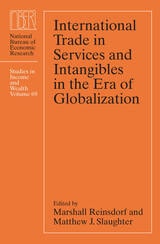
International Trade in Services and Intangibles in the Era of Globalization
Edited by Marshall B. Reinsdorf and Matthew J. Slaughter
University of Chicago Press, 2009
Quantitative measures of international exchange have historically focused on trade in tangible products or capital. However, services have recently become a larger portion of developed economies and international trade, and will only increase in the future. In International Trade in Services and Intangibles in the Era of Globalization, Marshall Reinsdorf and Matthew J. Slaughter examine new and emerging patterns of trade, especially the growing importance of transactions involving services or intangible assets such as intellectual property.
A distinguished team of contributors analyzes the challenges involved in measuring trade in intangibles, the comparative advantages enjoyed by United States service industries, and the heightened international competition for jobs, capital investment, economic growth, and tax revenue that results from trade in services. This comprehensive volume will be necessary reading for scholars seeking to understand the rapidly changing global economy.
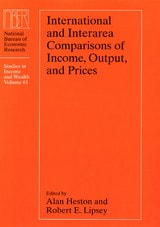
International and Interarea Comparisons of Income, Output, and Prices
Edited by Alan Heston and Robert E. Lipsey
University of Chicago Press, 1999
International and Interarea Comparisons of Income, Output, and Prices includes discussions of developments in the United Nations International Comparison Program, the largest effort in this field, and in the ICOP program on the production side, including efforts in both to extend the comparisons to the formerly planned economies. Other papers in this volume explore new programs on interspatial comparisons within the United States. There are also theoretical papers on how interspatial comparisons should be made and several examples of uses of such comparisons.

Intersections
Fantasy and Science FictionEdited by George E. Slusser and Eric S. Rabkin
Southern Illinois University Press, 1987
These 17 essays from the seventh annual J. Lloyd Eaton Conference examine the relationship between fantasy and science fiction.
They propose that fantasy and science fiction are not isolated commercial literary forms, but instead are literary forms worthy of the recognition reserved for traditional literature. Discussion of genre identification ranges from the standard forms of literary criticism embodied in Aristotle’s mimesis and poesis to innovative and possibly controversial points of view such as a theory of humor, a philosophy of time, and a detailed analysis of Dr. Seuss’s Cat in the Hat.
The essays provide not only a detailed study of literary elements but also the historical treatment of the material, its commercial use, and its relationship to similar literary forms such as the gothic tale and horror fiction. While few of the essayists agree with one another, they all contribute creative insights to the debate.

Intertextuality and the 24-Hour News Cycle
A Day in the Rhetorical Life of Colin Powell's U.N. AddressJohn Oddo
Michigan State University Press, 2014

Invasive Exotic Species in the Sonoran Region
Edited by Barbara Tellman
University of Arizona Press, 2002
The book brings together contributors from academia, government, and nonprofit organizations, including such experts as Gary Paul Nabhan, Richard Mack, and Alberto Búrquez-Montijo. They review historic and even prehistoric origins of non-native species—not only exotic plants, amphibians, and mammals but also insects, fish, and birds. They then examine significant problems in each major subregion and ecosystem and discuss control efforts. The volume contains the first compiled list of more than 500 naturalized exotic species in the Sonoran region. Invasive species issues are rapidly emerging as major environmental concerns both locally and worldwide. This book assists professionals—ecologists, conservation biologists, and policy makers—involved in invasive species control in the Southwest and will be a rich resource for all concerned with protecting native species and their habitats.

Inventing Congress
Origins and Establishment of the First Federal CongressKenneth R. Bowling
Ohio University Press, 1999
On March 4, 1789, New York City's church bells pealed, cannons fired, and flags snapped in the wind to celebrate the date set for the opening of the First Federal Congress. In many ways the establishment of Congress marked the culmination of the American Revolution as the ship of state was launched from the foundation of the legislative system outlined in Article I of the Constitution.
Inventing Congress presents the latest scholarship on the interrelated intellectual, institutional, cultural, and political antecedents of the formation of the First Federal Congress. The first section covers the origins of the body, ranging in discussion from the question of how the founders' understanding of classical Greek and Roman republican precedent shaped their thinking, to the political lessons learned during the Continental and Confederation Congresses.
The second section concerns itself with the establishment of the First Federal Congress, examining several heretofore little-treated aspects of the most important Congress in history, including its relationship to the press, morality, the arts and sciences, and economic philosophy.
Inventing Congress represents the papers from the first two conferences sponsored by the United States Capitol Historical Society in its series, “Perspectives on the History of Congress, 1789-1801.”

Investigations in the Economics of Aging
Edited by David A. Wise
University of Chicago Press, 2012
One of the most well-established relationships in the economics of aging is that between health and wealth. Yet this relationship is also changing in conjunction with a rapidly aging population as well as a broad evolution in how people live later in life.
Building on findings from earlier editions in this National Bureau of Economic Research series, Investigations in the Economics of Aging focuses on the changing financial circumstances of the elderly and the relationship of these circumstances to health and health care. Among the topics addressed are the significance of out-of-pocket health care costs, the effects of inflation on social security, and the impact of the recent financial crisis on Americans’ well-being. Encompassing new data and advances in research methodology, the developments presented in this volume will have important implications for economies worldwide.

Irrigation's Impact on Society
Edited by Theodore E. Downing and McGuire Gibson
University of Arizona Press, 1974

Islands On The Plains
Ecological, Social, and Ritual Use of LandscapesEdited by Marcel Kornfeld and Alan J. Osborn
University of Utah Press, 2003
Scattered throughout the Great Plains are many isolated areas of varying size and ecology, quite distinct from the surrounding grasslands. Such spaces can be uplands like the Black Hills, low hills like the Nebraska Sand Hills, or linear areas such as shallow river valleys and deeply incised canyons. While the notion of “islands” is not a new one among ecologists, its application in Plains archaeology is.
The contributors to this volume seek to illustrate the different ways that the spatial, structural, and temporal nature of islands conditioned the behavior and adaptation of past Plains peoples. This as a first step toward a more detailed analysis of habitat variation and its effects on Plains cultural dynamics and evolution. Although the emphasis is on ecology, several chapters also address social and ideological islands in the form of sacred sites and special hunting grounds.

Islands at the Crossroads
Migration, Seafaring, and Interaction in the CaribbeanL. Antonio Curet
University of Alabama Press, 2011
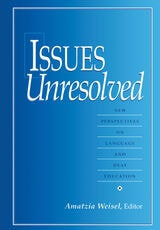
Issues Unresolved
New Perspectives on Language and Deaf EducationAmatzia Weisel
Gallaudet University Press, 1998
Part 1, Communication: Signed and Spoken Languages, addresses matters that range from considering critical periods for language acquisition, researched by Susan D. Fischer, to assessing the impact of immigration policies on the ethnic composition of Australia’s deaf community, intriguing work by Jan Branson and Don Miller.
Part 2, Communication: Accessibility to Speech, continues the debate with works on the perception of speech by deaf and hard of hearing children, contributed by Arthur Boothroyd, and automatic speech recognition and its applications, delineated by Harry Levitt.
Educational issues are brought to the forefront in Part 3 in such engrossing studies as Lea Lurie and Alex Kozulin’s discourse on the application of an instrumental-enrichment cognitive intervention program with deaf immigrant children from Ethiopia. Stephen Powers offers another perspective in this section with his retrospective evaluation of a distance education training course for teachers of the deaf.
Part 4, Psychological and Social Adjustment reviews progress in this area, with Anne de Klerk’s exposition on the Rotterdam Deaf Awareness Program, and Corinne J. Lewkowitz and Lynn S. Liben’s research on the development of deaf and hearing children’s sex-role attitudes and self-endorsements. These and the many other contributions by renowned international scholars in the field make Issues Unresolved a compelling new standard for all involved in deaf education.

Issues in Librarianship
Presented Papers at the ALA 2008 Annual ConferenceAmerican Library Association, 2008
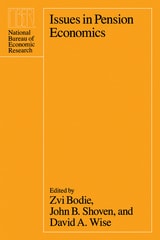
Issues in Pension Economics
Edited by Zvi Bodie, John B. Shoven, and David A. Wise
University of Chicago Press, 1987
The papers in this volume cover such issues as the interaction of pension-funding decisions and corporate finances; the role of pensions in providing adequate and secure retirement income, including the integration of pension plans with social security and significant drops in the U.S. saving rate; and the incentive effects of pension plans on labor market behavior and the implications of plans on labor market behavior and the implications of plans for different demographic groups.
Issues in Pension Economics offers important empirical studies and makes valuable theoretical contributions to current thinking in an area that will most likely continue to be a source of controversy and debate for some time to come. The volume should prove useful to academics and policymakers, as well as to members of the business and labor communities.
Issues in US-EC Trade Relations
Edited by Robert E. Baldwin, Carl B. Hamilton, and André Sapir
University of Chicago Press, 1988
Issues in US-EC Trade Relations presents the results of a conference organized by the NBER and the Centre for European Policy Studies. In it, North American and European trade specialists offer theoretical, empirical, and historical analyses of some of the major issues on which American and Community officials disagree and also formulate realistic policies for settling present disputes. Contributors consider such topics as the legal aspects of trade between the two regions, agricultural policy, different ways the United States and members of the European Community use embargoes to attempt to induce foreign countries to change particular political actions, the growing trend toward protectionism and responses to this policy, international trade in services, and trade policy in oligopolistic environments. In most cases, each general subject is approached from both an American and a European perspective.
Issues in the Economics of Aging
Edited by David A. Wise
University of Chicago Press, 1990
Issues in the Economics of Immigration
Edited by George J. Borjas
University of Chicago Press, 2000
This collection offers new insights into the kinds of economic opportunities and outcomes that immigrant populations might expect for themselves and future generations.