Results by title
3745 books match the query 'Europe' and 130 start with i
I Am of Ireland
Women of the North Speak OutElizabeth Shannon
University of Massachusetts Press, 1997
I Tatti Studies in the Italian Renaissance, volume 24 number 2 (Fall 2021)
The University of Chicago Press
University of Chicago Press Journals, 2021
I Tatti Studies in the Italian Renaissance, volume 25 number 1 (Spring 2022)
The University of Chicago Press
University of Chicago Press Journals, 2022
I Tatti Studies in the Italian Renaissance, volume 25 number 2 (Fall 2022)
The University of Chicago Press
University of Chicago Press Journals, 2022
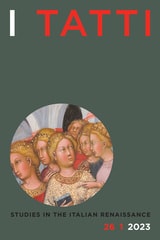
I Tatti Studies in the Italian Renaissance, volume 26 number 1 (Spring 2023)
The University of Chicago Press
University of Chicago Press Journals, 2023
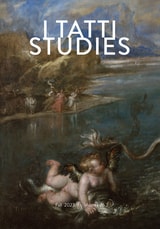
I Tatti Studies, volume 26 number 2 (Fall 2023)
The University of Chicago Press
University of Chicago Press Journals, 2023
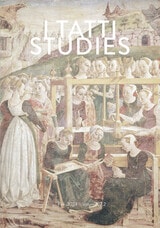
I Tatti Studies, volume 27 number 2 (Fall 2024)
The University of Chicago Press
University of Chicago Press Journals, 2024
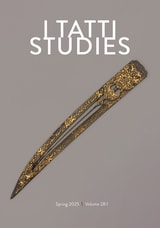
I Tatti Studies, volume 28 number 1 (Spring 2025)
The University of Chicago Press
University of Chicago Press Journals, 2025
I Tatti Studies, volume 28 number 2 (Fall 2025)
The University of Chicago Press
University of Chicago Press Journals, 2025
I Tatti Studies, volume 29 number 1 (Spring 2026)
The University of Chicago Press
University of Chicago Press Journals, 2026

I Will Mix Your Blood with Coal
Snapshots from the East of UkraineOleksandr Mykhed, Tanya Savchynska, and David Mossop
Northwestern University Press, 2025
In 2014, the Russian army, with support from local militants, occupied parts of Ukraine’s two easternmost regions—once the beating industrial heart of the Soviet Union—where coal extraction has since exhausted both the human population and the natural resources. In late 2016, Oleksandr Mykhed set out on a research trip to explore the deep history and contested present of the area from the perspective of a fellow countryman who’d never been there.
Mykhed brings us on a painful yet hopeful journey across the Ukrainian east, sharing conversations with locals, snippets from archival documents, and the complicated perspectives of prominent cultural figures, such as writer Serhiy Zhadan, historian Olena Stiazhkina, and philosopher Ihor Kozlovsky, who was imprisoned and tortured for nearly two years.
I Will Mix Your Blood with Coal invites us to meet generations of coal miners. To learn about the Belgian and British investors who founded the east’s industrial cities. To remember the harrowing events of the First and Second World Wars and the incalculable brutality of Soviet history. To see the activists who are even now working to improve the country. To hear sweet memories of a lost utopia that never existed. Mykhed provides a unique portrait of life in the east during the war, before the full-scale invasion that would change everything.
Iberian Empires and the Roots of Globalization
Ivonne del Valle
Vanderbilt University Press, 2019
Iberian Empires and the Roots of Globalization argues that Iberian empires cannot be viewed apart from early modern globalization. From research sites throughout the early modern Spanish and Portuguese territories and from distinct disciplinary approaches, the essays collected in this volume investigate the economic mechanisms, administrative hierarchies, and art forms that linked the early modern Americas, Africa, Asia, and Europe. Iberian Empires and the Roots of Globalization demonstrates that early globalization was structured through diverse networks and their mutual and conflictive interactions within overarching imperial projects. To this end, the essays explore how specific products, texts, and people bridged ideas and institutions to produce multiple centers within Iberian imperial geographies. Taken as a whole, the authors also argue that despite attempts to reproduce European models, early Iberian globalization depended on indigenous agency and the agency of people of African descent, which often undermined or changed these models.
The volume thus relays a nuanced theory of early modern globalization: the essays outline the Iberian imperial models that provided templates for future global designs and simultaneously detail the negotiated and conflictive forms of local interactions that characterized that early globalization. The essays here offer essential insights into historical continuities in regions colonized by Spanish and Portuguese monarchies.

Iceland
The First New SocietyRichard F. Tomasson
University of Minnesota Press, 1980
Iceland was first published in 1980. Minnesota Archive Editions uses digital technology to make long-unavailable books once again accessible, and are published unaltered from the original University of Minnesota Press editions.
"Iceland, as described by Tomasson, has a fascinating, often contradictory culture," writes Seymour Martin Lipset in his forward to this book, the first sociological account in English of modern Icelandic society and the forces that have shaped it. Richard F. Tomasson argues that Iceland can best be understood as an example of "a new society"—the first such pioneer community to be founded in historical times. To the author the most significant influences upon Icelandic culture and social structure are the continuities that have persisted in this island society for eleven centuries, since its origins as an isolated Viking colony.
Tomasson traces the ways in which Icelandic culture developed out of the medieval pre- Christian society—in its language, relations between the sexes, egalitarianism, and the high frequency of illegitimate births. He also points out areas of contradiction and discontinuity, noting that Iceland has been transformed in the twentieth century by modernization of the society and international influences upon the culture.
Among the topics Tomasson examines are the Icelanders' involvement in their history and national literary tradition; their social, political, and economic life; the high level of literacy; the pervasive tolerance of Icelanders in moral and religious matters; their values; and the use of alcohol. Readers interested in the Scandinavian countries and in the comparative study of societies will find Iceland a useful analysis of a significant and little known national culture.
Icon Dresden
Baroque City, Air War Symbol, Political TokenSusanne Vees-Gulani
University of Michigan Press, 2026
Drawing on urban, heritage, and tourism studies, visual and memory studies, and environmental psychology, Icon Dresden examines Dresden’s history, identity, visual representations, and rebuilding decisions. It exposes the narratives that define its place in German and international memory and how, paradoxically, they support both Dresden’s current image as a symbol of peace and reconciliation and its backing of nativist and far-right movements.
Iconoclasm
David Freedberg
University of Chicago Press, 2021
Freedberg combines fresh thinking with deep expertise to address the renewed significance of iconoclasm, its ideologies, and its impact. This volume also provides a supplement to Freedberg’s essay on idolatry and iconoclasm from his pathbreaking book, The Power of Images. Freedberg’s writings are of foundational importance to this discussion, and this volume will be a welcome resource for historians, museum professionals, international law specialists, preservationists, and students.
Identity Papers
Contested Nationhood in Twentieth-Century FranceSteven Ungar and Tom Conley, Editors
University of Minnesota Press, 1996
Identity Papers was first published in 1996. Minnesota Archive Editions uses digital technology to make long-unavailable books once again accessible, and are published unaltered from the original University of Minnesota Press editions.
What does citizenship mean? What is the process of "naturalization" one goes through in becoming a citizen, and what is its connection to assimilation? How do the issues of identity raised by this process manifest themselves in culture? These questions, and the way they arise in contemporary France, are the focus of this diverse collection.
The essays in this volume range in subject from fiction and essay to architecture and film. Among the topics discussed are the 1937 Exposition Universelle; films dealing with Vichy France; François Truffaut's Histoire d'Adèle H.; the war of Algerian independence; and nation building under François Mitterrand.
Contributors: Anne Donadey, Elizabeth Ezra, Richard J. Golsan, Lynn A. Higgins, T. Jefferson Kline, Panivong Norindr, Shanny Peer, Rosemarie Scullion, David H. Slavin, Philip H. Solomon; Florianne Wild, .
Steven Ungar is professor of cinema and comparative literature at the University of Iowa and author of Scandal and Aftereffect: Blanchot and France since 1930 (Minnesota, 1995). Tom Conley is professor of French at Harvard University.

Ideological Storms
Intellectuals, Dictators, and the Totalitarian TemptationBogdan C. Iacob
Central European University Press, 2019
This volume gathers authors who wrote important works in the fields of the history of ideologies, the comparative study of dictatorships, and intellectual history. The book is a state of the art reassessment and analysis of the ideological commitments of intellectuals and their relationships with dictatorships during the twentieth century. The contributions focus on turning points or moments of breakage as well as on the continuities. Though its focus is on an East–West comparison in Europe, there are texts also dealing with Latin America, China, and the Middle East giving the book a global outlook.
The first part of the book deals with intellectuals' involvement with communist regimes or parties; the second looks at the persistence of utopianism in the trajectory of intellectuals who had been associated earlier in their lives with either communism or fascism; the third tackles intellectuals' role in national imaginations from either the left or the right; and, the fourth ties late twentieth century phenomena to current phenomena such as the persistence of anti-Semitism in the West, the slow erosion of the values upon which the EU is built, the quagmire in Iraq, and China's rise in the post-Cold War era. The collection provides a comprehensive big-picture of intellectual genealogies and dictatorial developments.
Ideologies and National Identities
The Case of Twentieth-Century Southeastern EuropeMark Mazower
Central European University Press, 2004

If You've Seen One, You've Seen the Mall
EUROPEANS AND AMERICAN MASS CULTURERob Kroes
University of Illinois Press, 1996
continually fragmenting, disassembling, and reassembling itself--and in
the process creating something new. In a series of topical essays that
show why he is one of Europe's leading authorities on American culture,
Kroes probes trends in American advertising, the image of the Vietnam
war in American films, the implications of American vernacular culture as represented in rap music, and other topics.
Illegitimacy in Renaissance Florence
Thomas Kuehn
University of Michigan Press, 2002
The Florentine catasto, a fiscal survey of households taken at several points in the fifteenth century, locates hundreds of illegitimate children and reveals a great deal about their household circumstances and parentage. Supplementing this information are notarial documents and family account books. Illegitimacy in Renaissance Florence places Florentine illegitimate children in a complete legal context, culminating in examination of several Florentine legal cases. Thomas Kuehn shows how lawyers were called on to cope with and make legal sense of the actions and prejudices of Florentines toward their illegitimate kin.
It is clear, in its simplest terms, that illegitimacy in Florence was a permanent, if not fixed, status. Most illegitimate children, especially girls, were abandoned; infanticide was undoubtedly practiced. But even those children raised by benevolent fathers and granted legitimation always remained "legitimatus" and not "legitimus." Florentines whose illegitimate paternity was admitted were overwhelmingly born of elite fathers but poor or servile mothers. In neither social nor legal terms did the illegitimate share fully in the personhood of the legitimate adult male Florentine citizen. Still, ambiguities of status could be useful for those with sufficient wealth and social standing to exploit their potential.
Illegitimacy in Renaissance Florence will appeal to social historians of Europe, medieval and early modern, especially those concerned with family life, women, and children, as well as all those interested in Florentine history. Legal historians will find it useful as well.
Thomas Kuehn is Professor of History, Clemson University.

Illiberal Politics and Religion in Europe and Beyond
Concepts, Actors, and Identity NarrativesEdited by Anja Hennig and Mirjam Weiberg-Salzmann
Campus Verlag, 2020
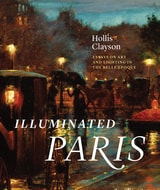
Illuminated Paris
Essays on Art and Lighting in the Belle ÉpoqueHollis Clayson
University of Chicago Press, 2019
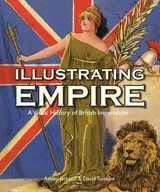
Illustrating Empire
A Visual History of British ImperialismEdited by Ashley Jackson and David Tomkins
Bodleian Library Publishing, 2011
Through more than 150 striking and original images from the John Johnson Collection of Printed Ephemera at the Bodleian Library, Illustrating Empire tells the history of the British Empire from the age of discovery through World War II. This wealth of visual material was used to promote, record, and celebrate the development of the Empire, which by 1922 included more than thirteen million square miles—or almost a quarter of the Earth. The captions that accompany the illustrations reveal the narrative of the Empire and unlock the history and meaning behind the images.
Following a general introduction that provides an overarching discussion of the many facets of the Empire’s long history, the book is structured around eight major themes: emigration and settlement; imperial authority; exploration and knowledge; trade and commerce; travel and communications; popular culture; exhibitions and jubilees; and politics. Along the way, Illustrating Empire examines the significance of media in conveying and creating ideas about empire and the non-European world. It also provides a clear summary of debates regarding the significance of empire in British culture.
This informative and accessible visual history represents a significant contribution to the literature on culture and empire and will be an engaging and useful source of historical information for general readers and scholars alike.

Image Critique and the Fall of the Berlin Wall
Sunil Manghani
Intellect Books, 2008
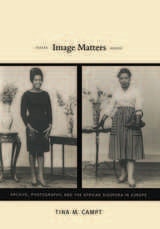
Image Matters
Archive, Photography, and the African Diaspora in EuropeTina M. Campt
Duke University Press, 2012
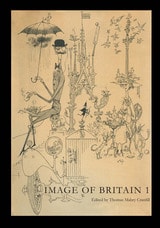
Image of Britain 1
Edited by Thomas Mabry Cranfill
University of Texas Press, 1961
Image of Britain 1, originally published in 1961, was the first of two special issues of The Texas Quarterly devoted to Britain. This volume contains three dozen selections, including essays, fiction, poetry, and illustrations, most of them specially commissioned. The editorial aim has been to achieve scope and variety. Surveyed in the articles are a dozen or more facets of British culture, among them politics, education, Anglo-American relations, religion, law, food, changes in class structure, pediatrics, the intellectual climate, scientific progress, and international relations.
Those who labor under the delusion that the British lack humor are advised to read Siriol Hugh-Jones's remarks on the subject, Henry Green's "Firefighting," William Sansom's "Dear Sir," and Willis W. Pratt's article on the great cartoonists Emett and Searle—whose cartoons should then be inspected carefully.
Their cartoons are only a part of the book’s handsome illustrations. In addition, the photographer Hans Beacham visited England at the Quarterly's invitation to depict for American readers distinguished figures in British arts and letters. His gallery of forty-one portraits of writers and other notables has historical as well as artistic importance. Beacham has also contributed twenty-one hauntingly beautiful photographs of the studio of the late great sculptor Sir Jacob Epstein.
Thirty-three of the contributors to this collection are British. There is much to be said for inviting members of this forthright, brilliantly self-critical race to comment extensively on themselves. Among the authors are the young and already noteworthy—Dom Moraes, Ted Hughes, and Alan Sillitoe, for example—as well as the firmly established and celebrated, such as John Wain, William Sansom, and Henry Green.
.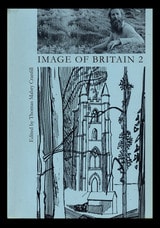
Image of Britain 2
Edited by Thomas Mabry Cranfill
University of Texas Press, 1961
Image of Britain 2, originally published in 1961, was the second of two special numbers of The Texas Quarterly devoted to Britain. This volume comprises some three dozen selections—essays, fiction, poetry, and illustrations, most of them specially commissioned. The editorial aim has been to achieve scope and variety.
The articles, essays in criticism on British themes, for the most part survey literature and the fine arts: poetry, theater, intellectual review, then-recent translations into English, the flood of military memoirs, British humor, architecture, painting and sculpture, and music. Other essays treat individual authors, among them Shakespeare, Trollope, Galsworthy, Forster, Wells, Yeats, Pound, Shaw, Muir, Green, Snow, Waugh, Amis, and Pinter.
All except a handful of the essayists are British. There is much to be said for inviting the forthright and brilliantly self-critical to comment extensively on their own literature and art. Stephen Spender and John Lehmann, two of Britain’s most distinguished editors, deal with British literary matters, both international and domestic; the novelist David Garnett discusses George Moore, Galsworthy, Forster, and H. G. Wells—the men and their works; and the poet Kathleen Raine appraises the verse of Edwin Muir.
Like the essayists, the contributors of fiction and poetry include the emerging and already noteworthy—Ted Hughes, Peter Redgrove, and Andrew Sinclair, for example—as well as the firmly established and celebrated, such as Angus Wilson, Stephen Spender, and Joyce Cary. Cary’s short story “The Ball” appeared here in print for the first time.
The photographer Hans Beacham, who visited England at the Quarterly’s invitation, contributed a gallery of portraits of important British painters and sculptors. The photographs complement David Sylvester’s article on contemporary British art. In addition, Edward Bawden’s drawings of the British scene run like a charming frieze throughout this number.
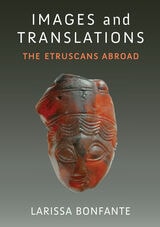
Images and Translations
The Etruscans AbroadLarissa Bonfante
University of Michigan Press, 2023
Professor Larissa Bonfante’s great gift was the ability to evoke, in a fresh, immediate, and convincing way, the experiences, beliefs, and thoughts of people living more than two thousand years ago. Her final publication, Images and Translations: The Etruscans Abroad, communicates the sensations of other times and places, from the day-to-day to the solemnly ritualistic.
The world of the Etruscans, sophisticated and pleasure-loving, radiated throughout a vast area of the ancient world – a world very different from our own. Relying on a wealth of creative works, Images and Translations examines the expertise and productions of the artists who made them, the tastes of those who used them, and the sometimes surprising results of the exchanges between creators and buyers. Just as the French demand for Chinese ceramics in the seventeenth century gave birth to the unprecedented famille colors, so the production of Greek ceramics for the Etruscan market produced singularly expressive depictions. Humorous, pious, or erotic to the buyers, they could be shocking to the culture that made them.
Images and Translations explores areas in much closer economic and cultural contact than is usually recognized. The volume finds threads of connection not only between Italy and Greece, but between Italy and northern Europe—today’s France and Germany—as well as between Italy and the Near East. Etruscan influence runs through Western history, into the Renaissance, and emerges in imagery still evocative today.
Imagination, Emblems, and Expressions
Essays on Latin American, Carribean, and Continental Culture and IdentityHelen Ryan-Ranson
University of Wisconsin Press, 1993
This book of essays—carefully written by twenty-four authorities on their subjects—provides a deep understanding of and appreciation for the coherence, primacy, and importance of the search for identity in the divergent areas of Latin America, the Caribbean, and Europe.

Imagination, Meditation, and Cognition in the Middle Ages
Michelle Karnes
University of Chicago Press, 2011
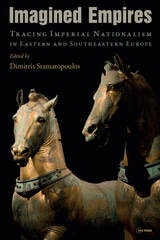
Imagined Empires
Tracing Imperial Nationalism in Eastern and Southeastern EuropeDimitris Stamatopoulos
Central European University Press, 2021
The Balkans offer classic examples of how empires imagine they can transform themselves into national states (Ottomanism) and how nation-states project themselves into future empires (as with the Greek “Great Idea” and the Serbian “Načertaniye”). By examining the interaction between these two aspirations this volume sheds light on the ideological prerequisites for the emergence of Balkan nationalisms.
With a balance between historical and literary contributions, the focus is on the ideological hybridity of the new national identities and on the effects of “imperial nationalisms” on the emerging Balkan nationalisms. The authors of the twelve essays reveal the relation between empire and nation-state, proceeding from the observation that many of the new nation-states acquired some imperial features and behaved as empires. This original and stimulating approach reveals the imperialistic nature of so-called ethnic or cultural nationalism.

Imagined Homes
Soviet German Immigrants in Two CitiesHans Werner
University of Manitoba Press, 2007
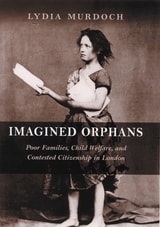
Imagined Orphans
Poor Families, Child Welfare, and Contested Citizenship in LondonMurdoch, Lydia
Rutgers University Press, 2006
With his dirty, tattered clothes and hollowed-out face, Oliver Twist is the enduring symbol of the young indigent spilling out of orphanages and haunting the streets of late-nineteenth-century London. Although poor children were often portrayed as real-life Oliver Twists—either orphaned or abandoned by unworthy parents—they in fact frequently maintained contact and were eventually reunited with their families.
In Imagined Orphans, Lydia Murdoch focuses on this discrepancy between the representation and the reality of children’s experiences within welfare institutions—a discrepancy that she argues stems from conflicts over middle- and working-class notions of citizenship that arose in the 1870s and persisted until the First World War. Reformers’ efforts to depict poor children as either orphaned or endangered by abusive or “no-good” parents fed upon the poor’s increasing exclusion from the Victorian social body. Reformers used the public’s growing distrust and pitiless attitude toward poor adults to increase charity and state aid to the children.
With a critical eye to social issues of the period, Murdoch urges readers to reconsider the complex situations of families living in poverty. While reformers’ motivations seem well intentioned, she shows how their methods solidified the public’s antipoor sentiment and justified a minimalist welfare state that engendered a cycle of poverty. As they worked to fashion model citizens, reformers’ efforts to protect and care for children took on an increasingly imperial cast that would continue into the twentieth century.
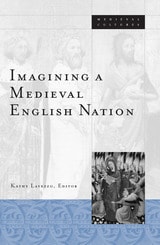
Imagining A Medieval English Nation
Kathy Lavezzo
University of Minnesota Press, 2003
The first comprehensive analysis of English national identity in the late Middle Ages
During the late Middle Ages, the increasing expansion of administrative, legal, and military systems by a central government, together with the greater involvement of the commons in national life, brought England closer than ever to political nationhood. Examining a diverse array of texts—ranging from Latin and vernacular historiography to Lollard tracts, Ricardian poetry, and chivalric treatises—this volume reveals the variety of forms “England” assumed when it was imagined in the medieval West.
These essays disrupt conventional thinking about the relationship between premodernity and modernity, challenge traditional preconceptions regarding the origins of the nation, and complicate theories about the workings of nationalism. Imagining a Medieval English Nation is not only a collection of new readings of major canonical works by leading medievalists, it is among the first book-length analyses on the subject and of critical interest. Contributors: Kathleen Davis, Bucknell U; L. O. Aranye Fradenburg, U of California, Santa Barbara; Andrew Galloway, Cornell U; Jill C. Havens, Baylor U; Peggy A. Knapp, Carnegie Mellon U; Larry Scanlon, Rutgers U; D. Vance Smith, Princeton U; Claire Sponsler, U of Iowa; Lynn Staley, Colgate U; Thorlac Turville-Petre, U of Nottingham.
Imagining Mary Tudor, Queen of France
JoAnn DellaNeva
University of Delaware Press, 2027
This book examines early modern texts that portray Mary Tudor’s girlhood and betrothal to a foreign prince, her brief marriage to the aging king of France, and her untimely widowhood, as well as retrospective accounts that depict her life in France, her relationships with her husband and his heir apparent, and her surreptitious romance and clandestine marriage to an English duke. Here, texts from England are put into conversation with a significant body of work that was written in French, Spanish, Italian, and Latin, culminating in an examination of a novel from North America that passed itself off as a genuine sixteenth-century memoir. Author JoAnn DellaNeva also examines a spectrum of extra-literary texts—such as dialogues, popular songs, letters, speeches, portraiture, tapestries, fashion, jewelry, and book illuminations—for the ways they too helped shape Mary’s image. In so doing, she analyzes the intersection of history and literature, demonstrating how porous the borders between these disciplines can be. Through a series of close readings that are informed by an examination of the cultural context behind these texts, Imagining Mary Tudor, Queen of France seeks to explain how Mary’s fictional biography proved to be so slippery, vacillating between portrayals of her as a virtuous, generally powerless woman and as a wily and wicked minx.

Imagining the Penitentiary
Fiction and the Architecture of Mind in Eighteenth-Century EnglandJohn Bender
University of Chicago Press, 1987
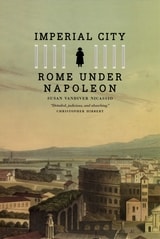
Imperial City
Rome under NapoleonSusan Vandiver Nicassio
University of Chicago Press, 2009
In 1798, the armies of the French Revolution tried to transform Rome from the capital of the Papal States to a Jacobin Republic. For the next two decades, Rome was the subject of power struggles between the forces of the Empire and the Papacy, while Romans endured the unsuccessful efforts of Napoleon’s best and brightest to pull the ancient city into the modern world. Against this historical backdrop, Nicassio weaves together an absorbing social, cultural, and political history of Rome and its people. Based on primary sources and incorporating two centuries of Italian, French, and international research, her work reveals what life was like for Romans in the age of Napoleon.
“A remarkable book that wonderfully vivifies an understudied era in the history of Rome. . . . This book will engage anyone interested in early modern cities, the relationship between religion and daily life, and the history of the city of Rome.”—Journal of Modern History
“An engaging account of Tosca’s Rome. . . . Nicassio provides a fluent introduction to her subject.”—History Today
“Meticulously researched, drawing on a host of original manuscripts, memoirs, personal letters, and secondary sources, enabling [Nicassio] to bring her story to life.”—History
Imperial Designs, Postimperial Extremes
Studies in Interdisciplinary and Comparative History of Russia and Eastern EuropeAndrei Cusco
Central European University Press, 2023
Anchored in the Russian Empire, but not limited to it, the eight studies in this volume explore the nineteenth-century imperial responses to the challenge of modernity, the dramatic disruptions of World War I, the radical scenarios of the interwar period and post-communist endgames at the different edges of Eurasia. The book continues and amplifies the historiographic momentum created by Alfred J. Rieber’s long and fruitful scholarly career.
First, the volume addresses the attempts of Russian imperial rulers and elites to overcome the economic backwardness of the empire with respect to the West. The ensuing rivalry of several interest groups (entrepreneurs, engineers, economists) created new social forms in the subsequent rounds of modernization. The studies explore the dynamics of the metamorphoses of what Rieber famously conceptualized as a “sedimentary society” in the pre-revolutionary and early Soviet settings.
Second, the volume also expands and dwells on the concept of frontier zones as dynamic, mutable, shifting areas, characterized by multi-ethnicity, religious diversity, unstable loyalties, overlapping and contradictory models of governance, and an uneasy balance between peaceful co-existence and bloody military clashes. In this connection, studies pay special attention to forced and spontaneous migrations, and population politics in modern Eurasia.
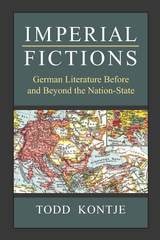
Imperial Fictions
German Literature Before and Beyond the Nation-StateTodd Kontje
University of Michigan Press, 2018
Imperial Nature
Joseph Hooker and the Practices of Victorian ScienceJim Endersby
University of Chicago Press, 2008
By analyzing Hooker’s career, Endersby offers vivid insights into the everyday activities of nineteenth-century naturalists, considering matters as diverse as botanical illustration and microscopy, classification, and specimen transportation and storage, to reveal what they actually did, how they earned a living, and what drove their scientific theories. What emerges is a rare glimpse of Victorian scientific practices in action. By focusing on science’s material practices and one of its foremost practitioners, Endersby ably links concerns about empire, professionalism, and philosophical practices to the forging of a nineteenth-century scientific identity.
Imperial Rule
Alfred J. Rieber
Central European University Press, 2004
Imperial White
Race, Diaspora, and the British EmpireRadhika Mohanram
University of Minnesota Press, 2007
Radhika Mohanram shows not just how British imperial culture shaped the colonies, but how the imperial rule of colonies shifted—and gave new meanings to—what it meant to be British.
Imperial White looks at literary, social, and cultural texts on the racialization of the British body and investigates British whiteness in the colonies to address such questions as: How was the whiteness in Britishness constructed by the presence of Empire? How was whiteness incorporated into the idea of masculinity? Does heterosexuality have a color? And does domestic race differ from colonial race? In addition to these inquiries on the issues of race, class, and sexuality, Mohanram effectively applies the methods of whiteness studies to British imperial material culture to critically racialize the relationship between the metropole and the peripheral colonies.
Considering whether whiteness, like theory, can travel, Mohanram also provides a new perspective on white diaspora, a phenomenon of the nineteenth century that has been largely absent in diaspora studies, ultimately rereading—and rethinking—British imperial whiteness.
Radhika Mohanram teaches postcolonial cultural studies in the School of English, Communication and Philosophy at Cardiff University, Wales. She is the author of Black Body: Women, Colonialism, Space (Minnesota, 1999) and edits the journal Social Semiotics.

Importing the European Army
The Introduction of European Military Techniques and Institutions in the Extra-European World, 1600-1914David B. Ralston
University of Chicago Press, 1996
Following the same format in his discussion of each country, Ralston makes this central theme in world history easily accessible to students while offering scholars a sophisticated understanding of the exact nature of the changes brought about by Europeanizing military reforms.
David B. Ralston, associate professor of history at the Massachusetts Institute of Technology, is the author of The Army of the Republic.

In Defense of Women
A Bilingual EditionPompeo Colonna
Iter Press, 2024
Pompeo Colonna’s In Defense of Women (1530), presented in this volume in Latin and English translation, is one of several important defenses of women composed in the fifteenth and sixteenth centuries by male advocates of women’s moral and intellectual worth. Known as a cardinal and a warrior, but also as an active participant in sixteenth-century Italian literary circles, Colonna addresses the work to his cousin Vittoria Colonna, the most renowned Italian woman poet of the era, who, he writes, had urged him to undertake it. His Defense not only refutes arguments of women’s inferiority and incapacity but, remarkably, asserts their ability to hold political office and govern. It contains original Latin text and a critical introduction by Franco Minonzio. It also features a foreword by Margaret L. King, as well as a postscript by King, tracing the separate male-authored and female-authored Renaissance defenses of women.
In Dialogue with the Other Voice in Sixteenth-century Italy
Literary and Social Contexts for Women's WritingEdited by Julie D. Campbell and Maria Galli Stampino
Iter Press, 2011
—Elissa Weaver
Professor of Italian, Emerita, University of Chicago
In Fielding’s Wake
Jeremy Black
St. Augustine's Press, 2022
Fielding's epic comic novel, Tom Jones, is unforgettable for many reasons, but the author must be credited with an aptitude for documenting contemporary cultural history and his contribution to a new species of writing. Black's treatment of Fielding draws to the fore a man who was of his time but not confined to it. "Philosophy in practice encompassed his stance as a man of action as well as a reflective writer of genius." Fielding is shown to provide across the breadth of his work extensive and invaluable commentary on issues as diverse as law and order, marriage, women, and the interplay of urban and rural life. Black, an historian, is here a student of storytelling and recovers Fielding's rich descriptions of the human heart and call to defy the vices with which circumstances might taunt it.
Black has done a service along many fronts at once: the science of the novel and genre, the history of a people and the figure of a memorable writer.

In Permanent Crisis
Ethnicity in Contemporary European Media and CinemaIpek A. Celik
University of Michigan Press, 2015

In Praise of Older Women
The Amorous Recollections of A. VStephen Vizinczey
University of Chicago Press, 1990
"A pleasure. Vizinczey writes of women beautifully, with sympathy, tact and delight, and he writes about sex with more lucidity and grace than most writers ever acquire."—Larry McMurtry, Houston Post
"Like James Joyce, who was as far from being a writer of erotica as Dostoevsky, Vizinczey has a refreshing message to deliver: Life is not about sex, sex is about life."—John Podhoretz, Washington Times
"The gracefully written story of a young man growing up among older women . . . although some passages may well arouse the reader, this novel brims with what the courts have termed "redeeming literary merit."—Clarence Petersen, Chicago Tribune
"A funny novel about sex, or rather (which is rarer) a novel which is funny as well as touching about sex . . . elegant, exact and melodious—has style, presence and individuality."—Isabel Quigly, Sunday Telegraph
"The delicious adventures of a young Casanova who appreciates maturity while acquiring it himself. In turn naive, sophisticated, arrogant, disarming, the narrator woos his women and his tale wins the reader."—Polly Devlin, Vogue
In Pursuit of Civility
Manners and Civilization in Early Modern EnglandKeith Thomas
Brandeis University Press, 2018
In Pursuit of German Memory
History, Television, and Politics after AuschwitzWulf Kansteiner
Ohio University Press, 2006
The collective memories of Nazism that developed in postwar Germany have helped define a new paradigm of memory politics. From Europe to South Africa and from Latin America to Iraq, scholars have studied the German case to learn how to overcome internal division and regain international recognition.
In Pursuit of German Memory: History, Television, and Politics after Auschwitz examines three arenas of German memory politics—professional historiography, national politics, and national public television—that have played key roles in the reinvention of the Nazi past in the last sixty years. Wulf Kansteiner shows that the interpretations of the past proposed by historians, politicians, and television producers reflect political and generational divisions and an extraordinary concern for Germany's image abroad. At the same time, each of these theaters of memory has developed its own dynamics and formats of historical reflection.
Kansteiner’s analysis of the German scene reveals a complex social geography of collective memory. In Pursuit of German Memory underscores the fact that German memories of Nazism, like many other collective memories, combine two seemingly contradictory qualities: They are highly mediated and part of a global exchange of images and story fragments but, at the same time, they can be reproduced only locally, in narrowly circumscribed networks of communication.