Results by title
3388 books match the query 'Fiction' and 83 start with i
I Saw Her in My Dreams
Huda Hamed, translated by Nadine Sinno & William Taggart
University of Texas Press, 2022
I Saw Her in My Dreams is a powerful novel about interpersonal and systemic violence, examined through the lens of a relationship between Zahiyya, an anxious middle-class Omani artist, and Faneesh, the Ethiopian domestic worker she hires. When Zahiyya’s husband Amer, a novelist, leaves for Zanzibar in search of his biological mother, Zahiyya is left to confront her anxieties and prejudices. Both Zahiyya and Faneesh begin to suffer a recurring nightmare, prompting Zahiyya to read Fanheesh’s diaries in search of answers. Alone and afraid, Zahiyya reads excerpts from Amer’s novel, written from his father’s diaries about living in Zanzibar, where he fell in love with Amer’s mother, a Zanzibari woman whose absence still haunts him. Weaving between multiple perspectives and stories within stories, the novel explores honestly—but without sensationalizing or self-Orientalizing—the anti-Blackness that has endured in the Arab world and elsewhere.

I Thought of Daisy
Edmund Wilson
University of Iowa Press, 2001
Originally published in 1929, I Thought of Daisy is the first of three novels by Edmund Wilson. Written while he was still balancing his ambitions as a novelist against a successful career in literary criticism, I Thought of Daisy marries Wilson's two vocations to create an unusual and revealing work of fiction.
IN & OZ
A NovelSteve Tomasula
University of Chicago Press, 2012
Steve Tomasula is a novelist like no other; his experiments in narrative and design have won him a loyal following. Exemplifying Tomasula’s style, IN & OZ is a heady, avant-garde book, rooted in convincing characters even as it simultaneously subverts the genre of novel and moves it forward.
IN & OZ is a novel of art, love, and auto mechanics. The story follows five different characters—an auto designer, photographer, musical composer, poet/sculptor, and mechanic—who live in two very different places: IN, a back-alley here and now; and OZ, which reflects the desire for somewhere better. The men and women who populate Tomasula’s landscape desperately hope to fill a void in their lives through a variety of media: music, language, dirt, light, and automobiles. As the plot moves forward, the story of the residents of INand that of their counterparts in OZconverge. A fanciful allegory that tackles class relations, art, commerce, and language, IN & OZ is a tale of the human condition that is as visually compelling as it is moving.
A novel not only for fiction lovers, but also for artists of all stripes, IN & OZ creates a fantasy that illumines our own world as it lucidly builds its own.
IN THE PRESENCE OF AUDIENCE
THE SELF IN DIARIES AND FICTIONDeborah Martinson
The Ohio State University Press, 2003
As a diary writer imagines shadow readers rifling diary pages, she tweaks images of the self, creating multiple readings of herself, fixed and unfixed. When the readers and potential readers are husbands and publishers, the writer maneuvers carefully in a world of men who are quick to judge and to take offense. She fills the pages with reflections, anecdotes, codes, stories, biographies, and fictions. The diary acts as a site for the writer’s tension, rebellion, and remaking of herself.
In this book Martinson examines the diaries of Virginia Woolf, Katherine Mansfield, Violet Hunt, and Doris Lessing’s fictional character Anna Wulf, and shows that these diaries (and others like them) are not entirely private writings as has been previously assumed. Rather, their authors wrote them knowing they would be read. In these four cases, the audience is the author’s male lover or husband, and Martinson reveals how knowledge of this audience affects the language and content in each diary. Ultimately, she argues, this audience enforces a certain “male censorship” which changes the shape of the revelations, the shape of the writer herself, making it impossible for the female author to be honest in writing about her true self.
Even sophisticated readers often assume that diaries are primarily private. This study interrogates the myth of authenticity and self-revelation in diaries written under the gaze of particular peekers.
Ibn Arabi's Small Death
Mohammed Hasan AlwanTranslated by William M. Hutchins
University of Texas Press, 2022
Ice
Sonallah Ibrahim
Seagull Books, 2019
Based on Ibrahim’s own experience studying at the All-Russian Institute of Cinematography in Moscow from 1971 to 1973, Ice offers a powerful exploration of Arab confusion, Soviet dysfunction, and the fragility of leftist revolutionary ideals.
Ice-Out
Mary Casanova
University of Minnesota Press, 2016
Walking on thin ice: on Rainy Lake, in the northern reaches of Minnesota, it’s more than a saying. And for Owen Jensen, nineteen and suddenly responsible for keeping his mother and five brothers alive, the ice is thin indeed.
Ice-Out returns to the frigid and often brutal Prohibition-era borderland of Mary Casanova’s beloved novel Frozen, and to the characters who made it a favorite among readers of all ages. Owen, smitten with Frozen’s Sadie Rose, is struggling to make something of himself at a time when no one seems to hold the moral high ground. Bootlegging is rife, corruption is rampant, and lumber barons run roughshod over the people and the land. As hard as things seem when his father dies, stranding his impoverished family, they get considerably tougher—and more complicated—when Owen gets caught up in the suspicious deaths of a sheriff and deputy on the border.
Inspired by real events in early 1920s Minnesota, and by Mary Casanova’s own family history, Ice-Out is at once a story of young romance against terrible odds and true grit on the border between license and responsibility, rich and poor, and right and wrong in early twentieth-century America.
Identifying the Pathogen
Jennifer Militello
Tupelo Press, 2026
Composed as a lab notebook recording various surgeries, autopsies, and experiments, Identifying the Pathogen tells the story of a scientist on an obsessive quest to document an ailment that resists classification. The book considers the body in response to the COVID-19 pandemic, woven through with the story of Anna Morandi Manzolini—an eighteenth-century Italian anatomist and artist who struggled to support a husband suffering from depression—as well as several essays detailing accounts of a ruptured appendix, a splintered cello, and an ill-fated rock climbing excursion.
Idling the Engine
Linguistic sSkepticism in and around Cortázar, Kafka, and JoyceE. Joseph Sharkey
Catholic University of America Press, 2006
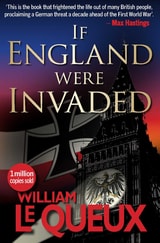
If England Were Invaded
William Le Queux
Bodleian Library Publishing, 2014
Eight years before the onset of World War I, as national hysteria over the possibility of German spies in England reached its peak, journalist and prolific spy novelist William Le Queux penned The Invasion of 1910. Although it has since faded from public memory, at the time of its serialization, the novel was a tremendous success, selling more than one million copies and even inspiring an unauthorized, abridged German-language edition that altered the book’s ending.
If England Were Invaded restores this major work of “invasion literature” to print. Le Queux constructs a catastrophic scenario in which the German army has invaded England in a surprise attack on the coast. The story chillingly chronicles a war fought on the British homeland, with detailed accounts of battles involving real locations and real defense experts of the time. Throughout, Le Queux brings to life the domestic realities of a nation at war, from food shortages and failing financial institutions to the ever-present threat of espionage. One by one, strategic cities and counties in the novel—Birmingham, Manchester, and Suffolk—are abandoned to the German army until it stands poised to “advance upon and crush the complex city which is the pride and home of every Englishman—London.”
A truly entertaining read—complete with campaign maps and fictional proclamations from Kaiser Wilhelm II—If England Were Invaded also offers an incredible cautionary tale about a country that was not prepared for an attack and, in doing so, it shines a light on the common hopes and fears in England at the beginning of the twentieth century.
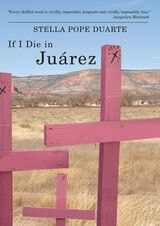
If I Die in Juárez
Stella Pope Duarte
University of Arizona Press, 2008
Based on the author’s interviews with relatives of murdered women, If I Die in Juárez is brilliantly crafted to give readers the experience of walking in the shoes of women who daily risk being abducted and murdered in the “capital city of murdered women,” joining thousands of others who for more than a decade have disappeared from Juárez, las desaparecidas, brutally murdered by assassins who have gone unpunished. The agony of one of the darkest tales in human history brings to light a strange hope, illusive yet constant, resisting lies, betrayal, and the desert’s silent sentence of death.
Read an in-depth review of If I Die in Juárez here or click here for a study guide. If I Die in Juárez was also reviewed on KNAU's Southwest Book Review program. Listen here!
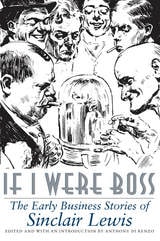
If I Were Boss
The Early Business Stories of Sinclair LewisEdited by Anthony Di Renzo
Southern Illinois University Press, 1997
Anthony Di Renzo makes available for the first time since their original publication some eighty years ago a collection of fifteen of Sinclair Lewis’s early business stories.
Among Lewis’s funniest satires, these stories introduce the characters, themes, and techniques that would evolve into Babbitt. Each selection reflects the commercial culture of Lewis’s day, particularly Reason Why advertising, self-help manuals, and the business fiction of the Saturday Evening Post. The stories were published between October 1915 and May 1921 (nine in the Saturday Evening Post, four in Metropolitan Magazine, one in Harper’s Magazine, and one in American Magazine).
Because some things have not changed in the American workplace since Lewis’s day, these highly entertaining and unflinchingly accurate office satires will appeal to the fans of Dilbert and The Drew Carey Show. In a sense, they provide lay readers with an archaeology of white-collar angst and regimentation. The horror and absurdities of contemporary corporate downsizing already existed in the office of the Progressive Era. For an audience contemplating the death of the American middle class, Lewis’s stories provide an important retrospective on earlier times and a preliminary autopsy on the American dream.
Appearing just in time to celebrate the seventy-fifth anniversary of the publication of Babbitt, this collection rescues Lewis’s best early short fiction from obscurity, provides extensive information about his formative years in advertising and public relations, and analyzes both his genius for marketing and his carefully cultivated persona as the Great Salesman of American letters.
If I'd Known You Were Coming
Kate Milliken
University of Iowa Press, 2013
Kate Milliken knows the ties that bind and how tautly we will pull them. These are stories about desire, betrayal, love, regret, and family. Like all great fiction, If I’d Known You Were Coming possesses that uncanny ability to reveal us to ourselves.
If We Dream Too Long
Poh Seng Goh
National University of Singapore Press, 2020
If You See the Buddha
Studies in the Fiction of Ivan BuninThomas Gaiton Marullo
Northwestern University Press, 1999
In If You See the Buddha, Thomas Gaiton Marullo begins addressing the lack of scholarship by establishing that Bunin was a thoroughly modern writer whose images and ideas were rooted more in the twentieth century than in the nineteenth. But beyond that point, Marullo states that, of all the systems of belief that Bunin adopted and adapted throughout his career, it was his interest in Buddhism that best elucidates the dynamics of his writing. Key Buddhistic concepts figured prominently in Bunin's work. These ideas enabled him to make sense of his world and serves as the catalyst for an ars poetica that tempered his philosophical and aesthetic restiveness and contributed a sense of timelessness to work from both his prerevolutionary and émigré periods.
Igloo Among Palms
Rod Val Moore
University of Iowa Press, 1994
Illuminating Childhood
Portraits in Fiction, Film, and DramaEllen Handler Spitz
University of Michigan Press, 2012
"A brilliant and daring book on how art reveals life, how it illuminates childhood beyond what the sciences of development can tell us."
---Jerome Bruner, University Professor, New York University
"Combining the surgical precision of a psychoanalytically informed critic with the oracular eloquence of a brilliant close reader, Ellen Handler Spitz reads our cultural fortunes about childhood and parenting through works of art. Moving us (in both senses of the term) from the serene plenitude of Piero della Francesca's Madonna of Childbirth to the unsparing horror of Lessing's Fifth Child, she reveals just how powerfully art puts us in touch with the pulsing energies of real life."
---Maria Tatar, John L. Loeb Professor of Germanic Languages and Literatures, Harvard University
"Illuminating Childhood is a wonderfully well-written and researched interdisciplinary study of childhood in various media and mediums as well as through ethnicity, race, gender, cultures, and time."
---T. Denean Sharpley-Whiting, Distinguished Professor of French and Director of African American and Diaspora Studies, Vanderbilt University
While literature and the arts are rarely considered primary sources for knowledge about human motivation and behavior, people read novels, attend movies, watch television, and go to the theater not solely to be entertained but also to learn about one another and about themselves. Illuminating Childhood formalizes this quest for psychological knowledge in the domain of the arts.
Starting with the premise that a gifted writer, artist, or filmmaker has the ability to teach us as much in one scene as a theorist can in a treatise or a therapist in a session, the author shares her intimate experience of eight thematically linked works in film and literature from the second half of the twentieth century, touching on issues central to parent-child relations, including toxic intrafamilial secrets, the disjunction between love and understanding, and the lasting impact of deceased parents on their children. While the canon of literature about children and parent-child relations includes books that identify problems, propose solutions, and present statistical data, Illuminating Childhood offers a living out of experience via the arts, written for a general audience---parents, teachers, mental health professionals, those who engage with their students via the arts of literature and film, and others.
Ellen Handler Spitz holds the Honors College Professorship of Visual Arts at the University of Maryland. She is the author of a number of books on art, psychology, and imagery, including The Brightening Glance: Imagination and Childhood. Her abiding research interests are the cultural lives of young people; the relations between aesthetics and psychology; and the interconnections among literature, music, dance, and the visual arts.
Jacket photo: Courtesy of PhotoFest
Imagine Your Life Like This
Sarah Layden
University of Wisconsin Press, 2023
A bride-to-be puts on her detective hat when her groom goes missing. A woman returns to college after escaping an abusive marriage, only to discover her professor is a fraud. Reunited at a high school reunion, two former classmates completely misinterpret a critical incident from a decade prior. These and other characters find themselves lonely and in limbo, their self-identity as blurry as the old photographs they cling to with stubborn intensity.
Set mostly in the Midwest and upstate New York, Imagine Your Life Like This captures everyday Americans in all their discontent, misunderstandings, and dogged determination for a better world.
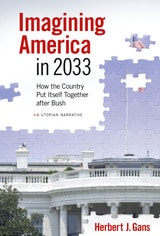
Imagining America in 2033
How the Country Put Itself Together after BushHerbert J. Gans
University of Michigan Press, 2008
At the heart of Herbert J. Gans's utopian narrative is the vision of progress with fairness on which the best of American idealism has been built. Part utopia, part realism, Imagining America in 2033 is also a liberal's dream of life after Bush and a set of progressive yet practical guidelines for restoring sanity and intelligence to nearly every aspect of public and political life post-Bush.
Herbert J. Gans, one of the most influential and prolific sociologists and social commentators of our time, achieves a realistic utopia set mostly in the second and third decades of the century. In Gans's imagined future, elected officials, policymakers, activists, and citizens have transformed America into a much more humane and effective democracy. The book features three Democratic presidents; the major new domestic, foreign, and social policies their administrations pursue; and the political battles they fight.
Gans provides chapters on an exhaustive list of social, political, and economic policy issues: jobs; war; tax reform; global warming; economic, racial, gender, and religious equality; family policies; the creation of affordable housing and energy saving communities; education reform; and more. While hopeful and idealistic, many of Gans's proposals---such as the concept of the nurse-doctor, in which nurses increasingly take on tasks previously handled only by medical doctors within a framework of national health care---are ideas innovative enough that they should be taken seriously by actual policymakers.
Imagining America in 2033 is lively and accessible, with an appeal for general readers, policy hounds, and the politically savvy alike.
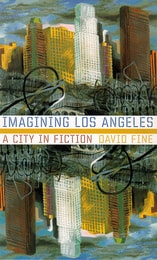
Imagining Los Angeles
A City In FictionDavid Fine
University of Nevada Press, 2004
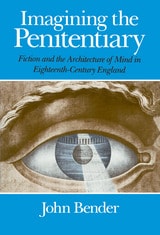
Imagining the Penitentiary
Fiction and the Architecture of Mind in Eighteenth-Century EnglandJohn Bender
University of Chicago Press, 1987
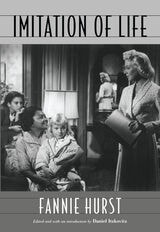
Imitation of Life
Fannie Hurst
Duke University Press, 2004
The author of numerous bestselling novels, a masterful short story writer, and an outspoken social activist, Fannie Hurst was a major celebrity in the first half of the twentieth century. Daniel Itzkovitz’s introduction situates Imitation of Life in its literary, biographical, and cultural contexts, addressing such topics as the debates over the novel and films, the role of Hurst’s one-time secretary and great friend Zora Neale Hurston in the novel’s development, and the response to the novel by Hurst’s friend Langston Hughes, whose one-act satire, “Limitations of Life” (which reverses the races of Bea and Delilah), played to a raucous Harlem crowd in the late 1930s. This edition brings a classic of popular American literature back into print.
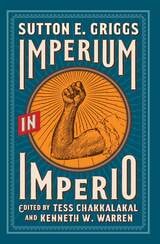
Imperium in Imperio
Sutton E. Griggs
West Virginia University Press, 2022
A new critical edition of Sutton Griggs’s turn-of-the-twentieth-century novel, which continues to shed light on understandings of Black politics.
Sutton E. Griggs’s first novel, originally published in 1899, paints a searing picture of the violent enforcement of disfranchisement and Jim Crow racial segregation. Based on events of the time, including US imperial policies, revolutionary movements, and racial protests, Imperium in Imperio introduces the fictional Belton Piedmont and Bernard Belgrave as “future leaders of their race” and uses these characters to make sense of the violence that marked the dawn of the twentieth century. Taking on contemporary battles over separatism and integration, Griggs’s novel continues to play a crucial role in understandings of Black politics.
Edited and introduced by Tess Chakkalakal and Kenneth W. Warren, this new critical edition offers not only an incisive biographical and historical introduction to the novel and its author but also a wealth of references that make the events and characters of Griggs’s Imperium in Imperio, and its aftermath, accessible to readers today.
Impossible Appetites
James Fetler
University of Iowa Press, 1980
The collection of nine stories which won the 1980 Iowa Short Fiction Award is woven in a pattern so subtle that reading it is like writing your own nine-part novel. The author allows brief glimpses into the tormented journals of Joseph Quaile, a man of acute compassions and consuming hungers, then juxtaposes them with the fiction Quaile writes to scourge his demons and come to terms with himself and the people he loves. This is a dispassionate intelligence in passionate pursuit of freedom and reconciliation.
Impotent
A NovelMatthew Roberson
University of Alabama Press, 2009
Improvisations on a Missing String
Nazik Saba Yared
University of Arkansas Press, 1997
Nazik Saba Yared’s novel, Improvisations on a Missing String, tells the story of Saada Rayyis, who, after a mastectomy and prior to another operation which she may not survive, considers the course of her life with the purpose of understanding not only where she has been, but also where she is going.
In her attempt to cope with complex feelings of alienation and insecurity, she struggles against traditional expectations in order to secure a sense of belonging and fulfillment—but always on her own terms.
From her childhood in Palestine, through her university studies in Cairo, and finally as a teacher in Beirut, we follow the development of this independent woman as she comes to terms with her feelings about family, lovers, politics, art, and finally her own aspirations for belonging.
In Love with Jerzy Kosinski
A NovelAgate Nesaule
University of Wisconsin Press, 2009
After fleeing Latvia as a child, Anna Duja escapes Russian confinement in displaced persons camps and eventually arrives in America. Years later, she finds herself in a different kind of captivity on isolated Cloudy Lake, Wisconsin, living with her disarming but manipulative husband, Stanley.
Inspired by the transformation of Polish-Jewish émigré Jerzy Kosinski from persecuted wartime escapee to celebrity author in America, Anna slips away from Stanley and Cloudy Lake in small steps: learning to drive, making friends, moving to Madison, falling in love, and learning to forgive. Readers will applaud the book’s power, the beauty of its prose, and its strong evocation of a woman gradually finding her way in the wake of trauma.
Winner, the Chancellor’s Regional Literary Award, University of Wisconsin-Whitewater
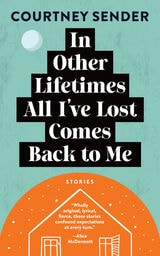
In Other Lifetimes All I've Lost Comes Back to Me
StoriesCourtney Sender
West Virginia University Press, 2023
“A deep and howling portrait of longing and loneliness.” —Boston Globe
“A distinctive debut from a promising author.” —Kirkus Reviews
“A stunner from the very first page.” —Deesha Philyaw, author of The Secret Lives of Church Ladies, in the Millions
And praise from Ann Patchett, Alice McDermott, Danielle Evans, Elisa Albert, and Aimee Bender
Populated with lovers who leave and return, with ghosts of the Holocaust and messages from the dead, Courtney Sender’s debut collection speaks in a singular new voice about the longings and loneliness of contemporary love. The world of these fourteen interlocking stories is fiercely real but suffused with magic and myth, dark wit, and distinct humor. Here, ancient loss works its way deep into the psyche of modern characters, stirring their unrelenting lust for life.
In “To Do With the Body,” the Museum of Period Clothes becomes the perfect setting for a bloody crime. In “Lilith in God’s Hands,” Adam’s first wife has an affair in the Garden of Eden. And in the title story, a woman spends her life waiting for any of the men who have left her to come back, only to find them all at her doorstep at once.
For readers of Elena Ferrante, Nicole Krauss, and Carmen Maria Machado, and for anyone who has known love and loneliness, In Other Lifetimes All I’ve Lost Comes Back to Me is a wise and sensual collection of old hauntings, new longings, and unexpected returns, with a finale that is a rousing call to the strength we each have, together or alone.
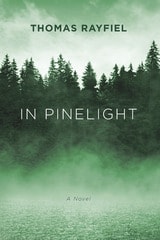
In Pinelight
A NovelThomas Rayfiel
Northwestern University Press, 2013
As the elderly hero of Thomas Rayfiel’s daring new novel, In Pinelight, sits in an old folks home responding to the questions of an unseen interrogator, the fragments he supplies form the portrait of a man’s life in upstate New York. Losses, loves, destructive family relationships, sexual entanglements, and moments of mystical awareness filter through the seeming minutiae of small-town gossip to confront the reader with their cumulative power.
In Pinelight stirs the emotions both by its formal virtuosity and by the precision with which the narrator is able to reveal human psychology. Rayfiel seeks to capture the essence of historical forces and to illuminate the inescapable truths we would rather not see.
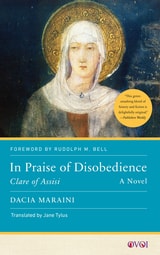
In Praise of Disobedience
Clare of Assisi, A NovelDacia Maraini
Rutgers University Press, 2023

In Praise of Older Women
The Amorous Recollections of A. VStephen Vizinczey
University of Chicago Press, 1990
"A pleasure. Vizinczey writes of women beautifully, with sympathy, tact and delight, and he writes about sex with more lucidity and grace than most writers ever acquire."—Larry McMurtry, Houston Post
"Like James Joyce, who was as far from being a writer of erotica as Dostoevsky, Vizinczey has a refreshing message to deliver: Life is not about sex, sex is about life."—John Podhoretz, Washington Times
"The gracefully written story of a young man growing up among older women . . . although some passages may well arouse the reader, this novel brims with what the courts have termed "redeeming literary merit."—Clarence Petersen, Chicago Tribune
"A funny novel about sex, or rather (which is rarer) a novel which is funny as well as touching about sex . . . elegant, exact and melodious—has style, presence and individuality."—Isabel Quigly, Sunday Telegraph
"The delicious adventures of a young Casanova who appreciates maturity while acquiring it himself. In turn naive, sophisticated, arrogant, disarming, the narrator woos his women and his tale wins the reader."—Polly Devlin, Vogue
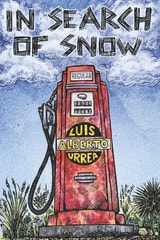
In Search of Snow
Luis Alberto Urrea
University of Arizona Press, 1999
In Search of Snow is an explosive coming-of-age adventure, full of hilarious episodes and still, poignant moments. Like a blue-collar Don Quixote, Mike must blow up his windmills before he can set off to find the things he lacks, especially the snow that will temper the passion he has just set aflame.
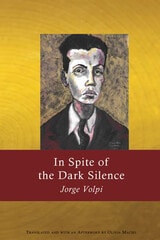
In Spite of the Dark Silence
Jorge Volpi
Swan Isle Press, 2010
"He was named Jorge, like me, and for this his life hurts me twice." So writes Jorge Volpi in this highly original novel that presents a biographical perspective on the tragic life of the poet and chemist Jorge Cuesta. Cuesta was one of the founders of Los Contemporáneos, an influential twentieth-century literary movement. The poetic voice of Cuesta's verses can be heard throughout, offering insights into the creative and destructive forces and impulses in his work that eventually led to a mental ward—and a shocking suicide at thirty-eight. The fictional "Jorge," as narrator, embarks on an obsessive quest to understand the life of the long-dead poet, with the distance between subject and researcher blurring as he finds himself struggling to understand his own life. It is a brave search for anyone willing to gaze into the mirror of mortality "in spite of the dark silence."
In The Box Called Pleasure
Kim Addonizio
University of Alabama Press, 1999
These gutsy and post feminist stories will elicit the shock of recognition from women and may reveal to men something about the further regions of the female psyche. By turns graphic and funny, these urban tales present characters who are teetering on the edge. Indifferent or absent lovers, too much alcohol, too many cigarettes, obsession, paranoia, a desire that is always fresh in spite of the facts—this is the macabre landscape of these very unusual and unrestrained works.
In "Reading Sontag," Addonizio invades and recasts Susan Sontag's essay "The Pornographic Imagination" while describing a monumentally failed relationship. In "The Gift," a woman finds a dildo on the street and is magically transformed into a man.These are fictions to prepare us for the real millennium.
In The Shadow Of The Strip
Las Vegas StoriesRichard Logsdon
University of Nevada Press, 2003
In These Times the Home Is a Tired Place
Jessica Hollander
University of North Texas Press, 2013
In Touch
Encounters between Art and ResearchHans-Jörg Rheinberger
Diaphanes, 2026
The entanglements between science and art have always been multiple, even if they are not always readily noticeable. In this volume, historian and philosopher of science Hans-Jörg Rheinberger reflects on the work of seven different artists, apprehending artworks not as art-historical exegeses, but rather ongoing research processes with their own character and specificities, more akin to scientific experimentation.
In a Pickle
A Family Farm StoryJerry Apps
University of Wisconsin Press, 2008
In the Castle of My Skin
George Lamming
University of Michigan Press, 1992
Nearly forty years after its initial publication, George Lamming's In the Castle of My Skin is considered a classic narrative of the Black colonial experience. This poetic autobiographical novel juxtaposes the undeveloped, unencumbered life of a small Caribbean island with the materialism and anxiety of the twentieth century.
Written when Lamming was twenty-three and residing in England, In the Castle of My Skin poignantly chronicles the author's life from his ninth to his nineteenth year. Through the eyes of a young boy the experiences of colonial education, class tensions, and natural disaster are interpreted and reinterpreted, mediated through the presence of the old villagers and friends who leave for the mainland.
One of the leading Black writers of the twentieth century, George Lamming is the author of numerous works exploring the colonial experience.
In the Congo
Urs Widmer
Seagull Books, 2015
In Urs Widmer’s characteristic style, In the Congo is a riveting yarn, threading through not only the relationship between a father and son, but that of Africa and Europe. Translated by Donal McLaughlin, this novel will delight Widmer fans the world over and will turn our notions of colonialism on their heads.
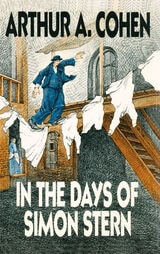
In the Days of Simon Stern
Arthur A. Cohen
University of Chicago Press, 1987
"A majestic work of fiction that should stand world literature's test of time, to be read and reread. A masterpiece."—Commonweal
"This book ensnares one of the most extraordinarily daring ideas to inhabit an American novel in a number of years. For one thing, it is that risky devising, dreamed of only by the Thomas Manns of the world, a serious and vastly conceived fiction bled out of the theological imagination. For another, it is clearly an 'American' novel—altogether American, despite its Jewish particularity: it is not so much about the history of the Jews as it is about the idea of the New World as haven. . . . In its teeming particularity every vein of this book runs with a brilliance of Jewish insight and erudition to be found in no other novelist. Arthur Cohen is the first writer of any American generation to compose a profoundly Jewish fiction on a profoundly Western theme."—Cynthia Ozick, New York Times Book Review
"This stately, ambitious amalgam of Jewish myth, history, theology, and speculations on the Jewish soul is like an enormous Judaic archeological ruin—often hard for the uninitiated to interpret, but impressive. . . . Intelligent, inventive, fascinating."—New Yorker
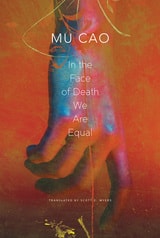
In the Face of Death We Are Equal
Mu Cao
Seagull Books, 2020
“Those who know me call me Old He, and they also know that I’ve worked in a crematorium for my entire life.” Here begins Mu Cao’s novel In the Face of Death We Are Equal, an unrelentingly realistic portrait of working-class gay men in the underbelly of Chinese society. He Donghai is days away from his sixtieth birthday and long-awaited retirement from his job as a corpse burner at a Beijing crematorium. As he approaches the momentous day, he reflects on his life and his relationship with a special group of young men who live and love on the margins of Chinese society. One of them is Ah Qing, a young migrant worker who leaves his village in Henan Province to earn a living in cities—and who has an unexpected personal connection to He. Through a disrupted and nonlinear narrative technique, and alternating between first, second, and third person, In the Face of Death We Are Equal tells the story of Ah and other young men like him.
Sometimes enraging, often humorous, but always powerful, this novel explores the economic and sexual exploitation of young men and women from China’s impoverished countryside who seek survival in the shadow of China’s economic “miracle.” Deftly translated by Scott E. Myers, it is the first title in Seagull’s new Pride List, which showcases important queer writing from around the world. Written in Mu Cao’s trademark earthy, sometimes graphic, idiom, In the Face of Death We Are Equal will be a valuable addition to queer and Chinese literature in translation.
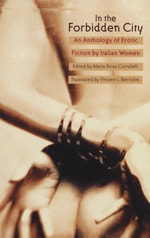
In the Forbidden City
An Anthology of Erotic Fiction by Italian WomenEdited by Maria Rosa Cutrufelli
University of Chicago Press, 2000
Now Italian women have turned the tables. With In the Forbidden City, translated from the Italian, acclaimed novelist Maria Rosa Cutrufelli brings together fourteen short erotic stories by contemporary Italian women writers. Well-established voices are juxtaposed with new ones; traditional forms provide a contrast with the experimental. In Sandra Petrignani's dialogue "Body" a women and a former lover engage in a heady debate about desire and indifference; Margherita Ciacobino delivers a tale of lesbian desire, a theme uncommon in Italian literature; Dacia Maraini writes on the literature of eroticism penned by women writers that ingeniously manages to be erotic in its own right; and Rossana Campo, in one of the most entertaining entries, offers a hip-rattling tri-logue on love voiced by some super-cool adolescents. In her introduction, Cutrufelli draws in even more writers such as Jean Baudrillard, Angela Carter, and Georges Bataille in her introductory essay on the theoretical issues of desire and seduction.
Now finally available to English readers, In the Forbidden City constitutes a breakthrough volume in literary erotica by Italian women that is both profound and engaging.
In the House
Lynn K. Kilpatrick
University of Alabama Press, 2010
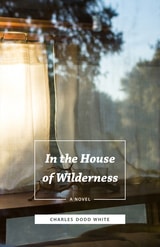
In the House of Wilderness
A NovelCharles Dodd White
Ohio University Press, 2018
Rain is a young woman under the influence of a charismatic drifter named Wolf and his other “wife,” Winter. Through months of wandering homeless through the cities, small towns, and landscape of Appalachia, the trio have grown into a kind of desperate family, a family driven by exploitation and abuse. A family that Rain must escape.
When she meets Stratton Bryant, a widower living alone in an old east Tennessee farmhouse, Rain is given the chance to see a bigger world and find herself a place within it. But Wolf will not let her part easily. When he demands loyalty and obedience, the only way out is through an episode of violence that will leave everyone involved permanently damaged.
A harrowing story of choice and sacrifice, Charles Dodd White’s In the House of Wilderness is a novel about the modern South and how we fight through hardship and grief to find a way home.
In the Land of Silence
Jesus Urzagasti
University of Arkansas Press, 1994
In the Middle of Nowhere
Fanny Howe
University of Alabama Press, 1984
In the Mouth
Stories and NovellasEileen Pollack
Four Way Books, 2008
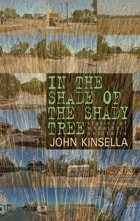
In the Shade of the Shady Tree
Stories of Wheatbelt AustraliaJohn Kinsella
Ohio University Press, 2012
In the Shade of the Shady Tree is a collection of stories set in the Western Australian wheatbelt, a vast grain-growing area that ranges across the southwestern end of the immense Australian interior. Kinsella’s stories offer glimpses into the lives of the people who call this area home, as the reader journeys from just north of the town of Geraldton to the far eastern and southern shires of the region.
Cast against a backdrop of indigenous dispossession, settler migration, and the destructive impact of land-clearing and monocultural farming methods, the stories offer moments of connection with the inhabitants, ranging from the matter-of-fact to the bizarre and inexplicable. Something about the nature of the place wrestles with all human interactions and affects their outcomes. The land itself is a dominant character, with dust, gnarled scrubland, and the need for rain underpinning human endeavor. Inflected with both contemporary ideas of short fiction and the “everyman” tradition of Australian storytelling, this collection will introduce many readers to a new landscape and unforgettable characters.
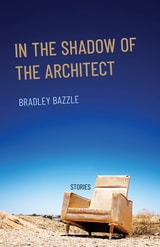
In the Shadow of the Architect
Bradley Bazzle
University of Wisconsin Press, 2026
Coalescing around themes of family and belonging, the past’s influence on the present, and the ways we define ourselves, these stories show us people forced to grapple with who they are—and who they could become. A closeted teenager learns from the nude model in his life-drawing class what it might mean to be a gay man in Fort Worth. A lifestyle blogger looking to expand her influence hires a photographer whose work destabilizes her family. A boy finds friendship in the precocious daughter of a recently deceased architect whose fame and force of personality continue to dominate their lives. In Bradley Bazzle’s deft hands, these characters—on the cusp of change, willingly or not—discover truths about themselves, some of which they might regret learning.