Results by title
8113 books match the query 'Literary Criticism' and 256 start with i
I Am Because We Are
Readings in Africana PhilosophyFred Lee Hord
University of Massachusetts Press, 2016
First published in 1995, I Am Because We Are has been recognized as a major, canon-defining anthology and adopted as a text in a wide variety of college and university courses. Bringing together writings by prominent Black thinkers from Africa, the Caribbean, and North America, Fred Lee Hord and Jonathan Scott Lee made the case for a tradition of “relational humanism” distinct from the philosophical preoccupations of the West.
Over the past twenty years, however, new scholarly research has uncovered other contributions to the discipline now generally known as “Africana philosophy” that were not included in the original volume. In this revised and expanded edition, Hord and Lee build on the strengths of the earlier anthology while enriching the selection of readings to bring the text into the twenty-first century. In a new introduction, the editors reflect on the key arguments of the book's central thesis, refining them in light of more recent philosophical discourse. This edition includes important new readings by Kwame Gyekye, Oyeronke Oy ewumi, Paget Henry, Sylvia Wynter, Toni Morrison, Charles Mills, and Tommy Curry, as well as extensive suggestions for further reading.
I Am of Ireland
Women of the North Speak OutElizabeth Shannon
University of Massachusetts Press, 1997
I Call to Remembrance
Toyo Suyemoto's Years of InternmentToyo Suyemoto and Edited by Susan B. Richardson
Rutgers University Press, 2007
A uniquely poetic contribution to the small body of internment memoirs, Suyemoto's account includes information about policies and wartime decisions that are not widely known, and recounts in detail the way in which internees adjusted their notions of selfhood and citizenship, lending insight to the complicated and controversial questions of citizenship, accountability, and resistance of first- and second-generation Japanese Americans.
Suyemoto's poems, many written during internment, are interwoven throughout the text and serve as counterpoints to the contextualizing narrative. Suyemoto's poems, many written during internment, are interwoven throughout the text and serve as counterpoints to the contextualizing narrative. A small collection of poems written in the years following her incarceration further reveal the psychological effects of her experience.

I Contain Multitudes
A New Life of Walt WhitmanEric G. Wilson
University of Chicago Press, 2027
Lively and entertaining, this is the first comprehensive biography of Walt Whitman in more than twenty-five years, drawing on significant new discoveries and scholarship.
Walt Whitman is not only one of the most influential and popular poets in American history but also a symbol of American character and independence, as important to our nation’s identity as Abraham Lincoln, Harriet Beecher Stowe, or Louis Armstrong. While his poetry and exuberant style still inspire writers today, our understanding of his life is due for an update. It has been over a quarter of a century since the last full-length biography of Whitman, and in that time several works by Whitman have been rediscovered—including a novel and a men’s health manual—that put Whitman in a new light. In I Contain Multitudes, Eric G. Wilson draws on these discoveries to give us a fresh life of Whitman, one that reveals him to be more playful, flexible, and pragmatic than we had known.
Whitman emerges here as an artist adept in almost every literary genre. Across these varied writings, he fashioned a comedic vision based on the multifariousness of the cosmos. In his life as well, he created a wide range of personae. Like an experienced actor, Whitman had many roles and selves at the ready: the urban dandy, the Broadway bohemian, the humble Civil War nurse. Wilson’s portrait casts well-studied Whitman traits in a new light: his radical egalitarianism, he shows, was suffused with humor—to be a good citizen meant not taking yourself too seriously—and his famous powers of empathy resulted in darkly funny challenges to oppressive hierarchies.
Wilson tells Whitman’s life in dozens of brief, vivid segments, an innovative approach that reflects Whitman’s own existential and literary brio. Presenting the multitudinous Whitman with both stylistic gusto and scholarly rigor, I Contain Multitudes reads as much like a novel as the authoritative biography it is.
I KNOW THAT YOU KNOW THAT I KNOW
NARRATING SUBJECTS FROM MOLL FLANDERS TO MARNIEGeorge Butte
The Ohio State University Press, 2004
In I Know That You Know That I Know, Butte explores how stories narrate human consciousness. Butte locates a historical shift in the representation of webs of consciousnesses in narrative—what he calls “deep intersubjectivity”—and examines the effect this shift has since had on Western literature and culture. The author studies narrative practices in two ways: one pairing eighteenth-and nineteenth-century British novels (Moll Flanders and Great Expectations, for example), and the other studying genre practices—comedy, anti-comedy and masquerade—in written and film narratives (Jane Austen and His Girl Friday, for example, and Hitchcock’s Cary Grant films).
Butte’s second major claim argues for new ways to read representations of human consciousness, whether or not they take the form of deep intersubjectivity. Phenomenological criticism has lost its credibility in recent years, but this book identifies better reading strategies arising out of what the author calls poststructuralist phenomenology, grounded largely in the work of the French philosopher Merleau-Ponty. Butte criticizes the extreme of transcendental idealism (first-wave phenomenological criticism) and cultural materialism (when it rules out the study of consciousness). He also criticizes the dominant Lacanian framework of much academic film criticism.
I Made You to Find Me
The Coming of Age of the Woman Poet and the Politics of Poetic AddressJane Hedley
The Ohio State University Press, 2009

I Think I Am
Philip K. DickLaurence A. Rickels
University of Minnesota Press, 2010
I Was More American than the Americans
Sylvère Lotringer in Conversation with Donatien GrauSylvère Lotringer and Donatien Grau
Diaphanes, 2021
In the mid-1970s, Sylvère Lotringer created Semiotext(e), a philosophical group that became a magazine and then a publishing house. Since its creation, Semio-text(e) has been a place of stimulating dialogue between artists and philosophers, and for the past fifty years, much of American artistic and intellectual life has depended on it. The model of the journal and the publishing house revolves around the notion of the collective, and Lotringer has rarely shared his personal journey: his existence as a hidden child during World War II; the liberating and then traumatic experience of the collective in the kibbutz; his Parisian activism in the 1960s; his time of wandering, that took him, by way of Istanbul, to the United States; and then, of course, his American years, the way he mingled his nightlife with the formal experimentation he invented with Semiotext(e) and with his classes. Since the early 2010s, Donatien Grau has developed the habit of visiting Lotringer during his trips to Los Angeles; some of their dialogs were published or held in public. This book is an entry into Lotringer's life, his friendships, his choices, and his admiration for some of the leading thinkers of our times. The conversations between Lotringer and Grau show bursts of life, traces of a journey, through texts and existence itself, with an unusual intensity.
I Will Take to the Water
An Anthology of African Americans and the SeaDavid R. Anderson
University of Chicago Press, 2026
A landmark survey of African American literature about Black experiences of the maritime environment.
The ocean is foundational to the story of Africans in America, beginning with the searing Middle Passage. Initially evoking terror, pain, and death, the ocean also became associated with escape, empowerment, freedom, and home, as over time, African Americans in seaport towns found work, built communities, and gained knowledge from travelers. David R. Anderson shows in this groundbreaking collection of memoir, fiction, poetry, and more that African American maritime literature summons many of the traditional themes—survival in the face of overwhelming natural force, sublimity, demonstration of skill and merit, and self-discovery—but often with an eye on legacies of imperialism, slavery, discrimination, and cultural erasure.
Divided thematically across ten sections that address peril, labor, recreation, and more, the book gathers work by influential writers and intellectuals from the eighteenth century to the present, including: Lucille Clifton, Edwidge Danticat, Frederick Douglass, Alice Dunbar-Nelson, W. E. B. DuBois, Camille T. Dungy, Marcus Garvey, Robert Hayden, Zora Neale Hurston, Major Jackson, Harriet Jacobs, John S. Jacobs, Nella Larsen, Claude McKay, Toni Morrison, Walter Mosley, Natasha Trethewey, Phillis Wheatley, Colson Whitehead, and Kevin Young.
I, Grape; or The Case for Fiction
EssaysBrock Clarke
Acre Books, 2020
Clarke supports his case with passages by and about writers who have both influenced and irritated him. Pieces such as “What the Cold Can Teach Us,” “The Case for Meanness,” “Why Good Literature Makes Us Bad People,” and “The Novel is Dead; Long Live the Novel” celebrate the achievements of master practitioners such as Muriel Spark, Joy Williams, Donald Barthelme, Flannery O’Connor, Paul Beatty, George Saunders, John Cheever, and Colson Whitehead. Of particular interest to Clarke is the contentious divide between fiction and memoir, which he investigates using recent and relevant critical arguments, also tackling ancillary forms such as “fictional memoir” and the autobiographical novel.
Anecdotal and unabashed, rigorous and piercingly perceptive—not to mention flat-out funny—I, Grape; or The Case for Fiction is a love letter to and a passionate defense of the discipline to which its author has devoted his life and mind. It is also an attempt to eff the ineffable: “That is one of the basic tenets of this book: when we write fiction, surprising things sometimes happen, especially when fiction writers take advantage of their chosen form’s contrarian ability to surprise.”
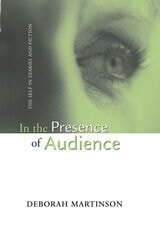
IN THE PRESENCE OF AUDIENCE
THE SELF IN DIARIES AND FICTIONDeborah Martinson
The Ohio State University Press, 2003
As a diary writer imagines shadow readers rifling diary pages, she tweaks images of the self, creating multiple readings of herself, fixed and unfixed. When the readers and potential readers are husbands and publishers, the writer maneuvers carefully in a world of men who are quick to judge and to take offense. She fills the pages with reflections, anecdotes, codes, stories, biographies, and fictions. The diary acts as a site for the writer’s tension, rebellion, and remaking of herself.
In this book Martinson examines the diaries of Virginia Woolf, Katherine Mansfield, Violet Hunt, and Doris Lessing’s fictional character Anna Wulf, and shows that these diaries (and others like them) are not entirely private writings as has been previously assumed. Rather, their authors wrote them knowing they would be read. In these four cases, the audience is the author’s male lover or husband, and Martinson reveals how knowledge of this audience affects the language and content in each diary. Ultimately, she argues, this audience enforces a certain “male censorship” which changes the shape of the revelations, the shape of the writer herself, making it impossible for the female author to be honest in writing about her true self.
Even sophisticated readers often assume that diaries are primarily private. This study interrogates the myth of authenticity and self-revelation in diaries written under the gaze of particular peekers.

INTERROGATING ORIENTALISM
Contextual Approaches and Pedagogical PracticesEdited by Diane Long Hoeveler and Jeffrey Cass
The Ohio State University Press, 2006
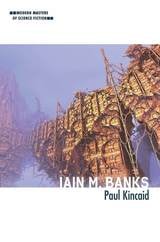
Iain M. Banks
Paul Kincaid
University of Illinois Press, 2017
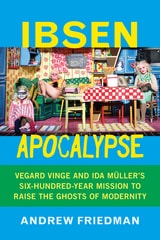
Ibsen Apocalypse
Vegard Vinge and Ida Müller’s Six-Hundred-Year Mission to Raise the Ghosts of ModernityAndrew Friedman
Northwestern University Press, 2026
Presenting a groundbreaking account of an audacious theatrical undertaking
Created by the Norwegian/German duo of Vegard Vinge and Ida Müller, the Ibsen-Saga (2006–present) is a six-hundred-year project to restage Henrik Ibsen’s entire oeuvre. Andrew Friedman presents a groundbreaking historical narrative of this project’s development and dramaturgy, through the theories and practices of modernism’s most influential and controversial artists, including Henrik Ibsen, Richard Wagner, F. T. Marinetti, Erwin Piscator, and Jackson Pollock. Vinge and Müller treat Ibsen’s plays as the urtexts of a mythical struggle between artistic vision and material limits, which they explore through analogous narratives ranging from Hamlet to World Cup soccer matches, all unified by a singular aesthetic that juxtaposes totalizing fiction and extreme reality. As Friedman shows, they mythologize Ibsen’s themes of artistic ambition to resurrect and test modernism’s fantasies of artistic autonomy, totality, creative license, and provocation.
By reading Vinge and Müller’s project through its modernist inspirations, Friedman demonstrates the material and ethical limits of modernist ideals in current theatrical practice, providing new perspectives on the legacy of these pioneering figures. Ibsen Apocalypse is a bold, cross-disciplinary reappraisal of the persistent power of modernity in contemporary performance.
Ibsen’s Drama
Author to AudienceEinar Haugen
University of Minnesota Press, 1979
Ibsen's Drama was first published in 1979. Minnesota Archive Editions uses digital technology to make long-unavailable books once again accessible, and are published unaltered from the original University of Minnesota Press editions.
"A dramatist for all seasons" Einar Haugen calls Henrik Ibsen in this series of lectures given in honor of the 150th anniversary of the Norwegian playwright's birth. Using a modified version of the communications model developed by linguist Roman Jakobson, Haugen provides a readable, succinct analysis of Ibsen's thinking and dramaturgy. He examines the ways in which Ibsen the author communicated with his nineteenth-century audience and is able, still, to move and inform playgoers today.
Haugen brings to this work a lifetime of familiarity with Ibsen in Norwegian and in translation, and he draws upon his own experience as a theatergoer and as an observer of student and audience reaction to the plays. Ibsen's Drama will bring pleasure and a deeper understanding of the playwright to students and playgoers alike.
Einar Haugen is Victor S. Thomas Professor of Scandinavian and Linguistics, emeritus, at Harvard University. He is author, editor, or translator of many books and articles in linguistics, literature, and immigrant history, notably The Norwegian Language in America (1953), The Scandinavian Languages (1976), and Land of the Free (1978).
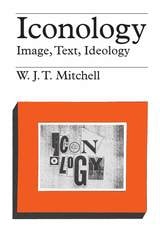
Iconology
Image, Text, IdeologyW. J. T. Mitchell
University of Chicago Press, 1986
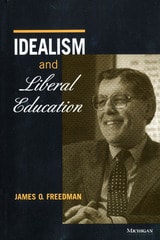
Idealism and Liberal Education
James O. Freedman
University of Michigan Press, 2001

Identities
Edited by Kwame Anthony Appiah and Henry Louis Gates Jr.
University of Chicago Press, 1995
Leading scholars in literary criticism, anthropology, sociology, and philosophy explore such topics as "Gypsies" in the Western imagination, the mobilization of the West in Chinese television, the lesbian identity and the woman's gaze in fashion photography, and the regulation of black women's bodies in early 20th-century urban areas. This collection of twenty articles brings together the special issue of Critical Inquiry entitled "Identities" (Summer 1992), two other previously published essays, and five previously published critical responses and rejoinders, all of which is interrogated in two new essays by Michael Gorra and Judith Butler.
Contributors include Elizabeth Abel, Kwame Anthony Appiah, Akeel Bilgrami, Daniel Boyarin, Jonathan Boyarin, Judith Butler, Hazel V. Carby, Xiaomei Chen, Diana Fuss, Henry Louis Gates, Jr., Avery Gordon, Michael Gorra, Cheryl Herr, Saree S. Makdisi, Walter Benn Michaels, Christopher Newfield, Gananath Obeyesekere, Molly Anne Rothenberg, Gayatri Chakravorty Spivak, Sara Suleri, Katie Trumpener, and Joseph Valente.
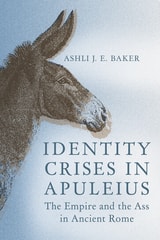
Identity Crises in Apuleius
The Empire and the Ass in Ancient RomeAshli J. E. Baker
University of Wisconsin Press, 2026
In the second century CE, the multiethnic, multilingual, and religiously diverse Roman Empire grew to its greatest extent. To maintain order, Rome relied heavily on strict social hierarchies, established not only through legal frameworks like citizenship, but also through cultural markers (such as clothing and language) and personal traits (such as educational achievement). Even as Rome grew into one of the world’s most powerful empires, however, its social systems strained under the stresses caused by that very growth, which encouraged cultural interaction, long-distance travel, and social mobility—all of which threatened the hierarchies that underpinned Roman order.
It was during this time that the North African–born, Latin-speaking, Greek-educated Apuleius—whose own background showcases the multiplicity of identities available then to Roman individuals—flourished. He remains one of the ancient world’s best-known authors today, thanks particularly to his famous novel, Metamorphoses, known also as The Golden Ass. Taking a bird’s-eye view of his work, Ashli J. E. Baker proffers a bold new reading of Apuleius, proposing that across his writings there is a consistent focus on the theme of identity and its instability. By placing close readings in conversation with sociocultural and material contexts, she shows that because the structures of Roman power depended on inherently unreliable markers of identity, Apuleius’ work can be read as a biting critique of the fraught relationship between the individual, society, and the state in his contemporary Rome.
Identity and the Failure of America
From Thomas Jefferson to the War on TerrorJohn Michael
University of Minnesota Press, 2008
From Thomas Jefferson to John Rawls, justice has been at the center of America’s self-image and national creed. At the same time, for many of its peoples-from African slaves and European immigrants to women and the poor-the American experience has been defined by injustice: oppression, disenfranchisement, violence, and prejudice.
In Identity and the Failure of America, John Michael explores the contradictions between a mythic national identity promising justice to all and the realities of a divided, hierarchical, and frequently iniquitous history and social order. Through a series of insightful readings, Michael analyzes such cultural moments as the epic dramatization of the tension between individual ambition and communal complicity in Moby-Dick, attempts to effect social change through sympathy in the novels of Lydia Marie Child and Harriet Beecher Stowe, Ralph Waldo Emerson’s antislavery activism and Frederick Douglass’s long fight for racial equity, and the divisive figures of John Brown and Nat Turner in American letters and memory.
Focusing on exemplary instances when the nature of the United States as an essentially conflicted nation turned to force, Michael ultimately posits the development of a more cosmopolitan American identity, one that is more fully and justly imagined in response to the nation’s ethical failings at home and abroad.
John Michael is professor of English and of visual and cultural studies at the University of Rochester. He is the author of Anxious Intellects: Academic Professionals, Public Intellectuals, and Enlightenment Values and Emerson and Skepticism: The Cipher of the World.
Identity, Mediation, and the Cunning of Capital
Ani Maitra
Northwestern University Press, 2020
Maitra’s archive is transnational and multimodal. Moving from anticolonial polemics to psychoanalysis to diasporic experimental literature to postcolonial feminist and queer media, he lays bare the cunning by which capitalism produces and fragments identity through an intermedial “aesthetic dissonance” with the commodity form. Maitra’s novel contribution to theories of identity and to the concept of mediation will interest a wide range of scholars in media studies, critical race and postcolonial studies, and critical aesthetics.

Ideogram
History of a Poetic MethodBy Laszlo K. Géfin
University of Texas Press, 1982
The ideogram changed the course of modern American poetry, and Ideogram is the first history of this important poetic tradition.
In modern poetry the ideogram is an idea presented to the reader by means of the juxtaposition of concrete particulars, usually without connective words or phrases. The poem is therefore presented in precise images, usually very tersely, and free from conventional form and meter. The idea of presenting a concept in this manner derives in part from Ernest Fenollosa's essay "The Chinese Character as a Medium for Poetry," the Chinese written character itself being a juxtaposition of pictographs to form a new meaning.
Ezra Pound's search for an alternative to traditional forms of verse composition resulted in his use of the ideogrammic method which, Laszlo K. Géfin asserts, became the major mode of presentation in twentieth-century American poetry. Two generations of avant-garde, experimental poets since Pound have turned to it for inspiration, evolving their own methods from its principles.
Géfin begins by tracing the development of Pound's poetics from the pre-Imagist stage through Imagism and Vorticism to the formulation of the ideogrammic method. He then examines the Objectivist poetics of Louis Zukofsky, Charles Reznikoff, and George Oppen; the contributions to the ideogrammic tradition of William Carlos Williams; and the Projectivist theories of Charles Olson, Robert Duncan, and Robert Creeley. He concludes with an exploration of Allen Ginsberg's theory of the ellipse and Gary Snyder's "riprap" method. Throughout, Géfin maintains that the ideogrammic mode is the literary representation of the twentieth-century post-logical—even post-humanist—world view.
Ideologies of Hispanism
Mabel Moraña
Vanderbilt University Press, 2005
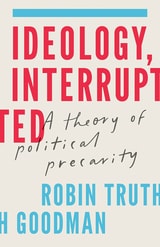
Ideology, Interrupted
A Theory of Political PrecarityRobin Truth Goodman
University of Minnesota Press, 2026
A powerful argument that the failure of ideology has created political disconnection and apathy
Political institutions increasingly fail to provide representations where citizens can recognize, identify, and imagine themselves as part of the institutions’ democratic project. Robin Truth Goodman argues that this disconnection is because ideology itself has gotten interrupted. Reversing Louis Althusser’s famous formulation of ideology as “calling” to citizens who, in response, turn toward the call, she argues that citizens now believe that ideology has turned away from them and stopped calling, endangering the most basic processes of modern democracies.
Deconstructing the widespread failure of democratic institutions to connect with individuals, Goodman examines recent works by authors such as Claire Vaye Watkins, Colson Whitehead, Ling Ma, Han Kang, and Ruth Ozeki that interrogate subjective agency within three different sites of social struggle: eco-catastrophe, pandemic, and food insecurity. She shows the themes that emerge from the novels reflecting and extending how the privatization and technologization of political decision-making have effectively cut off politicians and political institutions from the people they are supposed to serve.
Basing her study in the political philosophy of Judith Butler, Hannah Arendt, Julia Kristeva, and other prominent feminists, Goodman draws parallels with gender theory and argues that precarity in democratic societies has prevented citizens from finding points of engagement within politics. Diagnosing this widespread inability to translate private struggles into collective responses, Ideology, Interrupted is a powerful and inspiring call for new forms of societal bonds and political engagement to rejuvenate our democratic systems.
Retail e-book files for this title are screen-reader friendly.
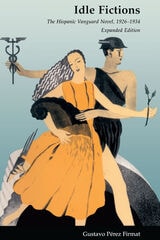
Idle Fictions
The Hispanic Vanguard Novel, 1926-1934, Expanded editionGustavo Pérez Firmat
Duke University Press, 1982
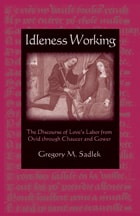
Idleness Working
the Discourse of Love's Labor from Ovid through Chaucer and GowerGregory M. Sadlek
Catholic University of America Press, 2004
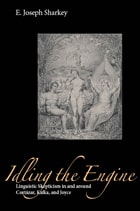
Idling the Engine
Linguistic sSkepticism in and around Cortázar, Kafka, and JoyceE. Joseph Sharkey
Catholic University of America Press, 2006
If You See the Buddha
Studies in the Fiction of Ivan BuninThomas Gaiton Marullo
Northwestern University Press, 1999
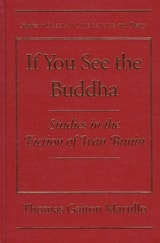
In If You See the Buddha, Thomas Gaiton Marullo begins addressing the lack of scholarship by establishing that Bunin was a thoroughly modern writer whose images and ideas were rooted more in the twentieth century than in the nineteenth. But beyond that point, Marullo states that, of all the systems of belief that Bunin adopted and adapted throughout his career, it was his interest in Buddhism that best elucidates the dynamics of his writing. Key Buddhistic concepts figured prominently in Bunin's work. These ideas enabled him to make sense of his world and serves as the catalyst for an ars poetica that tempered his philosophical and aesthetic restiveness and contributed a sense of timelessness to work from both his prerevolutionary and émigré periods.
Iliad, Book 1
Homer
University of Michigan Press, 2002
Illegal Immigrants/Model Minorities
The Cold War of Chinese American NarrativeHeidi Kim
Temple University Press, 2021
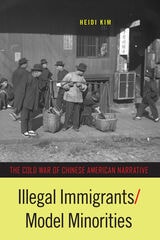
In the Cold War era, Chinese Americans were caught in a double-bind. The widespread stigma of illegal immigration, as it was often called, was most easily countered with the model minority, assimilating and forming nuclear families, but that in turn led to further stereotypes. In Illegal Immigrants/Model Minorities, Heidi Kim investigates how Chinese American writers navigated a strategy to normalize and justify the Chinese presence during a time when fears of Communism ran high.
Kim explores how writers like Maxine Hong Kingston, Jade Snow Wong, and C. Y. Lee, among others, addressed issues of history, family, blood purity, and law through then-groundbreaking novels and memoirs. Illegal Immigrants/Model Minorities also uses legal cases, immigration documents, and law as well as mass media coverage to illustrate how writers constructed stories in relation to the political structures that allowed or disallowed their presence, their citizenship, and their blended identity.
Kim illuminates the rapidly shifting political and social pressures on Chinese American authors who selectively concealed, revealed, and reconstructed issues of citizenship, belonging, and inclusion in their writing.
Illuminating Childhood
Portraits in Fiction, Film, and DramaEllen Handler Spitz
University of Michigan Press, 2012
"A brilliant and daring book on how art reveals life, how it illuminates childhood beyond what the sciences of development can tell us."
---Jerome Bruner, University Professor, New York University
"Combining the surgical precision of a psychoanalytically informed critic with the oracular eloquence of a brilliant close reader, Ellen Handler Spitz reads our cultural fortunes about childhood and parenting through works of art. Moving us (in both senses of the term) from the serene plenitude of Piero della Francesca's Madonna of Childbirth to the unsparing horror of Lessing's Fifth Child, she reveals just how powerfully art puts us in touch with the pulsing energies of real life."
---Maria Tatar, John L. Loeb Professor of Germanic Languages and Literatures, Harvard University
"Illuminating Childhood is a wonderfully well-written and researched interdisciplinary study of childhood in various media and mediums as well as through ethnicity, race, gender, cultures, and time."
---T. Denean Sharpley-Whiting, Distinguished Professor of French and Director of African American and Diaspora Studies, Vanderbilt University
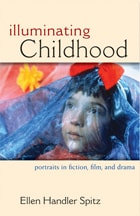
While literature and the arts are rarely considered primary sources for knowledge about human motivation and behavior, people read novels, attend movies, watch television, and go to the theater not solely to be entertained but also to learn about one another and about themselves. Illuminating Childhood formalizes this quest for psychological knowledge in the domain of the arts.
Starting with the premise that a gifted writer, artist, or filmmaker has the ability to teach us as much in one scene as a theorist can in a treatise or a therapist in a session, the author shares her intimate experience of eight thematically linked works in film and literature from the second half of the twentieth century, touching on issues central to parent-child relations, including toxic intrafamilial secrets, the disjunction between love and understanding, and the lasting impact of deceased parents on their children. While the canon of literature about children and parent-child relations includes books that identify problems, propose solutions, and present statistical data, Illuminating Childhood offers a living out of experience via the arts, written for a general audience---parents, teachers, mental health professionals, those who engage with their students via the arts of literature and film, and others.
Ellen Handler Spitz holds the Honors College Professorship of Visual Arts at the University of Maryland. She is the author of a number of books on art, psychology, and imagery, including The Brightening Glance: Imagination and Childhood. Her abiding research interests are the cultural lives of young people; the relations between aesthetics and psychology; and the interconnections among literature, music, dance, and the visual arts.
Jacket photo: Courtesy of PhotoFest
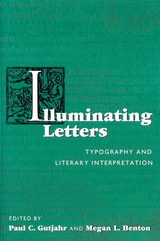
Illuminating Letters
Typography and Literary InterpretationPaul C. Gutjahr
University of Massachusetts Press, 2001
What do we read when we read a text? The author's words, of course, but is that all? The prevailing publishing ethic has insisted that typography—the selection and arrangement of type and other visual elements on a page—should be an invisible, silent, and deferential servant to the text it conveys.
This book contests that conventional point of view. Looking at texts ranging from the King James Bible to contemporary comic strips, the contributors to Illuminating Letters examine the seldom considered but richly revealing relationships between a text's typography and its literary interpretation. The essays assume no previous typographic knowledge or expertise; instead they invite readers primarily concerned with literary and cultural meanings to turn a more curious eye to the visual and physical forms of a specific text or genre. As the contributors show, closer inspection of those forms can yield fresh insights into the significance of a text's material presentation, leading readers to appreciate better how presentation shapes understandings of the text's meanings and values.
The case studies included in the volume amplify its two overarching themes: one set explores the roles of printers and publishers in manipulating, willingly or not, the meaning and reception of texts through typographic choices; the other group examines the efforts of authors to circumvent or subvert such mediation by directly controlling the typographic presentation of their texts. Together these essays demonstrate that choices about type selection and arrangement do indeed help to orchestrate textual meaning.
In addition to the editors, contributors include Sarah A. Kelen, Beth McCoy, Steven R. Price, Leon Jackson, and Gene Kannenberg Jr.
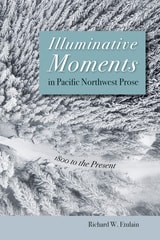
Illuminative Moments in Pacific Northwest Prose
1800 to the PresentRichard W. Etulain
University of Nevada Press, 2024
Etulain provides extensive coverage of the writings of notable authors, including novelists Frederic Homer Balch and Mary Hallock Foote, offering an understanding of frontier romantic and Local Color Writers. He also explores the works of H. G. Merriam and novelist H. L. Davis, illustrating regional prose writings. Finally, Etulain includes a panoply of writers who exemplify an emphasis on gender, race and ethnicity, and environmental texts from the post-WWII period.
Illuminative Moments in Pacific Northwest Prose delivers a first-time overview of the region’s literary contributions that will interest both scholars and general readers alike.
Illusion Is More Precise than Precision
The Poetry of Marianne MooreDarlene Williams Erickson
University of Alabama Press, 1992
Erickson examines the work of Marianne Moore in order to provide some consistently successful strategies for understanding her poetry
In 1935, T.S. Eliot wrote that Marianne Moore’s poems “form part of the small body of durable poetry written in our time.” In this comprehensive critical study of the American poet Marianne Moore (1887-1972) and her work, Erickson amply justifies Eliot’s praise, demonstrating the poet’s ability to combine close observation with a worldview presentation that is at once intuitive, kaleidoscopic, and optimistic. Unfortunately, over the years the excellence and originality of Moore’s work has been overshadowed by its apparent inscrutability. Erickson examines the work of Marianne Moore in order to provide some consistently successful strategies for understanding her poetry.
The thesis is centered in a line from Moore’s poem, “Armor’s Undermining Modesty”:” What is more precise than precision? Illusion.” Erickson argues that Moore came to see herself humorously as “Imagnifico, a Wizard in Words,” a magician who used her conjuries to express a truth beyond reason, a truth described by the philosopher Henri Bergson as intuition, the highest stage of the evolution of human understanding. Is Erickson’s contention that Moore’s sense of magic is inextricably bound up in her own uniquely feminine epistemology, the tendency to place great value on intuition, and to find one’s own voice among collections of many voices.
This study demonstrates that Moore’s voice is arguably the strongest female voice in twentieth century American literature and her poetic voice could hold its own in the company of the best of the other modernists. Unlike many current scholars, Erickson examines closely the texts of Moore’s poems themselves, allowing the poet’s own voice to speak clearly. The study also explores Moore’s obsession with time, her preoccupation with the visual, her interest in the forms of Hebrew verse and her “susceptibility to happiness,” an outlook at some odds with the twentieth century’s fascination with the “romance of failure.”
While the book is scholarly in its intent and carefully documented, it is eminently readable and will be of interest of anyone fascinated by the mind of a brilliant twentieth century woman.
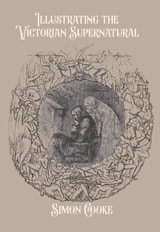
Illustrating the Victorian Supernatural
Simon Cooke
Ohio University Press, 0
A detailed study of Victorian supernaturalism in book and magazine illustrations and cartoons
Illustrating the Victorian Supernatural explores written and visual texts through which the original Victorian readership encountered and navigated their experience of supernaturalism. Looking across the nineteenth century, Simon Cooke investigates illustrative responses to well-known texts by writers such as Charles Dickens and Henry James while also examining responses to less familiar ghost stories by female authors such as M. E. Braddon and Amelia Edwards. The mix of familiar and unfamiliar carries forward into the selection of artists, both those in the mainstream—John Leech, George Cruikshank, Dante Gabriel Rossetti, John Everett Millais—and others whose names are lost to modern readers and whose work deserves to be better known.
The study addresses two main questions: how illustration responded to key literary texts and how graphic designs related to contemporary contexts of race, gender, and class and to the workings of the supernatural itself. The first chapter focuses on satirical writings about ghosts and ghostliness and the various ways illustrators depicted that mockery. Chapter 2 traces artistic responses to Dickens’s writing of the supernatural as a mode of psychological investigation. Chapter 3 looks at class and gender and the problematic practice of male artists illustrating female-authored ghost stories. The fourth chapter examines satirical cartoons’ deployment of supernatural imagery to anatomize issues of imperialism and race. Finally, chapter 5 examines how neo-Victorian artists have revisited the classic texts and taken up the themes established by their forebears.
Image Science
Iconology, Visual Culture, and Media AestheticsW. J. T. Mitchell
University of Chicago Press, 2015
Continuing with this influential line of thought, Image Science gathers Mitchell’s most recent essays on media aesthetics, visual culture, and artistic symbolism. The chapters delve into such topics as the physics and biology of images, digital photography and realism, architecture and new media, and the occupation of space in contemporary popular uprisings. The book looks both backward at the emergence of iconology as a field and forward toward what might be possible if image science can indeed approach pictures the same way that empirical sciences approach natural phenomena.
Essential for those involved with any aspect of visual media, Image Science is a brilliant call for a method of studying images that overcomes the “two-culture split” between the natural and human sciences.
Image and Myth
A History of Pictorial Narration in Greek ArtLuca Giuliani
University of Chicago Press, 2013
Image of Britain 1
Edited by Thomas Mabry Cranfill
University of Texas Press, 1961
Image of Britain 1, originally published in 1961, was the first of two special issues of The Texas Quarterly devoted to Britain. This volume contains three dozen selections, including essays, fiction, poetry, and illustrations, most of them specially commissioned. The editorial aim has been to achieve scope and variety. Surveyed in the articles are a dozen or more facets of British culture, among them politics, education, Anglo-American relations, religion, law, food, changes in class structure, pediatrics, the intellectual climate, scientific progress, and international relations.
Those who labor under the delusion that the British lack humor are advised to read Siriol Hugh-Jones's remarks on the subject, Henry Green's "Firefighting," William Sansom's "Dear Sir," and Willis W. Pratt's article on the great cartoonists Emett and Searle—whose cartoons should then be inspected carefully.
Their cartoons are only a part of the book’s handsome illustrations. In addition, the photographer Hans Beacham visited England at the Quarterly's invitation to depict for American readers distinguished figures in British arts and letters. His gallery of forty-one portraits of writers and other notables has historical as well as artistic importance. Beacham has also contributed twenty-one hauntingly beautiful photographs of the studio of the late great sculptor Sir Jacob Epstein.
Thirty-three of the contributors to this collection are British. There is much to be said for inviting members of this forthright, brilliantly self-critical race to comment extensively on themselves. Among the authors are the young and already noteworthy—Dom Moraes, Ted Hughes, and Alan Sillitoe, for example—as well as the firmly established and celebrated, such as John Wain, William Sansom, and Henry Green.
.
Image of Britain 2
Edited by Thomas Mabry Cranfill
University of Texas Press, 1961
Image of Britain 2, originally published in 1961, was the second of two special numbers of The Texas Quarterly devoted to Britain. This volume comprises some three dozen selections—essays, fiction, poetry, and illustrations, most of them specially commissioned. The editorial aim has been to achieve scope and variety.
The articles, essays in criticism on British themes, for the most part survey literature and the fine arts: poetry, theater, intellectual review, then-recent translations into English, the flood of military memoirs, British humor, architecture, painting and sculpture, and music. Other essays treat individual authors, among them Shakespeare, Trollope, Galsworthy, Forster, Wells, Yeats, Pound, Shaw, Muir, Green, Snow, Waugh, Amis, and Pinter.
All except a handful of the essayists are British. There is much to be said for inviting the forthright and brilliantly self-critical to comment extensively on their own literature and art. Stephen Spender and John Lehmann, two of Britain’s most distinguished editors, deal with British literary matters, both international and domestic; the novelist David Garnett discusses George Moore, Galsworthy, Forster, and H. G. Wells—the men and their works; and the poet Kathleen Raine appraises the verse of Edwin Muir.
Like the essayists, the contributors of fiction and poetry include the emerging and already noteworthy—Ted Hughes, Peter Redgrove, and Andrew Sinclair, for example—as well as the firmly established and celebrated, such as Angus Wilson, Stephen Spender, and Joyce Cary. Cary’s short story “The Ball” appeared here in print for the first time.
The photographer Hans Beacham, who visited England at the Quarterly’s invitation, contributed a gallery of portraits of important British painters and sculptors. The photographs complement David Sylvester’s article on contemporary British art. In addition, Edward Bawden’s drawings of the British scene run like a charming frieze throughout this number.
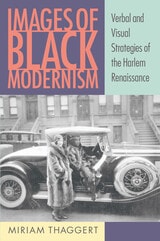
Images of Black Modernism
Verbal and Visual Strategies of the Harlem RenaissanceMiriam Thaggert
University of Massachusetts Press, 2010
Focusing on the years from 1922 to 1938, this book revisits an important moment in black cultural history to explore how visual elements were used in poems, novels, and photography to undermine existing stereotypes. Miriam Thaggert identifies and analyzes an early form of black American modernism characterized by a heightened level of experimentation with visual and verbal techniques for narrating and representing blackness. The work of the writers and artists under discussion reflects the creative tension between the intangibility of some forms of black expression, such as spirituals, and the materiality of the body evoked by other representations of blackness, such as “Negro” dialect.
By paying special attention to the contributions of photographers and other visual artists who have not been discussed in previous accounts of black modernism, Thaggert expands the scope of our understanding of the Harlem Renaissance and contributes to a growing recognition of the importance of visual culture as a distinct element within, and not separate from, black literary studies.
Thaggert trains her critical eye on the work of James Weldon Johnson, Nella Larsen, George Schuyler, Carl Van Vechten, James Van Der Zee, and Aaron Siskind—artists who experimented with narrative and photographic techniques in order to alter the perception of black images and to question and reshape how one reads and sees the black body. Examining some of the more problematic authors and artists of black modernism, she challenges entrenched assumptions about black literary and visual representations of the early to mid twentieth century.
Thaggert concludes her study with a close look at the ways in which Harlem and the Harlem Renaissance were reimagined and memorialized in two notable texts—Wallace Thurman's 1932 satire Infants of the Spring and the Metropolitan Museum of Art's controversial 1969 exhibition “Harlem on My Mind: The Cultural Capital of Black America, 1900–1968.”
Images of Germany in American Literature
Waldemar Zacharasiewicz
University of Iowa Press, 2007
Starting with the notion of Germany as the ideal site for academic study and travel in the nineteenth century and concluding with the twentieth-century image of Germany as an aggressive country, this innovative work examines the ever-changing image of Germans and Germany in the writings of Louisa May Alcott, Samuel Clemens, Henry James, William James, George Santayana, W. E. B. Du Bois, John Dewey, H. L. Mencken, Katherine Anne Porter, Kay Boyle, Thomas Wolfe, Upton Sinclair, Gertrude Stein, Kurt Vonnegut, Thomas Pynchon, William Styron, Walker Percy, and John Hawkes, among others.
Imaginary Cities
A Tour of Dream Cities, Nightmare Cities, and Everywhere in BetweenDarran Anderson
University of Chicago Press, 2017
This book is about those cities. It’s neither a history of grand plans nor a literary exploration of the utopian impulse, but rather something different, hybrid, idiosyncratic. It’s a magpie’s book, full of characters and incidents and ideas drawn from cities real and imagined around the globe and throughout history. Thomas More’s allegorical island shares space with Soviet mega-planning; Marco Polo links up with James Joyce’s meticulously imagined Dublin; the medieval land of Cockaigne meets the hopeful future of Star Trek. With Darran Anderson as our guide, we find common themes and recurring dreams, tied to the seemingly ineluctable problems of our actual cities, of poverty and exclusion and waste and destruction. And that’s where Imaginary Cities becomes more than a mere—if ecstatically entertaining—intellectual exercise: for, as Anderson says, “If a city can be imagined into being, it can be re-imagined.” Every architect, philosopher, artist, writer, planner, or citizen who dreams up an imaginary city offers lessons for our real ones; harnessing those flights of hopeful fancy can help us improve the streets where we live.
Though it shares DNA with books as disparate as Calvino’s Invisible Cities and Jane Jacobs’s Death and Life of Great American Cities, there’s no other book quite like Imaginary Cities. After reading it, you’ll walk the streets of your city—real or imagined—with fresh eyes.
Imaginary Friends
Representing Quakers in American Culture, 1650–1950James Emmett Ryan
University of Wisconsin Press, 2009
Portrayals of Quakers—from dangerous and anarchic figures in seventeenth-century theological debates to moral exemplars in twentieth-century theater and film (Grace Kelly in High Noon, for example)—reflected attempts by writers, speechmakers, and dramatists to grapple with the troubling social issues of the day. As foils to more widely held religious, political, and moral values, members of the Society of Friends became touchstones in national discussions about pacifism, abolition, gender equality, consumer culture, and modernity.
Spanning four centuries, Imaginary Friends takes readers through the shifting representations of Quaker life in a wide range of literary and visual genres, from theological debates, missionary work records, political theory, and biography to fiction, poetry, theater, and film. It illustrates the ways that, during the long history of Quakerism in the United States, these “imaginary” Friends have offered a radical model of morality, piety, and anti-modernity against which the evolving culture has measured itself.
Winner, CHOICE Outstanding Academic Book Award
Imagination and the Arts in C.S. Lewis
Journeying to Narnia and Other WorldsPeter J. Schakel
University of Missouri Press, 2002
Imagination has long been regarded as central to C. S. Lewis's life and to his creative and critical works, but this is the first study to provide a thorough analysis of his theory of imagination, including the different ways he used the word and how those uses relate to each other. Peter Schakel begins by concentrating on the way reading or engaging with the other arts is an imaginative activity. He focuses on three books in which imagination is the central theme—Surprised by Joy, An Experiment in Criticism, and The Discarded Image—and shows the important role of imagination in Lewis's theory of education.
He then examines imagination and reading in Lewis's fiction, concentrating specifically on the Chronicles of Narnia, the most imaginative of his works. He looks at how the imaginative experience of reading the Chronicles is affected by the physical texture of the books, the illustrations, revisions of the texts, the order in which the books are read, and their narrative "voice," the "storyteller" who becomes almost a character in the stories.
Imagination and the Arts in C. S. Lewis also explores Lewis's ideas about imagination in the nonliterary arts. Although Lewis regarded engagement with the arts as essential to a well- rounded and satisfying life, critics of his work and even biographers have given little attention to this aspect of his life. Schakel reviews the place of music, dance, art, and architecture in Lewis's life, the ways in which he uses them as content in his poems and stories, and how he develops some of the deepest, most significant themes of his stories through them.
Schakel concludes by analyzing the uses and abuses of imagination. He looks first at "moral imagination." Although Lewis did not use this term, Schakel shows how Lewis developed the concept in That Hideous Strength and The Abolition of Man long before it became popularized in the 1980s and 1990s. While readers often concentrate on the Christian dimension of Lewis's works, equally or more important to him was their moral dimension.
Imagination and the Arts in C. S. Lewis will appeal to students and teachers of both children's literature and twentieth-century British writers. It will also be of value to readers who wish to compare Lewis's creations with more recent imaginative works such as the Harry Potter series.
Imagination, Meditation, and Cognition in the Middle Ages
Michelle Karnes
University of Chicago Press, 2011
Imagine the Sound
Experimental African American Literature after Civil RightsCarter Mathes
University of Minnesota Press, 2014
The post–Civil Rights era was marked by an explosion of black political thought and aesthetics. Reflecting a shifting horizon of expectations around race relations, the unconventional sounds of free jazz coupled with experimental literary creation nuanced the push toward racial equality and enriched the possibilities for aesthetic innovation within the Black Arts Movement. In Imagine the Sound, Carter Mathes demonstrates how African American writers used sound to further artistic resistance within a rapidly transforming political and racial landscape.
While many have noted the oral and musical qualities of African American poetry from the post–Civil Rights period, Mathes points out how the political implications of dissonance, vibration, and resonance produced in essays, short stories, and novels animated the ongoing struggle for equality. Situating literary works by Henry Dumas, Larry Neal, and Toni Cade Bambara in relation to the expansive ideas of sound proposed by free jazz musicians such as Marion Brown and Sun Ra, not only does this book illustrate how the presence of sound can be heard and read as political, but it recuperates critically neglected, yet important, writers and musicians. Ultimately, Mathes details how attempts to capture and render sound through the medium of writing enable writers to envision alternate realities and resistance outside of the linear frameworks offered by the Civil Rights and Black Power movements.
In precise and elegant prose, Mathes shows how in conceptualizing sound, African American writers opened up the political imaginations of their readers. By exploring this intellectual convergence of literary artistry, experimental music, and sound theory, Imagine the Sound reveals how taking up radically new forms of expression allows us to speak to the complexities of race and political resistance.

Imagined Dialogues
Eastern European Literature in Conversation with American and English LiteratureGordana Crnkovic
Northwestern University Press, 1999
Imagined Spiritual Communities in Britain's Age of Print
Joshua King
The Ohio State University Press, 2015
Focusing primarily on the work of Anglicans between the 1820s and 1890s, this study begins by freshly interpreting reading and educational programs promoted by Samuel Taylor Coleridge, Frederick Denison Maurice, and Matthew Arnold. King then traces the emergence of John Keble’s Christian Year as a catalyst for competing visions of a Christian nation united by private reading. He argues that this phenomenon illuminates the structure and reception of best-selling poetic cycles as diverse as Alfred Tennyson’s In Memoriam and Christina Rossetti’s late Verses. Ultimately, Imagined Spiritual Communities reveals how dreams of print-mediated spiritual communion generated new poetic genres and rhetorical strategies, theories and theologies of media and reading, and ambitious schemes of education and church reform.
Imagining A Medieval English Nation
Kathy Lavezzo
University of Minnesota Press, 2003
The first comprehensive analysis of English national identity in the late Middle Ages
During the late Middle Ages, the increasing expansion of administrative, legal, and military systems by a central government, together with the greater involvement of the commons in national life, brought England closer than ever to political nationhood. Examining a diverse array of texts—ranging from Latin and vernacular historiography to Lollard tracts, Ricardian poetry, and chivalric treatises—this volume reveals the variety of forms “England” assumed when it was imagined in the medieval West.
These essays disrupt conventional thinking about the relationship between premodernity and modernity, challenge traditional preconceptions regarding the origins of the nation, and complicate theories about the workings of nationalism. Imagining a Medieval English Nation is not only a collection of new readings of major canonical works by leading medievalists, it is among the first book-length analyses on the subject and of critical interest. Contributors: Kathleen Davis, Bucknell U; L. O. Aranye Fradenburg, U of California, Santa Barbara; Andrew Galloway, Cornell U; Jill C. Havens, Baylor U; Peggy A. Knapp, Carnegie Mellon U; Larry Scanlon, Rutgers U; D. Vance Smith, Princeton U; Claire Sponsler, U of Iowa; Lynn Staley, Colgate U; Thorlac Turville-Petre, U of Nottingham.
Imagining Adoption
Essays on Literature and CultureMarianne Novy, Editor
University of Michigan Press, 2003