Results by title
2018 books match the query 'Political aspects' and 78 start with i
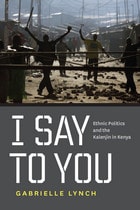
I Say to You
Ethnic Politics and the Kalenjin in KenyaGabrielle Lynch
University of Chicago Press, 2011

I Wanna Be Me
Rock Music And The Politics Of IdentityTheodore Gracyk
Temple University Press, 2001
Gracyk sees rock as a mass art, open-ended and open to diverse (but not unlimited) interpretations. Recordings reach millions, drawing people together in communities of listeners who respond viscerally to its sound and intellectually to its messages. As an art form that proclaims its emotional authenticity and resistance to convention, rock music constitutes part of the cultural apparatus from which individuals mold personal and political identities. Going to the heart of this relationship between the music's role in its performers' and fans' self-construction, Gracyk probes questions of gender and appropriation. How can a feminist be a Stones fan or a straight man enjoy the Indigo Girls? Does borrowing music that carries a "racial identity" always add up to exploitation, a charge leveled at Paul Simon's Graceland?
Ranging through forty years of rock history and offering a trove of anecdotes and examples, I Wanna Be Me, like Gracyk's earlier book, "should be cherished, and read, by rockers everywhere" (Salon).
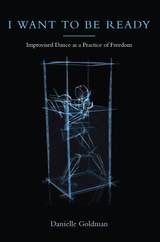
I Want to Be Ready
Improvised Dance as a Practice of FreedomDanielle Goldman
University of Michigan Press, 2010
"Danielle Goldman's contribution to the theory and history of improvisation in dance is rich, beautiful and extraordinary. In her careful, rigorously imaginative analysis of the discipline of choreography in real time, Goldman both compels and allows us to become initiates in the mysteries of flight and preparation. She studies the massive volitional resources that one unleashes in giving oneself over to being unleashed. It is customary to say of such a text that it is 'long-awaited' or 'much anticipated'; because of Goldman's work we now know something about the potenza, the kinetic explosion, those terms carry. Reader, get ready to move and be moved."
---Fred Moten, Duke University
"In this careful, intelligent, and theoretically rigorous book, Danielle Goldman attends to the 'tight spaces' within which improvised dance explores both its limitations and its capacity to press back against them. While doing this, Goldman also allows herself---and us---to be moved by dance itself. The poignant conclusion, evoking specific moments of embodied elegance, vulnerability, and courage, asks the reader: 'Does it make you feel like dancing?' Whether taken literally or figuratively, I can't imagine any other response to this beautiful book."
---Barbara Browning, New York University
"This book will become the single most important reflection on the question of improvisation, a question which has become foundational to dance itself. The achievement of I Want to Be Ready lies not simply in its mastery of the relevant literature within dance, but in its capacity to engage dance in a deep and abiding dialogue with other expressive forms, to think improvisation through myriad sites and a rich vein of cultural diversity, and to join improvisation in dance with its manifestations in life so as to consider what constitutes dance's own politics."
---Randy Martin, Tisch School of Arts at New York University
I Want To Be Ready draws on original archival research, careful readings of individual performances, and a thorough knowledge of dance scholarship to offer an understanding of the "freedom" of improvisational dance. While scholars often celebrate the freedom of improvised performances, they are generally focusing on freedom from formal constraints. Drawing on the work of Michel Foucault and Houston Baker, among others, Danielle Goldman argues that this negative idea of freedom elides improvisation's greatest power. Far from representing an escape from the necessities of genre, gender, class, and race, the most skillful improvisations negotiate an ever shifting landscape of constraints. This work will appeal to those interested in dance history and criticism and also interdisciplinary audiences in the fields of American and cultural studies.
Danielle Goldman is Assistant Professor of Dance at The New School and a professional dancer in New York City, where she recently has danced for DD Dorvillier and Beth Gill.
Cover art: Still from Ghostcatching, 1999, by Bill T. Jones, Paul Kaiser, and Shelley Eshkar. Image courtesy of Kaiser/Eshkar.
I the People
The Rhetoric of Conservative Populism in the United StatesPaul Elliott Johnson
University of Alabama Press, 2022
WINNER OF THE NATIONAL COMMUNICATION ASSOCIATION'S 2023 HOCHMUTH-NICHOLS AWARD
A definitive rhetorical history of conservative populism, exposing how identity, victimhood, and populist appeals have shaped—and constrained—modern American conservatism.
I The People: The Rhetoric of Conservative Populism in the United States examines a variety of texts—ranging from speeches and campaign advertisements to news reports and political pamphlets—to outline the populist character of conservatism in the United States. Paul Elliott Johnson focuses on key inflection points in the development of populist conservatism, including its manifestation in the racially charged presidential election of 1964, its consolidation at the height of Ronald Reagan’s reelection campaign in 1984, and its character in successive moments that saw its fortunes wax and wane, including 1994, the Obama era, and the rise of Donald J. Trump. theorizing conservative populism as a rhetorical form, Johnson advances scholarship about populism away from a binary ideological framework while offering a useful lens for contextualizing scholarship on American conservatism. I The People emphasizes that the populist roots of conservative hegemony exercise a powerful constraining force on conservative intellectuals, whose power to shape and control the movement to which they belong is circumscribed by the form of its public-facing appeals.
The study also reframes scholarly understandings of the conservative tradition’s seeming multiplicity, especially the tendency to suggest an abiding conservative unease regarding capitalism, showing how racist hostility underwrote a compromise with an increasingly economized understanding of humanity. Johnson also contests the narrative that conservatives learned to practice identity politics from social progressives. From the beginning, conservatism’s public vernacular was a white and masculine identity politics reliant on a rhetoric of victimhood, whether critiquing the liberal Cold War consensus or President Barack Obama.

I'd Fight the World
A Political History of Old-Time, Hillbilly, and Country MusicPeter La Chapelle
University of Chicago Press, 2019
I-Writing
The Politics and Practice of Teaching First-Person WritingKaren Surman Paley
Southern Illinois University Press, 2001
In this ethnographic study of the teaching of writing, Karen Surman Paley reveals the social significance of first-person writing and the limitations of a popular taxonomy of composition studies. Paley looks critically at the way social constructionists have created an “Other” in the field of composition studies and named it “expressivist.”
Paley demonstrates the complexity of approaches to teaching writing through an ethnographic study of two composition faculty at Boston College, a programthat some would say is “expressivist.” She prompts her colleagues to consider how family experiences shape the way students feel about and treat people of races, religions, genders, and sexual preferences other than their own. Finally, she suggests to the field of composition that practitioners spend less time shoring up taxonomies of the field and more time sharing pedagogies.

Ice Geographies
The Colonial Politics of Race and Indigeneity in the ArcticJen Rose Smith
Duke University Press, 2025
Iconoclasm
David Freedberg
University of Chicago Press, 2021
Freedberg combines fresh thinking with deep expertise to address the renewed significance of iconoclasm, its ideologies, and its impact. This volume also provides a supplement to Freedberg’s essay on idolatry and iconoclasm from his pathbreaking book, The Power of Images. Freedberg’s writings are of foundational importance to this discussion, and this volume will be a welcome resource for historians, museum professionals, international law specialists, preservationists, and students.
Ideologies in Archaeology
Edited by Reinhard Bernbeck and Randall McGuire
University of Arizona Press, 2011
Contributors to this volume focus on elements of life in past societies that “went without saying” and that concealed different forms of power as obvious and unquestionable. From the use of burial rites as political theater in Iron Age Germany to the intersection of economics and elite power in Mississippian mound building, the contributors uncover complex manipulations of power that have often gone unrecognized. They show that Occam’s razor—the tendency to favor simpler explanations—is sometimes just an excuse to avoid dealing with the historical world in its full complexity.
Jean-Paul Demoule’s concluding chapter echoes this sentiment and moreover brings a continental European perspective to the preceding case studies. In addition to situating this volume in a wider history of archaeological currents, Demoule identifies the institutional and cultural factors that may account for the current direction in North American archaeology. He also offers a defense of archaeology in an era of scientific relativism, which leads him to reflect on the responsibilities of archaeologists.
Includes contributions by: Susan M. Alt, Bettina Arnold, Uzi Baram, Reinhard Bernbeck, Matthew David Cochran, Jean-Paul Demoule, Kurt A. Jordan, Susan Kus, Vicente Lull, Christopher N. Matthews, Randall H. McGuire, Rafael Micó, Cristina Rihuete Herrada, Paul Mullins, Sue Novinger, Susan Pollock, Victor Raharijaona, Roberto Risch, Kathleen Sterling, Ruth M. Van Dyke, and LouAnn Wurst
Illusive Utopia
Theater, Film, and Everyday Performance in North KoreaSuk-Young Kim
University of Michigan Press, 2010
"North Korea is not just a security or human rights problem (although it is those things) but a real society. This book gets us closer to understanding North Korea beyond the usual headlines, and does so in a richly detailed, well-researched, and theoretically contextualized way."
---Charles K. Armstrong, Director, Center for Korean Research, Columbia University
"One of this book's strengths is how it deals at the same time with historical, geographical, political, artistic, and cultural materials. Film and theatre are not the only arts Kim studies---she also offers an excellent analysis of paintings, fashion, and what she calls 'everyday performance.' Her analysis is brilliant, her insights amazing, and her discoveries and conclusions always illuminating."
---Patrice Pavis, University of Kent, Canterbury
No nation stages massive parades and collective performances on the scale of North Korea. Even amid a series of intense political/economic crises and international conflicts, the financially troubled country continues to invest massive amounts of resources to sponsor unflinching displays of patriotism, glorifying its leaders and revolutionary history through state rituals that can involve hundreds of thousands of performers. Author Suk-Young Kim explores how sixty years of state-sponsored propaganda performances---including public spectacles, theater, film, and other visual media such as posters---shape everyday practice such as education, the mobilization of labor, the gendering of social interactions, the organization of national space, tourism, and transnational human rights. Equal parts fascinating and disturbing, Illusive Utopia shows how the country's visual culture and performing arts set the course for the illusionary formation of a distinctive national identity and state legitimacy, illuminating deep-rooted cultural explanations as to why socialism has survived in North Korea despite the fall of the Berlin Wall, the collapse of the Soviet Union, and China's continuing march toward economic prosperity. With over fifty striking color illustrations, Illusive Utopia captures the spectacular illusion within a country where the arts are not only a means of entertainment but also a forceful institution used to regulate, educate, and mobilize the population.
Suk-Young Kim is Associate Professor in the Department of Theater and Dance at the University of California, Santa Barbara, and coauthor with Kim Yong of Long Road Home: A Testimony of a North Korean Camp Survivor.

Imagining China
Rhetorics of Nationalism in an Age of GlobalizationStephen J. Hartnett
Michigan State University Press, 2017
Immigrants, Evangelicals, and Politics in an Era of Demographic Change
Janelle S. Wong
Russell Sage Foundation, 2018
Asian Americans and Latinos currently constitute 13 percent of evangelicals, and their churches are among the largest, fastest growing organizations in their communities. While evangelical identity is associated with conservative politics, Wong draws from national surveys and interviews to show that non-white evangelicals express political attitudes that are significantly less conservative than those of their white counterparts. Black, Asian American, and Latino evangelicals are much more likely to support policies such as expanded immigration rights, increased taxation of the wealthy, and government interventions to slow climate change. As Wong argues, non-white evangelicals’ experiences as members of racial or ethnic minority groups often lead them to adopt more progressive political views compared to their white counterparts.
However, despite their growth in numbers, non-white evangelicals—particularly Asian Americans and Latinos—are concentrated outside of swing states, have lower levels of political participation than white evangelicals, and are less likely to be targeted by political campaigns. As a result, white evangelicals dominate the evangelical policy agenda and are overrepresented at the polls. Also, many white evangelicals have adopted even more conservative political views in response to rapid demographic change, perceiving, for example, that discrimination against Christians now rivals discrimination against racial and ethnic minorities.
Wong demonstrates that immigrant evangelicals are neither “natural” Republicans nor “natural” Democrats. By examining the changing demographics of the evangelical movement, Immigrants, Evangelicals, and Politics in an Era of Demographic Change sheds light on an understudied constituency that has yet to find its political home.

Imperial Material
National Symbols in the US Colonial EmpireAlvita Akiboh
University of Chicago Press, 2023
In Imperial Material, Alvita Akiboh reveals how US national identity has been created, challenged, and transformed through embodiments of empire found in US territories, from the US dollar bill to the fifty-star flag. These symbolic objects encode the relationships between territories—including the Philippines, the Hawaiian Islands, Puerto Rico, and Guam—and the empire with which they have been entangled. Akiboh shows how such items became objects of local power, their original intent transmogrified. For even if imperial territories were not always front and center for federal lawmakers and administrators, their inhabitants remained continuously aware of the imperial United States, whose presence announced itself on every bit of currency, every stamp, and the local flag.
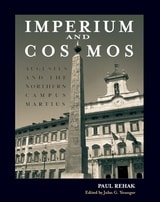
Imperium and Cosmos
Augustus and the Northern Campus MartiusPaul Rehak; Edited by John G. Younger
University of Wisconsin Press, 2006
Rehak closely examines the artistic imagery on these monuments, providing numerous illustrations, tables, and charts. In an analysis firmly contextualized by a thorough discussion of the earlier models and motifs that inspired these Augustan monuments, Rehak shows how the princeps used these on such an unprecedented scale as to truly elevate himself above the common citizen.

Improper Life
Technology and Biopolitics from Heidegger to AgambenTimothy C. Campbell
University of Minnesota Press, 2011
Has biopolitics actually become thanatopolitics, a field of study obsessed with death? Is there something about the nature of biopolitical thought today that makes it impossible to deploy affirmatively? If this is true, what can life-minded thinkers put forward as the merits of biopolitical reflection? These questions drive Improper Life, Timothy C. Campbell’s dexterous inquiry-as-intervention.
Campbell argues that a “crypto-thanatopolitics” can be teased out of Heidegger’s critique of technology and that some of the leading scholars of biopolitics—including Michel Foucault, Giorgio Agamben, and Peter Sloterdijk—have been substantively influenced by Heidegger’s thought, particularly his reading of proper and improper writing. In fact, Campbell shows how all of these philosophers have pointed toward a tragic, thanatopolitical destination as somehow an inevitable result of technology. But in Improper Life he articulates a corrective biopolitics that can begin with rereadings of Foucault (especially his late work regarding the care and technologies of the self), Freud (notably his writings on the drives and negation), and Gilles Deleuze (particularly in the relation of attention to aesthetics).
Throughout Improper Life, Campbell insists that biopolitics can become more positive and productively asserts an affirmative technē not thought through thanatos but rather practiced through bíos.
In Contagion's Wake
Black Writers and the Development of Modern Outbreak NarrativesKelly L. Bezio
University of Massachusetts Press, 2026
An examination of early American literature that highlights how racial divides exacerbated—and were exacerbated by—the spread of infection
In April of 1721, the HMS Seahorse arrived in Boston from the West Indies, causing a smallpox epidemic that would plague the city for the next year. Of its 12,000 inhabitants, nearly fifty percent were infected, and 900 people died. Like the coronavirus pandemic that began in 2020, the outbreak also brought to the surface deep divides in the social fabric of colonial New England and laid the groundwork for racialized political inequities that we continue to grapple with today.
In Contagion’s Wake examines a range of American outbreak narratives, both historical and fictional, written between the early 1700s and the early 1900s—from the rise of inoculation through the advent of germ theory. Author Kelly L. Bezio argues that during this period, literature about communicable disease was dominated by white authors, such as Cotton Mather and Edgar Allen Poe, who tended to privilege white suffering and survival while obscuring Black suffering and vulnerability. Black authors, however, such as Olaudah Equiano and Frances E.W. Harper, developed variations on plot structures, metaphors, and imagery that drew upon contagion to represent racial injustice and further the cause of Black liberation.
The diverse texts Bezio analyzes vary extensively in genre and geographical location, and in the illnesses that feature in their pages. Significant disorders from the era, including yellow fever, smallpox, consumption, and cholera, make frequent appearances, as do less culturally dominant diseases such as St. Anthony’s Fire. In Contagion’s Wake contends that representations of communicable disease should not be understood only as within their own historical moment; rather, they function more like a DNA code for our present time.
In Contempt
Defending Free Speech, Defeating HUACEd Yellin and Jean Fagan Yellin
University of Michigan Press, 2022
So began a decade of hardship for Ed and Jean Yellin and their three young children as the repressive weight of the U.S. government, caught up in the throes of McCarthyism, crashed down upon their careers, their daily household budget, and their relationships to colleagues, neighbors, and their country. In Contempt is a faithful, factual testament to the enduring quality of patriotic dissent in our evolving democracy—and a loving reconstruction of what it meant to be labeled “unAmerican” for defending the Constitution.
In Defense of Free Speech in Universities
A Study of Three JurisdictionsAmy Lai
University of Michigan Press, 2023
In this book, Amy Lai examines the current free speech crisis in Western universities. She studies the origin, history, and importance of freedom of speech in the university setting, and addresses the relevance and pitfalls of political correctness and microaggressions on campuses, where laws on harassment, discrimination, and hate speech are already in place, along with other concepts that have gained currency in the free speech debate, including deplatforming, trigger warning, and safe space. Looking at numerous free speech disputes in the United Kingdom, the United States, and Canada, the book argues for the equal application of the free speech principle to all expressions to facilitate respectful debates. All in all, it affirms that the right to free expression is a natural right essential to the pursuit of truth, democratic governance, and self-development, and this right is nowhere more important than in the university.
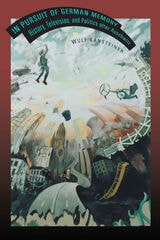
In Pursuit of German Memory
History, Television, and Politics after AuschwitzWulf Kansteiner
Ohio University Press, 2006
The collective memories of Nazism that developed in postwar Germany have helped define a new paradigm of memory politics. From Europe to South Africa and from Latin America to Iraq, scholars have studied the German case to learn how to overcome internal division and regain international recognition.
In Pursuit of German Memory: History, Television, and Politics after Auschwitz examines three arenas of German memory politics—professional historiography, national politics, and national public television—that have played key roles in the reinvention of the Nazi past in the last sixty years. Wulf Kansteiner shows that the interpretations of the past proposed by historians, politicians, and television producers reflect political and generational divisions and an extraordinary concern for Germany's image abroad. At the same time, each of these theaters of memory has developed its own dynamics and formats of historical reflection.
Kansteiner’s analysis of the German scene reveals a complex social geography of collective memory. In Pursuit of German Memory underscores the fact that German memories of Nazism, like many other collective memories, combine two seemingly contradictory qualities: They are highly mediated and part of a global exchange of images and story fragments but, at the same time, they can be reproduced only locally, in narrowly circumscribed networks of communication.

In Search of "Aryan Blood"
Serology in Interwar and National Socialist GermanyRachel E. Boaz
Central European University Press, 2012

In Search of an Alternative Biopolitics
Anti-Bullfighting, Animality, and the Environment in Contemporary SpainKatarzyna Olga Beilin
The Ohio State University Press, 2015
Analyses of the synergy of press debates on bullfighting and the War on Terror, as well as media debates on King Juan Carlos’s hunt in Botswana and his resignation, reveal how the concepts structuring human/animal relations condition national biopolitics. Beilin traces a main principle, where sacrifice of some lives is deemed necessary for the sake of others, from bullfighting, through environmental destruction and immigration policies, to bioeconomy. Ultimately, In Search of an Alternative Biopolitics argues that to address ever-increasing threats of global warming and future catastrophes, we urgently need to redefine concepts structuring the human and the nonhuman realms.
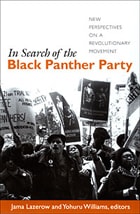
In Search of the Black Panther Party
New Perspectives on a Revolutionary MovementJama Lazerow and Yohuru Williams, eds.
Duke University Press, 2006
One contributor evaluates the legal basis of the Panthers’ revolutionary struggle, explaining how they utilized and critiqued the language of the Constitution. Others explore the roles of individuals, looking at a one-time Panther imprisoned for a murder he did not commit and an FBI agent who monitored the activities of the Panthers’ Oakland branch. Contributors assess the Panthers’ relations with Students for a Democratic Society, the Young Lords, the Brown Berets, and the Peace and Freedom Party. They discuss the Party’s use of revolutionary aesthetics, and they show how the Panthers manipulated and were manipulated by the media. Illuminating some of the complexities involved in placing the Panthers in historical context, this collection demonstrates that the scholarly search for the Black Panthers has only just begun.
Contributors. Bridgette Baldwin, Davarian L. Baldwin, David Barber, Rod Bush, James T. Campbell, Tim Lake, Jama Lazerow, Edward P. Morgan, Jeffrey O. G. Ogbar, Roz Payne, Robert O. Self, Yohuru Williams, Joel Wilson
In The Break
The Aesthetics Of The Black Radical TraditionFred Moten
University of Minnesota Press, 2003
Investigates the connections between jazz, sexual identity, and radical black politics
In his controversial essay on white jazz musician Burton Greene, Amiri Baraka asserted that jazz was exclusively an African American art form and explicitly fused the idea of a black aesthetic with radical political traditions of the African diaspora. In the Break is an extended riff on “The Burton Greene Affair,” exploring the tangled relationship between black avant-garde in music and literature in the 1950s and 1960s, the emergence of a distinct form of black cultural nationalism, and the complex engagement with and disavowal of homoeroticism that bridges the two. Fred Moten focuses in particular on the brilliant improvisatory jazz of John Coltrane, Ornette Coleman, Albert Ayler, Eric Dolphy, Charles Mingus, and others, arguing that all black performance—culture, politics, sexuality, identity, and blackness itself—is improvisation.
For Moten, improvisation provides a unique epistemological standpoint from which to investigate the provocative connections between black aesthetics and Western philosophy. He engages in a strenuous critical analysis of Western philosophy (Heidegger, Kant, Husserl, Wittgenstein, and Derrida) through the prism of radical black thought and culture. As the critical, lyrical, and disruptive performance of the human, Moten’s concept of blackness also brings such figures as Frederick Douglass and Karl Marx, Cecil Taylor and Samuel R. Delany, Billie Holiday and William Shakespeare into conversation with each other.
Stylistically brilliant and challenging, much like the music he writes about, Moten’s wide-ranging discussion embraces a variety of disciplines—semiotics, deconstruction, genre theory, social history, and psychoanalysis—to understand the politicized sexuality, particularly homoeroticism, underpinning black radicalism. In the Break is the inaugural volume in Moten’s ambitious intellectual project-to establish an aesthetic genealogy of the black radical tradition
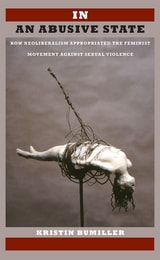
In an Abusive State
How Neoliberalism Appropriated the Feminist Movement against Sexual ViolenceKristin Bumiller
Duke University Press, 2008
Drawing on archival research, individual case studies, testimonies of rape victims, and interviews with battered women, Bumiller raises fundamental concerns about the construction of sexual violence as a social problem. She describes how placing the issue of sexual violence on the public agenda has polarized gender- and race-based interests. She contends that as the social welfare state has intensified regulation and control, the availability of services for battered women and rape victims has become increasingly linked to their status as victims and their ability to recognize their problems in medical and psychological terms. Bumiller suggests that to counteract these tendencies, sexual violence should primarily be addressed in the context of communities and in terms of its links to social disadvantage. In an Abusive State is an impassioned call for feminists to reflect on how the co-optation of their movement by the neoliberal state creates the potential to inadvertently harm impoverished women and support punitive and racially based crime control efforts.
In the Balance of Power
Independent Black Politics and Third-Party Movements in the United StatesOmar H. Ali
Ohio University Press, 2008
Historically, most black voters in the United States have aligned themselves with one of the two major parties: the Republican Party from the time of the Civil War to the New Deal and, since the New Deal—and especially since the height of the modern civil rights movement—the Democratic Party. However, as In the Balance of Power convincingly demonstrates, African Americans have long been part of independent political movements and have used third parties to advance some of the most important changes in the United States, notably the abolition of slavery, the extension of voting rights, and the enforcement of civil rights.
Since the early nineteenth century, there has been an undercurrent of political independence among African Americans. They helped develop the Liberty Party in the 1840s and have continued to work with third parties to challenge the policies of the two major parties. But despite the legal gains of the modern civil rights movement, elements of Jim Crow remain deeply embedded in our electoral process.
In the Balance of Power presents a history and analysis of African American third-party movements that can help us better understand the growing diversity among black voters today.
In the Balance of Power
Independent Black Politics and Third-Party Movements in the United StatesOmar H. Ali
Ohio University Press, 2020
REVISED AND EXPANDED EDITION
Reveals the multiple independent political tactics and strategies that African Americans have used to expand democracy and uphold civil and political rights since the founding of the nation.
This new edition of Ali’s groundbreaking narrative includes an epilogue by independent political analyst and leader Jacqueline Salit. New material addresses the historic presidencies of both Barack Obama and Donald Trump, as well as the rising tide of independent and anti-party sentiments.
In the Company of Scholars
The Struggle for the Soul of Higher EducationBy Julius G. Getman
University of Texas Press, 1992
"I began this book to articulate my sense of disappointment and alienation from the status I had fought so hard to achieve." A remarkable admission from an alumnus of Harvard Law School who has held tenured professorships in the law schools of Yale and Stanford and has taught in the law schools of Harvard and Chicago.
In this personal reflection on the status of higher education, Julius Getman probes the tensions between status and meaning, elitism and egalitarianism, that challenge the academy and academics today. He shows how higher education creates a shared intellectual community among people of varied races and classes—while simultaneously dividing people on the basis of education and status.
In the course of his explorations, Getman touches on many of the most current issues in higher education today, including the conflict between teaching and research, challenges to academic freedom, the struggle over multiculturalism, and the impact of minority and feminist activism. Getman presents these issues through relevant, often humorous anecdotes, using his own and others' experiences in coping with the constantly changing academic landscape.
Written from a liberal perspective, the book offers another side of the story told in such works as Allan Bloom's The Closing of the American Mind and Roger Kimball's Tenured Radicals.

In the Event of Women
Tani Barlow
Duke University Press, 2021
In the Land of the Patriarchs
Design and Contestation in West Bank SettlementsNoam Shoked
University of Texas Press, 2023
2024 On The Brinck Book Award and Lecture Series, University of New Mexico
2024 PROSE Award, Architecture–Urban Planning, Association of American Publishers
An on-the-ground account of the design and evolution of West Bank settlements, showing how one of the world’s most contested landscapes was produced by unexpected conflicts and collaborations among widely divergent actors.
Since capturing the West Bank in 1967, Israel has overseen the construction of scores of settlements across the territory’s rocky hilltops. The settlements are part of a fierce political conflict. But they are not just hotly contested political ventures. They are also something more everyday: residential architectural projects.
In the Land of the Patriarchs is an on-the-ground account of the design and evolution of West Bank settlements. Noam Shoked shows how settlements have been shaped not only by the decisions of military generals, high-profile politicians, and prominent architects but also by a wide range of actors, including real estate developers, environmental consultants, amateur archeologists, and Israelis who feel unserved by the country’s housing system. The patterns of design and construction they have inspired reflect competing worldviews and aesthetic visions, as well as everyday practices not typically associated with the politics of the Israeli occupation. Revealing the pragmatic choices and contingent circumstances that drive what appears to be a deliberately ideological landscape, Shoked demonstrates how unpredictable the transformation of political passion into brick and mortar can be.
In the Lurch
Verbatim Theater and the Crisis of Democratic DeliberationRyan Claycomb
University of Michigan Press, 2023
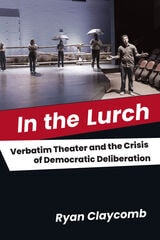
But this is not just a disinterested history—Claycomb reflects on his own participation in that political fantasy, including earlier scholarly writing that articulated with breathless hopefulness the potential of verbatim theater, and on his own theatrical attendance, imbued with a belief that witnessing this idealized public sphere was a substitute for actual public participation. In the Lurch also recounts the bumpy path towards its completion, two years marked by presidential impeachments, an insurrection, a national reckoning with racism, and a global pandemic. At the heart of the book is a central question: is verbatim theater any longer an effective cultural response to what can look like the possible end of democracy?
In the Name of National Security
Hitchcock, Homophobia, and the Political Construction of Gender in Postwar AmericaRobert J. Corber
Duke University Press, 1993
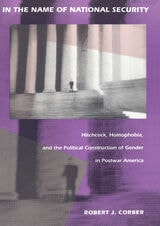
As Corber shows, throughout the 1950s a cast of mind known as the Cold War consensus prevailed in the United States. Promoted by Cold War liberals--that is, liberals who wanted to perserve the legacies of the New Deal but also wished to separate liberalism from a Communist-dominated cultural politics--this consensus was grounded in the perceived threat that Communists, lesbians, and homosexuals posed to national security. Through an analysis of the films of Alfred Hitchcock, combined with new research on the historical context in which these films were produced, Corber shows how Cold War liberals tried to contain the increasing heterogeneity of American society by linking questions of gender and sexual identity directly to issues of national security, a strategic move that the films of Hitchcock both legitimated and at times undermined. Drawing on psychoanalytic and Marxist theory, Corber looks at such films as Rear Window, Strangers on a Train, and Psycho to show how Hitchcock manipulated viewers' attachments and identifications to foster and reinforce the relationship between homophobia and national security issues.
A revisionary account of Hitchcock's major works, In the Name of National Security is also of great interest for what it reveals about the construction of political "reality" in American history.
In the Name of Women's Rights
The Rise of FemonationalismSara R. Farris
Duke University Press, 2017
In the Shadow of Freedom
The Politics of Slavery in the National CapitalPaul Finkelman
Ohio University Press, 2011
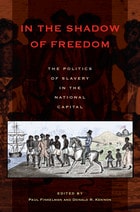
Few images of early America were more striking, and jarring, than that of slaves in the capital city of the world’s most important free republic. Black slaves served and sustained the legislators, bureaucrats, jurists, cabinet officials, military leaders, and even the presidents who lived and worked there. While slaves quietly kept the nation’s capital running smoothly, lawmakers debated the place of slavery in the nation, the status of slavery in the territories newly acquired from Mexico, and even the legality of the slave trade in itself.
This volume, with essays by some of the most distinguished historians in the nation, explores the twin issues of how slavery made life possible in the District of Columbia and how lawmakers in the district regulated slavery in the nation.
Contributors: David Brion Davis, Mary Beth Corrigan, A. Glenn Crothers, Jonathan Earle, Stanley Harrold, Mitch Kachun, Mary K. Ricks, James B. Stewart, Susan Zaeske, David Zarefsky
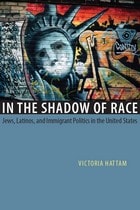
In the Shadow of Race
Jews, Latinos, and Immigrant Politics in the United StatesVictoria Hattam
University of Chicago Press, 2007
Victoria Hattam locates the origins of ethnicity in the New York Zionist movement of the early 1900s. In a major revision of widely held assumptions, she argues that Jewish activists identified as ethnics not as a means of assimilating and becoming white, but rather as a way of defending immigrant difference as distinct from race—rooted in culture rather than body and blood. Eventually, Hattam shows, the Immigration and Naturalization Service and the Census Bureau institutionalized this distinction by classifying Latinos as an ethnic group and not a race. But immigration and the resulting population shifts of the last half century have created a political opening for reimagining the relationship between immigration and race. How to do so is the question at hand.
In the Shadow of Race concludes by examining the recent New York and Los Angeles elections and the 2006 immigrant rallies across the country to assess the possibilities of forging a more robust alliance between immigrants and African Americans. Such an alliance is needed, Hattam argues, to more effectively redress the persistent inequalities in American life.
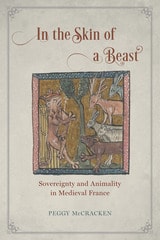
In the Skin of a Beast
Sovereignty and Animality in Medieval FrancePeggy McCracken
University of Chicago Press, 2017
Peggy McCracken discusses a range of literary texts and images from medieval France, including romances in which animal skins appear in symbolic displays of power, fictional explorations of the wolf’s desire for human domestication, and tales of women and snakes converging in a representation of territorial claims and noble status. These works reveal that the qualities traditionally used to define sovereignty—lineage and gender among them—are in fact mobile and contingent. In medieval literary texts, as McCracken demonstrates, human dominion over animals is a disputed model for sovereign relations among people: it justifies exploitation even as it mandates protection and care, and it depends on reiterations of human-animal difference that paradoxically expose the tenuous nature of human exceptionalism.

InDEBTed to Intervene
Critical Lessons in Debt, Communication, Art, and Theoretical PracticeOliver Vodeb and Nikola Janovic Kolenc
Intellect Books, 2013

Inconsistency and Indecision in the United States Supreme Court
Matthew P. Hitt
University of Michigan Press, 2019
Yet a Court that prioritizes resolving many disputes will at times produce contradictory sets of opinions or fail to provide a rationale and legal precedent for its decision at all. In either case, it produces an unreasoned judgment. Conversely, a Court that prioritizes logically consistent doctrine will fail to resolve many underlying disputes in law and society. Inconsistency and Indecision in the United States Supreme Court demonstrates that over time, institutional changes, lobbied for by the justices, substantially reduced unreasoned judgments in the Court’s output, coinciding with a reduction in the Court’s caseload. Hence, the Supreme Court historically emphasized the first goal of dispute resolution, but evolved into a Court that prioritizes the second goal of logically consistent doctrine. As a result, the Court today fails to resolve more underlying questions in law and society in order to minimize criticism of its output from other elites. In so doing, the modern Court often fails to live up to its Constitutional obligation.
Inconvenient Strangers
Transnational Subjects and the Politics of CitizenshipShui-yin Sharon Yam
The Ohio State University Press, 2019
Inconvenient Strangers: Transnational Subjects and the Politics of Citizenship draws attention to how intersecting networks of power—particularly race and ethnicity, gender, and social class—marginalize transnational subjects who find themselves outside a dominant citizenship that privileges familiarity and socioeconomic and racial superiority. In this study of how neoliberal ideas limit citizenship for marginalized populations in Hong Kong, Shui-yin Sharon Yam examines how three transnational groups—mainland Chinese maternal tourists, Southeast Asian migrant domestic workers, and South Asian permanent residents—engage with the existing citizenry and gain recognition through circulating personal narratives.
Coupling transnational feminist studies with research on emotions, Yam analyzes court cases, interviews, social media discourse, and the personal narratives of Hong Kong’s marginalized groups to develop the concept of deliberative empathy—critical empathy that prompts an audience to consider the structural sources of another’s suffering while deliberating one’s own complicity in it. Yam argues that storytelling and familial narratives can promote deliberative empathy among the audience as both a political and ethical response—carrying the affective power to jolt the dominant citizenry out of their usual xenophobic attitudes and ultimately prompt them to critically consider the human conditions they share with the marginalized and move them toward more ethical coalitions.
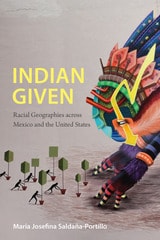
Indian Given
Racial Geographies across Mexico and the United StatesMaría Josefina Saldaña-Portillo
Duke University Press, 2016
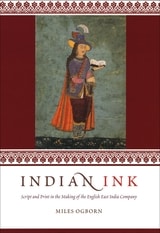
Indian Ink
Script and Print in the Making of the English East India CompanyMiles Ogborn
University of Chicago Press, 2007
A commercial company established in 1600 to monopolize trade between England and the Far East, the East India Company grew to govern an Indian empire. Exploring the relationship between power and knowledge in European engagement with Asia, Indian Ink examines the Company at work and reveals how writing and print shaped authority on a global scale in the seventeenth and eighteenth centuries.
Tracing the history of the Company from its first tentative trading voyages in the early seventeenth century to the foundation of an empire in Bengal in the late eighteenth century, Miles Ogborn takes readers into the scriptoria, ships, offices, print shops, coffeehouses, and palaces to investigate the forms of writing needed to exert power and extract profit in the mercantile and imperial worlds. Interpreting the making and use of a variety of forms of writing in script and print, Ogborn argues that material and political circumstances always undermined attempts at domination through the power of the written word.
Navigating the juncture of imperial history and the history of the book, Indian Ink uncovers the intellectual and political legacies of early modern trade and empire and charts a new understanding of the geography of print culture.
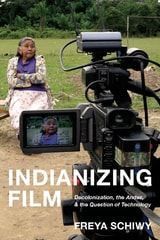
Indianizing Film
Decolonization, the Andes, and the Question of TechnologySchiwy, Freya
Rutgers University Press, 2009
Schiwy argues that instead of solely creating entertainment through their work indigenous media activists are building communication networks that encourage interaction between diverse cultures. As a result, mainstream images are retooled, permitting communities to strengthen their cultures and express their own visions of development and modernization. Indianizing Film encourages readers to consider how indigenous media contributes to a wider understanding of decolonization and anticolonial study against the universal backdrop of the twenty-first century.
Indigenomicon
American Indians, Video Games, and the Structures of DispossessionJodi A. Byrd
Duke University Press, 2025
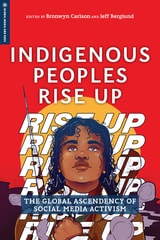
Indigenous Peoples Rise Up
The Global Ascendency of Social Media ActivismBronwyn Carlson
Rutgers University Press, 2021
Including a range of international indigenous voices from the US, Canada, Australia, Aotearoa (New Zealand) and Africa, the book takes an interdisciplinary approach, bridging Indigenous studies, media studies, and social justice studies. Including examples like Idle No More in Canada, Australian Recognise!, and social media campaigns to maintain Maori language, Indigenous Peoples Rise Up serves as one of the first studies of Indigenous social media use and activism.

Indirect Subjects
Nollywood's Local AddressMatthew H. Brown
Duke University Press, 2021

Inferno in Chechnya
The Russian-Chechen Wars, the Al Qaeda Myth, and the Boston Marathon BombingsBrian Glyn Williams
University Press of New England, 2015
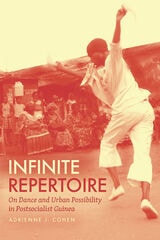
Infinite Repertoire
On Dance and Urban Possibility in Postsocialist GuineaAdrienne J. Cohen
University of Chicago Press, 2021

Informatics of Domination
Zach Blas, Melody Jue, and Jennifer Rhee, editors
Duke University Press, 2025
Contributors. Dalida María Benfield, Zach Blas, Ama Josephine Budge Johnstone, micha cárdenas, Amy Sara Carroll, Shu Lea Cheang, Jian Neo Chen, Heather Dewey-Hagborg, Ranjodh Singh Dhaliwal, Stephanie Dinkins, Ricardo Dominguez, Ashley Ferro-Murray, Matthew Fuller, Jacob Gaboury, Jennifer Gabrys, Alexander R. Galloway, Jennifer Mae Hamilton, Donna J. Haraway, Eva Hayward, Stefan Helmreich, Kathy High, Leon J. Hilton, Ho Rui An, Hi'ilei Julia Kawehipuaakahaopulani Hobart, Tung-Hui Hu, Caroline A. Jones, Melody Jue, Homay King, Larissa Lai, Lawrence Lek, Esther Leslie, Alexis Lothian, Isadora Neves Marques, Radha May (Elisa Giardina-Papa, Nupur Mathur, and Bathsheba Okwenje), Shaka McGlotten, Mahan Moalemi, madison moore, Astrida Neimanis, Bahar Noorizadeh, Luciana Parisi, Thao Phan, Ana Teixeira Pinto, Luiza Prado de O. Martins, Rita Raley, Patricia Reed, Jennifer Rhee, Bassem Saad, Ashkan Sepahvand, Justin Talplacido Shoulder, Lucy Suchman, Ollie Zhang
Information Politics
Liberation and Exploitation in the Digital SocietyTim Jordan
Pluto Press, 2015
The first of Pluto Press’s new Digital Barricades series, focusing on ground-breaking critical explorations of resistance within the digital world, Information Politics explores the exploitations both facilitated by, and contested through, increases in information flows; the embedding of information technologies in daily life; and the intersection of network and control protocols. Anyone hoping to get to grips with the rapidly changing terrain of digital culture and conflict should start here.
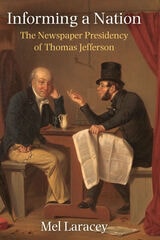
Informing a Nation
The Newspaper Presidency of Thomas JeffersonMel Laracey
University of Michigan Press, 2021

Infrastructural Attachments
Austerity, Sovereignty, and Expertise in KenyaEmma Park
Duke University Press, 2024