Results by title
22279 books match the query 'Social Science' and 851 start with i
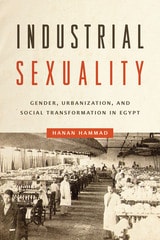
Industrial Sexuality
Gender, Urbanization, and Social Transformation in EgyptBy Hanan Hammad
University of Texas Press, 2016
Sara A. Whaley Book Prize, National Women's Studies Association, 2017
AMEWS Book Award, Journal of Middle Eastern Studies, 2017
Millions of Egyptian men, women, and children first experienced industrial work, urban life, and the transition from peasant-based and handcraft cultures to factory organization and hierarchy in the years between the two world wars. Their struggles to live in new places, inhabit new customs, and establish and abide by new urban norms and moral and gender orders underlie the story of the making of modern urban life—a story that has not been previously told from the perspective of Egypt’s working class.
Reconstructing the ordinary urban experiences of workers in al-Mahalla al-Kubra, home of the largest and most successful Egyptian textile factory, Industrial Sexuality investigates how the industrial urbanization of Egypt transformed masculine and feminine identities, sexualities, and public morality. Basing her account on archival sources that no researcher has previously used, Hanan Hammad describes how coercive industrial organization and hierarchy concentrated thousands of men, women, and children at work and at home under the authority of unfamiliar men, thus intensifying sexual harassment, child molestation, prostitution, and public exposure of private heterosexual and homosexual relationships. By juxtaposing these social experiences of daily life with national modernist discourses, Hammad demonstrates that ordinary industrial workers, handloom weavers, street vendors, lower-class landladies, and prostitutes—no less than the middle and upper classes—played a key role in shaping the Egyptian experience of modernity.
Industry at the Crossroads
Robert E. Cole, Editor
University of Michigan Press, 1982

Inequalities of Love
College-Educated Black Women and the Barriers to Romance and FamilyAveril Y. Clarke
Duke University Press, 2011
Inequalities of Platform Publishing
The Promise and Peril of Self-Publishing in the Digital Book EraClaire Parnell
University of Massachusetts Press, 2025
Uncovering race, gender, and sexual biases in popular self-publishing platforms
The average reader need not go far in a bookstore before, knowingly or not, they encounter authors who started their careers by self-publishing prior to achieving commercial success. Examples include Margaret Atwood, Andy Weir, Colleen Hoover, Anna Todd, E. L. James, Scarlett St. Clair, and many more. Such stories of self-made writers are compelling and seem more attainable to others with the accessibility of modern publishing platforms such as Amazon, Apple, Google, Kobo, Wattpad, Webtoon, Radish, Inkitt, Qidian, Tapas, and Swoon Reads. However, as Claire Parnell uncovers in her examination of the two most popular—Amazon and Wattpad—these services in fact perpetuate systemic racial, gender, and sexual bias against authors of color and queer authors through their technological, economic, social, and cultural structures.
At a time when there is a real reckoning with the discrimination that has resulted in publishing opportunities for only relatively few privileged authors—who are often White, upper class, and male—self-publishing presents itself as an equalizer of sorts. Exploring that idea, Parnell shows that these platforms are not just intermediaries for information; they structure content and users in multiple, often inequitable, ways through their ability to set market conditions and apply algorithmic sorting. Combining original interviews, walkthrough method, metadata analysis, and more, Parnell finds that self-publishing platforms reproduce challenges for authors from marginalized communities. Far from equalizing the market, the new platforms instead frequently perpetuate the stubborn barriers to mainstream success for BIPOC and queer authors.
Inequality in Early America
Carla Gardina Pestana
Dartmouth College Press, 2015

Inequality, Crime, and Resistance in New York City
Timothy P. R. Weaver
Temple University Press, 2025
Weaver brings these clashes to the fore by showing how New York City politics has been shaped by these conflicting orders. He examines the transformation of the city’s political economy in the aftermath of the 1975 fiscal crisis through neoliberal real estate development and privatization, the conservative rise of law-and-order politics in the 1970s to 1990s, and the efforts of the city’s egalitarians to respond to each of these shifts through social movements such as Occupy and Black Lives Matter.
Inequality, Crime, and Resistance in New York City belies glib assumptions about the city’s liberal character. Weaver reveals the metropolis not as a homogenous political whole, but as a site in which the victories and defeats of rival political forces change the terms of local citizenship for the millions of residents who call the city home.
In the series Political Lessons from American Cities
Inequity in the Technopolis
Race, Class, Gender, and the Digital Divide in AustinEdited by Joseph Straubhaar, Jeremiah Spence, Zeynep Tufekci, and Roberta G. Lentz
University of Texas Press, 2012
Over the past few decades, Austin, Texas, has made a concerted effort to develop into a “technopolis,” becoming home to companies such as Dell and numerous start-ups in the 1990s. It has been a model for other cities across the nation that wish to become high-tech centers while still retaining the livability to attract residents. Nevertheless, this expansion and boom left poorer residents behind, many of them African American or Latino, despite local and federal efforts to increase lower-income and minority access to technology.
This book was born of a ten-year longitudinal study of the digital divide in Austin—a study that gradually evolved into a broader inquiry into Austin’s history as a segregated city, its turn toward becoming a technopolis, what the city and various groups did to address the digital divide, and how the most disadvantaged groups and individuals were affected by those programs.
The editors examine the impact of national and statewide digital inclusion programs created in the 1990s, as well as what happened when those programs were gradually cut back by conservative administrations after 2000. They also examine how the city of Austin persisted in its own efforts for digital inclusion by working with its public libraries and a number of local nonprofits, and the positive impact those programs had.

Infamous Bodies
Early Black Women’s Celebrity and the Afterlives of RightsSamantha Pinto
Duke University Press, 2020

Infamous Desire
Male Homosexuality in Colonial Latin AmericaEdited by Pete Sigal
University of Chicago Press, 2003
Infected Kin
Orphan Care and AIDS in LesothoEllen Block
Rutgers University Press, 2019
Supplementary instructor resources (https://www.csbsju.edu/sociology/faculty/anthropology-teaching-resources/infected-kin-teaching-resources)

Infertile Environments
Epigenetic Toxicology and the Reproductive Health of Chinese MenJanelle Lamoreaux
Duke University Press, 2023
Infinite Repertoire
On Dance and Urban Possibility in Postsocialist GuineaAdrienne J. Cohen
University of Chicago Press, 2021

Infinity (Stage)
Spencer Golub
University of Michigan Press, 2001

Influenza and Inequality
One Town's Tragic Response to the Great Epidemic of 1918Patricia J. Fanning
University of Massachusetts Press, 2010
By 1918, Norwood was a small, ethnically diverse, industrialized, and stratified community. Ink, printing, and tanning factories were owned by wealthy families who lived privileged lives. These industries attracted immigrant laborers who made their homes in several ethnic neighborhoods and endured prejudice and discrimination at the hands of native residents. When the epidemic struck, the immigrant neighborhoods were most affected; a fact that played a significant role in the town's response—with tragic results.
This close analysis of one town's struggle illuminates how even well-intentioned elite groups may adopt and implement strategies that can exacerbate rather than relieve a medical crisis. It is a cautionary tale that demonstrates how social behavior can be a fundamental predictor of the epidemic curve, a community's response to crisis, and the consequences of those actions.
Informal Cities
Histories of Governance and Inequality in Latin Europe, Latin America, and Colonial North AfricaEdited by Charlotte Vorms and Brodwyn Fischer
University of Chicago Press, 2025
An empirically rich reconstruction of how informality became an intrinsic part of urban life across three continents.
Over a quarter of the world’s urban population lives in informal settlements. While informality as a concept has been widely debated, we still know very little about the phenomenon’s urban history or how that history has shaped the evolution of world cities. Spotlighting the historical processes that have created and sustained urban informality for more than a century, editors Charlotte Vorms and Brodwyn Fischer and this volume’s contributors reveal informality as an intrinsic feature of urbanity, shaping not only cities across the globe but also deeper processes of state formation, socioeconomic stratification, and political struggle.
The volume brings together case studies spanning more than a hundred years, drawn from Latin America (Brazil, Chile, Venezuela, and Mexico), Northern Africa (Morocco and Algeria), and Latin Europe (France, Spain, and Italy). Together, they show that informality is neither a contemporary crisis nor a predicament unique to the Global South. Topics include the origins of informal settlements and their relationship with law and institutional power; grassroots efforts to legitimize shantytown communities; mass social movements for rights to the city; the role that shantytown removal campaigns played in populist politics, fascism, and colonialism; and the ways that informality perpetuated racial and ethnic inequalities. Informal Cities is an indispensable guide to the complex and fraught terrain of urban informality in its many historical guises.

Informatics of Domination
Zach Blas, Melody Jue, and Jennifer Rhee, editors
Duke University Press, 2025
Contributors. Dalida María Benfield, Zach Blas, Ama Josephine Budge Johnstone, micha cárdenas, Amy Sara Carroll, Shu Lea Cheang, Jian Neo Chen, Heather Dewey-Hagborg, Ranjodh Singh Dhaliwal, Stephanie Dinkins, Ricardo Dominguez, Ashley Ferro-Murray, Matthew Fuller, Jacob Gaboury, Jennifer Gabrys, Alexander R. Galloway, Jennifer Mae Hamilton, Donna J. Haraway, Eva Hayward, Stefan Helmreich, Kathy High, Leon J. Hilton, Ho Rui An, Hi'ilei Julia Kawehipuaakahaopulani Hobart, Tung-Hui Hu, Caroline A. Jones, Melody Jue, Homay King, Larissa Lai, Lawrence Lek, Esther Leslie, Alexis Lothian, Isadora Neves Marques, Radha May (Elisa Giardina-Papa, Nupur Mathur, and Bathsheba Okwenje), Shaka McGlotten, Mahan Moalemi, madison moore, Astrida Neimanis, Bahar Noorizadeh, Luciana Parisi, Thao Phan, Ana Teixeira Pinto, Luiza Prado de O. Martins, Rita Raley, Patricia Reed, Jennifer Rhee, Bassem Saad, Ashkan Sepahvand, Justin Talplacido Shoulder, Lucy Suchman, Ollie Zhang
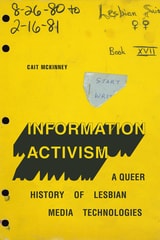
Information Activism
A Queer History of Lesbian Media TechnologiesCait McKinney
Duke University Press, 2020
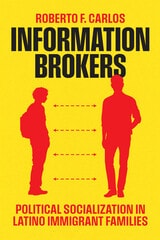
Information Brokers
Political Socialization in Latino Immigrant FamiliesRoberto F. Carlos
University of Chicago Press, 2026
An insightful rethinking of political socialization within Latino immigrant households.
Conventional wisdom tells us that children are passive recipients of political lessons from their parents, with caregivers being the ones who mold the developing behavior and beliefs of the children under their roof. Roberto F. Carlos challenges this preconception by revealing how Latino children, especially those with immigrant parents, often become key sources of political information and guidance in their families. As migrant parents navigate unfamiliar institutions and customs in the United States, they often turn to their children to broker information about everything from daily life to civic engagement. These roles not only place unique responsibilities on children but also create new pathways for them to shape the political behavior of their parents. Moreover, by taking on these roles, children learn the skills that can make them effective advocates later in life, even as they face resource disadvantages that normally correlate with reduced political participation and sense of political efficacy.
Drawing on six original surveys, multiple experiments, and in-depth interviews, including the accounts of youth helping protect their families from deportation, InformationBrokers shows how these dynamics influence both immigrant parents and their children in politically consequential ways. With the Latino population now over 64 million, Information Brokers offers vital insight into the political incorporation of America’s largest ethnic group.

Information Fantasies
Precarious Mediation in Postsocialist ChinaXiao Liu
University of Minnesota Press, 2019
Winner of the Science Fiction Research Association Book Award
A groundbreaking, alternate history of information technology and information discourses
Although the scale of the information economy and the impact of digital media on social life in China today could pale that of any other country, the story of their emergence in the post-Mao sociopolitical environment remains untold. Information Fantasies offers a revisionist account of the emergence of the “information society,” arguing that it was not determined by the technology of digitization alone but developed out of a set of techno-cultural imaginations and practices that arrived alongside postsocialism.
Anticipating discussions on information surveillance, data collection, and precarious labor conditions today, Xiao Liu goes far beyond the current scholarship on internet and digital culture in China, questioning the limits of current new-media theory and history, while also salvaging postsocialism from the persistent Cold War structure of knowledge production.
Ranging over forgotten science fiction, unjustly neglected films, corporeal practices such as qigong, scientific journals, advertising, and cybernetic theories, Information Fantasies constructs an alternate genealogy of digital and information imaginaries—one that will change how we look at the development of the postsocialist world and the emergence of digital technologies.
Information Politics
Liberation and Exploitation in the Digital SocietyTim Jordan
Pluto Press, 2015
The first of Pluto Press’s new Digital Barricades series, focusing on ground-breaking critical explorations of resistance within the digital world, Information Politics explores the exploitations both facilitated by, and contested through, increases in information flows; the embedding of information technologies in daily life; and the intersection of network and control protocols. Anyone hoping to get to grips with the rapidly changing terrain of digital culture and conflict should start here.
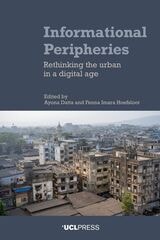
Informational Peripheries
Rethinking the Urban in a Digital AgeEdited by Ayona Datta and Fenna Imara Hoefsloot
University College London, 2025
Moving beyond current scholarship in urban and regional studies, this volume presents a case for “informational peripheries” as an analytical lens to understand the uneven, fragmented, and disconnected geographies of urban peripheries in the Global South. While this concept is parallel to and overlaps with the urban periphery, the circulation—or restriction—of information has taken on additional significance with the coming of a digital age. The periphery is no longer confined to the slums or suburbia at a city's edge; it now also encompasses uneven and fragmented digital infrastructures.
Providing empirical and theoretical contributions from cities in the Global South, this book advances scholarship in Southern urbanism, smart cities, and peripheral urbanization, conceptualizing the diverse ways in which informational peripheries are resisted, adapted, complied with, and lived in.
Infrastructural Attachments
Austerity, Sovereignty, and Expertise in KenyaEmma Park
Duke University Press, 2024
Infrastructure, Environment, and Life in the Anthropocene
Kregg Hetherington, editor
Duke University Press, 2019
Contributors. Nikhil Anand, Andrea Ballestero, Bruce Braun, Ashley Carse, Gastón R. Gordillo, Kregg Hetherington, Casper Bruun Jensen, Joseph Masco, Shaylih Muehlmann, Natasha Myers, Stephanie Wakefield, Austin Zeiderman
Infrastructures of Race
Concentration and Biopolitics in Colonial MexicoBy Daniel Nemser
University of Texas Press, 2017
Winner, Humanities Book Prize, Mexico Section of the Latin American Studies Association, 2018
Many scholars believe that the modern concentration camp was born during the Cuban war for independence when Spanish authorities ordered civilians living in rural areas to report to the nearest city with a garrison of Spanish troops. But the practice of spatial concentration—gathering people and things in specific ways, at specific places, and for specific purposes—has a history in Latin America that reaches back to the conquest. In this paradigm-setting book, Daniel Nemser argues that concentration projects, often tied to urbanization, laid an enduring, material groundwork, or infrastructure, for the emergence and consolidation of new forms of racial identity and theories of race.
Infrastructures of Race traces the use of concentration as a technique for colonial governance by examining four case studies from Mexico under Spanish rule: centralized towns, disciplinary institutions, segregated neighborhoods, and general collections. Nemser shows how the colonial state used concentration in its attempts to build a new spatial and social order, and he explains why the technique flourished in the colonies. Although the designs for concentration were sometimes contested and short-lived, Nemser demonstrates that they provided a material foundation for ongoing processes of racialization. This finding, which challenges conventional histories of race and mestizaje (racial mixing), promises to deepen our understanding of the way race emerges from spatial politics and techniques of population management.

Ingenious Citizenship
Recrafting Democracy for Social ChangeCharles T. Lee
Duke University Press, 2016

Inhabitants of the Deep
The Blueness of BlacknessJonathan Howard
Duke University Press, 2025
Inheritance Law And The Evolving Family
Ralph C. Brashier
Temple University Press, 2004

Inheritance of Loss
China, Japan, and the Political Economy of Redemption after EmpireYukiko Koga
University of Chicago Press, 2016
Inheritance of Loss chronicles these sites of colonial inheritance––tourist destinations, corporate zones, and mustard gas exposure sites––to illustrate attempts by ordinary Chinese and Japanese to reckon with their shared yet contested pasts. In her explorations of everyday life, Koga directs us to see how the violence and injustice that occurred after the demise of the Japanese Empire compound the losses that later generations must account for, and inevitably inherit.
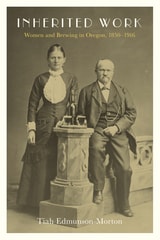
Inherited Work
Women and Brewing in Oregon, 1850–1916Tiah Edmunson-Morton
Oregon State University Press, 2027
Following the stories of twenty women connected to Oregon breweries before Prohibition, Inherited Work recognizes the overlooked contributions of the women who inherited, managed, and navigated Oregon’s brewing industry. At a time when recordkeeping and historical memory obscured their authority, these women were negotiating debt, managing workers, protecting property, arranging sales, supporting family wealth, and making strategic decisions about the future of their businesses.
Drawing on census records, probate files, property records, newspapers, court documents, and oral histories, Tiah Edmunson-Morton traces the legal and economic landscape of the time, demonstrating the conditions and decisions these women faced in managing their personal lives and livelihoods. From widows like Victoria Bauerlin, Johanna Behrens, and Mary Meller—who inherited not only property but also the financial terms that shaped what they could do next—to the matriarch of a brewing dynasty, Louisa Weinhard, Inherited Work reveals how their influence endured.
Today, women can be found throughout the industry as brewers and owners, as well as chemists, restaurant managers, bookkeepers, educators, graphic designers, and hop brokers. While their roles are more visible than they once were, the history of women in brewing remains incomplete. Who were these women? What did it mean to be part of the brewing industry at the turn of the century? And what changes when we bring their stories into the history of brewing?
Inheriting Possibility
Social Reproduction and Quantification in EducationEzekiel J. Dixon-Román
University of Minnesota Press, 2017
How has the dominant social scientific paradigm limited our understanding of the impact of inherited economic resources, social privilege, and sociocultural practices on multigenerational inequality? In what ways might multiple forces of social difference haunt quantitative measurements of ability such as the SAT? Building on new materialist philosophy, Inheriting Possibility rethinks methods of quantification and theories of social reproduction in education, demonstrating that test performance results and parenting practices convey the impact of materially and historically contingent patterns of differential possibility.
Ezekiel J. Dixon-Román explores the dualism of nature and culture that has undergirded theories of inheritance, social reproduction, and human learning and development. Research and debate on the reproduction of power relations have rested on a premise that nature is made up of fixed universals on which the creative, intellective, and discursive play of culture are based. Drawing on recent work in the physical and biological sciences, Dixon-Román argues that nature is culture. He contends that by assuming a rigid nature/culture binary, we ultimately limit our understanding of how power relations are reproduced.
Through innovative analyses of empirical data and cultural artifacts, Dixon-Román boldly reconsiders how we conceptualize the processes of inheritance and approach social inquiry in order to profoundly sharpen understanding and address the reproducing forces of inequality.
Inheriting the City
The Children of Immigrants Come of AgePhilip Kasinitz
Russell Sage Foundation, 2008
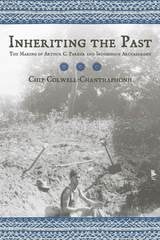
Inheriting the Past
The Making of Arthur C. Parker and Indigenous ArchaeologyChip Colwell-Chanthaphonh
University of Arizona Press, 2009
In Inheriting the Past, Chip Colwell-Chanthaphonh examines Parker’s winding career path and asks why it has taken generations for Native peoples to follow in his footsteps. Closely tracing Parker’s life through extensive archival research, Colwell-Chanthaphonh explores how Parker crafted a professional identity and negotiated dilemmas arising from questions of privilege, ownership, authorship, and public participation. How Parker, as well as the discipline more broadly, chose to address the conflict between Native American rights and the pursuit of scientific discovery ultimately helped form archaeology’s moral community.
Parker’s rise in archaeology just as the field was taking shape demonstrates that Native Americans could have found a place in the scholarly pursuit of the past years ago and altered its trajectory. Instead, it has taken more than a century to articulate the promise of an Indigenous archaeology—an archaeological practice carried out by, for, and with Native peoples. As the current generation of researchers explores new possibilities of inclusiveness, Parker’s struggles and successes serve as a singular reference point to reflect on archaeology’s history and its future.
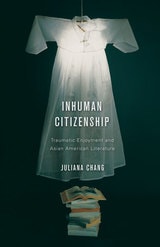
Inhuman Citizenship
Traumatic Enjoyment and Asian American LiteratureJuliana Chang
University of Minnesota Press, 2012
In Inhuman Citizenship, Juliana Chang claims that literary representations of Asian American domesticity may be understood as symptoms of America’s relationship to its national fantasies and to the “jouissance”—a Lacanian term signifying a violent yet euphoric shattering of the self—that both overhangs and underlies those fantasies. In the national imaginary, according to Chang, racial subjects are often perceived as the source of jouissance, which they supposedly embody through their excesses of violence, sexuality, anger, and ecstasy—excesses that threaten to overwhelm the social order.
To examine her argument that racism ascribes too much, rather than a lack of, humanity, Chang analyzes domestic accounts by Asian American writers, including Fae Myenne Ng’s Bone, Brian Ascalon Roley’s American Son, Chang-rae Lee’s Native Speaker, and Suki Kim’s The Interpreter. Employing careful reading and Lacanian psychoanalysis, Chang finds sites of excess and shock: they are not just narratives of trauma; they produce trauma as well. They render Asian Americans as not only the objects but also the vehicles and agents of inhuman suffering. And, claims Chang, these novels disturb yet strangely exhilarate the reader through characters who are objects of racism and yet inhumanly enjoy their suffering and the suffering of others.
Through a detailed investigation of “family business” in works of Asian American life, Chang shows that by identifying with the nation’s psychic disturbance, Asian American characters ethically assume responsibility for a national unconscious that is all too often disclaimed.
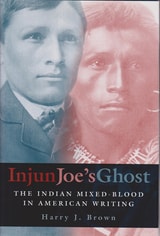
Injun Joe's Ghost
The Indian Mixed-Blood in American WritingHarry J. Brown
University of Missouri Press, 2004
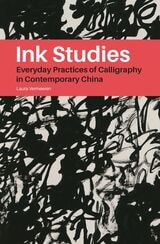
Ink Studies
Everyday Practices of Calligraphy in Contemporary ChinaLaura Vermeeren
National University of Singapore Press, 2025
As handwriting fades in the digital age, calligraphy in China is caught between tradition and reinvention. Ink Studies deconstructs this paradox, determining how calligraphy is not simply an ancient art form, but more so a site of ongoing cultural negotiation. Laura Vermeeren investigates how calligraphy moves through five distinct visual and social fields, shaping and being shaped by its practitioners. While often framed as an act of repetition and tied to centuries of disciplined copying, calligraphy also emerges here as a force of creativity—one that is actively mobilized in contemporary China, whether through state-sponsored initiatives or the aesthetics of modern design.
Uniting contemporary art and media history, Ink Studies provides vital perspectives on how China’s past is continually reimagined in the present, portraying calligraphy’s enduring relevance in an era of rapid technological change.
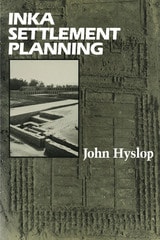
Inka Settlement Planning
By John Hyslop
University of Texas Press, 1990
Before the Spanish conquest in the sixteenth century A.D., the Inka Empire stretched along the Pacific side of South America, all the way from Ecuador to northwest Argentina. Though today many Inka researchers focus on the imperial capital of Cuzco, Peru, and surrounding areas, ruins of Inka settlements abound throughout the vast territory of the former empire and offer many clues about how the empire was organized, managed, and defended. These outlying settlements, as well as those in the Cuzco area, form the basis for John Hyslop's detailed study Inka Settlement Planning.
Using extensive aerial photography and detailed site maps, Hyslop studies the design of several dozen settlements spread throughout the empire. In addition to describing their architecture and physical infrastructure, he gives special emphasis to the symbolic aspects of each site's design. Hyslop speculates that the settlement plans incorporate much iconography expressive of Inka ideas about the state, the cosmos, and relationships to non-Inka peoples—iconography perhaps only partially related to the activities that took place within the sites. And he argues that Inka planning concepts applied not only to buildings but also to natural features (stone outcrops, water sources, and horizons) and specialized landscaping (terracing).
Of interest to a wide readership in archaeology, architecture, urbanization, empire building, and Andean travel, Inka Settlement Planning charts one of Native America's greatest achievements.
Inland Empire
Settler Colonialism and Modern Architecture in Southern CaliforniaManuel Shvartzberg Carrió
Duke University Press, 2026

Inner Lives of Deaf Children
Interviews and AnalysisMartha Sheridan
Gallaudet University Press, 2005
By conducting interviews with seven deaf children, ages seven to ten, Martha Sheridan offers a fresh look at their private thoughts and feelings in this watershed book. Each child possesses a unique cultural background, and Sheridan communicated with each in his or her preferred method of communication. Her procedure remained consistent with each: In addition to standard questions, Sheridan asked each child to draw a picture based on his or her life, then tell a story about it. Next, she showed them magazine pictures and asked them to describe what they saw.
The results proved to be as varied as they were engaging. Angie, an adopted deaf girl who communicates in Signed English, expressed a desire to attend a hearing college when she grows up while also stating she hoped her own children will be deaf. Joe, an African-American, hard of hearing boy, drew pictures of deaf people who are teased in a public school, reflecting his own difficult experiences.
Sheridan calls upon her tenure as a social worker as well as her own experience as a deaf child growing up in a hearing family in analyzing her study’s results. She writes, “These children have strengths, they have positive experiences, and they enjoy positive relationships.” Inner Lives of Deaf Children will prove to be an enlightening read for parents and scholars alike.

Inner Speech and the Dialogical Self
Norbert Wiley
Temple University Press, 2016
Inner speech, also known as self-talk, is distinct from ordinary language. It has several functions and structures, from everyday thinking and self-regulation to stream of consciousness and daydreaming. Inner Speech and the Dialogical Self provides a comprehensive analysis of this internal conversation that people have with themselves to think about problems, clarify goals, and guide their way through life.
Norbert Wiley shrewdly emphasizes the semiotic and dialogical features of the inner speech, rather than the biological and neurological issues. He also examines people who lack control of their inner speech—such as some autistics and many emotionally disturbed people who use trial and error rather than self-control—to show the power and effectiveness of inner speech.
Inner Speech and the Dialogical Self takes a humanistic social theorist approach to its topic. Wiley acknowledges the contributions of inner speech theorists, Lev Vygotsky and Mikhail Bakhtin, and addresses the classical pragmatism of Charles Sanders Peirce, John Dewey, William James, and George Herbert Mead to show the range and depth of this largely unexplored field.
Innocence And Power
Individualism in Twentieth-century AmericaEdited by Gordon H. Mills
University of Texas Press, 1965
America believes in individualism—but what is individualism? This question leads into unexpected areas of life and thought. It touches upon almost every intellectual discipline concerned with human life. Any answer, to be taken seriously, must recognize this complexity. A broad understanding of the meaning of individualism can be reached only through the insight of many workers in many different fields.
This volume brings together seven of the United States' most distinguished scholars, representing the fields of anthropology, economics, government, history, literature, and philosophy. The trend of their thinking can be suggested by a few excerpts from their essays:
• "An individual divorced from a cultural milieu would not be a human being; he would be a mere hominid."—Leslie A. White
• "The trouble is that 'individual' is a stop-thought word. It numbs the mind, so that once it has been uttered, inquiry stops."—Clarence E. Ayres
• "Not even an individual's perfections are his alone; like his imperfections, they are group-made."— Paul A. Samuelson
• "The twentieth century has witnessed the emergence of a new kind of American individualism, the individualism of nonconformity, which actually challenges the compulsive democracy of the Lockean individualism by which the nation has centrally and historically lived."—Louis Hartz
• "The individualism of the American frontier was an individualism of personal self-reliance and of hardihood and stamina rather than an individualism of intellectual independence and personal self-expression."—David M. Potter
• "The present conditions in which the self must be preserved are radically different from those of a generation, even a decade ago. . . . The dogmatics of present self-assertion are defined and pursued in an existential circumstance."—Frederick J. Hoffman
• "Individuality means creativity, and 'laws of creativity,' other than statistical ones, are, I hold, a contradiction in terms."—Charles Hartshorne
Innocence and Victimhood
Gender, Nation, and Women’s Activism in Postwar Bosnia-HerzegovinaElissa Helms
University of Wisconsin Press, 2013

Innocent Lens
Race and Visibility on the Swedish ScreenBenjamin Mier-Cruz
University of Wisconsin Press, 2027
Sweden, like other Nordic countries, prides itself on being “colorblind” or immune to the kinds of racism found in, for example, the United States. In the 1960s and 1970s, white Swedish documentarians, in the fashion of early anthropologists, recorded racial tensions amid the US civil rights movement. More recently, in the twenty-first century, short films produced by Swedes of color have tackled racism and bigotry within Sweden.
Benjamin Mier-Cruz offers a comparative study of these two periods of Swedish documentary filmmaking. “Racially innocent” white documentarians of the mid-twentieth century developed an “aesthetics of altruism” predicated on Sweden’s assumed racial equalitarianism—a notion that their documentaries in turn helped create and maintain. In contemporary films, on the other hand, Swedes of color use the same filmic format to challenge not only their predecessors’ reductionist, pseudo-anthropological presentations but also Sweden’s purportedly colorblind ideology. Mier-Cruz’s close readings of films from both eras demonstrate the possibilities and limitations of the documentary form and the ways in which it is motivated by politics and activism.
Innocent Subjects
Feminism and WhitenessTerese Jonsson
Pluto Press, 2020
Despite a rich history of Black and postcolonial critiques of racist and imperial feminist politics, racism still exists within contemporary British feminism. To explain why, Terese Jonsson examines the history of feminism over the last forty years. She argues that Black feminism's role in shaping the movement has been marginalised through narratives which repeatedly position white women at the centre of the story, from the women's liberation movement in the 1970s to today.
Analysing the ways in which whiteness continues to pervade feminist literature, as well as feminist debates in the liberal media, Jonsson demonstrates that, despite an increased attention to race, intersectionality and difference, stories told by white feminists are shaped by their desire to maintain an 'innocent' position towards racism.
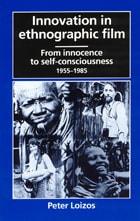
Innovation in Ethnographic Film
From Innocence to Self-Consciousness, 1955-1985Peter Loizos
University of Chicago Press, 1993
Loizos begins by reviewing works of John Marshall and Timothy Asch in the 1950s and moves through those of Jean Rouch, Robert Gardner, and many more recent filmmakers. He reveals a steady course of innovations along four dimensions: production technology, subject matter, strategies of argument, and ethnographic authentication. His analyses of individual films address questions of realism, authenticity, genre, authorial and subjective voice, and representation of the films' creators as well as their subjects.
Innovation in Ethnographic Film, as a systematic and iluminating review of developments in ethnographic film, will be an important resource for the growing number of anthropologists and other scholars who use such films as tools for research and teaching.
Innovations in Collaborative Modeling
Laura Schmitt-Olabisi
Michigan State University Press, 2020
Innovative Women Poets
An Anthology of Contemporary Poetry and InterviewsElisabeth A. Frost
University of Iowa Press, 2007
Inoperative Community
Jean-Luc Nancy
University of Minnesota Press, 1991
Inquiries in the Economics of Aging
Edited by David A. Wise
University of Chicago Press, 1998
Within the next twenty years, an unprecedented proportion of Americans will be over sixty-five. New research in the economics of aging is an essential element of understanding what the future holds for this aging population. Inquiries in the Economics of Aging presents both empirical papers that consider questions that are fundamental to public policy and more theoretical contributions that lay new groundwork for future research in the economics of aging.
Inquiries in the Economics of Aging provides a timely overview of some of the most important questions facing researchers on aging and outlines new techniques and models that may help to answer these questions. This important volume will be of great interest to specialists and policy makers as it paves the way for future analysis.

Insane Sisters
Or, the Price Paid for Challenging a Company TownGregg Andrews
University of Missouri Press, 2020
Insane Sisters is the extraordinary tale of two sisters, Mary Alice Heinbach and Euphemia B. Koller, and their seventeen- year property dispute against the nation's leading cement corporation—the Atlas Portland Cement Company.
In 1903, Atlas built a plant on the border of the small community of Ilasco, located just outside Hannibal—home of the infamous cave popularized in Mark Twain's most acclaimed novels. The rich and powerful Atlas quickly appointed itself as caretaker of Twain's heritage and sought to take control of Ilasco. However, its authority was challenged in 1910 when Heinbach inherited her husband's tract of land that formed much of the unincorporated town site. On grounds that Heinbach's husband had been in the advanced stages of alcoholism when she married him the year before, some of Ilasco's political leaders and others who had ties to Atlas challenged the will, charging Heinbach with undue influence.
To help fight against the local lawyers and politicians who wanted Atlas to own the land, Heinbach enlisted the help of her shrewd and combative sister, Euphemia Koller, by making her co-owner of the tract. In a complex case that went to the Missouri Supreme Court four times, the sisters fiercely sought to hang on to the tract. However, in 1921 the county probate court imposed a guardianship over Heinbach and a circuit judge ordered a sheriff's sale of the property. After Atlas purchased the tract, Koller waged a lonely battle to overturn the sale and expose the political conspiracies that had led to Ilasco's conversion into a company town. Her efforts ultimately resulted in her court- ordered confinement in 1927 to Missouri's State Hospital Number One for the Insane, where she remained until her death at age sixty-eight.
Insane Sisters traces the dire consequences the sisters suffered and provides a fascinating look at how the intersection of gender, class, and law shaped the history and politics of Ilasco. The book also sheds valuable new light on the wider consolidation of corporate capitalism and the use of guardianships and insanity to punish unconventional women in the early twentieth century.
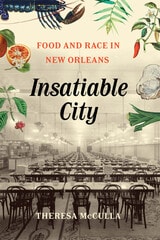
Insatiable City
Food and Race in New OrleansTheresa McCulla
University of Chicago Press, 2024
A history of food in the Crescent City that explores race, power, social status, and labor.
In Insatiable City, Theresa McCulla probes the overt and covert ways that the production of food and the discourse about it both created and reinforced many strains of inequality in New Orleans, a city significantly defined by its foodways. Tracking the city’s economy from nineteenth-century chattel slavery to twentieth-century tourism, McCulla uses menus, cookbooks, newspapers, postcards, photography, and other material culture to limn the interplay among the production and reception of food, the inscription and reiteration of racial hierarchies, and the constant diminishment and exploitation of working-class people. The consumption of food and people, she shows, was mutually reinforced and deeply intertwined. Yet she also details how enslaved and free people of color in New Orleans used food and drink to carve paths of mobility, stability, autonomy, freedom, profit, and joy. A story of pain and pleasure, labor and leisure, Insatiable City goes far beyond the task of tracing New Orleans's culinary history to focus on how food suffuses culture and our understandings and constructions of race and power.