Results by title
4743 books match the query 'Religion' and 175 start with i
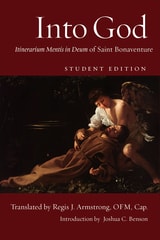
Into God, student edition
Itinerarium Mentis in Deum of Saint BonaventureRegis J. Armstrong
Catholic University of America Press, 0
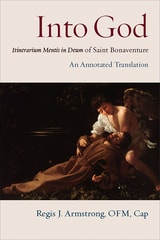
Into God
An Annotated Translation of Saint Bonaventure's Itinerarium Mentis in DeumCap. Regis J. Armstrong,OFM
Catholic University of America Press, 2020
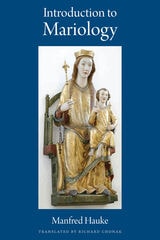
Introducation to Mariology
Manfred Hauke
Catholic University of America Press, 2020
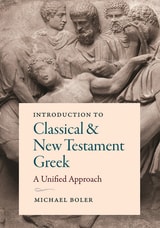
Introduction to Classical and New Testament Greek
A Unified ApproachMichael Boler
Catholic University of America Press, 2020
Introduction to Moral Theology (Catholic Moral Thought, Volume 1)
Romanus Cessario, O.P.
Catholic University of America Press, 2001
Introduction to Moral Theology, revised edition
Romanus Cessario
Catholic University of America Press, 2013
Introduction to Sacramental Theology
Signs of Christ in the FleshJose Granados
Catholic University of America Press, 2021
Introduction to Scholastic Theology
Ulrich G. Leinsle
Catholic University of America Press, 2010
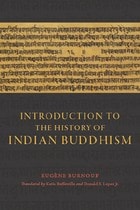
Introduction to the History of Indian Buddhism
Eugène Burnouf
University of Chicago Press, 2010
The most influential work on Buddhism to be published in the nineteenth century, Introduction à l’histoire du Buddhisme indien, by the great French scholar of Sanskrit Eugène Burnouf, set the course for the academic study of Buddhism—and Indian Buddhism in particular—for the next hundred years. First published in 1844, the masterwork was read by some of the most important thinkers of the time, including Schopenhauer and Nietzsche in Germany and Emerson and Thoreau in America.
Katia Buffetrille and Donald S. Lopez Jr.’s expert English translation, Introduction to the History of Indian Buddhism, provides a clear view of how the religion was understood in the early decades of the nineteenth century. Burnouf was an impeccable scholar, and his vision, especially of the Buddha, continues to profoundly shape our modern understanding of Buddhism. In reintroducing Burnouf to a new generation of Buddhologists, Buffetrille and Lopez have revived a seminal text in the history of Orientalism.
Introduction to the Mystery of the Church
Benoit-Dominique de La Soujeole, OP
Catholic University of America Press, 2014
Inuit Stories of Being and Rebirth
Gender, Shamanism, and the Third SexBernard Saladin d' Anglure
University of Manitoba Press, 2018
Investigating Vatican II
Its Theologians, Ecumenical Turn, and Biblical CommitmentJared Wicks
Catholic University of America Press, 2018
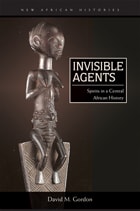
Invisible Agents
Spirits in a Central African HistoryDavid M. Gordon
Ohio University Press, 2012
Invisible Agents shows how personal and deeply felt spiritual beliefs can inspire social movements and influence historical change. Conventional historiography concentrates on the secular, materialist, or moral sources of political agency. Instead, David M. Gordon argues, when people perceive spirits as exerting power in the visible world, these beliefs form the basis for individual and collective actions. Focusing on the history of the south-central African country of Zambia during the nineteenth and twentieth centuries, his analysis invites reflection on political and religious realms of action in other parts of the world, and complicates the post-Enlightenment divide of sacred and profane.
The book combines theoretical insights with attention to local detail and remarkable historical sweep, from oral narratives communicated across slave-trading routes during the nineteenth century, through the violent conflicts inspired by Christian and nationalist prophets during colonial times, and ending with the spirits of Pentecostal rebirth during the neoliberal order of the late twentieth century. To gain access to the details of historical change and personal spiritual beliefs across this long historical period, Gordon employs all the tools of the African historian. His own interviews and extensive fieldwork experience in Zambia provide texture and understanding to the narrative. He also critically interprets a diverse range of other sources, including oral traditions, fieldnotes of anthropologists, missionary writings and correspondence, unpublished state records, vernacular publications, and Zambian newspapers.
Invisible Agents will challenge scholars and students alike to think in new ways about the political imagination and the invisible sources of human action and historical change.
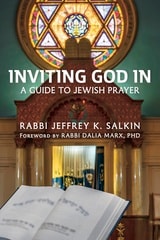
Inviting God In
A Guide to Jewish PrayerRabbi Jeffrey K. Salkin
Central Conference of American Rabbis, 2025
Inviting God In: A Guide to Jewish Prayer is an engaging and insightful commentary on the Shabbat evening and morning services by Rabbi Jeffrey K. Salkin, the author of Putting God on the Guest List. Designed for students of all ages, from bet mitzvah to adulthood, the book’s relatable tone and discussion questions meaningfully engage readers in the worship service they are leading or attending. Rabbi Salkin breaks down each prayer and ritual, helping learners connect to the service with fresh insight and knowledge. With a blend of humor and depth, Inviting God In shows how the ancient words of prayer still speak to the challenges and joys of contemporary life.
With new reflection questions, Inviting God In is a companion to Mishkan T'Filah Journal Edition

Inward
Vipassana Meditation and the Embodiment of the SelfMichal Pagis
University of Chicago Press, 2019

Iran on the Brink
Rising Workers and Threats of WarAndreas Malm and Shora Esmailian
Pluto Press, 2007
The authors offer a unique portrait of the social upheaval, why it is happening and where it may take the country. Following the fall of reformism, the rise of Ahmadinejad and the recent outbursts of ethnic violence, this book provides rare insights into the inner contradictions of the Islamic Republic.
The second part of the book deals with the international issues facing Iran - in particular the nuclear question, Iran's oil reserves and the serious threat of invasion. It is a sobering account of the realities of life in Iran, and the threat that war poses to the democratic aspirations of the Iranian people.
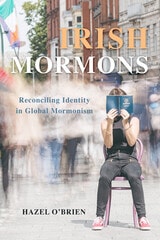
Irish Mormons
Reconciling Identity in Global MormonismHazel O'Brien
University of Illinois Press, 2023
Examining the Latter-day Saint experience against one nation’s rapid social and religious changes, Irish Mormons blends participant observation and interviews with analysis to offer a rare view of the Latter-day Saints in contemporary Ireland.
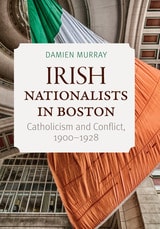
Irish Nationalists in Boston
Catholicism and Conflict, 1900-1928Damien Murray
Catholic University of America Press, 2018
For a brief period after World War I, Irish-American nationalism in Boston became a vehicle for the promotion of wider democratic reform. Though the movement was unable to survive the disagreements surrounding the Anglo-Irish Treaty of 1921, it had been a source of ethnic unity that enabled Boston’s Irish community to negotiate the challenges of the postwar years including the anti-socialist Red Scare and the divisions caused by the Boston Police Strike in the fall of 1919. Furthermore, Boston’s Irish nationalists drew heavily on Catholic Church teachings such that Irish ethnicity came to be more clearly identified with the advocacy of both cultural pluralism and the rights of immigrant and working families in Boston and America.
Iron Age Hieroglyphic Luwian Inscriptions
Annick Payne
SBL Press, 2012

Is God The Only Reality
Science Points Deeper Meaning Of UniverseJohn Marks Templeton
Templeton Press, 2012
Is Progress Speeding Up
Multiplying Multitudes Of BlessingsJohn Marks Templeton
Templeton Press, 1998
This book is a thought-provoking view of the progress of humankind in the last century. In spite of the pessimism that prevails in the media, people are better fed, better clothed, better housed, and better educated than at any previous time.
The facts within the book provide documentation for a positive outlook toward our nutrition and health, living standards and working conditions, political and economic freedoms, educational facilities, ability to communicate, ease of movement, increasing leisure, and, most important, our ability to get along with one another and with our Creator. The statistics, charts, and photographs that illustrate this book enhance the reassuring and uplifting view of the state of the world and where it is going.
“His analysis gives us a refreshing balance to the negative, sometimes cynical, views in the media that tend to portray the worst rather than the best in human civilization.” —Jimmy Carter
“After reading Sir John Templeton's latest book, I believe more than ever that we are living in the most exciting time in history. Despite the challenges we face, his demonstration of mankind's progress gives all of us great hopes and high expectations for our next century and the new millennium.” —Jack Kemp, former HUD secretary, director of Empower America
Is Samuel Among the Deuteronomists
Current Views on the Place of Samuel in a Deuteronomistic HistoryCynthia Edenburg
SBL Press, 2013
Is Ultimate Reality Unlimited Love?
Stephen G. Post
Templeton Press, 2014

Is the Cemetery Dead?
David Charles Sloane
University of Chicago Press, 2018
Is the Cemetery Dead? gets to the heart of the tragedy of death, chronicling how Americans are inventing new or adapting old traditions, burial places, and memorials. In illustrative prose, David Charles Sloane shows how people are taking control of their grief by bringing their relatives home to die, interring them in natural burial grounds, mourning them online, or memorializing them streetside with a shrine, ghost bike, or RIP mural. Today’s mourners are increasingly breaking free of conventions to better embrace the person they want to remember. As Sloane shows, these changes threaten the future of the cemetery, causing cemeteries to seek to become more responsive institutions.
A trained historian, Sloane is also descendent from multiple generations of cemetery managers and he grew up in Syracuse’s Oakwood Cemetery. Enriched by these experiences, as well as his personal struggles with overwhelming grief, Sloane presents a remarkable and accessible tour of our new American way of death.
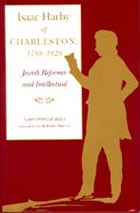
Isaac Harby of Charleston, 1788-1828
Jewish Reformer and IntellectualGary Phillip Zola
University of Alabama Press, 1994
The visionary voice who helped shape American Judaism—and Charleston’s cultural soul.
Isaac Harby of Charleston, 1788–1828 is a richly detailed biography that brings to life one of early America’s most fascinating and underappreciated Jewish intellectuals. Gary Phillip Zola offers a compelling portrait of Harby—a playwright, newspaper editor, drama critic, educator, and religious reformer—who emerged as a central figure in Charleston’s vibrant cultural scene during the early 19th century. At a time when Charleston was experiencing both economic prosperity and cultural efflorescence, Harby stood at the crossroads of literary ambition and religious innovation.
A descendant of Sephardic Jews, Harby was deeply engaged in the intellectual and civic life of his city. He founded a literary journal at just eighteen, established a private academy, and wrote prolifically on politics, education, and religion. But his most enduring legacy lies in his role as a pioneer of Reform Judaism in America. As a founding member of the Reformed Society of Israelites in 1825, Harby advocated for a rational, modernized approach to Jewish worship—one that emphasized universal ethics and intellectual engagement over ritual formalism. His efforts, though controversial in his time, laid the groundwork for the broader Reform movement that would flourish later in the century.
Drawing on newly uncovered archival materials, including Harby’s personal library and writings, Zola’s biography not only illuminates Harby’s life and thought but also offers a window into the broader cultural, religious, and political transformations of the early American republic. This book is essential reading for anyone interested in American Jewish history, Southern intellectual life, and the roots of religious reform in the United States.
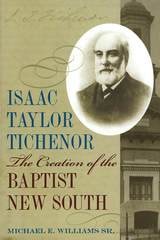
Isaac Taylor Tichenor
The Creation of the Baptist New SouthMichael E. Williams Sr.
University of Alabama Press, 2005
The influential role Tichenor played in shaping both the Baptist denomination and southern culture
Isaac Taylor Tichenor worked as a Confederate chaplain, a mining executive, and as president of the Agricultural and Mechanical College of Alabama (now Auburn University). He also served as corresponding secretary for the Home Mission Board of the Southern Baptist Convention in Atlanta from 1882 until 1899. In these capacities Tichenor developed the New South ideas that were incorporated into every aspect of his work and ultimately influenced many areas of southern life, including business, education, religion, and culture.
In Isaac Taylor Tichenor: The Creation of the Baptist New South, Michael E. Williams Sr. provides a comprehensive analysis of Tichenor’s life, examining the overall impact of his life and work. This volume also documents the methodologies Tichenor used to rally Southern Baptist support around its struggling Home Mission Board, which defined the makeup of the Southern Baptist Convention and defended the territory of the convention.
Tichenor was highly influential in forming a uniquely southern mindset prior to and at the turn of the century. Williams contends that Tichenor’s role in shaping Southern Baptists as they became the largest denomination in the South was crucial in determining their identity both the identities of the region and the SBC.
Isaac of Antioch
Homilies on Moral and Monastic ReformAdam H. Becker
SBL Press, 2024
This volume offers a critical edition and annotated translation of twenty metrical homilies attributed to Isaac of Antioch, a late fifth-century CE Syriac poet. The works in this collection, the majority of which are examples of the Syriac rebuke genre, are aimed at the moral reformation of the Syrian Christian community. The introduction, which provides the first detailed study of the manuscript tradition of the corpus as a whole, identifies four different Isaacs whose writings were intermingled already in late antiquity and develops criteria for distinguishing among their works. Scholars and students of church history will find this a valuable resource for the study of Syriac poetry and homiletics, Christian ideas of moral reform, and late antique monastic and lay devotional culture.
Isaac, Iphigeneia, and Ignatius
Martyrdom and Human SacrificeMonika Pesthy-Simon
Central European University Press, 2017
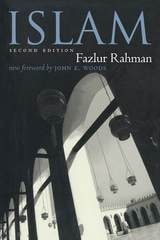
Islam
Fazlur Rahman
University of Chicago Press, 1979
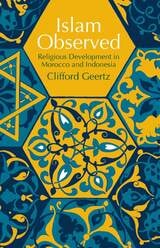
Islam Observed
Religious Development in Morocco and IndonesiaClifford Geertz
University of Chicago Press, 1971
Mr. Geertz begins his argument by outlining the problem conceptually and providing an overview of the two countries. He then traces the evolution of their classical religious styles which, with disparate settings and unique histories, produced strikingly different spiritual climates. So in Morocco, the Islamic conception of life came to mean activism, moralism, and intense individuality, while in Indonesia the same concept emphasized aestheticism, inwardness, and the radical dissolution of personality. In order to assess the significance of these interesting developments, Mr. Geertz sets forth a series of theoretical observations concerning the social role of religion.
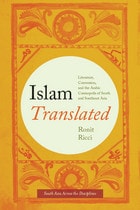
Islam Translated
Literature, Conversion, and the Arabic Cosmopolis of South and Southeast AsiaRonit Ricci
University of Chicago Press, 2011
In Islam Translated, Ronit Ricci uses the Book of One Thousand Questions—from its Arabic original to its adaptations into the Javanese, Malay, and Tamil languages between the sixteenth and twentieth centuries—as a means to consider connections that linked Muslims across divides of distance and culture. Examining the circulation of this Islamic text and its varied literary forms, Ricci explores how processes of literary translation and religious conversion were historically interconnected forms of globalization, mutually dependent, and creatively reformulated within societies making the transition to Islam.
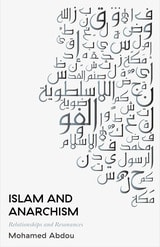
Islam and Anarchism
Relationships and ResonancesMohamed Abdou
Pluto Press, 2021
Discourse around Muslims and Islam all too often lapses into a false dichotomy of Orientalist and fundamentalist tropes. A popular reimagining of Islam is urgently needed. Yet it is a perhaps unexpected political philosophical tradition that has the most to offer in this pursuit: anarchism.
Islam and Anarchism is a highly original and interdisciplinary work, which simultaneously disrupts two commonly held beliefs - that Islam is necessarily authoritarian and capitalist; and that anarchism is necessarily anti-religious and anti-spiritual. Deeply rooted in key Islamic concepts and textual sources, and drawing on radical Indigenous, Islamic anarchistic and social movement discourses, Abdou proposes 'Anarcha-Islam'.
Constructing a decolonial, non-authoritarian and non-capitalist Islamic anarchism, Islam and Anarchism philosophically and theologically challenges the classist, sexist, racist, ageist, queerphobic and ableist inequalities in both post- and neo-colonial societies like Egypt, and settler-colonial societies such as Canada and the USA.
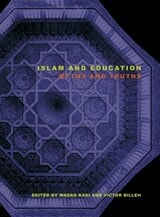
Islam and Education
Myths and TruthsEdited by Wadad Kadi and Victor Billeh
University of Chicago Press, 2007
In this timely volume based on a special issue of Comparative Education Review, leading comparative education scholars explore the world of education in Islam from the medieval era to today, illuminating the continuing struggle among Islamic scholars and educators over whether to reform or resist as a way of preserving identity. Islam and Education offers a rare overview of the great diversity in forms of Islamic education, dispelling misinterpretations and documenting the ever-evolving relationship of Islamic education to the West. It should be necessary reading for all humanists and social scientists wishing to understand the nexus between schools and societies, the spiritual dimensions of learning, and the social configuration of educational institutions.
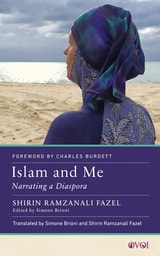
Islam and Me
Narrating a DiasporaShirin Ramzanali Fazel
Rutgers University Press, 2023
In Islam and Me, Fazel tells her story and shares the experiences of other Muslim women living in Italy, revealing the wide variety of Muslim identities and the common prejudices they encounter. Looking at Italian school textbooks, newspapers, and TV programs, she invites us to change the way Muslim immigrants, and especially women, are depicted in both news reports and scholarly research. Islam and Me is a meditation on our multireligious, multiethnic, and multilingual reality, as well as an exploration of how we might reimagine national culture and identity so that they become more diverse, inclusive, and anti-racist.
Islam and Modernity
Transformation of an Intellectual TraditionFazlur Rahman
University of Chicago Press, 1984
"In this work, Professor Fazlur Rahman presents a positively ambitious blueprint for the transformation of the intellectual tradition of Islam: theology, ethics, philosophy and jurisprudence. Over the voices advocating a return to Islam or the reestablishment of the Sharia, the guide for action, he astutely and soberly asks: What and which Islam? More importantly, how does one get to 'normative' Islam? The author counsels, and passionately demonstrates, that for Islam to be actually what Muslims claim it to be—comprehensive in scope and efficacious for every age and place—Muslim scholars and educationists must reevaluate their methodology and hermeneutics. In spelling out the necessary and sound methodology, he is at once courageous, serious and profound."—Wadi Z. Haddad, American-Arab Affairs
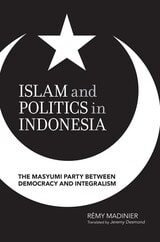
Islam and Politics in Indonesia
The Masyumi Party between Democracy and IntegralismRémy Madinier
National University of Singapore Press, 2015
This book examines the Masyumi Party from its roots in early 20th-century Muslim reformism to its contemporary legacy, and offers a perspective on political Islam which provides an alternative to the more widely-studied model of Middle-Eastern Islam. The party’s experience teaches us much about the fine line separating a moderate form of Islam open to democracy and a certain degree of secularisation from the sort of religious intransigence which can threaten the country’s denominational coexistence.
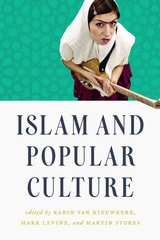
Islam and Popular Culture
Edited by Karin van Nieuwkerk, Mark LeVine, and Martin Stokes
University of Texas Press, 2016
Popular culture serves as a fresh and revealing window on contemporary developments in the Muslim world because it is a site where many important and controversial issues are explored and debated. Aesthetic expression has become intertwined with politics and religion due to the uprisings of the “Arab Spring,” while, at the same time, Islamist authorities are showing increasingly accommodating and populist attitudes toward popular culture. Not simply a “westernizing” or “secularizing” force, as some have asserted, popular culture now plays a growing role in defining what it means to be Muslim.
With well-structured chapters that explain key concepts clearly, Islam and Popular Culture addresses new trends and developments that merge popular arts and Islam. Its eighteen case studies by eminent scholars cover a wide range of topics, such as lifestyle, dress, revolutionary street theater, graffiti, popular music, poetry, television drama, visual culture, and dance throughout the Muslim world from Indonesia, Africa, and the Middle East to Europe. The first comprehensive overview of this important subject, Islam and Popular Culture offers essential new ways of understanding the diverse religious discourses and pious ethics expressed in popular art productions, the cultural politics of states and movements, and the global flows of popular culture in the Muslim world.
Islam and Secularity
The Future of Europe's Public SphereNilüfer Göle
Duke University Press, 2015
Islam and Social Policy
Stephen P. Heyneman
Vanderbilt University Press, 2004
The essays encompass many regional cultures and draw on court records and legal debates, field work on government ministries, and an extensive reading of Islamic law. In his overview of waqf (similar to the Western idea of a foundation, in which an endowment is set aside in perpetuity for specified purposes), Ahmad Dallal explains how charity, a central organizing principle in Islam, is itself organized and how waqf, traditionally a source of revenue for charitable purposes, can also become a source of tension and conflict. Donna Lee Bowen, in her essay on the position of women in Islamic law, points out the crucial differences between the Islamic principles of family equity and the Western notion of individual equality. In a subsequent essay, Bowen addresses the problems surrounding family planning and the dilemmas that have arisen within the Muslim world over differing ideas about birth control. The two final essays look at specific instances of how the modern state has treated Islamic social policy. Gail Richardson examines zakat, an Islamic tax used to assist the poor, and its administration in Pakistan. Carol Underwood, meanwhile, explores public health policy in Iran, both before and after the Islamic revolution that deposed the Shah.
Addressing some of the most profound misunderstandings between Islamic and Western societies, Islam and Social Policy will be of vital interest not only to scholars and policymakers but to anyone concerned with Islam's critical place in the modern world.
Islam and World History
The Ventures of Marshall HodgsonEdited by Edmund Burke and Robert J. Mankin
University of Chicago Press, 2018
In our post-9/11 world, Hodgson’s historical vision and moral engagement have never been more relevant. A towering achievement, Islam and World History will prove to be the definitive statement on Hodgson’s relevance in the twenty-first century and will introduce his influential work to a new generation of readers.
Islam and the Political
Theory, Governance and International RelationsAmr G. E. Sabet
Pluto Press, 2008
This book compares Islamic and Western political formulations, highlighting areas of agreement and disparity. Building on this analysis, the author goes on to show that political Islam offers a serious alternative to the dominant political system and ideology of the West.
Sabet argues that rather than leading to a "Clash of Civlizations" or the assimilation of Islam into the Western system, a positive process of interactive self-reflection between Islam and liberal democracy is the best way forward.
Beginning this process, Sabet highlights key concepts of Islamic political thought and brings them into dialogue with Western modernity. The resulting synthesis is essential reading for advanced undergraduate and graduate students of Islamic and Middle Eastern politics, political theory, comparative politics and international relations.
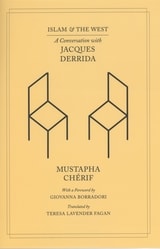
Islam and the West
A Conversation with Jacques DerridaMustapha Chérif
University of Chicago Press, 2008
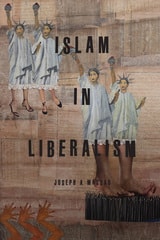
Islam in Liberalism
Joseph A. Massad
University of Chicago Press, 2014
Joseph Massad’s Islam in Liberalism explores what Islam has become in today’s world, with full attention to the multiplication of its meanings and interpretations. He seeks to understand how anxieties about tyranny, intolerance, misogyny, and homophobia, seen in the politics of the Middle East, are projected onto Islam itself. Massad shows that through this projection Europe emerges as democratic and tolerant, feminist, and pro-LGBT rights—or, in short, Islam-free. Massad documents the Christian and liberal idea that we should missionize democracy, women’s rights, sexual rights, tolerance, equality, and even therapies to cure Muslims of their un-European, un-Christian, and illiberal ways. Along the way he sheds light on a variety of controversial topics, including the meanings of democracy—and the ideological assumption that Islam is not compatible with it while Christianity is—women in Islam, sexuality and sexual freedom, and the idea of Abrahamic religions valorizing an interfaith agenda. Islam in Liberalism is an unflinching critique of Western assumptions and of the liberalism that Europe and Euro-America blindly present as a type of salvation to an assumingly unenlightened Islam.
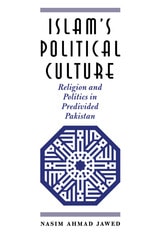
Islam's Political Culture
Religion and Politics in Predivided PakistanBy Nasim Ahmad Jawed
University of Texas Press, 1999
This book examines the political dimension of Islam in predivided Pakistan (1947-1971), one of the first new Muslim nations to commit itself to an Islamic political order and one in which the national debate on Islamic, political, and ideological issues has been the most persistent, focused, and rich of any dialogues in the contemporary Muslim world.
Nasim Jawed draws on the findings of a survey he conducted among two influential social groups—the ulama (traditional religious leaders) and the modern professionals—as well as on the writings of Muslim intellectuals. He probes the major Islamic positions on critical issues concerning national identity, the purpose of the state, the form of government, and free, socialist, and mixed economies.
This study contributes to an enhanced understanding of Islam's political culture worldwide, since the issues, positions, and arguments are often similar across the Muslim world. The empirical findings of the study not only outline the ideological backdrop of contemporary Islamic reassertion, but also reveal diversity as well as tensions within it.
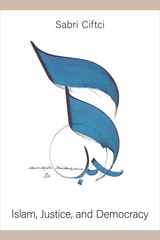
Islam, Justice, and Democracy
Sabri Ciftci
Temple University Press, 2022
Justice (al-‘adl) is one of the principal values of the Islamic faith. In Islam, Justice, and Democracy, Sabri Ciftci explores the historical, philosophical, and empirical foundations of justice to examine how religious values relate to Muslim political preferences and behavior. He focuses on Muslim agency and democracy to explain how ordinary Muslims use the conceptions of divine justice—either servitude to God or exercising free will against oppressors—to make sense of real-world problems.
Using ethnographic research, interviews, and public opinion surveys as well as the works of Islamist ideologues, archives of Islamist journals, and other sources, Ciftci shows that building contemporary incarnations of Islamist justice is, in essence, a highly practical political project that has formative effects on Muslim political attitudes. Islam, Justice, and Democracy compares the recent Arab Spring protests to the constitutionalist movements of the nineteenth and twentieth centuries in the Middle East to demonstrate the continuities and rifts a century apart.
By putting justice at the center of democratic thinking in the Muslim world, Ciftci reconsiders Islam's potential in engendering both democratic ideals and authoritarian preferences.
Islam
A Way of LifePhilip Hitti
University of Minnesota Press, 1970
Islam
Between Divine Message and HistoryAbdelmajid Sharfi
Central European University Press, 2005
Islam
Origin and BeliefBy Emory C. Bogle
University of Texas Press, 1998
Islam is the fastest-growing religion in the world today. An understanding of its beliefs and practices has become essential knowledge not only for religious and political leaders but also for ordinary citizens who increasingly interact with Muslims as neighbors, coworkers, and schoolmates.
This book is designed to offer the general public a concise overview of the origins, basic beliefs, and common practices of Islam, as well as the reasons for its dramatic resurgence in recent times. Emory Bogle details the life mission of the prophet Muhammad and describes the spread of Islam after his death. He accounts for the rise and contemporary influence of Shi'i Islam, a topic of particular interest to Western readers. Bogle also explains the basic beliefs ("The Five Pillars") of Islam, as well as the role played by the Qur'an (Islam's scriptures), the hadith (the words and behavior of Muhammad), and the shari'a (Islamic law).
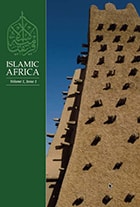
Islamic Africa 1.1
Muhammad Sani Umar
Northwestern University Press, 2010
Islamic Africa promotes interaction between scholars of Islam and Africa across all continents and across historical periods. We welcome papers on any aspect of Islam and Muslim life pertaining to Africa and/or Africans from the humanities and the social sciences, especially those originating from the African continent.
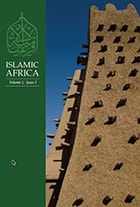
Islamic Africa 1.2
Muhammad Sani Umar
Northwestern University Press, 2010
Islamic Africa promotes interaction between scholars of Islam and Africa across all continents and across historical periods. We welcome papers on any aspect of Islam and Muslim life pertaining to Africa and/or Africans from the humanities and the social sciences, especially those originating from the African continent.