Results by title
22279 books match the query 'Social Science' and 851 start with i

In the Beginning
First Novels in Mystery SeriesMary Jean Demarr
University of Wisconsin Press, 1995
This volume contains fourteen essays by authoritative academics studying the field of mystery and detective fiction. The essays all concentrate on the first novels in established series, analyzing ways in which the opening books of the series do or do not create patterns followed in succeeding novels.
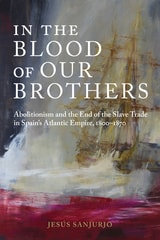
In the Blood of Our Brothers
Abolitionism and the End of the Slave Trade in Spain's Atlantic Empire, 1800–1870Jesús Sanjurjo
University of Alabama Press, 2021
FINALIST FOR THE PAUL E. LOVEJOY BOOK PRIZE
Unraveling the complex politics behind the end of the slave trade in Spain's Atlantic Empire.
Throughout the nineteenth century, very few people in Spain campaigned to stop the slave trade and did even less to abolish slavery. Even when some supported abolition, the reasons that moved them were not always humanitarian, liberal, or egalitarian. How abolitionist ideas were received, shaped, and transformed during this period has been ripe for study. Jesús Sanjurjo’s In the Blood of Our Brothers: Abolitionism and the End of the Slave Trade in Spain’s Atlantic Empire, 1800–1870 provides a comprehensive theory of the history, the politics, and the economics of the persistence and growth of the slave trade in the Spanish empire even as other countries moved toward abolition.
Sanjurjo privileges the central role that British activists and diplomats played in advancing the abolitionist cause in Spain. In so doing, he brings to attention the complex and uneven development of abolitionist and antiabolitionist discourses in Spain’s public life, from the beginning of the nineteenth century to the end of the transatlantic trade. His delineation of the ideological and political tension between Spanish liberalism and imperialism is crucial to formulating a fuller explanation of the reasons for the failure of anti–slave trade initiatives from 1811 to the 1860s. Slave trade was tied to the notion of inviolable property rights, and slavery persisted and peaked following three successful liberal revolutions in Spain.
Visit https://inthebloodofourbrothers.com/ for more information.
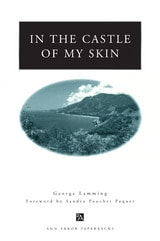
In the Castle of My Skin
George Lamming
University of Michigan Press, 1992
Nearly forty years after its initial publication, George Lamming's In the Castle of My Skin is considered a classic narrative of the Black colonial experience. This poetic autobiographical novel juxtaposes the undeveloped, unencumbered life of a small Caribbean island with the materialism and anxiety of the twentieth century.
Written when Lamming was twenty-three and residing in England, In the Castle of My Skin poignantly chronicles the author's life from his ninth to his nineteenth year. Through the eyes of a young boy the experiences of colonial education, class tensions, and natural disaster are interpreted and reinterpreted, mediated through the presence of the old villagers and friends who leave for the mainland.
One of the leading Black writers of the twentieth century, George Lamming is the author of numerous works exploring the colonial experience.

In the Charge of a Woman
Harriet Tenney, Michigan’s First Female State LibrarianValerie R. Marvin
Michigan State University Press, 2027
In 1869, at a moment when women were largely barred from public life and professional opportunities, Harriet Tenney stepped into Michigan’s State Capitol and made history. As the first woman to hold a full-time position in the State of Michigan’s government, she spent the next twenty-two years reshaping not only Michigan’s libraries, but the nation’s understanding of what women could achieve in public service.
Appointed and reappointed by seven governors from both political parties, Tenney built one of the country’s most respected state libraries. She dramatically expanded its collections, established professional standards that became models for libraries across the country, and mentored a generation of women librarians who followed in her path. She also founded Michigan’s first state museum, ensuring that historical artifacts, portraits, and documents would be preserved for future generations; today, tens of thousands of people each year visit and study the objects she collected and curated.
Tenney’s impact radiated far beyond the Capitol. Under her leadership, the state librarianship itself became recognized as a “woman’s position”—a remarkable shift in an era when women's work remained largely invisible. In Lansing, she founded the Woman’s Club as well as the Lansing Library and Literary Association, which evolved into the Capital Area District Library system.
In the Charge of a Woman not only tells the story of Tenney’s achievements in expanding the role of women in the workforce; it also illuminates domestic and political life in nineteenth-century Michigan, revealing how one woman navigated, and transformed, a world built to exclude her.

In the Company of Books
Literature and Its "Classes" in Nineteenth-Century AmericaSarah Wadsworth
University of Massachusetts Press, 2006
With sections focusing on segmentation by age, gender, and cultural status, In the Company of Books analyzes the ways authors and publishers carved up the field of literary production into a multitude of distinct submarkets, differentiated their products, and targeted specific groups of readers in order to guide their book-buying decisions. Combining innovative approaches to canonical authors such as Nathaniel Hawthorne, Louisa May Alcott, Mark Twain, and Henry James with engaging investigations into the careers of many lesser-known literary figures, Sarah Wadsworth reveals how American writers responded to—and contributed to—this diverse, and diversified, market.
In the Company of Books contends that specialized editorial and marketing tactics, in concert with the narrative strategies of authors and the reading practices of the book-buying public, transformed the literary landscape, leading to new roles for the book in American culture, the innovation of literary genres, and new relationships between books and readers. Both an exploration of a fragmented print culture through the lens of nineteenth-century American literature and an analysis of nineteenth-century American literature from the perspective of this subdivided marketplace, this wide-ranging study offers fresh insight into the impact of market forces on the development of American literature.

In the Company of Diamonds
De Beers, Kleinzee, and the Control of a TownPeter Carstens
Ohio University Press, 2001
After the 1925 discovery of diamonds in the semi-desert of the northwest coast of South Africa, De Beers Consolidated Mines Ltd. virtually proclaimed its dominion over the whole region. In the town of Kleinzee, the company owns all the real estate and infrastructure, and controls and administers both the town and the industry.
Peter Carstens’s In the Company of Diamonds draws a stark and startling portrait of this closed community, one that analyzes the power and hegemonic techniques used to acquire that power and maintain it.
As a prototypical company town, Kleinzee is subordinated to the industry and will of the owners. Employees and workers are variously differentiated and ordered according to occupation, ethnic variation, and other social criteria, a pattern reflected most markedly in the allocation of housing. Managers live in large, ranch-style houses, while contract workers are lodged in single-sex compounds.
As a community type, company towns like Kleinzee are not entirely unique, and Professor Carstens successfully draws a number of structural parallels with other closed and incomplete social formations such as Indian reservations, military bases, colleges, prisons, and mental hospitals.

In the Company of Grace
A Veterinarian's Memoir of Trauma and HealingJody Lulich
University of Minnesota Press, 2023
The son of a Black mother and white father overcomes family trauma to find the courage of compassion in veterinary practice
Rising to accept a prestigious award, Jody Lulich wondered what to say. Explain how he’d been attracted to veterinary medicine? Describe how caring for helpless, voiceless animals in his own shame and pain provided a lifeline, a chance to heal himself as well? Lulich tells his story in In the Company of Grace, a memoir about finding courage in compassion and strength in healing—and power in finally confronting the darkness of his youth.
Lulich’s white father and Black mother met at a civil rights rally, but love was no defense against their personal demons. His mother’s suicide, in his presence when he was nine years old, and his sometimes brutal father’s subsequent withdrawal set Lulich on a course from the South Side of Chicago to the Tuskegee School of Veterinary Medicine in Alabama to an endowed chair at the University of Minnesota, forever searching for the approval and affection that success could not deliver. Though shadowed by troubling secrets, his memoir also features scenes of surprising light and promise—of the neighbors who take him in, a brother’s unlikely effort to save Christmas, his mother’s memories of the family’s charmed early days, bright moments (and many curious details) of veterinary practice. Most consequentially, at Tuskegee Lulich rents a room in the home of a seventy-five-year-old Black woman named Grace, whose wholehearted adoption of him—and her own stories of the Jim Crow era—finally gives him a sense of belonging and possibility.
Completing his book amid the furor over George Floyd’s murder, Lulich reflects on all the ways that race has shaped his life. In the Company of Grace is a moving testament to the power of compassion in the face of seemingly overwhelming circumstances.

In the Company of Radical Women Writers
Rosemary Hennessy
University of Minnesota Press, 2023
Recovering the bold voices and audacious lives of women who confronted capitalist society’s failures and injustices in the 1930s—a decade unnervingly similar to our own
In the Company of Radical Women Writers rediscovers the political commitments and passionate advocacy of seven writers—Black, Jewish, and white—who as young women turned to communism around the Great Depression and, over decades of national crisis, spoke to issues of labor, land, and love in ways that provide urgent, thought-provoking guidance for today. Rosemary Hennessy spotlights the courageous lives of women who confronted similar challenges to those we still face: exhausting and unfair labor practices, unrelenting racial injustice, and environmental devastation.
As Hennessy brilliantly shows, the documentary journalism and creative and biographical writings of Marvel Cooke, Louise Thompson Patterson, Claudia Jones, Alice Childress, Josephine Herbst, Meridel Le Sueur, and Muriel Rukeyser recognized that life is sustained across a web of dependencies that we each have a duty to maintain. Their work brought into sharp focus the value and dignity of Black women’s domestic work, confronted the destructive myths of land exploitation and white supremacy, and explored ways of knowing attuned to a life-giving erotic energy that spans bodies and relations. In doing so, they also expanded the scope of American communism.
By tracing the attention these seven women pay to “life-making” as the relations supporting survival and wellbeing—from Harlem to the American South and Midwest—In the Company of Radical Women Writers reveals their groundbreaking reconceptions of the political and provides bracing inspiration in the ongoing fight for justice.
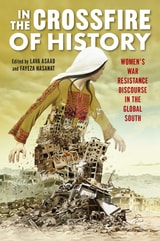
In the Crossfire of History
Women's War Resistance Discourse in the Global SouthLava Asaad
Rutgers University Press, 2022
The transformative mode of these examples expands the definition of heroism and defiance. To prevent these types of heroism from slipping into the abyss of history, this collection brings forth and celebrates women’s fortitude in conflict zones. In the Crossfire of History shines a light onwomen across the globe who are resisting the sociopolitical and economic injustices in their nation-states.

In the Days of Victorio
Recollections of a Warm Springs ApacheEve Ball; Narrated by James Kaywaykla
University of Arizona Press, 1970
"This volume contains a great deal of interesting information."—Journal of the West
"The Apache point of view [is] presented with great clarity."—Books of the Southwest
"A valuable addition to the southwestern frontier shelf and long will be drawn upon and used."—Journal of Arizona History
"A genuine contribution to the story of the Apache wars, and a very readable book as well."—Westerners Brand Book
"Shining through every page is the unquenchable spirit that was the Apache. Inured, indeed trained, to suffering, Apaches stood strong beside Victorio, Nana, and finally Geronimo in a vain attempt to maintain those things they held more dear than life itself—freedom, homeland, dignity as human beings. A warm and vital people, the Apaches had, and have, a great deal to offer."—Arizona and the West

In the Desert of Desire
Las Vegas and the Culture of SpectacleWilliam L. Fox
University of Nevada Press, 2007
Las Vegas, says William Fox, is a pay-as-you-play paradise that succeeds in satisfying our fantasies of wealth and the excesses of pleasure and consumption that go with it. In this context, Fox examines how Las Vegas’s culture of spectacle has obscured the boundaries between high art and entertainment extravaganza, nature and fantasy, for-profit and nonprofit enterprises. His purview ranges from casino art galleries—including Steve Wynn’s private collection and a branch of the famed Guggenheim Museum—to the underfunded Las Vegas Art Museum; from spectacular casino animal collections like those of magicians Siegfried and Roy and Mandalay Bay’s Shark Reef exhibit to the city’s lack of support for a viable public zoo; from the environmental and psychological impact of lavish water displays in the arid desert to the artistic ambiguities intrinsic to Las Vegas’s floating world of showgirls, lapdancers, and ballet divas. That Las Vegas represents one of the world’s most opulent displays of private material wealth in all its forms, while providing miserly funding for local public amenities like museums and zoos, is no accident, Fox maintains. Nor is it unintentional that the city’s most important collections of art and exotic fauna are presented in the context of casino entertainment, part of the feast of sensation and excitement that seduces millions of visitors each year. Instead, this phenomenon shows how our insatiable modern appetite for extravagance and spectacle has diminished the power of unembellished nature and the arts to teach and inspire us, and demonstrates the way our society privileges private benefit over public good. Given that Las Vegas has been a harbinger of national cultural trends, Fox’s commentary offers prescient insight into the increasing commercialization of nature and culture across America.

In the Eastern Fluted Point Tradition
Joseph A. M. Gingerich
University of Utah Press, 2013
Eastern North America has one of the largest inventories of Paleoindian sites anywhere in the Americas. Despite this rich record of early human settlement during the late Pleistocene, there are few widely published reports or summaries of Paleoindian research in the region. The contributors to this volume present more than four decades of Early Paleoindian research in eastern North America, including previously unpublished site reports and updates on recent research. Their work helps create a more cohesive picture of the early human occupation of North America.
This data-rich volume provides specific information on artifacts and basic site descriptions which will allow for more thorough comparisons of eastern fluted point sites. Divided into four sections—chronology and environment, reinvestigations of classic sites, new sites and perspectives, and synthesis and conclusions—the volume will encourage further consideration of the sites included and their role in shaping our understanding of huntergatherer lifeways during the late Pleistocene. In the Eastern Fluted Point Tradition is a must read for scholars of Paleoindian archaeology and those generally interested in the prehistory of North America.

In the Eastern Fluted Point Tradition
Volume IIEdited by Joseph A. M. Gingerich
University of Utah Press, 2017

In the Event of Women
Tani Barlow
Duke University Press, 2021

In the Eye of the Beholder
Critical Perspectives in Popular Film and TelevisionEdited by Gary R. Ederton, Michael T. Marsden, and Jack Nachbar
University of Wisconsin Press, 1997
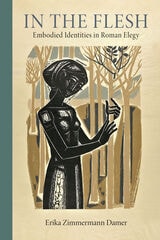
In the Flesh
Embodied Identities in Roman ElegyErika Zimmermann Damer
University of Wisconsin Press, 2022
Recognizing this power of material flesh to shape elegiac poetry, she asserts, grants figures at the margins of this poetic discourse—mistresses, rivals, enslaved characters, overlooked members of households—their own identities, even when they do not speak. She demonstrates how the three poets create a prominent aesthetic of corporeal abjection and imperfection, associating the body as much with blood, wounds, and corporeal disintegration as with elegance, refinement, and sensuality.

In the Forest of Metropoles
Karl-Markus Gauß
Seagull Books, 2024
A Herodotus of Mitteleuropa, cultural historian Karl-Markus Gauß is essential reading for anyone trying to understand the breadth and complexities of cultures and societies in Europe before, during, and after its decades of division in the twentieth century.
In this book, Gauß takes his readers on a thirteen-station journey across Europe. From Brussels to Istanbul and from Naples to Opole, Gauß weaves a Sebaldian web of connection and coincidence into a hybrid cultural history. Significantly, Gauß’s metropoles are not the well-trodden, thoroughly explored, and minutely documented megalopolises and cultural capitals that have been mythologized by writers great and small. There are no visits to Berlin, Paris, Rome, or Madrid, although he does make time for Vienna, where he looks not for imperial remnants, but for traces of genius unrecognized by most. Gauß’s lodestars are small but cosmopolitan towns on the periphery, such as Slaghenaufi, Vacaresti, Fontevraud, Dragatus, Vrzdenec, and Sélestat. In these far-flung towns, Gauß assembles a canon of overlooked humanists, expelled or extinguished by political and historical forces that swept the continent.
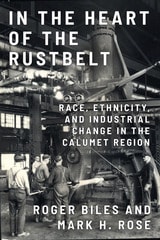
In the Heart of the Rustbelt
Race, Ethnicity, and Industrial Change in the Calumet RegionRoger Biles and Mark H. Rose
Temple University Press, 2027
The Calumet Region around Lake Michigan’s southern rim once housed massive steel mills, workshops, and railroads. Capitalists like Elbert Gary built factories and dominated local governments. During its heyday in the twentieth century, the Calumet Region was also a thriving district for immigrants who worked dangerous jobs.
But even before the area’s decline started in the 1970s, intense racial, ethnic, and political strife determined job and housing prospects. In the Heart of the Rustbelt details how people struggled as factory rules and local politics failed to protect residents from health hazards and sabotaged workers’ rights.
Roger Biles and Mark Rose describe how workers organized (or didn’t), the ethnic neighborhoods where they lived, and the distinct foodstuffs, such as Hungarian goulash, that both bonded and excluded immigrants. The authors also showcase individuals including Gary, IN Mayor Richard G. Hatcher, who fought for equality. Chapters also explore the lives of steelworkers Eddie Sadlowski, who sought to democratize the union, and Mexican American Jesse Villalpando, who experienced union and management’s hostility in hiring and job assignments.
In the Heart of the Rustbelt provides a fascinating history about industrial growth and why race and ethnicity mattered as the Calumet Region rose and fell.

In the House of Wilderness
A NovelCharles Dodd White
Ohio University Press, 2018
Rain is a young woman under the influence of a charismatic drifter named Wolf and his other “wife,” Winter. Through months of wandering homeless through the cities, small towns, and landscape of Appalachia, the trio have grown into a kind of desperate family, a family driven by exploitation and abuse. A family that Rain must escape.
When she meets Stratton Bryant, a widower living alone in an old east Tennessee farmhouse, Rain is given the chance to see a bigger world and find herself a place within it. But Wolf will not let her part easily. When he demands loyalty and obedience, the only way out is through an episode of violence that will leave everyone involved permanently damaged.
A harrowing story of choice and sacrifice, Charles Dodd White’s In the House of Wilderness is a novel about the modern South and how we fight through hardship and grief to find a way home.

In the House of the Hangman
The Agonies of German Defeat, 1943-1949Jeffrey K. Olick
University of Chicago Press, 2005
In the House of the Hangman chronicles this delicate process, exploring key debates about the Nazi past and German future during the later years of World War II and its aftermath. What did British and American leaders think had given rise to National Socialism, and how did these beliefs shape their intentions for occupation? What rhetorical and symbolic tools did Germans develop for handling the insidious legacy of Nazism? Considering these and other questions, Jeffrey K. Olick explores the processes of accommodation and rejection that Allied plans for a new German state inspired among the German intelligentsia. He also examines heated struggles over the value of Germany's institutional and political heritage. Along the way, he demonstrates how the moral and political vocabulary for coming to terms with National Socialism in Germany has been of enduring significance—as a crucible not only of German identity but also of contemporary thinking about memory and social justice more generally.
Given the current war in Iraq, the issues contested during Germany's abjection and reinvention—how to treat a defeated enemy, how to place episodes within wider historical trajectories, how to distinguish varieties of victimhood—are as urgent today as they were sixty years ago, and In the House of the Hangman offers readers an invaluable historical perspective on these critical questions.
In the Land of Mirrors
Cuban Exile Politics in the United StatesMaria de los Angeles Torres
University of Michigan Press, 2001

In the Land of the Unreal
Virtual and Other Realities in Los AngelesLisa Messeri
Duke University Press, 2024
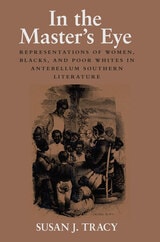
In the Master's Eye
Representations of Women, Blacks, and Poor Whites in Antebellum Southern LiteratureSusan J. Tracy
University of Massachusetts Press, 1995
This book explores the way in which literature can be used to reinforce social power. Through rigorous readings of a series of antebellum plantation novels, Susan J. Tracy shows how the narrative strategies employed by proslavery Southern writers served to justify and perpetuate the oppression of women, blacks, and poor whites.
Tracy focuses on the historical romances of six authors: George Tucker, James Ewell Heath, William Alexander Caruthers, John Pendleton Kennedy, Nathaniel Beverley Tucker, and William Gilmore Simms. Using variations on a recurring plot—in which a young planter/hero rescues a planter's daughter from an “enemy” of her class—each of these novelists reinforced an idealized vision of a Southern civilization based on male superiority, white supremacy, and class inequality. It is a world in which white men are represented as the natural leaders of loyal and dependent women, grateful and docile slaves, and inferior poor whites. According to Tracy, the interweaving of these themes reveals the extent to which the Southern defense of slavery in the years leading up to the Civil War was an argument not only about race relations but about gender and class relations as well.
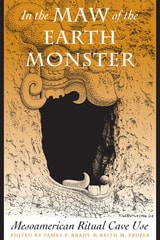
In the Maw of the Earth Monster
Mesoamerican Ritual Cave UseEdited by James E. Brady and Keith M. Prufer
University of Texas Press, 2005
As portals to the supernatural realm that creates and animates the universe, caves have always been held sacred by the peoples of Mesoamerica. From ancient times to the present, Mesoamericans have made pilgrimages to caves for ceremonies ranging from rituals of passage to petitions for rain and a plentiful harvest. So important were caves to the pre-Hispanic peoples that they are mentioned in Maya hieroglyphic writing and portrayed in the Central Mexican and Oaxacan pictorial codices. Many ancient settlements were located in proximity to caves.
This volume gathers papers from twenty prominent Mesoamerican archaeologists, linguists, and ethnographers to present a state-of-the-art survey of ritual cave use in Mesoamerica from Pre-Columbian times to the present. Organized geographically, the book examines cave use in Central Mexico, Oaxaca, and the Maya region. Some reports present detailed site studies, while others offer new theoretical understandings of cave rituals. As a whole, the collection validates cave study as the cutting edge of scientific investigation of indigenous ritual and belief. It confirms that the indigenous religious system of Mesoamerica was and still is much more terrestrially focused that has been generally appreciated.
In the Meantime
Temporality and Cultural PoliticsSarah Sharma
Duke University Press, 2014

In the Mood for Texture
The Revival of Bangkok as a Chinese CityArnika Fuhrmann
Duke University Press, 2026
In the Name of El Pueblo
Place, Community, and the Politics of History in YucatánPaul K. Eiss
Duke University Press, 2010

In the Name of Elijah Muhammad
Louis Farrakhan and The Nation of IslamMattias Gardell
Duke University Press, 1996
Beginning with Master Farad Muhammad, believed to be God in Person, Gardell examines the origins of the Nation. His research on the period of Elijah Muhammad’s long leadership draws on previously unreleased FBI files that reveal a clear picture of the bureau’s attempts to neutralize the Nation of Islam. In addition, they shed new light on the circumstances surrounding the murder of Malcolm X. With the main part of the book focused on the fortunes of the Nation after Elijah Muhammad’s death, Gardell then turns to the figure of Minister Farrakhan. From his emergence as the dominant voice of the radical black Islamic community to his leadership of the Million Man March, Farrakhan has often been portrayed as a demagogue, bigot, racist, and anti-Semite. Gardell balances the media’s view of the Nation and Farrakhan with the Nation’s own views and with the perspectives of the black community in which the organization actively works. His investigation, based on field research, taped lectures, and interviews, leads to the fullest account yet of the Nation of Islam’s ideology and theology, and its complicated relations with mainstream Islam, the black church, the Jewish community, extremist white nationalists, and the urban culture of black American youth, particularly the hip-hop movement and gangs.

In the Name of Humanity
The Government of Threat and CareIlana Feldman and Miriam Ticktin, eds.
Duke University Press, 2010
The editors argue that ideas about humanity find concrete expression in the governing work that operationalizes those ideas to produce order, prosperity, and security. As a site of governance, humanity appears as both an object of care and a source of anxiety. Assertions that humanity is being threatened, whether by environmental catastrophe or political upheaval, provide a justification for the elaboration of new governing techniques. At the same time, humanity itself is identified as a threat (to nature, to nation, to global peace) which governance must contain. These apparently contradictory understandings of the relation of threat to the category of humanity coexist and remain in tension, helping to maintain the dynamic co-production of governance and humanity.
Contributors. Arun Agrawal, Joao Biehl , Didier Fassin, Allen Feldman, Ilana Feldman, Rebecca Hardin, S. Lochann Jain, Liisa Malkki, Adriana Petryna, Miriam Ticktin, Richard Ashby Wilson, Charles Zerner

In the Name of National Security
Hitchcock, Homophobia, and the Political Construction of Gender in Postwar AmericaRobert J. Corber
Duke University Press, 1993
As Corber shows, throughout the 1950s a cast of mind known as the Cold War consensus prevailed in the United States. Promoted by Cold War liberals--that is, liberals who wanted to perserve the legacies of the New Deal but also wished to separate liberalism from a Communist-dominated cultural politics--this consensus was grounded in the perceived threat that Communists, lesbians, and homosexuals posed to national security. Through an analysis of the films of Alfred Hitchcock, combined with new research on the historical context in which these films were produced, Corber shows how Cold War liberals tried to contain the increasing heterogeneity of American society by linking questions of gender and sexual identity directly to issues of national security, a strategic move that the films of Hitchcock both legitimated and at times undermined. Drawing on psychoanalytic and Marxist theory, Corber looks at such films as Rear Window, Strangers on a Train, and Psycho to show how Hitchcock manipulated viewers' attachments and identifications to foster and reinforce the relationship between homophobia and national security issues.
A revisionary account of Hitchcock's major works, In the Name of National Security is also of great interest for what it reveals about the construction of political "reality" in American history.

In the Name of Women's Rights
The Rise of FemonationalismSara R. Farris
Duke University Press, 2017

In the Name of the Father
The Rhetoric of the New Southern Baptist ConventionCarl L. Kell and L. Raymond Camp. Foreword by Kenneth Chafin
Southern Illinois University Press, 1999
In the Name of the Father: The Rhetoric of the New Southern Baptist Conventionbegins with an analysis of the 1979 Southern Baptist Convention, the watershed convention where moderate forces fell before the powerful oratory of the ultraconservative faction, which has remained in power ever since. Communication professors Carl L. Kell and L. Raymond Camp investigate the rhetorical shift from moderate to ultraconservative in the Southern Baptist Convention, the largest denomination in the South and the largest Protestant denomination in the United States.
Drawing on sermons delivered at national conventions from 1979 to the present, Kell and Camp outline the discourses of fundamentalism, inerrancy, and exclusion. These discourses, the authors assert, point to the SBC leaders’ call for a return to times before feminism and tolerance of varying sexual orientations allegedly brought chaos to society and shook believers from their theological foundations.
In the Name of the Mother
Italian Americans, African Americans, and Modernity from Booker T. Washington to Bruce SpringsteenSamuele F. S. Pardini
Dartmouth College Press, 2017
In the Neighborhood
Women's Publication in Early AmericaCaroline Wigginton
University of Massachusetts Press, 2016
Winner of the 2018 Early American Literature Book Prize
In this compelling and original book, Caroline Wigginton reshapes our understanding of early American literary history. Overturning long-standing connections between the male-dominated print culture of pamphlets, broadsides, and newspapers and the transformative ideas that instigated the American Revolution, Wigginton explores how women's “relational publications”—circulated texts, objects, and performances—transformed their public and intimate worlds. She argues that Native, black, and white women's interpersonal "publications" revolutionized the dynamics of power and connection in public and private spaces, whether those spaces were Quaker meeting houses, Creek talwas, trading posts, burial grounds, or the women's own "neighborhoods."
Informed by deep and rich archival research, Wigginton's case studies explore specific instances of “relational publication.” The book begins with a pairing of examples—the statement a grieving Lenape mother made through a wampum belt and the political affiliations created when a salon hostess shared her poetry. Subsequent chapters trace a history of women's publication practice, including a Creek woman's diplomatic and legal procession-spectacles in the colonial Southeast, a black mother's expression of protest in Newport, Rhode Island, and the resulting evangelical revival, Phillis Wheatley's elegies that refigured neighborhoods of enslaved and free Bostonians, and a Quaker woman's pious and political commonplace book in Revolutionary Philadelphia.

In the Open
Diary of a Homeless AlcoholicTimothy E. Donohue
University of Chicago Press, 1996
Donohue's experiences are brutal, but his perceptions are poetic. This account of an intelligent and sensitive man in the grip of alcoholism and homelessness challenges our perceptions of those on the margins of American contemporary life.
"Donohue recorded this often-moving account during a four-year period of homelessness caused by his alcoholism. . . . There are many brilliant observations here on a range of topics, including human nature, technology, and capitalism. . . . Donohue's life on the fringe also provides an inside look at the homeless system of overnight shelters, labor offices, and food stamp providers. But, somehow, in spite of all the negatives, a hopeful book emerges."—Booklist
"A startlingly original book. In this confessional age, Donohue's diary becomes a different sort of tell-all, a palimpsest that forces us to extract the author from his own writing. . . . Donohue comes to resemble Swift's Gulliver"—Nicholas Nesson, Boston Phoenix
"Donohue punctuates his account of 'domiciling within the black walls of a mosquito-infested night' with rambling metaphysical asides in the style of an eighteenth-century philosophe."—Molly McQuade, Lingua Franca
"Despite hunger, homelessness, dead-end jobs and abusive drinking, what is most striking about Donohue is his amazing optimism and endurance."—Patrick Markee, Nation
"Donohue is a gifted writer. . . . But what gives [his diary] the breath of life is that it is written by an artist."—Alec Wilkinson, Los Angeles Times Book Review
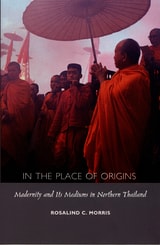
In the Place of Origins
Modernity and Its Mediums in Northern ThailandRosalind C. Morris
Duke University Press, 2000
Through her careful examination of the transformations of spirit mediumship wrought by the mass media, Morris takes readers into the world of the northern Thai past to discover the anticipations of future histories. In this process, she finds new objects for anthropological inquiry, including romantic love and epistolary poetry. She then turns her eye toward the relationships between commodification and prosaic form and photography and the discourses of gendered and national identity. Attending to these issues as they manifest themselves in the practices of mediums, Morris describes both the mundane activities of spirit mediums and the grand ambitions to political authority that are embodied in the increasingly spectacular forms of possession that are becoming so popular with both tourists and local culture brokers. In the Place of Origins traverses this ground with accounts of right-wing militarism and ritual revival during the 70s, and of the democracy movement of 1992, when a global mass media was galvanized by images of military repression and the spectacle of traditional ritual power in cursing. Finally, considering the claims that mediums make to magical power in the face of both AIDS and the Asian economic crisis, Morris reveals the potency of extrajudicial forms of power and violence in the late modern era.
This provocative study will interest anthropologists, historians, Asianists, and those involved in gender, performance, media, and literary studies.

In the Presence of Gods and Spirits
Hirata Atsutane and His CollaboratorsAnne Walthall
University of Michigan Press, 2025
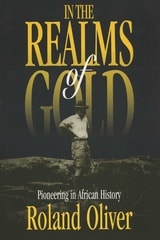
In the Realms of Gold
Pioneering in African HistoryRoland Oliver
University of Wisconsin Press, 1997
In the Realms of Gold is Oliver’s account of his life and work. He writes in a deft and lively style about the circumstances of his early life that shaped his education and outlook: his childhood on a river houseboat in Kashmir, the influential teachers and friends met at Stowe and Cambridge, and his service in World War II as a cryptographer in British intelligence, where he met his first wife, Caroline Linehan. His interest in church history while at Cambridge led him to study the historical effects of Christian missionaries in Africa, and thus his career began.
The core of the book is Oliver’s account of his research travels throughout tropical Africa from the 1940s to the 1980s; his efforts to train and foster African graduate students to teach in African universities; his role in establishing conferences and journals to bring together the work of historians and archaeologists from Europe and Africa; his encounters with political and religious leaders, scholars, soldiers, and storytellers; and the political and economic upheavals of the continent that he witnessed.
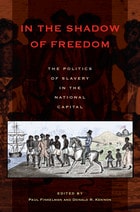
In the Shadow of Freedom
The Politics of Slavery in the National CapitalPaul Finkelman
Ohio University Press, 2011
Few images of early America were more striking, and jarring, than that of slaves in the capital city of the world’s most important free republic. Black slaves served and sustained the legislators, bureaucrats, jurists, cabinet officials, military leaders, and even the presidents who lived and worked there. While slaves quietly kept the nation’s capital running smoothly, lawmakers debated the place of slavery in the nation, the status of slavery in the territories newly acquired from Mexico, and even the legality of the slave trade in itself.
This volume, with essays by some of the most distinguished historians in the nation, explores the twin issues of how slavery made life possible in the District of Columbia and how lawmakers in the district regulated slavery in the nation.
Contributors: David Brion Davis, Mary Beth Corrigan, A. Glenn Crothers, Jonathan Earle, Stanley Harrold, Mitch Kachun, Mary K. Ricks, James B. Stewart, Susan Zaeske, David Zarefsky

In the Shadow of Jane Addams
Hull-House and Planning in a Working-Class NeighborhoodAnn Durkin Keating and Rima Lunin Schultz
University of Illinois Press, 2027
The authors focus on five plans proposed between 1889 and 1961 by Hull-House, the US government, the Chicago Plan Commission, residents, and finally the 1961 University of Illinois plan that destroyed the existing neighborhood. Proposals often expected residents to leave while eliminating the diversity of people, industries, and businesses in favor of the homogeneity favored by the middle and upper classes. At the same time, other plans tried but failed to improve the Near West Side’s inadequate housing, environmental conditions, and poor access to social services. Keating and Schultz also show how the definition of urban planning changed over time and how it impacted ideas for the neighborhood.
Detailed and perceptive, In the Shadow of Jane Addams explores how power, policy, and local voices shaped urban neighborhoods in Chicago and across the United States.
In the Shadow of Marriage
Gender and Justice in an African CommunityAnne M. O. Griffiths
University of Chicago Press, 1997
Griffiths's analysis is based on careful observation of how people actually experience the law as well as the more standard tools of statutes and cases familiar to Western legal scholars. She explains how women's access to law is determined by social relations over which they have little control. In this powerful feminist critique of law and anthropology, Griffiths shows how law and custom are inseparable for Kwena women. Both colonial common law and customary law pose comparable and constant challenges to Kwena women's attempts to improve their positions in society.
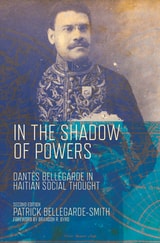
In the Shadow of Powers
Dantes Bellegarde in Haitian Social ThoughtPatrick Bellegarde-Smith
Vanderbilt University Press, 2019
Throughout much of the twentieth century and even to this day, there has been a dearth of scholarship on the intellectual and political contributions of Haitians. In the Shadow of Powers, first published in 1985, was a corrective to this oversight and remains a foundational text. Bellegarde-Smith traces the history of Haiti through the life and career of his grandfather Dantès Bellegarde, one of Haiti's influential diplomats and preeminent thinkers. As Brandon R. Byrd describes in his foreword to this new edition, "Bellegarde was driven by a subversive, racially inclusive vision of civilized progress. He believed in and continued to push for Haiti to establish an existence for itself, black people, and the colonized world independent of the considerable shadow cast by the world's military, economic, and industrial powers." Scholars and students who want to learn about the intellectual and political foundations of Haiti, its influence on other intellectuals worldwide, and its struggles against imperialism continue to find this to be an invaluable classic.

In the Shadow of Race
Jews, Latinos, and Immigrant Politics in the United StatesVictoria Hattam
University of Chicago Press, 2007
Victoria Hattam locates the origins of ethnicity in the New York Zionist movement of the early 1900s. In a major revision of widely held assumptions, she argues that Jewish activists identified as ethnics not as a means of assimilating and becoming white, but rather as a way of defending immigrant difference as distinct from race—rooted in culture rather than body and blood. Eventually, Hattam shows, the Immigration and Naturalization Service and the Census Bureau institutionalized this distinction by classifying Latinos as an ethnic group and not a race. But immigration and the resulting population shifts of the last half century have created a political opening for reimagining the relationship between immigration and race. How to do so is the question at hand.
In the Shadow of Race concludes by examining the recent New York and Los Angeles elections and the 2006 immigrant rallies across the country to assess the possibilities of forging a more robust alliance between immigrants and African Americans. Such an alliance is needed, Hattam argues, to more effectively redress the persistent inequalities in American life.
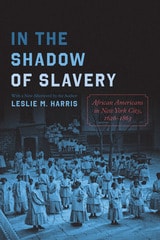
In the Shadow of Slavery
African Americans in New York City, 1626-1863Leslie M. Harris
University of Chicago Press, 2024
The popular understanding of the history of slavery in America almost entirely ignores the institution’s extensive reach in the North. But the cities of the North were built by—and became the home of—tens of thousands of enslaved African Americans, many of whom would continue to live there as free people after Emancipation.
In the Shadow of Slavery reveals the history of African Americans in the nation’s largest metropolis, New York City. Leslie M. Harris draws on travel accounts, autobiographies, newspapers, literature, and organizational records to extend prior studies of racial discrimination. She traces the undeniable impact of African Americans on class distinctions, politics, and community formation by offering vivid portraits of the lives and aspirations of countless black New Yorkers. This new edition includes an afterword by the author addressing subsequent research and the ongoing arguments over how slavery and its legacy should be taught, memorialized, and acknowledged by governments.

In the Shadow of Tungurahua
Disaster Politics in Highland EcuadorA.J. Faas
Rutgers University Press, 2023

In the Shadow of the Epidemic
Being HIV-Negative in the Age of AIDSWalt Odets
Duke University Press, 1995
Odets calls attention to the dire need to address issues that are affecting HIV-negative individuals—from concerns about sexuality and relations with those who are HIV-positive to universal questions about the nature and meaning of survival in the midst of disease. He argues that such action, while explicitly not directing attention away from the needs of those with AIDS, is essential to the human and biological well-being of gay communities. In the immensely powerful firsthand words of gay men living in a semiprivate holocaust, the need for a broader, compassionate approach to all of the AIDS epidemic’s victims becomes clear. In the Shadow of the Epidemic is a pathbreaking first step toward meeting that need.

In the Shadow of the Giant
The Americanization of Modern MexicoJoseph Contreras
Rutgers University Press, 2009
In this first book to view modern Mexico in the era of NAFTA and globalization, In the Shadow of the Giant offers insight into the land on our southern border.
What we find is a nation that looks more like the United States than even Mexicans themselves could have imagined a decade ago: Rates of obesity are second only to the United States among the world's industrialized countries. Recreational drug use is soaring among young Mexicans, Citigroup owns the largest bank in Mexico Wal-Mart is the country's biggest private employer revealing a vastly different physical and cultural landscape from his days as a young journalist living in Mexico in the mid-1980s. Joseph Contreras tracks the relentless and ongoing Americanization of his ancestral home. Although these changes may seem a natural part of globalization, the country had long prided itself on the social, political, economic, and even spiritual differences that distinguished it from the United States. In addition to embracing our virtues and vices, Contreras argues that our southern neighbor has become a de facto economic colony of the United States.
At a time when immigration looms as a leading hot-button issue in American politics, the time is ripe for examining our influences, for better or worse, on our neighbor to the south.

In the Shadow of the Palms
More-Than-Human Becomings in West PapuaSophie Chao
Duke University Press, 2022
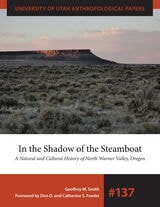
In the Shadow of the Steamboat
A Natural and Cultural History of North Warner Valley, OregonGeoffrey M. Smith
University of Utah Press, 2022
Smith and colleagues present their work in a way that allows readers to understand not only how people adapted to local change but also how North Warner Valley fits into the complex mosaic of precontact history in the American West. This research is the most comprehensive work conducted in the northern Great Basin in more than two decades. Its multidisciplinary nature should interest students of natural and cultural history, archaeology, and Indigenous lifeways.

In the Shadows of State and Capital
The United Fruit Company, Popular Struggle, and Agrarian Restructuring in Ecuador, 1900-1995Steve Striffler
Duke University Press, 2002
In the Shadows of State and Capital tells the story of how Ecuadorian peasants gained, and then lost, control of the banana industry. Providing an ethnographic history of the emergence of subcontracting within Latin American agriculture and of the central role played by class conflict in this process, Steve Striffler looks at the quintessential form of twentieth-century U.S. imperialism in the region—the banana industry and, in particular, the United Fruit Company (Chiquita). He argues that, even within this highly stratified industry, popular struggle has contributed greatly to processes of capitalist transformation and historical change.
Striffler traces the entrance of United Fruit into Ecuador during the 1930s, its worker-induced departure in the 1960s, the troubled process through which contract farming emerged during the last half of the twentieth century, and the continuing struggles of those involved. To explore the influence of both peasant activism and state power on the withdrawal of multinational corporations from banana production, Striffler draws on state and popular archives, United Fruit documents, and extensive oral testimony from workers, peasants, political activists, plantation owners, United Fruit administrators, and state bureaucrats. Through an innovative melding of history and anthropology, he demonstrates that, although peasant-workers helped dismantle the foreign-owned plantation, they were unable to determine the broad contours through which the subsequent system of production—contract farming—emerged and transformed agrarian landscapes throughout Latin America.
By revealing the banana industry’s impact on processes of state formation in Latin America, In the Shadows of State and Capital will interest historians, anthropologists, and political scientists, as well as scholars of globalization and agrarian studies.